
It was the second half of the eighteenth century in the British colonies, and a passionate yearning for liberty was in the air. Human consciousness yearned to be freed from the “shackles of ignorance, superstition and theological dogma.”[i] Men and women were reading the words of men like John Locke who argued for the liberty of the conscience of every individual, believing that no one has the right to impose any belief upon another. Equality, inclusivity, democracy, inclusion, and science were rapidly replacing medieval postures of slavery, the subordination of women, monarchy, and the Church’s control of education.
The colonists’ longing for freedom from England, the Anglican Church and the unenlightened world view even spilled over into the Reformed and Protestant Church. The practices and beliefs of Presbyterians, Baptists and Methodists were questioned as religious liberty, reason and the primacy of the individual became hallmarks of the ethos of the day. It was out of this environment–the same environment that gave birth to a new democratic experiment called the United States– that the Christian Church (Disciples of Christ) was being conceived.
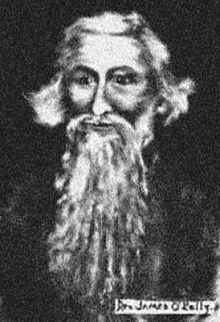
The birth pangs for this new movement began shortly after Francis Asbury came to the colonies and was quickly named bishop of the Methodist Episcopal Church that was established in the colonies by the Wesley Methodists in 1784. One of Asbury’s tasks as bishop was to appoint ministers to local congregations. Contrary to the ethos of the day, ministers and congregations did not have any voice in the appointments. Many ministers, including an Irish-born pastor serving in the New Hope Circuit of North Carolina named James O’Kelly, resented Asbury’s autocratic power and fought to give ministers and congregations more freedom in appointments.
Thus, at the 1792 General Conference of the Methodist Episcopal Church in Baltimore, Maryland, O’Kelly proposed a resolution that would give ministers the freedom to appeal their appointments. The motion was not received well by Asbury and was defeated. As a free-thinking product of his time, O’Kelly left the denomination with little over a dozen other ministers including Rice Haggard and about 1,000 parishioners and established the Republican Methodist Church. Haggard, born in Virginia and a neighbor of Thomas Jefferson, recommended that they change the name of the newly formed church to simply “The Christian Church” in 1794. This recommendation reflected Haggard’s and O’Kelly’s desire to restore the Church to its historic, first-century beginnings.
O’Kelly, Haggard and others then developed a set of guiding beliefs called the “Cardinal Principles of the Christian Church.”
1. The Lord Jesus Christ is the only Head of the Church.
2. The name “Christian” to the exclusion of all party and sectarian names.
3. The Holy Bible our only creed and a sufficient rule of faith and purpose.
4. Christian character, the only test of church fellowship and membership.
5. The right of private judgment, and the liberty of conscience, the privilege and duty of all.
6. The union of all Christians to the end that the world may believe.[ii]

- Elias Smith

The second of the Christian movements began in Vermont among Baptists. Believing very strongly in the freedom of the individual, Baptist Elias Smith found himself at odds with Baptist Calvinism and their views such as predestination. He withdrew from the Baptists and established an independent congregation in Providence, New Hampshire in 1802. Smith argued for a simple gospel with no creeds and advocated the freedom of the individual in church beliefs and practice.
Believing strongly in the liberty of every individual, and desiring to return to the practices of the early church, he did not believe in infant baptism by sprinkling. Smith, along with a fellow disenchanted Baptist minister named, Abner Jones, helped to start at least fourteen Christian Churches across New England and formed a conference of churches called “The Christian Connection.”
Their Legacies Continue Today
The parallel movements and contributions James O’Kelly, Rice Haggard, Elias Smith and Abner Jones that were born in the environment of freedom, independence, equality, inclusivity and democracy are still prevalent among Christian Churches (Disciples of Christ) in the 21st century. The most obvious is a staunch spirit of independence and individualism evident in an insistence on believing in the “Priesthood of All Believers,” local church autonomy, and the freedom of each individual to follow Christ as the Spirit leads. Also, the power of the laity is at least equal to, but oftentimes greater than, the power of the clergy. For example: the only person in the church who has no vote is the pastor! Equality among the sexes is also prevalent within Christian congregations as there is no distinction between males and females in areas of leadership or prominence. The Christian Church (Disciples of Christ) also rejects all human-made creeds and believes that the simple confession “Jesus is Lord” should be the only criteria for church membership.
 Just Love