Rebuilding from the Ruins

1 Peter 2:2-10

Some of you may have heard about the scripture passage that was read recently from the Oval Office:


“If my people who are called by my name humble themselves, pray, seek my face, and turn from their wicked ways, then I will hear from heaven and will forgive their sin and heal their land” (2 Chronicles 7:14).

Spoken in the highest office in the land! Well, glory, hallelujah!

That means we’re going to be okay… right? Our country is finally heading in the right direction! Because that’s how God builds. Always from the top down… right?

Well, that’s what Christian Nationalists would have us believe. But it is actually the opposite of what scripture declares.

The promise for healing in this verse is clear. But so is the condition. “If my people…” first do what?

“Humble themselves.”

And what does scripture mean when it calls people to humble themselves?

Now, many Christians have been taught that humility simply means bowing your head and professing Jesus Christ as your personal Lord and Savior.

But when the actions of so many who profess faith are the very things causing the most harm in the world, when that profession coexists with injustice, exclusion, and even cruelty, we know that scripture is calling us to something deeper.

Biblical humility is not just about a faithful profession. It is about a faithful position. It is about where we place ourselves in relation to power suffering and injustice.

To humble ourselves is not simply to bow our heads. It is to bend our lives: to step down from systems that elevate some while diminishing others; to move intentionally toward those who have been pushed aside; to identify with the poor; to stand with the marginalized; to draw near to the stones the builders have rejected.

And that kind of humility is much more than reciting a scripture or saying a prayer, especially from a high, gold-plated place of power and privilege. It calls us to look down— to the margins, to the overlooked, to the places where people have been left out and left behind.

This is where I believe this morning’s epistle lesson offers us some good guidance.

1 Peter is calling us to identify with, to stand beside, to join and to gather the stones that have been “rejected by mortals, yet chosen and precious in God’s sight.” And then to become, “like living stones… letting ourselves be built into a spiritual house.”

Get together, organize with those who have been excluded and become “living stones.” No longer dead stones. No longer hopeless stones. No longer discounted, discarded, dismissed, disposable, or forgotten stones. No longer the stones left on the margins of the construction site.

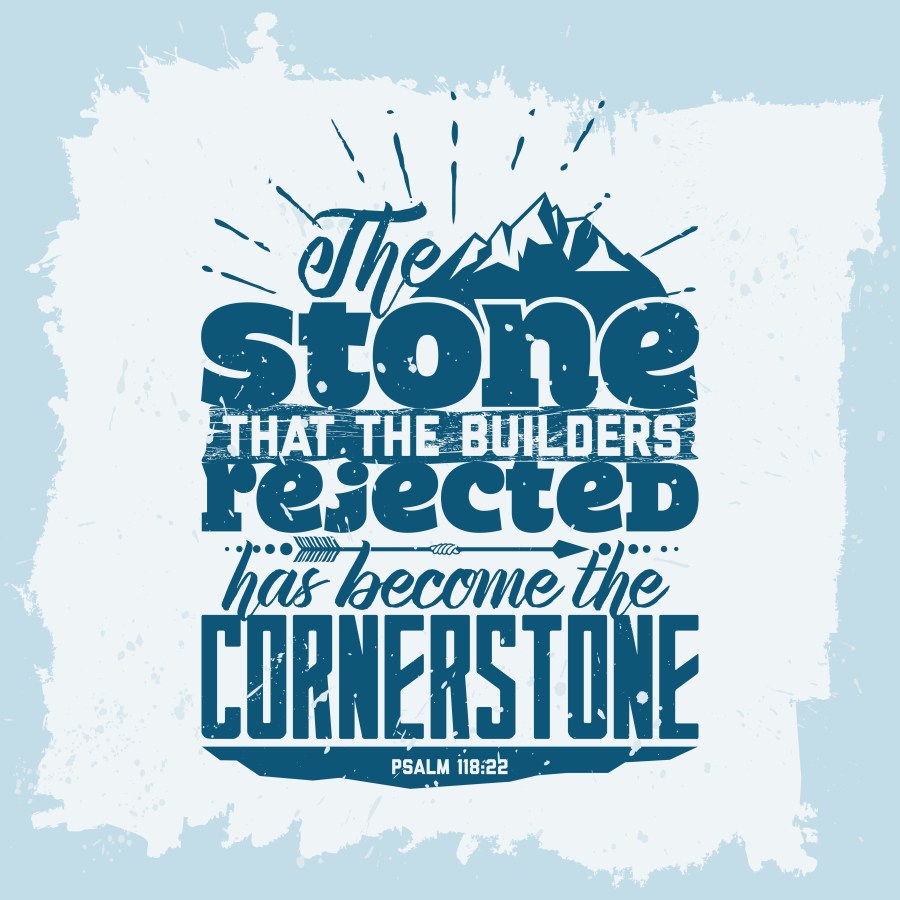
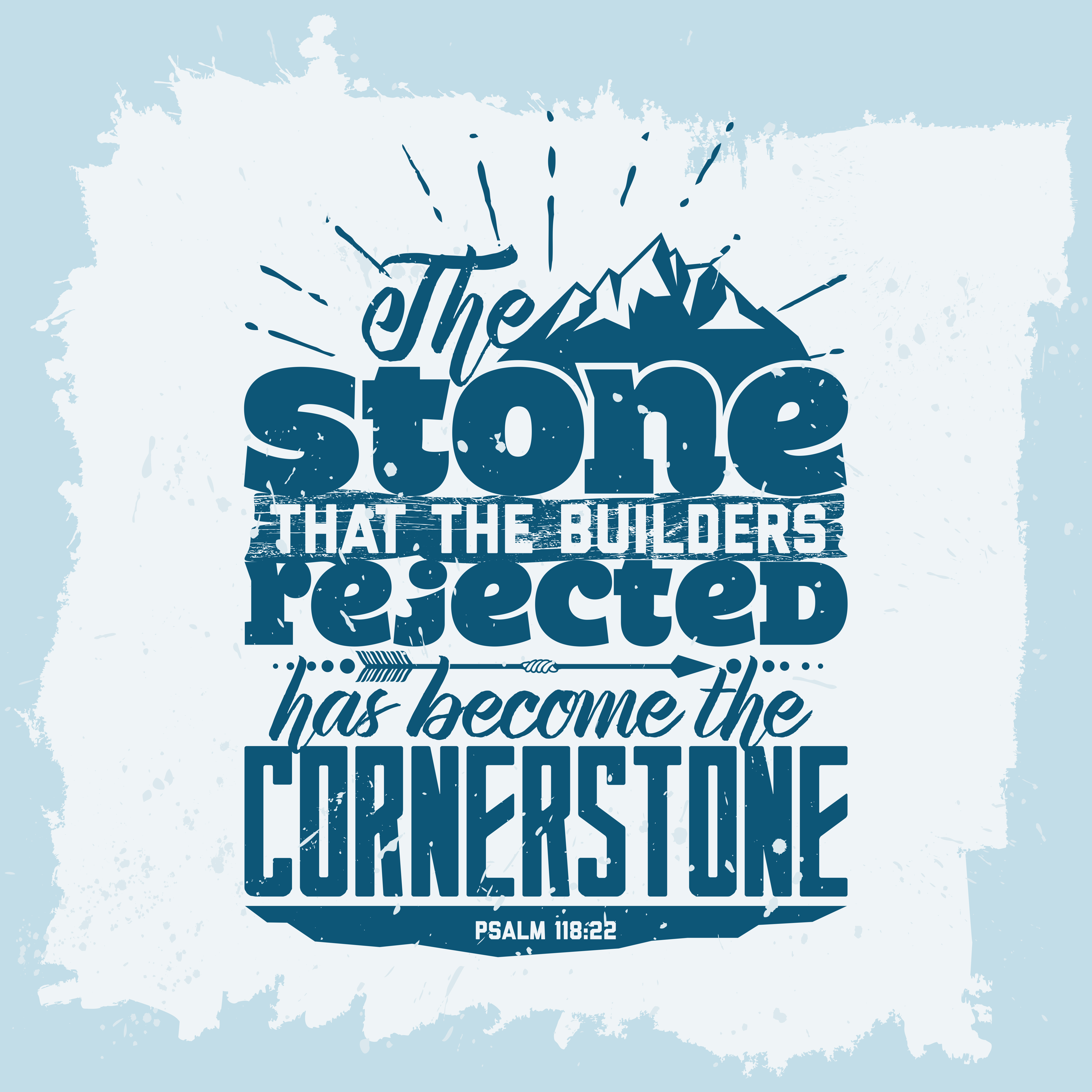
But chosen, gathered, living stones building something together. And not only that, “the stone the builders have rejected have become the cornerstone”— which is a quote from the 118th Psalm declaring that those who are despised and rejected in this world are actually the most vital and foundational part of what God intends to build in this world.

Literally, a cornerstone is the first stone set in the construction of a masonry foundation, crucial for aligning and balancing the entire structure.

Figuratively, a cornerstone represents a fundamental, indispensable part of something, such as core beliefs, principles, or policies. It is the foundational reference point for an entire structure’s orientation, with all other stones measured against it.

Which means the very ones this world has rejected are the most essential to what God is building.

For those of us who have paid just a little attention in church, it’s not surprising that this Psalm is quoted not only here in 1 Peter, but also by Luke in Acts 4, and by Jesus in all four gospels, as this cornerstone principle conveys a divine pattern that runs all the way through scripture. When God builds in this world, God always builds from the bottom up.

When God wanted to call a people, God didn’t go to the center of power. God went to Abraham and Sarah—wandering, aging, convinced they had nothing more to offer.

When famine threatened survival, God worked not through the Pharoah, but through Joseph—the brother who was betrayed, imprisoned, and cast aside.

And when God heard suffering, it wasn’t the cries of Pharoah, but the cries of an enslaved people. “I have seen their misery… I have heard their cry” (Exodus 3:7). God chose the side of the oppressed, not just to comfort them, but to liberate them.

And when those liberated people obtained power and began shaping a society, God gave them a command: Don’t forget where you came from. Don’t forget the poor. Care for the widow. Defend the orphan. Don’t oppress the stranger. Don’t mistreat foreigners residing in your land, but rather treat them as native-born citizens and love them as you love yourself. Build a world that does not recreate the harm you escaped.

But as soon as they got a little bit of power, they forgot. And to remind them, God sent prophets who truth to power: “Woe to those who trample on the needy.” “Woe to those who build their houses on injustice.”

Because God is never neutral when people are suffering. God is always on the side of the oppressed and the rejected. Not only consoling them but calling them to organize to build something better.

Over and over, scripture reveals a God who calls the unlikeliest of people:

Moses—a fugitive, slow of speech—but called to confront the empire.

Deborah—a woman chosen by God in a world that discounted her.

Gideon—fearful, from the weakest clan.

Ruth—a foreign widow, gleaning scraps, woven into the story of kings.

Hannah—barren and dismissed, who sang of a God who lifts the lowly from the dust.

David—a shepherd boy, overlooked and left in the fields.

Again, and again, God chose the stones rejected by the powers-that-be. Whenever the world was most broken, most in need of a reconstruction, when people were exiled, displaced, stripped of identity, God spoke into their displacement, promising not just a return, but a rebuilding from the ruins, not from the top down, but from the bottom up.

The story of Jesus is but a continuation of this divine pattern. When God became flesh, God didn’t come through a palace. But through a young, poor, unmarried woman living under empire, named Mary.

And she sang: “God has brought down the powerful from their thrones and lifted up the lowly.”

In Jesus’ first sermon, this divine pattern is unmistakable: “The Spirit of the Lord is upon me,” he says, “because he has anointed me to bring good news to the poor.

And look at who Jesus gathers around him: The poor, the sick, the excluded. And to them, Jesus says: “Blessed are you.” And he doesn’t stop there. He gathers them and builds a movement. He takes the rejected stones and begins constructing a new kind of community: a community where the last are first, dignity is restored, and love becomes the structure.

So, when Peter says: “You are a chosen race, a royal priesthood, a holy nation, God’s own people,” we know who he’s talking about. He is talking about a scattered, struggling, rejected people. And Peter says: “You are the ones God is building with.”

Now, let’s bring that word into our moment. Because people are still being rejected.

The poor are dismissed. Workers underpaid. Immigrants dehumanized. The trans community demonized. The unhoused pushed out of sight.

The message to them is: “You don’t belong.” “You don’t count.” “You will not be accepted.” “You will not have any part constructing our society, building this nation.”

Yet, scripture says: “You are chosen.” And not only are you chosen, you are the cornerstone of the building, the most fundamental, most indispensable part of it.

This is where the language of Reconstruction in America begins to sound less like history and more like prophecy.

The First Reconstruction took place when poor Black and white people came together after the Civil War to expand democracy, to build an interracial government, to build new schools, to reimagine what this country could be.

And then the backlash came. Jim Crow was born. The stones were rejected again.

The Second Reconstruction, the Civil Rights Movement, took place when ordinary people, many poor and dismissed, stood up and declared their dignity in the face of violence and oppression. And again, progress came. But resistance followed. Resistance that we are still witnessing today as many of the gains made during the Civil Rights movement have been reversed. Jim Crow didn’t die, it just rebranded itself as “Make America Great Again.”

And now we find ourselves asking: Is there a Third Reconstruction on the horizon? And if so, who will build it?

If scripture is any guide, it will not begin in places of wealth and power. It will begin with people who have been pushed out: the poor; the marginalized; the rejected. Because they are the ones who know something about both suffering and hope.

And here’s the word that comes back to us 2 Chronicles: “Humble yourselves.”

Not just in a profession of faith. But in a proximity of faith. Not just in words. But in solidarity, in action. Because Peter doesn’t just say, “You are living stones, period.” He says, “let yourselves be built.”

The fundamental question for people of faith is this: Are we are willing to be aligned alongside those the world has rejected? Will follow the leadership of those who are suffering today? Will we join what God is building?

Because that’s humility. And that’s how a new house gets built. That’s how healing happens.

And yes, that kind of building will cost something. Because when you make the rejected the cornerstone, the most important part of the building, you challenge systems that depend on their rejection. That’s why this kind of gospel makes people stumble (verse 8).

But here’s the hope. It’s not easy hope. But it’s real hope: “You once were not a people, but now you are God’s people.” Which means: What has been scattered can be gathered, and what has been rejected can become the foundation.

So, hear this:

Maybe the Third Reconstruction is not something far off. Maybe it is already beginning: in movements for living wages; in communities organizing for healthcare; in silent vigils for peace; in pop-up protests on the side of the highways against the mistreatment of immigrants; in people with whistles protecting their immigrant neighbors; in people refusing to give up on one another; in the quiet but courageous work of solidarity.

Church, this is where we are called to step it. To humble ourselves, to build with those the world has rejected.

And if we dare to do that, if we dare to live that, the nation can heal and a new house will rise.

Built not on exclusion, but on belonging.

Built not on supremacy, but on equality.

Built not on scarcity, but on justice.

Built on compassion instead of cruelty, and on love instead of fear.

A house will rise where the stones that have been rejected are valued, important, the foundational reference point for the entire house’s orientation.

A house that will stand.

Because it is built the way God has always built in this world: with people who humble themselves and build, not from the top down, but from the bottom up.

Amen.


Pastoral Prayer

Holy and Living God,

You are the One who hears what the world ignores.

You are the One who sees what others pass by.

You are the One who gathers what has been scattered

and builds what has been broken.

We come before you today bringing all that we are.

We bring our gratitude:

for signs of hope we have witnessed this week;

for neighbors caring for neighbors;

for courage rising in unexpected places;

for love that refuses to give up.

We bring our grief:

for a world that still wounds so many;

for those living without enough food, enough care, enough rest;

for communities burdened by injustice;

for those who feel invisible, expendable, forgotten.

We bring our own hearts:

tired in some place; guarded in others, and still longing to be part of something more.

God of mercy,

You call us to humility, not just in word, but in life. So we ask:

Bend our lives toward your justice.

Draw us closer to those we have kept at a distance.

Open our eyes to where you are building

and give us courage to join you there.

We pray for those who are suffering today:

for the sick, the grieving; the anxious; the overwhelmed.

For all who are on our hearts and on our prayer list.

Be near to them, O God.

We pray for those organizing, resisting, and rebuilding

often without recognition, often at great cost.

Strengthen them. Sustain them. Surround them with hope.

And we pray for ourselves

that we would not settle for a faith that is comfortable,

but would seek a faith that is faithful.

A faith that follows you

into the places where healing is still needed.

Into the communities where dignity is still denied.

Into the work of building a more just and loving world.

Gather us, O God, as living stones. Shape us. Place us. Use us.

We pray all of this in the spirit of Jesus, Amen.


Invitation to Communion

This table is not built by human hands alone.

It is set by a God who gathers the rejected and calls them beloved.

This is not a table for the perfect. This is not a table for the powerful.

This is a table for those who hunger—for bread, for justice, for belonging.

Here, the last are welcomed first. Here, the overlooked are seen. Here, the broken are made whole.

So come—not because you have it all together, but because God is still putting us together.

Come as living stones, ready to be shaped into something new.

Come, for all is ready.


Invitation to the Offering

What we offer today is more than money. It is a declaration.

A declaration that we believe in a different kind of world. A declaration that we trust God is still building—and that we want to be part of that work.

So, we give—not out of obligation, but out of hope.

We give to support ministries of compassion and justice, to stand alongside those too often pushed aside, to help build a community where all can flourish. So, as you give, consider this:

Where is God building in our world? And how might what I offer today help strengthen that work?

Let us give generously, as people who are being built into something beautiful together.


Commissioning and Benediction

Go now, not just with heads bowed, but with lives bent toward justice.

Go as living stones, shaped by grace, placed with purpose, and joined together in love.

Go to where God is building: among the poor; alongside the marginalized;

in the very places the world has overlooked.

And as you go, remember: The stone the builders rejected has become the cornerstone.

Which means:

what has been cast aside can rise, what has been broken can be rebuilt,

and what has been dismissed can become the foundation of something new.

So, go with courage to stand where God stands,

with humility to walk alongside others,

and with hope that will not let you go.

And may the God who builds from the bottom up

hold you, guide you, and use you, now and always.

Amen.

We Had Hoped

Luke 24:13-35

There is a particular kind of sentence that only comes from heartbreak. We find it in verse 21 of our gospel lesson, and it starts like this: “We had hoped…”

It’s the kind of sentence you hear when dreams collapse under the weight of reality. It’s whispered in hospital rooms, at funeral homes, often in conversations that trail off into silence. It’s the language of people who believed something good was possible, but then watched it all fall apart.

“We had hoped…” Things would be different. The diagnosis and the prognosis, the outcome and outlook for the future was better.

Two disciples are walking away from Jerusalem, walking away from the place where everything unraveled, walking away from the cross, from the chaos, from the confusion.

And as they walk away from it all, they talk: about what happened; about what went wrong; about how it all fell apart; about how mercy was beaten down, and love was crucified.

“We had hoped he was the one to redeem Israel.” We had hoped to be liberated from King Herod and from the systems that bless the elites while the poor suffer.

“We had hoped…” Past tense. Because hope had been buried.

And if we’re honest, that sentence doesn’t belong only to them. It belongs to us too.

For we know what it is to say, “We had hoped…”

We had hoped things would not be this bad.

We had hoped we would not go to war.

We had hoped that truth would matter.

We had hoped that the teachings of Jesus to love one another, to bless the poor, to defend the marginalized, to welcome the stranger, would have been followed by more people.

We had hoped that our friends were not betrayers.

We had hoped justice would come a little quicker and peace a little closer.

We had hoped that what we believed about love—that it is stronger than hate, deeper than fear, and more powerful than violence—would be easier to see in our world. And we had hoped that selfishness, greed, hatred, and just pure meanness, would not be so prevalent…and so powerful.

But here we are, walking our own roads to Emmaus, grieving that every time we look at the news, we read something crazy: something mean; something evil. We are also carrying grief we can’t always name, questions for which we don’t have answers, and anxiety that keeps us awake at night.

And like those disciples, we don’t always realize who is walking beside us, who has been walking with us all along.

The good news of our gospel lesson is that somewhere between Jerusalem and Emmaus, Jesus is present. Not in spectacle. Not in certainty. Not in the kind of power the world recognizes. But in quiet companionship.

He draws near to them. So near, they can reach out and touch him. And the strange thing is—they don’t recognize him. Which might be the most honest part of the whole story.

Some people tell me that they have trouble believing in this mystery we call resurrection. They read about it in the gospels, but they have trouble trusting it in the real world.

I believe that is because resurrection rarely looks like what we expect. It doesn’t always arrive in a blinding light or with a clap of thunder. Sometimes, it comes disguised as a conversation; It shows up as empathy, as a presence that won’t let us go, as a voice meeting us where we are, asking questions:

“What are you discussing as you walk along?”

Jesus is not interrupting their grief, as much as he’s joining it. He lets them tell the story. He listens to their disappointment. He holds space for their “we had hoped…” And then, and only then, he begins to reframe it.

Not by denying their pain or rushing them past it. But by reminding them that the story isn’t over yet.

He opens the scriptures. He re-tells the story they thought they knew.

He shows them that what looked like an ending…was never meant to be the end.

And still, they don’t recognize him. Not yet.

Because sometimes our hearts need to change before our eyes can see it. They ask: “Were not our hearts burning within us while he was talking to us on the road?”

That’s resurrection, too. Resurrection is not just empty tombs. It’s burning hearts. It’s not just life after death. It’s hope rekindled in the middle of a dark journey. It’s the realization sung by Raye in the Click Clack Symphony with Hans Zimmer that although we’ve “slipped back into a darkness we had hoped by now to overcome…the cold never lasts. It just teaches the heart how to burn.”

Finally, the disciples reach Emmaus, the place they thought they were going to stay, the place they had finally arrived to get away from it all.

But something has now shifted. “Stay with us,” they say. Because when resurrection gets close, even if you don’t fully understand it, you don’t want it to leave.

So, he stays. They sit at the table. He takes bread. He blesses it, breaks it, gives it. And suddenly, their eyes are opened, and they finally recognize him.

Not on the road. Not in the explanation. Not even in the opening of the scriptures. But in the breaking of bread. In a most ordinary act, made holy. In a moment so simple it could have been overlooked. Resurrection was experienced in fellowship, in community, around a table in an empathetic moment of grace and love.

And look at verse 31 again. Just as quickly as they recognize him, he vanishes. It all happens in one verse.

Which might seem cruel, until we realize: The Risen Christ doesn’t vanish as soon as he is recognized because he is no longer in the world. He vanishes because he is no longer limited to one place, to one moment, to one form. Now, the disciples will see him everywhere! In every broken piece of bread given. In every act of grace. In every moment where love refuses to stay buried and is shared freely.

And here’s the real miracle: They turn around. These same disciples who were walking away from it all, who were done, who were finished, who were at closing time—they get up that very hour and go right back to all. Back to Jerusalem. Back to the place of disappointment. Back to the place of pain. Back to the place where hope seemed to die.

But they go back differently. Not because everything has suddenly been fixed. Not because Herod is no longer on the throne. Not because the world has stopped being that crazy. They go back differently because resurrection has found them on a dark road. And once resurrection finds you, you can’t keep walking in the same direction.

That’s the hope of Easter.

Not that the world has suddenly become easier. Not that suffering has disappeared, or injustice has ceased. Not that every “we had hoped” is instantly resolved.

But that Christ is still walking with us, even when we don’t recognize him. That the story is still being told, even when it feels like it has ended. That hearts can still burn, even when hope feels cold. And that around a table, in the breaking of bread, in the sharing of life together, in the stubborn persistence of love, eyes can still be opened.

So, if you find yourself today on the road to Emmaus, if you are carrying disappointment, or confusion, or quiet grief…if your faith feels more like past tense than present reality…listen closely. Look around this room. Feel the love around you, the empathy that surrounds you.

There is a presence walking beside you this morning. Asking questions. Telling stories. Refusing to let the darkness have the last word. And maybe, just maybe, before this day is over, at some table, in some ordinary moment, your eyes will be opened too. And you will discover what the disciples did:

That resurrection meets us on the road. It sits with us in the tension. It breaks bread in the middle of our unfinished stories. And then it sends us back—

Not as people who have all the answers, but as people whose hearts are burning, carrying a hope that refuses to stay in the past tense. Because in Christ, “We had hoped” becomes “We have seen.” And that is enough to turn us around.

Not because we are strong enough, but because resurrection is. Easter is God’s declaration that even when empire does its worst, even when violence seems to have the final say, even when hope is sealed in a tomb, that is not the end of the story.

And if that is true, then we are not called to survive this moment quietly. We are called to face it. To resist it. To fight it.

But not with the weapons of the world. Not with hatred. Not with fear. Not with the same kind of power that crucified Jesus. We fight it the way the risen Christ teaches us: with truth that refuses to bend; with love that refuses to give up; with courage that refuses to be silent; with a community that refuses to let anyone walk the road alone.

We fight it every time we tell the truth when people prefer to hear the lie, every time we choose generosity in a culture of greed, every time we protect the vulnerable in a world that exploits them, every time we refuse to let religion be used as a tool of exclusion instead of liberation.

That’s what it means to be Easter people. Not people who escape the world, but people who are sent back into it.

Back to Jerusalem. Back to the places where things are broken. Back to the systems that need disrupting. Back to the communities that need healing. Back into a country that needs redeeming.

Because resurrection doesn’t remove us from the struggle. It prepares us for it. It steadies our hearts. It sharpens our vision. It reminds us who we are: we are people who have seen something.

Maybe not perfectly. Maybe not with absolute certainty.

But enough to know this: Love is still alive! Truth is still worth telling! Justice is still worth pursuing. And no empire, no ideology, no distortion of faith gets the final word.

War rages, but this is not the end of peace. This is where peacemakers rise.

Religious nationalism is in power. But this is not the end of democracy. This is where courage finds its voice.

Hate is loud. But it is not the end of love. This is where love becomes unrelenting.

The road to justice is long, and it is not easy, but Easter means we do not walk this road alone. It means our hearts can still burn. It means our eyes can still be opened. It means we can still turn around.

And it means that even now, in a world that feels like it is unraveling, God is still at work, Christ is still present, and resurrection is still breaking in.

So go back. Back to the places that need hope the most.

Go back. Not as people who are afraid of this moment, but as people who were made for it. Because we are Easter people. And the story is not over yet! Amen.


Pastoral Prayer

God of the road and the table,

we come to you as we are.

Some of us weary from the journey,

some of us carrying grief we cannot name,

some of us holding hope with trembling hands.

You know the roads we have walked this week—

the conversations that have stayed with us,

the headlines that have unsettled us,

the quiet fears we have not yet spoken aloud.

And still, you draw near.

You do not wait for us to have clarity or certainty.

You meet us in our questions,

you walk with us in the chaos,

you listen as we share our heartache and heartbreak.

So today, O God, rekindle in us a living hope.

Where there is despair, breathe your life.

Where there is fear, steady our hearts.

Where there is cynicism, awaken in us a deeper trust.

We pray for a world that feels fractured—

for places where war rages and peace feels distant,

for communities burdened by injustice,

for leaders and systems that have failed the lives of so many.

Give us courage to be people of truth and justice.

Give us strength to resist what diminishes your image in others.

Give us grace to love all people, as we love ourselves.

We lift before you those in need of healing—

in body, in spirit, in relationships that feel beyond repair.

Be present, O Christ,

in hospital rooms and living rooms,

in moments of waiting and in moments of fear.

And remind us, again and again, that we do not walk alone.

That even now, you are with us.

We pray all of this in the name of the risen Christ,

who meets us on the road and is known in the breaking of bread. Amen.


Invitation to Communion

This is not a table for the certain, for those who have everything figured out.

This is the table where Christ meets us—

on the road, in our questions, in our unfinished faith.

It was in the breaking of bread that their eyes were opened.

Not because they understood everything, but because Christ was present.

So, all are invited to partake.

Partake if your hope feels strong or if your hope feels fragile.

Partake if you are still searching, still wondering, still walking.

Because this is the table where Christ is made known.


Invitation to Give

The disciples did not recognize Christ at first, but their hearts were already changing.

That’s how it is with grace. It meets us, it stirs us, and it begins to turn us outward.

So, we give, not out of obligation, but as a response to the One who has walked with us, who has opened our eyes, who sends us back into the world with purpose.

In a world shaped by scarcity and fear, our giving becomes an act of trust.

In a culture of taking, our generosity becomes a witness.

So let us offer our gifts, as signs of hope, as acts of resistance, as participation in God’s ongoing work of love.

Commissioning and Benediction

Go now—

not as those who have all the answers,

but as those whose hearts have been set ablaze.

Go back to the places you came from,

back to your homes, your work, your communities,

knowing that Christ goes with you.

When the road feels long, when hope feels distant, when you struggle to see, remember:

Christ is still drawing near.

Christ is still being made known.

Christ is still turning us around.

So go in courage. Go in compassion. Go in the unrelenting hope of Easter.

And may the love of God, the presence of Christ, and the power of the Spirit go with you, now and always.

Amen.

Love Gets the Last Word

John 20:1-20

Before the sun had the decency to rise, before hope had any real evidence to stand on, Mary Magdalene ran. Not casually walked. Not carelessly wandered. Not cautiously approached. Mary ran.

Because when love has been crucified, when dreams have been buried, when the world as you knew it has collapsed in on itself—grief does not move slowly or carefully. It rushes. It assumes. It fills in the blanks with the worst possible story: “They have taken the Lord out of the tomb, and we do not know where they have laid him.”

That’s what grief says.

Not, “He is risen.”

Not, “God is doing a new thing.”

Not even, “Let’s wait and see.”

No. Often in a downward spiral, grief concludes: “They have taken him.”

Things are bad, and it’s only going to get worse. When it rains, it pours. And we better get out the buckets cause the roof is going to leak.

It is the most human response in this broken world: to assume that what we love the most has been stolen, taken away, destroyed, and erased. And it is not coming back.

And if we’re honest on Easter Sunday 2026, we know that feeling.

Because we are living in a moment where it is easy, almost natural, to assume the worst. It is what we assume every time we check the headlines.

No one expects to turn on the news these days and hear: Good news! Things are not as bad as they seem! Good news! Better days are coming.

No, these days, we expect only news of despair. The secretary of defense calls himself the secretary of war and calls the hell that is war, “holy,” and uses religious language to bless overwhelming violence. Here at home, gas prices are still rising. Grocery bills continue to climb. Families sit at kitchen tables doing math that does not add up. All the while White Christian Nationalism is suffocating democracy. History is being whitewashed. And we wonder about the next election, if there will even be a next election. And we ask: Has the country we love been taken from us. And in the quiet spaces of our hearts, a question forms:

Has hope been taken from us too? Has something sacred been stolen from our lives?

And like Mary, we rush to conclusions. “They have taken…” They have taken our peace. They have taken our security. They have taken our freedom. They have taken our future.

The good news today is that Easter interrupts our assumptions. Because what Mary thinks has happened is not what God is actually doing. She comes to the tomb expecting death to have the final word. Instead, she finds confusion. She finds what seems like absence.

But what she really finds is mystery. And if we’re not careful, we will mistake the mystery of God for the absence of God too.

Early in my ministry, I remember sitting at a hospital bedside, the kind of room where the machines speak more than the people. A family gathered, holding hands, passing a tissue box to wipe tears, praying prayers that felt like they were bouncing off the ceiling. One of them finally said what everyone else was thinking but didn’t want to say it out loud: “Where is God in this?”

Not in anger. Not even in disbelief. Just…exhaustion, just grief. Because sometimes the silence of God feels like abandonment. Sometimes the unanswered prayer feels like absence. Sometimes the delay feels like denial.

And in that moment, there was no lightning bolt. There was no sudden turnaround. No miracle that tied everything up neatly. Just breath. Just presence. Just people refusing to let one another be alone.

And I remember realizing—almost against my will—that maybe God had not stepped out of the room.

Maybe God had simply refused to show up on our terms. Maybe the mystery of God is not that God is absent, but that God is present in ways we do not yet recognize. Present in the quiet grip of a hand. Present in the tears that fall without shame. Present in the stubborn love that keeps showing up even when hope feels thin.

We want a God who explains everything. But more often, we encounter a God who accompanies us through anything.

And that kind of presence—it doesn’t always feel like power. Sometimes it feels like weakness. Sometimes it feels like waiting. Sometimes it feels like an empty tomb before you understand what empty really means.

The good news of Easter is: just because we cannot see God clearly does not mean God is not working deeply. The mystery is not God’s absence. The mystery is that God is already at work—in the dark, in the silence, in the in-between—bringing life out of places we had already declared dead.

Let’s get back to our gospel lesson, for the story is getting ready to take to turn.

Peter and the beloved disciple run to the tomb. They see the linen cloths. They don’t fully understand—but something in them shifts. The story is not over.

And then Mary, still weeping, encounters a gardener…or so she thinks. “Woman, why are you weeping? Whom are you looking for?” She is still operating out of her assumption: “They have taken him.”

Until he speaks her name: “Mary.” And everything changes.

This is the Easter truth we are invited into today: We are often wrong about how the story ends.

We assume God is not present when God is standing in front of us.

We assume loss when God is working resurrection.

We assume absence when God is preparing revelation.

We assume death has won when love is already rising.

As Rev. Dr. William Barber reminds us in his prophetic witness, “We must learn to see not just the pain of the present, but the possibility of redemption breaking through it.”

Easter is not naïve optimism. It does not ignore the cross. It does not pretend that violence, injustice, and suffering are not real.

No. Easter stares the powers of death in the face and declares: You do not get the last word!

Not war. Not “overwhelming violence.” Not religious nationalism.

Not greed. Not lies. Not systems that crush the poor, while protecting the powerful. Not even the grave itself. The good news of Easter is that love gets the last word.

But here’s the thing—we don’t always recognize resurrection right away. Mary doesn’t. She mistakes Jesus for the gardener. Which, if you think about it, is not entirely wrong.

Because resurrection is a kind of gardening. It is God tending to what has been buried. It is life pushing up through the soil of despair. It is beauty growing in places we had already written off as dead.

And maybe that’s what we need to hear this Easter: That even now—especially now—God is at work beneath the surface.

In communities organizing for justice.

In neighbors caring for one another when systems fail.

In courage rising up in unexpected places.

In love refusing to give up.

In people who have gathered on a rainy Sunday morning with the audacity to believe that something happened on that day Mary ran to the tomb, something mysterious happened that we call resurrection.

We may not understand it. We may never wrap our minds around it. But I don’t believe that is important. What is important is that we live it. It’s even more important than believing it.

Jesus says to Mary, “Do not hold on to me… but go.”

Go tell the others. Go bear witness. Go live as if love actually has the final word in this world.

And that’s the invitation of Easter for all of us.

In a world quick to assume the worst, we become people who dare to hope anyway. In a culture shaped by fear, we become practitioners of love. In a nation that chooses violence to get its way, we choose a life of nonviolence while praying, not my will, but God’s will be done. In the face of systems that profit from despair, we become witnesses to resurrection.

Not because things are not as bad as they seem.

Not because better days are right around the corner.

Not because life in this world is suddenly going to become easy.

But because Christ is somehow, some mysterious way, risen.

And that changes everything.

So, the next time you feel that familiar rush of fear, the next time your heart wants to say, “They have taken…”—

Pause. Breathe. And listen.

Because resurrection often begins with a voice calling your name.

Reminding us:

What you thought was gone is not gone.

What you thought was over is not over.

What you thought was lost is only being redeemed.

Hate does not get the final word. Violence does not get the final word. Despair does not get the final word.

Love does. It always has. It always will.

Alleluia. Alleluia.

Amen.


Pastoral Prayer

Risen Christ,

we come to you this morning carrying everything—

the joy we can name

and the weight we cannot quite put into words.

We come like Mary,

early in the morning,

still holding our assumptions,

still wondering if something sacred has been taken from us.

And yet, you meet us here.

So we pray—

not as people who have it all figured out,

but as people who are learning to trust you in the mystery.

God of life,

we lift before you a world that feels fragile.

We pray for places torn by war,

for lives caught in the crossfire of decisions made far from their homes.

We pray for wisdom where there is power,

for restraint where there is anger,

for courage where there is fear.

Let your peace rise where violence threatens to have the final word.

We pray for those feeling the pressure of rising costs—

for families stretching every dollar,

for workers carrying quiet anxiety,

for those who must choose between what they need and what they can afford.

Be bread in empty places.

Be provision where there is not enough.

Be hope where worry has taken root.

We pray for those gathered here and those we carry in our hearts—

for the sick and the recovering,

for the grieving and the lonely,

for those facing decisions, diagnoses, and uncertain futures.

Risen Christ,

meet them as only you can—

not always with easy answers,

but with your unmistakable presence.

Call their names in the darkness.

Remind them they are not alone.

Hold them in a love that does not let go.

God, teach us to be people of resurrection—

not just in what we believe,

but in how we live.

Where there is despair, make us bearers of hope.

Where there is division, make us builders of community.

Where there is injustice, make us seekers of your righteousness.

And when we are tempted to assume the worst—

to believe that love has been taken,

that hope has been buried,

that the story is over—

call our names again.

Turn us around.

Open our eyes.

Send us out.

We pray all of this in the name of the risen Christ,

who taught us to pray, saying:

Our Father…

Amen.


Invitation to Communion

This table is not for those who have it all figured out.

This is not a table for those who never doubted, never feared, never assumed the worst.

This is a table for Marys who come weeping. For disciples who run but do not yet understand. For people who have whispered, “They have taken…”

and are still learning how to say, “He is risen.”

Because at this table, we do not receive certainty—we receive presence. Bread that tells us God is still with us. Cup that reminds us love has already been poured out—and it has not run dry.

In a world where so much feels taken—peace, stability, freedom—this table declares: what God gives cannot be stolen.

Here, Christ meets us—not always where we expect, but always where we need.

So, come.

Come with your questions. Come with your grief. Come with your fragile hope.

Because the risen Christ is still calling our names, still breaking bread,

still reminding us:

Love does not lose. Love does not end. Love gets the last word.


Invitation to the Offering

In a world shaped by scarcity, we are taught to hold tight—

to protect what we have, to fear there won’t be enough.

But Easter tells a different story.

A story where life comes out of what was given away.

A story where love multiplies when it is shared.

A story where even what seemed lost is gathered up and redeemed.

So, we give—not because the world is secure,

but because God is faithful.

We give as an act of resistance

against fear, against greed, against the lie that death has the final word.

We give as a testimony:

that we believe in a God who is still bringing life out of empty places.

So let us offer our gifts, our lives, and our trust—

knowing that in God’s hands, nothing given in love is ever wasted.


Commissioning and Benediction

Go now into a world that will tempt you to assume the worst.

Go into places where fear speaks loudly,

where uncertainty lingers,

where it feels like something sacred has been taken.

But do not go as people of despair.

Go as those who have heard their name spoken by the risen Christ.

Go as those who know the tomb is empty—

not because nothing happened,

but because God happened.

And when you cannot see clearly,

when the mystery feels like absence,

remember:

God is still at work. Love is still rising. Hope is still alive.

So go—

to love boldly, to serve courageously, to live as witnesses to resurrection.

And may the God who brings life out of death,

the Christ who calls you by name,

and the Spirit who sustains you in every mystery

go with you, now and always.

Amen.

Holy Surprises at Sunrise

Invocation

Risen Christ,

you who meet us in the in-between,

on roads marked by uncertainty,

in moments we did not plan,

in places we did not expect,

draw near to us now.

As the light breaks over this new day,

break into our hearts again

with a hope we cannot control

and a joy we cannot contain.

Where we have given in to despair,

speak your living word.

Where fear has taken hold,

breathe your peace.

Where grief has settled deep within us,

call us again by name.

Meet us here—

not when we have it all together,

not when we have finally arrived,

but here, on the way—

and remind us

that we are not alone.

Open our eyes to your presence,

our ears to your voice,

and our hearts to your love,

that we might rise with you

to walk in newness of life.

For the dawn has come,

and still you come to us—

alive, unexpected,

and full of grace.

Amen.


Sermon

Matthew 28:1-10

Before the sun has fully risen…before certainty has returned…before the world has made sense again…two women are walking a road between grief and hope.

Mary Magdalene and the other Mary have come to a tomb carrying all the weight that comes with loving something the world has taken from you. They are not expecting resurrection. They are expecting silence. Finality. An ending.

And yet—the earth shakes, the stone rolls, and an angel speaks:

“Do not be afraid… He is not here… He has been raised… Go and tell… He is going ahead of you to Galilee; there you will see him… This is my message for you.”

It is a word meant to steady them. A word meant to give direction. A word meant to move them forward. Go to Galilee. That’s where resurrection will be.

And so, they go—afraid, yes, but also filled with great joy. Because even a trembling hope is still hope. But here is where the story surprises us. Because they don’t make it to Galilee. Somewhere on the road—before they arrive, before they figure it all out, before they get where they thought they needed to go—the Risen Christ meets them.

Not in Galilee. Not at the destination. But in the in-between. “Greetings,” he says. And suddenly the promise is no longer distant.

The hope is no longer deferred. The risen Christ is standing right in front of them. Which raises a holy, unsettling question for us this morning: What do we do with the fact that the angel said one thing…and yet, Jesus showed up somewhere else?

“You will see him in Galilee. This is my message for you,” the angel declared.

And yet, the risen Christ had his own way of arriving.

Maybe the angel wasn’t wrong. Maybe Galilee still matters. But if what this moment reveals is something deeper?

That even the messengers of God cannot map out all the places resurrection will break in. Even angels don’t get to control where new life appears. And if angels don’t know…then we certainly don’t.

Which means…hear this clearly this Easter morning: We cannot predict where Christ will show up. We cannot confine resurrection to a location. We cannot limit hope to what seems likely or reasonable.

And because of that, we can never give in to despair. Not now.

Not ever. Because despair depends on certainty.

Despair says:

“This situation is too far gone.”

“This violence will never end.”

“This division is permanent.”

“This grief will define the rest of my life.”

“This world is too broken to be redeemed.”

Despair pretends it knows the final chapter. But Easter interrupts that illusion. Because if the risen Christ can show up anywhere—on any road, in any moment, in any life—then despair loses its authority.

If the risen Christ does not even follow the directions given by angels…then there is no place left where hope cannot break in.

Not in a world at war.

Not in economies that strain and stretch families thin.

Not in communities fractured by fear and suspicion.

Not in the quiet, private griefs we carry that no one else sees.

Not even there. Especially there.

The women set out for Galilee thinking that hope was waiting for them down the road.

But they discovered that resurrection was already on the road with them. And maybe that is the word we need this morning.

We are always being told where hope is supposed to be.

“Things will get better when…”

“Peace will come if…”

“Joy will return once…”

We keep placing resurrection somewhere out ahead of us—

in Galilee.

But Easter says: Lift your eyes. Because Christ is not only waiting at the destination. Christ is meeting you in the middle.

On the road of uncertainty. On the road of grief. On the road between what has been and what will be.

“Greetings,” he says. And notice what the women do. They don’t analyze. They don’t debate. They don’t question whether this fits their expectations.

They fall at his feet. They take hold of him. They worship.

Because when resurrection meets you on the road, the only appropriate response is to cling to it. To trust it. To let it reorder what you thought you knew about what is possible.

And then Jesus says something that echoes the angel, but deepens it: “Do not be afraid… Go and tell my brothers…” Do not be afraid. Because fear and despair are close cousins.

Fear says: “We don’t know what’s coming.”

Despair says: “And whatever it is, it won’t be good.”

But resurrection says: You don’t know what’s coming—and that is precisely why you can hope. Because God is not limited to the outcomes you can imagine.

If Christ can appear where he was not expected, then new life can emerge where we have already given up looking.

If Christ can meet them on the road, then Christ can meet us here.

Here, in this fragile morning light, in this aching and beautiful world, in this moment that feels both heavy and holy.

And so, we go on. Like those women—with a strange mixture of fear and great joy.

We go on without having all the answers.

We go on without knowing exactly where resurrection will appear next.

We go on without the certainty we often crave.

But we also go on with this unshakable truth: Christ is risen. And because he is risen, hope is no longer confined.

It is loose in the world. Unpredictable. Uncontainable. Showing up where it shouldn’t, breaking in where it wasn’t planned, meeting us on roads we never expected to be holy.

So, we can never give in to despair. Not because everything is already fixed—but because resurrection refuses to stay where we put it.

Not because the world is easy—but because Christ is alive within it.

Not because we know what comes next—but because we don’t.

And somewhere—on some road you are walking even now—

the risen Christ is already drawing near. “Greetings,” he says.

Do not be afraid. Christ is risen. And he is already on the way.


Invitation to Communion

This is not a table for those who have it all figured out.

This is not a meal for those who know exactly where Christ will appear.

This is a table for travelers:

for those on the road between fear and hope,

for those who are still making their way to Galilee,

for those who have known grief, and yet dare to move forward.

Because the good news of Easter is this:

Christ does not wait only at the destination.

Christ meets us along the way.

So, partake.

Not because you are certain,

but because you are hungry.

Not because you have arrived,

but because Christ is already here.

Communion Prayer

Risen Christ,

we give you thanks this morning

for meeting us where we are—

not where we thought we needed to be.

You met the women on the road,

in their fear and their joy,

in their uncertainty and their hope.

And you meet us here.

In bread and cup,

in simple elements,

you come close again—

not distant, not delayed,

but present.

Pour out your Spirit upon us

and upon these gifts of bread and cup,

that they may be for us your life,

your love,

your resurrection.

And make us your body in the world—

a people who do not give in to despair,

a people who look for you

not only in the expected places,

but in every road we walk.

When we leave this table,

send us out with courage—

to trust that you are already ahead of us,

and already beside us,

and somehow, always still surprising us.

We pray in the name of the risen Christ,

who meets us and calls us forward.

Amen.


Easter Proclamation

One: When fear tells us the story is over—

Many: Resurrection is already on the move.

One: When grief convinces us all is lost—

Many: Christ meets us on the road.

One: When we do not know where hope will come from—

Many: We trust the God who surprises us.

One: When despair claims the final word—

Many: We proclaim life stronger than death.

One: Christ is not confined to where we expect—

Many: Christ is alive and already among us!

One: Christ is risen!

Many: Christ is risen indeed! Alleluia!

Benediction

Go now into this Easter morning—

not with all the answers,

but with a living hope.

Go knowing that Christ is not confined

to where you expect to find him.

Go trusting that on every road you walk,

in every place you fear hope cannot reach,

the risen Christ is already drawing near.

So do not be afraid.

And do not give in to despair.

For Christ is risen—

not only at the destination,

but all along the way.

And wherever you go,

he will meet you there.

Amen.

The Lies We Tell About Suffering: Why This Matters Now

1 Peter 2:19-25

As you know, my mother has been living with excruciating pain, pain from spinal stenosis that grew so severe, that just a couple of weeks ago, it overwhelmed her body to the point that she had to be intubated.

Whenever you stand close to suffering like that, you hear things differently. For one, you start to notice how quickly people reach for explanations for the suffering.

And one of the ways good-intentioned people of faith do that, often without even realizing it, is by spiritualizing the suffering.

We say, “God must have a plan” or “everything happens for a reason” or This is just a cross she has to bear.”

So today, I want to say this as personally and as plainly and as faithfully as I know how:

This pain my mother has been enduring is not God’s will. Her suffering is not something God has ordained. There is nothing holy about the agony that takes her breath away. There is nothing sacred about a body pushed to its limits by disease.

God is not the author of this pain. But also hear me say this: neither do I believe God is detached from it. My faith tells me that God suffers and grieves with my mother and with her family. As much as I love my mother, I believe God loves her more. That means that God longs for her healing and comfort, even more than I do.

One of the reasons people spiritualize pain is because they also spiritualize relief from pain.

When they narrowly avoid an accident, they say, “God was with me.” When the test results come back clear, they say, “God protected me.” Anytime things go their way, they are quick to assume divine favor.

And while their words may come from a deep place of gratitude, they carry a dangerous implication. Because if God gets the credit for our protection, then what do we say about those who were not protected?

If God is the reason one person survives, what does that say about God for the one who does not? Without meaning to, we begin to build a theology where God is selectively or arbitrarily present: showing up for some, absent for others; protecting some, abandoning others; healing some, afflicting others.

And that is not the God revealed in Jesus. The God of Jesus does not stand at a distance, pulling strings or pushing buttons, deciding who suffers and who doesn’t. The God we meet in Jesus enters into suffering, weeps at the bedside, stands alongside the broken, and refuses to let pain have the final word. The God of Jesus is always a healer.

Another reason we spiritualize suffering comes from misinterpreting scripture, like this morning’s epistle lesson.

The letter we call “First Peter” was written to people who knew what it meant to suffer, to people navigating systems that did not value their lives, to people learning how to hold onto hope when the world around them felt hostile, uncertain, and unjust.

And into that reality comes this word: “if you endure when you do good and suffer for it, this is a commendable thing before God.”

Here the text is talking about a completely different type of suffering than what my mother and some of us are enduring.

Jesus was talking about this kind of suffering when he called people “to deny themselves and take up their cross” (Matthew 16:24).

This is where a dangerous confusion has crept into the life of the church. People have started calling burdens that Jesus never asked anyone to carry, “the cross.”  Diabetes: “it’s the cross I bear.” Arthritis: “it’s the cross I carry.”

But hear this: heart disease, cancer, auto-immune disease, spinal stenosis, COPD: they are not crosses. They are not divine assignments. They are part of a broken world, a world that God so loves that God is always moving toward its healing.

And when we call sickness “the cross we bear,” we do more harm than we realize. We justify pain that needs care, treatment, and compassion. And we excuse systems that deny people the resources they need to live.

So, hear me again: God does not desire disease. God does not will sickness. God is not glorified when bodies break down. And it is not commendable to God when people are denied healthcare in the richest nation on earth.

So, if sickness is not the cross Jesus asks us to carry, then what is?

The cross is the suffering that comes from a faithful life. The cross is what happens when we stand up in a world organized around injustice and violence and say: “This is not right!” The cross is what happens when we refuse to go along with systems that harm, exploit, and destroy. The cross is what happens when love refuses to stay quiet.

This is the kind of suffering 1 Peter is talking about: “Christ also suffered for you, leaving you an example, so that you should follow in his steps” (verse 21).

And what were those steps?

Jesus didn’t suffer because he was passing out free tickets for people go to heaven when they die.

Jesus suffered because: He told the truth in a world built on lies; He stood with the poor in a system that depended on their exploitation; He practiced nonviolence in a culture addicted to domination; He challenged both religious and political leaders when they used their power to harm rather than to heal.

And then the text says: When he was abused, he did not return abuse; when he suffered, he did not threaten” (verse 23).

That sounds like weakness, but it’s far from it. It’s disciplined, courageous, unyielding love. It’s moral defiance. It’s the refusal to become what you oppose.

And church, that is the way we are called to live right now. Because we are living in a moment where we are being lied to about human suffering.

There are voices right now telling us to accept rising costs as a necessary burden, to see it as patriotic sacrifice during a time of war. But we must clear: that’s not the cost of following Christ. That’s the cost of poor, corrupt, immoral, egotistical decisions made by dishonest people in power who rarely bear the consequences themselves.

The call of Jesus is to reject the lies and to tell truth—

To say that war, no matter how it is justified, is a failure to obey the greatest commandment love one another as we love ourselves and a direct contradiction of God’s will for the world

 To say that peace is not naïve, but it’s the only path that reflects the heart of God.

And to say that we will not stay silent when violence is blessed with religious language or injustice is wrapped in patriotic rhetoric.

         The call of Jesus is to reject all the lies we are told about suffering.

Today, we are told that some lives are expendable in the pursuit of security or power. We are told that environmental destruction is simply the cost of doing business. We are told the lie that poverty is inevitable. And if we are not careful, we will begin to accept these things as truth, as normal, maybe even necessary.

But the gospel, the gospel will not let us do that: insisting that no child, anywhere, should be sacrificed for the ambitions of empire; insisting that healthcare is not a privilege but a human right; insisting that the earth is not a commodity, but part of our very being; insisting that the poor are not a problem to be managed but beloved members of our human family.

And when we begin to live into that truth, when we speak it, when we organize around it, when we embody it, we will face opposition, and we will inevitably suffer. We will be dismissed. We will be labeled unrealistic. We will be pushed to the margins.

That’s the cross of Jesus. That’s the cross we carry. It’s not the suffering imposed on us by a broken system. It’s the suffering that comes when we refuse to cooperate with it. It’s the pain we endure understanding that Jesus did not go to the cross because he was sick. He went to the cross because he confronted everything that makes us sick.

He exposed the lies of empire. He disrupted systems of exploitation.
He proclaimed good news to the poor and release to the captives. And the powers could not tolerate that kind of love. So, they crucified him.

And 1 Peter reminds us: “He himself bore our sins in his body on the cross, so that, free from sin, we might live for righteousness” (verse 24). Do you hear that? Not just believe in righteousness. But to live for it, to embody it.

It’s the kind of righteousness that looks like communities organizing for accessible healthcare. It looks like neighbors showing up for one another when systems fail. It looks like people of faith standing in the public square, refusing to let policies that harm the vulnerable go unchallenged. It looks like protecting the earth, not just in word, but in action. It looks like building a world where nobody is disposable.

 And that kind of life will always come with a cost. But here’s the good news:

The suffering that comes from love, from justice, from truth, is never wasted. Because “by his wounds we have been healed.”

The good news of Easter is that the cross was not the end of the story. It was the exposure of everything that is wrong with the world and the beginning of God making it right. It was God taking the very worst of humanity and transforming it.

And if we are to live as Easter people, then we must answer the call to be people who refuse to waste the wounds of this world, to be people who take what is meant for harm and turn it into healing:

rejecting disease as God’s will and fighting for healing;

rejecting poverty as inevitable and working for justice;

 rejecting environmental destruction as the cost of progress, and protecting the creation as sacred;

and rejecting war as necessary and laboring for peace.

And when the cost comes, and it will, we carry it not as a burden of despair, but as a witness:

a witness that another world is possible;

a witness that love is stronger than violence;

a witness that truth is stronger than lies.

Our text ends with this promise: “You were going astray like sheep, but now you have returned to the shepherd and guardian of your souls” verse 25).

Which means we do not belong to the systems that harm us. We do not belong to empire.

We belong to a Shepherd who walks with us, who guides us, who sustains us, even in the face of suffering. And more than that, we belong to a God who is already bringing resurrection out of crucifixion.

So, let’s not be afraid of the cost and boldly carry the cross that love requires.

Let’s speak the truth that justice demands.

Let’s live the life that reflects the heart of God.

And let’s trust that the wounds of this world will not be wasted.

Because in the hands of God, even suffering becomes a seed. And resurrection is already breaking through. Amen.

Indivisible, We Rise

John 17:20-26

I was speaking with a colleague recently who shared that she was struggling to balance delivering sermons that are challenging with sermons that are comforting, sermons that are prophetic with sermons that are therapeutic. She said, “because the truth is that we can’t make peace in the world if we don’t know peace for ourselves.” She then added, “but it is so hard these days to preach soothing, comforting sermons when there is so much injustice everywhere.”

I said: “Yeah, I don’t know when I’ll be able to preach what I have heard some ministers refer to as a “sugar-stick sermon” —One of those sermons that just makes everyone feel good.

She asked: “Do you think your congregation may start to complain?”

I said, “Well if they do, saying they just want to come to church to get some serenity, I think…I’ll just have to…I don’t know…encourage them to check out the new Yoga classes we’re hosting, and perhaps give that a go.”

But then I added: “But since I am one of those lectionary preachers, If I’m presented a scripture text that enables me to preach a sermon that will just put everyone at ease, I suppose I’ll consider it. Because I sure could use a sermon like that myself!”

         So, earlier this week when I checked the lectionary and read Jesus’ words in John 17:

My prayer is not for them alone (not just for the twelve). I pray also for [all] those who will believe in me through their message that all of them may be one,

I thought, “maybe this is it!”

I may actually give my poor congregation a break this Sunday by saying something that soothes their souls, warms their hearts, and gives them permission to take it easy, relax a little, because Jesus is praying for us!  What a lovely thought! And what is he praying for? To go out and change the world? No, “That we may all be one,” that we may be brought to “complete unity.”

How wonderful! First Christian has been due a sugar-stick sermon for a while now, and this Sunday they may finally get one!

I don’t know about you, but living in this divisive time is exhausting. And ya’ll, I’m tired. Tired of the tension. Tired of the chaos. Tired of the fighting. Can we just take break?

Could it really be that Jesus is giving us prayerful permission to stop trying to change the world, and to just come together and get along, accept things as they are, you know, agree to disagree?

Wouldn’t that be nice?

Everybody, no matter your religious or political beliefs— just lovin’ life together, saying: “You do you, and I’ll do me.” “Live and let live!” “Tomato, tomahto.”

We can certainly do it.  We know how to do it. That’s what many of us do every time we get together with family, right?

 So, let’s go up on the mountain this afternoon, sing Kum ba yah, agree to disagree, and have some communion!

Now, before we get too excited, I suppose we ought to take a closer look at Jesus’ prayer.

Jesus is praying to God:

I have made You known to them, and will continue to make You known in order that the love You have for me may be in them and that I myself may be in them.

Jesus is praying for us to be in union with him, not with everyone on earth. Jesus is praying specifically for God’s love to be in us as it is in him. Jesus is praying for a divine moral unity, a unity grounded in holy relationship, divine truth, justice, and love.

Jesus is not praying for us to come together with others in order to keep the peace so we can be comfortable, while the fires of injustice rage! No, I believe Jesus is praying for what William Barber calls “a moral fusion.” He is asking God to fuse us together as one holy movement of divine truth, justice, liberation, and love.

Why?

Look at verse 21. “So that the world may believe…” that Jesus, the one who fed the hungry, defended the vulnerable, liberated the oppressed and challenged systems of injustice, was indeed sent by God.

The church is to be a witness for Jesus. But, when the church is divided, that witness is diluted.

When evangelicals wrap Jesus in the American flag but support policies that ignore the cries of the poor, the witness is diluted.

When pastors stay silent on racism, homophobia, transphobia, and xenophobia, just to keep the tithes rolling in, the witness is diluted.

When pulpits are more worried about being politically correct than prophetically faithful, more concerned about keeping their congregants happy with sugar-stick sermons than sermons that inspire them to do something to change the world, the witness is diluted.

Jesus is saying the moral authority of the church is tied to the moral unity of the people.

Now, if we are going to talk about unity in these divisive times, we need to name a prophetic truth. Fascism is not just a political ideology. It’s a spiritual disease. And its first move is always the same: Divide the people.

Fascism doesn’t need a majority. It just needs a divided public. It’s what William Barber has been preaching for 20 years.

  • It tells white workers to blame Black ones for their poverty.
  • It tells rural communities that immigrants are the enemy.
  • It tells churches to obsess over private piety while ignoring public suffering.
  • It stokes fear, fuels scapegoating, and spreads lies that demonize the very people Jesus dignified.

Because the architects of fascism know that a people united in truth is stronger than any regime on earth built on lies.

So, they don’t want unity. What they want is obedience. They’re not interested in justice, just in control. And they don’t ever want the church to ever come together, rise up as one, and start talking and acting like Jesus!

They need the church to bless their injustice with a bowed head and a blind eye.

But Jesus didn’t die for that. He died and rose to inspire a people to refuse to be divided by the lies of empire! He died and rose to inspire people to be united in their advocacy for the poor, the marginalized and the vulnerable—to be united in their efforts to tear down unjust systems that oppress and in organizing the broken into a holy movement for wholeness, while resisting the temptation to turn against one another.

So, let the church rise today, not with shallow calls for peace, but with a deep and defiant unity, a unity that refuses to trade justice for comfort. May pastors everywhere raise their voices understanding that silence is not harmony. It is complicity.

And the good news is every time we choose solidarity over silence, we strike a blow against fascism! Every time we refuse to be divided, we become more dangerous to those depending on our division.

This time in our history is not a political moment. It’s a moral emergency. And through his prayer, Jesus is telling us how to respond. We are to be one.

William Barber preaches the need for a “moral fusion coalition.” A revival of Jesus-rooted unity that brings together all good people to stand up and exclaim: “We will not be divided by race!” “We will not be divided by religion.” “We will not be divided by party!” And we will not be divided by fear!”

A moral fusion is people who love each other and their neighbors enough to fight side by side.

It’s communities coming together to say poverty is violence and silence is also violence.

A moral fusion is pastors linking arms with priests, rabbis, and imams, speaking in a unified voice proclaiming that hate has never made any nation great, and it never will.

It’s houses of worship becoming sanctuaries for the afflicted, not silos for the comfortable.

It’s labor organizers praying with farm workers.

It’s black grandmothers and young white activists marching together for voting rights.

It’s queer teens and disabled elders showing up at the same city council meeting to demand dignity.

It’s not about sameness. It’s about shared struggle.

A moral fusion is not about unity for unity’s sake, It’s about a moral commitment to the least of these. It’s when we stop asking, “What’s safe for me?” and start asking, “What’s faithful to God?” Because a moral fusion doesn’t blend us into blandness. It binds us in boldness!

That’s the unity Jesus prayed for. It’s the unity we are called to live into, and it’s the unity the empire cannot handle!

Jesus prayed that we might be one. And now it’s our turn to become the answer to that prayer. Not just in what we say we believe, but in what we do, how we act, and how we vote. And oh, how the church today needs to reexamine its actions. Because:

  • If your unity doesn’t do something to care for the poor, you need to know Jesus didn’t pray for it.
  • If your unity doesn’t protect the vulnerable, Jesus didn’t pray for it.
  • If your unity silences truth to keep the peace, Jesus didn’t pray for it.
  • If your unity is built on avoiding conflict instead of confronting injustice, Jesus didn’t pray for it.
  • If your unity demands that the oppressed stay quiet so the privileged can stay comfortable, Jesus didn’t pray for it.
  • If your unity won’t march, won’t speak, won’t sacrifice—then it’s not the unity Jesus was talking about.
  • And on this first Sunday of Pride, it must be said, that if your unity is about limiting the rights of LGBTQIA+ people and the reproductive rights of women, you need to know Jesus never prayed for it, never talked about it, or even once ever thought about it!

The unity Jesus prayed for doesn’t come cheap. It costs comfort. It costs silence. And it costs staying out of trouble.

But when we are indivisible with this unity, liberty and justice can truly come for all.

And the good news is: we don’t have to wait for it. Jesus already prayed it. Jesus already declared it. Jesus already called it down from heaven. And the same Spirit that raised Jesus from the grave is the same Spirit calling us today to rise up together!

To rise up with the poor.
To rise up with the forgotten.
To rise up with the queer, the trans, the disabled, the undocumented, the imprisoned.
To rise up not in mere charity, but in solidarity.

Jesus prayed that we may rise up and be as one.
That we may rise up and boldly love as Jesus loved, as God loves.

And here’s some more good news. It may not be what you’d call “sugar-stick news,” but it is hopeful news:

Fascism will not have the final word.

Fear will not have the final word.
And we will not let division have the final word.

Because love still speaks today.
Justice still speaks today.
And unity—moral, bold, dangerous, Spirit-filled, costly unity—still speaks.

Jesus prayed for it.

Now let’s go and be the answer to the prayer.
Go be one. Go be the witness. Go change the world. Amen.

If We Loved Like Jesus

John 13:31-35

In the words of Stevie Wonder, I have “some serious news to pass on to everybody (which is really news to no one): “Love is in need of love today.”

Although some of Jesus’ last words, which are usually understood as one’s most important words, came in a commandment to love one another as he loved, many Christians have rejected those words, and today, love seems to have fallen out of favor.

One excuse I hear is: “Well, love might have worked back in Jesus’ time, but the world’s a much different place today. Love, especially loving like Jesus loved, well, that just doesn’t cut it anymore.”

Preaching love these days gets one called “a left-wing lunatic,” while stirring up hate gets one elected President. Being empathetic toward another gets one called “a sinner,” while being a bully gets one called “faithful,” or “councilman.” Deporting and separating families gets cheers, while asking for some common decency and humanity, gets one called “soft.”

If we truly love like Jesus loved—if we feed the hungry, if we care for the sick, if we give to the poor, if we stand up for the marginalized, if we speak out on behalf of the oppressed, if we welcome the stranger, and accept those who are cast away, we’re considered: “enemies of the state.”

These days, the peace and love crowd who lead with mercy, are out of date. And the mean and tough crowd, those who can make the hard decisions are trending. They can take away SNAP benefits without any apprehension, have people arrested without any due process and disappeared without any second thought. They say the country can afford to show our strength with a military parade, but not to show our compassion with healthcare for the elderly.

But love? Love is weak, they say. And these days, in these times, they say love is for losers. It may have worked back in the first century, when Jesus commanded it, but not here in the twenty-first, not anymore.

But the truth is, first century Palestine was not much different from today. Beneath the rule of the Roman Empire, ordinary people bore the weight of crushing taxes, land seizures, violent crackdowns, and the threat of crucifixion designed to silence dissent and maintain control. The elites—

local, imperial and religious— colluded to rob people of their wealth and dignity, leaving entire communities displaced and impoverished. It was a time when the underprivileged dare not imagine a world where justice was right for the oppressed and not a privilege of the powerful.

And it was into the thickness of that unrelenting, darkness, Jesus commanded his followers: “Love one another.”

Because Jesus knew that love is the light the darkness cannot overcome, and love is only power in the world strong enough to tear down empires and build God’s kin-dom.

So, when Jesus said, “Love one another as I have loved you,” he wasn’t being soft, and he sure as heaven wasn’t being weak.

He was talking about using the most powerful force in the world to change the world! He was talking about a love that was so threatening to the powers-that-be it would get you arrested and could easily get you nailed to a cross.

Jesus was talking about a love that confronts the empire, a love that calls out injustice, a love that always, insistently, and unapologetically, favors the oppressed and welcomes the people society tries to cast out. It’s a love that moves mountains, flips tables, and shakes up the status quo. It’s a love that demands justice for the poor, healthcare for the sick, and freedom for the oppressed.

Jesus said, “Love one another, as I have loved you,” because Jesus knew that love, the love he taught, the love he modeled and embodied, is the only power in the universe that can turn this world around.

Earlier this spring, Father John Dear reminded us that although the term “nonviolence” may sound passive and weak, there’s really nothing passive or weak about it. Nonviolence is “active love. It’s active resistance to evil.”

It’s important to remember that Jesus was anything but passive. He didn’t just sit back in his thoughts and prayers and wait for the world to change. He marched right into the temple and flipped over the tables of those who were hurting the poor saying: “This is not the kingdom of God! This is not how God’s people do things!”

He challenged the hypocrisy of the religious culture, those who claimed to love God but failed miserably in the things God requires, kindness, justice, and mercy, especially to those who were the most thirsty and hungry for it.

That’s how Jesus loved. And that’s how the world today needs us to love.

Dorothy Day, who devoted her entire life to loving like Jesus, once said: “Love, and ever more love, is the only solution to every problem that comes up in the world.” Love keeps coming. It keeps showing up. It keeps resisting and pushing back the darkness.

Dr. King described love’s power this way: “Power at its best is love implementing the demands of justice, and justice at its best is power correcting everything that stands against love.” Love stands up to racism, to sexism, to greed, to exploitation, to marginalization, and says: “Not on my watch!”

Gandhi once said: “Nonviolence is not a weapon of the weak. It is the weapon of the strong.” The strength of love is not how hard we hit or how loud we shout. It’s in how firmly we stand for love when hatred thunders and violence strikes. That’s true strength. And the good news is that the church that commits to loving like Jesus has that strength in abundance!

The problem is that an alternative Jesus devoid of love is now being used to fuel injustice. When I heard in seminary that when fascism comes to America, it’ll be wrapped in the flag and carrying a cross, I really didn’t think I’d ever see it.

Ten commandments hang on the walls, but there’s no compassion in the halls. They call it freedom, but it only works for some. Prayers and crosses are everywhere, but mercy? It’s nowhere to be found. They may say it is about God, but it’s all about control.

As Rev. Dr. William Barber likes to say, you can’t say God Bless America and think you’re being holy when you’re terrorizing immigrants, taking away food from the poor, and denying healthcare. That’s not holiness, says Barber, — “that’s pure hypocrisy dressed up in Sunday clothes!” It is sin. And if we stay silent while God’s name gets stamped on policies that crush the poor, deport the stranger, and hoard wealth for the few, then we are complicit in that sin. Jesus didn’t die for a faith that props up empires — he died for a love that tears them down.

And Barber reminds us that none of what we are seeing today is new. In the 1930s, fascists in Europe had a way of wrapping cruelty in religious national pride. They spread lies about minorities and built concentration camps and called it security. They locked up dissenters and called it patriotism. They cut off aid to the vulnerable and called it government efficiency. They blamed the Jews for the crucifixion of Jesus and called it eradiating anti-Christian bias.

And today’s mass deportations, voter suppression, and attacks on the press, free speech and universities — they are all echoes of those same dark chapters.

The good news is that love didn’t fail back then — because love does as love always does— Love showed up.

Love resists. It never quits. Love stays. It never retreats. Love fights. And love always wins.

Harriet Tubman went back, again and again. Because love doesn’t leave people behind. Chains broke. A system cracked. The lie of slavery collapsed. And love won.

In Selma, they beat ‘em with batons on that bridge. But they marched anyway. Love crossed into history. The Voting Rights Act was signed. And love won.

At Stonewall, they said love was illegal. They raided bars and broke lives. But the people rose. Years later, the Supreme Court saw the truth that love is love is love, and love got a seat at the altar. Love won.

In 2020 when everything shut down, love opened up. Mutual aid was demonstrated. Grocery runs happened. Meals on porches were shared. Text chains were created. Check-ins occurred. Love filled the gaps.

Not soft love. Not timid love. Resilient, rooted, revolutionary love—this is the love Jesus commanded when he said: “as I have loved you, love one another.”

It’s a love that doesn’t flinch. A love that never folds. A love that bears all things, believes all things, hopes all things, endures all things. A love that doesn’t give up. Not then. And not now.

If only the church had followed the simple commandment to love Jesus as he loved, it would’ve never been seduced by any politician shouting, “Make America Great Again!” Because the only greatness Jesus is interested in is the greatness of love—Love that welcomes the stranger, feeds the hungry, and protects the vulnerable—A love that would never chant “Send them back.”  But always says: “Come to me, all you who are weary and burdened, and I will give you rest.”

So, no — love is not weak, and it is not soft— love is power. Love is resisting. Love is marching. Love is standing up and speaking out.

Love is nonviolence in action, and as Father Dear says, love is a “force more powerful than all the weapons of war.”

The good news is—we can see love is rising today!

We can see love standing unshakably during a silent peace vigil on Monument Square in the pouring rain. It can be seen getting pastors arrested for praying in public in the Rotunda to protect Medicaid. And when the Boss sits down at concert and speaks like the prophet Isaiah.

And we can see love persisting as a new Pope chooses to be named Leo, after the Pope who laid the foundations in 1891 for Catholic social teaching advocating for: the rights of workers, especially the poor; the divine dignity of all persons, the government’s role in social justice; and role of the church in protecting the most vulnerable.

A small act of kindness extended to a stranger, a church sheltering an asylum-seeker, federal judges pushing back to defend the Constitution—This is not weakness. This is the power that can change the world!

If we loved like Jesus, our immigration policies would be built on hospitality, not hostility.

If we loved like Jesus, we would welcome the stranger, not criminalize them.

If we loved like Jesus, unchristian Nationalism would bow to the kingdom of God, and white supremacy wrapped up in Christian language would never be tolerated.

And the church wouldn’t be known for judgment, but for joy. We’d be too busy setting extra places at the table to worry about who belongs and who doesn’t.

If we loved like Jesus, our love would be bigger than our borders. Our love would be stronger than our fears. And our love would be louder than all voices put together conning us to divide, exclude, and hoard.

So, let’s love like Jesus! Let’s make the kingdom of God visible, one act of radical love at a time!

As Rev. Barber says — “it’s not about left or right, it’s about right and wrong.” And love is always right!

So, let’s be known for love. Let love do the talking. Let love do the walking. Let love be the proof. Let love be the revolution! Amen.

Reviving the Heart of a Lady

Acts 9:36-43

This morning’s epistle lesson is one of a handful of biblical stories where someone, other than Jesus, dies and is raised back to life.

In 1 Kings 17, we read the story of the prophet Elijah raising to life the dead son of a widow. Luke tells a similar story of Jesus also raising to life the dead son of a widow. Mark tells a story about Jesus raising the dead daughter of a synagogue official (Mark 5). And it is John who tells the infamous story of Lazarus (John 11).

In Acts 20, we read Luke’s fascinating story of Eutychus, the only person in the Bible who can blame his passing on a Sunday sermon that went too long!

Bless his heart, as Eutychus sat in a windowsill listening to Paul preach on and on and on and on, the poor fella nodded off to sleep and toppled out the window, falling three stories to his death!

To Paul’s credit, he stopped preaching and immediately ran downstairs. I suppose feeling somewhat responsible for his congregant’s tragic and untimely demise, Paul knelt down, propped the dead body up in his arms and said to the shocked eyewitnesses who were standing nearby: “He’s ok. He’s fine. Nothing to see here! Go on about your business.” Luke tells us Paul then went back upstairs and had communion, while Eutychus, having had his fill of preaching for the day, and maybe for the rest of his life, skipped the rest of the service and went away alive and well (Acts 20).

Now, who here today can believe that you could literally be bored to death by a sermon?

I know. All of you can.

But who here believes that if I so happened to bore one of you to death with one of my sermons, that I possess the power run down the aisle, prop up your lifeless body in my arms and bring you back to life?

No one believes that.

But we do have the new defibrillator now hanging up right outside the narthex ready to go. So, I guess you never know!

However, believing that one has the power to literally raise the dead back to life is no laughing matter. For example, no one would be laughing if someone’s heart did stop during the service, and I called off the one rushing the defibrillator down the aisle, exclaiming: “There’s no need here for science! Stand back! I got this!”

A few years ago, the nation watched in horror as members of a Pentecostal Church in Redding, California, inspired by the raising-the-dead stories in the Bible, prayed over the body of a 2-year-old little girl for five days, attempting to bring her back to life.

So, how should these stories be interpreted? Are they to be taken literally, or should we look for some deeper meaning, some symbolic meaning that is more true, more real, and more prophetic, than any possible literal understanding.

What are we to make of the story of Tabitha, the only woman referred to as a disciple in the in the New Testament, who died but was raised back to life by Peter?

We are told that she lived a life devoted to good works and acts of charity, but then, one day, she became ill and died. Those who had been caring for her washed her body and laid her in a room upstairs. She must have been an important figure in the life of the early church as the apostle Peter was immediately summoned to come to the home to pay his respects. As soon as Peter arrived, he was taken upstairs to the room where the body of Tabitha was lying in wake.

Among those at the visitation were (and I quote) “all the widows” of Joppa. They stood beside Peter weeping, showing off the items of clothing that Tabitha had made for them.

Think about that. “All the widows.” What an impact Tabitha had made to those who were among the most marginalized and disadvantaged in society, those who had been discounted— victims of injustice by being excluded from inheritance laws. They all stood around the body grieving, as their ally, their advocate, and their champion, was no more.

It’s then that Peter clears the room. He prays, and turns to the body and says, “Tabitha, get up.” Tabitha opens her eyes, and seeing Peter, she sits straight up.

What in the world can this mean?

The most obvious meaning to me is that this world needs more Tabathas. The world needs more Tabithas who are committed to good works, to acts of charity, and to defending and caring for the marginalized and the most vulnerable among us.

Heaven doesn’t need another angel, as people like to say at funeral visitations. We need more angels here on earth, specifically angels like Tabitha.

Earlier this week, I overheard a conversation between a local pastor and another man that went like this:

“I hope to retire at the end of the year,” said the pastor, “but I am worried that it may take a long time to find my successor, as there’s not many men studying for the ministry these days.”

The other man responded: “Well, in the interim, do you have some leaders in your congregation who might step up to help lead the church?”

The pastor replied: “We do have couple of young, godly men in the church who I am currently mentoring.” Then he said, “And I have this woman. She’s incredible, a hard worker, very devout and dependable.”

He then added: “If she were a man, I’d want to have her cloned.”

I should have spoken up.  But instead, I just quietly wondered if this preacher had ever heard the story of the church leader named Tabitha.

And then this wave of sadness came over me, as I was reminded of the role the church currently plays in supporting the subjugation of women in our society and is one of the main reasons I may not live to see a female elected President.

Tell me, when you first heard that “nine-year old baby girls need to be happy with two dolls this Christmas,” did you notice that there was no mention of anything boys would need to sacrifice?

Because sacrificing is for the women—those who should forgo a college education and a career so they can stay home where they belong and raise a family.

Today, we hear those in power mocking and discounting women who do not have biological children. The suggestion has even been made that the votes of women who do not have children should count less than women who have children.

Every day, it seems as if we encounter some form of hyper-masculinity that has historically associated with fascism.

In 1930’s Germany, as incentive to keep women in their place, and to keep immigrants in the minority, Adolf Hitler introduced the “Cross of Honor of the German Mother,” a decorative medal that honored “children-rich” mothers of German heritage, excluding Jewish Germans.

The medals came in three classes: the Bronze Cross for mothers of four or five children; the Silver Cross for mothers with six or seven children; and the Gold Cross for mothers with eight or more children.

Six years after Hitler’s medal program was introduced, Soviet dictator Joseph Stalin followed suit with the “Order of Maternal Glory,” also offering three tiers: “Third Class” for mothers of seven children; “Second Class” for mothers of eight children; and “First Class” for mothers of nine children.

Soviet women raising 10 or more children were given the title “Mother Heroine” up until the fall of the USSR in 1991.

In 2022, the Mother Heroine award was revived, adding a payment of 1 million rubles, which is equivalent to more than $12,000.

And now, the White House is considering implementing similar incentives, including payments of $5,000 in cash and a “National Medal of Motherhood” to moms in the U.S. who have six or more children.[i]

I believe it’s important to point out today that Tabitha is never described as a mother. We are only told that she was a faithful disciple, devoted to good works and acts of charity, especially among those who were marginalized and discounted by society.

Perhaps what this country needs is a “National Medal of Justice Doers!” Because what this country needs are more people like Tabitha. It needs more allies, advocates, and champions for the poor, the discounted, and the marginalized.

But what if Tabitha’s story means even more?

What if Tabitha is a larger symbol for our deepest and best moral value of caring for the least of these? And what if Peter in this story, the one who revives this value, the one considered by Catholics to be the first Pope, is a symbol for the church?

What if Tabitha is a symbol of kindness, compassion, mercy, and empathy? A symbol of diversity, equity, and inclusion? A symbol of welcome and belonging? A symbol liberty and justice for all, especially for those discounted and marginalized.

What if Tabitha is a large feminine symbol holding up a light for all those who are left out and left behind: the tired; the poor; the huddled masses yearning to breathe free; the wretched refuse, those considered despicable, regarded as garbage; the homeless; the tempest tossed?

Then, like the Tabitha in Luke’s story, we know today that she has fallen ill, gravely ill. You might say she has a heart problem, is heart sick, or suffering a heart attack.

Her heart has been broken by those who believe character no longer counts.

Her heart has been hardened by sexism, racism, fear, and greed.

Her heart has been jolted out of rhythm by chaos and confusion.

Her arteries have been clogged by the evil forces, the principalities, the powers, and the world rulers of this present darkness.

Hate has put her heart in cardiac arrest.

So, what do we do when the heart of liberty-and-justice-for-all stops beating?

Well, that’s when we summon Peter, we summon the church, we summon all disciples who are committed to the way of love Jesus taught. That’s when we summon all people who have good hearts, to be, in the words of Rev Dr. William Barber, “the moral defibrillators of our time” to shock what is the very heart of our nation! To shock what is the heart of this nation, liberty and justice for all, with the power of love and mercy, especially for the poor, the marginalized and the most vulnerable.[ii]

So, the question that Tabitha’s story beg of us today is this: Do you have a heart? Is there a heart in this congregation?

Do you have a heart for poor people? Do you have a heart for transgendered people? Do you have a heart for immigrants?

Do you have a heart for women? Do you have a heart for mothers who have been deported by ICE and separated from their families? Do you have a heart for the value, the worth, and the dignity of all women, regardless of whether they choose to have children?

Then you have been summoned today. You have been called to be “the moral defibrillators of our time” to shock our city with love, to revive the pulse of our state with mercy, and to raise back to life the very heart of our nation.

[i] https://people.com/trump-team-ponders-incentives-motherhood-birthrate-11719580

[ii] Address to the DNC by Rev. Dr. William Barber, 2016

A Hundred Fifty-Three

John 21:1-11

Happy Star Wars Day! May the fourth be with you!

You may laugh, but there are churches that are observing this day, May the 4th, as Star Wars Sunday, focusing on the spiritual struggle between darkness and light, drawing parallels between “the Force” and the Christian concept of God.

Numbers, like the 4th when it occurs in May, have always been significant in the life of the church, as numbers always seem to be significant in the Holy Scriptures.

The number 40 is symbolic of testing, trials, and periods of preparation, as we remember the story of Noah and the rain that fell for 40 days and 40 nights, and of Moses and the Israelites’ 40-year journey out of slavery into the Promised Land, and of Jesus’ 40-day fast in the wilderness.

The 144,000 protected from judgment we read about in the book of Revelation is based on the number 12, a symbol for wholeness based on the 12 tribes of Israel and the 12 disciples. The number 7 in Revelation symbolizes divinity, whereas the number 6, particularly 666, symbolizes evil.

So, when we read the story of the miraculous catch of fish in this post-Easter story, the number 153 leaps off the page!

Verse 11 reads: “So, Simon Peter went aboard and hauled the net ashore, full of large fish, a hundred fifty-three of them, and though there were so many, the net was not torn.”

Such an odd number. Such an exact number. Why not just say 150 fish? Or tell a good fishing story by exaggerating it, rounding it on up to 200?

But John says the net contained exactly a hundred fifty-three fish. There are so many possibilities with and no shortage of interpretations.

Some have interpreted 153 fish to mean: “It’s just a lot of fish.”[i] And that moments of such abundance say something about living in a world where the good news of Easter is a reality, as grief is transformed into action, scarcity is transformed into abundance, and despair becomes hope we discover that what seems like the end is only the beginning!

It means living in a world, that when it comes to the love that Jesus taught, modeled, and embodied, we can never give in, give out, or give up, because we know that such love always wins. Such love never ends. Not even death can stop it. It means never retreating in despair believing that things in the world cannot get better.

But something tells me that the number 153 means even more. If it’s just about “a lot of fish,” why didn’t John simply write, “they caught so many fish the nets started to break, and the boats began to sink,” as we’ve heard in another story (Luke 5)? Why does John specifically record the number 153?

Some scholars believe the number symbolizes the truth  that Jesus did not come to abolish Jewish law or the Torah. They point out that the Torah, the first five books of the Bible, was divided into portions to be read in worship. Like the Lectionary that I use each week to preach, the portions were part of a three year-cycle, and the three-year Torah cycle used in Palestine around the First Century had, you guessed it, 153 portions.

Now, if you think that is interesting, listen to this.

St. Augustine pointed out that the number 153 is the triangular of 17. That means that if you add all the numbers decreasing from 17, you get 153. That is to say: 17 + 16 + 15 + 14 +13 + 12 + 11… all the way down to +1 = 153.

So 153, according to Augustine, is all about the number 17, which Augustine believed was a sign of the union of Judaism and Christianity as we have 10 commandments in the Old Testament and 7 Gifts of the Spirit in the New Testament.

How about that? But wait, there’s more.

In the book of Acts, we read that 17 nations were present for Pentecost. So, Peter’s catch of 153 fish at the end of John’s gospel might mean something like the end of Matthew’s gospel when Jesus calls us to make disciples of all nations.

It was St. Jerome who pointed out that during the time John tells this story that there were only 153 species of fish in all the world. Hence, 153 signifies the universal hope that every person of every class and time would be saved through the Gospel.

St. Gregory the Great believed 10 and 7 are perfect numbers, added together make 17. This, times 3, factoring in the Trinity, makes 51. This, times 3 again, makes 153.

St. Augustine also notes that there were 7 disciples in the boat (Peter, Thomas, Nathanael, James and John, and two other disciples), who had all been filled with the 7 gifts of the Holy Spirit. 7 times 7 equals 49. 49 plus 1 (that’s Jesus) makes the perfection of 50. And 50 x 3 for the Trinity gives you 150 plus another 3 for the Trinity gives you 153.

St. Cyril breaks 153 into 100 (the great number of gentiles to be saved), plus 50 (the smaller number of Jews to be saved), plus 3 (the Trinity who saves all).

Others have pointed out that 100 (representing the number of married faithful in the Church), plus 50 (the faithful who commit themselves later in life to celibacy either living as widows or living with their spouse in a brother-sister relationship), plus 3 (the precious few who commit their whole lives to celibacy as virgins) equals 153.[ii]

I hope you are writing all this down.

Now, do you want to know what I believe is the significance of 153?

Allow me to first preface my opinion by reminding you that I have a Doctorate in Ministry and have been a student of scripture for half a century, if you count my Sunday School classes as a child. Plus, I grew up on the Outer Banks of North Carolina; thus, I know a thing or two about fishing.

Here it is. You will really want to write this down. For it is going to blow your mind and probably change your life.

Here it is. Drum roll please. People who go fishing like to count their fish.

That’s it. People who fish count their fish. Now, it may mean a little more than that, but not much more.

I also believe this Easter story has something to do about people, as the story is very similar to other fishing stories when Jesus tells the disciple anglers that they were going to go from catching fish to catching people (Mark 1 and Matthew 4).

Thus, a hundred fifty-three means that people, like fish, are to be counted. Now, compared to the hyper-symbolic, mathematical theories of the saints, that may sound like a hollow interpretation; however, when we consider the number of people who are discounted and marginalized in our world today, this simple interpretation is nothing less than prophetic.

So, what this Easter story says to me is that this movement we call discipleship where we can be confident love will win and justice will prevail, is a movement that prophetically proclaims that every person counts.

A hundred fifty-three is particularly prophetic for Americans as the United States has always had a problem counting certain people, as some in this nation, including those in power today, have always had a problem with equality. There have always been those who want to put a tear in the net, so all will not be counted.

Ever since the Constitution’s original framework, when enslaved people of color were counted as three-fifths of a person, there have been people in this country who have sought to undermine equality, suppress the vote, and discount entire groups of people.

And today, those people are in power, intentionally tearing the net by rolling back all the progress made for equality and civil rights in the 20th century, calling desegregation “a historic wrong,”[iii] and going after any organization, business or university that seeks to count everyone with programs focused on diversity, equity, and inclusion. And now, democracy hangs in the balance.

Perhaps we should have seen the end to democracy coming —when every ten years there’s an argument in our country about who should be counted and who should not be counted in the census, as counting every person is fundamental to democracy, based on the principle that each person counts and deserves representation.

So, I believe 153 is a profoundly prophetic number for America today. A hundred fifty-three affirms democracy and the principle that all people are created equally. A hundred fifty-three means there is no person who does not count.

A hundred fifty-three affirms our annual Holocaust Remembrance Service, as a hundred fifty-three means that six million Jewish people count. And they still count, despite those today who are seeking to re-write history or “move on from past guilt.”[iv]

And a hundred fifty-three also means that 2.3 million people in Gaza count, 2.3 million Palestinians who are starving to death today because of the Israeli and US-backed ban of food and humanitarian aid.[v]

One of the best things about living in New Orleans was when I had the opportunity to officiate a funeral where we marched in the cemetery behind a jazz band singing: “Oh when the saints go marching in, when the saints go marching in, oh Lord, I want to be in thatnumber when the saints go marching in!”

Oh Lord, how people just want to be counted.

People of color who cry for their lives to matter just want to be counted.

Trans men and women asking not to be called by their dead name just want to be counted.

Pregnant women who desire to have a choice in their healthcare, just want to be counted.

Disabled people requesting fairness and equal opportunity, just want to be counted.

Immigrants, refugees, and Asylum-seekers in the pursuit of happiness, just want to be counted.

People who are being snatched off our streets and disappeared, need to be counted.

Books banned; history erased; votes suppressed; due process denied; free speech stifled; basic rights deprived; Medicaid, SNAP, Head Start, low-income energy assistance, and other programs cut—it’s all about people who must be counted!

Think about who you know today—at work or at school, in your neighborhood or in your family—who may feel like they are of no count. And think about what actions you could take, or this week, or next, to let know that they do count—to you, to this church, and to God—and maybe, one day, to the nation.

“Simon Peter…hauled the net ashore, full of large fish, a hundred fifty-three of them, and though there were so many, the net was not torn.”

The net was not torn. All were counted. Amen.


[i] https://www.workingpreacher.org/dear-working-preacher/resurrection-is-abundance

[ii] https://parish.rcdow.org.uk/harefield/wp-content/uploads/sites/148/2022/10/The-mystery-of-the-153-fish-in-the-Gospel-of-John.pdf

[iii] https://wpde.com/news/nation-world/doj-department-of-justice-officially-ends-desegregation-order-at-louisiana-school-plaquemines-parish-after-nearly-50-years-court-system-integrated-racial-segregation-south#

[iv] https://www.npr.org/2025/01/27/nx-s1-5276084/elon-musk-german-far-right-afd-holocaust

[v] https://www.pbs.org/newshour/world/palestinians-struggle-to-feed-their-families-as-israel-blocks-gaza-aid-for-nearly-60-days

Don’t Be An Absent Thomas

John 20:19-31

It can be difficult to relate to the ancient characters of scriptures. They walked this earth so long ago, that we sometimes wonder if we share anything in common.

However, most of us can easily relate to the disciples who were cowering behind locked doors on that first Easter evening. It’s been 2,000 years, but today, we can feel their anxiety, we know their grief.

Jesus had been rejected by the religious and political culture. People had chosen the way of a violent insurrectionist, and condemned the way of nonviolent, universal, unconditional love for all people.

Disappointment, disillusionment, and despair overwhelmed the disciples, as it seemed that love was defeated and hope was lost.

We can imagine their regret and guilt, as we wonder what we might have done differently. And we can sense their fear, as we wonder today if there is any path forward, if the world can be any better.

The disciples did the only thing that they knew to do. They gathered together.

You might say, they went to church, as the Greek word for church, ecclesia, literally means a gathering or an assembly.

That’s all it means— not an institution; not an establishment; not even an organization. Just a gathering, an assembly. It means community.

When all seemed to be falling apart around them, they gathered together in community.

And it was while they were together, in community, that something miraculous happened, that something that we call Easter. Somehow, someway, the Risen Christ showed up and a peace beyond all understanding came over them.

Together, in community, they received the good news that love cannot be defeated, that love never ends. When all seems to be lost, love remains. Love bears all things, believes all things, hopes all things, endures all things. Love always wins.

And the anxiety and fear of the disciples were suddenly transformed into rejoicing, as a path forward began to emerge. They suddenly felt empowered and sent into the world to share hope with all who are despairing, speaking the truth to the powers of darkness, standing up for mercy, defending the defenseless, and to breaking down every wall that divides and every barrier that excludes.

The story of the way the disciples first encounter Easter this speaks volumes about the power of community— Community is where we experience love and grace. Community is how we experience hope and peace. Community is where fear is transformed into rejoicing. Community is when the Risen Christ shows up and Easter happens. Community is how love wins, death is defeated, and light overcomes the darkness.

This is the power of church. This is why church is needed today. This is why it is good to join a church, to be a church together.

However, in the middle the rejoicing, we get our first inkling that something is wrong. It is here we read that sometimes dreaded conjunction: “but.”

But Thomas, who was one of the twelve, was not with them when Jesus came.”  All of the disciples were gathered together in community, and all experienced the hope of Easter—all of them, except Thomas.

We can only guess where he was— Somewhere out on his own; someplace withdrawn; somewhere isolated; in some private sanctuary. We just know he was not where he should have been. He was not in church. Thomas was absent from community.

Later, when the disciples find Thomas and tell him that they had experienced the Risen Lord, Thomas responds with those infamous words that has given him the nickname, “Doubting Thomas.” “Unless I see the mark of the nails in his hands, and put my finger in his side, I will not believe.”

We like to call him “Doubting Thomas,” because, all of us, if we are honest, have our doubts. And we like to be able to relate to these disciples, even if it is 2,000 years later. However, when you think about it, that is really an unfair designation, because Thomas is really no different from the other disciples. Thomas is not asking for anything more than the other disciples received on that first Easter.

The only thing that makes Thomas different from the others is that Thomas had skipped church. Thomas was not present in community. He’s not so much a “doubting Thomas” as he is an “absent Thomas.” All the other disciples had gathered together in community. The Risen Christ showed up. And absent Thomas missed it all!

No, we really don’t know why Thomas was absent on that Sunday. But those of us who have been a part of the church could certainly guess, couldn’t we?

For how many times have we been tempted to stay home on Sunday mornings. How often have we thought to ourselves: “You know, I don’t need those people down at the church! After all, there are people there who have hurt my feelings. There are some people there who get on my nerves. I am better off sitting my back porch, taking a walk in a park, or watching the sun rise all by myself..”

Maybe Thomas was just tired of people. As United Methodist Bishop William Willimon once said, “Being a pastor would be a great profession, if it weren’t for the people.”

Maybe he was tired of all the self-absorbed arguments about who was going to be seated where in the Kingdom of Heaven. Maybe he was simply sick of being around people who were constantly disappointing Jesus—people who could never follow through with their commitments, keep their promises, fulfill their obligations. Maybe he was tired of all of the passive aggressiveness, resentment, and jealousy.

Maybe he had just given up on the hope that the world could be a better place. Maybe he had acquiesced to the belief that love can never and will never win, that the moral arc of the universe actually does not bend towards justice.

So, when Sunday came around, Thomas stayed home. Thomas decided that he’d be better off on his back porch with a cup of coffee. And who could blame him?

But here’s the problem.

In staying home on Sunday, in avoiding community, in missing church, Thomas missed the miraculous transforming presence of the risen Christ.

And here’s the thing. We read in verse 26 that Thomas had to wait “a week later” to experience Easter.

Think about that. A whole week later. Thomas, the only disciple who missed seeing Jesus, the only one who missed the transforming power of Easter, the only one not to experience love winning, did not receive a personal, private visit from Jesus on Monday morning. He didn’t get a phone call on Tuesday, or a card in the mail from Jesus on Wednesday letting him know he was missed. There was no text message on Thursday, no email on Friday and no Facebook message or Instagram on Saturday.

Thomas had to wait an entire week—until when? When the disciples were again gathered together in community.

Listen again to verse 26. “A week later his disciples were again in the house, and Thomas was with them.” I bet he was!

And just like the week before with the other disciples, Jesus gives Thomas what he needs to experience the fullness of his transforming presence. Jesus says to Thomas, “Put your finger here and see my hands. Reach out your hand and put it in my side. Do not doubt, but believe.” And this time, not so much because Thomas had stopped questioning, stopped doubting, but because Thomas was present, because he was in community, the risen Lord gave Thomas what he needed to exclaim: “My Lord and my God.”

I believe one of the biggest problems with the church today is not doubt, but a belief that love can win, justice can come, Easter can happen, faith can be lived, without community, without ecclesia, without gathering.

Faith today has been reduced to a private, personal transaction between the individual and God. The love-wining, community-organizing, campaign-building, forward-marching, culture-challenging, justice-doing movement of Jesus that has the power transform the world and all its troubles…has been reduced to an individual’s personal ticket to leave this world and its troubles behind.

Our faith has become more about meditating to be in a personal relationship with Jesus and less about collaborating to be on a public mission led by Jesus. It has become more about worshiping Jesus in the heart and less about following the way of Jesus in the world.

It was Jesus who defined our faith by saying:

“The Spirit of the Lord is upon me,
because he has anointed me
to bring good news to the poor.
He has sent me to proclaim release to the captives
and recovery of sight to the blind,
to let the oppressed go free…” (Luke 4:18).

As disciples, this is our mission. And there’s is just no we can accomplish this mission alone, by ourselves, watching the sunrise or walking our dog in the park. It is talks community, collaboration and cooperation.

Because the gospel of Jesus is not good news to the individual. It is good news to the poor.

The gospel of Jesus is not about the release of an individual’s soul. It is about speaking out to release all who are held captive—physically, systemically, and spiritually.

The gospel of Jesus is not about an individual closing their eyes in thoughts and prayers to the troubles of this world. It is about possessing eyes that are wide-open to the world’s problems and having the power to come together to do something about it.

The gospel of Jesus is not about individual freedom. It is about coming together, side by side, shoulder to shoulder, hand in hand, leaning on one another and on God, while working for the liberty and justice of all.

Our faith in the risen Christ is personal, but it is never private. It is only by coming together as a community that we become who we were created to be as human beings and called to be as disciples of Christ. It is through our coming together, that we experience the fullness of the presence of the risen Lord and are given the power transform the world.

The church is far from perfect. There can be accusations, denials, and desertion. There’s apathy, jealousy, resentment, and failure. There’s cowardice, compromise, manipulation, and selfishness. This is the way it has always been, even with the first group of disciples.

However, when we come together in the name of Christ, something miraculous happens that we call Easter. Despite all our imperfections, the risen Christ shows up. And we are given what we need to believe, to hope, to move forward, to be justice-doers, and peacemakers. In community, we are transformed in love, so we can transform the world with love. Amen.