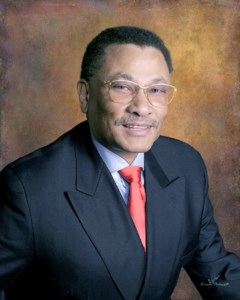
The Power to Heal the World – Remembering Dr. Trevor Soter John Hodge, MD

trevor-hodge-fort-smith-ar-obituary

Read Obituary

On behalf of the family of Dr. Trevor Hodge, I want to thank all of you for being here this morning.

Of course, I want to thank you for the way your presence here gives comfort to his family; but more than that, I want to thank you for the way I believe your presence here gives hope for the entire world!

For you have come here this morning to celebrate and to remember a life that was dedicated to loving and healing this world.

Every Sunday, our church gathers around this table to celebrate and remember the life of another who was also dedicated to loving and healing this world. We share bread. We drink from a cup, and we listen to his words: “Do this in remembrance of me.” If you want to celebrate my life, says Jesus, if you want to remember my life, then do this. Live on earth as I lived. Love the world as I loved. Welcome, accept, forgive, embrace, touch, and heal. Do this.

It is my hope that all who are here to remember and celebrate Trevor’s life understand that best way to do that, is to do it, to live and love as he lived and loved.

Because, my friends, that is what I believe our broken world needs now more than anything else. And I believe the love that Dr. Hodge shared with his patients, the love that this father shared with his children, his family, his wife, his community, has the power to heal this world.

On Valentine’s Day six years ago, Rev. Don Hubbard, a member of this church and former chaplain at Sparks Hospital, had the honor of officiating the marriage ceremony that celebrated and affirmed the love that Trevor and Penny shared with one another.

It was just a few weeks into their marriage when Trevor was diagnosed with cancer. Penny has said that “cancer was their marriage.” Thus, there are probably some, some who do not know any better, who would say: “What a tragic and heartbreaking marriage.” However, what they failed to factor in, and Penny will testify to this, is the power of love.

The diagnosis was grim. Of all people, Dr. Hodge knew it. Understandably, his first thoughts were to concede to the inevitability of it.

However, the love that Penny and Trevor had, that was affirmed weeks earlier during their wedding, does not concede.

For they affirmed the love that the Apostle Paul wrote about in the scripture that Rev. Hubbard read at their wedding from 1 Corinthians 13.

“If I speak in the tongues of angels, but do not have love, I am a noisy gong or a clanging cymbal. And if I have prophetic powers, and all faith, so as to remove mountains, but do not have love, I am nothing.”

In a dark world, where even religious voices can be among the most hate-filled voices, by loving others the way Trevor Hodge loved others, we have the blessed opportunity to be a shining beacon of love that has the power to change the world.

The Apostle continues…

Love is patient.  

Love is in it for the long-haul. It never quits. It doesn’t give up, give in or give out. Love is unrelenting, dedicated, and determined. Even when it would take Dr. Hodge two and a half hours to get dressed, and that’s with Penny’s help; even when he could no longer walk, it was a persistent, persevering, and patient love that got him to his office.

Love is kind.

Rev. Hubbard says that anytime he ever conversed with Dr. Hodge, whether it was about the chaplaincy and pastoral care, which Dr. Hodge believed wholeheartedly in, his grandfather, philosophy, fishing, fishing lures, literature, religion or politics, he noticed that Dr. Hodge always wore this half-smile on his face that exuded kindness, a kindness that it soothes all pain and heals all wounds. It shelters and protects.

Thus, it shouldn’t surprise us when we discovered that Trevor kept most of his pain private. He never wanted to bring pain to another, especially the ones he loved.

Love is not envious or boastful. It is not arrogant or rude.

Thirteenth century German theologian and philosopher Meister Eckhart is often credited with the following quote: “If the only prayer you ever say in your entire life is ‘thank you,’ that will be enough.”

I believe it is enough, because I believe that this simple prayer indicates that one understands that all of life is a free gift of God’s amazing grace.

I believe there are basically two types of people in this world: People who get the concept of grace and people who don’t get it. People who fail to see the grace of it all are usually not what we call “nice” people. They are boastful and rude. They act as if they have somehow earned their life, done something to deserve it. They walk around with this air that the world owes them something. In their arrogance, they become hostile if life does not go their way. After all, they deserve better.

Then there are those like Trevor Hodge who get it, who truly understand the sheer grace of it all. They understand that all of life is gift. It is unearned and undeserved. It is mysteriously and utterly precious. And these are the ones we generally call “nice” people or “gracious people.”

Love doesn’t insist on its own way.

It is flexible, pliable, and sensitive. It cares for others more than self. It is never “me first.” It is always willing to change courses, take another path, choose another way to love and help others.

One day, walking in Queens, New York when he was young, Trevor’s life changed forever. A student of drama and English literature, medical school was nowhere in Trevor’s future. As he was walking along, he heard this terrible commotion behind him. When he turned around, he saw a man, the victim of a horrific stabbing, lying on the ground, bleeding to death. Trevor said he had never felt more helpless in his life. In that moment, he promised God and himself that he would never be helpless in a situation like that again. He soon enrolled in medical school and never looked back. Even near the end of his life, Trevor’s concern was always for others, his patients, his family and his community.

Love is not irritable or resentful.

It isn’t touchy or cold. It isn’t easily offended, indignant or bitter. It is good-humored, warm and hospitable. It never complains.

And if anyone had any reason to complain it was Trevor. To work as hard as he worked, to care for others as much as he cared for others, without the opportunity to enjoy a well-earned retirement, would make even the sweetest personality bitter. The truth is: a diagnosis like Trevor’s changes most people for the worse.

But not Trevor. Trevor remained grateful for the gift of every day, no matter how difficult that day was. That half-smile he wore as he visited with you never diminished.

Trevor loved to tease and had a great sense of humor. Dr. Auturo Meade, a doctor here from Mexico, remembers Trevor incessantly bragging on his children. “He was so proud of his kids,” Dr. Meade says. “But he was especially proud when his daughter made a movie for one of her classes, a Mexican film that featured Mexican bandits. He was always coming up to me telling me I needed to see this film she made about some bandits from Mexico.”

Love does not keep account of mistakes.

It doesn’t keep score of the sins of others. It doesn’t “Love the sinner, but hate the sin.” It never thinks: “I am better than he” or “I am more holy than she.” It never judges, condemns, or discriminates.

People like Trevor who truly understand the grace of it all, that life itself is gift, are the first to extend grace to others.

Love is truthful.

It isn’t perfect, but it’s honest. It’s real. It’s authentic. And it’s all the more forgiving, all the more gracious, because of that.

More than one person has told me that they did not know of a pretentious bone in Trevor’s body. Unlike some with the intellect and talent of Dr. Hodge, he never made anyone feel that they were less human than he. John Mundy, a respiratory therapist said: “Whenever I saw him at the hospital, he would always talk to me as if I was his equal. He was always easy to relate to, and he never met a stranger.” I believe that his humanity enabled him to do something that is lacking in our country today—to truly empathize with others.

Love bears all things.

It is courageous and generous. It is self-expending and sacrificial. It bends over backwards. It is always willing to go out of its way, take an extra step, even walk an extra mile.

In a fight like the one Trevor had with cancer, many would have thrown in the towel years ago. But Trevor had brave, self-denying love in his corner, which helped him, in the words of the Apostle Paul, to fight a good fight. When we have love in our corner, there is no mountain we can’t climb.

Love believes all things.

It always looks for the good, for the very best in the other or the situation, even if that best is sometimes buried deeply or covered completely. It is positive and encouraging.

Although he was sick, every day was a gift. Although he was weak, every moment was grace. In the end, Trevor did not have the life that he expected, but he was very grateful for the life that he had. Perhaps that is why Trevor always told us he was ok, because to Trevor, he was always ok. No matter the situation, he was always blessed.

Love knows no limit to its endurance, no end to its trust, and no fading of its hope.

Love can outlast anything. It can not be silenced. It can never be defeated. Love always wins. It still stands when all else has fallen.

Love reveals how powerless an enemy as formidable as cancer truly is. Just when we are tempted to believe that there is nothing that cancer cannot destroy, we meet a man like Dr. Trevor Hodge, and we learn with the anonymous author of the following words that there are many things that cancer cannot do.

Cancer cannot cripple love.

It cannot shatter hope.

It cannot corrode faith.

It cannot eat away peace.

It cannot destroy confidence.

It cannot kill friendship.

It cannot shut out memories.

It cannot silence courage.

It cannot invade the soul.

It cannot reduce eternal life.

It cannot quench the Spirit.

It cannot lessen the power of the resurrection.

And the good news is that there is nothing that love cannot do. Love can change everything.

Love can transform sorrow into joy, despair into hope and death into life.

Love—unconditional, unreserved, unrelenting love—can transform six, tragic, heart-breaking years of marriage with cancer into six amazing, heart-fulfilling years of marital bliss.

Love can transform a funeral service into a service of celebration

Love can heal a broken world.

Love can bring down walls and break chains.

Love can cause hate, violence, racism and all kinds of bigotry to pass away and all of creation to be born again.

So, thank you for being here today. Because of the life of Dr. Trevor Hodge, because of what we are going to do in this world to remember and celebrate his life, there is hope for us all.

Going High When It Is More Popular to Go Low

Red Hen

A restaurant owner refuses to serve the White House Press Secretary and her friends, and people cheer: “Serves them right! If a baker can refuse to bake a cake for religious and moral convictions, then a restaurant owner can refuse to serve an entrée for religious and moral convictions! If they can be ugly, then we can be ugly! We have to fight fire with fire!”

But as my mother taught me a long time ago: “Two wrongs don’t make a right.” And “an eye for an eye leaves everyone blind.”

Besides that, being more ugly never produces beautiful results. Things can get out of hand. And a fire that gets out of hand can destroy everything.

Rev. Dr. Martin Martin Luther King Jr. prophetically said, “Darkness cannot drive out darkness; only light can do that. Hate cannot drive out hate; only love can do that.”

But you say, “Being calm doesn’t work! Being moderate isn’t helping! Being civil doesn’t change anything!”

I am not advocating calmness, moderation or civility. I am advocating being fired-up and fuming…with love. I am advocating being radical and uncompromising…with love. When it comes to love, I am advocating being revolutionary!

For I believe that passionate, intemperate and inclusive love has the power to change the world.

We can be angry. We should be angry. Anytime someone hurts any of God’s children, love should rile us up like a mother bear robbed of her cubs (Hosea 13:8).

In responding to extreme evil, we can be extreme. But we must always go in the opposite direction. We must fight extreme meanness with extreme kindness; extreme callousness with extreme empathy; extreme indifference with extreme love.

With the Apostle Paul, I believe love bears all things. It is courageous and generous. It is self-expending and sacrificial. It bends over backwards. It is always willing to go out of its way, take an extra step, even walk an extra mile. Love believes all things. It always looks for the good, for the very best in the other, even if that best is sometimes buried deeply or covered completely. It is positive and encouraging. Love knows no limit to its endurance, no end to its trust, and no fading of its hope. Love wins.

Therefore:

While some refuse to bake a cake or cook a steak for their enemies, we gladly serve our enemies the best cake and steak they have ever eaten.

While some childishly hurl harassing and dishonest insults at their opposition, we engage in respectful and truthful conversation with all people.

While some rule with threats and intimidation, we lead with service and compassion.

While some indoctrinate and propagate a fear of the other that brings out the worst in people, we teach the beauty of diversity that encourages the image of God that is in all people to break out.

While some take the low road, we take the high road. And we take it all the way.

Father’s Day Wake-Up Call


Children at the border

Let every person be subject to the governing authorities; for there is no authority except from God, and those authorities that exist have been instituted by God. Therefore, whoever resists authority resists what God has appointed, and those who resist will incur judgment (Romans 13:1-2).

Yes, Romans 13 says that. But that is not all it says. After writing a few sentences on obeying the laws of the state, the Apostle Paul begins echoing the words of Jesus:

You shall not commit adultery; You shall not murder; You shall not steal; You shall not covet”; and any other commandment, are summed up in this word, ‘Love your neighbor as yourself.’ Love does no wrong to a neighbor; therefore, love is the fulfilling of the law (Romans 13:8-10).

Then, in the very next verse, Paul writes that “now is the moment” we need to “wake up.”

Besides this, you know what time it is, how it is now the moment for you to wake from sleep. For salvation is nearer to us now than when we became believers; the night is far gone, the day is near. Let us then lay aside the works of darkness and put on the armor of light (Romans 13:11-12).

When it comes to being subject to the supreme law to love our neighbors, too many Christians today have hit the snooze button. They have pulled the covers over their heads and have closed their eyes. For whatever reason: self-preservation; greed; racism; or to protect their privileged positions, they seek darkness over light, judgment over grace, division over unity, exclusion over acceptance, and hate over love.

The Apostle John warns us of “false prophets” who possess “the spirit of the anti-Christ” and “a spirit of error” who can easily lead the people of God astray (1 John 4:1-6). Stressing how important it is for Christians possess “a spirit of love,” he then pleads:

Love one another, because love is from God; everyone who loves is born of God and knows God. Whoever does not love does not know God, for God is love…  No one has ever seen God; if we love one another, God lives in us, and God’s love is perfected in us (1 John 4:7-12).

Yes, the Bible says to be subject to the governing authorities. But it says much more than that. One would have to be asleep not to know it.

It is Father’s Day. Our neighbors are being harmed. I can not think of a better day for Christians to wake up. Now is the moment.

The Church Is in the Clothing Business

welcome-1024x493

Genesis 3 NRSV

How often have you watched a pet dog sprawled all out taking a nap in the middle of the day, and thought to yourself: “Must be nice!” Would you just look at Max or Buddy or Bella or Lucy? Not a single care in the world! No job. No bills to pay. No groceries to buy. No dishes to wash. Never has to stand in line at Wal-Mart. No knowledge whatsoever of good and evil. No knowledge of the conflict between Israel and Palestine. No knowledge of children being separated from their families at the border, of the opioid drug crises, of people living in poverty, or people living with mental illness. They know of no friends who hurt or desert them. They’re unaware of any sick family members, ambivalent to the certainty that they will one day die, unmindful even that they are a dog, and oblivious to the reality that they are sprawled all out on the living room floor completely naked. No shame whatsoever. They’re in paradise.

Sounds to me like the two who represent all of humanity, who even today, represent you and me: Adam and Eve. That is, before they ate that apple…or that orange or that peach or that fig or that banana. Whatever it was, before they ate that fruit from the tree of knowledge, they were just happy-go-lucky animals sprawled all out in a paradise with no knowledge of good and evil whatsoever: no knowledge of death and disease; no awareness of pain and grief; not even a clue that they would ever have to work hard to make a living; unaware that they were broken, fragmented, and sinful creatures; unmindful that they were even human, humans who in their self-centeredness will continually disobey the Creator’s commands and abuse the creation which that had been graciously given.

And they were also unmindful of the danger that lurked in their paradise, that crafty serpent: that symbol of everything chaotic and evil, that enigmatic, yet personal force of temptation that somehow, we have no explanation of why, was already present, preexisting and existing in the garden alongside of humanity. And because of this unholy force or presence or energy, the sordid self-centeredness of Adam and Eve, along with the knowledge of good and evil was suddenly made known. The shame of who they now knew they were was almost too much for them to bear.

For who has not said: “I wished I never knew!” “I wished you hadn’t told me that!” “I would be so much better off if I just didn’t know!”  Sometimes ignorance is bliss. Sometimes ignorance is paradise.

Paradise is lost as Adam and Eve, humanity, each one of us, live in a world where we know way too much, where we’re too smart for our own good. We live with the knowledge that all is broken, with a knowledge of pain and suffering, stress and strife, sadness and grief. Furthermore, we live in a world where we know that one day, we are all going to die.

We also live in a world where we make countless mistakes, and we know it. We are selfish, and we know it. We live to save our lives, protect our lives, look after number one at the expense of everyone else, and we know it. We know we have done some terrible things, and we know we have not done some good things, which is equally, if not more terrible. With our cursed knowledge, we can easily relate to the Apostle Paul’s words to the Romans: “For I know that nothing good dwells within me, that is, in my flesh. I can will what is right, but I cannot do it.For I do not do the good I want, but the evil I do not want is what I do” (Romans 7:18-19).

And because we know, we live with a lot of shame. And we spend much of our energy, time and resources trying to cover it, hide it, masquerade it.

I have always been a terrible golfer, and because of that, I really have not played much in the last few years. However, when I used to play more, I would make sure I always wore the latest styles in golf apparel and footwear. I always had a new golf glove to wear and a nice golf bag with my shiny and very organized clubs. My thinking was: “If I wasn’t a good golfer, dadgummit, I was going to look like a good golfer!”

Thus, I can easily relate to Adam and Eve who worked hard to cover up the truth of who they were with those fig leaves, when they ran and hid themselves from the presence of God whom they heard walking through the garden. Surely, Adam and Eve know by now that you can run, but you cannot hide.

God then asks a question that is as liberating as it is frightening. It is a fascinatingly miraculous question when one considers the one who is doing the asking: “Where are you? Where are you? God, the creator of all that is, loves us so much that God yearns not only to be with us personally and intimately, but desires to be with us… where we are. Where we truly and honestly are, behind the masks and apparel, behind the allusions we have created, behind acts we portray.

As the old hymn goes: God wants to know of all the sins and griefs we bear. God wants to know our pain, our trials, our temptations, our trouble, our sorrows, and our every weakness. God wants to know if we are in a place where we are heavy laden, cumbered with a load of care, in a place where our friends despise or forsake us.

God calls out to Adam and Eve, to all of humanity, to each one of us: ‘Where are you? Because wherever you are, that is the place I want to be. So, please do not hide from me. Do not run away from me. Please, do not be afraid and do not be ashamed. I want more than anything else to know you, to know you for who you really are. You don’t have to come to me. Let me come to you, find you, be with you, walk alongside of you. Let me love you.”

Adam comes out behind the trees and responds, “But God I am naked! All of me is uncovered, out in the open. My true colors are laid bare for the entire world to see. All of my failures, all of my fears, all of my brokenness, all of my self-centeredness, all of my mess is out there, completely exposed. You, O God, have created us to lose ourselves, and all I want to do is to find myself, to save myself, protect myself. God, I am a sinner, and what’s worse, now I know it. And I am so ashamed.”

Then God does for Adam and Eve something that they cannot do for themselves. They cannot deal with their shame. They cannot deal with their sin. The reality of who they had become was too much for them to bear.

As revealed in every act of Jesus of Nazareth, God responds to their shame by doing something amazing. God bends God’s self to the ground, uses God’s own hands, and creates garments of skin, and lovingly and very graciously clothes Adam and Eve.

God meets Adam and Eve where they truly are. They are naked, exposed. And what’s worse, unlike little Max or Buddy, Bella or Lucy sprawled out naked on your living room floor, Adam and Eve are naked and exposed, and they know it. All has been laid bare, and they could not be more frightened and ashamed.

And God responds to their nakedness, God responds to all of their fear and shame, by amazingly clothing them with grace.

And here’s the good news. The only thing that may be more frightening than being fully known, completely naked, exposed for who we really are, all our sins and griefs laid bare, is perhaps the prospect of never ever being fully known, the prospect of going through this life without anyone ever truly knowing us, and then accepting us, loving us, clothing us with grace. The good news is that God wants to know us, every part of us, and then God still wants to love us and forgive us.

I believe with all of my heart that this is one of our primary purposes as a community of faith. First and foremost, we are to always be a community of grace. If people cannot come through our doors, take off their masks, stop the charade, and honestly lay bare all of their sin and all of their griefs, knowing that they will never be judged, looked down upon or condemned, then I do not believe we are a church. I am not sure what type of business we are, but we are not a church, we are not a community of grace. As a church we are to always be in the business of yearning to meet people where they are, so we can be with them, so we can walk alongside of them, so we can listen to them, learn from them, forgive them and love them.

As the church, we are to always be in the clothing business. We are to always be in the business of bending ourselves to the ground, using our own hands, our resources and our talents, to clothe one another, to clothe all people, with the grace of God in the name of Jesus the Christ.


A Message to Graduates: How Low Can You Go?

Carson Graduation

Luke 14:7-11 NRSV

Today, all over this country, high school and college graduates are beacons of hope in a dark world! It has been said that they belong to a generation that is “up and coming.” They refuse to be silent. They are passionate, relentless, determined youth with high ideals and high ambitions to change the world! I look at how they are courageously standing up and speaking out, inspiring us to be a better a better people, and I ask, “My God, how highcan they go?”

They were probably taught at a very early age that up highis where it is at, and no doubt, they spent the first eighteen years of their lives trying to grow up, graduate highschool and then possibly pursue an even highereducation. All so they move upa little higherin this world, keep climbing to make sure they are always upward bound: upfor a promotion so they can move upthe ladder. For up, up high is how our society measures success.

Up high, we are told, is where we will find our life, a life that is full, complete, satisfied, and abundant.Up highis where we are able rub elbows with others who also shaped up, grownupand moved up.Up high is where we find what we call the “in” crowd. They are the “up” and the “in” as opposed to the “down” and the “out.”

So, we set goals that are high. We seek to make high marks, achieve high grades, meet high expectations.

The message of nearly every motivational speaker or life coach in America today is all about how to shape upand move up, aim high and soar high.

After all, who in their right mind would want to move in the opposite direction? Who wants to change directions from up high to down low?  As the late Henri Nouwen one of my favorite preachers, has said: “Downward mobility [in our society] is not only discouraged, but even considered unwise, unhealthy or downright stupid.”

Can I get an “Amen?” Come on now, really? Who in their right mind would want to lower themselves? What mind must you have to want to humble yourself, move to and sit at the lowest seat at the table, lower yourself to the ground to wash another’s feet, descend down the economic ladder to relate to people who are poor, be with and love people who are down and out?

I think we know what mind.

When God chose to reveal to the world a life that is full, abundant and eternal, God’s will for all people, God chose a life of downward mobility. God emptied God’s self, poured God’s self out, humbled God’s self, lowered God’s self and came down. Down to meet us where we are, down to earth as a lowly baby, born in a lowly stable, laid down in a feeding troth to worshipped by down and out shepherds.

The scriptures do say that Jesus grew upward in stature; however, the gospel writers continually paint a portrait Jesus’ life as one of downward mobility. He is continually bending himself to the ground, getting his hands dirty, to touch the places in people that most need touching.

While his disciples seemed to always focus on privilege and honor and upward mobility, chastising little children who needed to shape up and grow up before they could come to Jesus, Jesus argued that the Kingdom of God actually belonged to such children.

While his disciples argued about who was going to be promoted, who was going to graduate to be the first in the Kingdom, Jesus frustrated them (and if we are honest, frustrated us) by doing things like moving downto sit at the lowest seat at the table, bending downto wash their feet, stooping downto welcome small children, crouching downto forgive a sinner, reaching downto serve people who are poor, lowering himself downto accept people who had been cast out of their community. He was always always getting down, to touch the leper, heal the sick, and raise the dead.

While others exercised worldly power to graduate and move up, climb up, and advance, Jesus exercised a strange and peculiar power that always propelled him in the opposite direction. It is not a power that rules but is a power that serves. It is not a power that takes but is a power that gives. It is not a power that seizes but is a power that suffers. It is not a power that dominates but is a power that dies.

And nearing the culmination of his downward life, to save the world, Jesus went to highest seats of power in the capital city of Jerusalem, not on a white stallion with an elite army of high ranking soldiers, but riding a borrowed donkey with a handful of ragtag students who never graduated from anything. The whole scene of Jesus riding that donkey, in the words of Henri Nouwen, looks “downright stupid.”

This is the narrow and seemingly foolish way of downward mobility, the descending way of Jesus toward the poor, toward the suffering, the marginalized, the prisoners, the refugees, the undocumented, the lonely, the hungry, the dying, the tortured, the homeless—toward all who thirst and hunger justice and compassion.

And what do they have to offer? Those who are down and out in our world cannot offer success, popularity, riches, or worldly power, but they do offer the way to life, full, complete, abundant and eternal.[i]

So today, as we recognize and pray for our graduates, as our hearts are filled with hope, and we ask, “My God, how high can these young men and women, these future leaders of the world go?” We are also asking, with perhaps even greater hope for the world and the Kingdom of God, “My God, how lowcan they go? How low can these young men and women, these future leaders of the world, these future leaders of the church go? How lowcan they go to fulfill the divine purposes that God has for each of their lives?

My hope is that each graduate who is being recognized in churches all across are country today is in church not to help them move up to be with the “in” crowd,” or there to find something in worship that will make them more successful, more affluent, climb a little higher. I hope they are not even in church looking to be uplifted or to be more upbeat or for some kind of upstart to get this new chapter in their life headed on an upswing.

My hope is that they are in worship because they have chosen to move in the opposite direction.

My hope is that they want to find ways to climb down, to get low, to lose themselves, to die to themselves and live for Christ. For they have heard, and they have believed Jesus when he said: “Anyone who wants to become great among you must be your servant, and anyone who wants to be first among you must be your slave, just as the Son of Man came, not to be served, but to serve, and to give his life as a ransom for many (Matthew 20:25-28).

Spencer Allen, Jamie Pape, Jason Pryor and Kourtney Williamson, although it sounds good to be a part of the up and cominggeneration, my hope is that you will be a generation that is always down and going. May you always go down, get low, sacrificially and selflessly. And then go out bending yourselves down to the ground if you have to, to touch the places in people that most need touching. May you go out and stoop down to welcome and accept and serve all children: children who are sick, children with different abilities. May you go out and crouch down to care for the sick and the elderly. May you go out and reach down to serve the poor, lower yourselves down to accept people who are marginalized, and may you get low, get down on your knees to pray for people who are grieving and the lost.

And, there, as low as you can go, may you truly find your life, your purpose in this world, one that is full, complete, satisfied, abundant and eternal. Amen.

INVITATION TO COMMUNION

Each Sunday, we gather around a table to get our minds right. To open our minds, focus and refocus our minds, even blow our minds wide open if we have to, to let the same mind be in us that was in

in Christ Jesus,

who, though he was in the form of God,

did not regard equality with God as something to be exploited,

but emptied himself, taking the form of a slave,

being born in human likeness. And being found in human form,

he humbled himself

and became obedient to the point of death—even death on a cross (Philippians 2:5-8).

Commissioning and Benediction

Go out bending yourselves down to the ground if you have to, to touch the places in people that most need touching. Go out and stoop down to welcome and accept and care for all children, to love on those in hospitals and nursing homes. Go out and reach down to serve the poor, lower yourselves down to accept the outcast and the marginalized, and may you get low, get down on your knees to pray for the grieving and the lost.

And, there, as low as you can go, may you truly find your life, your purpose in this world, one that is full, complete, satisfied, abundant and eternal. Amen.

[i]The sermon is inspired by this paraphrase from Henri Nouwen, Here and Now, 138-139.