

The disciples were sharing with Jesus all they have been doing while they were out on the road publicly being the church, proclaiming the way of love that Jesus taught and embodied. They were telling Jesus all they have been doing to make the world more peaceful, equitable, and just for all people, especially for the poor and those marginalized by sick religion and greedy politics, and for foreigners, including Samaritans. They were telling Jesus all they have been doing to make sure the hungry were fed, strangers were welcomed, and the sick received healthcare.
And, while they were sharing with Jesus, they must have looked like some of us are looking these days: exhausted, frustrated, and even afraid.
Because like in Jesus’ day, the times we live in are serious. The threats are critical. The dangers are real. The call for mass deportations of immigrants grows louder. Fascism grows more popular, while democracy loses favor. Sixty years of civil rights progress is being threatened. The rights women have enjoyed for fifty years have been taken away. The very identity of our nation is at risk. People today who claim to follow Jesus seem to be opposed to everything for which Jesus stood. And we the people, we who are trying to follow Jesus, are tired and afraid.
Jesus looks at the weary disciples and says: “Come away to a deserted place and rest a while.” Then, they boarded a boat and went on a cruise.
Sounds wonderful, doesn’t it? That we could all just go to some place to get away from it all. How nice would it take a cruise for the next six months!
I remember that’s exactly what I did after one presidential election. For three months, I disengaged and withdrew from everything happening in Washington. From November to February, I avoided all news. If Lori was watching MSNBC in the living room, I would ask her to turn the channel before I walked into the room.
Unlike the disciples, I didn’t own a boat, but I did have something they didn’t. I had cable TV and something magical called ESPN! So, I put my head in the sand by focusing all of my attention on basketball and football. I did whatever I could do to pretend that nothing bad had happened world, that none of my friends felt threatened or lost. For three months, my best friend was denial.
But notice what happened to Jesus and the disciples when they tried to get away from it all. As soon as the people saw them board the boat, they spread the word and hurried to Jesus’ port of arrival ahead of them.
Jesus sees the great crowd, and (here’s the good news) he has “compassion for them.”
To truly understand this good news, we need to know something about this rich Greek word in this verse translated “compassion” It is σπλαγχνίζομαι (splanch-nizo-mai).
It is a visceral word which literally means to feel something deep in the gut. When Jesus sees the crowd that had gathered and that the people seemed lost and felt threatened, like sheep without a shepherd, his concern for them is gut-wrenching. The fear and needs of the people turns his stomach.
So, he and the disciples immediately go back to work, proclaiming good news to the poor, recovery of the sight to the blind, and freedom to the oppressed, while opening up a free clinic for everyone onsite!
As I said last month, we all need a Sabbath. We all need a little time away. But for the follower of Jesus, our time away will always be short-lived, because when we are following Jesus, when we are out on the road with Jesus in the public square, when heads are out of the sand, when our eyes are wide-open in the world, we will always see a great crowd in need: people who are hungry for food and for dignity, hungry for their lives to matter; people who are thirsting for water and for equality, thirsting to be seen as the image of God.
And when we really get to know them, when walk in their shoes, when we understand where they are coming from, their pain will be like punch in our own gut. Our stomachs will turn. And experiencing gut-wrenching pain, we will be stirred to love-inspired action.
I have heard and I have said that our nation has “an empathy crisis.” But I am beginning to believe that might not be the case. Because, I believe most all human beings were born with the capacity for empathy. Of course, there are few exceptions— those with dark, narcissistic tendencies, those whose hearts have been hardened by fear, greed and selfishness. But I do not believe they are not the majority.
And this, I believe, is the good news. This is our hope. The hope is in our guts. The hope is that most people have really do have the capacity for empathy which leads them to love.
For example, when most people read Lori and my story of losing our first child, when half-way into the pregnancy we discovered the baby did not have an abdominal cavity to protect their organs, leading us to make the difficult and painful decision to abort the pregnancy, most people demonstrate great empathy. Our personal story moves them. Reading our story, people have said they felt our pain. They shared our grief. Some told me that our story changed their position on abortion, or it confirmed their belief that the decision to terminate a pregnancy should be left up to the woman and not to a government that is unfamiliar with the situation.
However, there are a few people who continue to shock me with their cold-heartedness. Just last week on Facebook, someone I have not seen since high school, and to be honest, I don’t remember seeing her then, commenting on our story, called Lori “a murderer.” Can you believe that?
Which in my mind immediately raised the question about my high school classmate: “Is her heart really that cold? How can anyone’s heart, or gut, be so callous? To call Lori “a murderer?”
But it occurred to me. The odds are that this woman is not a sociopath. Her problem is that she just doesn’t know Lori. And she certainly doesn’t know me very well. For everyone who truly knows us knows that if Lori was a murderer, I would have been dead a long time ago!
So, maybe our nation does not have so much of an empathy crisis as we have a proximity crisis. We have a too-many-people-living-in-a-bubble crisis. A too-many-people-tempted-to-keep-their-heads-in-the-sand crisis.
For too many have gone away to some deserted place with people who look like them and think like them in order to escape from anyone who is different or has lived a different experience.
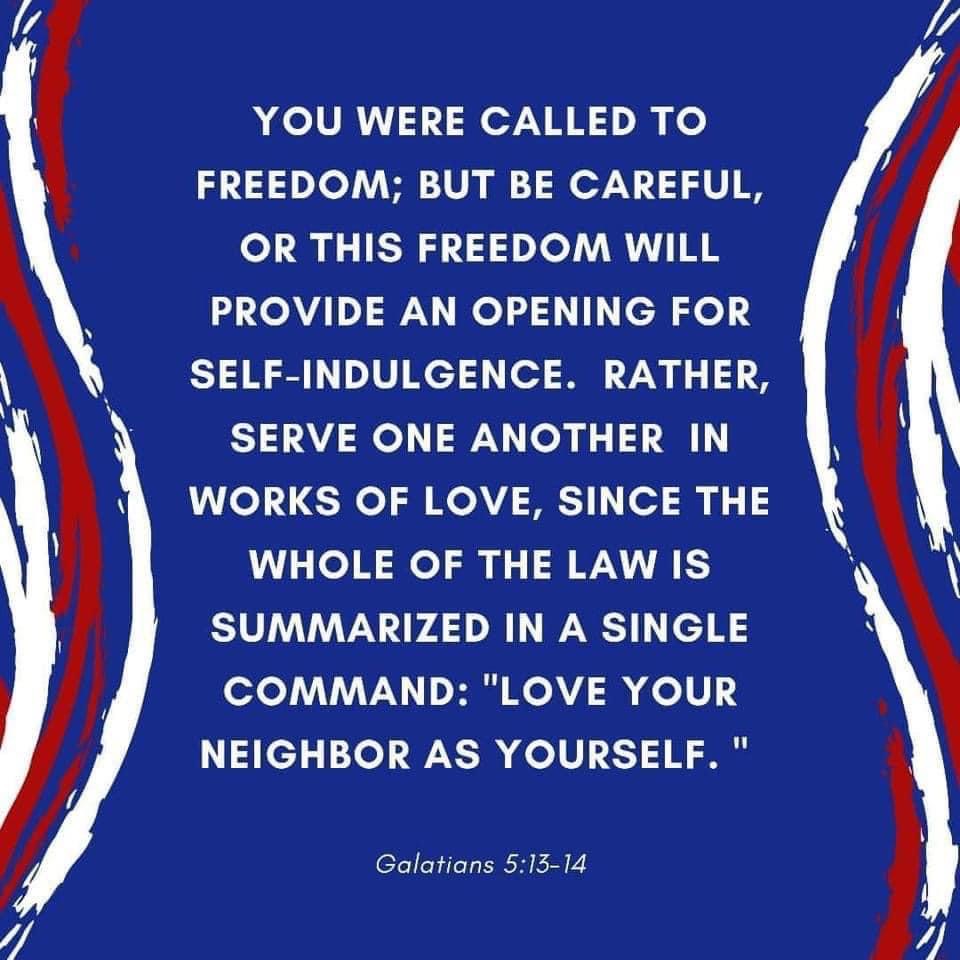
Because if we truly knew one another, if we put ourselves in the proximity to understand one another, to know others as we know ourselves, personally, intimately, then our gut would prevent us from ever hurting another. We would feel it in our gut to truly love our neighbors as we love ourselves, which means to want for others the same protections, the same freedom, and the same justice that we want for ourselves.
Since I have been living in Lynchburg, I have been in awe of my colleague Rev. Dan Harrison’s great compassion for the Palestinian people. Dan seems to possess a passionate outspokenness for the Palestinians which is greater than mine. He seems to possess more of an urgency to loudly speak out for their humanity in Israel’s war with Hamas than I possess.
Could his heart be a bit softer than mine? Is he a more devout follower of Jesus than me? Perhaps. But I believe it is more likely because Dan has lived in that region of the world. It is because Dan has very close friends who are Palestinian. He knows their experience, because he has lived their experience. Dan has literally walked in their shoes. He knows them and understands them, personally and intimately. And when they are afraid, when they feel dehumanized, and otherized, Dan feels it in his gut. And he is stirred to action.
Dan would say that he is not more devout. He is just in more pain. And he is in that pain because of proximity.
I believe most of us have what we need in our guts to save us and to save democracy. We don’t need more capacity for empathy. What we need is to rediscover the power of proximity.
That is why, that no matter how dark things get, we must resist the temptation to withdraw completely from our world, to go off to some deserted place with people like us, to get away from all others, to completely disengage from the world and all of its problems, to turn off the news and immerse ourselves with ESPN, Hulu or Netflix, to stick our heads in the sand and ignore our neighbors who feel lost, keeping them out of sight, out of mind. For withdrawing only adds to our nation’s crisis of proximity.
Jesus didn’t feel like he was punched in the gut on that boat. Mark says he felt the gut-wrenching pain as soon as he “saw the crowds.”
After decades of supporting the Christian Right, ghostwriting autobiographies for Jerry Falwell and Pat Robertson, Rev. Dr. Mel White came out of the closet writing his own autobiography Stranger at the Gate in 1994 and then became a full-time minster to the LGBTQIA+ community. In his latest book, Religion Gone Bad, Mel White issues a warning of the dangers of Christian Nationalism and its critical threat it is to democracy.
I love the stories of Mel White attending worship services at Thomas Road Baptist Church. I am told whenever Rev. Falwell would disparage queer people in a sermon, Rev. White would stand up so the entire congregation, including Falwell, would see him. Avoiding seeing Rev. White, standing tall and proud confronting the hate, was not an option for anyone.
The world today is a scary place, but for the follower of Jesus, sitting down is not an option. Getting on a boat to go on a cruise for the next six months may sound tempting, but for the follower of Jesus, it’s not an option.
Retreating, withdrawing and disengaging— it’s not an option.
Denial is not an option.
Being quiet on social media is not an option.
Avoiding talking about religion and politics with our family and friends because making them uncomfortable will stir up some trouble is not an option.
The times are too serious. The threat is too critical. The dangers are too real. And if you are a follower of Jesus, now is the time to get into some trouble, some good trouble.
Avoidance, politeness, moderation, even tolerance— it’s not an option. Now is the time for all who believe that the best thing we can do as humans to love our neighbors as ourselves to rise up with Mel White and stand tall allowing others to see and experience our suffering in their guts, which will then hopefully stir them to love-inspired action.
This is our hope. It’s in our gut. Amen.

 Just Love