Preparing the Way for Peace

Isaiah 11:1-10; Matthew 3:1-12

As if we needed it, Advent is the annual reminder that the world is not as it should be. But it is also our reminder that God is not finished with this world yet. It’s a reminder that God has plans for this world, and you and I are a part of those plans.

Advent is a holy tension. We wait and watch, but we wait and watch with hope. We light candles, because we believe the light still rises, and peace on earth is still possible, even during a time of deep violence.

Today, our nation remembers another Sunday morning when the world was plunged into deeper violence, when fear and grief reshaped lives overnight.

We remember Pearl Harbor today, not to glorify war, but to deepen our longing to be a people shaped by the peace that God promises. On a day we remember a time when peace collapsed, when meetings for diplomacy didn’t happen, when steps to find equitable solutions were not taken, we gather to proclaim a new day, a new time when swords are beaten into plowshares, and peace is not a distant dream, but a way of life.

And through our scripture lessons this morning, two prophets speak about this time: Isaiah and John the Baptist. Two voices, centuries apart, but carrying one message: God is breaking into this world with a peace that transforms everything!

Isaiah speaks with poetry. John speaks with fire.

Isaiah shows us the world God intends.

John tells us how we must prepare for it.

Isaiah invites us to imagine and dream.

John insists we repent and change.

Together, they give us the full message of Advent: the hope and the urgency; God’s promise and our responsibility.

I love that Isaiah begins Advent with a stump, and Matthew begins with a wilderness. Isaiah says: “A shoot shall come out from the stump of Jesse.” Matthew tells us: “In those days John the Baptist appeared in the wilderness.”

A stump is what remains after something has been cut down. Here, it belongs to Jesse, the father of King David, symbolizing the seemingly dead royal lineage of David.

A wilderness is a place where familiar paths have disappeared. It’s a place of withdrawal, isolation, and loneliness.

 And yet, both are places where God begins again. Both are places where grace breaks in. Both are places where hope refuses to die, and love finds a way!

Some of us have walked into Advent this year with stumps in our lives. There have been losses, endings, dreams cut down, seasons cut short.

Some are walking toward Christmas this year surrounded by wilderness. There is much uncertainty, weariness, loneliness, and feelings of lostness.

But both Isaiah and John remind us of the good news: that God does some of God’s best work in the places that seem barren. God is in the business of making a way when it seems like there’s no way.

Isaiah gives us a breathtaking vision of God’s business in this world. It’s of a world ruled not by fear, corruption, hate, and violence, but by justice, tenderness, compassion, and reconciliation.

Wolves lie down with lambs. Children play safely at the entrance of a cobra’s den. Predators and prey live at peace.

This isn’t some fantasy. It’s the reordering of the entire world. Isaiah saw what scripture calls “shalom:” a peace that heals, restores, and reshapes not only society, but the entire creation.

Isaiah says this peace will be led by a Spirit-filled one who will: “judge the poor with righteousness…and decide for the meek with equity.”

In other words, peace and justice are inseparable. We cannot have one without the other. Peace without justice is fragile. Peace without equity is deceptive. Peace that ignores any harm to others, or to the creation, is not peace at all.

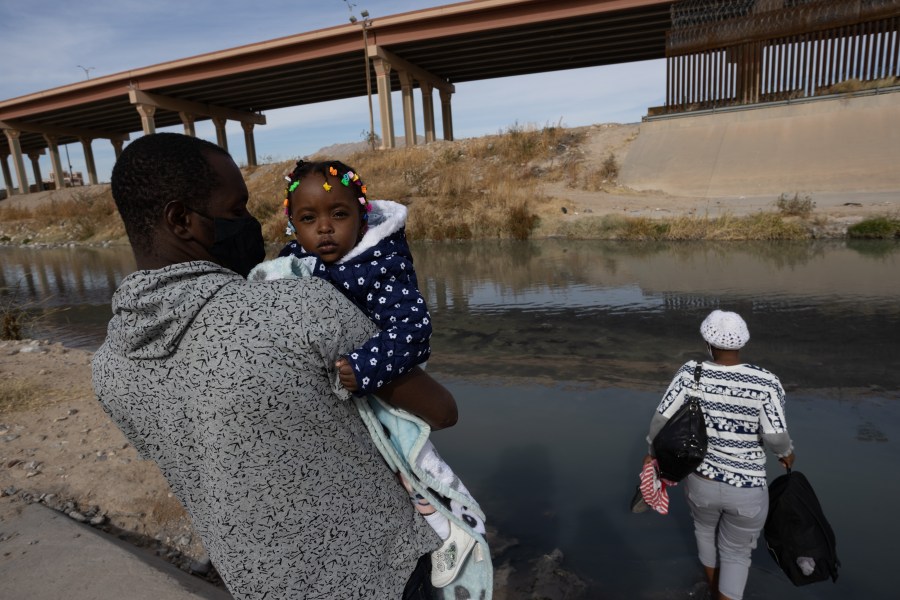
On this December 7th, as we remember our parents and grandparents waking up to the violence of Pearl Harbor, we must not pretend that violence belongs only to the past. For every day we wake up to stories of good people being yanked from their cars, or off the streets, on their way to work, on their way to school or to a thanksgiving dinner with their family, detained by masked men and deported because of the color of their skin. We wake up to stories of fishermen blown up in boats without due process or any chance to speak their truth.

 We see a world where fear is weaponized, food for the hungry is politicized, meanness is rationalized, human dignity is discounted, and inequity is engineered rather than accidental.

On this Pearl Harbor Sunday, we confess the many ways violence still shapes our world, and we cry out for the peace Isaiah dares to imagine and for which Christ commands us to prepare.

And then a wild, fiery preacher named John bursts into our story. He’s wearing some strange clothes. He’s got this crazy diet, and a voice that sounds like a siren screaming in the desert.

And his first word is not, “Peace.” No, it is, “Repent.”

Now, at first his preaching sounds like one of those hell, fire, and brimstone preachers we’ve heard before. We think, “no wonder they call him a Baptist!” At first, his message sounds like the opposite of Isaiah’s message, but the more we listen to it, we discover that John is not contradicting Isaiah. No, he’s showing us the way to Isaiah’s vision of peace.

You see, John knows that peace never arrives in this world easily. Peace is not passive. It’s not something we just sit back and wait for. Peace requires transformation. If peace is gonna come, then people gotta change!

If Isaiah shows us what peace looks like, John shows us what peace requires.

John calls us to turn from every way that does harm: our habits; our politics; our systems; our silence; our consumption; even our religion, especially our religion; to embrace a life of nonviolence. And he makes it clear that peace on earth is not some naïve dream from some woke, left-wing lunatic; it is a moral imperative from God. John is the prophet who prepares us for the world Isaiah describes.

John’s challenges his hearers to “bear fruit worthy of repentance.” In other words: Don’t just want peace and sing about peace. Live peace. Practice peace. Embody peace in your decisions, your priorities, your words, your vote, your compassion, your courage, your lifestyle.

Repentance is not self-hatred. It’s not guilt. And it’s not shame. True repentance is liberation. It’s simply returning to God’s way of peace that was intended for the creation.

On a day when the nation recalls the devastation of war, repentance becomes not just a personal religious ritual, but a moral commitment. It’s a commitment to dismantle hatred. It’s a commitment to stand with the vulnerable. It’s a commitment to uproot the seeds of harm before they ever take root in our lives or in our world.

That is the fruit worthy of repentance, as John says. That is the path toward the world Isaiah imagined.

And let’s not miss this. John’s harshest words are not aimed at the people the religious leaders dismissed as outsiders, unbelievers, or unclean. John’s sharpest critique is directed at the religious establishment itself, the ones who believed they were closest to God because of their heritage, their appearance, their privilege, their assumed moral superiority. He turns to them and says, “Do not presume… the axe is already lying at the root.”

John doesn’t say this because God delights in their tjdestruction. He’s not warning them because God wants to punish or shame them. John speaks this harsh word because God seeks to prune. God seeks to cut away anything, no matter how pious, polished, or patriotic, that destroys real peace in the world. And that includes any movement that weds faith to nationalism and proclaims that God’s blessing is the property of one nation, one party, one people. It includes any faith that blesses fear, excuses cruelty, or elevates domination as destiny.

We cannot cling to anything that kills equity.
We cannot preserve the things that preserve injustice.

We cannot call violence “protection,” or prejudice “tradition” or “heritage.”

We cannot keep watering the roots of fear, greed, Christian nationalism, or complacency, and then pretend we are bearing the fruit of peace.

Advent is the holy season of pruning, not for punishment, but for preparation. Advent will not allow us to believe that for peace, repentance is optional.

Isaiah teaches us what God’s peace looks like.

John teaches us how to make room for it.

Isaiah lifts our eyes.

John steadies our feet.

Isaiah speaks hope.

John calls for courage.

And together they prepare us for the Christ who comes not with military might, not with political coercion; but with justice, mercy, grace, humility, and fierce love: the Christ who judges with righteousness; the Christ who defends the meek, heals the sick, forgives the sinner, feeds the hungry, and includes the outcast.

This Advent, perhaps peace begins with us by letting something go:
a resentment we’ve carried too long; a fear that narrows our compassion; a selfishness that feeds our apathy and fuels our greed; a prejudice we inherited; a silence we use to avoid conflict.

Perhaps peace begins with healing something inside us.
Or perhaps peace begins with speaking a truth we’ve been afraid to name.
Or standing with someone who has been pushed to the margins.
Or choosing generosity in a season obsessed with consumption.
Or refusing despair in a world that seems addicted to it.

Or perhaps, on this December 7th, peace begins with remembering that violence is not inevitable, war is not destiny, and equitable solutions are real, and love, not hate, is what truly makes a nation great.

Advent is the season when we stare at the world’s stumps and declare, “A shoot’s gonna spout, and I can see it!”

We look at the wilderness and say, “A voice is calling, and I can hear it!”

We remember the wounds of history and pray with renewed commitment: “Never again!”

And we see the darkness all around us and still light our candles, because we trust the promise that the light still rises.

It rose from the stump of Jesse.
It rose in the waters of John’s baptism.
It rose in Bethlehem.
It rises in every act of justice.
It rises in every step toward peace.
It rises, even now, in us.

Thanks be to God. Amen.

Hope Still Rises

Isaiah 2:1-5

On this first Sunday of Advent, the beginning of the church year, we do what Christians have done for nearly two thousand years: we begin not with resolutions, but with a vision. Not with our predictions for the future, but with a word from a prophet who could see farther than his moment. We begin our year with Isaiah.

Isaiah looked at a world shaped by war, fractured by fear, and burdened by leaders who have lost their moral compass. The powerful nations of his day were stockpiling weapons, forming alliances of self-protection, and marching toward destruction. Violence was not the exception; it was the expectation. Peace was treated like a foolish dream.

And right in the middle of the darkness, Isaiah stepped forward and said, “I have seen something else.” He declared, “In days to come, the mountain of the Lord’s house shall be established as the highest of the mountains.”

It’s important for us to understand that Isaiah is not talking about geographical altitude here. He’s talking about moral altitude. He’s talking about a higher vision in a low-down world, a higher ethic in a selfish world, a higher purpose in a weary world.

Isaiah saw hope rising above the hills, not because humanity was finally learning how to love one another, not because it seemed like kings were suddenly going embrace kindness and empathy, not because history was correcting itself, the pendulum was finally swinging in the right direction, but because God was lifting the world toward something better.

This is the hope of Advent. It’s not optimism or sentimental waiting. It’s not whistling in the dark or something we naively sit around and wait to feel. Advent hope is an existential force that lifts us, a power beyond ourselves that refuses to let us down and keep us down.

Advent hope doesn’t deny the darkness, it climbs above it. Advent hope is God-given courage pulling our hearts, our communities, and even our nation toward higher ground. It’s a holy stubbornness, a refusal to give up and lie down in despair. It stands up tall. It climbs, and it calls the world toward the light. This is the vision Isaiah saw.

Isaiah’s mountain is not geographical; neither is it political. It’s not a nation with strong borders, for Isaiah says, “All nations shall stream to it.” The prophet imagines a world where people are not separating from one another in isolation but coming together toward something higher, where God is drawing the entire world upward.

And on that higher ground, people don’t seek supremacy; they seek solidarity. People don’t sharpen swords; they reshape them. They learn peace and study war no more. Isaiah is announcing a moral revolution: “They shall beat their swords into plowshares, and their spears into pruning hooks.”

It’s good for us to be reminded today that plowshares and pruning hooks are tools that grow food. They are tools that cultivate life. Isaiah describes what it looks like when nations truly choose life over death, when they refuse to spend its tax dollars not on war but on feeding the people.

It is a bold and disruptive vision. And it’s a necessary vision, for it confronts us with a truth that our nation must hear today, for we have not yet chosen plowshares over swords.

In her sermon on Thanksgiving morning during the Interfaith Service of Unity, Rev. Anghaarad Teague-Dees reminded us of the painful truth that “poverty exists, not because we cannot feed the poor, but because we cannot satisfy the rich.”

The United Nations recently calculated that the United States could end world hunger if we took less than 1% of the amount we annually spend on our military and spent it on food.

We pour billions into drones, missiles, and military expansion while families stand in line for food assistance that Congress debates like it’s a luxury. We allocate billions more to ICE detentions and border militarization than to programs like SNAP that put healthy food on the table for children, seniors, and working families. We have created a nation where it is easier to fund a weapon than a meal, easier to build a prison than a pantry, a nation that brags on opening a Department of War while it closes the department of education.

Isaiah stands in the middle of our budget priorities and declares: “God is calling you to live one way, but you insist on living the exact opposite way, which is not living.”

The prophet says a day is coming when nations will no longer invest in death but in life, where resources are used to cultivate, to nourish, and to heal. This is the future Advent is calls us to live into.

Although we are failing to live into that vision today, God has already planted signs throughout history showing us that this future is possible.

After the atrocities of World War II, the United Nations was formed. Imperfect, yes. But a step toward cooperation and peace.

Japan converted military industries into factories that built cameras, cars, and electronics, tools that helped rebuild global economies instead of destroying them.

In South Africa, after generations of apartheid, the Truth and Reconciliation Commission was formed to help the nation confront its past and rebuild toward peace.

These examples are not the fullness of Isaiah’s vision, but they are echoes of it, moments when swords were reshaped, moments when nations climbed a little closer to higher ground.

And oh, how we need such moments today as our world is aching today for higher ground.

This is where the spirit of the Moral Monday movement joins the voice of ancient prophecy.

On Monday, December 8, at 11 a.m., I will stand with other clergy outside Congressman McGuire’s office and call the Virginia legislature to higher ground as part of the Moral Monday movement. This movement was launched in 2013 with a document called “The Higher Ground Moral Declaration” which said, “it’s time to move beyond left and right, liberal and conservative, and uphold higher ground moral values!”

The declaration calls for a moral revolution of values rooted in scripture and in the foundational commitments of our nation. It names poverty, healthcare, wages, education, criminal justice, LGBTQ+ rights, immigrant dignity, environmental justice, and demilitarization as moral issues, not partisan ones.

It issues a prophetic, urgent call to the nation: “Come up to higher ground.”

Isaiah is saying the same thing. Isaiah climbs the mountain and then shouts back to the valley: “This is where we’re going. Come up higher!”

Advent calls us to join Isaiah, to say to every congressperson who weaponizes fear: “Come up higher.”

To every policymaker who refuses to lift the poor: “Come up higher.”

To every governor stripping rights from transgender children, healthcare from women, and food from the hungry: “Come up higher.

To every politician that believes more guns are the answer, on our streets, in our schools, “Come up higher.”

To every pulpit today that is choosing to stay silent as our immigrant neighbors are being terrorized, kidnapped by ICE, arrested and deported without any regard to due process, court orders or human dignity: “Come up higher.”

Higher than fear.

Higher than division.

Higher than cruelty.

Higher than self.

There is a mountain calling us today. And Advent is the church’s invitation to climb.

It is important to understand that Isaiah does not imagine individuals climbing this mountain alone. This is not a private, personal journey. We read in verse three: “Many peoples shall come and say, ‘Come, let us go up to the mountain of the Lord.’” This speaks to our need of community, to the reason church is important.

It is why we covenant with other churches and partner with nonprofits. It’s why we build coalitions with all who believe in the power love, why we work with others in acts of justice, mercy, and compassion. It’s why the Moral Monday chant is “Forward Together, Not One Step Back.”

Whenever we work together to feed families, we are climbing the mountain of the Lord.

Whenever we join hands to protect vulnerable children, when we stand shoulder to shoulder to shield our immigrant neighbors, we are climbing the mountain of the Lord.

Whenever we speak with one moral voice about dignity, equality, and compassion, we are one step closer to walking in the light of the Lord on the mountaintop.

The devotional book we created for you to pick up and take home today reminds us of this hope.

Hope is not sitting in the dark pretending everything will be fine. Hope is choosing to get up with others and walk toward the light of God’s future even when the present hurts. Hope is activism with prayer behind it. Hope is compassion with courage attached.

This is Isaiah’s invitation on this First Sunday of Advent: “Come, let us rise and walk in the light.”

Walk, not wait. Climb, not cower. Rise, not resign.

So today, let’s lift our eyes to the light rising in the darkness, lift our hearts to the hope God is placing before us, and lift our courage to meet the call of our faith.

And then, with Isaiah’s conviction, let’s speak to this weary world with prophetic clarity: “Come up higher. Come into the light. Come to higher ground where weapons become tools, where bombs become bread, where fear becomes love, where strangers become neighbors, and where all nations walk together in the ways of the Lord.”

The light is rising in the darkness. And with God’s help, we are rising too.

Amen.

The God of the Living

Luke 20:27-38

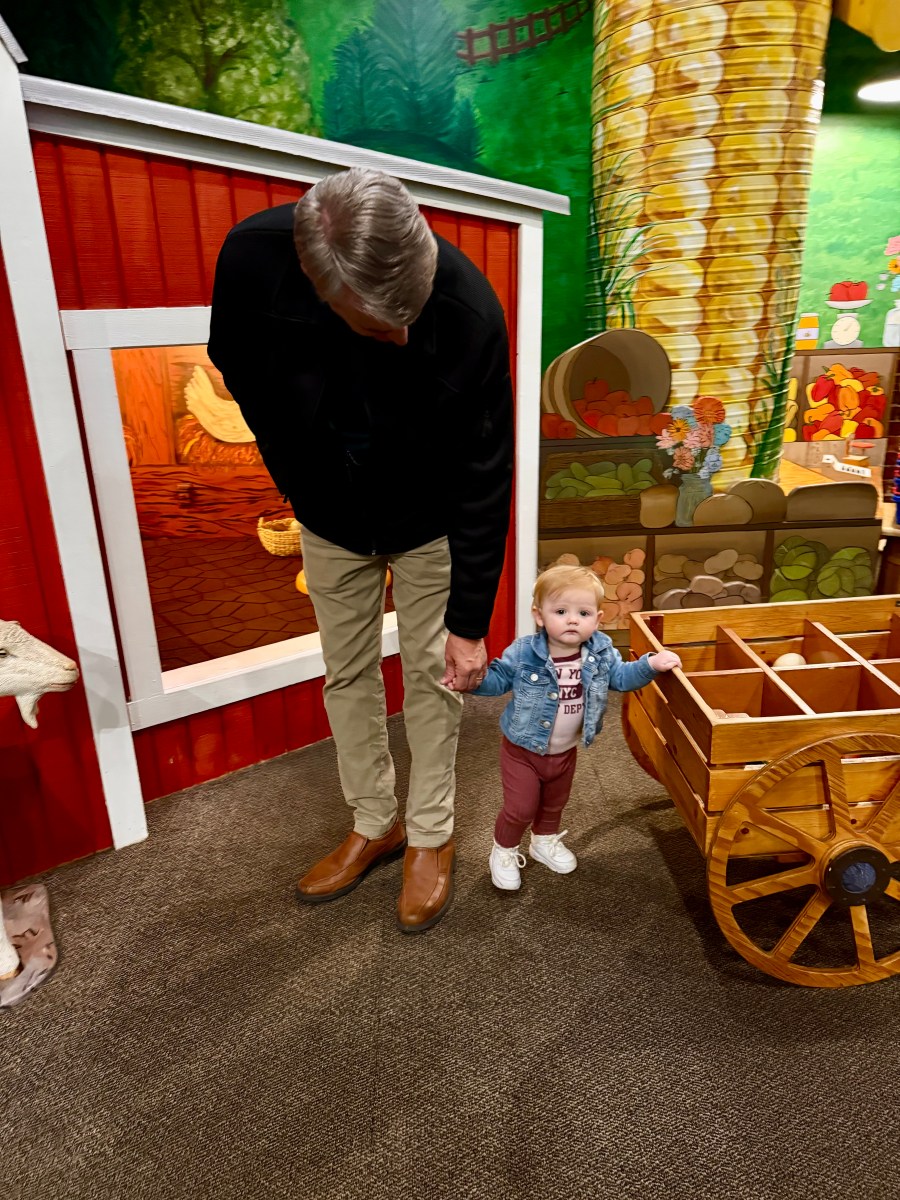
This morning, we gather in a sacred circle of love with parents and grandparents, their family and friends, and the wider church family to dedicate ourselves to God and to one another. We will make promises this morning to support a family as they raise their daughter in love, envelop her with mercy, teach her the stories of our faith, and to resist the powers and authorities that would deny her life.

We declare today what Jesus declared in the Gospel of Luke: that our God is not the God of the dead, but the God of the living.

That means we have a living, active, public faith. It’s not a private, personal faith without works that the book of James pronounced dead. It’s a living, working, breathing, forward-marching, justice-seeking, hope-singing faith. It’s a faith that lifts up little babies and baptizes big dreams. And it’s a faith that always refuses to let despair have the final word.

The story in Luke 20 begins with a question, but it’s not an honest question. The Sadducees, a group of religious elites who didn’t believe in the resurrection, have come to Jesus with a trick question with the purpose of trapping him in theological quicksand.

They spin this wild scenario about a woman who marries seven brothers, one after another, each dying without having children. Then they ask, “In the resurrection, whose wife will she be?”

Their question sounds absurd because it is absurd. For they’re not trying to understand the ways of God. They’re only trying to protect their ways, to defend their black and white, tidy little world where their control goes unchallenged, where the poor stay in their place, and where God doesn’t mess with the systems they’ve built to protect their power and privilege.

But Jesus, as he so often does, flips the table. He says, “You’re asking the wrong question. Resurrection isn’t about hierarchy or control. It’s about life, free, full, meaningful, unending, abundant life.”

It is then Jesus shakes their world with these powerful words: “God is not the God of the dead, but of the living; for to God all of them are alive.”

The God of the living is the one who refuses to be confined to any religious box or to be controlled by any political party.

The God of the living is the one who is forever calling life out of tombs and hope out of heartbreak.

The God of the living is the one who breathes over the chaos, creating a new world, and calling it good.

The God of the living is the one who takes what the empire crucifies and declares, “Love will win!”

This is the God who is still speaking, still creating, still re-creating, still resurrecting us from all the small deaths we endure today, like the death of empathy, the death of mercy, the death of social justice, the death of diversity, equity, and inclusion.

When we dedicate Maggie this morning, we are declaring our allegiance to this God, the God of the living, who says to all matter of death: “Rise up and live!”

When we dedicate Maggie, we are saying that we will raise her not in fear but in faith, not in greed but in generosity, not in apathy but in active love.

In a world that often chooses death (death by selfishness, death by bigotry, death by poverty, death by racism, death by environmental destruction, death by indifference), we are promising that we will stand with the God of resurrection who always chooses life.

Hannah and Austin, in dedicating Maggie today, hear this blessing from the church: As a parent, you are participating in resurrection. Every sleepless night, every patient conversation with your child, every prayer whispered over her fevered forehead— it’s all resurrection work.

Raising a child is resurrection work because it is an act of resistance. It is believing in the future when the world tells you to give up. It is saying, “As bad as things seem today, I still believe in tomorrow.”

You are forming in Maggie a living faith, one that will not just memorize Bible verses, but will embody them. One that will not just believe in Jesus, accept Jesus, but will follow Jesus, bearing witness to a faith that will learn to feed the hungry, to welcome the stranger, to defend the marginalized, and to speak truth in love.

When you hold Maggie and whisper prayers, when you read her stories of courage, when you teach her to say “please” and “thank you” and “I’m sorry,” and “I love you,” you are introducing them to the God of the living, the One who delights in her laughter, in her curiosity, and in her wide-eyed wonder.

You are shaping a world in which Maggie can live fully, freely, and faithfully.

And First Christian, this dedication isn’t just a family’s promise. It’s our promise too.

We are the village that surrounds all the children in our congregation with love. We are the people who will teach them how to sing, how to serve, and how to stand up for what’s right.

When we dedicate Maggie this morning, we are committing to build a world where all children can breathe clean air and drink clean water, where food is available and healthy, where their schools are safe and fully-funded, and where their neighbors are kind.

We’re committing to the slow, holy work of resurrection, to dismantling systems of death so that every child can live abundantly.

We are committing to be the church that loves all God’s children, no matter their color, gender, ability, sexuality, or identity, because to God, all of them deserve life, abundant and free.

The Sadducees were trapped in a world too small for the God Jesus proclaimed.

They couldn’t imagine life beyond the limits of their power, so they made up and absurd scenario to debate and stop Jesus because they feared that the God he was revealing was much more than they could control and much bigger than any binary box they’ve tried to put God into.

But Jesus taught them that the resurrection isn’t some theory to be debated. Resurrection is a truth to be lived.

Jesus taught that every act of love is resurrection.

Every cry for justice is resurrection.

Every march on behalf democracy and every silent vigil on behalf of peace is resurrection.

Every child lifted up in dedication is resurrection.

When we bless Maggie today, we’re making resurrection visible to the world.

We’re saying to the powers of death, “You will not win here.”

We’re saying to the forces of despair, “You will not have the last word.”

We’re saying to the powers of fear, “You can stop speaking now.”

And we’re saying to the God of the living, to the God of resurrection, that we will live like resurrection people.

To raise children who believe that love is stronger than hate.
To build communities that value life more than profit.
To be the kind of people who feed the hungry, comfort the grieving, stand with the oppressed, care for the planet, and keep singing hope, even in the dark.

Because to believe in the God of the living means more than believing in life after death. It means believing in life before death. It means believing that the kingdom of God can be glimpsed in the way we treat one another. It means that every child we nurture, every parent we support, every injustice we confront, every prayer we pray, every neighbor we love—it’s all resurrection work.

So, when Jesus says, “God is not the God of the dead, but of the living,” he’s just talking about heaven. He’s talking about this very moment— about the breath in your lungs, the heartbeat in your chest, the promise in Maggie’s eyes.

He’s talking about the way God’s Holy Spirit moves in this congregation and in this community. He’s talking about the way God keeps showing up, calling us to live, to love, to care, to feed, to lift one another higher, to believe in a better tomorrow.

As we dedicate Maggie today, we are bearing witness to the world that our God is the God of the living. And we, by grace and commitment, are a people of the living. And we will go from this place to build a world worthy of her life and the lives of all God’s children.

We will be bold enough to proclaim resurrection in a culture obsessed with violence, in a society dying with greed and hate, in a nation that withholds food from the hungry. We will love so fiercely that future generations will say of us: “Those were the people who truly chose life!” “Those were the ones who stood in the shadows of death and made resurrection visible!”

Because the God of the living is still breathing life into this world.
And that means our work and our hope is not finished yet.

Amen.


Pastoral Prayer

God of the living,
You are the breath in our lungs and the light in our eyes,
the pulse that moves through creation and the promise that will not let us go.
You are the beginning and the end,
and still You meet us right here, in the middle,
in this church, in this moment, in the ordinary holiness of our lives.

We give You thanks today for the gift of life:
for children who remind us how wonder works;
for parents who pour out love without counting the cost;
for seniors whose wisdom steadies our steps.
We thank You for laughter that catches us by surprise,
for tears that speak what words cannot,
and for the holy mystery that keeps drawing us back to You.

God, we confess that we do not always live as people of the living.
We get trapped in fear,
in cynicism,
in systems that trade life for profit and power.
Forgive us, O God.
Breathe new life into this congregation.
Teach us again to see Your image in every child,
Your presence in every neighbor,
Your Spirit in every act of justice and mercy.

We pray for those among us who are struggling:
for the sick and the sorrowing;
for those weighed down by anxiety or grief;
for those who have lost work, or hope, or direction.
Be near to them, God of the living.
Surround them with grace that will not let them go.

We pray for our world:
for peace in places of war;
for food in places of hunger;
for safety where children fear;
for compassion where cruelty has taken root.
Remind us that Your kingdom is not an idea for tomorrow,
but a movement for today
that resurrection is not just a promise after death,
but a power that transforms life right now.

And as we prepare to hear Your Word and dedicate these children,
open our hearts to Your living presence among us.
Make us brave enough to live as resurrection people
to raise our children in love,
to build communities of justice,
and to trust that Your Spirit is still breathing life into this world.

We pray all this in the name of Jesus,
the Christ of the living,
the friend of the broken,
the hope of every generation. Amen.


Child Dedication Liturgy

Today we celebrate the gift of life and the goodness of God who entrusts children to our care.

As a community of faith, we stand with these parents who bring their child, Margaret Evaline Grooms, before God, seeking grace, wisdom, and strength for the journey ahead.

We dedicate not only this child, but also ourselves, to be a people who nurture, teach, protect, and love.

For we follow the One who said, “Let the little children come to me, for it is to such as these that the kingdom of God belongs.

Charge to the Parents
Hannah and Austin, you have been given a sacred trust: to care for this child; to love them with patience and joy; to teach them the stories of faith; to model the way of Jesus in your home and in your life.

Do you promise to raise your child in the love of God, to encourage curiosity and compassion, to seek justice, to practice kindness, and to walk humbly with your child in faith?

Parents: We do, with God’s help.

Do you promise to teach your child that they are wonderfully made, beloved of God, and that nothing in life or in death can ever separate them from that love?

Parents: We do, with God’s help.

Charge to the Congregation

Church, this child does not belong to these parents alone— she belongs to all of us.

We are called to surround this family with a community of care: to teach, to listen, to celebrate, and to stand with them in every season.

Do you, as the gathered body of Christ, promise to support these parents in their sacred calling, and to help this child grow in love, faith, and justice?

Congregation: We do, with God’s help.

Do you promise to create a world where every child is safe, fed, valued, affirmed, and free to become all God intends? If so, please stand.

Join me in welcoming this child as we read together.

We welcome this child into our church family.
We promise to love them, to pray for them,
to teach them by our words and example,
and to walk with them as they grow in faith, hope, and love.
May our life together reflect the grace and joy of Christ.

Prayer of Dedication

God of the living,
we give You thanks for the gift of Maggie,
for the laughter, wonder, and light she brings into the world.
Breathe Your Spirit upon her, that she may grow strong in body and kind in heart.
Grant these parents wisdom, courage, and joy in their calling.
Surround them with love that will not let them go,
and a community that will not let them fall.

May this child come to know the depth of Your grace,
to trust Your goodness,
and to live in the fullness of Your love.

We dedicate Maggie and ourselves to Your care and keeping,
in the name of the God of the living:
Creator, Christ, and Holy Spirit. Amen.


Invitation to Communion
At this table, we meet the God of the living,
the One who welcomes children and sinners, saints and seekers.

Here, life conquers death.
Here, grace outshines guilt.
Here, love gets the last word.

So, come with your doubts and your dreams,
your gratitude and your grief.
Come, for this table is set for all of God’s children.
There is room enough for all here.

Invitation to Generosity
God is the giver of every good gift:

life and breath; laughter and love;
children to nurture and a community to sustain us.

As we dedicate our Maggie this morning, we also dedicate ourselves.
We give that others may live,
that every child may know the security of love,
that hope might have hands and faith might have feet.

Let us bring our gifts with joy,
trusting the God of the living to use them
for the healing of the world.

Commissioning and Benediction
Go now as people of the living God,
as people who believe that love is stronger than fear,
that hope is greater than despair,
and that new life is already breaking forth among us.

May the Spirit of the living Christ go with you,
to guide your steps,
to guard your hearts,
and to bless all the children in your care.

Go in peace,
to love and to live as resurrection people.

Amen.