Repent and Be Sent

Matthew 4:12-23

Growing up in the evangelical church, I heard a phrase that got my attention long before I knew how to question it, or even if I was allowed to question it: “Repent or be sent.” Have you ever heard that? I heard it about the same time I heard, “Turn or burn” and “Get saved or get microwaved!”

It meant: You better get your beliefs right… or else. You better say the prayer… or else. You better accept Jesus… or be sent to hell. Repent or be sent.

And for a long time, I thought the voice of God sounded like that— menacing, threatening, terrifying. I thought the main point of Christianity was getting people to accept Jesus as their personal Lord and Savior so God would not send them to hell for all of eternity.

The good news is that I kept reading the gospels. I went to seminary where I studied the gospels and the Greek language. And I noticed something.

Jesus never said anything remotely close to: “Repent or else.”

Today, our gospel lesson reveals what Jesus actually said. And it is far more hopeful. But it is also more challenging.

Matthew tells us that Jesus announces his public ministry with these words: “Repent, for the kingdom of heaven has come near.”

Not repent or else. Not repent to avoid eternal punishment. Not repent so we can escape a troubled world. But repent because something divine is coming to this world.

The Greek word we translate “repent” means “a change of mind” or “a change of vision.” “It’s a re-ordering of how we see the world.” It doesn’t mean “feeling sorry,” or “getting religious,” or “fixing some private flaw.” It means learning to see the entire world differently.

The Apostle Paul put it this way: “So, if anyone is in Christ, there is a new creation: everything old has passed away; look, new things have come into being” (2 Cor 5:17).

The call to repent is an invitation to transform how we think, act, and belong in the world.

Why? Because, “the Kingdom of Heaven” has come near.

The Greek language here means much more than “a place” or “a destination after death.” It means, “a reign,” “a rule,” or “a governing force.” Jesus is announcing an alternative political and social order, one that stands in direct contrast to Rome, to Herod, to economic exploitation, to state violence, to exclusion, to domination, and to the religious systems that bless it all.

Jesus is talking about a reign of inclusive, universal, unconditional love.

And Jesus says that we can change the way we see the world because this reign of love has come near. Not someday. Not after death. The verb Matthew uses means: “it is so close you can feel it breathing on your neck.”

Now, I can already hear the response of some of my evangelical friends: “Preacher, Jesus didn’t say, ‘the Kingdom of Love is near.’ He said ‘the Kingdom of Heaven is near.’ Aren’t you reading a bit more into this?”

Throughout the gospels, through every parable Jesus told and every action Jesus took, I believe Jesus was showing us what the Kingdom of Heaven looks like. And what did he show us? That it looks like healing for the sick, welcome for the excluded, food for the hungry, liberation for the oppressed, and justice for the persecuted. It looks like mercy, and it looks like grace. It looks like love, always love, even for our enemies. It looks like a love that is free, fierce, and unstoppable.

So, to speak of the kingdom of Heaven as “a reign of love” is not adding to Jesus’ words. It’s letting Jesus’ life, death, and resurrection interpret them. If the Kingdom of Heaven does not look like love in practice, then we are not actually talking about the kingdom Jesus proclaimed.

I believe it is notable that Jesus announces this reign of love, not in the halls of power, but in Galilee, among people terrorized by empire, taxed into poverty, and made to believe that injustice was normal.

Repentance is necessary because people have learned to accept a world organized, not around the governing power of love, but around the governing power greed that crushes the poor.

So, Jesus’ call to repent was not a stern warning. It was hopeful, good news. He was saying to the people: “Hold your heads up! Don’t despair! The words of Isaiah are being fulfilled: ‘you who sit in darkness, in the shadow of death, a light is dawning!’So, you need to change the way you see things, because love is becoming the governing force in this world!”

Later in Matthew, we are shown exactly what this governing force looks like: “When Jesus sees the crowds, he has compassion for them, because they were harassed and helpless, like sheep without a shepherd.” (Matthew 9:36) Others see the crowd and feel threatened. Jesus sees the crowd and feels compassion. And the word “compassion” here is visceral. Jesus sees the suffering of others and feels it in the pit of his stomach.

This is repentance embodied. To repent is to learn to see others as Jesus sees. To feel for others as Jesus feels. To refuse to be indifferent and to love as Jesus loved.

Repentance is believing that loving like Jesus has the power to change the world. Repentance means: seeing immigrants as neighbors; seeing the poor as beloved; seeing those harmed by violence as worthy of justice. It means even seeing enemies as beloved children of God. Repentance is believing no human is “illegal” or “an alien” or “garbage.”

Repentance is: welcoming the stranger; liberating the oppressed; caring for the sick; feeding the hungry; and educating children, not using them as bait to arrest their parents without due process. Repentance is honoring and protecting those who defend the defenseless, not shooting them dead.

The purpose of repentance is not to be saved from hell when we die. The purpose of repentance is to save our humanity from hellish cruelty while we are living.

Next, we read where this terrible phrase I learned as a child, “Repent or be sent” gets transformed and where it gets challenging. We learn the gospel of Jesus is not: Repent or be sent to hell. The gospel is: Repent and be sent to hell— into the hellish parts of this world as transforming agents of love. And that’s exactly what happens in Matthew 4.

Jesus says “Repent!” and then he immediately calls his disciples. Not to escape hell. But to go bravely into it. When the disciples repent, they are sent into systems of exploitation that reward greed and punish the poor. They are sent into communities disciplined by fear: fear of immigrants; fear of other religions; fear of truth. They are sent into a world that normalizes violence, sanctifies inequality, mocks compassion, terrorizes the most vulnerable, and calls it being faithful. They are sent into a world that looks an awful lot like ours.

We live in a time when choosing a career of cruelty gets you a $50,000 sign on bonus. A fascist government blatantly lies to cover up their murders of Nicole Good and Alex Pretti. Pure meanness is mistaken for strength. And empathy and mercy and compassion, the very essence of who Jesus of Nazareth was, is mocked. Diversity, equity, and inclusion are treated as threats. And love is considered weak.

But the gospel insists that love is far from weak, in fact, love is the only power that has ever changed the world for good.

Love dismantled slavery, not all at once and not without resistance, but through people who refused to accept human bondage as God’s will.

Love marched across a bridge in Selma and faced dogs, batons, and tear gas, not with weapons, but with the stubborn insistence that Black lives mattered.

Love sat in a Birmingham jail and wrote that injustice anywhere is a threat to justice everywhere.

And love is showing up today: in asylum seekers, refugees and immigrants risking everything for their children, in protesters like Alex Pretti and Nicole Good, who risk everything to protect them, in organizers who refuse to stop telling the truth, in people who keep walking the walk even when the road is long.

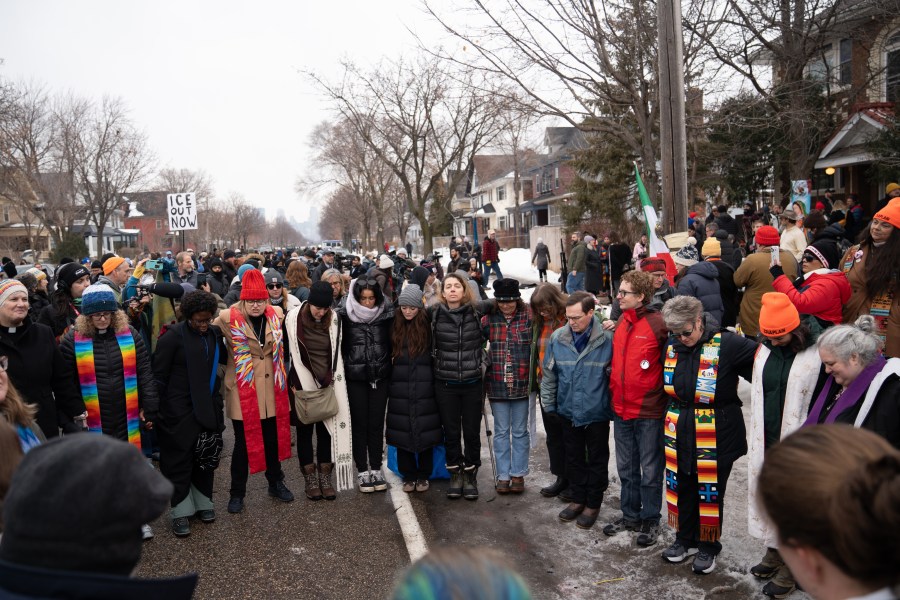
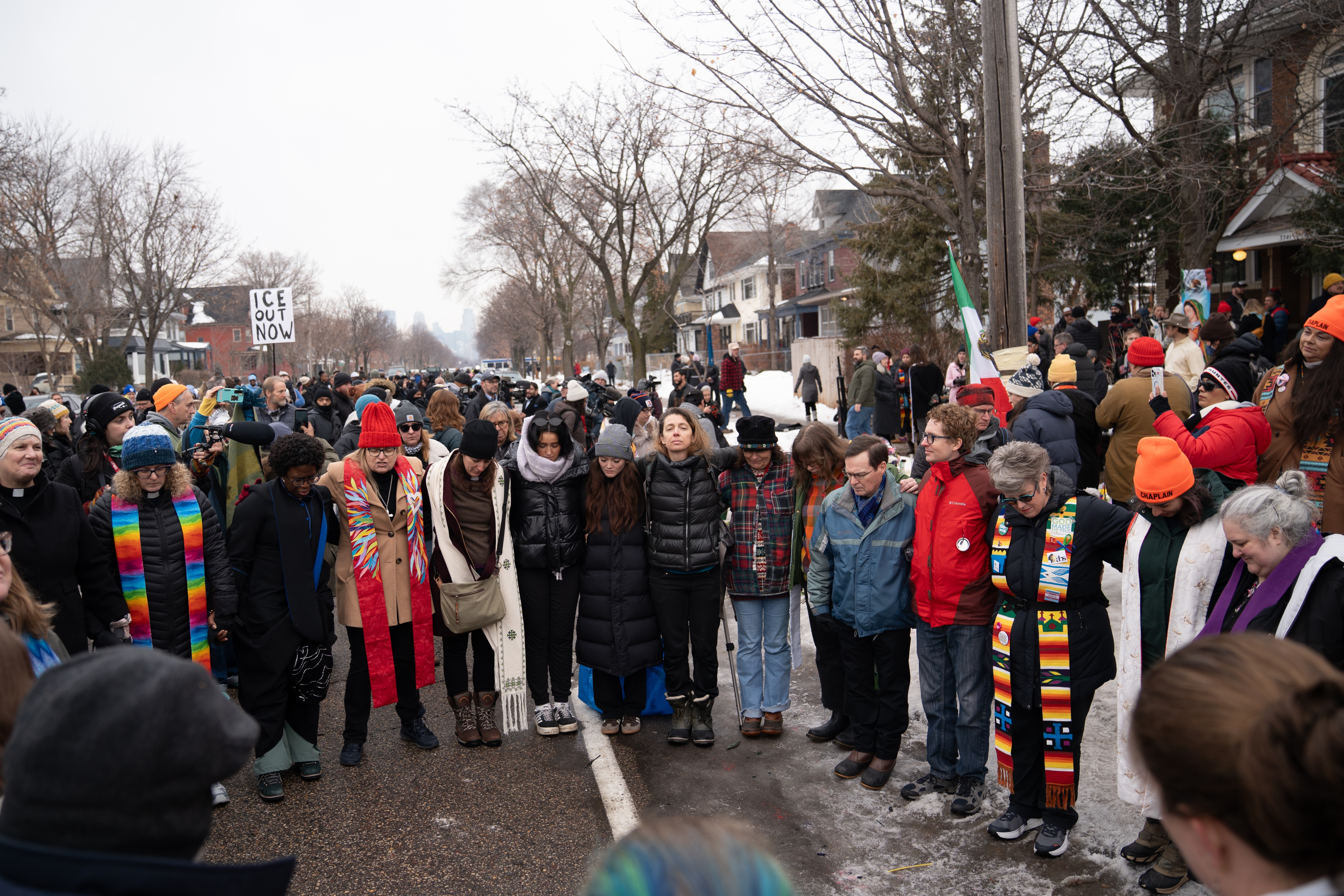
Love is on the move this weekend in Minnesota, as ordinary people march chant in sub-zero temperatures to peacefully protest racialized state violence, as clergy from all over the United States traveled to Minneapolis to stand in solidarity with those being dehumanized, demonized, and criminalized— one-hundred ministers arrested in the airport on Friday while singing hymns and reciting the Lord’s Prayer.

Next month, reminiscent of the march in Selma, love will be sent to walk the roads of North Carolina, from Wilson to Raleigh, in the Repairers of the Breach’s march called the “Love Forward Together.”

Not marching out of anger, at least not anger alone, but marching out of moral conviction, a deep compassion we feel in the pit of our stomachs.

Not walking to escape the world, but to declare that love, justice, and dignity belong at the center of public life.

And we will walk courageously and confidently, chanting, praying, and singing with hope in our hearts, as history keeps reminding us:

The Herods of the world die.

Empires fall.

Violence fails.

Cruelty exhausts itself.

Fear burns itself out.

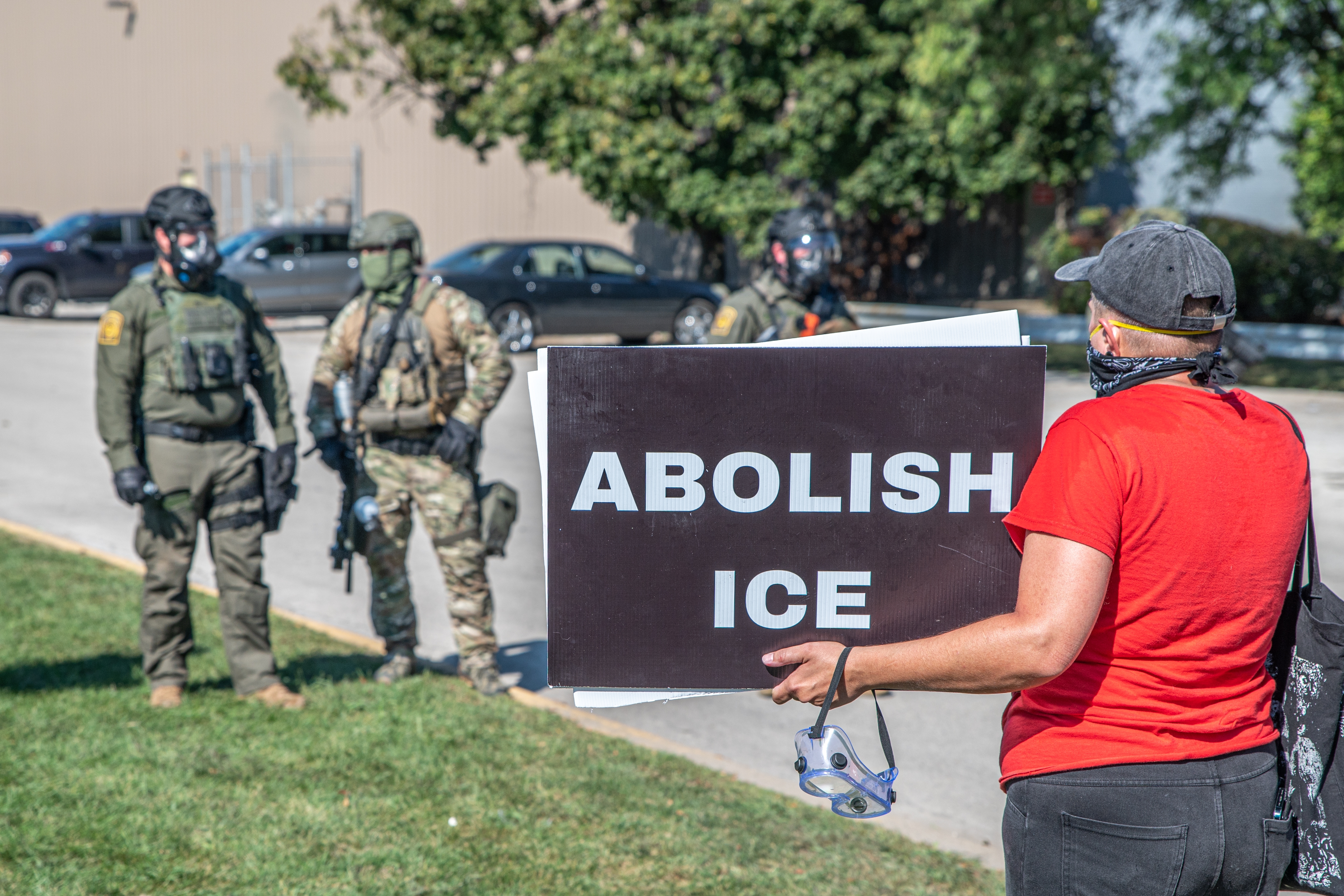
ICE will melt.

And lies cannot stand forever.

But love? Love keeps moving forward.

The scripture promises: “Love never ends.” When everything else fails, love remains.

And that is why Jesus does not say, “Repent or else.” But says, “Repent and be sent.”

Sent to join the long, unfinished story of love changing the world.

Sent into a broken world not with doubt, but with assurance.

Sent into cruelty with compassion.

Sent into despair with hope.

Because the reign of God is near!

In the shadow of death, a light is dawning.

Love is breathing on our necks.

And love will have the last word.

The good news is:

Repent—and be sent.

Because love will win.

Amen.


Benediction

Beloved, as you return to the rest of your day
to quiet rooms or busy homes,
to news alerts or peaceful reflection,
to a world still aching for healing, and crying for justice
know this;

Empires will fall.
Violence will fail.
Cruelty will exhaust itself.
Fear will burn out.
Lies will not last.

But love will remain.

Love will keep walking.
Love will keep organizing.
Love will keep telling the truth.
Love will keep showing up.

So repent and be sent.
Sent from this moment with clearer eyes.
Sent into a hurting world with softer hearts.
Sent to love forward together,
even when the road is long
and the work feels heavy.

The reign of God is near.
It’s closer than you think,
closer than you feel.
It’s breathing right on our necks.

So, go in peace and hope.
Go in courage and power.
Go in love. Always in love.
Amen.

Behold! The Lamb Who Takes Away the World’s Sin

John 1:29-34

“Behold!” It’s a powerful word, rich with meaning. But unless your last name is Shakespeare, you probably don’t use it that often. But maybe we should.

The imperative word is derived from the Greek Ἴδε (ide). It means: Wake up! Open your eyes! Take off the blinders! You need to stop whatever you are doing right now and start paying attention!

When John cries out, “Behold!” he’s doing what the prophets have always done: calling people to see what power doesn’t want us to see. Dr. Martin Luther King, Jr. heard the same summons. He asked America to wake up. He asked us to behold the gap between our creeds and our conduct, between what we claim to believe and what our systems actually do. Like John, King named injustice and exposed it. And, like John, he paid the price for it.

And what does John believe is imperative for us to see?

Behold! “The Lamb of God.”

Looking carefully at the language matters as scripture is so easily twisted to serve someone’s agenda. (By the way, taking the original language seriously is what it means to be “conservative,” conserving the original language and intent of the author.)

John is very precise here. He does not say that Jesus is “the lamb for God.” Because this is not about a sacrificial lamb offered up to appease God.

John says Jesus is “the lamb of God.” He is one who belongs to God, one who is aligned with the purposes of God.

Behind this image of the lamb is the Exodus story, where the lamb is a sign of deliverance from oppression, a symbol of liberation from slavery.

In Hebrew imagination, the lamb is also a symbol of vulnerability, a nonviolent creature caught up in violent systems. Thus, this is John’s way of saying that through Jesus, God identifies with the vulnerable. God stands with those crushed by violent power. That’s why Jesus said God is like a shepherd who will leave the flock to rescue the lamb who is most at risk, the lamb who is excluded or displaced.

Jesus calls himself the “the Good Shepherd” who knows his sheep. He identifies with them. This is why Jesus said when you feed the hungry, clothe the naked, welcome the stranger, heal the sick, visit the imprisoned, “you do it to me.”

And after the resurrection, he tells his disciples: “if you love me, feed my lambs” (John 21).

Then, John says something else which is often misunderstood:
“Behold! The lamb of God who takes away the sin of the world.” The Greek word here is αἴρων (airōn). It’s a word that means to lift up or remove but also to carry off, to dismantle, to tear down, to abolish.

John is saying: “Behold! The lamb of God who dismantles the sin of the world.” And notice John does not say, “sins”, plural. He says “the sin” of the world.

Because John is not talking about the private moral missteps of individual people. He’s talking about a power, a logic, a way of the world which is organized against life. He’s talking about a world-shaping force that generates many evils.

I believe the Apostle Paul helps us to understand this force in his first letter to Timothy where we read: “the love of money is the root of all kinds of evil” (1 Timothy 6:10). “Root” is another important word. A root is a generative source. Roots are hidden. Roots feed systems. Roots shape what grows above the surface.

Across scripture, greed distorts justice. It fuels violence, and it legitimizes domination. Pharaoh’s economy depends on forced labor. The Prophets condemn those who “sell the poor for silver.” Jesus said no one can serve two masters. We “cannot serve God and weath.” The early church shared their possessions because they knew hoarded wealth destroys community.

Greed appears as the sin of the world in systems: policies that treat people as expendable; wars fought for resources and control; slavery justified as “economic necessity”; violence framed as “security”; borders hardened to protect wealth; and bodies criminalized when they threaten profit.

Greed requires coercion to protect itself. It requires violence when it’s challenged. And it requires religious justification to appear moral.

Fascism is not a separate sin from greed. Fascism is greed fully armored. It is greed baptized in nationalism, enforced by violence, and justified by religion.

This is the sin of the world that John wants us to see today. Behold, the Lamb of God, who is aligned with the purposes of God, who stands with the poor, the displaced, and the oppressed, is here to dismantle a world ordered by greed, power, and violence.

That is why Jesus is crucified. Not for forgiving private vices. But because he threatened a world built on profit, domination, and control.

This is always how it goes. The world does not kill people for being kind and forgiving. It kills them for standing in the way of unjust systems.

Jesus is crucified when he confronts empire.

King is assassinated when he challenges economic exploitation, racialized violence, and militarism.

The prophets are silenced when they refuse to make peace with injustice.

The early church understood this. When John said, “Behold!” they got it. They understood sin, not as personal vices, but as the power tied to death, empire, and idolatry. The Apostle Paul and John spoke of sin as a force that enslaves, rules, and kills (Romans 5–7; John 8; 1 John).

John 1:29 was heard as a bold political statement: Jesus is one who confronts the powers that order the world against God’s justice. The cross was seen as the exposure of these powers and Jesus’ solidarity with the crucified. And salvation meant liberation into a new way of life, into what Dr. King called the beloved community.

But over time, that vision narrowed.

In the 4th century, when Christianity was wed to the Roman Empire, naming the sin of the world became costly, because now the church had something to lose. Thus, sin was relocated from systems to individual souls (By the way, this is what some would call “liberal”—changing the original meaning of scripture to support your own politics).

But doing so kept Jesus safe for those in power, because the understanding of sin then moved away from empire, away from economics and violence, and to individual hearts and personal vices. Jesus becomes a solution for personal guilt, rather than a threat to unjust order.

And then this theologian and philosopher named Augustine came on the scene. He did not intend to protect injustice, but his emphasis on inherited sin and inward transformation, unintentionally narrowed sin to the individual soul. And over time, the church began to speak more about what was going wrong inside of people, than what was going wrong in the world.

John 1:29 is still quoted, but now the Lamb of God soothes consciences rather than dismantles systems.

As the church’s power grew, sin became something the institution could diagnose, quantify, forgive, and monetize.

The Reformers responded by recovering grace, but they kept sin personal. John 1:29 is read as: “Jesus was crucified to pay the price for my sin” rather “than Jesus dismantles the sin that crucifies people.”

During the Enlightenment, Western culture learned to see everything through the lens of the individual—individual rights, individual reason, individual responsibility. The Bible was read the same way. Sin became private. Religion became personal comfort instead of public truth. And that kind of faith proved remarkably useful to empire—blessing colonization, baptizing conquest, and remaining silent in the face of genocide and slavery.

Today, American Christianity still preaches John 1:29, but it’s almost never connected to economic exploitation, racialized state violence, and imperial power. The misinterpretation of John 1:29 did not simply produce bad theology. It produced an impotent church: a church good at managing guilt, saving souls, and blessing the empire, and bad at confronting injustice, naming structural sin, and standing with those crushed by power; good at accepting the Jesus of empire and bad about following the Jesus of scripture.

That is why John’s message is more important today than ever. “Behold!” Wake up! Open your eyes! Look at the world today. And look at who Jesus is and who Jesus is calling you to be in this moment.

“Behold!” It’s not a word meant only to be powerfully spoken. It’s a word meant to be powerfully lived.

If Jesus is the Lamb of God who dismantles the sin of the world, then following Jesus cannot mean retreating into some private spirituality while the world keeps crucifying the vulnerable.

If Jesus is the Lamb of God who dismantles the sin of the world, it means we must become a people baptized not just with water, but with the Holy Spirit and with fire, a people caught up in God’s movement to interrupt greed, expose violence, and refuse religious cover for injustice.

If Jesus is the Lamb of God who dismantles the sin of the world, it means we stand where Jesus stands—with the poor, the criminalized, the displaced, and the ones the world calls expendable.

If Jesus is the Lamb of God who dismantles the sin of the world, it means we must resist the systems that profit from fear, domination, and death.

Dr. King warned us that remembering the dream without continuing the struggle is a form of betrayal. To honor King is not to quote him once a year, but to confront the same forces he confronted: economic exploitation; racialized violence, militarism, imperialism, and religious complicity.

Behold! Let’s wake up! Let’s open our eyes. Remove the blinders. And see that the Lamb of God is still at work, dismantling the sin of the world.

Dr. King stands in a long line of those who followed the Lamb—people like Francis of Assisi, Harriet Tubman, Óscar Romero, Dorothy Day, César Chávez, Renee Nicole Good, and countless others who refused to make peace with a world organized against life.

And now it’s our turn.

And if this sounds overwhelming, remember that systems are dismantled not by heroes alone, but by ordinary people who refuse to live as though injustice is normal.

So, what does it mean, in practice, to follow the Lamb who dismantles the sin of the world? It means at least three things.

1. We tell the truth.

We refuse silence. We name what harms God’s children—even when it costs us comfort or safety. We call greed what it is. We call violence what it is. We call empire what it is.

2. We offer our bodies.

We show up to stand with the vulnerable—in phone calls and letters to our representatives, in vigils, in protests, and in places of grief because the Lamb is never neutral and always takes a side.

3. We reorganize our lives.

We loosen our grip on wealth. We practice generosity that disrupts hoarding. We align our spending, giving, time, and votes with life instead of death, because you cannot dismantle the sin of the world while funding it.

This is what it means to follow the Lamb. And when we live this way, we inevitably find ourselves standing in particular places, with particular people— in Minnesota, in Portland, in Chicago, in Palestine, in Iran, in Ukraine, in Venezuela, in Greenland, in Virginia, wherever empire kills, threatens and terrorizes God’s children, until the sin of the world is dismantled, until the system is abolished, until justice rolls down like waters, until all God’s children can breathe free.

Amen.


Pastoral Prayer

Holy and Living God,
God of justice and mercy,
God who hears the cry of the oppressed and does not turn away:

We come before you this morning because the world you love is hurting,
and because we refuse to pretend otherwise.

We come carrying the weight of what we have seen:
violence dressed up as policy,
greed disguised patriotism,
fear baptized as faith,
and power protected at the expense of human life.

Teach us again how to behold,
to see clearly what we those in power want us to ignore,
to name honestly what the world tries to normalize,
to look without flinching at suffering that is not accidental,
but produced by systems we are told to obey and not to question.

God of the Lamb,
we pray for all who are crushed beneath the sin of the world.

For immigrants and asylum-seekers living under constant threat,
families separated, children detained, lives treated as disposable,
be their shelter and their strength.
And disturb us, O God, when our comfort depends on their fear.

For Black and Brown communities targeted by violence,
over-policed and under-protected,
grieving lives stolen and justice delayed.
Hold the grieving close,
and unsettle every system that profits from racialized harm.

For workers exploited, wages stolen, bodies worn down,
while wealth is hoarded and inequality justified.
Strengthen those organizing for dignity,
and expose the lie that profit matters more than people.

For nations scarred by war, occupation, and imperial ambition,
for Gaza, for Ukraine, for Sudan, for Haiti,
for all places where civilians pay the price for the ambitions of the powerful.
Break the cycle of domination,
and give us the courage to resist the machinery of death.

God, we confess that too often the church has been silent
when it should have spoken,
neutral when it should have resisted,
and complicit when it should have stood with the crucified.

Forgive us when we have settled for private faith
while public injustice went unchallenged.
Forgive us when we sought peace without justice,
order without equity,
and unity without truth.

And yet, O God,
we thank you that despair does not have the final word.

We thank you for prophets who still cry out,
for organizers who refuse to give up,
for communities practicing mutual care,
for young people daring to imagine another way,
for elders who remember that change is possible.

Strengthen us to follow the Lamb:
not just in belief, but in practice;
not just in worship, but in witness.

Make us a people who tell the truth even when it costs us,
who stand with the vulnerable even when it is risky,
who resist systems of death even when it would be easier to look away.

Baptize us again with your Spirit and with fire
so that our faith is not passive,
our hope not shallow,
and our love not afraid.

Until the sin of the world is dismantled.

Until the systems of greed, fear and violence are abolished.

Keep us faithful, keep us awake, keep us moving.

We pray all this in the name of Jesus, the Lamb of God,
who stands with the crucified and leads us toward life.

Amen.

Standing in Line with God

Matthew 3:13-17

No one likes to wait in line, whether it be at the drive thru, the grocery store, the doctor’s office, or even for supper at the church on Wednesday night. When I have been asked: “Preacher, what do you think hell is like?” I have often responded: “I think it’s like waiting in line. It’s like one long, hot crowded line.”

It’s why we go to Busch Gardens on a weekday, make the reservation at our favorite restaurant, and always, always, schedule an appointment with the DMV. It’s why we love the self-checkout lanes at Kroger, online banking, and the ability to pay for our gas at the pump.

That’s why we might find it crazy to discover that this is how Jesus began his public ministry. He doesn’t start with a miracle. He doesn’t open with a prayer or even begin with a sermon. He gets the whole thing started by standing in line.

Matthew tells us that Jesus comes from Galilee to the Jordan to be baptized by John. It’s hard to imagine how long that line was, as we read in verse five that “Jerusalem, and all Judea, and all the region around the Jordan, were going out to John” to be baptized.

I wonder how long Jesus waited in that line—the people he met, the conversations he had.

When Jesus finally gets to the front of the line, John scratches his head. For John knows his role. He knows who Jesus is. And he knows the script saying, “Jesus, this is crazy, you should be baptizing me!”

But Jesus refuses the script: “Let it be so now,” Jesus says, “for it is proper for us in this way to fulfill all righteousness.”

Which is Matthew’s eloquent of saying: “This is how God likes to do things.”

God does not look down on the creation from some lofty throne, watching us from a distance, as Bette Midler used to sing. God gets in line beside us.

The Holy One is not so above us that God has a Fast Pass or Quick Queue, to skip the line, to avoid human suffering. Through baptism, the God of Jesus, wades in the mud and even goes underwater with the people.

And it’s not just any water that Jesus is immersed. It’s the Jordan River. It’s the place where enslaved people once crossed into freedom and Pharaoh’s power was finally broken.

It’s in this historic river that John stands preaching repentance. But not the type of personal repentance you may have learned as a child in Sunday School. Growing up in my Baptist church I was taught that it primarily meant that you didn’t cuss, dance, drink, smoke, or chew, or go with boys and girls who do.

But John was preaching the type of repentance that will get your head served on a silver platter by the King Herods of the world. There, in the historic waters that symbolized the liberation of the Israelites, John was preaching a repentance that names immoral leaders, unjust systems, inequity, violence, and greed.

He calls out economic exploitation. He calls out religious complacency. And he lets all who have been wounded, discounted, or displaced by those in power know that God is on their side.

This is why people from all over the land were lined up that day, and this is why Jesus got in line, and waited his turn to be baptized.

Not to wash away his sins, but to join John’s movement of justice and liberation. And to be counted among those who are desperate, burdened, oppressed, and longing for change. He aligns himself with people who have been told, by empire and by religion alike, that they are the problem.

This is how God likes to do things. This is God refusing to remain aloof, floating somewhere in heaven above history. This is God rejecting a false righteousness that doesn’t dare get its feet muddy and a salvation that skips past suffering. The good news is that Jesus’ baptism is one of solidarity with all who suffer.

And this good news matters right now more than ever.

Because we are living in a moment when the privileged still look down on the poor. They preach responsibility downward while hoarding upward. Violence is accepted, truth is manipulated, and cruelty is justified.

We live in a world where immigrants are blamed instead of welcomed, the poor are shamed instead of protected, military force is justified as necessary instead of exposed as a failure of moral courage, and faith is used to bless it all, instead of denouncing it.

And it is into this moment, the gospel says: Jesus gets in line, steps into the mud, and enters the water. Not above the moment. Not even beside it. But immersed in it.

Baptized in the Jordan, Jesus resists domination by choosing humility.

He resists violence by choosing vulnerability.

He resists hierarchy by choosing to stand in line.

Jesus’ baptism in the Jordan is active, nonviolent, embodied resistance to everything in this world that denies human dignity.

And notice that this is when the heavens open up.

Not when Jesus proves himself with an inspiring sermon.

Not when he performs a miracle that impresses the multitudes.

And not when he conquers anything or anyone.

The heavens open up when Jesus gets in line, stands in the mud, and goes underwater with the people. This is when a voice can be heard: “This is my Son, the Beloved, with whom I am well pleased.”

Before sermons. Before healings. Before confrontations.

Before the cross. Before resurrection.

Before anything. God says, “Beloved.”

This is the foundation of everything that follows in the gospel story. Jesus does not do anything in his life or ministry to earn love, but does everything from love. It is love that informs everything.

And when we forget this, that it is all about love, church can become performance, and working for justice can become a burden. When we forget that it is all about love, we can start confusing violence, and even hate, with being with being faithful.

This is why Jesus’ baptism reminds us that before the work of liberation and justice can begin, belovedness comes first.

Because beloved people don’t need to dominate.
Beloved people don’t need to dehumanize.
Beloved people don’t need to lie or believe the lies to survive.

Beloved people can tell the truth in love.
Beloved people can get in line and stand with the suffering.
And beloved people can resist violence without becoming violent themselves.

This is why the Spirit descends like a dove, and not like an eagle. Not like a sword or a bomb. But like a dove, a symbol of peace, revealing that when we accept our belovedness, we see that nonviolence is the shape of God’s power in the world.

This is why Jesus’ baptism is so important. For we live in a culture addicted another shape of power. We are taught that change only comes through force, domination, punishment, humiliation, and violence.

Jesus’ baptism teaches us that the reign of God on this earth does not advance by threatening and crushing enemies, but happens by creating beloved community. The kingdom does not come through fear, but through love. And the movement of God does not rise by lording over or climbing over bodies, but by getting in line and kneeling beside them.

So, what does this all mean for us, right here, right now?

It means if the church is following the way of the nonviolent Jesus, we cannot remain safe, secluded, and separated from the suffering of this world.

That means we cannot remain dry while the world is drowning.

It means we cannot sing about justice while refusing solidarity with those who experience injustice.

It means we cannot preach love, and not stand in line with people in places of grief, protest, and exhaustion, with poor people bearing the weight of policies that benefit the rich, with immigrants terrorized by the state, or with all those shaken by the killing of Renee Good—a mother, a neighbor, and a beloved human being whose death has rightly unsettled our conscience.

It means we must be willing to go into the waters where any person or group is struggling to breathe and boldly call the principalities and powers of darkness to repent.

And to do this faithfully, to do this nonviolently, we must listen again for that voice: not the voice of fear-mongering politics; not the voice of religious nationalism. But the voice that still speaks over muddy water and trembling bodies, saying: “Beloved.

“You are my sons, my daughters, my children.”

You are not forgotten.
You are not disposable.
And you are not alone.

I stand with you.

You are important. You matter. You are beloved.

And if we believe in that voice, we will:

resist injustice without surrendering our humanity;
confront lies without becoming cruel;
and build movements rooted not in fear, but in belovedness.

Jesus gets in line, stands in the mud, and goes underwater so that we might rise, not above anyone, but together, side by side.

This is how Jesus says righteousness is fulfilled.

This is how God still does things in this world.

This is how the heavens are opened.

And this is how the world is changed.

So, as we leave this place this morning, the call of the gospel is both simple and demanding: stand in line.

Stand in line for justice when white supremacy still distorts our laws, our stories, and our sense of who belongs.

Stand in line for voting rights when democracy is attacked and weakened.

Stand in line for social justice when whole communities are denied dignity, safety, and opportunity.

Stand in line for equity when systems continue to benefit some while burdening others.

Stand in line against violence, in our streets, in our rhetoric, and in our policies, when force is treated as the answer instead of a failure of moral courage.

And today, we must stand in line in grief, lament, and protest, for Renee Nicole Good, whose life was taken by violence that never should have happened.

We must stand beside all who live in fear in their own homes, with all whose lives are endangered by power, control, and violence, and we must name this system that continues to terrorize and kill our neighbors as sin. We must refuse to be silent and commit ourselves to work for a world where such violence has no refuge.

We stand in line not above people, not ahead of people, but with people, all the people, especially those who have been pushed to the margins, silenced, or told to wait their turn.

We step in the mud and stand in line in, even when the line is long, even when they call us crazy, even if it feels like hell.

Because when we stand in line like Jesus did, we discover that this is where God stills shows up.

This where the heavens still open up.

This is where love is still heard

And this is the only way the world can still be changed.

Amen.

The False Religion of Herod: Wisdom Pilgrims in Violent Times

Matthew 2:1-12

Some say that “an epiphany” is what happens anytime someone discovers something brand new, like when they say something like: “I was today-years-old when I discovered thisor learned that.

I was today-years-old when I discovered the game we played as children called, “tag,” (T.A.G.) is an acronym: “Touch and Go.”

I was today-years-old when I learned the nursery rhyme “this little piggy went to the market,” didn’t mean this little piggy was going to Kroger to pick up some groceries. It meant this little piggy was going to be the groceries!

I was today-years-old when I learned the word “stressed” is just “desserts” spelled backwards. Or I was today-years-old when I learned that the Bible never says there were three wise men. It only mentions three gifts. And they were not kings, but magi, astrologers, who did not visit the baby Jesus at the manger with the shepherds. but visited the toddler Jesus in a house maybe a couple of years later. And there is no scholar who believes they rode on camels.

However, the word “epiphany” means something more. Even the Google says: When someone says, “I had an epiphany,” it means they’ve experienced a powerful, illuminating moment of clarity that changes not only their perspective, but their actions.

The Epiphany we commemorate today reveals what’s really going on in the world, and then, calls us to make a change, to do something. Epiphany is both an unveiling and a calling.

Matthew wastes no time unwrapping Christmas: “After Jesus was born in Bethlehem of Judea, in the time of King Herod…”

Before the star shines and gifts are given, Matthew names the power in the room. Because Epiphany is not just about who Jesus is. It’s about what his presence in the world exposes.

Herod hears of a child born “king of the Jews,” and Matthew says he is frightened, and notice this, “all of Jerusalem with him.” Because when an unhinged autocrat like Herod is frightened, everybody is in trouble.

Herod is frightened because oppressive power always recognizes a threat when it hears one. And this is the first thing that Matthew wants us to understand. Jesus, and the way of liberating love, mercy, justice, and nonviolence he would teach, model, and embody, and call others to follow, poses a serious threat to the kings of this world.

Now, one might guess that Herod would follow in the steps of his predecessor Antiochus IV who outlawed Jewish religious rites and traditions.[i] But Herod does not reject religion. He does something far more sinister, something that came quite naturally for his egotistical, greedy, self-serving, always-looking-out-for-number-one self. Instead of banning religion, he uses religion. He exploits faith purely for personal benefit.

He gathers the scribes. He pretends to consult the scriptures. He listens as scribes read the prophets to him. He speaks fluently in religious language, asking about the Messiah.

And then he lies. Not crudely. Not clumsily. The smooth-talking conman lies faithfully.Or at least, it sounds that way:

“Go and search diligently for the child, and when you find him, bring me word, so that I also may go and pay him homage.”

This is Herod doing one of the things Herod does best: conning people in order to serve himself. This time it’s religious people, making them believe he is one of them.

But the religion of Herod is a lie. It’s just fear, dressed up as faith. It’s violence wrapped in reverence. It’s power using the name of God for evil purposes.

Matthew wants us to see this clearly, because as you know, this is not an ancient political scheme. It’s a recurring one.

And today, we need to say it clearly and often: White Christian Nationalism is not Christianity. It is the lie of Herod, baptized and repackaged.

It claims a nation and a race of people are God’s favorites.
It confuses achievements and dominance with the blessing of God.

It demands absolute loyalty and calls it being faithful.

And it’s all a lie.

And what makes the lie so dangerous is wherever it takes root, someone, or some group, is always made expendable.

Antisemitism grows when Christianity is fused with national identity, turning Jewish neighbors into outsiders within a so-called “Christian nation.”

Islamophobia flourishes when that same logic decides who belongs and who never will, baptizing fear and casting Muslims as threats rather than beloved neighbors.

And political violence becomes justified when religious language sanctifies power, hardens hearts, training people to confuse cruelty with righteousness in the name of God and country.

Herod did not invent hatred. He simply learned how to make hate sound holy.

This is the evil Epiphany reveals. The whole world witnessed it on Christmas Day when bombs dropped on Muslims in Nigeria were called “a Christmas present.”

This is the false faith of Herod. It’s state violence that is baptized. It’s innocent lives reduced to collateral, and it’s the holy name of Christ used to bless what the nonviolent Jesus condemns.

And when Christians applaud it, excuse it, or explain it away, then the lie has completed its work. Because the greater travesty is not only that power speaks this way; it’s that the church learns to tolerate it.

This is why Epiphany matters. Epiphany exposes this false religion of Herod. But as even Google points out, Epiphany doesn’t stop there. Epiphany tells us exactly what to do about it.

In a recent article, Father John Dear reminds us that the Magi are not decorative figures in a nativity scene. They are our model. He calls the Magi “wisdom pilgrims,” people on a lifelong spiritual journey toward the God of peace. They follow the light they are given, not toward comfort, but toward truth.[ii]

It cannot be overstated that the Magi are outsiders, foreigners, practitioners of another tradition; and yet, they suddenly see what the insiders miss. They are “that-day-old” when they recognize that God’s presence and power is not found in palaces or on thrones, but in vulnerability. They kneel before the child, presenting their gifts.

And then comes the main point of Epiphany.

After the revelation, after the worship, after the gifts, they are ordered to return to Herod: to report back; to cooperate and to collude; to assist a system that sacrifices the innocent to preserve itself.

But Matthew tells us that once they encounter this child, once they meet the God of peace enfleshed in vulnerability, they cannot comply. They disobey orders. Not violently. Not dramatically. But decisively. Because, as Father Dear would say, once you meet the nonviolent Jesus, obedience to violent power becomes impossible. Epiphany makes cooperation with violence morally incoherent.

This is the moral clarity that is needed in our world today. The Magi understand something Herod never will: you cannot encounter a God who enters the world without violence and then support a war-making system. You cannot kneel before a vulnerable child and not resist a tyrant.

This is why Father Dear points out that, after Epiphany, discipleship becomes civil disobedience. Because it is obvious that the nonviolent Jesus cannot be fused with empire. And religion used to justify violence or cruelty is no longer Christian. It is anti-Christ.

This is why the lie must sound religious. Because violence cannot survive without spiritual cover. This is why empire always needs chaplains. Because power depends on churches that will quote scripture while looking away.

The good news is that not many of you, if any, were “today-years-old” when you discovered not every prayer is faithful. Not every “God bless America” from a politician is holy. Not every appeal to God deserves our allegiance. Not every law should be followed. And this is where Epiphany informs our public life.

Because when religious language is used to justify war, the church must decide whether it will provide cover or tell the truth.

When antisemitism hides behind distorted theology, the church must remember Jesus was a Jew.

When Islamophobia is baptized as security, the church must choose whether fear or love will shape its witness.

When political violence is normalized with Christian rhetoric, the church must decide whether it still recognizes the voice of Herod and follows the voice of Jesus.

The Magi show us what faithfulness looks like after Epiphany. It looks like nonviolent resistance.

And that is the call Epiphany places on us now.

Not to admire the Magi.
Not to romanticize their journey.
But to join them.

Father Dear says we too are called to be “wisdom pilgrims.” We are people who seek the nonviolent Jesus on the margins of a culture addicted to violence. We are people who are allowing our encounter with Christ to lead us away from systems that depend on bloodshed and cruelty. We are people who live the Sermon on the Mount not as metaphor, but as mandate.

Our faith is a faith of resistance. It’s faith that refuses to bless bombs. It’s faith that refuses to baptize borders. It’s faith that refuses to confuse domination with God’s blessing. It’s a faith that will call out the proclamation that “this is a Christian nation” for what it is. It’s a lie, a dangerous lie that must be called out. Because change will happen, not because people will stop the lies, but because the lies are exposed by the light.

The good news is that the light still shines in our world.
Truth is still being revealed.
And Christ is still born into this world that would rather kill him than change anything.

So, let’s go from this place today as wisdom pilgrims.

Follow the Light, even when it leads you away from power.

Shine the light, even when it is dangerous to do so.

Refuse the lie, especially when it sounds religious.

Withdraw your cooperation from violence in every form it takes.

Kneel and offer your gifts only where the God of the nonviolent Jesus is truly revealed.

And may the God of peace guide our steps, the Christ of nonviolence shape our faith, and the Spirit that is Holy give us courage to live what has been revealed, to live this Epiphany.

And when we are challenged, when our faith is questioned, when we are asked what’s gotten into us. “What kind of kind of resolution did you make this year?”

May we remember this Epiphany Sunday and answer: “I was today-years-old when I learned that following Jesus means becoming ‘a wisdom pilgrim.’”

Amen.

[i] https://www.thetorah.com/article/antiochus-iv-persecution-as-portrayed-in-the-book-of-daniel

[ii] https://open.substack.com/pub/fatherjohndear/p/civil-disobedience-a-spiritual-journey?utm_campaign=post&utm_medium=post%20viewer