Isaiah 58
I often encounter people who tell me that they would attend our church—if they were religious.
Some say to me, “If I believed in organized religion, I would go to your church.”
And I usually respond, “I wish you would come, because I think you’ll find we’re not that religious, and we’re really not that organized.”
And I wish they were here tonight. Because they would be surprised to learn that this day, often assumed to be reserved for the most devout, is actually God’s demand that we be done with religion.
Tonight, the church hears the prophet Isaiah asking a question that challenges religion. He looks at organized religion, the traditions and the the rituals, and he doesn’t hold back. In the words that are traditionally read by the church on this day, he shouts a question that should shake us to the core: “Is this the fast that I choose?”
In other words: Is being religious what you think repentance looks like? Do you think this is what faith is all about? Is it sitting quietly inside a sanctuary, while outside, injustice, hate, and cruelty are loud? Is it bowed heads while policies crush the poor? Is it words sung or spoken that soothes souls but never unsettles systems?
Isaiah says no! Because the truth is: God is not interested in religion that ignores justice. God is interested in a faith that transforms the world.
Isaiah is speaking to people who are deeply religious. They fast. They pray. They gather for worship. They present their offerings and sing their praises to God. And yet, workers are still exploited, the poor are still hungry, Eunuchs are still subjugated. Foreigners are still mistreated. And the vulnerable are still scapegoated.
And Isaiah tells it like it is: You seek God in the sanctuary, but you serve the systems of death. You humble yourselves in worship, but you harden your hearts in public life. You follow the laws of the Sabbath, but you don’t follow politics. You read the Bible, but you refuse to let it interpret the world you live in. You look after your own, but you neglect your neighbor. In divisive times, you call yourself apolitical, when you are actually being amoral.
Oh, how the church needs to hear Isaiah tonight!
Because the crisis we are living through in this nation is not merely a crisis of policy. It’s a crisis of values.
A nation that can afford abundance but tolerates poverty.
A nation that claims liberty while restricting dignity.
A nation that invokes God while rejecting the commands of justice, mercy, and love.
As we begin the season of Lent, Isaiah refuses to let us spiritualize repentance, contrition, and worship by saying the fast God chooses looks like this:
Loosening the bonds of injustice.
Undoing the yoke of oppression.
Sharing bread with the hungry.
Housing the unhoused.
Clothing the naked.
Refusing to hide from your own kin.
And who is our kin? Who is our neighbor? In other words, Isaiah is saying, that we should be available to do the work of justice for the entire human family.
Jesus stands firmly in this prophetic tradition.
In Matthew’s gospel, Jesus exposes performative religion—faith that wants spiritual credit without social responsibility. He warns against prayer and fasting that seeks approval instead of transformation, against a righteousness that hides from justice.
Ash Wednesday names what many would rather avoid:
We are shaped by systems that privilege some and punish others.
We are beneficiaries of structures that reward greed and normalize inequality. And silence in the face of that reality is not neutrality.
It is consent.
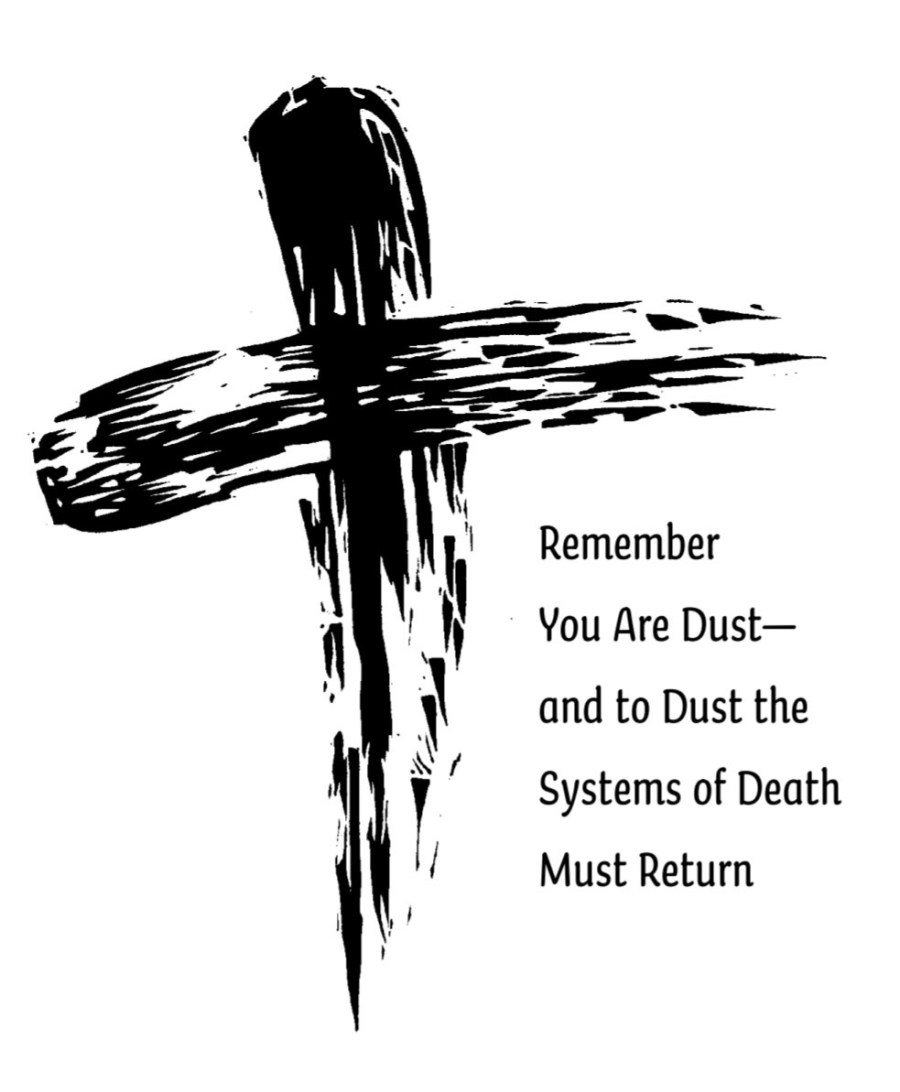
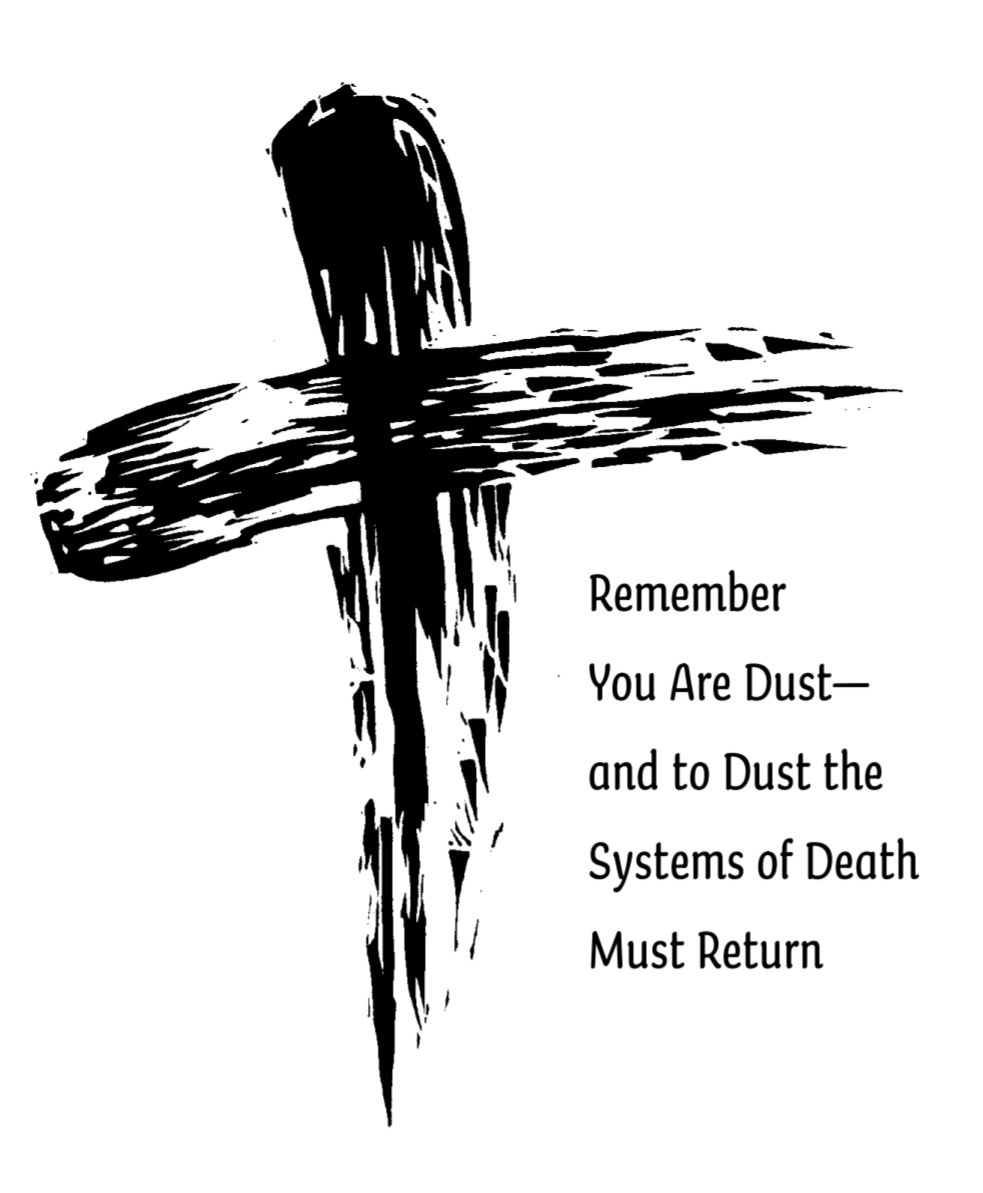
Ashes tell the truth about who we are. We are dust.
In Genesis, God forms humanity from the dust of the ground — from the same soil that grows our food, from the same earth that holds every other body. We are not dropped into the creation from above. We rise up from within it. We belong to the earth and to each other.
Dust means we are made of what everyone else is made of. The same earth runs through all of us. The same breath sustains all of us.
Which means we are not autonomous individuals competing for survival. We are interdependent lives sharing one fragile existence. Dust cannot declare independence from other dust. What happens to one part of the soil affects the whole field.
Dust reminds us of something the powerful try to make us forget: No one is disposable. You cannot discard part of the earth without damaging the whole. You cannot throw away people without wounding yourself.
So, when you come forward tonight, and the ashes are placed on your forehead, you will hear these words: “From dust you came; for justice you are called.”
These words are not a blessing. They are a summons declaring that repentance is not complete until justice is pursued. That worship is not faithful until it confronts what dehumanizes. That Lent is not about what makes us feel holy, but about what makes the world more humane.
Lent is a season of moral clarity. It’s a season to break with greed in a culture of hoarding. It’s a season to confront racism in a society built on racial hierarchy. It’s a season to resist bigotry when fear is marketed as righteousness.
If our observance of Lent does not make us more honest, more generous, more courageous, Isaiah would say we have missed the point.
Ash Wednesday does not mark us for shame or for death. It marks us for responsibility. For truth-telling. For solidarity. For resistance grounded in love and for a life committed to justice.
Ash Wednesday tells the truth: we are dust. And God has always done revolutionary work with dust.
In the beginning, God bent down to the earth, gathered soil in divine hands, and breathed into it— and humanity stood up. The first declaration of dignity was spoken over dirt.
When empire tightened its grip and Pharaoh seemed untouchable, God did not raise up another emperor. God raised up a shepherd from the wilderness, dust from the margins, and said, “Go.” And the empire trembled.
When a giant towered over Israel in bronze and steel, God did not choose armor. God chose a boy and five stones from the ground. And dust struck down domination.
When a valley lay scattered with dry bones (history’s casualties, abandoned and forgotten), God did not turn away. God spoke. God breathed. And dust became a living, moving people again.
When a woman was dragged into the center of accusation and shame, Jesus did not stand above her. He knelt in the dirt. He wrote in the dust. He reminded the powerful that they, too, were earth.
And when violence did its worst, when love was crucified and laid in the ground, they thought the story was over. They returned him to the dust.
But the earth could not hold what God had breathed into it. And on the third day, dust rose.
So, when you hear the words tonight that you are dust, it does not mean you are powerless. For dust is where God begins. Dust is where God breathes. Dust is where God builds movements, topples idols, and raises what the world declared dead.
And tonight, ashes will mark your forehead. Not as a sign of shame. Not as a symbol of defeat. But as a reminder: You are dust. Dust shaped by God. Dust filled with breath. Dust capable of courage. And don’t ever underestimate what God can do with dust, especially dust that has decided to seek justice.
Amen.
Benediction
Beloved, as you go into this season of Lent,
Go remembering that you are dust
formed from the earth,
held together by breath,
bound to every living thing in sacred belonging.
Go not in shame, but in courage.
Go not in fear, but in hope.
Go not to perform religion, but to practice love.
May the God who breathes life into dust
breathe holy restlessness into you
a hunger for justice,
a tenderness for the vulnerable,
and a stubborn refusal to accept a world as it is
when it could be more humane.
May your fasting loosen injustice.
May your prayers soften hardened systems.
May your repentance bear the fruit of repair.
May your worship spill over into mercy.
And when you grow weary,
remember: dust is where God begins.
Dust is where God breathes.
Dust is where resurrection rises.
Go in peace
to love boldly,
to serve humbly,
and to do justice with joy.
Amen.
 Just Love