
Seeing Clearly in a Violent World

John 9:1-41

Our gospel lesson today speaks about a kind of blindness that has nothing to do with our eyes but has everything to do with how we see God.

Jesus and his disciples encounter a man who has been blind from birth. He sits beside the road like so many people society has learned not to see. He is not asked his name. He is not asked his story. Instead, he becomes a theological puzzle. The disciples look at him and ask a question that has echoed through centuries of religion: “Rabbi, who sinned, this man or his parents, that he was born blind?”

Do you hear the assumption beneath that question?

If something is wrong, someone must be to blame.
If someone is suffering, God must be punishing them.
If tragedy occurs, it must somehow be deserved.

The disciples are not asking how to help the man, how to love the man. They are asking how to explain him. And that, my friends, is one of the oldest forms of spiritual blindness.

Because when we cannot see God clearly, we begin to see one others through the lens of judgment. We categorize people. We label. We decide who is worthy and who is not. We divide the world into the righteous and the sinners, the blessed and the cursed, those who matter, and those we can write off.

But Jesus refuses the premise of their question. He says, “Neither this man nor his parents sinned.”

In other words: You’re asking the wrong question!

The blindness in this story is not just in the eyes of the man sitting beside the road. The deeper blindness is in the religious imagination that believes God would punish a child before he was even born.

The truth is: that’s exactly how many of us were taught to see God.

The truth is: that’s exactly how some of us were taught to see God, a God who created a heaven for some and hell for others—a divine sorting system separating the saved from the damned. We were also told God knows all, past, present, and future. That means God created some people, all the while knowing, they would be tortured in hell for all of eternity.

And somewhere along the way, the fear of God instead of the love of God, became the engine of our faith.

Today, we are grateful to have Brian Recker with us, whose work explores how that fear has shaped Christian belief and practice for generations. And how when fear shapes our theology, it inevitably shapes our ethics.

Because if God condemns, we learn to condemn. If God divides humanity into insiders and outsiders, we feel justified doing the same. If God punishes people, then punishment itself begins to look holy. And if God punishes people eternally, then taking the life of another can start to look holy too.

Over time, that vision of God begins to justify things we might otherwise resist.

It rationalized stealing this land we enjoy.

It justified slavery.
It defended segregation.
It condemns LGBTQ people as beyond God’s love.

And it whispers that violence, war, and domination are acceptable tools in the hands of those who believe they are on God’s side.

Fear does not just distort our picture of God. It distorts how we see one other. And it doesn’t save us from hell. It unleashes hell on earth.

The good news is that Jesus reveals a very different vision of God. He doesn’t argue theology with the disciples. He doesn’t stand above them looking down on them, violently lashing out at them.

He bends down to the ground. He kneels in the dirt. He spits in the dust and makes mud that he places on the man’s eyes, telling him to go wash in the Pool of Siloam.

It’s a strange miracle of mud, spit, and dust. But it’s the same dust from which the book of Genesis says humanity was first formed. It’s almost as if Jesus is re-creating this man’s sight from the very soil of creation itself.

And when the man washes, suddenly he can see. But here’s the irony: the man who had been blind can now see clearly; but the religious authorities, those who believe they understand God the best, cannot.

They interrogate the man. They question his parents. They debate whether the miracle could possibly have happened. And finally, when the healed man refuses to abandon the truth of what he has experienced, they throw him out. Because when love disrupts a theology built on fear, the system is threatened.

Sometimes it’s easier to deny a miracle than to change our picture of God.

During my time in New Orleans planting a new expression of church, a movement that we called, “Just Love Your Neighbor,” I also served as an “as needed” or “PRN” hospice chaplain, like I do now.

I had a Jewish patient who had been married to a Christian for over 50 years.

After his death, his wife asked me to preach his funeral service. When I asked why she didn’t want to ask her pastor, she responded: “I am afraid that he might insinuate my husband is in Hell because he is not a Christian, and I know you will not do that.”

After the funeral, she started participating in our new movement, giving her time and her dollars, while remaining a member of her church.

Over time, she opened up about the frustration that was leading her to reject the things that she was being taught in her church.

One day, she said something like: “I was always taught that God loved me. But I was also taught that if I didn’t believe the right things, particularly about Jesus, God would send me to hell forever. But I think I am beginning to realize: that’s not love; that’s a threat.”

She paused for a moment and then said quietly, “I don’t think I’ve ever actually met the God Jesus talked about.”

That widow was not rejecting her church. She was rejecting her church’s distorted image of God. She was rejecting a God who looked suspiciously like our fears.

And she’s not alone.

There are countless people, here in this city, who are walking away from church, not because they’ve rejected the love of God, but because they cannot reconcile that love with the threat of eternal punishment.

Sometimes, the people some say have lost their faith, or doubt their faith, are actually the ones who see God the most clearly.

And the ones who are the most certain, those who say they see clearly, the ones we hear saying “The Bible is clear…,” are actually the ones who are the most blind.

And this blindness doesn’t only affect individual lives. But it shapes the entire world.

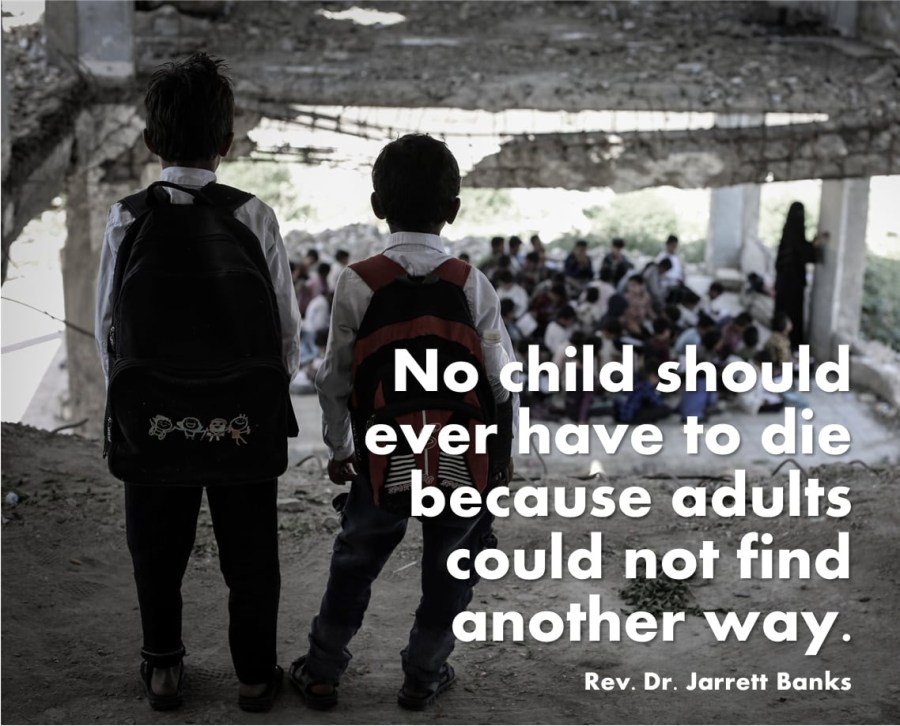
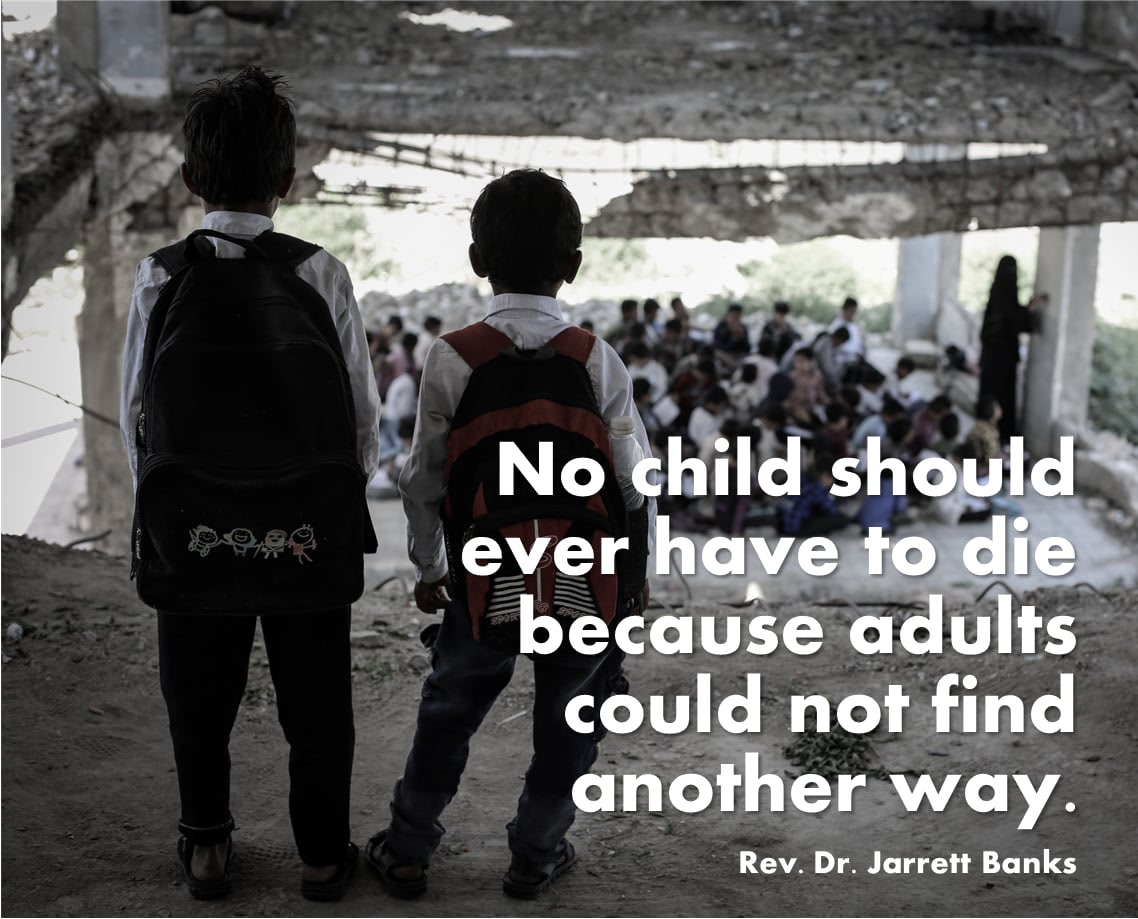
Right now, we are witnessing what happens when this blindness goes unchallenged. Missiles continue to cross the skies of the Middle East, and this week we learned that one of them, fired by our own country, struck a school in Iran, killing children as they sat in their classroom. Children at their desks. Children with books open in front of them. Children who woke up that morning expecting an ordinary day at school and instead became casualties of war.

No child should ever have to die because adults could not find another way.

If we can hear that story and not feel something break inside us, then perhaps the blindness Jesus speaks about has reached deeper into our hearts than we realize.

Because no matter which flag flies over the missile launcher, the God Jesus revealed is not the author of bombs that fall on children.

And yet, the language of righteousness still fills the air.

Every nation says God is on their side.
Every government says the violence is necessary.
Every military claims the destruction is justified.

But when we look through the eyes of Jesus, we begin to see something different.

We see children in classrooms who never chose this war.

We see parents praying the same desperate prayer on every side of every border: “O God, let my child live!”

And if we can see that, if we truly allow ourselves to see it, then we must ask an uncomfortable question: How did a faith centered on the Prince of Peace become so comfortable blessing violence?

Part of the answer is in the way we imagine God. For when we believe in a God who punishes, violence begins to look like divine justice.

But when we see the God revealed in Jesus, the God who heals instead of harms, who forgives instead of retaliates, who tells us to love even our enemies, then war begins to look less like righteousness and more like the tragic consequence of humanity still struggling to see clearly.

At the end of the story, Jesus finds the man who has been cast out by the religious authorities. And the man does something remarkable. He believes. Not in a doctrine. Not in a system. But in the love of the one who healed him. He trusts the love he encountered. And that is the heart of this story.

The miracle is not simply that a blind man gains sight. The deeper miracle is that Jesus reveals what God actually looks like.

A God who does not stand far away diagnosing sin. But a God who kneels in the dust beside human suffering. A God who touches our wounded places without hesitation. A God who sees us completely, and loves us anyway, unconditionally, unreservedly, and does all that God can do to recreate, restore, and resurrect.

When we begin to see God that way, something inside us changes. Shame begins to loosen its grip. Hatred begins to lose its power. The walls between “us” and “them” begin to crumble. And the people we once feared begin to look like neighbors again.

Near the end of the story, Jesus says something haunting: “I came into this world so that those who do not see may see, and those who think they see may become blind.”—Reminding us that the greatest spiritual danger is not doubt. It is certainty. Especially certainty about a God who violently condemns anyone before they were born.

But the good news of the gospel is that Jesus is still opening eyes, still kneeling in the dirt of our world, still touching wounded lives, and still inviting us to wash away the old stories that told us God was against us.

And when our eyes finally open, we may discover something astonishing. The God we feared was never really there. And the God who is there has been loving us all along.

Later today, Brian will help us explore what it means to move beyond a faith driven by fear of hell toward a spirituality rooted in love. And that journey, from fear to love, is exactly the journey this gospel story invites us to take.

The man healed by Jesus ends this story with a simple testimony: “One thing I do know: I was blind, but now I see.”

That may be the most honest confession any of us can make. Because faith is not about having every answer. It’s about learning to see. Seeing the love that is God more clearly. Seeing our neighbors more compassionately. Seeing our enemies more humanly. And seeing the world as Jesus sees it: a world filled with beloved people; a world worth healing; a world where love, not fear, has the final word.

And when we finally see that clearly enough, we may find ourselves saying with the man in the story: “One thing I do know, I was blind, but now I see!”

Amen.

Loved People Love

John 4:5-42

Jesus is tired.

 Now, think about that for a minute.

It’s only chapter four.

He’s just getting started.

He’s got a long way to go.

This one whom John affirms was in the beginning with God and was God, the one through whom all things came into being, is not just tired. Verse 6 reads he is “tired out.”

And it’s not because he lost an hour of sleep setting his clock forward the night before.

This is what happens when you are on a mission to make the world more inclusive, more equitable, more just for all people.

This is what happens to a body and soul when you are working to dismantle the violent systems in place that divide, oppress, and marginalize and when you challenge religious structures that bless those systems.

You get tired out.

So, if you are exhausted today, and you don’t think it’s because you lost an hour of sleep last night: congratulations. It probably means that you are following Jesus.

Jesus does what we may feel like doing today. He sits down. He takes a load off. He catches his breath at a well near Synchar, an historic watering hole the old-timers called “Jacob’s well.” It’s noon. The disciples have gone off to find some lunch. And Jesus, the Word made flesh, needs a drink.

So, if you feel like you need a drink today, again: congratulations! It probably means you are following Jesus.

Then, here she comes. A Samaritan woman, all alone. Because she comes at noon—when most came early in the morning or will come later in the evening when it is cooler—we might imagine she wanted to be alone. She was trying to avoid running into someone she knew.

 She’s carrying a jar. But she is also carrying something else. She may be carrying communal hostility. She’s certainly carrying some emotional baggage, some personal heartbreak, some shame, and maybe some spiritual trauma.

Jesus sees this woman and says, “Give me a drink.”

Wait a minute.

 Everyone knows Jews and Samaritans do not eat or drink together. And every good Rabbi knows they should never ask “those people” for favors.

So, what is really going on here?

Notice, that before Jesus addresses her shame, her complicated relationship history, Jesus asks her for water.

         This is interesting as Lent has a way of making us think that the first thing God asks from us is repentance. We need to try harder, give something up, change something, fix ourselves.

         But look carefully at this story. Jesus knows the order of John 3:16 and leads with love. He doesn’t begin with condemnation. He begins with conversation. He doesn’t say, “Explain yourself!” He says, “I’m thirsty.”

         Jesus makes himself vulnerable in her presence. He asks something of her but it is not judgment. He asks her for a water. And in doing so, he dignifies her. He is essentially saying: “I am willing to receive life—from you.”

This is how divine love works. God does not stand above us at a distance, evaluating us. God sits down at the well, identifies with our thirst, and speaks our language.

And when Jesus eventually names her five husbands and the man she is currently in a relationship with, it is not to shame her. It is to show her: “I see you. I see all of you. And I am still here.”

This is what I believe God wants us hear clearly today: We are fully known. And we are still deeply loved. Not our cleaned-up versions. Not our Sunday-morning version. The real me and the real you. All that we are— is loved.

Lent is not a forty-day wilderness journey to earn that love. Lent is the journey of waking up to that love.

         It is then that Jesus initiates a conversation that will shock his disciples as it crosses three lines at once: gender, religion, and ethnicity: “If you knew the gift of God… you would have asked him, and he would have given you living water.”

         Notice the word “gift.” It’s a big word. Jesus is not talking about something to earn, to work for, or to purify oneself for. He’s talking about a gift, the gift of living water.

Living water in the ancient world meant fresh, flowing, moving water. Not stagnant water. Not trapped water. Jesus is talking about water that renews itself and says that this is what it is like to have the gift of God’s love inside us. It’s not a trickle. It’s not rationed. And it’s not withheld until we get our lives together. God’s love for us is spring welling up to eternal life.

         The truth is: although we may be exhausted today because we are following the way of Jesus in a world that is broken, some of our exhaustion may be a result of trying to earn water that is already flowing. We are trying to prove ourselves worthy of love that has already been given.

And here’s the turning point of the story: the woman leaves her water jar. Think about that. The jar is the whole reason she came!

The very thing she carried to survive… she leaves behind.

Because when you finally know you are loved, you don’t have to hold your jar so tightly anymore.

Once we know we are loved, truly loved, something shifts inside of us. We stop grasping. We stop defending. We stop pretending. And we become free to love others.

She runs back to the city, to the very people who may have whispered about her, to the people she was trying to avoid by going to the well in the heat of the day and says: “Come and see a man who told me everything I have ever done.”

Notice what she does not say. She what she does not say. “Come see someone who shamed me.” “Come see someone who condemned me.” She essentially says: I was seen, all of me… and I was loved still.

And because she has tasted living water, she suddenly becomes a conduit of it. The woman once isolated becomes an evangelist. The outsider becomes the bridge. The thirsty one becomes the well.

This is what happens when we know we are loved. We become free to love like Jesus. Loved people love people.

Not because we are trying to impress God.
Not because we are afraid of perishing.
But because love has filled our cups until they are running over.

Psychologists sometimes call this “secure attachment.” It’s the idea that when people feel deeply accepted, it creates the emotional safety needed to love others freely.

And long before psychologists ever studied this, the early Christians understood it intuitively.

The writer of 1 John put it simply: “We love because God first loved us.” (1 John 4:19).

Because when people finally know—deep in their bones—that they are loved, something changes. Fear loosens its grip. Defenses soften. The jars we cling to so tightly no longer feel necessary.

And suddenly, we become free to do what Jesus calls us to do:
to love one another, as he loves us.

Lent is a season of returning to the well. Lent invites us to sit down, to rest, to admit that we are tired-out. Lent invites us to bring our thirst—for forgiveness, for purpose, for meaning. Lent invites us to stop hiding, to let ourselves be known, and to be loved, fully, unconditionally, unreservedly. To receive water gushing up to eternal life.

The good news is that we do not need to dig deep for this water. The good news is that Christ is already sitting here.

And here’s the deeper layer: Jesus is also thirsty. Later in John’s Gospel, hanging on the cross, Jesus will say, “I thirst.” The God who offers living water is not detached from human suffering. God shares it.

Which means our thirst does not disqualify us. But it is the very place where grace meets us.

And in a week when bombs are falling in Iran and across the Middle East, when more lives are being lost to the hell of war, when human beings are left to drown in the sea after their ship was torpedoed, as leaders gloat, we are reminded just how thirsty this world really is— thirsty for peace, for mercy, thirsty for some humanity, for the courage to choose love over violence.

         You have heard me surmise that much of the church is broken today, and as a result, our nation is broken, because many in the church have rejected the call to follow the way of love, mercy, and grace Jesus modeled and embodied.

But maybe it is not so much a refusal to follow as it is a refusal to sit down at the well and receive that love, mercy, and grace.

When we are unsure of our own belovedness, we cling to things like status, tribe, fear, and certainty. We avoid Samaritans. We protect our jars.

But when we know, when we deeply know that we are loved—We cross lines. We listen longer. We empathize. We risk vulnerability. We speak truth without judgment. We tell our stories without shame.

Because the simple truth is: loved people love. And a congregation that knows it is loved becomes a well in a thirsty world. A church that knows it is loved does not hoard grace, it shares it freely will all, and all means all.

         And notice what happens.

The townspeople in our story eventually say: “We know that this is truly the Savior of the world.”

Now think about that for a moment. The first group in John’s Gospel to make such a universal confession is not Jewish disciples. It is Samaritans.

The outsiders are the first recognize the wideness of God’s love. Because when you have been thirsty, you recognize living water when you see it.

This Lent, the invitation is simple:

Come and see.
Come thirsty.
Come tired out.
Come complicated.

Because the good news is this: Christ is already sitting at the well, waiting. And when you sit down beside him, you will discover something life-changing:

You are understood. Because he is tired too. He shares your thirst.

You are known. Because he sees all of you.
And you are loved still.
And that love is living water within you.

So, drink deeply.

And then leave your jar behind,

 and go love like Jesus.

Because the world is thirsty.

Amen.

The Verse We Turned Upside Down: Recovering the Promise at the Heart of John 3:16

John 3:16 Christian T-shirt Design

John 3:1-17

John 3:16 was the very first verse many of us memorized as a child, and it’s a verse that has stuck with us. We can hardly watch a ball game without seeing it on posterboard.  We see it on billboards.  And we see it on tracts lying around in public restrooms.

 For some of us, seeing this simple verse reminds us of God’s universal and unconditional love. We receive peace, affirmation, and hope. And yet, for others, including me, just the words “John-three-sixteen” triggers a little religious trauma.

I have suggested that the reason that things seem so upside down in the world these days is because John 3:16 has been turned upside down. Instead of leading with “For God so loved the world,” churches lead with “you are going to perish.” And God’s love for the world becomes a footnote instead of the title of the story. Consequently, some of us have been conditioned, not to hear John 3:16 as love, but as a divine threat or fateful ultimatum with eternal consequences.

Instead of announcing love, churches announce fear.
Instead of proclaiming grace, churches proclaim judgment.
Instead of good news, churches specialize in spiritual anxiety.

One of my favorite preachers, Rev. Karoline Lewis writes: “John 3:16 is used as an assertion of exclusion rather than one of God’s abundant love. A verse that sends people to hell rather than voices God’s extravagant grace.”

Detached from its context, it’s used to draw hard lines between “us” and “them,” and “the saved” and “the lost.” John 3:16 is used to justify a vision of salvation that is far more invested in sorting souls than in loving the world.

But when we put John 3:16 in its context, we see that there’s a seventeenth verse.

  “Indeed, God did not send the Son into the world to condemn the world, but in order that the world might be saved through him.” Not to condemn. Not to threaten. Not to sort out. Not to shame. But to save.

Here’s where we need to take a moment to address this loaded word, “save.”

Because when many of us hear the word “save,” we hear: “rescue from hell after we die” or “spiritual fire insurance.”

But that’s not how John uses the word. Salvation is not primarily about where we go when we die, but about how we live right now.

To be saved means to be made whole.

To be saved means peace, knowing you are loved.

To be saved means to step out of fear and into trust.

To be saved means to move from despair into hope, from darkness into light.

To be saved means to experience life, fully, and abundantly.

And when John speaks of “perishing,” he is not describing God actively destroying people, but the tragic reality of refusing the nonviolent, abundant life God offers. In a world of war and violence, where people are dying in conflicts like the recent military action between our country and Iran, it’s important to understand that John’s word ‘perish’ is not about divine retribution but about the real human cost of turning away from life-giving peace and love.

And it’s important to remember that eternal life in John’s gospel is not some future reward, but it’s a present participation in the life of God. It’s not about God helping us to escape the world, but about us working with God to heal the world, to make the world more peaceful, equitable and just.

And if salvation means wholeness, peace, and liberation from fear and shame, and if eternal life sounds like God’s active participation in the world, then suddenly John 3:16 begins to sound like good news and less like spiritual trauma.

Some of us, including me, were taught that God’s love came with a catch— that one wrong belief, one wrong doubt, one wrong question, one wrong action or thought, combined with one wrong prayer asking for forgiveness, could be damning.

Some of us were told that our sexuality, our identity, our mental health, our honest wrestling with questions, disqualified us from God’s love. We were taught to fear hell after death more than to trust love in life.

After our recent baptismal service, as I was driving Christopher Lilley home, Chris expressed his desire to be baptized. When I asked if he’d ever been baptized, he told me that he had (I believe he said “more than once”), but he had been told so often that he was going to hell because of who he was, he just felt like he needed some more assurance that he was going to be okay.

Parked in front of his apartment, before he got out of my car, I did my best to assure him that God’s love for him was unconditional. I said a little prayer that he would know deep in his bones that there was nothing in heaven or on earth, no person, no power, not even death could ever separate him from the love of God. I prayed that he would somehow know the height, breadth, depth, and length of God’s love for him.

Chris’ response was classic Chris. I would like to say there were tears and a great big hug, a verbal acknowledgment from Chris that he was unconditionally loved, blessed, and affirmed by God. But Chris just smiled, giggled the way Chris did, and said, “Okay then. Do you think you could give me a ride to church this Wednesday?”

The truth is: when “God so loves the world” becomes conditional, it ceases to be about love and becomes all about control. And control masquerading as gospel, doesn’t save anyone. It wounds people, and it wounds people deeply.

So, before we can turn John 3:16 right-side up for the world, we may need to first turn it right-side up for ourselves.

Because we cannot lead with love if we have never accepted it

And this is where the season of Lent meets us.

Lent has often been preached as forty days of intensified guilt, forty days of reflecting on how broken and sinful we are. But what if Lent is not a season of self-loathing, but a season of returning to our true origin? What if, to use the language of Jesus in his conversation with Nicodemus, Lent is a season of being “born from above?”

What if repentance this Lent is not confessing how sinful we are, but it’s confessing how loved we are, and how resistant we are to being loved, fully, unconditionally? What if Lent is a season of accepting that we were born in love, from love, for love?

But hear this clearly in this season of Lent: if trusting in God’s universal, unconditional, and never-ending love feels hard for you right now, that does not mean you are faithless. It may just mean you were hurt, perhaps even in God’s name. And it may take some time for you to accept God’s love. The good news is that the God who meets us in the wilderness does not rush our healing. Love is patient and long suffering. And love will not leave us just because we are struggling to trust it.

Nicodemus comes to Jesus at night. He’s curious, but he’s cautious. He’s religious leader fluent in certainty, and he has some questions for Jesus. And how does Jesus answer?

“You must be born again.”

No, Jesus never said that. Jesus said, “you must be born from above.” Sometimes the language of being ‘born again’ sounds as if it’s been shaped more by fear than by love. You could say it sounds more like “being born from below” instead of “being born from above.”

And we know what being “born from below” sounds like, don’t we?
It sounds like this: You are depraved. You are defective. You are suspect. You are one wrong belief away from eternal fire.

But Jesus says we must be “born from above.” And that sounds like this: You are loved well before you loved. You are loved before you believe correctly. You are loved before you get your life together. You are loved because God is love.

Being “born from above” has nothing to do with accepting the right doctrine or saying the right prayer. It’s simply allowing love, not fear, to name us, to identify us, and to call and commission us.

Jesus says we must be born from above, because we cannot share the good news that “God so loved the world” if we secretly believe God barely tolerates us.

We cannot love our neighbor as our self, if we believe our self is despised.

We cannot lead with love if our inner life is still afraid of condemnation.

Some of the most judgmental forms of Christianity today are not rooted in conviction, but are rooted in unhealed shame. People terrified of their own damnation often become the loudest proclaimers of someone else’s. Because when we are afraid for ourselves, it becomes easier to focus on the fear of others. And more difficult to see others as beloved.

To know we are loved is so important that “For God so loved the world” in John’s gospel is not a theory for salvation. It is embodied.

God loves Nicodemus, who comes at night because faith feels risky in the daylight.

God loves a Samaritan woman with a complicated story.

God loves a man born blind.

God loves a paralyzed man waiting by a pool.

God loves a woman nearly stoned by men certain of their righteousness.

God loves Lazarus, four days dead.

God loves disciples who argue about power while he kneels to wash their feet.

God loves friends who fall asleep when he asks them to stay awake.

God loves Peter, who will deny him over and over.

God loves Thomas, who cannot believe without touching the wounds.

God loves people who doubt.

God loves people who fail.

God loves people who hide.

God loves people who are afraid.

God loves the ones the system ignores.

God loves the ones religion shames.

God loves the ones the empire crucifies.

And (and this is a big “and”), “God loves the world” means God loves a fragmented world, a doubting world, even a world that turns the gospel upside down, using faith as a weapon, blessing bombs, mocking mercy, demonizing empathy, and crucifying love.

John 3:16 has been turned upside down, and now it’s past time for us to turn it right-side up again: by leading with love; by reading verse 17 alongside verse 16; by refusing to preach hell more passionately than we preach hope.

And by believing in our hearts, “For God so loved the world.”

Not parts of it. Not the easy parts. Not the familiar parts.

The world.

So, receive that love.

Let it name you. Let it free you. Let it heal you.

And then go love this world, turn the world right-side up!

Not with fear, not with control, but with the same unconditional, universal love of God. Amen.

Refusing to Bow Down

Genesis 2:15-17; 3:1-7; Matthew 4:1-11

For the past few weeks, we’ve been listening to Jesus preach his first sermon on a hillside. But on this First Sunday in Lent, the lectionary takes us back to the beginning of his ministry.

After his baptism in the Jordan, Matthew tells us that Jesus was led by the Spirit into the wilderness. Not by accident. Not by happenstance. Not by taking a wrong turn. But by the Spirit.

The word Matthew uses suggests Jesus was “launched” into the wilderness, like a ship pushed out into deep water. Because before Jesus could teach God’s reign of love and justice, he had to first confront the seduction of power.

And here’s something we overlook when we read or hear this text. This story is not just about Jesus confronting the seduction of power long ago. But it is about the church, the Body of Christ, confronting that same seduction today.

Every time we come to this table, consuming the Body of Christ, we affirm that we are the Body of Christ. This means the temptations Jesus faces in the wilderness are not his alone. They are ours.

This text in Matthew is about the soul of the church. And it is about the soul of our nation.

Now, before we move too quickly into the temptations, we need to pause and ask: Who is this “devil” in the story? The Greek word is, diabolos, meaning “the accuser,” “the divider,” “the one who slanders and distorts.” In Jewish imagination, this figure is not a rival god equal to God, or the ruler of the underworld, but a voice in the world that tests, twists, and tempts. It’s a force that magnifies fear and manipulates truth. The “devil” is not some scary red creature with horns and pitchfork. It’s the embodiment of every lie seducing humanity to grasp for power and supremacy.

It’s the ancient whisper from Genesis that Eve heard in the garden: “Did God reallysay…?” It’s the voice that promises security through exclusion, glory through domination, and comfort through control. Jesus is not arguing with some cartoon villain in the desert. He’s confronting the deepest distortions of power and faith that still haunt the world.

The tempter doesn’t come when Jesus is strong. The tempter comes when he is depleted, having fasted in the wilderness for forty days, saying “Turn these stones into bread.”

On the surface, it makes perfect sense. It sounds rational, justifiable. You’re starving, physically and spiritually. You need to be fed. So, feed yourself.

But as we are reminded every Sunday when we share Holy Communion together, Jesus understands that bread is much more than calories. Bread is covenant. Bread is relationship. Bread is community around a shared table.

Bread is a holy gift. It’s a process that takes time. There are no shortcuts to baking bread. Bread is not made from stones, but from seed in the ground. From rain and sun. From soil and sweat. From farmers and millers and bakers. From kneading hands and patient waiting.

Plant. Wait. Harvest. Grind. Knead. Bake. Serve. Eat together. Save the seed. Repeat. Shortcutting hunger may satisfy the body in a moment, but it will not nourish the soul, build a community, or strengthen a faith. This is why Jesus answers, “We do not live by bread alone.”

The temptation to turn stones into bread is the temptation to control. But as Master Baker and Christian Educator extraordinaire Maria Niechwiadowicz writes: “The true beauty of bread baking is learning to let go of control, to become attentive to the process instead.” This is why she leads Bake and Pray workshops. She writes: “When we approach baking as liturgy, as a rhythm of prayer, our focus shifts. We begin to notice how the dough has a life of its own, and how God is tending to our own spirits in the same quiet, steady way. Baking bread becomes a practice of noticing. It calls us to slow down, pay attention, and rest.”

And this where this temptation becomes political today.

Religious nationalism promises quick fixes and easy solutions to our fears. It says we can solve our complex problems with control, force, and exclusion. It offers the stone-bread of hatred—hard, fast, satisfying in the mouth for a moment, but incapable of sustaining life.

Because cannot build a peaceful and just world with stone-bread. A nation’s soul cannot nourished with anger. The problem of human hunger, physical or spiritual, cannot be solved by shortcutting the slow, relational, justice-centered work that real, holy, God-bread requires.

Our broken nation cannot heal by consuming stone-bread of fear. But we can heal with the God-bread of empathy, repair and reconciliation.

The beloved community cannot be created with the stone-bread of alienation, separation, or domination. But it can and it will with the God-bread of acceptance, equity, and inclusion.

Lent is not a season for quick fixes. It’s a season for planting. It’s a holy time to ask: How are we satisfying our hunger? How are we healing the world? How are we making our bread? Are we grasping at stones because they are quick and easy to throw? Or are we willing to do the slow, sometimes exhausting, long work that nurtures body and soul: the work of planting justice, kneading mercy, baking reconciliation, and setting a table wide enough for all of God’s children?[i]

It is then the tempter takes Jesus to the pinnacle of the temple, to the architecture of faith, the center of religious life. And there, you could say, “in church,” the devil quotes scripture. That’s right, the devil is in the church and the devil has memorized some Bible verses! “Throw yourself down. God will catch you. The angels will bear you up.”

On the surface, it sounds faithful. It even sounds biblical. But this temptation is about performing faith instead of living it. It’s hanging the ten commandments on a wall of classrooms, or mandating Bible teaching in the classrooms, while refusing to fund the classrooms, to feed the children, and to pay the teachers a living wage. It’s a mouth full of scripture and a heart full of hate. It’s about manufacturing a religious spectacle to prove to others that you are on the side of God.

And Jesus refuses: “Do not put the Lord your God to the test.”

In other words: Authentic faith does not need a stunt. Later, Jesus will say, if you want people to know you are on the side of God, that you are my disciples, love one another as you have seen me love you.

Jesus understands that faith, like bread, takes time, patience, and love—in quiet obedience, in daily prayer, in healing the sick one body at a time, in touching the untouchable, in eating with sinners, in welcoming children, in doing the difficult work of liberation and reconciliation, in walking dusty, lonesome roads to meet people wherever they are.

You don’t build faith in God by jumping off buildings. You build it by walking steadily in love, loving your neighbors as you love yourselves, standing up for and with, the least of these.

Religious nationalism thrives on religious stunts and theatrics. It believes that if we can just show strength (visible, loud, triumphant) then that must mean God is with us.

But Jesus understands when faith becomes performance, it stops being faith. And when the church becomes obsessed with visibility and influence, it forgets the slow, steady work of justice.

The kin-dom of God grows more like yeast than fireworks. It’s quiet, persistent, transformative from the inside out. The season of Lent invites us to step down from the pinnacle to practice the long obedience of mercy, truth-telling, and solidarity. No stunts. No spectacles. Just faithfulness.

Finally, the tempter says the quiet part out loud. No more talking about hunger. No more scripture games. Just a mountain. A wide view. And a deal.

“All the kingdoms of the world and all their splendor I will give you, if you will fall down and worship me.” There it is. The devil just comes out and says it with breathtaking honesty. Worship power, and you can have power. Bow down, bend the knee, and you can rule.

No shortcuts disguised as feeding oneself. No spectacle disguised as faith. Just the ancient bargain from the Garden of Eden spoken out loud: “You can be like God.” You can take control, secure dominance, and make it all yours.

And here’s what makes this temptation so dangerous: it would have worked.

Jesus could have enforced God’s reign of love and justice from the top down. He could have imposed righteousness. He could have seized the machinery of empire and steered it toward good. But that’s not the kingdom of God. Because the moment you bow to power to get power, power becomes your god.

Thus, Jesus refuses to negotiate. “Away with you, Satan, you tempter and deceiver! For it is written: Worship the Lord your God, and serve God only.” Jesus refuses to confuse the reign of God with the rule of empire.

Religious nationalism makes this exact offer to the church. It says: “Align yourself with political control.” “Trade your prophetic voice for proximity to the throne.” “Overlook hate and greed, even sexual assault and pedophilia, if you can getyour way.” “Secure cultural dominance, and then you can shape the future.”

But we cannot build beloved community by bowing to power or create justice by surrendering to supremacy.

We cannot proclaim good news to the poor and liberation to the oppressed while kneeling before systems that require the poor to remain poor and the oppressed to remain bound.

The kingdom of God does not arrive through coercion but grows the way bread grows: through seed in soil; through slow, tedious, patient work; through trust; through shared tables and a cross-shaped love.

This path looks weak from the mountaintop. It doesn’t glitter. It doesn’t dominate. It doesn’t trend or immediately go viral. And it leads, eventually, to another hill, not a throne, but a cross.

And that is the decisive rejection of this temptation.

Jesus ultimately chooses suffering love over controlling power. He chooses grace over domination. He chooses faithfulness over force, nonviolence over violence. And because he does, angels come to him in the wilderness and minister to him.

Not because he won. But because he refused to bow.

Lent asks the church the same question the wilderness asked Jesus:

Whom will you worship?

Will we bow to the splendor of control?
Will we trade love of neighbor for political power?
Will we accept injustice if it keeps “our side” in charge?

Or will we worship the Lord our God, and serve God only?

This Lent, may we refuse to bow and resist the bargain. And choose the slow, holy work of love, mercy, and justice.

May we plant gardens instead of building empires.

May we always choose to worship God alone.

Amen.

From Dust You Came. For Justice You Are Called.

Isaiah 58

I often encounter people who tell me that they would attend our church—if they were religious.

Some say to me, “If I believed in organized religion, I would go to your church.”

And I usually respond, “I wish you would come, because I think you’ll find we’re not that religious, and we’re really not that organized.”

And I wish they were here tonight. Because they would be surprised to learn that this day, often assumed to be reserved for the most devout, is actually God’s demand that we be done with religion.

Tonight, the church hears the prophet Isaiah asking a question that challenges religion. He looks at organized religion, the traditions and the the rituals, and he doesn’t hold back. In the words that are traditionally read by the church on this day, he shouts a question that should shake us to the core: “Is this the fast that I choose?”

In other words: Is being religious what you think repentance looks like? Do you think this is what faith is all about? Is it sitting quietly inside a sanctuary, while outside, injustice, hate, and cruelty are loud? Is it bowed heads while policies crush the poor? Is it words sung or spoken that soothes souls but never unsettles systems?

Isaiah says no! Because the truth is: God is not interested in religion that ignores justice. God is interested in a faith that transforms the world.

Isaiah is speaking to people who are deeply religious. They fast. They pray. They gather for worship. They present their offerings and sing their praises to God. And yet, workers are still exploited, the poor are still hungry, Eunuchs are still subjugated. Foreigners are still mistreated. And the vulnerable are still scapegoated.

And Isaiah tells it like it is: You seek God in the sanctuary, but you serve the systems of death. You humble yourselves in worship, but you harden your hearts in public life. You follow the laws of the Sabbath, but you don’t follow politics. You read the Bible, but you refuse to let it interpret the world you live in. You look after your own, but you neglect your neighbor. In divisive times, you call yourself apolitical, when you are actually being amoral.

Oh, how the church needs to hear Isaiah tonight!

Because the crisis we are living through in this nation is not merely a crisis of policy. It’s a crisis of values.

A nation that can afford abundance but tolerates poverty.

A nation that claims liberty while restricting dignity.

A nation that invokes God while rejecting the commands of justice, mercy, and love.

As we begin the season of Lent, Isaiah refuses to let us spiritualize repentance, contrition, and worship by saying the fast God chooses looks like this:

Loosening the bonds of injustice.
Undoing the yoke of oppression.
Sharing bread with the hungry.
Housing the unhoused.
Clothing the naked.
Refusing to hide from your own kin.

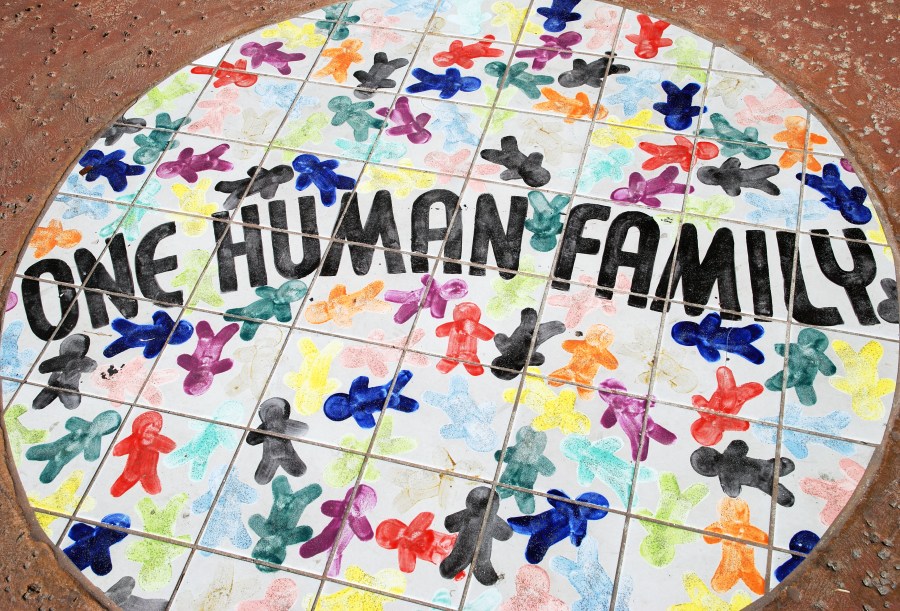
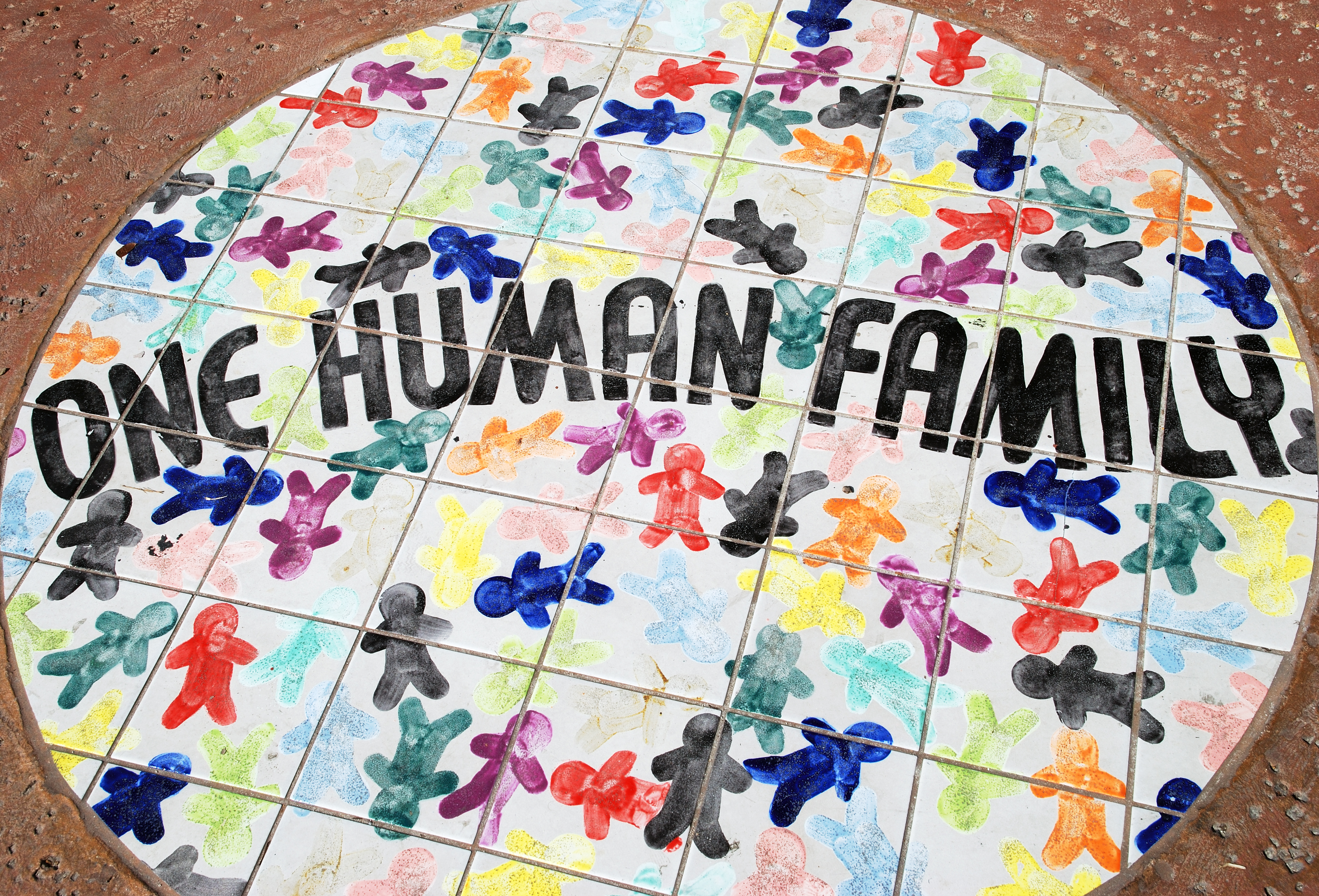
And who is our kin? Who is our neighbor?  In other words, Isaiah is saying, that we should be available to do the work of justice for the entire human family.

Jesus stands firmly in this prophetic tradition.

In Matthew’s gospel, Jesus exposes performative religion—faith that wants spiritual credit without social responsibility. He warns against prayer and fasting that seeks approval instead of transformation, against a righteousness that hides from justice.

Ash Wednesday names what many would rather avoid:

We are shaped by systems that privilege some and punish others.
We are beneficiaries of structures that reward greed and normalize inequality. And silence in the face of that reality is not neutrality.
It is consent.

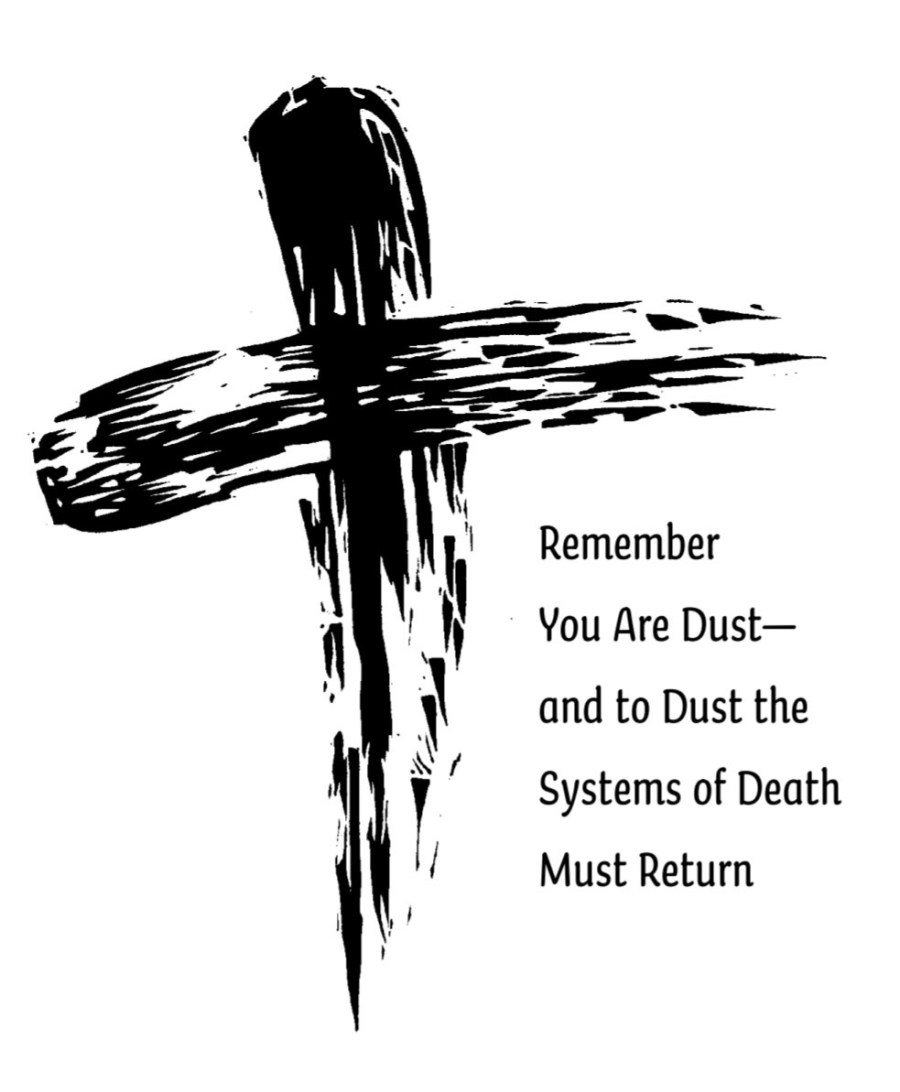
Ashes tell the truth about who we are. We are dust.

In Genesis, God forms humanity from the dust of the ground — from the same soil that grows our food, from the same earth that holds every other body. We are not dropped into the creation from above. We rise up from within it. We belong to the earth and to each other.

Dust means we are made of what everyone else is made of. The same earth runs through all of us. The same breath sustains all of us.

Which means we are not autonomous individuals competing for survival. We are interdependent lives sharing one fragile existence. Dust cannot declare independence from other dust. What happens to one part of the soil affects the whole field.

Dust reminds us of something the powerful try to make us forget: No one is disposable. You cannot discard part of the earth without damaging the whole. You cannot throw away people without wounding yourself.

So, when you come forward tonight, and the ashes are placed on your forehead, you will hear these words: “From dust you came; for justice you are called.”

These words are not a blessing. They are a summons declaring that repentance is not complete until justice is pursued. That worship is not faithful until it confronts what dehumanizes. That Lent is not about what makes us feel holy, but about what makes the world more humane.

Lent is a season of moral clarity. It’s a season to break with greed in a culture of hoarding. It’s a season to confront racism in a society built on racial hierarchy. It’s a season to resist bigotry when fear is marketed as righteousness.

If our observance of Lent does not make us more honest, more generous, more courageous, Isaiah would say we have missed the point.

Ash Wednesday does not mark us for shame or for death. It marks us for responsibility. For truth-telling. For solidarity. For resistance grounded in love and for a life committed to justice.

Ash Wednesday tells the truth: we are dust. And God has always done revolutionary work with dust.

In the beginning, God bent down to the earth, gathered soil in divine hands, and breathed into it— and humanity stood up. The first declaration of dignity was spoken over dirt.

When empire tightened its grip and Pharaoh seemed untouchable, God did not raise up another emperor. God raised up a shepherd from the wilderness, dust from the margins, and said, “Go.” And the empire trembled.

When a giant towered over Israel in bronze and steel, God did not choose armor. God chose a boy and five stones from the ground. And dust struck down domination.

When a valley lay scattered with dry bones (history’s casualties, abandoned and forgotten), God did not turn away. God spoke. God breathed. And dust became a living, moving people again.

When a woman was dragged into the center of accusation and shame, Jesus did not stand above her. He knelt in the dirt. He wrote in the dust. He reminded the powerful that they, too, were earth.

And when violence did its worst, when love was crucified and laid in the ground, they thought the story was over. They returned him to the dust.

But the earth could not hold what God had breathed into it. And on the third day, dust rose.

So, when you hear the words tonight that you are dust, it does not mean you are powerless. For dust is where God begins. Dust is where God breathes. Dust is where God builds movements, topples idols, and raises what the world declared dead.

And tonight, ashes will mark your forehead. Not as a sign of shame. Not as a symbol of defeat. But as a reminder: You are dust. Dust shaped by God. Dust filled with breath. Dust capable of courage. And don’t ever underestimate what God can do with dust, especially dust that has decided to seek justice.

Amen.


Benediction

Beloved, as you go into this season of Lent,

Go remembering that you are dust
formed from the earth,
held together by breath,
bound to every living thing in sacred belonging.

Go not in shame, but in courage.
Go not in fear, but in hope.
Go not to perform religion, but to practice love.

May the God who breathes life into dust
breathe holy restlessness into you
a hunger for justice,
a tenderness for the vulnerable,
and a stubborn refusal to accept a world as it is
when it could be more humane.

May your fasting loosen injustice.
May your prayers soften hardened systems.
May your repentance bear the fruit of repair.
May your worship spill over into mercy.

And when you grow weary,
remember: dust is where God begins.
Dust is where God breathes.
Dust is where resurrection rises.

Go in peace
to love boldly,
to serve humbly,
and to do justice with joy.

Amen.

One Human Family

Matthew 5:21-24

Almost every day, I read or hear someone say that much of the church today looks nothing like the movement of love and justice that Jesus started.

Many agree it is due to a wide-spread rejection of Jesus’ words in the Sermon on the Mount. Folks in church have dismissed the beatitudes where Jesus proclaims that God is on the side of the poor, the meek, the grieving, the compassionate, and those who hunger for justice and peace. Because they prefer to live in a world where God is on the side of the privileged and powerful, those who have never had to ask for their lives to matter, even on the side of those who are merciless and violent—to the people who look, speak and worship differently.

Because frankly, if you are one of the privileged, it’s just better that way. It’s more comfortable. It’s safer and just easier.

         However, I want to suggest that the main reason many churches look nothing like Jesus is because some of us have refused to obey the first command Jesus gives about worship. We’ve ignored Jesus’ command to stop worshipping, stop singing, stop praying, get up in the middle of the sermon, and go home. And don’t come back, until we’ve reconciled with our brothers and sisters.

Or maybe it’s because, we’ve grossly misinterpreted this command.

As a child, I remember being warned very seriously by my mother: “Jarrett, you must never, ever call your brother, Jason, ‘a fool.’ Because you could go to hell for that!”

And I believed her. I think I called my brother every name in the book. But I never called him a “fool.”

It’s strange when I think about it, as I grew up in a world where I heard the “n-word”spoken casually. I’ll never forget hearing racist jokes told around the dinner table, right after church, hearing laughter at the expense of others.

No one warned me about that.

         My family was deeply religious, in church every time the doors were open. And yet, we seemed to miss what Jesus was actually saying in his first recorded sermon.

Referring to verse 22, and the danger of calling a brother or sister “a fool” or else “be liable to the hell of fire,” I’ve heard people boast, “Well, I’ve never called my brother or sister a fool!”

The problem is that whenever Jesus speaks of family, he always broadens its definition.

Later in Matthew, we read about a time Jesus is teaching in the synagogue when someone interrupts him saying, members of your family are here to see you. Jesus turns and points to everyone in the room and says, “All of these are part of my family.” In every word and action of Jesus, he continually enlarges the circle. Family is not defined by bloodline, nor ethnicity, nor tribe, nor nation.

In Matthew’s Gospel, the word translated brother or sister, adelphos, stretches beyond biology. Family is not bloodline or tribe. It is anyone who belongs to God.

So, when Jesus says, “if you say to your adelphos, ‘you fool,’” he’s talking about the person sitting in front of you and behind you, the one across the aisle, across the border, across the political divide.

He’s saying: The ones you despise are your siblings, and that should change everything. Because it’s one thing to insult a stranger. It’s quite another to degrade members of your own family. It’s one thing to caricature “them.” And it’s another to realize there is no “them” in the kingdom of God.

Jesus then names two insults. The first is raka, an Aramaic word which means something like “empty-headed,” “stupid,” “washed up,” “good for nothing,” “worthless.” It’s a dismissal of someone’s value. It’s saying someone is disposable and can be discarded.

The second word is translated “fool.” In Greek, it is moros. It’s the root of “moron.” But in that culture, calling someone moros was not about intelligence. It meant morally worthless, godless, demonic, beyond redemption. It was a way of saying: You do not matter, you do not belong, and you never will.

With these two words, Jesus was warning people of the harm of dehumanization and demonization.

When we hear Erika Kirk call the protesters in Minneapolis “demonic,” when we see images depicting Barack and Michelle Obama as apes, when Congresswoman IIlan Omar is called “garbage,” when immigrants are described as “infestations” or “invasions,” and when a Puerto Rican singer is told “he doesn’t belong,” we are witnessing a centuries-old strategy of dehumanization and demonization.

Enslaved Africans were called “property” and “animals,” because you cannot enslave someone you fully recognize as part of your family.

Indigenous peoples were called “savages,” so land could be stolen without moral consequence.

Black men were labeled “brutes” and “bucks”, so lynching could be framed as protection.

Jewish people were depicted as “vermin,” so genocide could be justified and rationalized.

Japanese Americans were called enemies, so detention centers could be normalized.

The pattern is always the same: First, a label, then a caricature, then a policy, and then a grave.

What we are continuing to learn about the Epstein files should not surprise us as we are bombarded with language that objectifies women: jokes that reduce women to body parts; comments that treat women as trophies or temptations; speech that minimizes harassment or blames the victims of assault.

Before assault becomes physical, language makes it conceivable. When the bodies of women are described as things to be grabbed, owned, and evaluated, then empathy is lowered and permission to harm is created.

Jesus is saying here that once someone is no longer adelphos, once they become “less than,” harm becomes easier to justify.

But if she is your sister, if she is adelphos, then her dignity is not negotiable.

If Barack and Michelle Obama are adelphos, then ape imagery is not just offensive. It’s family betrayal.

If Black and Brown immigrants are adelphos, if the Puerto Rican artist is adelphos, then slurs are not just words. They are deep wounds within the household of God.

If women exploited and molested by rich and powerful men are adelphos, then the demand for justice will be relentless and a suggestion that the acceptance of injustice is worth a $50,000 Dow Jones will not be tolerated.

Now, it’s easy to hear a sermon like this and think of someone else. It’s easy to nod our heads because we would never post the meme, never chant the slur, never laugh at the joke. But Jesus does not say, “If your enemy has something against someone else.” He says, “If your sibling has something against you.” Which means this is not only about the loud cruelty out there. It is about the quiet ways we withdraw from people who frustrate us. The way we roll our eyes and dismiss others. The way we avoid hard conversations. The way we decide someone is not worth the effort. Dehumanization does not begin with a microphone. It begins in the heart. And even good, justice-seeking people are not immune.

         Jesus says dehumanization endangers us with hell. But like a misinterpretation of the word adelphos, raka, and moros, the way we have interpreted “hell” has actually made this world more hellish.

The word Jesus uses here is Gehenna. It’s a valley outside Jerusalem associated with burning refuse and with Israel’s history of violence. It symbolized what happens when a society becomes a dumping ground for human dignity.

Jesus is saying that Gehenna is what we create on earth when we treat others as garbage, worthless, washed-up, disposable.

And then, to underscore how important it is to treat all people with dignity, to love others like family, to love all people as we love our own, as our very selves, Jesus says this: “If you are offering your gift at the altar and remember that your sibling has something against you, leave your gift at the altar.”

Leave the worship service before the peace is passed and the benediction pronounced. And go. Be reconciled. Jesus refuses to separate love of God from the love of people and suggests that God does not receive praise from lips that practice dehumanization of others.

Reconciliation is not politeness, or kindness, although we certainly need more of that in the world. It’s not pretending harm did not happen or moving on, letting bygones be bygones, nor is it “agreeing to disagree.”

Reconciliation is truth-telling. It is repairing and restoring. And it is a refusal to continue dehumanizing and being silent in the face of dehumanization.

After learning that our sibling Christopher Lilley, passed away suddenly this week, many have asked me if Chris had family. I do not know of any biological family, but I do know he had family. He had church family, members of this church and members from the former Court Street United Methodist Church, who enveloped Chris in love and grace. He also had his recovery family, a community that helped him stay sober for the last 11 ½ years.

I cannot put into words what it meant to Chris that he had people who treated him as adelphos.

Two months after Chris was born in the Brooklyn neighborhood of Baltimore, Maryland, his mother literally discarded him, threw him out with the trash, leaving him outside of a garbage dumpster. Chris was found and placed in the custody of the state for months before he bounced around between several different foster parents. Years later he was finally adopted, but his childhood was one of trauma.

Chris struggled with mental illness and alcoholism. He often heard dehumanizing and demonizing voices in his head. Most wrote him off. However, the good news is there were people in this city who loved Chris, who treated him like family, who let him know that he was not trash. He was a beloved child of God, a sibling of immeasurable worth.

And not only did Chris overcome his addiction to alcohol, he became a sweet, caring, empathetic, soul. The little way he giggled at his own jokes revealed a spirit that was far from broken.

Chris had an incredible passion for social justice. Chris often told me how he had no tolerance for white supremacists, Nazis, and bigots, for anyone who made anyone else feel like trash. Chris called me often, many times just to ask me how I was doing, or how people on our church’s prayer list were doing.

Having been treated as garbage, Chris experienced his share of Gehenna in this world. But because he found a community of grace, reconciliation, and restoration, I believe he also experienced a little bit of heaven.

So, before we come to this table, before we say the prayers, before we receive the bread and drink from the cup, we must ask:

Where have we dismissed someone as less than?
Where have we laughed along at jokes that harm?
Where have we stayed silent?

This table is not for the perfect. It is for the honest. It is for those who are willing to love as Jesus loved, to resist dehumanization and demonization in all its forms.


Invitation to Communion

Here we remember a body that was mocked.
A man publicly shamed. A Savior treated as disposable.

And we remember that he refused to return contempt with contempt.

This meal does not erase our responsibility. It forms us for reconciliation.

So, come.

Not because you have never spoken harm. But because you are willing to stop.

Come, ready to see every person as adelphos.
Come, ready to reject the language of Gehenna.
Come, ready to build a community where dignity is not negotiable.

Because Jesus is not just trying to keep us from committing murder. He is trying to form a community where murder becomes unthinkable.

Preserving Truth, Exposing Lies

Matthew 5:13-20

As I said last week, many of us were raised hearing a very skewed version of Jesus’ Sermon on the Mount, as we sat in the comfort and shelter of a flag-adorned sanctuary among the beneficiaries of white supremacy. It’s fair to say that some of us heard from an alternative Jesus who blesses the rich and the powerful, instead of the Jesus who blesses the poor and confronts power.

So today, I invite you to clear your minds and open your hearts to hear from the brown-skinned Jewish Palestinian who experienced life as an immigrant on the run, who was, from day one, a target of the state. Listen to the Jesus who identified with the vulnerable, the marginalized, and the criminalized, as he delivers a word from God to people who are exhausted from life under a corrupt, tyrannical government, to people who know what it is like to hear their leaders use scripture to support exclusion, exploitation, and oppression.

And it is to them (not to the powerful; not to those called “patriots” by King Herod and his minions; not to the priests aligned with Rome or to the loudest voices claiming divine authority) that Jesus says: “you are the salt of the earth,” and “you are the light of the world.”

And what may be even more shocking is that Jesus does not say, “you will be salt”—when Herod dies, or “you will be light”—when the pendulum swings.

But to those who are exhausted by a system that favors the rich, to the poor in spirit, the mourners, the powerless, to those who hunger for justice and yearn for peace, Jesus says: “you are,” today, right now, in this very moment, “the salt of the earth” and “the light of the world.”

Salt in the ancient world was not merely something that was sprinkled on food to enhance its flavor. Its main purpose was to preserve food that would otherwise rot. And due to its antibacterial properties, salt was used as a therapeutic agent to treat wounds. Salt was essential for healing—disruptive, uncomfortable, and necessary to stop infection and decay.

That’s why we should pay attention when we hear people say we shouldn’t “open the old wounds of our past,” that talking honestly about our nation’s racist history through works like the 1619 Project is somehow divisive, unnecessary, or unfaithful. Because anyone who has ever had a wound knows this: wounds that are never cleaned don’t heal; they fester. And salt, when applied to an open wound is never comfortable. It stings. It burns. It makes us wince. But it also kills infection. It interrupts decay. It makes healing possible.

If Jesus calls us to be salt, then he is not calling us to comfort the wound, to cover it, or to pretend it never happened. He is calling us to tell the truth about where the injury is, how deep it goes, and what it has cost, because it is only then that healing can begin. Refusing to name injustice is not simply moving on. It is choosing rot over restoration.

That’s why Jesus gives the warning if salt loses its saltiness, if salt stops doing what it was made to do, it becomes useless and gets trampled underfoot. In other words, if you don’t want those in power to tread on you, you must start being who you were created to be!

Like salt, light can also sting and be uncomfortable. Light is dangerous, as it is a threat to darkness, exposing what the darkness covers up. And Jesus says, you don’t light a lamp and then hide it for the sake of safety. You don’t dim it, to keep you out of trouble. But you put it on a stand, and you share it with as many people as you can.

Jesus is talking about being a public witness. He’s talking about possessing a faith that shows up in the world where people are hungry, oppressed, and crushed by unjust systems.

When Jesus talks about light and salt, I can’t help but think about the way people are bearing public witness to the truth today with nothing more than a cell phone in their hands, recording what others hope will go unnoticed, preserving the truth that would have decayed otherwise.

In a world where lies travel fast and violence is quickly denied, these witnesses are letting their light shine, exposing what the darkness wants hidden, preserving the truth before it can be erased. With moral courage they are refusing to let darkness control the story. Every time cell phone cameras come out in Minneapolis, you could almost hear the people singing, “This little light of mine, I’m going to let it shine!”

That simple song that most of us learned as a child might not have been written as a protest anthem, but it was never neutral. It emerged from Black communities of faith where light was already a language of survival. To sing about light in a world shaped by slavery and Jim Crow was already to make a claim: that God’s presence and love could not be extinguished by racism and violence.

During the Civil Rights Movement, that song was carried out of the sanctuary and into the streets. It was sung in marches, in jail cells, in the face of clubs and dogs and fire hoses. Freedom singers didn’t softly hum “This Little Light of Mine.” They shouted it and marched with it in the streets. In the darkness of Bloody Sunday in Selma, Alabama, they turned it into a bold declaration of justice.

And at the same time, those of us who grew up in predominantly white churches, learned how to sing the same song without ever stepping into that darkness. The words and the tune were the same. But the power of the words was diluted. The light was kept safely inside, deep in our hearts, something personal, something polite, something that asked nothing of power.

What we did to that song illustrates how the gospel of Jesus gets whitewashed, prompting the Rev. Dr. Raphael Warnock to recently say: “I have to say, as a pastor, I think Jesus is the biggest victim of identity theft in the country.”

We’ve learned how to keep the language of Jesus while emptying it of its demands. The light Jesus talks about becomes personal comfort and salvation instead of public confrontation and social transformation. And Jesus becomes someone to believe in rather than someone to follow.

Which is exactly what Jesus is addressing in verse 20 where we read: “Unless your righteousness exceeds that of the scribes and Pharisees, you will never enter the kingdom of heaven.”

It’s important to remember that the scribes and Pharisees were not secular villains. They believed in God. They were morally serious and deeply religious. They quoted scripture fluently. They claimed divine authority. They believed they were defending God’s order in the world. And yet, they had learned how to practice religion without practicing love. How to keep the law while neglecting the least of these. How to be righteous without being just.

And Jesus is saying: “That kind of righteousness is just not going to cut it!”

Not that it might prevent us from experiencing heaven when we die, but that it will certainly prevent anything close to God’s reign of love from being experienced here on earth.

Jesus is saying: You can know and even obey all the rules and still miss the reign of God. You can quote scripture and still block the kingdom at the door. You can be loud about God at a prayer breakfast and silent about injustice.

Jesus is saying the righteousness of the kingdom exceeds right religion, because it is all about right relationship, with God and with our neighbors, especially with our neighbors who are suffering: the poor; the foreigner; the crushed and the cast aside.

The righteousness of the kingdom looks like love showing up to heal suffering. It looks like justice showing up to disrupt the darkness. It looks like the refusal to stay safely inside the Pharisee’s religious walls of belief.

It’s the kind of righteousness that is never private but always practiced publicly. It shows up in real places, with real bodies and real risk. It looks like telling the truth in the face of lies. It looks like standing with our brown and black neighbors who are being targeted, even when it costs us comfort or reputation. It is showing up where silence would be complicity.

Salt preserves what would otherwise decay and exposes what the powerful want to hide. And every time we choose courage over comfort, solidarity over safety, truth over security, we are practicing the righteousness Jesus is talking about.

So, when Jesus says, “you are the salt of the earth,” he is saying:
don’t lose your edge; don’t soften the gospel until it no longer confronts injustice.

When he says, “you are the light of the world,” he is saying: don’t hide the truth to stay safe; don’t dim your witness to stay comfortable.

And when he says our righteousness must exceed that of the scribes and Pharisees, he is saying:

The kingdom of heaven is experienced through love that refuses to look away, through justice that costs something and through faith that stands with the vulnerable even when it makes us enemies of the powerful.

Jesus is saying: The world today does not need any more salt that has gone bland. And it does not need a light hidden behind patriotism or religious certainty.

It needs a church brave enough to live a righteousness that exceeds belief, rejects the false religion of nationalism, and dares to trust that God’s reign is still breaking in. The world does not need more certainty. It needs more courage.

And Jesus does not say this to shame us. He says it to name us. “You are the salt of the earth.” “You are the light of the world.” Not someday. Not when it’s safer. Not when the cost is lower. But right now. Which means courage isn’t something we wait for. It’s something God has already placed in us—

The courage to tell the truth when power is lying.

The courage to show up when silence would be easier.

The courage to follow Jesus not just in what we confess, but in how we live.

The darkness is real today. But so is the light.

And the darkness does not get to decide if the light shines.

So, at the end of the service when we sing, “This little light of mine,” we’re not singing a sweet little children’s song like you used to in Vacation Bible School.

We are making a public vow,

a declaration that in the darkest night, the light still shines.

That truth will be told.

That wounds will be healed, even when it stings.

And love will not stay silent.

Amen.

Foolish Enough to Be Faithful

1 Corinthians 1:18-31; Matthew 5:1-12

Father John Dear reminds us that the Beatitudes are not polite blessings for private spirituality. It’s not chicken soup to nourish our souls during a quiet time with God.

The Beatitudes are Jesus’ nonviolent manifesto—a public declaration that God stands with the poor, the mourning, the meek, the justice-hungry, and the peacemakers.

Jesus was declaring a way of living that turns the world upside down, directly confronting every system that depends on fear and violence to survive. The Beatitudes unmask the lie that domination brings security and expose the myth that peace can be achieved through force. It is Jesus’ refusal to bow down to Herod, his rejection of religious nationalism, and, his insistence that the way of love—not fear, not coercion, not “comply or die”—is the only power that will heal this broken world.

And yet, the reality is that most of us didn’t grow up hearing from that Jesus, the Jesus of the gospels: brown-skinned; Jewish; Palestinian; unjust law-breaker; anti-racist; one who was born poor and forced to flee racialized, state-sanctioned violence as a refugee in Egypt; one who was arrested and executed by the state for protesting and resisting systems that harm the least of these.

Instead, many of us were raised hearing about an alternative Jesus— a very white, privileged, moderate, capitalist Jesus, a “wise,” law-abiding Jesus shaped by flags, greed, and power. A Jesus who blesses order more than justice, silence more than truth, authority more than accountability, the privileged more than the vulnerable, and even violence if it preserves the status quo.

The version of the Beatitudes many of us were taught is the voice of what we might call “religious-nationalist Jesus.” It’s a voice that borrows Jesus’ name to protect systems that harm the vulnerable while protecting the privileged. I invite us to hear out loud what has already been speaking quietly to us for a long time.

It sounds something like this…

When Jesus saw the crowds, he went up on a mountain. He walked out on stage, flanked by uniforms and flags, and then spoke with the calm authority of one who never had to fear the law.

Blessed are the rich, for their hard work and great faith, God has given them the gift of prosperity.

Blessed are the strong, for they will never have to depend on anyone.

Blessed are the hard-hearted, for empathy clouds judgment.

Blessed are those who comply, for they will make it home alive.

Blessed are the merciless, for mercy interferes with enforcement, and that could get you murdered.

Blessed are those who do not mourn too loudly, for public grief makes people uncomfortable as it asks dangerous questions about deaths, cruelty, and suffering.

Blessed are the pure in heart who know how to stay in their place and keep their protests to themselves.

Blessed are those who do not hunger and thirst for justice, for justice is disruptive, and to the king, disruption looks like insurrection.

Blessed are the peacekeepers, not the peacemakers, but the ones who call pepper spray ‘domestic terrorist control’ and bullets ‘necessary force.’

Blessed are those who condemn protests in the name of civility, who call moral resisters “agitators,” “communists,” “Marxists,” and “antifa-types.”

But woe to you if you are poor, for you are obviously lazy and unfaithful.

Woe to you who are weak and need help from your neighbors.

And woe to you who march.

Woe to you who blow a whistle.

Woe to you if you block traffic.

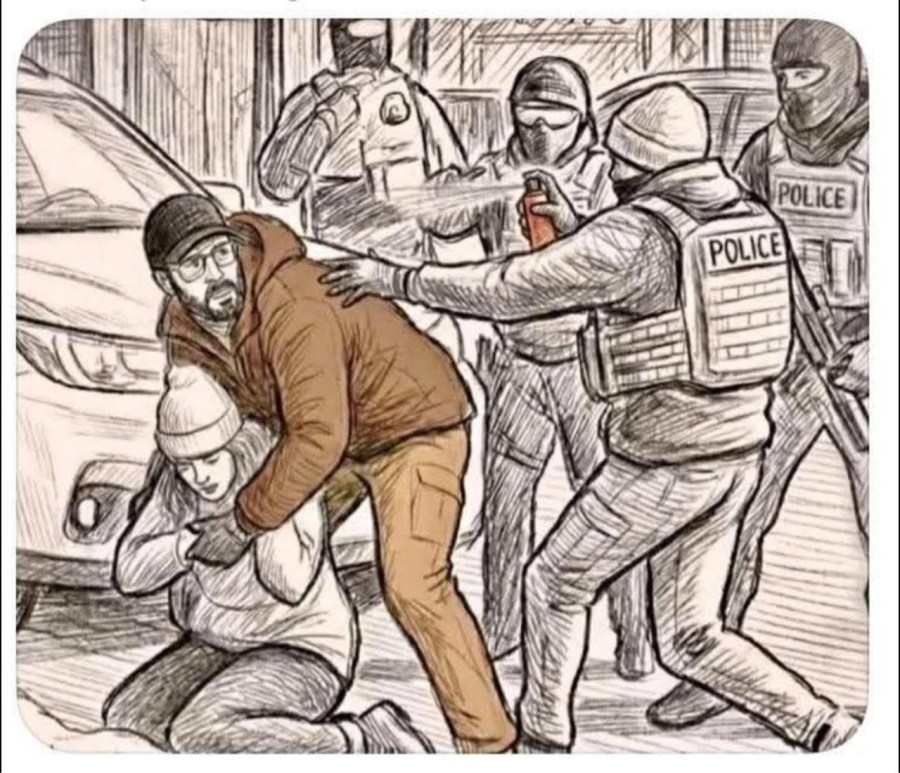
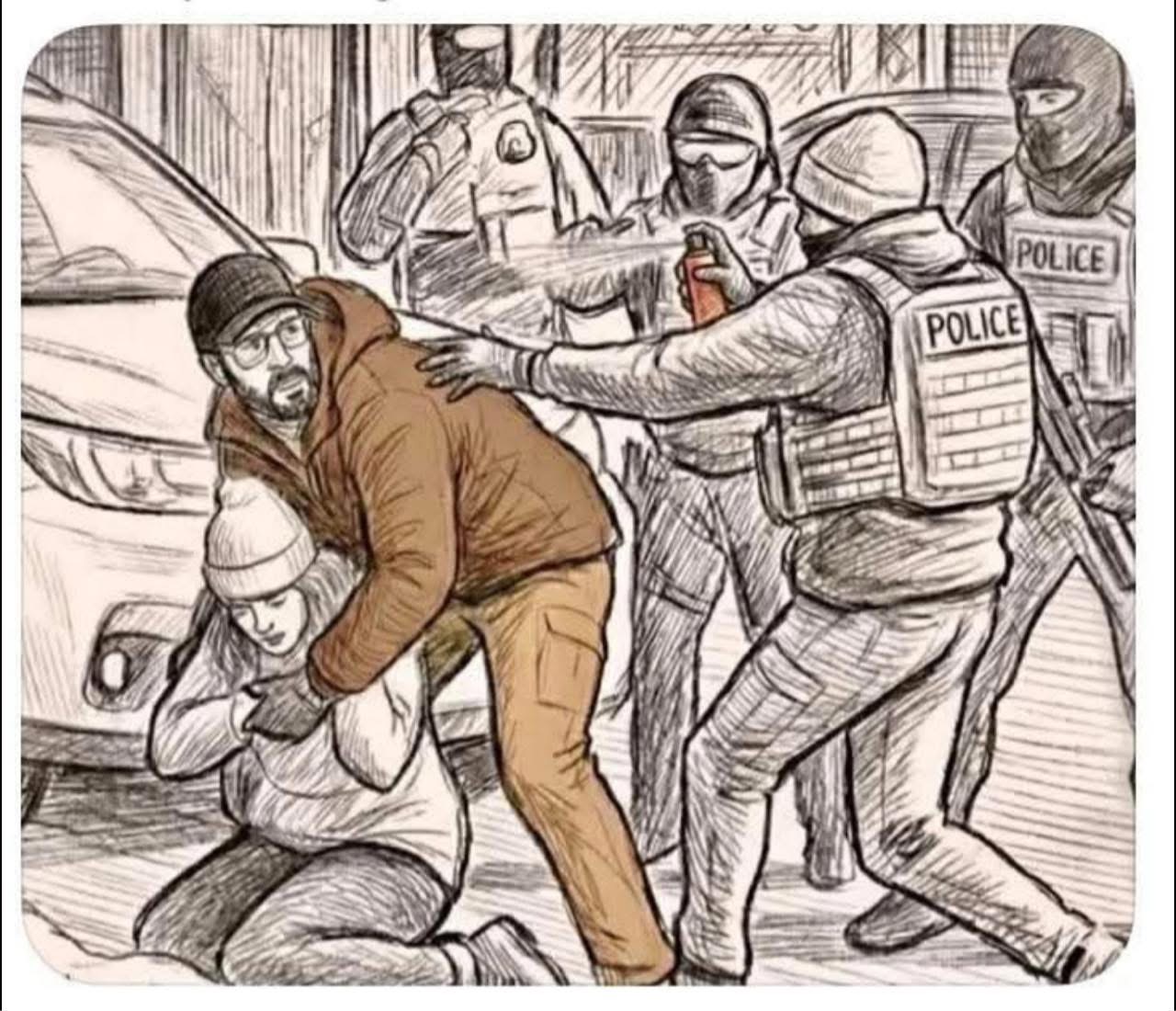
Woe to you if you if you love your neighbor as yourself, if you dare to put your body between a masked agent and a woman shoved violently to the ground.

Woe to you if you bear witness to the truth you see with your own eyes instead of repeating the lies from those on high.

And blessed are those who echo the lies and blessed are ones who say, “well, there’s bad on both sides,” because bending the knee to power is safe, and neutrality feels like wisdom.

Rejoice and give thanks, for your reward is order without justice,
peace without righteousness, life without humanity, but a system that works exactly as it was designed.

And the crowds nodded, a few amens could be heard, because they knew their king would approve. It sounded like law and order. It sounded like good, common-sense, conservative values. It didn’t sound foolish at all. It sounded like the wisdom of the wise.

This thinking is perhaps what prompted the Apostle Paul to quote the prophet Isaiah: “For it is written: ‘I will destroy the wisdom of the wise…’ …For God’s foolishness is wiser than human wisdom, and God’s weakness is stronger than human strength.”

Paul does not try to rescue the gospel from the charge of foolishness. He embraces it. He leans into it. He says, in effect: Yes. I know this way of love that Jesus taught and embodied looks foolish. I know the cross doesn’t look like wisdom to an empire that measures strength through domination. A crucified Messiah doesn’t inspire confidence in a world that believes security comes from force and order comes from fear.

And yet, Paul dares to say that this so-called foolishness is exactly how God is dismantling the violent wisdom of the world, “abolishing the things that are,” he writes.

This foolishness, says Paul, is the power of God.

It’s not the power to crush enemies, but the power to expose their lies and cruelty. It’s not the power of coercion, but the power of love that refuses to disappear even when it’s nailed to a cross or murdered on a public street.

This is why the Beatitudes and the cross belong together. Both seem foolish. Both look weak and impractical. Both seem absolutely powerless when confronting those invested in keeping things exactly the way they are. And both announce that God is not impressed by what those in high places call “wisdom.”

Paul reminds the church: “Not many of you were wise by human standards. Not many were powerful. Not many were of noble birth.” In other words, not many of you are respected by those in power today. Not many of you would be called patriots or even people who love their country. But God is not going to ask their permission to choose you. God is not going to wait until the next election to call you. God is calling you today to change this world.

In this very moment, I believe God is choosing the foolish. God is choosing the weak. God is choosing the despised. God is choosing the poor in spirit. God is choosing the mourners. God is choosing the meek. God is choosing those who hunger and thirst for justice. God is choosing the peacemakers who refuse to confuse peace with silence.

And because this is who God chooses, Jesus speaks with a wisdom that sounds like foolishness, feels like resistance, and looks like hope.

When the world says, “Be obedient,” Jesus says, “Be merciful.”

When the world says, “Keep the peace,” Jesus says, “Make peace.”

When the world says, “Respect authority,” Jesus says, “Blessed are those who refuse to bow to evil.”

This is why protest makes power nervous. Not because it might lead to violence, but because it tells the truth. It exposes the gap between our rhetoric of equality and due process and the reality of racialized suffering. It reveals who is expected to absorb pain quietly, so that the privileged can remain comfortable.

And when people who are supposed to be invisible refuse silence, the wisdom of the world begins to unravel.

Paul says God chooses the foolish and the lowly. And Jesus says they are blessed now.

This means that God is not neutral. God is not undecided. God is not standing above history waiting to see who wins. No, it means God is already present—among the crucified, the criminalized, the grieving, the justice-hungry, the meek, and the merciful.

That’s why Jesus does not say the poor will be blessed eventually, after they stop being poor. He does not say the mourners will be blessed once they move on. He does not say the justice-hungry will be blessed when they stop resisting and wise up to the ways of the world. He says they are blessed now.

And we see that blessing even now. You can murder Renee Good for defending her neighbors, and Alex Pretti for protecting a woman shoved to the ground, but instead of killing love, you only multiply it. You only make it stronger, wider, deeper, and fiercer.

So, hear the good news today: mercy is not weak; empathy is not foolish; compassion is not soft; and love is far from powerless.

These things are dangerous—to injustice.
These things are disruptive—to systems that depend on fear.

And these things are powerful enough to dismantle a world shaped by domination and supremacy.

Love looks weak—until it refuses to die.

Mercy looks small—until it spreads.

Empathy looks foolish—until it builds movements.

Compassion looks soft—until it organizes, makes signs, marches, chants, sings, and exposes the evil of a system that dehumanizes, divides, and demonizes so it can survive.

The poor are not powerless; they are positioned.

The meek are not losers; they are inheritors.

Those who hunger and thirst for justice are not wasting away; they are bending the moral arch closer to the Kin-dom of God.

And those of us who mourn today are not abandoned; but we are being held close to the heart of God and are being reassured that God’s reign of love and justice is coming.

Not through religious nationalism or enforced conformity, but it comes through a foolish, cross-shaped love that refuses to let violence have the final word.

And blessed are all who believe this, because you are already living into God’s future.

Amen.

Repent and Be Sent

Matthew 4:12-23

Growing up in the evangelical church, I heard a phrase that got my attention long before I knew how to question it, or even if I was allowed to question it: “Repent or be sent.” Have you ever heard that? I heard it about the same time I heard, “Turn or burn” and “Get saved or get microwaved!”

It meant: You better get your beliefs right… or else. You better say the prayer… or else. You better accept Jesus… or be sent to hell. Repent or be sent.

And for a long time, I thought the voice of God sounded like that— menacing, threatening, terrifying. I thought the main point of Christianity was getting people to accept Jesus as their personal Lord and Savior so God would not send them to hell for all of eternity.

The good news is that I kept reading the gospels. I went to seminary where I studied the gospels and the Greek language. And I noticed something.

Jesus never said anything remotely close to: “Repent or else.”

Today, our gospel lesson reveals what Jesus actually said. And it is far more hopeful. But it is also more challenging.

Matthew tells us that Jesus announces his public ministry with these words: “Repent, for the kingdom of heaven has come near.”

Not repent or else. Not repent to avoid eternal punishment. Not repent so we can escape a troubled world. But repent because something divine is coming to this world.

The Greek word we translate “repent” means “a change of mind” or “a change of vision.” “It’s a re-ordering of how we see the world.” It doesn’t mean “feeling sorry,” or “getting religious,” or “fixing some private flaw.” It means learning to see the entire world differently.

The Apostle Paul put it this way: “So, if anyone is in Christ, there is a new creation: everything old has passed away; look, new things have come into being” (2 Cor 5:17).

The call to repent is an invitation to transform how we think, act, and belong in the world.

Why? Because, “the Kingdom of Heaven” has come near.

The Greek language here means much more than “a place” or “a destination after death.” It means, “a reign,” “a rule,” or “a governing force.” Jesus is announcing an alternative political and social order, one that stands in direct contrast to Rome, to Herod, to economic exploitation, to state violence, to exclusion, to domination, and to the religious systems that bless it all.

Jesus is talking about a reign of inclusive, universal, unconditional love.

And Jesus says that we can change the way we see the world because this reign of love has come near. Not someday. Not after death. The verb Matthew uses means: “it is so close you can feel it breathing on your neck.”

Now, I can already hear the response of some of my evangelical friends: “Preacher, Jesus didn’t say, ‘the Kingdom of Love is near.’ He said ‘the Kingdom of Heaven is near.’ Aren’t you reading a bit more into this?”

Throughout the gospels, through every parable Jesus told and every action Jesus took, I believe Jesus was showing us what the Kingdom of Heaven looks like. And what did he show us? That it looks like healing for the sick, welcome for the excluded, food for the hungry, liberation for the oppressed, and justice for the persecuted. It looks like mercy, and it looks like grace. It looks like love, always love, even for our enemies. It looks like a love that is free, fierce, and unstoppable.

So, to speak of the kingdom of Heaven as “a reign of love” is not adding to Jesus’ words. It’s letting Jesus’ life, death, and resurrection interpret them. If the Kingdom of Heaven does not look like love in practice, then we are not actually talking about the kingdom Jesus proclaimed.

I believe it is notable that Jesus announces this reign of love, not in the halls of power, but in Galilee, among people terrorized by empire, taxed into poverty, and made to believe that injustice was normal.

Repentance is necessary because people have learned to accept a world organized, not around the governing power of love, but around the governing power greed that crushes the poor.

So, Jesus’ call to repent was not a stern warning. It was hopeful, good news. He was saying to the people: “Hold your heads up! Don’t despair! The words of Isaiah are being fulfilled: ‘you who sit in darkness, in the shadow of death, a light is dawning!’So, you need to change the way you see things, because love is becoming the governing force in this world!”

Later in Matthew, we are shown exactly what this governing force looks like: “When Jesus sees the crowds, he has compassion for them, because they were harassed and helpless, like sheep without a shepherd.” (Matthew 9:36) Others see the crowd and feel threatened. Jesus sees the crowd and feels compassion. And the word “compassion” here is visceral. Jesus sees the suffering of others and feels it in the pit of his stomach.

This is repentance embodied. To repent is to learn to see others as Jesus sees. To feel for others as Jesus feels. To refuse to be indifferent and to love as Jesus loved.

Repentance is believing that loving like Jesus has the power to change the world. Repentance means: seeing immigrants as neighbors; seeing the poor as beloved; seeing those harmed by violence as worthy of justice. It means even seeing enemies as beloved children of God. Repentance is believing no human is “illegal” or “an alien” or “garbage.”

Repentance is: welcoming the stranger; liberating the oppressed; caring for the sick; feeding the hungry; and educating children, not using them as bait to arrest their parents without due process. Repentance is honoring and protecting those who defend the defenseless, not shooting them dead.

The purpose of repentance is not to be saved from hell when we die. The purpose of repentance is to save our humanity from hellish cruelty while we are living.

Next, we read where this terrible phrase I learned as a child, “Repent or be sent” gets transformed and where it gets challenging. We learn the gospel of Jesus is not: Repent or be sent to hell. The gospel is: Repent and be sent to hell— into the hellish parts of this world as transforming agents of love. And that’s exactly what happens in Matthew 4.

Jesus says “Repent!” and then he immediately calls his disciples. Not to escape hell. But to go bravely into it. When the disciples repent, they are sent into systems of exploitation that reward greed and punish the poor. They are sent into communities disciplined by fear: fear of immigrants; fear of other religions; fear of truth. They are sent into a world that normalizes violence, sanctifies inequality, mocks compassion, terrorizes the most vulnerable, and calls it being faithful. They are sent into a world that looks an awful lot like ours.

We live in a time when choosing a career of cruelty gets you a $50,000 sign on bonus. A fascist government blatantly lies to cover up their murders of Nicole Good and Alex Pretti. Pure meanness is mistaken for strength. And empathy and mercy and compassion, the very essence of who Jesus of Nazareth was, is mocked. Diversity, equity, and inclusion are treated as threats. And love is considered weak.

But the gospel insists that love is far from weak, in fact, love is the only power that has ever changed the world for good.

Love dismantled slavery, not all at once and not without resistance, but through people who refused to accept human bondage as God’s will.

Love marched across a bridge in Selma and faced dogs, batons, and tear gas, not with weapons, but with the stubborn insistence that Black lives mattered.

Love sat in a Birmingham jail and wrote that injustice anywhere is a threat to justice everywhere.

And love is showing up today: in asylum seekers, refugees and immigrants risking everything for their children, in protesters like Alex Pretti and Nicole Good, who risk everything to protect them, in organizers who refuse to stop telling the truth, in people who keep walking the walk even when the road is long.

Love is on the move this weekend in Minnesota, as ordinary people march chant in sub-zero temperatures to peacefully protest racialized state violence, as clergy from all over the United States traveled to Minneapolis to stand in solidarity with those being dehumanized, demonized, and criminalized— one-hundred ministers arrested in the airport on Friday while singing hymns and reciting the Lord’s Prayer.

Next month, reminiscent of the march in Selma, love will be sent to walk the roads of North Carolina, from Wilson to Raleigh, in the Repairers of the Breach’s march called the “Love Forward Together.”

Not marching out of anger, at least not anger alone, but marching out of moral conviction, a deep compassion we feel in the pit of our stomachs.

Not walking to escape the world, but to declare that love, justice, and dignity belong at the center of public life.

And we will walk courageously and confidently, chanting, praying, and singing with hope in our hearts, as history keeps reminding us:

The Herods of the world die.

Empires fall.

Violence fails.

Cruelty exhausts itself.

Fear burns itself out.

ICE will melt.

And lies cannot stand forever.

But love? Love keeps moving forward.

The scripture promises: “Love never ends.” When everything else fails, love remains.

And that is why Jesus does not say, “Repent or else.” But says, “Repent and be sent.”

Sent to join the long, unfinished story of love changing the world.

Sent into a broken world not with doubt, but with assurance.

Sent into cruelty with compassion.

Sent into despair with hope.

Because the reign of God is near!

In the shadow of death, a light is dawning.

Love is breathing on our necks.

And love will have the last word.

The good news is:

Repent—and be sent.

Because love will win.

Amen.


Benediction

Beloved, as you return to the rest of your day
to quiet rooms or busy homes,
to news alerts or peaceful reflection,
to a world still aching for healing, and crying for justice
know this;

Empires will fall.
Violence will fail.
Cruelty will exhaust itself.
Fear will burn out.
Lies will not last.

But love will remain.

Love will keep walking.
Love will keep organizing.
Love will keep telling the truth.
Love will keep showing up.

So repent and be sent.
Sent from this moment with clearer eyes.
Sent into a hurting world with softer hearts.
Sent to love forward together,
even when the road is long
and the work feels heavy.

The reign of God is near.
It’s closer than you think,
closer than you feel.
It’s breathing right on our necks.

So, go in peace and hope.
Go in courage and power.
Go in love. Always in love.
Amen.

Behold! The Lamb Who Takes Away the World’s Sin

John 1:29-34

“Behold!” It’s a powerful word, rich with meaning. But unless your last name is Shakespeare, you probably don’t use it that often. But maybe we should.

The imperative word is derived from the Greek Ἴδε (ide). It means: Wake up! Open your eyes! Take off the blinders! You need to stop whatever you are doing right now and start paying attention!

When John cries out, “Behold!” he’s doing what the prophets have always done: calling people to see what power doesn’t want us to see. Dr. Martin Luther King, Jr. heard the same summons. He asked America to wake up. He asked us to behold the gap between our creeds and our conduct, between what we claim to believe and what our systems actually do. Like John, King named injustice and exposed it. And, like John, he paid the price for it.

And what does John believe is imperative for us to see?

Behold! “The Lamb of God.”

Looking carefully at the language matters as scripture is so easily twisted to serve someone’s agenda. (By the way, taking the original language seriously is what it means to be “conservative,” conserving the original language and intent of the author.)

John is very precise here. He does not say that Jesus is “the lamb for God.” Because this is not about a sacrificial lamb offered up to appease God.

John says Jesus is “the lamb of God.” He is one who belongs to God, one who is aligned with the purposes of God.

Behind this image of the lamb is the Exodus story, where the lamb is a sign of deliverance from oppression, a symbol of liberation from slavery.

In Hebrew imagination, the lamb is also a symbol of vulnerability, a nonviolent creature caught up in violent systems. Thus, this is John’s way of saying that through Jesus, God identifies with the vulnerable. God stands with those crushed by violent power. That’s why Jesus said God is like a shepherd who will leave the flock to rescue the lamb who is most at risk, the lamb who is excluded or displaced.

Jesus calls himself the “the Good Shepherd” who knows his sheep. He identifies with them. This is why Jesus said when you feed the hungry, clothe the naked, welcome the stranger, heal the sick, visit the imprisoned, “you do it to me.”

And after the resurrection, he tells his disciples: “if you love me, feed my lambs” (John 21).

Then, John says something else which is often misunderstood:
“Behold! The lamb of God who takes away the sin of the world.” The Greek word here is αἴρων (airōn). It’s a word that means to lift up or remove but also to carry off, to dismantle, to tear down, to abolish.

John is saying: “Behold! The lamb of God who dismantles the sin of the world.” And notice John does not say, “sins”, plural. He says “the sin” of the world.

Because John is not talking about the private moral missteps of individual people. He’s talking about a power, a logic, a way of the world which is organized against life. He’s talking about a world-shaping force that generates many evils.

I believe the Apostle Paul helps us to understand this force in his first letter to Timothy where we read: “the love of money is the root of all kinds of evil” (1 Timothy 6:10). “Root” is another important word. A root is a generative source. Roots are hidden. Roots feed systems. Roots shape what grows above the surface.

Across scripture, greed distorts justice. It fuels violence, and it legitimizes domination. Pharaoh’s economy depends on forced labor. The Prophets condemn those who “sell the poor for silver.” Jesus said no one can serve two masters. We “cannot serve God and weath.” The early church shared their possessions because they knew hoarded wealth destroys community.

Greed appears as the sin of the world in systems: policies that treat people as expendable; wars fought for resources and control; slavery justified as “economic necessity”; violence framed as “security”; borders hardened to protect wealth; and bodies criminalized when they threaten profit.

Greed requires coercion to protect itself. It requires violence when it’s challenged. And it requires religious justification to appear moral.

Fascism is not a separate sin from greed. Fascism is greed fully armored. It is greed baptized in nationalism, enforced by violence, and justified by religion.

This is the sin of the world that John wants us to see today. Behold, the Lamb of God, who is aligned with the purposes of God, who stands with the poor, the displaced, and the oppressed, is here to dismantle a world ordered by greed, power, and violence.

That is why Jesus is crucified. Not for forgiving private vices. But because he threatened a world built on profit, domination, and control.

This is always how it goes. The world does not kill people for being kind and forgiving. It kills them for standing in the way of unjust systems.

Jesus is crucified when he confronts empire.

King is assassinated when he challenges economic exploitation, racialized violence, and militarism.

The prophets are silenced when they refuse to make peace with injustice.

The early church understood this. When John said, “Behold!” they got it. They understood sin, not as personal vices, but as the power tied to death, empire, and idolatry. The Apostle Paul and John spoke of sin as a force that enslaves, rules, and kills (Romans 5–7; John 8; 1 John).

John 1:29 was heard as a bold political statement: Jesus is one who confronts the powers that order the world against God’s justice. The cross was seen as the exposure of these powers and Jesus’ solidarity with the crucified. And salvation meant liberation into a new way of life, into what Dr. King called the beloved community.

But over time, that vision narrowed.

In the 4th century, when Christianity was wed to the Roman Empire, naming the sin of the world became costly, because now the church had something to lose. Thus, sin was relocated from systems to individual souls (By the way, this is what some would call “liberal”—changing the original meaning of scripture to support your own politics).

But doing so kept Jesus safe for those in power, because the understanding of sin then moved away from empire, away from economics and violence, and to individual hearts and personal vices. Jesus becomes a solution for personal guilt, rather than a threat to unjust order.

And then this theologian and philosopher named Augustine came on the scene. He did not intend to protect injustice, but his emphasis on inherited sin and inward transformation, unintentionally narrowed sin to the individual soul. And over time, the church began to speak more about what was going wrong inside of people, than what was going wrong in the world.

John 1:29 is still quoted, but now the Lamb of God soothes consciences rather than dismantles systems.

As the church’s power grew, sin became something the institution could diagnose, quantify, forgive, and monetize.

The Reformers responded by recovering grace, but they kept sin personal. John 1:29 is read as: “Jesus was crucified to pay the price for my sin” rather “than Jesus dismantles the sin that crucifies people.”

During the Enlightenment, Western culture learned to see everything through the lens of the individual—individual rights, individual reason, individual responsibility. The Bible was read the same way. Sin became private. Religion became personal comfort instead of public truth. And that kind of faith proved remarkably useful to empire—blessing colonization, baptizing conquest, and remaining silent in the face of genocide and slavery.

Today, American Christianity still preaches John 1:29, but it’s almost never connected to economic exploitation, racialized state violence, and imperial power. The misinterpretation of John 1:29 did not simply produce bad theology. It produced an impotent church: a church good at managing guilt, saving souls, and blessing the empire, and bad at confronting injustice, naming structural sin, and standing with those crushed by power; good at accepting the Jesus of empire and bad about following the Jesus of scripture.

That is why John’s message is more important today than ever. “Behold!” Wake up! Open your eyes! Look at the world today. And look at who Jesus is and who Jesus is calling you to be in this moment.

“Behold!” It’s not a word meant only to be powerfully spoken. It’s a word meant to be powerfully lived.

If Jesus is the Lamb of God who dismantles the sin of the world, then following Jesus cannot mean retreating into some private spirituality while the world keeps crucifying the vulnerable.

If Jesus is the Lamb of God who dismantles the sin of the world, it means we must become a people baptized not just with water, but with the Holy Spirit and with fire, a people caught up in God’s movement to interrupt greed, expose violence, and refuse religious cover for injustice.

If Jesus is the Lamb of God who dismantles the sin of the world, it means we stand where Jesus stands—with the poor, the criminalized, the displaced, and the ones the world calls expendable.

If Jesus is the Lamb of God who dismantles the sin of the world, it means we must resist the systems that profit from fear, domination, and death.

Dr. King warned us that remembering the dream without continuing the struggle is a form of betrayal. To honor King is not to quote him once a year, but to confront the same forces he confronted: economic exploitation; racialized violence, militarism, imperialism, and religious complicity.

Behold! Let’s wake up! Let’s open our eyes. Remove the blinders. And see that the Lamb of God is still at work, dismantling the sin of the world.

Dr. King stands in a long line of those who followed the Lamb—people like Francis of Assisi, Harriet Tubman, Óscar Romero, Dorothy Day, César Chávez, Renee Nicole Good, and countless others who refused to make peace with a world organized against life.

And now it’s our turn.

And if this sounds overwhelming, remember that systems are dismantled not by heroes alone, but by ordinary people who refuse to live as though injustice is normal.

So, what does it mean, in practice, to follow the Lamb who dismantles the sin of the world? It means at least three things.

1. We tell the truth.

We refuse silence. We name what harms God’s children—even when it costs us comfort or safety. We call greed what it is. We call violence what it is. We call empire what it is.

2. We offer our bodies.

We show up to stand with the vulnerable—in phone calls and letters to our representatives, in vigils, in protests, and in places of grief because the Lamb is never neutral and always takes a side.

3. We reorganize our lives.

We loosen our grip on wealth. We practice generosity that disrupts hoarding. We align our spending, giving, time, and votes with life instead of death, because you cannot dismantle the sin of the world while funding it.

This is what it means to follow the Lamb. And when we live this way, we inevitably find ourselves standing in particular places, with particular people— in Minnesota, in Portland, in Chicago, in Palestine, in Iran, in Ukraine, in Venezuela, in Greenland, in Virginia, wherever empire kills, threatens and terrorizes God’s children, until the sin of the world is dismantled, until the system is abolished, until justice rolls down like waters, until all God’s children can breathe free.

Amen.


Pastoral Prayer

Holy and Living God,
God of justice and mercy,
God who hears the cry of the oppressed and does not turn away:

We come before you this morning because the world you love is hurting,
and because we refuse to pretend otherwise.

We come carrying the weight of what we have seen:
violence dressed up as policy,
greed disguised patriotism,
fear baptized as faith,
and power protected at the expense of human life.

Teach us again how to behold,
to see clearly what we those in power want us to ignore,
to name honestly what the world tries to normalize,
to look without flinching at suffering that is not accidental,
but produced by systems we are told to obey and not to question.

God of the Lamb,
we pray for all who are crushed beneath the sin of the world.

For immigrants and asylum-seekers living under constant threat,
families separated, children detained, lives treated as disposable,
be their shelter and their strength.
And disturb us, O God, when our comfort depends on their fear.

For Black and Brown communities targeted by violence,
over-policed and under-protected,
grieving lives stolen and justice delayed.
Hold the grieving close,
and unsettle every system that profits from racialized harm.

For workers exploited, wages stolen, bodies worn down,
while wealth is hoarded and inequality justified.
Strengthen those organizing for dignity,
and expose the lie that profit matters more than people.

For nations scarred by war, occupation, and imperial ambition,
for Gaza, for Ukraine, for Sudan, for Haiti,
for all places where civilians pay the price for the ambitions of the powerful.
Break the cycle of domination,
and give us the courage to resist the machinery of death.

God, we confess that too often the church has been silent
when it should have spoken,
neutral when it should have resisted,
and complicit when it should have stood with the crucified.

Forgive us when we have settled for private faith
while public injustice went unchallenged.
Forgive us when we sought peace without justice,
order without equity,
and unity without truth.

And yet, O God,
we thank you that despair does not have the final word.

We thank you for prophets who still cry out,
for organizers who refuse to give up,
for communities practicing mutual care,
for young people daring to imagine another way,
for elders who remember that change is possible.

Strengthen us to follow the Lamb:
not just in belief, but in practice;
not just in worship, but in witness.

Make us a people who tell the truth even when it costs us,
who stand with the vulnerable even when it is risky,
who resist systems of death even when it would be easier to look away.

Baptize us again with your Spirit and with fire
so that our faith is not passive,
our hope not shallow,
and our love not afraid.

Until the sin of the world is dismantled.

Until the systems of greed, fear and violence are abolished.

Keep us faithful, keep us awake, keep us moving.

We pray all this in the name of Jesus, the Lamb of God,
who stands with the crucified and leads us toward life.

Amen.