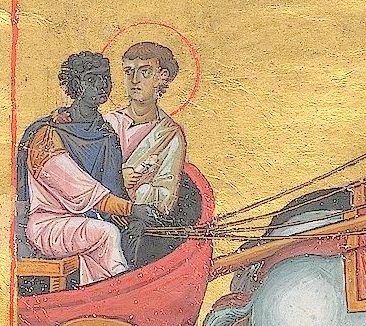
Ashamed of the Gospel

Mark 8:31-38 NRSV

I believe the church needs to re-discover its mission to be the church, to be the body of Christ, to be the very embodiment of Christ in this world. We are to continue his ministry in this world, doing the very same things that he did while he was on this earth: feeding the hungry, healing to the sick, sheltering the homeless, liberating the oppressed, elevating the rights of women, defending those judged by religious hypocrites, siding with the marginalized and speaking truth to power.

Now, there may be some who are thinking: “I just don’t know if I am ready to make such a commitment. I think I will stick to just going to church for now, and maybe I can be the church another time!”

 “After all, I have some things that I need to work out first in my life. My faith needs some work. I have my doubts. I have some questions. I have so much to learn, so much to figure out. And I have some very personal issues to deal with. I have this problem with anger. Sometimes I act or say before I think. So right now, if you don’t mind, until I can get my act more together, learn a little more, I think I will pass on this following Jesus thing. I have enough trouble these days just believing Jesus.”

Well, here’s my response to that: “Have you ever met Peter?”

You know, Saint Peter. The one Jesus called a “rock” and said, “on this rock, I will build my church.” The one Roman Catholics recognize as the first Pope. Perhaps you’ve heard of St. Peter’s Square, St. Peter’s Cathedral, and St. Peter’s Basilica. Peter: the one whom Jesus loved and trusted to carry on his ministry in this world.

You may think, there’s no way I can be like Saint Peter. Well, let me tell you a little more about this Peter fella.

One day, he is out on boat with the other disciples. It is the middle of the night, and there’s this big storm. The wind is howling. The waves are crashing against and into the boat. And as you could imagine, they were all scared to death. But then, Jesus comes to them, walking on the water, saying to them to have courage and to fear not.

But Peter…Peter has some doubts. Peter has some questions. Peter needs to work some things out: “Lord, if it is really you, then command me to come out on the water.” And Jesus responds, “Peter, you of little faith.”

Later, Jesus is instructing Peter about discipleship. Jesus talks about being humble, lowering one’s self, even pouring one’s self out. Jesus talks about selfless, self-expending, sacrificial love, being with and for the least of these.

But Peter…Peter has some issues. Peter has some things to learn. Peter gets into an argument with the other disciples about which one of them was the greatest.

After Jesus prays in the garden, surrendering himself to the will of God, Jesus does not resist arrest. Jesus practices what he teaches and turns the other cheek.

But Peter…Peter loses it. Peter acts before he thinks. In a fit of anger, Peter fights back. Peter draws his sword and begins swinging it at Jesus’ captors, cutting off the ear of one.

And in our text this morning, Jesus foretells that garden event. He talks about being rejected by organized religion. Jesus is essentially saying:

“When you preach the word of God that cuts like a sword; when you love all people and try to teach others to love all people; when you preach a grace that is extravagant and a love that is unconditional; when you talk about the need to make room at the table for all people; when you stand up for the rights of the poor and the marginalized; when you proclaim liberty to the oppressed and say that their lives matter; when you defend, forgive and friend sinners caught in the very act of sinning; when you tell lovers of money to sell their possessions and give the money to the poor; when you command a culture of war to be peacemakers; when you tell the powerful to turn the other cheek; when you call religious leaders hypocrites and point out their hypocrisy; when you criticize their faith without works, their theology without practice, and their tithing without justice; when you refuse to tolerate intolerance; when you do these things that I do,” says Jesus, “then the self-righteous-powers-that-be will rise up, and they will hate. They will come against you with all that they have, and they will come against you in name of God. They will do anything and everything that is in their power to stop you, even if it means killing you.”

But Peter…Peter has some serious issues with that. Peter says to Jesus: “No way! Stop talking like that. This is not right. You are crazy. We will not let this happen!”

Then, having had about all that he could stand of Peter and his nonsense and excuses: his doubts, his questioning, his anger, his lack of faith, his personal issues, all the mess that he needs to work out, Jesus responds to Peter with some of the harshest words ever recorded by Jesus: “Get behind me, Satan.”

Jesus, calls Peter, “Satan.”

And yet, that did not stop Jesus from loving Peter, from using Peter. Jesus kept teaching Peter, kept calling Peter, and kept leading Peter to do his work in the world. In fact, that did not stop Jesus from calling Peter to start his church in the world.

So, if you do not feel like you can follow Jesus, and if your excuses are: that you have doubts; or you have questions; or you are just not ready; or you have some issues to work out; or even have days you feel unworthy, even have days you know you resemble Satan more than God; then you are going to have to come up with some better excuses, because as Peter teaches us: with Jesus, those excuses simply don’t fly!

So, what is it that is really keeping so many today who call themselves Christian from actually following Jesus?

After Jesus is arrested, Peter goes into the courtyard of the High Priest. It is a cold night, so he gathers with some folks who had started a fire to warm themselves. A servant girl begins staring at Peter and says: “This man was with Jesus. He traveled around with him doing the things that Jesus did, saying the things that Jesus said.” But Peter denied it, saying, “Woman, I do not even know this Jesus.”

A little later, another saw him and said: “You are a disciple, a disciple of Jesus who defended, forgave and friended sinners. You welcomed strangers, visited prisoners, clothed the naked, gave water to the thirsty, and fed the hungry. You restored lepers, elevated the status of women, gave dignity to Eunuchs, and offered community to lepers. But, again, Peter denied it.

About an hour had passed and another man began to insist saying: “Certainly this man was with Him, for he is a Galilean too. You called out hypocrisy on the behalf of widows. You challenged the status quo on the behalf of the sick. You disobeyed the laws of God on the behalf of the suffering.” But Peter said, “Man, I do not know what you are talking about!”

Peter’s denials had nothing to do with his lack of faith. His denials, his refusal to take up his cross, his failure to follow in the selfless, sacrificial way of Jesus had nothing to do with his doubts and his questions, his personal issues and poor anger management because, as Jesus pointed out over and over, those excuses simply don’t cut it. Peter’s failure was shame.

Peter had trouble following Jesus because he was ashamed of the gospel.  He was ashamed of what the gospel stood for and for whom the gospel stood.

Which raises the question: “Could this be the reason why so many churches today are failing miserably in answering the call to follow the way of love that Jesus taught his disciples?”

Peter was ashamed to love, because living among voices clamoring to take their country back, it was more popular to hate.

Peter was ashamed to identify with the least because it was more popular to identify with the greatest.

Peter was ashamed to defend and forgive sinners because it was more popular to throw rocks.

Peter was ashamed to welcome and elevate little children because it was more popular to send them away.

Peter was ashamed to be last because it was more popular to be first.

Peter was ashamed to tell the truth because it was more popular to embrace a lie.

Peter was ashamed to embrace a way of humility because it was more popular to be arrogant, proud, condescending, and self-important.

Peter was ashamed to share his wealth because it was more popular to hold on to it.

Peter was ashamed to side with the poor, because it was more popular to call them “lazy.”

Peter was ashamed to include foreigners, because it was more popular to dehumanize them by calling them “aliens.”

Peter was ashamed to visit prisoners because it was popular to treat them as animals.

Peter was ashamed to stand up for the marginalized because it was more popular to call them “abominations.”

Peter was ashamed to respect the basic rights of women, because it was more popular to subjugate them.

Peter was ashamed to turn the other cheek because it was more popular to draw a sword.

Peter was ashamed to pick up and carry a cross, because it was more popular to pick up and carry a weapon of war.

And Jesus said: “Those who are ashamed of me and of my words in this adulterous and sinful generation, of them the Son of Man will also be ashamed when he comes in the glory of his Father with the holy angels.”

So, are we ready to follow Jesus? Are we ready to give sacrificially and serve graciously? If not, what’s our excuse? We must remember, with Jesus, a lack of faith, having a lot of questions and some serious issues, or not having ourselves together are no excuses at all!

Could it be that much of what is wrong with the church today is shame? Christians are ashamed of the gospel, what the gospel stands for and for whom it stands. Maybe it is due to peer pressure from family or friends, or to fear of losing some political or societal clout. The truth is there are too many who claim to follow Jesus who are ashamed to stand on the side of children like Nex Benedict and ashamed to stand against popular voices of hate like Moms for Liberty and other MAGA Christian Nationalists.

The good news is that Peter dealt with his shame. Peter repented, and this one Jesus called “Satan,” helped start the church and has been named by the Church as its first Pope.

And the good news for the church this morning is that there’s still a little time to deal with its shame.

When Monday Morning Comes

Mark 1:9-15 NRSV

One moment, Jesus is overcome with joy in the presence of God as the heavens were “torn apart” and the Spirit of God descends upon him “like a dove.” A voice comes from heaven: “This is my Son the Beloved, with whom I am well pleased.”

And then, without warning, “immediately,” says Mark, Jesus is driven into the wilderness for forty days, hurled into a place of trials and temptations, into a place where God seemed to be absent.

At one time, when I was much younger and more naïve, much less experienced in this world, this passage of scripture used to bother me. For what kind of God would fill Jesus with the light of holy love and joy one moment only to drive him into the dark wilderness in the next moment?

Well, as I have grown older, I no longer struggle with this question. Because the reality is that the Spirit of God does not have to drive us into a wilderness. We are already there. We are there because we are human, and life itself is a rollercoaster of joyous moments and wilderness moments. We encounter suffering and trials in life, not because God drives us into it, but because we are earthly creatures living in a fragmented world.

Like happens with you and me, one moment, Jesus is standing in presence of God. The next moment, he’s standing in a seemingly God-forsaken wilderness.

Last Sunday, we were invited to go the mountaintop with Jesus. It was a magnificent scene as we were standing in the very majestic presence of the Holy One, the creator of all that is. There, we were enveloped by Love, Love’s self.

But then, Monday morning came. It came for me personally when I woke to the news that my Uncle Ernie had died.

The unexpected and harsh news from my brother was especially tragic considering the recent death of Ernie’s beloved wife, my Aunt Ann, who died right after Thanksgiving. Uncle Ernie had been overwhelmed with grief and was having a difficult moving forward.

Like Jesus, one day we experience the holy presence of God, but then, Monday morning comes, and we are hurled into the wilderness.

Did you hear the good news in that sentence? “Like Jesus…” The good news of the Christian faith is that God understands. The good news is that God empathizes. The good news of the gospel is that God has experienced this world as we often experience it through the person of Jesus of Nazareth.

But there’s even better news as we read Mark’s gospel. It’s just one short sentence, but it is a beautiful sentence. Mark says: “And the angels waited on him.”

Angels, representing God’s providence and presence waited on Jesus. Suffering, struggle, and trial are present in the wilderness, but so is God! Throughout Jesus’ forty days, God was not far away, and God was not absent! God was with Jesus, ministering to him, serving him, waiting on him.

And the good news is that as angels were there for Jesus in his wilderness, we can find angels sent by God to be there for us.

Last Saturday, Uncle Ernie’s only child, my cousin Trey, had the joy of coaching the basketball team of his five-year old son, Cooper. Cooper was named after our beloved grandmother Sarah Jane Cooper. If you are a parent you may remember, it was one of those basketball games where the final score is something like 8 to 4. It was the second to last game of the season. During that game, Cooper scored his very first basket. In the moment the ball went through that hoop, knowing my cousin Trey and his love for basketball, I am sure he felt like the heavens had opened up, and the Spirit of God had descended upon him.

The very next day, Trey went to visit his Dad, who he had checked on every weekend since his mother died a couple months ago. Trey opened the front door and called, “Dad! It’s me Trey.” Hearing no answer, he walked into his father’s bedroom and found him lying face down in the bed unresponsive. Observing that he was barely breathing, he immediately called 911.

One day, Trey is experiencing heaven on earth coaching his son’s basketball game. The next day, he’s hurled into a wilderness.

Later that night, after being told by a doctor that his father’s death was imminent, Trey and his wife Kaylee got on the elevator and headed to the ICU floor. As soon as they stepped off the elevator, they immediately heard a kind, inqusitive voice from a nurse who was sitting at a desk: “Trey, is that you?”

The nurse then introduced herself to Trey and Kaylee as the granddaughter of Ms. Ava who lived next door to our grandmother when Trey was growing up. She said: “Trey, when I would visit my grandmother, I remember watching you and your father playing in your grandmother’s backyard.” She then talked about how much she loved our grandmother, so much so, that she named her daughter Sarah Jane after her. Trey said, “we named our son Cooper after her!

Trey said that Ms. Ava’s granddaughter then empathetically walked them to the room where his father was. She then went and found two recliners which she pushed into the room so Trey and Kaylee could sit Uncle Ernie’s bedside his father during his final hours.

The good news is that when we find ourselves in the wilderness, there are angels are among us, reminding us like a nurse with a daughter named Sarah Jane reminded Trey, that God never leaves us nor forsakes us. Even in the darkest experiences in this wilderness called life, God is always present.

The Rev. Fred Rogers put it this way: “When I was a boy and I would see scary things in the news, my mother would say to me, “Look for the helpers. You will always find people who are helping.”

This is especially good news this Sunday, because whether or not we are ready for it, Monday morning is coming.

On Monday morning, anxiety is usually your alarm. You are awakened with a list of countless worries. If tomorrow morning is anything like the last few mornings, added to our fretful list are the children who were injured in yet another horrific mass shooting. You worry about your own children, your grandchildren, great-grandchildren. You worry knowing that they are unsafe wherever they are, at a ballgame, at school, at a party, even at church. You grieve over the state of our country. You anguish that so many of your friends have acquiesced to the notion that nothing can be done to prevent this from happening again.

The good news, there are angels among us.

Angels like Kansas City Chiefs offensive guard Trey Smith who saw a frightened boy with his father during the shooting and used his WWE title belt to comfort the boy saying: “Hey buddy, you’re the champion. No one’s going to hurt you, man. We’ve got your back.” Then, after they were loaded onto a bus, he talked to the boy about wrestling to keep his mind off the frightening and chaotic scene.

There are angels among us like Chiefs running back Clyde Edwards-Helaire who also sheltered a boy during the shooting. The boy’s mother posted on social media: “Huge thank you to Clyde Edwards #25 for sheltering and getting [my son Zach] to safety… Clyde even went back to check on Zach to make sure he was still doing ok. What a great human being!”

And there are other angels among us living with a renewed determination to continue fighting for sensible gun laws, committed do doing more than sending thoughts and prayers.

This wilderness experience of Jesus is often called “the temptation of Jesus.” I believe we are sometimes tempted to believe that we can make it through our wilderness alone, on our own power. We are tempted to believe that our own physical power or even our own spiritual power can see us through our wilderness experiences.

However, we must be able to humbly recognize that we need another power. For if the Son of God needed angels to wait on him in his wilderness, how much more do we need angels to get through ours? How much more do we need God’s abiding presence? How much more do we need one another? How much more do we need those who have been called to be God’s transforming agents in this world, those who call themselves disciples fighting every day to make this world a more just and peaceful place to live, who are, even now, sitting all around us?

Which leads to this question: Come Monday, who might need us? Who might need us to wait on them, shelter them, calm and comfort them, fight for and vote for their safety.

It’s Sunday morning.  Gathered here in the presence of God, we are loved, and we are affirmed. The heavens are open. God’s Spirit fills this room, and God is speaking to our hearts.

In a few moments, we will receive the bread and the cup, and we will know beyond a shadow of a doubt that we are loved with a grace that is greater than our sins. We will pray. We will sing a hymn. And we will make commitments and our re-commitments. During the Benediction you will hear the wonderful words: “You are God’s beloved children, with whom God is well pleased.”

Yes, it is Sunday morning, and we are here in the very presence of God. But we can be certain of this:  Monday morning is coming. For some of us Monday morning may come this Sunday afternoon. As sure as we are here, the wilderness coming. The good news is: we will get through it. Something good will come out of it. Our fears will be relieved. Mercy will be given. Justice will prevail. Peace will come.  Love will win.

How can I be so confident?  Because when I look around this room, you know what I see?  I see angels.

Listen to Him


Mark 9:2-9 NRSV

Jesus took just a few of his disciples, Peter, James, and John, with him up a high mountain by themselves.

I believe that is exactly where Jesus wants to take us this morning. He wants to take all of us here this morning, who represent just a few of his disciples in this world, up a high mountain.

Up high to a sacred, transcendent place where we can see the world around us more fully; and thus, see ourselves more honestly and see Jesus more abundantly— Up high to a holy place where our eyes are magnified, and our senses are heightened to a brand new, illuminated reality.

And there, by ourselves, Jesus wants to spend some very intimate moments with us. He wants to personally speak to us, speak to our hearts in a way that will transfigure us, transform us, change us forever.

So, this morning, right now, I want to invite you to take Jesus by the hand, and just for a few moments, leave behind your world, all your troubles and burdens, all the plans that you have already made for this day, even for this hour, and allow Jesus to take you up high to this place that we all need to go.

So, let’s go. Let’s take his hand and walk with him. Although we do not know exactly where we’re going, and although we do not even always fully understand who this Jesus is who is leading us, let’s just follow—let us faithfully, and even somewhat fearfully, follow our Lord as he leads us upward.

As soon as we get to the top, somehow, some mysterious way, although it is beyond our mortal comprehension, it is revealed to us that this Jesus is the fulfillment of the Hebrew Scriptures. He is the culmination of the Law and Moses and the messages of Elijah and the prophets. For a moment, however fleeting, our eyes see it. And our ears hear an affirmation. It is inexplicable, yet undeniable: A divine affirmation that he is none other than the beloved Son of God sent into the world, not to condemn the world, but to save the world (John 3:17).

It is a magnificent scene. We are standing in the very majestic presence of the Holy One,—the creator of all that is. We are enveloped by Love, Love’s self. We are so enamored that we want nothing more than to make this place our home.

 As we are begging to stay, we are interrupted by what first sounds like thunder. In our fearful silence we hear three words from heaven that we’ve have heard before. In fact, we heard it the very first time we met this Jesus, the first time we heard Matthew, Mark, Luke and John tell his story, the first time we heard him speak, but this time we hear it even more convincingly, more credibly and more divinely: “Listen to him.”

The words are so real and so true, that even if it is just for a moment, all of our doubt vanishes, as we recognize that these three words, this holy command is the key to not only our salvation and the salvation of all humanity, but it is the key for the redemption of all creation.

 We cannot help but to fall to the ground. Awe and fear and wonder paralyze us. Unable to move, barely able to breathe, our heart feeling like it is about to beat out of our chest, his hand reaches out and touches us. A peace beyond all understanding overshadows us (Phil 4:4). And we look up and the only one we see, the only thing we see is Jesus…like we’ve never seen him before.

 And we listen to him as he looks us in the eyes, calls us by name, and fulfills the holy scriptures in our hearing by saying:

I am your God, and I am Love. In love, I created you and formed you with my own hands. Before you knew me, I knew you; and before you loved me, I loved you (Jer 1:5). I love you with all that I am, with a love that is without conditions, without reservations and without limits (Rom 5:8). Please understand what this means. I do not love you like the Pharisees who say that they love you but hate your sin. For my love does not keep a record of wrongdoing (1 Cor 13:5). Please know that in my eyes, your sins have been removed as far as the east is from the west (Psalm 103:12) and my love for you will never end (1 Cor 13:8).

Listen to me, you must know that there is absolutely nothing in all of creation, in heaven or on earth, not even death, that can ever separate you from my love (Rom 8:39).

Please do not doubt that I will never leave nor forsake you (Deut 31:6). I am the God of love, mercy and compassion. I am the God of empathy and grace. I love you with a love that cannot be earned and can never be forfeited simply because you are my beloved children (2 Cor 6:18).

You were created by me, you came from me; therefore, like branches to a vine (John 15:5) you are a part of me. And when your journey of life on this earth ends, you will return to me. Listen to me, for I want you to continue this journey consciously with me, alongside me. Because I want you to forever be with me, so close to me that you always know that my grace envelops you, my love enfolds you (Luke 13:34).

I know all of your thoughts. I hear all of your words. I see all of your actions. I am aware of all of your inactions. I know the best you. I know the potential you. And I know the worst you. And I even know the potential evil within you. And I love you. I love you because you are beautiful, made in my own image, an expression of my most intimate love (Psalm 139 and Gen 1:27).

Please do not judge yourself. Don’t ever do that. And never let the judgment of others bother you. Let my love touch the deepest, most hidden corners of your soul and reveal your own beauty, a beauty that you have lost sight of, but which will be revealed to you again in the light of my grace (Psalm 139:7).

Listen to me. For I want this to be the very heart of your faith in me. Your faith is not about right beliefs or even right actions. Your faith is not about being against this or that, nor is it about being for this or that. The core of your faith is about your identity, your very being, as my beloved child, as a part of me (Gal 2:20).

This is the joy of living in the Spirit. This is what you taste even now on this mountain. My face shines. Even my garments are aglow. For my heart, my core, my very being is infused with the love of God, and so is yours. Listen to me, and your face will shine also (Gal 5:16-26).

Listen to me. Take and eat, for this is my body broken and given for you. Eat, chew, swallow my love for you. You don’t have to fully comprehend it, just accept it, eat it, let it go into your body and always remember that you are what you eat (Matt 26:26). You are my body. Remember, when Saul was persecuting the Church, I asked him, “Saul, why are you persecuting me?” For you are the embodiment of my love in this world.

Take this cup and drink. Drink my grace. Consume my forgiveness. And then be what you drink. This is your identity. This is who you are. This is how you live. Live in the Spirit of my love that is inside of you, apart of you, and you will bear the fruits of that Spirit (Col 1).

I know that this world is fragile and fragmented. Death, divorce, disease, discrimination, bigotry, violence, greed and the lust for power are everywhere. But listen to me. So am I. I am everywhere suffering with you. When you weep, I weep (John 11:35).

But I am also there resurrecting, redeeming, restoring, re-creating. I am everywhere working all things together for the good. I am everywhere wringing whatever good can be wrung out of every tragedy. I am everywhere in this world transforming despair into hope; transfiguring brokenness into wholeness, and changing death into life, because I love this world and every creature in it. That is why I am here (Rom 8:28).

It is also why you are here (John 20:21).

So, come closer to me, let me wipe away your tears (Rev. 21:4), let my mouth come close to your ear and say to you again and again, I love you. I love you. I love you. Let me say it until you not only believe it, but become it, be it, live it. Let my love flow through you (John 15:5).

We say, “Jesus, it is good that we stay here forever!”

But Jesus responds by telling us what we already knew. It is now time to come down from the mountain. But unlike the time the first disciples who went with him to this sacred higher ground, Jesus tells us to share this experience with all people (Matthew 28:19).

As we walk down the mountain with Jesus, we ask: “Why did you want Peter, James, and John to wait to share their experience until after your death and resurrection?”

And Jesus responds:

My love for you and for this world is so deep, my grace is so wide, my mercy is so high that no one would believe it unless God did something absolutely earth shaking (Eph 3:18).

 To reveal the height the breadth and the depth of God’s love for this world, God came into the world offering the world the very best gift that God had to offer. God came into the world knowing that people, especially the people who claimed to be the people of God, would not receive that gift and would nail that gift to a tree. And God would resurrect that gift giving that gift right back to the very ones who crucified him (John 1:11).

Thus, revealing to all of creation, that if God can turn around the killing of God, then there is nothing that God cannot turn around. If God can resurrect, redeem, restore the killing of God, then there is hope for us all (Rom 8:11).

And with all of creation, we are changed. We are transformed. We are forever transfigured (2 Cor 5:17).

The Good Exorcist

Mark 1:29-45 NRSV

As I mentioned last week, Mark 1 can be a challenging chapter for the educated mainline modern ear with its references to unclean spirits and demons. We progressives would always prefer to call Jesus “The Good Teacher” rather than “the Good Exorcist!”

However, when reading this chapter, it is impossible to ignore the fact that it seems very important to Mark to inform his readers that a primary responsibility in the job description of the Son of God is confronting, rebuking, and exorcising demons or “unclean spirits.”

Last week we read in verse 27:

They were all amazed, and they kept on asking one another, ‘What is this? A new teaching—with authority! He commands even the unclean spirits, and they obey him.’

And today, beginning with verse 32 we read:

That evening, at sunset, they brought to him all who were sick or possessed with demons. And the whole city was gathered around the door. And he cured many who were sick with various diseases and cast out many demons; …And he went throughout Galilee, proclaiming the message in their synagogues and casting out demons.

Now, before we decide to amend the church budget so we can purchase some holy water, a few giant crucifixes and a book of exorcism rights and begin looking for people whose bodies contort and heads spin around, let’s keep reading this chapter in Mark.

For I believe to understand the nature of demonic or “unclean spirits,” I believe it is important to look closely at the details of the story which ends chapter one.

A leper came to him begging him, and kneeling he said to him, ‘If you choose, you can make me clean.’

 Isn’t that interesting? At the end of the chapter about Jesus casting out unclean and demonic spirits, comes someone considered to be unclean begging Jesus to make him clean.  In other words, “Jesus, if you choose, you can exorcize the unclean or demonic spirit that is tormenting me.”

Leprosy was the most feared and dreaded disease of Jesus’ day, one that always brought horror and despair. “Leprosy” is an indefinite and general term used for a whitish rash on the skin. Spots, sores and swelling may also be present. It was an uncomfortable disease; however, what made leprosy so feared, and so demonic, was not what it did to a person physically, but what it did to a person socially. Perhaps like no other disease, leprosy excluded, marginalized and utterly otherized. You could say that it demonized another.

And it must be pointed out that this demonic otherization was created by so-called, “good,” Bible-believing folks who loved to quote passages from Leviticus to back up their demonic acts.

Chapters 13 and 14 of Leviticus discuss the social side effects of this disease at great length. Because a person with leprosy was considered “unclean,” a leper had to wear clothes which had been torn so they could be easily recognized and avoided. Lepers also had to cover their mouths and cry “unclean, unclean” in the presence of others so no one would approach them. Eduard Schweizer comments that rabbis considered a leper to be a “living corpse.” They were alive, but not alive. They were here, but not here; in the community, but not a part of the community. They were unalive, unaccepted, and untouchable.

We are then told that Jesus is “moved with pity…”

It is important to note that the Greek word used here describes visceral, gut-wrenching feeling. Jesus was moved from deep within his soul. Jesus literally felt the pain and the stigma of the leper. Because the leper suffered, Jesus also suffered. Some scholars say that the word is better translated: “angry.” When Jesus encountered the suffering of the leper, it angered him, but he was angry not only by the physical pain of it, but by the social pain of it— how this dehumanizing disease took people out of community, how it made them social outcasts, outsiders, other.

Here’s how we know that Jesus is angry at not the disease itself, but at the social injustice of it all.  Jesus reaches out his hand and “touches” this one who was considered by faith and culture to be “untouchable.” “Immediately the leprosy leaves him, and he is made clean.”  Then we read: “He sent him away at once, saying to him, ‘See that you say nothing to anyone; but go, show yourself to the priest, and offer for your cleansing what Moses commanded, as a testimony to them.”

Although Jesus had healed the man from the leprosy, Jesus needed him to follow through with the cleansing rituals that would restore him back into community. More than anything else, Jesus wanted this outsider to become an insider. Jesus wanted this untouchable to be touchable, this otherized to be welcomed, seen, heard, valued, loved, and supported.

1972 was a year of enlightenment for me. For it was not only one of the first times I experienced the love of God in action when Mrs. Banks came to visit me in the hospital after my tonsils were removed, it was the first time I had an encounter with the demonic.

 Since I attended a segregated church and a private kindergarten, First Grade was my first exposure to children whose skin color differed from mine. During the first few weeks of school, I immediately became friends with a student of color named Robert whose desk was directly behind me. I also remember playing on the playground with Robert during recess and eating lunch with him in the cafeteria.

About a month into the school year, I remember overhearing my parents and my grandparents, who lived just down the road from us, having a discussion that I did not understand. Although it had been three years since the assassination of Martin Luther King, I remember his name being invoked as an example of how “colored people” like “to stir up trouble.” They talked about a racial riot which had occurred at the high school, how a school bus was set on fire and how a white girl was stabbed with a knife by a black boy.

I remember hearing my parents and grandparents talk about people of color as if they were animals, suggesting that they, like the Native Americans, did not have souls like white people. And I distinctly remember them somehow using the Bible to back up their beliefs.

Before going to school the next day, I will never forget my mother sitting me down at the kitchen table and telling me that “colored people were bad people and wanted to cause trouble,” and they may try to start a fight with me.

Mama said: “So, if a colored person comes up to you, I want you to just ignore them. Don’t pay them any attention. Do you hear me?” I had learned that whenever she ended a sentence with “Do you hear me?” I better do what she said, as I was constantly reminded as a child that God would punish me if I disobeyed my parents.

While standing in the front of the line preparing to go to the cafeteria on the following day, I will never forget Robert, who was standing three or four students behind me calling my name, “Jarrett, Jarrett.” And obeying mama, I ignored him. “Jarrett, Jarrett, Jarrett, Jarrett,” he kept calling my name. “Jarrett, can’t you hear me? Jarrett!” I just stood there, acted as if Robert did not exist.

And as we walked in a single line to the cafeteria, I remember feeling sick, convicted that I just did something terrible, diabolical. It was the very first time that I realized that my parents could be wrong. That their understanding of scripture could be wrong.

All because during the first few weeks of first grade, Robert had become me my friend. All because we talked and listened to one another in class, at lunch and on the playground. As novelist and gay activist Sarah Shulman has written: “Nothing disrupts dehumanization more quickly than inviting someone over, looking into their eyes, hearing their voice, and listening.”

It has been said that the greatest problem of the twenty-first century has been the greatest problem in every generation: the problem of “othering,” a demonic evil that has existed since the human beings first walked on the earth. Virtually every global, national, regional, denominational, church and family conflict is because someone made the decision to identify a group that is “us” and another group that is “them.” Othering undergirds territorial disputes, sectarian violence, military conflict, genocide, the spread of disease, hunger, food insecurity, and even climate change.

And it almost always begins with words. A few dehumanizing, otherizing, demonizing words describing a group of people as “illegals,” “aliens,” abominations,” “animals,” “vermin” or an “infestation.”

We heard it this past week from a congressman from Florida when he suggested that we not refer to even babies on the Gaza strip as “innocent Palestinians’”

And recently we have heard a presidential candidate repeat the assertion: “They are poisoning the blood of our nation.”

I often wonder how much better this world would be today if churches took Jesus’ response to the evil of otherization as serious as we took Jesus’ acts of healing, if along with the great hospitals that churches have built all over the world, churches built advocacy centers for social justice. What kind of world would it be if every church taught and advocated for social justice like they pray for people who are sick?

As disciples of the Good Exorcist, we must always stand ready rebuke and call out any otherization we encounter today, in all its forms, as the abhorrent, demonic evil that it is. We must be moved to holy anger like Jesus when we see anyone marginalized by culture or religion.

We don’t need carry around holy water or a giant crucifix. We just need to possess some courage to speak up and speak out whenever we encounter racism, xenophobia, queerphobia or any type of hate. We must never be ashamed of the good news of the gospel that all people, all tribes, all nations are beloved children of God. And we must continue to be a church that welcomes all people to the table, believing that there’s no such thing as “us and them,” because there’s only us. This church must always be a place where everyone is seen, heard, valued, loved, and supported, and there are never any exceptions.

A New Teaching

Mark 1:21-28 NRSV

My first-grade teacher, Mrs. Banks, will always be remembered as one of my favorite teachers. And it is not because she had such a cool last name or that was one of my very first teachers. It is also not because of the wonderful lessons that she taught me. Because, the truth is, I do not remember a single lesson. Mrs. Banks will always be remembered as my favorite teacher, because during that school year when I spent some time in the hospital to have my tonsils removed, she came to see me. She came to my hospital room and brought me cards hand-made by my classmates with construction paper.

It is not the words of the teacher that I fondly remember today. I remember her actions.

Mark writes that people in the synagogue were amazed at the power of Jesus’ teaching. “They kept asking one another: ‘What is this? It’s a new teaching with authority!’” But notice that Mark does not mention any words. There is no mention by Mark of even a hint of the content of Jesus’ lesson or even one point from his sermon. For Mark, it is not the words, but the authoritative action of the teacher that is important. Perhaps this is what made Jesus’ teaching so “new.”

Throughout Mark’s gospel, Jesus is continually identified by Mark using the word, “teacher.” And we are quick to learn that Jesus is a different kind of “teacher.”

In chapter four, Mark says that the “teacher” stills a storm. In chapter five, the “teacher” raises a dead girl to life.

In chapter six, the “teacher” feeds a hungry crowd.

In chapter nine, the “teacher” cures an epileptic.

 In chapter eleven, the “teacher” curses a fig tree.

And here in our text this morning, the “teacher” is the one who exorcises a demon in the synagogue. Jesus is a different kind of teacher, an authoritative teacher, because Jesus is continually putting the Word of God into action. Jesus is continually on the move, working and reworking, creating and recreating, restoring, renewing, reviving, healing, saving, transforming, acting.

Although, we modern, well-educated, well-informed folks who believe in psychology and science would rather ignore this demon in our story, I do think it is important for us to notice the location of this demon in our gospel lesson this morning. It’s not in all those places that some would expect to find demons today. This demon is sitting on a pew. I do believe that the sad reality of this fragmented world is that evil is real and evil is present and evil is personal and evil is experienced in all places, even in the church, sometimes, especially in the church.

I believe the church is afflicted with a number of demons today, but the one that perhaps concerns me the most is this demon of “defeatism.”

Defeatism: We have too many people in the church who have just accepted the evil in this world as normative. We’ve given up that things in this world can get better, that we as a people can do better, be better, or in other words, we’ve stopped believing that “demons can be exorcized.”

People leave church on Sunday to show up at the polls on Tuesday for an unstable politician who brazenly look into the camera and stokes fear, xenophopia, misogyny, and racism. The gap between the super rich and the super poor in our world continues to widen; women and transgendered people are denied healthcare; the poor are not given living wages; public education is undermined; affordable housing is not available; the environment continues to suffer; wars continue to wage; gun violence is everywhere, and we in the church sit back and say that there’s just nothing we can do about it. “This is just the way things are.” “It is what it is.” “This is the new normal.”  Or worse, we say something like: “Thank God the Lord is coming back soon.”

Some in the church actually have the audacity to call this defeatism, “faith”; instead of calling it what it really is: “demonic.”

I believe the point Mark wants us to hear is that this new, unprecedented teaching of Jesus has the authoritative power today and takes authoritative action today over the evil that afflicts our world. Mark wants us to know that although evil surrounds us, although we are tempted to believe that things are only going to get worse, a teacher is coming, and he is coming not with mere words, but with authoritative, imminent action today for a more just, more equitable and more peaceful tomorrow.

When this teacher comes and teaches us that there is hope, he is not just “whistling in the dark” or “grasping at straws.”  He is not coming on some “wing and a prayer” “wishing upon a star.” He is not coming with mere words and tiresome clichés. He is coming taking authoritative action.

The teacher does not come with a mere history lesson of God’s past actions but comes beckoning us to see what God is actively doing in our world today and will do in our world tomorrow.

As one of my favorite preachers, the late John Claypool has said, Jesus comes teaching us that our faith is and has always been “a faith of promise; never a faith of nostalgia. Our faith is always looking forward; never backward.”

Our faith never sulks, pouts, or grumbles for the good old days, but always marches for, works for, fights for, and anticipates good new days.

When someone comes to see me who has just been diagnosed with cancer or another dreadful disease; or has just lost their job, their income; or has just lost their spouse to death, or worse, to separation or divorce; or has been afflicted in any number of ways; and I say to them “it is going to be ok,” I am not simply saying “cross your fingers” and “hope for the best,” or even saying something like “there’s a light at the end of the tunnel.”

I am saying with the authority of God, the creator of all that is, the One who has been revealed in Holy Scriptures and in the life, death and resurrection of Jesus Christ, that things are going to be better.

Because our faith that is rooted in the Holy Scriptures is one that has always, and will always, draw us into better days.

When God first approached human beings, it was never from behind (“Hey you, turn around, come back here”), but it was always from out ahead, out in the future, promising, beckoning.

God came to Abraham and Sarah in their old age with a promise. God came promising that they would one day father and mother a nation. And you know something? Abraham and Sarah did the very same thing that some of you do when I tell you that things are going to be ok. They laughed. They scoffed: “We are much too old to have any future.”

God came to Moses showing him that he would lead Israel into the Promised Land. And Moses responded the same way some of you do, the same way Abraham and Sarah responded: “Nah; not me!  You know that simply don’t have what it takes to have such a future.”

But we know the rest of the story, don’t we? We know the rest of their stories, but we also know the rest of some of our own stories. No, Abraham, Sarah and Moses, nor any of us, had what it takes, but thank God that God did. And God acted. We look back at our afflictions, where we have been, and how far we have come, what we have gained through the storms, and we say something miraculous like, “If I could go back and change anything in my life, I don’t believe I would change a thing.”

This is why we point to our God in a very different manner than people of other faiths point to their God. When we are asked: “Where is your God?” we should never say “Back there,” or “in here,” or even “up there.” Rather we should point straight into the future and say: “My God is out there, pulling me into a better tomorrow!”

This is the teaching that Jesus puts into action, and this is the teaching that he calls all of us to put into action.

It is why we make a commitment to teach our children the stories of faith through Worship and Wonder. It is what compels us to help prepare impoverished children for kindergarten. It is what propels us to volunteer at Park View Mission. It is what drives us to join a movement like One Home One Future.

It is what propels some of you to volunteer at the hospital, visit a nursing home, send a card, or make a phone call to someone who is hurting. And hopefully it is what has brought you to be a part of this church, this movement for wholeness in our fragmented world, this blessed place of love and inclusion and it is what will send you out to be a blessing in all places.

For our God is a God of promise—A God of hope who is made known more in actions than in words.

I believe this explains the conversation I had with a colleague who was under the care of hospice just days before her death.

She talked about her life. She talked about how good God had been to her in the past. She talked about her service through the church alongside her husband. Then she began to talk about her present situation and about the cancer that had returned and had spread throughout her body. She talked about her pain. She said she knew that she had days and not weeks left on this earth. She talked about how difficult her death was going to be for her family, for her husband and children. Then she said with this special smile that I will never forget, “But I’m fine! I am going to be fine!”

She was going to be fine because her God, whom she knew through her teacher, Jesus Christ, had never approached her from behind. But always from out ahead, out in the future, always promising, always beckoning, always acting, transforming, renewing, restoring, resurrecting. Her God was never back there, somewhere in the distant past, but her God was out there, always assuring her that her best days of living, her best days of life, were ahead of her.

In what she knew to be her last few days on this earth, she had miraculously been taught to say, “I’m fine. I’m going to be fine.”

Aren’t we all?

Going Fishing

Fishing net parament adorning the communion table of the First Christian Church in Lynchburg, Virginia

As we celebrate 150 years of being church, I think it is good to highlight something that is central to who we are as the First Christian Church in Lynchburg, VA. And that is fishing. You knew that right? Why else would we adorn our communion table with a giant, very colorful, diverse mosaic of a giant fishing net. There’s a great description of our fishing net parament hanging on the wall in the back of the sanctuary that I encourage you to read when you have a chance.

Our fishing net is appropriate as the gospels are full of great fishing stories. Like the story of Jesus is having church on the beach. Luke tells us that the congregation gathered that day is so large, they keep “pressing in on him to hear the word of God,” almost pushing Jesus into the water!

It is then that Jesus sees two boats belonging to some fishermen who are out washing their nets. He climbs into one of the boats belonging to a fella named Simon and asks him to put it out a little way from the shore so he could teach the crowds on the beach from the boat, setting up a little pulpit on the water.

After the Benediction is pronounced and church is over, Jesus says to Simon, “Let’s move the boat to some deeper waters and go fishing.” And this is the moment, for Simon and all of us, that church really begins.

Simon says, “Jesus, we’ve been fishing all night long and haven’t caught a thing. But, if you say so, I’ll cast my net one more time.”

It is then that Luke tells us that they catch so many fish that they had to call in re-enforcements and a second boat. Filled with so many fish, the nets almost break.

Do you remember Simon’s reaction to this glorious catch? “Praise God from whom all blessings flow for this miraculous catch of fish!”

Nope, not even close.

Scared to death, Simon says the almost unthinkable: “Go away from me Lord!”

Then, as it usually is with the stories of Jesus, we learn there is much more going on here than a few folks going fishing. As our scripture lesson in Mark reminds us, this story in Luke is not a story about catching fish at all. It is a story about catching people. It is a story about inclusion. It is a story about bringing new people aboard.

And like Simon, this can scare us sto death.

Growing up in Northeastern North Carolina surrounded by water, I quickly learned that there are basically two types of fishermen.[i] First, there’s the fisherman who really doesn’t care if they catch anything at all. They are perfectly content sitting in their boat with a line in the water. It doesn’t bother them in the least if they do not get a nibble all day long. Enjoying the sunshine and the fresh air, the brim of their hat pulled down over their eyes, they are so comfortable, so at peace, so at home, they might even doze off and take a little nap. They are just happy to be in the boat. They’ve got a bag lunch, some snacks and a few cold beverages, and a bumper sticker on their truck that reads: “A bad day fishing is better than a good day at work.”

And besides, if they did catch anything, which by the way would be by sheer accident or dumb luck since they’re not paying any attention whatsoever to their pole, that would just mean for some work for them to do when they get back to the shore. And the one thing that fishing is not supposed to be is work!

I am afraid I have just painted a portrait of many in the church today. We’re perfectly content just to have one line in the water, not really caring if we ever bring anyone else aboard. Because bringing aboard others always involves work. It involves sacrifice. Because you know about others? They are just so “other.”

So, the purpose of church is reduced to making sure that everyone who is already in the boat is happy, peaceful, and comfortable. If we catch something, that’s well and good. But if we don’t catch anything, well, that is probably for the best.

Then, we have the second kind of fisherman. These are the ones who are really intentional about catching fish. This was my Nana and Granddaddy.

On the water with Nana and Granddaddy, I didn’t know whether to call what we were doing out there in the boat “fishing” or “moving.” Because oftentimes, as soon as I could get some bait on my hooks and drop it in the water, I’d hear Granddaddy say, “Alright, let’s reel ‘em in. We’re going to find another place where the fish are more hungry.” I remember spending as much time watching the bait and tackle on the end of my line fly in the wind as we moved from place to place as I did watching it in the water. But guess what? With Nana and Granddaddy, we moved a lot, but we always caught a lot of fish!

To be the church that God is calling us to be, we must be a people on the move, willing to change, go to other places, and we must be intentional.

We must constantly reel in our lines to go outside of these walls to meet people exactly where they are, not where we might want them to be, but where they are, especially in those deep, dark places where people are hungry for love and starving for grace; where they are famished for liberty, and thirsty justice and equality.

And we must be willing to express our intentionality, publicly, out loud.

Many churches today are happy to say: “All are welcome.” But what does that truly mean? Welcome by whom?  For all can’t be welcome unless someone is doing the welcoming. Right? That’s why we need to be explicit saying, “The First Christian Church of Lynchburg, Virginia welcomes all.”

And who is “all”? Sadly, today saying “all” not saying enough. “All” who want to look like us, believe like us and behave like us?

That’s why we have to say it, and say it explicitly, intentionally, out loud. Especially today, we need to keep saying that this church welcomes people who identify as LGBTQIA+. We need to say out loud that we do not believe being queer is any more sinful than being cisgendered and heterosexual can be. We need to keep saying publicly that we affirm all people are created in the image of God. We are not afraid to say out loud that this church believes black lives matter and black and brown people are always welcome here. To sit in our pews, be on our boards, lead our worship and preach from our pulpits.

We need to keep saying that our church welcomes women and believes women can teach a Bible study class that is of full men. We believe women, as well as people who identify as LGBTQIA+, can be teachers, preachers, pastors and even President of the Denomination. We believe women have power in the church’s boardroom, and that they always have power over their own bodies.

And when you are welcomed here, we need to keep reminding you that you become a part of our body; thus, when you suffer, we all suffer. So, you can count on us to be there for you, to care for you, to pray with you, and to fight for you when the world treats you unjustly.

The problem is that too many churches today are sitting back, half asleep, with one pole in the water. They are not moving, not changing, and not going out. And they are not intentionally saying anything, at least anything out loud. They could care less if anyone new comes to them, but if by sheer accident or dumb luck someone new does happen to come aboard, churches expect them to come aboard in a manner that measures up to their own expectations.

I will never forget that Nana used to go fishing with this special red pocketbook. It was leather or maybe vinyl and must have been lined with plastic. Nana always went fishing with this pocketbook, because when Nana was about the business of catching flounder, Nana did not discriminate.

When it came to flounders, you could say, Nana was Open and Affirming. Nana very graciously welcomed all flounders aboard the boat, even if they did not measure up to the expectations of the North Carolina Wildlife Commission.

I remember measuring a flounder: “Oh no! This flounder is an inch too short, I guess I need to throw him back.”

“Oh, you will do no such thing!” Nana would say, “He’s ‘pocket-book size!’”


Here’s what you don’t know, Nana’s son, my uncle, at the time, was a North Carolina Game Warden. Nana risked getting into trouble not only with the state, but with her own family.

I have heard it said, “If following Jesus does not get you into some trouble, then you’re probably not doing right.”

Pastors are constantly getting into trouble, for it is impossible to please everyone. But what’s crazy to me is that I have gotten into the most trouble when I have preached sermons on loving our neighbors, when I preach against hate and discrimination and for unconditionally loving and fully including people who may not measure up to our cultural, societal, or religious expectations.

I have had family members actually tell me that they are ashamed of me and that I embarrass them by preaching such inclusivity.

Some believe the sole purpose of the church is about making sure that everyone who is already in the boat is contented, comfortable and happy. They are unaware that Jesus calls us all to fish for people, to cast a large net bringing others aboard without discrimination, leading them to make the life-giving, world-changing decision to join a movement following the way of love that Jesus taught his disciples.

And God help us when the church is embarrassed to stand up to our friends and family and shout with the Apostle Paul: “For I am not ashamed of the gospel; it is the power of God for salvation!”  What’s the rest of that verse? “For everyone…Jew and Gentile. (Romans 1:16). Everyone.

I am afraid that many churches today are like fearful ol’ Simon, who upon looking at all those different fish in the boat, responded to Jesus with those unthinkable words, “Lord, go away from me.” They say it today through their exclusive membership policies, through their by-laws, creeds and confessions and in their sermons. And it is the main reason why so many churches today look nothing like Jesus.

Late Disciples of Christ pastor Fred Craddock loved to tell the story of one local church. Although their sign out front read, “A church that serves all people,” when all people would show up to be served, the exclusive spirit of the congregation continually drove the newcomers away.

About ten years went by. When, one day, Craddock was driving down the road where that church was located when he saw that the building that once housed that church had been converted into a restaurant.

Curious, he stopped and went inside. In the place where they used to be pews, there were now tables and chairs. The choir loft and baptistery was now the kitchen. And the area which once contained the pulpit and communion table now had an all-you-can-eat salad bar. And the restaurant was full of patrons—every age, color and creed.

Upon seeing the sad, but very intriguing transformation, Craddock thought to himself, “At last, God finally got that church to serve all people.”

[i] I heard Rev. Jesse Jackson allude to these “2 types of fishermen” at the Oklahoma Regional Men’s Retreat at Camp Christian, Guthrie, Oklahoma in 2016.

Come and See

Photo taken at the home of the Unitarian Universalist congregation in Lynchburg, Virginia.

What are we doing here this morning? How did we get to this place? Why are we here this morning sitting in a worship service? How does faith happen?

Well, according to John, it all started one day when John the Baptizer saw Jesus walking by and said to two of his disciples: “Look.” “Look, here is the Lamb of God.”

When the disciples heard him say this, they immediately, almost enthusiastically, began to follow Jesus, spending the entire day with him.

The disciple named Andrew went out and found his brother, Simon Peter and said, “We have found the Messiah.” He then brought Simon to Jesus so Simon could see for himself.

This is how church happens. This is how we got here this morning. We are here this morning because one person told another person who told another person who told another person about Jesus.

This is how our faith got started. It is the way our faith happens today. It is the way that faith has always happened. It is the way it is intended to happen. It is to be shared personally, person to person to person.

Our scripture text continues…

The next day, Jesus went out to Galilee and found a man named Philip and said to him, “Follow me.” Then Philip, much like Andrew who went and told Simon about Jesus, went out and found his friend Nathanael and said to him, “We have found him about whom Moses in the law and also the prophets wrote: Jesus, son of Joseph from Nazareth.”

And here’s where the story really gets interesting. Nathanael doesn’t respond with the eagerness and enthusiasm of Andrew or Simon when they first heard about Jesus. In fact, Nathanael responds much like we might expect people to respond to Jesus today. Nathanael seems cynical, skeptical, dismissive, and even rude. We can picture him arrogantly rolling his eyes asking, “Can anything good come from Nazareth?”

We can picture this, because we have seen it. We’ve heard this before, haven’t we?

Especially if we’ve invited anyone to be a part of a church lately, and I am hoping that all of you are inviting people! Because that is how our faith works. It is how church works. It is shared personally, person to person.

Do you remember hearing the cynicism in their voice, asking us: “Can anything good come from the church these days?” “Does anything good ever come from organized religion?”

Nathanael responds the same way people might respond to us when we bring up Jesus or the church these days.

However, notice how Philip responds to the cynicism of Nathanael. Philip does not respond in any of the ways I would respond. He doesn’t snap back. He doesn’t get defensive or walk away disappointed or angry. I am sometimes tempted to start preaching a little sermon, defending God and the way of Jesus, making the case for following Jesus, arguing that the things that he had heard about Jesus, Nazareth, and organized religion, are not all true.

No, Philip doesn’t do any of those things. He lets Nathanael’s criticism roll off his back and simply answers: “Come and see.”

What is interesting is that this is exactly how Jesus answered Andrew and his friend one day when they asked Jesus where he was staying. Jesus said, “Come and see.”

Andrew went and saw, and he saw that Jesus never really stayed anywhere. He saw that foxes have holes and birds have nests but the Son of Man has nowhere to lay his head (Matthew 8:20). He saw that Jesus was continually on the move, on a journey, teaching, leading, touching, healing, forgiving, feeding, giving, welcoming, accepting, restoring.

Jesus simply said, “Come and see,” and when Andrew went and saw, he saw that he had indeed seen the Messiah.

And when Nathanael dismisses Philip, Philip simply responds: “Come and see.”

Professor of preaching Michael Rogness points out that our task is “not to prove the truth of the Christian faith” to a skeptic or a cynic. It is not even to persuade others to become Christian. Our task is simply to say to others: ‘Come and see.’”[i]

And Nathanael came. And Nathanael saw this one who surprisingly knew him by name, this one who saw the good that was in him, this one who loved him and promised to open up heaven for him.

Seminary president David Lose remarks: “Such simple…and inviting words.” “Come and see.” Words, he says sum up “not only the heart of the Gospel of John, but the whole Christian life.” Because the Christian faith, he says, is “all about invitation.”

“It’s not about cramming your faith down someone else’s throat. After all, nowhere in the Bible does it tell us to ask anyone: ‘Have you given your life to Christ?’” Nowhere does the Bible tell us to go up to our neighbors and ask: “Have you accepted Jesus into your heart?” “Have you been saved?” Or worse: “If you died this very day, do you know where you will spend eternity?” Or even much worse: “God loves you and wants a personal relationship with you, but if you reject God, then God will send you straight to hell.”[ii]

No, we’re just asked to say (not to push, guilt or scare) but to say: “Come and see.” “Come and see for yourself what following this way of love that Jesus taught and embodied means in my life.”  “Come and see how the words and actions of Jesus informs my thinking, guides my life, gives my life meaning.” “Come and see for yourself the good things our church is doing to continue the revolution that Jesus started.” “Come and see.”

It is not our job to persuade, convert or to save; only to invite.

And here’s the thing. When we first bring up the subject of church, if they can see that we are truly being sincere, if they can see in our eyes that we are being honest and genuine, if they can see we are sharing from our hearts, we should expect them to be skeptical and cynical. We can fully expect them to dismiss what we are saying, or even make some smart-aleck response like: “I didn’t know anything good could come from church these days!”

And when they do, when they hesitate or smirk, we need to understand that that’s okay. In fact, in this world, it is to be expected. Because this good news that we are sharing—the good news that God, the creator of all that is, not only knows us by name, but loves us, sees the all of the good in us, the good that others are unable to see in us, the good we sometimes have trouble seeing us, and gives God’s self to us, affirming us as their child, and challenging us every day to bring some heaven to this earth—this good news does seem too good to be true.

Thus, we should completely understand if they pause at our invitation, if they look unsure, or even if they walk away. All we can do, all God wants us to do, is just say, “Come and see.”

Come and see a church that never stays put but is always on the move. Come and see a church that does not invite you to come to church but to go and be the church, to be the embodiment of Christ, a movement for wholeness in this fragmented world.

Come and see a church who strives every day to keep the dream of the Rev. Dr. Martin Luther King Jr alive by being a pro-reconciling, anti-racism church.

Come and see a church that believes in religious freedom for all religions, not just Christians. And come and see a church that does not believe religious freedom gives us a right to discriminate or to do harm to another.

Come and see a church that invites and welcomes both Jewish and Muslim leaders in our community to speak at a Thanksgiving Service, a church that wants to do all that it can do to break down the walls that divide us, to build bridges and create friendships will all our neighbors.

Come and see a church where you brain does not have to be checked at the door and believes in the importance of critical thinking. Come and see a church that believes science is real and caring for this planet is a God-given, moral and holy responsibility.

Come and see a church that believes all people are created in the image of God, and all means all. Come and see a church that values the leadership of women, ordains women, and believes women’s rights are human rights.

Come and see a church that is deeply rooted in the American dream, a church that was conceived by immigrants in the early 19th century, a church where the words of Emma Lazarus that are engraved in the foundation of the Statue of Liberty are engraved in our historical and spiritual DNA:

“Give me your tired, your poor,

Your huddled masses yearning to breathe free,

The wretched refuse of your teeming shore.

Send these, the homeless, tempest-tost to me,

I lift my lamp beside the golden door!”

Come and see a church that is not afraid to be labeled “woke” or “liberal” in a conservative town. And when we are, we smile and respond, “Thank you. We strive every day to be as wide awake and liberal as Jesus, Paul and the Hebrew prophets!”

Come and see a church that is committed to the Word of God, and, with the prophet Isaiah, isn’t afraid to speak truth to power:

Ah, you who make iniquitous decrees,

   who write oppressive statutes,

to turn aside the needy from justice

and to rob the poor of my people of their right,

that widows may be your spoil,

   and that you may make the orphans your prey!

Come and see a church that is preparing to celebrate 150 years of serving community by supporting childhood literacy, feeding the hungry, caring for the planet and supporting our threatened democracy by registering people to vote.

Come and see a church who, without condemning or judging, genuinely welcomes all people to join their mission to be the Body of Christ in this world. Come and see a church that believes we are all called to be ministers; we are all disciples called to build up the Body of Christ by inviting others to join us.

Come and see a church that believes that the grace of God extends to all, especially to those who need more grace, and that there is nothing in heaven or on earth, or in all of creation that can ever separate any of us from the love of God through Christ our Jesus Lord.

Come and see a church that seeks to be a place of grace, believing that none of us are better than others, and all of us, each one of us, including the pastor are imperfect and needs grace.

What’s that? You don’t believe what you are hearing?

Of course, you don’t. And we don’t expect you to. We are aware that it sounds too good to be true.

So, why don’t you just come and see!

Holding Christmas Hope

Luke 2:22-40 NRSV

One of the great wonders of church is the surprises. Our worship on Christmas Eve certainly had one, as probably, for the very first time for all who had gathered, as Erin Gresham read from John 1 about the light coming into the world that the darkness could not overcome, a rather exuberant bat invaded the service.

Now, you may not know this, but in seminary, they don’t teach you what to do or say when that happens. So, instead of singing “What Child Is This” with the congregation before Holy Communion, I just stood at the table racking my brain for the right words to say as I watched people in the back of the sanctuary, unsuccessfully and rather comically, trying to shoo the bat out by frantically waving their jackets at the bat to chase it out the door, but I didn’t want to say anything that may illicit some laughter that might interfere with the seriousness of the moment.

So, I just kept leading the service as planned, ducking at least once as the bat swooshed towards the chancel. It was a crazy scene, really. We just lit our candles and sang Silent Night like it had never happened or that it happens all the time. I guess we proved the words Erin read to be true, that our lights were going to shine in the darkness, and nothing, not even a crazy bat, was going be able to stop it!

But that’s the thing with church, you never know when you will be surprised or shocked by what goes on here! You are tired and not feeling your best, but you get up and come to church anyway. You may come more out of duty than desire. You come not really expecting anything surprising from what is certain to be a just another predictable service. You come fully expecting to leave the same way you came, unmoved, untouched, unchanged. But then, out of nowhere something happens that astonishes you: someone unexpectedly hugs you; a song you’ve sung a thousand times before astounds you; a word you’ve heard countless times startles you. God, in spite of everything, in spite of you, and even in spite of the preacher that day, speaks. And everything, including you, your whole world, is amazingly transformed. A simple handshake brings healing. A smile from an unassuming child generates hope. A tiny cracker and a sip of juice become more than sufficient.

Simeon had arrived to worship in the Temple as he had for many decades. He was as devoted to the Lord as anyone. For years, he had been eagerly coming to the Temple expecting to be surprised by the presence of the Messiah; however, year after year he left each service disappointed.

It was just another ordinary Sabbath. Old Simeon was tired and give-out. Over the years, much of his anticipation had turned into doubt. But he got up and came to Temple anyway, more out of duty than desire, knowing that he would probably once again leave the service unmoved, untouched, and unchanged.

He came in through the front door, nodded politely to the usher who handed him an Order of Service that he had all but memorized, and settled in his usual seat for another predictable service. During the Prelude, he opened the bulletin and noticed that there was going to be another baby dedication service. As was their custom several times during the year, the minister was going to once again ask the congregation to bless a newborn baby. Nothing unusual. Simeon had seen this a hundred times before.

After the Prelude and the Chiming of the Hour, the Call to Worship the Invocation, and a hymn, this strange new couple unexpectedly came down the aisle holding a tiny baby. They were coming for the baby dedication service. And then, out of nowhere, it happened.

Simeon cannot explain how he knew it, but he knew it, nonetheless. This was it! He could not keep his eyes off that baby during the prayers for the child and the parents, for he knew without a doubt that this was the Messiah, the Promised One God sent to save Israel.

In the middle of the dedication service, he grabbed the back of the pew in front of him with both of his hands and slowly pulled himself up to stand on his tired feet. Holding on to the pew in front of him, he shuffled past three people who were sitting beside him and made his way down the aisle to the front where the new parents were standing. Then he had the courage, some would say the audacity, to ask the parents if he could hold the tiny baby. The old man must have looked harmless enough, for Mary and Joseph handed the old gentleman their firstborn son without hesitation.

Again, Simeon cannot explain how he knew it, but he knew that he was holding more than a baby in his arms that morning. Astoundingly, he was holding hope in his arms. Amazingly, he was holding salvation in his arms. Surprisingly, he was holding none other than Christmas in his arms, Simeon had crossed off in his mind the only thing that was ever on his bucket list and started praising God saying:

‘Master, now you are dismissing your servant in peace,
according to your word;
for my eyes have seen your salvation,
which you have prepared in the presence of all peoples,
a light for revelation to the Gentiles
and for glory to your people Israel.’

This is the wonder of this thing called church. When we least expect it, God shows up and surprises us. We perform an ordinary ritual, like a Child Dedication Service, and something extraordinary happens that changes us forever.

Mary and Joseph showed up with their baby asking the likes of old men like Simeon to bless their newborn baby, and the child ends up blessing Simeon.

 We may have thought we knew what we were doing here this morning. We thought our friends Kevin and Elaine Lindmark were coming to merely present their daughter, Leighton Annette and Shanaya and Aili Barricklow-Young were merely presenting their daughter Feyre Elaine.  Wee thought they were coming to ask us, their family of faith, to take them in our church’s arms and bless them—Bless them by promising to teach them the faith, to share our knowledge of the way of love Jesus taught his disciples with them.

But, to our surprise, what if it is the other way around?

What if we are not here this morning to bless Feyre and Leighton, but Feyer and Leighton are actually here to bless us? Now, I know we are not Simeon and they are not the Messiah; however, it was the Messiah who had this to say about children like these: “Let the little ones come to me, for to such as these, belong the Kingdom of God” (Luke 18:16).

I believe this means that these little ones have more to teach us about the ways of God than we could ever possibly teach them. I believe this means that they and the other children whom God has given us are not the future of the church, but they are the church’s present. Surprisingly, they have much to give the church today. Unexpectedly, even as young and as they are, have much to teach the church this very moment.

For example, Feyre and Leighton will never be more vulnerable, more dependent than they are right now. And because of this, they may never have more to teach us. For hey teach us that if the church is going to look like the Kingdom of God, then the church must continually reach out, invite, bring in, accept and adopt, and care for those in our society who are the most vulnerable, the most dependent.

         They teach us that we are to feed those who cannot feed themselves, give drink to those you cannot drink on their own, clothe, shelter, comfort those in need, and love those who are the most frail, fragile and needy.

Feyre and Leighton affirm our support of Our Daily Bread, Miriam’s House, Parkview Mission, The Free Clinic and Interfaith Outreach. Teaching us that we come the closest to living in the Kingdom of God, we come the closest to holding the Messiah in our arms, when we offer grace and hope to the least of these.

However, they also teach us something that may be even more important. The Messiah once said: “Unless one comes to me as a little child, they cannot enter the Kingdom of God.”  Leighton and Feyre may never be more honest, more real, and more genuine than they are today. What you see is what you get. There is no putting on airs with them. They are not proud. There’s not a pretentious bone in their tiny bodies. When they are hungry, they are going to let us know. When they are distressed, saddened or in any discomfort, they are going to tell us. When they need a change, they will cry out to us.

If we could only learn to be as honest as these little ones: honest with each other, and honest with God. Because before we can truly offer grace and hope to others; I believe we must confess our own need for grace and hope. We must confess our own dependency on God and on others. We must confess our own weaknesses, our need of a Savior who knows such vulnerability, to pick us up, to comfort us and to change us in those places where we most need changing.

We thought we were going to come here this morning and hold two little girls in our arms; however, through their honest vulnerability and their utter dependence, through the Christ revealed in them, amazingly, we held hope in our arms, hope for the present and for the future. We held our church’s mission in our arms. We held Christmas in our arms. We held salvation in our arms. And with Simeon, by the grace of God, we will not leave this service unmoved, untouched, unchanged. We will leave this morning praising God saying:

‘Master, now you are dismissing your servants in peace,
according to your word;
for our eyes have seen your salvation,
which you have prepared in the presence of all peoples,
a light for revelation to the Gentiles
and for glory to your people Israel.’ Amen

Christmas Favor

Luke 1:46b-55, 2:14 NRSV

And suddenly there was with the angel a multitude of the heavenly host, praising God and saying, ‘Glory to God in the highest heaven, and on earth peace among those whom he favors!

Among those whom God favors? Let’s be honest for a moment. Are you at least a little bit offended? God doesn’t have favorites, right? God is supposed to be like that parent going back to the shopping mall on Christmas Eve, because they are afraid a few dollars may have been spent more on one child than another! The phrase is so offensive, did you know that some ancient manuscripts omit it all together!

However, even if we omit it, we have the Song of Mary. In the Magnificat, Mary sings: “My soul magnifies the Lord, and my spirit rejoices in God my Savior, for God has looked with favor [there it is again] on the lowliness of God’s servant. God has brought down the powerful from their thrones and lifted up the lowly. God has filled the hungry with good things, and sent the rich away empty” (Luke 1:46-48, 52-53).

And then, we have the shepherds, the first ones on earth to hear the pronouncement of Christmas. Of course, we love to romanticize these shepherds, as we remember our innocent children depicting these Christmas characters wearing bathrobes in adorable Christmas plays. We also think about images of the shepherd king David and the beautiful green pastures, still waters and the protection of the rod and the staff of the twenty-third Psalm. And we may remember Jesus calling himself “the good shepherd.”

However, the reality is that shepherding was a most despised occupation. New Testament Professor Alan Culpepper writes:

In the first century, shepherds were scorned as shiftless, dishonest people who grazed their flocks on others’ lands.

Fred Craddock writes that the shepherds belong to the Christmas story:

Not only because they serve to tie Jesus to the shepherd king, David (2 Sam 14:23, 21) but because they belong on Luke’s guest list for the kingdom of God: the poor, the maimed, the blind, the lame (Luke 14:13, 21).

This is why the angels pronounce the good news of Christmas is great joy for ALL the people. Culpepper writes:

The familiarity of these words should not prevent us from hearing that, first and foremost, the birth of Jesus was a sign of God’s abundant grace.

The birth is a sign that God loves ALL people, even the most despised, the most lowly, those labeled by the religious culture as the most immoral.

And in what form does this sign appear? The savior was coming into the world through a poor peasant woman to be placed in a feeding trough made for animals. And it is this humble scene that sets the stage for his entire life on earth. The savior of the world was born and lived and died on the fringes, on the margins of society—underscoring the truth that the good news has come into the world for ALL—especially to those who are marginalized by politics and religion.

Page Kelly, my Old Testament professor at Southern Seminary, used to love to say that the biblical symbol for God’s justice on this earth was not a woman holding a set of scales wearing a blindfold, but was one of the prophets holding a set of scales with his eyes bugged out and a long bony finger mashing down on the side of the poor—favoring those who have always been despised and marginalized by society. Favoring those in our world who need more justice, more peace and more love.

Think about that for a moment. Today, is there any person or group of people, perhaps someone you know personally, who needs more love today?

It is a most important question, for I believe answering this question, and then doing something about it, is how God wants us to celebrate Christmas. More than lighting candles and singing carols, I believe God needs us, yearns for us, to show some favor, to love some people more than we love others—namely, those among us today who need more love.

The entire Biblical witness affirms that this favor is the will of God.

Moses commanded the Israelites:

If there are any poor…in the land…do not be hard-hearted or tightfisted toward them. Instead, be generous and lend them whatever they need. …Give generously to the poor, not grudgingly, for the Lord your God will bless you in everything you do. There will always be some in the land who are poor. That is why I am commanding you to share freely with the poor and with other Israelites in need (Deut 15:7-11).

Never take advantage of poor and destitute laborers, whether they are fellow Israelites or foreigners living in your towns. …True justice must be given to foreigners living among you… (Deut 24:14-16).

The writers of the Proverbs could not be more emphatic:

…blessed are those who help the poor… Those who oppress the poor insult their Maker, but helping the poor honors him”(Proverbs 14:21, 31).

If you help the poor, you are lending to the Lord— and he will repay you! (Proverbs 19:17).

Those who shut their ears to the cries of the poor will be ignored in their own time of need (Proverbs 21:13).

A person who gets ahead by oppressing the poor or by showering gifts on the rich will end in poverty (Proverbs 22:16).

Whoever gives to the poor will lack nothing, but those who close their eyes to poverty will be cursed (Proverbs 28:27).

So,

Speak out for those who cannot speak, for the rights of all the destitute. Speak out, judge righteously, defend the rights of the poor and needy (Proverbs 31:8-9 NRSV).

The Psalmist writes:

Give justice to the poor and the orphan; uphold the rights of the oppressed and the destitute. Rescue the poor and helpless; (Psalms 82:2).

Isaiah pleads:

Learn to do good. Seek justice. Help the oppressed. Defend the cause of orphans. Fight for the rights of widows. “Come now, let’s settle this,” says the Lord. ‘Though your sins are like scarlet, I will make them as white as snow. Though they are red like crimson, I will make them as white as wool’ (Isaiah 1:17-18).

“In other words,” says the Lord, if you truly want to celebrate the advent of the Messiah, if you want to light a candle on Christmas Eve and experience some of my Christmas favor, sing your carols, but then make a point to love the least among you more. Offer more love to those who need love more!

Free those who are wrongly imprisoned; lighten the burden of those who work for you. Let the oppressed live free and remove the chains of injustice. Share your food with the hungry and give shelter to the homeless. Give clothes to those who need them, and do not hide from relatives who need your help.

Then your salvation will come like the dawn, and your wounds will quickly heal. The Spirit of God will lead you forward, and the glory of the Lord will protect you from behind. Then when you call, the Lord will answer. ‘Yes, I am here,’ he will quickly reply, ‘Remove the heavy yoke of oppression…Feed the hungry and help those in trouble. Then (listen carefully to this!) your light will shine out from the darkness, and the darkness around you will be as bright as noon’(Isaiah 58:6-10).

You know what that sounds like? That sounds like Christmas to me! Sounds like John chapter one:

The light shines in the darkness, and the darkness did not overcome it (John 1:5).

The good news is that when we bear the image of God, when we heed the words of the prophets and follow the way of Jesus, the light of the world, by favoring the least of these among us, when we offer more love to the lowly, the marginalized, the despised, the poor and the weak, when we reach out and offer them our bread, our drink, our clothing, our presence, our touch, our very selves, then we will not be offended by the chorus of the angels:

Glory to God in the highest, and peace on earth, whom God favors.

Christmas: Can You See It?

Isaiah 2:1-5 NRSV

Isaiah 2 begins:

The word that Isaiah, son of Amoz, saw concerning Judah and Jerusalem.

Now, let me ask you, who in the world talks that way?  We would say, “The word that Isaiah heard…” Not “The word that Isaiah saw…”

What does it mean to not just hear a word, but to see a word? What would it mean to say: “That’s why I go to church on Sunday morning, to see a word.”

The word “see” here means much more than merely reading words on a scroll. It implies that the words are literally brought to life.

In chapter 1, Isaiah graphically paints a portrait what he has seen in the world: it is a detailed, dark scene of violence, war, corruption, dishonesty, unfaithfulness, oppression of the weak, and trampling on the poor.

The people worship. But their religion is sick. They pray, and they give. But God is not having it. Their prayers are not heard, and their gifts are not accepted.

Then, chapter 2 opens as though Isaiah is starting all over with a new, fresh canvas – or you could say, God is. Isaiah sees people of every nation going to the Mountain of God, including those who were enemies of Israel and Judah and being completely transformed by God’s love.

Can you see it?

Isaiah can. And the transformation is nothing less than miraculous.

They shall beat their swords into plowshares,

and their spears into pruning hooks;

nation shall not lift up sword against nation,

neither shall they learn war anymore.

The transformation that the love of God creates is a complete reversal of the way things currently are in the world. That is why it is so difficult for us to see.

Living in a world that is in perpetual war, where innocent hostages waving white flags are gunned down, living in a world where children regularly practice hiding in their classrooms from active shooters, it is hard for us to see any possibility of this world being at peace.

But what is important for us to understand is that Isaiah’s image of swords turned to plowshares is not Isaiah being naïve. For Isaiah is no Pollyanna Prophet. Isaiah is a realist. Isaiah had this gift to see the world as it really is, and as it actually will be.

His vision of the world in Chapter 1 is as real as the evening news:

Corrupt deals by those whose heads are sick, whose hearts are small, who have no truth in them from the soles of their feet to the top of the heads. They love a bribe and run after gifts. They do not defend orphans nor listen to widows. They pretend to worship God, but their worship is in vain, and their country is desolate. This is reality.

Then, in chapter 2, Isaiah has another vision which is equally real.

Weapons of war are turned into agricultural tools. Death-dealing images are turned into food-producing, life-giving images. This is not wishful thinking. This is a promise. This is reality. This is truth. The scene in Chapter 2 is as real as the scene Chapter 1. Isaiah saw it. He believed it. The question is, can we see it? Do we believe it?”

I believe President Dwight Eisenhower may have seen it. In one of the most prophetic of all presidential speeches, Eisenhower once said,

Every gun that is made, every warship launched, every rocket fired signifies, in the final sense, a theft from those who hunger and are not fed, those who are cold and are not clothed.

         Like Isaiah, I believe Eisenhower saw the Word of God. The question is can we see it? Do we believe it? Are we praying today for Israel and Russia to see it. For our country to see it?

Wouldn’t it be wonderful if this Word could somehow be made flesh to dwell among us to show us the precise paths we should follow, the narrow but abundant way we could live?

I think it is more than interesting that Isaiah suggests that for people to see the Word, they need to climb the mountain of God to allow God to teach them or show them. For Matthew says Jesus climbed a mountain, and there he taught us to see a world completely re-created by the love of God.

A world where the poor are blessed, mourners are comforted, the meek are rewarded, and those who thirst and hunger for justice are satisfied. A world where those who need mercy, receive it. Those who want peace, find it, and the pure in heart, (what do they do?) They see God.

The question is, can we see it?

Maybe our hearts are not pure enough to see it—too filled with the darkness and despair of the world. I believe this is why we need to continually return to the mountain, to sit at the feet of the Word made flesh, to be taught how to see it, to believe it, and thus how to live it, to be it.

To be light and salt. To love our enemies and to pray for those who do us harm. To forgive seventy times seven, to turn the other cheek, to go the extra mile, to give the very shirt off our backs. To do unto others as we would have them do unto us, to always speak the truth, to never judge or demean another. To avoid greed and materialism and hypocrisy, and more importantly, to be doers of this Word and not hearers only.

With its ornaments and bright lights, December may be the most visual time of the year. Everywhere we look, light pierces the darkness. Yards that would otherwise appear dreary and dead, come to life with evergreens, colorful decorations and bright lights. Like the downtown bluff walk, the whole world is transformed.

This should remind us that one of the most important things we can do during this season we call Advent is to help others visualize a world transformed by Christmas.

How? By going to the mountain to sit at the feet of Jesus so we can walk with others in the Light of the Lord.

And there lies the key to seeing anything – light.

If there is not a considerable amount of light in a room, or even outside, our vision is significantly impaired, and the older we get, the worse it gets. That is why the 21st century technological advance that for which I am most appreciative is the little flashlight on my cell phone.

This is why I love the tradition of the Advent wreath. Christians everywhere prepare for Christmas by lighting candles to celebrate the Light of the World who has come to shine light into our darkness. We believe by going to the mountain to sit at the feet of Jesus, by not only hearing, but seeing, then doing his words, we are allowing this Light to get brighter each week changing the way we see ourselves and this world forever.

Looking at the world in the Light of Christmas means believing God is here with us and has identified with us by becoming flesh to dwell among us. God shares in our joy, but God also shares in our suffering.

Looking at the world in the Light of Christmas means believing that the Word that was made flesh is still very much a part of our lives shining light in the darkness.

Looking at the world in the Light of Christmas also means believing that God is always working to transform the world bringing order out of the chaos, triumph out of defeat, joy out of sorrow, and life out of death. God is always working all things together for the good and uses people like you and me to accomplish this.

What this world needs today is more believers. I am not talking about those who merely believe in God. I am talking about those who believe the gospel truth that God is doing, even today, a new thing in this world. This world needs more believers who believe that the Kingdom of God is really coming, and the will of God is being done on earth as it is in heaven!

Advent is the time to allow the Light of the World to adjust our focus and to sharpen our vision, to remind us, that because the Word was made flesh, we have been given the grace to see the whole creation in a brand new light. Misery becomes opportunity. Strangers become family. Enemies become friends. Everyday becomes gift, a fresh, new canvas to recreate a brand new world!

A world where no child goes to bed cold or hungry, no child knows foster care, and no child ever fears being shot in their classroom—A world where everyone is paid a living wage, healthcare is accessible to all, education is equitable for all, as every life is valued—

A world where people of all creeds and all cultures live peaceably, harmoniously, graciously, side-by-side, shoulder-to-shoulder, hand-in-hand—

A world where the distorted morality is restored. Sick religion is healed, and all that is broken is remade—A world where the lame walk, the deaf hear, the blind see and the outsider is included. It is a world where walls come down, chains are loosened and all are free. Hate, violence, wars, corruption, division and bigotry pass away. All of creation is born again, and liberty and justice fully and finally comes for all.

A world where all will know that into the world’s night, a Light shines in the darkness, and the darkness will never overcome it!