The Real World

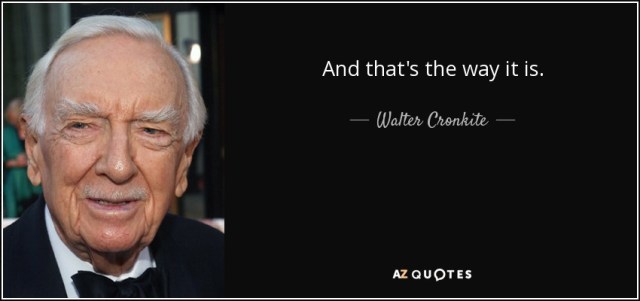
Walter Cronkite

Luke 6:17-26 NRSV

Dishonest, greedy politicians. Drug addiction. Gun violence. Russian collusion. Racist public policies. Perpetual war. Poverty. Haitian protests. Homelessness. Immorality. Inequality. White Christian Nationalism. Child abuse. Climate Change. Bigotry. Mental illness. School shootings. Sexism. Suicide. Sick religion.

Billy Joel once sang: “We didn’t start the fire. It was always burning since the world’s been turning.”

In other words, this is the way it is, and this is the way it has always been. This is reality. As Walter Cronkite used to sign off after talking about

Watergate, Vietnam, Charles Manson, Patty Hearst and the murder of John Lennon: “That is the way it is.” In other words: This is the real world.

Which raises a very important question: What is reality? And who gets to define reality. Who gets to say what is real in a world where, in the words of Plato, there is obviously “more shadow than truth?”

The world is forever telling hopeful, progressive Christians like myself to “get real.”  “Bleeding heart preachers like you are out of touch with the real world.” “Things are not getting any better.” “He’s never going to change.” “She is not going to ever be able to take care of herself.” “Preacher, you are wasting your time.”

“You know, I think faith in God is fine and all, belief in a higher power of love and justice is okay, but sometimes you just got to get real.”  “You say what now? That selfless, inclusive love can change the world? That love wins?” “Preacher, it’s like you are living in another world.” “You need to come off of all that progressive idealistic thinking and hoping and believing and face the facts!”

The world is forever telling people like me: “Wake up ‘cause you must be dreaming.” “Open your eyes man.” “Hello?!” “Get your heads out of the clouds, and get real.”

All of which begs my prior question: “What is real? What on earth is reality?” “What are the real facts of life?” And “Who gets to say what is real?”  Who gets to define reality?” “Who gets to name the facts of life?”  “Who is ultimately in charge of this world in which we live?” “Who gets to say the reason we are all here and the direction the world is heading?”

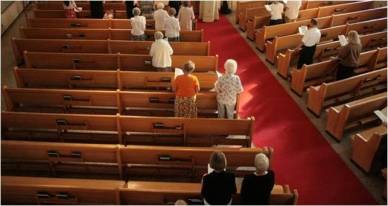
Do we really come into this place Sunday after Sunday to escape from the real world? After all, we do call it a “sanctuary.” When we enter this sacred space where all are welcomed, accepted and loved equally and unconditionally, are we entering into some sort of never-never land? What are we really doing here in this hour with all of our singing and hoping and praying and preaching and eating and drinking from this table?

Maybe it would help us to listen again to one of Jesus’ very first sermons. Now, you might think that Jesus would use his first sermon to tell us what to do. For isn’t that the purpose of a sermon? To learn what we must do in order to live a better life? You come to this sanctuary every Sunday to get some advice on how to survive out there in the real world.” Right?

But this doesn’t seem to be the purpose of this sermon in Luke. Jesus is not telling people what to do out there in the real world. Instead, Jesus is defining the real world. Jesus is telling the crowd what’s what. “Here are the facts” says Jesus. “This is the way life is.” “This is the real world.”

Jesus begins his sermon by pointing out the people in the world who are blessed. Jesus doesn’t tell people what they must do in order to be blessed; rather, he simply announces that certain people in this world are blessed. The entire first half of Jesus’ sermon is simply a list of facts.  He’s simply stating the facts of life. He’s telling us the way things really are in the real world.  In one of his very first sermons, Jesus is defining reality.

And it was as obvious to his first hearers as it is as obvious to us today, that according to Jesus, the way things really are in the real world is nowhere close to the way we thought they were. In a few simple statements, Jesus turns the whole world completely upside down. If you thought God was in the business of damning the sinner and rewarding the saint, Jesus says: “You better think again!”

Blessed are the poor—the same people whom we overlook, disregard, despise and consider failures, worthless. Blessed are the mothers who can barely take care of themselves, much less their children. Blessed are the fathers who are doped up and locked up and all together messed up.

Blessed are the hungry—the same hungry people who we know must be lazy or inept. Blessed are the ones who we think are always looking for a hand-out instead of a hand-up. Blessed are the unwaged and unemployed who we believe are solely responsible for most of their misery.

Blessed are those who weep—the same whiners and complainers who are always acting like they’ve had it worse than everyone else. Blessed are those who think they are the only ones in the world with problems. Blessed are those self-centered crybabies who believe the whole world should stop and join their little pity party.

Jesus says, that reality is, the God’s honest truth is, that God blesses those in the world whom we tend to curse.

I expect it was a shock for all the good, church-going, Bible-believing people of that day when Jesus completely shattered their old image of God and the world by introducing them to a brand new world. A brand new way of seeing things. A brand new reality.  A new creation.

Perhaps this is why Jesus begins his sermon by healing everyone who came forth and touched him. The mass healings were a sign that a new world, a brand new reality, was breaking into the old world where those on the bottom are brought to the top. In this new reality, those who are poor and those who are weeping are put at the center of what God is up to in our world.

No, in defining reality in this sermon Jesus does not tell us to go out and do anything. However, by implication, Jesus’ words lead all of us to think of some things that we need to do, to think of some places that we need to go, to think of some people that we need to see.

But we do not do these things or go to these places or see these people because Christ commands us to in his first sermon. We do not visit the nursing homes or the hospitals, we do not feed the hungry, we do not help a stranger clean-up her house, we do not give generously to the mission and ministry of the church because Jesus tells us to.

We do these things and go to these places and give of ourselves, because of the way we now know the world to be.

We rebuke dishonest, immoral, and greedy politicians who hurt the poor so we can get in line with what’s what.  We stand against racism and all kinds of bigotry to get real. We detest division and seek unity to get in step with the facts of life.

We deplore the worship of guns and all apathy towards war and all violence to get grounded in the truth.

We welcome and include children, we fight mental illness, and all sorts of addiction, we support healthcare for all, and we are good stewards of this earth, not merely because we believe Jesus leads us to do those things, but because we want our feet planted deep in the real world, in the new reality that Christ has revealed to us. We love our neighbors as ourselves, because we believe God’s got the whole world in God’s hands.

William Willimon tells the story of nurse who works with seriously ill cardiac patients. Most of her patients were born with defective hearts. She assists in the surgery and the care of people whose hearts have all but given out. Many of her patients do not make it through the very delicate and risky surgery. And most of the ones who do pull through the surgery have a very difficult time in recovery. They are prone to infection and a host of complications. It can be a depressing and very draining job.

As her pastor, one day Willimon asked her, “How do you do it? How do you keep going?”

Without hesitation the nurse replied: “Walks in the park.” She then explained, “I take an hour off for lunch every day and go for a stroll in the nearby park. And there I see people everywhere who are happy and healthy. I see children laughing and playing, and I see older people sitting on benches enjoying being with one another. I am thereby reminded that this is how things are meant to be. This is the real world. And this is what keeps me going day after day in hospital.”

Are her walks in the park an escape from reality? Some trip into never-never land?  No, they are for her, a realistic engagement with the reality of the way things are supposed to be. And these engagements keep her going in an oftentimes shadowy world where it is easy to forget what’s what.

That is, of course, one of the main reasons we come to this place Sunday after Sunday—to be reminded of what’s what, to get a grip, to capture a vision, to receive a picture of reality now that God through Jesus Christ has reached out to us. We come to this place, to this sanctuary, not to escape from reality, but to get real.

We come as shameful, sinful human beings who are unable at times to look ourselves in the mirror, and we receive grace and forgiveness.

We come feeling loathed and despised and lonely, and we find acceptance and love.

We come broken and sick and tired and weak, and we are given healing and wholeness.

We come with pain and grief and despair, and we are offered assurance and hope.

We come floundering and meandering, and we receive a purpose.

We come to this place failing and fading and dying, and we are gifted with life abundant and eternal.

That, my friends, is the way it is.

This is reality now that God through Jesus Christ has come into our world.  May we all have the grace this day and every day to get real, to live in this reality and to share this reality with all people.

  O God, grant us the grace to see the world as it really is, the world as you intend it to be, the world you are working to create for us. Keep revealing to us your intent for the world and for our lives. Then, help us to live in the light of that vision. Help us to align our lives with the true shape of reality, this day and always. Through Christ our Lord. Amen.

A Word from the Lord

medicare-coverage-helpline-make-sure-featuring-joe-namath-large-5

Luke 4:14-29 NRSV

Tom Long tells the story of an incident that occurred in a church one Sunday morning in Charlotte, North Carolina. The minister had just finished reading the scripture lesson and was taking a deep breath before launching into the sermon when suddenly, a man, a complete stranger, stood up in the balcony and startled everyone by proclaiming in a clear, loud voice: “I have a word from the Lord!”

Shoulders tensed and heads swiveled around and upward to see the source of the interruption.

What “word from the Lord” did this man possibly have to bring to the people on that day?

Well, no one will ever know, for the ushers, says Long, “bounded like gazelles” up to that balcony, and before the man could utter another word, they had escorted him down the stairs and out the front door.

Now, with Long, I don’t blame them. I understand. The apostle Paul said we ought to do things with some semblance of order, and his was way out of order. Who knew what this guy had in mind. But it does cause me to wonder a little bit.

Isn’t it strange? Sunday after Sunday countless preachers in innumerable pulpits spread out their sermon notes, clear their throats, and begin their sermon, saying, or at least implying, that they have a word from the Lord. And nobody tenses. No heads swivel in alarm. No ushers leap into action. Instead, people sit back in their pews, crease their bulletins, silently check their watches, and settle back for the sermon. For that is what you came here for, right?  A sermon. Not a word from the Lord.[i]

This is exactly how it was on that Sabbath day in Nazareth. Joseph’s son Jesus was home for the weekend and had been asked to read the scripture lesson from the prophets and to preach the sermon. The congregation knew Jesus well. They knew his parents and remembered him as a little boy. They were no doubt proud of the reports that had filtered down from Capernaum and other towns about his preaching and teaching. So, they settled back in their pews to hear what this articulate young man had say. What were they expecting? A sermon. Right? Not a word from the Lord.

Part of the reason I believe we expect a sermon instead of “a word from the Lord” is that as much as we do not like admitting it, we really would prefer not to hear such a word. We prefer a simple sermon. We prefer some nice religious words, some nice sweet thoughts to help get us through the week. What we expect is a little “chicken soup for the soul.”  Some good advice to help make our lives run a little more smoothly, some encouraging words to help get us through the week.

A word from the Lord is completely different. A word from the Lord is disruptive. A word from the Lord is uncomfortable. A word from the Lord can be painful.

A sermon can be can be easily forgotten and even completely ignored. But, a word form the Lord must be heeded. A word from the Lord is sharper than any two-edged sword. For a word from the Lord is news, real news. It is news that turns our whole world upside down. A word from the Lord changes everything and forces us to adjust our lives to that change.r

It has been said that most people who pick up the newspaper every morning or watch the evening news are not so much interested in the news as they are in confirming that the world is pretty much the same as it has always been. “Democrats are still not cooperating with the Republicans and vice versa.” “Politicians are still lying.” “The New England Patriots are in the Super Bowl, again.” Yep, that’s the way the world is, it’s the way it always has been and the way it always will be.”

I am afraid that is why many of us come to church. We do not go to church to hear any real news. Instead, we go to church to have the things that we have always believed about God confirmed. We listen to the sermon to have the way we have been practicing our faith all of these years affirmed. We’d really prefer not to hear anything new. We’d rather not hear anything that challenges our beliefs, calls the way we practice our faith into question or creates any urgency to change. We are really not interested in hearing any real news.

For real news is unexpected. Real news is surprising. Real news is disturbing. Real news means the world is not the same as it was yesterday; therefore, I cannot live my life in the same way. A word from the Lord is real news.

It is news that demands change. It is news that demands a complete reordering of priorities. It is news that causes us to see the whole creation in a brand new way. It is news that moves us and mobilizes us to take some kind of action. It is news that often requires sacrifice. It is news that necessitates us doing things that we do not want to do and going to places that we do not want to go.

So, thanks but no thanks. Preacher, I think I’ll be just fine with a simple sermon instead. Either say some words to reaffirm what I already believe or maybe give me a little antidote that might help me live a happier, healthier life. Give me some good ideas that might fix some of the things that are ailing me.

I am afraid that, for some people, going to church is like heeding the advice of Joe Namath by calling the Medicare Coverage Helpline. People go to listen to the preacher tell them about all of the benefits they deserve, benefits they are eligible for as a Christian.

By the way, “Does anyone really believe Joe Namath needs rides to  medical appointments?”

I am not exactly sure, but I suspect that is what many people were probably expecting when they showed up to hear Jesus’ first sermon back in hometown Nazareth. They came expecting a sermon, to have what they already knew reaffirmed or to find out some benefits God offers them that they didn’t know about, maybe to get a little pat on the back, a little stroke of the ego, a little feel-good-pick-me-up to get them through the week, not a word from the Lord.

So, when Jesus stood up and began to speak, no shoulders got tense. No ushers tried to muscle him out into the street. People smiled and whispered to one another how proud they were of this their product, and how Mary and Joseph must be tickled pink to have such a fine son.

They came expecting a little sermon. But instead of a sermon, they got a word from the Lord. Jesus began to say things like, “For the gate is narrow and the road is hard that leads to life, and there are few who find it.”

The crowd gets really quiet!  Someone whispers, “I know he didn’t say ‘hard,’ did he? I thought God was all about making things easy! I thought sermons were about making us happier.”

Jesus continues:

“Love your neighbor, including your enemies. Be a blessing to the poor and to all who hunger and thirst for justice. Stand up for the liberty of those oppressed and bullied by culture. By the way, people will persecute you for that, utter all kinds of evil against you for that, but pray for those who persecute you. Forgive those who have wronged you. Don’t judge. Accept others as I have accepted you. Deny yourself. Pick up your cross and follow me. Die to yourself. Don’t just hear these words, but do these words.”

And then, his words began to sink in. “Today, this scripture is fulfilled in your hearing.”  Today.Not yesterday, not in times gone by, not someday, but today.  Fulfilled.  Not read nicely, heard sweetly, or barely remembered, but fulfilled. In yourhearing. Not in somebody else’s. Not just in Abraham’s, Moses’, Elijah’s, and Deborah’s, but in you.

And the Word of the Lord was also not just for them. Jesus said it was for all people. It was also for outsiders, foreigners, those marginalized by society, widows and lepers and others who were not a part of their synagogue, their faith, or even their culture.

And it then became obvious that this was not just another simple sermon. This was a word from the Lord. This was news. Real news. God had come. God is present. Here. Now. Today. God is here, and God’s love is for all people, even for the lepers of Syria in and the widows in Sidon.

The world was now changed, for the Word of God had come, and the Word had come for all people. The Word of God had been made flesh and was now present in all its demanding fullness. And you could fight it, you could try to hurl its presence off a cliff, or you could accept it, you could follow it, but there was no way on earth you could ignore it.

Each Sunday morning, our worship should be about the gospel truth, the amazing good news, that God is alive and present to us this day, as alive and present here as Jesus was to those worshippers in Nazareth. Thus some shoulders here this morning should be a more than a little tense, for God has work for us to do!

God is here! God’s kingdom is now! God speaks words of love and of grace, of mission and of purpose, of vocation and of duty, that are fulfilled in our hearing. Words that, if we listen and respond, will send us out from the pews into the public square to transform our world.

[i]https://www.cathedral.org/worship/sermonTexts/tl080601.shtml


Why This Christian Pastor Is Pro-Choice: It’s Personal

Rev. Dr. Jarrett Banks's avatarJust Love

abortion-debate

Introduction

As a married, father-of-two, Christian pastor who was raised in the rural South as an evangelical Southern Baptist, many are quick to make many assumptions about me.

The most prevalent assumption is that I am on the Pro-Life side of the abortion debate, as many assume that one simply cannot be both a Christian and Pro-Choice. Many believe it is a black and white issue, a simple decision between good and evil, life and murder.

As a married, father-of-two, Christian pastor, I strongly support the 1973 decision of the United States Supreme Court in the case of Roe v. Wade. And, of course, I do not believe I am making a decision to choose evil. My convictions about abortion are strong, because my convictions are personal.

My Personal Story

It was the summer 1993. My wife Lori and I had been married five years and were expecting our first child. I had graduated from seminary…

View original post 2,265 more words

A National Emergency

national emergency

There is no doubt that we have a crisis in this country. It is a spiritual crisis. It is a crisis of the soul. And it is a national emergency.

There is an anti-Christ spirit in our land that refuses to love our neighbors as ourselves. This spirit has poisoned religion in our culture to the point that people of faith are not only indifferent to the suffering of their neighbors, but they actually doing harm to their neighbors.

This spirit has reduced faith in God to something that is merely private and personal. Faith is understood as something that can save one’s own life, rather than saving the lives of others. It is understood as a ticket to leave this world, rather than keys to loving and blessing this world. Whereas Martin Luther King Jr. reminded us that “Life’s most persistent and urgent question is: What are you doing for others?” the church has made life’s most urgent question: “Have you accepted Jesus as your personal Lord and Savior so you can one day go to heaven?”

It is a spirit of selfishness. It is a spirit of greed. It is a spirit of power and privilege.

And although this anti-Christ spirit is obviously demonic, this spirit is not other-worldly. It is a familiar spirit that has haunted our nation since its founding.

The source of this spirit is most revealed today in the politics of Christian White Nationalism that is being fueled by the fear that black and brown people will soon be in the majority. The source of the anti-Christ spirit in our land and our national emergency is racism.

I suppose we think: “If we keep our faith in God personal and private, then we don’t have to obey what Jesus said is the greatest commandment, to love our neighbors as ourselves, and that include those who do not look like us.

The good news is that this evil spirit is no match for the power of love. It never has been and it never will. Love always finds a way.

A bullet in Memphis could not stop it. Jim Crow could not silence it. Civil War could not end it. And a cross in Jerusalem could not crucify it.

I believe the best way to fight an anti-Christ spirit is with the spirit of Love Himself, the spirit of Christ. We can respond to our national emergency and defeat the spirit of the anti-Christ by being the body of Christ, understanding that our faith is not solely a personal matter and should never be private.

The Gospels paint a portrait of a Jesus who is continually tearing down the walls that divide us. From the wall of heaven being ripped apart at his baptism to the temple curtain being being torn in two at his crucifixion, it is evident in the Gospel stories that no wall on heaven or on earth can contain or limit the love of God.

Jesus breaks every barrier erected by religion and culture. He touches lepers and a woman with a hemorrhage, making himself ceremonially unclean. He allows Mary Magdalene to sit at his feet as a disciple, a position (the feet of a Jewish Rabbi) that was previously reserved for male disciples. He welcomes little children to the dismay of his disciples. He learns from a Syrophoenician woman. He asks a woman from Samaria for water. He breaks the chains and liberates a demoniac. He eats and drinks with known sinners. He raises the dead.

I believe this is what is needed to attend to our national emergency today. Understanding that nothing in all of creation separates any of us from the love of God, as the Body of Christ, we must do the public, social and political work of Jesus to proclaim every human being is united by this love. We are all beloved children of God; therefore, we must all learn to live as beloved sisters and brothers.

And trust that love will always find a way.

Remembering Harold Stewart

harold stewart pic
July 17, 1946 – January 1, 2019

As evidenced by the attendance here this morning, the shocking news of Harold’s passing has been devastating to many.

We did receive some comforting words. Harold did not suffer. There was no prolonged illness, no pain, no struggle. Harold was given the opportunity to celebrate Christmas with loved ones here in Fort Smith and then in Nebraska. Harold was happy. He was full and content.

But then we received a dreadful word, a word that was difficult for us to hear, that that his wife Audrey, whom we all know he adored, had to drive home from Nebraska all by herself as Harold’s body was sent home by another way.

“Home by another way.” Those are the exact words Matthew uses in yesterday’s gospel lesson to describe the journey of the Wise Men after they worshiped Jesus, laying down their gifts of gold, frankincense and myrrh. Having been warned in a dream not to return to King Herod, we are told that they went “home by another way.”

“Going home” is of course how we like to talk about death. We find great comfort in the old hymn:

O God, our help in ages past, our hope for years to come, our shelter from the stormy blast, and our eternal home.

“Home” is being with God. It is a place of perpetual belonging, acceptance, comfort and love. It is a place of eternal rest and peace.

In his book of Revelation, John described it this way:

“And I heard a loud voice from the throne saying,

See, the home of God is among mortals.

God will dwell with them;

they will be God’s peoples,

and God himself will be with them;

God will wipe every tear from their eyes.

Death will be no more;

mourning and crying and pain will be no more,

for the first things have passed away (Revelation 21).

So, in a way, going home is the goal of every believer. And as Christians, we believe that how we get there, how we go home, matters.

Do we go home following the instructions of King Herod? Do we go home by collaborating with the empire? Or do we go home by another way?

Do we go home following the way of greed and power, the way of self-centeredness and fear, the way of deceit and cowardice, the way of exclusion and isolation? Or do we go home by another way?

I believe the most comforting word, the most hopeful word for us this morning was what we first thought was a most dreadful word: “Harold went home by another way.”

As Christians, we believe Jesus showed us the way, the truth and the life, the very narrow, yet broad and expansive way home.

Matthew writes:

One day Jesus was teaching a large crowd of people. While he was still speaking, his mother and his brothers were standing outside, wanting to speak to him. Someone said to him, ‘Look, your mother and your brothers are standing outside, wanting to speak to you.’

But Jesus replied, ‘Who is my mother, and who are my brothers?’ And pointing to his disciples, he said, ‘Here are my mothers and my brothers!’ (Matthew 12:46-50).

In other words Jesus said, “here is my home, here is my family.”

I believe this story reveals that Jesus had a much broader, more expansive definition of home and family than we often do.

This, of course is why Gentile Wise Ones from the East were guided by that star to worship the Jewish Christ child: The people of God, the family of God, extends beyond Israel, and includes all people.

And so it was with Harold.

If I said to you, “Harold sure did love cooking for his family.” Your first response would probably be: “Which family are you talking about?”

Are you talking about the Stewart family? Or are you talking about his family at the Elks Lodge? Perhaps you are you talking about his family at First Christian Church?

Someone told me that he left Mike and Jane one of his famous pizzas in the fridge before he and Audrey left for Nebraska. That was so Harold. As his mother Roberta Ray used to always say: “It is very difficult to get Harold out of the kitchen!”

Harold also loved to make his pizza monthly for his Elks lodge family. And each time Harold invited me to the lodge and introduced me to other lodge members, it was obvious to me that he was introducing me to his home away from home. During the fish fry, he introduced me to his son Mike and daughter-in-law Jane, but he also introduced me to countless sisters and brothers. Chris Perry has written that Harold’s example and leadership is the reason they like to say that the “Elks Loge 341 is the friendliest little Elks Lodge in America.” That is because they are truly a family.

And of course this church was the beneficiary of having a brother named Harold in our family. Our brother Harold spoiled us with that infamous pizza recipe, the juiciest hamburgers you have ever tasted, unbelievable pulled-pork barbeque, and most recently, a Christmas dinner that featured a prime rib that Steve Riggs described best as “crazy good.”

What if I said to you that “Harold loved being there for his family?”

Well, are you talking about his sons Brian and Mike? Are you talking about one of his six grandchildren or his great-grandson?

Are you talking about his family at Fort Smith Restaurant Supply? Are you talking about the names of the people with whom he worked that he would text to his pastor requesting prayer for them when they were sick, experienced a loss or had a need?

Or are you talking about a child he mentored for the last three years at Howard Elementary School? Are you talking about the 12-year-old boy he visited once a week, oftentimes bringing him lunch, building his self-esteem, encouraging him in his studies and teaching him the importance of values that he may not learn in the classroom, like looking someone in the eyes while giving them a firm handshake?

Or are you talking about one of the children at the church who he made an effort to greet every Sunday morning before reaching in his pocket and giving them a piece of candy.

Yes, the good news is that Harold certainly went home by another way.

Speaking of going home by another way, it is no secret that Harold could literally build a home. His sons describe him as the best teacher they ever had. They even built an entire house together on Ten Killer Lake. Harold taught them how to do everything, from carpentry, duct work, heat and air, plumbing to laying tile and flooring. They said Harold knew how to crack a whip in such away that you never even knew there was a whip.

Harold could fix anything. His son Brian recalls that anytime he or Mike ever had a problem with their house, whether it be carpentry, plumbing, heating or air, all they had to do was call Dad. They said: “And it seemed like it was before we get the phone hung up the doorbell would ring and there would be Dad, standing there wearing a tool-belt around his waist and light on his head.”

With Harold, anytime something would break, his family said they never called a professional. They called Harold. Just like we did here at the church. Just like I am sure they did at the Elks Lodge.

Yes, more than anyone we know, Harold went home by another way.

Yesterday, someone asked Audrey: “How in the world did you drive home all by yourself?” She replied: “I had a good teacher.”

We all know how he absolutely adored and cherished his wife of 38 years, Audrey, but the love he expressed to Audrey always seemed to have an even higher purpose. For me it was like he was modeling for others what love looks like, what being a true gentleman looks like, what being an authentic disciple of Christ looks like.

As I watched him each Sunday morning, walking into the church building holding Audrey’s hand, opening the car door for her after church—it was as if he loved her as an example to the world how we ought to love one another.

Perhaps that is exactly what Harold was doing. Harold was not only a mentor to a young man at the Howard Elementary. He was trying to teach us all how to be wise men and wise women and go home by another way.

He was teaching us how share the inclusive, expansive love of God with all people; how to see and treat all people as children of God, as sisters and brothers; how to leave this world a better place than we found it.

Yes, as his sons have said, Harold was one of the best teachers we have ever had, for he taught us all how to be wise men and wise women by avoiding the way of King Herod that so many seem to be taking these days, and instead, choose another way:

the way of chivalry over the way of indecency,

the way of love over the way of indifference,

the way of compassion over the way of apathy,

the way of sacrifice over the way of self-centeredness,

the way of inclusion over the way of fear,

and the way of calmness and peace over the way of stress and worry.

And when we choose to go home by this way, not only will we change the world and leave this world a better place than we found it, we can rest assured that like Harold, we will see that the home of God is among mortals. With Harold, we will dwell with God and be God’s peoples. God God’s self will be with us.

To wipe every tear from our eyes.

Death will be no more;

mourning and crying and pain will be no more,

for the first things have passed away.’

There is a great old hymn with beautiful words that describes what Harold experienced the first day of this new year.

Just think of what it must be like to step on shore and finding it heaven,

Of taking hold of a hand and finding it God’s hand.

Of breathing a new air and finding it celestial air,

Of feeling invigorated and finding it immortality

Of passing from storm and tempest into an unbroken calm,

Of looking up and finding it home.

Church Growth Epiphany

empty pews

Ephesians 3:1-12 NRSV

These days every civic organization, every service club and every church is talking about it. Every week when they meet together and look around the room at the empty chairs and pews that were once filled with people, it is obvious to everyone that something needs to be done.

“We need to do something to reach more people.” “We need to change something increase our numbers.” “We need to expand our club.” “We need to grow our church.” And sadly, we need to grow not so we can do more things, change more lives, make more of a difference in the world; no, we need to grow just so we can maintain what we have. We need to grow so we can just keep doing what we’ve always been doing. We need to grow to just prevent us from dying.

This was the focus of our weekly Kiwanis meeting this past Thursday. And it will be the focus of our church meeting tonight, as it is the focus of countless churches across America today.

Yes, these days, the church has a lot in common with civic organizations and service clubs everywhere.

However, there is one main difference. And we have a word for that difference, and that word is “Epiphany.”

By the sixth day in January, the culture has moved well past Christmas.People have returned to work. Kids are back in school. And Wal-Mart has replaced Christmas decorations with gas grills and lawn mowers.

The church, on the other hand, insists on a full 12 days after Christmas Day to remember the visit of the Wise Men, gentiles from a foreign land, to the young Jewish Christ Child.

First recognized in the fourth century, Epiphany celebrated the revelation that the wall that was thought to divide humanity from divinity has been torn down. Epiphany celebrated what we call the incarnation, the mystery of the Word becoming flesh, of God becoming human, the revelation that Jesus was God and God was Jesus, the revelation that in Christ, God became one with humanity, the revelation that no wall, no barrier, no temple curtain, no obstacle in all of creation can separate us from God.

The revelation of this unity prepared the way for another unity, that is Gentiles, as represented by the Gentile Magi, should be one with Israel. This made it clear: Along with the wall that separated God and humankind, any wall of religion or politics that separated Gentiles from Jews, or separated anyone from the promises of God, should be torn down at once.

This is what Paul is proclaiming in our Epistle lesson this morning, and it is the revelation he began proclaiming in the first two chapters of Ephesians as he declares to his Gentile readers and hearers that they have been chosen by God for adoption.

“Adoption”—it is a wonderful word Paul uses to make the point that we do not have to be born into the people of God to be the people of God. It means that all are God’s chosen people. Although Gentiles thought they were separate from God, Christ reveals that they are not. As the Divine and the human became one in the incarnation, the entire human family is one in Christ.

Paul points out that it is because of his proclamation of this Epiphany that he is now a prisoner. We read in Acts that Paul is locked up because his inclusive message breached the walls erected by the religious powers-that-be. They accused him of teaching “against the law” and “bringing Greeks into the Temple” (Acts 21:28).

Can you imagine a preacher being accused today of teaching against the law by bringing a certain group of people into the church?

I think you can.

I believe this is the reason that Paul says that in former generations this revelation was not made known. No one had the courage to preach such radical inclusion.

Notice that Paul not only has the courage to preach it, but he seems undaunted by his circumstances in prison. That is because, for Paul, Epiphany is not just one day, or even a season, but Epiphany is his very purpose. He preaches and doesn’t mind being imprisoned because God has revealed this revelation to him giving him a holy purpose to share it with the world!

Through Paul’s courage, the Spirit has revealed what has always been the eternal plan of God, that the Gentiles are fellow heirs, fellow members of the same body, fellow participants in the promises of the gospel.[i]

When the church tears down the the walls that divide us, when we welcome and include all people, and all means all, then the church proclaims the creative diversity of God’s eternal wisdom. As we welcome and include and add to our membership different races, classes, and genders, we proclaim the mystery of God who brings all of God’s creation together by becoming human, by becoming a Jewish baby worshipped by Gentile kings from the East.

So, although we have much in common with civic organizations and service clubs these days that need to grow, that need to add to their memberships in order to survive, there is a major difference, and we call that difference “Epiphany.”

We should grow as a church. We should intentionally work to add to our numbers. We should all do all that we can do to fill these pews; however, it is not so we can pay our bills. It is not so we can keep up our property or care for our buildings. It is not so we can keep the staff we have or even pay the preacher. We should grow as a church, because this is our holy purpose, this is our divine calling. And it has always been a part of God’s eternal plan.

As a pastor, I have been to many church growth conferences and seminars. In almost everyone, the leader points out the number of churches that are closing their doors for good and selling their property. And the point is usually made that most churches are not willing to change anything, not willing to do the work they need to do to grow the church, until they wake up to the reality that if they don’t change, if they don’t grow, they too will soon die.

However, I pray this is not our motivation for concentrating on church growth in 2019. Avoiding shutting down the church like the government should not be our reason for welcoming, including, adopting more people into our church family. The fire that needs to be lit under us to do the work to grow our church must come from another place.

What I believe we need is a church growth Epiphany.

We need a church growth Epiphany that wakes us up to what has always been the eternal plan of God; that is, the promise of the gospel, the unconditional love of God, is for all people.

We need a church growth Epiphany that wakes us up to the radical inclusiveness of God’s love, especially for people who have always felt outside of God’s grace.

We need a church growth Epiphany, an awareness that this revelation has not always been taught, and in many churches today, is still not being taught, so it is up to us who have received this revelation to proclaim it boldly and loudly.

We need a church growth Epiphany that reminds us we are on a courageous mission trying to selflessly follow the way of a brown-skinned, Jewish Palestinian refugee who gave his life trying to tear down the political walls of hate and bigotry and to put an end to the divisiveness and exclusivity of religion.

We need a church growth Epiphany that refuses to build any wall that separates us from people who do not look like us, dress like us, or even believe like us.

We need a church growth Epiphany that this inclusive work is not for the fearful or the cowardly as this work has put many apostles in prison and has gotten many preachers fired. We need to be willing proclaim the inclusive good news of the gospel even when our neighbors and members of our own family ridicule us, try to shame us and shun us.

We need a church growth Epiphany that is continually and courageously reaching outward, beyond, as far away as the Wise Men were from Bethlehem when they first saw the star, to welcome and adopt all people into our family to join our mission of inclusive love and grace, mercy and justice.

We need a church growth Epiphany of the eternal plan of God to love, include and save all people. Because if we try to grow for any other reason, if we try to fill these pews in order to pay the bills, to keep up the property or to compensate the staff, we will die as a church. We will surely die.

Even if we add 1,000 new members, even if we begin ending each church year with a budget surplus, if we grow only to maintain and preserve what we have rather to fulfill our mission as bold proclaimers of the promise of the gospel of Christ for all people, we may live on as a club, but we will be dead as a church.

May it never be so.

[i]http://www.workingpreacher.org/preaching.aspx?commentary_id=1507

I Smell Smoke

Pentecost fire

Luke 3:15-17 NRSV

Let’s be honest. Church, even as Christmas approaches, can be a pretty boring experience. Each Sunday we sit in the same pew, follow the same order of service, look at the back of the same ol’ heads, sing the same hymns, say the same prayers, and hear a sermon that we’ve already heard before.

I remember as a child doing all kinds of things to do to pass the time. I remember counting the number of times the preacher would wipe the sweat off his forehead with his handkerchief. I also remember holding mama’s hand and playing with her jewelry, turning the rings on her fingers, messing with her bracelets. And when she would get tired of all of that, I would just sit there and twiddle my thumbs, while secretly hoping and praying, begging for something, anything to happen.

Lord, if you love me, why don’t you send mouse running down the aisle, or through the choir loft? And Lord, if you really love me, maybe a cat chasing the mouse! How about bird swooshing through the front door!  Please, Lord, let something happen, something, anything!

I’ll never forget that Sunday my prayers were answered. In the middle of the typical, predictable service, while we were singing the offertory hymn, we began to smell this smell. It was hard to tell what it was, a burnt, smoky kind of smell. Then came the whispering. The hymn became more mumbling than singing. I heard Daddy whisper, “I think I smell smoke.”  Mama whispered back, “Gene, where there’s smoke there’s fire.”

Then, in the middle of the half-hearted singing and murmuring, someone in the congregation, shouted: “Fire!”

We then did what most folks do when someone yells, “fire,” in a crowded building. We got out.

We evacuated the sanctuary, but only to discover, there wasn’t really a fire. The furnace had simply over heated or something.

It was one of the best worship services that I’d ever attended!

As a pastor, there have been many a Sunday I’ve thought about that exciting day in church and secretly wished that it would somehow be repeated. In the middle of the service, oftentimes in the middle of my sermon, I have thought, what we need is somebody, anybody to stand up in this place and yell “fire” to just to create a little bit of excitement.

Well, this week, we’re in luck, because somebody is coming that is going to do just that! In the middle of our order of service that hasn’t changed in decades, comes this shocking introduction by John the Baptist:

“I baptize you with water; but one who is more powerful than I is coming; He will baptize you with the Holy Spirit and fire.

I believe we really need to hear these words, because of how these words cut across the grain of why most of us, especially us grown-ups come to this predictable place to worship Sunday after Sunday. Children may still pray for something exciting to happen at church, but we adults, we know better. We know that nothing ever really happens here. Nothing ever changes. If we’ve never done it that way before, then we’re not going to be doing it anytime soon. And you know something? We like it that way.

We come here seeking a place of comfort and quiet consolation. Because after all, our lives are always on fast-forward, a real-rat race, always moving, constantly changing. So, each Sunday we gather here, to sit down, to stop, to center ourselves, to get grounded, to touch base with that which is stable and dependable, even if it issometimes boring.

In our fast-paced world where we have grown accustomed to burning the candles at both ends, especially during these weeks before Christmas, we like to come to this place Sunday after Sunday to slow down, cool down, quiet down and settle down. In a world ablaze with constant change and ceaseless activity, we need a place, if just for an hour, to just chill out. So here we are. The problem is: here comes someone who does something as audacious as yelling “fire” crowded building!

When we least expect it and perhaps least desire it, John the Baptist stands up and says, “Someone who is more powerful than me is coming, and he is coming with fire!”

Moses had just killed a man in Egypt. He’s a fugitive, a sinful human being floundering in the middle of nowhere without a purpose. Then, out of nowhere, comes, you guessed it, fire!  A bush bursts into flames. Then comes a voice that lights a fire under Moses. “I’m sending you Moses to stand up to the Pharaoh, to the powers that be, to give liberty to the oppressed!”

And John says that Jesus is coming to those of us today who just want to unwind and relax, “I’m consumed with that “burning-bush” blaze and I intend to light a fire under you. I intend for you to rise up, speak up and speak out on the behalf of refugees and migrants, to proclaim with your words and actions liberty and justice for all.

The children of Israel were freed by Moses from Egyptian slavery.  But shortly thereafter, in the wilderness, they began complaining, “You know, at least as Pharaoh’s slaves, we had three meals a day. At least the status quo gave us some stability, some sense of security. But now, here in the dangerous wilderness, we don’t know where we are going or what we are doing.”

Do you remember the response of God?

God said, “You poor, poor babies. I’m so sorry. Let me slow things down a bit and let you build a comfy and cozy sanctuary from the wilderness. Let me give you some nice padded pew cushions, so you can sit down and take a load off. I’ll send you a good preacher to sooth your spirits, ease your minds.”

No, God said, “I’ll give you fire, a pillar of fire leading you out into the darkness, driving you towards your purpose, pulling you into my future. I’m giving you fire to lead you to be the people I am calling you to be out in the wilderness.

And here comes John, saying to those of us today who just want to sit back and lay back, “Jesus is coming and he is kindling that same Exodus fire. And he’s going to light you up and show you gifts you never even knew you had, reveal opportunities your never dreamed possible, and take you to places you’ve never been!”

When the prophet Daniel describes the throne of God, he doesn’t describe a reign that is stationary and static, immovable and immobile. No, the prophet says that God sits on a throne with wheels, active, on the move, going places. And they are not just any wheels. Daniel says that they are wheels of blazing fire.

And here comes John saying to all of us who prefer to be set in our ways, secure in our beliefs, Jesus is coming on a chariot with those same wheels of fire to change your ways, challenge your assumptions and move you to take action.

The disciples were gathered together after Jesus had left their presence. They were just following the order of worship, going through the motions. The ushers were making sure everyone had a bulletin, everyone’s comfortable and seated, doors shut, typical boring service, then, at some point, perhaps in the middle of the offertory hymn, the building began to rumble, the windows started rattling, the doors swung open, and somebody shouted, “fire!”

We call that day the day Pentecost, the day the Holy Spirit showed up as fire. William Willimon says that on that day, “the church was born in the crucible, in the furnace of God’s fire.

[And here comes Jesus, saying to those of us today who have come to this place to check out and chill out], My Spirit is ablaze with that same Pentecostal fire and I’m looking for a few good men and women here who are combustible!’”

The truth is, when our church becomes nothing but a safe, static sanctuary, a place of secure stability where nothing ever changes, where we can cool off, cool down and just for sixty-minutes a week, chill out, we are not fulfilling our purpose as the children of a dynamic, moving God. We are not the incendiary force that Jesus ignites us to be. And we are one boring sight—to God as well as to the world.

Yet, when we be become ignited, fired up, disrupted, when we allow ourselves to be engaged by the Christ, when we truly decide to not just worship Jesus in here but to follow Jesus out there, to not just go to church but to be the church, when we move our church out of the sanctuary into the world, each of us using the gifts we have been given by the fiery Holy Spirit to serve him, to truly love all people as we love ourselves, to meet the needs of our community; when we lose ourselves and become caught up in the movement of God, we become a purifying and warming blaze, and it is, I promise you, a glorious site to behold, to God, as well as to the world.

The question today is: Will First Christian Church accept a baptism of unquenchable fire? I believe I know the answer to this question. For today, here in this place, the good news is:

I smell smoke.

It’s the End of the World as We Know It

its the end of the world as we know it

Luke 21:25-36 NRSV

December is here. The Advent Season has arrived. As Luke says, it’s time to “be on guard.” “It’s time to be alert.” “The Son of Man is coming!” It’s time to get ready! It’s time to make some preparations! It’s time to get our homes, this church and this city looking more like Christmas!

In just a few weeks, wherever we are, standing in line at Wal-Mart, sitting in the office or sitting in church, people will start asking us the question, “Are you ready?” “Are you ready for Christmas?”

Of course, what they mean is: “Have you finished all of your Christmas shopping? Have you purchased all of our groceries? Have your wrapped all of your presents? Is your house decorated?”

But the question that we probably should be asking, and especially be asking here in church is: “Are we ready for Jesus?” “Are we really ready for the Advent of the Messiah? Are we really ready for the gospel, the good news, of Jesus Christ?”

“The gospel”—that’s what Christmas is all about, isn’t it?

The problem is that it is this word, “gospel,” is one of those words that we have heard and used so much as Christians, that it’s meaning has been distorted, diluted and even lost.

For some the word “gospel” only means some kind of individual, private relationship. It means the forgiveness of personal sins. It’s an individual’s ticket to heaven. It means that a personal transaction can be made with Jesus to avoid going to hell.

For others, the word “gospel” means the “right thinking about the Christian faith.” When some say “gospel,” they mean the body of doctrine that a person is expected to believe to be a true Christian. It’s a list of things we are supposed to be against as Christians, and most of it is individual, personal things.

However, the truth is that if we take the Greek word, evangelion, the word we translate “gospel,” many theologians agree that the word would best be translated as “revolution.”

In Jesus’ day, it meant “good news.”  But evangelionwas not just any good news. And it was never understood as individual, personal good news. But was good news that had political and social significance.

When one nation was at war with another, fighting for its civic freedom, evangelionor “gospel” was what was the report that was brought to the General. “Good news, the battle has been won!”

Or when a son was born to the king, ensuring the political stability of the kingdom, evangelion or “gospel” was what they announced to the public.  “Good news! A child has been born to the king. Our reign is secure.”

Mary’s gospel song at the news of Jesus’ birth is an example of such good news proclamation. “My soul doth magnify the Lord.” The good news, the evangelion continues: kings are being cast down from their thrones, the hungry are taking over, and the rich are being sent away empty.”

Her song is nothing less than a battle cry!

The song of her kinsman Zechariah at the birth of his and Elizabeth’s son, John the Baptist, is a similar gospel song: “as he spoke through the mouth of his holy prophets of old, that we would be saved from our enemies and from the hand of all who hate us…”

And when that baby grew up, when John began his own preaching in the wilderness, Luke literally described it as “gospeling.”  And what was the nature of his gospel or` good news? “Even now the axe is lying at the root of the trees; every tree therefore that does not bear good fruit is cut down, and thrown into the fire.”

“And the crowds asked him, ‘what then should we do?’  In reply he said to them, ‘whoever has two coats must share with anyone who has none; and whoever has food, must do likewise.’”

In his very first sermon, Jesus proclaimed, in terms almost identical to John’s, that “the kingdom of heaven is near,” and then more precisely, “The Spirit of the Lord is upon me, because he has anointed me to bring good news to the poor. He has sent me to proclaim release to the captives and recovery of sight to the blind, to let the oppressed go free, to proclaim the year of the Lord’s favor.”

And by the way, this year of the Lord’s favor, this acceptable year, is what is called in Leviticus “the year of Jubilee.”

According to Leviticus, slaves and prisoners would be freed, debts would be forgiven, and the mercies of God would be particularly manifest.

It would involve turning the world upside down, the redistribution of wealth and power.

Do you detect a pattern to this good news?  When God comes into the world, when God moves against the present order, it is always good news for the poor and the oppressed, and bad news for the proud and the powerful—it’s political, economic, social good news, much more than individual, personal good news.

Evangelion means the end of the world as we know it.  Evangelion is what is described in our scripture lesson this morning: “There will be signs in the sun, the moon, and the stars, and on the earth distress among the nations.” Our Savior is the one who saves the world by disrupting the old order of things and bringing a brand new order. And his reign, his dominion, is going to be so adversarial toward dominion of the powers-that-be, that his work among us is nothing less than a revolution.

No wonder that there were many in Judea that thought that good news really didn’t sound that good news at all.

No wonder John the Baptist ended up dead shortly after his sermon.

No wonder Jesus himself found himself hanging on a cross between two thieves just three years after first announcing this good news.

This is the good news of the gospel. This is the good news that John and Jesus, Mary and Zechariah proclaimed. It is not individual, personal good news that changes our hearts saves our souls. It is revolutionary good news that changes everything and saves the world!

Which begs the questions: Is this our idea of good news?

I suppose that the main difference between good newsand bad newsis where you happen to be standing when you get the news.

Here I stand. My life, my world is not too shabby. It’s a pretty good world, a pretty good life. I’m benefiting fairly well from the present order. I am pretty well-fixed, fairly secure, quite cozy. I have warm clothes, a warm home, a warm car, and warm food to eat and drink. I have never felt oppressed, hated, or discriminated against. I don’t need a revolution. And I don’t really want a revolution, especially if that revolution will come cause me to sacrifice something in my life, if it is going to mean the end of my world as I know it.

No wonder the meaning of the word gospel has been changed over the years from revolutionary good news to merely individual, personal good news.

“Good news!  The Messiah’s coming and he’s going to finally set right what’s wrong with this world!  He’s going to do justice where injustice has been done!” “He is going to change everything! He’s turning this world upside down. “It’s the end of the world as we know it!”

“Well, please forgive me for not rushing over to Bethlehem for the party!”

When Jesus was born, according to Luke, people like me missed the whole thing. The angels’ heavenly message of evangelion came to none of them. Rather, the heavens split open, songs filled the air, and an angelic army appeared to who?  To lowly, poor shepherds out in the fields working the night shift.

And the angels sang: “Glory to God in the highest and peace on earth to those with whom God is well pleased.” Did you know that this phrase is almost a direct quote from the decrees of Caesar Augustus, one of the world’s most powerful and ruthless dictators?

When Augustus made some imperial decree to support Roman occupation of the Near East, the following were the words which opened the decree: “Glory to the most august Caesar (who was otherwise known as God in the Highest), and peace on earth to those with whom the god Augustus is well pleased.”

Do you see what’s going on here? Christmas angels now sing the Emperor Augustus’ imperialist words. When Jesus was born in Bethlehem, there was a royal decree: “Glory to God in the highest. There’s a new king on the throne, and Jesus Christ is King!” Therefore, Augustus is not.

Love is King. Selfishness is not.

Generosity is King. Greed is not.

Humility is King. Pride is not.

Social justice is King. Inequality is not.

Mercy is King. Putting yourself first is not.

Grace is King. Judgment is not.

Selflessness, sacrifice and self-expenditure is King. Self-protection and self-preservation is not.

Being a church that is about feeding the hungry is King, coming to church to get fed ourselves is not.

It’s the end of the world as we know it.

It’s good news.  I guess.

Let us pray together.

Come Lord Jesus. Expectantly, eagerly, we await your advent among us.  And when you come, give us the courage to receive you, to open our doors to you, and to open our hearts.  Give us the grace to receive you as you are, not as we would imagine you to be.  Give us the strength to step up, to let go, to move out, and to become citizens of your reign.  Amen.

A Glimpse of Heaven: Remembering Janice Rickman

Janice Rickmans Tie Dye Moment
May 24, 1946 – Dec. 8, 2018

One of my favorite authors and preachers, Frederick Buechner, has wondered what Heaven is like. With me, he believes we can get a foretaste of heaven right here on earth.  Buechner writes: “To speak of ‘heavenly’ music or a ‘heavenly’ day isn’t always to gush but sometimes to catch a glimpse of something.”

Upon experiencing something that is soooo good, perhaps we have all said, “Ahhhh! This is heaven!”  A bite of chocolate cake. A warm cookie with cold milk.  A lover’s touch.  A faithful friend.  A child’s hug.  A walk on a beach or in the snow. Resting one’s head on your mother’s shoulders. Undeserved forgiveness.  Unconditional love.  Unwavering devotion. Unexplained strength.

I heard a another preacher describe it this way: Heaven is sort of like this perfect room on the second floor of the house. It is a room upstairs where we are not yet permitted to enter from our position in a room here on the first floor.

However, there is this small, tiny hole in the ceiling of our room. And if we position ourselves just so under that hole.  At just the right angle.  At just the right moment.  If the light is just so. The shadows fade and we can see a little of that room. We can catch a glimpse of Heaven.

Greta will tell you that one thing that she will never forget is her mother recalling the moments after Greta was born, and specifically that moment Janice held her for the first time. As soon as the doctor handed Greta to her, as she held Greta in her arms, pressed her lips to kiss Greta’s forehead, and said Greta was “as warm as toast.”

Greta, you will always remember that, because your mother was describing a moment for her that was nothing less than heavenly. As she held you in her arms, as she loved you as she loved Bradley and Sarah, with a love that was out of this world, that hole in the ceiling got a lot larger for your mother. The light got just right, the shadows faded and heaven came down.

The Bible paints many portraits of the widening of this hole in the ceiling.

The prophet Isaiah prays for such widening:

Shower, O heavens, from above,

and let the skies rain down righteousness;

let the earth open, that salvation may spring up,

and let it cause righteousness to sprout up also;

I the Lord have created it. (Isa 45).

Ezekiel writes about the glimpses of heaven he experienced:

In the thirtieth year, in the fourth month, on the fifth day of the month, as I was among the exiles by the river Chebar, the heavens were opened, and I saw visions of God. (Ezekiel 1).

Malachi talks about opening a window to heaven,

…see if I will not open the windows of heaven for you and pour down for you an overflowing blessing (Malachi 3).

John talks about opening a door to heaven:

After this I looked, and there in heaven a door stood open! And the first voice, which I had heard speaking to me like a trumpet, said, ‘Come up here, and I will show you what must take place after this’ (Revelation 4).

And then we have those beautiful recollections of Jesus’ baptism as the Gospel Writers describe the heavens opening up. Mark literally says the heavens were “ripped apart” as the Spirit of God descended like a dove.

Greta and Sarah, I do not believe either one of you will ever forget the many ways that your mother helped to open up the heavens for you, to make that tiny hole in the ceiling a little wider, to move you to just the right position, to be in just the right light, at just the right angle, for the many times she caused heaven to only open but to actually come down so close to earth that you could feel it, hear it, smell it, and touch it.

When we study the Bible, from the enslavement of the Israelites in Egypt, through the occupation of Israel by Babylon, to the oppression of Christians by the Roman Empire—from the tribulations of Job, the persecution of Daniel, through the arrest and crucifixion of Jesus, to the trials and hardships of the Apostles Paul and John, the one theme that is constant is the divine strength, the holy resoluteness, the sacred presence of God in difficult times.

Greta and Sarah, you and Bradley, all of her grandchildren have witnessed this miraculous strength in ways that you are still trying to, but may never comprehend. Whatever storm came her way, divorce, death and disease, her love for you never failed, in fact, it never even wavered. Her love for you was indeed out of this world. No matter her circumstance she was always there with you, never away from you, always for you, never against you.

She possessed this supernatural strength, this holy fire, this divine determination to always be there to give any of you what you needed. Janice became a single-parent when Bradley was 11, Sarah was 9 and Greta was 2, and although she experienced the grief and sorrow of divorce, she never let you kids see it. She remained dedicated to her job as a legal Clerk and later with ABF to make sure that your needs were always met. If she ever went into her room, closed the door and cried, you never knew it. Her love was selfless. Her love was sacrificial. It was self-expending. It was heavenly. And there is no wonder that you look back on your childhood today, at her love and care and strength, and ponder, “How in the world did she do that?” In her strength, you were catching a glimpse of heaven.

During this Advent season, we celebrate another moment when the heavens were opened, when a choir of angels filled the skies to announce the birth of a baby.

John describes the announcement this way,

See what love the Father has given to us, that we should be called children of God; and that is what we are (1 John 3:1).

Through the gift of a baby born in Bethlehem, we are all born into the family of God. Through this baby named Jesus, we have been made family.

For 20 years, Janice worked as a legal clerk here in Fort Smith. When she left that position to work for ABF, she grieved. Why? Because her co-workers there in the legal office had become family to her. The same thing happened while she was at ABF.

Janice was not a member of the church or the denomination with which I serve as pastor. She was a proud member of the Church of Christ.

When she first moved to Methodist Village, one of her big concerns was that they were going to make her a Methodist. To illustrate this, the first weekend she moved into Methodist Village this past April, they had a tornado warning. The protocol for a tornado warning is to place identification tags on a lanyard around the necks of all the residents. When they placed a name tag around Janice’s neck, she wasn’t so much concerned about the possible tornadoes as she was about her name being printed under the word “Methodist.” She took one look at her badge and said, “I knew it. They have made me Methodist!”

So when I would visit her at Methodist Village and others would ask her if I was her pastor, she would immediately respond: “Oh no. He is my daughter’s pastor.”

This makes it all the more special some of the last words she spoke to me. She looked up at me said, “I love you.” Janice loved me, not as her pastor, but as family.

With those three simple words, “I love you”, she moved me. She moved to just the right spot, to that spot where the light was just right, to that spot where the shadows faded, and just for a moment, I could see through that hole in the ceiling, and I caught a glimpse of heaven.

This is the power of love. Love has the power to make strangers family. Although we have different faiths and different beliefs, love has the power to unite us all as sisters and brothers.  And when we love one another like family, when we treat one another as sisters and brothers, the heavens are ripped apart!

Since I have been a pastor here in Fort Smith, I have been impressed with the quality of care and love I have witnessed through the good people who work and serve at Methodist Village. They truly love and care for the residents as family. So each time I go out there, every time I visit, I catch a glimpse of heaven.

As I’ve mentioned, when Janice first became a resident of Methodist Village, it took her a little while to accept it. At first, it was a strange place, a place where she did not belong. After all, as she would tell me, there were “old people” living there. She assumed that her stay there would only be temporary. She would get a little rehab and then go home.

So, who could blame her for not immediately embracing nursing home residency and all of the activities and programs they offered. When she first arrived, if you wanted to visit Janice, you knew that you could always find Janice in her room. She wouldn’t be in dining hall with the other residents tossing a bean bag or playing bingo.

One day, when Sarah came to visit, like always she went straight to her room, but Janice was not there. She walked down to the nurses’ station where they would sometimes seat her, but Janice was not there. She searched the entire facility until she finally asked someone for assistance.

They said, “Well, today is Tie Dye Day! Perhaps she is with the other residents making a Tie Dye!”

Sarah immediately responded, “Oh, I don’t think so.” But they went down to the dining room anyway where everyone was tie dyeing, and there she was.

She was sitting there wearing this tie dye wrap, or scarf, or hat that she had made on her head. And she was holding this clapper in one hand, this hand that made a clapping noise when you moved it back and forth.

She looked up at Sarah. And waving the clapper in one hand and holding up a peace sign with the other, giggled and said, “I am having a tie-dye moment! And I am ready to party.”

Sarah responded the way that most of us respond these days when we catch a glimpse of something like this, something beautiful, something fun, something that warms our heart and makes us smile, something that is soooo good that we can only describe it as heavenly.  She pulled out her phone and took a picture and sent it to Greta.

And the good news is that this picture of Janice having a tie-dye moment, is a picture of Janice today. Through the tiny hole in the ceiling, we can see her today, sitting in the banquet hall of heaven, surrounded by family including her son Bradley, enveloped by eternal love, encircled by amazing grace, giggling, clapping, partying.

And because of that, we who grieve today know we are going to be ok. Greta and Sarah are going to be fine. Her grandchildren are going to be fine. Not only because your mother and grandmother has given you some of her strength and love (after all, you said you only needed a piece of it to be ok), but because you will be able to always see her, she will always be with you, each time something moves you to just the right spot, at just the right angle, when the light is just right, and the shadows fade, and this warmth comes over you, as warm as toast.


Who Is Your King?

christ the king

John 18:33-37 NRSV

Jesus has been arrested for his words and deeds and has already been questioned by Caiaphas, the high priest. Because the sad truth is, that in this world, when you love all people and teach others to love all people, there will always be some people, probably religious, who will want to kill you.

It is now Pilate’s turn to question him.

“Are you the King of the Jews?”

Jesus is the King. But as he told Pilate, Jesus is a different kind of King, for his kingdom “is not from this world.” He adds: “If my kingdom was from this world, my followers would be fighting to keep me from being handed over to the Jews. But as it is, my kingdom is not from here.”

And, if we are honest, this makes those of us living in this world very uncomfortable. But that is Jesus. He comforts the afflicted of this world and afflicts the comfortable of this world. Whether we like to admit it or not, the truth is, we have grown rather fond of the kings and kingdoms of this world.

We prefer the kingdoms in this world that “would be fighting” to keep Jesus “from being handed over to the Jews.”

Nowhere is this more clear than in our response to the threat of terrorism that is in our world today.

We prefer “an eye for an eye and a tooth for a tooth.”

We prefer “It’s not our job to judge the terrorists. It’s our mission to arrange the meeting.”

We prefer “I hear you, and the ones who knocked down these buildings will soon hear from all of us!”

We prefer “the statue of Liberty…shaking her fist.”

The truth is that we prefer answering violence with more violence. We believe combating hate with more hate. We believe fighting for what we believe, even for Jesus.

We believe in coercing our convictions, imposing our opinions, forcing our beliefs, and we don’t care who it offends or even destroys in the process.

We prefer a kingdom where we say it loudly and proudly that “we eat meat; we carry guns; we say Merry Christmas; we speak English, and if you don’t like it, get the heck out.”

We prefer a kingdom where we do unto others as they do unto us.

We prefer a kingdom where we love and help only those who we believe deserve our love and help.

We prefer a kingdom where people know their places and have earned those places.

We prefer a kingdom where people put the needs of their own before the needs of a foreigner.

We prefer a kingdom where we love ourselves, while our neighbors fend for themselves.

Jesus is implying that there are two types of kings. There are the kings of this world, and then there is the king from another world. And Jesus is asking Pilate and Jesus is asking you and me: Who is your king? Who do you say that I am? Am I your King? Is your king from another world or is your king from this world?

One king offers safety;

One king promises persecution, saying if you follow him, people will rise up and utter all kinds of evil against you.

One king offers security;

One king demands risk.

One king endorses greed and prosperity;

One king fosters sacrifice and promotes giving it all away.

One king caters to the powerful, the wealthy and the elite;

One king blesses the weak, the poor and the marginalized.

One king accepts only people of like-mind, like-dress, like-language, and like-faith;

One king accepts all people.

One king is restrictive with forgiveness;

One king is generous with it.

One king controls by fear;

One king reigns with love.

One king leads by threat of punishment;

One king rules with the promise of grace.

One king governs by imposing;

One king leads with service.

One king throws rocks at sinners;

One king defends those caught in the very act of sinning.

One king devours the home of the widow;

One king offers her a new home.

One king turns away the refugee;

One king welcomes the refugee, for he, himself, was a refugee.

One king demeans and mocks women;

One king elevates women as an equals.

One king destroys his enemies with an iron fist;

One king dies for his enemies with outstretched arms.

For one king’s throne is made with silver and gold;

One king’s throne is made with wood and nails.

One king wears a crown of rubies and diamonds;

One king wears a crown of thorns.

So, of course the powers that be, the kings of this world, arrested the king “whose kingdom is not from this world.” Of course they tortured this king, spat on this king, mocked this king and crucified this king, this king from a foreign realm. Of course they tried to bury this king and seal this king’s tomb up with a stone.

But hate could not defeat this king. Bigotry could not stop this king. Religion and nationalism could not overthrow his throne. This king would rise again. But not the way the kings of this world rise. Despite the desires of his followers or the lyrics of their songs, there was no thunder in his footsteps or lightening in his fists. There were no plagues, fire, brimstone, or flood. There was no shock and awe or violence of any kind.

For this king understood what, sadly, few since have understood, and that is:

“The ultimate weakness of violence is that it is a descending spiral, begetting the very thing it seeks to destroy. Instead of diminishing evil, it multiplies it. Through violence you may murder the liar, but you cannot murder the lie, nor establish the truth. Through violence you may murder the hater, but you do not murder hate. In fact, violence merely increases hate. So it goes. Returning violence for violence multiplies violence, adding deeper darkness to a night already devoid of stars. Darkness cannot drive out darkness: only light can do that. Hate cannot drive out hate: only love can do that,” said the Reverend Doctor Martin Luther King Jr.

Consequently, this king arose from the darkness of the grave, powerfully, yet unobtrusively; mightily, yet unassumingly; leaving room to recognize him or not to recognize him, leaving room to believe or to doubt, to reject him or to follow him. This king drove out the darkness, not with more darkness, but with light. This king drove out the hate, not with more hate, but with love.

So, how do we live in these dark days of November 2018?

It all depends on who your king is.

Three years ago this week, Antoine Leiris lost his wife in a terrorist attack in Paris. ISIS claimed responsibility. Days following at the attack, Antoine proclaimed to the world which king he chooses to serve. He shared it in beautiful tribute to his wife on Facebook, promising to not let his 17-month-old son grow up in fear of ISIS.

Friday night you took away the life of an exceptional human being, the love of my life, the mother of my son, but you will not have my hatred…

I do not know who you are, and I do not wish to…

If this God for whom you kill so blindly has made us in His image, every bullet in the body of my wife will have been a wound in His heart…

So I will not give you the privilege of hating you. You certainly sought it, but replying to hatred with anger would be giving in to the same ignorance which made you into what you are. You want me to be frightened, that I should look into the eyes of my fellow citizens with distrust, that I sacrifice my freedom for security. You lost. I will carry on as before.

The good news is that our king is not Donald Trump and our King is not Nancy Pelosi. Our King was never Barak Obama or George W. Bush.

For their kingdoms, like all of the kingdoms of this world, are flawed and dark, and the peace they may offer is temporary. Their reigns are fleeting.

If we choose, our king is and will be the one whom the prophet Daniel speaks:

As I watched,

thrones were set in place,

and an Ancient One took his throne;

his clothing was white as snow,

and the hair of his head like pure wool;

his throne was fiery flames,

and its wheels were burning fire.

A stream of fire issued

and flowed out from his presence.

A thousand thousand served him,

and ten thousand times ten thousand stood attending him.

The court sat in judgement,

and the books were opened. As I watched in the night visions,

I saw one like a human being

coming with the clouds of heaven.

And he came to the Ancient One

and was presented before him.

To him was given dominion

and glory and kingship,

that all peoples, nations, and languages

should serve him.

His dominion is an everlasting dominion

that shall not pass away,

and his kingship is one

that shall never be destroyed.  (Daniel 7:9-10, 13-14)