Autumn People

Autumn-Leaves-in-sunshine

Christians are fond of saying that they are Easter people. We say we have a spring-time faith. We are about new life springing forth.

What we tend to forget is that before spring can happen, autumn must come. Before new life can spring forth, something must die. Before Easter could arrive, someone had to pick up and carry a cross.

We have many difficult issues facing our country today. According to a recent poll by the Associated Press, only 24% of Americans believe we are heading in the right direction. The status quo seems to be dividing us further, emboldening the hate among us, and leading us into a nuclear winter.

Christians have responded in typical fashion.

Some Christians have embraced the status-quo, for change is too uncomfortable. They have chosen to live in denial with blind eyes, deaf ears and hard hearts.

More Christians understand that our nation is heading in the wrong direction, but they have made the decision to tune it all out and do nothing to try to change anything. They have chosen to retreat into safe sanctuaries to sing about Easter and going to heaven.

However, if Jesus chose comfort and safety, if Jesus embraced or ignored the status quo, Easter could not happen.

I believe the time has come for Christians to rediscover our call to be autumn people.

The time has come to let the old ways of being Christian die. Like the leaves of a tree, we must let our old ways of self-preservation, our old ways denial and retreat, fall to the ground and be swept away.

The time has come for us to pick up and carry a cross. The time has come for us to risk something, sacrifice something, and do something. We must depart the safety and the comfort of our sanctuaries to stand against evil, liberate the oppressed, rescue the perishing, and speak truth to power.

We must be willing to sacrifice something for justice, lose something for kindness, give away something for peace, die to something for love.

For it is in losing we find. It is in dying we live. It is in being autumn people we become Easter people.

Another Point of View

Callie Anne

Philippians 3:4b-14 NRSV

There are many things that happen to us that make us look at the world in a brand new way. Things happen, and our whole world changes.  We see things differently, have a new perspective, see things from another point of view.

Oftentimes, this new perspective comes to us by way of tragedy or pain. Sometimes, when someone suffers a heart attack or another life-threatening illness, they can experience such a radically new perspective that their entire personality changes.

Our world changes every time we lose someone we love. “Without them, the world is just not the same,” we say.

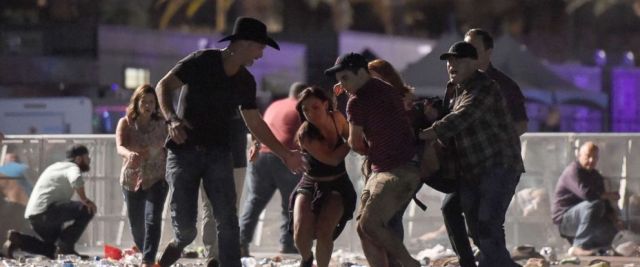
Our world changed when we woke up on Monday morning and learned of the horrific shooting in Las Vegas. We were reminded how vulnerable and fragile life is, how evil human beings can be. We were given a new sense of humility. We appreciated life more. We cherished our loved ones more. We were given a brand new perspective for living.

Likewise, something very good can also bring a new perspective. Love can do that. When we are with someone we love, the sky seems bluer, the sun shines brighter. Love makes us more grateful, more giving, more kind. When we fall in love, the whole world changes.

And of course, having a baby changes everything. It brings a whole new perspective. A brand new point of view. There’s more responsibility, more worries, and more fun, and there’s less sleep, less time, and less fun. Parenthood: it’s a brand new world.

In this morning’s scripture lesson, the Apostle Paul is writing about the miraculous change that has been wrought in his life because of the change that has been wrought in the world through God in Jesus Christ.

The things that used to matter to him no longer matter: being religious, having religious parents, observing all of the religious rituals, obeying and defending all of the religious laws. It’s all “rubbish,” says Paul. He is saying: “In the power of the resurrection of Christ, I have a brand new faith, a brand new way of relating to God and to the world!”

In his second letter to the church at Corinth, he puts it this way:

From now on, therefore, we regard no one from a human point of view; even though we once knew Christ from a human point of view, we know him no longer in that way. So if anyone is in Christ, there is a new creation: everything old has passed away; see, everything has become new! (2 Corinthians 5:16-17).

In the life, death and resurrection of Christ, a new age has dawned, the whole world is different.

This is what the great theologian Moltmann was trying to point out when he wrote:

We have attempted to view the resurrection of Christ from the viewpoint of history. Perhaps the time has come for us to view history from the viewpoint of the resurrection.

Paul believed that when God raised Jesus from the dead, the whole world shifted on its axis. All was new.

A couple of weeks ago, I suggested that when we read the gospels, we discover that Jesus doesn’t tell us how to have abundant life through our religion, but tells us how to have abundant life through our sight. Perhaps Jesus figures, in his stories and actions, if he could just get us to see the world through some new angle of vision that is larger than our limited “human point of view,” then we will know how to live that vision.

Maybe that is the purpose of every Sunday morning in this place. Sunday mornings is less of a time to get some religion, be religious, learn some religious laws, and more of a time to help us to no longer see the world “from a human point of view.”

And let’s be honest, from a human point of view, church can be depressing. The forces of evil are so strong, hate is so commonplace, our political system is so corrupt, religion is so crazy; everyday, I know clergy who feel like throwing their hands up in the air and just giving up.

But we keep at it. We keep going. We keep working. We keep preaching, hoping and praying that somehow, someway, someday, someone’s going to catch a new vision. Someone’s going to gain a new perspective. Someone’s going to start seeing the world in a brand new way. Someone’s is going to start giving more generously, speaking more courageously, serving more compassionately, loving more unconditionally. Someone is going to open their eyes and answer the divine call to do something, anything, to make this world more kind, more just and more peaceful.

This is not wishful thinking. This is not a failure to come to terms with reality. This is a staunch faith that when people truly experience the life, death and resurrection of Christ, there is a whole new creation, a brand new world.

When he was told that he was going to be laid off from work, he thought his life was over. He believed he had no other possibilities, no other options. He could see losing his house, his insurance, his pension, and so many things that he had worked so hard for.

However, that was just his narrow-minded, limited, human point of view. What he couldn’t see was losing that job was going to be the best thing that ever happened to him. He couldn’t see that a new job awaited him that would utilize his gifts more fully, thus giving him greater fulfillment.

After the doctor’s diagnosis and the decision was made to place her under the care of Hospice, some said that it was just not God’s will for her to be healed. Some grieved for they knew her last days would be a time of sadness and pain.

But that’s just a narrow-minded, short-sighted, restricted, human point of view. They failed to remember that in Christ there’s a whole new creation. A new creation where spiritual healing is greater than physical healing.

Can you see it?

Of course, she would be feeble, and she would be tired, but she would be more alive, more whole, more blessed, and more engaged; she would possess more hope and share more love than the most physically fit person anyone knows.

Before she was born in 2012, she was diagnosed a rare genetic disorder called Apert Syndrome. The bones in her skull, hands and feet fused together prematurely. Two surgeries to split the bones of her skull would be required, along with surgeries to split the bones in her hands and feet. To survive, she would need to be fed through a feeding tube for two long years.

“Oh, how tragic,” the people said. “How horrific,” they cried. “How is she going to ever be happy?” they asked. “How will her parents afford her costly surgeries, attend to her special needs? How will they ever survive the stress? It’s difficult enough to raise a healthy child in this world? How are they going to raise one with so many challenges?”

But that’s only seeing the world from a limited, incomplete, dimly-lit, narrow-minded, human point of view. What they failed to factor in is that in Christ there is a brand new world, a new brand new creation.

Can you see it?  I think you can.

Despite her many challenges, she will be one of the happiest, spirited little girls that you’ll ever know. Fundraisers and generous donations by God’s people would help pay for the enormous medical expenses. Like raising any child in this world, there will stress, but the strength and courage and peace that flows out of a relationship with Christ will be more than enough to see this family through each day. And they will never be alone.

They will be surrounded by families of faith that care for them, prays with them and vows to help Callie Anne and her family see their world with brand new eyes—to see life with a new vision, with a fresh new perspective.

A terrorist thug shoots and kills 58 people, injuring over 500 more.

“The world is going to hell!” they say. “God has given up on us!” they bemoan. “This is the new normal. There’s just nothing we can do to prevent this from happening again!” they quibble.

But that’s only a narrow-minded, limited, shallow, shadowy, defeated, and very ignorant human point of view.

There was only one cowardly terrorist, but did you see the countless brave men and women who were willing to lay down their lives for strangers, forming human shields, carrying the wounded to safety? Did you see the police officers risking it all by running towards the gunfire, courageous men and women bearing witness to the truth that God still loves this world, God has not given up on this world, God still believes this world is worth fighting for, sacrificing for, dying for!

The good news is that we will not allow the personal evil of a single killer affect our sight, cloud our vision, and shape our worldview.

No, with faith in Christ, we will continue to see our world from the viewpoint of the resurrection. We will see a world where when there seems to be no way, God is always making a way. We will see a world where no matter how bad things sometimes get, God is always working those things out for the good. We will see a world where no matter how distant God seems, God is always present resurrecting, recreating, reforming and transforming sorrow into joy, despair into hope, and death into life!

Let us pray,

Lord Jesus, in whose light is our life, we pray that you will give us eyes to see your work in the world, eyes to see your presence moving among us, and eyes to gain a new vision of who we ought to be. Release our grip on the old, familiar world of death and defeat. And help us thereby live out your resurrection everyday of our lives. Give us grace to see.  Amen.


Waking Up to the Knowledge of Evil

las-vegas-shooting-carry-gty-ps-171002_12x5_992
ABC News – Go.com  People carry an injured person at the Route 91 Harvest country music festival

On Monday morning, we awoke to the knowledge of what our president called “pure evil.”

As the news continued to break, the horror seemed to intensify as we learned that the terrorist was “a normal person.” He had no prior criminal record, no history of mental illness, and no religious or political motivation. He was described as “an average accountant who enjoyed playing poker.”

Desperately trying to understand the evil, someone suggested that he was perhaps bitter about the unfairness of life. They said: “Maybe he wasn’t happy with his life, thus he became upset seeing others celebrating life at a country music concert.”

This is, of course, the reason Cain killed his brother Abel in the biblical story describing our innate propensity for evil.

Whatever the reason for it, on Monday morning we awoke to the knowledge of the pure evil of which we human beings are capable. And it is horrifying.

However, we also awoke to the knowledge of pure good.

We learned of the selfless, sacrificial actions of police officers and first responders. We learned of “normal people” forming human shields to protect strangers from the gunfire. We learned of “average men and women” picking up and carrying the wounded to safety.

We learned that, even in our divided nation, even in so-called “sin city,” people have the innate propensity to put aside their differences to love their neighbors as they love themselves.

On Monday morning, we awoke to the description of our humanity as told in the story that precedes the account of Cain and Abel. We awoke to the knowledge of good and evil. The good news is: In the midst of evil, we know there is good.

Thus, in the midst of the unfairness of it all, we know there is hope.

So together, we pray:

God of Love, Awaken the pure good of which all human beings created in your image are capable. Awaken the selfless, sacrificial love that is within us all— the very same love revealed to us in Christ—the love that we know has the power to change the world. Amen.

Unity in Christ

lincoln

Philippians 2:1-13 NRSV

This week, my friend, the Rev. Bob Ballance, made the following observation on social media:

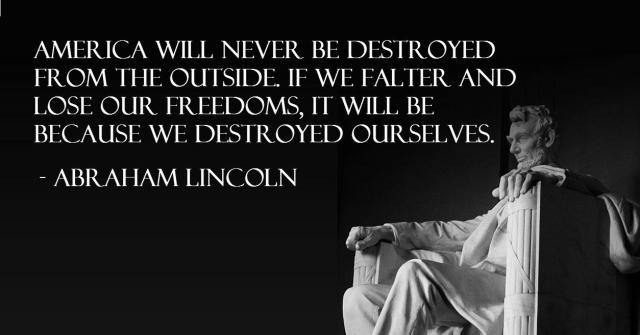
Our divisiveness across this country, so it seems to me, at least, is like a cancer spreading throughout the body. We just keep finding new ways to attack one another. National tragedies like hurricanes used to pull us together, but reports on the destruction of these storms is already old news, seemingly powerless to jolt us back to our collective senses. What was it President Lincoln said so eloquently? “America will never be destroyed from the outside. If we falter and lose our freedoms, it will be because we destroyed ourselves.” A century later, Khrushchev said the same: “We do not have to invade the United States. We will destroy you from within.” Where on earth are the prophets in times like these, those rare voices who have the gift and courage to rise up from the fringes with the right words at the right moment for the right reason? We used to could count on them to shout out the truth, hoping on a wing and a prayer to find a listening ear–any ear at all–to force at least a small nucleus to THINK and CHANGE, and then begin the work of pulling society back from the madness. This division has spread like wildfire into political parties, elections, the White House, the workplace, our stadiums, congregations, communities, families, even…into our playgrounds.

As a church that encourages inclusion and reconciliation, I believe we have a grand opportunity to be a shining example of harmony and unity to a divisive nation.

Do you know how to tell if your church is unified? It’s not by the number in attendance on a Sunday morning. And it’s not by what is put in the offering plates.

I believe that one way is by how long people linger in the building when worship is over. For when people find genuine love, acceptance and belonging in a place, they tend to want to stay in that place. I noticed last week how some of you hung around after the service like you didn’t want to leave. And that was good to me. A unified church is a church where people find love, acceptance and belonging.

A unified church can be a respite from the chaos and hurt that is in our world. It can truly be a sanctuary, a place to receive peace beyond understanding.

As I mentioned last Sunday, after Bruce Birkhead spent a difficult week in the hospital his wife Kaye, unaware of what would transpire this week, when Bruce needed some peace and rest, when Bruce needed to recharge is soul, I loved that he came here to this place.

So, I believe we have a wonderful opportunity to be a leader bringing peace to a divided nation. We have the opportunity be the rare prophetic voice that Rev. Ballance says our nation needs, those who posses the gifts and courage “to rise up from the fringes with the right words at the right moment for the right reason.” With our example of how to be a united blessed community we have the opportunity to “shout out the truth” to “pull society back from the madness.”

Let’s look again to the words of the one who seems to be speaking directly to us this morning:

Be of the same mind, having the same love, being in full accord and of one mind. Do nothing from selfish ambition or conceit, but in humility, regard others as better than yourselves. Let each of you look not to your own interests, but to the interests of others.

Let the same mind be in you that was in Christ Jesus,
who, though he was in the form of God,
did not regard equality with God
as something to be exploited,
but emptied himself,
taking the form of a slave,
being born in human likeness.
And being found in human form,
he humbled himself
and became obedient to the point of death—
even death on a cross.

We can be the prophetic voice that is needed to heal our nation with the humility of Christ.

And as First Christian Church in Fort Smith I believe we have a unique opportunity, as we are a people with diverse beliefs, different views, assorted experiences, various interpretations of the scriptures; yet we still come together each week with mutual respect for one another, in grace, in love and in humility around this table, united as one.

However, as good as our church is, I am afraid we still have some work to do, some obstacles to overcome. Because the truth is, that when many people today think about church, the word “humility” is not something that comes to their minds. In fact, it is the exact opposite that comes to their minds: words like “haughty,” “judgmental” and “uppity.”

Sadly, sometimes the church has been the cause of some of our nation’s division. So, when I say we have some work to do, I am saying that we need to go full-steam in the other direction.

Think of what a powerful witness we would be to our divided nation, if everyday, we literally and figuratively practiced humbly bending ourselves to the ground in the way of our God!

For when God wanted to reconcile the world unto God’s self, when God wanted to unite the world, God emptied God’s self, poured God’s self out, as a humble servant. God bowed down, down to meet us where we are, down to earth through a humble baby, laid down in a humble manger, worshipped by humble shepherds.

The gospel writers continually paint a portrait Jesus as one who is continually lowering himself in humility.

When his disciples chastised little children who needed to shape up and grow up before they be a part of God’s Kingdom, Jesus bent down down and welcomed them saying that the Kingdom of God actually belonged to such children.

While his disciples bickered about who was going to be promoted to be first in the Kingdom, Jesus taught them another way by doing things like stooping down to wash their feet, moving down to sit at the lowest seat at the table, crouching down to forgive a sinner, reaching down to serve the poor, lowering himself down to accept the outcast, touch the leper, heal the sick, eat and drink with the sinner, and raise the dead.

And nearing the culmination of this downward life, Jesus, the savior of the world, made his triumphant entrance into Jerusalem to liberate God’s people, not on some white war stallion that made its way up the equestrian ladder, but on a borrowed donkey. And he rode into Jerusalem not with an elite army that had advanced up the ranks in some up-and-coming militia, but came in with an army of rag-tag followers who had no idea what they were doing or where they were going.

While people exercise worldly power to move up, climb up, and advance, Jesus exercised a prophetic power that always propelled him in the opposite direction.

In the wilderness when he was tempted with worldly power, we watched Jesus embrace another power.

It is not a power that rules. It is a power that serves.

It is not a power that takes. It is a power that gives.

It is not a power that seizes. It is a power that suffers.

It is not a power that transforms stone into bread to feed his body. It is a power that transforms his body into living bread to feed the world.

It is not a power that commands angels to save himself. It is a power that gives himself away.

It is not a power that dominates from some high place in glory. It is a power that dies in a low place called Golgotha.

This is the narrow, humble, downward, descending way of Jesus toward the poor, the suffering, the marginal, the prisoners, the refugees, the lonely, the hungry, the dying, the tortured, the homeless–toward all who thirst and hunger justice and compassion.

And the good news is that as I look around this room, I see people who are committed to traveling this same downward path.

I see people who have chosen to be here this morning, not to get ahead, not to feel more righteous or superior than others, not to get something here in worship that will make you more successful, more affluent, climb a little higher. You are not even here looking to be uplifted, or to be more upbeat. I see people here who have chosen to move in the opposite direction.

I see a room full of people who are here not to get something, but to give something, not to be served by programs, but to serve on a mission.

Because you have heard, and you have believed Jesus when he said: “Anyone who wants to become great among you must be your servant, and anyone who wants to be first among you must be your slave, just as the Son of Man came, not to be served, but to serve, and to give his life as a ransom for many (Matthew 20:25-28).

May this always be who we are as a church.

May we come here each Sunday morning to embrace a mission of humility, sacrifice and selflessness. And then may we go out on a mission, bending ourselves down to the ground if we have to, to touch the places in people that most need touching. May we go out and stoop down to welcome all children. May we go out and reach down to serve the poor, lower ourselves down to accept the outcast. May we go out and get down on our knees to pray for and suffer with the sick and the despairing.

And by our humble example, may our divisive nation be inspired come together, be united as one, and together see our Lord “highly exalted…”

so that at the name of Jesus every knee should bend…
and every tongue should confess that Jesus Christ is Lord,
to the glory of God the Father.”


Invitation to the Table

As part of the world-wide community of Christians, we remember Jesus’ meal with his disciples.

The different languages you will hear today are symbols of the diversity of Christian experience, both close to us and around the world.

Jesus sets the table and his welcome extends to all of humanity.

People of all ages, of all genders, of all cultures, of all economic conditions are welcome here.

No one can earn a place at this meal. Come of your own choice. You need only desire to follow the downward way of Jesus.

Bring your hopes and your history. Bring your deliberations and your doubts.

Come with those who differ greatly from you and be reconciled as one.


Commissioning and Benediction

Although it sounds good to be an up and coming church, I commission us to be a church that is always down and going.

May we go out in humility, bending ourselves down to the ground if we have to, to touch the places in people that most need touching.

May we go out and stoop down to welcome and accept all children. Crouch down to a child in a wheelchair who has been told their entire life: “No You Can’t!” and tell them: “Yes You Can!”

May we go out and reach down to serve the poor, lower ourselves down to accept the marginalized, and may we get low, get down on our knees to pray with all who suffer.

And, there, as low as we can go, may this church be a shining example in a divisive nation of harmonious humility and revolutionary reconciliation.

And now may the communion of the Holy Spirit of God who came down to us in a stable and the grace of the Christ who knelt down to pick up his cross, be with us now and forevermore. Amen.


The Opposite of Love Is Indifference

kid swearing

“For all of us must appear before the judgment seat of Christ, so that each may receive recompense for what has been done in the body, whether good or evil” (2 Corinthians 5:10).

When I was a kid, this is the passage of scripture used by my Sunday School teachers to keep me on the straight and narrow. This verse may the be the reason I tried not to “cuss, drink, chew or go with girls who do.”

And maybe this is what keeps me on the straight and narrow today.

However, the older that I get, and the more I study the scriptures, I have learned that there are more evil things we can do in the body than saying a curse word.

If loving our neighbors as ourselves is the highest good, as Jesus said it was, then refusing to love is the lowest evil.

It was Jewish Holocaust survivor Elie Wiesel who reminded us that the opposite of love is not hate. It is indifference. Evil can be silence. Evil can be refusing take a stand. Evil can be refusing to take a knee. Evil can be looking the other way, tuning something out, refusing to understand. Evil is not giving a damn.

When I get to heaven and appear before the judgment seat of Christ to receive payment for the good or the evil I have done with my body, I hope to be able to say:

“Do you remember your command for us to love one another?”

“Do you remember the stories you told about accepting those who have been marginalized by religion and culture?”

“Do you remember your sermon about blessing the poor, the meek, the mourners, the peacemakers, and the oppressed who hunger and thirst for justice?”

“With my heart, soul, mind and body, I gave a damn.”

God-Blessed Eyes

Harrison

Matthew 13:10-17 NRSV

The pastor stands up in the pulpit, clears his throat, and announces: “This morning we are going to talk about racism and reconciliation.”

And all over the sanctuary the congregation winces. Under their breaths, they beg: “Preacher, please don’t do it! You are getting ready to open up a can of worms!”

But the middle-aged preacher, who has opened up more cans of worms than anyone could possibly count, ignores the grimaces and metaphorically gets out the can opener.

Ever since I have been a pastor, church folks have urged me to avoid talking about race.

They say: “If you talk about it, you are just going to stir things up, make things worse. If we would all just leave it alone, it will go away.

And if you think about, those who call attention to the color of their skin are the real racists. They need to stop saying their lives matter and understand that all lives matter. Reconciliation Sunday? Really? Come on, preacher, we just need to let it go!”

And, for the most part, when it comes to talking about race, we white preachers have been very silent.

But guess what? It ain’t working.

The recent Alt-Right White Nationalists’ march in Charlottesville was a stark reminder that racism in this country is not going away that easily.

Yet, many would still rather shut their eyes and close their ears, pretending that racism no longer exists.

A couple of years ago, someone blocked me on Facebook. When I asked a mutual friend why I was blocked. She responded that he didn’t like seeing my Ainsley’s Angels posts of children with special needs. He said that the pictures of the children made him uncomfortable.

“Out of sight out of mind,” as we like to say.

Maybe this is why Jesus talked more about sight than he talked about sin.

Throughout the gospels, Jesus asks: “Do you have eyes and fail to see?” (Mark 8:18)

In our gospel lesson this morning, Jesus quotes the prophet Isaiah:

You will indeed listen, but never understand, and you will indeed look, but never perceive. For this people’s heart has grown dull, and their ears are hard of hearing, and they have shut their eyes; so that they might not look with their eyes and listen with their ears.

In Isaiah chapter 6, we read that closed minds, closed eyes, and closed ears (ignoring injustice, looking the other way, tuning it out), will lead to “cities lying in waste without inhabitant, and houses without people, and the land utterly desolate.”

Refusing to listen to and understand the cries of injustice— possessing hearts that are dull and indifferent— leads to complete desolation. It leads to tiki torches in Charlottesville, a shooter in Charleston, voter suppression in North Carolina, an assassination in Memphis, Jim Crow in the South, a holocaust in Germany, and a mass lynching of 237 African Americans in Arkansas.

Isaiah continues:

Even if a tenth part remains in it, it will be burned again,
like…an oak whose stump remains standing when it is felled.’

But listen to the good news. This passage in Isaiah concludes:

The holy seed is its stump.

There’s a holy seed ready to sprout forth. In a land of deep darkness, a light shines forth. In the demise and the decay, there is the promise of new life. Like a candle flickering in the dark, hope is burning. Like a stream trickling in the desert, reconciliation is possible.

And Jesus suggests that the key to reconciliation, healing and redemption is open minds and open hearts.

The mission of Ainsley’s Angels is the very thing that Jesus is talking about here. The primary mission is “raising awareness.”  Awareness, says Jesus, is having God-blessed eyes and God-blessed ears. Because whether you are talking about ableism or racism or any other ism, awareness is what is needed before reconciliation can happen.

And with this blessed awareness, what is it specifically that Jesus wants us to see? What do we see for Jesus to respond: “Blessed are your eyes for they see!” “Prophets and righteous people longed to see what you see but did not see it!”

I believe the answer is in Jesus’ first recorded sermon. In Matthew 5 we read where Jesus went up on a mountain and taught them saying:

Blessed are the poor in spirit, for theirs is the kingdom of heaven. Blessed are the meek for they shall inherit the earth.

God-blessed eyes see that the “poor in spirit” and the “meek” are blessed by God; Not the one who has never had a reason to doubt that God was indeed for them, not against them; with them, not away from them. But God-blessed eyes see that God is on the side of the ones who have been degraded and dehumanized by the systems and structures of the priveledged. Their spirits have been crushed by inequitable education, poor healthcare, discrimination in the workplace and racial profiling in the streets. But their future, says Jesus, is the kingdom of heaven.

Blessed are those who mourn, for they will be comforted.

God-blessed eyes see that God empathizes with the mourners. Not those the Apostle Paul is talking about when he says we should “give thanks in all circumstances” (I Thessalonians 5:18), or “rejoice even in the midst of suffering” (Romans 5:3-10), but the ones who have a difficult time finding anything for which to be thankful. For them, there is no rejoicing. They are not just complaining about the pain in their life. They actually in mourning over that pain. They look at how their parents and grandparents were valued by the world. They see how their lives are valued. And they look into the eyes of their children and grandchildren, and they grieve for them. But because Jesus knows that love will win, and evil will be overcome, Jesus calls them blessed and promises comfort.

Blessed are those who hunger and thirst for righteousness for they will be filled.

Not the ones who are righteous, but the ones on whose behalf the prophet Amos preached: “Let justice roll down like waters, and righteousness like an ever-flowing stream” (Amos 5:24). This is everyone who have been marginalized by society, even by communities of faith. They have suffered grave injustices just for being different.

They have been bullied so badly by the world that they hunger and thirst for justice and righteousness like a wanderer lost in a hot desert thirsts for water. Jesus says that they are blessed, and they are the ones who will not only be satisfied, but will be filled, their cups overflowing.

Blessed are the pure in heart, for they will see God.

Not the pure, but the “pure in heart.” Not those who look like you do on the outside. Not those who share your skin tone. No, God blesses those who dream with Rev. Dr. King for a world where they will be judged not by the color of their skin but by the content of their character. God-blessed eyes have the grace to see others as the Lord sees them, “for the Lord does not see as mortals see; they look on the outward appearance, but the Lord looks on the heart” (1 Samuel 16:7). God sees them for who they truly are, beloved children of God, created in the image of God, and they will see God.

Blessed are the peacemakers, for they will be called children of God.

Not the ones who have necessarily found peace for themselves. But God blesses the tormented: the discriminated and the victimized, who, because their lives are so continuously in chaos, seek to make peace whenever and wherever they can. Blessed are those who live with no peace, but seek it, because they will find a home and a peace that is beyond all understanding, within the family of God.[i]

Blessed are the merciful, for they will receive mercy.

Not the proud, the boastful and the arrogant. Not the ones who never admit any mistake, those who say they are “the least racist person” or that they “don’t have a racist bone in their body.” But God blesses the ones who are fully aware of their prejudices, the ones who have made mistakes, terrible mistakes, and they know it. Thus, when they encounter others who are also suffering from this fragmented world, they have mercy and compassion. In their hearts there is always room for others. They give mercy, because they need mercy for themselves. And Jesus says, they will receive it.

Do you see what Jesus wants us to see? Are your eyes God-blessed?

What’s the one thing we mortals need in order to see?

We need light.

The good news is that the Lord announces: “I have come as light, as the Light of the World!”

And not only that, Jesus says: “You who seek to be my disciples, you who have answered the call to be my hands and feet in this world, are not only holy seeds in a burned-out stump. You are also the Lights of the World. And you are called not to hide your light, but to shine your light so all may see this world as God sees it.

We are to shine our lights by Stanley with, lifting up, and caring for all people, especially those who are left behind. We are to light it up by defending and caring for those whose spirits have been broken, those who mourn and need mercy, the marginalized who hunger and thirst for justice, the discriminated who seek equity, and the troubled who yearn for peace.

So, as lights of this world, for the sake of this world, may First Christian Church of Fort Smith light this our city up:

So crushed spirts can have new life.

Light it up,

So the despairing can have hope.

Light it up,

So that those who ache for fairness will be satisfied.

Light it up,

So that victims of all kinds of discrimination will see God.

Light it up,

So that those who yearn for peace will receive justice and know peace.

Light it up,

Until the day comes when the eyes and ears of all are finally and fully blessed and the entire human race be reconciled as one.

[i] Inspired by Frederick Buechner. Whistling in the Dark: An ABC Theologized (New York: Harper Collins, 1988), 18.     


Hilda Duke: What She Taught Me About God

Hilda

I preached the following sermon entitled “Coincidence or Providence” on March 25, 2007 for the First Baptist Church of Farmville, NC. Hilda Duke, who passed away yesterday, was the inspiration for this sermon. I will always love her immensely. 

Isaiah 43:16-21

On Sunday morning, February 5, 2006, Hilda Duke left the worship service looking like she’d seen a ghost.  I asked, “What’s wrong, Hilda?”  She said, “You won’t believe it.  But today is the day my husband, Wilton, passed away eight years ago.  And every hymn that was sung this morning in worship was sung at his funeral service.”

Wilton died the year before I came to Farmville.  I had no idea when Wilton died, and I certainly did not know what was sung, if anything at his funeral.  “What a wonderful coincidence!” I thought to myself.

One morning a couple of weeks ago I was in the office here at church helping Patty with the bulletin.  After spending about a half hour with her, I went into my office to study for a little while.  About half way through my studying, Peggy Whitfield entered my mind.  I knew she was probably at the place that she had been for days—in the nursing home with her brother who was slowly passing away.

As much as I tried to continue studying, I just could not get Peggy off my mind.  Peggy, one of our most gifted deacons is so good at visiting patients and family members in the hospitals and nursing homes, and now here she was at the bedside of her dying brother.  I kept thinking about her and could no longer concentrate on my studies, so I got up and told Patty that I was going to drive out to the nursing home for a little while.

As soon as I walked into the room, I hugged Peggy who was sitting at a table near the door, and before I could speak to anyone else, Peggy’s niece who was at Jimmy’s bedside said, “Peggy, you might want to come over here.  His breathing has changed.”

I walked to the foot of the bed with Peggy and saw that Jimmy was taking his final breaths.

“Would you like me to say a prayer?”  I asked.

“Yes, please,” several responded.

I prayed briefly, asking God to be with and take care of Jimmy in death as God had been with and taken care of him in life.  When I said, “Amen,” Jimmy took his last breath.

And I thought to myself, “what a wonderful coincidence!”

Before I left the nursing home, Peggy hugged me goodbye and said, “Your timing could not have been more perfect.  The Lord certainly does work in mysterious ways.”

I drove back to the church thinking about what just happened.  I drove up Main Street, thinking and pondering, wrestling and doubting.

Was it just a mere coincidence that Peggy came to my mind while I was studying, or was it something else?  Should I say that “Peggy came to my mind” or would it be more accurate to say that “Peggy was brought to my mind?”

A mere coincidence?  Did her name just rise up, haphazardly and randomly, from the recesses of my conscience during that moment in my office?  Or was it brought to my consciousness from outside of my consciousness?

A year ago, was it just by mere happenstance that I selected the hymns from Wilton’s funeral service on the eighth anniversary of his passing?  Did those titles just come to me, randomly, accidently?

Or were they brought to me?

The dictionary defines “coincidence” as “an accidental sequence of events that appear to have a causal relationship.”  This is how, of course, the main way the modern world has taught us to think of our lives—as a random, pointless, series of accidents.

Therefore, any thought that may happen to come into my mind as I am sitting in my office is always exclusively coincidental, accidental, and random, never intentional, designed, purposeful, and gifted.  It was just happenstance that I showed up in the nursing home when I did.  I was not compelled to go or propelled to go by anything external.

In freshman biology class, this was taught to us as teleological fallacy.  The Greek word for “end,” or “purpose,” is telos.  Science does not engage in speculation about purposes and ends, only means.  And the means are always accidental.  The world in which we live is random, coincidental.

The professor tried to trick us on the exam.  Trick question: “Why did the giraffe develop a long neck?” And the professor probably expected that we dummies would answer something like, “The giraffe developed a long neck in order to reach the leaves in the top of the trees for food.

No, we had listened in class, studied our notes and read our textbook, so we answered, “The giraffe developed a long neck, not because of any plan or purpose, certainly not because of any plan or purpose, certainly not because of any divinely inspired program, but rather the end of a series of mutations, random changes that proved beneficial.”

Science has been very successful in carrying this sort of thinking a long and doing a lot of good with it. But right now, at this stage in human history, I’m wondering if a good deal of reality has been lost in this sort of thinking. I believe we would do well to listen again to these wonderful words from Isaiah.  “Behold, I am doing a new thing.”

Israel is in Babylonian exile, trapped, far from home, forlorn and without hope, except that God promises to make a new thing for them.  Here are words addressed to people who have no way out if there is not a God who not only care but also acts.  Their hope, our hope in life, in death, in life beyond death, is that our God lives and acts, creates and intervenes, intrudes and moves among us. Our hope is that our God speaks to our consciousness from without, puts thoughts into our minds, leads us and directs us in right paths for his name sake.

But this is not how we have been trained by the modern world.  We’ve been conditioned to admit that any strange, external sort of word is mere coincidence, a kind of random, accidental, meaningless glitch of the brain that means very little.

But what if it means everything?  What if these so called coincidental thoughts are some of the best thinking that we do?  What if all of these weird coincidences we experience in life are as close to reality, as close to what is really real in this world, as we human beings can get?

I believe we’ve got to break ourselves of the habit of dealing with things that happen to us, or visions that come our way, or words that come to our mind, by dismissing it as mere coincidence.  For those who are convinced that the Word has been made flesh, and the Son of God has intruded into the world, that God is always working in this world, creating and re-creating and resurrecting and transforming, there is nothing in this world that can be labeled “mere.”

For people with faith in the risen Christ, a miracle, the supernatural, is not something that momentarily intrudes among us into an otherwise natural world, but rather for us, it is all miracle and it all comes from the creative hand of God.  We look at trees blooming everywhere on this first weekend of spring in a completely different way.  It’s all supernatural.  It’s all extraordinary.

We pay attention to conversations, we listen to the reading of an ancient text, and we listen to the singing of the hymn, with the assumption that it is all potentially revelation, all the footsteps and handiwork of an intrusive God.

As Frederick Buechner says, “in the last analysis of all, all moments are key moments and life itself is grace.”

Our grandmother in the faith, Sarah, was one day straightening up her tent in the desert when these three people, complete strangers, show up.  Sarah extends hospitality to the strangers, welcomes them, and prepares a meal for them.

And after the satisfying meal, one of the strangers peaks and blesses Sarah and her husband Abraham, tells Sarah that she is going to have a baby that will be the beginning of a great people, a great family, Israel, a family that will bless all of the world’s families.  Suddenly, the text moves from describing these people as mere visitors, to describing them as the “Lord.”

In fact, later, early Christian preachers through these three strangers as embodying God—the Trinity—Father, Son, and Holy Spirit.  When Paul later referred to this incident, he said that, “Some have entertained angels unaware.”

Now I know that, to the world, this is making a huge deal out of a meal for three ordinary visitors.  A simple meal, even eating with people that we don’t know, is a merely ordinary experience.

But having been encountered by the Christ, having experienced a God who is not distant and disinterested, we do not live in the ordinary and we don’t deal with people, with one another, with the world, as merely anything.  For us, with eyes of faith, it is never merely coincidental, accidental or happenstance.  It’s revelation.  It’s extraordinary.  It is a gift of God who does not leave us alone, who loves us enough to seek and to find and to reveal.

Our God keeps promising us, “Behold, I’m doing a new thing!” Can you see it?

Peggy Whitfield was absolutely right.  Our Lord works in mysterious ways.  And our Lord is here right now and he’s working all around us.

Can you see it?

Heroic Role Models

Danny Baker

Last Sunday, Pima County Sheriff’s Sergeant Derek Tyra was supervising seven other deputies handling traffic control and basic event safety, protecting the runners during a race in Tucson named for Gabe Zimmerman, the Aide who was killed in the shooting involving Congresswoman Gabrielle Giffords on January 8, 2011.

During the race, Tyra received a call that a car driven by a suspect in a shooting was possibly heading toward the runners. As a car matching the description of the vehicle passed by, Tyra gave chase and decided to perform a “high risk stop” which meant he would have to place himself between the suspect and the runners.

Tyra managed to pull the vehicle over and safely apprehend the suspect.

“The man is a hero,” the race director said. “He says that it’s just what they’re supposed to do, but it’s pretty amazing that he was able to intervene with a live shooting suspect just steps from all these runners. He may have saved any number of lives with his actions today.”

“I just happened to be at the right place at the right time,” Tyra said. “I didn’t think twice about it.”

As I read this amazing story, I immediately thought of Fort Smith Police Captain Danny Baker, who ran in uniform alongside of Marine Captain Maggie Seymour and local runners who were pushing three children with special needs in the Ainsley’s Angels in Arkansas’ inaugural event on Monday morning.

It was remarkable that Captain Baker was able to run the 3.5 miles on a hot, humid morning in uniform. However, it was more remarkable how he ran. Captain Baker ran placing himself between the runners and the vehicles that were passing by in the left lane on busy Highway 64. He ran with one eye on the runners and the children and one eye on the traffic, motioning the runners several times to keep to the right.

Captain Baker kept everyone safe, and he didn’t think twice about it.

Thank you Captain Baker and law enforcement officers everywhere who serve and protect our communities selflessly and sacrificially. You are not only heroically fulfilling your duties, but you are serving as role models for us all.

For this is part of our mission as the body of Christ in this world. The Apostle Paul put it this way: “Love your neighbors as yourself [and remember] that love does no harm to your neighbor” (Romans 13:10). God calls us to selflessly and sacrificially place ourselves between our neighbors and anything that may harm them, and not think twice about it.

It’s just what we are supposed to do.

Wake-Up Call!

Romans 13:8-14 NRSV

It was the summer of 2013. It had been three years since I served my last church. At the time, I didn’t think I would ever serve as a pastor again.

I was on a business trip in Las Vegas, the city that’s said to represent everything depraved that is within us.

Early one morning, I went for a run on the Strip. The streets were already crowded with people. Some were shopping. Some were on their way to another casino. While others were on their way to do who knows what to fulfill their most selfish desires.

As I ran along, I noticed that all of the electronic billboards suddenly changed displaying a picture of a young man with words that read: “David Vanbuskirk.1977-2013. Las Vegas Police Search and Rescue Officer.” I would soon learn that Vanbuskirk was killed while rescuing a hiker stranded in an off-limits area of a mountain northwest of Las Vegas, when he fell from a helicopter hoist line.

I ran a few more blocks, until I noticed that the people walking up and down the busy sidewalks began to stop and peer down the street that was suddenly empty of traffic. The entire Strip, which was booming with the sounds of automobiles and of people enjoying themselves a few seconds earlier, became profoundly silent.

A man removed his hat. A woman covered her heart with her hand. A little boy, sitting on his father’s shoulders, saluted. I stopped running. And with everyone else, my eyes turned toward the street where we watched and listened as a very long police motorcycle motorcade produced the only sound on the hushed strip. The motorcade was followed by a white police pick-up truck carrying a flag-draped casket.

People remained silent and still for several more minutes. Some bowed their heads. Others wiped tears from their eyes. Others embraced their loved ones.

Here are some questions I believe the church needs to ask today:

What was it that stopped the traffic on one of the busiest streets in the country?

What was it that got everyone’s attention?

What was it that made people cry?

What was it that got even the most indulgent and decadent one, in the heart of sin city, to believe in something greater than thenself?

What was it that turned eyes away from reveling and drunkenness, debauchery and licentiousness, quarreling and jealousy and toward selflessness and sacrifice?

What is it that has the power to change the world?

It’s the very power that is the heart of our Christian faith, or should be the heart of our faith.

It’s the power that caused firefighters, police officers and first responders to run into the Twin Towers on 9-11 when everyone else was running out of them.

It’s the power that has sent John Mundy and hundreds of volunteers back to Texas this weekend. It’s the power behind our prayers for Florida and the Caribbean.

It’s the power that gives generously to disaster relief funds like Week of Compassion.

It’s the power that can unite our government to save the lives of the Dreamers.

It’s the force that created the universe, this good earth, and every living thing in it (Genesis 1-2).

It’s the source of all life (John 1:4).

It’s the burning compulsion to liberate God’s people from the evils of oppression and slavery (Exodus 3).

It’s the fire in the prophet’s voice to welcome the foreigner, defend the orphan, stand up for the poor and take care of the widow (Isaiah 1:17).

It’s the drive that sent Emmanuel into the world, not to condemn the world, but to save the world (John 3:17).

It’s the energy that continues to pour out the very Spirit of God on all flesh to overwhelm evil and overcome death (Romans 12:21).

It’s the power of love—pure, unconditional, unreserved, unrelenting —passionate love that propels action, deep love that compels sacrifice.

Jesus said there is no greater power in the world than the power of love compelling one to lay down one’s life for another (John 15:13). And there is no greater commandment than to love your neighbor as yourself (Matthew 22:40).

To the Corinthians, Paul writes about faith, hope and love, but says that the greatest of these is love. And if love is not in our words, even in our confessions of faith, then we are only making noise. If love is not the heart of all that we do, we are nothing (1 Corinthians 13).

To the Romans, Paul echoes the words of Jesus:

You shall not commit adultery; You shall not murder; You shall not steal; You shall not covet”; and any other commandment, are summed up in this word, ‘Love your neighbor as yourself.’ Love does no wrong to a neighbor; therefore, love is the fulfilling of the law (Romans 13:9-10).

Paul writes that “now is the moment” we need to “wake up” and understand that what the world needs now is love (Romans 13:11). And as Dionne Warwick sings, “not just for some, but for everyone.”

When it comes to loving all people, we have too many Christians who keep hitting the snooze button. They pull the covers over their heads, close their eyes, and selfishly sleep. For whatever reason: self-preservation, control, greed, to protect their privileged positions, they seek darkness over light, judgment over grace, exclusion over acceptance, and hate over love.

John calls them “false prophets” who possess “the spirit of the anti-Christ” and “a spirit of error” (1 John 4:1-6).

Stressing how essential it is for Christians possess a spirit of love, he then pleads:

Love one another, because love is from God; everyone who loves is born of God and knows God. Whoever does not love does not know God, for God is love…  No one has ever seen God; if we love one another, God lives in us, and God’s love is perfected in us (1 John 4:7-12).

I began to think about the rescue of that stranded hiker. Vanbuskirk probably didn’t know anything about that hiker. He didn’t know whether the hiker was male or female; rich or poor; Democrat or Republican; gay or straight; documented or undocumented; Muslim or Christian; black, brown or white.

He didn’t know if this person would ever contribute to society, or ever give a dime to the Fraternal Order of the Police.

He just knew that the hiker was stranded and needed help. He just knew the hiker was afraid. The hiker was hungry, thirsty, wounded. And Vanbuskirk was called to protect and serve.

Vanbuskirk wasn’t concerned about breaking any religious, cultural or political rules. His only concern was rescuing the perishing, saving the lost.

It was in that moment that something inside of me woke up. It was like an alarm went off inside my soul. Love—pure, unconditional, unreserved, unrelenting. Passionate love pierced my heart. Deep love roused me from a self-absorbed slumber. And there, in the middle of the Miracle Mile, I began to pray:

“God, if you give me an opportunity to serve as a pastor again, I am going to do all that I can to lead your people to love others more than self, to serve and protect courageously, graciously, expecting absolutely nothing in return.

God, I will lead your church with great worship services, but more importantly, I will lead your people to worship you with great service. And I will lead them to do it with no strings attached, selflessly, sacrificially, always lovingly.

Lord, together, we will comfort the fearful, feed the hungry, give drink to the thirsty, heal the wounded, not because they might believe like we believe, contribute to our budget, or even attend one of our services, but simply because they need help.

Lord, we will serve without prejudice, without judgment. We will love all people, and all means all.”

Before I came home from that trip to Vegas, I received a phone call from the search committee of the First Christian Church (Disciples of Christ) in Farmville, North Carolina, asking me if I would consider being their pastor.

And four years later, I stand before you today believing that what the world needs now more than anything else is for the church to wake up to rediscover what is the very heart of our faith: love, not just for some, but for everyone.

I love the quote from German Lutheran theologian of the early seventeenth century, Rupertus Meldenius that is usually printed in our order of service: “In essentials, unity. In non-essentials, diversity. In all things, love.”

When thinking about what is essential to our faith, we might say that it is our confession of faith, “Jesus is Lord.” But we can say “Jesus is Lord” all day long, but if we don’t have love, we are only making noise, says Paul. We can say we love God, but if we don’t love our neighbors, we are liars, says John. This is why Jesus says: “Many will call me Lord, yet I will have to say to them, depart from me, for I never knew you.”

Love is our essential. And it is in this essential that we must be unified. Then, we say, “In non-essentials diversity.” And just in case you didn’t get it the first time, we are going to say it again, “in all things, love.”

I have heard the term wake-up call many times in the short-time I have been your pastor. The white nationalists’ march on Charlottesville has been called a wake-up call. The “Nashville Statement” put out by Christians to further marginalize the LGBT+ community has been termed a wake-up call. I heard the solar eclipse and Hurricanes Harvey and Irma referred to as wake-up calls.

I don’t believe the Apostle Paul cares what we use for an alarm, because we already “know what time it is. How now is the moment to wake up. For salvation is coming near. The time has come to lay-aside the works of darkness and put on the armor of light.”

So, let’s wake up and love our world.

Let us love our city so purely that it stops traffic on Rogers Avenue.

Let us love our neighbors so unconditionally that it gets everyone’s attention.

Let us love people so unreservedly that it brings tears to the eyes of strangers.

Let us love so relentlessly that it gets even the most selfish, indulgent and decadent one in this city to believe in something greater than self.

Let us love so passionately that it turns people’s hearts away from indifference and toward justice, away from reveling and drunkenness and toward self-denial and selflessness, away from debauchery and licentiousness, quarreling and jealousy and toward empathy and compassion, sacrifice and generosity.

Let us love the creation so deeply that it changes the world!

Amen.


Invitation to Communion

This table has been set with the power that created the universe, the source of all life that liberates the oppressed, overwhelms evil and overcomes death. This table has been set with love—pure, unconditional, unreserved, unrelenting—passionate love propelling action, deep love compelling sacrifice.

And it is love incarnate, the living Christ, who invites all to receive this power and share it with the world.


Commissioning and Benediction

You know what time it is!

The time is now! This is the moment!

Having awakened from a self-absorbed slumber,

go and love the creation so deeply that it changes the world.

Go and stop some traffic.

Go and get somebody’s attention.

Go and make somebody cry.

Go and help somebody believe.

And may the God who is love, the Christ who exemplified and commanded love, and the Spirit who empowers love, be with us all.

Getting Our Hands Dirty

Harvey

John 9:1-7 NRSV

Let’s think for a minute what it did for that poor blind man when the disciples began theological debate over his blindness.

“So, they say you were born blind?  Well, let get out our Bibles and see if we can find some theological reason for your blindness. It has to be because of sin.  But since you were born blind, perhaps it’s not your sin that is to blame but the sins of your parents.”  Yes, I’m sure all of that blaming did a whole lot for that poor man!

But how often have we’ve been guilty of doing the same. For some reason, because we are Christian, we believe it is our holy responsibility to try to explain human suffering and misery in light of our faith in God.

Since Hurricane Harvey flooded Texas, I have heard people blame the Mayor Sylvester Turner, climate change, the lack of zoning regulations, Donald Trump, the recent solar eclipse and even same-sex marriage. I am sure there will more blame associated with Hurricane Irma in the coming days.

In the face of human pain and suffering, there are two predominate responses by the church.

The first one is that God has a reason for it. God is sitting at the command center in complete control of every earthly thing that happens.

The other point of view is one of silence, just silence.

I find both of these responses troubling. Those who believe God has some kind of divine purpose for every evil thing that happens in this world paint a very mean portrait of God. And those who respond with silence make God out to seem detached and uncaring.

However, I believe the life, suffering and death of Christ teach us that when the rains poured down, so flowed the very tears of God. When the waters overflowed the banks of the bayous, so broke the very heart of God. When lives were suddenly drowned out, so emptied the very self of God. God was not causing the evil. Neither was God silent.

This is where I believe the story of the man born blind can be helpful. When Jesus is questioned about the man’s suffering by his disciples, Jesus doesn’t answer their questions, but neither is he silent. Jesus responds that this is the time, not to assign blame or responsibility, but rather, to bend to the ground and get his hands dirty, so that the glory of God might be revealed.

In the wake of the many storms in our world, may we do the same.