Remember Your Baptisms!

Baptism

Romans 6:1-5 NRSV

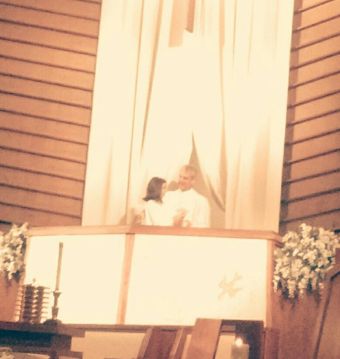
I love a baptismal service on Easter Sunday morning! I love it, because I believe one of the greatest things we can do on Easter Sunday morning is to listen again to the words of the Apostle Paul that are etched onto our baptistery, and remember our baptisms!

As a pastor who has been blessed with the opportunity to remember many baptisms, I will never forget one particular Sunday I walked into the waters of a baptistery like ours.

It was the Sunday after Hurricane Floyd flooded the first house Lori and ever purchased in eastern North Carolina.

I had been wading in waist deep water that Thursday and all day Friday. And then that Sunday morning, one of the first things that I did was to climb down those steps into waist deep water.

I’ll never forget the first words I spoke.  I looked out into the congregation from that baptistery, and I said, “You know, standing here this morning in waist deep water is the last place I wanted to be this morning.”

But I then said, “But it may also be first place I need to be this morning!”

Before that Sunday, baptismal water had always represented purity and refreshment to me. It was a water which cleansed one’s spirit and refreshed one’s soul. It was a renewing, invigorating water, life-giving water. Baptismal water was to me like the water from a spring welling up into eternal life from which we could drink and never thirst again.

However, on that particular Sunday, that water came to represent to me something more, something dreadful, something heinous, something sinister. That water came to symbolize destruction, despair; it came to symbolize death.

To the church in Rome, the Apostle Paul said: “Remember that you have been buried with Christ by baptism into death.”

You know what this means don’t you?  It means Paul’s house must have flooded too!

Well, probably not. But it does means that Paul understood the destructive forces of sin and evil in our world. It means the apostle Paul understood water to be symbolic of of those chaotic forces, evil forces in our world that seek the drain the very life out of us.

For many of that day, water was a very fitting for symbol for death, as many lost loved ones at sea, folks who who traveled out on the water, encountered a storm and never returned. Therefore, water was something to fear. Water was something to dread.

This is why the picture of Jesus walking on water is so inspiring.  Jesus was doing much more than walking on water. Jesus was walking all over the forces of evil like they did not even exist.

This is why when John gives a list of things which we are not going to find in heaven in the 21st chapter of Revelation, “no more sea,” is the first thing on his list. Before no more crying, no more pain, and no more mourning, John says there will be no more sea. One day there will be no more of anything more to fear or dread.

My hope on this Easter Sunday is that Braylen, Brenden, Ethan, Caden, Ashton, Rhianna, Brooke and Angie will always remember their baptisms—Remember that they who have been buried with Christ into death, have also been raised with Christ to walk in the newness of life.

And may each of us remember our baptisms. May we remember that we went under the water, but may we especially remember that we also came up out of that water.

We came out of the water symbolizing that in this world of evil and sin, with Christ we can be more than conquerors.

We came up out of the water symbolizing that in spite of those who attempt to drain the very life of us, in spite of those who never cease in persecuting us, we can do all things through Christ who strengthens us.

We came up out of the water symbolizing that despite the many storms of life that come our way, death, divorce disease, there is nothing in all of creation: no rulers, no powers, no things present, no things to come, no height, no depth and not even death, that will ever be able to separate us from the love of God through Christ Jesus our Lord.

We came up out of the water symbolizing that in all things, God works for the good for those who love God and are called according to God’s purpose.

We came up out of the water symbolizing that when we face uncertain days, even death, we will possess the grace to always remember our baptisms and the glorious message of Easter that our baptisms proclaim!

Sudden Sunday Surprise

He is not here

Sermon preached at the Easter Sunrise Service, Central Christian Church, Enid, Oklahoma.

Matthew 28:1-10 NRSV

There is no doubt that the surprising events which took place on Friday had left the disciples in a state of shock and disbelief.  The King of the Jews, the Son of God, the one who would finally bring them liberation from the Romans was crucified like a common criminal.  They were all taken off guard as all of their hopes, all of their dreams suddenly vanished.

They found themselves in the same state of mind you and I find ourselves when our lives are often surprised by evil.  When the telephone rings in the middle of the night.  And it is not the wrong number.  When we hear words from our employers like “cutting back, laying off, letting go,” or words from our doctors like “cancer, inoperable, terminal.”

 “No, it can’t be!”  “I don’t believe it!”  “This is not happening!”

Then as Sunday morning was dawning, maybe not part of the original twelve because of the sexism that has been so apparent in the history of humankind, but two of Jesus’ disciples nonetheless, Mary Magdalene and another Mary went to see the tomb, trying to comprehend what had happened, still trying desperately to believe it and somehow accept it.

And then it all seemed to happen again.  For that is how evil works in our world. When evil surprises us it does it in clusters. Some people say that it always comes in three’s. Other say, “when it rains pours.”

And suddenly, suddenly a word which always denotes surprise, shock and awe: there was a great earthquake.

“Not again!”  ‘Please no more.  There is just so much we can stand.”

But then in the midst of their confusion, shock, and bewilderment, an angel of the Lord descended from heaven and came and rolled back the stone and sat on it.  It so surprised the guards at the tomb, that they fell down on the ground like dead men.

But the angel said to the women, “Do not be afraid; I know that you are looking for Jesus who was crucified. He is not here. For he has been raised, as he said. Come, see the place where he lay. Then, go quickly and tell his disciples. “He has been raised from the dead, and indeed he is going ahead of you to Galilee; there you will see him.  This is my message for you.”

“So they left the tomb quickly with fear and great joy.”  There’s a paradox, isn’t?  Fear and joy. It lets us know that the women are still somewhat shocked. For they have been saturated with surprise!

Then, “Suddenly,” (there’s our surprising word again).  “Suddenly, Jesus met them and said, “Greetings!”  Surprise of all surprises!  “And they came to him,” and did the only thing they could do, “They took hold of his feet, and worshiped him.”  Then Jesus said, “Do not be afraid; go and tell my brothers to go to Galilee; there they will see me.”

Hold on!  I thought the women were in Galilee. For that is what the angel had said, “He is going ahead of you to Galilee, there you will see him.” The angel even bolsters these instructions by saying, “This is my message to you.” But where do they see Jesus?

They see Jesus somewhere along to road to Galilee.  The angel was wrong.  For the women did not have to wait to see Jesus.

I believe this is even more good news for us on this early Easter morning.

If angels do not know exactly when or where Jesus will appear with a presence and with words that compel us to take a hold of his feet and worship him, how can any of us presume to know?

Therefore, we should never be despairing, that is, we should never believe that things have gotten so bad Jesus will not come.

The wonderful truth is that when our lives are suddenly surprised by evil, Christ will always come, perhaps when we least expect it, maybe when we are least aware of it, and surprise us with words of love, words or peace, words of grace, words of assurance and words of salvation.

If we keep our eyes peeled to it and our hearts open to it, Christ will suddenly catch us off guard with his wonderful, hopeful, life-giving presence.

And we must never forget that since we are his followers, since we are called to be the Body of Christ in this world, we are commissioned to surprise all those who need surprising with the astounding love and amazing grace of God.

Can’t Celebrate Easter Without a Carrying a Cross: Remembering Mary Magdalene Feightner

Mary-Feightner-1492072139Here in the mournful darkness of this Saturday vigil, still in the shadows of Good Friday, we gather together with bated breath.

For Easter is coming! New life is being born! Resurrection morning is dawning! Something wonderful has been lost, but something magnificent is being gained.

However, I believe it is very important for us to realize on this Holy Saturday, that before we can experience new life, before we can celebrate resurrection, before we can sing alleluias, someone needed to pick up and carry a cross.

And the sad thing is that very few of Jesus’ disciples understand this. They don’t understand it today, and they didn’t understand it 2000 years ago.

Although Jesus continually taught that to gain life, we must be willing to lose our lives, that Easter would not happen without some self-denial, resurrection would not come without some self-expenditure, new life would not be born without some sacrifice, and the light of Sunday morning cannot dawn without the darkness of Good Friday, when the time came for the disciples to follow Jesus all the way to the foot of the cross, most all of them very selfishly fled to save their lives. One would even betray Jesus. Another would deny that he even knew Jesus. Nearly all would desert him. In spite of Jesus’ continual call to pick up a cross and follow him, most of the disciples turned their backs on him in his darkest hours.

However, there were a few disciples who got it. There were a few who were willing to carry a cross, to live and to love selflessly and sacrificially. There were a few who faithfully followed Jesus all the way to Golgotha.

Although the intrinsic sexism of this world’s history has caused the majority of people to overlook these faithful disciples, all four gospel writers did not.

In Luke 8 we read these words: Afterward [Jesus] journeyed from one town and village to another, preaching and proclaiming the good news of the kingdom of God. Accompanying him were the Twelve and some women…Mary, called Magdalene… Joanna…Susanna, and many others…”

And on Good Friday, when none of the male disciples could be found, in Mark 15 we read: “There were also some women looking on…among whom were Mary Magdalene, and Mary the mother of James, Joses, and Salome.

In Matthew 27 we read: Gathered at the foot of the cross: “among them was Mary Magdalene, and Mary the mother of James and Joseph, and the mother of the sons of Zebedee.

In John 19:25 we read where all the male disciples fled, “But standing by the cross of Jesus were His mother, and His mother’s sister, Mary the wife of Clopas, and Mary Magdalene.

The problem with Christianity today is that there are too few Mary Magdalenes in the church who understand that authentic faith, true discipleship, involves a cross. There are too many Christians in our world who believe they can have Easter Sunday without Good Friday, who believe they can experience new life without death to self, who believe they can sing alleluias without sacrifice.

What this world needs, what this community needs, what the church needs more than anything are more disciples like Mary Magdalene and Mary Magdalene Feightner.

Like the Mary Magalene before her, Mary Magdalene Feightner understood that when Jesus called people to be his disciples, Jesus was always quite clear that there would be a cross involved, a cross that they would voluntarily need to pick up and carry.

I will never forget the last time I spoke with Mary. It was here, in this place, just this past Sunday. After the service was over and the congregation was dismissed, I was finishing a conversation with some people down front here who were asking about joining our church. I looked up and saw Mary walking down this aisle. I met her right here to greet her. I said, “It is so great to see you Mary.” And it was so good to see her. For each time I saw her she was always beautiful, stunning really, dressed to the nines, and always wearing a tremendous, welcoming smile.

Mary responded not in a manner people usually respond to such a greeting with “It is good to see you too!“ but rather “How is it going with that Air Force Class Central Christian Church adopted?”

I said, “It is going great! We had a good time trap shooting with them!”

And instead of replying, “Great, glad to hear it!” not allowing me to rest on any laurels, she replied: “Well, what’s the next event you have planned for them?”

Like Mary Magdalene, Mary Magdalene Feightner understood that to find true life is to lose one’s life, to truly live to truly deny one’s self, to always put the needs of others ahead of one’s own needs, to love and to welcome and to accept as Christ loves, welcomes and accepts.

It is no secret that Mary made it her mission for nearly the last thirty years of her life to give all that she had to welcome Air Force pilots and their families into our community.

It was obvious that Mary learned from her own personal experience, as she compassionately and empathetically understood from how difficult life could be for enlisted service men and women having to move and make a new home in a new community every few years. She knew the hardship on families: the time the kids get settled in school, make new friends, it’s time to move and start all over.

This is why Mary made Vance Air Force Base her base. They were here pilots, her families. She didn’t invite businesses or organizations or churches like ours to adopt these pilots or to do anything that she was not willing to do herself.

And she never did it for the recognition, for any reward, and certainly not to have the foyer of the auditorium named in her honor—the foyer, the first place pilots enter when they come to Vance, and the last place they leave after they earn their wings.

The night of the naming ceremony, her sons Ray and Mark will never forget having to tell Mary that they were going to the base, because Governor Mary Fallin was speaking, just so their mother would get dressed up and go.

Although Mary earned much recognition, Mary Magdalene Feightner did not volunteer her time for any award, any accolade, I believe she did it because she understood to find one’s life, one must first lose one’s life, as her work for the base was purely selfless, always tireless, and truly sacrificial.

It has been said by many who are associated with Vance: “Mary didn’t know she was 81 years old.” Because even during the most fragile part of her life, she selflessly gave all that she had. For example: staying out on the 103-degree tarmac for the Thunderbirds last summer until she passed out, sacrificing her personal well-being.

This was just Mary. No matter what Mary did, she gave her all and always put others first, whether as a banker in a man’s world working her way up from a teller to a loan officer to a Vice President, as a substitute teacher in the Enid public school system, as a Grace-Care Volunteer helping the elderly with basic needs, as the Secretary-Treasurer of the Northwest Oklahoma Banker Association, as a successful fund-raiser for the YMCA, the American Cancer Society, the March of Dimes, the United Way, or as Secret Shopper for Subway and Pizza Hut.

She did it because as a genuine disciple of Jesus, when it came to loving others, she didn’t mind that a cross might be involved. For Mary, people were worth the sacrifice. Thus, you could often find Mary in Enid wherever you find people. Whether she was picking up side gigs peddling Straight Talk phones at Wal-Mart or Kobalt tools at Lowes, she just wanted to where the people were, because she genuinely loved people!

She loved others, perhaps especially the Vance Air Force family with the same love that she had for her own family. By a living example she taught her sons a staunch work ethic, the importance of networking and social skills, and yet how to be a good listener. But, perhaps most importantly, she taught them how to accept, welcome, and love people.

Mark’s wife Diane will always cherish the way she used to welcome her and Mark into her home while they were in college. She said no matter what time of night it was when they arrived, she could always count on Mary being there to greet them at the front door.

Ray’s wife Kim and Diane testify, although somewhat reluctantly, of Mary’s unwavering devotion to her family, as according to Mary, Ray and Mark simply can do no wrong.

And each of her grandkids, Zachary and Kylie, Mason, Morgan and Madison can attest, at Gurnie’s house there were never any rules. Three scoops of ice cream? Who says you can’t have four?

I think it is interesting that Mary Magdalene is remembered and mentioned by name by the gospel writers more than any other apostle. And perhaps more than any other Partner in the Sky in Enid, Mary Magdalene Feightner will perhaps be most remembered by our community.

However, her great legacy is not why we are gathered here this afternoon in a Christian church. And her many contributions to this community is not why it is so appropriate that we have gathered here on this Holy Saturday, between the darkness of Good Friday and the light of Easter Sunday.

For tomorrow morning, Christians all over the world will gather and read or hear the following scriptures.

Some will hear the words Mark 15:47: “Mary Magdalene and Mary the mother of Joses were looking on to see where Jesus was laid.”

Matthew 28:1 reads: “Now after the Sabbath, as it began to dawn toward the first day of the week, Mary Magdalene and the other Mary came to look at the grave.”

Mark 16:1 reads: “When the Sabbath was over, Mary Magdalene, and Mary the mother of James, and Salome, bought spices, so that they might come and anoint Him.”

John 20:1 reads: “Now on the first day of the week Mary Magdalene came early to the tomb, while it was still dark, and saw the stone already taken away from the tomb.”

Out of all of Jesus’ disciples it was Mary Magdalene who not only sacrificially followed Jesus all the way to the foot cross, but she followed him all the way to the grave.

I don’t believe it was a coincidence that Mary Magdalene Feightner was here in this place to worship Jesus last Sunday morning. I don’t believe it was happenstance that she walked down this aisle on her last Sunday on earth, with her mind and heart not on herself, but on others. Like the Mary Magdalene before her, Mary Magdalene Feightner followed Jesus to the very end.

Because tomorrow Christians all over the world will read and hear those wonderful words that we are all anticipating on this Holy Saturday. From Mark 16:9 we read: “Now after He had risen early on the first day of the week, He first appeared to Mary Magdalene…”

We are gathered here in this place, appropriately on this Saturday between Good Friday and Easter to celebrate someone who, because of her faithful discipleship, because she voluntarily carried a cross, because she sacrificed and poured herself out to this community, because she selflessly followed her Lord all the way to the end, Mary Magdalene Feightner has now experienced the good news of Easter in a way that we can only imagine.

And this Easter, out of all the disciples that have gathered here this day, “He, the risen Lord and Savior of the world, first appeared to Mary Magdalene Feightner.”

In John 20:18 with we these most hopeful words: Mary Magdalene came, announcing to the disciples, “I have seen the Lord.”

Yes, she most certainly has. Thanks be to God.

Claiming the Body of Jesus

cross

Sermon preached at St. Francis Xavier Catholic Church for the Ecumenical Good Friday Service, 2017 in Enid, Oklahoma.

John 19:38-42 NRSV

After Jesus is crucified, John speaks of two individuals who emerge from the shadows, exposing themselves, risking their anonymity, putting their reputations on the line, by claiming the body of Jesus.  The first is Joseph of Arimathea, a disciple of Jesus who had previously hid his faith in secrecy for what John calls “fear of the Jews.”  He was one of the Jewish authorities who never openly confessed their faith in Jesus because of fear of losing their political power and position in the synagogue.

And the second was Nicodemus. You may remember Nicodemus from John chapter 3. He had previously come to Jesus secretly by night, showing some interest in Jesus, but never making a public profession of faith.  However, now on Friday afternoon, in claiming the body of Jesus, the faith of both of these men is clearly exposed and made very public.

And as we read John’s account we notice that by coming out of the shadows, openly claiming the body of Jesus, these two men do much more than risk their anonymity and their reputation in their community.  They also put at risk their religion.  For touching the dead body of Jesus made them ceremonially unclean which meant that they would be unable to celebrate the Passover and the Sabbath with their families.

The extravagant amount of burial spices which weighed about a hundred pounds that the men bring to anoint Jesus’ body, tell us that these men also put at risk their riches. Along with the expensive spices, the linen burial clothes they used to prepare Jesus for burial were usually something worn only by people of wealth and prominence. The pristine condition of the garden tomb also underscores the extravagance of Jesus’ interment.

So in this story we see two persons who come out of the shadows risking reputation, religion and riches to claim the body of Jesus.

The question which should come to our minds is why?  Why risk anything for someone who is dead?  Why would Joseph and Nicodemus risk their reputation, their status in the community; their religion, their standing in their family; their riches, and their wealth for a lifeless corpse?

What was it that led these men to risk so much?  Well, one might ask: What would have happened to the body of Jesus if these men had not claimed the body of Jesus?  Well history tells us that after a Roman crucifixion, the unclaimed bodies were often left hanging on the cross to be picked apart by birds. And other times, the unclaimed bodies were simply thrown into the trash dump outside of town.

So these men, living in secret shadows, loving Jesus from afar, simply said, “enough is enough.”

We can no longer conceal our faith.  We can no longer mask our love.  We can no longer sit back and do nothing. We can not bear to let our Lord and our Savior’s body be defiled by being picked at by birds or thrown into a pile of trash.

We must do something.  Even if it means putting at risk every thing that we cherish, everything that we hold dear.  Even if it means risking our reputation, our religion (the way we have always done it anyway), all of our riches, we must act.  We can no longer stay in the shadows. Our love for our Lord demands that we claim his body:  that we remove him from the cross; that we prepare his body for burial, that we seal him in a rich man’s tomb.

It was love, pure and simple and powerful which caused these men to act on the behalf of Jesus by claiming his body risking reputation, religion and riches.

The irony here is that it was the same love which caused our God to act on our behalf.  The story of Joseph and Nicodemus is the story of our God.  Out of a high and holy place, our God said: enough is enough.  I can no longer love my creation from afar.  I can no longer watch my creation suffer and perish.  I can no longer keep myself from risking my all, from empting myself, from becoming a human being.  I can no longer keep myself from offering my creation all that I am and all that I have. I can no longer keep myself from pouring myself out.  I can no longer keep myself from loving my creation even to the point of death, even death on a cross.

Joseph and Nicodemus claimed the body of Jesus because they were filled with the divine love of God.

The question for us is this:  How long are we going to continue to live in the shadows?  How long until we open our hearts to the story of God’s love; to the divine love of God which wants to fill our souls, to be so overflowing with the love of God that we have to cry out: “enough is enough!   I can no longer sit back and do nothing, I must act. I can no longer love my Lord and my Savior from afar.  I must claim the body of Jesus, the body of Christ, for myself even if it means putting at risk the things I most hold dear.  Even if it means risking reputation, religion, and riches, I must share this pure and simple and powerful love with everyone I know. I can no longer let others suffer alone. I can no longer sit back and allow injustice to continue. I can no longer ignore inequality. I can no longer turn my back on those who are marginalized and ostracized. I can no longer keep my faith private.  I can no longer remain silent. I can no longer keep myself from giving all that I have and all that I am to the ones who are lonely, thirsty, cold and hungry.  Enough is enough!  I must claim the body of Christ!”

Well, what are we waiting for?  Are we afraid of what we might lose from risking so much?  Let’s look at what Joseph and Nicodemus lost by claiming Jesus’ body.  They really did not lose a thing.  Instead of losing their reputations, their good names, their names are remembered by the gospel writers and by you and me two thousand years later as the ones who risked everything to claim the body of Jesus.

How do we want to be remembered?  As someone who lived only for one’s self; accumulating a lifetime of reputation, religion and riches?  Or would we rather be remembered as one who because of so much divine love welling up inside of our heart, we risked it all to claim the body of Jesus?   By doing whatever we can to serve our Lord in our community and in our world.  By giving all that we have and all that we are to our Lord by loving others with the complete, divine love of God.

A Living Prayer of Thanksgiving: Remembering Margaret Lambke

Margaret Lambke

Thirteenth century German theologian and philosopher Meister Eckhart is often credited with the following quote: “If the only prayer you ever say in your entire life is ‘thank you,’ that will be enough.”

If the only prayer you ever say in your entire life is ‘thank you,’ that will be enough.

I believe it is enough, because I believe that the simple prayer, “thank you,” indicates that one understands that all of life is a wonderful, free gift of God’s amazing grace.

I have said before that I believe there there are basically two types of people in this world: People who get the concept of grace and people who don’t get it.

People who fail to see the grace of it all are usually not what we call “good” people. They act as if they have somehow earned their life, done something to deserve their life. They walk around with this air that the world owes them something. And they grow bitter and even hostile if life doesn’t go their way. After all, they deserve better.

And because they feel as if they have earned it, their lives are usually self-absorbed. Selfishly, they do only what they want to do, even if that means doing nothing at all.

Then there are those like Margaret Lambke who get it, who truly understand the sheer grace of it all. They understand that all of life is gift. It is unearned and undeserved. It is mysteriously and utterly precious. And these are who we generally call “good” people.

Filled with gratitude and joy, they live their lives abundantly, enthusiastically, lovingly. Every moment—whether that moment may seem extraordinary or ordinary, miraculous or mundane—every moment, because it is gift, because it is grace, is relished, appreciated and even celebrated.

It is not hard to understand how people like Margaret make the best parents. Margaret absolutely cherished being a mother, and later a grandmother, and great grandmother.

Debbie and Conie, this is because, for your mother, you two, and later your families, all of her grandchildren and great-grandchildren, were gifts of God’s amazing grace, all unearned, undeserved. And she got it.

This is why she remembered, looked forward to, and loved to celebrate every birthday, every anniversary or every life event in your families.

I loved that you will always remember her many voicemails. I think you told me that you could receive over a dozen from her in one day.

“Hi Hon, it’s me, I don’t need anything. Just calling to check on you.”

I believe Margaret called you and left those voicemails as a way of saying: “Thank you.” Thank you for being you. Thank you for being my family. And she called each time her heart was suddenly filled, overflowing with gratitude for you. This is why she called twelve or sixteen times a day!

I believe this immense gratitude which flooded her soul was the exuberant energy behind everything that she did.

There’s no telling how many times she heard someone say to her: “Mar Mar, please sit down. Mar Mar, please rest a while.”

But like the energizer batteries a little pink bunny, the gratitude that overflowed inside of her compelled her to keep going and going and going.

Gratitude is what propelled her to immediately step up and raise her hand whenever anyone asked for a volunteer. Gratitude is how she managed a gift store, helped Jim with bookkeeping in his pharmacy, served as president of PEO, volunteered with mobile meals, played some tenacious tennis, planted and maintained beautiful gardens, made homemade candies and baked her famous Mar Mar bread. Gratitude is what compelled her, no matter how busy she was at the store or with her volunteer work, to always be there for her family. Gratitude propelled her to get in her car and drive to Colorado when she learned Debbie was a little homesick to to drive to the school to give a ride to Conie and the rest of the cheerleaders if they needed one. And gratitude was the reason that no matter how busy she was, she was always a leading candidate for “Mom of the Year.”

Everything she did, every project she undertook, every holiday decoration she created, every Easter egg hunt she hosted, every extra goodie or appetizer she prepared, every Sunday school class she taught, every breath she took, was a prayer of thanksgiving to God for the gift of her life.

“Mar Mar, please sit down!” she would often hear. But the immense gratitude she possessed for Jim and Debbie and Conie, her friends and family, drove her to keep at it, keep working, keep volunteering, keep cooking, keep decorating, keep loving, and keep praying with all that she had that simple but beautiful prayer: “Thank you.”

I am certain this is why it has been so especially painful to watch Margaret these last few years since she suffered a broken hip and the subsequent unsuccessful surgeries. To witness this one who never missed a beat, never slowed down, and never sat down, has been very difficult, to say the least.

And now to think that this one who was so full of life, abundant, exuberant, tenacious, is no longer living with us, well, it can be almost too much to bare.

Conie and Debbie told me that one of their mother’s favorite scriptures was John 3:16: “For God so loved the world that he gave his only Son, so that everyone who believes in him may not perish but may have eternal life.”

It is easy for me to understand why this passage of scripture was special to Margaret. For there is such amazing grace revealed in these beautiful words.

God gave, God gave. Do you hear it? Do you hear the gift? Do you hear the grace? God gave God’s only son, why? For the world earned this gift? For the world deserved this gift? No, for God so loved the world!

So that everyone who believes in this gift, believes in this grace, so that everyone who truly gets it, so that everyone who truly understands that if the only prayer that you every pray in your lifetime is “Thank you” that is enough, so that everyone whose entire life is a prayer of gratitude, they will never perish but have eternal life.

Eternal life. Life without ceasing. Life forever. For people who fail to get it, who fail to appreciate the gift of temporal life on this earth, this is not good news. However, for people like Margaret, for people who truly get it and appreciate it and celebrate it, that life itself is grace, for people who have lived life fully and abundantly and tenaciously and enthusiastically, then this is the best news of all!

And I believe this good news can bring much comfort and peace to those of us who are grieving today.

But I also believe that Margaret taught us that we can find even some more comfort this day.

For you see, Margaret herself was a gift. Margaret was grace. This world didn’t earn her, nor deserve her. We didn’t earn or deserve 8 minutes or 8 days or 8 years, and we got 88 years. Jim you got all but 20 of those years. 68 years of marriage. That is grace.

Knowing Margaret, I believe she is eternally grateful for that. And I believe she has taught us to be eternally grateful to that.

Garth Brooks sings a song entitled “The Dance.” One line of the song goes: “I could have missed the pain, but I would have had to miss the dance.” Our grief today only means that we have received and lost something wonderful. The only way to never grieve is to have never received or appreciated that gift. But as Margaret taught us with her life, to never appreciate it, to never get it, is to never truly live. As the song goes, the only way to miss the pain of loss is to miss the whole dance of life.

So Jim, Conie and Debbie, as I told you last week, every time you remember your mother and shed a tear, be grateful for those tears. Because those tears only mean that you have been graced by God. Those tears only mean, that you like your wife and your mother, also get it.

And because you get that you have been graced by God with the gift of Margaret, because we all get it, may we live out our remaining days on this earth as Margaret lived all of her days, by being a living prayer of thanksgiving.

Crown of Thorns

Matthew 21:1-11 NRSV    nerve gas

Palm Sunday—it’s the spectacular day we celebrate the King of Kings’ triumphant entry into Jerusalem!  And in this world of so much suffering and pain, oh how we need a day like today!  Oh how we need to hear that Jesus Christ, our ruler and our king is coming through the gates to finally set things right, to take complete control of things. Oh how we need a day to reassure ourselves that no matter how bad life gets, no matter how distressed, fragmented and chaotic life becomes, and how hopeless it seems, Christ is large and in charge! “He’s got the whole world in his hands,” as we all like to sing.

Ok. Now, as we Disciples of Christ like to do, let’s get real for a moment. Let’s honestly think through this. Is the truth that “He’s got the whole world in his hands really that comforting?”

Although none of us good God-fearing, Bible-believing, church-going folks like to admit it, is this truth of God’s supreme providential power more than a little disturbing?

Think about those times you were reminded by someone, albeit with good intentions, that “God is in control.” When Lori and I lost our first child two months before the due date, people came up to us and said, “Don’t let this get you down. Just remember that God doesn’t make any mistakes.”

After the doctor gave you the news that the tumor was malignant, people came up to you and said, “Don’t worry, God knows what God is doing.”

When people learned that you were going to lose your job, they reminded you, “It is going to be alright, for God in control.”

At the graveside of a loved one, your friends and family lined up between you and the casket and whispered: “God has a reason for this.”

And very politely, we nodded. We even thanked them for their words with a hug or a handshake. But then, a short time later, after we dried our tears and came a little bit more to our senses, while we were sitting quietly at home or while we were out on a long drive, or maybe sitting in church, we began to reflect and to ponder those well-intended words. We began to think to ourselves: “If God is really sitting on some providential throne in complete control of this fragmented fiasco called life, this disastrous debacle called the world, then, really, just what type of ruler is this God? Just what type of king sits back and allows so much evil to occur in their kingdom, especially to people we are told the king loves.

The king of kings makes his triumphant entry—what is supposed to bring us great strength, peace and comfort, instead brings us frustration, anger and doubt.

Hosanna, the King is coming to save us—what is supposed to bring us assurance and hope brings us misery and despair. And we become tempted to join all those who will laugh and ridicule Jesus by the end of this week: “Umphh!  King of the Jews! Some King!”

I have said it before, and I do not mind saying it again—If God is the one who willed our first baby’s death, causes tumors to be malignant, gets us fired from our jobs, takes our loved ones from us, and sits back allowing such atrocities as the snuffing out of lives of little Syrian children being with nerve gas, then I really do not believe I want anything to do with a god like that!  I think I would rather join the millions of people who have chosen not to be in church on this Sunday before Easter.

But the good news is that I am here.

And I am here to proclaim with a confident voice God that God is not the type of King who decrees the death of babies, pronounces malignancies, commands layoffs and orders our loved ones to be suddenly taken from us. There is no doubt about it, Christ is King.  But thank God, Christ does not reign the way the kings of this world reign.

The reason I believe we allow ourselves to be tempted to give up on God in the face of evil is because we often forget that our God reigns not from some heavenly throne in some blissful castle in the sky. But our God reigns from an old rugged cross, on a hill outside of Jerusalem, between sinners like you and me.

I believe we oftentimes become despairing and cynical about God, because we forget that our God does not rule like the rulers of this world.

The kings of this world rule with violence and coercion and force. Earthly rulers rule with an iron fist: militarily and legislatively, and with executive orders. Worldly kings rule with raw power: controlling, dominating, taking, and imposing.

But, as the events that took place this week in Jerusalem 2,000 years ago remind us, Christ is a king who rules through self-giving, self-expending, sacrificial love. Christ is a king who rules, not from a distance at the capital city, not from the halls of power and prestige, but in little, insignificant, out-of-the-way places like Bethlehem and Nazareth, and Waukomis and Enid.

Our King doesn’t rule with an iron fist. Our King rules with outstretched arms.

Our King doesn’t cause human suffering from a far. Our King is right here beside us sharing in our suffering.

Our King possess what the late theologian Arthur McGill called a “peculiar” kind of power.

God’s power is not a power that takes. It is a power that gives.

God’s power is not a power that rules. It is a power that serves.

God’s power is not a power that imposes. It is a power that loves.

God’s power is not a power that dominates. It is a power that dies.

And as Arthur McGill has written, this is the reason that it is “no accident that Jesus undertakes his mission to the poor and to the weak and not to the strong, to the dying and not to those full of life.  For with these vessels of need God most decisively vindicates his peculiar kind of power, [a] power of service whereby the poor are fed, the sinful are forgiven, the weak are strengthened, and the dying are made alive.”[i]

Christ the King did not take our first child. The day our baby died, our King came and cried with us in that hospital room.

God did not cause the tumor. The day the doctor said the word “cancer” was a day of anguish for God as it was for us.

God did not create the layoff. The day you were told that your job was ending, God stayed up with you and worried with you all night long.

And God did not take your loved one.  When they died, something inside of God died too.

What we all need to learn are very different definitions of “king,” “rule,” “reign” and “power”—very different because they define the holy ways of the only true and living God, rather than defining our false gods and their worldly ways.

When life gets us down (and if we live any length of time at all in this world, it most certainly will), we need to remember the great truth of this day—The king has arrived. The king has entered the gates. And this king is has come to take his place on his throne, on an old rugged cross.  Do you see him reigning today? Do you see him bleeding, suffering, sacrificing, and giving all that God has to give from from the cross?

God does not make mistakes. God knows what God is doing. God is in control. God is king. But God’s throne is not made of silver and gold. God’s throne is made of wood and nails. God wears not a crown of jewels. God wears a crown of thorns.

This past week, I visited with Marion Batterman whose doctor just told him that he was dying. He said, “Pastor, my doctor gives me no hope. They said that my lungs are just about gone.”

I said, “Marion, I am so sorry.”

“Oh don’t be sorry he said. “Because my hope is not in my doctor! My hope is in my Lord!”

“So Marion,” I said, “Even when your lungs stop working completely…”

Marion finished the sentence, “I still have hope!”

No, he was not delusional. His mind was not clouded with medication. Marion was at peace, because his King reigns from a cross.

Marion was filled with hope, because his King is not far away from him seated a celestial throne removed from his agony. His King is seated at his very side suffering with him.

His King is not above his pain. His King is experiencing every bit of his pain.  His King is not willing or decreeing his death, his king is experiencing his death.

His King is not slowly taking his life away from him. His King is giving the King’s eternal life to him, pouring out the King’s holy self into him, and promises him every minute of every day to see him through his dying.

After he described an intensified intimacy that he now shares with his Lord, he then said something miraculous. With this hopeful joy in his smile and eternity in his eyes, he told me that he was a blessed man.

Think about that for a moment.

A man, barely able to breathe, nearing the end of his life, told me that he is blessed.

Aren’t we all?

[i] Arthur McGill, Suffering: A Test of Theological Method, 61-63.

Loosening the Bonds of Death

Lazarus

John 11:32-44 NRSV

John 11 is a great example of why I love the Bible. I love the Bible because the Bible is honest. The Bible is real. The Bible does not hide, cover up or try to sugarcoat the difficulties and even tragedy of life in this fragmented world.

I love that, because this world in which we live is sometimes incredibly painful. We live in a world surrounded by poverty and economic pain. We live in a world where the rich take care of themselves while taking advantage of the poor.

We live in a world where so-called “Christians” in the church are some of the meanest and most evil bullies we know. We live in a world where our loved ones suffer with all sorts of dreadful diseases. And we live in a world where we are continually reminded our own mortality.

Thus, I love John 11, for here in this very honest chapter, there is no denying the harsh reality of this fragmented existence we call life, especially in dealing with the most tragic aspect of this life: the death of a loved one.

Too many Christians, for many reasons would rather treat the tragedy of death as if it does not exist. We don’t want to talk about it.  And when we do, we try to deny the harshness, the sheer austerity of it. We do not even like to call it “death.” We would rather call it “passing away.”

We say things like: “there are worse things in this world than death;” however, in death there still exists an inescapable starkness that cannot be denied or ignored. When we are honest, we would admit that death is the most difficult thing about life. Losing someone we loved is the worst of all human experiences. We try to comfort ourselves by saying things like, “at least our loved one is no longer suffering.”  “At least she is now finally at peace.”  But if we are honest, just a second later, we find ourselves questioning why she had to get cancer and suffer in the first place. Why did they have to die as young as they did?

And we like to comfort ourselves by saying that he or she is in a far better place. But then a second later, we question why he or she would not be better here with us, at home, surrounded by family and love.

Yes, in John 11, there is no refuting the stark reality of death. Notice that Martha is absolutely horrified when Jesus commands the stone to be rolled back from the tomb. Her horror reminds us of something that we would rather ignore: the body was beginning to decay. The very sound of the words of verse 39 “Lord, already there is a stench, because he has been dead for four days” seems inappropriate to read from the pulpit. Dressed in our Sunday best on a beautiful spring morning, we don’t want to hear that!

But this is reality. This is truth.  And sometimes we simply do not want to hear the truth.

And sometimes we just think it is our Christian duty to be an example to the world, to the weak, to the unfaithful, how to be strong, how to put on a brave face and hold back the tears.

But notice in John 11 that there is no holding back.

Mary, the brother of Lazarus, weeps. The mourners who had gathered at the cemetery that day weep. Even Jesus himself weeps. The harsh reality of death and grief is evident everywhere.

We are told twice that Jesus “was greatly disturbed in spirit and deeply moved.” Is there really a difference there? That is like saying that Jesus was grieving and mourning.

Just looking at the tomb of Lazarus caused Jesus to burst into tears.  Even Jesus, who we believe is manifestation, the very embodiment of God, the creator of all that is, who became flesh to dwell among us, does not remain calm and serene as one unmoved and detached from the fragmented human scene. Jesus himself is deeply disturbed at death’s devastating force. There is no denying it or escaping it or muting it. Neither is there any dressing it up with euphemisms like “passing away” or “gone on to be with the Lord.”

John 11 also points out why Jesus grieved. In verse 36 we read: “So the Jews said, ‘See how he loved him.’”

It has often been said that the only way to miss pain in life is to miss love in life. Garth Brooks sings a song entitled “The Dance.” One line of the song goes: “I could have missed the pain, but I would have had to miss the dance.” Grieving only means that we have loved as our God has created us to love. The only way to never grieve is to never love. But to never love is to never truly live. As the song goes, the only way to miss the pain of loss is to miss the whole dance of life.

So, I believe John 11 gives each of us permission this morning to grieve. May we grieve long and deeply. May we never dare to run away from it.  May we never treat it as it was some stranger that we could send away, or deny that grief, because someone who doesn’t know any better thinks grieving means our faith is weak. Let us grieve what is lost. Grieve honestly, lovingly and patiently. Let us grieve until our cups are emptied.

However, (and here is the good news for all of us this day) as the Apostle Paul reminds us in his letter to the Thessalonians that those of us who call ourselves Christians should not grieve as others do who have no hope.  As Christians, our grief is real, but our grief is different. Our grief is not despairing, because as Christians, we possess hope because Jesus, who himself was not immune to grief and even death, always brings resurrection and new life.

Those of us who are not immune to grief and death need to again to hear Jesus’ prayer which came in a loud voice.  “Lazarus, come out.”

I heard a preacher once ask his congregation, “You do know why Jesus said, ‘Lazarus, come out’ and not simply ‘come out’ don’t you?  Because if he did not call Lazarus by name, if he did not say specifically, “Lazarus, come out, then every tomb in Jerusalem would have opened up that day!

We need to hear this voice and see this very real and foul, decaying corpse walking out of the grave, still wrapped in burial cloths, coming, at the voice of Jesus, to life.

And then I believe we need to hear again, and hear again loudly Jesus’ words: “Unbind him, and let him go.”  “Unbind him, and let him go.”  Lazarus is loosed from the bonds of death. He is freed from the shackles of his past. He is let go into a brand new future, liberated and set free.

Then, I believe we need hear John and Jesus himself tell us over and over that this event reveals the glory of our God. What we have in this story is much more than the resuscitation of one dead corpse by one man.

Always for John, miracles are much more. Miracles are always signs that point us to something greater. Thus this miracle is the revelation that the God in whom we serve and trust and love, this God who is not unmoved and detached from the human scene, is always a death-overcoming and life-giving God.

The good news that we need to hear is that this God is still working in our world today unbinding, letting go, loosing, freeing. God is here enabling us to confront death and grief, us to acknowledge it, to look it straight in the eyes, to see all of its harshness and starkness, and then be liberated from it.

And if God is here liberating us from the shackles of death, then there is nothing else in all of creation from which God cannot set us free.

From evil bullies bent on crushing our spirits.

A job that is draining the very life from us.

A relationship that is killing us.

Fears that paralyze us.

Disease that is destroying us.

Economic hardships that never seem to end.

Depression that never lets go.

One of the great things about being a pastor is how I have the awesome privilege to witness this good news all of the time.

Someone loses their job. They come to me believing it is the end of the world. But a year later, working a new job, they share with me that losing that job was the very best thing that could have happen to them.

Someone else comes to me and says that their marriage has fallen apart. And that they are partly to blame. They said they thought life as they knew it was over. But a few months later, they tell me that they are beginning realize that although they cannot go back to the good old days, they have plenty of good new days ahead.

Someone comes to me sharing their deepest fear: the fear of being known for who they really are; the fear of rejection and ridicule. Then I see them a short time later, and they tell me how they have been surprised by unconditional love and unreserved acceptance.

People call me to share their doctor’s grim diagnosis. They say that they had just received a death sentence. But a short time later, I visit with them, and they tell me that they are beginning to understand that being alive and whole have very little to do with physical well-being.

And then I have visited with countless people as they are facing what is certainly their final hours on earth, and I hear in their voices, and I see in their eyes a faithful awareness that there is nothing at all “final” about them.

Thus, like Lazarus, in this incomplete and fragmented world where death, divorce, disease and hate entomb us, we can be loosed. We can be freed, and we can be unbound.

We can come out and let go and celebrate the good news together: where there is incompleteness and brokenness, there can be wholeness. Where there is tyranny of the mind, there can be freedom of the heart. Where there is an imprisonment of the soul, there can be a liberation of the spirit. Where there is grief and despair there is hope. And where there is death and even decay, there is always life.

Let us pray together…

O God of New Life, may we be a church that shares this good news with all people, honestly and truthfully and faithfully. May we weep with those who mourn. May we be deeply moved with those who are afraid. And may we be deeply disturbed in our spirit with all who are suffering. Stay beside them. Befriend them. Accept them. Love them…until they are whole, liberated and fully alive now and forever through Christ our Lord. Amen.

Sunset or Sunrise

Sunset

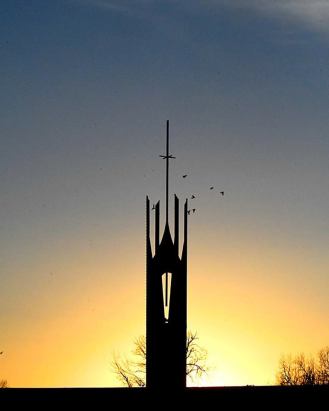
This picture appeared recently in the Enid News and Eagle. The caption simply read: “Sunset.” However, at first glance, it is difficult to tell if it is a sunset or a sunrise.

As attendance, giving, and baptisms continue to decrease in North American churches, many are asking: “Is the sun setting or rising on the church?”

After posting the picture on facebook and posing the question, “Is it a sunset or a sunrise?” Rev. Dean Phelps, a facebook friend and long-time minister, wisely commented: “It all depends on when we wake up.”

Rev. Phelps was prophetically suggesting that if the church wakes up early, it could be a sunrise. However, if the church wakes up too late, it could be a sunset.

I believe it is a sunset if the church continues to slumber under the covers of the culture. I have called this embracing an “alternative gospel” or a “fake news Jesus.” It is a protective, safe, defensive religion that fears the other, and thus judges, excludes, and condemns the other. It is miserly with mercy, stingy with love, and tight-fisted with grace.

However, I believe it is a sunrise if the church awakes to pull back the covers of the culture to embrace the authentic gospel and good news of Jesus. We must awaken to discover our purpose to be a community of radical inclusion and extravagant grace. We must awaken to answer our call to love others as Christ loves us, unconditionally, unreservedly and fearlessly.

I believe it is a sunset if the church continues to dream of the glory days. Sadly, the dreams of many churches are either stuck some in distant past recalling fuller pews and bigger programs, or they are stuck in some heavenly future, fixed on pearly gates and streets of gold.

However, I believe it is a sunrise if the church awakens with eyes wide-open to see its mission in the here and now. We must awaken with our eyes focused on the present suffering of the entire creation, and then we must selflessly and sacrificially use our gifts, time and energy to be a movement for wholeness, healing and peace.

I believe it is a sunset if the church continues to hit the snooze button to rest in their comfort zones. Many churches have no desire to get up and go out, leaving their cozy environments behind. There is no interest to get outside of the security blanket of the sanctuary to do the hard work of feeding the hungry, clothing the naked, defending the marginalized, and breaking the bonds of injustice.

However, I believe it is a sunrise if the church will rise up from its comfort zone to go out into what can be a cold and dark world. We must awaken to be the embodiment of Christ in this world even if it means there is a cross involved, even if it means suffering for the sake of God’s creation.

Is it a sunset or a sunrise?

It all depends on when we wake up.

A Movement for Wholeness in a Fragmented World

DOC Identity

John 9:1-41 NRSV

Let’s think for a minute what it did for this poor blind man when the disciples began a theological debate over his blindness.

“So, they tell us that you were born blind?  Well, let’s get out our Bibles and Sabbath Day School Quarterlies, and see if we can find some theological reasons for your blindness. Of course, everyone knows it is because of sin. But since you were born blind, perhaps it is not so much your sin as much as it is the sin of your parents.”

Yes, I’m sure all of that theologizing and rationalizing and Bible Study did absolute wonders for that poor man. I am sure he really appreciated it!

But how often have we’ve been guilty of doing the same. For some reason, because we are Christian, we believe it is our holy responsibility to try to explain human suffering in light of our faith in God.

When the earthquake and Tsunami struck Japan several years ago, I heard some preachers say that God was judging that area of the world because Christianity was not the prominent religion.

         When the terrorists destroyed the World Trade Center Towers on 9-11, some preachers said that corporate greed was to blame.

When Hurricane Katrina devastated New Orleans and Gulfport, Mississippi, many blamed it on all the new casinos that had been built in along the Gulf Coast.

And whenever there is an outbreak of strong storms, especially strong storms with tornadoes, I have heard many Christians say, as I am certain we will hear them say in the next couple of months: “God must be trying to get our attention!”

For whatever reason, when suffering occurs, we believe that God must have had some pretty good reasons to allow it.

In the face of human suffering, two predominate responses are echoed by the church.

The first response is the one I usually hear from the TV evangelists. It is the response of those in our text this morning. God is sitting at the command center in complete control of every earthly thing that happens. God has got a plan for the world, and it’s a good plan, and we human beings need to trust that plan. Even if people suffer, we shouldn’t question the plan or God’s judgments. Because God’s judgments are always just. You just have to have faith and believe God has God’s reasons. God has a driving purpose for everything that happens in this world.

The other response comes from some liberal scholars. And that is one of silence. They say that God is completely unknowable. Life, and the suffering that comes with it, is utterly mysterious. It is ok to question God, to ask “why?” But we simply have no answers to any of our “why” questions. Silence.

Frankly, I find both of these responses to human suffering to be troubling.

First of all, those who believe God has some kind of divine, driving purpose behind every evil thing that happens in this world, in my estimation, paint a very evil, mean portrait of God.

And those who respond only with only silence, those who refuse to say anything or do anything in response to human suffering paint a very detached, indifferent portrait of God. God is watching us, but as Bette Midler sings, “God is watching us from a distance.” God is reduced to this mysterious abstraction devoid of any real meaning.

The gospels, however, paint a very different image of God through the words and works of Jesus, who we believe to be the incarnation of God—which means that if we want to know how God responds to human suffering, all we have to do is look to Jesus.

I believe the life, suffering and death of Christ teach us that when a landslide shook the earth in Washington State a few year ago, so quivered the very heart of God. Last year, as the flood waters swelled in Southern Louisiana and North Carolina, tears welled up in the eyes of God

As the livelihood of many were suddenly poured out, so emptied the very self of God. God was not causing the evil, neither was God unmoved by it.

This is where I believe our gospel lesson this morning is especially helpful. When Jesus is questioned about this man’s lifetime of suffering by his disciples, Jesus really doesn’t answer the question, but he certainly isn’t silent or detached.

Jesus responds by saying that this is a good opportunity, not for theological debate, not for some long discussion theodicy (the problem of evil), not to assign blame or responsibility; but rather, it is an opportunity bend to the ground, spit in the dirt, and get his hands dirty, so that the glory of God might be revealed.

Jesus responds to a fragmented world by becoming involved, even if it means some work, even if it means rolling up his sleeves, lowering himself to the ground, and getting his hands dirty to touch the places on others that most need touching. Jesus responds to a fragmented world by becoming a movement for wholeness—bending, stooping, humbling himself to the ground—working, touching, healing, restoring.

And with that, a huge argument ensues.

But notice that Jesus refuses to engage in the argument. Jesus doesn’t have time for that. Jesus is not interested in doctrinal debate or theological speculation. Jesus is interested in simply being there with the man, for the man; thus, revealing the peculiar glory and power of our God.

I think it is interesting that the great Southeast-Asian Tsunami of the last decade struck the day after Christmas. One of the world’s worst natural catastrophes took place the very first day after the church’s celebration of the Incarnation, the celebration of the good news that our God did not remain silent, aloof and detached from us. Our God came to the earth, became flesh, became a part of the earth, to be with us. Our God is a God who descends to us. Our God is a God who bends, who stoops to the earth to be for us. Our God is a God who has selflessly and sacifcially chosen to suffer with the creation.

The story of this healed blind man comes in the same Gospel of John that begins, “In the beginning was the Word…and the Word was made flesh…and we beheld his glory.”

The great, grand glory of this God who became flesh with us is not that God is in complete control of everything earthly thing that happens, and it is not that God has an explanation or a reason or a driving purpose for everything that happens to us, but rather that God is Emmanuel, God here with us.

In the face of our suffering, our God reaches in and reaches out to us, bends to the ground, gets God’s hands dirty, and touches us.

And then God calls us to do the very same.

Every year as Holy Week approaches, I think about the worshippers of the Goshen United Methodist Church in Piedmont, Alabama.

It was Palm Sunday in 1994.

About midway through the worship service at 11:35 am, as the choir began to sing, a tornado ripped through the church building destroying it completely.

Eighty-three out of the 140 worshippers who attended the service that day were seriously injured. Twenty-one worshippers were killed. Eight of the dead were little children—children who had just walked down the aisle waving their palm branches.

There was absolutely no driving purpose, no theological explanation for that tragedy, except for the fact that we live in fallen, broken, unfair and sometimes senseless world where tornados, tsunamis, hurricanes, landsides, heart disease, dementia, and cancer can develop and arbitrarily destroy.

Thankfully, Christians from all over the world didn’t just talk about that tragedy in their Sunday School classes, trying to figure out if there was some reason God allowed it. They responded to that great tragedy by emulating the God revealed to us in Christ, by bending themselves to the ground, getting their hands dirty, to raise that church out of the rubble. Christians everywhere imitated their Savior by suffering with and being with the grieving. Doing whatever they could do to bring hope, wholeness, and restoration.

On the church’s website today, you will find these words:

 After the tornado, we received many gifts from all over the world. They lifted us up and helped us to know that we are not alone. Among those gifts were a banner and a painting of Jesus walking on turbulent waters. These and other gifts are reminders that God is with us through our storms, and with His help we will rise above them and be stronger because of them. We can now affirm the truth of the message that is contained on a plaque and in the words of a song: ‘Sometimes God calms the storm. Sometimes, …the storms rage, and God calms the child.’

And in the end, isn’t that much better than any theological explanation?

Let us pray together…

When Jesus was asked about the reason for human suffering, he did not answer the question. He did not get into a theological debate. He did not assign blame or responsibility. Instead, he chose to be a movement for wholeness in this fragmented world by bending to the ground and getting his hands dirty to bring about healing and  restoration. In the wake of the storms of our lives, may we do the same. Amen.

Enid Welcome Table

Enid Welcome

In our combined forty years of ministry, my colleague Rev. Shannon Speidel and I have had many church experiences that we would deem “holy.”

However, they all pale in comparison to what we have experienced during the last twelve months in the visioning and planning of the Enid Welcome Table.

During our preliminary conversations regarding moving one of our worship services to a different time, it was brought to our attention that the food insecure population of Enid was served a meal (with no strings attached) every day of the week with the exception of Sunday. We were also told that many who rely on the gracious ministry of a weekday community soup kitchen called Our Daily Bread are famished on Monday mornings. They report not having had anything to eat since Saturday, when they were served a meal by the wonderful feeding ministry of First Presbyterian Church of Enid.

A task force was created by the worship committee to discuss moving one of our services. Task force members have said that they “felt the spirit of God moving in the room” as they discussed the possibility of a worship service occurring around tables after a meal was shared with some of the most impoverished people in our community.

The Enid Welcome Table planning committee was soon developed. It includes members of our church, members of other Enid churches, and people who are not members of any church. They are people who are committed to providing a “restaurant quality” meal each Sunday to anyone in need.  They believe the best way to accomplish this is to recruit 52 organizations and businesses in Enid, asking them to prepare and serve one high quality meal a year.

The idea of inviting the entire community to be a part of the Enid Welcome Table is one the most exciting aspects of this ministry. My congregation has heard me talk at great lengths regarding the difficulty of doing “evangelism in the 21st century.” I say: “If you don’t believe it’s difficult, try inviting someone to who doesn’t attend church to come to church with you to listen to a sermon!”

Then I add, “On the other hand, I think you will get a quite different response if you try inviting someone who doesn’t attend church to join you in doing something that Jesus would obviously do, like feeding the hungry.”

As I often say, the reason people are not in church today is NOT because they have given up on Jesus. The reason people are not in church today IS because they do not see Jesus in the church.

We are excited about the Enid Welcome Table; because instead of inviting people “to come to church,” we will be inviting people “to be the church.” Instead of inviting people to listen to stories about Jesus that took place 2000 years ago, we will be inviting people to be the selfless hands and feet of Jesus in this world today. Instead of inviting people to come to a service of worship, we will be inviting people to go and worship with their service.

And all will be invited to serve. Your religion (or lack of religion), your sexuality, your race, your mental or physical ability, your political stance – it doesn’t matter! All means all.

I, along with many other church scholars, are convinced that this is the way to revive, revitalize, and restore the church in the 21st century. I have witnessed first-hand the miraculous transformation that can happen by embracing a missional model in my previous congregation.

We also believe it is very important to feed the hungry with “no strings attached.” We believe there are too many Christian organizations that offer to help people if.

“Love your neighbor, if they look like you.” “Welcome the stranger, if they want to be Christian.” “Feed the hungry, if they pray with you.”

No, Jesus never said “if.”

Jesus said: “Love your neighbors,” period. “Welcome the stranger,” period. And “feed the hungry,” period.

We do not believe Jesus ever put stipulations on grace. That is why it is called grace.

Therefore, the mission of the Enid Welcome Table is to graciously feed people with absolutely no strings attached. The worship service that will be offered after the meal will always be optional. People of other faiths and people with no faith are welcome. No one will ever be judged, disrespected or preached to. All will be loved, accepted, and fed.

We believe the Enid Welcome Table has the potential to dramatically transform our community to be an example to the world of miracles that can happen when people truly become the gracious hands and feet of Christ in our world.

_____________________________

If you, your business, or your organization would like to serve a meal to the food insecure of Enid, Oklahoma, please contact me at jarrettb@centralenid.org or Rev. Shannon Speidel at shannons@centralenid.org. Donations are also appreciated.