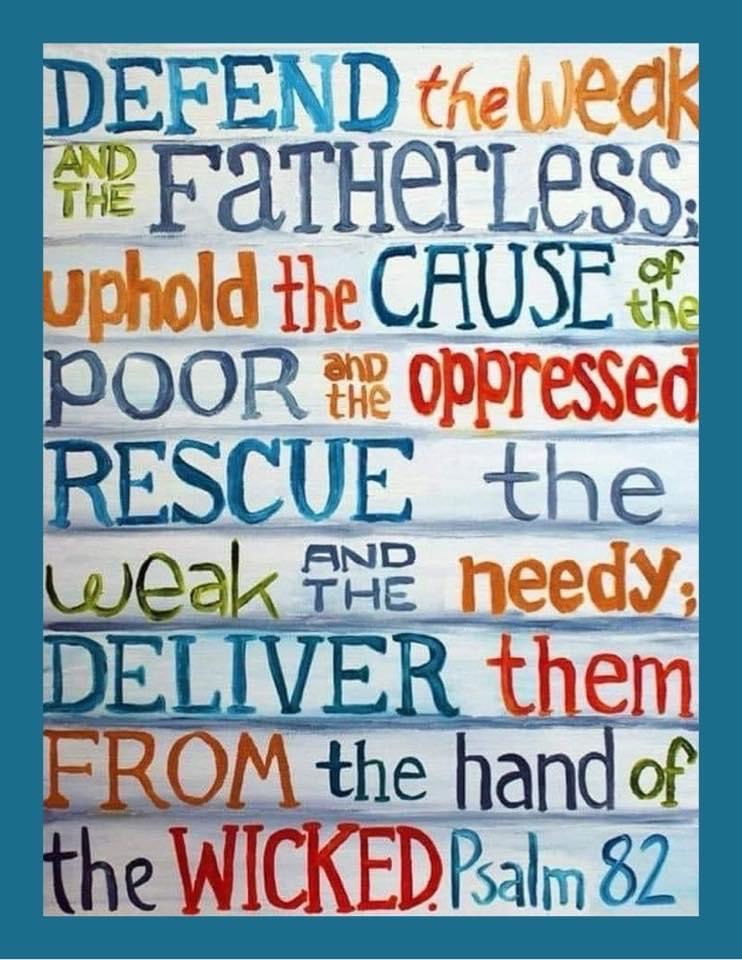
We’re on the Way

Mark 10:46-52 NRSV

The first thing we learn from our scripture lesson this morning is that Jesus and his disciples are on the move. They are on the way. Jericho was not the final destination. There is one last stop to make. Jerusalem: Where furious religious leaders, offended by the good news of the gospel toward those who are poor, ashamed of the grace of the gospel toward those who have been cast aside, and shocked by the topsy-turviness of the gospel toward those considered to be the least, have been plotting to put an end to all. Jerusalem: Where a selfless Jesus is prepared to love and to forgive and to be killed for the sake of the gospel.

It is on this way, this way of self-denial and self-giving, this way of self-expending love for all people, especially those who are otherized, demonized and marginalized, that Jesus is confronted by a man who fits every one of those descriptions. His name is Bartimaeus. He is not only blind, he’s also a beggar. He’s helpless, and he’s poor. He’s disabled and he’s dismissed. Because many believed there must be some reason for his blindness, he is judged and demonized. And, in desperation, this “other” is waiting for Jesus on the side of the road. From the margins, he’s waiting for some love. He’s waiting for some justice, and he is waiting for some grace.

He jumps up and pleads: “Jesus, Son of David, have mercy on me!”

And notice the actions of the crowd. They try to silence him, for they simply don’t want to hear his cries.

Does that sound familiar?

Have you ever been on the way somewhere, met someone, nodded your head and asked: “How ya doin’?” It’s a stereotypical pleasantry, an informal greeting. You expect them to nod back, and say something like, “I’m good, how ya doin’?”

But then, to our surprise, the person doesn’t answer the way we expect them to answer, the way we want them to answer, the way we believe they should answer. No, this person decides to unload on you. They have all of these aches and pains, all of these troubles and frustrations, all kinds of maladies that you label as TMI.

We don’t like TMI, especially when the TMI has to do with suffering.

I believe this is one of the reasons we tend to avoid people who have some sort of disability. Their suffering threatens us, because their circumstances are a reminder of how vulnerable all of us are. We know that if it could happen to them, it could happen to us, or to one of our loved ones. So, we prefer to keep the sick, the troubled, the unfortunate, and the disabled out of sight, thus out of mind.

I admire companies like Target and Kroger who make it their mission to hire disabled persons. Fortunately, there are many advocates today for the disabled and others who have been marginalized by society who are urging them to come out, to come forward, to speak up, and to seek equity and equality.

This blind beggar does just that. Despite the crowd who “sternly orders him to be quiet,” the man keeps yelling at Jesus, “Son of David, have mercy on me!” “Son of David, have mercy on me!”

And the good news is that Jesus hears his voice. Jesus stops. And Jesus calls him to come over.

Jesus asks, “What do you want me to do for you?”

Not surprisingly, blind Bartimaeus says, “My teacher, let me see again.”

And Jesus does just that.  He says, “Go, your faith has made you well.”

Then Mark describes something that he never describes when telling a healing story. Out of all the folks that were healed in Mark’s gospel, Bartimaeus is the only one who chooses to follow Jesus “on the way.”  Out of all the people who were healed by Jesus, Bartimaeus is the only one who becomes a disciple and follows Jesus on the way to Jerusalem; on the way to the cross; down the road of self-denial and self-expenditure; down the road of grace, mercy, justice, abundant and eternal life.

Thus, what we have here in this text is not just another miraculous healing story, but a wonderful story of discipleship. And guess what? It’s not just a story about one blind beggar. It is a story about you and me.

For, I believe we sometimes tend to come to Jesus asking him to heal us, solve our problems, fix what’s wrong with us. We come to Jesus saying: love me, feed me, hold me, and make me happy. Give me some sense of fulfillment. We come to church hoping that we might get something out of Jesus, something from Jesus, that he might give us some semblance of peace and joy. We come to Jesus seeking help, wholeness, security, and spiritual bliss.

But how many of us come to Jesus because we are truly willing to follow Jesus as a disciple, especially to those places that we know Jesus is heading?

After restoring Bartimaeus’ sight, Jesus tells him that he can go on his way. And who would blame Bartimaeus if he turned around right then to go on his way? Think of all the places he might want to go! Think of all the sights that he might want to see with his new eyes!

Bartimaeus could have gone home with his new-found faith in Jesus and love for Jesus. He could have been content knowing that Jesus heard his cries, restored his sight, and gave him salvation.

But Bartimaeus doesn’t go his way.

Bartimaeus goes Jesus’ way.

Bartimaeus chooses to follow Jesus. Where? Toward Jerusalem. Toward rejection. Toward a mission of love, mercy, and justice that will make some in power label him “the enemy within.” Bartimaeus chooses to follow Jesus all the way to the cross.

The irony is that Bartimaeus is introduced to us in this story as “a blind man.” However, Bartimaeus proves he may see Jesus much better than many who call themselves “Christians” today.

Bartimaeus teaches us that this thing we call “Christianity,” this thing we call “church,” is all about following Jesus.

Jesus is not calling people who merely want to be saved, to be healed, to be made stronger, to see more clearly, and to be fed by him. Jesus is not calling people who simply want to agree with him, believe in him, or admire him. Jesus is not calling people who only want to read about him, study him, or sing praise songs to him. Jesus is calling people who desire to follow him.

In C.S. Lewis’ classic novel, The Screwtape Letters, the devil advises an apprentice demon that the main way to keep people from the Christian faith is to prevent the potential convert from doing anything. 

The devil says that the main thing…

…is to prevent his doing anything. As long as he does not convert it into action, it does not matter how much he thinks about this new repentance. Let the little brute wallow in it. Let him, if he has any bent that way, write a book about it…. Let him do anything but act. No amount of piety in his imagination and affections will harm us if we can keep it out of his will. As one of the humans has said, active habits are strengthened by repetition, but passive ones are weakened. The more often he feels without acting, the less he will be able to ever act, and in the long run, the less he will be able to feel.

To the dismay of CS Lewis’ devil, Bartimaeus put his faith into action and followed Jesus, even toward Jerusalem.

At the end of this service, we are going to have what we call an invitation. Some churches call it an altar call. It is a practice that was started in many protestant churches during the turn of the 20th century. Those who wish to dedicate or rededicate their lives to Christ or become a member of the church are invited to come down to the front as a public sign of their commitment.

Sometimes, this practice has been emotionally manipulative. Preachers have used guilt and other forms of pressure to get people to walk the aisles. Because of this, the invitation or the altar call has been dropped in many churches and is very rare in most denominations.

Well, I’m not ready to drop it, and it’s not just because I have a little Baptist left in me from my childhood. It is because I believe, despite its misuse and abuse, the “Invitation,” whether or not anyone ever comes forward, keeps reminding us that it is not enough for us to come together on Sunday morning to get something out of Jesus: a sense of well-being, as sense of peace, a feel-good feeling of spiritual bliss. It reminds us that the point of it all, the point of Christianity is to follow Jesus, to give our lives to Jesus, to stumble after him along the way, even to Jerusalem. To be like Bartimaeus and summon the courage to stand up and not be ashamed, to be willing to give and to sacrifice and follow him on the way:

On the way to hear and answer the cries of the disabled;

On the way to stand up and speak up for those who are otherized, demonized and marginalized;

On the way to defend liberty on the behalf of the oppressed;

On the way to speak words of healing to the sick;

On the way to speak words of grace to those who struggle, words of peace those who are afraid;

On the way to put our arms around the troubled and offer hope to the despairing;

On the way to feed the hungry, clothe the naked, visit the imprisoned;

On the way to the ballot box to vote for people who care, not just about themselves or their friends, but truly care about the least among us;

On the way to Jerusalem, where resistance, and even a cross awaits.

A Topsy-Turvy World

Mark 10:35-45 NRSV

What a great moment we experienced together last Sunday, as we received the hopeful good news that for God all things are possible! That after 150 years, we are still here, and we are still saying “yes” to following Jesus!

Last week, the commitment of Peter and the disciples, and our own commitments to leave behind friends and family to follow Jesus, were affirmed with a promise from Jesus. With those first disciples, because we are allowing Jesus to turn our lives upside-down by accepting and working for a world where the first are last and the last are first, and the greatest among us are servants, Jesus promised us:

For everything we have given up, he will give us much more. For everything we have turned our back upon, he will give us a hundred times more!

It was a great day! A joyful day! A hopeful day!

But… (C’mon you knew it was coming!) …but, what a difference just one week can make.

Just when we were beginning to think that the disciples were finally starting to get it right, we open our Bibles, and still in this 10th chapter of Mark, we read where James and John, the sons of Zebedee, come asking Jesus if he will do them a favor.

You remember their poor parents, don’t you, Mr. and Mrs. Zebedee? Matthew told us the story of how their family fishing business was nearly destroyed that day a radical rabbi named Jesus came to town. That was the day James and John proved they were willing to drop everything, literally as they dropped their nets, leaving family, their job, everything behind, to follow Jesus (Matthew 4:21).

I am sure Peter had James and John in mind when he said to Jesus: “Look, we have left everything and followed you.”

But today, in the same chapter, we discover that they really don’t have a clue to what it truly means to follow Jesus when they ask Jesus if one can sit at his right and one at his left in his glory.

Pointing out their disappointing cluelessness, Jesus responds: “You really don’t know what you are asking!” For they had no idea that the ones who would end up on Jesus’ right and his left would be hanging on crosses!”

But that’s what it’s like after you say “yes” to Jesus. One Sunday, we got it! One Sunday, we are affirmed by Jesus! One Sunday, the pastor pats you on the back and calls you a kindness-lover, a peace-maker, a justice-doer, and a grace-giver. And the next week, you’re sitting on the struggle bus without a clue.

One Sunday, we feel like we have all the courage we need to stay on the right, albeit narrow, road that leads to life, abundant, meaningful, purposeful, and eternal. And the next week we are struggling, questioning, and wondering if staying on this difficult road with Jesus is really worth all the grief we receive from our family and friends, from our co-workers and neighbors.

We are always being tempted to acquiesce to popular culture. Because, following this narrow way of Jesus really does turn our entire world upside-down, and if we are honest, we’d admit that we’d be much more comfortable if we could just put some of our world back right-side-up.

We think about how good it would be to put ourselves first for a change, to be great again, to live without dying to self, to confront our enemies without having to love them, and to build wealth without having to give everything to the poor. How much better would life be if we identified with the first instead of the last, with those who have the most instead with those who have the least, with the powerful instead of the enslaved.

We think of how much better we would have it if we never heard of a woman whose two copper coins, worth just a few cents, were actually more valuable in the eyes of Jesus than the large bags of money that others were putting into the temple treasury.

We dream of what life would be if we never heard the story of a poor beggar named Lazarus resting by Abraham’s side, while a rich man begs for mercy.

We think about how much better life might be if we never heard the Sermon on the Mount, or the story of the Good Samaritan. How much better would we sleep at night, how much more money would we have in the bank, if could be like the Priest and the Levite who, without a care in the world, passed by on the other side.

New Testament Scholar Martin Copenhaver writes that our gospel lesson in Mark chapter ten bears repeating, because we are continually being tempted “to straighten up the order of things that Jesus turned topsy-turvy.”

As Disciples of Christ were creating a movement in the 19th century to return to the radical teachings of Jesus, German philosopher and cultural critic Friedrich Nietsche was denigrating those teachings calling the way of Jesus “a slave morality.”

Nietshche noticed that Christianity seemed to be most popular among the people in his day who were at were at the bottom: women, children, people living in poverty, people living with disabilities, people of color, and of course, the slaves. He accused Christianity of giving hope to those at the bottom, while offering very little to those at the top.

His criticism served as a warning to the church as they heard Nietshche saying: “If you’re not careful, if you keep teaching the upside down Gospel of Jesus, then you might fill your churches up with the wrong type of people!”

And it was a red flag for the privileged and for the powerful as they understood Nietshche saying: “If you don’t do something about this radical, upside-down topsy-turvy message of Jesus, then your workers may want to organize. They might begin to collectively bargain to improve their economic and social status. Your women may demand to have the same rights as men, even the right to vote. And although it’s unthinkable, they may even want the right to control their own bodies! And your slaves, well, they may rise up and demand to be treated like whole human beings, not just three-fifths.

So, the false prophets in the world went to work. Rejecting the gospel of Jesus that turns the whole world upside down, they began to twist scripture, take it out of context, and even make up unbiblical sayings to preach and teach the antitheses of Jesus, all in order to straighten out the topsy-turviness of the gospel.

“God only helps those who help themselves!” they declared.

“Women should be submissive to men, at home, in the workplace, in government and in the church,” they asserted.

“Children could be exploited for their labor,” they affirmed.

“Jesus was a white European man,” they pronounced in a plethora of artistic portrayals.

“God’s Word sanctions slavery,” they argued.

“Those people are abominations to God,” they preached.

And we know that those false prophets are still very much at work today, “straightening up the order of things that Jesus turned topsy-turvy.”

In an interview with NPR, evangelical leader Russell Moore said that multiple pastors have told him stories about their congregants being upset when they hear words read from the Sermon on the Mount of Jesus proclaiming an upside-down world where the poor are blessed, those who hunger for justice are filled, and the meek inherit the earth.

Moore said:

Multiple pastors tell me essentially, the same story about quoting Jesus in the Sermon on the Mount – [and] to have someone come up after to say. “Where did you get those liberal talking points?” Moore added: “And what was alarming to me is that in most of these scenarios, when the pastor would say, ‘I’m literally quoting Jesus,’ the response would be, ‘Yes, but that doesn’t work anymore. That’s weak.’

So, what do the pastors do? Well, at an alarming rate, many are leaving the ministry. But some stay, but to keep their congregants happy, they water-down the gospel, transforming the offensive counter-cultural meat of Jesus’ teaching into some, warm, comforting chicken soup for the soul. And to pastor a large church, some pastors have traded in the gospel that sides with the weak and the oppressed in exchange for a nationalism that sides with the strong and powerful.

Although this is the reason many people have given up on the church today, the irony is that it is also the reason people need the church today. Because to fight the great temptation to straighten up, water down, or trade in the gospel, people who have made the decision to say “yes” to Jesus need one another. To stay on the radical, narrow, offensive, difficult, counter-cultural, topsy-turvy way of Jesus, we need each other to help keep us accountable and encouraged, especially during these serious times when many in the church are rejecting it, calling it weak.

Dietrich Bonhoeffer, who stood up to the fascism and white Christian nationalism of his day in Nazi Germany, once prophetically preached:

Christianity stands or falls with its revolutionary protest against violence, arbitrariness, and pride of power, and with its plea for the weak. Christians are doing too little to make these points clear, rather than too much. Christendom adjusts itself far too easily to the worship of power. Christians should give more offense [and] shock the world far more than they are doing now. Christians should take a stronger stand in favor of the weak, rather than considering first the possible right of the strong (Dietrich Bonhoeffer, from his sermon 0n 2 Corinthians 12:9, 1934).

The good news is that we are a part of a church where we are going to keep holding one another accountable. We are going to keep one another encouraged and hopeful. No matter what happens this week, or in the next three weeks, we are going to do all that we can do to stay topsy-turvy, following the radical, narrow, seemingly foolish, upside-down way of Jesus toward the poor, the suffering, the marginalized, the prisoners, the refugees, the undocumented, the lonely, the hungry, the dying, the tortured, the homeless–toward all who thirst and hunger for justice and compassion.

Following this way will shock many. It will offend some of our friends and even disappoint some in our family. Because what does this way offer us? Not success, not popularity, not riches, not worldly power, but we believe—we may not always understand, and at times we are even clueless—but we believe Jesus when he says it leads to a life that is full, complete, meaningful, purposeful, abundant, and eternal, and it creates a world that is more kind, more just, more free, and more merciful. Amen.

Saying “Yes” to Jesus

Mark 10:17-31 NRSV

I have some good news to share this morning!

But, first, let me give you the bad news—for that is the order that it comes to us through this morning’s gospel lesson. The very first line of our text sets an ominous tone: “As he was setting out on a journey…”  For we all know where that journey takes Jesus—the betrayal, the denials, the abandonment, the condemnation, the mocking, and the crowds cheering it on, the crucifixion, death.

The bad news is that the journey we are on as followers of Jesus leads us to the cross. It leads us to places that we would rather not go. It leads us to sacrifice and self-expenditure. It leads us down a confusing, challenging road. To be first, we are challenged to be last. To be great, we are challenged to be a servant. To save our lives, we are challenged to lose our lives. To live, we challenged to die.

Furthermore, our gospel lesson teaches that saying “yes” to this journey is difficult for many people. The road to the life God has created us to live is truly narrow, and there are few who find it.

We read that a man runs up to Jesus, kneels before him and asks him a very good question: “Good teacher, what must I do to inherit eternal life?”  It is the question of every person: “What must I do to have a life that is full, purposeful and meaningful?”

Jesus replies:

You know the commandments: “You shall not murder; You shall not commit adultery; You shall not steal; You shall not bear false witness; You shall not defraud; Honor your father and mother.

“But teacher, I have kept all of these since my youth.”

In other words, “Jesus, I have been going to Sabbath School since I was a little boy!”

Mark says that Jesus then looked at the man, (I like this next line) and “loved the man,” and said,

But you lack one thing. Go and sell everything you own, and give the money to the poor, and you will have treasure in heaven; then come, follow me.

When the man heard this, he was shocked. And he went way grieving, for he had many possessions.

This is bad news because, here we have a very good person, a law-abiding person, a frequent synagogue goer, a religious person, a sincere seeker, someone raised in the faith, who is unable to say “yes” to the call of Jesus to become one of his disciples.

And here is the really bad news for us. The reason the call of Jesus is rejected is because of something that we, living in our capitalistic society, have a great affinity toward: money. This one is unable to follow Jesus, unable to experience, life, full, meaningful, abundant, and eternal, because he loves his bank account more than he loves poor people.

This is a discouraging teaching for those who live in a culture that believes wealth is the answer to all of life’s problems.

It is no secret that the voters of this country have a history of electing their leaders based on what? The leader’s psychological fitness to lead? Nope. The leader’s moral values and ethical character? Oh, heck no! The leader’s sense of compassion and empathy for others? Ha! The leader’s anti-racist, anti-sexist, pro-LGBTQ sentiments? Lord, have mercy!

It was the campaign strategist of Bill Clinton’s successful 1992 presidential campaign James Carville who answered that question most clearly when he said, “It’s the economy stupid.”

Because what our culture values most is wealth. And we seem to be willing to sacrifice everything that is good and decent and holy to create it and hold on to it. People will vote for someone who uses the same lying, hateful, racist, authoritarian language of Adolph Hitler, if they believe doing so might lower their taxes or assure them that none of their tax dollars will be used to help people of another race, ethnicity, or sexuality.

The spirit of greed and selfishness that possesses our society and drives our economy is bad news when we realize that people with wealth do not fair very well in the Bible. Jesus said it is as harder for a wealthy person to do the right thing than it is to get a camel through an eye of a needle.

That’s the bad news. Now, are you ready for the good news? The good news is that this is not the end of this morning’s gospel lesson.

Jesus responded, ‘For mortals it is impossible [for wealthy people] to receive eternal life, but not for God; for God all things are possible.’

Peter says: ‘Look, we have left everything and followed you.’

And Jesus responds:

Truly I tell you, here is no one who has left house or brothers or sisters or mother or father or children or fields, for my sake and for the sake of the good news, who will not receive a hundredfold now in this age—houses, brothers and sisters, mothers and children, and fields, with persecutions—and in the age to come eternal life.

The good news is that this is one of the few times in the gospel story that ol’ Peter opens his big mouth and blurts out something without getting pulled aside and rebuked by Jesus.

Peter says: “Lord, we have left everything—homes, family, friends, jobs—and we have followed you!”

Peter is saying: “Look, Jesus, we are not like the one who came inquiring about eternal life, only to be shocked and grieved by your strange answer. Although you turned our world upside down, although you said things to us like the first shall be last and the last shall be first, and to be the greatest we must be a servant, to save ourselves we must lose ourselves, to live we must die, when you called us, we dropped everything.”

“We let go of a lot to follow you.  And although we do not understand half, a third, ok Jesus, one fourth of the things you teach us, although you scare us to death when you talk about being arrested, tried, and crucified, we’re still here. We didn’t walk away. We’ve stayed the course, and we’ve kept the faith. We may not understand everything, but we do listen! Well, every now and again we might fall asleep, but sometimes we even take notes.”

The good news is that our lesson this morning does not end with the rejection of one greedy man. It ends with a promise from Jesus:

I promise you, for everything you have given up, I will give you much more. For everything you have turned your back upon, I will give you a hundred times more.

Now, are you ready for some more good news?

None of you in this room is like this one who came inquiring about eternal life, only to be shocked and grieved by Jesus’ strange answers. Although Jesus turned your world upside down, although he said things to you like the first shall be last and the last shall be first and to be the greatest you must be a servant, to live you must die, when Jesus called you, you said “yes” to that call.  Some of you let go of a lot to follow him.  And although you do not understand half, a third, ok, one fourth of the things Jesus teaches you, although you don’t even remember last week’s sermon, although Jesus scares you to death when you read of him talking about being arrested, tried and crucified, you’re still here. You’ve not walked away. You’ve stayed the course. You’ve kept the faith.  You may not understand everything you hear, yet you come to this place week after week after week and you listen. Yes, sometimes you fall asleep.  But sometimes, some of you even take some notes!

Although every muscle in your body aches and your knees and hips are worn out, and it hurts to walk and it hurts to sit, and it hurts to stand, you somehow make it to this place every Sunday you can. When you wanted to pull the covers up over your heads and sleep in on this cool Sunday morning, you got up. You got yourself ready and you came. You are here.

And not only are you here to listen to these strange teachings of Jesus, you’ve decided to follow him on a journey that leads to the cross.  You have decided to follow Jesus on a journey that leads to sacrifice and self-expenditure.

Some of you have given up wealth by turning down more lucrative careers in order make a difference in the world by working for a non-profit or as a public servant, by teaching children or caring for senior adults.

Although you don’t have to, and really don’t want to, many of you frequently volunteer as selfless servants in this community— volunteering at the hospital or the Free Clinic, delivering meals on wheels, helping neighbors with their groceries at Park View Mission, advocating for someone with special needs or serving on the board of a non-profit. You freely share your wealth donating to charity and investing in the community.

Many of you have said yes to be a deacon, an elder, a Sunday School teacher or a board member—to work with our children and youth, to sing in the choir, to give to a hurricane relief fund or to purchase diapers or baby formula to deliver to strangers in need, to do whatever you can, with whatever it takes, whatever the cost, wherever you are, to make this world a better place.

And although the way is sometimes difficult, as few follow and many reject this way, you welcome the opportunity to get into some good trouble, some necessary trouble. You are willing to speak out before the town council or the school board, and you are willing to pay the price for doing so.

Although it has made you the black sheep of your own family, you do not hesitate to defend those who are marginalized by sick religion. Your stand for social justice has caused some of your friends to alienate you or to even unfriend you but you keep standing!

Living in a part of the world where it is most unpopular to do so, where the majority of church people have rejected the way of Jesus, you have fully embraced this narrow way that Jesus taught and modeled as you empathetically stand with immigrants and minorities who are being scapegoated, with women whose rights have been taken away, and with the poor who are being crushed by policies of greed.

And you are standing firm in this election season against Christian Nationalism and White Supremacy, the very Spirit of the anti-Christ that is possessing many in the church today.

You speak up for both Jews and Palestinians. You defend the freedom of people of all religions, and you defend people’s right to be free from religion. You decry all war, violence, hate and bigotry.

You deny yourself, love your enemies, forgive seventy times seven, offer the shirt off your back, and you are willing to go the extra mile to heal the hurting, welcome the excluded, and free the oppressed.

When people say that we should only help those who help themselves, you quote Jesus saying: “We are to love our neighbors as we love ourselves!”

When people scream, “America first!” you quote Jesus saying: “for God so loves the whole world!”

When people chant, “Send them back!” You model Jesus by finding those who are being scapegoated, and you invite them to join you at a table.

And when people say they love the sinner, but hate the sin, you remind them that Jesus never once followed the word “love” in a sentence with the word “but!”

As I said last night at our 150-celebration, you have joined members of this historic congregation, and the saints who have gone before us, to do all that you can do to be a kindness-lover, a peace-maker, a foot-washer, a cheek-turner, a justice-doer, and a grace-giver.[i]

The bad news is the story of this one we read about in Mark’s gospel ends with greed, selfishness, grieving and rejection. The good news is that his story is not your story. For even when you were shocked by Jesus’ strange and challenging teaching, you dropped everything and followed him. And because of that, although you suffer persecution from even the people you love, your story ends with a promise from Jesus. Thanks be to God.

[i] Inspired by the words of John Pavlovitz, If God Is Love, Don’t Be a Jerk (Louisville, KY: John Knox Press, 2021), 69.

This at Last

Genesis 2:18-24 NRSV

Americans have always had a high regard for independence. We believe in a staunch individual ethic that leads people to step up, step out, and stand on their own two feet. We look up to those who are able to look after themselves, to take care of number one, to be responsible, to be independent. And we tend to look down on those who are dependent on others for their survival.

This is arguably the greatest virtue of our society, the aspiration of every child. Study hard, grow up, move out on your own, get a good job, so you can become self-sufficient, self-reliant, self-supporting. And bookstore shelves and YouTube videos labeled, “do-it-yourself” and “self-help” are filled with information to help us keep our independence. Anything else and you are considered to be a failure, worthless, no count, lazy, good-for-nothing. Yes, in our society, independence is what it is all about.

Many grocery stores now have “self-checkout” lines that are almost always available with no waiting. If you are smart enough to check your own groceries, if you have good ol’ American wherewithal and work ethic, if you are responsible and have learned to really be independent, if you have elevated yourself to a place where the assistance of a Wal-Mart cashier is truly beneath you, then you’ve earned the right not to wait in line.

Independence. It is what makes turning 16 and getting your driver’s license so wonderful, and it is what makes the day the doctor or your children take the car keys away from you so dreadful. It is what makes owning a home the American dream, and what makes the thought of moving into nursing home a nightmare.

Perhaps more than any other day, we fear the day we lose our independence. It’s the reason we save for retirement, eat right, take our vitamins and exercise; so we can remain independent to the bitter end.

This is why coming to church can sometimes be confusing, and oftentimes, challenging. We come to church and open our Bibles only to discover that God’s virtues are oftentimes very different from our own. We come to church to reaffirm our beliefs, only to have God call those beliefs into question.

On the very first pages of our Bible, we learn that the first thing that God said was “not good” was, guess what? Our independence.

God looked at the independent human and said: “This is not good.” So, “I will have to keep working. I will have to continue creating to make you a partner, a co-equal, someone on whom you can depend on help you be the person that I have created you to be.”

So, out of the ground, the Lord formed every animal of the field and every bird of the air.

And then the independent human searched high and low. They became acquainted with each creature so closely, that they were able to name each one. But out of all of the animals that they encountered, and out of all of the birds that they watched, they could not find a single suitable companion, a partner on whom they could depend, a co-equal with whom they could share a mutual relationship and an intimate communion.

But for God so love the world that did not give up. God was not finished. God was intent on helping the first human be the person he was created to be. So, God kept working. God continued creating. However, this time, not from the ground; but from the human themself.

As the human slept, God removed one of their ribs and used that rib to make another. Instead of forming another human being from the ground, God split the first human being into two beings, and then presented them to first human. It was then that they said:

“This, at last, is bone of my bones
and flesh of my flesh;”

This, at last, is the relationship for which have been searching.

This, at last, is the beloved communion for which I have been longing.

This, at last, is my partner, my companion, my confidant, my friend.

This, at last, is my equal with whom I can be mutually connected.

This, at last, is someone on whom I can depend.

This, at last, is what I have needed to be the person that God has created me to be.

This, at last, is one that I must love as myself, for…

“This, at last, is bone of my bones and flesh of my flesh.”

I believe this is why Jesus said the greatest commandment is to love others as we love ourselves. As this verse describes every human being. All of us, all genders, all races are co-equals, mutually connected and bound together.

This should describe the moment patriarchy died, the moment all misogyny and sexism, racism and bigotry, became implausible. However, we know all too well that this is not what happened.

The good news is that this is not the end of God’s creative story.

The good news is God was not finished with God’s new beloved community. God knew that an even greater communion was needed if we were ever going to be the persons that God has created us to be. So, God kept working. God continued creating. And, this time, God took it one step further.

God looked at God’s beloved community. God saw the good in it, but also the wicked in it. God saw the subjugation. God saw the sexual assault. God saw the domestic violence. God saw oppressors calling themselves liberators, and predators calling themselves “protectors.” God saw the hate, and the crowds cheering it on, supporting the hate, worshipping the hate, voting for the hate. And God knew that it could be so much better.

So, God, God’s holy self, selflessly and sacrificially, decided to join the community! God came to be with us, and God came to be one of us. God came to show us the way that leads to life, abundant and eternal. God became flesh. God became bone. And one of God’s beloved communities called him “Jesus.”

And one night, Jesus sat down at a table with his beloved community. Jesus took bread and broke it, and blessed it, saying, “This is my body.” Then he took the cup, saying, “This is my blood.”

And here we are this morning gathered at a table with Christians from all over the world, bound together, mutually connected, depending on one another and communing with one another, but also depending on, and communing with a Savior, singing together in one voice:

“This, at last is bone of my bones
and flesh of my flesh;”

This, at last, is the relationship for which we have been searching.

This, at last, is the beloved communion for which we have been longing.

This, at last, is our partner, our companion, our confidant, our sibling.

This, at last, is someone with whom we can be mutually and eternally connected.

This, at last, is someone on whom we can truly depend.

This, at last, is what we have always needed, all we will ever need, to be the persons that God has created us to be.

This, at last, is the One who reminds us that we are all interconnected by the love of our God who never gives up on us, who keeps working and keeps creating until the whole creation understands that there is neither Jew nor Gentile, slave nor free, male nor female, but we are all one in Christ Jesus our Lord.

One day, I was talking with someone who was dying with cancer. He shared that his illness had revealed to him the things that were truly important in life. He said, “And the funny thing is, that they are the opposite of what I always thought was important.”

He said: “I never knew how many friends I had, until I got sick. And I never realized just how important they are.” He said: “Jarrett, the truth is, ‘We really do need a little help from our friends.’”

He admitted that before his illness what he had valued more than anything in the world was his independence, “but no more,” he said, “no more.”

         Then he said: “Maybe that is why God created us to depend on one another. It is like some kind of training.”

“Training?” I asked.

“Yes, training,” he said, “because the most important thing in this life is to reach a point where we learn to be dependent on God, to reach to a point sometime before we die, where we have truly put our lives into the hands of God.”

It was as if he was saying: “No more! Because, now I see it. Now, I get it. In my most vulnerable, most dependent state, now, I know it. This, at last, is what life is all about!”

This, at last, is why we are here: to learn be in relationships; to learn to depend on one another; to care for one another, especially for those who depend on our care: the poor, the marginalized, the immigrant, the isolated, the abandoned, and those have lost everything in the storm. We are here to learn how to move outside our echo chambers to listen and to learn from strangers. We are here to repent of our isolationist tendencies that place our desires and comforts over the good of the world. We are here to learn to resist the temptation to demonize our differences and while dignifying our diversity. We are here to understand that at last we are all related. We are all bound together. We are all equal. We are all united, because we are all one.

And as we depend on each other, we learn to depend on the One on whom we can depend on forevermore;

the One who came to us at last;

the One who came to be with us and for us;

the One who came to show us how to be the people God created us to be;

the One who is still not finished;

the One who is still creating and recreating, working to transform this world God loves by calling disciples, ministers and prophets, male and female and non-binary, in every country on every continent; We learn to depend on this One: This, at last, Christ, our sibling, our teacher, our Lord and our Savior, bone of our bones and flesh of our flesh.[i]

[i] Inspired from: This at Last!, An Intergenerational Liturgy for World Communion Sunday, Nineteenth Sunday of Pentecost year B, was written by the Rev. Dr. Laurel Koepf Taylor, Assistant Professor of Old Testament at Eden Theological Seminary, Saint Louis, Missouri.

Time for Some Serious Soul-Searching

Mark 9:38-50 NRSV

In Mrs. Welch’s sixth grade class back in 1977, I sat beside one of the coolest boys in school. He was the new kid, a foreigner from some distant land, like New Jersey. His name was Robbie something-or-another. All I remember about his last name was that it was hard to spell and funny-sounding to me. Robbie wore a leather jacket like the Fonz, and he had this long, jet black, wavy, Donnie Osmond hair. He could not have been more popular. And with my cowlicks, braces, low self-esteem from five years of speech therapy, and all-around awkwardness, he got on my last nerve.

One day in class, Robbie whispered: “Hey Jarrett, you wanna to see my switchblade?” Being a naïve little boy, I said: “You don’t have a switchblade. Switchblades are not allowed in school.”  He then pulled a shiny, steel-plated case out of his pocket and showed it to me. I may have been awkward, but I was newly baptized Christian who knew right from wrong, so without hesitation, I got up from my desk, walked up to the teacher’s desk and told Mrs. Welch that Robbie had brought a switchblade to school.

As I stood smugly at her desk, Mrs. Welch called Robbie up and asked him if he had brought a knife to school. Robbie reached into his pocket and pulled what appeared to be the knife. He then pushed the button and ejected a long black comb and started combing his wavy Donnie Osmond hair.

Putting the comb back into his pocket, Robbie looked at me and sneered: “You little tattle-tail!” And, I will never forget the disappointed look Mrs. Welch gave me before I turned and took the walk of shame back to my seat. That was the day I learned how uncool it can be to be a tattle-tail.

And this morning, we read where the disciple John learns a similar lesson.

John, thinking he was being a good Christian, goes up to Jesus and says: “Teacher, we saw someone casting out demons… and we tried to stop him, because he was not following us.”  Like a jealous sixth-grader running to the teacher to tell on someone who is breaking the rules, John believes Jesus is going to be pleased with the information. But Jesus says, “Do not stop him…Whoever is not against us, is for us.”

Although the obvious reason I was so eager to tell on Robbie was jealousy, I cannot help but to think that if Robbie had been one of my friends with whom I had grown up, maybe someone from my youth group at church, I probably would not have been so eager to run to the teacher that day. But Robbie was an outsider. He had a funny last name. He was from some far-off land called New Jersey. And not only was he a foreigner, he was a Donnie Osmond look-alike foreigner who was succeeding in being something that I was utterly failing to be: cool.

And to understand John’s real problem with this outsider who was casting out demons, we need to go back and read verses 14-19 in this same chapter.

Jesus sees a crowd where people are arguing and asks them what they are arguing about.

Someone from the crowd answered him, “My son has a spirit that makes him unable to speak; and whenever it seizes him, it dashes him down; and he foams and grinds his teeth and becomes rigid; and I asked your disciples to cast it out, but they could not do so.”

Saying Jesus is unhappy is an understatement:

You faithless generation, how much longer must I be among you? How much longer must I put up with you? [then we can almost see him rolling his eyes as he says] Bring him to me.

The problem for John was that this one who made him run to the teacher was not only an outsider, he was successful doing something that the disciples were utterly failing to do: “casting out demons.” And Jesus says: “Don’t stop him, for whoever is doing such work of exorcising the demons in our world is clearly on our side!”

Now, when we read this text here in the 21st century describing someone who “seizes,” is “suddenly unable to speak,” who “falls to the ground foaming and grinding his teeth,” and “becoming rigid,” it is obvious to us that what is being described is someone experiencing an epileptic seizure. If this happens to anyone here this morning, you can bet we’re calling 911. We will not be having a demon exorcism!

But as you have heard be say before, I love the ancient language of “casting out demons,” for it infers much more than healing the sick. It infers bringing evil into light, challenging the powers of injustice, and liberating the oppressed. It infers calling out and casting out the evil forces in our world that are hurting people.

So, here we have John and the disciples who had just been chastised by Jesus for lacking the faith to liberate people who are oppressed, for failing to do the work of Jesus in the world. And here’s John seeing an outsider successfully doing the work.

Can you believe that? That there are actually some people outside the church, who do not claim to be Christian, who act more like Jesus than some people who attend church every Sunday? Of course, we can.

As author and outspoken advocate for global peace and non-violence, Matthew Distfano, prophetically points out: “Kind atheists are closer to Jesus than mean Christians.”

As a Christian pastor, I would much rather lead a small group of atheists and agnostics who believe that loving our neighbors as ourselves is the most important thing we can do on this earth, than lead a mega-church of believers who never doubt the existence of God, but who are hateful or indifferent to the needs to others.

The sad reality is that Christians who confidently sing Blessed Assurance on Sunday mornings can be the greatest stumbling block to those who need to experience the grace and love of God today.

I believe this is why Jesus uses such disturbing language to illustrate how important it is that his disciples do some serious soul-searching. As former Southern Baptist leader Russell Moore was quoted this week in the Atlantic: “If we’re willing to see children terrorized because of a false rumor about Haitian immigrants, we should ask who abducted our conscience, not someone’s pet.”

Jesus said that his disciples need to do some serious introspection to determine if they are doing some things or not doing some things that serve as a stumbling block for others, that may prevent someone from knowing God’s extravagant grace and from experiencing God’s liberating love?  Jesus underscores the seriousness of such soul-searching by saying that if you are going to put up any obstacle between people and God’s love, it’s better to tie huge millstone around your neck and jump in the ocean!

Then, to further underscore how important self-criticism is, Jesus uses some gruesome metaphors to get our attention: self-mutilation, an ever-active worm which eats the flesh, and an unquenchable fire. If your hand, the things you do; if your feet, the places you go; do nothing to help someone who needs healing, wholeness and liberation, or worse, adds to their pain, or participates in their oppression, then cut them off, for it is better to have one hand or one foot than your whole body go into an unquenchable fire!

And if your eye prevents you from loving a neighbor, because of the way you see at that neighbor, or the way you unable to see that neighbor, Mark doesn’t say “pluck it out” as Matthew says, Mark writes that Jesus emphatically said, “tear it out!”

I believe Jesus is saying that he can not over emphasize the importance of doing the serious and holy work of introspection and soul-searching, making absolute certain that we are following the way of love, kindness, and mercy, the way of peace and justice, making certain that none our actions or our inactions are hurting our neighbors.

Such soul-searching is badly needed today as people of faith find themselves standing today on the opposite sides of a culture war where people on both sides claim to be standing on the side of Jesus.

So, a good question for all Christians today is: “How do we know we are for Jesus and not against Jesus?”

Could it be that it really is not that complicated? Could it be that John learned his lesson that Jesus teaches him in our lesson this morning as evidenced by his quote of Jesus we read in John 13:

I give you a new commandment, that you love one another. Just as I have loved you, you also should love one another. By this everyone will know that you are my disciples, [in other words, this is how you will know that you are for me and not against me] if you have love for one another (John 13:34-35 NRSV).

In this most divisive time, if there has ever been a time for Christian Americans to do some serious soul-searching, it is now.

Are we standing on the side of the liberating love that Jesus taught, modeled and embodied? Do our actions liberate people who are being oppressed today? Or do our actions, or our inactions, support the oppression of people?

Are we calling out the powers of injustice that are hurting people today, making them less free, less safe, making them feel less human? And are we casting out these powers by casting our votes in the next 36 days?

Or are we standing today for something else? If we are not standing for liberating love, what are we standing for? Is it pride? Is it power and privilege? Is about being superior to another, more holy, more righteous, more entitled? Is it about fear? Is it about greed? Is it about jealousy?

Are we standing with Jesus and with people of all faiths and even no faith who standing today on the side of love? Or are we standing against them?

Yes, now is certainly the time in this nation for some serious soul-searching. Amen.

Being Great

Mark 9:30-37 NRSV

In Mark chapter 9, we read where the disciples are arguing with one another about which one of them was the greatest.

And who could blame them? For they had just tasted greatness on what we call the Mount of Transfiguration. In this same chapter, we read where Peter, James and John witness the appearance of Jesus, his face, even his clothes, shine!

So, of course the disciples are arguing about greatness. For they too wanted to shine!

And 2,000 years later, disciples are still arguing about what it means to be great, still arguing about how to make our country great, and to make our church great. And, here in the United States, the ones who seem to winning this argument, or at least are arguing the loudest, are all around us.

Do you want to be a great church?

Wed yourself to the empire. Unite with a political party. Do whatever it takes to attain power in order to legislate your own worldview and understanding of morality, and oppress all who do not fall in line.

Do you want to be a great church?

Then do whatever it takes to draw a large crowd. Because crowd size is what it is all about. To get people’s attention, make up some stories if you have to. They don’t have to be true stories. They just need to be sensational stories to get people riled up. Stoke fear if you have to, do whatever it takes to attract a big crowd. Tell them their whole world is going to end unless they join you. And if you’re loud enough, and say it often enough, you might be able to draw crowds like Elvis Presley used to draw, and you won’t even need a guitar. But speaking, of guitars…

Do you want to be a great church?

Then you have to make your services more entertaining. Do something to make the people smile, laugh, clap and tap their feet. And do you really need to have Communion every Sunday? That’s a lot of work. All that preparation and clean-up. And besides, no one wants to hear about sacrifice, self-expenditure, shed blood, and a broken body every Sunday! Just give the people what they want. Trade those tiny, dry crackers for some fresh, hot donuts, and trade that little sip of juice for a caramel macchiato or a vanilla latte.

Do you want to be a great church?

As the pastor, don’t ever be too real. Never admit your mistakes. Never apologize for anything. Don’t let people know that you need forgiveness. Never let it slip out that you have your doubts. Make them believe you never question your faith and you have all of the answers.

Do you want to be a great church?

Discourage all critical thinking. Encourage folks to check their brains at the door. Tell them exactly what you want them to believe. And them not to listen to anyone else and to even ignore what they may see with their very own eyes. Tell them that if they hear anything that is critical of you, it is fake news. Always keep it simple, black or white, good or evil, heaven or hell.

Do you want to be a great church?

Create an “us-verses-them” mentality, an “insider-verses-outsider” way-of-thinking. And remind the congregation every Sunday that we are “in,” and those who disagree with us are “out.” Make them feel righteous, holy, superior, knowing that while we are on their way to heaven, those who are unlike us are most certainly heading in the other direction.

Do you want to be a great church?

Look, it’s fine to say you welcome all people to church. But don’t say it every Sunday. Don’t over-emphasize it, and don’t advertise it. And avoid using words like “diversity,” equity, and inclusion” and never say “social justice.” And don’t talk so much about helping people who are poor, and standing up for the marginalized. Because, the truth is, people like to be with people who think like them, act like them, and look like them.

Do you want to be a great church?

Have more programs that are uplifting and edifying for the members. Give them what they want, especially those who have some money and some power in the community. Keep them filled, satisfied, happy and comfortable. Don’t ever pressure them to do things that are outside of their comfort zones. Always make the faith about winning; never losing anything, and certainly not losing themselves. Make it about being first; never about being last.

Do you want to be a great church?

Preach what is popular. Embrace the culture over the Word of God. Instead of preaching extravagant grace, preach “love the sinner and hate the sin.” Instead of preaching love your neighbor, preach “God only helps those who are willing to help themselves.”

Then Jesus comes, and he asks:

“What are you talking about?”

We are silent.

We are also embarrassed. Because deep down, we know that our arguments are antithetical to everything Jesus has been teaching us.

But Jesus heard us. Jesus always hears us.

It is then that Jesus goes into the nursery and brings out a little baby; and taking the child in his arms, he says:

Whoever welcomes one such child in my name welcomes me, and whoever welcomes me welcomes not me but the one who sent me.

In other words, Jesus said to those who were arguing about greatness:

Stop worrying about being great, and start worrying about the least. And when you do that, when you take care of those who cannot care for themselves, when you feed those who cannot feed themselves, when you clothe those who cannot clothe themselves, when you welcome those who often feel unwelcomed, those who are treated like outsiders and called “aliens,” then you welcome God. And like me standing on that mountain, you will shine!”

Holding that baby in his arms, it is as if Jesus is asking: “Do you want to be great? Do you want to shine like me standing there with the prophet Elijah and the law-giver Moses? Then listen to the voices from the law and the prophets.”

Listen to the voice of Moses who commanded:

If there are any poor…in the land…do not be hard-hearted or tightfisted toward them. Instead, be generous and lend them whatever they need. …Give generously to the poor, not grudgingly, for the Lord your God will bless you in everything you do. There will always be some in the land who are poor. That is why I am commanding you to share freely with the poor and with other Israelites in need (Deut 15:7-11).

Never take advantage of poor and destitute laborers, whether they are fellow Israelites or foreigners living in your towns. …True justice must be given to foreigners living among you… (Deut 24:14-16).

Jesus is saying to listen to the Proverbs, words that us who is great in the eyes of God:

…blessed are those who help the poor… Those who oppress the poor insult their Maker, but helping the poor honors him (Proverbs 14:21, 31).

If you help the poor, you are lending to the Lord— and he will repay you!”(Proverbs 19:17).

And listen to who are not so great in God’s eyes:

Those who shut their ears to the cries of the poor will be ignored in their own time of need (Proverbs 21:13).

A person who gets ahead by oppressing the poor or by showering gifts on the rich will end in poverty (Proverbs 22:16).

Whoever gives to the poor will lack nothing, but those who close their eyes to poverty will be cursed (Proverbs 28:27)

So,

Speak out for those who cannot speak, for the rights of all the destitute. Speak out, judge righteously, defend the rights of the poor and needy (Proverbs 31:8-9).

Jesus is saying to listen the voice of the Psalmist…

Give justice to the poor and the orphan; uphold the rights of the oppressed and the destitute. Rescue the poor and helpless; (Psalms 82:2).

Do you want to be great? Then listen to the voice of the prophet Isaiah:

Learn to do good. Seek justice. Help the oppressed. Defend the cause of orphans. Fight for the rights of widows. “Come now, let’s settle this,” says the Lord. “Though your sins are like scarlet, I will make them as white as snow. Though they are red like crimson, I will make them as white as wool (Isaiah 1:17-18).

In other words,  says the Lord,  when you help the least, when the mission and ministries of your church side with the poor and the marginalized, I will transform you. I will transfigure you!

Do you want to know how to be a great church?  Do you really want to shine? asks Jesus. Then listen some more to Isaiah:

Free those who are wrongly imprisoned; lighten the burden of those who work for you. Let the oppressed go free, and remove the chains of injustice. Share your food with the hungry, and give shelter to the homeless. Give clothes to those who need them, and do not hide from relatives who need your help.

Then your salvation will come like the dawn, and your wounds will quickly heal. The Spirit of God will lead you forward, and the glory of the Lord will protect you from behind. Then when you call, the Lord will answer. ‘Yes, I am here,’ he will quickly reply, ‘Remove the heavy yoke of oppression…Feed the hungry, and help those in trouble. Then your light will shine out from the darkness, and the darkness around you will be as bright as noon’ (Isaiah 58:6-10).

The late Ruth Bader Ginsburg taught law students how to be great lawyers with advice that I believe applies to each of us.  She said something like: if you really want to shine, if you really want to be great, (an now I quote)

…you will do something outside yourself, something to repair tears in your community, something to make life a little better for people less fortunate than you. That’s what I think a meaningful life is. One lives not just for one’s self but for one’s community.

Amen.

Watch Your Mouth

James 3:1-12 NRSV

By The Reverend Dr. Kitty Hahn-Campanella delivered to the congregation of First Christian Church of Lynchburg, VA on September 15, 2024

“Watch Your Mouth.” This was an expression that my parents used to say to us when I was growing up. It was a warning to stop talking before we said more and got ourselves into trouble. Usually, this was said when we were talking back to our parents, or to any adult, for that matter.

In a sense, the ever-so-practical writer of the book of James was saying the same thing: “watch your mouth!” Before you use it unwisely and say things that need not to be said, or which are incorrect.

This passage takes a slightly different turn, because watching the mouth, in this case, had less to do with being sassy and more to do with teaching falsely.

Therefore, the writer of James cautions his readers and audience about taking up the profession of teaching. He saw it as a huge and very important undertaking.

“Not many of you should become teachers, my brothers and sisters, for you know that we who teach will face stricter judgment” -meaning we are to be held accountable for what we say.

Some of you might remember Jane Elliott. She is an American diversity educator. As a school teacher, she became known for her “blue eyes / brown eyes” exercise, which she first conducted with her third grade class on April 5, 1968, the day after the assassination of Dr. Martin Luther King.

In rural Iowa in the late 1960;s, Jane Elliott knew she was taking a big risk teaching an all-white classroom about race and racism – her husband even warned her not to, she said.

In her classroom exercise, brown-eyed students were portrayed and told that they were superior to the other students, and they were sat at the front of the room. Students with blue eyes were presented as inferior, given collars to wear and were moved to the back of the room. Elliott said throughout the exercise, she witnessed her students turning on each other (responding to the false divide and distinction that she had made up with untrue suppositions about eye color).

Quickly, the dynamic of the room shifted. “I watched wonderful, thoughtful children turn into nasty, vicious, discriminating third graders.” “Within five minutes,” she said, “I had changed that group of loving, kind, generous, thoughtful human beings into people who act the way people who are allowed to judge people unfairly on the basis of physical characteristics do every day in this country.”

Elliott said the exercise and her anti-racism teachings are not aimed at making people feel guilty about the past. She said:

I’m teaching them to feel responsible for what they do in the present to create the future. After all, there’s only one race: the human race.

Matthew Soerens wrote an article that was featured in the Religion News Service entitled, “Immigrants, pets and the sin of slander in an age of social media.” He wrote:

This week, outlandish allegations that, in a small city of Ohio, Haitian immigrants were hunting down and eating people’s cats, dogs and other pets spread across the internet, even making an appearance in the presidential debate. Though there’s no verifiable evidence of any case of a Haitian immigrant eating a pet – to say nothing of a trend that will soon threaten your pet – rumors spread quickly (and Haitian people became suspect of questionable behavior).

It was already an ‘old proverb’ in the 19th century when Baptist preacher Charles Spurgeon quipped, ‘A lie will go round the world while truth is pulling its boots on.’ In the internet era, falsehoods move at light speed, and the biblical commandment to ‘not bear false witness’ has become among the more socially acceptable sins.

That’s probably because it’s so easy: We can now disparage someone without personally articulating the charge, in either verbal or written form; we can reshare slanderous accusations with a tap of a finger or click of a mouse. Our human nature is apt to do so, dismissing any reluctance over an unverified charge if it seems credible to us, especially when the subject is an individual or group of people we’re predisposed to view as villainous.

I saw a meme this week which read, “I wonder how it feels to be a Haitian kid showing up to school in Springfield, Ohio. Rumors are not victimless.”

We are easily led to turn opinions into facts about people we don’t know and about things we’re uncomfortable with or don’t understand. Even the suggestion that casts doubt on another person’s character, or an innuendo, can be negatively influential and subsequently damaging.

But if we are to be faithful to the New Testament’s repeated instructions to put away slander of any kind, we must hold ourselves to a higher standard. We should refrain from propagating any disparaging charge that we cannot confirm to be factual, lest we, as the epistle of James puts it, “curse people who are made in the likeness of God.” That’s always true, but it’s all the more relevant in the midst of a polarized U.S. election season.

In the first and second chapter of the book of James, the author of it has made clear that certain outward characteristics – impartiality and faithful action versus favoritism and the mistreatment of vulnerable people – are not to be held.

In chapter three, another piece of external evidence of one’s interior person is brought to the forefront, namely speech. The tongue is identified as a part of our body which needs to be very carefully managed because if it isn’t controlled it can create harm. Three illustrations are given, one right after the other one, to show how vital it is to “watch your mouth.”

It takes just one small thing – a harness with a bit to control a large horse, a small rudder to steer a large boat. It takes very little, just a spark, to make a fire that consumes endless acres of forests.

“The tongue is a small member, yet it boasts of great exploits. How great a forest is set ablaze by a such small fire! And the tongue is a fire. Every species of beast and bird, of reptile and sea creature, can be tamed and has been tamed by the human species, but no one can tame the tongue – a restless evil, full of deadly poison. With it we bless the Lord and Father, and with it we curse people, made in the likeness of God. From the same mouth comes a blessing and a curse and this ought not to be so.”

This passage calls us out for our inconsistencies. Speaking life and uplifting one another. Bestowing blessings. And, in the next minute, speaking hurtfully and hatefully and tearing one another down. Bestowing curses. This ought not to be so.
Scripture talks much about the tongue and teaches that “out of the abundance of the heart our mouth speaks.” We must guard our hearts and our tongues.

If we’re to take seriously the many biblical injunctions to refrain from slander, the Apostle James offers wise counsel: “be quick to hear, slow to speak, slow to anger.” In our context, we might also add being “slow to retweet.”

Thanks be to God for practical instruction interspersed in scripture among chapters and verses of higher spiritual and theological teachings, thanks be to God for words that motivate us to know better and to do better, thanks be to God for insisting that we be careful and loving in what we say. Amen.


The Reverend Dr. Kitty Hahn-Campanella is the Chaplain at Sweet Briar College. She is an ordained Presbyterian Church (USA) pastor who as served churches in Texas, Virginia, New Jersey, Georgia, and Florida. Kitty has also been a Hospice Chaplain for 17 years. Kitty grew up in Lynchburg and has returned to be near family after 40 year away.

Along with a handful of her progressive clergy friends (including Jarrett), she is creating “good trouble” as they make their presence known with inclusivity, acceptance, and a wider community of shared faith that holds expansive viewpoints in fairly religiously conservation places.

A Prophetic Response to School Shootings

Isaiah 35:4-7 NRSV

It was around 600 BC when a dystopian 1930’s-like dictator named Nebuchadnezzar was on a mission to make Babylon great again by building and renovating tall buildings. His armies invaded and occupied Assyria, Egypt, and Palestine, destroying Jerusalem. Judah had three kings during Nebuchadnezzar’s reign who were either taken as hostages or killed. The entire territory was desolated, and the Jewish people were exiled.

I imagine it was difficult, if not impossible, for those in exile to see any light in the darkness. And it was easy for them to resign themselves to the belief that things could not and would not get any better, to acquiesce to despair.

It is in this fearful time and dark place that a prophet named Isaiah reminds people of faith that they are called to speak out proclaiming words of courage to those with fearful hearts (Isaiah 35:4).

The phrase “those with fearful hearts” only scratches the surface in describing the people’s despair. Anathea Portier-Young, Professor of Old Testament at Duke Divinity School, points out that a more literal reading the Hebrew language is: “ones whose hearts are racing.” Isaiah calls people to proclaim a word of hope to people “whose hearts are racing.”

Perhaps we have all experienced something of what this professor describes when she writes:

The heart races. A hormone we call adrenaline or epinephrine courses through the bloodstream. It stimulates muscles, directs blood-flow, and accelerates metabolism. At the same time, it causes the senses to close in — the field of vision narrows and the world becomes strangely quiet. It is a stress response. It might energize the body for battle, or to run away. Or it might mimic paralysis.[i]

The Jewish people who had been terrorized by Nebuchadnezzar and forced into exile certainly knew something about this.

And today, the students and faculty of Apalachee High School, along with their families and friends in Georgia, tragically know something about this, along with every child in our country who has experienced active shooter drills teaching them to first run, then to hide, and then to fight, when someone with a gun comes to the school.

Every parent who has a school-aged child and every person who has a heart, knows something about a racing heart every time we are alerted with breaking news of another senseless school shooting.

And, like the Jewish people in exile, it has become difficult, if not impossible, to see any light in the darkness. We acquiesce to the despair, calling it “the new normal.” Even people of faith have no faith that things in this life can be any better, thus many have placed all of their faith and hope in an afterlife.

The only reason many folks are in church this morning is to make preparations to leave this God-forsaken earth for heaven, not to be inspired to do something to bring heaven to earth.

So today, perhaps more than ever, we need to hear a prophetic word, at least as much as the Jews in exile needed such a word. We need to hear someone like Isaiah calling faithful people to stand up to proclaim some prophetic good news to those today whose hearts are racing.

To understand the prophetic word that people of faith are called to proclaim today, it might be helpful talk about what the prophet does not say we are to proclaim.

Isaiah does not say: “Tell those with racing hearts that you are sending them your thoughts and prayers.”

Isaiah does not say: “Tell those with racing hearts that you hate what happened, but such evil is just ‘a fact of life.’”

Isaiah does not say: “Tell those with racing hearts that we live in a dangerous world full of ‘sick and deranged monsters,’ and instead of making common-sense laws to prevent them from attaining weapons of war, we actually need to make such weapons more accessible, even to our children, to protect us from the danger.”

The prophet doesn’t say: “Tell them that this is just the way it is, and things are not going to get any better, so we just need to accept it. Gun violence will always be the number one cause of childhood death in our country. We had 1,708 mass shootings last year, and we can expect more next year. This is the new normal, and there’s really nothing we can do about it, except to arm ourselves, lock our doors, continue to put our children through active shooter drills, maybe get them some bullet-proof back-packs, and display the Ten Commandments in classrooms.”

And Isaiah doesn’t say anything close to: “Tell the people that the reason they live in so much fear is because they have taken God out of their schools.”

In fact, the prophet says the exact opposite.

The prophet says:

Have courage and take heart because God is here, right here. God is coming to put things right and redress all wrongs. (Isaiah 35:4 The Message).

What bothers me the most about the state of the church today is not that the church has a difficult time articulating the prophetic good-news. It is not that it has clouded or even lost the message. What troubles me the most is that the church often proclaims a message that is the exact opposite of the good news that we are called to share, the antithesis of everything that the prophets proclaimed and Jesus taught, modeled and embodied.

Instead of loving our neighbors, we preach take care of yourself.

Instead of welcoming the stranger, we preach building a wall.

Instead of healing the sick, we preach denying their healthcare.

Instead of forgiving the sinner, we preach throwing rocks.

Instead of treating the poor like they are blessed, we preach treating them like they are cursed.

Instead of standing up for the marginalized, we preach calling them abominations.

We choose to favor the rich over the poor, greed over generosity, judgment over forgiveness, selfishness over sacrifice. We choose to embrace a lie and reject the truth. We choose the arrogant, the proud, the condescending and the self-important, while rejecting anyone who comes close to embracing a way of service and humility.

And instead of protecting our children, we’d rather protect our second amendment right.

Instead of sharing hope in God’s restorative justice, we’d rather share gloom and doom, hell, fire, and brimstone.

The message we proclaim is the exact opposite of the message of the prophets and Jesus. And this is why I don’t hesitate to say that the message that is proclaimed by many churches today is “anti-Christ.”

Anne chose to read this prophetic passage this morning using The Message translation of the Hebrew, because the NRSV translation we usually read translates the Hebrew word naqam into the English word “vengeance.” Verse 4 reads in the NRSV: “God will come with vengeance.”

Like Anne, I have a difficult time linking “vengeance” with the good news of God’s presence. To be honest, I almost chose not to preach this passage this morning when I first read it in the NRSV, as I choose to believe that God’s dealings with creation is restorative, rather than retributive.

This is why it is always good to take a close look at the original language when studying scripture. Biblical scholar Hendrik Peels points out that the Hebrew word translated “vengeance” in the NRSV literally means “the restoration of justice.” Thus, the meaning of the word is closer to what we call “restorative justice.” It means setting things right.

Isaiah is calling faithful people to proclaim to those with racing hearts: “Have hope for God has not abandoned you. This world is not God-forsaken. God is here with you, and God’s restorative justice is on its way. God is here working in our world, creating and recreating. God is addressing and redressing everything that is wrong in the world making it right.

Isaiah is saying to tell the people with fearful, racing hearts: “Be greatly encouraged for violence is not the new normal. Resignation to despair is not a fact of life. It does not have to be this way! For God is here! Justice has arrived! Love is coming, and love will win!”

With rich poetic language, the prophet says to the people with racing hearts: “Eyes that have been blinded will be opened.”

I hear:

Eyes that have been blinded by selfishness and greed will be opened! because I know that some of God’s people, some faithful disciples, who are shining a light.

Deaf ears that are unable to hear voices of mercy and peace will be unstopped! because I know some of God’s people who are proclaiming the truth.”

People who are feel paralyzed and powerless to bring about change will leap like deer all the way to the ballot box! because I know some disciples who are out in the streets preaching hope.”

Tell the people with racing hearts that those whose voices have been silenced by the loudness of hate, fear and privilege will break into song! Because followers of Jesus are going to be louder. Voices will be raised demanding that legislators enact common sense laws to protect all people society, especially those who are most vulnerable.

Tell the people with racing hearts that justice is coming like springs of water bursting forth in a wilderness! Streams of justice will flow in the desert!” because people are answering the call to heed the message of the prophets and to follow the non-violent, peace-making way of Jesus. People are speaking out passionately and prophetically with beautiful words of hope and transformation.

We are prophetically proclaiming to the people that when the scriptures talk about being born again, it applies to the entire creation!

“Hot sands will become a cool oasis and thirsty ground a splashing fountain, and even the jackals, even creatures regarded as lowliest of creatures, will have fresh water to drink. Barren grasslands will even flourish richly!”

Because no matter how bad things seem, we will never give out while working as God’s prophetic agents of restorative justice in this world. We will never give in to the darkness that surrounds us, and we will never give up on love and the power that it has to transform the world!

[i] https://www.workingpreacher.org/commentaries/revised-common-lectionary/ordinary-23-2/commentary-on-isaiah-354-7a-3

Terrible Traditional Tendency

Mark 7:1-15 NRSV

Well, I have made it as your pastor now through 13 months without anyone coming into my office suggesting that the pastor search team had made a horrible mistake. Which is pretty good, considering that I was told that in my first month serving one congregation!

I believe there are several reasons that you and I seem to be getting along so far. One reason is that we just are a pretty good fit. You are my kind of people. And what I mostly mean by that is that we value the same traditions.

I served one church that accused me of trying to convert them to Catholicism when I added a responsive reading for the Call to Worship in the worship bulletin for the first time. This church also had some serious issues with my clergy robe. After wearing my robe during an Advent service, one parishioner commented on my “dress” and asked me if he could kiss my ring. Oh, and I also got into big trouble in that same church for using the word “parishioner” instead of “congregant” to refer church members.

I greatly disturbed members of several congregations when I proposed that we allow people who were baptized as infants in other denominations to be members of the church without being rebaptized.

I got into big trouble after hosting a dinner for food-insecure people as a furious church member, whose small group used the church kitchen once a month, approached me on Sunday morning saying, “Pastor, those people you fed last week used our Sweet-n-Low!”

After hosting a bi-lingual worship service for Hispanics in the community, a member of one church came up to me, his face red with anger, almost shouting: “They need to learn English or move back to where they came from!”

And I caused all kinds of waves when I would make statements like: “Well, of course we should be an “open and affirming” congregation, because no group of people who seek to follow the inclusive and gracious way of love Jesus taught and embodied has any business being “closed and condemning!”

At a wedding reception, I really upset one church leader as he looked at the delicious beverage I was enjoying in my clear plastic cup, and said, “Preacher, that does not look like iced-tea!”

So, traditionally speaking, you and I are a pretty good match. And another reason that you and I are seem to be getting along is that I am now seasoned enough to know about the importance of traditions, and I am wise enough to know not to mess with them, at least during my first year. Thus, you may notice that our Order of Worship looks exactly like it did before you even heard of me.

Perhaps you have heard the joke: “How many people in the church does it take to change a light bulb?”

“Change! Whatcha talkin’ ‘bout ‘change?’ My grandfather donated that light bulb!”

Over the years, I have learned the art of making subtle changes, if any changes, when it comes to a church’s traditions. Over the years, I have also learned of the value and the importance of traditions.

There’s nothing inherently wrong with rituals and traditions. They can good for those who practice the tradition and good for the larger community.

For example: Those of us who are sitting in a sanctuary with a bottle of hand sanitizer on each pew have no qualms with the tradition or ritual of hand-washing, especially when COVID is still in the air.

Those who have ever enjoyed a spicy shrimp or crawfish boil can appreciate the signs were posted in 2020 in public restrooms in New Orleans which read: “Wash your hands like you ate crawfish and you need to take your contacts out.”

The purity laws of Leviticus encoded simple common-sense traditions for the common good, some that we still follow today, like good hygiene and sanitation. Ultimately, though, the purity traditions ritualized an exhortation from God: “Be holy because I, the Lord your God, am holy” (Leviticus 19:2). When the Psalmist asks in our Call to Worship: “Lord, who may dwell in your tent?” the traditional understanding was that only people who were ritually clean and holy may approach a holy God (Psalm 15:1).

Scholars debate how much ordinary first-century Jews followed the ritual purity traditions in Leviticus, but the Pharisees about whom we read so much in the gospels certainly did. Throughout the gospels Jesus is continually criticized by the Pharisees for his flagrant disregard of such traditions. We read where Jesus is ridiculed for touching a leper in Mark 1, for not fasting with his disciples and ignoring sabbath laws in Mark 2, for touching a woman with a menstrual issue and for handling a corpse in Mark 5, and for healing two Gentiles in Mark 7. And here in our gospel lesson this morning we read that he is criticized because his disciples ate with “unclean hands.”

The Pharisees accused Jesus and his followers for being ritually unclean, unorthodox heretics who flaunted the time-honored traditions of faith. And, in a sense, they were right.

Because Jesus understood that although traditions are not inherently bad, because humans are flawed creatures, we have traditionally made them bad with our terrible tendency to justify ourselves while scapegoating others. And since purity traditions symbolized Israel’s unique identity differentiating its people from other nations, these traditions were easily used to exclude, otherize, and even demonize others.

Folks who are ritually clean are considered to be close to God, whereas those who are not are abominations to God. Instead of demonstrating the holiness of God, ritual purity traditions become a means of excluding people that we really don’t want to deal with.

Thus, Jesus disregarded and actively demolished these ritual purity distinctions as a measure of spiritual and social status.

The late American theologian Marcus Borg pointed out that Jesus turned the traditional purity system with its “sharp social boundaries” on its head. And in its place, he substituted a radically alternate social vision, a new community characterized “by love and compassion for everyone, not by compliance to a purity code [or tradition]”; “by egalitarian inclusivity rather than hierarchical exclusivity.” In place of the traditional call to “Be holy, for I am holy” (Leviticus 19:2), Jesus deliberately substituted the radical new call to “Be merciful, just as God is merciful” (Luke 6:36).

In his book What Jesus Meant, Garry Willis writes that “no outcasts were cast out far enough in Jesus’ world to make him shun them — not Roman collaborators, not lepers, not prostitutes, not the crazed, and not the possessed.”

Thus, some good and humbling questions for disciples who seek to follow the way of Jesus are: “Who do we sanctimoniously denigrate as impure, unclean, or ‘far from God’— People of other faiths? People with no faith? Christians who worship differently? What about Christian Nationalists or MAGA extremists?”

In what ways have we distorted the self-giving, egalitarian love of God into self-serving, exclusionary elitism? In what ways do we justify ourselves with faithful observance of traditions honoring Jesus and miss our call to faithfully follow Jesus?

And how can we together build what Borg calls a “community shaped not by the ethos and politics of purity, but by the ethos and politics of compassion?”[i]

In response to the Pharisees’ criticism about his disciples disregarding the tradition of handwashing, Jesus immediately points out their hypocrisy: “You want to talk about tradition, then let’s talk about tradition! Because you have a fine way of rejecting the commandment of God to honor your parents in order to keep your tradition!”

“What about the obligation to take care of them in their old age when they are most vulnerable? You’ve created this terrible tradition you call ‘Corban’ where you can exempt part of your 401-K as an offering to God, so you can avoid supporting poor ol’ Mama and Daddy when they need you the most!”

Jesus quotes Isaiah accusing them of “honoring God with their lips with hearts that are far from God, abandoning the commandment of God to hold on to tradition.”

I believe Jesus is essentially saying to the Pharisees and to the Christians behaving terribly today who seemed to have forgotten that the faith is more than saying some words but a way of living, serving, governing and voting:

Your hands may be traditionally pure from all kinds of filth, but your hearts are terribly impure with all kinds of greed. Your hands may be traditionally healthy, but your souls are terribly sick.

Your hands are clean, because you never get them dirty lending a hand to help someone in need.

Your hands are sanitized, because you never use them to care for someone who has been wounded.

Your hands may be thoroughly washed. You even sang, “Happy Birthday” to ensure that you scrubbed for a full 20 seconds. But you never use your hands to reach out to the poor, protect the vulnerable, feed the hungry, lift up the lowly, or shake a hand in solidarity with another who is being oppressed.

Your hands may be germ-free, but they’re not guilt-free, as you have made them into a fist, closing them to the needs of strangers and threatening anyone who is different.

Your hands may be beautifully manicured, but they are as unsightly as they can be, as you won’t risk breaking a nail doing anything for anyone other than yourself.

You lift your hands to praise God in the sanctuary, but you won’t lift a finger to love your neighbor as yourself out in the world.

After serving as your Senior minister for 13 months now, experiencing all of the traditional liturgical seasons, I have learned what traditions are important to you. Like every Disciple congregation I have served, our most important tradition is what is getting ready to take place around this open table. And like many beautiful traditions, Christians have had a terrible tendency to misuse Communion to exclude or alienate others.

Growing up, I remember the minister excusing everyone who was not a member of the church before serving Communion. I have heard ministers stress that one’s heart must be pure, before one can partake. And I have even heard ministers in our own denomination say that this meal is only reserved for baptized Christians.

That is why I choose my words very carefully when I walk behind this table…

Invitation to the Communion 

…proclaiming the good news that the invitation to this table is wide open to all, and all always means all, Believing the only people who should be excluded from the invitation to this table are those that Jesus excluded and that is no one.

Here, in this place, this meal is our most important tradition. We believe it is good for us and for the world– as long as it will always remind us of the beloved community of egalitarian inclusivity and self-giving love that we are called build  outside of these walls, as long as it reminds us, not to “be holy as God is holy,” but “to be merciful as God is merciful.”

[i] https://www.journeywithjesus.net/essays/3637-20090824JJ