The Bread of Eternal Life

John 6:24-35 NRSV

Today marks my one-year anniversary as the Senior Minister of this church, and I thank God for the honor and the privilege of serving alongside you.

There are many reasons for which I am grateful, but as someone who led a feeding ministry for three and half years in New Orleans before moving to Virginia, this morning I want to talk about the Christ-like way we have made addressing food insecurity. It was one year ago yesterday that I met some of you at the Park View Community Mission to feed our hungry neighbors with a beautiful spirit of grace and generosity.

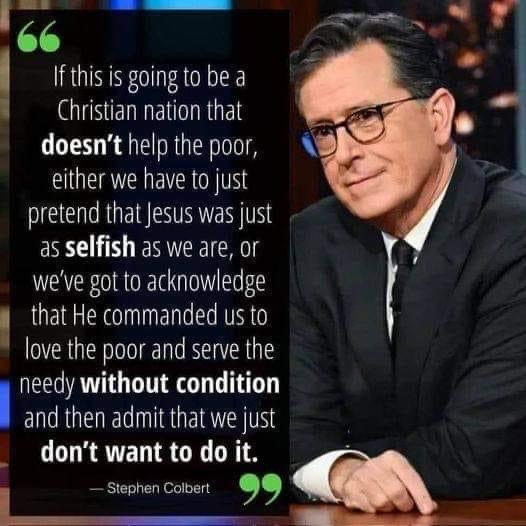
I love that you understand that feeding people who are hungry is continuing the mission of Jesus in this world. And feeding hungry people, generously and graciously, with no conditions or strings attached, is following the particular way of Jesus.

It would take all afternoon to tell you stories from my ministry about how Christians have failed to grasp this great gospel truth—stories of people and organizations who have demonstrated a misinterpretation our gospel lesson this morning.

As I have shared with you before, as we fed people in the greater New Orleans area each week, we were continually criticized by other Christians. They would say something like: “Pastor, I love the way you feed people, but people need more than the bread that perishes. They need the bread that will give them eternal life. They need the living bread. They need Jesus.”

This is the theology behind many Christian service organizations today that I believe is doing great harm to others, that is causing religious trauma, all in the name of Christ.

“You need food? You need shelter? Well, we’ll give you a hot meal and a warm bed. But first, you need to attend a Bible study or listen to a sermon, or allow me to me pray with you.”

I know of one ministry to the homeless in another state that provides a program to help people back on their feet. They will work with you, feed you, clothe you, help you find a job, as long as you turn in a Sunday worship bulletin from a list of approved churches in town.

Because they say that feeding people only something to tie them over until their next meal is not enough. They say they must offer them something which has eternal consequences. They must offer them Jesus. They must do more than feed their stomachs. They must feed their souls.

However, when we look at the context of our gospel lesson, we see that Jesus had just fed the multitude with absolutely no strings attached.  And we have enough biblical acumen to know that Jesus never once said, “Feed the hungry, if…” or “Feed the hungry, but…” His command and his example was always: “Feed the hungry, period!”

And in addition to being antithetical to the way of love that Jesus taught and embodied and to being a gross misinterpretation of scripture, we have enough common sense, decency, and humanity to know that using food or any of the basic necessities of life to manipulate people to accept the Christian faith, or any faith, is just pain gross.

And we know that whenever Jesus encountered hunger, whether the hunger be for food, water, peace, safety, health care, wholeness, grace or love, Jesus was always moved by the hunger. His own stomach ached from the hunger. Bs heart burned, and he always did all he could do to alleviate the hunger. He always preached against the systems of injustice which created the hunger in the first place.

This is why I am so grateful for this church. Because as wonderful as it is showing up at Park View once a month or volunteering with Meals on Wheels, or purchasing food to stock a little food pantry, for this congregation, you also believe it is not enough. And by believing it is “not enough,” you are not talking about saving their souls so they can die and go to heaven. You are talking about doing something that prevents people from being hungry in the first place.

You have heard the words of Jesus: “Do not work for the food that perishes, but for the food that endures for eternal life.”

And you come together each week as church, and ask God and one another: “What works of God must we that have eternal consequences, that have implications on this earth long after we are gone?”

And we hear Jesus’ response: “This is the work of God: that you believe in him whom he has sent.”

Jesus says we should believe in the One who taught and embodied a way of loving and living, a way of giving and advocating, a way of serving and organizing, that can nourish and sustain the world for decades after our lives on this earth end.

Jesus reminds his disciples that the way we live and sustain life means more than we know. Baking, serving. and sharing bread, when it is done in the inclusive, gracious, peace-making, justice-seeking way of Jesus, doesn’t just sustain us until our next meal, but has eternal significance. It is about life after our deaths, which means that it has ramifications for this world after we are no longer in it.

I cannot wait for Connor and Maria’s new baby girl Phyllis to join us here on Sunday mornings. And I long for the day—when Josh Brandi’s baby girl who is due to come into this world in December, and my granddaughter, who is due to arrive at the same time, will join Phyllis and all of the other girls who are a part of our congregation, girls like Addie Baugher, Frankie Brickhouse-Bryson, Leighton Lindmark, and Feyre Barricklow-Young. I long for the day that these girls will all join us here to remind all of us of the bread for which we must work for their sakes.

The words of Jesus to work for the food that endures for eternal life is a call to work for the freedom and the opportunity for these girls to thrive in this world long after most of us are dead and gone.

The words of Jesus to work for the food that endures for eternal life is a call to work for a world where these girls are free to be their authentic selves, precious beings who are created in the image of God, not confined the selves that others may want them to be.

The words of Jesus to work for the food that endures for eternal life is a call to work for a world where these girls have access to the best education possible, have the best teachers, and are always taught the truth about our history, no matter how difficult that truth is, and never have to fear that their classroom might be a target of gun violence.

The words of Jesus to work for the food that endures for eternal life is a call to work for a world where these girls are free to fall in love and marry the person they choose, or they are free to make the decision to never marry or have children, and know that they will still be equally valued with certain indelible rights.

The words of Jesus to work for the food that endures for eternal life is a call to work for a world where these girls will always have a voice and vote, a world where they are free to make her own healthcare decisions without interference from any government, a world where they will enjoy the same freedom their grandmothers once enjoyed.

The words of Jesus to work for the food that endures for eternal life is a call to work for world where these girls can choose a career which brings them joy and doesn’t pay or treat them differently because of their gender.

The words of Jesus to work for the food that endures for eternal life is a call to work for a world where these girls never have to put up with any misogyny or discrimination in the workplace or the marketplace and certainly at church.

The words of Jesus to work for the food that endures for eternal life is a call to work for a world where these girls are free to choose their own faith, and live out their faith, whether it is the Christian faith of their parents or it is another faith or spirituality which gives their lives meaning and purpose helping them to love their neighbors as they love themselves.

The words of Jesus to work for the food that endures for eternal life is a call to work for a world for these girls where science is believed and the earth is respected, where people do all they can do, even if it means some sacrifice, to reverse climate change to prevent ecological devastation.

The words of Jesus to work for the food that endures for eternal life is a call to work for a world where these girls will never doubt that they have the opportunities to live up to their fullest potential, which includes one day being president of these United States.

For this is bread of God that comes down from heaven and gives life to the world.

And, this morning, we have gathered here in this place, to say together: “Give us this bread always.”

Amen.

Hope Is in Our Gut

Mark 6:30-34, 53-56

The disciples were sharing with Jesus all they have been doing while they were out on the road publicly being the church, proclaiming the way of love that Jesus taught and embodied. They were telling Jesus all they have been doing to make the world more peaceful, equitable, and just for all people, especially for the poor and those marginalized by sick religion and greedy politics, and for foreigners, including Samaritans. They were telling Jesus all they have been doing to make sure the hungry were fed, strangers were welcomed, and the sick received healthcare.

And, while they were sharing with Jesus, they must have looked like some of us are looking these days: exhausted, frustrated, and even afraid.

Because like in Jesus’ day, the times we live in are serious. The threats are critical. The dangers are real. The call for mass deportations of immigrants grows louder. Fascism grows more popular, while democracy loses favor. Sixty years of civil rights progress is being threatened. The rights women have enjoyed for fifty years have been taken away. The very identity of our nation is at risk. People today who claim to follow Jesus seem to be opposed to everything for which Jesus stood.  And we the people, we who are trying to follow Jesus, are tired and afraid.

Jesus looks at the weary disciples and says: “Come away to a deserted place and rest a while.” Then, they boarded a boat and went on a cruise.

Sounds wonderful, doesn’t it? That we could all just go to some place to get away from it all. How nice would it take a cruise for the next six months!

I remember that’s exactly what I did after one presidential election. For three months, I disengaged and withdrew from everything happening in Washington. From November to February, I avoided all news. If Lori was watching MSNBC in the living room, I would ask her to turn the channel before I walked into the room.

Unlike the disciples, I didn’t own a boat, but I did have something they didn’t. I had cable TV and something magical called ESPN!  So, I put my head in the sand by focusing all of my attention on basketball and football. I did whatever I could do to pretend that nothing bad had happened world, that none of my friends felt threatened or lost. For three months, my best friend was denial.

But notice what happened to Jesus and the disciples when they tried to get away from it all. As soon as the people saw them board the boat, they spread the word and hurried to Jesus’ port of arrival ahead of them.

Jesus sees the great crowd, and (here’s the good news) he has “compassion for them.”

To truly understand this good news, we need to know something about this rich Greek word in this verse translated “compassion” It is σπλαγχνίζομαι (splanch-nizo-mai).

It is a visceral word which literally means to feel something deep in the gut. When Jesus sees the crowd that had gathered and that the people seemed lost and felt threatened, like sheep without a shepherd, his concern for them is gut-wrenching. The fear and needs of the people turns his stomach.

So, he and the disciples immediately go back to work, proclaiming good news to the poor, recovery of the sight to the blind, and freedom to the oppressed, while opening up a free clinic for everyone onsite!

As I said last month, we all need a Sabbath. We all need a little time away. But for the follower of Jesus, our time away will always be short-lived, because when we are following Jesus, when we are out on the road with Jesus in the public square, when heads are out of the sand, when our eyes are wide-open in the world, we will always see a great crowd in need: people who are hungry for food and for dignity, hungry for their lives to matter; people who are thirsting for water and for equality, thirsting to be seen as the image of God.

And when we really get to know them, when walk in their shoes, when we understand where they are coming from, their pain will be like punch in our own gut. Our stomachs will turn. And experiencing gut-wrenching pain, we will be stirred to love-inspired action.

I have heard and I have said that our nation has “an empathy crisis.” But I am beginning to believe that might not be the case. Because, I believe most all human beings were born with the capacity for empathy. Of course, there are few exceptions— those with dark, narcissistic tendencies, those whose hearts have been hardened by fear, greed and selfishness. But I do not believe they are not the majority.

And this, I believe, is the good news. This is our hope. The hope is in our guts. The hope is that most people have really do have the capacity for empathy which leads them to love.

For example, when most people read Lori and my story of losing our first child, when half-way into the pregnancy we discovered the baby did not have an abdominal cavity to protect their organs, leading us to make the difficult and painful decision to abort the pregnancy, most people demonstrate great empathy. Our personal story moves them. Reading our story, people have said they felt our pain. They shared our grief. Some told me that our story changed their position on abortion, or it confirmed their belief that the decision to terminate a pregnancy should be left up to the woman and not to a government that is unfamiliar with the situation.

However, there are a few people who continue to shock me with their cold-heartedness. Just last week on Facebook, someone I have not seen since high school, and to be honest, I don’t remember seeing her then, commenting on our story, called Lori “a murderer.” Can you believe that?

Which in my mind immediately raised the question about my high school classmate: “Is her heart really that cold? How can anyone’s heart, or gut, be so callous? To call Lori “a murderer?”

 But it occurred to me. The odds are that this woman is not a sociopath. Her problem is that she just doesn’t know Lori. And she certainly doesn’t know me very well. For everyone who truly knows us knows that if Lori was a murderer, I would have been dead a long time ago!

So, maybe our nation does not have so much of an empathy crisis as we have a proximity crisis. We have a too-many-people-living-in-a-bubble crisis. A too-many-people-tempted-to-keep-their-heads-in-the-sand crisis.

For too many have gone away to some deserted place with people who look like them and think like them in order to escape from anyone who is different or has lived a different experience.

Because if we truly knew one another, if we put ourselves in the proximity to understand one another, to know others as we know ourselves, personally, intimately, then our gut would prevent us from ever hurting another. We would feel it in our gut to truly love our neighbors as we love ourselves, which means to want for others the same protections, the same freedom, and the same justice that we want for ourselves.

Since I have been living in Lynchburg, I have been in awe of my colleague Rev. Dan Harrison’s great compassion for the Palestinian people. Dan seems to possess a passionate outspokenness for the Palestinians which is greater than mine. He seems to possess more of an urgency to loudly speak out for their humanity in Israel’s war with Hamas than I possess.

Could his heart be a bit softer than mine? Is he a more devout follower of Jesus than me? Perhaps. But I believe it is more likely because Dan has lived in that region of the world. It is because Dan has very close friends who are Palestinian. He knows their experience, because he has lived their experience. Dan has literally walked in their shoes. He knows them and understands them, personally and intimately. And when they are afraid, when they feel dehumanized, and otherized, Dan feels it in his gut. And he is stirred to action.

Dan would say that he is not more devout. He is just in more pain. And he is in that pain because of proximity.

I believe most of us have what we need in our guts to save us and to save democracy. We don’t need more capacity for empathy. What we need is to rediscover the power of proximity.

That is why, that no matter how dark things get, we must resist the temptation to withdraw completely from our world, to go off to some deserted place with people like us, to get away from all others, to completely disengage from the world and all of its problems, to turn off the news and immerse ourselves with ESPN, Hulu or Netflix, to stick our heads in the sand and ignore our neighbors who feel lost, keeping them out of sight, out of mind. For withdrawing only adds to our nation’s crisis of proximity.

Jesus didn’t feel like he was punched in the gut on that boat. Mark says he felt the gut-wrenching pain as soon as he “saw the crowds.”

After decades of supporting the Christian Right, ghostwriting autobiographies for Jerry Falwell and Pat Robertson, Rev. Dr. Mel White came out of the closet writing his own autobiography Stranger at the Gate in 1994 and then became a full-time minster to the LGBTQIA+ community. In his latest book, Religion Gone Bad, Mel White issues a warning of the dangers of Christian Nationalism and its critical threat it is to democracy.

I love the stories of Mel White attending worship services at Thomas Road Baptist Church. I am told whenever Rev. Falwell would disparage queer people in a sermon, Rev. White would stand up so the entire congregation, including Falwell, would see him. Avoiding seeing Rev. White, standing tall and proud confronting the hate, was not an option for anyone.

The world today is a scary place, but for the follower of Jesus, sitting down is not an option. Getting on a boat to go on a cruise for the next six months may sound tempting, but for the follower of Jesus, it’s not an option.

Retreating, withdrawing and disengaging— it’s not an option.

Denial is not an option.

Being quiet on social media is not an option.

Avoiding talking about religion and politics with our family and friends because making them uncomfortable will stir up some trouble is not an option.

The times are too serious. The threat is too critical. The dangers are too real. And if you are a follower of Jesus, now is the time to get into some trouble, some good trouble.

Avoidance, politeness, moderation, even tolerance— it’s not an option. Now is the time for all who believe that the best thing we can do as humans to love our neighbors as ourselves to rise up with Mel White and stand tall allowing others to see and experience our suffering in their guts, which will then hopefully stir them to love-inspired action.

         This is our hope. It’s in our gut. Amen.

Free to Follow Jesus

Mark 6:6-13 NRSV

What a surreal Fourth of July this has been following the Supreme Court’s decision that Presidents who break our laws are immune to prosecution, that a president with a flawed character can do whatever they want to do and get away with it, if it is deemed an official act.

As outrageous as it is, I am afraid that this is how many in our country have always defined the concept of freedom. It is a type of freedom that serves the privileged and the powerful, as it figuratively, and sometimes literally, places shackles on all others. It is a type of freedom that is for some of the people and never for all the of the people.

Freedom (life, liberty and the pursuit of happiness) is part of our identity as a nation, a sacred concept for which blood has been shed. Yet, as history proves, it is a concept that is far from perfect.

History reveals a national economy built on the genocide of native people, slavery, Jim Crow laws, a denial of voting rights for women, and LGBTQ oppression.

For some with privilege and power today, freedom means the right to deny workers a living wage and the right to refuse service to people they find objectionable. They use the iconic Revolutionary War motto “Don’t Tread on Me” to express their disdain for their taxes being used to feed impoverished children at school or to provide SNAP benefits to the parents of those children.

For some, religious liberty means the right to hurt their neighbors instead of the freedom to love them. It is all about self-interest with no regard for others, especially minorities. Although they claim to be Christian, their beliefs and actions are most accurately described as “anti-Christ.”

The good news is (and oh how we need some good news today) I know many people who have committed themselves to follow the way of love that Christ taught and embodied—a powerful, liberating way of love that lets freedom ring for all.

I am looking at a whole room of people who believe with the Apostle Paul that we are called to freedom, not to indulge in our selfish impulses, but to serve one another in love, people who believe they are free, not only to love themselves, but to love their neighbors as themselves.

I am looking at a room full of people who are concerned with freedom for others as much as they are concerned with freedom for themselves, who believe freedom brings both the opportunity and the responsibility to serve and to stand for others, not simply to amass personal rights and privileges at the expense of others.[i]

I see people who have chosen to use their freedom to follow Jesus as disciples, people who are fulfilling what it truly means to be the church in an oppressive world, unlike some in the church today who are doing the exact opposite, actually supporting systems of oppression.

When I think about the purpose of the church, how the church should serve in today’s world, I am constantly drawn to Mark 6 and this account of Jesus sending the disciples into the world for the very first time to be disciples. So much so, it was the source of inspiration for our new expression of church in New Orleans that Lori and I were a part of.

In verse 6 we read:

6aAnd he was amazed at their unbelief. 

I wonder if Jesus would be amazed at the unbelief of some in the church today. Having been a part of the church my entire life, I know I am often amazed when I consider how many in the church do not seem to believe that we are called to live, love and serve in the selfless, sacrificial way of Jesus. Instead, they have accepted an individualistic religion where they “accept Jesus,” “receive Jesus,” “study Jesus,” and “worship Jesus”; not actually “follow Jesus.”

I wonder if Jesus is amazed by the number of people who believe the Kingdom of God is just some place we go to after we die, instead of something we are supposed to work at, to give of ourselves to, to pour ourselves out for, to sacrifice to create right here on earth. I wonder if Jesus is amazed every time people pray: “Thy kingdom come on earth as it is in heaven,” and then don’t do a thing to make it happen!

6bThen he went about among the villages teaching.

Jesus was among the people, all the people, because Jesus was for all the people. Jesus went village to village teaching everyone that the most important thing we can do in this world is to love our neighbors as ourselves, and here in this text, we read that he expects his disciples to do the very same thing.

7He called the twelve and began to send them out two by two, and gave them authority over the unclean spirits. 

To me, one of the most disturbing political signs that I see in some yards today are the ones that say: “Jesus 2024 – Our Only Hope.” Not only do these signs support a dangerous Christian Nationalism making our Jewish, Muslim, and Hindu neighbors feel like second-class citizens, but they support an individualism that is opposed to the mission of Jesus as Jesus never intended to be on a mission to transform and save the world by himself. In what could be described as a call to democracy, Jesus called and gave authority and power to people to join him on that mission. He sent them out doing the very things that he did, some very big things like: challenging the unclean spirits: the spirits of war, selfishness, greed, poverty, all kinds of bigotry, and any type of oppression.

8He ordered them to take nothing for their journey except a staff; no bread, no bag, no money in their belts; 9but to wear sandals and not to put on two tunics. 

Freedom for many means the freedom to acquire and accumulate as much wealth as possible without any sense of responsibility to share any of that wealth. Jesus, however, calls people to live simply so they are able to give generously.

10He said to them, ‘Wherever you enter a house, stay there until you leave the place. 11If any place will not welcome you and they refuse to hear you, as you leave, shake off the dust that is on your feet as a testimony against them.’ 

 Jesus warns that if we teach others the importance of using our freedom to love our neighbors as we love ourselves, we will not be received by everyone. There will always be those who will choose to live solely for themselves instead of for others. But we should never let that discourage or stop us. We should peacefully but persistently keep moving forward, keep working, and keep doing what we have been called to do.

12So they went out and proclaimed that all should repent. 

Disciples go out and proclaim that all should repent of their selfish, self-centered, self-preserving ways and embrace a way of freedom that is far from individualistic, but a way of freedom that is profoundly connected with the well-being of everyone.

13They cast out many demons, and anointed with oil many who were sick and cured them.

We are called to stand up and speak out against the evil forces in our world. We are called to restore and to heal. We are called to be a courageous, peace-making, justice-creating, evil-exorcising, hope-giving movement for wholeness in our fragmented world!

And today, perhaps more than ever, I am grateful that you with so many others are offering this world hope by answering this call, as we journey towards a more perfect union, realizing the truth that all people are created equal and freedom is for all.

In his Fourth of July email, prophetic preacher John Pavlovitz wrote the following:

It is highly probable that it will get much worse before it gets better. And yet, no matter how dire things become, we still have our hands and our voices and our gifts and resources and platforms and privilege and lives to leverage to make it less dire for someone.

I’m not writing to tell you how bad things are…I’m [writing] to remind you how good you are.

This is not about anyone else’s inhumanity. It’s about your humanity.

It’s not about one group of people’s cruelty. It’s about your empathy…

In some ways it doesn’t matter who is in the seats of power.

It doesn’t matter how horrible the legislation that gets passed.

It doesn’t matter how much the evangelical church rejects Jesus and his teachings.

It doesn’t matter how compromised the courts are.

It doesn’t matter how predatory the preachers or the politicians become.

That is almost irrelevant.

Their violence is not the point.

Your capacity for love is the point.

And that love is the only plan.

Pavlovitz continues:

So yes, we will grieve and lament the unthinkable news this week. We will feel the sickness on this holiday [celebrating] a freedom that feels as though it’s evaporating—and then, we will get on to the work of fighting like hell to make sure that it doesn’t. Be greatly encouraged.

Amen.

[i] Adapted from article by Rev. Dr. Brett Opalinski, Emory University Candler School of Theology

Let’s Get Physical

Poor People’s Campaign June 29, 2024 in Washington DC to Support Poor and Low-Income People

Mark 5:21-43 NRSV

Yesterday, I had the privilege of escorting Betty Anne and Nancy to Washington DC for a rally of the Poor People’s Campaign. As we were crossing a street on the way back to the Metro Station, I heard Nancy say: “Betty Anne, watch your step on this curb.”

I responded, “Yes, Betty Anne! I forgot to go over the rules with the both of you for this trip. Rule number one is no falling. Nobody is allowed to fall on this trip!” And I admit I said it because both of them are not as young as they used to be.

Then, you know what happened next. I tripped over a loose brick in the sidewalk all 6’4” of my old self ended up laying, bruised and scraped up in some bushes.

As I was trying to reorient myself, I felt the hands of Betty Anne and Nancy on my shoulder and I felt this other hand touch my arm, and heard a strange voice with a foreign accent asking me to take her arm. As I did, this stranger pulled me back to my feet and, in a kind voice, asked me if I was ok.

It is hard to explain it, but something very hopeful, even spiritual happened in that physical encounter.

Thus, it is no surprise to me to learn that our God is a God who uses the physical as a means of grace. Today’s scripture lesson, with its repeated theme of physical touching, is a perfect example.

Through the act of touching, a woman is made whole, and God’s healing power is released.

Through the power of the physical touch, barriers of society and tradition are crossed. Rules and laws are broken. The woman in the story is unnamed and ceremonially unclean. It is against the rules to touch her, and it is against the rules for her to touch another. Then, notice what happens after the woman breaks the law by reaching out and touching Jesus.

Jesus asks, “Who touched me?” And desiring to connect with the woman who touched him, he reaches out and touches her. He commends her faith and calls her “daughter.” Through the grace of physical touch, the woman who was once unclean has been made whole. And the woman who was once unnamed has become a child of God.

In the second part of the story, like the woman with the hemorrhage, this the corpse of the girl is ritually unclean. Touching a corpse is against the rules. Yet, Jesus reaches out and touches the girl’s body nevertheless. In taking the girl’s hand, in touching the girl, Jesus reaches across the boundaries of society, but also boundaries of death. And her life is restored.

About twenty years ago, I attended a conference for pastors at Princeton University in New Jersey with two good friends of mine who were both serving as pastors at the time in North and South Carolina. During our free time one day, we Carolina boys thought it would be exciting to board a train and visit the Big Apple. Before we left, several frequent travelers New York City who were also attending the conference, gave us some advice.

“When you are in the city, don’t look anyone in the eyes,” they said.  “Don’t speak to anyone. Don’t point, at anyone or anything. If you point at a building, someone may think you are pointing at them, and there may be trouble. And whatever you do, don’t touch anyone. Don’t get close to anyone!”

As we were standing at one intersection in Times Square, waiting for the pedestrian light to turn green so we could cross, I noticed everyone in front of me, looking back over their shoulders. I turned around to see what they were looking at and saw a very elderly man with a long white beard who appeared to be homeless. With one hand on his grocery cart, he was bending down and picking up a slice of pizza off sidewalk. As he walked down the road pushing the grocery cart, he lifted the pizza to his mouth.

“Look, he’s going to eat it,” someone jeered.  But before he could get it to his mouth, he accidently dropped it. The crowd laughed at the poor man as we watched him a second time, pick up the pizza, put it to his mouth only to drop it again. The light turned green, the and off we went.

Later, we were walking up several flights of stairs as we exited the subway.  My friend, Cary was in front of me and my friend, Steve was behind me.

Up ahead, I noticed a frail-looking man struggling to pull a large suitcase up the stairs. As Cary and I walked past the man who grunted with each step dragging the suitcase behind him I thought: “Should I help him?”  “No, he might get the wrong idea, think I’m trying to steal it or something.”  So, I kept walking.

Steve, however, who was a few steps behind us, took a risk. Not knowing if the man even spoke English, he asked, “Do you need some help?” As Steve reached out and touched the end of the suitcase, the man immediately gave Steve a fearful, mean glance. But then, seeing that Steve intended no harm, he smiled. I watched as he smiled most hopeful kind of smile, and said, “thank you.” Steve, picked up the suitcase and helped the man out of the subway. At the top of the stairs, the man reached out his arm, looking like he wanted to hug Steve. He stopped just short of a hug and patted Steve on the back, saying, “Thank you. God bless you.”

Once again, God used the physical as a means of grace.  Steve reached out and touched and the power of God, the amazing grace of Jesus Christ was released.

As long as I live, I’ll always wonder what might have happened if I had purchased that homeless man a fresh slice of pizza.  I’ll always dream of the possibilities of what might have transpired if I ate a slice of pizza with him. I’ll always think of the grace that might of come, the salvation that might have happened, through the simple act of reaching out my hand to that poor man who was struggling to survive.

The critique I heard most about the new expression of church we planted in New Orleans that we called “Just Love” is that we lacked a spiritual emphasis. People would say: “I love your feeding ministry and all of your service projects, but it sounds like you are only interested in meeting people’s physical needs. What about the spiritual?”

During the summer of 2020, I was out on my route delivering hot meals one evening to people who are food-insecure in Abita Springs, Louisiana. I pulled into the driveway of a gentleman to whom I have been delivering meals since the start of the pandemic in March.

As usual, he was sitting on a chair in front of his house waiting for me. I look forward to seeing him each week, and he always looks forward to seeing me. Every time I pull up in front of his house, I hear: “Rev, am I glad to see you!”

As I was handing him a bag containing two meals, a woman approached us on a bicycle. She asked me: “Sir, do you have any extra? I am so hungry.” I replied, “No, but if you give me your name and address, I can add you to my list for the next time I am out here delivering meals.” She responded: “Sir, I don’t have an address.” Then, she started to ride off.

Having just learned she was homeless, I stood there, speechless. That is when the gentlemen who had been sitting out in the heat waiting for me to deliver his food shouted, “Hey! you can have mine!”

I said: “There are two plates in the bag. You both can have one!”

He looked at the bag, and then he held it up to the woman who had stopped her bicycle, and said: “No, I have a can of beans that I can warm up. I will be alright. You take both of these.”

The woman took the bag, thanked the man, and rode away.

The man looked at me and said, “Like you say Rev, just love.” He turned and went inside.

It was one of the most spiritual experiences of my life. It was a Holy God moment if there ever was one.

And this, my friends, is what our world needs. We need to reach past all of the barriers that we erect between ourselves and our neighbors— political, religious, racial, ethnic, economic. We need to go out, reach out, and touch them. We need to allow them to touch us. We need to join hands, link arms, rub elbows, and see that we have more things in common than the things that separate us.

And when we do that, something that can only be described as “spiritual” happens. When we touch and connect with others, we touch and connect with God, for we are soon able to see the very image of God in others.

Every Sunday morning, we gather around this table and affirm the grace of the physical. When we consume physical elements of grain and grape, representing the body and blood of Christ, we affirm that we have been touched by God through Christ. We affirm that through his touch, we have been made whole. Through his touch, we have all become children of God.

But more than that, in consuming the body and blood of Christ, affirm that we are the physical body of Christ in this world. Our hands are the hands of Christ. Our hands are holy. Our hands are a means of God’s grace. They have the power to heal this broken world. They have the power to accept, to welcome, to love, and to make this world a better place.

Thus, the simple act of touching—reaching out, connecting, sharing—is profoundly and powerfully spiritual.  It is sacred, and it is holy, perhaps more so if that touch reaches across the barriers of society and tradition.

A little bit of physical exertion to help a neighbor can bring hope. A simple handshake or embrace can bring a peace that is beyond all understanding. Reaching out a hand to an old man lying scaped and bruised in the bushes become a spiritual exercise. Sharing a meal with someone can start a powerful chain reaction of selfless love that changes the world!

When we reach out, touch, connect and share with our neighbors, we can’t and we won’t stay silent when the Supreme Court makes it illegal for a homeless person to sleep on a park bench, when it takes away the healthcare rights of women, or makes it more difficult for anyone to vote.

We can’t and we won’t vote for politicians that hurt LBGTQ people and support policies that marginalize people of other faiths.

And we can’t and we won’t accept poverty as the fourth leading cause of death in this, the richest country in the world.

We must recognize togther that there are dark forces working in our world that do not want us to come together. They use fear to divide us and lies to separate us. Because when we come together, when we touch our neighbors, when we allow our neighbors to touch us, they know that something powerful happens, because love happens. And when love happens, change happens. Grace happens. Empathy happens. Compassion happens.

And votes happen. The general welfare of all the people happens. Solidarity with low wage workers happens. Hospitality to the foreigner happens. A call for a ceasefire and all wars to cease happens. A demand for wealthy corporations to pay their fair share to secure a safety net for the poor and disabled happens. Free fully funded public education happens. Access to quality healthcare happens.

Healing happens. Life happens. Liberty and justice for all finally happens.

Things Are Getting Scary Around Here

 Mark 4:35-41 NRSV

There was a great church pianist and composer studying in Chicago who was known throughout the Midwest as Georgia Tom. He was scheduled to help with a revival at a large church in St. Louis about a month before his wife was due to have their first child. He was afraid to leave her so close to the due date, but he was committed to fulfill the promise he made to the church over a year earlier.

As soon as he got off the train in St. Louis, someone handed him a telegram which read: “Congratulations, you are the father of a new baby boy. However, it is with deep regret that we inform you that your wife died during childbirth.”

He boarded the next train back to Chicago. Overcome with grief, he arrived at the hospital to hold his new-born baby in his arms—however, shortly after he arrived, this little boy, the only part of his wife that he would ever be able to hold again, passed away in his sleep.

Georgia Tom took a leave of absence from his studies, and his ministry. He moved to South Carolina where he did little but grieve. It was sixth months before was able to sit down at the piano and compose a song. When he did, these first words that he wrote and set to music were the following:

Precious Lord, take my hand. Lead me on, help me stand. I am tired, I am weak, I am worn. Thro’ the storm, thro’ the night, Lead me on to the light. Take my hand, precious Lord; lead me on.

Georgia Tom, or Thomas Dorsey, as evidenced by this wonderful hymn and a long-life lived in dedication to God, knew what the disciples knew about Jesus. That Jesus is the one who helps us overcome our fears. Jesus is the one who helps us get through the storms of life, figuratively and literally, into a peace that is beyond all understanding.

In today’s lesson, Jesus and the disciples are in a boat. It is night, a dangerous time to be on the sea. And sure enough, “a great gale arose, and the waves beat into the boat, so that the boat was already being swamped.”

The fearful disciples cry out to Jesus who is sound asleep on a cushion in the stern: “Teacher! Don’t you care that we are perishing?”

Of course, Jesus cares. He wakes up and stands up. He immediately rebukes the wind and speaks against the waves. And a miraculous calm settles over the sea.

This is what God does. When we call on God in the storms of life, if we allow him to take our hand like Thomas Dorsey did, it may take some time, but we believe miraculous calm will settle over us. As disciples, we have perhaps experienced this.

This is what makes our scripture lesson this morning so strange. After Jesus rebukes the wind and speaks against the waves, after he brings a miraculous calm, notice that the disciples are still afraid.

In the Greek New Testament, Mark says that the disciples not only feared, but they “feared a great fear.” After Jesus calms the storm, the disciples become more afraid than ever.

Notice, that it is then Jesus asks: “Why are you afraid?” I’ve stilled the storm. I’ve calmed the waves. Why are you, even now, afraid?

And then, fearing a great fear, the disciples begin to ask one another, “Who is this that even the wind and the waves obey him?”

The disciples were afraid, but now they are afraid for a very different reason. I believe it’s a completely different kind very different kind of fear. First, there’s the fear of the death-dealing storm. Death, divorce, disease, in a thousand different ways, the storms of life come. You receive a grim diagnosis. A good friend loses their job. A child dies. Winds are howling. Waves are crashing. And we cry out to Jesus, “Do you not care that we are perishing?”

Of course, Jesus cares. He wakes up, stands up, rebukes the wind and speaks out against waves, and all is calm.

And the disciples have never been more afraid.

This is the fear that comes from standing in the presence of the one the wind and the sea obey. This is the fear that comes with the realization that this one who has been teaching them how to love this world, is none other than the Creator of all that is.

Thus, it is the fear that comes with the realization of the personal change and sacrifice that following the creator of the universe that is demands.

This is the fear that comes with the realization that when any of God’s children are perishing, it is God who is calling the disciples to care, to wake up, to stand up and rebuke the winds of injustice, to speak against the waves of oppression.

This is the fear that comes with waking up to the realization that if they want be on the side of the Lord of hosts, the Master of the earth, wind, fire and sea, then they must love this world as he does.

If they want to stand with the Most High, the God of Abraham, Isaac and Jacob, then they must stand with the sojourner in their land, with the vulnerable in their midst, with those who mourn and grieve their lives, with all who hunger and thirst for justice.

And with that realization, the realization that they must always be on the side of the underprivileged and the powerless, comes the fear of the push back that will surely be coming their way by the privileged and the powerful. This is the persecution that Jesus points out in the beginning of this chapter when he compares those who acquiesce to evil to avoid persecution, or those who are seduced by power and wealth, to seeds falling on rocky soil.

I cannot tell you how many times I have been asked: how are things going your new church? And each time, I respond the same. “Things are great! I am loving it!”

But perhaps the way I should be responding to this question, the way you should respond when people ask you is: “How are things going? Well, to tell you the truth, it’s a little scary. Doing this work of following Jesus wherever he leads is downright frightening. And being a part of such a church, well, it’s like fearing a great fear!”

For you see, I am working alongside people who believe God, the Holy Creator of all that is, is wide awake in our midst. Christ himself is here rebuking and speaking out against the storms of life. But at the same time, he’s shaking things up! He’s stilling the waters, but he’s also rocking the boat! He’s recreating and resurrecting. He’s making all things new. He’s creating a brand-new world: a world where every human being knows they are loved, where justice rolls down like waters and righteousness like an ever-flowing stream. He’s creating a world where no person perishes but has eternal life, a world where every life is equally valued. He is calling us to wake up. He is calling us to care. He is calling us to take a stand. He is calling us to go out into our world to love in a way that will not only be socially unacceptable, but will certainly upset the privileged and the powerful. He leads us out of one kind storm only to lead us directly into another kind of storm!

So, you see, being a part of a church that is committed to following the sacrificial, justice-seeking, love-winning way of Jesus is a most frightening venture!

But here’s the good news. When Jesus cared, woke up and stood up, rebuked the wind and spoke against the sea, I believe another realization came: This way of Jesus, this way of inclusive, sacrificial love, has the power to literally change the world!

When we follow the way of Jesus, when we care, wake up and stand up, rebuke the wind and speak out against the waves the whole world can change.

When we care, wake up and stand up, rebuke the wind and speak out against the waves by standing with poor people, then poor people can receive affordable housing, healthcare and education. They can earn fair living wages.

When we care, wake up and stand up, rebuke the wind and speak out against the waves by standing with the oppressed, discrimination of every kind will be defeated and liberty and justice will come for all.

And, although none go with us, we still will follow. Although our friends forsake us, we still will follow. Although family members desert us, our cross we still will carry. Although persecution befall us and things get scary, we still will be unashamed to faithfully preach the gospel and be unafraid to sing aloud with the Psalmist:

God is our refuge and strength,

a very present help in trouble.

Therefore, we will not fear, though the earth should change,

though the mountains shake in the heart of the sea;

though its waters roar and foam,

though the mountains tremble with its tumult.

There is a river whose streams make glad the city of God,

the holy habitation of the Most High.

God is in the midst of the city; it shall not be moved;

God will help it when the morning dawns.

The nations are in an uproar, the kingdoms totter;

he utters his voice, the earth melts.

The Lord of hosts is with us;

the God of Jacob is our refuge.

Come, behold the works of the Lord…

…He makes wars cease to the end of the earth;

he breaks the bow, and shatters the spear;

he burns the shields with fire…

The Lord of hosts is with us;

the God of Jacob is our refuge (Psalm 46).

When It’s Okay to Vacay

Mark 4:26-32 NRSV

Jesus said: The way the Kingdom of God happens, the way love wins and justice prevails in our world, is like someone scattering seeds on the ground, and then, lies down and goes to sleep. Then, while they are not paying any attention to it, and are unable to explain it, the seed sprouts and grows. The earth produces “of itself.” The seed produces “of itself.”

I think it is hopeful to consider the Greek word translated “of itself.” The word is automatos. Sound familiar? It is where we get our English word “automatically.”

And for emphasis, the Greek places the word in the beginning of the sentence. When we scatter good seeds: “Automatically, the seed grows. Automatically, the earth produces. Automatically, the Kingdom of God happens.”

In miraculous ways that we cannot begin to understand, when we plant the right seeds, the Kingdom of God automatically happens.

I love Martin Luther’s interpretation of this parable. He said:

After I preach my sermon on Sunday, when I return home, I drink my little glass of Wittenberg beer, and I just let the gospel run its course.

In other words, after working with God scattering some good seeds, proclaiming the gospel that Jesus taught, enacted, and embodied, Luther knew he could take some time off, enjoy a Sabbath, or possibly, take a little vacation.

Because Luther knew that the power of his sermons to create a more just and peaceful world was not based on the power of his theological acuity, the eloquence of his words, or in his gifts as a community organizer. No amount of charisma or art of his persuasion could plant the gospel in such a way that it would grow, expand, and transform into something that looked like the Kingdom of God. That was only something that only God could do, organically, mysteriously, and miraculously. All he could do was scatter some good seeds.

This explains how I could go to the beach with my family last week and do absolutely nothing for seven days and still call myself a faithful disciple. And it explains how you can take a vacation too without the guilt of thinking you need to be doing more to make a difference in this world!

Now, I know telling you to “take a vacation” flies in the face of what you usually hear me say from this pulpit on Sunday mornings. And for that, perhaps I should apologize.

Since I have been your pastor, you could argue that you’ve only heard me preach one sermon. And that is: “We’ve got some work to do!”

If you were here a couple of weeks ago, you heard me say that God does not work alone in this world. Since the very beginning, God has called human beings to accomplish God’s divine purposes for the world. And I said that when God calls, God calls us to do some pretty big things! My sermon even inspired Johnny Louthridge to challenge Ken Burger end all wars and to bring peace on earth.

On Trinity Sunday, I called being a disciple of the Triune God a “dance”—a beautiful dance of selfless, self-expending love. God calls us to enter that dance, to get busy answering the call to love this world! On Easter Sunday, I said: “For Easter to happen, for love to win, for justice to prevail, we need to pick up and carry a cross!”

Attempting to make a difference in this world as a preacher, I am afraid I may have given the impression that it is up to us to do good in this world, or good will not be done. Through my sermons, you may have heard the blasphemous belief that we are the saviors of the world, that it is up to us, and only us, to set the world right, or the world will be lost.

This “only-I-can-fix-it” mentality can be very dangerous, not only to ourselves, but ultimately, to the world.

It is what causes preachers to burn out and followers of Jesus to check out. We look at the overwhelming gravity of the world’s problems, at all the violence and greed, the injustice and inequity, and we say: “There’s just no way we can make any real difference.” So, we throw our hands in the air and give up. Some take even a permanent vacation from church.

So, please forgive me if you heard me say that God created the world and then left it all entirely up to us. Pardon me if I have ever sounded like our country’s Deist founders who believed that God created the universe and then went on some cosmic vacation.

There’s a famous account of the great prophet, Sojourner Truth, while she was listening to a speech one day in 1852 by a despairing and nearly burned-out Frederick Douglass, who was questioning if slavery could end without slaves resorting to violence. From the audience, Sojourner Truth interrupted Douglass by shouting out a rhetorical question: “Is God dead?” Douglass said her interruption was like someone throwing a brick through a window!

Truth had faith that God had a central role in the quest towards the abolition of slavery. Truth believed that God not only created the world, but God is still creating. God not only sent and resurrected Jesus, but our God is still resurrecting, and is still sending God’s self through God’s Holy Spirit. Our God is not dead, inactive, or ineffective, but very much alive, active, and ever victorious!

And because of that, the good news is that we can go on vacation. Because God is continually acting, we can relish times of inactivity, reflection, and the good grace of doing absolutely nothing.

We can spend a lazy day, or seven, at the beach, because God’s reign in the world is growing and will continue to grow, day in and day out, year after year.

But there’s an important caveat for the faithful disciple who wants to take a break. There are a few terms and conditions we must consider. There’s an acknowledgement box that needs to be checked. And I know how most of us like to skip over all those words, scroll quickly down to the bottom so we can check the box and move on. But it’s important for us to take some time and actually read the terms and conditions that apply.

The problem with too many Christians today is that they’ll put their hand on the Bible to be sworn into public office and never open the Bible and read it!

It’s only okay to take a vacay, if we’ve been working with God scattering good seeds. We don’t get to take a vacation if all we’ve been doing is working against God sowing bad or mean seeds: seeds of division, seeds of fear, and seeds of hate.

And the good news is that if we are working with God sowing good seeds, they can be the smallest of seeds, like the mustard seed, which, when sown upon the ground, is the smallest of all the seeds on earth; yet it grows and becomes the greatest of all shrubs which puts forth large branches, so that the birds of the air can make nests in its shade.

Did you hear that?

Disciples are those who do something, even a little something, to cultivate structures and systems that provide shade, shelter, protection, and healthy living environments.

This is what working with God looks like in this world. And notice that this is not the first time we read about birds in this fourth chapter of Mark’s gospel. We read in verses three and four that the seeds that fall on the path are eaten up by birds that were hungry. Is it possible then, that those same hungry birds are the ones who will be able to make their nests in the shade and protection of the large shrub produced by the mustard seed?

The Psalmists certainly understood that the provision of protection, especially for the hungry and the poor, is paramount to the purposes of God. Listen to this prayer for those in power recorded in the seventy-second Psalm:

May [they] judge your people with righteousness and your poor with justice. May the mountains yield prosperity for the people, and the hills, in righteousness. May [they] defend the cause of the poor of the people, give deliverance to the needy, and crush the oppressor… May [they] be like rain that falls on the mown grass, like showers that water the earth… For [they] deliver the needy when they call, the poor and those who have no helper. [They have] pity on the weak and the needy and save the lives of the needy. From oppression and violence, [they] redeem their lives; and precious is their blood in their sight”(Psalm 72:1-6, 12-13).

The psalmist’s prayer underscores that “working with God” means working for a justice that emphasizes the well-being of the entire community, with special attention on behalf of the poor, the vulnerable, and the marginalized. “Working with God” means working to protect the least of these from being overpowered, exploited, or rendered landless, homeless, and destitute.

The psalmist prays that those with political, social, and economic power will be especially attentive to bring justice to the poor, to defend the cause of the poor, to protect the poor, and to crush those who would oppress them.

This is why we are working to charter a bus to Washington on June 29 to stand with the Poor People’s Campaign. Bishop William Barber compares this event to the march on Washington on January 6, 2021, saying:

We’re marching on Washington with a spirit of resurrection, not of insurrection—a non-violent resurrection of unity, not a violent insurrection of division.

In other words, we’re marching to combat hate, division, and an extremist political agenda by scattering seeds of new life, seeds that will sprout opportunity for people, especially poor people, to live lives that are protected and enabled to thrive.

We are scattering seeds to sprout: living wages for low-income workers; healthcare for all people; environmental justice; a ceasefire and humanitarian relief in Gaza and an end to genocide worldwide; just immigration laws; the restoration of the rights of women; adequate and affordable housing; a fully-funded public education; and full and expanded voting rights.

And when we do this work, when we get in lockstep with God, when we join that dance between the Father, Son and Holy Spirit, when we pick up and carry a cross, when we pray with the Psalmist, doing what we can individually, democratically and ecclesiastically to scatter seeds of justice, seeds of equity, seeds of mercy, and seeds of peace—because they are good seeds, because they are holy seeds—the fruits that God will produce from those seeds, the fruits of “love winning” and “God’s kingdom coming,” will be automatic!

The hungry will be filled with good things.

The lowly will be lifted up.

The mighty will be cast down from their thrones.

And then, we can rest from our labors.

We can take a vacation.

We can enjoy a sabbath.

And if we want, even this very afternoon, we can sit back with Martin Luther and sip a cold beer.  Amen.

Answering the Call to Love – Honoring the Rev. Ken Burger

1 Samuel 3:1-10 NRSV

Oh, how the Church needs more days like today! Days when we turn our attention to the peculiar way that the Kingdom of God comes to this world—to be reminded how Jesus began his ministry on this earth ushering in the reign of God creating a new world where the poor are blessed, those who hunger and thirst for justice are filled, the lowly are lifted up, and the mighty are cast down from their thrones.

As the Lord and Savior of the world, the Son of the Most High, the Alpha and the Omega, the eternal Word who became flesh, the One through all things came into being, did Jesus do it all by himself?

I suppose an argument could be made that he certainly could have. But instead, Jesus gets the kingdom started by going out, finding, and calling people like me and you, people who were just minding their business one day, mending their nets or sitting in a tax booth, or on a camping trip with friends (I’ll talk more about that a little later), calling people who had very little idea of who Jesus was and where Jesus was taking them. Yet, this is how God works in our world. It is the way God has always worked. God works in the world by calling others to do the work.

In Genesis, we read that God creates the world: the mountains and the seas; the valleys and streams; every animal, every living thing in the water, in the air and on the land; the sun, moon, stars and all that lies beyond. Then, God creates human beings, gives them a garden that has enough to feed the world, and calls them, all of them, male and female, to look after it, protect it, tend to it, and share it.

It is as if God says: “You know, I have really enjoyed creating all the beauty and order in this world. Of course, I could take care of it all myself. I could work to make sure all are able not to just survive but to thrive from the bounty of this creation, but I want to see you do it.”

Likewise, Jesus comes into the world making all things new, creating, recreating, reordering, ushering in the Kingdom of God. He touches and heals, welcomes, includes, advocates, and forgives. He turns water into a whole lot of wine and a small basket of food into a great feast that feeds everyone with leftovers, all as a sign of that Kingdom of God is here and there is grace enough and mercy enough and nourishment enough for all. He redeems and restores the lives of the lost, the poor and the marginalized. He chastises judgmental religion, challenges systems of oppression, and exorcises demonic forces that exclude, devalue, and dehumanize.

And then it is as if he says: “You know, I’ve enjoyed doing the holy work of God, demonstrating the reality of God’s reign in this world, but now, it’s your turn. I am calling you to do my work in the world.”

Just as God called people like Abraham and Sarah, Moses and Miriam, Ruth and Jeremiah, Samuel and Deborah, Mary Magdalene and John the Baptizer, Paul and Pricilla, God called a young man living in Huntsville, Alabama who liked to blaze trails as a Boy Scout and as a member of the youth group of First Christian Church. On a camping trip with his friends, it was his friends who first told Ken Burger he should go into the ministry. Like Samuel who soon learned it was not Eli calling, but it was actually God calling him, Ken learned that it wasn’t just his friends calling that day, as he later announced to a surprised family that he was called by God to vocational ministry.

After graduating from the University of Alabama, Ken attended the Lexington Theological Seminary and was ordained into the ministry, 50 years ago this August.

After seminary, Ken says he was surprised when he was called to serve as a pastor of a church in Girard, Illinois. But that is how the call of God usually comes– as a surprise. We are awakened from sleep in the middle of the night like Samuel, or we’re busy at work like the Twelve, or we’re camping in the woods, sitting on the porch, or driving in our car, and out of nowhere, the call come. It’s inexplicable, yet real; incredulous, yet convincing. And no matter how hard we might try, there is no shaking it, and certainly no ignoring it.

After serving that church for 3 years, Ken accepted a call to serve as Associate Minister, 40 miles away in Jacksonville. Then 2 years later he resigned and returned to Girard to start a new ministry, one that lasted 8 years.

Ken says that he remained on the “mission field” of the Midwest for 12 years before moving to Virginia in 1986 where he accepted a call to serve with Bedford Christian Church, a ministry which lasted 8 ½ years.

During those years, he, Marilyn Taylor, and David Herrick sensed a call minister to Senior Adults. One day, they met on the campus of Lynchburg College to explore possibilities together. This is when Ken learned that when God calls, God often calls us to do some pretty big things.

I think we sometimes overlook Jesus’ call of the disciples. For what did he call them to do? Sit on a pew every Sunday? Sing, pray, listen to a sermon, try to be a good person? Maybe attend a ministry team meeting every now and again or join a book study?

No, they were called to do what Jesus did. Nothing too big mind you. Just your ordinary raising of the dead. Just your routine healing of a disease. Just your typical demon exorcism sort-of-thing. They were called by Jesus to do big things that change the world.

Ken understood this, that God calls us to dream and to dream big. And bringing big dreams to life takes time and a lot of patience, for that one meeting at the University of Lynchburg led to a task force that met for 7 years.

Then, in 1995, the Christian Church (Disciples of Christ) in Virginia called Ken to serve on the Regional staff as Project Director for the new ministry.  Ken says: “Our own Herb Moore and my second-best friend Johnny Loughridge, were a big part of that call, but that’s a story for another time.”

In November 1996, Ken married his first-best friend, Linda. Her children April and Adam became what  Ken calls his “bonus” daughter and son, along with 3 grandchildren and a great-grandchild. Ken is also a proud Dad to two daughters, Melinda and Stephanie, with whom he enjoys regular Father-Daughter retreats. I believe Ken would say that his role as husband, father and grandfather is his highest calling.

His first Sunday in his new position was when he and Linda were called to joined the First Christian Church of Lynchburg. That was the day he told David Edwards, the senior minister at the time: “I’ve watched this congregation for over 8 years. I want to be part of this.”

Ken’s visionary work with the region led to establishing a joint venture project with Centra and the development of The Summit, where Ken served as Executive Director for 13 years, retiring 8 years ago.

But here’s the thing. Ken never retired from ministry, because Ken understands that the call of God upon people is never silenced. As member of this congregation, Ken continues to say “yes” to the call of God as he faithfully uses his gifts to serve this church, his family and community.

Ken writes: “I love what we are doing here at FCC, for which I am both humbled and proud to be a part.”

Ken Burger, we are grateful that God has called you here. And that you answered that call. And we trust, that wherever you are, even if it is not with us here, that you are there because you are still answering a divine call to love.

Last week, I quoted CS Lewis who described God: “not as a static thing, not even as a person, but as a dynamic, pulsating activity, a life, almost a kind of drama.”

Perhaps one way to describe God is as “a call.”  God is a prodding, pulling, provoking, universal force—a beckoning, compelling energy that transcends denominations, religions, and any human construct that tries to define or limit it– calling people to love.

God is a continual call to love in small and big ways that change the world!

The Call to Love is a call to affirm that every person is created in Love’s image to care for, tend to, and share in the diversity and extravagant bounty of creation.

Thus, the Call to Love is a call to favor democracy over dictatorship, a generosity over greed, truth over talking points, and love over fear.

The Call to Love bends the moral arc of the universe towards justice and brings wholeness and peace to a fragmented world.

The Call to Love leads churches to be Open and Affirming of all people, regarding and embracing the wondrous diversity of the human family as a portrait of divinity.

Ken says he “loves being a part of what we are doing here.” I believe Ken is saying that he loves the way he is witnessing people here answering The Call to Love.

Several of you answer The Call to Love every day in your jobs and through volunteerism in your community.

Many of you are answering The Call to Love as you care for members of your family who need you.

Ann Boynton is answering the call to vocational ministry. Several of you are answering the call to serve as elders, deacons, officers and on various ministry teams.

The One Home – One Future Team is answering the call to transform our grounds to model ecological justice.

The Outreach Team is answering a call to serve children, feed the hungry, fight for democracy, and provide equitable access to housing.

The Education Team led by Maria is answering the call to teach and train our children how to answer The Call to Love.

These are serious times. We are living in dangerous days. But the good news is that Love is calling. Love is calling people like you and me and Love is still calling Ken Burger, for the Call to Love can never be silenced. Love is calling us every day to do what we can to make this world more just, equitable and peaceful.

How is Love calling you today?

There is perhaps no more important question. For it is simply the way our God works in this world. Amen.

Triune Identity Politics

Romans 8:12-17 NRSV

How ironic that we are recognizing graduates and celebrating the gift of learning on Trinity Sunday, the day the church celebrates its most difficult teaching of all to learn, some would say its most impossible teaching to learn, the doctrine of the Holy Trinity.

It’s fascinating to read the letters regarding the Trinity between those radical Presbyterians, Barton Stone and Alexander Campbell, who started this movement for wholeness that we call the Christian Church (Disciples of Christ). It is obvious that Stone had a more difficult time accepting the Trinity than Campbell. Stone writes to Campbell:

On this doctrine many things are said, which are dark, unintelligible, unscriptural, and too mysterious for comprehension. Many of these expressions we have rejected…

I wonder if Stone’s problem was that he was trying to comprehend the Trinity in the first place. For maybe the Holy Trinity is something to be lived, more than learned, something to be experienced more than explained, something or someone with whom to relate more than to understand.

Modern Trinitarian thought uses a word spoken by Gregory of Nazianzus and Maximus the Confessor to describe how three can be one. These ancient thinkers of the fourth and fifth centuries referred to the inner life and the outer working of the Trinity as peri-co-reses, which means literally in the Greek, “to dance.” They were suggesting a dynamic, intimate, self-giving relationship shared by the Father, the Son, and the Holy Spirit.

So perhaps, the Holy Trinity is not a doctrine to learn at all, but more of a connection to be enjoyed. It is to be encountered more in relationship than in religion. It is something that is unseen, yet true; inexplicable, yet real. It is more surreal than literal; more actual than factual.

The late author and lecturer Phyllis Tickle tells the following story that I believe speaks to the mystery of the Trinity. She was addressing a Cathedral gathering on the historicity of the Virgin Birth. She recounts:

The Cathedral young people had served the evening’s dinner and were busily scraping plates and doing general clean-up when I began the opening sections of the lecture I had come to give.

The longer I talked, the more I noticed one youngster—no more than seventeen at the most—scraping more and more slowly until, at last, he gave up and took a back seat as part of the audience.

When all the talking was done, he hung back until the last of the adults had left. He looked at me tentatively and, gaining courage, finally came up front and said, ‘May I ask you something?’

‘Certainly,’ I said. ‘What about?’

‘It’s about that Virgin Birth thing,’ he said. ‘I don’t understand.’

‘What don’t you understand,’ I asked, being myself rather curious by now because of his intensity and earnestness.

‘I don’t understand,’ he said, ‘what their problem is,’ and he gestured toward the empty chairs the adults had just vacated.

‘What do you mean?’ I asked him.

‘Well,’ he said, ‘it’s just so beautiful that it has to be true whether it happened or not.’

So, I believe it is with the Trinity. This dynamic, intimate relationship, this holy, self-giving dance, shared by the Father, Son and Holy Spirit is so beautiful, that it has be to true, whether it is the most accurate description of the image of God or not.

C. S. Lewis once wrote:

All sorts of people are fond of repeating the Christian statement that ‘God is love.’  But they seem not to notice that the words ‘God is love’ has no real meaning unless God contains at least two Persons. Love is something that one person has for another person. If God was a single person, then before the world was made, [God] was not love…

And that, wrote Lewis:

is perhaps the most important difference between Christianity and all other religions: that in Christianity, God is not a static thing—not even a person—but a dynamic, pulsating activity, a life, almost a kind of drama. Almost, a kind of dance…

There it is again: a dance. The Trinity is an activity. It’s something moving, something to be experienced, something to be lived, something to be shared. Lewis continues:

And now, what does it all matter?  It matters more than anything else in the world. The whole dance, or drama, or pattern of this Three-Personal life is to be played out in each one of us: (or putting it the other way around) each one of us has got to enter that pattern, take [their] place in that dance. There is no other way to the happiness for which we were made.

Trappist Monk Thomas Merton once said:

To say that I am made in the image of God is to say that love is the reason for my existence, for God is love. Love is my true identity. Selflessness is my true self. Love is my true character. Love is my name.

I believe it is in the sacred dance of selfless, self-giving love shared by the Father, Son, and Holy Spirit that we find our holy purpose. It is where we can get in touch with our true identity that Paul describes in his letter to the Romans as “children of God,” “joint heirs with Christ” who “live by” and are “led by the Spirit.”

And when we embrace our true, authentic selves, when we accept our identity that we are created in love to share love, when we accept that we are love, and we begin to fulfill our holy purpose by sharing ourselves with others and the world, something wonderful happens. Not only are we happier and more fulfilled, but the world around us becomes just, more equitable, more gracious, more merciful, and more peaceful.

Think of how much evil exists in our world because people do the exact opposite. We define God on our own terms, instead of allowing the image of the Triune God define us. Instead of understanding God and our true identity as selfless, self-givers, we understand God and our identity as selfish takers. Such an understanding emboldens oppression. It fuels White Christian Nationalism, justifies war, and is behind much, if not all, of the violence in our world today.

How often have you attended a funeral and heard the phrase: “God came and took them home?”  We might hear it as a harmless misinterpretation of God by a preacher who didn’t go to seminary, but it is very bad theology that has very evil consequences.

The Trinity teaches us that God does never “takes” anyone. For givers are the opposite of not takers. I believe a more accurate way of describing what happens to us when breathe our last breath on this earth is that God comes and completely, eternally, and finally gives all of God’ self to us.

I believe with all my heart that by living our identity as self-givers, by joining the holy, self-giving dance of the Trinity, we can reclaim a gospel that has been hijacked by people who would rather live in this world on their terms instead of on God’s terms. We can reclaim a gospel that has been co-opted by takers, by people who have exploited the name of God for their own selfish gain.

For if we embraced our identity as self-givers, as persons living, moving and having our being with God, in God, think of how everything that is upside down in our world today is transformed. Think of how our relationships with ourselves and others would change.

Think of how our faith would change. Our faith would not be about what we can take from God—healthier marriages, stronger families, deeper friendships, peace, security, comfort, a mechanism to overcome trials or to achieve a more prosperous life, or even gain an eternal life.

Our faith would be what we can give back to the Holy Giver—namely all that we have and all that we are, even if it is costly, even if it involves risk, danger and suffering, even if it involves the loss of relationships, some stress on our marriages, sleepless nights, a tighter budget, even if it involves laying down our very lives.

Think of how church would change.  Church would not be about what we can take from it. It would not be about feeding our souls, experiencing some personal peace, receiving a blessing or some inspiration to help us through the week.

Church would be about opportunities to participate in self-giving acts of love. Church would be about feeding those who hunger for justice, working for world peace, being a blessing to our communities, and inspiring our nation and the world.

Church would not be a way to for us to get some Jesus. Church would be way we allow Jesus to get us, to love our neighbors as we were created to love, dynamically, graciously, generously.

And we would never see our neighbors for what we can take from them, or how we can use them, profit by them, but always see what we may be able to offer them, especially those things that others are constantly robbing them of to support their dominance and superiority over them—their dignity, their equality, their sacred value as human beings created in the holy image of God.

The earth would not be something for us to take from, plunder and exploit for our own selfish wants, but something for which we sacrificially care for, respect, nurture, and protect.

I believe when we embrace our sacred identity as givers, instead of takers, and enter into the holy, self-giving dance of the Trinity, God’s kingdom comes on earth as it is in heaven.

Embracing the holy self-giving dance of the Trinity rebuilds a broken world, corrects an upside-down moral narrative, and heals sick religion.

Embracing the holy, self-giving dance of the Trinity brings down walls and breaks the chains of injustice.

When we embrace our identity and enter into the holy, self-giving dance of the Trinity, hate, bigotry, and violence passes away, liberty and justice and peace come, and it comes for all, as all of creation is born again.

And this, my fellow Americans, is how we can best honor those who have died in war on this Memorial Day weekend. For when we all embrace our sacred identity, and enter into the holy, self-giving dance of the Trinity, the words of the prophet Isaiah are fulfilled:

They shall beat their swords into ploughshares,

   and their spears into pruning-hooks.

Nation shall not lift up sword against nation,

   neither shall they learn war anymore (Isaiah 2:3-4).

Yes, Barton Stone, this Holy Trinitarian dance is a mystery. But it is a Mystery that has happened and is happening to us, and in us. It is our sacred identity. We can’t comprehend it. But we can accept it. We can join it. We can live it. We can move and have our being in it. And we can share it, today and forevermore.

Pentecostal Hope

Sermon preached at the Arkansas State Capitol, May 21, 2018, the day after Pentecost Sunday, following a march of the Poor People’s Campaign: A National Moral Call for Revival

For God so loved the world, that God came into the world to show us how to love our neighbors as ourselves—All of our neighbors, but especially our neighbors who have been pushed to the margins: the sick in need of healthcare; the immigrant in need of a home; the poor in need of a living wage; school children who just want to be safe; people of other faiths who hunger for respect; and people of color who thirst for their lives to matter.

Offended by the unsettling force of this inclusive love that proclaimed good news to the poor and liberation to the oppressed, that affirmed the rights of women and welcomed the children; afraid of this radical love that had the audacity to stand for liberty and justice for all, the privileged powers-that-be plotted against it, arrested it, and crucified it.

Three days later there were stories of a resurrection, a resurgence of this love. Because that’s the thing about this love. This love will not be defeated. No amount of obstruction or collusion can conquer this love. No amount of hush money can silence this love. There’s not enough nails in Jerusalem or bullets in Memphis or lies in Washington that can assassinate this love.

But the light of this love is such a threat to the systems that feed the darkness, the darkness will still try to find a way to overcome it.

Discrimination will be legalized under the guise of religious freedom. Voter suppression will be carried out under the guise of preventing voter fraud. Racist voter ID laws, gerrymandering, and sick religion will be used to disengage and disenfranchise minorities. People with different faiths and different ethnicities will be demonized and dehumanized by Caesar himself. More prisons will be built. New walls will be erected. Families will be separated.

However, yesterday, I went to church. I went to church, and I heard some good news from the second chapter of the book of Acts.

“When the day of Pentecost had come, they all came together in one place.”

“They all came together”—black, white and brown; Gay, Transgendered, and Straight; Democrat, Republican and Independent; Muslim, Jew and Christian.

“And there came a sound, like the rush of a violent wind, and it filled the entire house” where they had gathered. I believe the sound sounded something like: “FORWARD TOGETHER—NOT ONE STEP BACK!”

“Divided tongues, as of fire, appeared among them… All of them were filled with the Holy Spirit” of a love that was so inclusive, so radical, so audacious, that despite their different languages, when they spoke out together, they were heard with a miraculous clarity by all.

“But others sneered and said, ‘They are filled with new wine.’”

They’re a bunch of sore losers, entitled whiners.

“But Peter, standing with the eleven, raised his voice and addressed them: ‘Men of Judea and all who live [and work] in Jerusalem [and Little Rock and Washington], let this be known to you, and listen to what I say. Indeed, these are not drunk, as you suppose,

“No, this is what was spoken through the prophet Joel:
‘In the last days it will be, God declares,
that I will pour out my Spirit upon all flesh,
and your sons and your daughters shall proclaim prophetic justice,
and your young men shall see visions,
and your old men shall dream dreams.
Even upon [the poorest of the poor] both men and women,
in those days I will pour out my Spirit;
and they shall [proclaim good news to the poor and liberation to the oppressed]
And I will show portents in the heaven above
and signs on the earth…

[In other words, God is saying: “Through these people, through a new unsettling force of inclusive love, I am going to change the world!’]

“Awe came upon everyone, because many wonders and signs that were being done…”

The moral narrative changed. Walls came down. Chains were loosed. A blessed community was formed. Racism, sexism, Islamophobia, homophobia, and xenophobia were relinquished. Voting rights were restored. Fair living wages were paid. Unfair incarcerations ceased. Affordable housing, healthcare and education were available. All of creation was respected and protected. Clean water was consumed. Clean air was breathed.

And liberty and justice came. And it came for all. Not just to one race, one faith, and one nation. It came for every nation under heaven.

Truth came for all. Peace came for all. Mercy came for all. Love came for all.

Into the world’s darkness, light came for all, and darkness could not, cannot, and will not, ever overcome it!

A Pentecostal Outpouring

Acts 2 NRSV

I have heard more than one person say: “the Spirit of God is in this place.”

I have also heard people make the counter observation about other churches, saying something like: “I no longer felt the Spirit in that place.” And I am sure that there are some who have made, and who still make, that observation about our church.

So, a good question for us to ask on this Pentecost Sunday is: “How do we know whether or not the Holy Spirit is here?” How do we know if any church ever experiences something like Luke described as a violent wind and tongues of fire? How do we recognize a Pentecostal outpouring of the Holy Spirit?”

As a child, I remember our congregation often opening a worship service by singing:

There’s a sweet, sweet Spirit in this place. And, I know that it’s the Spirit of the Lord; There are sweet expressions on each face, And I know that it’s the presence of the Lord (Doris Akers, 1962).

“Sweet facial expressions?” Is that how we know? I suppose I see a few of those today. But are you happy because the Spirit is here or because you know there’s some good food waiting for you at the end of the service?

I have heard some people talk about an outpouring of the Spirit as they describe a worship service where people are standing singing praise songs to Jesus with their hands raised and tears rolling down their cheeks.

I once served on a town’s recreation committee with the responsibility of organizing the summer church softball league. After leading worship on Sunday, I drove over to a neighboring church to deliver the schedule for the upcoming season. As I pulled into the parking lot, I noticed that cars were pulling out, so I assumed their service had just ended. As I opened and walked through the front door of the sanctuary, I was alarmed to see several people lying motionless in the aisle! The pastor, who was gathering his notes at the pulpit, saw me come in, and without even a hint of concern in his voice, greeted me with a smile saying: “Brother Banks, welcome! Come back with me to my office, and don’t mind those folks lying there in the aisle.”

More than a little distressed, as I walked around the bodies lying in the aisle, I asked: “Are these people ok?”

The pastor said: “Oh, don’t you worry about them. They’ll get up soon enough. We just had a tremendous outpouring of the Holy Spirit today where several people were slain in the Spirit. It happens from time to time.”

I anxiously followed the pastor into his office, where he asked me to sit down across from his desk. As I handed him the softball schedules, I must have had a not-too-sweet expression on my face, because he asked, “Brother Banks, you don’t ever have people fall out during your services, do you?”

I answered: “Oh, it’s happened a time or two, and each time, somebody called 911.”

He smiled and said, “Well, that’s how we know that the Holy Spirit is in this place.”

So, should be concerned that no body passes out in the floor during our worship here? That no one stands and raises their hands as they sing overwhelmed with emotion?

So, what do we mean when we say we feel the spirit in this place?

Some Sundays, I am amazed how the anthem that Jeremy selects or the hymns that Judy plays fit perfectly with the sermon. I sit back here and say to myself: “That’s the Spirit working!”

However, as amazing as that is at times, I am not sure that exactly what is being described by Luke on the Jewish festival called Pentecost.

Luke writes: “When the day of Pentecost had come…all of them were filled with the Holy Spirit and began to speak in other languages, as the Spirit gave them ability.”

I suppose we could ask someone who knows a few languages, like Brian Cox, to come up here and speak to us this morning. But there’s a problem with that. The miracle of Pentecost was not so much in the speaking as it was in the hearing.

Amazed and astonished, they asked, ‘How is it that we hear, each of us, in our own native language?

If Brian comes up here and speaks to us in German, I am pretty sure we are not going to hear him in English.

Perhaps Luke, in describing the outpouring of the Holy Spirit, is trying to paint a portrait to help us see something larger, more wonderful, and more astonishing.

Perhaps Luke is describing what our country needs today, what our world needs today— a divine grace to listen, to hear, to understand, to empathize with others who may be so different from us that they speak a different language. Perhaps Luke is describing an outpouring of the Holy Spirit that produces a divine compassion for more people than the people we see as “our own,” a holy call for people to possess an empathy that transcends countries, ethnicities, sexual orientation, gender, and race. In this great Pentecostal outpouring-of-the-Spirit event, Luke just well may be describing the first Diversity, Equity, and Inclusion Conference!

Luke is describing a Pentecostal outpouring that transforms the hearts and minds of people to have the heart and mind of Jesus who listened to, heard, and learned from a Syrophoenician woman, saw the Samaritan as his neighbor, and accepted Eunuchs, who Matthew records Jesus saying were “born that way” (Matthew 19).

Luke is describing a people who would never say “God bless America” without a sincere desire for God to bless the entire world. He is describing a group of people who would never condemn the genocide of one nation without condemning the genocide of another. He is describing white people who do not hesitate when they see a black man mercilessly executed by police in the street to stand up and say “Black Lives Matter” or to speak out at the school board when the history lessons taught to children in our schools are being whitewashed.

Luke is describing people who do not merely worship Jesus, but they follow Jesus, and teach the way of love that Jesus taught, a generous love that is expressed as goodwill for all people.

Luke is describing hearts that are so generous “they would sell their possessions and goods and distribute the proceeds to all, as any had need.” These are people who never complain about food stamps, free healthcare, and increasing the minimum wage, because they truly believe in supporting the welfare of all people, so no one, regardless of their citizenship is in need.

Luke is describing people who feel a deep sense of connectedness to all people.

The COVID-19 pandemic taught us many things. Like all communicable diseases, that a virus can originate on the other side of the world and quickly spread to every nation on earth taught us how connected we all are to one another.

But it also taught us something about our refusal to acknowledge such connectedness. It taught us something sinister about our selfishness and self-centeredness as some refused to wear a mask in public or get a vaccine to protect their neighbor. Even some churches refused to abide by the stay-at-home orders at the beginning of the pandemic, revealing that we have many churches in America devoid of the Holy Spirit of the One who said the greatest commandment is to love our neighbors as ourselves.

It revealed that what this world needs today is some Pentecost, a serious outpouring of the Holy Spirit!

And by “serious,” I mean the world doesn’t need more people tearfully worshipping Jesus with their hands raised in the air. It needs more people following Jesus by extending their hands to help their neighbors in need.

The world doesn’t need more anthems or postludes that pair well with the sermon. It needs more people who are offering their spiritual gifts to pair with the needs of the world.

The world doesn’t need more people slain in the spirit on Sunday morning. It needs more people to be awakened by the spirit to a live a life of generosity for the goodwill of all people every day of the week.

And the world doesn’t need any more congregations with sweet expressions on each face. It needs more of the fire that was experienced on that day the Holy Spirit showed up enabling people of all nationalities, ethnicities, and races to see, to listen, to hear, and to care for one another.

The world needs more empathy and equity, more justice and generosity, more sharing and more goodwill, and not just for people who speak our language, are born in our country, share our pigmentation, or go to our church, but for all people.

The good news is that I believe this is indeed a spirit-filled church. Now, we are still calling 911 if you fall out in the aisle this morning, but there’s plenty of other evidence that the Spirit of the Lord is in this place.

The building and the blessing of the little food pantries, our donations to the Rivermont food pantry, our volunteers each month who serve at the Park View Mission, our folks who have signed up to deliver Meals on Wheels—these are all evidence of a Pentecostal outpouring of the Holy Spirit, or as my childhood preacher liked to say, “an unction of the Holy Ghost!”

And just this past week, our Outreach Team met with the Interfaith Virginia Center for Public Policy to discuss a partnership that will enable us to not only feed our neighbors in need, but to be advocates for justice, so our neighbors will not be hungry in the first place. This may be the strongest evidence of all that there’s Pentecostal outpouring in this place.

So, as we celebrate 150 years as a church, on this day which has been called “the birthday of the Church” (that’s Church with a big ‘C’), there is indeed a sweet, sweet spirit in this place. There are sweet expressions on some faces, but there are also some holy scowls, some furrowed brows, some eyes filled with divine determination, souls ignited by a fiery Call of Love to make this a more generous, equitable, and just world, not just for some of the people, but for all people. And I know that it’s the Spirit of the Lord. Amen.