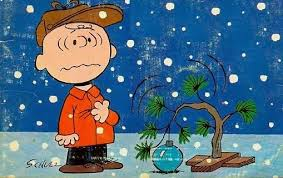
Disappointment at Christmas

christmas-disappointment-7159866

Matthew 11:2-11 NRSV

It’s the Third Sunday of Advent. The days are getting shorter. The nights are growing longer. The last month of the year is a darker, colder place to live. And it is in this cold December darkness that we are all a little more sensitive, a little more attuned to the real darkness and chill of our world. The world around us appears even more fragile than usual, more harsh, and more broken.

Human service organizations report record number of volunteers and donations in the days leading up to Christmas. It’s really kind of silly when you think about it. The homeless are still homeless in July. The cold are even colder come February. Nursing home residents won’t be any younger when March arrives, and the hospitals are filled with the sick every month of the year. But at Christmas, our hearts become a little more tender, and they tend to bleed just a little bit more.

And here lies our great December disappointment. Our holiday awareness of the world’s plight is the great paradox of Christmas. If God so loved the world that God was willing to become flesh and be Emmanuel, God with us, why is there so much pain and suffering in our world? Why is there so much poverty, sickness, injustice, and pure evil? Why is this world so cold, so dark?

Death, divorce, disease, destitution, desperation, despair—darkness—it envelops us like a December Arctic blast.

If God so loved the world that God was willing to become flesh and dwell among us, if Christmas really occurred, if God truly came, if good news actually happened, why is this world still so cold? Why are we left disappointed?

I believe these are the questions with which John the Baptizer struggled.

As we mentioned last week, John is the very first character in the Christmas drama. He is the one of whom Jesus says: “Truly I tell you, among those born of women no one has arisen greater than [he]”. He is the one who had given his entire life to God, who had very faithfully and courageously lived out his purpose in life preparing the world for the advent of the Messiah. His important role in salvation history had been prophesied years earlier by the prophets Isaiah and Malachi. And he fulfilled this role with utmost humility and commitment.

When people felt led to worship him, John quickly said, “No, for there is one who is coming who is more powerful than me, for I am not even worthy to untie the thong of his sandals.”

And what does he get? What is his reward?

Imprisonment. He is locked up in a cold, dark cell waiting for the Romans to cut off his head.

Talk about Christmas paradoxes!

“Wait one minute!” John must have thought. “This can’t be happening! Not to me! Not to the one who was chosen by God to prepare the hearts of people for the Advent of the Messiah! I have been so faithful, so courageous. I have sacrificed, and I have given my all. And just look at me now! Look what I have gotten! Look where I am! My world could not be more cold, more dark!  Something is just not right about this.”

Can you relate?

I can.

So, there, in prison, enveloped in disappointment, John sent word asking Jesus, “Are you the one who is to come?” Are you the messiah? Are you the one about whom I have been preaching all these years?

“Or are we to wait for another?” Someone who is even more powerful. Someone who will finally come and set this world straight. For if you are truly the Messiah, why is my world so dark? Why am I sitting in prison about to lose my head? Why do I feel the way that I feel? Why am I so disappointed? Something is just not right with this picture. Jesus, I want, I need some answers!”

Jesus answered John alright. Just not the way he hoped he might answer. Jesus told his disciples to “Go and tell John what you hear and see. The blind receive their sight. The lame walk. The lepers are cleansed. the deaf hear. The dead are raised, and the poor have good news brought to them.”

What is Jesus telling John by pointing to these signs of the Messiah’s coming?

Well, I know what he is not telling John the Baptist. As one who has read about John ten chapters earlier in Matthew and as one who knows something of the disappointment of this world, I know that Jesus was not telling John what John wanted to hear.

Jesus was not saying, “Yes, John, I am the one. I am the Messiah of the world who is coming with my ax in hand to cut down the Romans and throw them into the fire! With my winnowing fork, I am coming to clear the threshing floor and burn your enemies with an unquenchable fire!

So Cuz, you just sit tight, because Christmas is coming and things are about to get straightened out! Somebody’s coming to town and he’s making a list! He’s checking it twice! So all who are against you, why, they better watch out!”

No, Jesus said, “I am he. I am Christmas. However, Christmas is not carrying an ax and a winnowing fork and harsh words of condemnation. I’m carrying bread for the hungry. I am carrying water for the thirsty, and I’m carrying words of forgiveness for the sinners.”

The one who is more powerful than John comes, but this powerful one comes with a different type of power: a selfless, self-expending power. He comes to rule not with an iron fist, but with outstretched arms. He comes to love and to save and to die. The Messiah goes into villages, not to burn them down with unquenchable fire. But goes into villages to eat at the table with sinners, to give hope to the poor, to bring wholeness to the broken, and to give life to the dead.” This one who is more powerful than John comes as a suffering servant.

From his cold, dark prison cell, John the Baptist heard about this so he sent word inquiring, “Are you the one? Are you the Messiah who is to come?  Or are we to look for another?”  John’s whole ministry had been pointing to Jesus, saying that he is the one. Now John asks Jesus, “Are you really the one?”

John preached, “The Messiah is coming!  He’s going to fix everything.  He’s going to straighten the whole thing out. He’s going to finally set things right.  But now the Messiah had come. And John the Baptist is in prison. And he’s about to have his head served up on a silver platter.

Anticipation of the Messiah has now met the reality of the Messiah.  And for John, and if we are honest, for even us today, there is some disappointment.

And all John was told was to look for these signs of his coming. And although these signs were not what he expected, and certainly not what he wanted, miraculously, John will soon learn, as we all are still learning, that these signs were all he truly needed.

And you know what I am talking about! The good news is: Jesus the Messiah of the world has come to this earth as the light of the world to save us all from Satan’s power, and there are signs all around us that prove it!

The blind receive their sight—you know people who are physically blind, yet they can see God more distinctly, see hope more clearly, and see love more purely than anyone with 20/20 vision.

The lame walk—you know people in wheelchairs who are more whole, more together, more able, and more gifted than some world-class professional athletes.

Lepers are cleansed—you know people who have been demeaned, degraded and dehumanized, yet they have more of a sense of belonging, of distinction, of purpose, of eminence, than royalty.

The deaf hear—you know some hearing impaired who are more attentive, more alert and more keenly aware of this miraculous gift we call Christmas than folks who can hear a pin drop.

The dead are raised—you know people who on their deathbeds were more conscious, more hopeful and more alive than some couples on their wedding day.

And the poor have good news brought to them—And we all know folks who do not have a dime to their name, yet they are richer, more satisfied and better-off than some of the wealthiest people we know.

And there was once an old preacher named John sitting in a cold, dark Roman prison cell, about to lose his head, who, although he did not always realize it, was more liberated, more unfettered and unshackled, and more free than any new born baby!

And then there are the small signs of Christmas that are all around us—in a friend’s or a spouse’s undeserved forgiveness; in the innocent love of a child; in a warm embrace; in a friend’s thoughtful visit, encouragement, empathy and love; in the breaking of bread, in the sharing of a cup.

And these signs can also be seen through serving a hot meal to a stranger; giving a coat or providing shelter to the cold and undeserving; visiting the lonely in a nursing home; and wrapping gifts for families you have and will never meet.

Yes, on the surface, John the Baptist may have been disappointed when Messiah did not come quite as he preached, when Christmas did not come with a fire to conquer and destroy his enemies. But I believe John began to learn, as we are all still learning today, that fire can take many forms. Yes, some of the forms are destructive and dominating in their effects.  But other forms are warm, comforting, purifying, light-producing and life-giving. These are the forms of fire which our Messiah, which Christmas takes in our world.

And because of this, on this Third Sunday of Advent, on this dark, cold day of December, we light another candle, and we are still learning that light does not disappoint us.

Good News of Christmas

no room

Sermon preached at Mt. Moriah Community Church’s Christmas Concert, Farmville, December 23, 2015

Luke 2:1-7 NRSV

No place. No room.

Adam and Eve were in the garden trying to cover up their sins. Ashamed of what they had done, ashamed of who they had become, they saw no way out. So they went into hiding. But what they did not know was that even if they used all of the fig leaves in the garden, there was no place on earth they could hide from God.

As the sun was about to set on them, literally and figuratively, they heard a rustling in the trees, footsteps in the grass, for God showed up! And although they could not go back to the good old days and undo their mistakes, God surprised them by using God’s own hands, making garments of skin and clothing them with grace.

Consumed with hate, Cain kills his brother Abel. He is exiled from the garden into the land of Nod. But just when he thought his new place would be God-forsaken, God forgotten, God-cursed, God showed up and put a mark of protection, a mark of mercy on Cain which would stay on him for the rest of his life.

Abraham and Sarah were enjoying retirement. Their old age, frail bodies and declining health told them that there was no way they could ever be used by God. They were in no place to ever make a difference. But just when they thought they could just sit back, watch the Wheel of Fortune and Jeopardy and just turn in, God showed up with a purpose that was so miraculous, it caused them to laugh out loud!

Moses was a fugitive on the run. Running from his sins. Running from himself. Running from God. Then, just when he thought he was in a place where he had run away from it all, a bush suddenly bursts into flames. God showed up. God showed up saying, “I’m sending you Moses, yes, you Moses, a sinner with a speech impediment and a thousand other excuses, I am anointing you to stand up to the Pharaoh to proclaim good news to the poor, freedom for the prisoners and recovery of sight to the blind, to set the oppressed free.”

Soon after the children Israel were set free from slavery, they they hit a dead end with Moses in the wilderness. Pharaoh’s army was advancing behind them and the Red Sea stood before him. There was no way to escape. No place to go. Then, when they had all but given up, complaining to Moses that they would have been better off dead back in Egypt, at the very moment they lost all faith and all hope, God showed up. God showed up and made a way when there was no way. God showed up and brought hope in the midst of despair, faith in the midst of doubt, victory in the midst of defeat and life in the midst of certain death.

It was a dangerous time in a dangerous world. Mary, who was with child, and her betrothed husband Joseph, were on the road to pay taxes to a puppet king in an occupied territory. The road was long, and being with child made the road especially difficult. And to make things more difficult, when it was time for the baby to be born, they discovered that there was no room in the inn. There was no room.

But this was not the first time God heard these words. There is no room. There is no place. There is no way. There is no hope.

So, as God had proved over and over throughout history that there is nothing in all of creation that can separate the world from God’s love, God, once again, showed up! In spite of every demonic power that tried to thwart God’s coming, God came.

And the good news of Christmas is that God still comes. And there is nothing in all of creation, nor things above nor below, nor angels nor rulers, nor things present nor things to come, nor life nor death that can stop God from coming.

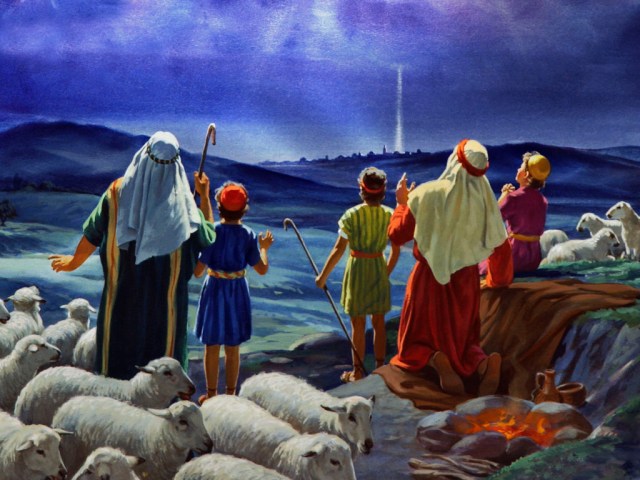
Last Sunday I shared the story about a certain Christmas play that a local church was presenting. You know the kind. I used to be in one every year when I was growing up. Three boys playing shepherds are bare-footed, wearing bath robes with towels wrapped around their heads and carrying long sticks. And three more boys playing wise men wearing cardboard Burger-King crowns wrapped in Reynolds Wrap are carrying boxes decorated with left-over Christmas garland. They all walk up on the chancel, greet Mary and Joseph, and bow down before the baby Jesus.

Well, during one particular play, after the wise men and shepherds came and bowed before Jesus, a spokesperson for the wise men made an announcement: “We three kings have traveled from the East to bring the baby Jesus gifts of gold, circumstance and mud.” Of course, laughter filled the sanctuary.

But you know what they say: “out of the mouth of babes.”

The truth is that when God wanted to reveal God’s love for the world, God came to us through the person of Jesus born in Bethlehem to meet us in all of our circumstances.

Through Christ, God came Adam and Eve and God and comes to meet us hiding in our circumstance of sin and shame and offer us forgiveness.

Through Christ, God came to Cane and God comes to meet us in our circumstance of living in a hate-filled, seemingly God-forsaken and God-cursed world and offers us mercy.

Through Christ, God came to Abraham and Sarah and God comes to us to meet us in the circumstance of our old age, tired bodies and declining health and offers us new life.

Through Christ, God came to Moses and God comes to meet us in the circumstance of our wandering and our running and offers us a divine purpose.

Through Christ, God came to the children of Israel and God comes to us in our circumstances of dead ends and utter despair and offers us a new way and a new hope.

Through Christ, God came to Mary and Joseph and God comes to us in the circumstance of being told there is no room for you, there is no place for you, there is no way for you, and there is no hope for you and says, “Oh, yes there is!”

The good news of Christmas is that God comes to us in all of our circumstances and offers us the assurance that there is no circumstance on earth or in heaven beyond God’s amazing grace.

And coming as a human being, coming into the world as a fleshly body, a body made up of dust and water, God comes and joins us in our mud and all of our muck.

Through Christ, God came into and still comes into our muck of pain and offers comfort.

Through Christ, God came into and still comes into our muck of sickness and brings healing.

Through Christ, God came into and still comes into our muck of loneliness and shares divine presence.

Through Christ, God came into and still comes into our muck of fear and gives peace.

The world says that there is no room, that things are not going to get any better. The world says there is no way, that the good old days are long gone. The world says that there is no place where evil will not get the best of you. The world says there is no hope because in the end, everyone dies.

Then a young woman named Mary goes into labor as God says: “I am always working all things together for the good!” A baby cries in the darkness as God says: “The best days of life are always before you.” The child cries in the night as God says: “Although you cannot go back to the good old days, good new days are always coming, even if you are about to draw your last breath!”

The world says: “There is no room. You will never amount to anything. You are a loser. You are insignificant. You are worthless. You are not a good person.”

The world says: “There is no way. No matter how hard you try, sin always has a way of getting the best of you. You’ve made too many mistakes.”

The world says: “There is no place for you as nobody really cares about you.”

The world says: “There is no hope. You and this world would be better off if you were dead. For you, there is no room, no way, no place, no hope.”

Then a baby is wrapped in bands of cloth born to underserving, unwed teenagers in an occupied land, as God says: “I love you just as you are, and I come to wrap you in my mercy, clothe you with my grace. I know your sins and I forgive you. I will always be with you and never away from you. I will always be for you and never against you. I will always stay by your side fighting for you, even if it means dying for you.”

The world says: “There is no way the churches in this town will ever work together. Racism will never end. Bigotry will never cease. The railroad tracks will always divide. There is no room for compromise. There is no place for reconciliation. There is no hope for unity.”

Then a brown-skinned baby’s birth to a Hebrew woman is announced by angels: “I am bringing you good news of great joy for all the people: white and black, red and brown, Aramaic-speaking and foreign-speaking, gay and straight, rich and poor, documented and undocumented, citizen and refugee. For you, all of you, a baby is born who is Christ the Lord and through him there is no longer Jew or gentile, slave or free, male or female for all are one.”

The good news of Christmas is although the world often seems dark, the light of God will not be diminished.

The good news of Christmas is although racism and bigotry will try to divide us, the good news that unites us will not whitewashed.

Although the sounds of guns and violence are deafening, the Word of God will not be silenced.

Although the rich will always try to rob the poor, the justice of God will not be defeated.

Although the powerful rule with fear, the prince of peace will not be conquered.

Although hate seems to have its way, love will not lose.

Although sin seems to get the best of us, grace will not fail.

Although despair seems to overwhelm, hope will not fade.

Although death seems to be final, the kingdom of God will reign forever and ever.

Hallelujah. Hallelujah. Merry Christmas.

Finding Christmas

Amazing Grace

Here we are. It’s the fourth and final Sunday of Advent. Time is running out. Christmas is only a few days away. Have you been looking for it? Have you been searching for it? Have you been yearning for it?

If so, have you been looking in the right places?

No, not in the shopping mall; not under the tree in the living room; not hanging in a stocking on the fireplace; not in the kitchen or in the dining room; not at the party; and, as fun as it was to try, not even under the mistletoe. Have you been looking for Christmas in the only place that Christmas can be found? Have you been looking for Christmas out in the wilderness, far from the lights of downtown?

Have you heard and accepted the God’s honest truth, even if that truth is difficult to swallow? Have you been able to openly and truthfully say: “The choices I have made on my own have not brought me fulfillment. My freedom, my material wealth, my high tech gadgets, a nice home, a nice car, a seven-day vacation, even a wife, two kids and a dog are not enough. I need something more! The truth is: I am standing the middle of the wilderness, and I am utterly lost!”

Have you heard and accepted the truth that none of us are who we ought to be. I’m not alright. You’re not alright. None of God’s children are alright. Each of us stands in desperate need of a savior. More than anything else, we need a savior to search us and know our hearts, to test us and know our thoughts, to see the wicked ways in us and then lead us into the way everlasting.

Lost in the wilderness of life, have we asked God to take an ax and cut us down, or kindle a fire to purge us, so we can be reborn, so we can start over afresh and anew, so we can be cleansed and changed and completely transformed forever?

I believe this is exactly where we find Mary in this morning’s gospel lesson. In one of most beautiful songs in the entire Bible, Mary’s humility and recognition of need is clearly evident. “My soul magnifies the Lord, and my spirit rejoices in God my Savior, for he has looked with favor on the lowliness of his servant.”

New Testament Scholar Alan Culpepper has noted: Mary’s “confession [of] ‘Savior’ expresses the desperate need of the lowly, the poor, the oppressed, and the hungry.” Those who have it all—freedom, family, a lot of stuff—those who Culpepper says have “power and means, privilege and position, have no need sufficient to lead them to voice such a term that is itself a plea for help.” Savior.

To confess that God is our Savior means that when we discover our lostness in middle of the wilderness, we do not look to some other power for salvation.” When we confess God as savior we are making the announcement that “neither technology nor social progress, neither education nor legislated reforms will deliver us…from [our] meaningless lives.” The only one who can save us is the God revealed through the birth, life, death and resurrection of Jesus.

The first words from the one chosen to be mother of the Messiah’s lips are an acknowledgment that she is but a poor soul lost in the wilderness standing in desperate need of a savior. And the good news is: this is all that Mary does.

Luke does not give us one clue in his narrative or any indication to why she was chosen or what her attributes might be. Luke tells us far more about Zechariah and Elizabeth than he tells us about Mary. All we are told about Mary that warrants this blessing is the acknowledgment that she is a lowly servant in need of a savior. Mary has done nothing more.

Mary continues: “Surely all generations will call me blessed; for the Mighty One has done great things for me, and holy is his name.”

Notice who is doing all of the acting: “He has shown strength with his arm; He has scattered the proud in the thoughts of their hearts; He has brought down the powerful from their thrones; He has lifted up the lowly; He has filled the hungry with good things, and He sent the rich away empty. He has helped his servant Israel, in remembrance of his mercy.”

God is doing it all. God is doing all the acting. The only thing that Mary does is acknowledge her need for a savior. God does the rest.

This is good news of the gospel. In our looking and searching and yearning and seeking, we don’t find Christmas, Christmas finds us. When we go to the wilderness, acknowledge our need for salvation, hear the truth that we need to change, ask God to cut and prune and burn, allow God to have God’s way with us, Christmas comes to us.

This week, I read about a certain Christmas play that a local church was presenting. You know the kind. I used to be in one every year when I was growing up. Three boys playing shepherds are bare-footed, wearing bath robes with towels wrapped around their heads and carrying long sticks. And three more boys playing wise men wearing cardboard Burger-King crowns wrapped in Reynolds Wrap are carrying boxes decorated with left-over Christmas garland. They all walk up on the chancel, greet Mary and Joseph, and bow down before the baby Jesus.

Well, during one particular play, after the wise men and shepherds came and bowed before Jesus, a spokesperson for the wise men made an announcement: “We three kings have traveled from the East to bring the baby Jesus gifts of gold, circumstance and mud.” Of course, laughter filled the sanctuary.

But you know what they say: “out of the mouth of babes.”

The truth is that when God wanted to reveal God’s love for the world, God came to us through the person of Jesus born in Bethlehem to meet us in all of our circumstances.

Through Christ, God came to us and still comes into the wilderness to meet us in the circumstance of our lostness and offers us salvation.

Through Christ, God came to us and still comes to us to meet us in the circumstance of our weakness and offers us strength.

Through Christ, God came to us and still comes to us to meet us in the circumstance of our guilt and offers us forgiveness.

When we acknowledge where we are and who we are and what we need, God comes to us through Christ and finds us in all of our circumstances and offers us the assurance that there is no circumstance on earth or in heaven which is beyond God’s amazing grace.

And coming as a human being, coming into the world as a fleshly body, a body made up of dust and water, God comes and joins us in our mud.

Through Christ, God came into and still comes into our muck of despair and gives us hope.

Through Christ, God came into and still comes into our muck of sickness and brings us healing.

Through Christ, God came into and still comes into our muck of loneliness and shares divine presence.

Through Christ, God came into and still comes into our muck of fear and gives us peace.

Nancy Smith, a member of this church, with no family in this area, has spent most of the last two months alone in the hospital. She suffered a heart attack which has exasperated her COPD. This week, short of breath, she said to me, “Although I get very afraid at times, I know I am going to be alright, because God is with me.”

Nancy was saying: “No matter my circumstance, no matter how muddy my life becomes, everything is going to be alright.” Nancy was saying: “I will be victorious because the creator of all that is, loves me so much that he came into and still comes into my worst circumstances and into my deepest mud and finds me.”

I believe one of the most perverted things about the church today is that it is full of people who believe that they are the ones who have found Christmas. They have everything figured out. They have all of the answers. They no longer see through a glass darkly. Thus, they are the first to judge others, the first to point out the sins of others. They believe they have somehow gotten themselves good enough, wise enough, clean enough, and straight enough to find Christmas. They boast: “I’ve found Jesus!” “I’ve got Jesus! “I’ve accepted Jesus into my heart!”

Which begs the question: “What made them ever think Jesus was the one who was lost, the one who needs to be accepted?”

The good news of Christmas is that it is Jesus who wants to find us, accept us, get a hold of us, and transform us. Jesus does not want us to take him into our hearts. Jesus wants to take us into his heart. Jesus wants us to know his heart, feel his heart, share his heart.

Jesus wants us to feel his heart that beats not for those who casually have him all figured out, but beats for those who stand in awe of his mystery from generation to generation.

Jesus wants us to feel his heart beating not for the proud and their accomplishments who will be scattered, not for the powerful and their influence who will be brought down, and not for the rich and their greed who will be sent away empty.

Jesus wants us to feel a heart beating for the lowly who will be lifted, feel a heart bleeding for the hungry who will be filled with good things, feel a heart pulsating for the afraid who will be given a peace beyond their understanding, feel a heart pounding for the lost who will be found.

Jesus wants us to experience a heart that is filled with a love so unconditional and a grace so free that it changes our hearts and compels us to share that love and grace with all people.

Here we are. It’s the fourth and final Sunday of Advent. Time is running out. The good news is that we can stop looking. We can stop searching. We can stop yearning, and we can stop seeking. All we have to do is stand in our muddy wilderness and acknowledge our need of the Savior, confess that we are the ones who are lost, we are the ones who need to be accepted. And no matter our circumstance, nor the depth of our mud, the hope, the peace, the joy and the love of Christmas will surely find us.

Christmas will find us and change us, so, together, we can change the world.

Looking for Christmas in the Wilderness

Maundy Thursday

Luke 3:7-18 NRSV

United Methodist pastor and  preacher William Willimon once said that he often wonders why people come to church to hear a sermon. He said that he, like most preachers, believe you come here Sunday after Sunday to be comforted. You have had hard, busy weeks. You have been under a lot of stress lately. Your children are not doing as well as you would like. Business is slow. Times are tight. You are having a difficult time taking care of your aging parents. And you have your own health worries. Your marriage is not quite like it used to be. You are still dealing with grief over the loss of a loved one. And you are still struggling with forgiving that friend who let you down and loving a neighbor who betrayed you. So you get in your car every Sunday and drive to this place to sit in a pew to get a little comfort. You come to get stroked and soothed, pampered and pacified.

So I, along with hundreds of other moderate, educated, mainline preachers in pretty, downtown pulpits, seek to give you a dose of what we think you need and want each and every Sunday. We seek give you a little bit of psychology. We metaphorically pat you on the back from our pulpits on Sunday mornings assuring you that everything is going to be alright. We seek to give you a little bit of Jesus-loves-me-and-Jesus-loves-you-so-I’m O.K.-you’re O.K.-all-God’s-children-are-O.K. theology.  Worship, then, is a little feel-good-pick-me-up to help us recover from last week and to help us get through the upcoming week, some chicken soup for the soul.

Then, we encounter a text like this morning’s gospel lesson. And we read the account of a preacher who is a far cry a moderate, educated, mainline preacher in a pretty, downtown pulpit. His name is John the Baptist.  He’s a harsh man with a harsh voice crying out from the boondocks far from the lights of downtown.

No one ever called John the Baptist “moderate.” And no one ever called him “pretty.” And there was certainly nothing comforting about his message of hell, fire, brimstone and impending judgment.

John stood in the mud of the Jordan River and preached: “You bunch of poisonous snakes! There’s a bunch of dead stones in this muddy river. God is able to make a family out of these stones. There’s a heap of dry chaff, mixed all up in with the wheat. You know what God’s going to do? God’s going to start a fire to burn off the chaff.  I wash you with water; and if this water is too cold for you… there is one who’s coming right behind me who is going to scorch you with fire!”

“You better get washed. You better get clean! If you’ve treated someone unfairly, go make it right. If you have prejudice in your heart, get rid of it. This may be your last warning. Today is the day. Now is the hour, for the ax, the judge, and the fire are coming!”

Now I think: “Who in the world would want to travel out in the middle of nowhere to hear a sermon like that? Who wants to look at someone who looks like John and hear him say: “I’m not O.K.! You’re not O.K.! None of God’s children are O.K.!” Who wants to hear him say: “The unquenchable fire is coming, so you better get ready!? You better stop being so arrogant and pompous, so selfish and so greedy. Because guess what? Someone’s coming and hell’s coming with him!”

Who wants to listen to a sermon like that? As it turns out, lots of people. Luke says: “multitudes.” And genteel, educated preachers in pretty downtown pulpits everywhere ask: “why?”

It just so happens that people do not necessarily go to church to listen to a sermon to be comforted. People come to church to hear the truth.

Multitudes went to into the boonies because that redneck preacher who looked like he could handle a snake or two named John the Baptist was telling people the truth.

That is why I believe you come to this place Sunday after Sunday. In a world of so much deceit and falsehood, in a world where people will tell you anything you want to hear to make a dollar, in a world where the rich and powerful control the media, you want to hear someone who unashamedly will speak to you honestly and truthfully. You come here out of a deep yearning to hear a word of truth from God because you know deep in your heart that it is only that truth that will set you free.

That is why more people went out to hear John preach in the desert than have ever come here to hear me preach in my pretty downtown church. Multitudes tramped through the briars and dust and went to hear a fire-breathing preacher who stood, not in a beautifully crafted and decorated pulpit, but in the muddy Jordan River, and spoke of axes, judgment and fire. They went to hear the truth. Even though they knew that sometimes, most of the time, the truth hurts; the truth is not an easy thing to swallow. However, they somehow instinctively knew that it was the truth that was going to set them free.

If John was here today, I believe he would tell moderate, mainline, mainstream preachers safe behind our protective pulpits like me sell you short. And maybe he would be right.

For every now and again, even I, slip up and accidentally step on your toes, a lot harder than I ever intend to, implying: “You’re not right. You need a bath. Some part of you needs to be cut off, removed; something in of you needs to be burned away. The racism and sexism, the homophobia and xenophobia, all of the pride and bigotry and hate inside of you needs to be destroyed so we can fulfill the greatest commandment of God and love all of our neighbors, our white neighbors and our black neighbors, our straight neighbors and our LGBTQ neighbors, our Christian neighbors and our Muslim neighbors, our rich neighbors and our poor neighbors, our English-speaking neighbors and our foreign speaking neighbors.”

And do you know what happens when I do this? You are often lined up at the front door to say, “Thanks preacher, I really needed to hear that!” “You really got on top of my feet today! Thanks for being honest.”

You lined up to thank me because you know that before something can be born anew and fresh within you, something old and rotten has to die. You know that before a church can experience rebirth and new growth, the archaic and the stagnant need to pass away. And you know that before we can truly be the church, we have to get out of the comfort and the security of the sanctuary, and go to the places God is leading us, even the dark, dangerous and dreadful places.

That is why people came to hear John preach. Because if you really listen to him you will hear him make two points in his sermon: “God is coming!” and “You can change!”

From his prolific sermon illustrations, the fire, the ax, and chaff, we know that what John was preaching was the death of something old and the birth of something new. You can get clean. You can be purified. You can be transformed and be washed white as snow!

This is why the multitudes traveled out into the boonies to hear John preach! Because when John preached with brutal honesty, when John told the people what they needed to change, what they needed to prune, cut off and burn up, the wilderness began to look something like the Garden of Eden. The muddy Jordan became the River of Life. Out of the dry dust, a flower began to bloom.

To put me through seminary, Lori worked as a social worker at a transitional apartment building for homeless families on the west side of Louisville Kentucky. Louisville’s west side was the oldest part and the ugliest part of the city. Century old houses which were once the homes of Louisville’s middle to upper class were now run down. Many condemned. Windows boarded up. Others were crack houses. Old, one-time majestic apartment buildings were now considered slums. Litter covered the sidewalks and filled the alleyways. It was the ghetto.

One Saturday I took the youth group from our church to do some cleaning and painting in the apartment building where Lori worked. As soon as we arrived, it began to snow. About six inches fell while we worked inside. When we walked outside to get into the van to drive back to the church, we marveled at the transformation. A gentle white blanket covered the ghetto and completely transformed it into some place wonderful!

Your sins, the psalmist promised, shall be whiter than snow! This was the message of John the Baptist. People flocked to hear John, and I believe come to worship every Sunday so they can hear the truth: that none of us are who we ought to be.

We come here to ask God to hold up a mirror in front of us so we can see clearly all of our shortcomings. We ask him to search us and know our hearts; test us and know our thoughts, see if there is any wicked way in us, and lead us the way everlasting. And chastened, we come to drop to our knees and ask God to take an ax and cut us down, or kindle a fire and purge us, so we can be reborn, so we can be cleansed and changed, so we can then change the world. John the Baptist promises the possibility of such a transformation.

Get ready. God is coming. This was John’s message. Let us hear this message today. Because there is not anyone here who is beyond the reach of a gracious God who comes to us, so that we might come to him.

John the Baptist preached that. And he is still preaching that. You can’t get to Christmas without first meeting him in the wilderness. Multitudes have. By God’s grace, so will we.[i]

[i] Inspired and adapted from a sermon entitled Here Comes the Judge by William Willimon.

We Need a Little Christmas

we-need-a-little-christmas

With the hate that fills our wasteland of a world today, oh how we need a little Christmas, right this very minute.

The gospels tell us that in order to get a little Christmas, we first need to get a little John the Baptist, a voice crying out in the wilderness telling people the God’s honest truth. They tell us that “multitudes” went to hear the truth, even though they knew that sometimes the truth hurts, that sometimes the truth is not an easy thing to swallow. However, they instinctively knew that it was this truth that was going to set them free. If we listen to him, we will hear him make two points in his sermon: “God is coming!” and “You must change!”

John preached something like: “You are not right. Some part of you needs to be cut off, removed; something inside of you needs to be burned away. The racism and sexism, the homophobia and xenophobia, all of the pride, bigotry and hate inside of you needs to be destroyed, so we can fulfill the greatest commandment of God and love all of our neighbors: our white neighbors and our black neighbors; our straight neighbors and our LGBTQ neighbors; our Christian neighbors and our Muslim neighbors; our rich neighbors and our poor neighbors; our English-speaking neighbors and our foreign-speaking neighbors; our abled-bodied neighbors and our disabled neighbors.”

From his prolific sermon illustrations, “the fire, the ax, and chaff,” we know that what John was preaching was the death of something old and the birth of something new. John was preaching that before something can be born anew and fresh within us, something old and rotten has to die; before we can experience rebirth and new growth, the archaic and the stagnant need to pass away.

And when John preached with this brutal honesty, when John told the people what they needed to change, what they needed to cut off and burn up, the wilderness began to look something like the Garden of Eden. The muddy Jordan became the River of Life. Out of the dry dust, a flower began to bloom. The wasteland began to look a little like Christmas.

chrismtas charlie brown

Lost Without Christmas

nl-Griswold-HouseLuke 3:1-6 NRSV

The pet peeve of nearly every pastor this time of year is driving around town seeing the number of houses which are decked out very ostentatiously with Christmas lights and decorations while knowing that the people living in those houses will not step foot in a worship service during the entire Advent and Christmas season. They have the biggest Christmas tree in their living room, the most lights on the trees in their yard, the prettiest wreaths on their doors, the brightest candles burning in each window, appearing from every indication to be anticipating the coming of Christmas, the coming of the Messiah, Savior and King; yet, for some strange reason, they do not feel the need to gather together on the Lord’s Day to worship and acknowledge their need for Christ. They have no desire to be here this morning to a light another candle in anticipation of advent of Christ.

I wonder what they are celebrating? What has brought their lives so much fulfillment and happiness and peace that they have the energy and desire to go all out decking their homes with lights and evergreens and candles but have no desire to gather for worship? What is so wonderful about their lives which makes them feel as if they simply do not need Christ in their Christmas?

What are they celebrating?  Getting off a few days of work to spend with their lovely families?  Presents? Santa Claus?  Christmas parties and dinners?  Their home?  Are their decorations merely saying, “Look at me!” “Look at my beautiful yard and my beautiful house? Look what I have built!  Look what I have bought!”

During a conversation with a friend of mine from seminary who was serving as a missionary on the outskirts of the Republic of Congo, I said:

Brad, I don’t know how you do it. How you can leave all that our wonderful country affords us to share the gospel of Jesus Christ in a depressed third-world country!

To my surprise, he responded:

To tell you the truth Jarrett, I don’t know how you do it!  How on earth do you share the gospel of Jesus Christ in the affluent United States?  How do you convince people who have everything that they need a savior!  People are so spoiled in the U. S.  They have so much which they believe brings them happiness and fulfillment and peace. They don’t believe they need Christ. People where I minister have nothing. They are starving for the gospel!  They need the gospel!

We do have much, don’t we? The very best technology: computers, smart phones, smart watches, and smart TVs with digital signals carrying more information than our brains can possibly  comprehend beamed from satellites that were employed by space shuttles!

Yes, perhaps all of us living in the affluent West are tempted to look for our peace and fulfillment in the vast accomplishments of humanity. We marvel at science and technology and say, “Look at us, look at what we can do, look how smart we are!”

Because our capitalistic economic system is based on the what humans can accomplish if they are given the freedom to work for themselves, all of us have more clothes than we could ever wear, more food than we could consume, and bigger houses than we really need.

And with our freedom, we have so many choices. We can do so many different things. We can go to so many wonderful places. With our freedom there are no limits to what we can be and we what we can do and where we can go!

We are free to make as much money as we possible can, to marry who we choose, to have as many children as we want, and to live in the neighborhood and home of our choice.

Perhaps that is what so many are celebrating with their lights and evergreens and candles. They are celebrating freedom. They are celebrating the American way of life. They are celebrating their material possessions. They are celebrating technology and the accomplishments of humankind. They are celebrating Santa Claus and his great big bag of goodies made by the hands of mortals. They are celebrating family, the gift of human love and children.

So, maybe my missionary friend is right. In America, we are free to have so much which brings so much happiness and fulfillment and peace that there is really no need for a Savior.

Yet, deep inside, we know, that even within our wealthy country, within our most affluent communities, there is indeed much unhappiness and unfulfillment.

If wealth and freedom and smart human accomplishments are all they’re cracked up to be, why does the United States have highest rate of suicide per capita than any other nation on the planet? If our children have so much more, more opportunity, more toys than the other children of the world why is the suicide rate for children 14 and younger double that of other nations?

I believe that one problem we have with our country is that it takes a great degree of honesty to admit our unhappiness and unfulfillment. After all, with our great freedom of choice, we are free to fashion our lives as we choose. If the lives that we fashion are unfulfilling, guess whose fault it is? We have nobody to blame but ourselves; therefore, we are reluctant to admit to any sense of unfilfillment and unhappiness. Our pride and our ego prevent us from admitting that we ever reflect on our lives and ask ourselves the question: “Is there anything more than this?” We can’t admit that we are in need, that we yearn for something more.

So we cover it up with lights and evergreens and candles. We say to the world: “Look at me, I am happy, I am fulfilled. I don’t need church. I don’t need worship. I don’t need community. My choices and my consumerism are enough. My house, my clothes, my toys, my freedom, my family, my intellectual prowess is all I really need. It is enough.”

And yet, deep inside, we know that it is not enough. Deep inside we all know that there has to be more, but because of our freedom, our pride and arrogance, we are afraid to admit it.

Advent is a season of looking for something. It is a season of hoping and believing that “there has to be more.” It is a season of yearning.  Have you noticed the hymns we sing during Advent? Not the Christmas carols, but the advent hymns like the one we are going to sing in a few moments. The hymns we sing this time of the year are somewhat restrained. They speak of desire, of waiting, of expectation. The Advent prophets speak to a people suffering from homelessness and despair. It is no coincidence that John the Baptist’s voice is that of one “crying out in the wilderness.”

John the Baptist is crying out in the wilderness, because that is where the good news of the gospel is needed. In order to hear the message of Christmas, we must first realize that we are living in a wilderness. We must be able to be honest and say: “The choices I have made on my own have not brought me fulfillment. My freedom, my material wealth, my high tech gadgets, my diplomas, a nice home, a nice car, a vacation in Hawaii, New York, Paris or Southern California, even a wife, two kids and a dog are not enough. I need something more!”

With our freedom, it takes courage and it takes conviction to admit to yearning, to admit to our need to look for something else.

In order to see the fragile light of Christmas, we must first realize that we are in the dark. Even in an information age, we must confess that humankind does not have all of the answers. Advances in technologies, and the freedom to make choices and to make money cannot protect us from our dark world of evil.

As much as we try to decorate it with lights and evergreens and candles: gadgets break; space shuttles crash; family members get sick; relationships fail; loved ones die. Human beings, with all of their potential to accomplish good, are at their core, depraved.

A beautiful December 7th Sunday morning in Hawaii and a crisp September 11th Tuesday morning in New York City can be suddenly transformed into a burning hell without notice. An evening on the town in Paris, even a joyous Christmas party with friends and co-workers can become scenes of unimaginable tragedy.

One of the greatest things about coming to this place during this time of the year is that here, before God, in the midst of a dark world of falsehood and deceit we can be honest. We can come here, if just once a week, and tell the truth.

We can be honest and admit that nothing Santa could ever bring us, nothing made by mortal hands, will bring us fulfillment and peace. Nothing we can accomplish with our freedom and our intelligence can bring us joy.

So, maybe that is the real reason people will not step foot in a church this Advent and Christmas season. Because, what they see here is often really no different than what they see out there. They see, in the church, people who believe they have it all figured out; they have all the answers; they have everything they need for peace and fulfillment; they no longer have to keep yearning for Christmas; they no longer live in the desert. They see people who are unwilling to be honest.

So, here, in this place, let’s get back to what our faith is all about: honesty, authenticity. Let us be honest and admit that we do not have what it takes to experience true peace.

So, hear the good news on this second Sunday of Advent. To those of us who are honest enough to admit that we live in exile, in the wilderness, lost, wandering, hear the good news that God is making a way.

Listen to John the Baptist: “Every valley shall be filled, and every mountain and hill shall be made low, and the crooked shall be made straight, and the rough ways made smooth.”

God is making a way through our desert, a highway straight to us.

Let’s be honest. Let’s realize that we need more, and let’s keep looking, keep yearning, keep working, keep serving, keep loving, and keep inviting others who do not have a church this season to join us, until we shall see the “salvation of God.”

Until we shall see Christmas and truly know peace, now and forevermore.

Have a Selfless Christmas

Bobby running

I have been an avid runner now for ten years. I love the way running makes me feel. I love the way running keeps me relatively thin. I love the way running allows me to enjoy nature. I love the way running gives me opportunities to make new friends.

Do you notice a common theme here? Me, me, me, me.

I confess that I run for many selfish reasons. However, thanks to Ainsley’s Angels, an organization created to help those with physical disabilities to enjoy some of the benefits of running, my running has suddenly become more selfless. Last week, Ainsley’s Angels graciously donated a wheelchair to be used to run 5k races with Bobby Hodge, Jr. who suffers with cerebral palsy.

It is as if a little bit of time spent running with Bobby this week has nearly absolved ten years’ worth of selfishness!

The holidays are upon us. If we are honest, we would confess that we love these days for many selfish reasons. We love the way that they make us feel. We love the way they help us enjoy our families and our friends. We love the lights, the parties and the gifts.

However, the truth is that it only takes a little selflessness to absolve a whole month of selfishness. So, during this holiday season, let us spend a little bit of our time doing something for someone else. Serve a hot meal in a soup kitchen. Visit a nursing home or a hospital. Adopt a family in need. Give to a charity. Make worship a priority. Most importantly, put a little faith in a little baby lying in a little manger.

And may our selfish days be transformed into selfless days. May our holidays suddenly become holy days.

The Power of Christmas

keep christ in christmas2014When God chose to reveal to the world God’s holy power over sin and evil, a power that is even victorious over death itself, God’s will was to come down. Because we could not ascend to God, God descended to us. God emptied God’s self, poured God’s self out, humbled God’s self to meet us where we are through a tiny baby, born down in a stable, laid down in a feeding troth for animals, and worshipped by downtrodden shepherds.

And since that night in Bethlehem, Jesus continued this downward will of God. Jesus said: “For I have come down from heaven to do the will of God who sent me…” (John 6:38).

The scriptures do say that Jesus grew upward in stature; however, we continually witnessed in him moving downwardly. We saw him continually bending himself to the ground, getting his hands dirty, to touch the places in people that most need touching.

When his uppity disciples chastised little children who needed to shape up and grow up before they could come to Jesus, Jesus argued that the Kingdom of God actually belonged to such children.

While his disciples got on their high horses and argued about who was going to move up to be first in the Kingdom, Jesus frustrated them (and if we are honest, frustrated us) by doing things like moving down to sit at the lowest seat at the table, bending down to wash their feet, stooping down to welcome little children, crouching down to forgive a sinner, reaching down to pick up the poor, lowering himself down to serve the outcast, accept the marginalized, touch the leper, heal the sick, and raise the dead.

Jesus’ ministry was continually downward. While others exercised worldly power to move up, climb up, and advance, Jesus exercised a strange and peculiar power that moved him in the opposite direction.

It is not a power that rules but a power that serves.

It is not a power that takes but a power that gives.

It is not a power instills fear but a power that imparts love.

It is not a power that condemns but a power that forgives.

It is not a power that seizes but a power that suffers.

It is not a power that dominates but is a power that dies.

This is the way of Christ. This is the peculiar, power of Christmas.

Sadly, the ones proclaiming Christmas the loudest these days, most often proclaim it up on their high horses in the most uppity of ways.

How the Grinch Stole Christmas

Mark 1:1-8 NRSV

There is a Grinch lurking and working in our world seeking to steal Christmas. This Grinch is alive and real and every bit as mean and vile as that outcast of Whoville whose soul was an appalling dump heap overflowing with the most disgraceful assortment of rubbish imaginable mangled up in tangled up knots. This Grinch can be found in every city, in every town, and in every rural community throughout our land. However, this Grinch is not among the usual suspects of the annually accused.

This Grinch is not Political Correctness. This Grinch is not the liberal sales clerk at Target greeting people on Christmas Eve with “Happy Holidays” instead of “Merry Christmas.” After all, wouldn’t the God who humbly came down to be born in the unpretentiousness of a stable want us to show a little humility to a devout Jew on that holy night, which, this year, also happens to be the last night of Chanukah?

Nor do I believe this Grinch is Secularism. Santa Claus, tiny little elves, flying reindeer, Rudolph and Frosty the Snowman are a magical, wonderful part of this season that makes the eyes of children aglow. Again, I cannot imagine the Christ, Christmas Himself, calling things that bring such joy to children anything but holy and sacred.

But what about the Grinches of Consumerism, Greed and Materialism? What about the Grinch of Black Friday which is now taking over Thursday? What about the monsters of big business forcing people like my nineteen year-old son to work on Thanksgiving, preventing him from sharing a meal with his grandparents? Surely their hearts’ are nothing more than empty holes. Their brains are full of spiders, and they’ve got garlic in their souls.

They are certainly Grinchy, but as Grinchy as capitalism can be, I believe there is even a greater Grinch in our midst today, a Grinch even more nauseating and foul. There is a more crooked Grinch lurking and working in our world threatening to keep Christmas from coming.

To prepare the world for Christmas, for the coming of Christ into the world, John the baptizer appeared in the wilderness, proclaiming a baptism of repentance for the forgiveness of sins. We are told that people from the whole Judean countryside and all the people of Jerusalem were going out to him to be baptized, confessing their sins.

John the Baptizer was proclaiming a baptism of repentance. The Greek word translated repent, literally means to think differently, to see things differently. It means to see the world, ourselves, and God differently. John was proclaiming the good news of Christmas. He was trying to get the people to understand and to see that God is not far away from us but is very much with us. God is not against us, but is very much for us, and God is more alive and more at work in this world than we can sometimes believe. The message of Christmas can be summed up in two beloved verses of scripture:

For God so loved the world that he gave his only Son, so that everyone who believes in him may not perish but may have eternal life. Indeed, God did not send the Son into the world to condemn the world, but in order that the world might be saved through him (John 3:16-17 NRSV).

And when people heard this message, they came from all over and did something that is a very difficult thing to do if you think God is against you, or you see that all of your sin and mess have separated you from God. They came from all over confessing their sins.

They came just as they were. They came openly, honestly, and transparently. They came freely, fearlessly and audaciously laying bare their imperfect souls before John, others and God. They came knowing that they would not be judged. They came seeing that they would not be condemned. They came with a new understanding that they would be accepted, a new vision that they would be forgiven. They came to be immersed in the unconditional love of God, to be enveloped by the unreserved grace of God. They came in the same spirit that lowly, sinful, shepherds came to kneel and worship before the manger. They came to the muddy banks of the Jordan River to join hands with fellow sinners and celebrate the good news of Christmas.

And ever since that Christmas was celebrated on that day through the honest confession of sin, there have been Grinches in every time in every land determined to stop it.

How does the Grinch steal Christmas? By simply deterring the confession of sins. By inhibiting such open honesty by proclaiming a message that is the exact opposite of the Christmas message.

The Christmas message is: “For God so loved the world…”

“God doesn’t love this world,” says the Grinch with a sour Grinchy frown. “God despises this world. Thus God wants people to separate themselves from this world, retreat into safe sanctuaries with the pure who don’t sin to smugly wait to one day escape to glory with kith and kin.”

“…that he gave his only Son…” says Christmas.

“God didn’t really give his Son,” the old Grinchy Claus hisses. “If God gave his Son, that would infer that salvation is free, no strings attached, no restrictions at all. “Surely,” says the Grinch “God wants people to earn this gift with right lifestyles, right beliefs, and right deeds after all.”

Christmas says: “…so that everyone who believes may not perish but have eternal life…”

The Grinch thinks up a lie and thinks it up quick: “Well, not everyone. Not the entitled. Not the undeserving. Not those who drink, party and cuss. God only helps and gives eternity to those who are willing to help themselves, those who think, look, believe and worship like us.”

The Christmas message is: “…God did not send the Son into the world to condemn the world…”

“Of course God did,” the Grinch counters with a smile most unpleasant, “And God wants us to look down our noses and judge others as if they smell, point our fingers at their sins and preach about Hell.”

“….but in order that the world might be saved through him,” says Christmas.

“Not saved but destroyed,” the Grinch laughs in his throat. “Haven’t you heard of Armageddon, the Apocalypse and the Judgment Day? Why else would there be hurricanes, earthquakes, and so much AIDS and Ebola today?”

John, the one preparing the world for Christmas reveals that Christmas begins with the confessing of sin, and infers that if any Grinch wants to steal Christmas, if any Grinch wants to keep Christmas from coming, they need to merely discourage such confession.

So who is this Grinch that wants to steal Christmas?

Why, just ask yourself: Where is the one place in the world where the confession of sin is most difficult? In a bar with a total stranger? At a coffee shop with a close friend?  In the work place with a co-worker? No, sadly, it can be right here, right now, in this place that claims to proclaim the true reason for the season, in this place that claims to prepare the hearts of all to receive Christmas. The place that claims to be the most Grinchless place in the world, if we are not careful, can sometimes the most Grinchy.

Dietrich Bonhoeffer once wrote about this Grinch:

Pious fellowship permits no one to be a sinner. So everyone must conceal their sin from themselves and from the fellowship. We dare not be sinners. Many Christians are unthinkably horrified when a real sinner is suddenly discovered among the righteous. So we remain alone with our sin, living in lies and hypocrisy.[i]

And Quaker Theologian Richard Foster made the following observation about this Grinch:

Confession is so difficult a discipline for us partly because we view the believing community as a fellowship of saints before we see it as a fellowship of sinners. We come to feel that everyone else has advanced so far into holiness that we are isolated and alone in our sin. We could not bear to reveal our failures and shortcomings to others. We imagine that we are the only ones who have not stepped onto the high road to heaven. . . . But if we know that the people of God are first a fellowship of sinners we are freed to hear the unconditional call of God’s love and to confess our need openly before our brothers and sisters. We know that we are not alone in our sin. The fear and pride which cling to us like barnacles cling to others also. In acts of mutual confession we release the power that heals. Our humanity is no longer denied but transformed.[ii]

I have often said that of any place on this fragmented planet, the church should be a place where all people are welcomed to join a community of grace, love and forgiveness. Without fear of being judged, condemned and ridiculed, all people should feel welcomed to come as they are and honestly and openly confess their sinfulness and brokenness. And receive grace. Receive love. Receive salvation.[iii] Receive Christmas.

So, whenever the church creates an environment that prohibits honesty, openness, and transparency; encourages people to be fake, conceal their pain, pretend to be good, upright and holy, their lives devoid of any real sin, mess or gunk; well, the three words that best describe it are as follows, and I quote, “Stink, stank, stunk.”

[i] Dietrich Bonhoeffer, Life Together: The Classic Exploration of Faith in Community, 1939.

[ii] Richard Foster, Celebration of Discipline, 1978

[iii] Jarrett Banks, Issues of Homosexuality and the Church 

The Realness of Christmas

wounded children

Instead of decorating my tree this year with Christmas music playing in the background, I decorated it while watching the nightly news. As I hung ornaments, I listened to the tragic story of a high school student killed in an automobile accident. As I turned on the lights on the tree, I glanced up to see pictures of mothers with their children escaping from Syria into refugee camps in Lebanon. I saw images of many children: some starving, others injured, some dying, others sick, all very afraid. I thought to myself, “I need to turn this depressing mess off and put on something Christmasy.”

Then it occurred to me. This is probably as close to Christmasy as it gets, for this is Christmas undecorated. This is real Christmas, and it is a shame that we try to cover it up with colorful paper and tie a bow around it. We string it with lights and decorate it. We romanticize and sentimentalize the whole Christmas scene with gleeful music and cheerful food.

Perhaps it is because in our shallow minds, the scene is majestic. It is glorious: angels flying in the night sky singing a heavenly chorus; a brilliant star rising in the east; a baby worshipped by shepherds and kings and even animals. In our nativity scene, there is no crying, no hunger, no disease, no anxiety, no fear, no mourning. Our nativity is a serene, sweet, sanitized scene.

However, this was not the reality of the first Noel. Christmas reality was not beautiful and was far from perfect. And no matter how hard we try, no matter how much energy we expend or how much money we spend; we cannot conceal the real harshness of it, the harsh realness of it. Christmas reality, says the prophet Isaiah is “like, a root out of dry ground.” Jesus was born among animals in a cattle stall and placed in a feeding troth with the stench of wet straw and animal waste in the air.

Yes, Kings, Magi or Wise Men came to worship the baby, but we like to forget that King Herod was using those eastern visitors to locate the baby so he could run a sword through him. And we forget the holocaust in Ramah, the innocent babies slaughtered, the desperate cries of anguish and despair from parents because there children were “no more.” We forget the escape to Egypt like homeless refugees. This is Christmas reality.

This is the reality of it, and this is the good news of it! The good news of Christmas is that there is nothing glamorous, glitzy sentimental, or romantic about it. The good news of Christmas is that God came into our depressing mess. God came into the real world, encountered real evil in the most real of ways, experienced real suffering and pain and died a very real death.

Someone who was suffering with terminal cancer once told me: “Although I cannot explain it, somehow, the sicker I am, the more pain I experience, the more hopeful I become. In the moments of my most immense suffering, God is the most real to me.”

Through the coming of God in Christ into a very real and broken world, we know that God knows something about real human suffering and real human misery. God knows what it feels like to feel forsaken by God. God is therefore able to relate to us in the most intimate of ways in those moments when life is the most real and the most broken.

Thank God something as depressing as the nightly news can actually be Christmasy.