Witnesses of Humanity

Luke 24:36b-48 NRSV

The Risen Christ stands among the disciples saying, “Peace be with you.”

And what’s the disciple’s response?

“And also with you.”

Nope, not even close.

They are startled, skeptical, and terrified. They think they are seeing a ghost.

Now, think about that for a minute.

Because of fear, the Risen Christ finds himself in a position that many find themselves in today: trying to convince others of their humanity.

“Look at my hands and my feet… Touch me and see that I have flesh and bones.” Look at me, and see I am a human.”

Jesus has joined all those who have yearned and who yearn today for their humanity to be recognized.

I will never forget visiting Berlin, Germany in the 1986 before the Berlin Wall was torn down. We toured a small museum dedicated to the holocaust at “Checkpoint Charlie,” before going into East Berlin. As a stark reminder that the Germans are not the only ones guilty of racism, one of the last exhibits displayed pictures taken during the 1968 strike of sanitation workers in Memphis, Tennessee. I will never forget standing in the city where Adolph Hitler once ruled looking at pictures of black men in my own country, in my neighboring state, in my lifetime, holding signs which read: “I am a man.” I am a human. I am somebody. I have flesh and bones.

And this was Jesus. “Look at my hands and my feet.”

But “in their joy they were disbelieving and still wondering.”

I suspect that is where many of us are today. Justice and mercy prevailing and love winning brings us some joy when we first think about it, but it seems too good to be true. As much as we want it, we have difficulty believing it, seeing it, recognizing the possibility of any true peace in our world. Because for love to win, the first thing we must do is to recognize the humanity in others. And that is something we human beings have always had a difficult time doing.

The good news is that Jesus is not finished with his disciples. For it is then Jesus asks a rather embarrassing question: “Do you have anything here to eat?” Now think about that for a moment.

Jesus is put into the awkward position to invite himself to dinner, to ask the disciples for the most basic form of hospitality. Because of the disciple’s fear, Jesus has to remind them that when someone pays a visit, the polite thing to do is to offer that someone something to eat or drink.

Amy and David, you will be glad to know that one of the first things we discussed after you agreed to be here this weekend is how and what we were going to feed you!

Perhaps we also need to be reminded that offering another food and drink is simple, yet profoundly powerful. For when we offer someone something to eat, we are recognizing and affirming their humanity. Thus, not only is it the polite thing to do; it is the humane thing to do. It is also a faithful thing to do.

Father Abraham taught us this truth that hot day by the oaks of Mamre.

In Genesis 18, we read where three strangers appear on the street and get Abraham’s attention. Which raises a good question: “Whose humanity gets our attention? Are there some lives that get our attention over other lives?

Next, Abraham simply does what people of faith do for others, he welcomes them with a generous, gracious hospitality.

Notice that when he sees them, he doesn’t ignore them and allow them to pass on by. He doesn’t politely nod or wave in their direction. Nor does he safely call out to them from a distance asking them to come to him, and he certainly does not tell them to go back to where they came from. Abraham goes out to them. And he doesn’t cautiously walk over to them. When he sees them, the scripture says that he “runs” to meet them where they are.

And when he encounters these strangers, notice that he does not stand arrogantly over them or above them, but he humbly bows himself to the ground before them and speaks to them like a servant:

“Please do not pass me by. Let me get some water and wash the dust off your feet. Let me make a place for you to rest in the shade. Oh, and my wife, Sarah, bakes the best bread. Come and allow us to serve you. Then, you can continue your journey refueled and refreshed.”

When the strangers agree to stay a while, Abraham can hardly contain himself. He runs back inside, “Hurry, Sarah, prepare three cups of choice flour, knead it, and bake a delicious cake. He then runs out back to the field and takes the best-looking calf of the flock and has his servant prepare a delicious dinner. He brought it to them under the shade tree and waited on them while they ate.

And as verse one of chapter 18 suggests, we later discover that these three strangers were actually angels, messengers from God. This story teaches us that when we graciously and generously welcome the stranger, we welcome God. When we invite others to the table, the Lord appears.

In chapter 10 of Mark’s Gospel, we read the following words of Jesus:

Whoever welcomes you welcomes me, and whoever welcomes me welcomes the one who sent me (Mark 10:40-42).

In the previous chapter we read where Jesus took a little child in his arms, and said:

Whoever welcomes one such child in my name welcomes me, and whoever welcomes me welcomes not me but the one who sent me (Mark 9:36-37).

And in Matthew 25 we read Jesus’ words:

I was hungry, and you gave me food; I was thirsty, and you gave me a drink; I was a stranger, and you welcomed me.

Do you see the pattern here? Jesus said that when we welcome others, we are welcoming him. And when we welcome him, we welcome God.

There was once a monastery that had fallen on hard times. The order was dying out. There were only five monks left, the abbot and four others.

The four monks feared that the monastery would have to be closed. In their desperation, they went out and sought counsel from a wise man they knew who lived in a hut in the woods that surrounded their monastery.

The wise man agreed to a meeting to talk with the abbot regarding the fate of their monastery. The meeting was very brief. For the only thing the abbot had to say was that he knew that “the Messiah was among them.”

The wise man returned to the monastery where the monks were eagerly waiting. “Please tell us! What do we have to do to save the monastery?” “Well,” the abbot replied, “the abbot was rather cryptic. He simply said that the Messiah is among us.”

“The Messiah is among us?” The four monks scratched their heads. How could the Messiah be among them? As they pondered the meaning of those words, the monks soon began to think of each member of the order as a possible Messiah. They started to treat one another with tremendous respect and kindness. And when people came to visit, they treated each of them as if they could be the Messiah, too.

When people from the surrounding area often came to picnic on the monastery’s beautiful grounds, to walk along the paths, and to pray in the chapel, the visitors were amazed by the generous welcome they received from the monks. There was an aura of respect and love that filled the place, making it strangely attractive, even compelling. Hardly knowing why, they began to come back to the monastery more frequently, to picnic, to play, and to pray. They began to bring their friends to show them this special place. And their friends brought their friends. Some of the younger men who came to visit talked more and more with the old monks, and they began to join the order. So before long, the monastery had once again become a thriving order, and a vibrant center of light and love for all people.

When we recognize the humanity of another, the dignity of another, when we graciously set a place at the table for another, when we do something as simple but as powerful as offering them something to eat or drink, we can begin to see the Imago Dei, the image of God in that person. And that is when something shifts and something we call “resurrection” happens, something that once seemed too good to be true becomes reality. Justice and mercy prevail. Love wins and peace comes.

As Jesus eats, enough of their fear subsides that their minds are opened, and they begin “to understand.” With each bite of fish that Jesus takes, the disciples are transformed from fearful skeptics to “witnesses of these things,” emboldened to be public witnesses for justice, mercy, and love in the world—which is exactly what our world needs today!

The world needs witnesses who do not merely talk about “these things” here, among ourselves, inside these four walls, but who do “these things” out in the public for all those who yearn for their humanity to be recognized:

For those whose basic human rights, even their bodily autonomy, are being stripped away;

For those who would love to have a seat at the table but are not invited or feel unwelcomed;

For those who have been traumatized by sick religion;

For those who are living in poverty, for workers denied a living wage;

For those whose lives are terrorized by war and violence.

We need to witness in public spaces speaking truth to power, asking questions of our presidential candidates, our governor, our representatives, and our mayor and city council, all who claim to be Christians:

“What are you doing to be a witness for the least of these?”

“What are you doing to be a witness of mercy for sick people and elderly people?”

“What are you doing to be a witness of justice for poor people and for incarcerated people?”

“What are you doing to be a witness of love for all those who are crying out for their humanity to be recognized?”

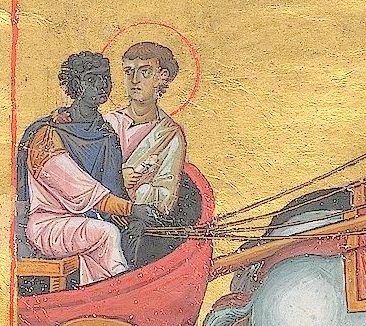
Jesus, the brown-skinned Jewish Palestinian, has risen from the dead and is standing before us today, pleading: “Friends, I’m hungry. Will somebody please give me something to eat? Will somebody please recognize my humanity by being a witness to the humanity of others?”

As disciples, may we push past our fear—fear of the stranger, fear of losing some friends, fear of upsetting some family, fear of some failure, fear of not having enough left over for ourselves—and understand that to be Easter people, to practice resurrection, is to first practice hospitality. And may we understand that we feed Jesus every time we feed the least, every time we offer a seat at the table for someone hungering and thirsting for justice.And the good news is that when the disciples fed Jesus, he fed them in return. When they chose generosity over suspicion, love over fear, their eyes were opened, their doubt vanished, and the resurrected Jesus came alive in them. Peace didn’t come first. Sharing a meal did. A recognition of another’s humanity did.

May we be witnesses of these things. And may the peace of Christ be with us all.

Easter People

John 20:1-18 NRSV

Welcome to First Christian Church in Lynchburg, Virginia! According to our Facebook page, we are “an Open and Affirming congregation celebrating diversity with a reasoned faith and passion for justice.”

Anyone hear a problem with that? Especially today on Easter Sunday. Of course, I am talking about the word “reasoned.” I know we mean that we are thoughtful, thinking, don’t-check-our-brain-before-entering-the-sanctuary Christians who believe COVID and science is real, dinosaurs existed, the earth is not flat and more than 4,000 years old. But do you think there might be a better word to describe us than “reasoned?”

Because did you hear the words I read before Logan was baptized?

“Do you not know that all of us who have been baptized into Christ Jesus were baptized into his death? Therefore, we have been buried with him by baptism into death, so that, just as Christ was raised from the dead by the glory of the Father, so we too might walk in newness of life” (Romans 6).

Now tell me. What about that sounds “reasonable?” I guess we could add something else to it to make it appeal more to reason, like, I don’t know, some words from Thomas Jefferson, James Madison or Lee Greenwood?

Søren Kierkegaard, the great Danish theologian, writes: “Christianity has taken a giant stride into the absurd. Remove from Christianity its ability to shock, and it is altogether destroyed. It then becomes a tiny superficial thing…It’s when the absurd starts to sound reasonable that we should begin to worry.” He goes on to name a few of Jesus’ shocking and unreasonable assertions: “Blessed are the meek; love your enemies; go and sell all you have and give it to the poor.”[i]

If you listen to some of the most popular preachers today, Christianity is not about absurdity. It’s about nationalism. It’s about the freedom to oppress people who live, love and worship differently. It’s about turning back the clock, putting people back in their places, taking away their rights. Instead of being about seeing and loving transgendered people today, it is about ignoring them and hurting them.

Or it’s all about positive thinking. It’s about how to be successful, happy, satisfied, and at home, at work, and at play, in marriage, in friendships, and in business. There’s no absurd talk of answering a call to pick up and carry a cross to love another. No unreasonable talk of dying to self or loving our neighbors as ourselves. No foolish talk about the poor being blessed and the meek inheriting the earth.

Perhaps this tendency to rationalize the gospel has been with us since day one. Just listen to Mary and the way she makes sense out of that first Easter morning when she saw that the stone had been removed.

So she ran and went to Simon Peter and the other disciple…and said to them, “They have taken the Lord out of the tomb…

Of course, that is what has happened. Any reasoned person with a lick of common sense can deduce this. It would be absurd to believe anything else!

“Mary stood weeping outside the tomb..”

Also a very reasonable thing to do in this situation.

As she wept, she bent over to look into the tomb; and she saw two angels in white…They said to her, “Woman, why are you weeping?”

She said to them, “They have taken away my Lord, and I do not know where they have laid him.”

“And I do not know…” Here she comes close to the heart of the truth, that she “does not know everything,” that things in this world are not always black and white, but then it becomes obvious that she is still grounded in earthly wisdom, still constrained by human reason and good common sense: “I don’t know where they have laid him.”

When she had said this, she turned around and saw Jesus standing there, but she did not know that it was Jesus

Of course, it’s not Jesus. That would be absurd.

15Jesus said to her, “Woman, why are you weeping? Whom are you looking for? Supposing him to be the gardener…”

Of course, he’s probably the gardener. That’s most reasonable explanation.

She says to him, “Sir, if you have carried him away, tell me where you have laid him, and I will take him away.”

A rational request, a reasonable appeal.

But the good news is that the risen Christ is continually liberating us from the restrictions of rational thought, reasonable assertions, and all the limitations of human reason!

The Risen Christ is continually breaking the restraints of common sense, pushing the boundaries of human logic. He is continually calling us out of the black and white world that we have all figured out to live in a new realm that many would regard as absurd.

And notice how he is does it. He breaks the barriers of worldly wisdom, the presuppositions that Mary has of what is going on in this world and not going on in this world, by calling her by name.

Jesus says to her, “Mary!”

And for Mary, this is the moment she takes a great stride into the absurd, the moment her whole world is suddenly transformed! This is the moment Mary began walking by faith and not by sight.

In his second letter to the Corinthians, Paul writes these words:

[Jesus] died for all, so that those who live might live no longer for themselves, but for him who died and was raised for them. From now on, therefore, we regard no one from a human point of view; even though we once knew Christ from a human point of view, we know him no longer in that way. 17So if anyone is in Christ, there is a new creation: everything old has passed away; see, everything has become new!

The Apostle Paul is writing about a miraculous change that has been wrought in his life because of the change that has been wrought in the world through God in Jesus Christ.

 Paul is saying that at one time he understood Christ with the reason of mortals—as a great teacher, a fine moral example.But now he is able to see in the death and resurrection of Christ, a radical shift in the entire world. In Christ, a new age has been inaugurated. The whole world has been transformed. Just as God brought light out of darkness in creation, God has now recreated the world in the life, death, and resurrection of Christ.

This is what the great theologian Moltmann was trying to point out when he said, “We have attempted to view the resurrection of Christ from the viewpoint of history. Perhaps the time has come for us to view history from the viewpoint of the resurrection!”

Paul was saying that when Jesus was raised from the dead, the whole world had shifted on its axis. All was made new.

This is exactly what happened to Mary when the risen Lord called her by name.

When she hears her name called, Mary recognizes the risen Christ, turns and says to him in Hebrew, “Rabbouni!” (which means Teacher).

 And Mary experienced a transformation that was so real, that she was compelled to announce it to the world: “I have seen the Lord!”

You know, it’s one thing to experience something that you know the whole world thinks is absurd or foolish. But it takes foolishness to a whole other level when you go out and share that something with the world.

But that is just what people who have experienced the good news of Easter do.

The Apostle Paul once outrageously put it this way:

“The way of the cross is foolishness” to the world. “We proclaim Christ crucified, a stumbling block to Jews and foolishness to the Gentiles.”

That is why on this day of days, when some look at us gathered here, praying, singing, preaching and baptizing, repeating aloud that our Lord is risen, “he is risen indeed,” and they say that everything that we are doing here today only confirms their preconceptions that we are a bunch of fools who have who have lost our ability to reason, we smile and have the audacity to respond: “You have no idea just how foolish we are!”

“How foolish? you ask.”

Oh, as Easter people, we’re foolish enough!

  • As Easter people foolish enough to believe that the only life worth living is a life that is given away.
  • We’re foolish enough to believe the Kingdom of God belongs to the poor, that those who hunger and thirst for justice will be filled.
  • We’re foolish enough to believe the last shall be first.
  • We’re foolish enough to believe that all things work together for the good.
  • We’re foolish enough to believe that nothing can separate us from the love of God.
  • We’re foolish enough to believe that this world can be a better place.
  • We’re foolish enough to believe we can take steps to heal our planet.
  • We’re foolish enough to live in the gray, understanding that not everything in this world is black and white. We can be losing ourselves while saving ourselves, believing there is joy in sorrow, beauty in chaos, hope in despair, and life in death. We can grieve abortions while supporting the reproductive rights of women. We can support law enforcement while believing black lives matter. We can call for a cease-fire in Gaza and pray for Palestinians, while standing firm against antisemitism. We can say free the hostages and free Palestine. And we can preach against Christian Nationalism and condemn a Bible with an American flag on the cover while loving God and country.

And we are foolish enough to take foolish to whole other level!

  • We’re foolish enough to respect the faiths of all people.
  • We’re foolish enough to call a Jew and a Palestinian our sibling and pray for them both.
  • We’re foolish enough to love our neighbors as ourselves.
  • We’re foolish enough to love an enemy, welcome a stranger, include a foreigner.
  • We’re foolish enough to forgive seventy times seven.
  • We’re foolish enough to turn the other cheek, go the extra mile, and give the very shirts off our backs.
  • We’re foolish enough to stand up for the marginalized, defend the most vulnerable, and fight to free the oppressed. That means that we are foolish enough to see our transgendered siblings this day.
  • We’re foolish enough to get back up when life knocks us down.
  • We’re foolish enough to never give up, never give in, and never give out.
  • We’re foolish enough to believe that nothing can stop us, not even death.

Because, although it may seem absurd and far from reasonable, we believe somebody loves us.

Somebody came and taught us to see the world in a brand new way.

Somebody picked up and carried a cross.

Somebody suffered.

Somebody gave all they had, even to the point of death.

Somebody rose from the grave.

And that same somebody found us and called us by name.

Let us pray together:

Let the absurdity of the gospel inform and guide our lives.

         Continue to call us my name.

         Transform our lives.

         Fashion us with the hands of Christ.

         Form us with the heart of Christ.

         Shape us with the hope of Christ.

         So that we may live as those who believe in the communion of the saints, the forgiveness of sins and the resurrection of the dead.

As those who live as Easter people proclaiming to all people:

         Christ is risen!  Alleluia!

Christ is risen indeed!  Alleluia!

[i] http://sojo.net/magazine/2007/08/foolishness-cross

Go and Get You Some Glory

Class 2019

John 13:31-35 NRSV

During a recent concert here in Van Buren, in between songs, the musician interacted with the audience with some back and forth exchange. It must have been obvious to the musician that one group was there to celebrate an occasion. Perhaps a birthday or an anniversary. So he asked: “What are you guys here celebrating tonight?”

A young man sitting at the table shouted out, “It’s my graduation!”

The musician responded: “Oh, your graduation? Well, congratulations! Where are you graduating from?”

“UFAS!” shouted the graduate.

“That is wonderful! Now, it is time for you to go and get you some moneeeeeeeeey!”

Of course, everyone laughed, clapped and cheered! I even leaned over to my son Carson and said, “That’s right! You go get you some money, Carson!”

For that’s what parents want of our children do we not? We want them to get a good education so they will not only be self-sufficient, but they will be successful. We want them to be able to afford nice things and live in nice places.

But almost as soon as I said it— “Go out and get you some money”—before the cheers and the clapping had time to die down, I knew there was something wrong with those words. And then, I could almost hear the words of Jesus:

Do not store up for yourselves treasures on earth… but store up for yourselves treasures in heaven, where neither moth nor rust consumes and where thieves do not break in and steal (Matthew 6:19-20).

No one can serve two masters; for a slave will either hate the one and love the other, or be devoted to the one and despise the other. You cannot serve God and wealth (Matthew 6:24).

Yeah, I am certain there’s now way Jesus would have shouted out: “Now, go out and get you some money!” And am even pretty certain he wouldn’t have laughed, clapped or cheered.

Now, I realize that there are some preachers you see on TV who would disagree with me here. Sitting on their opulent gold sofas, I have heard them point to scripture like our gospel lesson this morning to justify their prosperous and luxurious life-style.

“Look,” they say, “Jesus himself said: ‘Now the Son of Man has been glorified…’ That means Jesus came to earth and was ‘glorified.’ And if Jesus was glorified, then that means that God want us to be glorified too!”

Then they point to their mansions and their private jets and their gold watches and rings of every finger as signs of God’s glory. And I have seen them look into the camera and say something like: “And God wants you to go out get you some glory! And if you send me some of your money, you will get it!”

Although the word “glory” might suggest worth and value, I believe Jesus’ had something very different in mind.

The Greek word “glory” is doxaa, whichliterally means “reputation.” It is the root word of our word “doxology.” When used as a verb, it means to enhance one’s reputation. To glorify is to praise, honor or recognize someone to the extent that they have a reputation for greatness. It means to assign honor, prestige and fame to someone. So EVERYONEwill know who they are.

And while the world may glorify the rich and the famous, Jesus was talking about another kind of fame and glory. This reputation has nothing to do with having a lot of money and material possessions.

Jesus says, “Here’s the reputation, here’s the glory, I want you to have:

I give you a new commandment, that you love one another. Just as I have loved you, you also should love one another. (Listen to this) By this EVERYONEwill know that you are my disciples, if you have love for one another.

In other words Jesus says: “I want you to be famous! I want you to be recognized. I want you to be renowned the world over. I want you to be glorified. I want EVERYONE to know that you have the reputation of being my disciples. And you do this by simply loving others as I have loved you.

St. John of the Cross wisely wrote:

In the twilight of life, God will not judge us on our earthly possessions and human successes, but on how well we have loved.

My hope for the class of 2019, and I believe God’s desire for you, is that you will get up and go out and get you some glory. I want you to get up and go out and love others in such a way, the very same way Jesus loved others, so that EVERYONE will know that you are his disciples.

Because today, what this world needs now more than anything else is for everyone to know the transforming love of Jesus. What this world needs now is change. What this nation needs now is change. And it is a change that you have the power to bring. For our reputation as a nation has certainly been diminished in the world these days. Our glory days seem to be over.

My Disciples of Christ friend and colleague, the Rev. Dr. William Barber, has made this challenge to the class of 2019:

I’m here to tell you, if you graduate and get up and get together and get involved, love can take on hate, mercy can take on meanness, justice can take on injustice, truth can defeat lies. You cannot merely get a job and a car and quarantine your life. Your graduation is more than just getting another slice of materialism. You must stand against injustice and be part of reviving the heart of this nation.

There are too many people in this world who are living their lives without any glory, without any reputation at all. Well, for the very few who know them, they have the reputation of keeping to themselves, minding their own business, being self-centered or just too afraid to step out and step up. Some would like to see the world change, but they are sitting safely back, waiting for someone else to go get the glory.

Yes, Class of 2019, what this world needs is more people who want to some glory!

We need more people who are willing to step up and step out, to put themselves out there, to put their reputation on the line, to run for office, to start a non-profit, to speak truth to power, to serve selflessly, to love this world as Jesus loved this world. We need more people to be the change, be the solution, and be the church this nation needs.

I am now going to address something that may be a very sensitive subject, especially here, in this place, during this hour. It is the subject of church.

It is no secret that the majority of high school and college graduates today and church do not mix.

According to a recent Barna Research poll, 59% of Millennials (that’s 22-35 year olds) who were raised in church have since dropped out of church completely. Only 2 in 10 Americans under 30 believe that attending a church is worthwhile. And here’s what might be the most frightening statistic: 35% of Millennials believe the church today does more harm in the world than it does good.

Nearly all church growth experts agree that this means that church as we know it today, in the form that it is in today, will slowly cease to exist in 50 years.

I had an opportunity to have lunch with Nadine Burton our Regional Minister this past Wednesday. When I asked her how she has been doing, she responded: “On most days I feel like a real estate agent more than I feel like I am a minister.” I was afraid to ask, but asked anyway, “Because so many churches are closing and selling their property?” She said: “yes.”

Now, here’s the sensitive part that I was warning you about. I do not blame the Millennials for the church’s decline. And I don’t blame Millennials for dropping out of church. For I believe the church today has a long way to go to prove that it is a worthwhile venture. Much has to change in the church today if it is going to look like the the authentic embodiment of Christ in this world. The church today has undergo a drastic and dramatic transformation to love like, give like, and live like Jesus.

I think we need to face the hard and painful truth that the church, in its current form, does not have a very good reputation in the world. The church today has lost much it’s glory. And I believe that is the reason the heart of this nation is so very sick today.

But here’s the good news. Although our glory days have greatly diminished, I do not believe our glory days are over.

So, here’s what I am here to say to the class of 2019 on behalf of the church: “I want you to go and get you some glorreeeeeeee!” I want you to get up, stand up and speak up to transform the church. If the church is not what you think the church should be, I want you to do the work to reshape it. I want you to teach us how to love others as Jesus in loved others in such a radical way, EVERYONE will know we are disciples of Christ.

Now, I am aware that not all churches will listen to you. Not all pastors want to hear from you. I understand that. That is why you are dropping out. That is part of the reason you believe attending church is a waste of your time. And that is why our regional minister can continue to expect to be in the real estate business.

But I believe that this church, the First Christian Church in Fort Smith, wants to hear from you. I know this pastor wants to listen to you. I want to work with you to help bring glory back to the church, to help restore the church’s reputation in the world.

And I believe with all my heart that your generation will one day have the reputation, the glory, of saving the church, and thus, quite possibly, saving this nation.

He Is Not Here

christian-pro-choice

As I was drinking coffee on Easter Sunday morning, I took the common risk of picking up my phone to scroll through my Facebook newsfeed. One of the first posts that I read was from a friend making the assertion that there was no way one could be a Christian if one did not hold a certain position on the reproductive rights of women.* Of course, this person is not the only friend of mine who has made such statements on social media. I have read countless posts from others asserting that one cannot be a Christian unless one believes “this” or “that.”

Then, I went to church and heard the good news:

“But the angel said to the women: ‘Do not be afraid; I know that you are looking for Jesus who was crucified. He is not here!’ (Matthew 28:5-6 NRSV).

The good news is: “He is not here!”

We cannot keep Jesus sealed in a tomb or behind four walls. We cannot keep Jesus in any little box we construct. We cannot keep Jesus confined to our limited and shallow understanding of the world and this mystery we call “life.”

“He is not here.” He cannot be retained in any enclosed tomb we devise. He cannot be locked up in any particular doctrine, creed or confession we write. He cannot be limited to any political ideology nor constrained to any religious belief.

Yes, perhaps the best news of all is: “He is not here.”

His love is bigger than we can imagine, and his grace is beyond anything we can create. His peace is beyond all understanding. With Jesus, there are no limits, no restrictions, no boundaries. The stone has been rolled away, and “he is not here.”

Then, where is Jesus? From what Matthew has taught us, I believe we know where.

Jesus is with the stranger, the sick, the hungry, the thirsty, the naked and the imprisoned. He is always with the least of these among us.

Jesus is with those who have been ostracized from community. He is with the outsider, the left out and the shut out. He is especially with those the self-righteous have labeled “not Christian” because of certain political or religious beliefs.

The good news is, that no matter what you may read on Facebook, Jesus is always with all of us, “to the end of the age” (Matthew 28:20 NRSV).


* For my thoughts on women’s reproductive rights read: Why This Christian Pastor Is Pro-Choice: It’s Personal.

For Easter to Happen, Somebody Needed to Pick Up and Carry a Cross

oklahoma city bombing firefighter baby

Luke 24:1-12 NRSV

It is Easter Sunday! Resurrection morning has dawned. New life is being born! Something wonderful has been lost, but something magnificent is being gained.

However, on this Sunday of Sundays, I believe it is important for us to realize that before we can experience new life, before we can celebrate resurrection, before we can sing alleluias, before love can win, somebody needed to pick up and carry a cross.

And the sad thing is that there are very few of Jesus’ disciples who understand this. They do not understand it today, and they did not understand it 2,000 years ago.

Although Jesus continually taught that to gain our lives, we must be willing to lose our lives, that Easter could not happen without some self-denial, that resurrection could not come without some self-expenditure, that new life could not be born without some sacrifice, that love could not be won without some suffering, that the the light of Sunday morning could not  dawn without the darkness of Good Friday, when the time came for the disciples to follow Jesus all the way to the foot of the cross, most all of them very selfishly fled to save their lives.

One would betray Jesus. Another would deny that he even knew Jesus. Nearly all would desert him. In spite of Jesus’ continual call to pick up a cross and follow him, most of the disciples never got it.

However, there were a few disciples who did get it. There were a few who were willing to carry a cross. There were a few who chose to live selflessly and to love sacrificially. There were a few who faithfully followed Jesus all the way to Golgotha.

Although the intrinsic sexism of this world’s history has caused many in the church to overlook these faithful disciples, the good news is that all four Gospel writers did not.

In Luke 8 we read these words: Afterward [Jesus] journeyed from one town and village to another, preaching and proclaiming the good news of the kingdom of God. Accompanying him were the Twelve and some women…Mary, called Magdalene… Joanna…Susanna, and many others…” These women helped support Jesus and the twelve “out of their own means.”

And on Good Friday, when none of the male disciples could be found, Mark 15 reads: “There were also some women looking on…among whom were Mary Magdalene, and Mary the mother of James, Joses, and Salome.

In Matthew 27 we read: “Among them [gathered at the foot of the cross] was Mary Magdalene, and Mary the mother of James and Joseph, and the mother of the sons of Zebedee.

In John 19:25 we read where all the male disciples fled: “But standing by the cross of Jesus were His mother, and His mother’s sister, Mary the wife of Clopas, and Mary Magdalene.

There are many problems with Christianity today. However, I believe one of the biggest problems with our faith today, especially here in North America, is that we have too few Mary Magdalenes.

There are too few people who understand that authentic faith, true discipleship, always involves a cross. It always involves answering a call, taking a risk, denying oneself, going against the status quo, pushing the boundaries, stepping way outside one’s comfort zone.

A problem with the church today is there are too many Christians who believe they can sing “alleluias” on Easter Sunday without going through some suffering on Good Friday, who believe they can experience some new life without death to self, who believe they can somehow rise up from the waters of baptism without getting their hair wet, who believe they can serve Jesus without getting their hands dirty.

What this world desperately needs needs right now, and what the church needs more than anything today, are more disciples like Mary Magdalene. For Mary Magdalene understood that when Jesus called people to be his disciples, Jesus was always clear that there would be a cross involved.

I think this is the reason that Mary Magdalene is remembered today by Matthew, Mark, Luke and John. This is the reason she is mentioned by name by the gospel writers more than any other apostle. And this is the reason that today, on this Easter Sunday morning, Christians all over the world will hear her name mentioned as they gather to worship.

Some will hear her name as Mark 15 is read: “Mary Magdalene and Mary the mother of Joses were looking on to see where Jesus was laid.”

Some will hear her name as Matthew 28 is read: “Now after the Sabbath, as it began to dawn toward the first day of the week, Mary Magdalene and the other Mary came to look at the grave.”

Some will hear it as Mark 16 is read: “When the Sabbath was over, Mary Magdalene, and Mary the mother of James, and Salome, bought spices, so that they might come and anoint Him.”

And others will hear it as John 20 is read: “Now on the first day of the week Mary Magdalene came early to the tomb, while it was still dark, and saw the stone already taken away from the tomb.”

Just as Mary Magdalene had given what she had to support Jesus’ life, Mary was still doing all she could for Jesus in death.

And because she always selflessly pouring herself out, because she kept giving, kept sacrificing, kept risking, serving, bending, expending, anointing, because she was the most faithful of all of the disciples, because she not only sacrificially followed Jesus all the way to the cross, but courageously followed him all the way to the grave, because she followed him to the very end, she was the first person on earth to see the risen Lord.

Mark 16:9 reads: “Now after He had risen early on the first day of the week, He first appeared to Mary Magdalene…”

And in John 20:18 we read where it was Mary Magdalene who first proclaimed the good news of Easter, speaking five simple words that changed the world forever: “Mary Magdalene came, announcing to the disciples, ‘I have seen the Lord.’”  Not only was she the first person to see the Lord, she was the first person to proclaim the world-changing, earth-shaking, life-saving good news of Easter to the world!

Mary Magdalene was the very first to preach the glorious good news of resurrection on Easter Sunday, because she stayed with Jesus until the very last in his suffering and death of Good Friday. Easter happened for Mary because she had answered a call to follow Jesus, and she followed Jesus all the way.

Observing Good Friday this year was a surreal experience for many Americans, as it fell on April 19, the day of the terrorist bombing in Oklahoma City.

The story of one survivor, Terri Talley, exemplifies the suffering experienced by our nation, as well as how new life was raised out of the ashes through those who were willing to pick up and carry a cross.

Employed by the Federal Employee’s Credit Union on the third floor of the Murrah Federal Building, that morning was extremely busy for Terri. She had just returned to work after spending several days away, and a stack of paperwork waited for her.

Catching up on work, Terri took a moment that morning to chat with her good friend and coworker Sonja Sanders. “For her, it was a big day. She had just been promoted into management,” states Terri, who is certain she was the last person to have spoken with her friend.

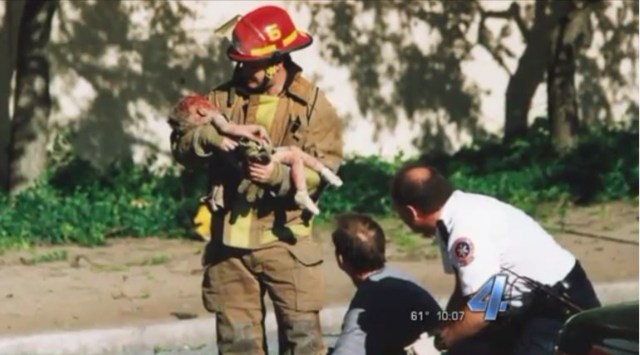
What seemed like just moments afterward, everything changed. At 9:02 am, thousands of pounds of explosives, assembled in the back of a Ryder moving truck parked in front of her office building, exploded.

Terri recounts: “I fell from the third floor to somewhere around the basement level. It was really really fast. It was so fast that I didn’t really know what had happened. The suction pulled me down so quickly.”

Surrounded by noise Terri says, “When I came to the first time, I thought: ‘This is a really bad dream. I will just go to sleep and when I wake up everything will be okay.’ But when I came to [again], everything wasn’t okay. I thought that I must have been in a really bad wreck, and I must be [pinned in the wreckage], because I couldn’t see anything. I couldn’t move. I couldn’t even scream for help. I would try, but I was really squished. And I thought to myself: ‘I hope someone finds me.’”

Terri was found by a firefighter who almost overlooked her. [Like being sealed in a tomb] she was completely encased in concrete and granite. Terri says: “There was just a little hole and a little piece of me was showing. He touched me and … started screaming: ‘Hey! I have a live one here, and I need some help!'”

After much hard work, Terri was freed and rushed to a nearby hospital, where her injuries were identified: temporary blindness, a concussion, temporary amnesia, a cracked first vertebra in her neck, a broken right ankle, skin damage on her foot, and multiple abrasions. During her seven days in the hospital, and for weeks following, a sense of shock permeated her life.

However, today, she has this powerful message for the world:

I always tell [even] the littlest of kids: ‘Don’t think that there is nothing you can do, because kids would color pictures and send me notes. Those made me feel like people were really thinking about me. You can always do something, no matter what age you are.’[i]

This illustrates that to experience Easter Sunday, we have to have a Good Friday.

Before new life could be experienced, before resurrection could be celebrated, before “alleluias” could be sung, before love could be won, somebody needed to pick up and carry a cross.

-First Responders needed to run toward an explosion.
-Firefighters needed to go into a burning building.
-Doctors and nurses needed to give all that they had to give.
-Friends and family and church members needed to pray.
-And little children needed to pick up some crayons and color a picture.

To make Easter happen for someone–today, right here, right now–we can all do something, be something, risk something, sacrifice something, give something, create something.

We can all pick up and carry a cross.

We can feed someone who is hungry.

Visit someone who is lonely.

Love someone who is hurting.

Include someone who has been left out.

We can mentor someone who lives in a foster home.

Care for someone who is sick.

Forgive someone who has made mistakes.

Believe someone who has been abused.

We can share grace with someone who faces discrimination.

Stand up for someone victimized by injustice.

Speak out for someone devalued by oppression.

We can stay close by and anoint someone who is dying.

Be a friend to someone who is grieving.

With the spirit of Mary Magdalene, let’s keep the faith, and let’s keep the faith going, keep it moving forward, all the way to the foot of the cross, through the betrayals, through the fear, through the denials, through the suffering, through the shame, all the way to the grave, even to a tomb that has been sealed by granite or concrete.

Let us keep doing whatever we can, with whatever we have, wherever we are, to love one another until the entire world is able to sing:

“Alleluia! Alleluia! I have seen the Lord!”


[i]https://www.nps.gov/okci/learn/historyculture/stories.htm

Holy Friendship

Friendship

John 15:9-17 NRSV

To prepare us for a new church year, today, I invite us to be a part of a four-part sermon series entitled: Renewing Our Mission. To be the church that God is calling us to be, the church that God needs us to be, we will be challenged to renew our mission in at least four areas: friendship, partnership, stewardship and discipleship. Today, I want us to think about friendship.

Friendship. It’s a word that we use casually, superficially. These days we call nearly every acquaintance or contact a friend. I have Facebook friends, friends who follow my blog or my Twitter, many I have never met and never will. I have ministry-colleague friends. I have teacher friends, professor friends. I have friends from high school, college and seminary. I have running friends, gym friends, and I have Ainsley’s Angels friends all over the country. I have a dry cleaning friend, a friend who cuts my hair, and just this past week, I met a new friend who repairs my automobiles. And, of course, I have some wonderful church friends.

But we all know that friendship can be experienced on another level. Genuine, long lasting friendships can be so much more profound than our more casual relationships.

A week ago, I had the wonderful opportunity to spend some time with two old friends. Steve is a pastor outside of Knoxville, Tennessee, and Cary is a pastor in Longview, Texas. We met fifteen years ago in the Doctor of Ministry Program at Gardner-Webb University. We used to get together every year; however, this was the first time that we have gotten together in maybe eight years.

We decided to meet somewhere in the middle, so we chose Memphis. We spent one day at the National Civil Rights Museum and one day on the golf course. And spent both days, eating a lot of barbeque.

Although Steve has had a career serving with mostly Baptist churches, he now serves with an inter-denominational church. I said Cary is a pastor in Longview, Texas; however, he is only a pastor for another week. His passion for serving the poor and the marginalized is prompting him to leave the pastorate to co-direct a ministry for the homeless in Longview, similar to Hope Campus here in Fort Smith. Steve and Cary are both the fathers of two children.

So, the three of us share much in common (our jobs, our religious convictions, family, golf and barbeque); however, this is not the reason we are such good friends.

One of my favorite authors and preachers, Frederick Buechner perfectly describes our friendship:

Basically, your friends are not your friends for any particular reason. They are your friends for no particular reason. The job you do, the family you have, the way you vote, the major achievements and blunders of your life, your religious convictions or lack of them, are all somehow set off to one side when you get together. If you are old friends, you know all those things about each other and a lot more besides, but they are beside the point. Even if you talk about them, they are beside the point. Stripped, humanly speaking, to the bare essentials, you yourselves are the point. The usual distinctions of older-younger, richer-poorer, smarter-dumber, male-female even, cease to matter. You meet with a clean slate every time, and you meet on equal terms. Anything may come of it or nothing may. That doesn’t matter either. Only the meeting matters.

Only being together matters.

And although we hadn’t been together in almost a decade, although the hair on our heads were much more gray and thin, it was somehow like no time had elapsed at all. Yes, we did our best catch up one another, but we really didn’t have to. That is friendship. And the joy that is experienced in such a friendship is priceless.

Another one of my favorite pastors, Henri Nouwen, said this of friendship:

Friendship is one of the greatest gifts a human being can receive. It is a bond beyond common goals, common interests, or common histories. It is a bond stronger than sexual union can create, deeper than a shared fate can solidify, and even more intimate than the bonds of marriage or community. Friendship is being with the other in joy and sorrow, even when we cannot increase the joy or decrease the sorrow. It is a unity of souls that gives nobility and sincerity to love. Friendship makes all of life shine brightly.

This makes it all the more astonishingly wonderful when we read scripture like:

“The Lord used to speak to Moses face to face, as one speaks to a friend” (Exodus 33:11). The prophet Isaiah says that God referred to Abraham saying: “Abraham, my friend” (Isaiah 41:8).

When we consider what friendship truly means, when we consider the innate grace of friendship, the unconditional love of friendship and the immeasurable joy that is experienced through friendship, “the friendship of God is a staggering thought.”

The friendship of God—that the creator of all that is wants to be with the creatures just as they are, and that everything else is “beside the point” except for that—This privilege, this divine gift, this holy friendship is such a staggering thought, we say to ourselves, “Yeah, but I’m no Abraham. I am no Moses.”

The good news is that that too is beside the point.

Through our scripture lesson this morning, Jesus says to his disciples and to everyone of us: “I do not call you servants any longer. . . I have called you friends.”

Notice that their relationship has changed. It has grown to another level.

The disciples are much more than acquaintances, contacts or colleagues of Jesus. They are no longer students, no longer servants of Jesus.

Jesus says: You are my friends. I love you. I want nothing more for us to be together. I want to commune with you. I want to abide with you. I want to live with you, in you and through you. Your denials, your betrayals, your lack of understanding, your fears, your faults: none of that matters. It is all beside the point. The only point is you. I want to be with you, and I want nothing more than you to be with me.

And listen, for this is how you can be with me. This is how we can be together, finally and fully. This is how you can experience a joy that will fill you, complete you, satisfy you.

You are with me when you love one another. You are with me when you love one another as I have loved you. You are with me when you look past the flaws and failures of others. You are with me when meet people with a clean slate every time, always meeting them on equal terms. You are with me when all of the usual distinctions, older-younger, richer-poorer, smarter-dumber, male-female even, cease to matter.

You become close to me when we gather at the table, when we share the loaf and drink the cup, but we are together, when you are willing to break your body, pour yourself out, and give yourself away for others.

In Matthew, Jesus says, “Do you want to be with me? Then give food to the hungry, give drink to the thirsty, welcome a stranger, give clothing to someone in need, take care of the sick and visit the imprisoned. When you are a friend to the least of these, you are a friend of mine. When we love others as I love others, you are my friend.

If we are to be the church that God is calling us to be, if our joy is ever to be complete, I believe the first thing we must do is renew our mission to be a friend of Jesus. We need to make the commitment not to study Jesus, admire Jesus, hit “a Like button” for Jesus, but to be a friend of Jesus.

We are going to take a step toward making this commitment tonight at our cabinet meeting, as we are going to talk about our church officially adopting a non-discrimination policy. I think such an official position is needed, but, doesn’t it seem like, for the church, for the body of Christ in this world, for the Body of the Christ who never excluded anyone, a non-discrimination should be the default? You would think that a vote would only be needed if a church wanted to start discriminating. But sadly, we know that’s not the case.

We know there are too many people today who call themselves Christians who are behaving more like acquaintances of Jesus, students of Jesus, Twitter followers of Jesus, even servants of Jesus, but not friends of Jesus.

You can call ourselves Christian, but if you discriminate against or denigrate anyone because of race or religion, ability or class, gender or sexual identity, ethnicity or any other social identifier, then you might not be a friend of Jesus.

You can worship God, but if you mistreat, take advantage of, or neglect the poor, then you might not be a friend of Jesus.

You can say your prayers, even make a National Day of Prayer, but if you do nothing to protect and care for our most vulnerable citizens: our children, the elderly, the differently-abled; then you might not be a friend of Jesus.

You can sing God’s praises, but if you are silent in the face of immorality, dishonesty and injustice, then you might not be a friend of Jesus.

You can hear God’s truth proclaimed on Sunday morning, but if you fall for lies the rest of the time, because you’re afraid of standing for that truth, then you might not be a friend of Jesus.

You can give our tithes, but if you do not support fair living wages, equitable healthcare, access to a quality education and affordable housing, then you might not be a friend of Jesus.

You can eat the bread and drink the cup and remember a life poured out, but if you are never willing to sacrifice for anyone or anything, then you might not be a friend of Jesus.

A common phrase that we say to our friends is: “a friend of yours is a friend of mine.” But this takes on a very challenging meaning when we remember that Jesus was widely known and ridiculed for being of who? “A friend of tax collectors and sinners.”

This means we can attend church every Sunday, but if we never go out and eat and drink with those outside of the church, if we fear getting a reputation for hanging out with the wrong type of people, then we might not be a friend of Jesus.

As I speak these words, I am reminded of my response to my son who is visiting with us this week when he asked to go downtown last night to eat supper. I said, “Downtown? This weekend? With a motorcycle rally going on?” “Heck no.”

But being a friend of Jesus is risky. It is difficult, and it is costly. Being a friend of Jesus takes us places that we would rather not go and puts us into contact people we would rather avoid. However, all who have experienced the complete joy of friendship know that to be friends with God is more than well worth it.

Invitation to Communion

We believe it is the Risen Christ who invites us to eat and drink from this table. And we believe that he invites us, because he has chosen every person in this room to be his friend. Our faith or our lack of faith—it’s not the point. Our understanding or our ignorance—it’s not the point. Our deeds or our misdeeds—it’s not the point.  The Lord invites us because we are the point. Take and eat the bread, drink from the cup. Accept this friendship. All are welcome.

Love One Another

Tolerate

1 John 3:16-24 NRSV

It the Fourth Sunday of Easter, like the very first disciples we have gathered together on the first day of the week to be with our family of faith.  Why? There are certainly a lot of other places we could be this morning.  But here we are.  We are here, together as a community of faith, because like the very first disciples, we have seen the risen Lord!

Somewhere along the way, probably during some of our weakest moments, those moments of pain and despair, those moments of great anxiety and fear, those moments of hunger and thirst, when we needed him the most, the risen Christ showed up. He inexplicably came into our lives, stood in our presence, and filled us with a grace greater than our sin and a peace greater than our understanding.

So here we are, gathered together on this first day of the week, assembled in this place as those who have seen the risen Christ, as those who have experienced the marks of his suffering. We’re here because we believe in Easter. We believe in the wonderful good news that Christ is alive and, even more than that, he is alive for us.

So here we are.  Now the question is: what are we supposed to do? How are we to live as Easter people?

There is no more direct answer to this important question than the answer that is found in the book we call 1 John.

When I was in seminary, I had to take two semesters of Biblical Greek and at least one semester of Hebrew. In my first year of Greek, the first book of the New Testament that our professor had us to translate was 1 John.

Why 1 John?  Because in all the New Testament, the Greek in 1 John is the most simple and direct. There are no complex, convoluted arguments, no long clauses or other linguistic difficulties that make the translation of some of the other New Testament books a nightmare. 1 John is simple and to the point. In fact, I can sum up the entire book in basically three words: “Love One Another.”

Three of the most simple, most direct, but at the same time, most difficult and complex words ever put together in one command. Yet, this is how God expects believers in the risen Christ to respond to Easter.

Love one another. It is difficult and complex because the “one another” we are supposed to love is not just our friends and family, but also those who have misused and mistreated us. We are commanded to love those who look, believe, behave, and live differently than we.

So, although we have this direct commandment to love one another, we still think, “Surely God must have meant something else.” For it really doesn’t make any sense. We don’t even think it is possible. And let’s face it. There are just some people in this world that are impossible to love.

We can understand God saying something like, “You know, in this fragmented world of sinners, let us learn to live with each other.”  Now that’s a good commandment! Despite our differences, let’s just get along! Live and let live.

What about “Be tolerant.”  I like that commandment.  I don’t have to like him, but I guess I can somehow tolerate him. I suppose I can in someway put up with her.

What about “love the sinner and hate the sin.” Ooh, that’s a good one! I can love ‘em, and at the same time, I can hate everything about them! I am pretty sure I can handle that.

How about, “Let bygones be bygones.” I like that. We’ve got to move on. We can’t nurture our resentment forever. It’s not healthy. We need to get over it. Although that is sometimes easier said than done, I think I can obey that commandment.

But the scriptures say considerably more than that. “Love one another.” And here in 1 John, it is a direct command.

Unable to obey this command, many today have reduced our faith to some sort of selfish, personal and private spirituality. People are fond of calling themselves “spiritual.” And when they say they love one another, I suspect they are only talking in some spiritual sense that is never fleshed out in a tangible way. 1 John reminds us that we need to recover a love that compels us to physically lay down our lives for one another, never refusing to help a brother or sister we see in need. We need to love, not in word or speech by in truth and action.

Rev. Dr. William Barber, puts it this way: “If you say you are full of the Holy Spirit, but if your spirit doesn’t lead you to speak up against injustices and oppression, then your spirit is suspect.”

Yesterday, I counseled a couple planning getting married. I pointed out that nowhere in the ceremony will the minister ever ask you if you are “in love with one another.” As if love is some kind of spiritual thing. No, you will be asked, “Will you love? Do you promise to love?” Because love is not a feeling. Love is action.

This summer, I will celebrate the 30-year anniversary of the day that I promised before God and a congregation to love Lori. Thirty years. That’s a lot of years. That’s a long time.  And I know, so before she says it, I’ll say it for her—it’s been even longer for Lori.

When you really love another, you have this wonderful capacity to always look at best that is in that another. I know Lori does that with me, or she wouldn’t be with me today. When I do all those things that annoy her, that get on her last nerve, she somehow has the ability to look past it. And in so doing, my weaknesses, my quirks, and all of my shortcomings grow small, while my virtues, the few that I have, grow large. That is love.

Love necessitates that no matter what the other has done to disappoint us or hurt us, we focus on the positives. Love compels us to look for mitigating circumstances or to devise strategies whereby we earnestly attempt to see the other in the very best light.

If another hurts us, love compels us to ask ourselves questions like, “I wonder what’s going on in his or her life that made him or her treat me this way?” or “I have certain ways about me that antagonize others. I wonder how I antagonized him?” or “I have gotten a lot of good breaks in my life. I wonder what bad breaks she got that makes her view me in this way?”

Because once we decide that love is not an option, once a war begins, once we decide that we can’t look past another’s shortcomings, we free ourselves to demonize the other. In war, all moral bets are off. Once the shooting starts, we free ourselves to only see the worst in the other. You know the old saying?  In war, we actually kill our enemies twice.  First, we kill any shred of humanity in them, and then we kill them with bullets.

But First John tells us to love one another. This means that when we are wronged, all moral bets are not called off.  In fact, according to this ethic, it is precisely when we are wronged that the true moral test begins.  Elsewhere, the scriptures remind us that if we love those who show love to us, what is that?

Why are we commanded to love this way?  Why does Easter demand such a thing?

Because when the risen Christ showed up, when he came to us offering us a grace greater than our sin and a peace greater than our understanding, we realized that although we had betrayed, denied and abandoned God, God, in Christ, loves us.

God not only puts up with us, gets along with us, tolerates us, but God loves us. God doesn’t love us and hate our sin, because love doesn’t keep account of our wrong doings. God looks past our failures. God sees the very best that is about us, and then calls that best that is within us all to come out. God loves us, and therefore commands us to love one another. “If I have loved you, then you should love others.”

And that’s exactly what we’re going to do!

When they mistreat us, we’re going to love ’em.

When they use us, we’re going to love ’em.

When they hate us, we’re going to love ’em.

When they are unlovable, we’re going to love ’em.

When they belong to another faith, we’re going to love ’em.

When they have no faith, we’re going to love ’em.

When they have polar opposite political views, we’re going to love ’em.

When their sexuality differs from ours, we’re going to love ’em.

When they are differently abled, we’re going to love ’em.

When their race, ethnicity, language or citizenship differ from ours, we’re going to love ’em.

When they’re sick, we’re going to love ’em.

When they’re hungry, we’re going to love ’em.

When they’re afraid, we’re going to love ’em.

When they’re lonely, we’re going to love ’em.

For richer, for poorer, in sickness and in health, for better or for worse, we’re going to love ’em, because we have seen the risen Lord. We’re going to love ’em, because we believe in Easter. We’re going to love ’em because we’ve experienced a divine, unconditional love— A love that demands us, compels us, and commands us to love one another in truth and in action.  Let us pray together.

O God, teach us how to love as you have loved us. Teach us to love the unloved and the unlovable. Teach us to see others as you see them; teach us to see ourselves in the light of your forgiving, forbearing love.  In the name of the risen Christ we pray.  Amen.


Invitation to the table

As we come to these moments of communion, none of us is “pure and blameless.” But because of the grace, love, and forgiveness of Jesus lavishly showered on each one of us, we can come to the table of the Lord without fear or hesitation, trusting that God’s grace revealed in Jesus creates a welcome space for all to come, confessing and trusting in Jesus as Lord and Savior.

The Jesus Fish

Hell coming

Luke 24:36-48 NRSV

Our scripture lesson this morning has always intrigued me, especially the picture of the resurrected Christ asking for and eating piece of broiled fish.

When I was growing up, my Baptist church had a week of revival every August. We had services Sunday Night through Friday night, and concluded the revival with a fish fry on Saturday.

Six long nights: 30 minutes of singing; one hour of preaching; and then thirty more minutes of altar call. It was hot. It was humid. It was more scary.

The guest preachers would always preach that heaven or hell is coming, and it’s coming sooner than later, so we better get ready! Although I’d never really feared going to hell; as a nine, ten, eleven-year old, going to heaven was not a place I wanted to go to anytime soon.

The only thing that got me through the week, and I suspect a few others, was that big, delicious fish fry that awaited us on Saturday.

Every year, without exception, preachers would frighten us with their heaven-or-hell-is-right-around-the-corner sermons. However, I remember that one preacher preached a particular sermon that made me feel a lot better about going to heaven.

It was Friday night, and bless his heart, I suppose he was trying to connect the revival service with the fish fry that everyone was looking forward to the next day.

He said that one of the most appropriate things we can do at the end of these services is to have a fish fry. He said: “After all, most of Jesus’ disciples were fishermen. And Jesus called the disciples ‘fishers of men.’”

He also pointed out that the early Christians used the Greek word translated “fish” as an acronym for the first letters Greek words translated “Jesus Christ, Son of God, Savior,” and how the sign of the fish was used to identify Christian communities, especially during the time when the church was persecuted.

But he did not get my full attention until he said: “But the reason that our fish fry tomorrow is especially appropriate is because when we all get to heaven with our new resurrected bodies, we are going to eat fish with Jesus, because after Jesus was resurrected, Jesus ate fish!”

For the very first time all week, I wanted to jump out of my pew and shout: “Amen! Brother, preach it!” Because that preacher answered one of those deep theological questions that no one could answer for me, a question that was more important than: “If God created the world, who created God?” or “Who was Cain’s wife? or “Did Adam and Eve have bellybuttons?”

He answered the all important: “Are we going to be able to eat in heaven?” The answer is a resounding yes! We are going to be able to eat fish! And for someone who loved to eat, and especially loved eating seafood, it took the fear of dying right away.

I really like this interpretation; however, I am pretty sure Luke, through the telling of this story, is trying to teach us something more.

Last Sunday, one of you asked me: “Isn’t Tilapia what they call ‘the Jesus fish?’” That really got me thinking about our scripture lesson this morning. What kind of fish did Jesus eat? And, what was the risen Christ trying to teach the disciples, and teach us, by asking for and eating a piece of broiled fish? Do you suppose Jesus, in his new resurrected body, was hungry? After all, from all we know, he hasn’t had anything to eat since that Thursday evening in the upper room.

To answer these questions, like all biblical questions, it is always important to put the story in its context.

The disciples had disappointed Jesus, and they knew it. The disciples had failed Jesus, and it was obvious. The disciples had forsaken Jesus, and they were cowering. For thirty pieces of silver, one of them betrayed Jesus with a kiss and then took his own life. One of them denied three times even knowing who Jesus was. To save their own necks, to avoid carrying a cross themselves, all of them in some way had abandoned Jesus in his hour of need.

And now they have received news that Jesus had come back from the grave. Which meant that he was probably coming straight for them. And considering their great failure at discipleship, they just knew that if he was coming, he was bringing hell with him!

“While they were talking about this…”

Can you imagine their conversation? “What are we going to do? Where are we going to go? How do we hide?”

John tells us the doors of the house where the disciples had gathered were locked for fear of the Jews. Perhaps the name of one of those Jews was Jesus.

It is then,

Jesus himself stood among them… They were startled and terrified, and thought that they were seeing a ghost.

Notice that they were not only “startled,” they were “startled and terrified.”

I bet they were!  Like a ten-year old at a Baptist revival! For I am sure that in that moment they just knew that heaven or hell was right around the corner!

But then, notice what happens next. Jesus does not point out their failures. He doesn’t mention their denials, their betrayal, their abandonment. He does not shame them, guilt them or say anything to elicit any feelings remorse whatsoever for their bad behavior.

There are no words of judgment or condemnation. Jesus doesn’t give them a sermon on how they should have been better or even how they could do better.

Jesus surprises them and surprises us by saying, “Peace be with you.” To those who have very good reasons to be afraid, Jesus says, “Peace.”

He empathetically asks: ‘Why are you frightened, and why do doubts arise in your hearts?”

It is then where Jesus begins doing all that he can to relieve their doubts and fears. He shows them his hands and feet to prove that he was not some vengeful ghost come back to haunt them for their misdeeds.

And seeing a little joy in their eyes, but still sensing some lingering apprehension, Jesus takes it a step further and asks for something to eat. They hand him a piece of broiled fish that he eats in their presence.

He eats “in their presence.” It has been said that in sharing a meal with someone that we become most aware of who we are and with whom we are.  In the previous scripture passage, on the road to Emmaus, when was Jesus made known to them? In the breaking of the bread.

Throughout the world, sharing a meal with someone has always been understood a great act of solidarity. Thus, in eating that fish, Jesus was not only making the statement that he was not some vindictive ghost, Jesus was making the statement that he was their merciful friend. He was their gracious brother. In spite of all of their denials and betrayals, in spite of being abandoned, tortured, humiliated and crucified, Jesus still loves them and is still willing to join them at the table.

If the disciples had any doubts that their sins were forgiven, those doubts quickly vanished when Jesus took the first bite of that broiled fish.

And it quickly became apparent to the disciples that the fish Jesus asked to eat was not for him. It was for them. It was not the risen Christ who was hungry. It was the disciples who were hungry.

So, what kind of fish did Jesus eat?

It was a fish of unconditional love. It was a fish of unlimited mercy. It was a fish of radical inclusion. It was a fish of amazing grace. It was a fish that revealed nothing on earth or in heaven can ever separate us from the love of God.

It was a fish that revealed God is always willing go a step further to proclaim the good news of Easter: “Peace I leave with you; my peace I give to you. I do not give to you as the world gives. Do not let your hearts be troubled, and do not let them be afraid.”

“My love for you has no end. My love for you never fails. My love does not keep an account of wrongdoing. My love is without reservations, without conditions. My love offers a grace that is greater than all sin and a peace that surpasses all understanding.”

Peace be with you, for you are my sons. You are my daughters. I have always loved you. I still love you. And I will love you forever. I will forgive you always. Peace, for I am making all things new. Fear not, for I am working all things together for the good. Do not doubt, for I am the resurrection and the life, and because I live you will also live. Peace be with you.”

The risen Christ ate fish—filling, satisfying, delicious fish—not because he was hungry, but because we are hungry.

It is very important for us to pay close attention to what happens next in our lesson: “Then he opened their minds to understand the scriptures that repentance and forgiveness of sins is to be proclaimed to all nations.”

What kind of fish did Jesus eat? He ate a fish that has the power to open minds!

Perhaps more than anything else, what the church needs are more minds that are open to understand the scriptures teach us that graceis what we are to proclaim to all nations.

Grace. Not judgment. Not condemnation. Not fear. Not shame. Not fire and brimstone. For those things never bring peace. Those things never bring healing.

It is unconditional love and peace that is to be proclaimed to all nations, beginning right here, from this very place where we became witnesses to these things:

  • Where we witnessed the words of the resurrected Christ: “Peace, be with you”: words spoken to remove all fear.
  • Where we witnessed the wounds in his hands and feet: wounds that have the power to heal the world.
  • Where we witnessed the Risen Lord eating a piece of broiled fish: where we experienced a grace that will satisfy the hunger of all humanity this day and forevermore. Peace be with you. Amen.


Invitation to Communion

This is the Lord’s table. He is the host. We are his guests.

He welcomes everyone to come and eat and be nourished, fed and forgiven.

Come and eat and live!

The only people excluded from our communion table are those that Jesus himself would exclude and that is nobody.

All are welcome.


Commissioning and Benediction

Go in courage and peace, proclaiming the Risen Lord to all!

Having witnessed unconditional love and unfettered grace,

Be a people who bring hope and justice to a hungry and hurting world!

The peace of the Lord is with you now and forever. AMEN.

A Day for Fools

fool

John 20:1-18 NRSV

For the very first time in my lifetime, Easter is on April Fools Day, which presents the preacher with the perfect opportunity to point out the foolishness of it all.

The Apostle Paul outrageously asserts:

“The way of the cross is foolishness” to the world (1 Corinthians 1:18-31).

We proclaim Christ crucified, a stumbling block to Jews and foolishness to the Gentiles. God chose what is foolish in the world to shame the wise; God chose what is weak in the world to shame the strong.

We witnessed some of the foolishness last week. Jesus, the King of Kings and Lord of Lords, the Savior of the World, arrives in the capital city, not on a powerful war horse, not on a white stallion, not in a royal entourage, but bouncing in on the back of a borrowed donkey.

I believe ne of the most troubling things about our faith is the attempt by the church to try to deny or even conceal the foolishness of the gospel. Ashamed of to be labeled a fool, there is this tendency to take the all of the foolishness that is inherent in the gospel and re-package it as just another brand of worldly wisdom, common sense, something on which all Americans easily accept and agree.

A recent survey by Bill McKibben reveals that three-quarters of Americans believe the Bible teaches that “God helps those who help themselves.”[i]  However, that statement is from deist Ben Franklin; not the Bible.[ii] In fact, “God helps those who help themselves” is one of the most unbiblical ideas. It is Jesus who made the dramatic counter assertion: “Love your neighbor as yourself.”  But, deep down we prefer Ben Franklin don’t we?  Doesn’t sound so foolish.

Søren Kierkegaard, the great Danish theologian, writes: “Christianity has taken a giant stride into the absurd. Remove from Christianity its ability to shock, and it is altogether destroyed. It then becomes a tiny superficial thing, capable neither of inflicting deep wounds nor of healing them. It’s when the absurd starts to sound reasonable that we should begin to worry.” He goes on to name a few of Jesus’ shocking and foolish assertions: “Blessed are the meek; love your enemies; go and sell all you have and give it to the poor.”[iii]

Listen to some of the most popular preachers today. Christianity is not about absurdity; it’s about positive thinking. It’s about how to be successful and happy and satisfied and effective at home, at work and at play, in marriage, in friendships, and in business. There is no cross bearing. No Jesus bounding into Jerusalem on the back of a donkey. No foolishness. It’s no wonder the church today looks more like a country club than it does the living body of Christ.

Perhaps this tendency to rationalize the gospel has been with us since day one. Just listen to Mary and the way she rationalizes that first Easter morning when she saw that the stone had been removed.

So she ran and went to Simon Peter and the other disciple…and said to them, “They have taken the Lord out of the tomb…

Of course this is what must have happened. Anyone with a lick of common sense can deduce this. It would be foolish to believe anything else!

Mary stood weeping outside the tomb.

A very reasonable thing to do in this situation.

As she wept, she bent over to look into the tomb; and she saw two angels in white…

They said to her, “Woman, why are you weeping?”

She said to them, “They have taken away my Lord, and I do not know where they have laid him.”

“And I do not know…”

She almost confesses to her problem right there, that she “does not know,” but it becomes obvious she is still grounded in earthly wisdom, still constrained by common sense.

“I don’t know where they have laid him.”

“When she had said this, she turned around and saw Jesus standing there, but she did not know that it was Jesus

Of course it’s not Jesus. That would be absurd.

1Jesus said to her, “Woman, why are you weeping? Whom are you looking for?” Supposing him to be the gardener…

Of course he’s probably the gardener. That’s just good common sense.

 She says to him, “Sir, if you have carried him away, tell me where you have laid him, and I will take him away.”

A rational request, a reasonable appeal.

But the good news is that the risen Christ is continually liberating us from the restrictions of rational thought, reasonable assertions, and all of the limitations of human reason!

The Risen Christ is continually breaking the restraints of common sense, pushing the boundaries of human logic. He is continually calling us out of the world that we have all figured out to live in a new realm that many would regard as foolish.

And notice how is does it. He breaks the barriers of worldly wisdom, the presuppositions that Mary has of what is going on in this world and not going on in this world, by calling her by name.

Jesus said to her, “Mary!”

And for Mary, this is the moment she takes a great stride into the absurd, the moment her whole world is suddenly transformed. This is the moment Mary began walking by faith and not by sight.

In his second letter to the Corinthians, Paul writes these words:

[Jesus] died for all, so that those who live might live no longer for themselves, but for him who died and was raised for them.

From now on, therefore, we regard no one from a human point of view; even though we once knew Christ from a human point of view, we know him no longer in that way. So if anyone is in Christ, there is a new creation: everything old has passed away; see, everything has become new!

The Apostle Paul is writing about a miraculous change that has been wrought in his life because of the change that has been wrought in the world through God in Jesus Christ.

Paul is saying that at one time he understood Christ with the wisdom of mortals—as a great teacher, a fine moral example.

But now he is able to see in the death and resurrection of Christ, a radical shift in the entire world. In Christ, a new age has been inaugurated. The whole world has changed. Just as God brought light out of darkness in creation, God has now recreated the world in the life, death, and resurrection of Christ.

This is what the great theologian Moltmann was trying to point out when he said,

“We have attempted to view the resurrection of Christ from the viewpoint of history. Perhaps the time has come for us to view history from the viewpoint of the resurrection!”

Paul was saying that when Jesus was raised from the dead, the whole world had shifted on its axis. All was made new.

This is exactly what happened to Mary when the risen Lord called her by name.

 Mary recognizes the risen Christ, turns and says to him in Hebrew, “Rabbouni!” (which means Teacher).

And Mary experienced a transformation that was so real, that she was compelled to announce it to the world: “I have seen the Lord!”

You know, it’s one thing to experience something that you know the whole world thinks is foolish. But it takes foolish to a whole other level when you go out and share that something with the world.

But that is just what people who have experienced the good news of Easter do.

That is why on this April 1, when some look at us gathered here, praying and singing, preaching and baptizing, and say that everything that we are doing here today only confirms their preconceptions that this day is a day for fools, we smile, and we respond: “You have no idea just how foolish we are!”

How foolish? You ask.

Oh, we’re foolish enough!

  • We’re foolish enough to believe that the only life worth living is a life that is given away.
  • We’re foolish enough to believe the Kingdom of God belongs to the poor.
  • We’re foolish enough to believe those who hunger and thirst for justice will be filled.
  • We’re foolish enough to believe the last shall be first.
  • We’re foolish enough to believe that all things work together for the good.
  • We’re foolish enough to believe that nothing can separate us from the love of God.
  • We’re foolish enough to believe that this world can be a better place.
  • We’re foolish enough to believe that character still counts, morality still matters, and honesty is still a virtue and all three are still possible.

And we are foolish enough to take foolish to whole other level!

  • We’re foolish enough to love our neighbors as ourselves.
  • We’re foolish enough to forgive seventy times seven.
  • We’re foolish enough to turn the other cheek, go the extra mile, give the very shirt off our back.
  • We’re foolish enough to feed the hungry, love an enemy, welcome a stranger, visit a prison, befriend the lonely.
  • We’re foolish enough to stand up for the marginalized, defend the most vulnerable, and free the oppressed.
  • We’re foolish enough to call a Muslim our brother.
  • We’re foolish enough to believe that someone with Cerebral Palsy can run a marathon.
  • We’re foolish enough to believe students can build an affordable house for a family who struggles to make ends meet.
  • We’re foolish enough to get back up when life knocks us down.
  • We’re foolish enough to never give up, never give in, and never give out.
  • We’re foolish enough to believe that nothing can stop us, not even death.


Because, although it may seem absurd, Somebody loves us.

Somebody came and taught us to see the world in a brand new way.

Somebody picked up and carried a cross.

Somebody suffered.

Somebody gave all they had, even to the point of death.

Somebody arose from the grave.

And that same Somebody found us and called us by name.


[i]Bill McKibben, “The Christian Paradox,” Harpers Magazine, July 7, 2005.

[ii]Deism is a religious and philosophical belief that a supreme natural God exists and created the physical universe, and that religious truths can be arrived at by the application of reason and observation of the natural world.  Deists generally reject the notion of supernatural revelation as a basis of truth or religious teaching.

[iii]http://sojo.net/magazine/2007/08/foolishness-cross

Holy Week

Emma

It happened 2,000 years ago, and it happens today.

Someone experiences suffering.

They love their neighbors as they love themselves.

They have a dream that love can change the world.

They heal. They teach. They unite. They march.

They speak truth to power.

They inspire.

But they also disturb.

Pushback comes.

Betrayal. Denial. Lies. Mocking. Humiliation. Degradation. Dehumanization.

Some of it comes in the name of God.

The good news is that Easter is coming.

Hope is rising.

And love will win.