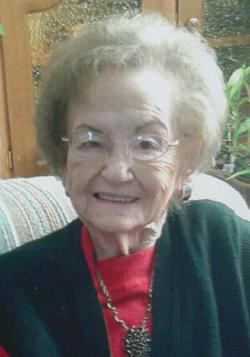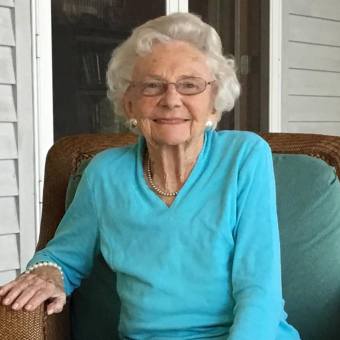
Hilda Duke: What She Taught Me About God

Hilda

I preached the following sermon entitled “Coincidence or Providence” on March 25, 2007 for the First Baptist Church of Farmville, NC. Hilda Duke, who passed away yesterday, was the inspiration for this sermon. I will always love her immensely. 

Isaiah 43:16-21

On Sunday morning, February 5, 2006, Hilda Duke left the worship service looking like she’d seen a ghost.  I asked, “What’s wrong, Hilda?”  She said, “You won’t believe it.  But today is the day my husband, Wilton, passed away eight years ago.  And every hymn that was sung this morning in worship was sung at his funeral service.”

Wilton died the year before I came to Farmville.  I had no idea when Wilton died, and I certainly did not know what was sung, if anything at his funeral.  “What a wonderful coincidence!” I thought to myself.

One morning a couple of weeks ago I was in the office here at church helping Patty with the bulletin.  After spending about a half hour with her, I went into my office to study for a little while.  About half way through my studying, Peggy Whitfield entered my mind.  I knew she was probably at the place that she had been for days—in the nursing home with her brother who was slowly passing away.

As much as I tried to continue studying, I just could not get Peggy off my mind.  Peggy, one of our most gifted deacons is so good at visiting patients and family members in the hospitals and nursing homes, and now here she was at the bedside of her dying brother.  I kept thinking about her and could no longer concentrate on my studies, so I got up and told Patty that I was going to drive out to the nursing home for a little while.

As soon as I walked into the room, I hugged Peggy who was sitting at a table near the door, and before I could speak to anyone else, Peggy’s niece who was at Jimmy’s bedside said, “Peggy, you might want to come over here.  His breathing has changed.”

I walked to the foot of the bed with Peggy and saw that Jimmy was taking his final breaths.

“Would you like me to say a prayer?”  I asked.

“Yes, please,” several responded.

I prayed briefly, asking God to be with and take care of Jimmy in death as God had been with and taken care of him in life.  When I said, “Amen,” Jimmy took his last breath.

And I thought to myself, “what a wonderful coincidence!”

Before I left the nursing home, Peggy hugged me goodbye and said, “Your timing could not have been more perfect.  The Lord certainly does work in mysterious ways.”

I drove back to the church thinking about what just happened.  I drove up Main Street, thinking and pondering, wrestling and doubting.

Was it just a mere coincidence that Peggy came to my mind while I was studying, or was it something else?  Should I say that “Peggy came to my mind” or would it be more accurate to say that “Peggy was brought to my mind?”

A mere coincidence?  Did her name just rise up, haphazardly and randomly, from the recesses of my conscience during that moment in my office?  Or was it brought to my consciousness from outside of my consciousness?

A year ago, was it just by mere happenstance that I selected the hymns from Wilton’s funeral service on the eighth anniversary of his passing?  Did those titles just come to me, randomly, accidently?

Or were they brought to me?

The dictionary defines “coincidence” as “an accidental sequence of events that appear to have a causal relationship.”  This is how, of course, the main way the modern world has taught us to think of our lives—as a random, pointless, series of accidents.

Therefore, any thought that may happen to come into my mind as I am sitting in my office is always exclusively coincidental, accidental, and random, never intentional, designed, purposeful, and gifted.  It was just happenstance that I showed up in the nursing home when I did.  I was not compelled to go or propelled to go by anything external.

In freshman biology class, this was taught to us as teleological fallacy.  The Greek word for “end,” or “purpose,” is telos.  Science does not engage in speculation about purposes and ends, only means.  And the means are always accidental.  The world in which we live is random, coincidental.

The professor tried to trick us on the exam.  Trick question: “Why did the giraffe develop a long neck?” And the professor probably expected that we dummies would answer something like, “The giraffe developed a long neck in order to reach the leaves in the top of the trees for food.

No, we had listened in class, studied our notes and read our textbook, so we answered, “The giraffe developed a long neck, not because of any plan or purpose, certainly not because of any plan or purpose, certainly not because of any divinely inspired program, but rather the end of a series of mutations, random changes that proved beneficial.”

Science has been very successful in carrying this sort of thinking a long and doing a lot of good with it. But right now, at this stage in human history, I’m wondering if a good deal of reality has been lost in this sort of thinking. I believe we would do well to listen again to these wonderful words from Isaiah.  “Behold, I am doing a new thing.”

Israel is in Babylonian exile, trapped, far from home, forlorn and without hope, except that God promises to make a new thing for them.  Here are words addressed to people who have no way out if there is not a God who not only care but also acts.  Their hope, our hope in life, in death, in life beyond death, is that our God lives and acts, creates and intervenes, intrudes and moves among us. Our hope is that our God speaks to our consciousness from without, puts thoughts into our minds, leads us and directs us in right paths for his name sake.

But this is not how we have been trained by the modern world.  We’ve been conditioned to admit that any strange, external sort of word is mere coincidence, a kind of random, accidental, meaningless glitch of the brain that means very little.

But what if it means everything?  What if these so called coincidental thoughts are some of the best thinking that we do?  What if all of these weird coincidences we experience in life are as close to reality, as close to what is really real in this world, as we human beings can get?

I believe we’ve got to break ourselves of the habit of dealing with things that happen to us, or visions that come our way, or words that come to our mind, by dismissing it as mere coincidence.  For those who are convinced that the Word has been made flesh, and the Son of God has intruded into the world, that God is always working in this world, creating and re-creating and resurrecting and transforming, there is nothing in this world that can be labeled “mere.”

For people with faith in the risen Christ, a miracle, the supernatural, is not something that momentarily intrudes among us into an otherwise natural world, but rather for us, it is all miracle and it all comes from the creative hand of God.  We look at trees blooming everywhere on this first weekend of spring in a completely different way.  It’s all supernatural.  It’s all extraordinary.

We pay attention to conversations, we listen to the reading of an ancient text, and we listen to the singing of the hymn, with the assumption that it is all potentially revelation, all the footsteps and handiwork of an intrusive God.

As Frederick Buechner says, “in the last analysis of all, all moments are key moments and life itself is grace.”

Our grandmother in the faith, Sarah, was one day straightening up her tent in the desert when these three people, complete strangers, show up.  Sarah extends hospitality to the strangers, welcomes them, and prepares a meal for them.

And after the satisfying meal, one of the strangers peaks and blesses Sarah and her husband Abraham, tells Sarah that she is going to have a baby that will be the beginning of a great people, a great family, Israel, a family that will bless all of the world’s families.  Suddenly, the text moves from describing these people as mere visitors, to describing them as the “Lord.”

In fact, later, early Christian preachers through these three strangers as embodying God—the Trinity—Father, Son, and Holy Spirit.  When Paul later referred to this incident, he said that, “Some have entertained angels unaware.”

Now I know that, to the world, this is making a huge deal out of a meal for three ordinary visitors.  A simple meal, even eating with people that we don’t know, is a merely ordinary experience.

But having been encountered by the Christ, having experienced a God who is not distant and disinterested, we do not live in the ordinary and we don’t deal with people, with one another, with the world, as merely anything.  For us, with eyes of faith, it is never merely coincidental, accidental or happenstance.  It’s revelation.  It’s extraordinary.  It is a gift of God who does not leave us alone, who loves us enough to seek and to find and to reveal.

Our God keeps promising us, “Behold, I’m doing a new thing!” Can you see it?

Peggy Whitfield was absolutely right.  Our Lord works in mysterious ways.  And our Lord is here right now and he’s working all around us.

Can you see it?

Can’t Celebrate Easter Without a Carrying a Cross: Remembering Mary Magdalene Feightner

Mary-Feightner-1492072139Here in the mournful darkness of this Saturday vigil, still in the shadows of Good Friday, we gather together with bated breath.
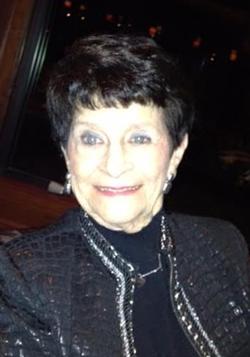
For Easter is coming! New life is being born! Resurrection morning is dawning! Something wonderful has been lost, but something magnificent is being gained.

However, I believe it is very important for us to realize on this Holy Saturday, that before we can experience new life, before we can celebrate resurrection, before we can sing alleluias, someone needed to pick up and carry a cross.

And the sad thing is that very few of Jesus’ disciples understand this. They don’t understand it today, and they didn’t understand it 2000 years ago.

Although Jesus continually taught that to gain life, we must be willing to lose our lives, that Easter would not happen without some self-denial, resurrection would not come without some self-expenditure, new life would not be born without some sacrifice, and the light of Sunday morning cannot dawn without the darkness of Good Friday, when the time came for the disciples to follow Jesus all the way to the foot of the cross, most all of them very selfishly fled to save their lives. One would even betray Jesus. Another would deny that he even knew Jesus. Nearly all would desert him. In spite of Jesus’ continual call to pick up a cross and follow him, most of the disciples turned their backs on him in his darkest hours.

However, there were a few disciples who got it. There were a few who were willing to carry a cross, to live and to love selflessly and sacrificially. There were a few who faithfully followed Jesus all the way to Golgotha.

Although the intrinsic sexism of this world’s history has caused the majority of people to overlook these faithful disciples, all four gospel writers did not.

In Luke 8 we read these words: Afterward [Jesus] journeyed from one town and village to another, preaching and proclaiming the good news of the kingdom of God. Accompanying him were the Twelve and some women…Mary, called Magdalene… Joanna…Susanna, and many others…”

And on Good Friday, when none of the male disciples could be found, in Mark 15 we read: “There were also some women looking on…among whom were Mary Magdalene, and Mary the mother of James, Joses, and Salome.

In Matthew 27 we read: Gathered at the foot of the cross: “among them was Mary Magdalene, and Mary the mother of James and Joseph, and the mother of the sons of Zebedee.

In John 19:25 we read where all the male disciples fled, “But standing by the cross of Jesus were His mother, and His mother’s sister, Mary the wife of Clopas, and Mary Magdalene.

The problem with Christianity today is that there are too few Mary Magdalenes in the church who understand that authentic faith, true discipleship, involves a cross. There are too many Christians in our world who believe they can have Easter Sunday without Good Friday, who believe they can experience new life without death to self, who believe they can sing alleluias without sacrifice.

What this world needs, what this community needs, what the church needs more than anything are more disciples like Mary Magdalene and Mary Magdalene Feightner.

Like the Mary Magalene before her, Mary Magdalene Feightner understood that when Jesus called people to be his disciples, Jesus was always quite clear that there would be a cross involved, a cross that they would voluntarily need to pick up and carry.

I will never forget the last time I spoke with Mary. It was here, in this place, just this past Sunday. After the service was over and the congregation was dismissed, I was finishing a conversation with some people down front here who were asking about joining our church. I looked up and saw Mary walking down this aisle. I met her right here to greet her. I said, “It is so great to see you Mary.” And it was so good to see her. For each time I saw her she was always beautiful, stunning really, dressed to the nines, and always wearing a tremendous, welcoming smile.

Mary responded not in a manner people usually respond to such a greeting with “It is good to see you too!“ but rather “How is it going with that Air Force Class Central Christian Church adopted?”

I said, “It is going great! We had a good time trap shooting with them!”

And instead of replying, “Great, glad to hear it!” not allowing me to rest on any laurels, she replied: “Well, what’s the next event you have planned for them?”

Like Mary Magdalene, Mary Magdalene Feightner understood that to find true life is to lose one’s life, to truly live to truly deny one’s self, to always put the needs of others ahead of one’s own needs, to love and to welcome and to accept as Christ loves, welcomes and accepts.

It is no secret that Mary made it her mission for nearly the last thirty years of her life to give all that she had to welcome Air Force pilots and their families into our community.

It was obvious that Mary learned from her own personal experience, as she compassionately and empathetically understood from how difficult life could be for enlisted service men and women having to move and make a new home in a new community every few years. She knew the hardship on families: the time the kids get settled in school, make new friends, it’s time to move and start all over.

This is why Mary made Vance Air Force Base her base. They were here pilots, her families. She didn’t invite businesses or organizations or churches like ours to adopt these pilots or to do anything that she was not willing to do herself.

And she never did it for the recognition, for any reward, and certainly not to have the foyer of the auditorium named in her honor—the foyer, the first place pilots enter when they come to Vance, and the last place they leave after they earn their wings.

The night of the naming ceremony, her sons Ray and Mark will never forget having to tell Mary that they were going to the base, because Governor Mary Fallin was speaking, just so their mother would get dressed up and go.

Although Mary earned much recognition, Mary Magdalene Feightner did not volunteer her time for any award, any accolade, I believe she did it because she understood to find one’s life, one must first lose one’s life, as her work for the base was purely selfless, always tireless, and truly sacrificial.

It has been said by many who are associated with Vance: “Mary didn’t know she was 81 years old.” Because even during the most fragile part of her life, she selflessly gave all that she had. For example: staying out on the 103-degree tarmac for the Thunderbirds last summer until she passed out, sacrificing her personal well-being.

This was just Mary. No matter what Mary did, she gave her all and always put others first, whether as a banker in a man’s world working her way up from a teller to a loan officer to a Vice President, as a substitute teacher in the Enid public school system, as a Grace-Care Volunteer helping the elderly with basic needs, as the Secretary-Treasurer of the Northwest Oklahoma Banker Association, as a successful fund-raiser for the YMCA, the American Cancer Society, the March of Dimes, the United Way, or as Secret Shopper for Subway and Pizza Hut.

She did it because as a genuine disciple of Jesus, when it came to loving others, she didn’t mind that a cross might be involved. For Mary, people were worth the sacrifice. Thus, you could often find Mary in Enid wherever you find people. Whether she was picking up side gigs peddling Straight Talk phones at Wal-Mart or Kobalt tools at Lowes, she just wanted to where the people were, because she genuinely loved people!

She loved others, perhaps especially the Vance Air Force family with the same love that she had for her own family. By a living example she taught her sons a staunch work ethic, the importance of networking and social skills, and yet how to be a good listener. But, perhaps most importantly, she taught them how to accept, welcome, and love people.

Mark’s wife Diane will always cherish the way she used to welcome her and Mark into her home while they were in college. She said no matter what time of night it was when they arrived, she could always count on Mary being there to greet them at the front door.

Ray’s wife Kim and Diane testify, although somewhat reluctantly, of Mary’s unwavering devotion to her family, as according to Mary, Ray and Mark simply can do no wrong.

And each of her grandkids, Zachary and Kylie, Mason, Morgan and Madison can attest, at Gurnie’s house there were never any rules. Three scoops of ice cream? Who says you can’t have four?

I think it is interesting that Mary Magdalene is remembered and mentioned by name by the gospel writers more than any other apostle. And perhaps more than any other Partner in the Sky in Enid, Mary Magdalene Feightner will perhaps be most remembered by our community.

However, her great legacy is not why we are gathered here this afternoon in a Christian church. And her many contributions to this community is not why it is so appropriate that we have gathered here on this Holy Saturday, between the darkness of Good Friday and the light of Easter Sunday.

For tomorrow morning, Christians all over the world will gather and read or hear the following scriptures.

Some will hear the words Mark 15:47: “Mary Magdalene and Mary the mother of Joses were looking on to see where Jesus was laid.”

Matthew 28:1 reads: “Now after the Sabbath, as it began to dawn toward the first day of the week, Mary Magdalene and the other Mary came to look at the grave.”

Mark 16:1 reads: “When the Sabbath was over, Mary Magdalene, and Mary the mother of James, and Salome, bought spices, so that they might come and anoint Him.”

John 20:1 reads: “Now on the first day of the week Mary Magdalene came early to the tomb, while it was still dark, and saw the stone already taken away from the tomb.”

Out of all of Jesus’ disciples it was Mary Magdalene who not only sacrificially followed Jesus all the way to the foot cross, but she followed him all the way to the grave.

I don’t believe it was a coincidence that Mary Magdalene Feightner was here in this place to worship Jesus last Sunday morning. I don’t believe it was happenstance that she walked down this aisle on her last Sunday on earth, with her mind and heart not on herself, but on others. Like the Mary Magdalene before her, Mary Magdalene Feightner followed Jesus to the very end.

Because tomorrow Christians all over the world will read and hear those wonderful words that we are all anticipating on this Holy Saturday. From Mark 16:9 we read: “Now after He had risen early on the first day of the week, He first appeared to Mary Magdalene…”

We are gathered here in this place, appropriately on this Saturday between Good Friday and Easter to celebrate someone who, because of her faithful discipleship, because she voluntarily carried a cross, because she sacrificed and poured herself out to this community, because she selflessly followed her Lord all the way to the end, Mary Magdalene Feightner has now experienced the good news of Easter in a way that we can only imagine.

And this Easter, out of all the disciples that have gathered here this day, “He, the risen Lord and Savior of the world, first appeared to Mary Magdalene Feightner.”

In John 20:18 with we these most hopeful words: Mary Magdalene came, announcing to the disciples, “I have seen the Lord.”

Yes, she most certainly has. Thanks be to God.

A Living Prayer of Thanksgiving: Remembering Margaret Lambke

Margaret Lambke

Thirteenth century German theologian and philosopher Meister Eckhart is often credited with the following quote: “If the only prayer you ever say in your entire life is ‘thank you,’ that will be enough.”

If the only prayer you ever say in your entire life is ‘thank you,’ that will be enough.

I believe it is enough, because I believe that the simple prayer, “thank you,” indicates that one understands that all of life is a wonderful, free gift of God’s amazing grace.

I have said before that I believe there there are basically two types of people in this world: People who get the concept of grace and people who don’t get it.

People who fail to see the grace of it all are usually not what we call “good” people. They act as if they have somehow earned their life, done something to deserve their life. They walk around with this air that the world owes them something. And they grow bitter and even hostile if life doesn’t go their way. After all, they deserve better.

And because they feel as if they have earned it, their lives are usually self-absorbed. Selfishly, they do only what they want to do, even if that means doing nothing at all.

Then there are those like Margaret Lambke who get it, who truly understand the sheer grace of it all. They understand that all of life is gift. It is unearned and undeserved. It is mysteriously and utterly precious. And these are who we generally call “good” people.

Filled with gratitude and joy, they live their lives abundantly, enthusiastically, lovingly. Every moment—whether that moment may seem extraordinary or ordinary, miraculous or mundane—every moment, because it is gift, because it is grace, is relished, appreciated and even celebrated.

It is not hard to understand how people like Margaret make the best parents. Margaret absolutely cherished being a mother, and later a grandmother, and great grandmother.

Debbie and Conie, this is because, for your mother, you two, and later your families, all of her grandchildren and great-grandchildren, were gifts of God’s amazing grace, all unearned, undeserved. And she got it.

This is why she remembered, looked forward to, and loved to celebrate every birthday, every anniversary or every life event in your families.

I loved that you will always remember her many voicemails. I think you told me that you could receive over a dozen from her in one day.

“Hi Hon, it’s me, I don’t need anything. Just calling to check on you.”

I believe Margaret called you and left those voicemails as a way of saying: “Thank you.” Thank you for being you. Thank you for being my family. And she called each time her heart was suddenly filled, overflowing with gratitude for you. This is why she called twelve or sixteen times a day!

I believe this immense gratitude which flooded her soul was the exuberant energy behind everything that she did.

There’s no telling how many times she heard someone say to her: “Mar Mar, please sit down. Mar Mar, please rest a while.”

But like the energizer batteries a little pink bunny, the gratitude that overflowed inside of her compelled her to keep going and going and going.

Gratitude is what propelled her to immediately step up and raise her hand whenever anyone asked for a volunteer. Gratitude is how she managed a gift store, helped Jim with bookkeeping in his pharmacy, served as president of PEO, volunteered with mobile meals, played some tenacious tennis, planted and maintained beautiful gardens, made homemade candies and baked her famous Mar Mar bread. Gratitude is what compelled her, no matter how busy she was at the store or with her volunteer work, to always be there for her family. Gratitude propelled her to get in her car and drive to Colorado when she learned Debbie was a little homesick to to drive to the school to give a ride to Conie and the rest of the cheerleaders if they needed one. And gratitude was the reason that no matter how busy she was, she was always a leading candidate for “Mom of the Year.”

Everything she did, every project she undertook, every holiday decoration she created, every Easter egg hunt she hosted, every extra goodie or appetizer she prepared, every Sunday school class she taught, every breath she took, was a prayer of thanksgiving to God for the gift of her life.

“Mar Mar, please sit down!” she would often hear. But the immense gratitude she possessed for Jim and Debbie and Conie, her friends and family, drove her to keep at it, keep working, keep volunteering, keep cooking, keep decorating, keep loving, and keep praying with all that she had that simple but beautiful prayer: “Thank you.”

I am certain this is why it has been so especially painful to watch Margaret these last few years since she suffered a broken hip and the subsequent unsuccessful surgeries. To witness this one who never missed a beat, never slowed down, and never sat down, has been very difficult, to say the least.

And now to think that this one who was so full of life, abundant, exuberant, tenacious, is no longer living with us, well, it can be almost too much to bare.

Conie and Debbie told me that one of their mother’s favorite scriptures was John 3:16: “For God so loved the world that he gave his only Son, so that everyone who believes in him may not perish but may have eternal life.”

It is easy for me to understand why this passage of scripture was special to Margaret. For there is such amazing grace revealed in these beautiful words.

God gave, God gave. Do you hear it? Do you hear the gift? Do you hear the grace? God gave God’s only son, why? For the world earned this gift? For the world deserved this gift? No, for God so loved the world!

So that everyone who believes in this gift, believes in this grace, so that everyone who truly gets it, so that everyone who truly understands that if the only prayer that you every pray in your lifetime is “Thank you” that is enough, so that everyone whose entire life is a prayer of gratitude, they will never perish but have eternal life.

Eternal life. Life without ceasing. Life forever. For people who fail to get it, who fail to appreciate the gift of temporal life on this earth, this is not good news. However, for people like Margaret, for people who truly get it and appreciate it and celebrate it, that life itself is grace, for people who have lived life fully and abundantly and tenaciously and enthusiastically, then this is the best news of all!

And I believe this good news can bring much comfort and peace to those of us who are grieving today.

But I also believe that Margaret taught us that we can find even some more comfort this day.

For you see, Margaret herself was a gift. Margaret was grace. This world didn’t earn her, nor deserve her. We didn’t earn or deserve 8 minutes or 8 days or 8 years, and we got 88 years. Jim you got all but 20 of those years. 68 years of marriage. That is grace.

Knowing Margaret, I believe she is eternally grateful for that. And I believe she has taught us to be eternally grateful to that.

Garth Brooks sings a song entitled “The Dance.” One line of the song goes: “I could have missed the pain, but I would have had to miss the dance.” Our grief today only means that we have received and lost something wonderful. The only way to never grieve is to have never received or appreciated that gift. But as Margaret taught us with her life, to never appreciate it, to never get it, is to never truly live. As the song goes, the only way to miss the pain of loss is to miss the whole dance of life.

So Jim, Conie and Debbie, as I told you last week, every time you remember your mother and shed a tear, be grateful for those tears. Because those tears only mean that you have been graced by God. Those tears only mean, that you like your wife and your mother, also get it.

And because you get that you have been graced by God with the gift of Margaret, because we all get it, may we live out our remaining days on this earth as Margaret lived all of her days, by being a living prayer of thanksgiving.

A Nurse’s Prayer: Remembering Marianna Powell

Marianna Powell

I’m certain that many people have contacted the Powell family since Sunday to let them know that they were in their prayers.

Prayer: it is a wonderful gift of God’s grace. To know that others, some from great distances, from all over the country, are speaking to God on our behalf, asking God to bring us healing and comfort, can bring us a peace that is truly beyond our understanding.

For the good news is that we believe that God not only hears our prayers, listens to our prayers, but we believe God does all that God can do, gives all that God can give, to always answer our prayers.

This is why I loved Kerry’s response when I asked him and his brother Randy: “What was the most important thing that your mother taught you?”

Without hesitation, he said, “She taught us how to pray.”

Immediately, Randy nodded in affirmation.

I said, “What do you mean?”

“Oh. she would work and work with us to help us remember the and recite the words of the Lord’s Prayer,” he said. “Prayer was important to her. She believed in prayer. Before meals, before bed, she taught us to always pray.”

We talked a little more about prayer, but it wasn’t long, nor hard to understand, how prayer was the perfect segue to begin talking about her life, especially how she loved her vocation as a registered nurse.

As Randy and his wife Kandi, and Kerry and his wife Maria, who is also a nurse, talked about how important nursing was to Marianna, I began thinking about my grandmother who, like Marianna, was also born on April 19, but one year later in 1927; and, like Marianna, was also a registered nurse.

I will never forget my Nana talking about how she enjoyed nursing. She would often speak of what she believed to be “the healing power of personal touch,” the importance of “up close and personal” contact with patients.

And whenever I was sick or not feeling well, I always felt better when Mama would have Nana come over to check on me. I always felt better when Nana would come close to me, gently place the back of her hand on my forehead to check for a fever, placing her hands around my cheeks and neck to check for swelling.

Yes, as I said, there are many people praying for the Powell family today, some from great distances. They have sent cards, made phone calls, or reached out electronically with emails or social media, all pledging the Powell family their sincere prayers. Prayer is a wonderful gift of God’s grace. The Powell family appreciates prayer. Marianna taught them to believe in prayer.

But, then there are others (and I am speaking of you) who have gathered here in this place this morning. I am speaking of your who, as they they say, have put some feet on your prayers. You have come to be close this family in their grief. You have come to lay your hands on them, to touch them with an empathetic handshake or a loving embrace.

And they will forever be grateful for your presence here today. They will be grateful that you are not only here and near to them on this day, but grateful for the way that you will always remind them of their mother, grandmother and sister, for the way that you will always remind them of this this one with the heart of a nurse who loved them and loved others and prayed for so many, not from a distance, but up close and very personally.

I shared with the family the story of one of my first visits with Marianna. She was in the dining hall of the nursing home eating dinner. I pulled up a chair and sat beside her. At first, perhaps due to the strokes that she had suffered, she seemed to be a little distant, aloof.  I was on her left, unsure that she recognized my presence. She was sitting up, but slumping a little bit to the right, away from me.

However, when I leaned over and touched her arm, telling her that I was her pastor from Central Christian Church, she immediately turned to make eye contact with me and smiled. And I will never forget what happened next.

With strength that I did not know she possessed, she sat up and started leaning her head towards me.

The caregiver who was feeding her said: “She wants to kiss you!”

Surprised, but pleasantly so, I leaned in, turned my cheek towards her as she gave me what has to be one of the sweetest kisses I have ever received!

She loved her church and this one who represented her church so much, she prayed for her church in such a way that she could not remain distant, aloof. With the heart of a nurse still beating inside of her, she wanted to demonstrate her love, up close and personally. With every bit of strength that she could muster, with all that she had, a pure and powerful love compelled her to sit up and lean forward, until she could come close enough to me to offer me a prayer through her touch, through a beautiful kiss on the cheek.

Marianna taught her children how to pray with words. But, perhaps, more importantly, she also taught them how to pray with her life, with all that she had.

I believe the Apostle Paul aptly describes Marianna’s life when he wrote that we should “pray without ceasing.” That is, we should live a life of prayer. We should live our lives as if we are always with the Holy One.

It was this prayerful life that Randy and Kerry said taught them the Christian values of love, kindness and respect. However, they were both quick to point out: “Now we are not saying that we have always conveyed to others these values or lived out these values like our mother! We are just saying that because of our mother, and because of what she taught us with her life, we have at least been blessed with the wonderful opportunity live those values.”

We then talked about her love for God’s entire creation, especially for her beloved horses. They will never forget the time they took her to say goodbye to one of her horses. As you can imagine, Marianna did not say not say goodbye with a simple wave through the car window. She got as close as she could possibly get to her horse, so the horse could feel her touch and know her love.

This is why I thought it was rather interesting that one of the memories that Randy and Kerry said they will always cherish was their mother reading them the Christmas story from Luke’s gospel every Christmas. They then talked about how important it was to them to sit at their mother’s bedside this past Christmas and read it to her:

         In that region there were shepherds living in the fields, keeping watch over their flock by night. Then an angel of the Lord stood before them, and the glory of the Lord shone around them, and they were terrified. But the angel said to them, “Do not be afraid; for see—I am bringing you good news of great joy for all the people: to you is born this day in the city of David a Savior, who is the Messiah, the Lord. This will be a sign for you: you will find a child wrapped in bands of cloth and lying in a manger.” And suddenly there was with the angel a multitude of the heavenly host, praising God and saying, “Glory to God in the highest heaven, and on earth peace among those whom he favors!”  (Luke 2:8-14)

I find this interesting because the story of Christmas is essentially a story of a God who loved this world so much that God could not remain distant, aloof. God did not merely say to the heavenly host: “Let us pray for the creation. Let us pray for humanity.”

And of course, that in itself would have been enough. Because we believe in prayer. Marianna taught us to believe in prayer.

The writer to the Hebrews assures us that

[Christ] is able for all time to save those who approach God through him, since he always lives to make intercession for them.” The writer is saying that Jesus lives to make intercession for us. In other words, Jesus lives today to pray for us (Hebrews 7:25).

The Apostle Paul in his letter to the Romans writes:

Likewise the Spirit helps us in our weakness; for we do not know how to pray as we ought, but that the very Spirit intercedes with sighs too deep for words.  And God who searches the heart, knows what is the mind of the Spirit, because the Spirit intercedes for the saints according to the will of God (Romans 8:26-27).

If we ever worry that no one is praying for us, the Apostle Paul says that we can stop worrying. If no one earth is praying for us, Jesus certainly is. Jesus is our High Priest. He is our intercessor. He is our advocate. Christ lives today to pray for us. Even when we don’t know how to pray for others or for ourselves, even when we cannot find the words to pray, Paul says that the Spirit of God intercedes for us with “sighs too deep for words.”

Yes, if all God did for us was pray for us, even from a distance, that would be enough.

However, the love of God, the love of God that was revealed to us through Marianna Powell, and through Christ Jesus himself, is so great, so pure, and so powerful, that there was no way in heaven that God could remain distant, aloof.

God’s love for us compelled God to summon all the strength God could muster, to summon all that God had to give. Love compelled God to sit up in the heavens, and lean towards the earth, until God could come close enough to us to offer us a prayer through the “up close and personal” touch of the Divine, through a baby—Christ the Good Lord, the Good Shepherd, the Good Teacher, the Good Nurse—lying in a manger.

This is how we who are grieving today can truly be filled with a peace beyond understanding. People are not only praying for us from a distance. People are indeed here, in this room, with us. And God is not praying for us from some aloof heavenly place. God is indeed Emmanuel, which means, “God with us.”

God is here with us as God is with Marianna, loving her, touching her, embracing her, now and forevermore.

I want to close my remarks thanking God for Marianna’s love for us and for the special way that she revealed God’s love for us with these beautiful words by Allison Chambers Coxsey, entitled: A Nurse’s Prayer.

Give me strength and wisdom,

When others need my touch;

A soothing word to speak to them,

Their hearts yearn for so much.

Give me joy and laughter,

To lift a weary soul;

Pour in me compassion,

To make the broken whole.

Give me gentle, healing hands,

For those left in my care;

A blessing to those who need me,

This is a Nurse’s prayer.

Don’t Mess with Barbara: Remembering Barbara Newton

barbara-newton
Visiting with Barbara one week before her funeral service.

Eulogy delivered for Barbara J Newton Friday, December 16, 2016

The first chapter of our Bible teaches us that in the beginning “God created humankind in God’s image, in the image of God he created them; male and female he created them” (Genesis 1:27).

Canadian Theology professor Douglas John Hall wrote that the “image of God” is not necessarily something we human beings have or possess, but more of something that we are created and called to do and to be. Imago Dei is not a noun. Imago Dei is a verb.

During our relatively short time on this earth, we are called to do what we can where we can to image God, to reflect God, to mirror God. That’s why we pray, “Thy Kingdom come, thy will be done on earth as it is in heaven.”

And perhaps this is part of the reason that as a pastor and a preacher I have come to the conclusion that the only aspects of a person’s life that should be included in a person’s eulogy are those aspects of a person’s life that mirrors who or God is and how our God acts in the world.

Because of this, and unfortunately, because of the way some people live their lives on this earth, sometimes writing words of eulogy can be one of the most difficult tasks of a minister.

However, I have discovered that for most mothers, especially mothers like Barbara Newton, writing a Christian eulogy comes fairly easy.

For throughout the scriptures, God is oftentimes described as a mother.

In Deuteronomy 32:18 we read:

  You were unmindful of the Rock that bore you; you forgot the God who gave you birth.

Throughout the Hebrew Scriptures, God is portrayed as the mother of Israel. It is God who gave birth to the nation and loves Israel as a mother loves her child.

In the New Testament, it is obvious that Jesus understands this maternal love as he uses birth imagery to explain the gift of salvation, the gift of new life, abundant and eternal. Jesus told Nicodemus that if he wanted to truly experience life, he must be born anew, born from above.

And throughout the Church, baptismal waters have always been symbolic of the waters of the birthing process. The God that is portrayed throughout scripture is continually in labor. Always creating, recreating, working all things together for the good. Always giving life, abundant and eternal.

Fig, Kelly, and Chad, there is no doubt that part of the reason Barbara was such a wonderful human being was the way Barbara uniquely mirrored the motherly love of our heavenly parent. Her love was divine.

Now, I know what some of her immediate family are thinking: “Preacher, I don’t know about that. Mama loved us, but sometimes mama perhaps loved us to a fault.”

“Mama loved us so much, that if we were ever wronged or hurt by another, Mama was not the type to just let that go. The perfect title of her Eulogy might be: ‘Don’t…Mess with Barbara.’

So preacher, I am not so sure that I would describe her love as ‘divine love.’”

However, this is precisely how the holy scriptures describe it.

The prophets Hosea and Isaiah proclaimed a God, when it came to loving God’s children, you better not…mess with.

Hosea 13:8 reads:

I will fall upon them like a bear robbed of her cubs…  

In other words, thus saith the Lord, if anyone harms my children, if anything is done that causes pain and heartache to the ones that I love the most, you better believe that I am not letting that go!”

Isaiah 42:14 reads:

For a long time I have held my peace, I have kept still and restrained myself; now I will cry out like a woman in labor, I will gasp and pant.

Sound like anyone you know? And here is the good news for all of us who are grieving today.

Today, we are hurting. Today we are in pain. For death has wronged us. Barbara was too young and too good to suffer as I have seen her suffer since I have been her pastor.

And the good news is that our maternal God loves us so that God is not going let that go.

One day, Jesus and his followers encounter a funeral procession while traveling through the town of Nain.

He watches as a casket and a grieving family go by.

But because Jesus is God incarnate, the very image of our God, because Jesus loves with a divine, motherly love, Jesus can’t let it go.

The scriptures tell us that when he encounters this scene, he was moved with compassion. More specifically, he was moved very deeply.  The Greek word used here is a visceral verb. It means that Jesus was moved from deep within his inner bowels. Jesus has a visceral, gut wrenching reaction to that funeral procession. Jesus had this reaction, because Jesus loved. Some would say that he “loved to a fault.”

And Jesus’ deep compassion was for something more than the deceased. Jesus’ compassion was also for the living. Jesus recognized the tragedy of death.  Jesus recognized the pain and heart ache that this death had caused. Jesus recognized that it was not the will of God for any of God’s children to suffer like this. And because of his great love, Jesus is not going to let it go.

With great love and compassion, Jesus reaches out his hand and touches the casket and speaks to the one within it, “I say to you, get up!”  And then, listen to these wonderful words, “When the dead arose, Jesus ‘gave him back to his family.’” Isn’t that beautiful?  This young one’s life was restored, but so were the lives of the family.

Thus, Jesus demonstrates what our God is all about. God is and has always been about life. God is and has always been about bringing life, new life, abundant life, eternal life to God’s people.  In fact, giving life is the first, most important work that God does. For in the beginning, in the Genesis chapter one, we read that God breathed life into humanity.

Therefore, we have the certain hope that when Barbara breathed her last breath on this earth, God did not that go, but was there to breathe new, eternal life into her. And it is this hope that should also breathe new life and breathe peace into the lives of those of us who are grieving this day.

And we can rest assured that the divine motherly love of our God is not going to let our pain go today.

In Isaiah 66:12-13 we read:

For thus says the Lord; I will extend prosperity to her like a river, and the wealth of the nations like an overflowing stream; and you shall nurse and be carried on her arm, an dandled on her knees. As a mother comforts her child, so I will comfort you; you shall be comforted in Jerusalem.

The Psalmist declares:

Yet it was you who took me from the womb; you kept me safe on my mother’s breast.

And in Luke chapter 13, we read these beautiful words of Jesus:

Jerusalem, Jerusalem…  How often have I desired to gather your children together as a hen gathers her brood under her wings…!

In Revelation 21 we read:

See, the home of God is among mortals, He will dwell with them as their God; they will be his peoples, and God himself will be with them; he will wipe every tear from their eyes.  Death will be no more; mourning and crying and pain will be no more, for the first things have passed away.

Paul Smith, a pastor from Kansas City says, that here in the last book of the Bible, in John’s picture of eternal life, “We see God’s maternal presence doing something that almost every society understands as a mother’s delight.”  Someone once told me that there is nothing in the world that can wipe away tears better than a mother’s blouse, when she holds you tightly in her arms.

What a wonderful and hopeful joy to know that Barbara breathed her last breath on this earth…only to breathe her next breath in the arms of God, wiping away any tears that she may have shed. And God is also here to hold us, wiping away our tears.

God is not going to just let our tears go!

This is the hope for all of us who grieve this day. We look forward to the day when we, like Barbara, will be held in God’s arms, but until that day comes, we can find comfort in God’s church that has been commissioned with the mission of sharing the motherly love of God with all people. The good news is that God has graced each of us with friends and family, who like Barbara emulate our motherly God to care for us, especially when we are hurting.

And God, Emmanuel, God-with-us, is also here. God’s not letting our pain go. God is right here to wipe away every tear from our eyes. Until death is no more. Until mourning, crying and pain are no more.

Being an Artist with One’s Life: Remembering R. Arlen “Whitey” White

whitie

Arlen, or “Whitey,” was a gifted artist. After submitting several paintings, he was immediately accepted into the Art School at Phillips University. After school, he worked for Ray Sears, and later, established his own painting business. Whitey’s special gift, his meticulous attentiveness to detail, the pride that he took in his work, and his kindness and professionalism soon became renowned throughout the area, and he was given the distinct pleasure of painting some of Enid’s most beautiful homes, offices and businesses.

Whitey loved doing new and innovative things with paint. He could mix and match colors brilliantly with the specific purpose of creating something beautiful, or more specifically, taking something and making it more beautiful, completely transforming it.

Many of us here today are the recipients of Whitey’s gift, or we have at least have seen his artistry.

But today, as we thank God for his life, I would like for us to consider his artistic achievement that I believe is much more important than his painting, for it seems clear to me that Arlen used much more than the stroke of a brush to transform this world. Whitey was an artist with his life.

The Rev. Charles Hoffacker, author of A Matter of Life and Death suggests being an artist with one’s life means that “you take the material available to you—days and years, relationships, opportunities—and you make something out of them, something with its own integrity and truth, a [beautiful] creation that others can appreciate and be enriched by…the artist, working on the material of his life, thus demonstrates a measure of hope, a deep confidence that this beautiful world can become more beautiful still.”

The good news that we celebrate today is that Whitey was much more than a gifted artist with a brush and some paint. Whitey was a magnificent artist with his life. Whitey used the gifts that God had given him to do his part in transforming the world.

After God, the Supreme Artist, fashioned the good masterpiece called the earth, the Bible teaches us that God formed male and female in God’s own image, in the image of God, God created them.

I believe that means the vocation of every man and woman is to create, to fashion, to form, and transform, to be an artist with our very lives, using the resources that have been given to us by the Artisan of the Universe to make this world even more beautiful.

This, I believe this is the way and the truth and the life: the holy purpose for every person.

And as a Christian, I believe, as Whitey believed, that the way, the truth, and the life, our holy purpose can be found through following Jesus.

Not by merely going to church every Sunday worshipping Jesus, not by attending weekly Bible Study studying Jesus, but by following Jesus, by doing the things that he did, by going to the places that Jesus went.

And Jesus was, himself, a painter.

What? You thought he was just a carpenter? Nope. Jesus was a painter.

In fact, Jesus began his very first sermon by painting. With the beautiful words that we call “the Beatitudes,” Jesus painted a portrait of how this world should be completely transformed, making his Father’s creation even more beautiful.

Blessed are the poor in spirit, for theirs is the kingdom of heaven.

This is how I want you to use your gifts to transform the world, says Jesus: bless those, help those, favor those, love those, who are not only poor financially, but poor spiritually, those who scrapping the bottom of the barrel but are also at the end of their rope, those whose very souls are bankrupt due to the loss of a job, or bad decisions made, or by the stigmatized disease of addiction.

Because Whitey owned his own business, he had the resources available to him to help those who found themselves in desperate need of a job. Because he was a follower of Christ, Whitey blessed so many in this community, perhaps some of you who are here today, who came to him when you were completely broke and broken; or more likely, he came to you. He came to you, not judging you, but showing you a portrait of better, transformed future. Whitey came came to showing you the very kingdom of God.

Blessed are those who mourn, for they will be comforted.

         Velma, I know this is a very difficult day for you, but as I told you on Wednesday, the tears that you shed only mean that you are grieving the loss of a beautiful gift to you from God, the gift of someone who was lovingly devoted to you for 67 years. And the only way not to mourn today is to have never received that gift.

So, every time you feel a tear roll down your face, you can thank God for those tears. You can thank God for your grief. With your family, thank God for the gift of God that was your beautiful marriage. And through your gratitude, I believe you and all who are mourning this day will receive comfort.

Blessed are the meek, for they will inherit the earth.

Jesus says, paint a portrait of the world where the meekest among us always know that they are loved they have a place in this world.

Whitey painted this portrait with his love and deeds to children, his children certainly, but also other children as he enjoyed coaching little league football and supporting high school athletics, hardly ever missing a Plainsman football game.

His heart broke when his only son Rick, who he was always so proud of, passed away. Toni, you were “daddy’s girl.” and you will always cherish the special bond you shared and the many unforgettable memories from your childhood: all of those cross country vacations camping in the Redwood Forest and in our many of our great national parks.

And Whitey painted a portrait where the meek are always blessed as he adored his grandchildren and great-grandchildren, doing whatever he could do to make every day special, like he did every Christmas playing Santa and artistically wrapping the most beautiful gifts.

Blessed are those who hunger and thirst for righteousness for they will be filled.

Whitey painted a portrait of a world where the poor and the poor in spirit are helped, those who mourn are comforted and the meek are blessed, but he also painted a portrait of a world that encouraged personal responsibility.

Arlen’s incredible work ethic grew out of the depression era. He was only nine or ten years-old when he worked riding a bicycle on a paper route to help support his family.

Whitey painted a beautiful portrait of the blessings that come from thirsting to be trustworthy and by hungering to be dependable. And because of this portrait, his life was full. And the lives of those who knew him have been filled.

Blessed are the merciful, for they will receive mercy.

Whitey’s portrait of dependability and trustworthiness not only filled the lives of his friends and family, and many customers, it also touched the lives of complete strangers, because in every one of Whitey’s life portraits, the colors of mercy were always present.

One day, while driving to Bass Construction Company, Whitey saw the car in the front of him suddenly swerve, run up on the curb, stopping in some bushes. Whitey drove up beside the car and noticed a man, slumped over. Although he was no EMT and had no CPR training, Whitey jumped out of his car and into in the passenger seat of that man’s car and began administering CPR, until Bob Berry from Bass ran over to help get the man who was having a massive heart attack to the hospital.

Later, the Enid police department presented Whitey with an award for saving that man’s life.

Blessed are the pure in heart, for they will see God.

God, the Supreme Artisan created Arlen, as he created each of us, that we may creatively make this world a better place.

Arlen did this by answering the call to follow Jesus. Arlen was not perfect. No one is. But his motives were pure. With genuine kindness with, purity of heart, Whitey used his gifts to follow the Christ to the best of his ability. The portrait of his life is the example for all of us, each one of us.

Whitey would want me to extend an invitation to each of you here to speak with me anytime after this service about what it means to follow Jesus in this life, to use the gifts that we have been given by God to transform this world with pure colors of mercy, grace and love, and to have the hope that when our painting is completed here, we will see God.

As, now, through the power of resurrection, the Master Artisan beckons Whitey on to a new, transformed life where I believe God and Whitey will continue painting together.

In the very presence of God, I believe he is even more creative than ever before.

There Bob will discover, much to his delight, that the faithful life he lived on this earth was but the primer. It was just the first coat.

As Hoffacker wrote about an artist who was faithful until death: “Now [God’s] gift to him is all the color he needs to make his new life brilliant with praise.”

Blessed are the peacemakers, for they will be called children of God.

And because of this beautiful portrait, a portrait of a transformed Whitey painting colors of praise in the very presence of God, as God’s beloved children, we can have some peace today, a peace that is even beyond our understanding.

And having received that peace today, may each of us, go out from this place, and, like the famous Sherwin Williams’ logo, do what Whitey did, “cover” this world with peace, until that day comes when we are all reunited with him as God’s beloved children. Amen

Sewing Love: Remembering Bernice Crandall

bernice-crandall

As a pastor, I have learned along the way that the only words that are truly appropriate for a Christian Eulogy are words that speak to the ways the person whose life is being remembered actually mirrored or imaged God and the good news of the gospel.

Because in the end, when it is all said and done, it really doesn’t matter how much money we made, nor how many businesses we created, nor how many buildings we built.

The only thing that truly matters is that we somehow fulfilled our human vocation, our holy purpose on this earth, that I believe is revealed in the very first chapter of our Bible: “So God created humankind in God’s image, in the image of God God created them; male and female God created them” (Genesis 1:27).

In the end, what truly matters is how we as human beings imaged God, mirrored God, thus proclaiming to the world with our lives who our God is, how our God acts, and what our God desires.

When Shannon and I visited with Bernice this past Saturday, the day before she died, her children handed me a tiny slip of paper with words that were read at Bernice and Eugene’s wedding ceremony in 1942 in Fullerton California.

I’ll be loving you, always;

With a love that’s true, always.

When the things you’ve planned,

Need a helping hand,

I will understand, always.

Days may not be fair, always;

That’s when I’ll be there, always.

Not for just an hour,

Not for just a day,

Not for just a year,

But, always.

As her family lovingly gathered around her bedside that day, I had the wonderful opportunity to read those words to Bernice once more and to tell her that as she and Eugene were always there for one another and for their children, God, would always be there for her.

In fact, I said that the Bible often likens the relationship that God has with us to the relationship of a married couple. God loves us with the same personal, intimate, covenantal love that is expressed in the sacred vows of marriage.

And this love is not a mere sentiment. It is more than a feeling. It’s greater than an emotion. Think about it, no where in a marriage ceremony does the minister ever ask the question, “Are you in love with one another?” But always, “Will you love one another?” This love is a commitment, a dedication, a promise, a special covenant to always be there for one another, always, in sickness and in health, for richer or poorer, for better or worse, not just for an hour, not just for a day, not just for a year, but always.

This is how Bernice’s children will always remember their mother. They will forever be grateful that she was always there for them, for the way that she was always loving them.

When I asked Lavona and Jana to give me an example of how Bernice was always there for them, the first thing that came to their mind is how Bernice, with her own hands and a sewing kit, would make dresses and clothes for them to wear to school and to church.

I think it is a shame that this art of sewing clothes for children is slowly dying out with Bernice’s generation. Because this art, this wonderful act of love, is the very first way that our God demonstrated that for better or worse, God would always be there for God’s children.

Again, in the very first chapters of our Bible, we read that when Adam and Eve heard God walking through the garden at the time of the evening breeze, they hid themselves in the trees, for they realized that they were unclothed before God. All of their sins were exposed. They were ashamed of what they had done, embarrassed of who they had become.

But the good news is, good news that we oftentimes miss when we read this story, although Adam and Eve ate the fruit that was forbidden, although they decided to live in God’ s creation on their terms instead of on God’s terms, although they were naked, all of their sins laid bare, the Lord God, with God’s own hands makes garments of skin for the couple and clothed them.

And of course, like Bernice, God was clothing them with something more than garments. God was clothing them with love. God was covering them with grace. God was clothing them with the promise that although they would have to leave the garden of Eden as the consequence for their sins, God would never leave them. God was clothing them with the dedication that although the days may not be fair always, God would be there for them, always.

And this is the reason that we are able to celebrate today with so much hope, for better or worse, even in a chapel of an old cemetery. This is the reason that even a grieving family who has suddenly lost two sisters can be grateful.

The good news that that even when we have to leave this earth, God is still there for us. God will never leave us nor forsake us.

As the Apostle Paul boldly proclaimed, “For I am convinced that neither death, nor life, nor angels, nor rulers, nor things present, nor things to come, nor powers, nor height, nor depth, nor anything else in all creation, will be able to separate us from the love of God in Christ Jesus our Lord.”

And because of this divine truth, this holy truth that Bernice taught us with her life, a chapel in the middle of an old cemetery in Enid, Oklahoma can suddenly begin to feel like a wedding chapel in Fullerton California, full of hope, love and promise.

For through remembering Bernice’s steadfast love and abiding presence, through celebrating the wonderful way that she fulfilled her human vocation my imaging her creator, we are reminded that God will be there always, for better or worse, for richer or poorer, in sickness and in health, and the good news is, that with God, not even death will depart us.

No More Sea: Remembering Barbara Campbell

barabara-campbell

There’s a famous list in the book of Revelation of things that we will not find in heaven. John says that when we all get to heaven there will be no more death, no more mourning, no more crying, and no more pain. And that is good news of us who are grieving today.

However, there is one more thing on John’s famous list that may be even better news. The very first thing which is on John’s famous list of the things we will not find in heaven is the sea. John says, “and the sea was no more.” Sounds rather odd doesn’t it? For even most of us who live in land-locked Oklahoma have a strong affinity for the sea.

To understand why John includes the sea on this famous list, we need to understand a little something about the book of Revelation. Revelation is a letter of hope written to the church in Ephesus while John was imprisoned on the island of Patmos for preaching the Gospel. At this time, the Christian Church in Ephesus was being persecuted by the Roman government. And John loved the people in Ephesus very much and wanted to be with them and help them through their persecution. But he was on an island, and the sea was the great barrier which separated him from the people he loved.

And John says that one day there is going to be no more sea. That means one day there will be no more of anything that will separate us from the people we love.

I believe these words should be especially hopeful for us today. For we live in a world where there are many seas that separate us from our loved ones.

For many of us the sea is distance, like the fourteen years that Kristin lived apart from her family in Texas. Like with John on that island, sometimes the seas that separate us from our loved ones are miles.

However, one of the greatest seas that some of us experience on this earth is what Kristin has called “a devil of a disease.” Alzheimer’s is a great canyon, a wide gulf, that separates us from the people we love, slowly, painfully, certainly.

Part of Kristin’s grief today is her realization that her husband Don and her son Henry never had the opportunity to know Barbara at her best.

However, she is very grateful that she moved back to Enid with them in 2012, when they noticed her health failing. Kristin, I believe, as I am certain you believe, that this opportunity to move back was truly a gift from God to you and to Barbara.

During this time, Henry was Barbara’s light and joy. Although she could barely get around during this past year, she never missed one of his soccer games. Kristin says, that while on occasion, Barbara might have forgotten who she and Stan were, she never forgot Henry. She would knit him blankets, buy him books, and in nearly every photo that Kristin has of the two them, she is beaming!

While John was separated by the sea from the people he loved in Ephesus, John sent them the Book of Revelation to let them know that God was for them, not against them; God was with them, not away from them. For Barbara, I believe Henry was revelation. Henry was light. Henry was a message from heaven letting Barbara know that, in spite of her deep sea of sickness, she was loved by God.

I believe this teaches all of us this important lesson: In spite of the many seas that separate us from our loved ones, we will never be separated by God.

And this is especially hopeful for us today as we are painfully reminded, that for all of us, the greatest sea we experience on this earth is death.

The good news is: Because we can not be separated by the love of God, John says, one day, there will be no more sea. Some day, some how, some way, there is going to be no more of anything that will ever separate us from the ones we love. Although distance, disease and now death have separated us from Barbara, John tells us that it is only for season. It is not forever.

John says that one day there is going to be nothing which will separate us from Barbara’s love that she had for so many, especially as a wife, mother and grandmother.

One day, there will be nothing more to separate us from the twinkle that was always in Barbara’s eyes. There will be nothing to separate us from the love and appreciation that Barbara had for the gift of life; from the Barbara who loved movies, music, the theater and the arts; from the Barbara who loved shopping and spending time with her daughter in New York City; from the Barbara who loved listening to her ham Stan sing and perform; from the Barbara who dancing with her husband. He might have owned the stage, but she owned the dance floor!

One day, John says there will be nothing to separate us from the Barbara who loved going on what was always longer-than-expected hiking trips with the family, and who loved graciously knitting baby blankets for unwed mothers.

Stan says that it was this act of grace, of knitting blankets for these mothers, that perhaps most touches him about Barbara.

Perhaps it is because that when these mothers-to-be perhaps felt judged and separated by family, even by people in the church, Barbara’s blankets were like a revelation, a light, a sign to these mothers that no matter how alone and separated by others they may feel, nothing can separate them from the love of God.

And it is because of this love that John says that one day there is going to be no more sea.

However, until that day comes, we are forced to live with the reality that we live in a world of seas.  A world where there is much that comes between us and those whom we love. I believe it is in these days that we need to cling to the hope that was knitted in each of those baby blankets, that although there is much on this earth that separates us from one another, there is nothing on this earth or in all of creation that can or every will separate us from the love of God in Christ Jesus our Lord.


I experienced this most fully nearly every time I visited Barbara at Garland Road during these last difficult weeks of her life. I hardly ever walked into her room and found her alone. Stan was always there, faithfully, attentively, lovingly. Always doing whatever he could do to comfort her, to let her know that she was loved and she was not alone.

Kristin calls her parents her role models, an example of how marriage should be. Always there for each other, in good times and in bad, in sickness and in health, until death.

When we consider the special relationship that Stan and Barbara shared, I believe we can become especially hopeful we consider that the Hebrew Bible often describes Israel as the bride of God and John in his book of Revelation, describes the people of faith “as a bride adorned for her husband.” God loves us with the same faithful love that Barbara and Stan shared with each other.

As Stan was always there for Barbara, doing all that he could do to let her know she was loved, God will do the same for us. God will do all God can do to remind us everyday through countless revelations, numerous signs, that there is truly nothing in heaven and or on earth that can separate us from the love of God.

We will experience this through the love of our family, and through all of the wonderful memories of this sweet woman. These memories are not only Barbara’s gift to, but I believe they are God’s gift to us.

God will stay with us through God’s holy church and through God’s Holy Spirit. God will stay with us and sustain us until that day comes when we see Barbara again, completely, fully, with no seas of separation between us.

One of Barbara’s favorite writers was Kahlil Gibran. I want to close this service with these beautiful words on death:

You would know the secret of death.

But how shall you find it unless you seek it in the heart of life?

The owl whose night-bound eyes are blind unto the day cannot unveil the mystery of light.

If you would indeed behold the spirit of death, open your heart wide unto the body of life.

For life and death are one, even as the river and the sea are one.

In the depth of your hopes and desires lies your silent knowledge of the beyond;

And like seeds dreaming beneath the snow your heart dreams of spring.

Trust the dreams, for in them is hidden the gate to eternity.

Your fear of death is but the trembling of the shepherd when he stands before the king whose hand is to be laid upon him in honour.

Is the shepherd not joyful beneath his trembling, that he shall wear the mark of the king?

Yet is he not more mindful of his trembling?

For what is it to die but to stand naked in the wind and to melt into the sun?

And what is it to cease breathing, but to free the breath from its restless tides, that it may rise and expand and seek God unencumbered?

Only when you drink from the river of silence shall you indeed sing.

And when you have reached the mountain top, then you shall begin to climb.

And when the earth shall claim your limbs, then shall you truly dance.

Your People Will Be My People: Remembering Imogene Price

imogene-price

It was a little over a year ago when I first met Imogene Price. I had just been blessed to receive the call to have the opportunity to serve with this church as the senior minister. She was a patient in skilled nursing at Greenbrier, and one of the first church members that I went to visit.

During my first visit, I remember introducing myself to her as her new pastor. She asked me a lot of questions. She wanted to know where I was from. She wanted to know about my wife, my children, even my parents. At the end of her conversation, I held her hand and we prayed. And like I always try to do in my all my prayers, although I was new and still learning names, I called her by name, asking God to be with her.

A week or so later, I went back to visit her at Greebrier. And I will never forget that visit. I walked through the dining hall, through the little common area Then, I took a right to go down the hallway. Her room was just a couple of doors on the left. Right before I knocked on the door, a nurse stopped me.

“Excuse me sir, are you Mrs. Price new pastor?”

I said rather proudly, “Why, yes, I am.”

I thought to myself: “She must have said some good things about me. There’s a new pastor in town and the word is out!”

“Well pastor, you need to know that her name is Imogene; not Emmagene.”

I thought, “Oh my goodness, I made such a poor first impression during my first visit that Imogene is complaining to the staff about me!”

And then I thought (I know I know this is ridiculous, but I thought it): “This woman is going to be rather difficult.”

I know. It is laughable.

While I was in seminary, I took what we called an “Exit Class.” It was a class that taught us all of the things we would need to know in ministry that we were not taught in our Greek, Hebrew or Theology classes. And one of the things we learned was: How to deal with difficult people, like I thought Imogene might be.

One day the professor said, “You pastors need to know that you are going to have some people in your church that are going to be difficult. They are going be grumpy, forever complaining. You are never going to be able to please them. But one day they are going to need a visit from you. And you are not going to want to go. But you are their pastor and you have to go. So, let me tell you what I do. I tell myself that if I go and see them, afterwards I can have some sort of reward. I say to myself, ‘If you go see o’l so-in-so, afterwards, you can drive to Wendy’s and get yourself a Frosty!’”

So, as I knocked on her door that day, after being reminded how to pronounce her name, I thought to myself: “Well, after this visit, I guess I will be heading to Wendy’s!”

Of course, I quickly learned during that visit that Imogene was in no way someone that I needed to be rewarded with a Frosty to see. Imogene was the Frosty. She was the reward.

I am being serious.

Serving on a church staff, sometimes you have to do things that you don’t want to do. Like, attend a church board meeting or a business meeting. And I would literally say to myself “If I can get through this meeting with Don Johnson, going over all these financials, I get to go see Imogene!”

And it quickly became very obvious that the reason Imogene wanted me to pronounce her name correctly after my first visit was not because she was not trying to be difficult. It was because she was trying to be family. And family members do not mispronounce each other’s names. Strangers do that.

Imogene asked me about my wife, my children, and even my parents, because she wanted to make my people her people. Imogene was the living example of Ruth’s love and devotion to her mother-in-law Naomi. Although they were related by marriage, they were more unrelated as Ruth was a Gentile and Naomi was Jewish.

After her husband and sons died, Naomi decided to return to Bethlehem. It is then that Ruth says those wonderful words that we might remember:

Where you go I will go, and where you stay I will stay. Your people will be my people and your God my God. Where you die I will die, and there I will be buried. May the Lord deal with me, be it ever so severely, if even death separates you and me (Ruth 1:15-18).

Imogene wanted me to pronounce her name correctly; because, although I was a stranger, she wanted me to be her people.

And this is how she treated everyone. She loved people with this special determination to make everyone her people.

I never once visited with Imogene when she did ask me: “Now, tell me what’s going on with you and the people at church?”

I shared with the family that what made Imogene unique is that unlike some people who are confined to a nursing home, in and out of the hospital as much as she was during this past year, Imogene never withdrew from the world. She never gave up. She was always very interested in what was going on in the community.

And that is because she loved the people of this community. They were her people. And she made the commitment, the promise, to love her people until the very end.

The good news for us today is that Imogene not only mirrored Ruth’s love for Naomi, Imogene mirrored God’s love for each of us.

We are God’s people. Thus, where we go, God will also go. Where we lodge, where we live, God also lives. And where we die, God is there.

And this divine love is so powerful, that not even death can separate us from it.

And the special good news for us who loved Imogene is (and we know it. We feel it even today even in this memorial service, even in our grief): That not even death has separated us from Imogene’s love for us. She loved us, and we know deep in our souls, that she still loves us. She will always love us.

Thanks be to God.

Welcome Others, Welcome God – Remembering Jim Butler

james-butler-1475668196

Genesis 18:1-8 NRSV

“The Lord appeared to Abraham by the oaks of Mamre, as he sat at the entrance of his tent in the heat of the day.”

When you worship and follow the Lord, the creator of all that is, the one who has graciously chosen to accept, forgive and love us, be in a relationship with us, then you never know when or where the Lord might appear. It could be the most ordinary of days while you are doing the most ordinary of things, like sitting outside your tent, or on your porch, or sitting on tractor, or sitting on a four-wheeler in the heat of the day. You may or may not be in the right frame of mind to recognize the presence, but the presence is nonetheless real and nevertheless powerful.

Abraham is minding his own business in the middle of the day when, out of nowhere, three strangers appear on the street.

Next, without hesitation, Abraham does what the Bible says the people of God do for others, he welcomes them with a generous hospitality.

And notice, that when he sees them, he does not safely call out to them from a distance. He does not cautiously walk over to them. And he certainly does not practically ignore them and allow them to walk on by. When he sees them, the scriptures say that he runs to meet them.

And when he encounters these strangers, he does not stand arrogantly over them, above them, but humbly bows himself to the ground before them and speaks to them like a servant.

“Please do not pass me by. Let me get some water and wash the dust off your feet. Let me make a place for you to rest in the shade. My wife, Marjorie, I mean Sarah, bakes the best bread. Come and allow us to serve you. Then, you can continue your journey, refueled and refreshed.”

When the strangers agree to stay a while, Abraham can hardly contain himself. He is absolutely thrilled. He runs back inside, “Hurry, Marg, Sarah, prepare three cups of choice flour, knead it, and bake a delicious cake. He then runs out back to the field and takes the best looking calf of the flock and has his servant prepare a delicious dinner. He brought it to them under the shade tree and waited on them while they ate.

In other words, when Abraham sees the three strangers he said with his words and his deeds, with his very heart and his soul, with all that he has: “Boy, am I glad to see you!”

I never once visited Jim, when he did not say those beautiful words of welcome to me. Never saw him when he did not act like he was absolutely thrilled to see me. But here’s the thing, Jim was never acting. It was always so evident that his words of greeting were never said casually or disingenuously, but said from his very heart and and soul.

And I am told that this is how Jim welcomed everyone: “Boy, am I glad to see you!”

One day he came in from the house and told his family: “The Oklahoma Highway Patrol just pulled me over on my four-wheeler.”

“What?” asked his family.

“Yeah, I was riding in on the state road the runs by the farm and he pulled me over!”

“Did you get a ticket?”

“No” I didn’t” said Jim.

His family looked at each other and said: “It’s probably because when the patrolman walked over to Jim’s four-wheeler, the first thing that he said was: “Boy, am I glad to see you!”

As verse one of Genesis 18 suggested, we later discover that these three strangers were actually angels, messengers from God. I believe the point that our God wants us to get is this: When we welcome others into our lives, the Bible tells us, we welcome God. When we welcome others, the Lord appears.

This truth was also taught by Jesus. In chapter 10 of Mark’s Gospel we read the following words of Jesus to the disciples, “Whoever welcomes you welcomes me, and whoever welcomes me welcomes the one who sent me” (Matthew 10:40-42). In Mark’s gospel we read where Jesus took a little child in his arms, and said, “Whoever welcomes one such child in my name welcomes me, and whoever welcomes me welcomes not me but the one who sent me” (Mark 9:36-37).

And in Matthew 25 we read Jesus’ words, “I was hungry and you gave me food; I was thirsty and you gave me a drink; I was a stranger and you welcomed me.”

Do you see the pattern here? Jesus said that when we welcome others, we are welcoming Jesus. And Jesus said when we welcome him, we welcome God.

When we open our hearts wide, when we sincerely invite others in, when we let them know how glad we are to see them, we are welcoming God into our lives.

No wonder we always felt so good every time we were in Jim’s presence. We were also in the presence of God.

I am so happy that I had the opportunity to speak with Jim during the last week of his life to tell him how, as a pastor, I wished everyone in the church had the same gracious, hospitable spirit that he possessed. Because I truly believe that when we swing wide the doors of the church to sincerely welcome others, letting others know that they are genuinely appreciated, that we are truly glad to see them, as Jim welcomed and appreciated others, no one will ever doubt that God is in our church, that the Lord himself is present, healing us, forgiving us, loving us, leading us to be the very embodiment of Christ in this world.

As you have already heard from his children and grandchildren, it was obvious to all who knew and loved Jim and were known and loved by him, that Jim had most certainly welcomed the the Lord into his life. Not only because we know that he hardly missed a Sunday worshipping here at Central Christian Church, faithfully attending the early 8 am service which gave him time to do some work on the farm on Sunday if needed. But we know that Jim had welcomed the Lord into his life, because we know that Jim truly emulated Christ in all that he did.

Hear again to the words from his children, how they remember him, this time paying attention to the many ways Jim imitated our Lord:

Vickie said that he was always there for her, that he always had time to listen. Through words, but more importantly through his actions, giving her guidance and wisdom, teaching her integrity, honesty and respect for others and teaching her to be grateful for all of the blessings of God.

If everyone had a dad like him, what a wonderful world it would be.  Because everyone would grow up knowing they were safe, protected, and loved.  Everyone would know what it means to have someone to believe in …someone who believes in you, too. Everyone would be given the opportunity, and the joy, that our family’s been given…by having a dad as supportive, as caring, as simply wonderful as he was to us.

And Ron described Jim’s Christ-like life in this way: He was a friend to me. He taught me to give my best in all that I do. He showed me how to love others unconditionally. He put the needs of others before his own need. He showed the importance of a good marriage, loving mom and making her happy for 67 years. He was generous to others, but never wanted recognition for his generosity. He always had a positive outlook on life, saying, “everything is going to be ok.” But what I will miss most is hearing my dad tell others ‘I sure am glad to see you,’ and meaning it.”

And today, because Jim lived a life imitating his Lord, a life that proclaimed the gospel of Christ, because we know that the very presence of the Lord was not only in his heart, but also in his actions, in his love for others, we can celebrate this day. For we the have confidence that because God was with Jim, and because God is with us, “Everything is going to be ok.”

When Rev. Speidel visited with Jim on Monday, this is exactly what she told him. And she told him this with full confidence. “Everything is going to be ok.” Although he was unable to speak, Shannon said that he nodded his head and she was certain that he heard her and understood that everything was truly going to be ok.

Because we have no doubt that Jim had welcomed God into his life, we now know that God has welcomed Jim, fully, finally and eternally into the life of God. On Tuesday afternoon, I am certain that before Jim could utter the words, he heard them the following words from the very throne of God, “Jim Butler, boy, am I glad to see you.”

And because of that, today, we are not saying good-bye to Jim. Jim never liked that. Instead, we are saying, “We will see you again!”

Let us pray together:

O God, help us to continue to be grateful for the life we remember this day. May we graciously welcome others, and thus welcome you. So you will one day welcome us to our eternal home. Amen.