Grace and Gratitude-Remembering Johnny Matthews

johnny-matthews

Grief comes to us in many forms. Many have said that the worst kind of grief is the kind that is experienced suddenly, without warning, without any time to prepare for it, or even brace for it.

This is the how we experienced it on the fourth of September as sharp, sudden grief took us by surprise. There was shock and denial.  “No, God, no, not now.” “Please, Lord, this can’t be.” “I can’t believe it.” There was anger. “How did this happen?” And with all grief, there has been guilt: things we wished we said; things we wished we could have taken back.

And here we are, almost two weeks later, and some may still be having a difficult time accepting it.

We are perhaps having a difficult time accepting it, because Johnny was such a good, fun-loving, people-loving, life-loving person. He has been described this week by the people that he did business with in Tallequah as “a hoot to be around.”

I am not sure if anything actually made him this way, or he was just born with it. For even as a little boy, he he sounded like he was sort of a hoot. His sister Virginia fondly remember their mother taking Johnny with them and some girls in the neighborhood to her Tap, Ballet dance lessons. Because Johnny always had a strong thing for the opposite sex, Johnny didn’t mind going. But then, Johnny must have thought, if I have to go along with them to these lessons, I might as well dance too. So the instructor recruited a few other boys and created a ballet with baseball players and clowns.

That experience may have had something to do with him enjoying ball room dancing later as an adult. Or it could have been that he never did outgrow his affection for the opposite sex!

Johnny loved the arts, loved formal dancing and the type of music that soothes the senses. He appreciated nature, a beautiful landscape: the grandeur of the plains and the majesty of the mountains. But he also loved sports and driving a truck and working on a farm, especially during the harvest.

Johnny loved Cajun food. And Johnny loved Mexican food. Johnny loved food with flavor. But of course, to Johnny, life itself was smorgasbord of spice.

Johnny loved family. His sisters remember him saying and saying often that his children had no idea how much he loved them. Johnny loved family gatherings, for they reminded him of the love he had for grandparents.

There wasn’t anything Johnny would not do for any member of his family. When his sister Virginia was diagnosed with spinal stenosis, had neck surgery, couldn’t walk, like he did when his mother was sick, Johnny dropped everything he was doing and drove to Colorado to stay with Virginia, not for a couple of days, or for a couple of weeks, not even for 2 months, but for 2 years.

And it wasn’t only his family that he would do anything for. He loved to do whatever he could to help anyone he could. His sisters said every time it snowed, he wished he owned a tractor with a plow so he could clear as many driveways and sidewalks. Johnny simply loved people and loved to help people.

I believe Johnny would have loved to know that on the day that his life was celebrated, Heather and Ben ran in this morning’s Great Land Run, pushing a child with exceptional needs, including them in their first 10k race.

Johnny was also very proud of his service to his country, giving four years of his life during the Vietnam War in the United States Air Force.

So when sudden grief came to us on September 4th, we grieved hard. “No, God, no, not now. Please Lord, this cannot be!” And even, today, almost two weeks later, we are still having those thoughts.


It grieved me when Joyce told me that Johnny enjoyed worshipping at our church and looked forward to coming back. It grieved me because Johnny is the type of person that pastors love to have in their congregation. A group of ministers were having a conversation one day about how many active church members they had.

One minister said, “How many active church members do I have? Probably about half of them.”  They all chuckled, for they knew that was the sad truth. However, one minister spoke up and said that all of his members were active.

“What?” Asked the others. How can that be?”

He said, “Half act one way, and the other half act another way.”

Johnny would most definitely fall into the category of “the way we want our church members to act: Fun loving, people loving, life loving.”

I believe that is because Johnny truly understood that all of life is but grace. This mystery we call life is all unearned, undeserved. And Johnny lived a life of profound gratitude for it all.

I believe this is the way that he was able to get through the divorce of marriages and not be bitter. Johnny would probably say, “I didn’t deserve to be married to one woman, and I had three.” Instead of being bitter about what he did not have, or what he lost, Johnny was grateful for what he did have.

And people who get that, get that all of life is but grace, are generally good, people loving, life-loving people.  This is why I believe Johnny especially loved Disciples of Christ Churches. He loved the openness of our church, our welcome and love for all people.

And people who don’t get that, that all of life is grace, people who believe life or the world owes them something, that they somehow have earned it, are generally not the type of people that we pastors, especially Disciples of Christ pastors, like to have in our churches.

When Johnny was nineteen years old, he would drive the church bus full of high school youth to out-of-town football games. One night they were on their way back from a game in Stillwater. It was raining cats and dogs. They were heading west and approached a stop sign at a “T-intersection.: With all of the water on the road that night, the brakes failed, and the bus went through the stop sign and ended up sideways, miraculously without rolling over into a ditch. Johnny somehow managed to steer the bus in that ditch another 100 yards before it came to a stop with every on board safe and sound.

Now, I am not sure what was going through Johnny’s mind when the brakes failed on the bus that day. But it might have been something like:

“No, God, no, not now.” “Please Lord, this cannot be.” I am only 19. Never had a chance to marry, have a son and a daughter. Love a son and a daughter more than they will ever know. Become a grandfather to three boys. No, God, no, not now. I have yet to be able to serve my country in the Air Force. Please, Lord, this cannot be. I still have many more ballgames to watch, more spicy food to enjoy! There’s still so many people I want to help. I want to be there for my family and neighbors. I want do what I can for a few more years to make this world a better place. I want to see so much more of the beauty of this world.”

Now, that being said, I am also not sure what was going through Johnny’s mind on September 4 when before his vehicle crossed the center line to crash head on into another car. But it might have been something like:

“O God, please protect those in the other car. Please keep them safe. But as for me…Thank you. Thank you for the grace. Thank you for my life. Thank you for my family. My children and grandchildren. Thank you for the grandeur of the plains and majesty of the mountains. Thank you for music and dancing and food with lots of flavor. Thank you for allowing me to serve my country. Thank you for the grace of it all.

Instead of being bitter about what he was losing, I believe Johnny was grateful for what for all that he had received.

I am certain that the first thing that he learned in eternity was that not one of the three children or the four adults were seriously injured that car accident.

And this, my friends, is how I believe we can all get through the sharp, sudden grief we are still experiencing today. By being grateful for the grace of it all.

Garth Brooks once sang a song entitled “the Dance.” One line of that song goes, I could have missed the pain, but I’d a had to miss the dance.”

The only way to miss the pain we are feeling today is to have never loved Johnny and to have never been loved by Johnny. We grieve today, because we were given a gift of God’s grace named Johnny Matthews. Johnny was himself grace, unearned, undeserved.

And when we can understand that, the sheer grace of it, instead of being bitter for what we have lost, I believe God will give us hearts, souls and minds, as God gave to Johnny, to be somehow be grateful for what we had.

Until that day comes when we will surely see Johnny again, face to face, as we will meet the Giver of all Graces face to face. Amen.

Pillar of the Church: Remembering Jane Adams

Jane-Adams-1471363292

When I texted Rev. Speidel early Tuesday morning to inform her of Jane’s passing, she responded back with the words: “Pillar of the church.”

Jane Adams exemplified the foundation of Central Christian Church in Enid Oklahoma, as I believe Jane Adams, even in her last days on this earth, exemplified the very foundation of the gospel.

The day after they removed her ventilator, one week before she died, Jane asked me to give her an update on what was happening at the church. I knew exactly what she meant. She wanted to know if anything had happened that she would normally be involved with. In particular, she wanted to know if she missed helping to organize, prepare and serve a meal for a family before or following the funeral service of a loved one. For this is what she perhaps loved to do most in the church.

So, I mentioned the passing and an upcoming service for of one of our members, Bob Shaw. She immediately asked (now remember, they just pulled out the respirator less than 24 hours earlier): “Jarrett, have you contacted Dorothy Bracher about serving the church serving a meal for the family?”

I said, “Yes, I called Dorothy, but she is on her way to Texas for the week.”

I will never forget the concern that came over her face. I said, “Jane, don’t worry, I have contacted Irene Green, and she has agreed to plan the meal.”

Jane immediately: “Poor Irene! I don’t think has ever organized a funeral meal. I will help her!”

I said, “Jane, we will be fine, you just worry about getting well.”

She asked, “When is the funeral?”

I sort of chucked and said, “It’s Friday afternoon.”

And before I could say, “but,” she said, “Maybe I will be home Friday morning, and I will be able to help.”

“Jane!” I said with a smile, “Yesterday you were on life support! You don’t need to be worrying about this!”

She shook her finger at me, and we laughed together.

After a moment of laughter, Jane said, “Seriously, I will at least talk with Irene and give her some instructions.”

Jane was a pillar of Central Christian Church because Jane possessed the gift that I believe the scriptures suggest is the pillar of the Church, the gift that is the very foundation of the gospel.

Israel was commanded over and over to show hospitality, not only to fellow Jews, but also to the “sojourner, the stranger in their gates.”  Deuteronomy chapter 10 reads, “Remember you were a stranger and a sojourner, and God took you in. Therefore, you do the same.”

This virtue of hospitality is the foundation of the Christian Church (Disciples of Christ). Our statement of identity which is displayed at the doors of our sanctuary read: “We welcome all to the Lord’s table, as God has welcomed us.”

Jane Adams emulated this virtue, a virtue that is commanded throughout the Scriptures.

One day, Abraham and Sarah were awakened from their afternoon nap by three strangers by the Oaks of Mamre.  Sarah, like Jane did so many times in our church’s kitchen, prepared and served the strangers dinner.

Do you remember the rest of the story?  Those strangers turned out to be angels in disguise, angels who blessed Abraham and Sarah for their hospitality.

In practicing her gift of hospitality, her gift of welcome, her gift of being family to strangers, Jane continued the hospitality of the matriarch of our faith who entertained angels unaware.

Throughout his letters, the Apostle Paul picks up on this Hebrew theme by often encouraging the early church to “practice hospitality.” He recounts the words of Hosea to the Church at Rome:

As indeed he says in Hosea, ‘Those who were not my people I will call “my people”,  and her who was not beloved I will call “beloved”.

And at the end of Matthew’s gospel, do you remember what Jesus says is the great test of our faith, the one thing Jesus says that separates the sheep from the goats?  Jesus said that the major test of our faith is:

I was hungry and you gave me food. I was thirsty and you gave me something to drink. I was a stranger and you welcomed me.

And welcoming strangers into our church after or before a funeral service, becoming like family to them, is not the only way that Jane practiced this great virtue of hospitality.

I had only been in Enid a few hours when I was invited to the home of Tina Swanson for a welcome-to-the-church-new-pastor meal. Guess who else was a part of that meal? That’s right, one of the first persons who welcomed me to Enid as the minister of this church was Jane Adams.

Many people in the church do not even know this, but it was Jane Adams who made sure all children felt welcomed when they entered our education wing, as she decorated, and continually updated the decorations, of the front of our Children’s Library.

Now, I am aware that nearly every church has someone like this who volunteers their time and talents to make children feel welcome; however, more often than not, that someone usually has children or grandchildren of their own in the church. So they have some very personal reasons to make sure that children are welcome.

But this was not the case with Jane. With no children and no grandchildren of her own using our children’s library, Jane only had very divine reasons to welcome the children. Children that were not her own, became her children.

And as rare as this type of gracious hospitality is, none of her own children who are here today are surprised by this.

After teaching elementary school students in France and Germany, Jane returned to San Antonio where she taught at the Randolph Air Force Base for fifteen years. And then on June 6, 1978, Jane married Paul Adams. But here is the thing: Paul brought with him to this marriage, six children.

It was like the Brady Bunch; however, unlike Carol Brady, none of the six children were her own. And unlike Mike Brady, Paul Adams was not an architect, but was an Air Force Pilot.

And not long after they were married, with four kids still living at home, John 16, Lori 12, Philip 11 and James 5, Paul’s duties took him away from home for three months of Commander School.

So there was Jane, a newlywed. Since moving to the home of Vance Air Force Base, I have been told that being a newlywed to an Air Force Pilot has its own challenges. But here was Jane, a newlywed to an Air Force Pilot with a 16, 12, 11 and 5 year old, all of whom she barely knew, suddenly in her home without their father!

However, because of Jane’s innate gift of hospitality, James and John remember Jane being completely dedicated to their family from the get-go. It was like she just jumped right on in saying “well, here we go.”

Although those kids were almost strangers, Jane quickly became their mother, quickly and lovingly became family to them.

This reminds me so much of Paul’s words to the Ephesians. In chapter two, we read:

So then you are no longer strangers and aliens, but you are citizens with the saints and also members of the household of God, built upon the foundation of the apostles and prophets, with Christ Jesus himself as the cornerstone. In him, the whole structure is joined together and grows into a holy temple in the Lord; in whom you also are built together spiritually into a dwelling-place for God.

“Foundation.” “Cornerstone.” Another word for those things is “pillar.”

I believe this is why the Scriptures place so much emphasis on extending hospitality. This is why hospitality is the foundation of not only Central Christian Church in Enid, but of the Church. Hospitality, becoming sisters and brothers, or mothers to others, welcoming the stranger, helps us to welcome God.

When we become a pillar, our souls are forever attached to the pillar, a pillar though shaken will never fail, a pillar that not even death itself can move, because that pillar is none other than Jesus Christ himself.

The good news for all of us today is that there is no doubt in any of our minds that Jane had welcomed Jesus into her life.

She lived for Jesus. She proclaimed Jesus. She emulated Jesus. She was indeed a very part of the structure of the Body of Christ here at Central. In fact, she was one of our most important parts, for she was truly a pillar of this church.

And because of that, we have full confidence that she is forever attached to the pillar of Christ himself.

And here is more good news for her church that she loved and for all of us who are grieving this day: Because Jane welcomed others and thus welcomed Jesus, we have the certain hope that Jesus has now welcomed her. As Jane has welcomed so many people as family to her table, she is now and forever a child of God at the heavenly table.

Matthew writes that the “Kingdom of heaven can be compared to a king who gave a [great] wedding banquet (the kind that Jane prepared for so many, figuratively and literally)…[and he said] tell those who have been invited: Look, I have prepared my dinner, my oxen and my fat calves have been slaughtered, and everything is ready; come to the wedding banquet.”

And one of the most hopeful passages in the Bible is found in the book of Revelation: “And the angel said to me, ‘Write this: Blessed are those who are invited to the marriage supper of the Lamb.’ And he said to me, ‘These are true words of God’ (Revelation 19).

The good news for us today is that because Jane welcomed so many, became family to so many, thus welcoming Christ himself, the Lord has now welcomed her part of the eternal household of God. She is seated at the table being waited on by the Lord himself, this day and forevermore.

And what’s more, if we follow Jane’s example by welcoming others, God will one welcome us to join Jane at that table. Amen.

Life Like a Country Song: Remembering Robert Dean Shaw

Bob shaw

Bob Shaw loved music, more specifically country music, more specifically pre-1960 country music, and more specifically, pre-1960 country music that you could dance to, or at least tap your toe to. The kind of songs that were earthy, rural, set in a small town or in a farming community. Songs stirring patriotism and championing hard work. Songs speaking about lasting love and songs speaking about love lost and heart break. Songs speaking about rural life: the land, raising children and bird dogs, hunting and catfishing. Songs of sacrifice and worrying about the kids and the dogs.

Bob loved another Bob with the last name of Wills, known as the King of Texas Swing.

Bob had such a love for Texas Swing that he taught himself to play the guitar, and steered his daughter Ronda away from the flute, an instrument that may never have been played in the Texas Playboy band. Bob even took some guitar lessons in his late in his forties.

I don’t believe Bob’s love for country music should not surprise anyone who reads reads his obituary, as his epitaph reads like lyrics to a country song, you might say, some good ol’ Texas Swing.

Born in Lacey, Oklahoma, a small rural farming community, Bob attended Mound Ridge, a one room school house.

Bob Wills once sang of the rural, slow paced, southern way of life that Bob Shaw was born into:

Yes, this is Southland, where everything’s fine

It’s where they really live and give you a feeling

That you’re welcome any time

You’ll find our men are stronger, women sweeter

And you’ll live much longer, no rush every day.

Bob graduated from high school and was drafted into the United States Army, serving from 1953 to 1955 during the Korean Conflict. He was stationed in what he called “cold and dark Greenland,” building a runway to defend the North Atlantic from a possible Russian advance. Those years of service were difficult for Bob. He lost a dear friend and comrade in an explosion, and Bob himself was injured in an accident with a Jeep. This service and sacrifice, this love for country led him to later become the Commander and District Commander of the American Legion. Bob’s love for country is perhaps what attracted him the patriotic music of Bob Wills’. One song goes:

When the Yanks raised

The Stars and Stripes on Iwo Jima Isle

Ev’ry heart could sing once again

And the sight of Old Glory over Iwo Jima Isle

Swelled the hearts of our fighting men

After serving his country, Bob moved to Kingfisher where he worked for Cimarron Electric, and later he would move to Enid to work with OG&E where he continued to sacrifice for others. Working with electricity is a dangerous venture, but being a lineman, is another kind of danger.

One day, in Pawhuska, Oklahoma, Bob was on the ground while a fellow lineman was high in a bucket truck working on an electric line. Not knowing that the line was live, his co-worker grabbed the line. The electricity immediately grabbed and held on to him, until Bob says he could see smoke appear to come from the top of his head. Without hesitation, and putting himself at risk, Bob climbed the pole and pulled his co-worker off of the line, saving the man’s life.

Bob would find love, have two sons, but then, like a country song, lose love, as his first marriage would not last.

Bob Wills sings of the heartbreak of love lost:

No more to be sweetheart, no more to be friend

My yesterdays haunt me, my weary heart cries

I just can’t go on, dear, with tears in my eyes.

However, Bob Wills also sings of the hope of finding new love:

I’ll have somebody else as soon as you are gone

You’ll never break my heart no more

I used to weep and sigh each time we said goodbye

You broke my heart so often, there’s no more tears to cry.

And in 1969, Bob married Linda Kisling.

Celebrating the joy of lasting love Wills sings:

Stay all night, stay a little longer

Dance all night, dance a little longer

Pull off your coat throw it in the corner

Don’t see why you don’t stay a little longer.

And that is just what Linda did, standing faithfully by his side for 47 years. The two of them had one child together, his only daughter, Ronda.

Bob enjoyed hunting quail on the farm. He and his bird dogs also hunted ducks, turkeys and pheasants. He also enjoyed fishing, especially catfishing. Bob liked to get a way, and enjoy the outdoors. Bob believed in working hard, but he also believed in taking it easy.

Bob Wills sings:

I might have gone fishing. I got to thinking it over.

And the road to the river is a mighty long way,

Now it could be the season, no rhyme or no reason,

Justa taking it easy, it’s my lazy day

Bob Shaw’s obituary closes: Bob is survived by his wife, Linda, a daughter ,Ronda and her husband Terry, two sons, Jerry Walker, Larry Walker and his wife, Candy, three grandchildren, seven great-grandchildren and one sister, June Lindsey. He was preceded in death by a brother.

When I asked Bob’s family how Bob expressed his love and devotion to them, they all agreed: “He worried about us.” Ronda said that he especially worried about her driving, arriving at her destination safely, wherever that may have been. Bob would probably agree that worry is the price that parents pay for the gift of children.

Again, Bob Wills sings:

Woe is me, so is you

What a price to pay

Tell me what I’m gonna do

I can’t go on this way

Every night I walk the floor

Worried over you

All I do is watch the door

Hopin’ you’ll come through

Pacin’ up, pacin’ down

‘Til the break of day

I’m the saddest soul in town

I can’t go on this way

Where are you at tonight?

Now, I do not believe that Bob Shaw’s worry meant that he lacked faith in God. For after his heart surgery, Bob made a grateful promise to God that he’d be more faithful in his church attendance. Keeping his promise, Bob and Linda would arrive around 9 am for the 10:15 service almost every Sunday! They sat together on the same bench for over an hour in the gathering area waiting for the service to begin. It was kind of their spot.

Thus, I don’t believe that Bob’s worry meant his faith was weak. I believe it only meant that he loved you so. Worry was simply the price that he paid for love.

I believe it is good to be reminded that, like worry, grief is also the price we pay for love. Grieving only means that we have loved have loved another the way our creator has intended for us to love another.

Garth Brooks, a post-1960 country music star that Bob probably never listened to, sings a song entitled, “The Dance.”

One line of that song goes: “I could have missed the pain, but I’d a’had to miss the dance.”

The only way to miss pain in life is to miss love in life. But to never love someone the way you loved your husband, your father, your brother, your grandfather and great grandfather is to never really live. As the country song goes, the only way to miss the pain of loss is to miss the whole dance of life.

You loved Bob, and now you are paying the price for that love. Grief is the consequence of love. But you know something? Everyone of us here this day, is going to go on courageously loving one another because the ones we love are worth that price. You have loved.  And now you grieve.

So I say to you this afternoon, grieve. Grieve long and deeply. Do not dare run away from it. Do not treat it as if were a stranger you could send away, or deny that grief, because who does not know any better thinks it means your faith is weak. Grieve what is lost. Grieve honestly, lovingly and patiently. Grieve until your cup is emptied. For this is the only way back to wholeness.

Grieve and even thank God or your grief. Because like Bob’s worry, your grief only means you loved. However, also remember the words of the Apostle Paul in his letter to the Thessalonians that those of us who call ourselves Christians should not grieve as others do who have no hope.  As Christians, our grief is different, because as Christians we possess hope.  We have the hope that as God raised up Jesus from the dead, God has raised Bob.

Perhaps today, Bob Shaw has found another Bob, and maybe even the rest of the Texas Playboy band, and they, even now, are playing the guitar and singing together:

Will you miss me when I’m gone?

Will you ever think of me?

Will the past be just today…

If you cry yourself to sleep

As I did for you for so long

Then perhaps you’ll dream of me

Will you miss me when I’m gone…

…I love you just the same

More than you will ever know

When your hair has turned to white

And you feel so all alone

Maybe then you’ll think of me

Will you miss me when I’m gone?

Her Jug Will Never Fail: Remembering Delcea Batterman

Delcea-Batterman-1463996239

1 Kings 17:8-16 NRSV

In 1 Kings we read, “Then the word of the Lord came to him.”

Those of us who grieve the loss of Delcea are also able to celebrate this day, because we know that the word of the Lord came to her.

Because we know that the word of the Lord came to her many years ago when she decided to follow Christ as his disciple, and because of the many ways that she let us know through her faithful love and amazing smile that the word of the Lord came to her daily, today we who grieve also celebrate. We celebrate because we also know that the word of the Lord came to her this past Saturday morning, finally, fully and eternally.

I loved the way her daughter Eilene notified me Saturday morning of her passing. Revealing Delcea’s deep faith in the word of the Lord, and the faith that she passed down to her children, Eilene sent me a text that simply read: “Mom just left this world to be with God.”

Eilene will never forget the first time she truly grasped the depth of her mother’s faith. As a small child she remembers living very meagerly in a mobile home. One day, Eilene asked her mother to make her a peanut butter sandwich, but Delcea had to explain that, at the time, there was no bread in the house.

“But mama, I really want a peanut butter sandwich.”

“I am so sorry,” said Delcea. “And we don’t have any money right now to go out and buy any bread.”

Looking at the disappointment in her child’s face, Delcea said, “But you know something, we can pray for bread.”

The two of them then knelt down by the couch in the living room and prayed for bread.

As soon as they got from prayer, there was a knock on the door. Delcea opened the door, with Eilene by her side, to greet a gentleman who was giving away loaves of Colonial Bread.

Whenever I read stories of the Bible like the ones I read from 1 Kings and the gospel of Mark, someone will inevitably comment: “I sure wished the Lord spoke to people and worked miracles today like God did back in Bible days.”

But I don’t think you will ever hear any member of the Batterman family make that comment. And I know for certain you have never heard Delcea make that comment.

“The word of the Lord came to Elijah saying: Go now to Zarephath and live there; for I have commanded a widow there to feed you when you arrive.”

Notice that, like Delcea illustrated throughout her life, Elijah was faithful to the command of the Lord. He sets out and goes immediately to Zarephath. And when he comes to the gate of the town, just as the Lord had said, he meets a widow who is gathering a couple of sticks to build a fire for dinner. He called to her and said, “Pour me a glass of water. And while you are at it, bring me a morsel of bread.”

But she said, “As the Lord your God lives, [I don’t have a loaf of bread in the house] I have nothing baked, only a handful of meal in a jar, and a little oil in a jug.” She only had enough flour and oil to make one final meal for her and her son. Then, in the midst of the drought and famine in the land, they would surely die.

Elijah says: “Do not be afraid.”

Hebrew biblical scholar Katherine Schifferdecker imagines her saying:

“Easy for you to say! You’re not the one preparing to cook one last meal for yourself and your son before you die. You’re not the one who has watched your carefully-hoarded supply of flour and oil relentlessly dwindle day-by-day, week-by-week, as the sun bakes the seed in the hard, parched earth and the wadis run dry. You’re not the one who has watched your beloved son slowly grow thinner and more listless.”

But Elijah still says to her, go and make me a little cake of it and bring it to me, and afterwards make something for yourself and your son” (1 Kings 17:13).

“How dare this man of God ask me for bread, knowing that I have so little? Who does he think he is, asking me for bread before I feed my own child? There is simply not enough to go around. I told him that I have only “a handful of meal, a little oil, and a couple of sticks. There is not enough. And Death waits at the door.”

Then the good news:

“For thus says the Lord, the God of Israel: The jar of meal will not be emptied and the jug of oil will not fail until the day that the Lord sends rain on the earth.’ She went and did as Elijah said, so that she as well as he and her household ate for many days. The jar of meal was not emptied, neither did the jug of oil fail, according to the word of the Lord that he spoke by Elijah” (1 Kings 17:14-16).

Have you heard the word of the Lord?

We who grieve this day are also able to celebrate, because we know Delcea not only heard the word of the Lord, she believed it. And today we give thanks that she was a living testimony to the miracle of that word.

Born right before the Great Depression, I am certain that there were many times that her family questioned whether or not they would make it. But Delcea did make it, graduating from Elkhart High School in Kansas and marrying the love of her life, Marion Batterman. Growing up during some of the most difficult years in our country was not easy. I am certain there were many times her family just about ran out of sticks. But the good news is that their jars never emptied, and their jugs never failed.

The two newlyweds farmed together and dreamed of starting a family and making a good life together. But this was 1943, and the United States was in the middle of war with Germany and Japan. So Marian left Delcea to defend his country and freedom around the world. I am sure she worried and prayed every day and night for Marion, and although I am sure she sometimes doubted that her dreams of raising and family and growing old with her husband would be realized, the miracle was that her jar did not empty, and her jug did not fail.

Upon Marian’s return, they both put their faith into action as they both answered a call to Christian ministry. Marian preached in the gospel, while Delcea played the piano. And although they often struggled, sometimes not even having a loaf of bread in the house to make a peanut butter sandwich, the good news is: although their jars got low, they never emptied; although their jugs almost ran dry, they never failed.

I met with Delcea’s children, Marvin, Eilen and Glenda Saturday afternoon and asked them to name some things about their mother that would inspire them for the rest of their lives.

They talked mostly about her faithfulness to them as a mother. They talked about her always being there for them, supporting, them encouraging them no matter what. They talked about her always being there when they go home from school.

They also talked about how much she loved life, always curious. How she took flying lessons, enjoyed traveling and making costumes and participating in the Gaslight Theater.

They talked about a faithful woman whose jar never emptied, a woman whose jug never failed.

For the last several years, unable to walk, Delcea has suffered greatly. Her poor health forced her to move out of an assisted living facility with Marion into a nursing home.

A few weeks ago, she was hospitalized. Her doctors determined that she had suffered multiple heart attacks. They tried to correct the blockages in the arteries of her heart, but they were unsuccessful. They essentially told her that she only had only a couple of sticks left.

Hospice was called in to keep her comfortable. However, each time I would visit her, in the hospital or in the nursing home, Delcea had this amazing, remarkable smile that, considering her condition, was miraculous.

She smiled and laughed with the hope of a young girl who had just gotten married to what would be the love-of-her-life for over seventy-three years; certainly not like someone who had only a couple of weeks to live.

And during her final hours with us, when she was heavily medicated and unable to laugh and smile, if you looked down towards her legs that had been immobile for years, you would see them moving, running, almost dancing, as if if to say: “My sticks may almost gone. Death may be at the door. But my jug will never be emptied and my jar will never, ever fail.”

Night is falling. Jesus has been teaching out on a hillside. And the crowd that showed up that day, well, they were getting hungry.

The disciples with a little panic in their voices insist: “Jesus, there’s a thousand hungry people out there. We need to send them back to town so they can buy something to eat.”

Jesus asks, “But tell me what do you have?”

“Just a few loaves and two miserable little fish.”

Jesus takes what they have, blesses it, breaks it, and gives it.  And, the good news is: it is enough.

However, that is not the end of the story.  Although that would be enough, there is more. We read where “all ate and all were filled.”  They were all fulfilled, all satisfied. They just didn’t receive something to “tie them over” until they got back into town. They ate until they were full and satisfied.

But the story doesn’t even in end there. They took up what was left over and 12 baskets were filled. The truth is: there was not enough. There was more than enough. There was not only fulfillment and satisfaction, but there was a surplus. The good news is: This is simply the way it is with Jesus.

I visited a little while with Marion yesterday. He talked about how difficult life was going to be without his wife at his side. Naturally, he talked about being a little numb, how reality had yet to set in. He knows that will soon find himself in a deserted place.

The good news is, and all of us who knew and loved Delcea know it, the word of the Lord will surely come to Marian, to Marvin, Eilene and Glenda and their families, and to each one of us who grieve this day saying: “Do not be afraid. Because your jar will never be emptied and your jug will never fail, and as long as you are following Jesus, you will always have a great big pile of sticks and more than enough bread!”

God Fights for Us – Remembering Jane Puckett

3597981

I believe this ground, this sacred place where tears have cried a river, is reminiscent of that place the Israelites found themselves in after they were liberated from Egyptian bondage.

With Pharaoh’s army advancing behind them, it was as if their whole world was suddenly crashing down upon them. Because standing before them stood what they perhaps feared the most, the Red Sea. It stood before them like the casket of a loved one for it most certainly represented the end of the line, the end of dreams, the end of hopes. For the Israelites, encamped by the sea with an army closing in behind them, the sea represented certain death.

Overcome by fear, the Israelites did not know what to do. They could not go back to the good old days, and going forward into the promise of good new days seemed impossible. Paralyzed by grief, unable to take one step forward, they did the only thing they could do. They cried out. They cried out to the Lord. They cried out to Moses. They cried out to anyone who would hear. They cried out in disbelief. They cried out in anger. They cried out in fear. They cried out in grief.

But then, the good news. Moses said to the people: “Do not be afraid, stand firm, and see the deliverance that the Lord will accomplish for you today; for the Egyptians whom you see today, you shall never see again. The Lord will fight for you, and you have only to keep still.” (Exodus 14: 13-14).

And we know the rest of the story: The Red Sea was not the end of the line. It was not the end of their dreams. It was not the end of their hopes.

“Then Moses stretched out his hand over the sea. The Lord drove the sea back by a strong east wind all night, and turned the sea into dry land; and the waters were divided.”

Then the same Israelites who were unable to move forward, unable to see beyond the sea, or the casket in front of them, rose up and walked into the sea of their fear as if it were dry ground. They rose up and moved forward into the future with a renewed confidence and a resurrected strength. And this is how they were able to make it to yet unimaginable promised land.

Gary, Josh, Heidi, Amy and Mike, although you cannot go back to the good old days, this is how you and your family will be able to move forward this day into unimaginable good new days. The good news is that the Lord will fight for you. And the really good news is that you only have to stand firm and keep still.

There is no other way that I can possibly explain the industrious strength and the unfailing patience of Jane Puckett. There is no other explanation for her tenacious work ethic, serving her country working for Vance Air Force Base with aircraft maintenance for 42 years. She only recently retired because her unbeknownst cancer made her work physically impossible.

And how else do you account for her courageous battle she fought once she discovered her stage-four cancer that started in her lungs but had metastasized into her brain? How do you explain someone who was as sick Jane, but never complained?

And if anyone had any reason to complain it was her. To work as hard as she did for 42 long years without the opportunity to enjoy a well-earned retirement would make even the sweetest personality bitter. The truth is: a diagnosis like Jane changes most people.

But not Jane. Jane remained firm. She was still the sweet, fun-loving person that she had always been.

The one who loved to go snow skiing in Colorado and water skiing in Canton Lake.

The one who loved to patiently cross stitch gifts for her family and friends.

The one who loved to make baby blankets that were so beautiful that the mothers who received them would hang them on the wall for all to see instead of wrapping them around their babies.

The one who never said anything negative about anyone else.

The one with terminal cancer who had every right to be jealous of those who arbitrarily live into their seventies, eighties and nineties, but still refused to join in any conversation that demeaned another.

The one refused to be bitter and impatient with anyone, including herself and God.

She was still the same firm and patient one who not only tried to make caramel once, only to have it explode sending its sticky shrapnel flying all over her kitchen, but she was the one who had the audacious forbearance to try it again, albeit with the same result.

Even with a terminal disease, she was still the same person who loved to sit on the back porch with Gary and her beloved pet Weazer enjoying a cold drink on a summer evening, thanking God for the gift of her life.

Now, some may say that her kids should probably take some credit for some of her patience and strength, for they were both known to test it a time or two or thirty. Like the time one winter Josh decided to go skiing in the back yard. However, the flat plains of Oklahoma have never been very conducive to backyard snow skiing. But Josh, being a crafty and smart kid, some would argue “perhaps a little too smart for his own good,” decided he would ski off the roof of the house.

Sitting inside, Amy was watching the snow fall out the window, when here comes Josh flying off the roof like some Nordic Olympic ski jumper. “Mama, Josh just skied off the roof!”

Amy also remembers trying her mama’s patience by doing foolish things like walking through a glass door, without first opening that door, requiring a multitude of stitches.

However, as much as these kids tried her patience and tested her strength, I still believe that her strength, her courage, and her patience, especially in the face of her illness, came from a much higher place. I believe it came from the God who continually whispered words to her throughout her living and perhaps especially in her dying. It was the same words whispered to Moses and to the Israelites when they were tested in the wilderness: “The Lord will fight for you, and all you have to do is be still.”

The good news is that her fight is now over. Jane has crossed the sea. Her enemy, her cancer, has been defeated like Pharaoh’s army. She has been led by a pillar of fire and cloud, led by the very hand of God, into a promised land.

And the good news is that as the Lord fought for her, the Lord will fight for you too, and all you have to do is be still. Be still, and then move forward, holding onto one another, holding onto the memory of Jane’s courage and strength, while holding onto the hand of God.

I want to close by reading some words that I read at my grandmother’s graveside service. She also died in her sixties with lung cancer that also had metastasized. However, because of her courage and strength, because she, like Jane, never complained, never had a bitter bone in her body, never uttered a word of malice against anyone, there was no doubt in my mind that before she died, God was there fighting with her and for her. And I knew that everything was going to be alright.  The following are those words (author unknown):

Although Cancer seems to destroy so much, when God is fighting for us, it is obvious that there are many things that cancer cannot do. Cancer, in fact, is very limited in the presence of God. [Like my grandmother, Jane Puckett was a testimony of this].

Cancer is limited.

Cancer cannot cripple love.

It cannot shatter hope.

It cannot corrode faith.

It cannot eat away peace.

It cannot destroy confidence.

It cannot kill friendship.

It cannot shut out memories.

It cannot silence courage.

It cannot invade the soul.

It cannot reduce eternal life.

It cannot quench the Spirit.

It cannot lessen the power of the resurrection.

Thanks be to God.

Measure in Love – Remembering Judith Dell Carter

judy carter

There are many ways that we measure our lives.

Most of us measure our lives by the number of birthdays we’ve celebrated. This weekend, when we learned that Judy had passed away, one of the first things that many of us asked was: “How old was she?” This is not surprising for this is the standard question we ask when someone dies. For time is the standard way that we measure life. It is what we list in the obituary, on funeral bulletins and on headstones.

Judy had seventy-two years on this earth. Many would say that is a full, complete life, three-score and twelve. However, I do not believe that that is the true measure of her life.

Others measure lives by the number of children one has, and by the contributions of those children. This is also something that we sometimes list in the obituary. Judy had two beautiful children who both work tirelessly to make this world a more just and opportunistic place. Jane, who lives in Washington DC, has selflessly devoted her life to justice in the workplace. And Frank or “Skip,” who lives in Fort Worth Texas has sacrificed much to teach math to Middle School students.

However, as proud as Judy was of her two children and their many contributions, I do not believe they are the true measure of her life.

Some measure their lives by the number of grandchildren they have. It would be fair to say that Judy, who has suffered with many health issues since Roland, the love of her life passed away, would probably not have lived as long as she did if it were not for the gift of her precious twins Luke and Reese.

However, although she figuratively and literally lived for those babies, I do not believe they were the true measure of her life.

I believe the real measure, the real yardstick of life, is the amount of love that we share while we are on this earth. Love is the true measure of a person’s life.

In his Pulitzer-Prize-Winning musical, Rent, author Jonathan Larson wrote the following words:

Five-hundred, twenty-five thousand, six hundred minutes

Five-hundred, twenty-five thousand moments so dear,

Five-hundred twenty-five thousand, six hundred minutes

How do you measure—measure a year?

In daylights—in sunsets

In midnights—in cups of coffee

In inches—in miles

In laughter—in strife.

In five-hundred, twenty-five thousand, six hundred minutes

How do you measure a year of life?

How about love?  How about love?

How about love? Measure in love.

Seasons of love.  Seasons of love.

When it is all said and done, none of us can control the quantity of days we will have on this earth. None of us know how many calendars, how many birthdays we will see. And none of us control how many children, grandchildren we might have or what their contributions to society may or may not be. However, the one thing that we can all control is the love that we offer to others. And in the end, this is how others will know what kind of life we lived.

The ancient writer of Ecclesiastes knew something about this. That life is measured not in years but in seasons. And one of those seasons is love.

The Apostle Paul said, “Three things will last forever, faith, hope and love, and the greatest of these is love.”

The Apostle John said: “Love is of God, for God is love.”

And our Savior Jesus Christ proclaimed: “The two greatest commandments are to love God, and to love one another and “this is how people will know that you are my disciples, that you love one another.”

Judy lived seventy-two years on this earth. Some would say that is a full, complete life. But the good news is that this is not the measure of her life. The good news is that Judy loved more and deeper than some people who live 82, 92, or even 102 years on this earth.

I shared with our congregation a couple of weeks ago that one of my favorite camp songs from my youth is entitled: The Main Thing Is to Keep the Main Thing the Main Thing.

One of the things that I love about the Disciples of Christ is they way we remind ourselves of that main thing every Sunday morning. For each week, we come together around a table and practice the hospitality of Christ by welcoming all people to join us. And when we say “all,” “all” means all. I sometimes say, “We exclude only those whom Jesus excluded, and that is no one. We are reminded that we are to welcome and to love others as our Lord welcomes and love us, unconditionally, unreservedly.

This is exactly how Judy lived her life. She practiced a notorious, gracious, vivacious and unconditional hospitality by generously welcoming all people into her home and heart. And all means all. She loved with a love that was without judgment, without restrictions.

And she did not welcome and love others by merely opening her door and being polite. But like our Lord who turned 180 gallons of water into the best tasting wine people had ever tasted and fed thousands with a few loaves and fish, she welcomed people extravagantly. Sometimes she welcomed people with what I have been told was the “best darn chicken-fried steak around.”

It should be noted that the word “darn” is not the actual word I was told to describe this chicken-fried steak. But because I have only been a pastor here for a month, although it is not the most descriptive or the most accurate adjective for her wonderful cooking, this is simply the best I can do from the pulpit at this time!

Jane said that her mother could somehow make a simple “Diet Coke” taste better. It was no doubt to anyone who knew her that her secret recipe in everything that she did was the unconditional love that she had for others.

Thus, Skip and Jane, Cara, Luke and Reese, and all of Judy’s friends, I believe every February for the rest of your lives, before the celebration of patron saint of love, Valentine, you will undoubtedly thank God for the unconditional love of Judith Dell Carter.

Skip and Jane, you are able to thank God not only for the way that she selflessly supported and encouraged you by traveling all over the country to watch you twirl, debate, or play basketball, but for the way that she lovingly supported you through your own illnesses and other difficult times, including the loss of your father.

And Skip and Jane, you will always be able to thank God for the special way that your mother helped you to be the people you are today. For there is no doubt that her extravagant love for others, her selfless work as an elementary school teacher and her work with the PEO has influenced your lives. You make the saying true that the apple truly does not fall far from the tree. And she was so proud of that!

So today, just a few days before Valentine’s Day, we thank God for Judy’s life. But we thank God especially for the love that she shared with this world. For love is the true measure of her life.

And one day, may someone say of us that it is not the number of birthdays that we had, nor the number of children or grandchildren that we produced, but the way we loved, and how we loved, that indicated that we had a very full and complete life.

Oh, they may still talk about our age. People will still ask how old we were. And they may talk about our children and our grandchildren, but that will not be as important to God, or as remembered by anyone, as how much we loved.

And here is the good news. Because we believe that Judy emulated the love of God, our God loves each of us with this same extravagant, tenacious love. A love that is without judgment. A love that is without restrictions. A love that is unconditional. A love that is eternal.

May this wonderful hope, this divine, holy love, give us the strength and the courage, the peace and the comfort, that we need to continue our lives, measure the rest of our lives, living as Judy lived, by loving one another graciously, extravagantly, and unconditionally.

Measured in Love – Remembering Lou Taylor Lewis Summerlin

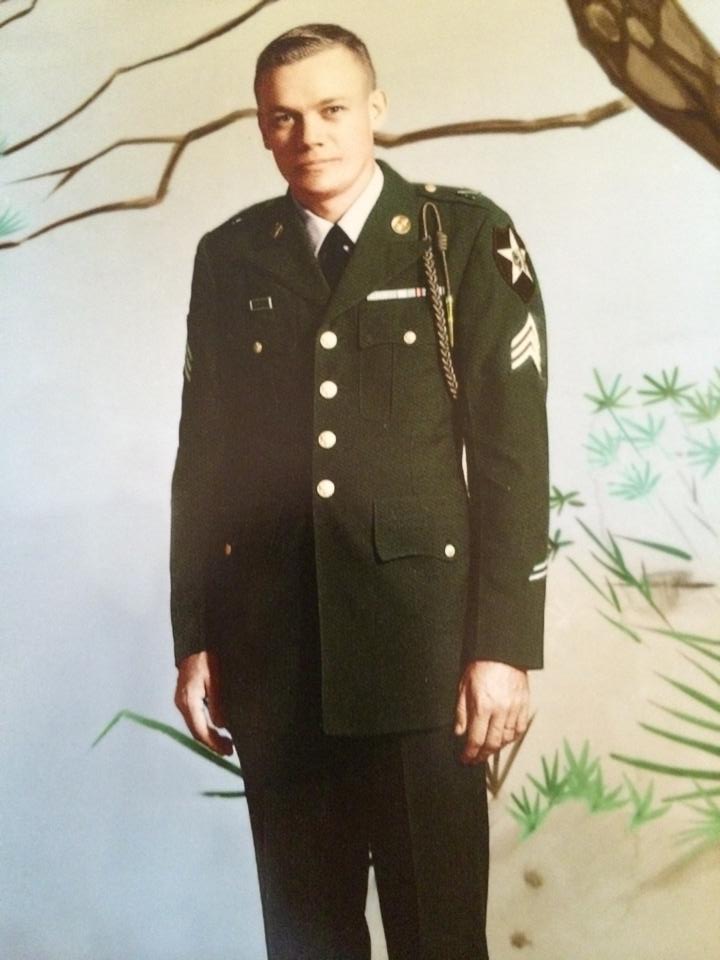
Lou SummerlinThere are many ways that people measure their lives.
Some people measure their lives by the amount of money that they earned. Some people measure their lives by the number of their possessions, acquisitions, businesses owned, or by their stock portfolio.

Others measure their lives by the square-footage of their house or by the number of their houses. Some measure their lives by the size of the estate they leave behind.

Some measure their lives by the type of car they drive or by the clothes or jewelry they wear. Some measure their lives by how long they were able to enjoy good health, by how little medicine they took, by how few nights they spent in the hospital.

As a single mother of three, and as a selfless, self-giving,  hard-working public school teacher, as someone who sacrificed her entire life for others, Lou did not accumulate great wealth and did not leave behind a sizable estate. For many years now, after suffering a debilitating stroke, she had lived in the home of her daughter Bonnie or had stayed for extended periods of time with Meredith and Carol. However, I do not believe the size of her estate or the vitality of her health are the true measures of her life.

Many people measure their lives by the number of birthdays they celebrated. When many of you learned that Lou had passed away Saturday morning, one of the first things some of you asked was how old she was. This is not surprising for this is the standard question we ask when someone dies. For time is the standard way that we measure life. It is what we list in the obituary, on funeral bulletins and on headstones.

Lou had seventy-eight years on this earth. Many would say that is a good, complete life. However, I do not believe that that is the true measure of her life.

Others measure lives by the number of children one has. This is also something that we list in the obituary. Lou had three beautiful daughters: Bonnie, Carol and Meredith; and eight grandchildren: Jamie, Sam, Matthew, Jacob, Ashlyn, Eryn, Grace and Isaiah. However, as wonderful as children and grandchildren are, I do not believe they are the true measure of her life.

I believe the real measure, the real yardstick of life, is the amount of love that we share while we are on this earth. Love is the true measure of a person’s life.

In his Pulitzer-Prize-Winning musical, Rent, author Jonathan Larson wrote the following words:

Five-hundred, twenty-five thousand, six hundred minutes

Five-hundred, twenty-five thousand moments so dear,

Five-hundred twenty-five thousand, six hundred minutes

How do you measure—measure a year?

In daylights—in sunsets

In midnights—in cups of coffee

In inches—in miles

In laughter—in strife.

In five-hundred, twenty-five thousand, six hundred minutes

How do you measure a year of life?

How about love?  How about love?

How about love? Measure in love.

Seasons of love.  Seasons of love.

When it is all said and done, it really doesn’t matter how much money we made, how large our home was, what kind of car we drove, or what kind of jewelry or clothing we wore.

And in the end, none of us can control the quantity of days we will have on this earth. None of us know how many calendars, how many birthdays we will see. And none of us can control how many children or grandchildren we might have. We can, however, control the love that we offer to others. And in the end, others will know what kind of life we lived.

The ancient writer of Ecclesiastes knew something about this.  That life is measured, not in years, but in seasons. And one of those seasons is love.

The Apostle Paul said, “Three things will last forever, Faith, Hope and Love, and the greatest of these is love.”

The Apostle John said, “Love is of God, for God is love.”

And our Savior Jesus Christ proclaimed, “The two greatest commandments are to love God, and to love one another.”

Lou lived seventy-eight years on this earth. Some would say that is a pretty good, complete life. But the good news is that that is not the measure of her life. The good news is that Lou loved more and deeper than some people who live 88, 98, or even 108 years on this earth.

When I went to see Lou’s family when I received word that she had passed away, her sister Cordelia immediately shared: “Lou emulated everything Jesus taught.”

I asked, “What do you mean?”

She replied with two words: “Unconditional love.”

A great illustration of the depth of her unconditional love is the time she invited her son-in-law Troy, then a recent graduate of West Point, to come and speak to one of her classes. Before he arrived, she had been announcing to the class that her son was going to be a guest speaker. The class loved Mrs. Summerlin, and thus, they were very eager to meet her son. When the day came, in walked Troy: very tall, very handsome, and very dark.

The class questioned her, “This is your son?”

“Yes,” she proudly responded with a smile, “This is my son.”

It would be an understatement to say that Lou loved her daughters, and her daughters’ families, more than she loved her own life. This love propelled her to give all that she had to give and to work until she could work no more. And it was by this love, and the love that she had for her friends and others that she measured her life. She lived a simple life of contentment because of the love she possessed and shared.

Lou also deeply cared for her  group of girlfriends that have been best friends since high school. They call themselves the “Cameos”.  Every October, she looked forward to meeting somewhere for a long weekend of fellowship and fun. She missed the most recent reunion due to her many health issues, but she was so moved by the outpouring of love she received from her dear Cameo friends in the way of visits and cards.

Lou loved to play the piano and she loved to sing. She sang at many funeral services. But Lou understood the words of the Apostle Paul, that if we play music and sing like angels, but do not have love, we are nothing, a loud gong or clanging cymbals. When Lou played and when Lou sang, it was always with love.

Jesus said, “this is how people will know that you are my disciples, that you love one another.” No matter what the TV evangelists say, it is not by your wealth or by your health. And it is not even by the number of children or grandchildren you have. They will know that you belong to me by your love.

So today, just a couple of days before Thanksgiving, we thank God for Lou’s life. But we thank God especially for Lou’s love. For love is the true measure of her life.

And one day, may someone say of us, that it is not the amount of money we earned, not the number of days we stayed out of the hospital, not the number of birthdays that we had, and not the number of children or grandchildren that we produced, but the way we loved, and how we loved, that indicated that we had a very full and complete life.

Oh, they may still talk about our age, how long we walked the earth, they may talk about our children and grandchildren, but that will not be as important to God or as remembered by anyone as how much we loved.

I want to close by reading a poem that Lou’s daughter Carol wrote many years ago entitled, “An Angel on Earth.”

Carol describes the poem with the following words:

          This poem was written for my beautiful mother. She is the sweetest most caring person in my life. I love her dearly. She is single and has sacrificed so much in her life for her three girls. She is my medicine. Just the sound of her voice comforts me like nothing else in this world can. She is my angel on earth. When I read this poem to her, she acted strange and said it wasn’t her. It almost hurt my feelings! I didn’t think she liked it. But what I realized was that this was what made her so special. She doesn’t even know how special she is. A couple of days later, she asked to have this poem read at her funeral when the time comes. I said, “ok,” but that is a day I hope doesn’t come for a very long time.

Angel on Earth

She holds strength in the palm of her hand.

She is patient and she is kind.

She loves the sound of laughter, the smell of the

and the sparkle in a child’s eye.

She can soothe the soul with the sound of her voice,

ease the pain with the touch of her hand.

Build confidence through words of encouragement

and lift spirits when no other can.

She inspires one to grow, to love and to learn,

always strives to please, not herself, but others.

She is a cherished friend and confidant.

This angel on earth is my mother.

And here, as we mark the end of Lou’s wonderful life, the words of this poem could not be more true. Because, as Cordelia said, Lou was the personification of everything Jesus taught: love, unconditional love.

Thanks be to God.

Joseph: More than a Name – Remembering Joseph Scott Thorne

Joseph's Coat of Many Colors
Logo Designed by Joseph Scott Thorne for His Handyman Ministry
Genesis 32:22-30; 37:3

Since Scott and I became friends fifteen years ago, he and I had numerous conversations about his name. Although he did not have a big problem with his middle name Scott, the name by which he was most commonly known, he actually preferred his first name Joseph; because, like the Jewish people of the Bible, Scott understood that names are important.

Joseph was his favorite name for a couple of reasons. First, Joseph reminded Scott of Jesus’ earthly father, the selfless carpenter who had the privilege of raising the savior of the world.

Although Scott was always quick to admit that he was no carpenter, Scott did consider himself to be a pretty decent handyman. And not only was he a decent handyman, Scott was a most selfless handyman. As far as I know, Scott never profited from any of his labor.

I could literally stand up here for the rest of the day and talk about the countless mission projects that Scott worked on voluntarily in Farmville for the First Baptist Church, for Monk Memorial Methodist Church, Emmanuel Episcopal Church and the Farmville Community Soup Kitchen. Scott spent incalculable hours, many times working all through the night, painting, refurbishing, repairing, restoring and landscaping.

Scott also shared his talents by working on many homes that needed repair throughout eastern North Carolina. Additionally, Scott volunteered at a homeless shelter in Tarboro doing whatever they needed him to do. And just this past summer, he helped our church build a handicap ramp for someone in Farmville, as he built many handicap ramps in this community with the West Edgecombe Baptist Church.

Scott would do anything that you needed him to do, and Scott never expected anything in return. In fact, Scott volunteered to serve, without pay, on staff of the First Baptist Church in Farmville as the Church Sexton. Anytime anything needed repairing or refurbishing, the church could count on Scott.

Along with local mission projects here in eastern North Carolina, Scott traveled to Gulfport, Mississippi to repair homes with the First Christian Church of Farmville after Hurricane Katrina. Scott and Bridget also traveled to Moldova on a mission trip with the Oakmont Baptist Church of Greenville.

Like the Good Samaritan, Scott never passed up any opportunity to help someone in need. And he literally never passed anyone on the side of the road who needed assistance. I bet no one in this room has changed more flat tires for strangers than Scott Thorne.

Scott was always volunteering to do things for me personally. Scott repaired my lawnmower, repaired my son’s electric scooter, repaired my washing machine, repaired my dishwasher, repaired cracks in my sheetrock, caulked my windows, painted my ceilings and spread pine straw around my bushes. Scott was the consummate giver, always doing whatever he could do to selflessly help others.

Like I said, I could talk all day about Scott’s selfless ministry, but Scott would not want me to do that. Because Scott’s favorite name was Joseph.

Scott preferred the name of a selfless handyman who had the honor of raising the savior of the world, yet in the scriptures, does not utter a single word. Scott’s favorite name was Joseph, the name of one who selflessly gave himself to the world, yet never drew any attention to himself and never asked anything in return for his selflessness.

Scott also loved the story of Joseph in the Old Testament, the favorite son of Jacob. In fact, Scott’s dream was to start a ministry based on this story called: Joseph’s Coat of Many Colors. Earlier this year, he designed a logo that he wanted to put on an enclosed tool trailer to use to offer his many gifts with any who needed them, whether it was painting a church or a house or repairing a washing machine. Bridgett said that the T-shirts Scott ordered with the Joseph’s Coat of Many Colors logo were just delivered to their home.

The following are Scott’s words that he put on Facebook earlier this year to describe his dream:

I am trying to start up a new ministry to occupy my time and serve God. Over the past eight years, I have done much needed work on four churches and on many homes of elderly and disabled community members. My wife and I want to continue this ministry. I am not asking for money from my family or friends, only prayers. This type of ministry is not expensive. I always refer back to the time I helped a widow who had a broken shower. She took pan baths for six months, because her hot water nob in her shower was broke. With less than four dollars for a part and with a few tools, I was able to change her life. All I asked was for her to know that God loved her and for a hug. Please lift me and my wife up as we plan a more detailed and organized ministry. The “many colors” in our ministry name represent many aspects of our ministry.

I am not sure I can even remember the last time Scott introduced himself to anyone as Scott. He always introduced himself as Joseph. Sometimes Joseph Scott Thorne; but never just Scott Thorne.

Like the people of the Bible, his name was important to him. Moreover, Scott also understood that names have the peculiar power to bless or to curse. Like few others we know, Scott understood the popular lie that we have been taught by our culture that sticks and stones may break our bones, but names will never hurt us.

Scott understood that names do hurt. He would agree with David Lose, President of the Lutheran Seminary in Philadelphia who has written:

“Whether they are names we have been called by others, or those we have called ourselves, names can exaggerate our inadequacies or herald our failures; names can expose our weaknesses or pay tribute to our bad decisions.”

It was no secret that Scott suffered with mental illness. Scott suffered with it, and in a world that does not treat mental illness like other diseases, Scott also suffered for it.

And I believe it needs to be said today, and said clearly, that Scott did not take his life. The disease of mental illness took his life.

Scott would be the first to admit that he had a disease. He would often say something to me in jest that was simply hilarious. For example (now, remember I am a pastor): “Hey Jarrett, why don’t you and I go out tonight, buy us some lottery tickets, get us a case of beer and a carton of cigarettes and just have a big ol’ time.”

Or, after he joined the staff of First Baptist Church as our Sexton: “Hey Jarrett, I am going to get me some business cards that read ‘Joseph Scott Thorne: Sexton. It’s not what you think.’”

I would say, “Scott, you’re crazy.”

And each time he would respond, “Yeah, and I’ve got papers to prove it!”

On some days, Scott could joke about his mental illness. But on many days it was no laughing matter.

It was no secret to anyone that Scott struggled; not just recently, but for much of his life. Some days he felt as if he was blessed by God, but other days, perhaps most days, he felt as if he had been cursed by God.

And more than anything, all Scott wanted was to know that he was blessed by God.

This is the real reason I believe Scott’s favorite name was Joseph. Joseph: the favorite son of Jacob, the fulfillment of the promise of God to Jacob.

None of us will ever understand Scott’s struggles, much like we will never understand the struggles of Jacob. Much like Scott, Jacob also struggled with his name. Jacob, literally, meant “heel,” as he was named for grasping the heel of twin brother Esau in the womb to prevent him from being the firstborn. And ever since that day, Jacob lived his life grasping and struggling.

One might say that Jacob’s grasping and struggling came to a head one night on a bridge over troubled waters. It was there we are told that Jacob wrestled all night. No one knows exactly with whom Jacob wrestled or what monsters assailed him in the dark of that night. Perhaps it was his hopes and his fears; his dreams and his nightmares; his present and his past; his regrets and his hopes. Was it a demon? Was it an angel? Was it an enemy? Was it a friend?

Whatever it was, the struggle was real. The struggle was spiritual. The struggle was mental. And the struggle was even physical, as he dislocates his hip during the fight.

Jacob, realizing that he is in the presence of something real, but at the same time, something supernatural, asks for that which he had always yearned, to be blessed. Because more often than not, Jacob believed that he was somehow cursed.

It is here that the story takes a strange but wonderful twist as Jacob’s opponent demands to know Jacob’s name before he will bless him. But names in the biblical world are never simply names; rather, they are descriptors, tell-tales, indicators of one’s very character.

And Jacob’s name, literally, “heel,” is no exception. Jacob was the one who was grasping to be blessed by God even before he was born. And he’s been grasping ever since, struggling to make sense of the world and to find his place in it.

In asking for his name, the demon or angel or enemy or friend was demanding that Jacob confess— confess his grasping and struggling, confess his pain and brokenness, confess his fears and failures, confess that he can no longer live in this world the way he has been living.

And when he does, when he confesses that he is at the end of his rope; when he confesses he has simply had it with his life; when he confesses that he has had all that he can stand; when he confesses that he wants the pain and the suffering, the dark voices of torment lurking inside his head and in his soul to finally be silenced, something extraordinary happens. Something miraculous happens.

Amazing grace happens. Unconditional love happens. Eternal salvation happens. Resurrection happens. Because God happens. God shows up, and God refuses to allow Jacob’s name, Jacob’s ceaseless struggles, Jacob’s relentless grasping, to define him forever.

So, God gives Jacob a new name, a name that signifies to the world that although he struggled his entire life, struggled with humans and with God, struggled with angels and with demons, he has prevailed. He has finally and eternally prevailed. He has seen God face to face, and his life has been preserved.

Thus, Jacob enters a new future with a new hope. Jacob is given a new name and a new life, a name and a life that he passes down to each of his descendants, but somehow, especially to Joseph, his favorite son, his favorite name.

Joseph: It is just a name. But, it is much more than a name.

Joseph: the favorite name of the one who had been grasping so.

Joseph: the favorite name of the one who had been struggling so.

Joseph: the favorite name of the one you had been yearning to be blessed by God so.

Joseph: the fulfillment of the promise of God to the one who found himself at the end of his rope.

Joseph Thorne, your name means that your dark struggle on the bridge over troubled waters is over.

Joseph Thorne, your name means that although the fight with unseen monsters appears to have gravely wounded you, the good news is that you have prevailed.

Joseph Thorne, your name is the revelation to the world that you have fought the good fight, you have finished the race, you have kept the faith, and you have struggled with humans and with God, with angels and with demons; with others and with yourself, and you Joseph, you Joseph Thorne have won.

Joseph Thorne, you have finally been given that which you have always yearned. You have finally been blessed by your God. You have been wholly, completely and eternally blessed.

Joseph Thorne, you have seen God face to face, and your life is now whole, complete and eternal; your life, Joseph Thorne, has truly been preserved.

Quiet, Compassionate, Generous – Remembering Earl Umphlett

Earl Umphett

There are basically two types of Christians in this world.

First, there are the loud, demonstrative, sanctimonious and pretentious Christians. Every time the church doors are open, they are present. Every time they do a good deed, you know it. They speak very openly about their faith, even to total strangers. They never miss an opportunity to teach a Sunday School class or chair a church committee; lead a prayer, sing a solo or read scripture in worship. They are all over social media, posting and tweeting all sorts of religiosity. And if they are not careful, they can come across to others as arrogant, superior, holier-than-thou, and even fake.

That’s the first type.

Then, there is Earl: quiet, unassuming, inconspicuous, real, not a pretentious bone in his body. He modestly served his Lord reticently, yet compassionately and generously. Earl served his Lord, not so much in the church, as in the community.

Earl enlisted in the US Army at age 17. He was promoted to staff sergeant, while he served for ten years through both the war in Korea and the war in Vietnam.

But how many of his friends and clients knew this? How many of his neighbors knew this? For Earl never bragged about his generous service to his country. He never boasted about any of his military accomplishments.

Earl was also a generous supporter of scouting for most of his life. I am certain that one thing that he really appreciated about his church is our sponsorship of Cub Pack 25. But how many of his friends and clients knew this about Earl? How many of his neighbors knew of his compassionate contributions to the youth in this community?

Donna said that she remembers first witnessing this quiet, yet compassionate faithfulness when they learned that Danielle Nelson, a nine-year old girl from Bethel, was diagnosed with cancer. She lived only one more year. Donna says she will never forget the sincere empathy that Earl possessed for that little girl and her family and the quiet, yet generous compassion that he shared with them.

Donna remembers many times watching Earl quietly being moved to tears, after they learned someone, especially a small child, was diagnosed with cancer or another dreadful disease. And she said that his compassion almost always led him to give generously.

But how many of his friends or clients knew this? How many of his neighbors or church members knew this?

I believe Earl possessed something that more Christians need to possess in this world, and that is: the quiet empathy of Christ.

Over and over, the gospels speak of Jesus being “moved with compassion.” And the Greek word translated “moved” is a deep, inward, visceral word. It is a special reaction that takes place deep within someone’s soul. And usually, only someone who is very close to one who has this reaction notices it.

When Jesus encountered the hungry Matthew says, “he was moved with compassion.”

When Jesus encountered the helpless who were: “like sheep without a shepherd;” he was moved with compassion.”

When Jesus encountered someone who stricken with the dreadful disease of leprosy, Mark says, “he was moved with compassion.”

Jesus was moved with a deep, visceral, real compassion.

This was type of Christian that Earl was.

Earl lived his life with a quiet faithfulness and dedication. He loved and took care of his family, his children and grandchildren, unassumingly, yet compassionately and generously. He never bragged about being a good father or grandfather. He never flaunted his love. For his love was deep. His love was visceral. His love was real.

Earl took care of his clients with the same quiet, faithful dedication. He worked hard until the job was finished, yet he never sought any accolades or special recognition. Because his dedication was deep. His dedication was visceral. His dedication was real.

Earl gave generously to this community whenever he learned of a need. But he always gave quietly, almost always in cash, not expecting anything in return, not even a tax deduction. And he was a CPA! Because his generosity was deep. His generosity was visceral. His generosity was real.

Donna said that Earl loved the scriptures; however, he preferred the scriptures that were the direct words of God, as opposed to, for example, the Apostle Paul’s interpretation of those words. Some might call Earl a “Red-letter Christian,” in that the words in the Bible written in red letters, the direct words of Jesus, meant something a little more to Earl.

For those of us who really knew Earl, this should not surprise us. For in his first recorded sermon, Jesus spoke the following words:

Beware of practicing your piety before others in order to be seen by them; for then you have no reward from your Father in heaven.

So whenever you give alms, do not sound a trumpet before you, as the hypocrites do in the synagogues and in the streets, so that they may be praised by others. Truly I tell you, they have received their reward. But when you give alms, do not let your left hand know what your right hand is doing, so that your alms may be done in secret; and your Father who sees in secret will reward you (Matthew 6:1-3).

Earl would quietly attend our Wednesday night suppers at church with Donna. As soon as they walked through the door, they would be greeted by Kim, our church administrative assistant who takes up money for each plate which costs $6.00.

Kim says that every time before Earl would pay for him and Donna, he would say the same thing. He said: “Look, I will make a deal with you. I don’t have any money on me today. But Donna will wash all of the dishes.” Then, he would whip out a hundred dollar bill, put it in the basket, and say, “Keep the change.”

The only reason that I know this is that Kim tells me this every Thursday morning after this happens. She says: “And he never says what all of the extra money is for! When he first did it, I thought he was pre-paying for him and Donna for an entire year of suppers. But, every week, he keeps doing it.”

Knowing Earl, I believe when he walked into our fellowship hall, he immediately saw a table full of children who come to our church without their parents. And looking at them, he knew could not afford the $6. Thus, I believe that when he saw them, he was moved with compassion. He had a deep, visceral, real reaction which led to his quiet, yet passionate; secret, yet generous donation.

Every Thursday, Kim would ask: “Why does Earl keep doing this?”

I would respond today: “That was just the type of Christian that Earl was.”

The good news is that now as Earl has given generously to us, compassionately, yet quietly, and secretly; his heavenly father who sees in secret has rewarded him.

For when Earl’s heart stopped on Thursday evening, I believe God was moved. Knowing the pain that would be experienced by Maurey and Brent, by their children, and by Donna, I believe God was moved with the quiet empathy of Christ.

And then I believe God came. God came to Earl. God came quietly, and God came compassionately. God came quickly, and God came generously. And the generosity of God is deep. The generosity of God is visceral. The generosity of God is real. And the good news is: the generosity of God is eternal.

And as God came and gave God’s self to Earl compassionately, generously and eternally, God promises to come to you Donna, to you Brent and Maurey, to all of Earl’s family and friends. For God knows your pain. And God is deeply moved by it.

God will come to you with the same empathy of Christ we have been blessed to know through Earl.

Because that is just the type of God our God is.

Only Harry: Remembering Harry H. Albritton, Sr.

Let me share with you how I usually prepare a person’s eulogy. I think about the person’s life, their contributions, their personality, and then I find a biblical character or story that parallels, or in some way relates to, the person. This is how I usually prepare. However, when it comes to Harry Humphrey Albritton, Sr., usual preparation does not apply. Think with me. Is there one biblical story, or single biblical character, or anyone else you know for that matter, who compares to Harry?

During his final hours, the Hospice nurse came into the room to tell the family what to expect. She concluded by saying, “but everyone’s different.” I pointed to Harry and said, “And you have no idea just how different this one is.”

How many people do you know who played basketball well into his seventies, and played basketball very competitively, physically, tenaciously, always to win; taking on Rocky Stone and me, two against one, when Rocky and I were still young enough to play basketball?

Only Harry.

Who do you know who, when he began having trouble sleeping this past this year, went online and ordered himself a military cot, because he remembered the four years while he was serving our country in the Air Force, getting the best sleep of his life?

Only Harry.

How many people do you know who always, I mean always, told you exactly what he thought to be the truth, even when it came to religion or politics, even when he knew that what he believed to be the truth would make you angry and probably dislike him?

Only Harry.

How many people do you know who, when their pastor dropped by to see him one evening after the pastor got word that he was extremely sick, was honest enough to tell the truth when the pastor asked if there was anything the pastor could do to help, by answering: “Yeah. You can get the hell out of here!”

Only Harry.

How many people do you know who, while in the hospital the day after no one thought he would make it through the night, when his pastor came to see him on crutches following knee surgery, honestly greeted his pastor in the following manner:

“Did you come to see me on crutches?”

“Yes, I did,” I proudly responded.

“You dumb, stupid butt!” Of course, he was much more colorful than that. “You had no business running those long distances at your age! You should have had good sense and stuck to playing basketball!”

Only Harry.

How many people do you know who at a Wednesday night church supper, at the dinner table, in front of God and little old ladies, gave a birds-and-the-bees lecture to the pastor’s son who was getting ready to go off to college?

Only Harry.

How many people do you know living in Farmville who, because he believed in being a good steward of the earth, and because of just good common sense, drove an electric car?

Only Harry.

Who do you know who had the best HVAC system money could buy installed in his garage because of the empathy he possessed for his pets? Who owned dogs that live as he lived: first class all the way?

Only Harry.

How many people do you know who was wise enough and humble enough to begin using a walker before he ever broke a leg or a hip and strongly encouraged others to use one?

Only Harry.

How many people do you know in town who, because of his concern for the children of this town, was not only one of the oldest, active members of the Farmville Kiwanis Club, but paid for his pastor to also be a member?

Only Harry.

How many people do you know who, after listening to a presentation at church about a mission trip opportunity to repair homes in the rural Mountains of West Virginia, in one of the most impoverished areas in our country, became so moved, so agitated and so concerned that he stood up and spoke out, saying that he didn’t want to just put a “Band-Aid” on the poverty, but he wanted to actually do something to cure the poverty? He wanted to strategize, energize and mobilize to end the poverty, to repair the breach, to restore the streets, and make it a place where future generations could thrive.

He wanted to set up meetings with the CEO’s of corporations, with state and local government and investors and encourage them to build new factories in the area and offer employment. And if that did not work, he wanted to lobby Congress to provide tax incentives, to create ways to re-locate the residents to them to the jobs.

Someone responded, “We can’t do that!”

He said, “What do you mean ‘we can’t?’ There’s no such thing as ‘can’t.’ You mean, ‘we won’t.’”

Only Harry.

Who do you know who took his faith, and his call to share his faith, so seriously, that he recently purchased and distributed copies of a book entitled Jesus Calling at Bojangle’s and admonished all of the recipients to read it every morning when they woke?

Only Harry.

How many people in this post-9/11 world do you know who intentionally built a relationship, a genuine friendship, with one of the few Muslims in town: giving him a Bible; inviting him to church; and promising his God to be there if he ever came to church to do all that he could to make sure that felt more than welcomed at the communion table?

Only Harry.

How many people do you know who, because of his empathy for the elderly in town, especially the many widows living here, did all he knew how to do, to get a retirement home built here in Farmville?

Only Harry.

Who do you know who, after being told by his mother as a little boy that he could not go over to the home of his best friend Ting, because Ting had black skin, and he had white skin, went outside, got a hand full of some coal dust, spread it all over his arms and face, went back in and said: “Mama, now I have black skin. Now, can I please go home with my friend Ting?”

Only Harry.

How many white people do you know who went to the Paramount Theater in the late 1930’s with his black friend but sat in the balcony, because his friend was not allowed to sit downstairs with the whites? He said, “If my friend Ting is going to sit in the balcony, I am too.” He remembers being the only white boy sitting in the balcony that day.

Only Harry.

Who do you know who loved his pastor with an unparalleled frankness and straightforwardness; and loved his church faithfully and generously, yet critically and honestly, in a way like none other?

Only Harry.

Who loved ECU academics and athletics, supported them with his generous donations and with his faithful attendance, and with his ad nauseum discussions with you, especially if you were a Tar Heel?

Only Harry.

Who loved Joyce more than he loved his own life, who constantly bragged on her competence and her accomplishments, her faithfulness and her intelligence, even more than he bragged on his own basketball skills and East Carolina?

Only Harry.

Who loved his children with an honest and tough love, but also a compassionate and forgiving love, who continually preached to instill in them the virtues of hard work, of striving for excellence, of the willingness to change and to adapt, and of giving their all to make a difference in the world all the while loving neighbor as self?

And who do you know who did this and actually succeeded? How many people do you know who spent their last days surrounded by all of their children, all of them hard-working, successful contributors to society?

Only Harry.

Who loved his grandchildren with the same honest, tough, but compassionate and gracious love? Who has grandkids who will never forget this unrivaled love, who will undoubtedly grow up in this world with a little bit of their grandfather living in them, with this burning desire in their hearts to be the very best that they can be, to give their all to make this world a better place?

Only Harry.

Who has friends, a church and a family who will always be grateful to God for giving them the one and only, irreplaceable gift of God’s grace named Harry Humphrey Albritton Sr.?

Only Harry.

The good news is that because of the uniqueness of Harry, I believe our days of mourning will be quickly transformed into days of gratitude and celebration, if they haven’t already.

And here is more good news: It is very obvious to all that Harry was created in the image of our God and imaged our God through his faith in Christ, because the God that gave us the matchless gift of Harry, is, God’s self, matchless.

Of whom does Moses ask after the Israelites are delivered from slavery and death: “Who is like you, O Lord, among the gods?  Who is like you, majestic in holiness, awesome in splendor, doing wonders” (Exodus 15)?

Only God.

Of whom does the Psalmist ask: “For who is God except the Lord? And who is a rock besides our God?” “Who is like the Lord our God, who is seated on high, who looks far down on the heavens and the earth” (Psalm 18, 113)?

Only God.

To whom does King David pray: “Therefore you are great, O Lord God; for there is no one like you, and there is no God besides you” (2 Samuel 7)?

Only God.

Of whom is the prophet Jeremiah speaking: “There is none like you, O Lord; you are great, and your name is great in might… Among all the wise ones of the nations and in all their kingdoms there is no one like you” (Jeremiah 10)?

Only God.

Who commanded to the faithful, “You shall not pollute the land in which you live…You shall not defile the land in which you live, in the midst of which I dwell…” (Numbers 35)?

Only God.

Who through the prophet Isaiah admonished God’s people to strategize, energize and mobilize, “to rebuild the ancient ruins, to raise up the foundations for future generations, to be called the repairers of the breach, restorers of the streets to live in” (Isaiah 58)?

Only God.

Who through the writer to the Hebrews proclaimed the good news: “We do not belong to those who shrink back and are destroyed, but to those who have faith and are saved. And faith is the substance of things hoped for. The evidence of things to not seen” (Hebrews 10, 11)?

In other words: “There is no such thing as ‘can’t!'”

Only God

In the gospels, who gives the gift of God’s only self in the person of Jesus, showing us how to live and how to love:

By speaking the truth, even while knowing that people will be angered by that truth and reject him for that truth;

By being a living example of wisdom and humility;

By caring for children everywhere;

By having concern and taking action on the behalf of the poor, the vulnerable, and the widows;

By sharing the good news of God’s love with all people;

By accepting foreigners at his table, making disciples of all nations, all ethnicities and all religions;

By identifying with, and by friending, and by sitting beside, and by liberating those who have been regulated by society to sit in a seat on the margins;

By challenging all of his friends, his family of disciples, his sisters and his daughters, his sons and his brothers: to always strive for excellence, to do the very best that they can, to work hard while generously giving all that they have to give, even their very lives, to make this world a better place?

Only God.

And who sent his son into the world to say:

“Very truly, I tell you, anyone who hears my word and believes him who sent me has eternal life, and does not come under judgment, but has passed from death to life” (John 5).

“Very truly, I tell you, the hour is coming, and is now here, when the dead will hear the voice of the Son of God, and those who hear will live” (John 5).

“I am the resurrection and the life. All who believe in me shall never die” (John 11).

“In my father’s house, there are many dwelling places. If it were not so, would have told you that I go to prepare a place for you” (John 14).

Only God.

Who called apostles like Paul to say, “There is nothing in heaven or in all of creation, not even death itself, can separate us from the love of God in Christ Jesus” (Romans 8).

Only God.

And who called apostles like John to proclaim that the time is coming for all of us “when there is going to be no more mourning, no more crying, no more pain, and no more death” (Revelation 21)?

And who called people like Harry Humphrey Albritton, Sr. to walk in this distinctive way and to share this inimitable hope in word and deed?

Only God.

Closing Prayer and Commissioning

May we please stand. Let us pray together.

In the days ahead, O God, may we continue to thank you for the gift of the uniqueness of Harry, and for the many ways that Harry will forever remind us of the uniqueness of our loving, eternal and only God who we know fully through Jesus Christ our Lord and Savior. Amen.

Now go onward from this place as Christian soldiers remembering Harry and honoring God…

By strategizing, energizing and mobilizing,

By speaking the truth;

By being a living example of wisdom and humility;

By being a good steward of the creation;

By caring for children everywhere;

By having empathy for and taking action on the behalf of the poor and the vulnerable;

By sharing the good news of God’s love with all people;

By accepting foreigners at your table;

By identifying with and by friending and by sitting beside and by liberating those who have been regulated by society to sit in a seat on the margins;

By striving for excellence, doing all that you can do, giving all that you have to give, even your very lives, never saying the word “can’t,” to make this world a better place;

By rebuilding the ruins, repairing the breach, restoring the streets and raising the foundation for generations to come.

All in the name of Jesus Christ our matchless Lord, who reigns with the inimitable Father and Holy Spirit forever and ever. Amen.