
Repent and Be Sent

Matthew 4:12-23

Growing up in the evangelical church, I heard a phrase that got my attention long before I knew how to question it, or even if I was allowed to question it: “Repent or be sent.” Have you ever heard that? I heard it about the same time I heard, “Turn or burn” and “Get saved or get microwaved!”

It meant: You better get your beliefs right… or else. You better say the prayer… or else. You better accept Jesus… or be sent to hell. Repent or be sent.

And for a long time, I thought the voice of God sounded like that— menacing, threatening, terrifying. I thought the main point of Christianity was getting people to accept Jesus as their personal Lord and Savior so God would not send them to hell for all of eternity.

The good news is that I kept reading the gospels. I went to seminary where I studied the gospels and the Greek language. And I noticed something.

Jesus never said anything remotely close to: “Repent or else.”

Today, our gospel lesson reveals what Jesus actually said. And it is far more hopeful. But it is also more challenging.

Matthew tells us that Jesus announces his public ministry with these words: “Repent, for the kingdom of heaven has come near.”

Not repent or else. Not repent to avoid eternal punishment. Not repent so we can escape a troubled world. But repent because something divine is coming to this world.

The Greek word we translate “repent” means “a change of mind” or “a change of vision.” “It’s a re-ordering of how we see the world.” It doesn’t mean “feeling sorry,” or “getting religious,” or “fixing some private flaw.” It means learning to see the entire world differently.

The Apostle Paul put it this way: “So, if anyone is in Christ, there is a new creation: everything old has passed away; look, new things have come into being” (2 Cor 5:17).

The call to repent is an invitation to transform how we think, act, and belong in the world.

Why? Because, “the Kingdom of Heaven” has come near.

The Greek language here means much more than “a place” or “a destination after death.” It means, “a reign,” “a rule,” or “a governing force.” Jesus is announcing an alternative political and social order, one that stands in direct contrast to Rome, to Herod, to economic exploitation, to state violence, to exclusion, to domination, and to the religious systems that bless it all.

Jesus is talking about a reign of inclusive, universal, unconditional love.

And Jesus says that we can change the way we see the world because this reign of love has come near. Not someday. Not after death. The verb Matthew uses means: “it is so close you can feel it breathing on your neck.”

Now, I can already hear the response of some of my evangelical friends: “Preacher, Jesus didn’t say, ‘the Kingdom of Love is near.’ He said ‘the Kingdom of Heaven is near.’ Aren’t you reading a bit more into this?”

Throughout the gospels, through every parable Jesus told and every action Jesus took, I believe Jesus was showing us what the Kingdom of Heaven looks like. And what did he show us? That it looks like healing for the sick, welcome for the excluded, food for the hungry, liberation for the oppressed, and justice for the persecuted. It looks like mercy, and it looks like grace. It looks like love, always love, even for our enemies. It looks like a love that is free, fierce, and unstoppable.

So, to speak of the kingdom of Heaven as “a reign of love” is not adding to Jesus’ words. It’s letting Jesus’ life, death, and resurrection interpret them. If the Kingdom of Heaven does not look like love in practice, then we are not actually talking about the kingdom Jesus proclaimed.

I believe it is notable that Jesus announces this reign of love, not in the halls of power, but in Galilee, among people terrorized by empire, taxed into poverty, and made to believe that injustice was normal.

Repentance is necessary because people have learned to accept a world organized, not around the governing power of love, but around the governing power greed that crushes the poor.

So, Jesus’ call to repent was not a stern warning. It was hopeful, good news. He was saying to the people: “Hold your heads up! Don’t despair! The words of Isaiah are being fulfilled: ‘you who sit in darkness, in the shadow of death, a light is dawning!’So, you need to change the way you see things, because love is becoming the governing force in this world!”

Later in Matthew, we are shown exactly what this governing force looks like: “When Jesus sees the crowds, he has compassion for them, because they were harassed and helpless, like sheep without a shepherd.” (Matthew 9:36) Others see the crowd and feel threatened. Jesus sees the crowd and feels compassion. And the word “compassion” here is visceral. Jesus sees the suffering of others and feels it in the pit of his stomach.

This is repentance embodied. To repent is to learn to see others as Jesus sees. To feel for others as Jesus feels. To refuse to be indifferent and to love as Jesus loved.

Repentance is believing that loving like Jesus has the power to change the world. Repentance means: seeing immigrants as neighbors; seeing the poor as beloved; seeing those harmed by violence as worthy of justice. It means even seeing enemies as beloved children of God. Repentance is believing no human is “illegal” or “an alien” or “garbage.”

Repentance is: welcoming the stranger; liberating the oppressed; caring for the sick; feeding the hungry; and educating children, not using them as bait to arrest their parents without due process. Repentance is honoring and protecting those who defend the defenseless, not shooting them dead.

The purpose of repentance is not to be saved from hell when we die. The purpose of repentance is to save our humanity from hellish cruelty while we are living.

Next, we read where this terrible phrase I learned as a child, “Repent or be sent” gets transformed and where it gets challenging. We learn the gospel of Jesus is not: Repent or be sent to hell. The gospel is: Repent and be sent to hell— into the hellish parts of this world as transforming agents of love. And that’s exactly what happens in Matthew 4.

Jesus says “Repent!” and then he immediately calls his disciples. Not to escape hell. But to go bravely into it. When the disciples repent, they are sent into systems of exploitation that reward greed and punish the poor. They are sent into communities disciplined by fear: fear of immigrants; fear of other religions; fear of truth. They are sent into a world that normalizes violence, sanctifies inequality, mocks compassion, terrorizes the most vulnerable, and calls it being faithful. They are sent into a world that looks an awful lot like ours.

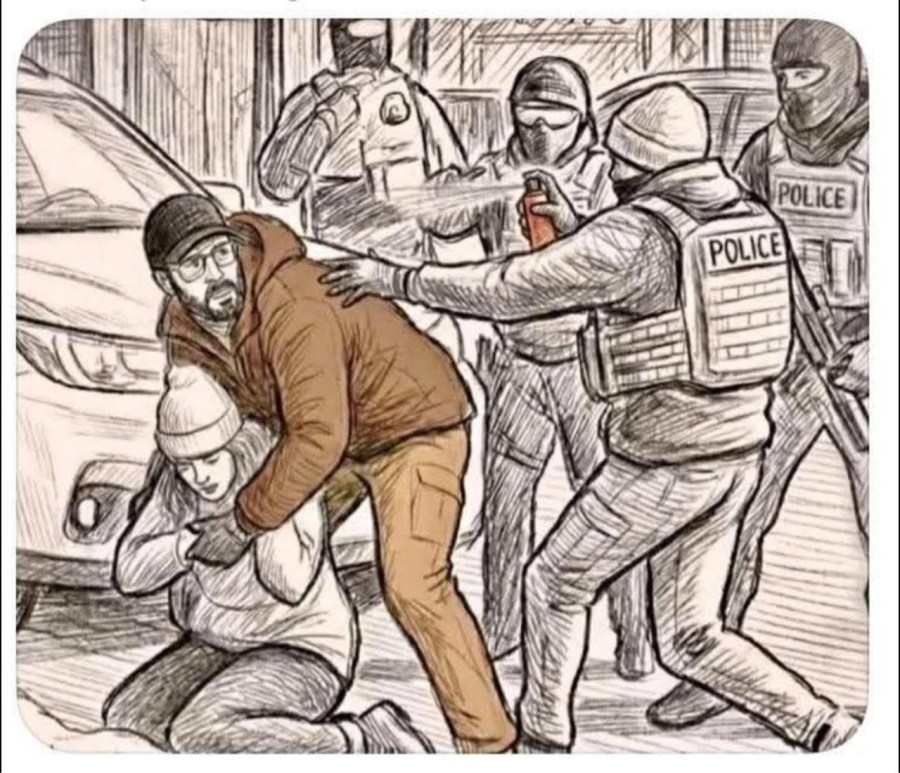
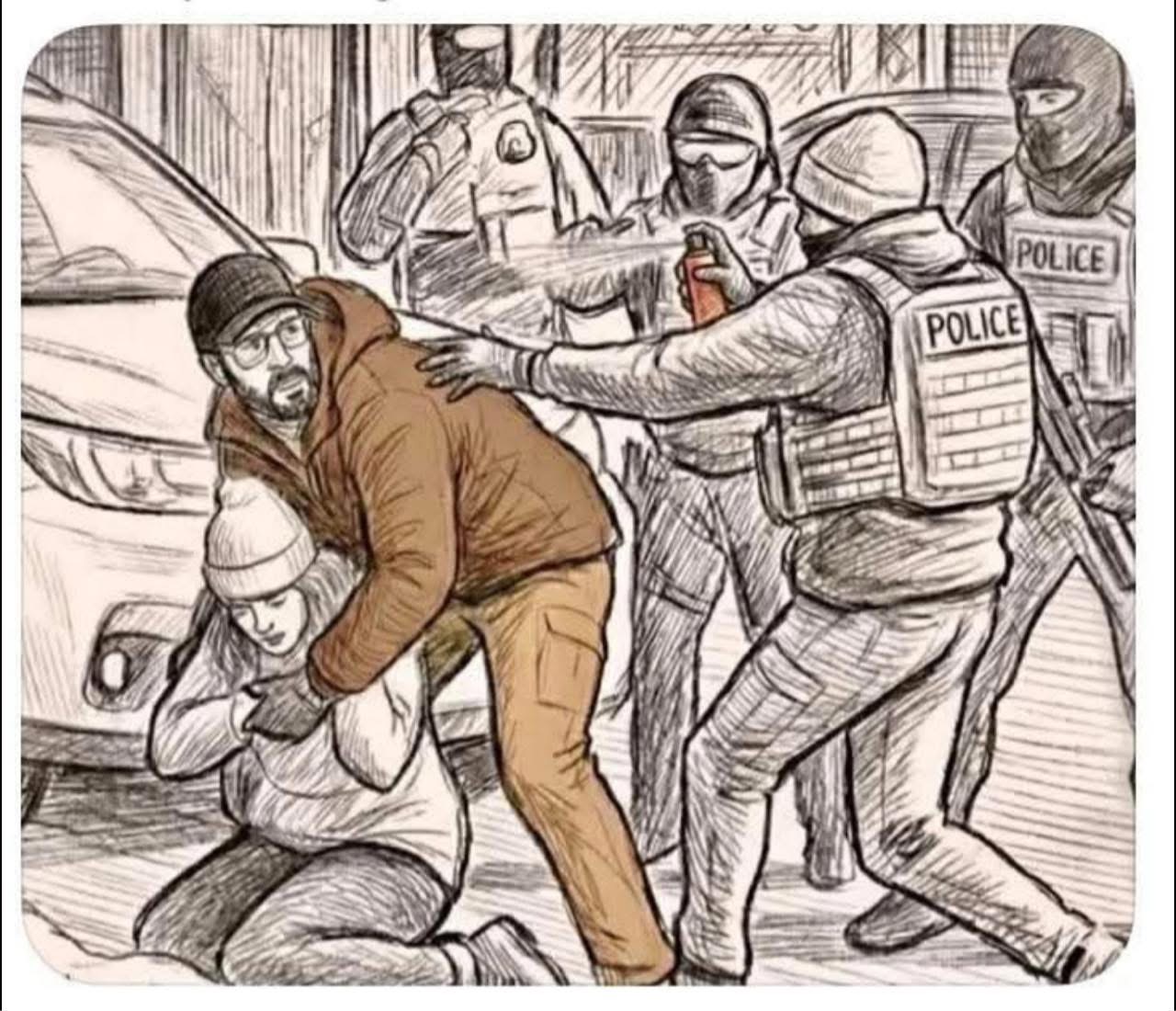
We live in a time when choosing a career of cruelty gets you a $50,000 sign on bonus. A fascist government blatantly lies to cover up their murders of Nicole Good and Alex Pretti. Pure meanness is mistaken for strength. And empathy and mercy and compassion, the very essence of who Jesus of Nazareth was, is mocked. Diversity, equity, and inclusion are treated as threats. And love is considered weak.

But the gospel insists that love is far from weak, in fact, love is the only power that has ever changed the world for good.

Love dismantled slavery, not all at once and not without resistance, but through people who refused to accept human bondage as God’s will.

Love marched across a bridge in Selma and faced dogs, batons, and tear gas, not with weapons, but with the stubborn insistence that Black lives mattered.

Love sat in a Birmingham jail and wrote that injustice anywhere is a threat to justice everywhere.

And love is showing up today: in asylum seekers, refugees and immigrants risking everything for their children, in protesters like Alex Pretti and Nicole Good, who risk everything to protect them, in organizers who refuse to stop telling the truth, in people who keep walking the walk even when the road is long.

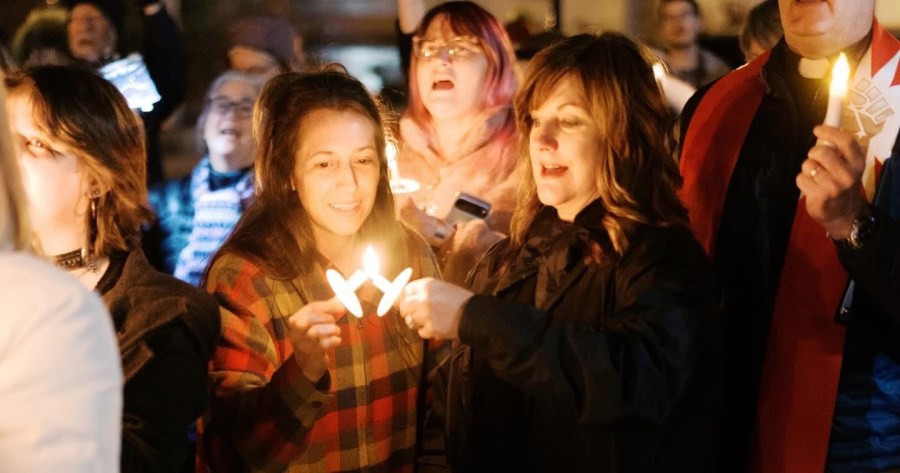
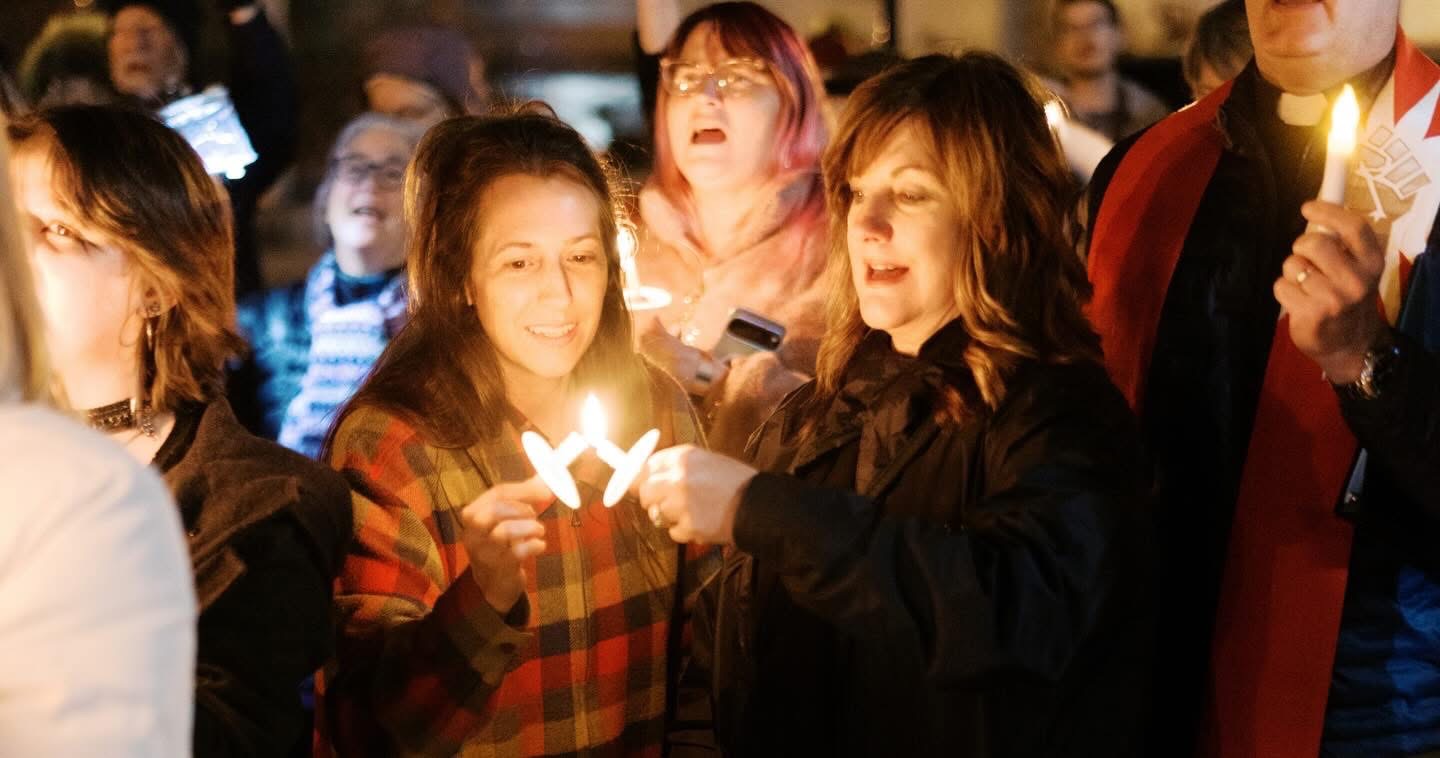
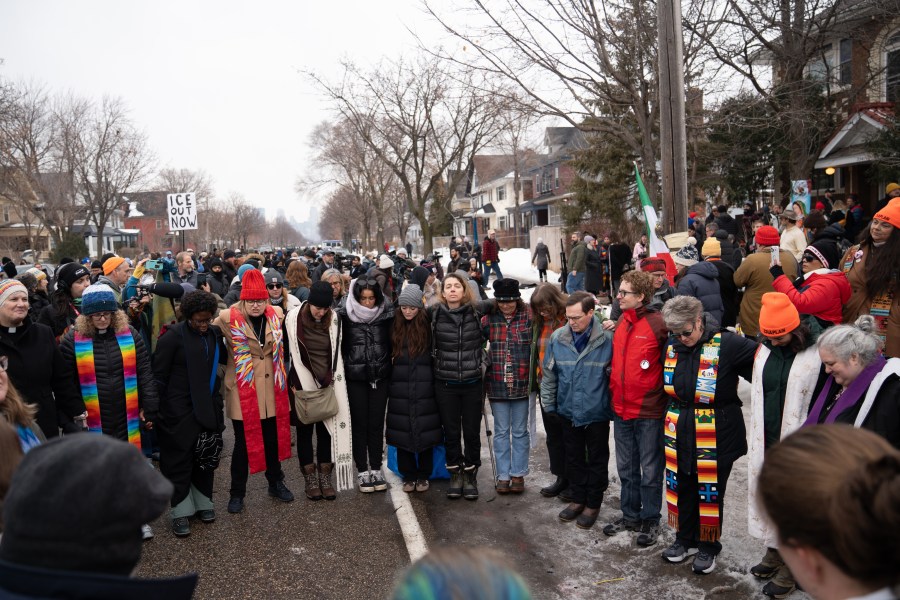
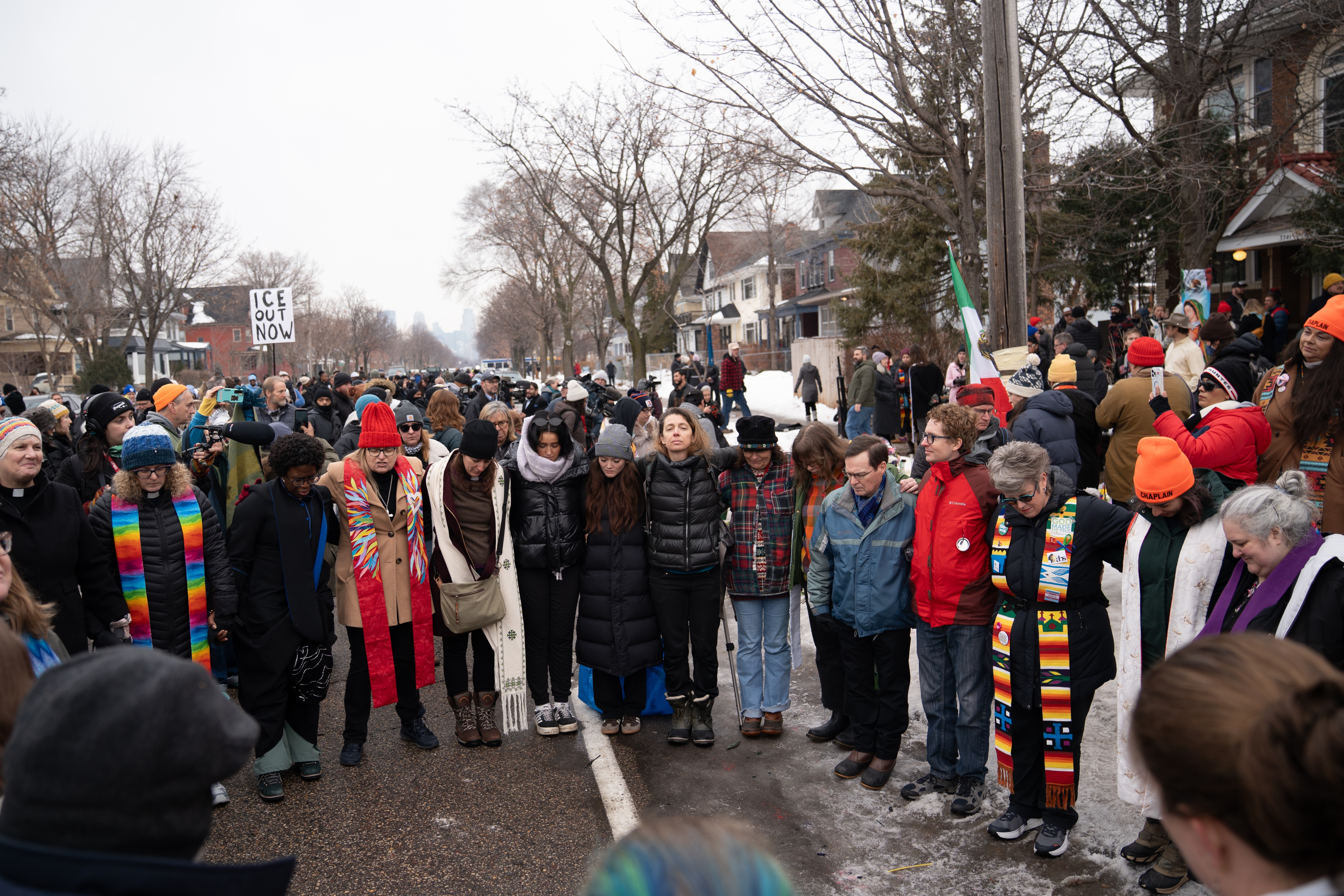
Love is on the move this weekend in Minnesota, as ordinary people march chant in sub-zero temperatures to peacefully protest racialized state violence, as clergy from all over the United States traveled to Minneapolis to stand in solidarity with those being dehumanized, demonized, and criminalized— one-hundred ministers arrested in the airport on Friday while singing hymns and reciting the Lord’s Prayer.

Next month, reminiscent of the march in Selma, love will be sent to walk the roads of North Carolina, from Wilson to Raleigh, in the Repairers of the Breach’s march called the “Love Forward Together.”

Not marching out of anger, at least not anger alone, but marching out of moral conviction, a deep compassion we feel in the pit of our stomachs.

Not walking to escape the world, but to declare that love, justice, and dignity belong at the center of public life.

And we will walk courageously and confidently, chanting, praying, and singing with hope in our hearts, as history keeps reminding us:

The Herods of the world die.

Empires fall.

Violence fails.

Cruelty exhausts itself.

Fear burns itself out.

ICE will melt.

And lies cannot stand forever.

But love? Love keeps moving forward.

The scripture promises: “Love never ends.” When everything else fails, love remains.

And that is why Jesus does not say, “Repent or else.” But says, “Repent and be sent.”

Sent to join the long, unfinished story of love changing the world.

Sent into a broken world not with doubt, but with assurance.

Sent into cruelty with compassion.

Sent into despair with hope.

Because the reign of God is near!

In the shadow of death, a light is dawning.

Love is breathing on our necks.

And love will have the last word.

The good news is:

Repent—and be sent.

Because love will win.

Amen.


Benediction

Beloved, as you return to the rest of your day
to quiet rooms or busy homes,
to news alerts or peaceful reflection,
to a world still aching for healing, and crying for justice
know this;

Empires will fall.
Violence will fail.
Cruelty will exhaust itself.
Fear will burn out.
Lies will not last.

But love will remain.

Love will keep walking.
Love will keep organizing.
Love will keep telling the truth.
Love will keep showing up.

So repent and be sent.
Sent from this moment with clearer eyes.
Sent into a hurting world with softer hearts.
Sent to love forward together,
even when the road is long
and the work feels heavy.

The reign of God is near.
It’s closer than you think,
closer than you feel.
It’s breathing right on our necks.

So, go in peace and hope.
Go in courage and power.
Go in love. Always in love.
Amen.

Behold! The Lamb Who Takes Away the World’s Sin

John 1:29-34

“Behold!” It’s a powerful word, rich with meaning. But unless your last name is Shakespeare, you probably don’t use it that often. But maybe we should.

The imperative word is derived from the Greek Ἴδε (ide). It means: Wake up! Open your eyes! Take off the blinders! You need to stop whatever you are doing right now and start paying attention!

When John cries out, “Behold!” he’s doing what the prophets have always done: calling people to see what power doesn’t want us to see. Dr. Martin Luther King, Jr. heard the same summons. He asked America to wake up. He asked us to behold the gap between our creeds and our conduct, between what we claim to believe and what our systems actually do. Like John, King named injustice and exposed it. And, like John, he paid the price for it.

And what does John believe is imperative for us to see?

Behold! “The Lamb of God.”

Looking carefully at the language matters as scripture is so easily twisted to serve someone’s agenda. (By the way, taking the original language seriously is what it means to be “conservative,” conserving the original language and intent of the author.)

John is very precise here. He does not say that Jesus is “the lamb for God.” Because this is not about a sacrificial lamb offered up to appease God.

John says Jesus is “the lamb of God.” He is one who belongs to God, one who is aligned with the purposes of God.

Behind this image of the lamb is the Exodus story, where the lamb is a sign of deliverance from oppression, a symbol of liberation from slavery.

In Hebrew imagination, the lamb is also a symbol of vulnerability, a nonviolent creature caught up in violent systems. Thus, this is John’s way of saying that through Jesus, God identifies with the vulnerable. God stands with those crushed by violent power. That’s why Jesus said God is like a shepherd who will leave the flock to rescue the lamb who is most at risk, the lamb who is excluded or displaced.

Jesus calls himself the “the Good Shepherd” who knows his sheep. He identifies with them. This is why Jesus said when you feed the hungry, clothe the naked, welcome the stranger, heal the sick, visit the imprisoned, “you do it to me.”

And after the resurrection, he tells his disciples: “if you love me, feed my lambs” (John 21).

Then, John says something else which is often misunderstood:
“Behold! The lamb of God who takes away the sin of the world.” The Greek word here is αἴρων (airōn). It’s a word that means to lift up or remove but also to carry off, to dismantle, to tear down, to abolish.

John is saying: “Behold! The lamb of God who dismantles the sin of the world.” And notice John does not say, “sins”, plural. He says “the sin” of the world.

Because John is not talking about the private moral missteps of individual people. He’s talking about a power, a logic, a way of the world which is organized against life. He’s talking about a world-shaping force that generates many evils.

I believe the Apostle Paul helps us to understand this force in his first letter to Timothy where we read: “the love of money is the root of all kinds of evil” (1 Timothy 6:10). “Root” is another important word. A root is a generative source. Roots are hidden. Roots feed systems. Roots shape what grows above the surface.

Across scripture, greed distorts justice. It fuels violence, and it legitimizes domination. Pharaoh’s economy depends on forced labor. The Prophets condemn those who “sell the poor for silver.” Jesus said no one can serve two masters. We “cannot serve God and weath.” The early church shared their possessions because they knew hoarded wealth destroys community.

Greed appears as the sin of the world in systems: policies that treat people as expendable; wars fought for resources and control; slavery justified as “economic necessity”; violence framed as “security”; borders hardened to protect wealth; and bodies criminalized when they threaten profit.

Greed requires coercion to protect itself. It requires violence when it’s challenged. And it requires religious justification to appear moral.

Fascism is not a separate sin from greed. Fascism is greed fully armored. It is greed baptized in nationalism, enforced by violence, and justified by religion.

This is the sin of the world that John wants us to see today. Behold, the Lamb of God, who is aligned with the purposes of God, who stands with the poor, the displaced, and the oppressed, is here to dismantle a world ordered by greed, power, and violence.

That is why Jesus is crucified. Not for forgiving private vices. But because he threatened a world built on profit, domination, and control.

This is always how it goes. The world does not kill people for being kind and forgiving. It kills them for standing in the way of unjust systems.

Jesus is crucified when he confronts empire.

King is assassinated when he challenges economic exploitation, racialized violence, and militarism.

The prophets are silenced when they refuse to make peace with injustice.

The early church understood this. When John said, “Behold!” they got it. They understood sin, not as personal vices, but as the power tied to death, empire, and idolatry. The Apostle Paul and John spoke of sin as a force that enslaves, rules, and kills (Romans 5–7; John 8; 1 John).

John 1:29 was heard as a bold political statement: Jesus is one who confronts the powers that order the world against God’s justice. The cross was seen as the exposure of these powers and Jesus’ solidarity with the crucified. And salvation meant liberation into a new way of life, into what Dr. King called the beloved community.

But over time, that vision narrowed.

In the 4th century, when Christianity was wed to the Roman Empire, naming the sin of the world became costly, because now the church had something to lose. Thus, sin was relocated from systems to individual souls (By the way, this is what some would call “liberal”—changing the original meaning of scripture to support your own politics).

But doing so kept Jesus safe for those in power, because the understanding of sin then moved away from empire, away from economics and violence, and to individual hearts and personal vices. Jesus becomes a solution for personal guilt, rather than a threat to unjust order.

And then this theologian and philosopher named Augustine came on the scene. He did not intend to protect injustice, but his emphasis on inherited sin and inward transformation, unintentionally narrowed sin to the individual soul. And over time, the church began to speak more about what was going wrong inside of people, than what was going wrong in the world.

John 1:29 is still quoted, but now the Lamb of God soothes consciences rather than dismantles systems.

As the church’s power grew, sin became something the institution could diagnose, quantify, forgive, and monetize.

The Reformers responded by recovering grace, but they kept sin personal. John 1:29 is read as: “Jesus was crucified to pay the price for my sin” rather “than Jesus dismantles the sin that crucifies people.”

During the Enlightenment, Western culture learned to see everything through the lens of the individual—individual rights, individual reason, individual responsibility. The Bible was read the same way. Sin became private. Religion became personal comfort instead of public truth. And that kind of faith proved remarkably useful to empire—blessing colonization, baptizing conquest, and remaining silent in the face of genocide and slavery.

Today, American Christianity still preaches John 1:29, but it’s almost never connected to economic exploitation, racialized state violence, and imperial power. The misinterpretation of John 1:29 did not simply produce bad theology. It produced an impotent church: a church good at managing guilt, saving souls, and blessing the empire, and bad at confronting injustice, naming structural sin, and standing with those crushed by power; good at accepting the Jesus of empire and bad about following the Jesus of scripture.

That is why John’s message is more important today than ever. “Behold!” Wake up! Open your eyes! Look at the world today. And look at who Jesus is and who Jesus is calling you to be in this moment.

“Behold!” It’s not a word meant only to be powerfully spoken. It’s a word meant to be powerfully lived.

If Jesus is the Lamb of God who dismantles the sin of the world, then following Jesus cannot mean retreating into some private spirituality while the world keeps crucifying the vulnerable.

If Jesus is the Lamb of God who dismantles the sin of the world, it means we must become a people baptized not just with water, but with the Holy Spirit and with fire, a people caught up in God’s movement to interrupt greed, expose violence, and refuse religious cover for injustice.

If Jesus is the Lamb of God who dismantles the sin of the world, it means we stand where Jesus stands—with the poor, the criminalized, the displaced, and the ones the world calls expendable.

If Jesus is the Lamb of God who dismantles the sin of the world, it means we must resist the systems that profit from fear, domination, and death.

Dr. King warned us that remembering the dream without continuing the struggle is a form of betrayal. To honor King is not to quote him once a year, but to confront the same forces he confronted: economic exploitation; racialized violence, militarism, imperialism, and religious complicity.

Behold! Let’s wake up! Let’s open our eyes. Remove the blinders. And see that the Lamb of God is still at work, dismantling the sin of the world.

Dr. King stands in a long line of those who followed the Lamb—people like Francis of Assisi, Harriet Tubman, Óscar Romero, Dorothy Day, César Chávez, Renee Nicole Good, and countless others who refused to make peace with a world organized against life.

And now it’s our turn.

And if this sounds overwhelming, remember that systems are dismantled not by heroes alone, but by ordinary people who refuse to live as though injustice is normal.

So, what does it mean, in practice, to follow the Lamb who dismantles the sin of the world? It means at least three things.

1. We tell the truth.

We refuse silence. We name what harms God’s children—even when it costs us comfort or safety. We call greed what it is. We call violence what it is. We call empire what it is.

2. We offer our bodies.

We show up to stand with the vulnerable—in phone calls and letters to our representatives, in vigils, in protests, and in places of grief because the Lamb is never neutral and always takes a side.

3. We reorganize our lives.

We loosen our grip on wealth. We practice generosity that disrupts hoarding. We align our spending, giving, time, and votes with life instead of death, because you cannot dismantle the sin of the world while funding it.

This is what it means to follow the Lamb. And when we live this way, we inevitably find ourselves standing in particular places, with particular people— in Minnesota, in Portland, in Chicago, in Palestine, in Iran, in Ukraine, in Venezuela, in Greenland, in Virginia, wherever empire kills, threatens and terrorizes God’s children, until the sin of the world is dismantled, until the system is abolished, until justice rolls down like waters, until all God’s children can breathe free.

Amen.


Pastoral Prayer

Holy and Living God,
God of justice and mercy,
God who hears the cry of the oppressed and does not turn away:

We come before you this morning because the world you love is hurting,
and because we refuse to pretend otherwise.

We come carrying the weight of what we have seen:
violence dressed up as policy,
greed disguised patriotism,
fear baptized as faith,
and power protected at the expense of human life.

Teach us again how to behold,
to see clearly what we those in power want us to ignore,
to name honestly what the world tries to normalize,
to look without flinching at suffering that is not accidental,
but produced by systems we are told to obey and not to question.

God of the Lamb,
we pray for all who are crushed beneath the sin of the world.

For immigrants and asylum-seekers living under constant threat,
families separated, children detained, lives treated as disposable,
be their shelter and their strength.
And disturb us, O God, when our comfort depends on their fear.

For Black and Brown communities targeted by violence,
over-policed and under-protected,
grieving lives stolen and justice delayed.
Hold the grieving close,
and unsettle every system that profits from racialized harm.

For workers exploited, wages stolen, bodies worn down,
while wealth is hoarded and inequality justified.
Strengthen those organizing for dignity,
and expose the lie that profit matters more than people.

For nations scarred by war, occupation, and imperial ambition,
for Gaza, for Ukraine, for Sudan, for Haiti,
for all places where civilians pay the price for the ambitions of the powerful.
Break the cycle of domination,
and give us the courage to resist the machinery of death.

God, we confess that too often the church has been silent
when it should have spoken,
neutral when it should have resisted,
and complicit when it should have stood with the crucified.

Forgive us when we have settled for private faith
while public injustice went unchallenged.
Forgive us when we sought peace without justice,
order without equity,
and unity without truth.

And yet, O God,
we thank you that despair does not have the final word.

We thank you for prophets who still cry out,
for organizers who refuse to give up,
for communities practicing mutual care,
for young people daring to imagine another way,
for elders who remember that change is possible.

Strengthen us to follow the Lamb:
not just in belief, but in practice;
not just in worship, but in witness.

Make us a people who tell the truth even when it costs us,
who stand with the vulnerable even when it is risky,
who resist systems of death even when it would be easier to look away.

Baptize us again with your Spirit and with fire
so that our faith is not passive,
our hope not shallow,
and our love not afraid.

Until the sin of the world is dismantled.

Until the systems of greed, fear and violence are abolished.

Keep us faithful, keep us awake, keep us moving.

We pray all this in the name of Jesus, the Lamb of God,
who stands with the crucified and leads us toward life.

Amen.

Standing in Line with God

Matthew 3:13-17

No one likes to wait in line, whether it be at the drive thru, the grocery store, the doctor’s office, or even for supper at the church on Wednesday night. When I have been asked: “Preacher, what do you think hell is like?” I have often responded: “I think it’s like waiting in line. It’s like one long, hot crowded line.”

It’s why we go to Busch Gardens on a weekday, make the reservation at our favorite restaurant, and always, always, schedule an appointment with the DMV. It’s why we love the self-checkout lanes at Kroger, online banking, and the ability to pay for our gas at the pump.

That’s why we might find it crazy to discover that this is how Jesus began his public ministry. He doesn’t start with a miracle. He doesn’t open with a prayer or even begin with a sermon. He gets the whole thing started by standing in line.

Matthew tells us that Jesus comes from Galilee to the Jordan to be baptized by John. It’s hard to imagine how long that line was, as we read in verse five that “Jerusalem, and all Judea, and all the region around the Jordan, were going out to John” to be baptized.

I wonder how long Jesus waited in that line—the people he met, the conversations he had.

When Jesus finally gets to the front of the line, John scratches his head. For John knows his role. He knows who Jesus is. And he knows the script saying, “Jesus, this is crazy, you should be baptizing me!”

But Jesus refuses the script: “Let it be so now,” Jesus says, “for it is proper for us in this way to fulfill all righteousness.”

Which is Matthew’s eloquent of saying: “This is how God likes to do things.”

God does not look down on the creation from some lofty throne, watching us from a distance, as Bette Midler used to sing. God gets in line beside us.

The Holy One is not so above us that God has a Fast Pass or Quick Queue, to skip the line, to avoid human suffering. Through baptism, the God of Jesus, wades in the mud and even goes underwater with the people.

And it’s not just any water that Jesus is immersed. It’s the Jordan River. It’s the place where enslaved people once crossed into freedom and Pharaoh’s power was finally broken.

It’s in this historic river that John stands preaching repentance. But not the type of personal repentance you may have learned as a child in Sunday School. Growing up in my Baptist church I was taught that it primarily meant that you didn’t cuss, dance, drink, smoke, or chew, or go with boys and girls who do.

But John was preaching the type of repentance that will get your head served on a silver platter by the King Herods of the world. There, in the historic waters that symbolized the liberation of the Israelites, John was preaching a repentance that names immoral leaders, unjust systems, inequity, violence, and greed.

He calls out economic exploitation. He calls out religious complacency. And he lets all who have been wounded, discounted, or displaced by those in power know that God is on their side.

This is why people from all over the land were lined up that day, and this is why Jesus got in line, and waited his turn to be baptized.

Not to wash away his sins, but to join John’s movement of justice and liberation. And to be counted among those who are desperate, burdened, oppressed, and longing for change. He aligns himself with people who have been told, by empire and by religion alike, that they are the problem.

This is how God likes to do things. This is God refusing to remain aloof, floating somewhere in heaven above history. This is God rejecting a false righteousness that doesn’t dare get its feet muddy and a salvation that skips past suffering. The good news is that Jesus’ baptism is one of solidarity with all who suffer.

And this good news matters right now more than ever.

Because we are living in a moment when the privileged still look down on the poor. They preach responsibility downward while hoarding upward. Violence is accepted, truth is manipulated, and cruelty is justified.

We live in a world where immigrants are blamed instead of welcomed, the poor are shamed instead of protected, military force is justified as necessary instead of exposed as a failure of moral courage, and faith is used to bless it all, instead of denouncing it.

And it is into this moment, the gospel says: Jesus gets in line, steps into the mud, and enters the water. Not above the moment. Not even beside it. But immersed in it.

Baptized in the Jordan, Jesus resists domination by choosing humility.

He resists violence by choosing vulnerability.

He resists hierarchy by choosing to stand in line.

Jesus’ baptism in the Jordan is active, nonviolent, embodied resistance to everything in this world that denies human dignity.

And notice that this is when the heavens open up.

Not when Jesus proves himself with an inspiring sermon.

Not when he performs a miracle that impresses the multitudes.

And not when he conquers anything or anyone.

The heavens open up when Jesus gets in line, stands in the mud, and goes underwater with the people. This is when a voice can be heard: “This is my Son, the Beloved, with whom I am well pleased.”

Before sermons. Before healings. Before confrontations.

Before the cross. Before resurrection.

Before anything. God says, “Beloved.”

This is the foundation of everything that follows in the gospel story. Jesus does not do anything in his life or ministry to earn love, but does everything from love. It is love that informs everything.

And when we forget this, that it is all about love, church can become performance, and working for justice can become a burden. When we forget that it is all about love, we can start confusing violence, and even hate, with being with being faithful.

This is why Jesus’ baptism reminds us that before the work of liberation and justice can begin, belovedness comes first.

Because beloved people don’t need to dominate.
Beloved people don’t need to dehumanize.
Beloved people don’t need to lie or believe the lies to survive.

Beloved people can tell the truth in love.
Beloved people can get in line and stand with the suffering.
And beloved people can resist violence without becoming violent themselves.

This is why the Spirit descends like a dove, and not like an eagle. Not like a sword or a bomb. But like a dove, a symbol of peace, revealing that when we accept our belovedness, we see that nonviolence is the shape of God’s power in the world.

This is why Jesus’ baptism is so important. For we live in a culture addicted another shape of power. We are taught that change only comes through force, domination, punishment, humiliation, and violence.

Jesus’ baptism teaches us that the reign of God on this earth does not advance by threatening and crushing enemies, but happens by creating beloved community. The kingdom does not come through fear, but through love. And the movement of God does not rise by lording over or climbing over bodies, but by getting in line and kneeling beside them.

So, what does this all mean for us, right here, right now?

It means if the church is following the way of the nonviolent Jesus, we cannot remain safe, secluded, and separated from the suffering of this world.

That means we cannot remain dry while the world is drowning.

It means we cannot sing about justice while refusing solidarity with those who experience injustice.

It means we cannot preach love, and not stand in line with people in places of grief, protest, and exhaustion, with poor people bearing the weight of policies that benefit the rich, with immigrants terrorized by the state, or with all those shaken by the killing of Renee Good—a mother, a neighbor, and a beloved human being whose death has rightly unsettled our conscience.

It means we must be willing to go into the waters where any person or group is struggling to breathe and boldly call the principalities and powers of darkness to repent.

And to do this faithfully, to do this nonviolently, we must listen again for that voice: not the voice of fear-mongering politics; not the voice of religious nationalism. But the voice that still speaks over muddy water and trembling bodies, saying: “Beloved.

“You are my sons, my daughters, my children.”

You are not forgotten.
You are not disposable.
And you are not alone.

I stand with you.

You are important. You matter. You are beloved.

And if we believe in that voice, we will:

resist injustice without surrendering our humanity;
confront lies without becoming cruel;
and build movements rooted not in fear, but in belovedness.

Jesus gets in line, stands in the mud, and goes underwater so that we might rise, not above anyone, but together, side by side.

This is how Jesus says righteousness is fulfilled.

This is how God still does things in this world.

This is how the heavens are opened.

And this is how the world is changed.

So, as we leave this place this morning, the call of the gospel is both simple and demanding: stand in line.

Stand in line for justice when white supremacy still distorts our laws, our stories, and our sense of who belongs.

Stand in line for voting rights when democracy is attacked and weakened.

Stand in line for social justice when whole communities are denied dignity, safety, and opportunity.

Stand in line for equity when systems continue to benefit some while burdening others.

Stand in line against violence, in our streets, in our rhetoric, and in our policies, when force is treated as the answer instead of a failure of moral courage.

And today, we must stand in line in grief, lament, and protest, for Renee Nicole Good, whose life was taken by violence that never should have happened.

We must stand beside all who live in fear in their own homes, with all whose lives are endangered by power, control, and violence, and we must name this system that continues to terrorize and kill our neighbors as sin. We must refuse to be silent and commit ourselves to work for a world where such violence has no refuge.

We stand in line not above people, not ahead of people, but with people, all the people, especially those who have been pushed to the margins, silenced, or told to wait their turn.

We step in the mud and stand in line in, even when the line is long, even when they call us crazy, even if it feels like hell.

Because when we stand in line like Jesus did, we discover that this is where God stills shows up.

This where the heavens still open up.

This is where love is still heard

And this is the only way the world can still be changed.

Amen.

Christmas on the Run


Matthew 2:13-23

We love a Christmas story that soothes, slows, and settles us down. Like the ones on the Hallmark Channel. Where people come back home, fall in love, get engaged in the snow, start a small business on the town square, and live happily ever after. Nothing too disruptive. Nothing that can’t be resolved in ninety minutes with a hot cup of cocoa and a change of heart.

And we love the nativity. Of course, I am talking about the kind that’s stationed inside the mall near JCPenney’s. A baby in a manger who doesn’t cry, need a diaper, or make a fuss. A very calm Mary and Joseph. Shepherds kneeling quietly. Magi standing in their place, holding their gifts. A silent night that doesn’t disturb anyone’s politics, profits, or comfort.

The problem is that that looks and sounds nothing like the scene in Matthew’s gospel.

Before wonder has time to settle in, an angel appears to Joseph in a dream and says: “Get up! Take the child and flee to Egypt.” Not relocate. Not travel. Not go on a spiritual retreat. As soon as Love takes on flesh, Love is forced to flee.

Matthew reminds us today that Christmas is a story on the run. The Prince of Peace has been born into a world ruled by selfish power and violent fear and the Word Made Flesh is forced to flee as a refugee.

Herod receives the news that a child has been born who might upend his throne. So, he does what all insecure authoritarians and their sycophants do. Herod confuses his own survival with the will of God. To protect his reign, he weaponizes fear and sacrifices the innocent.

And so, the story of Christmas becomes, not a peaceful hallmark story of personal salvation and happily-ever-after, but a frantic, suspenseful thriller of border crossings, desperate decisions, and parents doing whatever it takes to keep their child alive.

This is real Christmas. This is Christmas in a world where the powerful will do anything to stay powerful. And this is the Christmas they want us to forget.

Now, it’s probably not too sinful to sit down and watch that Hallmark movie or to stop by the nativity scene at the mall—

as long as we understand that there’s no way the holy family gathered around that manger Bethlehem would pass today’s background checks for moral or financial worthiness—

and as long as we understand Jesus was born a poor, brown-skinned, Jewish Palestinian into a world where governments rip apart families like his.

And we must never be fooled whenever we hear the powerful claim that they are the “protectors of Christmas,” the reason people are saying “Merry Christmas” again.

Because, in the real world, the powerful don’t protect Christmas. They fear it. So, they seek to capture it. Control it. Own it. And then tame it. Change it into something that looks nothing like Matthew 2. Because when Christmas is taken seriously, it is a threat to every system built on fear and domination.

The spirit of Christmas stirred the abolitionists to challenge slavery. It sustained the faith of enslaved people who believed God was indeed on the side of the oppressed. And it fueled movements that dared to imagine freedom in a culture structured to deny it. It unsettled Jim Crow, exposed segregation as sin, and inspired ordinary people to stand up to extraordinary injustice.

That is why Matthew reaches back to the prophet Hosea and writes, “Out of Egypt I have called my son.” Hosea was speaking of God calling Israel out of Egypt, out of slavery, out from under the grip of empire.

Like the Israelites, God does not shield Jesus from the oppression of a tyrannical government. But there, in Egypt, Jesus experiences the same paths of displacement, oppression, grief, and danger that marked the lives of the enslaved Hebrews…and so many immigrants and refugees today.

Which means that there is no way we can preach this text honestly without asking hard questions about our own moment in history:

when children are still caught in the crossfire of political fear;

when families are still fleeing violence, famine, and oppression;

when the powerful are shameless in their lies to justify cruelty;

and when religious language is still being used to bless policies that terrorizes families.

Herod is not just a character in the Bible.
Herod is a historical pattern.

Herod is a scourge on this world that shows up any time leaders choose domination over compassion; any time power protects itself by scapegoating the vulnerable; any time the lives of children become collateral damage in the name of “order” or “security.”

And sadly, because Herod is a pattern, so is the weeping of Rachel. Matthew recalls words spoken by prophet Jeremiah: “A voice was heard in Ramah, wailing and loud lamentation, Rachel weeping for her children.”

Rachel weeps today in refugee camps. She weeps in detention centers. She weeps in neighborhoods and schools shattered by gun violence. She weeps in hospitals, on city streets, and at graves that should never have been dug.

And notice that Matthew doesn’t soften her grief: “wailing and loud lamentation.” Matthew does not explain it away. He does not say: “Things can happen.”

He lets Rachel weep, honestly, painfully, bitterly.

Because Christmas never denies suffering. Christmas names suffering. And then, it refuses to let suffering have the last word. The Herods of the world die. Empires fall. Fear cannot and does not win forever. The child survives. And that is the quiet defiance of Christmas.

Jesus grows up not sheltered from the world’s cruelty, but shaped by survival, displacement, and resistance.

Which may explain why, when he begins his ministry, he stands with the poor, the sick, the criminalized, and the cast out. Why he speaks so clearly about unjust power. Why he refuses to confuse God with empire, faith with nationalism, and love with judgment.

The story of Jesus is that God shows up not in Herod’s palace, but on the margins. Not with people claiming to be greatest, but with those considered to be the least. Not in an army, but in a vulnerable child.

And if we want to be faithful to this Christmas story, the question is not: “Do we believe in Christmas?” The real question is: “Where do we stand in Christmas?”

Do we stand with fear? Or with the families trying to survive it?
Do we stand to protect power? Or do we stand to protect children?

Do we sing Joy to the World, while only caring about joy in our little corner of the world?

Do we believe the good news of Christmas?

Not that God came once upon a time in the little town of Bethlehem. But the good news that God is still showing up, in the little town of Bedford, Boonesboro, Forest, Lynchburg, Madison Heights, Hurt, Appomattox, and Roanoke—in every town: through every act of courage; every refusal to dehumanize; every welcome offered to a stranger; every challenge to unjust power; every policy resisted that harms the innocent; every stand taken with the vulnerable; and every insistence that love is stronger than fear, and love always wins.

So, this Christmas, let’s not be afraid to tell the whole story.
Not just the angels, but the anguish.

Not just the birth, but the violence it provoked from the powerful.

Not just the joy, but the justice that joy requires.

Not just the glory, but the calling of Christmas, which is: if God is born among the vulnerable, then our faith is measured by how we treat them!

This is not Hallmark or shopping mall Christmas. This is real Christmas. This is Christmas on the run. This is Emmanuel, God with us, even here.

Thanks be to God.

Do Not Be Afraid: Love Is About to Be Born!

Matthew 1:18-25

On the fourth Sunday of Advent, we stand with a man named Joseph, on the threshold of a future he never expected.

Week after week, Advent has been inviting us to look for God to show up where no one is looking: in the wilderness, in the shadows, in the cries of prophets and the songs of unlikely women. And now, as Christmas draws near, our gospel lesson leads us into the quiet and conflicted heart of a man who wanted to do the right thing but wasn’t sure what the right thing was.

We’ve been there before, haven’t we, asking: “Now, what?” “What in the world do we do now?” “How should we respond to the news we’ve just received, this loss, this change, this crisis?” And how do we respond faithfully?

How do we believe with the prophet Zechariah in a future that seems impossible? How do we believe that what is broken doesn’t have to stay that way? How do we move past our grief and our cynicism?

Here’s some good news that we shouldn’t miss: Matthew writes, “This is how the birth of Jesus the Messiah came about.”

How about that? Christmas didn’t come wrapped in certainty, clarity, or confidence, but in confusion, shock, and scandal, in questions that kept Joseph up at night.

Joseph receives the news that Mary is pregnant with a child that is not his. But Joseph is righteous, which means he loves God and neighbor. He believes in the golden rule and wants to do the merciful thing, the kind thing, the just thing. But sometimes, even righteousness can get tangled in fear. Even righteousness can struggle to imagine a horizon beyond the one we can see.

And so, Joseph, like so many of us, makes a plan to manage a difficult situation quietly, discreetly, safely.

This may be where that old saying “If you want to make God laugh, make a plan.”

Joseph had a plan. A good plan. A righteous plan. And then God showed up, and God being God says: “We’re going to need to revise that!”

An angel of the Lord interrupts his plans: “Joseph, son of David, do not be afraid.”

It’s something perhaps we all need to hear:

Do not be afraid of uncertainty.

Do not be afraid of mystery.

Do not be afraid of this news you did not expect.

Do not be afraid to love beyond what the world tells you is reasonable

or socially acceptable.

Do not be afraid to let go of your plans and let God write the rest of your story!

And then comes the promise: “The child conceived in her is from the Holy Spirit… and you shall call his name Jesus, for he will save his people from their sins.”

It’s important to understand that this is not just about personal sin, as we have been led to believe. It’s about God stepping into a world shaped by injustice and rescuing God’s people from everything that keeps them bound. Jesus is born to save people from the moral sickness of systems that deny dignity, distort truth, and crush the vulnerable.

Joseph stands right where many of us stand in this season: between the world as we know it today and the world God is unfolding; between our lived reality and the day when love will finally win; between answering a call and fear of where saying “yes” to that call may take us.

And it is precisely here, in this fragile in-between space, that Advent makes its final turn, not toward certainty or explanation, but toward love. And not toward just any love.

The love that breaks into Joseph’s life is not a sentimental love that asks nothing from him. It’s not a love that Joseph is only meant to feel deep inside.

 It is a fierce, courageous, and public love that asks something of Joseph: for him to be selfless; for him to sacrifice; for him to give of himself, for him to walk humbly and do justice. It’s the kind of love that refuses to leave any of God’s children cast aside or put away. And it is a love that refuses to allow fear to keep Joseph on the sidelines, insisting instead that he become a participant in God’s unfolding promise.

We know something about that kind of love; because this year, we have lived it. We have seen this love hold us together when the world felt like it was falling apart.

It’s the love that kept us going when mercy was mocked, when compassion was ridiculed, and empathy was dismissed. It’s the love that kept us committed when the holy values of equity, diversity and inclusion were attacked.

It’s the love that kept us showing up when the headlines were heavy, when the rhetoric of the powerful dehumanized the vulnerable, when policies wounded the poor, and when silence would have been much easier than faithfulness.

It’s the love that steadied us as we protested, prayed, voted, organized, fed, welcomed, and spoke out, sometimes with trembling voices, always with stubborn hope, because being silent was not an option, and we knew disengaging was not faithfulness.

It’s the love that has held us.

It’s the love that has carried us.

It’s the love that keeps us from surrendering our conscience,
even when cruelty is normalized, lies are rationalized, faith is compromised, and the truth is redacted.

It’s the love that will not let us look away, back down, or give up.

It’s the love that compelled us to feed the hungry, welcome the stranger, stand with the marginalized, and speak truth even when it came at a cost.

It’s the love that refused to let exhaustion become indifference, or disappointment become despair. It’s the love that sustained Marian Stump in the last year of her life, and so many who faced unexpected hardships, giving this year meaning and purpose with hope.

Time and again, when it would have been easier to retreat, this love called us forward.

And, like Joseph, it asks us not merely to survive the moment, but to participate in what God is still bringing to birth in the world. The same love that has carried us through fear and fatigue continues to call us today: to choose courage even when the path is uncertain. It asks us, like Joseph, to march into God’s unfolding promise, not safely, not quietly, but faithfully, boldly, and without delay.

The story of Joseph, of fear giving way to faithfulness, of uncertainty giving way to courageous action, is the Advent story.

It’s Joseph’s story. And it is our story. It’s a story that teaches us that God’s love does not always look like what we wanted or expected. But it’s always more than we knew to hope for.

Matthew says that all of this happened “to fulfill what the Lord had spoken through the prophet.” A virgin. A child. A name: “Emmanuel, God with us.”

And it’s important to pay attention to where the prophet imagines Emmanuel showing up: not in palaces; not in legislative chambers; not in the places where people wield power as if it belongs to them. Emmanuel is born among the poor, the marginalized, the least of these, in places the world least expects.

And today, if we want to see where God is Emmanuel, where God is still showing up, we must look where the world still refuses to look:

among immigrant families demonized for daring to hope;
among those struggling in poverty in the richest nation in the world;
among workers whose wages don’t cover their rent;
among seniors choosing between food and medicine;
among children whose schools are underfunded;

among those who are dismissed, dehumanized, or told their lives do not matter.

If Christmas teaches us anything, it is that God does not wait for systems to change before God moves. God enters the world right in the middle of the darkness amid the injustice, and says: “Look what I’m about to do!”

“When Joseph awoke from sleep, he did as the angel of the Lord commanded him.”

Joseph steps into God’s calling even though everything around him still looks uncertain. This is the moral courage William Barber calls “standing on higher ground,” on the ground where justice outweighs fear, where mercy outruns judgment, and where love overrides everything!

Joseph chooses love over reputation. Love over comfort. Love over convenience. Love over any path that would have been easier. Love over everything!

And friends, Christmas 2025 asks nothing less of us.

When laws are passed that deepen poverty, we must be Joseph.

When families are separated, migrants are demonized, and immigrants are treated as threats rather than neighbors, we must be Joseph.

When leaders weaponize fear, pitting race against race, faith against faith, neighbor against neighbor, we must be Joseph.

When cruelty masquerades as strength, when lies are repeated until they are accepted as “truth,” when power is prized over people, we must be Joseph.

When the right to vote is narrowed, restricted, or quietly taken away, especially from the poor, the young, the elderly, and communities of color, we must be Joseph.

When creation itself groans under neglect and exploitation, when people cannot afford health insurance, when children are denied safety, dignity, or opportunity, we must be Joseph.

And when our own lives are disrupted, by grief, illness, injustice, or futures we never planned, we must be Joseph.

And the good news—the hopeful, peaceful, joyful, love-filled, good news of Christmas—is that God is still whispering to a fearful people: “Do not be afraid. I am Emmanuel. I am with you.” “Do not be afraid, because Love is about to be born!”

And when Joseph holds that newborn child, he will hold a future no empire can contain, no lie can stop, and no hatred can overcome. And on this Fourth Sunday of Advent, we are reminded: God is still writing the story!

And so, as Christmas approaches:

Let the weary find rest.
Let the silenced find voice.
Let the broken find healing.
Let the fearful find courage.
Let the struggling find companions on the road.
And let love—real, disruptive, justice-making, life-restoring love—be born again in us.

Because Emmanuel is still with us. God is still moving toward us. And Christ is still being born wherever love takes the risk that Joseph took.

May this Advent love, bold, disruptive, and steadfast, fill us with hope.

May it remind us that no matter what the new year brings—uncertainty, struggle, sickness, or sorrow—we are not alone.

May it strengthen us to speak truth, to stand for justice, to welcome the stranger, and to act with courage.

And may it remind us, again and again, that God is still at work. God is still bringing light out of darkness. God is still calling forth life and making all things new.

Amen.

Preparing the Way for Peace

Isaiah 11:1-10; Matthew 3:1-12

As if we needed it, Advent is the annual reminder that the world is not as it should be. But it is also our reminder that God is not finished with this world yet. It’s a reminder that God has plans for this world, and you and I are a part of those plans.

Advent is a holy tension. We wait and watch, but we wait and watch with hope. We light candles, because we believe the light still rises, and peace on earth is still possible, even during a time of deep violence.

Today, our nation remembers another Sunday morning when the world was plunged into deeper violence, when fear and grief reshaped lives overnight.

We remember Pearl Harbor today, not to glorify war, but to deepen our longing to be a people shaped by the peace that God promises. On a day we remember a time when peace collapsed, when meetings for diplomacy didn’t happen, when steps to find equitable solutions were not taken, we gather to proclaim a new day, a new time when swords are beaten into plowshares, and peace is not a distant dream, but a way of life.

And through our scripture lessons this morning, two prophets speak about this time: Isaiah and John the Baptist. Two voices, centuries apart, but carrying one message: God is breaking into this world with a peace that transforms everything!

Isaiah speaks with poetry. John speaks with fire.

Isaiah shows us the world God intends.

John tells us how we must prepare for it.

Isaiah invites us to imagine and dream.

John insists we repent and change.

Together, they give us the full message of Advent: the hope and the urgency; God’s promise and our responsibility.

I love that Isaiah begins Advent with a stump, and Matthew begins with a wilderness. Isaiah says: “A shoot shall come out from the stump of Jesse.” Matthew tells us: “In those days John the Baptist appeared in the wilderness.”

A stump is what remains after something has been cut down. Here, it belongs to Jesse, the father of King David, symbolizing the seemingly dead royal lineage of David.

A wilderness is a place where familiar paths have disappeared. It’s a place of withdrawal, isolation, and loneliness.

 And yet, both are places where God begins again. Both are places where grace breaks in. Both are places where hope refuses to die, and love finds a way!

Some of us have walked into Advent this year with stumps in our lives. There have been losses, endings, dreams cut down, seasons cut short.

Some are walking toward Christmas this year surrounded by wilderness. There is much uncertainty, weariness, loneliness, and feelings of lostness.

But both Isaiah and John remind us of the good news: that God does some of God’s best work in the places that seem barren. God is in the business of making a way when it seems like there’s no way.

Isaiah gives us a breathtaking vision of God’s business in this world. It’s of a world ruled not by fear, corruption, hate, and violence, but by justice, tenderness, compassion, and reconciliation.

Wolves lie down with lambs. Children play safely at the entrance of a cobra’s den. Predators and prey live at peace.

This isn’t some fantasy. It’s the reordering of the entire world. Isaiah saw what scripture calls “shalom:” a peace that heals, restores, and reshapes not only society, but the entire creation.

Isaiah says this peace will be led by a Spirit-filled one who will: “judge the poor with righteousness…and decide for the meek with equity.”

In other words, peace and justice are inseparable. We cannot have one without the other. Peace without justice is fragile. Peace without equity is deceptive. Peace that ignores any harm to others, or to the creation, is not peace at all.

On this December 7th, as we remember our parents and grandparents waking up to the violence of Pearl Harbor, we must not pretend that violence belongs only to the past. For every day we wake up to stories of good people being yanked from their cars, or off the streets, on their way to work, on their way to school or to a thanksgiving dinner with their family, detained by masked men and deported because of the color of their skin. We wake up to stories of fishermen blown up in boats without due process or any chance to speak their truth.

 We see a world where fear is weaponized, food for the hungry is politicized, meanness is rationalized, human dignity is discounted, and inequity is engineered rather than accidental.

On this Pearl Harbor Sunday, we confess the many ways violence still shapes our world, and we cry out for the peace Isaiah dares to imagine and for which Christ commands us to prepare.

And then a wild, fiery preacher named John bursts into our story. He’s wearing some strange clothes. He’s got this crazy diet, and a voice that sounds like a siren screaming in the desert.

And his first word is not, “Peace.” No, it is, “Repent.”

Now, at first his preaching sounds like one of those hell, fire, and brimstone preachers we’ve heard before. We think, “no wonder they call him a Baptist!” At first, his message sounds like the opposite of Isaiah’s message, but the more we listen to it, we discover that John is not contradicting Isaiah. No, he’s showing us the way to Isaiah’s vision of peace.

You see, John knows that peace never arrives in this world easily. Peace is not passive. It’s not something we just sit back and wait for. Peace requires transformation. If peace is gonna come, then people gotta change!

If Isaiah shows us what peace looks like, John shows us what peace requires.

John calls us to turn from every way that does harm: our habits; our politics; our systems; our silence; our consumption; even our religion, especially our religion; to embrace a life of nonviolence. And he makes it clear that peace on earth is not some naïve dream from some woke, left-wing lunatic; it is a moral imperative from God. John is the prophet who prepares us for the world Isaiah describes.

John’s challenges his hearers to “bear fruit worthy of repentance.” In other words: Don’t just want peace and sing about peace. Live peace. Practice peace. Embody peace in your decisions, your priorities, your words, your vote, your compassion, your courage, your lifestyle.

Repentance is not self-hatred. It’s not guilt. And it’s not shame. True repentance is liberation. It’s simply returning to God’s way of peace that was intended for the creation.

On a day when the nation recalls the devastation of war, repentance becomes not just a personal religious ritual, but a moral commitment. It’s a commitment to dismantle hatred. It’s a commitment to stand with the vulnerable. It’s a commitment to uproot the seeds of harm before they ever take root in our lives or in our world.

That is the fruit worthy of repentance, as John says. That is the path toward the world Isaiah imagined.

And let’s not miss this. John’s harshest words are not aimed at the people the religious leaders dismissed as outsiders, unbelievers, or unclean. John’s sharpest critique is directed at the religious establishment itself, the ones who believed they were closest to God because of their heritage, their appearance, their privilege, their assumed moral superiority. He turns to them and says, “Do not presume… the axe is already lying at the root.”

John doesn’t say this because God delights in their tjdestruction. He’s not warning them because God wants to punish or shame them. John speaks this harsh word because God seeks to prune. God seeks to cut away anything, no matter how pious, polished, or patriotic, that destroys real peace in the world. And that includes any movement that weds faith to nationalism and proclaims that God’s blessing is the property of one nation, one party, one people. It includes any faith that blesses fear, excuses cruelty, or elevates domination as destiny.

We cannot cling to anything that kills equity.
We cannot preserve the things that preserve injustice.

We cannot call violence “protection,” or prejudice “tradition” or “heritage.”

We cannot keep watering the roots of fear, greed, Christian nationalism, or complacency, and then pretend we are bearing the fruit of peace.

Advent is the holy season of pruning, not for punishment, but for preparation. Advent will not allow us to believe that for peace, repentance is optional.

Isaiah teaches us what God’s peace looks like.

John teaches us how to make room for it.

Isaiah lifts our eyes.

John steadies our feet.

Isaiah speaks hope.

John calls for courage.

And together they prepare us for the Christ who comes not with military might, not with political coercion; but with justice, mercy, grace, humility, and fierce love: the Christ who judges with righteousness; the Christ who defends the meek, heals the sick, forgives the sinner, feeds the hungry, and includes the outcast.

This Advent, perhaps peace begins with us by letting something go:
a resentment we’ve carried too long; a fear that narrows our compassion; a selfishness that feeds our apathy and fuels our greed; a prejudice we inherited; a silence we use to avoid conflict.

Perhaps peace begins with healing something inside us.
Or perhaps peace begins with speaking a truth we’ve been afraid to name.
Or standing with someone who has been pushed to the margins.
Or choosing generosity in a season obsessed with consumption.
Or refusing despair in a world that seems addicted to it.

Or perhaps, on this December 7th, peace begins with remembering that violence is not inevitable, war is not destiny, and equitable solutions are real, and love, not hate, is what truly makes a nation great.

Advent is the season when we stare at the world’s stumps and declare, “A shoot’s gonna spout, and I can see it!”

We look at the wilderness and say, “A voice is calling, and I can hear it!”

We remember the wounds of history and pray with renewed commitment: “Never again!”

And we see the darkness all around us and still light our candles, because we trust the promise that the light still rises.

It rose from the stump of Jesse.
It rose in the waters of John’s baptism.
It rose in Bethlehem.
It rises in every act of justice.
It rises in every step toward peace.
It rises, even now, in us.

Thanks be to God. Amen.

Jesus Is the Answer

Ephesians 1:5-23 NRSV

On this Sunday after Thanksgiving, as a Christian pastor, I am most thankful for Jesus, for I truly believe with all my heart, for me personally, Jesus is the answer.

Now, I know how cliché, cheesy and bumper-stickery that sounds, but I can’t help it. When it comes to questions about theology, about all I got for an answer is Jesus.

And you should know that I dislike few things more than bumper-sticker theology! It tears my nerves up when people try to reduce something as miraculously mysterious as faith in the Holy-Source-of-all-that-is into a few pithy words to slap on the back of a vehicle.

“Jesus is my co-pilot.” If Jesus is merely your co-pilot, I suggest you switch seats. Because I believe it’s Jesus who needs to be your pilot, the one who makes the decisions, charts the course, and steers the ship, leading you on the way of love that has the power heal sick religion, restore a distorted morality and make whole a fragmented planet.

“Honk if you love Jesus.” Please don’t do that. If you truly love Jesus, if you are following the way of love that Jesus embodied and taught his disciples, please, never toot your own horn. If you really love Jesus, feed the hungry, clothe the naked, shelter the homeless, love the outcast, forgive the sinner, care for the dying, and be a friend to the lonely.

“Got Jesus?”  No, I don’t. Because I don’t believe Jesus can be “got.”  I believe the way of love Jesus modeled wants to get us. Jesus wants to get us to deny ourselves, pick up a cross and follow him. We don’t get Jesus to meet our needs. Jesus wants to get us to meet the needs of the world. We don’t get Jesus as some sort of ticket to heaven. Jesus wants to get us to bring heaven to earth.

“Jesus is the reason for the season.” If we call ourselves a Christians, shouldn’t Jesus be the reason for every season, be the Lord over, reign over, every season, every month, and every day. Shouldn’t the way of love of give meaning and direction to our lives all year long?

“Keep Christ in Christmas.” Why don’t we first try to keep Christ in “Christian?” For I believe the reason so many people are turned off by Christians today is because many Christians act nothing like the Christ by whom they identify themselves. And in many cases, behave in a way that is best described as anti-Christ.

“If Jesus had a gun, he’d still be alive today.” No, I am afraid that it is because of Christians like you that the way of Jesus seems dead in this world today.

“Are you following Jesus this closely?”

Hmmm. I actually kind of like that one.

However, I am thankful that faith in God cannot be condensed into a few simple words that will fit on a bumper sticker. Yet, this Sunday after Thanksgiving, I still am most thankful, that for me, that Jesus is the answer.

On this Christ the King Sunday, I am thankful for these beautiful words of Ephesians:

God put this power to work in Christ…far above all rule and authority and power and dominion…And [God] has put all things under his feet and has made him the head over all things for the church, which is his body, the fullness of him who fills all in all. Jesus is above all and is the head over all things.

That is why we celebrate this “Christ the King Sunday” on the last Sunday of the Christian calendar. At the end of the year, we proclaim that our church, our faith, our theology, everything we do, is all about Jesus. In other words, Jesus is the answer.

This is particularly good news for me as I am one who readily confesses that, when it comes to faith and theology, when it comes to this amazing grace that we call life, I have far more questions than I have answers. In fact, over the years I have discovered that the more I know the less I know.

For me, life is as mysterious as it is miraculous. The very existence of God, and the specific revelation of God through Jesus Christ, is even more miraculously mysterious. God, the creator of all that is, is so incredibly large that I will never be able to wrap my mind around God. And I will never understand the height, the depth and the breadth of the love of God.

My mind is not only very small, but I believe it is also very flawed. Whether one blames it on “original sin” or “the Fall of Humankind” or just “being born in an imperfect world,” we can agree that all of creation is seems to be fragmented. Consequently, as a creature on this earth, I will always understand God and God’s will for the world and my life as “seeing through a glass darkly” (1 Corinthians 13). My understanding will always be limited, imperfect and incomplete.

As I was waiting to get my car inspected this past Wednesday, when they found out I was a pastor, someone asked me if I thought we were “living in the last days.”

Honestly, I don’t know much about such things. All I know is that life is precious, fragile and fleeting and, as I said last week, none of us are guaranteed that this is not our last day.

In the days before Halloween, someone asked me about the role of Satan and demons in the world. Again, I don’t know about that. I believe demonic evil is real and personal. I have experienced it in the hate that has been directed at me by people, ironically by those who claim to be Christian, but I don’t really know where it comes from or exactly why it exists in this world.

People have asked me the same questions about angels. Some people believe they have guardian angels that have intervened in their lives, sometimes saving their lives. Again, I don’t know much about that.

People ask me if God created it all, then who created God? Who was Cain’s wife? How did that fish swallow Jonah? How can God be both God and Jesus? If Jesus was God, how does God pray to God? Why do some people seem be blessed and others seem to be cursed? Why are some people healed while others suffer and die? Do people who do not accept Christ as their Lord and Savior go to Hell? What about people who have never heard of Jesus? What about two-thirds of the world’s population who were born and raised in another faith? What really happens to us after we die? Does the soul really leave the body immediately and go to heaven?  What does the Bible mean when it talks about the dead being raised on the last day? Do we have a soul? Are we really any different than animals? Again, I know very little about such things.

And I believe there are many people who agree with me on this. And they say that this is one of the reasons that they find faith in God so difficult. They don’t have all the answers. Consequently, they call themselves agnostic or atheist. And I respect that. In fact, I get along better with agnostics and atheists, than Christians who believe they have all the answers.

However, for me, living in this fragmented world, I cannot imagine life without some type of faith. Without faith, it’s difficult for me to understand how my life would not be devoid of meaning. For there would be nothing to define my life, steer my life, fulfill my life, to give my life hope other than my own selfish desires. So, to give my life meaning, I choose to believe that God, or the Creator of all, or a Higher Power, is not completely mysterious.

After all, I do know some things. I know that I did not do anything to earn the gift of life. I know life is in an inexplicable gift of grace. And I am compelled then to express gratitude for this gift. And the only way I know to do that is through a life of faith in the Giver, the source and power behind it all.

Furthermore, I have specifically chosen a life of Christian faith in this Source or Power. I have chosen to make the God, that is revealed in the words and works of Jesus, my God. I often wonder if I would have chosen this faith if I was born to parents in another part of the world. Nonetheless, I am grateful for the way that this choice informs my beliefs and enriches my life today.

Consequently, my limited understanding of who God is, how God acts and what God desires is derived from the words and actions of Jesus as revealed in scripture. In other words, Jesus is the answer.

As you have heard me say before, I don’t know much. I don’t have all the answers. However, on this “Christ the King Sunday,” on this Sunday after Thanksgiving, I am very grateful that for me personally, Jesus is the answer. The revolutionary way of Jesus recorded in the Holy Scriptures—the radical way Jesus elevated the status of women, lowered himself to wash the feet of others, befriended the lowly, welcomed the stranger, learned from the foreigner, sought justice for the poor and the marginalized, brought wholeness to the disabled, fed the hungry, defended and forgave the sinner, embraced the untouchable, welcomed the children, told extravagant stories of grace and love, healed the sick—the scandalous way his selfless love for others led him to suffer and die on a cross, the way he sacrificially gave his body and inclusively poured his life out for all people, is more than enough to build my life around, to give my life purpose, meaning, direction and hope.

Question: Jarrett, what if we are living in the last days? Answer: I am just going to keep following the way of Jesus, keep doing the things that Jesus did, keep loving the people Jesus loved, keep taking the stands that Jesus took.

Question: Dr. Banks, how real and powerful is the demonic? Answer: Not as real and as powerful as the way of love that Jesus taught and embodied.

Question: Rev. Banks, do you believe angels can save you? Answer: I believe the way of love Jesus emulated saves me, and that is enough for me.

Question: Rev. Dr., why do people suffer? Answer: Jesus suffered, thus when we suffer, I believe that the Divine compassionately, empathetically and intimately understands, and that is all I really need.

Question: Preacher, where are we going when we die? Answer: We need to be more concerned about where we are going while we are living, to the places and to the people Jesus went.

Question: Pastor, what is the meaning of life? Answer: Well, Jesus said that the greatest commandment is to love our neighbors as ourselves. And that is enough for me.

Question: Minister, what will it take to make the church relevant in the 21st century? How can the church be revived to make a positive impact in the community, throughout the region and around the world?  Answer: Jesus. The way of love that Jesus modeled. The acts of welcoming, healing, feeding and liberation that Jesus performed. Jesus is the answer.

I know it sounds like a bumper sticker. But you know something? I really don’t care. Because for me, and perhaps for you. For the sake of the church and this world, I believe Jesus is the answer.

         Jesus is my king, my lord, my savior, my friend, my guide, and my hope in life and in death.

Check Your Oil

Matthew 25:1-13 NRSV

Jesus said the Kingdom of God is like a group of bridesmaids getting ready to meet the bridegroom to enjoy a grand wedding reception. Half the bridesmaids are very wise and fill their lamps with oil. The other half are foolish and forget to fill their lamps. Then, when the groom, “Love himself,” shows up to take them to the party, the ones who ran out of oil are left in the dark, while the ones with oil in their lamps go to the wedding banquet and have the time of their lives.[i] Later, when the bridesmaids who forgot to check their oil somehow find their way in the dark to the dance, they find the door to the banquet hall has been shut, and no one any longer knows who they are.

How many times have you heard “You don’t know what you’ve got until it’s gone?” You don’t know what you’ve got until a relationship ends, a moment is lost, a freedom is taken away, a right is relinquished, a democracy dies, a window is closed, a door is shut.

I once visited a man in the hospital who one day found himself completely paralyzed from the waist down. After he had a successful surgery to remove two cysts on his spine and had regained the use of his body, he said; “One day, you are going about your business taking everything in life for granted; then the next day, everything is gone.” Then he said, “You better believe, I will never take anything for granted anymore!”

A woman who was suffering with cancer and lost her the ability to perform even the most mundane tasks to take care of herself once told me: “It is amazing how much we take for granted every day. Oh, how I would give anything in the world to be able to get up out of this bed, walk into my kitchen and just pour me a bowl of Froot Loops.” She went on, “You know, when I was healthy, when I could get out of bed and walk to the kitchen, when I could feed myself, when I could chew and swallow my food, I don’t believe I once ever thanked God for a bowl of Froot Loops.”

Who in the world even thinks about the awesome gift of being able to do something as mundane and as boring as pouring a bowl of Froot Loops? Someone who can longer pour a bowl of Froot Loops.

Who thinks about the miraculous gift of being able to walk? Someone who has lost the ability to walk does.

Who thinks about the gift of healthy lungs? Someone living with COPD or asthma does.

Who thinks about their kidneys or their liver? Someone on the way to a dialysis treatment. Someone living or dying with cirrhosis.

And who truly thinks about the miracle that is their life, the miracle that is this creation? People diagnosed with a terminal illness do. Those who have had a close encounter with death do or those who have a loved one on the verge of death or those who lost a close friend or family member to death.

In the epistle of James we read: “What is your life? For you are a mist that appears for a little time and then vanishes” (James 4:14, ESV). In other words, life, creation, appears for a little time, then the window closes, the door is shut.

Frederick Buechner has said:  “Intellectually, we all know that we will die, but we do not really know in the sense that the knowledge becomes a part of us. We do not really know it in the sense of living as though it were true. On the contrary, we tend to live as though our lives would go on forever.”  In other words: “We know we are going to die but we don’t live as though we believe it is true. We live as though we are going to live forever.[ii]

In other words, we are really good at taking life for granted. Most of assume that we will be here tomorrow, at Thanksgiving and Christmas, even next year. We live as if we assume that nothing truly ever ends.

About 15 years ago I walked into an AT&T store to talk to someone about getting a new cell phone. As I as waiting in line, I could not help but to hear the conversation that was taking place between the salesperson and another customer. It went something like this:

 “Here’s my phone that no longer works. Will you be able to retrieve my contacts and put them om my new phone?”

The salesperson, who appeared to be a college student, responded: “Sir, that all depends. Did you back up your contacts on the computer with the USB cord that came with your phone?”

“No,” the man answered with a very frustrated tone. “I was not expecting my phone to just one day die.”

The salesperson said: “Oh, that’s too bad. Then I am afraid your contacts are lost.”

The man was flabbergasted. “What do you mean ‘lost’? This was a very expensive phone. It was the best and latest version on the market when I got it. This phone was not supposed to die!”

It was then I noticed the clerk getting a little exasperated, and then, she responded: “Sir, everything dies. People die!”

There’s nothing like being reminded of your mortality by a college student selling cell phones.

It was about this time of the year in 1997 when the doctors told my grandfather, who had been suffering with lung cancer for over a year, that he would likely not be here for Christmas. Looking back, I remember Granddaddy living more during those last few weeks than he did his entire 74 years on this earth. He no longer worried about the insignificant things that occupy the majority of our time. He took nothing and no one for granted. He traveled to Florida to visit his brother whom he had not seen in a decade. He made it a point to spend precious time his family and his friends. He gave more of his money to the church.

Granddaddy was of that generation, or of that mindset, that didn’t do anything that would cause anyone to accuse him of being soft. For example: I don’t remember him ever holding or playing with my little sister. In fact, never remember him ever holding or playing with any of his grandchildren. I never remember getting a toy from him; but I do remember getting a pocket-knife or two and a BB gun.

It is remarkable then when I think about the picture I have of him that was taken right before his last Thanksgiving. He is holding my daughter Sara in his arms, who was about 5 months old. In the picture he is looking at her as if she was his very own. I will never forget taking that picture and watching him adjusting her tiny dress, touch the ruffles on it with his tough, weathered hands as he held her and smiled.

Granddaddy appreciated each new day as he never had before. He cherished each breath. He was grateful for every bite of food and he relished every sip of drink. He treasured watching sunsets, cherished the frost on cold autumn mornings, and revered his friendships. He took absolutely nothing for granted. During those precious weeks, Granddaddy didn’t miss anything.

Jesus said that the foolish bridesmaids forgot to check their oil and missed the whole dance. They never believed that the door to the banquet was one day going to be shut. And he ends the parable with these words: “Keep awake” (Matthew 25).

Keep awake. Check your oil. Keep your lamp burning. Keep watching and keep looking, recognizing that we are never promised tomorrow. Check your oil. Keep your eyes wide open. Take nothing for granted. Treasure your lungs, your kidneys, your liver. Cherish the ability to walk into the kitchen and pour something as mundane and boring as a bowl of Froot Loops. Relish every taste. Revere every sight and every touch. For in life, nothing is ever mundane. It is never boring. It is all miracle. It is all gift. It is all grace. And it all will certainly one day come to an end.

As you may know that I spent the last four years planting a new expression of church in the Greater New Orleans. My salary was funded by the First Christian Church of Mandeville which had made the decision years earlier to close their doors for good. A few of the former members of the church helped me with the new church plant. I would often here them say: “You just don’t ever think that a church will close, that its ministry will come to an end, that the doors would be shut, and shut for good.”

Keep awake. Check your oil. Keep your lamps burning. Keep worshiping the God of love. Keep following the way of Jesus. Be grateful for every opportunity you are given through this church to serve others. Cherish every chance to love your neighbors with this congregation. Relish every ministry team meeting. And revere every board meeting. Although it is a little work, be thankful for every year we’re able to host the Interfaith Thanksgiving Service and have a Christmas Eve Candlelight service. Be grateful for even what appears to be the mundane or the boring aspects of church, because the truth is, nothing in this world is mundane. Nothing is boring. It is all miracle. It is all grace. And one day, the doors will be shut.

Let’s check your oil. And let’s keep your lamps burning and not miss the bridegroom, Love, love’s self. And let’s dare not miss the dance!

[i] Paraphrased from Frederick Buechner: http://frederickbuechner.com/content/weekly-sermon-illustration-once-upon-time-our-time

[ii] This quote and the remarks in the paragraphs above came from and were inspired by: http://jbailey8849.wordpress.com/2010/07/15/taking-life-for-granted/

Trick or Treat or Truth

1 Thessalonians 2:1-8 NRSV

I will never forget the first Halloween I heard about the so-called “Hell Houses” or “Judgment Houses” that churches host during this time of the year. Have you heard of these things? It’s like a Haunted House, but instead of walking through rooms where people jump out and scare you dressed in spooky costumes, you walk through rooms staged to depict scenes of people being tormented for all of eternity for the poor decisions they made while they were living.

The first one I heard about had teenagers in one room who were being punished after they were killed in a car accident after drinking alcohol. Another room featured an atheist or maybe a Taoist or Buddhist. One room featured someone who had completed suicide. Another room had a woman begin tormented for choosing to have an abortion. Another had members of the LGBTQ community. And another room was filled with, I don’t know, I suppose the most popular hell-bound suspects: your fornicators, liberal preachers, democrats.

I first heard of the “Hell House” or “Judgment House” in October of 1999, which just so happened to be a very hellish period in my life. We had just purchased our first home that August. Six weeks later, it was flooded by Hurricane Floyd. Our children, who were 4 and 2 years old at the time and Lori were rescued by a boat, while I stayed behind cramming everything I could into the attic as the house filled up with water. We spent the next 6 months living (“surviving” would be a better word describe it) in a very small, very cramped and very cluttered FEMA camper which was parked our driveway. I had never been more stressed-out in my life.

Of course, upon hearing of a neighboring church hosting a Hell House, I preached a sermon against it. I said something like a colleague, Robert Lowery, recently said, and that is: “If the scariest thing you can come up with to frighten people this Halloween is your own theology, then you might want to rethink your theology.”

And at the conclusion of the sermon, I said something like this: “Now after hearing this sermon, if you still feel inclined to visit a Hell House, please don’t go to that church down the road that is hosting one. Just come on over to my house, and I will gladly let you walk through my Hell camper. And if you really want the fright your life, come next Sunday morning before church, when we are all crammed in there trying to get dressed to make to Sunday School on time!

I believe trying to scare people into joining a church or a religion with bad theology may be part of what Paul meant when he talked about his appeal not “springing from deceit or impure motives or trickery.”

Paul may also be referring to the type of trickery that some churches use to bait and switch and deceive; like churches who say all are welcome, but when some show up, they quickly discover that the grace they first experienced as a treat was only a trick.

Churches say: “come just as you are,” but after you come just as you are, you soon learn you are expected to become just as they are!

Churches host events like the one we are having this afternoon. They entice people in the community with candy, chili and a good time. However, they soon make it clear that if you’re not buying what they’re selling, you’re not truly welcome.

There is a video that went viral a few years ago of a homeless man who walked into to a Chick-fil-a in Tennessee asking if they had any extra food. The manager meets the beggar and says: “I will give you a hot meal, if you will pray with me.” The man agrees. The manager lays his hands on him and prays. And then gives him a sandwich.

Christians loved this video and shared it all over social media. [i]

But it is important to remember that Jesus never said: “Feed the hungry, if they will pray with you,” or “Welcome the stranger, if they will believe like you or learn your language” or “Give drink to the thirsty, if they will dress like you” or “Free the oppressed, if they will make a pledge and contribute to your budget.”

You may be surprised at the number of faith-based social service agencies whose promised assistance comes with some sort of string or trickery attached. “We will give you a hot meal and warm bed, but first, you need to sit and listen to a sermon.” “We will help you if we think that you are helping yourself, and that means believing the way we believe and worshiping the way we worship.”

I knew of one ministry to the homeless that would kick folks out of their program if they failed to turn in four consecutive worship bulletins from an pre-approved “Bible-believing church” they attended on Sunday. One day, I asked the director, “what if they are Muslim, Jewish, or an atheist?” He responded, and I quote: “We only help people who want to better themselves. So, we only help those who want to be Christian.”

The gospel truth is that Jesus said we are to love our neighbors as ourselves—period! No “if’s,” no “buts,” no strings, no tricks, no treats. Just love.  Paul writes we are to love others “as a nurse tenderly cares for her own children.” We are to care for others because they are God’s children who need care, not for any other reason.

In two weeks, we are going to have a Congregational Café to discuss ways we can be the church outside of these four walls, how we can go out into our city and our region to love our neighbors. I believe such discussion is important and necessary, as we must make certain our outreach is not some sneaky, tricky, deceitful church growth tactic. For one of the most disappointing things I’ve heard from church member after we participated in a service or mission project in the community is: “Well, preacher, we didn’t get any new members out of that.” Or “Well preacher, since we have started giving so much in our community, our offerings have not increased.”

This is why you will always hear me insist that we love our neighbors with our ecumenical and interfaith partners. Because, when we love our neighbors, we don’t do it to gain new members or to gain anything for ourselves. Our motive should only be love, just love. It can never be about our church. “Look at us.” “Don’t you want to come join us.” “Don’t you want to give to us.” It always has to be about love, and just love.

Sue Coleman sent me a wonderful quote this week to spark some thoughts for our Congregational Café that underscores this truth. In his book Barking to the Choir: The Power of Radical Kinship, Gregory Boyle asserts:

“There is nothing more essential, vital, and important than love and its carrier – tenderness – practiced in the present moment. By keeping it close, just right now, we are reminded to choose connection over alienation, kinship over self-absorption.”

Boyle sounds a little like the Apostle Paul to me:

“But we were gentle among you, like a nurse tenderly caring for her own children. So deeply do we care for you that we are determined to share with you not only the gospel of God but also our own selves, because you have become very dear to us.”

We love others for the same reason that God loves us, because others are dear to us.

In William Young’s book, The Shack, Papa, conveys the love of God when she says of every human she meets or recollects: “I am very fond of them.” Don’t you love that?

So, this afternoon, when we greet members from our community with chili and candy and a good time, we are not out looking to make some new converts or to get a new pledge to our stewardship campaign. We go out selflessly offering others the gift of our very selves. Why?  Because we are very fond of them, and they are very dear to us. We go out to meet some new friends, friends who may never visit one of our worship services, not even on Christmas Eve or Easter. We go to love the ones we will meet this day honestly, courageously, unconditionally and tenderly. And let’s hope we make a Jewish friend, a Muslim friend, a Buddhist friend, an agnostic or an atheist friend.

So today, although it’s almost Halloween, we are not about “tricks” or “treats.” We are about having the courage to be about “truth.” We are about honesty and integrity and authenticity. We are about sharing the good news of God’s grace and love and sharing ourselves simply because that is what Love calls and compels us to do.

Now, because we are being truthful and because we truly care, let’s always make it clear to those who may be interested in becoming a part of our church, that although they are invited to come “just as they are,” and although they are never expected to become “just as we are,” if they come, we really do hope that they don’t stay “just as they are.”

Let us set the record straight that the reason we are a part of this church, including the pastor, is because we are all hoping to change, to transform into people who love God, love others and love the planet more justly, more honestly and more boldly.

But it’s never our job to judge or change anyone. That’s always God’s job. And we pray God is currently judging and changing all of us. We are praying for a radical repentance that takes away all our prejudices, greed, apathy and selfishness, while filling us with more kindness, more mercy, more grace and more love to share with others.

We pray that if others choose to join our mission, God will bring us together in love, unite us by grace, change us with the truth, and then give us the courage to change the world. Amen.

[i] http://www.fox5atlanta.com/news/most-popular/chick-fil-a-manager-prays-with-homeless-man-gives-him-warm-meal

Living in Amazement


Matthew 22:15-22 NRSV

The religious privileged of Jesus’ day were much like the religious privileged of our day. They believed they had somehow earned their high position at God’s table. They deserved the blessings of God. They were so devout, so pious, so “bible-believing,” they convinced themselves that they had God and the world all figured out and believed they possessed the keys to the Divine. They believed they were God’s gatekeepers and judges.

They looked at the rich, the powerful and the strong with favor. After all, like themselves, they were obviously blessed by God. And they looked down their noses with disdain at the poor, the disenfranchised and the weak. After all, they were obviously cursed by God. A curse they undoubtedly deserved. Probably because of their own sin, or because the sin of their parents. For whatever reason, the least of those in society deserved to be least.

They looked up at those who accepted their biblical worldview with respect. And they looked down upon those who disagreed with their views with contempt.

Because they believed they had somehow earned the right to be the judge, they were more than willing to stone adulterers, crucify heretics, mistreat tax collectors, banish lepers, oppress women, restrain the mentally ill, hinder children, ignore the bullied, even if the poor victim had been robbed, beaten and left for dead on the side of the road.

After all, these who are  least in our society are least for a reason. For whatever reason, it was very evident to them that God had not blessed them. And if God would not bless them, neither would they.

Then from Nazareth, a place from which no one good ever comes, comes this liberal, a radical rabbi named Jesus turning the religious leaders’ worldview upside down by identifying with the least—

         By traveling all over embracing lepers,[i] touching the unclean,[ii] welcoming children,[iii] eating with sinners,[iv] empowering minorities,[v] learning from someone of another faith,[vi] loving the foreigner,[vii] respecting sex workers,[viii] giving dignity to Eunuchs,[ix]defending an adulterer,[x] protecting the rights of women,[xi] bringing peace to the mentally ill,[xii] advocating for the poor,[xiii] feeding the hungry,[xiv] offering drink to the thirsty,[xv]blessing the meek,[xvi] and advocating for prisoners,[xvii] excluding no one, offering his body, his blood, his life to all.

The religious powers-that-be had about all that they could possibly stand.

“He’s destroying the very fabric of society. He’s making a mockery out of our religion. He’s hurting our traditional, conservative family values. He’s what is wrong with our country. And someone needs to put a stop to it.”

So, they plotted and they conspired, and they rallied their people, and sent them to entrap Jesus.

They were sly, and they were sneaky. They said to themselves, “We will soften him up first by showering him with a few compliments. And then we will get him.”

“Teacher, we know that you are sincere, and teach the way of God in accordance with truth, and show deference to no one; for you do not regard people with partiality. You eat with tax collectors, sinners and harlots. You love the good and the bad equally.”

But then, here it comes.

“Tell us, then, what you think. Is it lawful to pay taxes to the emperor, or not?”

But Jesus doesn’t fall for it. Aware of the malice in their hearts, Jesus said:

Why are you putting me to the test, you hypocrites? 19Show me the coin used for the tax.’ And they brought him a denarius. 20Then he said to them, ‘Whose head is this, and whose title?’ 21They answered, ‘The emperor’s.’ Then he said to them, ‘Give therefore to the emperor the things that are the emperor’s, and to God, the things that are God’s.’22When they heard this, they were amazed; and they left him and went away.

The question for us this morning is this: “Why were they so amazed?” What made them walk away astounded?

First, it’s important to understand why Jesus called them “hypocrites” right before he asked them to show him the coin them they used to pay taxes.

The image on the coin was Tiberius Caesar. And the title imprinted on the coin was “son of God,” as the Romans considered Caesar to be divine.

So, the Pharisees would have regarded these Roman coins to be idolatrous. So, simply by producing the coin, they show themselves to be hypocrites, breaking the first of the ten commandments.

Here they were, holier-than-thou judges, judging Jesus, and Jesus drives home the point that he made in his very first sermon: “Why do you seek to judge one with a speck in his eye, when you have a log in your own eye.”

I can imagine the faces of the religious leaders turning red as they realized that this one whom they were sent to entrap has now entrapped them.

But Jesus is not finished with them yet.

With one of the most well-known, yet most misunderstood quotes attributed to him, Jesus responds:

Give to Caesar what belongs to Caesar and give to God what belongs to God.

I like to think that this is the moment when a light bulb came on for these religious leaders. This was the moment when the scales from their eyes fell. You could say “when they became woke”—wide awake to the amazing grace of it all.  For it was like Jesus asking them:

“Give to Zeus what belongs to Zeus and give to God, the creator of all that is, what belongs to God.”

And what would any good Jew say belongs to the Greek god, Zeus?

Nothing, of course. It all belongs to God. All that is, all that they had, all that they were, and all that they would ever have and ever be is but a gift of God’s amazing grace.

Suddenly, it occurred to them: All is gift. Therefore, all is grace. They didn’t do anything to earn the gift of life. Their life was an unearned gift of grace God, the world, and others did not owe them anything. The amazing grace of it all became amazingly clear.

It all belongs to God; thus, God alone is the judge of it all. They were in no position whatsoever to ever judge anyone. They did not own their faith, their synagogue, not even their own lives.

And, if just for a moment, they got it.

“Of course Jesus, that is why you do not show deference to anyone or treat anyone with partiality. We are all the same. We are all gifts of God’s amazing grace, rich and poor, Jew and Palestinian and even Samaritan, all beloved children of God. And recognizing this grace, we now have this holy compulsion to share grace with others, especially with those who need grace the most, especially with those whom society has deemed to be the least, those who have been erroneously taught their entire lives that that God doesn’t just disapprove of them but is actually against them, believes they are abominations.”

Matthew tells us that they walked away from Jesus in amazement. When they awoke to realize that all belongs to God, that all grace, that all is miracle, that all is gift, they left amazed by it, humbled by it, changed by it, and very grateful for it.

I believe there are basically two types of people in this world: the grateful and the ungrateful. I know that it’s not that simple, but I believe there is some truth to it.

I admire anyone who can go on a silent retreat for a few days. You may have heard of the monk who joined a silent monastery. The monks were to be silent 24-7, but at the end of each year the monks were able to go to the abbot and voice just two words. Two words a year. That’s all. At the end of the first year, the monk went to the abbot and said, “Bed hard.” At the end of the second year, the monk went again to the abbot and said, “food bad.” At the end of the third year, the monk said to the abbot, “I quit.”

To which the abbot responded, “I am not surprised. Ever since you’ve been here, all you’ve done is complain.”

Ungrateful people are most often the complainers. Ungrateful people believe that there is always something more owed to them. The world owes them. Others owe them. God owes them. If they have good health and great wealth, a nice home, they somehow earned it. And they have this tendency to judge others who have not achieved what they have achieved, do not believe what they believe, and do not live like they live. Ungrateful people are seldom content. No amount of money, no number of possessions is ever enough. Because of this, they are the least generous people we know.

They are the ones who feel entitled to take and use what is not theirs, whether it be money, land, or even another person. Furthermore, they become bitter when things do not go their way. When bad things happen, they bemoan, “Why me?” because they know they deserve so much better. And because they believe this, they are never surprised or amazed by anything good that comes their way.

On the other hand, grateful people understand that no one, not even God, owes them anything. They understand that they have done absolutely nothing to earn this gift we call life. And they certainly understand that they have not earned the right to marginalize anyone, for all people are God’s children.

Grateful people are content. They are fulfilled. If their cup is half empty, they live like it is running over. When someone asks them: “How are you?” they respond that they are doing better than they deserve. If they only have a few years on this earth, a few friends and a few dollars, that is ok, because that is a few more than they truly earned. Therefore, grateful people the most generous people we know.

Like the ungrateful, they also cry out: “Why me?” But they do so with amazement when the good things come their way. Because they know that none of it is deserved. They walk, live, eat, drink and breathe holy amazement, astounded by the mysterious, amazing grace of it all.

Thus, they have a passion, a sense of call, a divine desire to share grace with others, especially with those in this world who need grace. Because they have received grace freely, they share it freely. Grateful people are the first to forgive the sinner, give drink to the thirsty, share bread with the hungry, care for the sick, visit the lonely, offer friendship to a stranger, stand up for the marginalized and freely give their tithes and offerings to help make this world more just for all people. Grateful people embrace the grace of it all, and in response, grateful people just love. They just love the entire creation, every creature, every life. They live their lives doing justice, loving mercy, and walking humbly.

Matthew says when Jesus pointed out that it all belongs to God, that all is grace, all is gift, they walked away amazed. And this morning, as we begin to think about our financial stewardship as a church, may we do the same.

[i] Luke 17:11-19

[ii] Luke 8:43-48

[iii] Matthew 19:13-15

[iv] Matthew 10:13-17

[v] Luke 10:25-37

[vi] Mark 7:25-30

[vii] Luke 19:34

[viii] Luke 7:36-50

[ix] Matthew 19:12

[x] John 8:1-11

[xi] Matthew 19:3-12,  Luke 10:38-42

[xii] Mark 5:1-17

[xiii] Luke 16:19-31

[xiv] Matthew 14:13-21

[xv] John 4:11

[xvi] Matthew 5:5

[xvii] Matthew 25:36