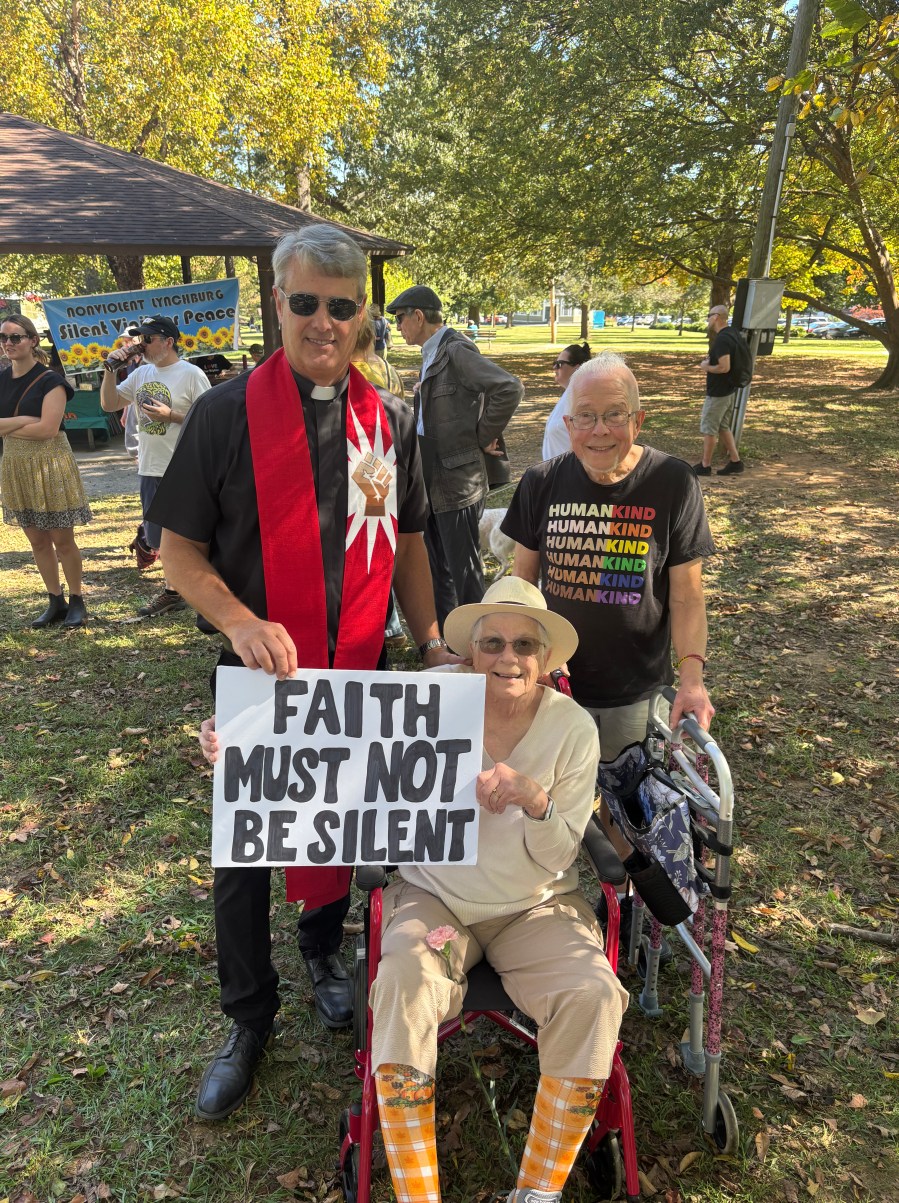
Hope Still Rises

Isaiah 2:1-5

On this first Sunday of Advent, the beginning of the church year, we do what Christians have done for nearly two thousand years: we begin not with resolutions, but with a vision. Not with our predictions for the future, but with a word from a prophet who could see farther than his moment. We begin our year with Isaiah.

Isaiah looked at a world shaped by war, fractured by fear, and burdened by leaders who have lost their moral compass. The powerful nations of his day were stockpiling weapons, forming alliances of self-protection, and marching toward destruction. Violence was not the exception; it was the expectation. Peace was treated like a foolish dream.

And right in the middle of the darkness, Isaiah stepped forward and said, “I have seen something else.” He declared, “In days to come, the mountain of the Lord’s house shall be established as the highest of the mountains.”

It’s important for us to understand that Isaiah is not talking about geographical altitude here. He’s talking about moral altitude. He’s talking about a higher vision in a low-down world, a higher ethic in a selfish world, a higher purpose in a weary world.

Isaiah saw hope rising above the hills, not because humanity was finally learning how to love one another, not because it seemed like kings were suddenly going embrace kindness and empathy, not because history was correcting itself, the pendulum was finally swinging in the right direction, but because God was lifting the world toward something better.

This is the hope of Advent. It’s not optimism or sentimental waiting. It’s not whistling in the dark or something we naively sit around and wait to feel. Advent hope is an existential force that lifts us, a power beyond ourselves that refuses to let us down and keep us down.

Advent hope doesn’t deny the darkness, it climbs above it. Advent hope is God-given courage pulling our hearts, our communities, and even our nation toward higher ground. It’s a holy stubbornness, a refusal to give up and lie down in despair. It stands up tall. It climbs, and it calls the world toward the light. This is the vision Isaiah saw.

Isaiah’s mountain is not geographical; neither is it political. It’s not a nation with strong borders, for Isaiah says, “All nations shall stream to it.” The prophet imagines a world where people are not separating from one another in isolation but coming together toward something higher, where God is drawing the entire world upward.

And on that higher ground, people don’t seek supremacy; they seek solidarity. People don’t sharpen swords; they reshape them. They learn peace and study war no more. Isaiah is announcing a moral revolution: “They shall beat their swords into plowshares, and their spears into pruning hooks.”

It’s good for us to be reminded today that plowshares and pruning hooks are tools that grow food. They are tools that cultivate life. Isaiah describes what it looks like when nations truly choose life over death, when they refuse to spend its tax dollars not on war but on feeding the people.

It is a bold and disruptive vision. And it’s a necessary vision, for it confronts us with a truth that our nation must hear today, for we have not yet chosen plowshares over swords.

In her sermon on Thanksgiving morning during the Interfaith Service of Unity, Rev. Anghaarad Teague-Dees reminded us of the painful truth that “poverty exists, not because we cannot feed the poor, but because we cannot satisfy the rich.”

The United Nations recently calculated that the United States could end world hunger if we took less than 1% of the amount we annually spend on our military and spent it on food.

We pour billions into drones, missiles, and military expansion while families stand in line for food assistance that Congress debates like it’s a luxury. We allocate billions more to ICE detentions and border militarization than to programs like SNAP that put healthy food on the table for children, seniors, and working families. We have created a nation where it is easier to fund a weapon than a meal, easier to build a prison than a pantry, a nation that brags on opening a Department of War while it closes the department of education.

Isaiah stands in the middle of our budget priorities and declares: “God is calling you to live one way, but you insist on living the exact opposite way, which is not living.”

The prophet says a day is coming when nations will no longer invest in death but in life, where resources are used to cultivate, to nourish, and to heal. This is the future Advent is calls us to live into.

Although we are failing to live into that vision today, God has already planted signs throughout history showing us that this future is possible.

After the atrocities of World War II, the United Nations was formed. Imperfect, yes. But a step toward cooperation and peace.

Japan converted military industries into factories that built cameras, cars, and electronics, tools that helped rebuild global economies instead of destroying them.

In South Africa, after generations of apartheid, the Truth and Reconciliation Commission was formed to help the nation confront its past and rebuild toward peace.

These examples are not the fullness of Isaiah’s vision, but they are echoes of it, moments when swords were reshaped, moments when nations climbed a little closer to higher ground.

And oh, how we need such moments today as our world is aching today for higher ground.

This is where the spirit of the Moral Monday movement joins the voice of ancient prophecy.

On Monday, December 8, at 11 a.m., I will stand with other clergy outside Congressman McGuire’s office and call the Virginia legislature to higher ground as part of the Moral Monday movement. This movement was launched in 2013 with a document called “The Higher Ground Moral Declaration” which said, “it’s time to move beyond left and right, liberal and conservative, and uphold higher ground moral values!”

The declaration calls for a moral revolution of values rooted in scripture and in the foundational commitments of our nation. It names poverty, healthcare, wages, education, criminal justice, LGBTQ+ rights, immigrant dignity, environmental justice, and demilitarization as moral issues, not partisan ones.

It issues a prophetic, urgent call to the nation: “Come up to higher ground.”

Isaiah is saying the same thing. Isaiah climbs the mountain and then shouts back to the valley: “This is where we’re going. Come up higher!”

Advent calls us to join Isaiah, to say to every congressperson who weaponizes fear: “Come up higher.”

To every policymaker who refuses to lift the poor: “Come up higher.”

To every governor stripping rights from transgender children, healthcare from women, and food from the hungry: “Come up higher.

To every politician that believes more guns are the answer, on our streets, in our schools, “Come up higher.”

To every pulpit today that is choosing to stay silent as our immigrant neighbors are being terrorized, kidnapped by ICE, arrested and deported without any regard to due process, court orders or human dignity: “Come up higher.”

Higher than fear.

Higher than division.

Higher than cruelty.

Higher than self.

There is a mountain calling us today. And Advent is the church’s invitation to climb.

It is important to understand that Isaiah does not imagine individuals climbing this mountain alone. This is not a private, personal journey. We read in verse three: “Many peoples shall come and say, ‘Come, let us go up to the mountain of the Lord.’” This speaks to our need of community, to the reason church is important.

It is why we covenant with other churches and partner with nonprofits. It’s why we build coalitions with all who believe in the power love, why we work with others in acts of justice, mercy, and compassion. It’s why the Moral Monday chant is “Forward Together, Not One Step Back.”

Whenever we work together to feed families, we are climbing the mountain of the Lord.

Whenever we join hands to protect vulnerable children, when we stand shoulder to shoulder to shield our immigrant neighbors, we are climbing the mountain of the Lord.

Whenever we speak with one moral voice about dignity, equality, and compassion, we are one step closer to walking in the light of the Lord on the mountaintop.

The devotional book we created for you to pick up and take home today reminds us of this hope.

Hope is not sitting in the dark pretending everything will be fine. Hope is choosing to get up with others and walk toward the light of God’s future even when the present hurts. Hope is activism with prayer behind it. Hope is compassion with courage attached.

This is Isaiah’s invitation on this First Sunday of Advent: “Come, let us rise and walk in the light.”

Walk, not wait. Climb, not cower. Rise, not resign.

So today, let’s lift our eyes to the light rising in the darkness, lift our hearts to the hope God is placing before us, and lift our courage to meet the call of our faith.

And then, with Isaiah’s conviction, let’s speak to this weary world with prophetic clarity: “Come up higher. Come into the light. Come to higher ground where weapons become tools, where bombs become bread, where fear becomes love, where strangers become neighbors, and where all nations walk together in the ways of the Lord.”

The light is rising in the darkness. And with God’s help, we are rising too.

Amen.

When Empire Meets Love

Luke 19:1-10

I will forever be grateful for the way Shirley Paxton and Linda Burger graciously welcomed me into their homes. Even when they were not feeling their best, they opened their doors wide.  And instead of talking about their ailments, as I expected, Shirley and Linda only wanted to talk about me, how I was doing, how my family was doing. They were interested in the church and my role as the senior minister, but they seemed more interested in who I was as a human being, as a father, a husband, a son, and a brother.

 After my first visit with Linda, I will never forget her walking me outside with Ken to my Honda Civic, asking me how in the world I was able to fit into such a little car. It reminded me of my first visit with Shirley. During a barrage of personal questions about me and my family, how my wife and I were liking Lynchburg, she suddenly came out with: “Just how tall are you?”

“6-foot-four,” I replied.

“That’s funny,” she said, “I’m four-foot-six! Stand up and let me stand beside you.”

We stood up next to each other there in her living room and laughed and laughed.

Shirley Paxton and Linda Burger may not have been very tall, but they both had very large spirits, something Zacchaeus had to grow into. And that’s where we meet him today, small in stature, and smaller still in spirit.

Zacchaeus worked for Rome, the empire that taxed the poor to feed the rich, ruled by fear, and crucified anyone who dared to resist. And sometimes, it feels like that same spirit still stalks our streets today.

 Zacchaeus was a chief tax collector, which meant he didn’t just collect money for Rome, he personally profited off the suffering of his neighbors. Thus, when the people saw him, they didn’t see a neighbor. They saw a traitor. And maybe that’s exactly what he was.

However, the good news is, or should I say the challenging news for us living a country that seems full of traitors these days is: Jesus saw him differently, teaching us what can happen when empire meets love.

Luke tells us that Jesus was passing through Jericho, a city built on exploitation and one of Rome’s outposts of control. Jericho was a city where the wealthy lived behind high walls and widows begged outside the gates. And there, in a crowd of people, standing on his tiptoes, was Zacchaeus, who then climbed a tree to catch a glimpse of grace.

Have you ever wondered what made Zacchaeus climb that tree? Why he wanted to see this radical rabbi named Jesus, the one stirring up good trouble for the sake of love. Maybe he was just curious, wondering who this troublemaker was who was proclaiming good news to the ones he was oppressing, while at the same time proclaiming love for tax collectors like himself.

Maybe Zacchaeus was desperate. Maybe, deep down, Zacchaeus didn’t like working for the empire. Maybe he was tired of living off the backs of others, tired of being part of a system where he was asked to trade his soul for a paycheck.

When empire meets love, sometimes it begins with a just a glance, for someone to catch just a glimpse of truth.

And then comes the surprise! Jesus stops beneath that tree, looks up and calls Zacchaeus by name: “Zacchaeus, come down. For I must stay at your house today.”

Luke says, “he came down at once.” I don’t know if that means he climbed down in a hurry, or was so startled when he heard Jesus call his name and heard the urgency in his voice, that he fell out of that tree!

The scene is shocking in more ways than one. For Jesus looks up at the one everyone else looks down on. Jesus humanizes the one everyone else demonizes. And it is because of that, love is able to enter the house of empire.

And something happens when love enters your house and sits at your table. Something happens when you stop hiding behind the systems of the world and start listening to the Savior of the world. Something happens when grace moves in and refuses to leave you where it found you.

It’s too bad Luke doesn’t tell us what Jesus said to Zacchaeus. But we can be certain Jesus didn’t sit there in silence, not the way many of us will be tempted to do this Thanksgiving, when empire shows up at our tables dressed like politics or prejudice. Whatever Jesus said, it was enough for Zacchaeus to realize he had missed the whole point of living. That life is not about accumulation but restoration. That love, grace, mercy, and justice are not accessories to faith. They are the very heart of it.

At the table with Jesus, Zacchaeus doesn’t just say, “I’m sorry.” Zacchaeus flips the whole system on its head: “Half of my possessions I will give to the poor, and if I’ve cheated anyone, I’ll pay them back fourfold!”

On this stewardship commitment Sunday, it is important for us to understand that this is what faithful stewardship looks like. Now, I’m not talking about giving 400% instead of 10%. I am talking about stewardship being about more than keeping the lights on in the church. It’s about the church shining a light into the world. It’s about giving others an opportunity to catch a glimpse of grace and truth. It is the empire coming face to face with love.

Zacchaeus teaches us that it’s not just about giving from what we have. It’s about giving back what the empire has stolen. It’s not about charity. It’s about equity. It’s about making reparations. It is about doing justice in an unjust world.

Before meeting love, Zacchaeus was the face of injustice. He worked for a system designed to keep the poor in their place. The tax collector’s job was to remind people that Rome owns you, Rome rules you, and Rome can take from you whatever it wants.

And today, that same spirit still walks among us. It criminalizes poverty. It takes food from the hungry. It turns brown skin into suspicion. It raids restaurants and convenience stores. It tears children from their parents’ arms. It’s the spirit behind every deportation, every detention center, and any system that profits off fear.

The challenge of Zacchaeus’ story for us is that when Jesus met the face of this spirit in Zacchaeus, Jesus didn’t demonize him. He humanized him. Jesus didn’t shame him or scold him. He didn’t see a villain. He saw a child of God buried beneath the mask of empire.

Jesus then invited himself to Zacchaeus’ home, to meet Zacchaeus where he was, where he lives, to learn more about him as a human being, as a father, a husband, a son, and a brother. Jesus invited Zacchaeus to sit down with him at a table, to break bread, which allowed a revolutionary love to touch his soul and transform him.

If Jesus were walking our streets today, I wonder if he’d stop beneath the watchtower of a detention center and call out to an ICE officer: “Hey John, why don’t you come down from there. Come down and let’s sit together at a table where no one is illegal, and every child is safe.”

For that’s what radical welcome looks like. It’s not a polite kindness that leaves injustice unchallenged. It’s the fierce, unrelenting love that says even to the enemy: “You will not make me hate you. You are God’s beloved child, and I believe you were made for much more than this.”

The good news is I believe that invitation still echoes in our world today. Jesus is still calling: “Come down. Leave the systems of empire. Come sit at the table where the walls come down and the children are safe, where love doesn’t get deported and where grace has no borders.”

This is what we mean when we say, “Radical Welcome, Revolutionary Love.” Radical welcome isn’t polite hospitality behind closed doors. It’s repentance made visible in public. It’s empire being converted— one heart, one invitation, one table at a time.

When Zacchaeus welcomed Jesus, he didn’t just open his front door. He opened his wallet, his conscience, his life. He said, “Half my possessions I will give to the poor. And if I have defrauded anyone, I will pay back 400%.” That’s crazy!

When Zacchaeus changed, Jericho changed. When one house opens its doors to grace, the whole neighborhood begins to glow!

This is what happens when love gets inside a house built by empire. Everything gets rearranged. When love moves in, greed moves out. When grace shows up, fear packs its bags. When Jesus crosses your threshold, the entire house starts to look like heaven.

And church, this is what stewardship is all about. It’s not about fundraising. It’s not maintaining our building. It’s opening our house to the holy. It’s saying, “Lord, this table, this budget we are pledging to fund, this ministry, this community, it’s all yours. And we want you to do something crazy here, something world-changing here!”

Because that’s what happens when empire meets love.

When greed meets grace, chains start breaking.

When fear meets faith, walls start falling.

When apathy meets compassion, hearts start healing.

When a church decides to truly live like Jesus— salvation lights up the city.

Zacchaeus’ story isn’t just about one man’s salvation. It’s about us. It’s about what happens when we let Jesus interrupt our comfort, when we climb down from the systems that keep us safe, separate, and silent and we say, “Come on in, Lord. Our house, our hearts, are wide open.”

And when empire meets love, tables get longer.

When empire meets love, budgets start looking like moral documents.

When empire meets love, the hungry are fed, the unhoused are sheltered, and the sick receive healthcare.

When empire meets love, equity is practiced, kindness is extended, mercy is offered, and justice is done.

When empire meets love, saints like Shirley and Linda smile down from glory, because they see that the welcome they practiced still lives in us.

So today, as we dedicate our pledges, as we name our saints,
as we remember those who opened their homes and hearts, let’s promise to keep doing the same: to open our doors wide; to welcome without condition; to love while refusing to hate; and to give until it changes someone’s life.

Because love like that is still revolutionary.
Love like that still topples empires.
Love like that is still how salvation comes to this house—
to our house
to this church,

to this city,
to this world that God so loves.

So, church, let’s come down from our trees.
Let’s come down from the tree of fear and scarcity.
Let’s come down from the branches of comfort and silence.
Let’s come down and open the door, set a table and make room for love.

Because Jesus is calling our name, saying: “First Christian Church in Lynchburg, Virginia, I must stay at your house today!”

Amen.

What’s Written on Your Heart

Some appeal to guilt: “If you don’t give, how will we keep the lights on and the camera rolling?”

Some appeal to fear: “If you don’t tithe, God will not bless you.”

Some appeal to self-interest: “Give, and you’ll get an unexpected check in the mail.”

And some appeal to nostalgia: “This is the church your grandparents built. You owe it to them to give.”

So, this stewardship season, I want to make something clear: you will never ever hear anyone in this church suggest that pledging your tithes and offerings, your service and your presence, is a way to bribe God, to buy blessings, to feed our souls, or keep our consciences clear.

Furthermore, we are not being asked to make a pledge to the 2026 budget because we recently had to replace the hot water heater, the roof may leak in a heavy rain, and we’ve hired an expensive professional to relocate a large family of bats which have taking up residence in the attic.

That’s because, we believe your pledges, your service, must come from a deeper place.

It was the prophet Jeremiah who proclaimed: “The days are coming,” declares the Lord, “when I will make a new covenant…I will put my law in their minds and write it on their hearts.”

We give because God’s law has been put in our minds and written on our hearts.

Now, when we hear the word “law,” we might think about rules, regulations, and restrictions, what we can and can’t do. But Jeremiah isn’t talking about that kind of law. He’s talking about something much deeper than any rule or ritual.

Jeremiah is talking about the moral rhythm of God. He’s talking about justice, kindness, mercy, and humility. He’s talking about empathy and compassion, engraved not on tablets of stone, but on the living tablets of human hearts.

This is the reason we pledge our gifts. We give, not from guilt, not from obligation, not from a belief that we will get something in return, not even from a command. We give because the rhythm of God’s morality has been written on our hearts.

And when this is written on our hearts, we don’t have to be told to pledge, to give, or to care, to love, to be kind, to show mercy, and to do justice. We just do. We don’t even need a stewardship campaign to tell us we need to embody radical welcome and revolutionary love. It is just who we are.

So, as we think about stewardship this month, as we consider pledging our tithes and our offerings, our service, and our presence, to make this world more just, loving, and peaceful, an important question we should ask ourselves is this:

What is it that is written on our hearts? Because the reality is, everyone has something written inside of them.

Sadly, for many, it is fear—put there by wicked men who seek power by dividing us.

For some, it’s scarcity. It’s the fear that there’s not enough.

For some, it’s fear of the other, immigrants taking what we believe is ours.

For some, it is cynicism. It’s the fear that nothing in this world ever changes, anything I give simply will not matter.

The good news is that not only does God have a powerful eraser, in the words of the prophet, “forgiving wickedness and remembering sin no more,” the good news is that God is still writing. And when God writes, God never uses the ink of fear, but always writes in the ink of justice.

Onto our each of our hearts, God is writing justice, not selfishness; compassion, not comfort; and selfless love, not self-preservation.

Here’s some more good news. Your choosing to be here this morning is a good sign that that the ink of God is flowing through your veins. That’s why I believe you are sitting in a pew this morning. That’s why you give. That’s why you serve. That’s why you show up when your neighbors need you, and that’s why you rally when your country needs you.

Jesus illustrated this truth with a story of a woman, a widow with no power, no protection, and no position. She doesn’t have wealth. She doesn’t have influence. All she has is the ink of God on her heart.

She shows up before a judge who, the text says, neither feared God nor had respect for people. We know the kind. He doesn’t care about justice. He doesn’t care about her. He doesn’t care about God. He cares only for himself.

But because of that something written on her heart, nevertheless she persists. She keeps showing up. She keeps knocking. She keeps demanding justice.

Now, we don’t know what her case was.

Maybe her landlord was exploiting her.

Maybe her neighbor had taken her land.

Maybe she had been cheated out of her inheritance.

Maybe she was being denied healthcare, due process, or civil rights.

Most certainly, she was a victim, or should I say “a survivor” of misogyny.

Whatever it was, she kept showing up.

And although the judge doesn’t have a moral, empathetic bone in his body (again, we know the type, don’t we?), even he gives in. Not because he suddenly finds compassion, but because she refuses to go away.

Now, this is not a story about nagging God until God gives us what we want. This is a story of faithful persistence in the face of injustice. It’s a story about a woman who knew something about the power of showing up. The odds were against her, but she kept showing up. The judge was morally depraved, but she kept showing up. Her friends told her she needed to accept things the way they are because nothing in this world ever changes, but she kept showing up because God’s justice, the rhythm of God’s morality was written on her heart.

It was the same rhythm that propelled Marion Stump to show up in Miller Park yesterday at the No Kings Rally— demonstrating that when justice is written on your heart, when the ink of God is coursing through your veins, not even pancreatic cancer can keep you from showing up!

This is why this is a perfect text for our stewardship season in this time and place. Because giving is a form of showing up. Serving is a form of showing up. Speaking out, organizing, marching, standing with the vulnerable, fighting for democracy — all of it is showing up before the immoral powers and principalities and saying: “There will be justice here.”

As the widow kept knocking at the courthouse door, we must keep knocking at the world’s door. And every gift of generosity, every dollar given, every act of kindness, every time we show up, is one more knock, one more insistence that justice matters, and love will win.

Now, here’s a statistic that gives me hope today: Researchers say that if just 3.5% of a nation’s population mobilizes in sustained, nonviolent action, they can turn the tide against authoritarianism. Think about that. Not half the country. Not even a tenth. Just 3.5%. That’s about one in every thirty people. If one in thirty people with justice written on their heart keeps showing up, keeps marching, keeps knocking, keeps giving, keeps serving, keeps praying, you can change the direction of a nation. This nation can be turned toward justice again.

So, we must never believe our offering doesn’t matter, our presence doesn’t count, our gifts are too small, or that our persistence is not power. Because every time we show up, every time we give out of what’s written on our hearts, we’re part of that 3.5%. We’re part of the turning. We’re part of God’s kingdom breaking in.

Good stewardship is and has always been heart-based. It’s justice-based. It’s love-based. It’s what Jeremiah saw when he said:

No longer shall they teach one another, saying, ‘Know the Lord,’ for they shall all know me, from the least of them to the greatest.

When the covenant is written on our hearts, we don’t need coercion. We don’t need compulsion. We don’t need manipulation. Because the Spirit itself bears witness in our hearts, and when God’s handwriting burns in your chest, you wake up every morning asking: “How can I give myself today for justice, for peace, for love?”

And the good news is that the world doesn’t need an extraordinary event to change. It changes through ordinary persistence. Through the widow who won’t give up. Through the disciple who keeps showing up. Through the church that keeps preaching hope, even when hope seems hard to find, because every time we show up, we bear witness to the covenant of God written inside of us. We demonstrate to the world: “Greed will not have the last word. Hate will not have the last word. Fear will not have the last word. And love will one day ultimately and finally win.

Disciples, we are the people who keep showing up. We show up for one another. We show up for our neighbors. We show up for the nation. We show up wherever anyone thirsts for justice and hungers for love.

Because when the covenant of God is written on your heart, you can’t sit still in the face of suffering. You can’t stay silent in the face of injustice. You can’t keep your hands closed when the Spirit is calling you to open them.

The widow kept showing up before the unjust judge, and we keep showing up before an unjust world—not out of guilt, not out of duty, not to get something in return, but because there’s something divine inside of us that will not let us rest.

It’s what Jeremiah called a new covenant. It’s what Jesus called the kingdom of God. It’s what we call faith in action.

So, this stewardship season, we’re not asking you to give out of fear or guilt or obligation. We’re asking you to give because you’ve got something written on your heart.

Give because you believe that love is stronger than hate, and there’s a love inside of you that will not let you go. Give because you trust that justice will prevail. Give because you know that hope still has work to do in this world!

Give, because you’re part of that 3.5% who refuse to bow before kings, who refuse to be silent in the faces of those in power with no regard for people or God, who refuse to quit knocking, who refuse to stop showing up.

Because that’s what the church is.

It’s not a building that needs maintaining, but a movement that needs to keep marching.

And we will keep showing up—not until we get what we want, but until the world becomes what God dreams it to be.

Until every heart bears the handwriting of God, and every gift, every prayer, every act of courage echoes that same eternal truth:

We give, we serve, we love, we persist, because it’s written on our hearts!

Amen.


Pastoral Prayer

God of persistence and promise,
You are the One who writes truth on human hearts,
who carves compassion into our very being,
and who teaches us to keep showing up
in hope, in prayer, and in love.

You have written Your covenant not on stone tablets
but in the living flesh of our hearts.
So even when the world forgets justice,
even when the powerful ignore the cries of the poor,
Your truth keeps pulsing within us,
calling us to rise again, to knock again,
to believe again that love will have the final word.

We thank You for the saints and prophets
who never stopped knocking on the doors of indifference.
For the mothers who marched,
for the workers who organized,
for the dreamers who still believe in a more just tomorrow.
May their persistence live in us.

And forgive us, O God, when we grow weary in doing justice.
Forgive us when our compassion has an expiration date,
when our generosity depends on convenience,
when our prayers fade because the answers take too long.
Remind us again that the work of justice
is not measured in days or dollars or ease,
but in faithfulness, in showing up again and again.

In this season of stewardship, teach us to give not from fear or guilt,
but from gratitude and conviction.
Let our generosity be an act of defiance
against greed, apathy, and despair.
Write Your covenant deep within us,
until our giving, our praying, and our living
all bear witness to Your love at work in the world.

We pray for those whose hope feels faint today:
for the tired caregiver; the underpaid worker;
the neighbor who feels unseen; the soul that feels unheard.
May they find strength in the knowledge
that You are the God who listens, the God who remembers,
the God who still answers cries for justice.

And so, we will keep showing up.
We will keep praying, keep working, keep giving,
until the widow’s cry is answered,
until Your justice rolls down like waters,
and Your mercy like an ever-flowing stream.

We ask this in the name of Jesus,
the One who kept showing up,
the One who never gave up,
the One who lives and reigns through love.
Amen.

Radical Welcome. Revolutionary Love.

Luke 17:11-19

I want to begin this sermon talking a little bit about preaching.

There are basically two kinds of sermons you’ll hear in churches today. One starts with a thought the preacher has. They then hunt through the Bible to find a verse or two to back up that thought.

The second kind starts, not with the preacher’s idea, but with the scripture itself. Preachers who follow this path use a tool called the lectionary, a three-year cycle of readings first shaped by the early church in the fourth century and rooted in the reading traditions of Jewish synagogues. The lectionary keeps preachers from preaching their own pet ideas, and since it always includes a gospel lesson, the preacher is encouraged to interpret each reading through the life and love of Jesus.

That’s the kind of preaching I believe in.

And it’s probably why, in my previous congregations, I’ve been criticized for preaching too many sermons about the poor and marginalized. Because here’s the reality: Besides the truth that Jesus said his very purpose was to proclaim good news to the poor and liberation to the oppressed, there are over two thousand scriptures instructing people of faith how to treat the poor. As Bishop William Barber says, “If you cut all those verses out of the Bible, the whole book would fall apart. There’d be nothing left.”

So yes, I plead guilty—for preaching the Bible in the light of Jesus. And every week, the scriptures amaze me. For they never seem to read like old stories but read more as a mirror to the present. This is why I was taught in seminary to prepare for a sermon with the Bible in one hand and a newspaper in the other, as I would always be able to find a relevant word of challenge and hope.

Today, Luke’s gospel brings us face to face with Jesus on the border, where he once again encounters the marginalized poor who are crying out for mercy.

It’s a beautiful story about healing and gratitude, but when we look closer, we see that it is about so much more than that. It’s about who gets welcomed and affirmed and what kind of love has the power to change the world.

And that’s why it’s the perfect reading to launch our stewardship season with the theme: “Radical Welcome. Revolutionary Love.”

Luke tells us that Jesus is walking along the border between Galilee and Samaria. In 2025, there’s no way we can rush pass that detail. Jesus is on the border—that place where boundaries get policed, where soldiers get sent, where dreams are crushed, and walls get built. It’s the place where the desperate gather, immigrants are scapegoated, and the poor are told to go back to where they came from.

It is there that Jesus meets ten people with leprosy—ten people who know exactly what it means to be told they don’t belong. They’ve each heard the words of Leviticus cherry-picked and used like weapons against them, if you can imagine such a thing:

The person who has the leprous disease shall wear torn clothes and let the hair of his head be disheveled; and he shall cover his upper lip and cry out, ‘Unclean, unclean.’ … He shall live alone; his dwelling shall be outside the camp. (Leviticus 13:45–46)

That’s what marginalization looks like in scripture form, an ancient version of “You’re poisoning the blood of our country.”

So, the outsiders keep their distance while they cry out: “Jesus, Master, have mercy on us!”

And isn’t that the same cry echoing all around us today?

It’s the cry of immigrants and of all who are excluded from the opportunities enjoyed by the privileged.

It’s the cry of anyone denied due process under the law or denied representation in gerrymandered voting districts.

It’s the cry of LGBTQ people shut out and abused by the church.

It’s the cry of women who are denied access to reproductive care.

It’s the cry of every Black and Brown neighbor who drives past a Confederate flag waving in the wind—a painful reminder of the systemic racism they are forced to endure.

They all cry out: “Lord, have mercy!”

And what does Jesus do? He doesn’t ignore their cries. And he doesn’t ask for credentials or proof of worthiness. Without asking whether they’re citizens of Galilee or Samaria, he opens a free clinic right there at the border.

But notice something else: Jesus doesn’t just give them free healthcare and send them on their way. He wants to make sure they’re restored back into community. That’s why he says, “Go and show yourselves to the priests.” Because according to the Mosaic Law, only a priest could officially declare them “clean” allowing them to re-enter society.

Because Jesus is never satisfied with individual healing. Jesus wants liberation. Jesus wants justice. He wants inclusion. He wants acceptance, belonging, and abundant life for all.

But the story doesn’t end there.

Out of the ten who are healed, only one turns back to say thank you—and Luke wants to make sure we know that the hero of the story was a Samaritan, the foreigner in the group. The outsider of outsiders. The religious heretic. The one the establishment called impure, illegal, and alien. And when this outsidiest of all the outsiders turns back to Jesus, “Jesus doesn’t say, “Sorry, you’re not one of us.” “Sorry, you don’t sing in our language.” “Sorry, your faith and traditions are different from ours.” He says, “Your faith has made you well.”

This is what radical welcome looks like in a world obsessed with borders—literal and figurative. Who’s in, who’s out. Who’s legal, who’s illegal. Who’s acceptable, who’s disqualified. This is the world Jesus dares to say: “All belong. All are worthy. All can be healed, and liberty and justice can be for all.”

This is the radical welcome we’re called to embody as a church. To be people who don’t just tolerate diversity but celebrate it. To be a community where God’s wide, universal, unconditional embrace is visible, tangible, and undeniable, where every person hears the gospel loud and clear: “You belong here!”

And this welcome is not only radical. It’s revolutionary.

Because this kind of love doesn’t just heal individuals; it transforms systems. It disrupts the status quo. It flips tables. It tears down walls. It not only welcomes—it honors. It not only includes—it affirms.

And because of this, revolutionary love is always costly. It cost Jesus his reputation. It cost him his safety. It eventually cost him his life. But he showed us that the only love worth living for is the kind of love worth dying for.

This is the kind of love we are called to practice. A love that refuses to let anyone stand outside the circle, and keeps widening that circle again and again, no matter the cost. A love that refuses to stay silent in the face of injustice and is always willing to risk comfort for the sake of compassion, willing to be called an “insurrectionist,” to even get shot in the face with a chemical weapon like the Presbyterian Minister in Chicago this week.

So, you may ask, “What does this have to do with stewardship?” The answer is “everything.”

Because stewardship is not about maintaining a building or keeping the lights on. Stewardship is about resourcing the ministry of radical welcome and revolutionary love.

When we give, we’re not paying dues to an institution; we’re investing in liberation.

We’re not buying comfort; we’re building community.

We’re not keeping the lights on; we’re keeping hope alive.

We’re not feeding our souls.

But every dollar we give is bread for the hungry, balm for the wounded, space for the excluded, and hope for the desperate. Every pledge we make is a declaration: “We refuse to be a church of scarcity, fear, or maintenance, but choose to be a church of abundance, courage, and mission!”

Giving to our church is much different than giving to a charity. It’s resistance to the forces of greed and self-interest. It’s protest against a world that says money is for hoarding, power is for the few, people should be divided, and love is conditional.

Giving to our church proclaims: God’s economy is different. In God’s economy, generosity multiplies. In God’s economy, love grows stronger the more it is shared, and our lives become fuller the more we give them away.

It’s the Samaritan who shows us that gratitude itself can be revolutionary. When he turns back to give thanks, he refuses to be silent. He refuses to treat his healing as a private, personal blessing and interrupts our gospel lesson with praise, teaching us that gratitude interrupts despair and fuels generosity.

That’s what this year’s stewardship season is about. It’s an invitation to practice gratitude like that Samaritan. To turn back to Jesus. To say, “thank you.” To recognize that every good gift comes from God, and that the only faithful response is to give back.

So, here’s our call this stewardship season:

To give back by walking the borderlands with Jesus, refusing to let anyone be cast aside.

To practice welcome so radical that people say, “I never knew church could look like this.”

To embody love so revolutionary that systems tremble, powers take notice, and hope is rekindled.

To give with such joy and generosity that the world knows: this is a congregation that truly takes Bible seriously while living in this world as disciples of Christ.

And no, it’s not easy. It takes faith. It takes sacrifice. It takes courage. People will laugh at us, dismiss us, and even attack us. But here’s the good news: the same Jesus who healed the ten and honored the Samaritan is still walking with us. The same Spirit that moved then is moving now.

The lepers cried out for mercy, and Jesus answered. The Samaritan turned back to give thanks, and Jesus affirmed his faith. Today, we stand in that same story. We are the ones who have been welcomed. We are the ones who have been loved. We are the ones who have been healed.

And now it’s our turn. It’s our turn to welcome, to heal, to affirm, to love, to give.

So, let’s stand up with gratitude.

Let’s step out in faith.

Let’s lean forward in love.

Because the world is waiting for a church like this—a church that practices radical welcome and revolutionary love!”

It’s not just a theme or a slogan.

It’s not just the idea of a preacher with some cherry-picked verses to back it up.

It’s the gospel.

It’s the good news.

And it’s our calling.

It’s our witness to the world!

Amen.

Woe to Selfish Religion

Amos 6:1, 4–7; Luke 16:19–31

If you missed it, some Christians spent the first part of last week preparing for “the Rapture” which was supposed to have happened on Tuesday. Videos were posted of excited believers talking about getting their affairs in order, sharing their plans for their property and pets, in the event that they get swept up in the sky to meet Jesus, leaving all non-believers on earth to suffer tribulation.

This wild belief we call “the rapture” didn’t come from any responsible interpretation of scripture, but from a vision of a young Scottish woman named Margaret McDonald who, in 1830, dreamed about people flying away to heaven to escape hell on earth. Her dream was shaped by preachers who taught that the world’s problems were just too great, too hard, too much for human beings to solve.

That dream later made its way into the Scofield Study Bible, then into movies and novels like The Late Great Planet Earth and the Left Behind series, and of course, into pulpits across America. Though based on a gross misreading of scripture, it is often preached as gospel truth, terrifying folks into “getting saved.”

Before I was baptized when I was eleven, I remember lying awake worried I’d wake up to find that my parents had been raptured away, leaving me behind to raise my little brother and sister. However, I did take some comfort thinking that since Nana and Granddaddy didn’t go to church, and granddaddy drank beer, maybe they’d still be around to take care of us.

Another teaching that haunted me as a child came from Jesus’ parable of “the Rich Man and Lazarus.” I can still see myself on those hard wooden pews as preachers painted vivid pictures of the flames of hell. If I didn’t “get saved,” they said I would one day gaze into heaven from my eternal home in hell, begging for a sip of water.

The message was clear: unless I walked down that aisle, I would either die and suffer forever in hell, or be left behind after the rapture to suffer the tribulation.

Notice what both teachings did. By telling us that faith was about escaping suffering, they took all the focus off addressing the suffering and pain of this world. They made us forget that Jesus actually taught us to live a way of love that relieves suffering here and now. They drained away any responsibility we might have to work in our broken world for justice, peace, and mercy.

And maybe that was the point, the whole scheme all along. Because following Jesus is not easy. Following Jesus means helping people like Lazarus. Following Jesus means always standing in solidarity with the poor and marginalized. Following Jesus means challenging systems of greed and injustice that keep some people feasting while others starve. And that is much harder than saying a quick prayer to escape hell.

But the gospel was never intended to be an easy way out. The gospel has never been about escaping suffering. On the contrary, the gospel has always been about suffering with and for the poor, because it is good news for the poor. It is liberation for the oppressed. It is God’s vision of justice, mercy, and peace on earth. It is repenting from fear, selfishness, and greed to embrace love, selflessness, and generosity.

Let’s return to the parable. An unnamed rich man dressed in purple feasted every day. At his gate lay a poor man named Lazarus, covered with sores, longing for crumbs. Even the dogs showed him more compassion than the rich man.

When both die, Lazarus is carried into Abraham’s bosom while the rich man suffers torment. But notice that, even then, the rich man doesn’t repent. He still treats Lazarus as a servant: “Send him to me with some water.” “Send him to warn my brothers.” He never once says, “I am sorry for ignoring Lazarus. I am sorry for building a gate to shut him out. I am sorry I closed my eyes to his suffering.”

There is no repentance. Only entitlement.

And Abraham’s reply is devastating: “They have Moses and the prophets. If they will not listen to them, neither will they be convinced even if someone rises from the dead.”

That’s the tragedy of this parable. It’s not simply about torment after death. It’s about the refusal to listen and to change. People can hear the prophets, even witness resurrection, yet still cling to greed and selfishness. People can be easily brainwashed into thinking that faith is about saving themselves, not about transforming the world.

And so today, many have been brainwashed by preachers, politicians, and propaganda machines into believing the gospel has nothing to do with loving Lazarus at the gate, nothing to do with compassion for immigrants, nothing to do with healthcare, housing, or hunger, nothing to do with injustice. “Just say the ‘sinners’ prayer,’ secure your ticket, and let your neighbor take care of himself.”

But Jesus says otherwise.

Through this parable, Jesus is giving the same warning Amos gave centuries before:

“Woe to those at ease in Zion. Woe to those who lounge on ivory couches, who eat lambs from the flock, who drink wine by the bowlful, and anoint themselves with the finest oils, but are not grieved over the ruin of the nation.”

Amos saw people living in luxury while their neighbors suffered. Jesus saw it too: a rich man feasting while Lazarus starved at his gate. Both are indictments of those who refuse to listen and change.

And this is not just ancient history. This is us.

Today, we live in a society where billionaires launch rockets into space while children go to bed hungry. Wine is consumed by the bowlful while communities like Flint and Jackson are poisoned by contaminated water. People recline on ivory couches while their neighbors suffer.

And today, we see friends, neighbors, even family so brainwashed by lies that nothing can change their minds. Someone could shoot a man on Fifth Avenue, and they still wouldn’t change.

Behind the gates of fascism today is Lazarus. Lazarus is our LGBTQ neighbor under attack by lawmakers and preachers who twist scripture into a weapon.

Lazarus is the immigrant locked in detention centers, or drowned at sea, while politicians build careers on cruelty.

Lazarus is the scientist and teacher defunded and mocked so that ignorance can rule.

Lazarus is the journalist, librarian, or truth-teller threatened for speaking up.

Lazarus is the Black and brown neighbor targeted by violence and mass incarceration.

Lazarus is the Palestinian neighbor starving in the rubble of Gaza.

Lazarus is always the poor—always—while the rich anoint themselves with oil.

And churches are complicit by clinging to a false gospel of escape-from-it-all.

Preach healthcare as a human right and you’ll be told, “That’s socialism.”

Preach feeding the hungry and you’ll hear, “That’s enabling laziness.”

Preach racial justice and they’ll say, “That’s too political.”

They’ll say anything to avoid listening and changing. “Just focus on getting people ready for eternity!” they’ll say.

But Jesus says: that’s not the gospel. The gospel is about loving Lazarus at the gate. The gospel is not about escaping hell. The gospel is about making life less hellish now. The gospel is about God’s kingdom coming on earth as it is in heaven.

And let’s be honest: being told you are wrong is tough to hear. It’s hard to confront our comfort, our privilege, and our complicity. It’s hard to admit, “I was wrong. I shut my gate. I ignored Lazarus.”

But that’s the hard and narrow way of the gospel. The good news is not escape from this world. The good news is that God is redeeming this world, and invites us to hear that news, to repent and to join. The good news is that Jesus has already crossed the great chasm to bring heaven’s love into earth’s suffering. The good news is that resurrection is real, that life can triumph over death, love over hate, justice over greed.

The gospel is more demanding than the sermons that once terrified us, but it’s also more beautiful. For it’s not about fear. It’s about love. It’s not about escape. It is about engagement.

It is about getting up from our couches of comfort and walking out to the gate where Lazarus is lying. It is about opening the gate wide and saying, “You are not left behind. You are not forgotten. You are my neighbor, and I am called to liberate you, to love you.”

The gospel calls us to open the gates of our churches, not just for Sunday worship but for Monday mercy and Tuesday justice, everyday peace-making. The gospel calls us to open the gates of our politics, our budgets, our neighborhoods, so that the poor are lifted, the hungry are fed, the sick are cared for, the oppressed are liberated.

This is not charity. This is not pity. This is gospel. This is resurrection life breaking into a world addicted to death and people addicted to an easy way out.

Our scripture lessons present us with a choice. Will we sit behind our gates, pretending nothing can change? Or will we rise to the call of Amos, of Jesus, of the resurrection itself?

The world is aching today for a church that will live the gospel. The world is waiting for Christians who will trade their rapture charts for justice marches, their escape plans for solidarity plans, and their fear of hell for the hard work of making life less hellish for Lazarus at the gate.

The Spirit of God is calling us right now to repent of selfish religion and embrace liberating love. To turn from the false gospel of escape and to embrace the true gospel of engagement.

The Spirit is pleading with us to listen. Listen to Moses and the prophets. Listen to Amos crying out from the marketplace. Listen to Jesus telling of Lazarus at the gate. Listen to resurrection itself”

“Don’t harden your hearts! Don’t cling to selfish religion! Don’t mistake fear for faith!”

For there’s no problem in the world too great, too hard, or too much for the disciples of the Christ!

Because here’s the promise: if we choose love, if we listen, if we take Lazarus’ hand at the gate, we will find God already there, already at work, already making all things new.

So, disciples of Christ:

Let’s open the gate!

Let’s step through the fear!

Let’s take Lazarus’ hand!

And let’s walk together into God’s new creation!

For the good news is this:

God is making all things new.

And God is calling us, here and now, to join in that work.

Amen.


Pastoral Prayer

God of all nations and peoples,

we gather today with hearts full of both gratitude and grief.

We give thanks for life, for breath, for the gift of community.

We give thanks for beauty—in the turning of the seasons,

in the laughter of children, in the resilience of your people.

Yet, we also bring to you our burdens.

We pray for those who are sick and struggling,

for those who carry heavy grief,

for those living with fear, with hunger, with loneliness.

We pray for communities torn apart by violence and war,

for families separated by borders,

for the earth groaning under fire, flood, and storm.

God, we confess how easy it is to turn away from pain,

to shield our eyes from suffering,

to harden our hearts to injustice.

But you have called us to love our neighbors as ourselves.

You have called us to seek justice, love mercy, and walk humbly with you.

So today, O Lord, give us the courage to see as you see,

to love as you love, to live as your children, bound together in one human family.

Where there is despair, make us bearers of hope.

Where there is hatred, make us instruments of peace.

Where there is apathy, stir us to act with compassion.

We offer all our prayers—spoken and unspoken—in the name of the One who came that we might have life, and have it abundantly,

Amen.


Pastoral Prayer

God of all nations and peoples,

we gather today with hearts full of both gratitude and grief.

We give thanks for life, for breath, for the gift of community.

We give thanks for beauty—in the turning of the seasons,

in the laughter of children, in the resilience of your people.

Yet, we also bring to you our burdens.

We pray for those who are sick and struggling,

for those who carry heavy grief,

for those living with fear, with hunger, with loneliness.

We pray for communities torn apart by violence and war,

for families separated by borders,

for the earth groaning under fire, flood, and storm.

God, we confess how easy it is to turn away from pain,

to shield our eyes from suffering,

to harden our hearts to injustice.

But you have called us to love our neighbors as ourselves.

You have called us to seek justice, love mercy, and walk humbly with you.

So today, O Lord, give us the courage to see as you see,

to love as you love, to live as your children, bound together in one human family.

Where there is despair, make us bearers of hope.

Where there is hatred, make us instruments of peace.

Where there is apathy, stir us to act with compassion.

We offer all our prayers—spoken and unspoken—in the name of the One who came that we might have life, and have it abundantly, Amen. 

Invitation to Communion

Beloved, this table is not a table of ivory and luxury—it is the table of Christ.
Here, there is no rich man and poor man, no gate to divide us, no crumbs and banquets—only bread broken for all, only a cup poured out for all.

At this table, Lazarus is lifted up, the hungry are filled, and the comfortable are called to share.

Here we taste a different kind of feast—the feast of God’s justice, the feast of Christ’s love, the feast that anticipates the kingdom where none are excluded.

Come, not because you want to be fed, but because God calls you to be transformed.

Come, for all are welcome.

Invitation to the Offering

In the parable, the rich man ignored Lazarus at his gate. At this moment, Lazarus is still at our gate—in our neighborhoods, in our city, in our world.

Our offering is not a transaction. It is an act of resistance. It says we will not be numb. We will not pass by. We will not close our eyes to suffering.
Through our gifts, we choose to see Lazarus, to love Lazarus, to stand with Lazarus.

Let us give, then, not from ease or obligation, but from compassion, solidarity, and joy in God’s vision of justice.

Benediction

Go forth, people of God,
not with a gospel of escape,
but with the good news of engagement.
Go forth, to open the gates,
to love Lazarus at the threshold,
to stand with the poor, the silenced, and the oppressed.
Go forth, to listen to Moses and the prophets,
to follow Jesus in the way of love,
to live resurrection life in a world addicted to death.
And as you go,
may the God who makes all things new
strengthen you,
the Christ who crossed the great chasm walk beside you,
and the Spirit who will not be silenced empower you—
today, tomorrow, and forevermore. Amen.

Is There a Balm in Gilead? A Cry for Peace in an Age of Fascism

Jeremiah 8:18-9:1

My joy is gone. Grief is upon me. My heart is sick. Is there no balm in Gilead? Is there no physician there? O that my head were a spring of water, and my eyes a fountain of tears, so that I might weep day and night for the slain of my poor people.

How many of you can feel the enormous grief of the prophet? It’s heavy. It’s exhausting. And I confess that there was a time this week I felt like just giving up.

Jeremiah’s gut-wrenching lament comes from the suffering of a broken city—amid a people demoralized by a corrupt government, betrayed by those in power, and abandoned by the religious establishment.

The prophet’s voice trembles with profound sadness. He sees a nation that has lost its way: a people who claim to believe in God but who fail to practice kindness, justice, and mercy; leaders who have consolidated power by telling lies, scapegoating the weak, silencing dissent, and threatening violence.

Sound familiar?

In Jeremiah’s time, the Babylonian war machine bore down on Judah.

Instead of defending the vulnerable, the powerful protected their own wealth and position, leaving ordinary people exposed to invasion and suffering. The poor were crushed, widows abandoned, orphans ignored, and migrants exploited. The powerful told the people what they wanted to hear, proclaiming “peace,” when there was no peace, because there was no justice.

And Jeremiah wept.

Jeremiah wept because people fell for the lies. He wept because the cries of the vulnerable went unheard. He wept because leaders in the nation had hardened their hearts. And he wept because those leaders were blessed by religious leaders.

Sound familiar?

It was not only a political crisis. It was a moral crisis, a spiritual crisis.

And on this International Day of Peace in 2025, we find ourselves in a strikingly similar crisis, as fascism tightens its grip on our nation.

Power has been consolidated by dividing the nation, scapegoating immigrants, and silencing dissent. The playbook of the powerful demonizes the most vulnerable among us. It criminalizes protest, censors history, dismantles education, denies science, and spreads lies, all to protect their power.

We live in a time when comedic satire aimed at the rich and powerful is silenced, while hate aimed at the poor and powerless is protected. A comedian was pulled off the airwaves after mocking the President. Yet, a Fox news host openly called for the killing of the homeless and the mentally ill—those whom Jesus would say that “if you do it to them, you do it to me”—and not only did he keep his job, he was defended by many who claim to be Christian.

This is much deeper than politics. It’s about the soul of the nation. When truth is silenced, when the poor are demonized, and when those in the church bless it, it is more than democracy at stake. It is our very humanity and witness to God.

This is the sin-sick world Jeremiah saw.

Judah was collapsing under its own corruption. The prophets who should have spoken truth to power bowed down to power. Babylon loomed large, an empire built on conquest, intimidation, and fear. And Judah’s leaders tried to imitate the empire, believing violence would secure peace. Peace through strength, as they like to say. Prophets like Jeremiah were threatened, beaten, and even imprisoned for speaking truth (Jer. 20:1–2; 26:7–11).

But Jeremiah rose up and spoke out anyway. Listen to his words from the previous chapter:

Don’t for a minute believe the lies being spoken here: ‘This is God’s Temple, God’s Temple, God’s Temple!’ [It’s] total nonsense! Clean up your act, the way you live and treat your neighbors…[quit oppressing the alien NRSVUE], exploiting street people and orphans and widows. Quit taking advantage of innocent people, [and stop going after other gods to your own hurt …NRSVUE] Get smart! Your leaders are handing you a pack of lies, and you’re swallowing them! Use your heads! (Jeremiah 7, The Message).

Jeremiah wept because the people had been conned, falling for the lies of the powerful, even against their own interests, choosing violence over love, a false peace over justice. And Jeremiah wept because people were being hurt in the name of God.

His nation was sick with sin and Jeremiah lamented: “Is there no balm in Gilead? Is there no physician here?”

It’s difficult not to see the parallels to 2025.

Today, politicians quote scripture while cutting food program and taking away healthcare. Governors sign laws to censor history, erasing the stories of Black, Brown, and queer lives. Politicians want to control the media and criminalize protest, making dissent itself illegal. They attack education, deny the reality of climate change, and sneer at science.

And they bless it all in the name of God. They silence the prophets in the name of peace. They embrace fascism in the name of patriotism.

The nation is sin-sick when comedians who poke fun at power are silenced, while broadcasters who fantasize about killing the poor are protected. The nation is sin-sick when protest is criminalized and violence is excused, when truth is silenced and lies are amplified, when bigots are honored and those who speak out against bigotry are villainized.

Thus, Jeremiah’s cry becomes our own: “Is there no balm in Gilead?”

So today, we join Jeremiah’s weeping.

We weep for all who are still swallowing lies at their own peril.

We weep for immigrants locked away without due process, terrorized and scapegoated for problems they did not cause.

We weep for our unhoused neighbors, those whom many wish would just disappear.

And we weep for the silenced voices—journalists, teachers, artists, prophets—punished for telling the truth.

However, here’s the good news. We weep with the prophet today, but we weep with hope. If not, I don’t think we would be in this sanctuary this morning. We weep before God as those who know the tears of the faithful are sacred, that the laments of those who believe in love are holy, that weeping itself is an act of resistance in a culture that tells us that everything is fine.

Jeremiah asked: “Is there no balm in Gilead?”

Two thousand years later, the African-American church of the 19th century answered the prophet. Although the powerful what us to forget it, while African Americans were considered chattel property with no rights, subjected to forced labor from sunrise to sunset, while they were bought, sold, and separated from their families, their lives defined by brutal coercion, including whippings and the threat of death, while they were denied legal rights and autonomy, they were somehow still able to sing out loud, words that we will sing in a few moments: “There is a balm in Gilead!”

Not the balm that came from bowing down to their masters. Neither was it the balm of hating them or responding to their violence with more violence. It was the balm of God’s justice, the balm of Christ’s love, and the balm of Spirit’s fire. The balm with the power to make the wounded whole, to heal the sin-sick soul. The balm that is found wherever people choose love over hate, truth over lies, and justice over fear.

The balm of Gilead is in the streets where the people march. It’s in the pulpits where prophets preach and in the pews where worshippers pray. It’s in the classrooms where teachers defy censorship, and it’s in the laments of all who believe in love.

The balm of Gilead is found in our tears, our laughter, our songs, and our courage.

Jeremiah cried, “O that my head were a spring of water, and my eyes a fountain of tears.”

In 2025 America, we know our tears can become rivers of justice. Our lament fuels our resistance, and our weeping gives birth to action.

When protest is criminalized, our tears compel us to march anyway.

When immigrants are demonized, our tears move us to stand with them in solidarity and proclaim that no human being is illegal.

When history is censored, our honest tears become words telling the truth in our classrooms, in our pulpits, and in our homes, because we know it is only the truth that sets us free.

When science is denied, our weeping stirs us to honor the creation, because we believe in our hearts God has entrusted this world to our care.

When God’s name is used to do harm to our neighbors, our grief send us out of the sanctuary into the streets to protect them in the name of God.

When satire is silenced, even in mourning, we will laugh louder, for we believe humor is holy and joy is a weapon.

When hate is excused, we will raise our trembling voices for love, because we know love will ultimately win.

On this International Day of Peace, we cry with Jeremiah, we weep with Jesus, and we rise with the Spirit. We stand to reject the fake peace of empire and the immoral peace of silence, while we embrace the true and costly peace of justice, the risky peace of love, and the revolutionary peace of the gospel.

Because while fascism may grip the nation, it cannot crush the Spirit. Those in power may silence prophets, but they cannot silence God. Hate may roar for a season, but love is eternal.

“Is there no balm in Gilead?”

Yes, there is a balm! And we are called to be it!

Today, we weep. But the good news is that our tears are not the end of the story. Because there does come a time when our tears turn into hope. There comes a time when lament gives birth to testimony, when weeping rises up into a witness that shakes the foundations of empire.

And now is that time!

We see that people in our nation are already paying the price for being a moral witness. Workers are being fired from their jobs, teachers dismissed from classrooms, journalists silenced—all because they dared to post on social media what Jeremiah would have shouted from the streets—”Those with power are lying. Fascism is here. And anyone who does harm to the poor, to the immigrant, to the most vulnerable among us, is no friend of God!”

And when prophets are silenced like this, when truth is censored, when jobs are lost for speaking conscience, the church must rise with even greater courage to say: “Yes, these days are heavy, but we will not bow down. We are exhausted, but we will not give up! We will not allow fascism to have the last word! We will not allow love to be silenced while hate is amplified! And we will not allow truth to be buried beneath lies! Even if there is a price to pay!”

So, let’s rise together as balm in a broken land.
Let’s rise as physicians for a sin-sick nation.
Let’s rise as a river of justice, a mighty movement of revolutionary love, because we are the balm. We are the healers.

This week, we have wept for the nation. Collectively, in the words of the 119th Psalm, our tears have cried a river. But let’s remember that rivers have power. Rivers carve valleys. Rivers reshape the land. And they move history itself.

Now is the time to let our tears carve a new way forward.

Amen.


Pastoral Prayer

God of weeping prophets and wounded people, we come before You with broken hearts and open hands.

We weep for children taken too soon by gun violence,

for immigrants cast out and scapegoated,

for unhoused neighbors treated as disposable,

for truth-tellers silenced while lies are protected.

You, O Lord, hear the cry of the poor.

You see the fear that grips our nation, the cruelty that masquerades as strength, the empire that blesses weapons more than it blesses life.

Yet, you also see the power of love rising,

voices refusing to be silenced,

hands building communities of care,

feet marching for peace with justice.

Heal us, O God. Make us bold enough to speak truth in love,

to resist every system that thrives on fear and division,

and to live as balm in this wounded land.

We pray not only for peace but for the courage to embody it—

in our homes, in our streets, in this church, in our nation.

Through Christ, who wept with us and yet rose with power, we pray.

Amen.


Invitation to Communion

This table is not the empire’s table.
It is not gated, policed, or censored.
It does not silence the hungry or privilege the powerful.
This is Christ’s table—where the broken find healing,
where the weary find rest,
where the silenced find a voice,
where the despised find welcome.

On this International Day of Peace,
we come to taste a peace rooted in justice,
a love that breaks chains,
a hope that refuses to die.

Come, not because you are worthy,
but because Christ makes you whole.
Come, because there is a balm in Gilead,
and it is poured out here in bread and cup.

Invitation to Give

Our offerings are not hush money to quiet our conscience.
They are seeds of resistance, investments in justice,
fuel for the Spirit’s movement in this place and beyond.

When the world blesses weapons,
we bless children.
When the empire silences prophets,
we empower truth-tellers.
When systems sow fear,
we plant love.

Let us give, not reluctantly but boldly,
trusting that God will multiply these gifts
into balm for a wounded world.

Commissioning and Benediction

Go now as people of lament and of action.
Let your tears water the seeds of justice.
Let your weeping fuel your courage.
Let your prayers become protest,
your songs become strength,
your love become revolution.

The world asks, “Is there no balm in Gilead?”
We leave this place answering:
Yes, there is a balm—and we will be it.

Go in peace, go in power, go in love.

And let the church say: Amen.

The Most Hopeful Word in Scripture

Luke 15:1-10

This morning, I’ve got a simple sermon. Now, don’t get too excited. I didn’t say short! I said simple. It’s about one word. Just one word. And I believe it may be the most hopeful word in scripture.

Jesus is confronted by grumbling Scribes and Pharisees: “Jesus, why do you insist on hanging out with people everyone knows are sinners? Rumors are flying all over town about you eating, drinking, and having parties with those people!”

And Jesus responds as he usually does by telling a story. Here, he tells three stories: one about a lost sheep, another about a lost coin, and another about a lost boy.

It is in these wonderful stories that we find what I believe is the most hopeful word in the entire Bible.

What about the word “found?” Now there’s a hopeful word. In each of these stories, there is something or someone who is found. The shepherd finds the lost sheep. “And when he found it, he lays it on his shoulders and rejoices!” The woman finds the lost coin. “Rejoice with me, for I have found the coin that I had lost.” And the father finds his lost son. “Let us celebrate for this son of mine was dead and is alive again; he was lost but now he is found!”

Found: It’s a wonderful word. For being found is the polar opposite of being lost. Being found means being recognized and accepted, welcomed, and affirmed where we are and for who we are. Being found means coming home. Coming home to a place where you are loved unconditionally and appreciated and understood. Being found means belonging. Being found means salvation.

Found: What a hopeful word! For how many of us yearn to be known fully, understood completely, accepted entirely, and loved unconditionally? How many of us yearn for a place that we can call home? Where we can be our authentic selves and be welcomed and affirmed. Found: it’s a wonderful, hopeful word. It is who we are called to be as a church, and it is what makes this Open and Affirming congregation in Lynchburg so special.

“Found” is good. “Found” is hopeful. But it’s not quite the word I’m after. What about “rejoice?” Now, that’s a hopeful word…

In each of these stories, there is an awful lot of rejoicing. You gotta love the way Jesus responds to criticism about all the parties he was attending by telling three stories about having a party?

When the shepherd finds his lost sheep, he lays it on his shoulders and “rejoices.” He comes home, calls together his friends and neighbors and invites them to a party, saying, “Rejoice with me, for I have found my sheep that was lost.”

After the woman found her lost coin, she called together her friends and her neighbors, saying, “Rejoice with me, for I have found the coin that I had lost.”

And who can forget the party in the final story of the lost boy. When the boy is found, the father says to his servants: “Quickly, bring out a robe, the very best one, and put it on my boy. Put a ring on his finger and sandals on his feet. And get the fatted calf and kill it, and let’s eat and celebrate; for this son of mine was dead and is alive again; he was lost and is found!” And they began to rejoice together with food, music, dancing, and belonging.

Rejoice: it’s an incredibly hopeful word, but it is not the word I am thinking of. There is another word, a smaller word, a stronger word, a word that will preach hope in every age!

Jesus says that the shepherd searches until he finds the lost sheep. The woman searches until she finds the lost coin, and the father waits until the lost boy is found.

It’s important to remember that each time Jesus tells a parable, he is implying that God is like that. God is like a shepherd who searches, not for an hour, not for 24, 36, or 48 hours, not for a week or a month or even a year, but searches until he finds his sheep. God is like a woman who turns on all the lights in the house, sweeps every square inch and feverishly searches until she finds it. And God is like a parent who patiently and graciously waits untiltheir child comes home.

The most hopeful word in the Bible may be the simple word until.

I have always prided myself on being open-minded. I have preached sermons about the importance of being open-minded. I’ll never forget that after one such sermon, a worshipper came up to me and asked, “Pastor, don’t you think that sometimes it is good to be close-minded? Don’t you think that there are some things that even God is hard-headed about?”

Although the worshipper was notorious for being closed-minded, he did have a pretty good point. For the good news is that the God Jesus describes is a close-minded, hard-headed, stubborn God. God is obstinate and unrelenting in God’s desire to draw all people unto God’s self. It was a very stubborn, immovable, and inflexible love which propelled to the cross. Perhaps the most close-minded statement that was ever made was made from the cross: “Father, forgive them, for they know not what they do.”

So, you say: “I know I am not the person I need to be. How much longer will God keep molding me, shaping me, enveloping me with grace? The good news is, until.

You say, “I keep failing, I keep falling. How long will God continue to pick me up and put me back on my feet?” The good news is, until.

You say, “I don’t think I am ever going to get over the loss of my loved one. How much longer can I keep calling on God to help me?” The good news is until.

How long will God keep fighting for me in this battle? How long will God keep protecting me in this storm? The good news is, until.

How much longer is God going to believe in me and stand by me and make a place for me at God’s banquet where there is going to be endless rejoicing?

The answer is in the simple, yet most hopeful word in the entire Bible: until.

And we’re not the first to discover this hope. In a dream, Jacob wrestled with God all night long by the river, refusing to let go. His stubborn cry was: “I will not let you go until you bless me.” And God stayed with him, held onto him, and gave him a new name and a new future.

Hannah prayed in the temple year after year, pouring out her soul, long after others had given up on her. She prayed until her tears turned into songs of joy, and Samuel was born.

Moses went back again and again to Pharaoh, each time with the same demand: “Let my people go.” Pharaoh hardened his heart, but Moses kept coming back until God’s people were set free.

And Jesus told us of a widow who kept knocking on the door of an unjust judge, demanding justice. She would not be silenced, and nevertheless, she persisted. She kept knocking until the judge gave in.

Even in Gethsemane, Jesus prayed not once, but over and over, staying with God until his spirit was strengthened to bear the cross.

The whole story of scripture testifies to this hope: God will not quit. God will not give up. God will not turn away. No matter our mistakes, no matter our trouble, no matter our obstacles, God will love us, chase us, hold us, and transform us—until.

And church, if God is stubborn like that, if God loves us until, then the people of God must be stubborn too. That means we cannot quit on our neighbors. We cannot give up on this nation. We cannot give in to violence, even when those who call us their enemies declare war. We can never answer hate with more hate, but with a stubborn love that never grows weary in this nonviolent struggle for justice and peace.

As the late Henri Nouwen once said: “Those who choose, even on a small scale, to love in the midst of hatred and fear are the people who offer true hope to the world.”

We must stand, we must work, we must love (Somebody say it) “UNTIL!”

Until our streets and our schools are free from gun violence, and political violence no longer poisons our common life.

Until our presidents stop dividing the nation, and our leaders speak words that heal instead of harm.

Until every child in America can walk into a fully funded school,
with books that tell the truth about our past, not with shelves stripped bare by censorship.

Until Black and Brown lives are safe, voter suppression is dismantled, and police violence is no more.

Until immigrants are welcomed as neighbors, not treated as criminals.

Until every worker earns a living wage, and nobody has to choose between medicine and rent.

(Somebody say it) “UNTIL!”

Until women’s bodies are honored, and reproductive freedom is protected.

Until our queer and trans siblings are celebrated as God’s beloved.

Until every person is granted equal protection and due process under the law.

Until Christian nationalism is unmasked as idolatry.

Until this planet is a more sustainably just and harmoniously peaceful home for every creature.

Until justice rolls down like waters, and righteousness like a mighty stream!

That’s the stubborn love of God! And now, the same stubborn love that propelled Jesus to the cross now propels us into the streets!

And when we get tired, when we feel like giving up, asking ourselves, “How long will God sustain us in this struggle?” The gospel answers: Until.

Thus, when the powers and principalities ask us:

So, how long are you going to keep showing up?”

“How long are you going to keep organizing?”

“How long are you going to keep protesting?”

“How long are you going to keep flying that flag?”*

“How long will you fight for healthcare, housing, and hope?”

“How long will you keep praying and prophesying and bearing witness against greed, violence, division and hate?”

We will rise up with one voice and declare:

“We will not stop.

We will not bow down.

We will not turn back.

And we will not be silent. Not for a season.

Not until the news cycle moves on.

Not even until the next election.

We will love.

We will struggle.

We will stand.

And we will march

until every person is free,

until every child is safe,

until every body is honored,

until justice is done,

and the kingdom comes on earth as it is in heaven!”

Amen.


*Referring to the pride flag that flies outside on our church sign.

Flipping the Tables of Injustice: A Labor Day Call to the Church

Luke 14:1, 7-14

Year after year, churches in our country love to plan their worship services around certain secular holidays. Every Mother’s Day churches pass out roses and honor the youngest or oldest mother in the congregation. When Father’s Day arrives, churches give the dads mini screwdrivers or flashlights. When Veteran’s Day, Memorial Day, and the Fourth of July roll around, worshipers wave flags, sing patriotic hymns, and sermons are preached about love of God and country.

But here’s the problem: although those holidays may be meaningful for families, for communities, and for the country, none of those holidays are rooted in the gospel. None are commanded by Scripture, and none are inspired by the words and actions of Jesus.

And yet, when Labor Day comes around, the one secular holiday that echoes the heartbeat of the gospel, that testifies to God’s concern for workers, for Sabbath rest, for fair wages, for dignity at the table, most pulpits in our country are silent. And I am ashamed to confess to you today that I have also been guilty. I have acquiesced to the culture, as this is what you could call my first Labor Day sermon.

To acknowledge Labor Day, I am aware of some churches will host a cookout, but very few will pause on this Sunday to remember that the scriptures declare: “the laborer deserves their wages” (Luke 10:7); and “Woe to those who oppress the hired worker in their wages” (Malachi 3:5); and “Do not withhold wages from the poor and needy” (Deuteronomy 24:14).

It’s a strange contradiction. Churches will drape sanctuaries in red, white, and blue for national pride, but not lift up the struggles of those who built this nation with their hands, their backs, and their sweat. Churches will honor soldiers on Veteran’s Day but ignore teachers, nurses, farmworkers, janitors, and factory workers on Labor Day.

In today’s scripture, Jesus walks into the house of a Pharisee, a religious leader with some clout, and he watches how people are elbowing each other to grab the best seats at the table. He notices how people are playing the game of upward mobility, doing what they can do to sit close to power.

Jesus immediately calls them out, telling them that the kingdom of God, in the words of the late Henri Nouwen, is about “downward mobility,” blessing those at the bottom. So, Jesus flips the script: “Don’t sit with the powerful. Take the lowest seat with the powerless, for the last shall be first, and the first shall be last.” Jesus flips the guest list, saying: “And when you host a banquet, don’t invite the ones at the top who can return the favor. Invite the poor, the crippled, the lame, and the blind. Invite the ones who never get an invitation.”

Now, this has nothing to do with polite table manners. This is a revolutionary reordering of society. Jesus is calling out the systems that uplift a few, while crushing the rest. He turns the values of status, power, and privilege upside down. I believe you could call today’s gospel another “table-flipping moment” by the same Jesus who stormed into the Temple, flipping the tables of the moneychangers, saying, “My house shall be a house of prayer, but you have made it a den of thieves.”

I believe Jesus is saying: “If the table is built to exclude, if the table is set so that some may feast while others starve, then that table must be flipped.”

Labor Day presents an opportunity for the church to point out that we have too many tables in this nation built on the exploitation of workers.

Wages have been stagnant for decades, while the salaries of CEOs have soared more than a thousand percent.

Workers are told there’s no money for healthcare, no money for paid leave, and no money for fair retirement, but somehow there’s always money for those in the corporate office.

Migrant workers pick our food, service workers keep our cities running, childcare workers and certified nurse’s assistants serve our most vulnerable family members, yet they are often paid poverty wages and denied dignity.

And these injustices are not accidents. They are tables intentionally built by greed. And Jesus wants these tables flipped.

But it’s not easy to flip these tables. For these are old tables, and they are heavy tables. These tables were never designed to be moved.

It reminds us that Labor Day was not freely handed down to us by the wealthy or by the government, but was won by struggle, solidarity, and sacrifice, by workers who dared to organize, who marched, who were jailed, and some who even bled and died for the right to a fair wage, safe conditions, and humane hours.

In 1894, the Pullman Company that manufactured railroad cars cut wages but didn’t cut rent for their employees who lived in their company-owned housing. Workers finally cried out, “Enough!” They walked off the job, demanding dignity. The strike spread nationwide shutting down much of the nation’s railroads west of Detroit.

President Grover Cleveland sent federal troops into Chicago without the permission of local or state authorities. Can you imagine such a thing? Bullets rained down. The blood of workers stained the streets. Thirty workers were killed. Fifty-seven were wounded.

In Billings, Montana, an important rail center, a local Methodist minister named J. W. Jennings, with other preachers across the country, supported the workers. In one sermon, Jennings called out the President and local government for betraying the principles of democracy and failing to defend “the rights of the people against aggression and oppressive corporations.” He prophetically called the President and his party (and you gotta love this): “the pliant tools of the codfish monied aristocracy who seek to dominate this country.”

It was out of this struggle that Labor Day was born, not because President Cleveland loved the workers and respected the people, but because he feared the response of the people who were standing with the workers. Labor Day literally born from the blood of workers and because clergy rose up and spoke out. Thus, the church, especially here in 2025, cannot treat Labor Day as an opportunity to have a cookout. It is a day of holy remembrance, rededication, and resistance.

One could call some Amazon warehouses “modern-day storehouses of Pharaoh,” as it has been reported that workers are collapsing from the heat, tracked like cattle, urinating in bottles because they aren’t given time for a bathroom break. Some have stood up and said, “Enough!” They formed the first union in Amazon’s history. And what did the richest man in the world do? He tried to crush them, just like Pharaoh, just like President Cleveland.

So, here’s a question for us today: Will the church remain silent while Pharaoh builds bigger warehouses? Will we sing about heaven while ignoring the cries of workers in hellish conditions? Will call out state government regarding Virginia’s right-to-work law, which really means: “the right to be poor” or “the right to be fired without cause” or “the right to work without protections?”

Or will we stand up like Rev. Jennings in Montana and stand with Jesus who flips the script, flips the table, and flips the guest list setting the banquet for those corporations control and exploit?

Will the church finally wake up and understand that Labor Day is a holy day? That when we fight for fair living wages, for unions, for healthcare, for rest, we’re flipping the tables of Pharaoh’s economy while demanding the justice of God’s kingdom! And when we stand in solidarity with those who have been pushed away from the table of dignity in the workplace, we are being faithful to our decision to follow Jesus.

When we stand with our immigrant siblings, who clean our hotels and harvest our crops—

When we stand with our queer and trans siblings, who still face workplace discrimination—

When we stand with our Black and brown siblings, who are often last hired and first fired, and who make less for the same work as white people—

When we stand with our women siblings who are still paid less than men—

When we stand with the differently-abled who seldom get a chance—

And when we rise up declaring that diversity, equity and inclusion in the workplace is what the kingdom of God looks like—

Then we are doing our part to not just make room for them at the table, but we are joining Jesus in flipping the table until the lowly are lifted up, and the mighty are brought low!

On this Sunday before Labor Day, through our gospel lesson in Luke 14, I hear the Spirit saying: “Church, it’s time to flip the tables!”—standing with teachers demanding smaller class sizes; with auto workers demanding a just contract; with fast-food workers demanding $15 an hour and a union; with underpaid service workers who rely on tips; with all who are told they are disposable, until they rise up and declare: “We are children of God, and we deserve dignity, justice, and a seat at the table.”

And yes, this might mean uncomfortable conversations at work, in our neighborhoods, even at our family cookouts. But when we signed up to follow Jesus, we were not promised comfort, but we were told there would be a cross involved.

So today, we are not passing by Labor Day as though it has nothing to do with our faith. We are claiming it as a holy day, a sacred day to remember that God’s kingdom comes whenever dignity is defended, whenever workers rise up, and whenever the poor are lifted and the lowly are honored.

Because we believe the Jesus we have decided to follow is still flipping tables. He’s still inviting the poor and the workers and the weary to the feast. He’s still telling us that the kingdom of God is not built on greed but on grace, not on hoarding but on sharing, not on exploitation but on liberation, not on lies but on love.

And if Jesus is flipping tables, we know the church must flip tables too. Flip the tables of silence that keep us comfortable while others suffer. Flip the tables of nationalism that honor the flag more than the worker. Flip the tables of greed that deny fair wages, dignity, and Sabbath rest.

For we know, when we flip the tables, we tell the world that God’s table is wide, and there is room for everyone: teachers and janitors, farmworkers and nurses, factory workers and baristas, Amazon drivers and home health aides.

And when we flip those tables of greed and exclusion, we will discover that Jesus himself is already seated there, breaking bread with us, saying: “This is the kingdom of God, the banquet of heaven, the table of life.”

Amen.

When the Bent-Over Stand Tall

Luke 13:10-17

There she was. Bent over for eighteen long years. Eighteen agonizing years of looking at the ground instead of the sky. Eighteen heartbreaking years of staring at her feet when she longed to see the stars. Eighteen years of neighbors passing by, some whispering, some staring, some mocking, and some pretending not to notice.

This one who was “bent over and not able to straighten up at all,” says Luke, had come to the synagogue to hear the teaching of a young rabbi named Jesus.

Listen again to verse 12, “When Jesus saw her…”

Let’s not miss that.

Before anyone else noticed her, Jesus saw her.

When the world looks away, Jesus sees. When society grows accustomed to suffering, Jesus stops.  When the culture calls suffering “normal,” Jesus calls it “wrong.”  When the world says, “nothing can change,” Jesus says, “oh, yes it can!”

This woman lived eighteen years under the weight of her condition.
But how many of us know people bent over for far longer than that?

Notice that Luke tells us that “a spirit” had crippled this woman. This was not some cartoon ghost floating around. Luke is naming the same thing John calls “the spirit of the antichrist,” the same thing Paul calls, “the spirit of slavery.” It’s the same spirit Mark called “Legion” pointing directly to Roman military occupation. It’s the same thing our ancestors called the spirit of Jim Crow. It’s the spirit of greed, the spirit of sexism, the spirit of pride and self-righteousness.

These spirits don’t float around in the air. They take root in systems and in structures. They show up in unjust laws, in hateful rhetoric, and in economic exploitation. When Jesus lays his hands on the bent-over, he is confronting not just sickness but the very spirit that says some people should stay bent over.

This is the spirit of oppression, the kind of spirit that settles in when the world tells you that bent down is all you will ever be. It’s the spirit that whispers, “Stay in your place.” It’s the spirit that says, “You don’t deserve healing. You don’t deserve dignity. You don’t deserve to stand tall.”

It’s the spirit that tells workers scraping by on minimum wage that they don’t deserve a living wage. It’s the spirit that tells people without health insurance that their lives are expendable. It’s the spirit that tells young Black men they are more likely to fill a jail cell than a college classroom. It’s the spirit that tells women, immigrants, trans and queer folk: “You don’t belong. You are less than. You should stay bent.”

The truth is that we are surrounded by the bent-over. And the tragedy is not just that people are bent. The real tragedy is that, like the synagogue leader in our story, the religious and political establishment today would rather preserve the systems that bend people over, than bring healing and transformation that makes the bent over stand tall.

That’s the ugly spirit that cripples this woman in the synagogue. And that’s the spirit that Jesus confronted in that synagogue. And that’s what really angers the religious leaders. Because when Jesus lays his hands on this woman, it’s not just a personal miracle. It’s a public exorcism. It is the casting out of a spirit that says bondage is normal. It is the overthrow of every lie that says any of God’s children should stay bent and broken.

Indignant that Jesus would not only heal on the Sabbath, but heal a woman, touching her, violating the rules of religious tradition, the religious leader scowls: “How dare you! Come for healing on any other day, but not on the Sabbath!”

But the Sabbath was never about rules. The Sabbath is about restoration. The Sabbath is God’s reminder that human beings are not machines. The Sabbath is the declaration that Pharaoh’s bricks and quotas and endless production do not have the final word.

The Sabbath is freedom. And Jesus, right there in the synagogue, calls out their hypocrisy by saying: “How can you untie your ox or donkey on the Sabbath but refuse to untie this woman from her bondage?”

Two years ago, during the Sunday School hour, to get to know the new pastor, we played this game called “Quiz the Pastor” where you were asked to write questions and place them in a box for me to draw and answer. Most of the questions were easy, like “what is your favorite dessert?” But I will never forget one of the questions: “What is the gospel?” I can’t remember how I answered that important question, but I should have answered by retelling this story in Luke 13.

Because Jesus answers that question in the synagogue that day when he talks about the Sabbath: If the Sabbath is for rest and restoration, then the people most in need of restoration, the ones most bent over, the ones most tied down and bound, are the very first who should taste its freedom.

I believe we must be clear: this story is not just about one woman with a bad back in Galilee. It is about all the places where people are bent over today. And it’s about all the ways our society tolerates suffering, because healing would disrupt business as usual.

We live in a nation where: patriarchy is untied while women are bowed down with fewer rights; corporations and billionaires are untied every tax season while workers stay bound; banks are untied from regulations while the poor stay bent beneath debt; guns are untied while active shooter drills bend school children beneath desks; autocracy is untied while gerrymandering and voter suppression bends down democracy; and much of the church in our country has been untied from any responsibility to make this world more loving, peaceful and just, as pastors preach about Jesus’ role in personal salvation while ignoring his role in social liberation.

The synagogue leader says to Jesus: “No, not today. It’s unacceptable to bring that in here!”

And Jesus responds with the gospel: “Not tomorrow but today is the day of liberation! Here and now is the acceptable place and time for all who are bound to be untied!”

And because of this gospel truth, the good news is we’ve seen bent-over people stand tall throughout history.

In 1968, the Memphis sanitation workers were bent under dangerous conditions and poverty wages, but they stood tall, carrying signs that said, “I Am a Man” until the world had to see their dignity.

A year later, Marsha Johnson and Sylvia Rivera were bent by poverty, police harassment, and transphobia, yet they stood tall at Stonewall and beyond, fighting for the dignity of LGBTQ+ people.

More recently, Greta Thunberg was bent by the loneliness of being a child confronting the climate crisis. She was mocked and dismissed by the powerful, yet she stood tall, sparking a global movement of youth demanding a livable planet.

And there have been countless others who have stood tall after being bent down: the farmworkers led by César Chávez, Desmond Tutu in South Africa, Martin Luther King Jr. in a Birmingham jail, and nameless mothers and grandmothers who kept marching, kept praying, and kept believing.

And every time they stood tall, strong men trembled. Every time they stood tall, chains cracked. Every time they stood tall, the Kingdom of God broke in just a little more.

The question is not whether Jesus can help people stand tall today. The question is whether we will join him. Will we dare to touch the wounds this world says are untouchable? Will we dare to lift up those our society keeps bent over? Will we dare to live like the Sabbath is real, that God’s rest and God’s restorative justice belong to everybody?

This is the vision of the Kingdom. Not just one person healed, but entire communities rising up, standing tall, rejoicing together with all.

Because, as Dr. Barber reminds us with the Poor People’s Campaign, when the bent-over stand tall, when the poor organize, when the oppressed resist, when the weary find their strength in faith, then the powers that profit from their suffering are put to shame.

That’s why the crowd rejoiced, and that’s why the rulers were humiliated. Because nothing frightens empire more than people who refuse to stay bent.

So, the question for us today is: Will we be content with a Sabbath that unties donkeys but leaves people bound? Or will we follow Jesus into the holy work of untying our neighbors, of lifting up the bent-over, of making straight what has been made crooked for too long by an anti-Christ spirit in our world?

The good news is that there’s another spirit in our world. The good news is that the spirit of the same Jesus who made that woman stand up is alive and moving today.

He is moving every time someone stands and demands living wages, every time someone stands and fights for universal health care, every time someone stands and calls for racial justice, and stands to end the scapegoating of and the cruelty to immigrants.

He is moving every time someone stands up and does something to help the bent-over stand tall.

And here’s the reality, because we are the body of Christ in this world, if we leave here today and do nothing, then the woman stays bent.

If we leave here today and stay silent, then Herod, and the religious powers who have forsaken the gospel to follow Herod, still win. If we leave here today and choose comfort over courage, then the powers will keep alive the lie that there is no alternative to the status quo.

But I declare to you today in the name of Jesus that there is an alternative! There is a better way! And it begins when the people of God stand tall, when they refuse to bow to Herod and refuse to look away from the suffering around us.

So, let us rise and stand up straight as that woman did. Let us lift our voices in praise, and let our praise spill into protest, and let our protest grow into policy, and let our policy become a new way of life.

Because when the church rises and stands tall, the world cannot stay bent! When God’s people stand up tall together, Herod trembles. And when the bent-over stand tall, that’s when the Kingdom of God breaks in!

So church, it’s time to rise and stand up!

It’s time to rise and stand up for justice!

To rise and stand tall for mercy!

Stand tall for peace! Stand tall love!

Stand until every child of God can stand tall and sing free!

May we always have the courage to see, the faith to act, and the love to untie any bond that keeps any one of God’s children bent down.

And may we rejoice with the crowd until every last one of us can stand tall and rejoice together. Amen.

When Jesus Starts a Fire

Luke 12:49-53

When we first hear Jesus ask in Luke 12, “Do you think I have come to bring peace on the earth?” I think most of us instinctively want to answer, “Yes, of course! That’s exactly why you came and why we are here! We have come into this sanctuary to escape a stressful world so Jesus can bring us some of that peace that the world cannot give.”

For that is the Jesus our supposedly Bible-believing culture has taught us to expect: the good shepherd Jesus who lays us down on green grass beside still waters; the gentle, mild, inoffensive Jesus who smooths over conflicts and calms everybody down.

We were taught about the Jesus who tells you to keep your voice down, to stay in line, to be respectable, to obey the rules, and to keep the peace. The Jesus who pledges allegiance to the flag, prays before the football game, never risks an argument at the dinner table, and keeps his sermons short so we can get home for lunch.

It’s the Jesus of softly lit stained-glass windows, your children’s Sunday School coloring books, and on the expressway billboard. It’s the Jesus our culture has been marketing for generations: the Jesus who prays for political leaders instead of confronting them’ the Jesus who offers his disciples comfort without challenge, personal salvation without public solidarity, and tragically, peace without justice. It’s a Jesus who never gets upset and overturns a table. He never angers the authorities and never divides a household. It’s a Jesus that God sent to earth and had crucified as an atoning sacrifice, not executed by an unholy alliance between an authoritarian government and sick religion. It’s a Jesus who died for human sin, not because of human sin and the evil systems those sins created.

However, for those of us who might not call ourselves “Bible-believing,” but who actually open and read the Bible, it’s obvious this is not the Jesus standing in front of us in Luke 12. Luke teaches us that the Jesus we have been sold is a complete fabrication of a church that has for far too long traded the gospel for a seat at Caesar’s table.

The real Jesus, the one we meet here in the Gospel of Luke, is not here to hand us a sedative, he’s here to hand us a cross. He’s not here to calm the waters, he’s here to stir the waters until the entire ship turns toward love and justice. The Jesus we meet here is aflame with holy anguish. He’s fierce and fired-up, on a furious mission to change the world. He’s not an accessory to the empire as we have been duped to believe; he’s a threat to it. He’s not patting Rome on the head, telling it “to keep up the good work and know we are praying for your success.” He’s announcing a new reign that will outlast every empire’s rise and fall.

In agony, Jesus proclaims, “I came to bring fire to the earth, and oh how I wish it were already kindled!”

Jesus is talking about a revolution!

Eugene Debs, a political activist and trade unionist of the 19th century, called Jesus “the world’s supreme revolutionary leader, the champion of the downtrodden masses.” Lincoln Steffens, a journalist of that same time, called the teachings of Jesus “the most revolutionary propaganda” he ever encountered. I love the way contemporary writer John Eldredge describes the Jesus of culture vs. the Jesus of scripture saying: “We’ve made elevator music of Jesus! We’ve made Him the most boring, bland, blah person [in the world]; when he was the most revolutionary man [in the world].”

And here’s the thing: if we’re going to follow this Jesus, if we are to call ourselves disciples of this Jesus, then we must see ourselves as revolutionists. And we should feel the same agonizing fire burning in our bones when the world blesses war, justifies genocide, hoards wealth, and “liberates” the capital city not for poor people, but from poor people, and calls it “peace.” Because a holy fire has been ignited in us, a fire that refuses to settle for the inevitable woes of a country run by greed and violence with an immoral agenda propped up by a fictitious Jesus, even if it costs us relationships.

This is the fire that Jesus was talking about in Luke 12. It’s not the cozy fireplace kind of fire. It’s the fire of purification. It’s the fire that burns up injustice, lights up the lies we’ve been living under, and exposes the truth.

And here’s the thing about fire. Fire never leaves things the way it found them. Fire changes everything it touches. Jesus didn’t come to add a little moral flavoring to an already comfortable society. He came to set the whole thing ablaze to destroy all that is corrupt so all that is good can shine even brighter.

So, when Jesus asks, “Do you think I have come to bring peace on the earth?” He’s warning us that if we’re serious about following him, we then we will stand up and speak against the status quo, and doing so never happens without disruption and division.

But preacher, c’mon, Jesus talked a lot about peace. Didn’t he say: “Peace I leave with you. My peace I give to you.” Isn’t that why we pass the peace every Sunday after we sing the doxology? That’s the best of this service!

Yes, but Jesus also said, “But I don’t give you peace as the world gives you peace.” Jesus doesn’t give peace as empire defines it. His peace is not the polite quiet that comes from ignoring injustice. It’s not the family harmony that’s created by never bringing up the truth. No, Jesus brings a peace that the world cannot give. It’s a peace that can only come through the fierce, unrelenting work of justice.

This is not the peace of passivity, as John Dear reminded us in March. It’s the peace of nonviolent resistance. It’s the peace that says, “I will stand in the way of violence, even if it costs me everything.” The peace Jesus gives is the peace of the cross.

It’s not the kind of peace that sends you home from church for a Sunday afternoon nap. It’s the kind of peace that makes attending next Sunday’s ministry fair a priority, a peace that is continually asking, “what is my part in this struggle?” And it’s the peace that never normalizes the violence and injustice of this world

Two weeks ago, after a man, who fell victim to those in power who question science and vaccines, fired 500 shots at the Center for Disease Control across the street from Emory University where my son is employed, I was disheartened to hear a CNN reporter repeat the following assertion: “This is just the world in which we live.”

We live in a culture that says violence is inevitable, that wars will always come, that poverty will always be with us, not as a challenge to be confronted, but as a fact to be accepted. It tells us mass shootings are just “the new normal,” and climate collapse is just “the cost of progress.”

But Jesus comes today with another message. With anguish in his heart and fire in his eyes, Jesus says: “Don’t you fall for it! Don’t consign yourself to the inevitability of the violence of this culture of greed and sick religion! Don’t hand your conscience over to the empire!”

Jesus says: “Come and take up a cross and join another way. Come walk the road where you truly love all people as you love yourself. Come walk the road where you speak truth to power even when power hits back. Come walk the road where you risk the wrath of your own family if they’ve chosen the safety of silence over the risk of love.”

Jesus warns: “Your family will say you’ve gone too far. They’ll say you’re out of line, and some will cut you off for it. But this is what it means to follow me. To be woke when others have chosen to sleep. To be fired up when others have grown cold. To live by the ethic of God’s reign when others have bowed to the culture of violence. To let a fire burn in you so all that remains is love. And let that love, fierce, bold, and unafraid, be the sign that the reign of God has come near.

This is a call to vigilance. To live every day as though the kingdom is breaking in right now—because it is. To act every day as though nonviolence is not just an idea but the only way—because it is.

This is not the hour for lukewarm discipleship. This is the hour to join hands, to take up the cross, and walk straight into the struggle, knowing that on the other side is life: life abundant, life eternal, life together in the reign of God.

So, if you’re tired of watching world leaders stand under a banner which says “pursuing peace” but remain committed to authoritarian violence, let the fire burn.

If you’re tired of politicians who can find trillions of dollars for war but not a dime for poor people, let the fire burn.

If you are tired of people saying they are pro-life while they vote to take away healthcare and food from the poor, let the fire burn.

If you’re tired of wages that will not sustain life while billionaires get richer, if you’re tired of the earth gasping for breath while the oil companies count their profits, if you’re tired of schools closing while prisons keep expanding, if you’re tired of living in a world that is against diversity, equity, inclusion, equality, democracy, and liberty and justice for all, let the fire burn.

If you’re tired of the lie that nothing can change, let the fire burn.

Let it burn until it dissolves the chains off the prisoner and melts guns into garden tools. Let it burn until it scorches every policy that denies food to the hungry, shelter to the homeless, health care to the sick, and dignity to all sexualities, genders, and races.

Let it burn away every lie we’ve ever heard about a fictitious Jesus offering peace without justice and grace without a cross.

Let it burn away all the comfort we have wrapped ourselves in while our neighbors suffer.

Let it burn until we rise up from the ashes of this empire’s false promises and walk together toward the Beloved Community.

So let it burn. Fan it. Feed it. Fuel it. Follow it. Until the world is so ablaze with God’s love that no darkness can remain, no lie can survive, and no one can mistake the peace of empire for the peace of Jesus ever again.

Amen.