Limping into the New Year

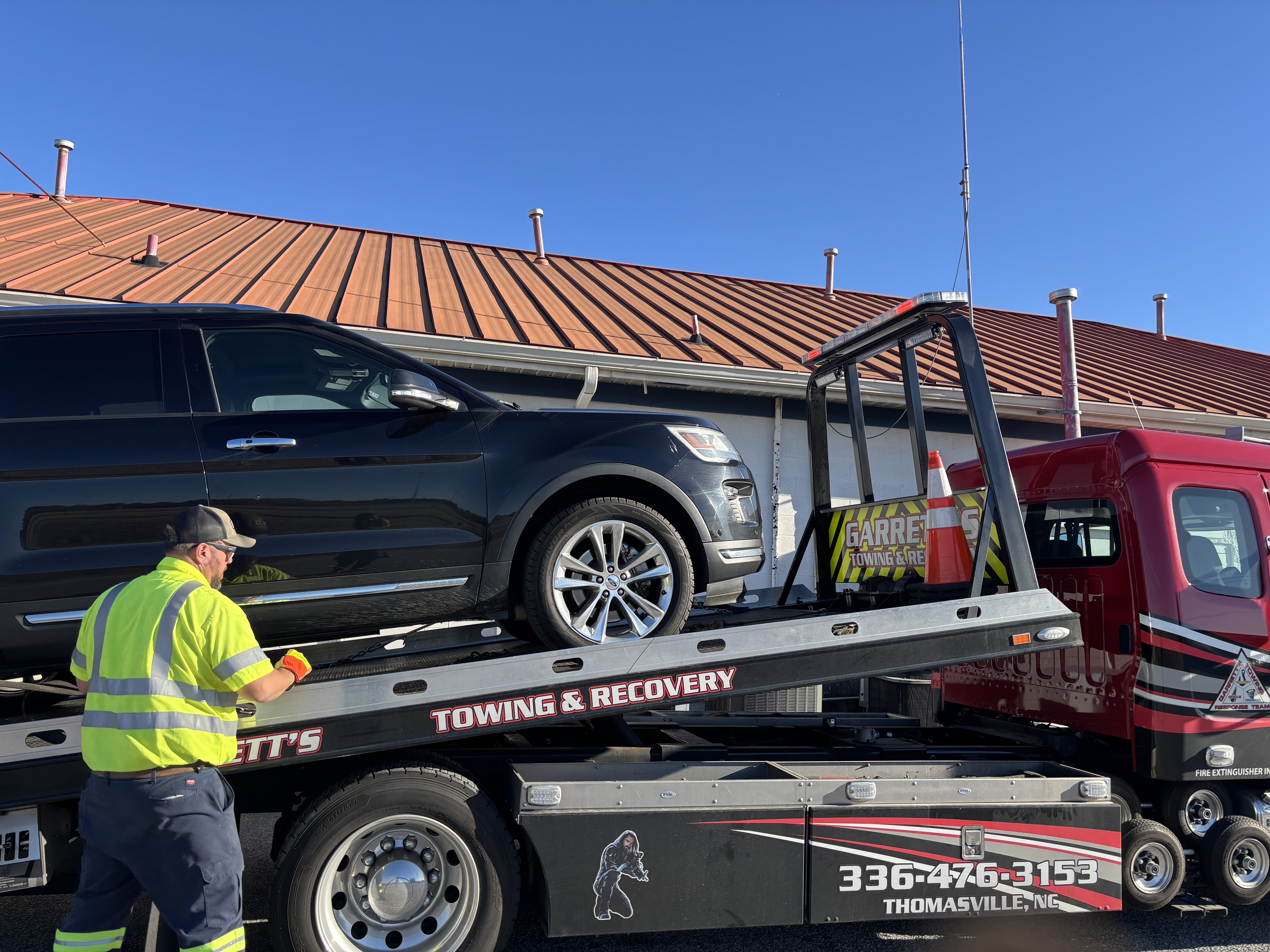
On the Friday before Christmas, my wife Lori was returning home on I-85 near High Point, North Carolina, when the dashboard lit up, and the car did something no one ever wants a car to do going 70 mph on the interstate. It went into “limp mode.”

If you’ve never experienced it, “limp mode” is exactly what it sounds like. The car doesn’t stop completely. It doesn’t break down and shut off on the side of the road. But it can no longer go as it once did. Power is reduced. Speed is limited. Everything is suddenly fragile.

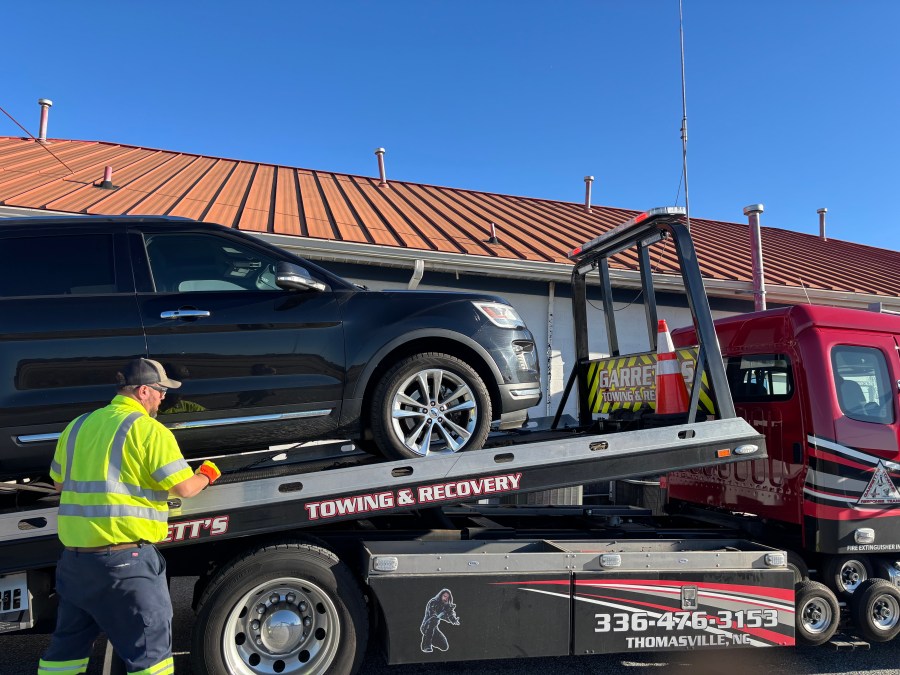
Lori stayed calm while panicking a little at the same time. However, she kept both hands steady on the wheel. She said to herself: “I am still here. I am going slow, but I am still moving.” She listened to what the car could still do, not what it could no longer do. And little by little, she guided it safely off the highway to a convenience store. A tow truck came. A mechanic took a look. A few days later, the problem was fixed. And now she’s back on the road.

As we step into a new year, Lori’s limp-mode adventure feels like a parable, as many of us are not roaring into January with full power. Honestly, we are limping, emotionally, spiritually, financially, physically. Some are carrying grief that didn’t resolve itself by December 31. Some are exhausted by a world that keeps demanding more while offering less. Some are doing the brave work of survival and calling it what it is.

The good news is that “limp mode” doesn’t mean we have failed or need a complete overhaul.

It only means that something in the system needs attention. It means slow is the new faithful.

The temptation in a new year is to pretend we’re stronger than we are. We make bold promises we don’t have the fuel to keep. We shame ourselves for not accelerating fast enough. However, wisdom teaches us something different. Remain calm, even if we are panicking a little. Pay attention to what we still have. Protect what’s still working. Get to a safe place.

There is hope, not because everything is fine on January 1, but because we are still moving.

Hope looks like pulling over instead of pushing harder. Hope looks like asking for help. Hope looks like trusting that repair and recovery are possible, even if we don’t yet know how or when.

The car didn’t heal itself on the highway. It needed a tow. It needed a mechanic. It needed time.

So, if you are limping into this year, the good news is that you are not broken beyond repair. As long as you are still moving, even slowly, there is a future for you in 2026. As long as you are paying attention, pulling over when needed, and letting others help carry what you cannot, there is grace for the road ahead.

And sometimes the most hopeful thing we can say at the start of a new year is this: “I’m still here.” “I am going slow, but I am still moving.”

And that is enough to begin.

Dignity Is Not Conditional: Why Exempting Hotels and Farms from Immigration Raids Reveals a Deeper Moral Crisis

ICE will now raid homes but not hotels. They’ll round up families from neighborhoods but not from farms. Why? Because when it comes to immigration, it’s never been about “law and order.” It’s always been about profit and power. Let’s not be fooled: when farms and hotels are exempted from immigration raids, it’s not mercy. It’s exploitation. It’s greed wearing the mask of compassion. It says, you can stay, but only if you pick our fruit, clean our toilets, and stay silent.

However, a human being’s worth is not measured by how fast they can move in the field or how neatly they can make a bed. People are not machines. They are not tools. They are not “the help.” They are children of God, fearfully and wonderfully made, not for our convenience, but for beloved community.

Changing the immigration policy to raid homes but not hotels exposes the hypocrisy at the heart of immigration enforcement in America. It protects the industries that benefit from cheap, undocumented labor while punishing the workers themselves. That’s not justice. That’s not democracy. That’s Pharaoh.

The same Bible many evangelicals use to justify this cruelty also says: “Do not mistreat or oppress a foreigner, for you were foreigners in Egypt” (Exodus 22:21, Exodus 23:9, Leviticus 19:33-34). And let’s not forget Jesus himself was born into a family that fled persecution, crossed borders without papers, and found no room at the inn.

We don’t need immigration policies that ask: “How much can you produce?” We need policies that ask: “How much can we protect?” “How much can we love?” “How much justice can we make real together?

When we only protect immigrants when they’re useful to us, we are saying that dignity is conditional, that love is earned, and that God’s image in someone can be erased by a lack of paperwork. That is not moral. That is not just. And it is the anithesis of the gospel.

We must fight for policies rooted in human rights, not human labor. We must love people not because of what they can do, but because of who they are. And we must remember that no one is illegal. No one is disposable. No one is worth more because they work harder. In God’s economy, every person matters. Every life counts. Every stranger is a neighbor. Every neighbor is kin.

Pentecostal Hope

Sermon preached at the Arkansas State Capitol, May 21, 2018, the day after Pentecost Sunday, following a march of the Poor People’s Campaign: A National Moral Call for Revival

For God so loved the world, that God came into the world to show us how to love our neighbors as ourselves—All of our neighbors, but especially our neighbors who have been pushed to the margins: the sick in need of healthcare; the immigrant in need of a home; the poor in need of a living wage; school children who just want to be safe; people of other faiths who hunger for respect; and people of color who thirst for their lives to matter.

Offended by the unsettling force of this inclusive love that proclaimed good news to the poor and liberation to the oppressed, that affirmed the rights of women and welcomed the children; afraid of this radical love that had the audacity to stand for liberty and justice for all, the privileged powers-that-be plotted against it, arrested it, and crucified it.

Three days later there were stories of a resurrection, a resurgence of this love. Because that’s the thing about this love. This love will not be defeated. No amount of obstruction or collusion can conquer this love. No amount of hush money can silence this love. There’s not enough nails in Jerusalem or bullets in Memphis or lies in Washington that can assassinate this love.

But the light of this love is such a threat to the systems that feed the darkness, the darkness will still try to find a way to overcome it.

Discrimination will be legalized under the guise of religious freedom. Voter suppression will be carried out under the guise of preventing voter fraud. Racist voter ID laws, gerrymandering, and sick religion will be used to disengage and disenfranchise minorities. People with different faiths and different ethnicities will be demonized and dehumanized by Caesar himself. More prisons will be built. New walls will be erected. Families will be separated.

However, yesterday, I went to church. I went to church, and I heard some good news from the second chapter of the book of Acts.

“When the day of Pentecost had come, they all came together in one place.”

“They all came together”—black, white and brown; Gay, Transgendered, and Straight; Democrat, Republican and Independent; Muslim, Jew and Christian.

“And there came a sound, like the rush of a violent wind, and it filled the entire house” where they had gathered. I believe the sound sounded something like: “FORWARD TOGETHER—NOT ONE STEP BACK!”

“Divided tongues, as of fire, appeared among them… All of them were filled with the Holy Spirit” of a love that was so inclusive, so radical, so audacious, that despite their different languages, when they spoke out together, they were heard with a miraculous clarity by all.

“But others sneered and said, ‘They are filled with new wine.’”

They’re a bunch of sore losers, entitled whiners.

“But Peter, standing with the eleven, raised his voice and addressed them: ‘Men of Judea and all who live [and work] in Jerusalem [and Little Rock and Washington], let this be known to you, and listen to what I say. Indeed, these are not drunk, as you suppose,

“No, this is what was spoken through the prophet Joel:
‘In the last days it will be, God declares,
that I will pour out my Spirit upon all flesh,
and your sons and your daughters shall proclaim prophetic justice,
and your young men shall see visions,
and your old men shall dream dreams.
Even upon [the poorest of the poor] both men and women,
in those days I will pour out my Spirit;
and they shall [proclaim good news to the poor and liberation to the oppressed]
And I will show portents in the heaven above
and signs on the earth…

[In other words, God is saying: “Through these people, through a new unsettling force of inclusive love, I am going to change the world!’]

“Awe came upon everyone, because many wonders and signs that were being done…”

The moral narrative changed. Walls came down. Chains were loosed. A blessed community was formed. Racism, sexism, Islamophobia, homophobia, and xenophobia were relinquished. Voting rights were restored. Fair living wages were paid. Unfair incarcerations ceased. Affordable housing, healthcare and education were available. All of creation was respected and protected. Clean water was consumed. Clean air was breathed.

And liberty and justice came. And it came for all. Not just to one race, one faith, and one nation. It came for every nation under heaven.

Truth came for all. Peace came for all. Mercy came for all. Love came for all.

Into the world’s darkness, light came for all, and darkness could not, cannot, and will not, ever overcome it!

Lynchburg Loves You, Unless…

     Before moving to Lynchburg last summer to begin my duties as the senior minister of First Christian Church (Disciples of Christ), like most people who move here, I went online to learn as much as I could about the city. The city’s website entitled “Lynchburg Loves You” made me smile as I had been planting a new church in the greater New Orleans area called “Just Love Your Neighbor.”
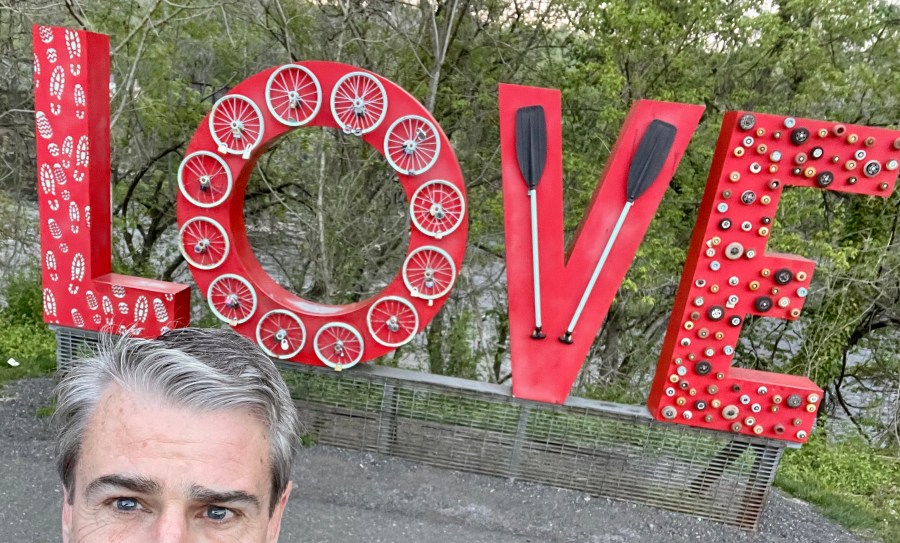
     While I was visiting the city prior to moving to meet with the church’s search team and a real estate agent, I went for a run on the beautiful Blackwater Creek Trail, and took a selfie by the big “LOVE” sign down by the river and another selfie by the mural at the trailhead which reads: “You Matter.”
     As a Christian pastor I could not wait to move to a city which really seemed to be all about what Jesus said was the greatest commandment: to love God and to love our neighbors.
     I cannot begin to tell you how incredibly disappointed I have been since moving here, not by my church, not by the wonderful organizations that we have here whose mission is to love our neighbors, like Park View Mission, Lynchburg Daily Bread, Miriam’s House, Bright Beginnings, the Free Clinic, HumanKind and Interfaith Mission, and many others, and not by the many citizens I have met here, but by some of the members of our city council.
     Last week, I talked with more than one pastor here in Lynchburg who expressed the same sentiment.
     One minister suggested that to avoid disappointing other newcomers to this beautiful city, perhaps the city council should think about changing the city’s website to: “Lynchburg Might Love You,” or “Lynchburg Loves You, If…” or “Lynchburg loves you, unless…unless you are queer, unless you have children who are queer, or unless you are the parent of any child who needs public education which this city council is going to continue to underfund.” “Lynchburg loves you, unless you do not have the same political beliefs that some of us do. Because not only will we not love you and welcome you ‘with open arms and invite you to be part of our story,’ we are going to threaten you, hurt you, and even scapegoat you.”
     However,  I am praying that instead of changing the website, we might change our hearts. And if our hearts do not change, then hopefully we we will change this city council come November.

Standing on Opposite Sides of a Cultural War


Self-professing Christians find themselves standing today on the opposite sides of our nation’s cultural war, and those on both sides claim to be standing on the side of Jesus. But standing on opposite sides, both cannot be right, can they? Yet, here we are, in a country that has not been more divided since the Civil War.

So, a good question that I believe all Christians must ask of themselves is this: “When we take a stand that divides us from others, that may alienate us from some of our friends, even from members of our family, how do we know if we are truly on the side of Jesus?”

This is an important question for us to ask, because throughout history, there have been Christians who, although they claimed to be on the side of Jesus, were actually standing on the opposite side of Jesus.

In the name of Jesus, Christians fought in the Crusades against Muslims. In the name of Jesus, Christians supported the genocide of Native Americans and the slavery of Africans, which literally led to a Civil War. In the name of Jesus, Christians supported the Jewish Holocaust, the subjugation of women and Jim Crow laws. With the wisdom of hindsight, Christians since have apologized for standing on the wrong side.

However, the good news is that there have always been Christians who have stood firm on the right side of history, even if it meant separating them from friends and family. I have always been proud to know that one of the founders of our denomination, Barton Stone, was willing to leave behind friends and family, moving from Kentucky to Illinois to free the slaves that he inherited.

So, if being on the wrong side, the opposite side of Jesus, is a real possibility, how do we know if we are on the right side? How do we know that we are standing with Jesus?

Could it be that it really is not that complicated? Is it possible that this failure to be on the wrong side is so much a part of human history, that Jesus addressed it in a very simple, direct, and uncomplicated way.

I give you a new commandment, that you love one another. Just as I have loved you, you also should love one another. By this everyone will know that you are my disciples, [in other words this is how you will know that you are standing on the right side with me] if you have love for one another” (John 13:34-35 NRSV).

Thus, when we are taking a stand for Jesus, and we become aware that we are upsetting, or alienating our family or friends, I believe it is imperative to ask: “Am I standing on the side love?” “Am I on the outs with my family and friends, because I am loving others like Jesus loved others, selflessly and sacrificially?  Am I in this fight, because I love my neighbors as myself—all of my neighbors?”

Or am I standing firm and alienating my friends and family because of something else? Is it pride? Is it power and privilege? If it is not about grace, is it about being superior to another, more holy, more righteous? If it is not about love, is it about fear? Is it about greed? A good question to always ask is: “Does my stand actually hurt my neighbors?”

In Acts, chapter 11, we read that when Barnabas arrived in Antioch to visit one of the first churches, the first thing that he witnessed was “grace.” In verse 22 we read:

…and they sent Barnabas to Antioch. When he came and saw the grace of God, he rejoiced, and he exhorted them all to remain faithful to the Lord with steadfast devotion… and it was in Antioch that the disciples were first called ‘Christians’.

When Barnabus saw Christians, he saw the grace of God.

What do people see when they see us?

Let us pray they always see grace. May they always see love. Even for those standing on the opposite side.

Religion Is Making the Pandemic Worse

This pandemic is terrifying, and religion is making it worse.

Science is being denied in the name of religion as pastors, politicians and parishioners are ignorantly insisting that people should still gather for worship putting all of us at risk. But what I believe is even worse than that is the insidious theology that is being expressed by people of faith everywhere.

“God is in control” they post. “God doesn’t make mistakes” they say. “God is trying to teach us something” they sermonize.

Really? God, the creator and source of love, Love Itself, wants the most vulnerable among us to die alone, sick, afraid and unable to breathe?

I believe religion is making this pandemic even more terrifying, because there are too many people in this world who are following the wrong god.

Too many Christians have created their own version of God, their own Lord, their own King, who sits up on some heavenly throne pushing buttons, pulling levers, controlling, dominating, dictating.

A tornado strikes. They say, “God is trying to get our attention.”

Cancer happens. They say, “God has God’s reasons.”

A loved one dies. They say, “God needed another angel.”

A pandemic rages. They say “God must be angry.”

“God is in control. God does not make mistakes. God knows what God is doing.” They think they are making things better by saying these things, but they are only making things worse.

This is why I believe this week that we call “Holy Week” which begins this weekend is so important. The events we remember this week remind us what kind of God, what kind of King, we serve. Holy Week reminds us, contrary to what some of our Christian friends say, God does not rule like the rulers of this world. God does not reign from some heavenly throne in some blissful castle in the sky, but God rules from an old rugged cross, right here on earth, between broken people like you and me.

The rulers of this world rule from places of self-interest and self-preservation. They rule from places of greed and pride.

However, this Holy week teaches us that Christ is a King who rules from a polar-opposite place—a place of self-expending, self-dying, sacrificial, suffering love.

Christ the King does not rule with an iron fist; Christ the King serves with outstretched arms. Christ the King does not cause human suffering from some far away heavenly realm; Christ the King is right here in our realm sharing in our suffering.

Theologian Arthur McGill put it this way:

God’s power is not a power that takes, but is a power that gives.

God’s power is not a power that rules, but is a power that serves.

God’s power is not a power that imposes, but is a power that loves.

God’s power is not a power that dominates, but a power that dies.

This is why it is no accident that Jesus undertakes his mission to the poor and to the weak and not to the rich and the strong; to the dying and not to those full of life. This is why Jesus was so concerned about those marginalized and demonized by organized religion and the power-that-be. McGill continues:

For with these vessels of need God most decisively vindicates the divine power: a power of service whereby the poor are fed, the sinful are forgiven, the weak are strengthened, and the dying are made alive.

God did not cause this pandemic. The day the first person was infected was a day of anguish for God.

God did not create the layoff. The day you were told that your job was ending, God stayed up with you and worried with you all night long.

And God did not take our loved one. When they died, something inside of God died too. For self-givers are never takers.

A more accurate and theologically sound way of describing what happened to our loved ones when they breathed their last breath is that God came, and God, wholly, completely and eternally, gave all of God’ self to them.

So when this pandemic gets us down, we need to remember the great truth of Holy Week—Christ is King. And this King is reigning, suffering, sacrificing and giving all that God has to give from the cross. God’s throne is not made of silver and gold. God’s throne is made of wood and nails. God wears not a crown of jewels, but God wears a crown of thorns.

And when more people begin to understand this, that God did not bleed for only a few hours during one Holy Week, but continues, even today, to bleed for us, to pour God’s self out for us, perhaps religion will cease making this pandemic worse.

It will be what gets us through it. And then, together with our Easter God, we will make something very good come out of it all.