Memorial Day and the Gospel

Memorial Day

We Americans are often guilty of trivializing things that are important. Consequently, survivors of loved ones who gave their lives for their country struggle every Memorial Day Weekend, and rightly so. For it can sometimes be difficult to tell if Americans truly know what Memorial Day is about.

Is it about the end of the school year and the beginning of summer? Is it about going to the beach, the river, or the lake? Is it about play golf, having a cookout, or opening the backyard swimming pool? Is it about red-tag sales at the mall or some other self-centered activity?

No, it is about sacrifice. It is about self-denying, self-expending love. It is about men and women giving all that they had to give, for they so loved their country more than self.

Thus, Memorial Day is about honoring those who died for us, and praying for those they left behind. It is also a time to recommit ourselves to those who continue to selflessly fight the evil in our world, evil that seeks to blow up innocent children at a concert without a second thought, and do such evil in the name of God.

May God forgive us for forgetting what this day is all about, or worse, for watering it down.

I am afraid that we have done the same thing to the Christian faith. Consequently, followers of Jesus everywhere struggle every day, and rightly so. For it can sometimes be difficult to tell if Americans truly know what the gospel is about.

Is it about judging and condemning others who believe, live and love differently? Is it about possessing an attitude of arrogance or superiority? Is it about having the right to discriminate and treat others as second class citizens? Is it about banning people of other faiths from our communities? Is it about going to heaven one day or some other self-absorbed venture?

No, it is about sacrifice. It is about self-denying, self-expending love. It is about a God giving all that God has to give, for God so loved this world more than God’s self.

Thus, faith is about honoring a God who died for all, and we do that by loving all of God’s children. It is about recommitting ourselves daily to continue to selflessly fight the evil in our world, evil that seeks to demean, dehumanize and destroy any of God’s children without a second thought, and do such evil in the name of God.

Monday is Memorial Day. May we remember what it is truly about.

And everyday is the day the Lord has made. May we remember how God calls us to live and who God calls us to love, everyday.
Happy Mother’s Day! Without You, I Wouldn’t Be Here

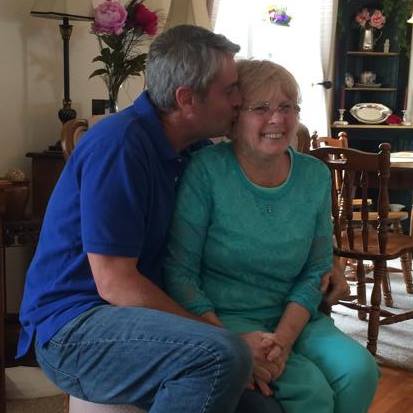
Kissing Mom

Although I love my mother dearly and wished I could be with her this weekend, as a pastor I have never made a big deal out of Mother’s Day during the worship service. I find it silly to give flowers to the oldest mother in the church based solely on the fact that they have outlived the other mothers who are just as cherished, some possibly even more so. And I sometimes find it disturbing to give a gift to the youngest mother who perhaps should have waited until she got her driver’s license before starting a family. And let’s be truthful. There are some people who should not have children, while there are others who would make wonderful mothers, but are prevented from becoming mothers by the unfairness of this fragmented world.

However, there is one way that I believe Mother’s Day can inform and help us this week, as our mothers remind us all of a truth that we too easily forget.

Carson and Sara once made a video slide show for Lori on Mother’s Day. One of the first captions they put in the video summed up the profound essence of what this day means: “Happy Mother’s Day. Without you, we would not be here.”

None of us could do anything, would have anything, or would be anything, and that includes being alive, without mom. And the same can be said about our relationship with God. Without our Heavenly Mother, we can do nothing. We would have nothing. And we would be nothing.

We must never forget that any good thing that as been accomplished has come about as gifts of God’s grace. God is the source of creation. God is the genesis of all goodness. We know what St. Augustine knew long ago; apart from God, no good can come.

Jesus said: “I am the vine. You are the branches. Those who abide in me and I in them, bear much fruit, because apart from me you can do nothing.”

This is both bad news and good. It is bad news for those who seek to improve the world on their own. The Psalmist knew this: “Unless the Lord builds the house, those who build it labor in vain.” But, it is good news for those who are connected to the love of God through Christ. With the power of God flowing through them like sap flowing through a vine, good fruits will develop.

So thank you, Mom, for teaching me this valuable lesson. Without you, I would not be writing these words. And without a connection to a Divine Mother, these words, like life itself, would have no meaning.

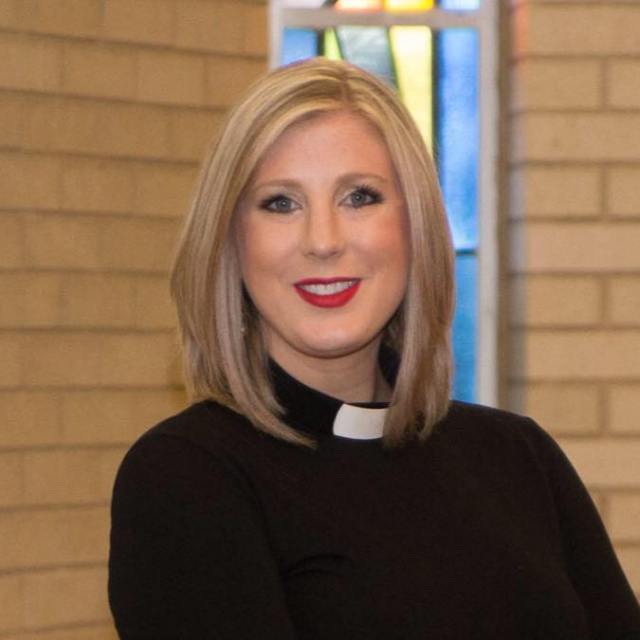
Embracing the Grace, Authenticity and Mission of Jesus: Thank You Rev. Speidel

Shannon

There is widespread agreement that if a church is to survive this century, then it must do what most churches resist doing. It must change. To avoid joining the thousands of churches that will die by the end of this century, I believe there are three major changes that many churches need to make. 

  1. Churches must wholeheartedly embrace the grace of Jesus.

Jesus prevented religious folks from throwing rocks as sinners, and so should we. Of all of the human organizations on this fragmented planet, the church should be a place where all people are welcomed to join a community of grace, love and forgiveness. Without fear of being judged, bullied, or ridiculed, all people should feel welcomed to come as they are and honestly and openly confess their sinfulness and brokenness, and then receive grace. Then, they should be encouraged to share that same grace with others. I believe all churches should be open and affirming, because a church that follows Jesus has no business being closed and condemning.

  1. Churches must wholeheartedly embrace the authenticity of Jesus.

Some church people have the reputation of being like the people Jesus criticized the most: hypocrites. Therefore, we must stop claiming to follow Jesus on Sunday morning while ignoring everything Jesus taught the rest of the week. This means that blessing the poor, standing up for the powerless, and fighting for those who hunger and thirst for justice should always be our priority. It means loving our neighbors as ourselves, selflessly and sacrificially, no matter the cost.

  1. Churches must wholeheartedly embrace the mission of Jesus.

Jesus never confined his ministry to the Temple or a synagogue. Church people must be willing to move out of the sanctuary into a hurting world. Instead of inviting people to come to church on Sunday, we should be asking people to be the Church everyday by doing the things Jesus did such as: eating and drinking with outsiders, feeding the hungry, welcoming the foreigner, becoming a friend to the oppressed, and being a healing presence for all who need wholeness.

The exceptional leadership that Rev. Shannon Speidel has given to our church as our Associate Minister for the past two years is exactly what we need if we are to continue to be a viable church, as she wholeheartedly embraces the grace, authenticity, and mission of Jesus. I am grateful for the way that her inclusive love for all people, her unwavering passion for social justice, and her bold desire to be the hands and feet of Christ out in the world has challenged us to be the church God is calling us to be.

I am also thankful that she will continue to be in a position to bless Oklahoma as she begins her ministry with the Oklahoma Conference of Churches. Churches across Oklahoma are fortunate to have a leader like Rev. Speidel who possesses the gifts, vision, passion and faithfulness that will help them not only survive, but thrive throughout the 21st century.

Easter People

Welcome Table

The Easter Sunday timing of the Enid Welcome Table’s debut could not have been more appropriate.

The front doors of the church building swung open wide, as guests, some homeless, some extremely impoverished, all hungry, were greeted with smiles and words of welcome. As they walked into the fellowship hall, a host guided them to a table that was beautifully decorated with an Easter-themed table cloth and a spring flower bouquet centerpiece. Soft jazz  played from the sound system adding to the welcoming ambiance.

After the host fulfilled the guests’ drink orders, a waiter approached the table to read the menu that was displayed on the TV monitors in the front of the room. Guests had a choice between pork tenderloin, peel-and-eat Cajun jumbo shrimp, and baked chicken. Sides included sweet potatoes, roasted potatoes, a medley of roasted vegetables, macaroni and cheese, and deviled eggs. Desserts included lemon cake, cherry pie, apple pie and chocolate cupcakes.

The attentive wait staff promptly served the guests with generous portions and while keeping their drink glasses full.

Volunteers who had come to serve, some members of our church, some members of other churches, some members of no church, joined the guests at the tables to share dinner and conversation.

Upon experiencing the extravagant welcome, a genuine welcome devoid of any agenda, strings, or ulterior motives, one of the guests said to a volunteer: “You have made me feel human again.”

“You have made me feel human again.”

Let that sink in.

It was Easter Sunday, and someone said that she felt alive again. It was Easter Sunday, and someone said that she experienced new life. It was Easter Sunday, and someone said that they felt resurrected.

Christians often like to call themselves “Easter People.” However, I am afraid that what that means to many is that they, like Christ, will one day be resurrected to live eternally in heaven. I am afraid the reason some church pews are so full on Easter Sunday is simply because “Easter People” want to remember Jesus’ resurrection and look forward to their own.

However, what if being “Easter People” means something more?

What if the resurrection is not just a gift to remember or a gift to look forward to, but a gift to be experienced now? What if resurrection is a gift to be shared with others today? What if being “Easter People” means that we are people who offer the gift of resurrection to those whose lives have been diminished by the sin and evil in our world? What if being “Easter People means we are called to resurrect those who have been de-humanized by poverty, racism, classism, sexism, homophobia, or xenophobia?

What if being “Easter People” means that we are called to do much more than sit on a pew on Easter to thank God for the promise of God’s kingdom that is coming after the resurrection? What if being “Easter People” means that we are called to get off of those pews to bring the promise of God’s Kingdom that is coming now to those who need resurrection today? This Easter Sunday at Central Christian Church, that is exactly what being “Easter People” meant.

Sunset or Sunrise

Sunset

This picture appeared recently in the Enid News and Eagle. The caption simply read: “Sunset.” However, at first glance, it is difficult to tell if it is a sunset or a sunrise.

As attendance, giving, and baptisms continue to decrease in North American churches, many are asking: “Is the sun setting or rising on the church?”

After posting the picture on facebook and posing the question, “Is it a sunset or a sunrise?” Rev. Dean Phelps, a facebook friend and long-time minister, wisely commented: “It all depends on when we wake up.”

Rev. Phelps was prophetically suggesting that if the church wakes up early, it could be a sunrise. However, if the church wakes up too late, it could be a sunset.

I believe it is a sunset if the church continues to slumber under the covers of the culture. I have called this embracing an “alternative gospel” or a “fake news Jesus.” It is a protective, safe, defensive religion that fears the other, and thus judges, excludes, and condemns the other. It is miserly with mercy, stingy with love, and tight-fisted with grace.

However, I believe it is a sunrise if the church awakes to pull back the covers of the culture to embrace the authentic gospel and good news of Jesus. We must awaken to discover our purpose to be a community of radical inclusion and extravagant grace. We must awaken to answer our call to love others as Christ loves us, unconditionally, unreservedly and fearlessly.

I believe it is a sunset if the church continues to dream of the glory days. Sadly, the dreams of many churches are either stuck some in distant past recalling fuller pews and bigger programs, or they are stuck in some heavenly future, fixed on pearly gates and streets of gold.

However, I believe it is a sunrise if the church awakens with eyes wide-open to see its mission in the here and now. We must awaken with our eyes focused on the present suffering of the entire creation, and then we must selflessly and sacrificially use our gifts, time and energy to be a movement for wholeness, healing and peace.

I believe it is a sunset if the church continues to hit the snooze button to rest in their comfort zones. Many churches have no desire to get up and go out, leaving their cozy environments behind. There is no interest to get outside of the security blanket of the sanctuary to do the hard work of feeding the hungry, clothing the naked, defending the marginalized, and breaking the bonds of injustice.

However, I believe it is a sunrise if the church will rise up from its comfort zone to go out into what can be a cold and dark world. We must awaken to be the embodiment of Christ in this world even if it means there is a cross involved, even if it means suffering for the sake of God’s creation.

Is it a sunset or a sunrise?

It all depends on when we wake up.

Enid Welcome Table

Enid Welcome

In our combined forty years of ministry, my colleague Rev. Shannon Speidel and I have had many church experiences that we would deem “holy.”

However, they all pale in comparison to what we have experienced during the last twelve months in the visioning and planning of the Enid Welcome Table.

During our preliminary conversations regarding moving one of our worship services to a different time, it was brought to our attention that the food insecure population of Enid was served a meal (with no strings attached) every day of the week with the exception of Sunday. We were also told that many who rely on the gracious ministry of a weekday community soup kitchen called Our Daily Bread are famished on Monday mornings. They report not having had anything to eat since Saturday, when they were served a meal by the wonderful feeding ministry of First Presbyterian Church of Enid.

A task force was created by the worship committee to discuss moving one of our services. Task force members have said that they “felt the spirit of God moving in the room” as they discussed the possibility of a worship service occurring around tables after a meal was shared with some of the most impoverished people in our community.

The Enid Welcome Table planning committee was soon developed. It includes members of our church, members of other Enid churches, and people who are not members of any church. They are people who are committed to providing a “restaurant quality” meal each Sunday to anyone in need.  They believe the best way to accomplish this is to recruit 52 organizations and businesses in Enid, asking them to prepare and serve one high quality meal a year.

The idea of inviting the entire community to be a part of the Enid Welcome Table is one the most exciting aspects of this ministry. My congregation has heard me talk at great lengths regarding the difficulty of doing “evangelism in the 21st century.” I say: “If you don’t believe it’s difficult, try inviting someone to who doesn’t attend church to come to church with you to listen to a sermon!”

Then I add, “On the other hand, I think you will get a quite different response if you try inviting someone who doesn’t attend church to join you in doing something that Jesus would obviously do, like feeding the hungry.”

As I often say, the reason people are not in church today is NOT because they have given up on Jesus. The reason people are not in church today IS because they do not see Jesus in the church.

We are excited about the Enid Welcome Table; because instead of inviting people “to come to church,” we will be inviting people “to be the church.” Instead of inviting people to listen to stories about Jesus that took place 2000 years ago, we will be inviting people to be the selfless hands and feet of Jesus in this world today. Instead of inviting people to come to a service of worship, we will be inviting people to go and worship with their service.

And all will be invited to serve. Your religion (or lack of religion), your sexuality, your race, your mental or physical ability, your political stance – it doesn’t matter! All means all.

I, along with many other church scholars, are convinced that this is the way to revive, revitalize, and restore the church in the 21st century. I have witnessed first-hand the miraculous transformation that can happen by embracing a missional model in my previous congregation.

We also believe it is very important to feed the hungry with “no strings attached.” We believe there are too many Christian organizations that offer to help people if.

“Love your neighbor, if they look like you.” “Welcome the stranger, if they want to be Christian.” “Feed the hungry, if they pray with you.”

No, Jesus never said “if.”

Jesus said: “Love your neighbors,” period. “Welcome the stranger,” period. And “feed the hungry,” period.

We do not believe Jesus ever put stipulations on grace. That is why it is called grace.

Therefore, the mission of the Enid Welcome Table is to graciously feed people with absolutely no strings attached. The worship service that will be offered after the meal will always be optional. People of other faiths and people with no faith are welcome. No one will ever be judged, disrespected or preached to. All will be loved, accepted, and fed.

We believe the Enid Welcome Table has the potential to dramatically transform our community to be an example to the world of miracles that can happen when people truly become the gracious hands and feet of Christ in our world.

_____________________________

If you, your business, or your organization would like to serve a meal to the food insecure of Enid, Oklahoma, please contact me at jarrettb@centralenid.org or Rev. Shannon Speidel at shannons@centralenid.org. Donations are also appreciated.


Beloved Dust to Dust

Ash_Wednesday

As a little boy, when I would misbehave (notice I said “when” and not “if”), my mother would often call me “a piece of dirt.” Well, she actually called me “a sod.”  For example: “Whenever I said an ugly word she would say, “Why you little sod!  I’ve got a good mind to wash your mouth out with a bar of soap!”

And she was not always angry or even disappointed me when she would call me “dirt.” When (again “when” and not “if”) I played practical jokes on Mom, like that time I drove home from college my freshman year for Thanksgiving and greeted Mama at the front door with a big, fat, smoking cigar in my mouth: “Why you little sod!”

But here’s the thing: Mama always graciously let me know that I was her beloved sod.

What I never thought about though was how accurate Mama really was— physiologically and theologically. In the first creation story of Genesis we read that God formed us “from the dust of the ground and breathed into [our] nostrils the breath of life” (Genesis 2:7). And in the second creation story we read that we have life “until [we] return to the ground, for out of it [we] were taken; [we] are dust, and to dust, [we] shall return” (Genesis 3:19). The Psalmist also declares that when our breath is taken away we die and return to dust (Psalm 104:29).

Lent is a time of reminding all of us that we are just a bunch of little sods. It is a time of reminding us of our mortality. It is also a time of reminding us that, because of our earthiness, none of us are above reproach. The Apostle Paul asserts that because of our lowliness, “all have sinned and fall short of the glory of God” (Romans 3:23).

I often hear people say, “Love the sinner and hate the sin.” I have always had problems with this, for it implies that the sinner is somehow separated from the sin. Sin is understood as specific action that can be avoided instead of an integral part of our earthly DNA.

The Jewish people once believed that sin could be avoided if 613 laws were obeyed. Not only is that a formidable task for any human, I believe Jesus would say that even if one obeyed all 613 laws, they would not be any less of a sinner than the one who broke every one.

I believe this is why Jesus said that those who have lust in their heart are just as sinful as those who commit adultery (Matthew 5:27-30). This is also why the Bible-believing, religious people of Jesus’ day dropped their stones before the woman “caught in the act of adultery” when Jesus said, “Let those without sin cast the first stone” (John 8:7).

The good news is, as the Apostle Paul wrote to the church at Rome, though our sin was serious, in Christ, “grace abounded.” We could not do right by God, so God, through the love revealed in Christ, did right by us.

And one day, when we our lives come to an end and our bodies return to this earth as dust, we have the hope in Christ that we are God’s beloved dust, and God’s grace will continue to abound.

This Wednesday is Ash Wednesday. It is the first day of Lent: the day Christians mark themselves with ashes, or dust, reminding ourselves of our mortality and our sinfulness. We remember that we are dust, but we are God’s beloved dust. We are sods, but we are God’s beloved sods.

Ash Wednesday is important, for it is only until we understand that we are all sods—imperfect, limited sinners saved by grace—that we can begin to live as God has created us to live, by loving others as God loves us: with abundant mercy and boundless grace; forgiving, accepting and including others as God forgives, accepts and includes us.

From Meddling to Preaching


wounded childrenI was still in my twenties pastoring my second church in Winston-Salem, North Carolina, when a church member met with me to set me straight:

“Preacher, you need to know that whenever you start preaching against cigarettes, you’ve stopped preaching, and you’ve started meddling.”

What he was saying is that he could sometimes tolerate me preaching parts of the gospel that made him a little uncomfortable. On many things, he could quietly agree to disagree. However, he would have big problems with me if I started preaching things that went against the very heart of who he was: a proud smoker from the city that RJ Reynolds built.

I respected where he was coming from. And although I did not believe the man should be smoking cigarettes, I never preached a sermon in that city against tobacco. In other words, in his eyes I never went from “preaching to meddling.”

Because I believe in the separation of Church and State, I have adopted a similar understanding when it comes to preaching and politics.

What I am saying is that I can sometimes tolerate politicians making policies that may make me a little uncomfortable. That’s just the nature politics. On many things, I can quietly agree to disagree.

But sometimes politicians stop politicking and start meddling. Sometimes the State enacts something that goes against the very heart of who I am: a pastor who has been called to preach the gospel that Jesus proclaimed.

And when they start meddling, we need to start preaching.

_______________________________

For further reading regarding preaching and politics, please see this article by Rev. Dr. Molly Marshall, my seminary theology professor who continues to inspire me today: What Does Preaching Look Like after the Inauguration


Election Day Prayer

vote

God of Love and Grace,

We thank you for the freedom and right to vote, to elect people who will work on our behalf and on the behalf of our communities, to lead our districts, states and nation. May we always be reminded of the holy responsibility that comes with this privilege.

We thank you for your love for the people of all nations, languages and faiths and for the way this boundless love was revealed through the words and works of Jesus. May this love always inform our principles, our actions, and our vote. In this and in every election, may we vote for people and state questions that will better our communities and our world reflecting the values and the way of love Jesus taught his disciples.

Help us create communities that seek to build your kingdom on this earth: communities that will protect the poor, stand up for rights of the vulnerable, support fair wages, care for the sick, provide quality and equitable education for all children, advocate for those with exceptional needs, and listen to everyone’s voice.

As Christians, may we never be ashamed of the gospel. May we never shy away from the good news that continues to inspire our nation’s pledge of liberty and justice for all.

We pray for a nation that is deeply divided. Give us the grace to love all of our neighbors as ourselves. Help us to respectfully listen in love and to learn from even those with whom we most disagree. Help us to come together with mutual respect for the common good of all and be the people you have created us to be: acting justly, loving mercy, and walking humbly. May every decision that affects our neighbors come from love, mercy, and justice rather than from pride, arrogance or fear.

O God, continue to guide us to love this world as you love it. Unite us to pray together for places suffering from violence, that they may know peace. Help us to pray for communities struggling with inequality, unrest, and fear, that the may know hope.

Give us the strength to do all that we can do, to give all that we can give, even our very lives, to make this nation and world a better place. Help us to commit all that we are to rebuilding the ruins, repairing the breach, restoring the streets, and raising the foundation for generations to come.

Amen.

9-11 Reflections

new-york-77639_640.jpgAround 8:50 am, on September 11, 2001, I arrived with members of my church at the town’s community center to distribute bags of food to people who live with food-insecurity. This was something that our church did every month.

About 40 people had gathered in the lobby of the community center that morning to receive one small grocery bag each containing five non-perishable food items. All wishing to receive a bag were asked to sign their name in a notebook that was passed around to each person.

After everyone signed their name, I had the painstaking task of reading and checking off each name as they were handed their bag of food. The names were often very difficult to read. Sometimes it was the handwriting that was challenging, but oftentimes it was the names themselves, as they obviously denoted a variety of ethnicities.

As the notebook was being passed around the room that day, someone turned on the television that was mounted on the wall. The Today Show hosted by Matt Lauer and Katie Couric was reporting that a small plane or a helicopter had crashed into the North Tower of the World Trade Center. The room hushed as we watched the life-changing news unfold together. As Matt Lauer and Katie Couric were beginning to speculate that it was a large passenger plane, another plane flew into the South Tower. It then became obvious that we were being attacked.

As we watched together in stunned silence, someone handed me the notebook that everyone had finished signing. One by one, I somberly read the names, checking them off, as they received their small grocery bag. Strangely, maybe miraculously, the names were much easier to read on that day. Handwriting was more legible. Foreign names sounded familiar and even familial. As I read, I did not once secretly roll my eyes, wince or make any judgments.

On that day they were not African-Americans, Hispanic-Americans, Asian-Americans, Native-Americans, middle-class Americans or poor Americans. They were not “entitled,” “illegal,” and they were certainly not “aliens,” “trailer-trash” or “rag-heads.” They were neither rich nor poor, Muslim nor Christian, black nor white, educated nor illiterate, Democrat nor Republican, deserving nor underserving, gay nor straight, him nor her nor them. They were only Americans. They were my family. They were my sisters and my brothers. They were we.

On that day, I believe we were miraculously united by something that our divided country desperately needs today. On that day, it was not fear of another attack that made us one. It was not hate for the foreigner that unified us. It was love. It was the fulfillment of what Jesus called the greatest of all of the great commandments. On that day, if just for a few moments, we truly loved our neighbors as ourselves.

May God bless America and help us to love yet again.