Back to School Prayer

Inside of a classroom with back to school on the chalkboard

Thank you, O God, for public school teachers and administrators.

Thank you for their selflessness, sacrifice and passion. Although they could have pursued more lucrative careers, their love for all children persuaded them to choose this sacred vocation. Therefore, please show us ways that the church can support them. Help us to join you in enveloping them with your grace and granting them the patience and the determination that is required to prepare all children for a future full of promise and hope.

Thank you, O God for children.

Thank you for the many lessons that they teach us: lessons of fun and play, lessons open-mindedness, a willingness to learn new ideas and to dream new dreams. Please help us to give them what they need to be the best students they can be. If they are hungry, help us to feed them. If they are struggling, help us to encourage them. If they are hurting, help us to comfort them. If they feel unloved, help us to love them, and through our love, may they come to know your love for them.

And forgive us, O Lord.

Forgive us for the church’s complacency as public school education seems to be less a priority in many states. Forgive our apathy as teachers continue to be among the lowest paid professionals in our state’s workforce. Forgive our silence as it becomes more difficult for poor children to get a quality, equitable education.

Forgive us, O God, and then stir us.

Move us. Mobilize us. Revive us again to be the Church, the body of Christ in our world. Help us to boldly be the embodiment of the Christ who welcomed and blessed the children, even while others sought to hinder him. Help us to be a blessing to all children without prejudice and without reservations. Reveal to us tangible ways we can support our public schools again, generously and persistently, until the day comes when all children are seen as you see them: your beloved children, created in your image.

Amen.

Response to the Orlando Massacre

more love less hate

How do we begin to respond to this act of hate and terrorism against those attending the Pulse Night Club in Orlando Florida?

First, perhaps we might respond in the same way our God responds. I believe we respond by being prayerfully present, not only suffering with those who are injured and weeping with those who have lost loved ones, but also grieving with the larger LGBTQ and Muslim communities who are hurting today in ways few of us can imagine. We respond by standing in mournful solidarity with all people who are hated for their faith, race, gender, economic status, or sexual orientation.

Secondly, I believe we respond by speaking out against the demonic evil that is intensifying in our world today in the form of racism, sexism, xenophobia, homophobia and all kinds of hateful bigotry.

May we remember the words of Rev. Dr. Martin Luther King Jr. who once said: “In the end, we will remember not the words of our enemies, but the silence of our friends.” These words were spoken during another time in our history when the same demonic evil was rising, and a time, according to Dr. King, when many Christians, including pastors, chose to be “cautious” instead of “courageous” by remaining silently “behind the anesthetizing security of stained glass windows.”

It is way past time for Christians who believe in love, believe that God is love, believe that Christ exemplified and commanded love, especially towards victims of hate and prejudice— it is past time for Christians who believe that we were created for such love to stand up and speak out for this love.

Name injustice and evil when you see it. Speak truth to power when it’s needed. Show great love even when it’s risky.

It is time to boldly and sacrificially bear witness to a grace that is so radical and a love that is so socially unacceptable that, according to Jesus, it will cause people, especially religious people, perhaps people in our own churches and families, perhaps our customers and clients, our friends and neighbors, to revile us, and persecute us and utter all kinds of evil against us falsely on his account.

It is time for Christians to no longer be ashamed of the gospel of the Christ who loves all and died for all and conquered evil for all.

Lastly, I believe we can respond to this tragedy, by doing what we can, where we can, when we can, in this present climate of hate to oppose any legislation or any political candidate that will not promise to defend and fight for the protection, the liberty and the justice for all people.

And all means all.

And may we fight this good fight fervently, yet kindly; fiercely, yet peaceably- with the certain hope knowing that our Bible, our faith, and even history itself, teaches us that evil will not prevail, hate will not have the final word, and the darkness will not overcome; because in the end, it is love that wins.

Love always wins.

Farewell Farmville

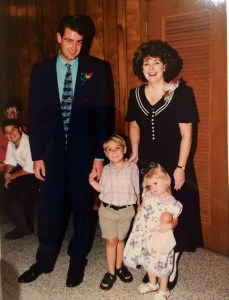
family 1999
Reception at First Baptist Church, August 1999

When we moved to Farmville in 1999, you taught us the meaning hospitality.

When Lori was hospitalized, you taught us the meaning of empathy.

When Hurricane Floyd flooded our home, you taught us the meaning of kindness.

When terrorists attacked on 9-11, you taught us the meaning of community.

When Lori’s father passed away, you taught us the meaning of compassion.

When I continued my education, you taught us the meaning of generosity.

When we announced our move to Louisiana, you taught us the meaning of love.

When we lived a thousand miles away, you taught us the meaning of friendship.

When we moved back to Farmville, you taught us the meaning of home.

When we faced the stress of a recession, you taught us the meaning of peace.

When we changed denominations, you taught us the meaning of grace.

When we studied the words of Jesus together, you taught us the meaning of discipleship.

When our church grew, you taught us the meaning of inclusion.

When we celebrated weddings, baptisms and child dedications, you taught us the meaning of joy.

When we eulogized our loved ones, you taught us the meaning of hope.

When needs arose in the community, the region and the world, you taught us the meaning of missions.

When Carson and Sara graduated from high school, you taught us the meaning of family.

When we announced our move to Oklahoma, you taught us the meaning of gratitude.

And as we celebrate the holidays together for the last time, you continue to teach us the meaning of Emmanuel, God with us.

Thus, when we say farewell to Farmville in 2016, we know we will fare well.

You taught us that.


What Is God Calling Me to Give?

pledgecardThe disturbing data is in. Church membership in America is declining rapidly. I read a recent poll that revealed that although 76% of Americans claim to be Christian, only 17% claim to be a member of a local church. Ten years ago, 38% of Americans identified themselves as church members. Someone recently posted the following question on Facebook and Twitter: “Why are you opposed to church membership?” One of the most popular answers was: “I don’t want to join a social club.”

I believe that one of the greatest threats to the church is the heretical understanding that the church nothing more than a local social club or social-service organization. And it is not non-members who are propagating such a false understanding of the church, but church members themselves.

We act as if the church is about meeting our needs, instead of rearranging our needs. We come to church asking God to fulfill our desires, instead of transforming our desires. We view the church as a place we go to take care of the self, instead of viewing the church as a way of life to die to self. The question that we most often ask in the church is: “What do we want?”; instead of asking: “What does God want?”

Another way that we act like social club instead of the body of Christ in the world is the way give to the church. In the past, we have looked at the church’s budgetary needs, and then have asked the question, “What are my church’s needs?” If the church’s budget is increases, we increase our pledge. If the church’s budget remains flat, so does our pledge. If we did not give anything the previous year, and the church met its budget, we figure the church does not need us to pledge anything for the coming year.

However, since the church is not a social organization designed to meet selfish needs but is the living body of Christ, the proper question to ask is not “What do I want to give” or even “What does my church need me to give?” The proper question is: “What is God calling me to give?”

I believe, if we truly asked this question, our finances would never be in a state of deficit, and our membership would never be in a state of decline.

Get a Life: Six Things the Church Must Get to Live

get a lifeThe Christian faith is essentially about new life. Christ is about renewing, reviving and resurrecting life.

This is why it is so troubling that many churches are dying today, and why it is even more troubling that many more churches, in spite of their buildings, budget and attendance, as far as the world is concerned, are essentially dead.

Here are six things that I believe the church must get in order to get a life:

Get Together

The Christian faith is about coming together as a community. The first thing Jesus did to give birth to the Kingdom was to call together a community of disciples to share the good news of God’s love with others. The Christian faith is personal, but Jesus never intended it to be private. Faith should never be tucked away deep within the soul of an individual. Faith should always be worn in public, out on the sleeves of a community.

Get Down

The Christian faith is about selfless, sacrificial service. It is about God who came down through Jesus, who was laid down in a manger, who crouched down to forgive sinners, who stooped down to heal the sick, who knelt down to welcome children, who bowed down to wash another’s feet, and who bent down to take up his cross. For many, church is about getting uplifted. We need to make church about getting down.

Get Real

The Christian faith is about following someone who preached against the fake piety and hypocrisy of organized religion. In Jesus’ first sermon, he warned us about being judgmental of others who have specks in their eyes, while we have logs in our own eyes. And no one who hears the story of the woman caught in the act of adultery ever forgets Jesus’ words: “Let those without sin cast the first stone.” Therefore, no one in the church should ever act as if he or she is superior to anyone.

Get Serious

The Christian faith is about serious grace. With grace, Jesus always seemed to overdo it. 180 gallons of wine is a serious amount of wine for a small wedding party. The gift of the best robe, a ring, a fatted calf, loud music and dancing is a serious gift for a prodigal son. If the church is to ever have life again, the church must share this serious, extravagant grace with others, even while others accuse us of seriously overdoing it.

Get Up

The Christian faith is about prophetic justice. Jesus announced God’s new Kingdom by quoting the prophet Isaiah, saying that he had come “to bring good news to the poor, proclaim release to the captives, recovery of sight to the blind and to let the oppressed go free.” The church must always be willing to get up and stand up for the liberty and justice for all, especially the poor, the disabled, and the marginalized.

Get Out

The Christian faith is about getting out into the world. Jesus was always out on the move, going out to the people. To be a church that is alive, the church needs to get out of the sanctuary and go to the places Jesus went, see the people Jesus saw, and do the things Jesus did.

Will there be folks in the world who will despise us for it? According to Jesus: most definitely; but at least the world will know that we are alive.

The Empty Nest

empty nestOur baby has left the nest for college and for the world, and honestly, her parents are not doing very well.

Because we have lived much longer than she, we are much more aware of the many threats that exist in the world. However, because we love her much more than she is aware, we have chosen to set her free into the threatening world and to pay the price with our suffering.

Although we have taught her well, we know that she will make mistakes and choices that will cause her pain. We also know that she will encounter people who will disappoint her, and some, who will even hurt her.

However, we also know that by setting her free, she has the potential to do so much good in this world. She has many gifts, exceptional abilities and a tremendous love to make this world a better place. But at the same time, we know that there will always be those who will oppose her love by disparaging her gifts and obstructing her good works.

As her parents, we know that as long as we are living, we will always be there for her, doing all that we can do, to forgive her mistakes, to comfort her when she hurts, to encourage her to fulfill her potential, to pick her up when she falls, and to always love her more than we love our own lives, more than she may ever understand. This will inevitably bring us more pain, but without any doubt, we know our baby is worth it.

The prophet Isaiah often referred to God as a mother who suffers for her children. Jesus often called God “father.” Suffering in the empty nest, we know, more fully than ever, why.

Consequently, although we may not be doing very well these days, we know, honestly and more fully, we will be just fine.

Downward, Upward, and Forward Behind Jesus

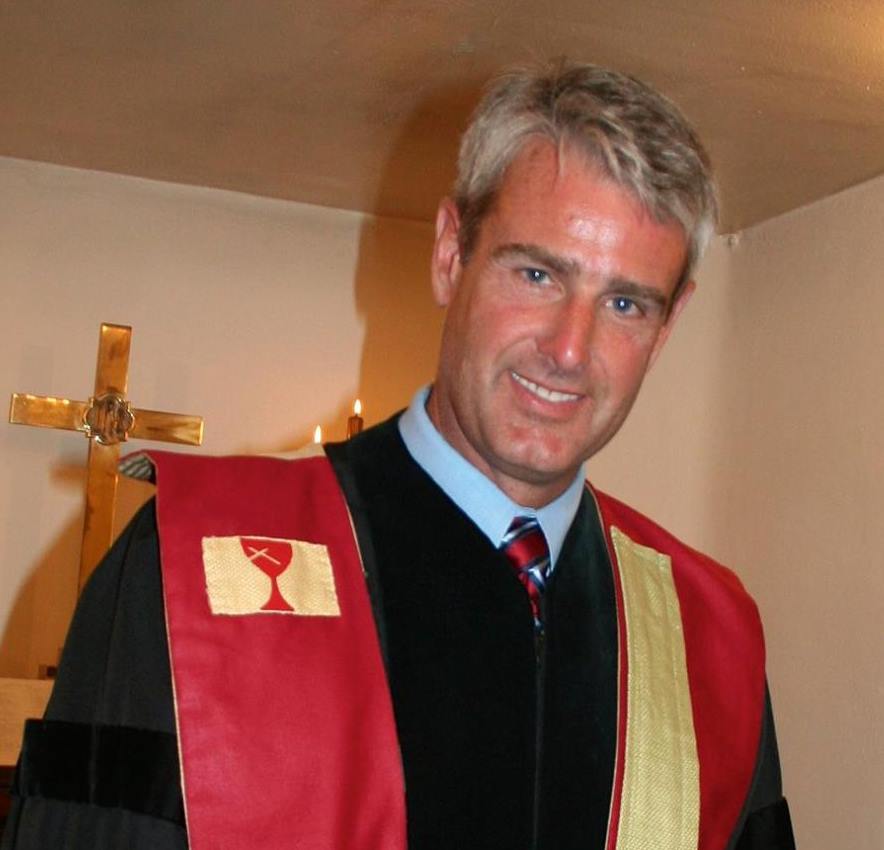
Jarrett Banks Red Stole

I have decided to change the title of my blog from “Stumbling, Bumbling, and Fumbling Behind Jesus” to “Downward, Upward, and Forward Behind Jesus.” Here’s why:

With “Stumbling, Bumbling, and Fumbling,” I wanted to make the point that I am an imperfect person on a flawed journey attempting to be a follower of Jesus. However, I have decided that “Stumbling, Bumbling, and Fumbling” may place more emphasis on my imperfections, weaknesses and shortcomings, than it does on God’s extravagant grace. With “Downward, Upward and Forward,” I hope to make it less about what I am doing or not doing, and make it more about what God is doing and will do.

It is my hope that “Downward” emphasizes humility, but also what Henri Nouwen calls “the downward mobility” of Jesus. Throughout the gospels, Jesus is portrayed as one who: moves down to sit at the lowest seat at the table; bends down to wash the disciples feet; stoops down to welcome small children; crouches down to defend, befriend and forgive the sinner; reaches down to serve the poor; lowers himself down to accept the outcast, to touch the leper, to welcome the foreigner, to heal the sick, to raise the dead and to pick up and carry his cross.

It is my hope that “Upward,” which comes after “Downward,” emphasizes a willingness to always humbly rise up, speak up, and stand up against the evils and injustices of our world. I do not wish to be a minister who is more mainstream than upstream, and in the words of Dr. Martin Luther King, Jr.: “…more cautious than courageous.” I pray that I will always resist the temptation to remain silently “behind the anesthetizing security of stained-glass windows.”

It is my hope that “Forward” emphasizes a faith that is progressively moving forward into the gracious promise of God’s future for all people and for all creation. I seek to follow behind the Christ who always leads from out ahead, drawing us into God’s future: beckoning, welcoming, loving, renewing, restoring, and resurrecting.

I will certainly continue to “stumble, bumble and fumble” along behind Jesus, as my journey as a follower of Christ will continue to be flawed; however, with the extravagant grace of God, I hope to follow in a way that is always “downward, upward, and forward.”

Reflections on My First General Assembly 

soar

Two years ago, I chose to leave my denomination to become a member of the Christian Church (Disciples of Christ). The 2015 General Assembly in Columbus, Ohio reaffirmed that this was one of the best choices I have ever made.

The workshops were challenging, and  the worship services were inspiring, reminding me that we are not called to merely go to church, but we are called to be the church, the very embodiment of Christ working for wholeness in our fragmented world. 

This reaffirmation and reminder was a great comfort to me as I have struggled over the years with my sense of calling to ministry and with my denominational identity. However, it is a special kind of comfort, a holy, God-given comfort. As Rev. Terri Hord-Owens said in the opening sermon of the assembly: “God comforts all of us, but not to make us comfortable. Our comfort is only a pivot-point to go out to serve and to love those in our world who need to be comforted.”

I chose to be a Disciple because my old denomination seemed to to me to be more about maintenance than mission. It seemed to be more about keeping everyone satisfactorily comfortable, rather than using the comfort of God’s affirmation as a pivot-point to make difficult stands as followers of Christ. They sought to be moderate, mainline and mainstream. However, the reality is that Jesus sometimes calls us to be upstream and anything but moderate and mainstream, even if it is uncomfortable.

Some Disciples are concerned that the resolutions that are made during the business sessions are “divisive.” Although resolutions are not edicts that are imposed on congregations as each church is autonomous, they say that voting “yea” or “nay,” agreeing or disagreeing with resolutions, undermines the unity of the denomination. They say that this is the reason many are leaving the denomination.

However, I believe more people leave denominations and churches when those organizations simply stop looking like or speaking like Jesus. I believe people who know their Bibles and the actions and words of Jesus are leaving the church in droves, because, instead of looking like Jesus on a mission for social justice announcing and ushering in the Kingdom of God, it looks like some sort of club on a mission to keep everyone agreeable and unified by remaining silent or moderate.

I believe agreement and unity are two different things. With Rev. Dr. Michael Kinnamon, I believe a wonderful aspect of Disciples is that we do not have to always agree with one another to be unified. Our unity does not come from our ability to agree or moderate a position. Our unity comes from God who unites us in Christ and in Christ alone.

This certain and sacred unity gives us the freedom to courageously take risks which are often needed to do the uncomfortable and unpopular work of Jesus of loving our neighbor as ourselves, feeding the hungry, lifting up the poor, welcoming and teaching the children, healing the sick, forgiving the sinner, friending the prisoner, restoring the marginalized, raising he dead and exorcising all kinds of evil: personal, social, systemic, structural and even ecclesial.

As Rev. Dr. Amy Butler preached: “the time is now; the pain of our world is desperate; and the call of God is clear. It’s that serious.”

Rev. Dr William Barber correctly diagnosed our nation’s desperation as a “deep heart problem” that only God can revive by using the church as a “defibrillator to shock the nation with the electricity of God’s justice, love and mercy.”

If we remain silent or moderate to try to maintain the satisfaction of every member, we will continue to lose not only the hearts of our members, not only the heart of our nation, but the heart of the church as we will simply cease being relevant.

This was my first General Assembly, and I could not be more excited to be both a Disciple, and hopefully, a “defibrillator,” an upstream Christian who will no longer compromise by going with the flow to avoid rocking the boat in order to keep everyone on board comfortable. With God’s help, I look forward to trying to do my small part to help us look less like members of a club, or even a denomination, and more like disciples of Christ.

Seeing the Flag

confederate

Raised in the rural South and as a big Dukes of Hazzard fan, I grew up loving the Condederate Battle Flag. I was proud to be from the South and proud to be a country boy. The flag represented that pride for me.

I believe in free speech and would die for everyone’s right to proudly fly the Confederate Battle Flag on their personal property if they so choose. I do not believe that flying or displaying the flag makes one a racist any more than I believe that not flying it makes one not a racist.

As a white southerner, when I see the Confederate Battle Flag, I may see Southern history. I have the capacity to see Southern pride and heritage. I can see brave men a ho fought for and gave their lives for their homeland. That is what I see.

I think it is interesting that Jesus talked an awful lot about “seeing.” In fact, he talked more about blindness than he talked about sin. He was constantly asking his disciples: “Do you not see?” “Do you have eyes and fail to see.” Furthermore, it is obvious that when Jesus gives sight to the blind, he is symbolically giving sight to others, especially the religious folks of his day.

In the light of the tragedy in Charleston, I now see the flag differently. With many others, I believe I now see the flag more clearly, more wholly, and more honestly, as I now see it through the eyes of those who were murdered in that church. 

Since the tragedy, I have been reminded how the flag has been used and abused by hate groups, mainly by people who long to go back to the day when “black people knew their place.” l realize that the flag now has meanings that it was never intended to have. I also am reminded why the flag was raised at the South Carolina Capitol in the first place: as a symbol of opposition to the civil rights movement.

I also understand that it is a symbol. It is not a sign. It is not a historical marker. Unlike signs, symbols have a particular power to excite and to elicit. Unlike signs that give information invoking a response in the brain, symbols stand for something invoking visceral emotions in the heart and gut. So when I see the flag through the eyes of the victims in Charleston, I can understand the consternation that most of our African-Americans citizens have in the South when they see it. Seeing it on a bumper sticker, t-shirt, or flying in someone’s yard is one thing; seeing it flying by the government or endorsed on a license plate issued by the government that should be working for liberty and justice for all is quite another thing, especially if that government has a history of oppression.

As a Christian, I believe in the words of Jesus, “love one another as I have loved you” and “love your neighbor as yourself.” I believe we do that best by trying to put ourselves in the shoes of others, when we try to see the world through the eyes of others, especially through the eyes of the oppressed, the poor, the marginalized, the disadvantaged, the least of these our brothers and sisters.

And it is a shame that it took the slayings of nine people to help me see that.

Charleston Wake-Up Call: Five Thoughts

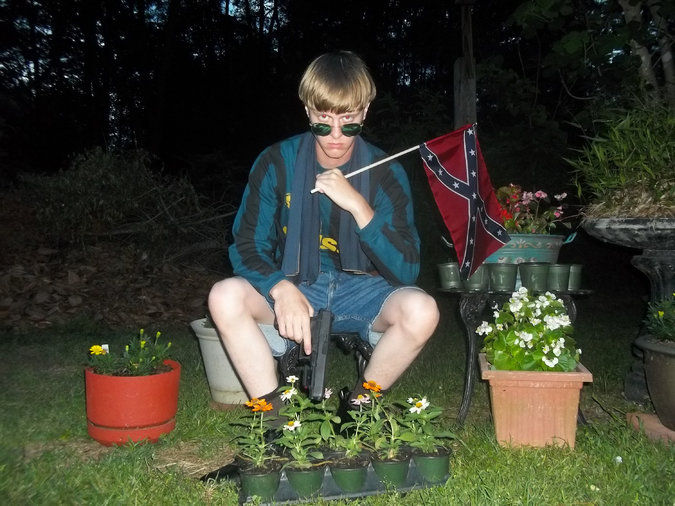
dylann roofI have heard many people call the massacre in Charleston a wake-up call for our country. I believe it is specifically a wake-up call for predominately white churches in our country. As a pastor of a predominately white church in the South, here are five thoughts that have been awakened in me:

  1. We must wake up to the reality that racism is not only a wound from our country’s past, but it is a deadly virus that still plagues us today. White preachers, including myself, have been often afraid to use the “r-word” from our pulpits for fear of “stirring things up,” as if we might reignite some fire that was put out in the 1960’s, or at least by 2008, when we elected our first black president. We must wake up and boldly preach against racism, in all of its current manifestations that are ablaze today: personal racism; systemic racism; and the subtle racism that is prevalent in the workplace, in the marketplace and even in the church, for Jesus could not have been more clear when he said: “Love your neighbor as yourself.”
  2. We must wake up to the reality that preaching and working against racism is not “being political,” but it is being “Christian.” When voting districts are re-drawn to limit poor black votes or when laws are created that make it more difficult for poor black people to vote, we must stand up and boldly proclaim the message of Jesus who came to announce “good news to the poor.”
  3. We must wake up to the reality that hatred in this country is being defended by church folks who are calling it “religious freedom.” In the United States of America, where we believe all people are created equally, religious freedom never means the freedom to discriminate. Slave-owners used the same religious-freedom arguments in the nineteenth century to support slavery. Today, we do not tolerate people who want to own slaves, nor should we tolerate anyone or respect the views if anyone who wants to discriminate.
  4. We must wake up the reality that “the oppression of Christians” in this nation and the “war on Christmas” that we hear about every December has been manufactured by folks who loathe what makes our country great, that is our cultural, ethnic, religious and racial diversity. We need to also preach from our pulpits that it is this diversity that makes us look most like the portrait of heaven we find in the book of Revelation: “After this I looked, and there was a great multitude that no one could count, from every nation, from all tribes and peoples and languages, standing before the throne and before the Lamb” (7:9). We must wake up to boldly voice our opposition to the purveyors of fear who are calling on people to bear even more arms “to take our country back.” Furthermore, we must wake up and tell the folks in our pews to please shut up, when they start reminiscing about going back to the good old days of the 1950’s when we had prayer in school. We need to be able to say: “You know, I have many black friends, and I have never once heard them talk about wanting to go back to 1950.”
  5. We must wake up to the reality that the most segregated hours in our country occur on Sunday mornings. We must find ways to build bridges to bridge the gaps that we have created that prevent us from worshipping and serving together. To stand against racism, hatred and violence, to stand for social justice and equality for all, and to persuasively speak truth to power, we must do it side by side, hand in hand, as one body, one Church, serving one Lord.