The God of the Living

Luke 20:27-38

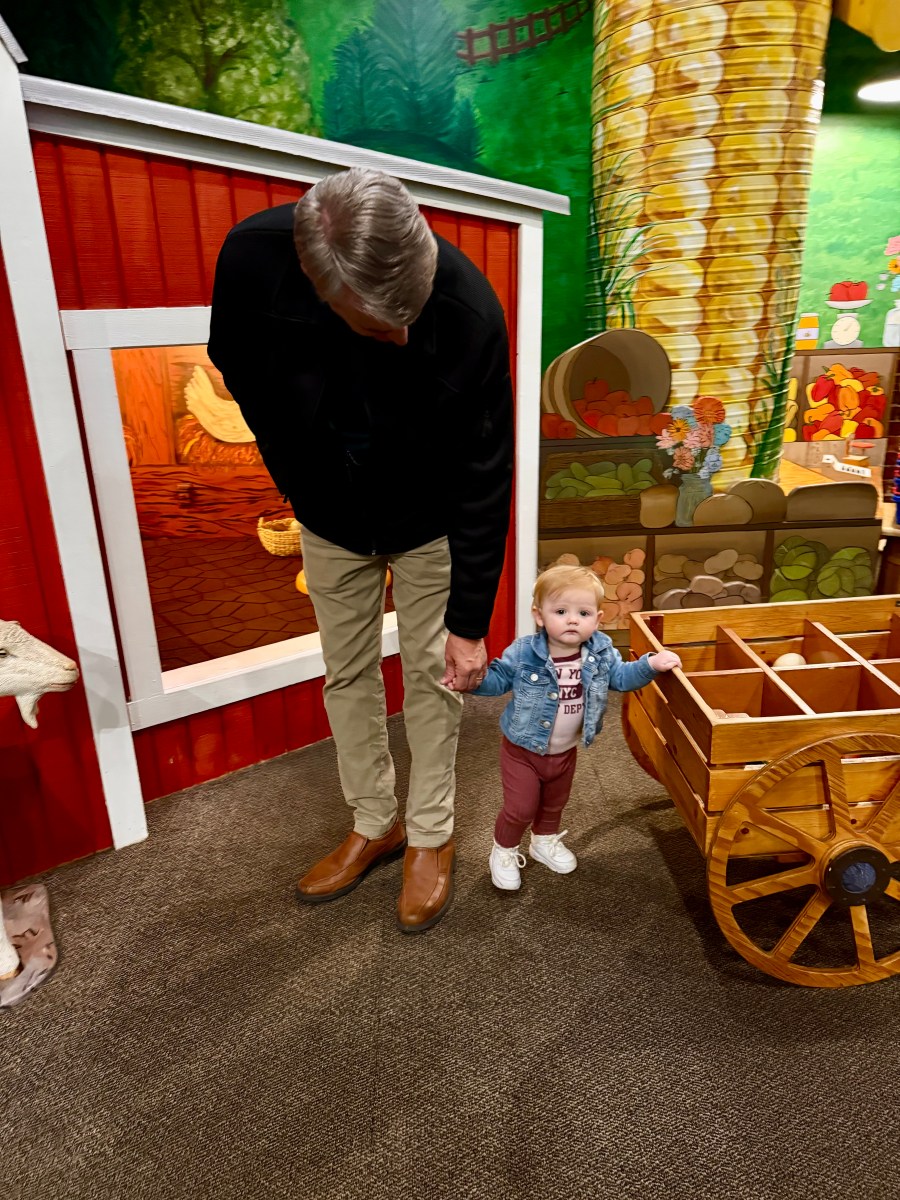
This morning, we gather in a sacred circle of love with parents and grandparents, their family and friends, and the wider church family to dedicate ourselves to God and to one another. We will make promises this morning to support a family as they raise their daughter in love, envelop her with mercy, teach her the stories of our faith, and to resist the powers and authorities that would deny her life.

We declare today what Jesus declared in the Gospel of Luke: that our God is not the God of the dead, but the God of the living.

That means we have a living, active, public faith. It’s not a private, personal faith without works that the book of James pronounced dead. It’s a living, working, breathing, forward-marching, justice-seeking, hope-singing faith. It’s a faith that lifts up little babies and baptizes big dreams. And it’s a faith that always refuses to let despair have the final word.

The story in Luke 20 begins with a question, but it’s not an honest question. The Sadducees, a group of religious elites who didn’t believe in the resurrection, have come to Jesus with a trick question with the purpose of trapping him in theological quicksand.

They spin this wild scenario about a woman who marries seven brothers, one after another, each dying without having children. Then they ask, “In the resurrection, whose wife will she be?”

Their question sounds absurd because it is absurd. For they’re not trying to understand the ways of God. They’re only trying to protect their ways, to defend their black and white, tidy little world where their control goes unchallenged, where the poor stay in their place, and where God doesn’t mess with the systems they’ve built to protect their power and privilege.

But Jesus, as he so often does, flips the table. He says, “You’re asking the wrong question. Resurrection isn’t about hierarchy or control. It’s about life, free, full, meaningful, unending, abundant life.”

It is then Jesus shakes their world with these powerful words: “God is not the God of the dead, but of the living; for to God all of them are alive.”

The God of the living is the one who refuses to be confined to any religious box or to be controlled by any political party.

The God of the living is the one who is forever calling life out of tombs and hope out of heartbreak.

The God of the living is the one who breathes over the chaos, creating a new world, and calling it good.

The God of the living is the one who takes what the empire crucifies and declares, “Love will win!”

This is the God who is still speaking, still creating, still re-creating, still resurrecting us from all the small deaths we endure today, like the death of empathy, the death of mercy, the death of social justice, the death of diversity, equity, and inclusion.

When we dedicate Maggie this morning, we are declaring our allegiance to this God, the God of the living, who says to all matter of death: “Rise up and live!”

When we dedicate Maggie, we are saying that we will raise her not in fear but in faith, not in greed but in generosity, not in apathy but in active love.

In a world that often chooses death (death by selfishness, death by bigotry, death by poverty, death by racism, death by environmental destruction, death by indifference), we are promising that we will stand with the God of resurrection who always chooses life.

Hannah and Austin, in dedicating Maggie today, hear this blessing from the church: As a parent, you are participating in resurrection. Every sleepless night, every patient conversation with your child, every prayer whispered over her fevered forehead— it’s all resurrection work.

Raising a child is resurrection work because it is an act of resistance. It is believing in the future when the world tells you to give up. It is saying, “As bad as things seem today, I still believe in tomorrow.”

You are forming in Maggie a living faith, one that will not just memorize Bible verses, but will embody them. One that will not just believe in Jesus, accept Jesus, but will follow Jesus, bearing witness to a faith that will learn to feed the hungry, to welcome the stranger, to defend the marginalized, and to speak truth in love.

When you hold Maggie and whisper prayers, when you read her stories of courage, when you teach her to say “please” and “thank you” and “I’m sorry,” and “I love you,” you are introducing them to the God of the living, the One who delights in her laughter, in her curiosity, and in her wide-eyed wonder.

You are shaping a world in which Maggie can live fully, freely, and faithfully.

And First Christian, this dedication isn’t just a family’s promise. It’s our promise too.

We are the village that surrounds all the children in our congregation with love. We are the people who will teach them how to sing, how to serve, and how to stand up for what’s right.

When we dedicate Maggie this morning, we are committing to build a world where all children can breathe clean air and drink clean water, where food is available and healthy, where their schools are safe and fully-funded, and where their neighbors are kind.

We’re committing to the slow, holy work of resurrection, to dismantling systems of death so that every child can live abundantly.

We are committing to be the church that loves all God’s children, no matter their color, gender, ability, sexuality, or identity, because to God, all of them deserve life, abundant and free.

The Sadducees were trapped in a world too small for the God Jesus proclaimed.

They couldn’t imagine life beyond the limits of their power, so they made up and absurd scenario to debate and stop Jesus because they feared that the God he was revealing was much more than they could control and much bigger than any binary box they’ve tried to put God into.

But Jesus taught them that the resurrection isn’t some theory to be debated. Resurrection is a truth to be lived.

Jesus taught that every act of love is resurrection.

Every cry for justice is resurrection.

Every march on behalf democracy and every silent vigil on behalf of peace is resurrection.

Every child lifted up in dedication is resurrection.

When we bless Maggie today, we’re making resurrection visible to the world.

We’re saying to the powers of death, “You will not win here.”

We’re saying to the forces of despair, “You will not have the last word.”

We’re saying to the powers of fear, “You can stop speaking now.”

And we’re saying to the God of the living, to the God of resurrection, that we will live like resurrection people.

To raise children who believe that love is stronger than hate.
To build communities that value life more than profit.
To be the kind of people who feed the hungry, comfort the grieving, stand with the oppressed, care for the planet, and keep singing hope, even in the dark.

Because to believe in the God of the living means more than believing in life after death. It means believing in life before death. It means believing that the kingdom of God can be glimpsed in the way we treat one another. It means that every child we nurture, every parent we support, every injustice we confront, every prayer we pray, every neighbor we love—it’s all resurrection work.

So, when Jesus says, “God is not the God of the dead, but of the living,” he’s just talking about heaven. He’s talking about this very moment— about the breath in your lungs, the heartbeat in your chest, the promise in Maggie’s eyes.

He’s talking about the way God’s Holy Spirit moves in this congregation and in this community. He’s talking about the way God keeps showing up, calling us to live, to love, to care, to feed, to lift one another higher, to believe in a better tomorrow.

As we dedicate Maggie today, we are bearing witness to the world that our God is the God of the living. And we, by grace and commitment, are a people of the living. And we will go from this place to build a world worthy of her life and the lives of all God’s children.

We will be bold enough to proclaim resurrection in a culture obsessed with violence, in a society dying with greed and hate, in a nation that withholds food from the hungry. We will love so fiercely that future generations will say of us: “Those were the people who truly chose life!” “Those were the ones who stood in the shadows of death and made resurrection visible!”

Because the God of the living is still breathing life into this world.
And that means our work and our hope is not finished yet.

Amen.


Pastoral Prayer

God of the living,
You are the breath in our lungs and the light in our eyes,
the pulse that moves through creation and the promise that will not let us go.
You are the beginning and the end,
and still You meet us right here, in the middle,
in this church, in this moment, in the ordinary holiness of our lives.

We give You thanks today for the gift of life:
for children who remind us how wonder works;
for parents who pour out love without counting the cost;
for seniors whose wisdom steadies our steps.
We thank You for laughter that catches us by surprise,
for tears that speak what words cannot,
and for the holy mystery that keeps drawing us back to You.

God, we confess that we do not always live as people of the living.
We get trapped in fear,
in cynicism,
in systems that trade life for profit and power.
Forgive us, O God.
Breathe new life into this congregation.
Teach us again to see Your image in every child,
Your presence in every neighbor,
Your Spirit in every act of justice and mercy.

We pray for those among us who are struggling:
for the sick and the sorrowing;
for those weighed down by anxiety or grief;
for those who have lost work, or hope, or direction.
Be near to them, God of the living.
Surround them with grace that will not let them go.

We pray for our world:
for peace in places of war;
for food in places of hunger;
for safety where children fear;
for compassion where cruelty has taken root.
Remind us that Your kingdom is not an idea for tomorrow,
but a movement for today
that resurrection is not just a promise after death,
but a power that transforms life right now.

And as we prepare to hear Your Word and dedicate these children,
open our hearts to Your living presence among us.
Make us brave enough to live as resurrection people
to raise our children in love,
to build communities of justice,
and to trust that Your Spirit is still breathing life into this world.

We pray all this in the name of Jesus,
the Christ of the living,
the friend of the broken,
the hope of every generation. Amen.


Child Dedication Liturgy

Today we celebrate the gift of life and the goodness of God who entrusts children to our care.

As a community of faith, we stand with these parents who bring their child, Margaret Evaline Grooms, before God, seeking grace, wisdom, and strength for the journey ahead.

We dedicate not only this child, but also ourselves, to be a people who nurture, teach, protect, and love.

For we follow the One who said, “Let the little children come to me, for it is to such as these that the kingdom of God belongs.

Charge to the Parents
Hannah and Austin, you have been given a sacred trust: to care for this child; to love them with patience and joy; to teach them the stories of faith; to model the way of Jesus in your home and in your life.

Do you promise to raise your child in the love of God, to encourage curiosity and compassion, to seek justice, to practice kindness, and to walk humbly with your child in faith?

Parents: We do, with God’s help.

Do you promise to teach your child that they are wonderfully made, beloved of God, and that nothing in life or in death can ever separate them from that love?

Parents: We do, with God’s help.

Charge to the Congregation

Church, this child does not belong to these parents alone— she belongs to all of us.

We are called to surround this family with a community of care: to teach, to listen, to celebrate, and to stand with them in every season.

Do you, as the gathered body of Christ, promise to support these parents in their sacred calling, and to help this child grow in love, faith, and justice?

Congregation: We do, with God’s help.

Do you promise to create a world where every child is safe, fed, valued, affirmed, and free to become all God intends? If so, please stand.

Join me in welcoming this child as we read together.

We welcome this child into our church family.
We promise to love them, to pray for them,
to teach them by our words and example,
and to walk with them as they grow in faith, hope, and love.
May our life together reflect the grace and joy of Christ.

Prayer of Dedication

God of the living,
we give You thanks for the gift of Maggie,
for the laughter, wonder, and light she brings into the world.
Breathe Your Spirit upon her, that she may grow strong in body and kind in heart.
Grant these parents wisdom, courage, and joy in their calling.
Surround them with love that will not let them go,
and a community that will not let them fall.

May this child come to know the depth of Your grace,
to trust Your goodness,
and to live in the fullness of Your love.

We dedicate Maggie and ourselves to Your care and keeping,
in the name of the God of the living:
Creator, Christ, and Holy Spirit. Amen.


Invitation to Communion
At this table, we meet the God of the living,
the One who welcomes children and sinners, saints and seekers.

Here, life conquers death.
Here, grace outshines guilt.
Here, love gets the last word.

So, come with your doubts and your dreams,
your gratitude and your grief.
Come, for this table is set for all of God’s children.
There is room enough for all here.

Invitation to Generosity
God is the giver of every good gift:

life and breath; laughter and love;
children to nurture and a community to sustain us.

As we dedicate our Maggie this morning, we also dedicate ourselves.
We give that others may live,
that every child may know the security of love,
that hope might have hands and faith might have feet.

Let us bring our gifts with joy,
trusting the God of the living to use them
for the healing of the world.

Commissioning and Benediction
Go now as people of the living God,
as people who believe that love is stronger than fear,
that hope is greater than despair,
and that new life is already breaking forth among us.

May the Spirit of the living Christ go with you,
to guide your steps,
to guard your hearts,
and to bless all the children in your care.

Go in peace,
to love and to live as resurrection people.

Amen.

Disciples Are on the Side of Witches

Luke 18:9-14

You know, it’s a strange thing to be called unholy for trying to love like Jesus. I believe I shared that time with you when I was called “a demon” in a resturant in Fort Smith, Arkansas.

This stranger who disapproved of the sexuality of the person with whom I just finished sharing a meal, approached me as I was leaving with a question: “You do know what the law says about her don’t you?” I said, “Arkansas law?” He said, “No, God’s law.”

I said, “Well, Jesus said that the greatest law is to love our neighbors as ourselves.”

He walked away, scribbled something on his receipt and handed it to the waiter who then showed it to me: ‘Beware, he’s a demon in disguise.’”

It would be interesting to know how many people drive by our church, see the Pride flag, and decide they already know who we are:

“That’s the liberal church.” “That’s the church that’ll let anybody in.” “That’s the church that doesn’t believe the Bible.”

And I smile. Because that’s exactly what they said about Jesus!

The truth is: if you’re going to follow the one who touched lepers, elevated the status of women, proclaimed that the differently sexual were born that way, welcomed tax collectors, and ate and drank with sinners, you’re bound to get called some names. You’ll be accused of going too far, being too soft, loving too much. And you’ll be demonized for it.

There are probably some in this town who suspect that what we disciples do inside these walls during this hour is akin to some kind of witchcraft. So, just in case they’ve tuned into our YouTube channel to check out what demonic spells this false prophet is brewin’ up, to see what kind of voodoo we do, on this Sunday before Halloween, I want to make what may sound like a shocking confession:

Disciples stand firmly on the side of witches.

Now that I have their attention, maybe they’ll stick around to hear this story that Jesus told.

Two men went to the temple to pray. One was a Pharisee, religious, respected, and righteous. The other was a tax collector, despised, and distrusted, and demeaned.

The Pharisee stood tall and prayed proudly: “Thank God I’m not like other people—thieves, rogues, adulterers, or even like that tax collector over there.”

Meanwhile, the tax collector stood far off, head bowed, hand to his chest, praying, “O God, be merciful to me, a sinner.”

And Jesus said, “The tax collector went home justified, rather than the Pharisee.”

The Pharisee had the problem that many in the church still have today. The Pharisee defined his holiness by “those people” he put down. He could only feel righteous if someone else was condemned. And that’s exactly how all witch hunts begin, with a prayer that says, “Thank God I’m not like them.”

In 1692, this was the prayer that was whispered and shouted all over Salem, Massachusetts. Fear was in the air: fear of women who had some power, women who refused to be submissive and quiet; fear of the patriarchy losing control. Preachers thundered from their pulpits. Neighbors accused neighbors. Hysteria spread. And before it was over, 200 people were accused of witchcraft, 30 were convicted, and 19 were hanged, mostly women.

But the Salem Witch Trials were never about witches. It was about a religion poisoned by fear. It was about a faith so fragile, so shallow, that it needed scapegoats to survive. It was about a church that was so desperate to justify their own purity that it demonized and destroyed the children of God. The Puritans thought they were defending God’s honor, but they were really defending their own control.

The bad news is that this spirit didn’t die in 1692, as every generation has had its witch hunts. Every age has Pharisees who pray, “Thank God we’re not like them.”

We saw it on the ships carrying enslaved Africans in chains across the Atlantic, justified by a twisted theology that said dark-skinned bodies were less human.

We saw it in Nazi Germany, where millions of Jewish people were branded evil and exterminated in the name of “purity.”

We saw in the McCarthy hearings, when careers and lives were ruined because someone was accused of being “un-American.”

We saw it in the Jim Crow South, where people went to church on Sunday morning and attended a lynching in that evening.

We saw it after 9-11 when all Muslims were blamed for the sins of extremists.

And we see it today whenever our LGBTQ siblings are called “abominations,” when trans youth are targeted by hateful politics, when poor people are labeled “parasites,” when immigrants are demonized as “invaders,” and whenever women are made to feel inferior to men.

We see it when vanity is prioritized over humanity, as the powerful dismiss the hungry while they destroy the East Wing of the White House to build a golden ballroom.

Every witch hunt begins the same way: with fear dressed up as faith and cruelty justified as conviction. Pure evil, the worst evil in history has always been born when people believed that others were less than.

And if you dare speak out against such evil, the ones who demonize the witch will demonize you. But as Disciples, that’s what we have been called to do, because we follow the One who always exposed the evil spirit of fear for what it is.

When Jesus sat down with tax collectors, he was breaking the spell of self-righteousness. When he healed the lepers, he was undoing centuries of religious purity laws. When he talked with the Samaritan woman at the well, he was crossing every line of gender, race, and religion. When he liberated those the people believed to be possessed, he was calling out systemic oppression.

And for that, they said he was possessed. They labeled him a heretic. They called him a glutton, a drunkard, and “a friend of sinners”—all just another way of calling him a witch.

So yes, disciples are on the side of witches. We stand firmly on the side of the accused, the condemned, and the cast out. Because that’s where Jesus stands, and that where love always leads us.

The Radical Welcome we practice here at First Christian Church should never be mistaken for southern hospitality or polite piety. Our welcome is protest. It’s the refusal to let fear dictate who belongs and who doesn’t belong at God’s table. Every time we open our doors to someone the world has rejected, we’re breaking the spell of Salem all over again. Every time we affirm the dignity of someone who’s been told they are less than, we’re undoing the curse of dehumanization.

And that always makes some people uncomfortable. It made the Pharisees uncomfortable. It made the Puritans uncomfortable. And makes all those today whose faith has been hijacked by a spirit of fear uncomfortable.

But that’s okay. Because comfort has never been the goal of the gospel. Transformation is. The church’s mission has never been to police the gates of heaven but to tear down the walls that keep anyone from seeing how wide the gates really are.

That’s the Revolutionary love we have been called to practice. It’s a love that doesn’t just include but transforms. It’s a love that refuses to see anyone as “less than,” not even those who demonize us.

It was this Revolutionary love that propelled Jesus to non-violently pick up and carry a cross while praying for the forgiveness of those who were forcing him to carry it.

It’s what led Dr. King to face dogs and firehoses without surrendering to hate.

It’s what gave Fannie Lou Hamer the courage to keep singing freedom songs after she was beaten in a Mississippi jail.

It’s what led Desmond Tutu to preach forgiveness in a nation soaked in blood.

Revolutionary love is defiant. Revolutionary love stands up to evil and says, “You will not make me hate you.”

It stands up to even those in power whose hearts seem hardened, whose empathy seems long gone, and whose ambition has blinded them to mercy, and says, “I still believe in your humanity.”

That’s what it means to be a disciple of Jesus in a witch-hunting world. Not to join the crowd shouting, “Crucify him,” but to hang beside the condemned and whisper: “You are not alone. Look, I’m on your side. I will be with you, and you will be with me, forever.”

So, when people call us “that church,” the one with the flag, the one that welcomes everyone, the one that’s too political, too affirming, too much, I say, “praise God!”

Because that means we’re standing where Jesus stood. That means we’re loving in ways that make the stokers of fear and the sowers of division nervous. That means we’re living the kind of gospel that still turns the world upside down!

Yes, we could save ourselves from some ridicule if we took down our flag, but our calling is not to just to be saved. Our calling is to be faithful. Our calling is to follow Jesus by standing with those accused of being “too different” or “too much.”

Because disciples are not on the side of those who judge and condemn. We’re on the side of the witches. We’re on the side of the enslaved, the lynched, the silenced, the scapegoated, the outcast, and the crucified. We’re on the side of those who have been demonized by sick religion and dismissed by worldly power. And we stand there not out of pity, but in solidarity, and we know the God of mercy stands there too.

The kingdom Jesus preached is not built by purity or perfection. It’s built by mercy and mutuality. It’s built by people humble enough to pray, “God, be merciful to me, a sinner,” and brave enough to extend that same mercy to others. The world doesn’t need more temples filled with Pharisees. It needs more churches filled with recovering witch hunters who’ve laid down their sticks and stones to pick up some empathy and compassion.

The world doesn’t need more purity tests. It needs more people who understand that holiness is found in how we treat the most despised among us.

Because I’ve lived long enough to see the pattern. I know the history. It’s never the ones who love too much who do the evil in this world. It’s always the ones who forget that love is the whole point.

So, let the world accuse us of loving too much. Because that’s how we’ll know we’re getting close to the heart of Jesus. Let them call us names. That’s how we’ll know we’re walking in his way.

When we stand the side of the witches, on the side of the accused, the excluded, the erased, we know we’re on the side of the God who never stops expanding the circle.

So, let them drive by our church and call us “unholy” or “too much.”

Let them demonize us.

But we’re going to keep loving.
We’re going to keep welcoming.

We’re going to keep conjuring the Holy Ghost and following the way of Jesus.

That means we’ll never stop proclaiming the mercy that humbles the proud and lifts up the lowly.

Because we Disciples believe the Kingdom of God is coming near, and the radical welcome and revolutionary love of Jesus is leading the way.

Amen.

This Ain’t No Cruise

Isaiah 1:1, 10-20

At this hour last Sunday, Lori and I had just been forced off the “Fun Ship” called “the Carnival Sunshine” which had returned to Norfolk from an 8-day Caribbean cruise.

Now, I only say “forced off” in jest, but there was a part of us that really didn’t want to get off that boat. For we had just experienced a week of extravagant leisure, a week where our biggest decisions were: The buffet or the dining room? The baked Alaska or the crème brûlée? The pool deck or the beach excursion? How many naps do I take today? Will I snooze in my cabin or out under a cabana?

And behind all this pleasure was our charming, enthusiastic cruise director, who just happened to be from just down the road in Danville.

He had the type of haircut, personality and southern accent that made me think: “You know, I can see myself in this line of work.”

Seriously, I believe I have what it takes to be a great cruise director. Smile big, talk fast, and make sure no one thinks too hard about what’s going on behind the scenes. Just keep the show going and the mood light, even if the ship is headed straight into a storm! Use my gifts of schmooze to keep everybody on board entertained, distracted, and happy.

And I can’t help but to think how many pastors out there, like me, are also well-suited for this type of work; and unfortunately, how many of them function more like cruise directors than pastors in their churches.

For how many sanctuaries have been turned into cruise lounges? How many chancels have been transformed into theatrical stages? How many sermons are just spiritual entertainment? How many worship services are designed to make people feel good but not do good?

A cruise director never challenges you. Cruise directors don’t convict you. They never ask you to change your life, to give up something, to sacrifice anything, to take any risk. On the contrary, they want you to avoid risk. A good cruise director is there to make sure the activities are safe, the music is right, the lights are warm, the drinks are flowing, and your conscience is quiet.

All while injustice rages on the shore.

The truth is that too many churches today have become floating sanctuaries of self-centered peace, enjoying smooth sailing while the poor are drowning in debt, depression, and despair.

The good news is, while I am convinced that I could be an excellent cruise director, and I’m still a little tempted to google their annual salary, the prophet Isaiah comes today to remind me that God did not call me to be a cruise director. God didn’t call me to keep the church comfortable, safe, and happy. God called me to speak truth that is often uncomfortable and even dangerous, as God calls us to live justice, to be the people of God in a dark world flooded with cruelty, corruption, greed and spiritual compromise.

Isaiah tells it like it is in today’s Hebrew lesson: God has absolutely no interest in our religious performances if it does not inspire justice. God isn’t impressed by our singing, our prayers, our preaching, or even our communion. God says, “I’m tired of your offerings. I’m sick of your noise. I am fed up with it all. All I want is to see how you treat the most vulnerable among you.”

And Isaiah’s not playing around:

Hear the word of the Lord, you rulers of Sodom! Listen to the teaching of our God, you people of Gomorrah!

Now, Isaiah’s not talking to pagans. He’s not talking to outsiders. He’s talking to the religious people, to the faithful folks: the worshippers; the tithers; the choir members; the Bible study attenders. And he calls them “Sodom and Gomorrah” because of how far they’ve drifted from whom they have been called to be.

They were faithful doing all the religious stuff: showing up for worship; observing the liturgical calendar and all the rituals; making sacrifices; offering prayers; singing hymns. But God…God wasn’t impressed.

I have had enough of your burnt offerings!
I do not delight in the blood of bulls…
Your new moons and your appointed festivals, my soul hates.
Even though you make many prayers, I will not listen.

God says:

You’re making a lot of noise, but you’re not being a movement.
You’re throwing parties for yourselves while the poor are languishing.
You’ve built a sanctuary, but not a shelter.
You’re singing and dancing all while the blood of the oppressed cry out from the streets.

You’ve made church a place of escape rather than engagement.
Your worship is more like a cruise rather than a call to action!

In other words, “You’ve turned my house into a Carnival Fun Ship!”

Jeremy, Mark, Judy, choir, hear me when I say there’s nothing wrong with beautiful music offered to God. Just as there is nothing wrong with well-prepared sermons or joyful gatherings. Verna, there’s nothing wrong with well-organized communion. And of course, there’s nothing at all wrong with having a big offering! But if all this beauty ever becomes a substitute for doing justice, it’s not worship, says Isaiah, it’s idolatry.

Pastors who succumb to the temptation to use their cruise-director gifts in the church want their congregants to enjoy the journey but do nothing to challenge the systems. They want their parishioners to put their hands in the air for Jesus, but never encourage them to lift a finger for the poor. They want their members to memorize the creeds, but forget about Medicaid, minimum wage, and mass incarceration.

A cruise director doesn’t ask you to sacrifice or leave your comfort zone. But a real pastor, a prophet, most certainly will.

Because that’s what God has called us to do.

God has called pastors to stand up with Isaiah and prophetically proclaim to our congregations:

“Cease to do evil and learn to do good; seek justice and rescue the oppressed, defend the orphan and plead for the widow.”

God has called us to constantly remind our congregations that that’s the kind of worship that God wants. Not empty rituals in the sanctuary, but radical righteousness in the streets. Not polished performance, but public accountability to the least of these.

Have you ever felt like God is not listening to your prayers?

Isaiah suggests that the reason we sometimes feel like God isn’t listening to our prayers is because God isn’t listening to our prayers!

Isaiah says that if we truly want to know that God is listening to us, if we truly want to feel God’s presence, if we want our worship to me meaningful, then we must do some things.

And if we don’t do those things, according to Isaiah, God might respond to our worship this way: “Stop tramping into my courts. And I have had enough of your preacher. His sermons, his prayers, your hymns, everything about your church, they have become a burden to me. And I have stopped listening!”

If we want our prayers to be received by God, Isaiah says that we better be doing what we can help the most vulnerable members of our community.

Frederick Douglass once said, “I prayed for freedom for 20 years, but God didn’t hear my prayer until I moved my feet.”

After marching in Selma for civil rights, Rabbi Abraham Heschel said, “I felt my legs praying.”

This sanctuary can be full of people who have gathered for God on Sunday morning, but if nobody’s using their legs to stand up for the marginalized come Monday, God says: “it means nothing.”

We can shout down the walls of Jericho, but if we never speak out against building a wall with the bricks of racism, God says: “Our hands are full of blood.”

We can post Bible verses all day on social media, but if we stay silent while fascism is in power, while Gaza is being ethnically cleansed, while LGBTQ youth are targeted, while immigrants are scapegoated, while healthcare is gutted, while workers are exploited, the planet is polluted, and while the single mother, the disabled neighbor and the black child are caught in the crosshairs of systemic sin, then our faith is just a lie.

True faith moves us out to the front lines, moving us from ceremony to solidarity, from pews to picket lines, from pulpits to protests.

So, let me take you back to that cruise.

Folks lounging on the deck. Others wading in the pool. Music playing. Bob Marley singing, “don’t worry about a thing ‘cause every little thing gonna be alright.” Food and drinks being served. Laughter in the air. The cruise director’s doing his job: keeping us all smiling, dancing, relaxed, full, and distracted.

Now, on vacation? That’s fine. But in church? That’s deadly.

And today, too many churches have gotten comfortable relaxing on the deck. Sunning themselves under the glow of cheap grace. Floating along on the sea of privilege. Sipping sweet spiritual drinks while the world is drowning just off the side of the ship.

I’m glad to see all of you here this morning, but if you’re looking for some comfort, this ain’t the place.

If you’re looking for some entertainment, you’re in the wrong room.

If you’re looking for somebody to tell you everything is fine, while the world is on fire, this ain’t that church, and I pray I ain’t ever gonna be that preacher!

Because although I believe I could be a good cruise director, I believe God has called me to be a pastor.

After a summer break, Java with Jarrett returns this week at a new location. And I can’t think of a better place to meet with the pastor. Located in the Givens bookstore, it’s called “the Troublemaker’s Café.”

Because as a pastor I have been called to keep reminding you: It’s time to get off the boat and into the deep, into the struggle, into the messy, risky, beautiful, troublemaking work of real worship. God has called us to be prophets of another way, to be builders of a better world, to be troublemakers for truth.

Listen again to these words:

Seek justice, rescue the oppressed, defend the orphan, plead for the widow.

That’s not vacation talk. That’s vocation talk. That’s God calling us to jump off the deck and into the deep waters of justice!

The good news for our world today is that God is still calling, still pleading, still inviting:

“Come now, let us argue it out. Though your sins are like scarlet, they shall be like snow.”

This is what the grace of God looks like. It’s not just to save us. It’s to change us. It’s not just to comfort us. It’s to call us forward, to remind us that the time for playing church is over, and the time for becoming the church is now!

So, here’s our challenge today:

If you’re looking for a cruise, this ain’t it!
If you’re looking to be entertained, you’re in the wrong place!
But if you’re ready to live your faith out loud…
If you’re ready to lift your voice against injustice…
If you’re ready to love your neighbor as yourself, not just in word but in deed, not just with your prayers, but with your legs, then this is the church for you!

Yes, the water’s deep. The waves can be scary. But Isaiah assures us that God will be with us! Because we’re not playing church here. We’re becoming the church!

And the world is waiting.

Amen.

LGBTQ+ Issues and the Church

LGBTQ+ Issues and the Church

Where’s the Hope, Ya’ll

Sermon preached at First Christian Church, Hammond, Louisiana, on the First Sunday of Advent 2022

Like many Americans, I have tried to have a good thanksgiving this year. My daughter and her new husband, along with my son, have been visiting all week. We spent Wednesday and Thursday cooking and watching a lot of football. And then on Friday, we got the Christmas decorations out, put on some Christmas music, put up the tree and started decorating the house. After lunch, my daughter says, “You know what will really get me into some Christmas spirit?” 

“I don’t know. What Sara?”

“Going Starbucks and then to a shopping mall!”

“On Black Friday! Do you know how many people are going to be at the mall? 

That’s what makes it Christmas!”

So, over the causeway we went to Lakeside Mall. As we looked for a parking space amid gazillion cars, Sara started singing, “It’s beginning to look a lot like Christmas.” 

When we got inside, we had to make an effort not to lose one another in the sea of shoppers. And we commented that we were glad we got the flu vaccine and the most recent Covid booster shot. As we stopped to take pictures in front of a giant Christmas tree outside of Macy’s, we were all startled by a loud noise. It sounded like someone dropped something on the floor, but we all looked at each other and said the same thing: “I thought that was someone shooting!”

In the wake of a pair of deadly shootings where an attacker opened fire in an LGBTQ nightclub killing five people; a Wal-Mart employee gunned down six coworkers before turning the gun on himself, and an eight year old boy fatally shot in New Orleans, celebrating Thanksgiving was difficult this year.

Twenty years ago, upon reflecting on the hatred, racism and violence of the world, the popular band known as “The Black-eyed Peas” had a number one hit in which they asked the question, “Where’s the Love, Ya’ll?”

Today, with the rise of antisemitism, political disparaging of LGBTQ people, and gun violence, I believe we are not only still asking “where’s the love, ya’ll?” but in despair, we are now asking, “Where’s the hope, ya’ll?”For we have endured so much. We have waited so long.

The good news is that it is the first Sunday of Advent and there’s an angel among us. An angel named Gabriel who has some good news for us in our despair. 

Today, we are reminded that there was an aging Jewish couple whose despair paralleled not only Israel’s waiting in despair, but also ours.

In an occupied land ruled by a puppet king, there was an old priest named Zachariah who was married to a woman named Elizabeth. Together, they lived honorably before God. But [and for a Jewish couple it was big but] but they were childless.

The despair of the couple is put in perspective as we remember that the bearing of children was considered to be a great blessing, and it was essential for carrying on the family name, perpetuating God’s covenant with Israel, and providing oneself with care in old age. Barrenness was regarded as a tragedy, a disgrace, and even a sign of God’s punishment. Their despair is heightened when we are told that they are now “getting on in years.” 

Rev. Zachariah is busy doing normal, traditional church stuff when the angel shows up, and he is terrified, and fear overwhelms him. Could it be that is because when we are doing traditional church stuff, the last thing we expect is for God to actually show up? 

It is then the angel assures Zechariah with familiar angelic words: “Do not be afraid.” It is then the angel says: “for your prayer has been heard.”

 I wonder what went through the old priest’s mind when he heard an angel from heaven speak those words: “For your prayer has been heard?”

“Finally, God is going to send down a legion of angelic beings from heaven to liberate Israel from King Herod and the Roman Empire!” “Finally, heaven has come down to earth and all of the wrongs in the world are going to be made right!” “Finally, God’s kingdom has finally come and God’s will is finally going to be done on earth as it is in heaven!” “The cosmic calvary is here and antisemitism, racism, hate and violence will be no more!” 

Whatever he was thinking, he certainly wasn’t prepared for the words the angel spoke next:

“Your wife Elizabeth is going to have a baby and you are going to name him John. Many will rejoice with you when he is born, because he will be great in the sight of the Lord. He must avoid wine and hard liquor because, even while he is still in the womb, he will be intoxicated with the Holy Spirit. He will turn many sons and daughters of Israel back to their God. He will herald God’s arrival in the style and strength of Elijah, soften the hearts of parents to children, and kindle devout understanding among hardened skeptics—he’ll get the people ready for God.”

There is a big word for this type of experience. We call it an “annunciation.”  It’s the word to describe the call of God on a person’s life. It is when ordinary lives are caught up in the extraordinary purposes of God. We learn throughout the Bible, that this is the main way God chooses to work in the world.  God has always been in the annunciation business. 

When God’s people lament, “Where’s the love?” or “Where’s the hope, ya’ll?” God doesn’t send down a heavenly army. No, God sends one, maybe two angels, to call human beings to share the love, be the light, and offer the hope. Zachariah was praying for hope and an angel showed up and said, “Zachariah, you and Elizabeth are the hope. Your child will be the hope!”

It is then that Zachariah responds the way most of us respond when we are called by God—with a lot of doubt. Zachariah says to the angel, “Do you expect me to believe this?” For there is something about human nature that always doubts that God can use us to make any real difference in the world.

That’s the way it is with most all annunciations.  Like Mary, we ask: “How can this be?” or like Moses, “Why would you choose me? You know I am not a good speaker!” Do you remember the annunciation of Abraham?  When God called Abraham in the middle of the night, he was too dumbfounded to speak. Do you remember the annunciation of his wife Sarah?  When she was called, she laughed out loud! Like Zachariah and Elizabeth, Abraham and Sarah thought they were too old for an annunciation. 

A little girl was having trouble going to sleep during a thunderstorm one night.  Her father went into her room where she lay frightened in her bed.  She said, “I’m scared daddy, I don’t want to sleep by myself. Can I sleep with you and Mommy?”

He said, “Darling, you are not by yourself, God is here with you. So you don’t need to be scared. Just know that God is here watching over you and go to sleep.”  She said, “I know that Daddy, but tonight, I think I need to sleep with someone who has a skin face!”

This is why God is in the annunciation business, and this is what Christmas is all about! This is why the Word became flesh. This is why God came to earth…with a skin face! The truth is: everybody needs somebody with a skin face. God realizes that, and God calls people like you and me with skin faces every day for God’s purposes.

I believe all of us who are here today have our own, unique stories of annunciation. Lori tells the story of how she believed God was calling her to be a pastor’s wife, while she was yet a teenager.  But she didn’t tell me about calling until three years after we were married when I told her I believed God was calling me to be a pastor. I said, “Baby, if this is true, that you always thought God was calling you to be a pastor’s wife, what did you think when you married me?  I was selling cars at the time and had no idea I was going to be a pastor!” She said, “I just assumed you were my first husband.”

The truth is, all of us are called for some purpose which is greater than ourselves. This is good news for there is nothing in the world which is more hopeless than someone who walks this earth with absolutely no purpose whatsoever. Or is living a completely self-absorbed, self-centered life.

If we had time, I think it would be fun to go around this sanctuary and hear some of you share your stories of annunciations.  For I am sure that many people have often wondered, why some of you do what you do. Why you are a part of this church. Why you continue to give of yourselves through this church to make a difference in the world.

You may not know this, but Sam Hubbard and I work together to see  a few hospice patients each month. I would love to hear from the hospice nurse that Sam and I work with. She could have been anything she wanted to be, but for some reason she decided to become a hospice nurse. She decided that she wanted to care for the dying knowing all the while that she was not going to make a lot of money doing it.  

I would love to talk to some of my favorite school teachers and ask them: you could have been a done a hundred things with your life, but for some mysterious reasons you decided to be school teacher. You gave up untold riches so you could work with children. What made you do that?

What persuades some of you to spend a day in your retirement, not in the spa, on the golf course or at home, but out preparing and serving meals to college students?

So, in a world filled with hate and violence, racism and bigotry, death and despair—where’s the hope?  Although there are angels among us, they are not coming with a heavenly army. The angels are among us calling you and calling me, to do what we can, where we can, how we can, to live out the way of love that Jesus taught his disciples in order to bring some heaven to earth. You are the hope. We are the hope. Our children and grandchildren are the hope. 

Where’s the hope ya’ll? Ya’ll are the hope. 

Essential Activities of Faith

justlovefinal

Sermon preached at First Christian Church in Hammond, LA on July 12, 2020 and Northminster Presbyterian Church in Pearl River, LA August 30, 2020

When states began issuing stay-at-home orders in March, several made exceptions for religious gatherings as “essential activities.”

I believe this raised an important question for those of us who take our faith seriously: “What is an ‘essential activity’ when it comes to practicing the Christian faith?” And maybe more importantly: “Is the way we have always done church essential?”

I have been a student and even a teacher of Sunday School for much of my life. I have always believed in the importance of Sunday School? But a very good question may be: “Is Sunday School essential?” Like, can one be a Christian and not go to Sunday School?

Is singing hymns an essential activity? I love hymns, especially the old, traditional hymns I grew up with. But can one practice one’s faith and no sing?

And here’s a disturbing and potentially dangerous question for a preacher to ask: Is preaching a sermon or listening to a sermon an “essential activity” when it comes to practicing the Christian faith?”

When it comes to faith, what is an “essential activity?”

Jesus seems to have stated what he believed was essential to faith when he said:

“I give you a new commandment, that you love one another. Just as I have loved you, you also should love one another. By this everyone will know that you are my disciples, if you have love for one another’” (John 13:34-35).

And when a scribe literally asked Jesus what is the most essential law we should follow, Jesus answered, “The first is, ‘you shall love the Lord your God with all your heart, and with all your soul, and with all your mind, and with all your strength.’ The second is this, ‘You shall love your neighbor as yourself.”’ There is no other law greater [ I hear “more essential”] than these’ (Mark 12:28-31).

The Apostle Paul agreed that love is the most essential activity of our faith as he wrote: “All of the commandments are summed up in this word, ‘Love your neighbor as yourself.’”

And just in case some people did not understand what love means, he added: “Love does no wrong to a neighbor” (Romans 13:8-10).

So, it should be obvious during this pandemic that if singing in a worship service, or attending Sunday School or a fellowship dinner can make our neighbors sick, and possibly kill them, then these things should be avoided. In fact, according to Jesus and Paul, it is an “essential activity” of our faith that we avoid them, contrary to what some of our states’ governors proclaimed.

I am praying that churches will continue to reevaluate what is essential to practicing our faith long after this world crisis is over—that we will continue to rethink the way we do church.

Because I do not believe Jesus ever said: “If you want everyone to know you are my disciples, it is essential to build a building and gather inside of that building at least once a week and worship me.” And as far as I know, Jesus never said: “To practice one’s faith, it is essential to sit in a Sunday School classroom and study me.” Or: “No one can be my disciple unless they sing about about me or listen to a preacher preach about me.”

However, Jesus did say: “No one can be my disciple unless they carry a cross and follow me” (Luke 14:27).

In other words, Jesus said that to be his disciples, to practice the Christian faith, it is essential that we sacrificially do the things that he did to love his neighbors: be willing to sacrifice it all; embrace humility; fight for the vulnerable; empower the underprivileged; feed the hungry; shelter the homeless; heal the sick; free the oppressed; welcome the outsider; forgive the sinner; defend the marginalized; and always speak truth to power.

Selfless and just service to our neighbors is what is essential to practicing the Christian faith. Attending a service with our neighbors has never been essential.

My colleagues have expressed sympathy to me for having the job of trying to plant a new church during a pandemic when large gatherings are not permitted. However, I do not believe there has been better time in any of our lifetimes to plant a new expression of church. Let me explain.

As soon as I moved to the Northshore in January as a church planter, I started hanging out at coffee shops on Sunday morning to meet people who did not attend church. And I met a lot of them! Most everyone I met expressed faith in Jesus, however, for many different reasons, they no longer expressed that faith through the church. They had a desire to follow Jesus, they just no longer had a desire to go to church.

Then, the Stay-at-Home orders came. Coffee shops closed.

I thought, “What in the world am I going to do now?” “How am I going to meet others who may want to be a part of something newd?”

Then, one evening while as I was home watching the local news on TV, a segment on people helping their neighbors during the pandemic caught my attention. They were doing a story about woman with a big heart named Pamala McKay, whose non-profit, God’s Unchanging Hands Feeding Ministry, was cooking hot meals and delivering them to food-insecure residents here on the Northshore, including the homeless.

I met Pamala the following Wednesday and she immediately put me to work helping to prepare, package and deliver meals to over a dozen food insecure households between Covington and Abita Springs.

I asked her if she needed any more help. She said, “I sure do.” So I called some of the folks I met in hanging out in those coffee shops and they have pitched in. The man who I said never felt welcomed in church as an adult is now delivering meals each week right here in Pearl River and Slidell.

Delivering the meals presented me with a new opportunity to build relationships with people who, living in poverty, have a plethora of other needs besides hot meals. I could no longer meet people in coffee shops, but I could go out to meet people where they live.

I met a retired school teacher who is a dialysis patient and double amputee.

I met a 41 year-old man who suffered a stroke and is disabled.

I met an an elderly widow who lives all alone with very little income.

I met a young father who is awaiting a kidney transplant who’s raising a house full of kids in a small single-wide mobile home.

I met a nursing home custodian who lives with her sister and several children in a home that is badly in need of repairs.

I met another man who has also been shunned by church his entire adult life, who is a caregiver for his elderly mother. They live in a trailer that leaks badly every time it rains.

And I met a seventy-year-old man, who worked 24 years at a country club until he got injured on the job and was subsequently let go with two-weeks severance pay. He currently lives alone in a shell of a home his parents built with no flooring, no furniture, no kitchen sink, no appliances, with the exception of an old ice-box.

And I met many others in similar situations.

I immediately reached out to all the folks that I met before the pandemic, some who said they were “done” with going church, and I offered them opportunities to not go to church, but to be the church.

Some started helping us prepare, package and deliver the meals with Pamala.

Others helped get a new wheelchair donated to the double amputee and retired school teacher. They helped to get the 41-year-old stroke patient home-healthcare. And they bought gift-cards to give to the nursing home custodian to help put gas in her car.

One donated a stove to the man who was injured at the country club who only had a hot plate with which to cook his meals.

And just this past Friday, one donated a double-oven and hooded stove-top to help Pamala cook more meals.

And many others have seen what we are doing via social media and have joined us.

Three families routinely purchase groceries for the children who live in the households that receive the hot plates. They will ride along to help deliver the meals and groceries and so they can assess needs and explore other ways they can help. Two are attorneys. One is a nurse. One is a healthcare professional. One is a retired police officer. And one is a baker, who has not only cooked meals for us to deliver, but now bakes cookies weekly to deliver to each of the households. One who is involved in delivering the meals each week buys fresh flowers to deliver with the meals. Each possesses a variety of gifts that can meet a variety of needs.

As a pastor, I have had tea with the elderly widow who lives alone. I have also offered pastoral care in the hospital when one resident became sick. I routinely offer pastoral care in the homes when I deliver the meals. I have even had the opportunity to serve communion.

With many church buildings closed during the pandemic, the folks involved in helping me with the new church are not attending a service of worship every week. But, more importantly and most essentially, they are worshiping every week withtheir service. These days, they may not be singing about Jesus, listening about Jesus, studying Jesus. They are, however, following Jesus. Together, we are doing what is an “essential activity” of our faith, we are loving our neighbors as ourselves. We are not going to church; we are being the church! We are making disciples. And together, others know we are disciples of Jesus by our love.

Just this past Friday, I discovered that 3,000 evacuees from Hurricane Laura were staying in hotels in New Orleans, many of them low income, children and elderly. I reached out to the person on the ground who is doing relief work with them and was told they were had an urgent need for adult diapers and baby formula for their most vulnerable evacuees. After reaching out to our little group, less than 20 of us, yesterday we were able to deliver 24 boxes of Depends and 16 big cans of Similac to the Sheraton Hotel on Canal St.

Here’s the thing, I reached out to the same group this week and asked them to come here me preach hear this morning, and looked around at who showed up. My wife is here.

But I have decided that that is ok. Because no matter what a governor may say, listening to me preach on Sunday morning is not an essential activity. Loving our neighbors everyday of the week is!

I truly believe that if all people of faith embraced the “essential activities” of our faith, if we stopped sitting around bemoaning how our church buildings are empty— if went out and just loved, if went out into the world, met people where they are and just lovingly treated them as we would like to be treated, if we just loved them as we were created to love, shown how to love by Jesus—then a light would shine in the darkness that is so bright, all of the evil that present in this world today, no storm, no wildfire, no virus would never be able to overcome it.

Church would begin to become meaningful and relevant to all people.

Selfishness would begin to vanquish.

Greed would start fading away.

Corrupt, dishonest, divisive politics would be voted away.

Racism, sexism and all types of bigotry would finally begin to die.

And a sick world and very sick nation would finally begin to heal.

Age to Age: Celebrating Gwen Long’s 100th Birthday

Gwen and George Long

Psalm 71 NRSV

Psalm 71 is a beautiful declaration of an individual’s trust and hope in the faithfulness of God through every stage of their life: birth (v. 6), youth (vv. 5, 17), and old age (vv. 9, 18). Throughout any long life filled with many ups and downs, the Psalmist wants people to know that God can be trusted.

Most scholars believe that Psalm 71 is the declaration of a person in the latter stage of life who is uniquely capable of reflecting on all of life’s stages. Some suggest it could belong to an older David written shortly after Absalom’s revolt, but most believe it was an older member of the Rechabite community that was living in exile. Verse 21 suggests that it could have been a leader of that community offering hope to others during exile.

What a God-given coincidence that one of our lectionary readings for this day is this beautiful Psalm. Because on this day, we celebrate that this community called First Christian Church in Fort Smith has such a leader—someone who comes to us today on her 100thbirthday to offer all of us much hope.

Gwen was born on August 25, 1919 in Antlers, Oklahoma to Hugh and Lillie Vaughn.

Born ten years before the Great Depression, Gwen is probably the only person who is here today who rode a horse to grade school.

Gwen’s childhood was a rather unsettled time as the family lived in various places in Texas and Oklahoma as Gwen’s father would find different work in the new oil industry.

When Gwen graduated from the 8thgrade, her dad said that he could help get her an apartment as she continued her education, but she would need to find work to pay for room and board, which was not an easy thing to in that time.

At first, Gwen got a temporary job helping a woman in Camargo, Oklahoma who was pregnant. Then, she got another temporary job helping a Catholic woman who had several children. This was before Gwen was baptized into the Christian Church, so she recounts: “She must not have been a very good Catholic, because if she was, I suppose I would be a Catholic today.”

During her sophomore year, Gwen worked in a cafe south of Woodward, Oklahoma. But Gwen said that was a difficult experience, because the woman she worked for was an alcoholic and she “didn’t much care for that.”

Frustrated with her job in the cafe, as she was walking home one day, she happened upon a couple sitting in their front yard. They owned a mercantile store in Vici, Oklahoma. When they found out that Gwen was looking for a job, they said to Gwen: “Young lady, we have been praying for God to send us a daughter!”

The couple were leaders in the Christian Church. Gwen not only started working in their store, but she started attending their church, and at the age of 16, Gwen was baptized. Although she could not see it then, looking back she says she knows that it was God’s providential presence led her to that couple. For this is when life took a very promising turn for Gwen.

She soon met a young man who was working at a full-service filling station named Oliver Wendell Beck. After a courtship, the couple was married in 1937. World War II had just started when their son Kenneth was born on January 2, 1940 in Seiling, Oklahoma.

At this time, a new Air Corps Basic Flying School was being constructed in Enid, Oklahoma where Wendell landed a good job. However, not long after the young family moved to Enid, while Wendell was helping to unload gravel from a box car with a piece of heavy equipment, he was accidentally and tragically crushed to death.

Gwen remembers “There I was a widow and a single mother of a two year-old after four short years of marriage. She adds: “I was only 22 and had no sense. There is no way I could have endured that period in my life without God. I know God was with me.”

Gwen miraculously had the determination, the wherewithal and the strength to move back to Vici where she found childcare for Kenneth, worked hard and finished High School graduating as the Valedictorian of her class.

One day, a man from Oklahoma City was driving by the school looking for a secretary. The man saw Gwen and asked her to get in his car so he could dictate a letter for her. When Gwen finished writing the letter, the man read it and hired her on the spot. She then moved to Oklahoma City where she was able buy a house for her and little Kenny

Gwen soon learned of a grand opportunity at the Douglas Aircraft plant in Midwest City. This is where Gwen would become a real-life Rosie the Riveter. Their spirit of “We Can Do It” inspired not only their contemporaries but each subsequent generation of working women in all fields of employment.

More than ten-thousand Oklahoma women worked at the Douglas Aircraft Company and Tinker Field during the Second World War.

And Gwen adds that as a riveter, she made “barrels of money.”

During this period, Gwen received word that one of her good friends who in was living in California went through a painful divorce. Gwen, who had not that long ago lost her husband empathized with her friend’s loss like few others could. To help her distraught friend, she sold her car, and boarded a train with little Kenny and headed west where another riveting job awaited her in California.

Looking back, she knows without a doubt that the presence of God was with her and Kenny on that train.

After comforting her friend in her grief, and perhaps having been comforted herself in her own grief, yet another sign of God’s providential care, Gwen transferred back to the Douglas Plant in Midwest City. When the war was over, she got a job in the cosmetic department at Haliburton in Oklahoma City. It was then that her friend from California moved back to become a beauty operator at Haliburton. Soon after moving back, her friend met a soldier who had just returned from overseas, and the two of them married.

What does this have to do with Gwen?

Well, one of her friend’s customers had a brother who had also just returned from serving overseas in France and Italy. And obviously feeling grateful to Gwen for giving her hope after her divorce in California, she set up a blind date up for Gwen to meet this soldier. His name was George Long.

Gwen said that she was single 9 years after losing Wendell, because she never met anyone she wanted to marry, someone who would be a good daddy to Kenny. She says she supposes Kenny made her picky. George, however, fit the bill. George was college-educated, smart, handsome, an Army Major and a good father.

After marrying, George and Gwen raised Kenny and two had two girls Carolyn and Kathleen.

Gwen remembers that period of her life between marriages vividly. She said most of the time she really didn’t know what she was doing. Moving to Oklahoma City as a secretary and then taking the job at the Douglas plant and then going all the way out to California and then back to Oklahoma. She says, “I didn’t know what I was doing. I just did it.” But looking back, “I know it was God leading me, helping me. I know it was God’s presence.”

George and Gwen had a wonderful life together. Kathleen and Carolyn were both able to go to college, something Gwen was never able to do. And fortunate for First Christian Church, George transferred to Fort Smith as an engineer with OG&E. They joined our church after attending the first service here in this sanctuary. Here, George worked tirelessly on our Property Committee. Gwen sewed the drapes for the baptistery and made the cover for our piano. They both devoted their lives to this church.

During George’s retirement, they had the wonderful opportunity to spend 20 years traveling in RV’s across the country.

After many wonderful years, tragedy struck Gwen’s life once more as her son Kenny was diagnosed with brain cancer. After a 2-3 year-long courageous battle, on September 4, 2006, Kenny died. He was only 66 years old. Your children are supposed to bury you; you are not supposed to bury your children. And to compound the tragedy for Gwen, just three short months later on November 28, George, her beloved husband of 58 years, passed away.

Gwen said that losing her son and husband so close together was devastating, but she knows God was there, and it was God who got her through it.

Life after George has not been easy for Gwen. Although Gwen said George left her well taken care of, she says the only trips that she has been able to take since she turned 90 are trips to the doctor. She says she used to go anywhere she wanted to go, but now, living at Brookdale Assisted Living, “she only goes down to eat at 8, 12, and 5.”

She says she doesn’t know what she would do without Carolyn and Kathleen and calls them both gifts from God. “God has been so good to me, my whole life long,” she says.

And today, on her 100thbirthday, her very presence with us is a declaration of God’s faithfulness that offers us so much hope, hope that only someone who has experienced God’s protection and deliverance throughout a life-time can give us.

Her sense of humor, her smile, her laugh, her honesty (which sometimes can be brutal), the way she is still so very much engaged in the life of this community fills us with so much hope.

She gives us hope that although we experience many hardships in life (death, divorce, disease, in a thousand different ways we experience them), those hardships are never lasting. However, the faithfulness of God is lasting, from age to age.

Like the Psalmist, perhaps the eldest leader of the Rechabite Community, Gwen, our eldest leader gives all of us hope, for…
1 In God, Gwen has taken refuge;
and she has never been put to shame.
2 In God’s righteousness God has delivered Gwen, rescued Gwen; inclined God’s ear to Gwen and is to Gwen a rock of refuge, a strong fortress.

5 For the Lord is her hope,
her trust, from her youth.
6 Upon God she has leaned from her birth;

And today, she praises God continually.
8 Her mouth is filled with God’s praise,
and glory all day long.
9 The Lord will never cast her off in the time of old age;
or ever forsake her when her strength is spent.
12 God has never and will never be far from her.
God will always make haste to help her!
14 Thus, she hopes continually,
and will praise God yet more and more.
15 Her mouth will tell of God’s righteous acts,
of God’s deeds of salvation all day long,
though their number is past her knowledge.

17 From her youth God has taught Gwen,
and she still proclaims God’s wondrous deeds.
18 So even to old age and grey hairs,
God will not forsake her, and today on her 100thbirthday, she comes into to the house of God to proclaim God’s might
to all the generations to come.

20 The Lord has revived her from many troubles and calamities
and she knows that
even from the depths of the earth
God will bring her up again.

And the good news is that God’s faithfulness that Gwen has experienced throughout her life is for all people. As Gwen has trusted in God’s faithfulness, so can we. The good news is that Gwen’s story of trusting in God’s providential care from age to age is not the only story in this room.

So today, as a community of faith, we join hands with Gwen to praise God. Our lips shout for joy. For, with Gwen, our souls have also been rescued!

Thanks be to God!

Poetry in Motion: Remembering Mary Jane Tyler

mary-tyler-fort-smith-ar-obituary

When a lawyer asked Jesus what he must do to inherit life, Jesus responded my telling the story that we call “the Parable of the Good Samaritan.” After he tells of the one who selflessly acted like a loving neighbor to one in need, Jesus then tells the lawyer: “If you want to inherit eternal life, then go and do likewise.

I have always found it interesting that the Greek word for “do” in this text is poiei.  Jesus says to go and poiei.  I find this interesting because this wordpoieiis related to our English word, poem.  It means poetry. 

            Poetry is something that that has been fashioned, something beautiful made by human creativity.  A poem is something beautiful that has been made with words, something “done” with words that has deep, lasting meaning.

To be with God, Jesus said, “You must go and poiei.” You must go and poieilike this Samaritan. You must become a poem. If you want to experience life abundant and eternal, says Jesus, you must become poetry in motion.  You must fashion your life in such a way that the way you live, the way you work, the way you serve, the way you love, all that you do, becomes a living poem, becomes a beautiful hymn of praise to God—one that lifts up the fallen, pours expensive oil on their wounds, bandages their hurts, gets them more help if needed, and pays their debts.

Do you want to experience life that endures forever? Then go and live a beautiful poem of selflessness and sacrifice.

This is how many of us will remember Mary Jane Tyler. She was poetry in motion.

Most are aware that the Bible contains a collection of beautiful poetry that we call the Psalms. Thus, it should not surprise us to learn that Mary Jane’s favorite Bible verse was a Psalm.

Make a joyful noise to the Lord, all the earth.
Worship the Lord with gladness;
come into his presence with singing.
Know that the Lord is God.
It is he that made us, and we are his;
we are his people, and the sheep of his pasture.
Enter his gates with thanksgiving,
and his courts with praise.
Give thanks to him, bless his name.
For the Lord is good;
his steadfast love endures for ever,
and his faithfulness to all generations (Psalm 100).

This was not only the favorite scripture of Mary Jane’s life, but I believe it is fair to say that this was Mary Jane’s life. Her life was no less than a living Psalm of praise to God.

The joyful noise that Mary Jane shared with the First Christian Church in Fort Smith still rings in this sanctuary every almost every Sunday through our hand bell choirs that were at one time under her direction.

Because her life was a living Psalm, Mary Jane gave this world many good gifts.

When I asked Steven to send me an email naming the one special gift that he received from his mother for which he is most thankful, he couldn’t name one. He sent an email naming FIVE special gifts! And not surprisingly, each of the gifts he listed are the subject of numerous Psalms.

In that email, Steven wrote:

“I will always be grateful for her love of nature and for the natural beauty of the world: whether it was birds in the backyard, sunsets on the beach, hikes to a waterfall or flowers in the garden.”

Mary understood with the Psalmist that “the heavens declare the glory of God; the skies proclaim the work of his hands” (Psalm 19:1).

In his hand are the depths of the earth, and the mountain peaks belong to him. The sea is his, for he made it, and his hands formed the dry land (Psalm 95:4-5).

How many are your works, Lord! In wisdom you made them all; the earth is full of your creatures. There is the sea, vast and spacious, teeming with creatures beyond number – living things both large and small (Psalm 104:24-25).

With the Psalmist, Mary Jane’s life on earth was a continual song of praise:

Let the heavens rejoice, let the earth be glad; let the sea resound, and all that is in it. Let the fields be jubilant, and everything in them; let all the trees of the forest sing for joy (Psalm 96:11-12).

Lord, our Lord, how majestic is your name in all the earth! You have set your glory in the heavens… When I consider your heavens, the work of your fingers, the moon and the stars, which you have set in place, what is mankind that you are mindful of them, human beings that you care for them? (Psalm 8:1, 3-4)

Secondly, Steven writes that he will forever be grateful for her love of learning something new and the value of being a lifelong learner.

Again, it is the Psalmist who reminds us:

A thousand years in your sight are like a day that has just gone by, or like a watch in the night. Our days may come to seventy years, or eighty, if our strength endures; Teach us to number our days, that we may gain a heart of wisdom (Psalm 90).

Joel Dorman has written:

When we are lifelong learners, we keep the wonder of the moments. [Thus, we are able to see the world through fresh eyes every morning. Sunsets and sunrises are more strikingly breathtaking. We are pilgrims in a journey called ‘existence,’ and we operate in an intentional and purposeful manner to slow down, look up, and show others the hope inside of us.

Mostly, when we “number our days” we keep God in God’s rightful place: [and that is] first.  There is an active, continuous recognition that these seventy to eighty [or 90] on Earth is not all there is.  There is a conscious connection to our eternal destiny.  When God is first, we can fully understand the words of our Lord’s half-brother, James, who wrote, ‘Why, you do not even know what will happen tomorrow. What is your life? You are a mist that appears for a little while and then vanishes.’

Thirdly, Steven writes that he will always cherish Mary’s love of travel and the kind of experiences that change you and how you see the world.

It was Mark Twain who wisely said:

            Travel is fatal to prejudice, bigotry, and narrow-mindedness, and many of our people need it sorely on these accounts. Broad, wholesome, charitable views of men and things cannot be acquired by vegetating in one little corner of the earth all one’s lifetime.

No wonder in Psalm 10, we read these wise words:

From now on every road you travel will take you to God. (MSG)

Mary Jane understood that to celebrate the diversity of humankind is to celebrate divinity, as each person on this planet was made in the image of God.

Therefore, it does not surprise any of us who knew Mary Jane that Steven says that the fourth gift of his mother that he will always be thankful for is how she modeled the importance of being a volunteer in social justice causes, [through her involvement] in local organizations, and her church.  

As the Mary Jane observed the injustice and inequality of this world, with the Psalmist, she lamented:

How long will you defend the unjust

and show partiality to the wicked?

Defend the weak and the fatherless;

uphold the cause of the poor and the oppressed.

Rescue the weak and the needy;

deliver them from the hand of the wicked (Psalm 82).

Lastly, Steven writes that he will forever cherish the reality that his mother had the kind of love inside her that enabled her to be a peacemaker.

“We need more peacemakers in this world,” she would say.

“That’s a gift I’m still working on,” says Steven.

In a world fraught with so much so much fear and division, violence and hate, oh, isn’t this a gift we all should work more on? For what this world needs perhaps more than anything else is more peacemakers like Mary Jane.

Of course it was Jesus who said, “Blessed are the peacemakers.”Peace it what was proclaimed at his birth by the angels: “Glory to the God in the highest and on earth, peace!”

And it what he proclaimed every time he talked about leaving them:

“Peace I leave with you; my peace I give to you. I do not give to you as the world gives. Do not let your hearts be troubled, and do not let them be afraid.”

It was the first blessed word that he spoke to his disciples on Easter morning:  “PEACE!” “Peace be with you!”

But long before Jesus, it was the Psalmist who declared:

The LORD gives strength to his people; the LORD blesses his people with peace (Psalm 29:11).

Turn from evil and do good; seek peace and pursue it (Psalm 34:14).

Consider the blameless, observe the upright; a future awaits those who seek peace (Psalm 37:37).

Great peace have those who love your law, and nothing can make them stumble (Psalm 119:165).

And the good news is:

Because Mary Jane sought peace, when she needed peace the most, she received it. Because Mary herself was a Psalter of peace, because she followed her Lord who said that if we want to be with God we must go and poiei, because she fashioned her life in such a way that all she did became poetry in motion, a beautiful hymn of praise to God, as I visited with her in the nursing home under hospice care about a week before she died, it was obvious, that although she was in the valley of the shadow of the death, she feared no evil. It was obvious that she knew her Lord with with her. Her good Shepherd’s rod and staff were comforting her.

After we prayed together, she thanked me. She then closed her eyes and slept, no doubt dreaming of green pastures and still waters.

And today, her cup surely runneth over with goodness as she dwells in the house of the Lord forever.

I would like to conclude the service this morning with a note written by Mary Jane, as I believe she may have written it for each one of us who are here today.

As I’ve thought about the meaning of life, many scriptures and writings have influenced me through the years, there are two that have accompanied me:

Reinhold Niebuhr’s Serenity Prayer:

God, grant us grace to accept with serenity the things that cannot be changed, courage to change the things that should be changed, and the wisdom to distinguish one from the other.

And this verse by Ralph Waldo Emerson:

To laugh often and much;

to win the respect of intelligent people

and the affection of children;

to earn the appreciation of honest critics’

and endure the betrayal of false friends;

to appreciate the beauty,

to find the best in others,

to leave the world a little better,

whether by a healthy child,

a garden patch or a redeemed social condition,

to know even one life has breathed easier

because you have lived.

This is to have succeeded.

Church or Club

Sad day for United Methodists…

Rev. Dr. Jarrett Banks's avatarJust Love

inclusive church 2

One day, a long-time, very wealthy church member approached a new pastor and asked: “Pastor, are we going to be the kind of church that welcomes and accepts those people?

By “those” people, I am sure he was referring to people of color, people who do not speak English, people from other faiths, poor people, people covered with tattoos, undocumented people, mentally-ill people, LGBTQ people, people with police records or anyone who does not look like or think like him.

The new pastor answered, “Of course we are going to be that kind of church.”

The wealthy man replied, “I suggest that you do everything in your power to prevent that from happening, or I am going to take my family and my money and find another church!”

The new pastor responded: “Well, you are in luck. Because you will not have to search very long to find another church…

View original post 81 more words

Why This Christian Pastor Is Pro-Choice: It’s Personal

Rev. Dr. Jarrett Banks's avatarJust Love

abortion-debate

Introduction

As a married, father-of-two, Christian pastor who was raised in the rural South as an evangelical Southern Baptist, many are quick to make many assumptions about me.

The most prevalent assumption is that I am on the Pro-Life side of the abortion debate, as many assume that one simply cannot be both a Christian and Pro-Choice. Many believe it is a black and white issue, a simple decision between good and evil, life and murder.

As a married, father-of-two, Christian pastor, I strongly support the 1973 decision of the United States Supreme Court in the case of Roe v. Wade. And, of course, I do not believe I am making a decision to choose evil. My convictions about abortion are strong, because my convictions are personal.

My Personal Story

It was the summer 1993. My wife Lori and I had been married five years and were expecting our first child. I had graduated from seminary…

View original post 2,265 more words