Prayer Works

Quilting Bees 1

James 5:13-20 NRSV

For perhaps too many weeks now, maybe too many months, our scripture lessons have been pointing out the things that are not right within the church. They have been pointing out the sins of the church. They spoke about disciples being ashamed of the gospel: ashamed of the extravagant grace and unrestricted love of the gospel. They pointed out the hatred, bigotry and racism that is present in society, but also in the church. They talked about the temptation to do what is popular instead of what is holy. They spoke about the dangers of following the laws of culture instead of the supreme law of God to love our neighbors as ourselves. And last week, the scriptures said to be a consecrated church, to be a blessed church, we need to stop worrying about how to be the greatest and start worrying about the least, the poor, and the marginalized.

Well, today, it appears that we may finally be off the hook, as our scripture lesson this morning focuses on some things that I believe are very right within the church.

“Are any among you suffering?” James asks. “Then you should pray.”

Hallelujah, we got that, James!

For this is one thing that we are actually pretty good at doing! We will certainly pray for one another, especially if we hear that another among us is suffering.

One of the comments that I hear frequently from church people who have experienced some form of suffering is: “I just don’t know how people who do not have a church family make it in this world.”

You say that, because you truly mean that. You say that, because when you needed your church the most, people in the church prayed for you. People in the church cared for you. When you suffered, people in the church came to your side and suffered alongside you, offering you mercy and compassion, love and grace.

As Paul wrote to the Corinthians: “When one part of the body suffers, we all suffer” (1 Cor 12:26).

James continues: “Are there any among you cheerful? Then sing songs of praise.”

Amen, brother James! We got that too!

This past Wednesday night, when we heard Ann Byrd and Myrtle Sugg had turned another year older, we cheerfully put our voices together and sang “Happy Birthday!”

For as Paul also said, “When one part of the body rejoices, we all rejoice!”

James goes on: “Are any among you sick? They should call for the elders of the church and have them pray over them, anointing them with oil in the name of the Lord.”

Oh, we are quite good at that too, brother James!

One of the first things we do when we hear someone has been hospitalized, has become ill, has lost a loved one, or has been bitten by a dog, is to email the Elders.

Then, although we may not use olive oil like it was used in the first century, we do participate in other acts of “personal touch,” other forms of “laying on of hands,” to bring healing, to foster wholeness and peace. And we do it the name of the Lord.

As most of you know, we have a wonderful prayer quilt ministry here. We have a group that meets monthly to make the quilts that we pass around to the entire congregation, so each member of the church can prayerfully lay their hands on each quilt, before we present it to the person who is suffering. It is a truly wonderful ministry.

Then, James reminds us that prayer works. Prayer changes things. Prayer changes people. Prayer brings healing; sometimes physical; always, always spiritual. Prayer, says James, helps us to forgive one another. Prayer “saves.” And the Greek word translated “save” here, is sozo, the same word that we use when we talk about “salvation.”

And then James tells a story to back it up, a wonderful story about Elijah and the power of prayer.

James, we are with you 100 percent! Preach it brother! For we also have our stories.

Just last Sunday afternoon, I visited an elderly widower in his home. He shared his joys with me. I shared mine. Then, the shared some of his sorrows. He shared his sufferings. He talked about his failing health and his frail body. He talked about a new medication that the doctors were trying. Dr. Barrow, we laughed together, when he said, “You know doctors, though. They only practice medicine.” I said, “Just like preachers: “we only practice faith.” Then he got serious, as he said, “So, only God knows if I am going to get any better.”

After we talked a little more, we joined hands, we bowed our heads, and we prayed together. After we prayed, he took out a handkerchief, removed his glasses, and wiped tears from his face.

Then, with a grin that emitted pure joy, he said, “I know I am going to be fine. I am going to be fine. I am going to be fine one way or another. Whether I get better, or whether I go to be where my wife is. God knows, either way, I am going to be fine.”

Prayer works. Prayer changes things. Prayer changes people. Prayer raises people up. Prayer saves people. Sometimes physically; always, and most importantly, spiritually.

And, all of us inside the church have countless stories to back it up.

So, Amen again brother James! Preach it! As Bobby Jr. says, “You got that right!”

But brother James…oh, he’s not finished with us yet.

Listen to how biblical scholar, Eugene Peterson, puts it:

My dear friends, if you know people who have wandered off from God’s truth, don’t write them off. Go after them. Get them back and you will have rescued precious lives from destruction and prevented an epidemic of wandering away from God. (James 5:19-20 MSG).

Hmmm, not only does prayer work, prayer is work!

So, maybe, we are not so much off the hook this week after all. For we would all confess that this is an area that is not always right within the church.

Most churches are pretty good about being a community of care of concern. We are good about praying for one another and rejoicing with one another. The bad news is: we are also good about sometimes writing people off. Where we sometimes struggle is working to bring others into our community.

For churches generally have programs and ministries that are geared to meet the needs of primarily whom?

They have shepherding programs, prayer shawl or prayer quilt ministries, prayer meetings, Bible studies, hospital visitation teams, homebound ministries, bereavement care, youth and children’s programs for whom?

For folks outside of the church?

Or for folks inside of the church?

Do you remember one of the first things that I led us to do as the pastor of this church? I said that we really needed to fix our stained glass windows as soon as possible. The Plexiglass that protected our beautiful stained glass windows depicting the good news of Christ were tarnished so badly on the outside, that our windows could only be seen by those of us on the inside the church.

I said, “aesthetically speaking,” it was “horrendous;” but “theologically speaking,” it was a “disaster.” I said that we needed to make sure that we were always working to share the good news of Christ with those who are on the outside of the church.

Do you remember what one of the first things we heard from folks who questioned us having a community garden?

Someone asked: “What if someone who doesn’t belong to the church comes by and steals your tomatoes?”

And we responded, “Isn’t that the whole point?”

One thing that I love about our church, and one of the reasons that I believe we continue to grow, is that we are moving well past a ministry model that focuses on the needs of the membership and moving toward a ministry model that focuses on the needs of the community.

The good news is: when I ask for a prayer quilt, no one asks me: “Well, pastor, is this for a member of the church?”

The good news is: when we get a request to build a handicap ramp, no one asks, “Is this for someone we know?”

The good news is: when I ask the outreach ministry team for some money to pay someone’s utilities, no one questions: “Does this person really deserve our help?”

The good news is: when I ask you to pray for someone, no one asks: “What church do they belong to?”

The good news is: no one here batted an eye when the town wanted to have a meeting in the fellowship hall to discuss Pitt Community College coming to Farmville. And, as far as I know, no one even raised an eyebrow when they asked us to serve them a meal.

The good news is: I know of no one who got upset when the Methodist church in town borrowed our van to go on a mission trip. And no one even flinched when money was allotted to send a mission team from our church back to West Virginia.

And, the good news is: I know of no one who criticizes me for spending time ministering to those outside of our church, like the elderly widower with whom I spent part of last Sunday afternoon.

Because you get it.

Prayer works. Prayer changes things. Prayer changes people. Prayer heals. Prayer raises people up, and prayer saves.

And we have stories to prove it.

And, as James reminds us, prayer is not just for us.

Prayer is for all.

And all means all.

Prayer works, and prayer creates work. Prayer generates selfless and sacrificial efforts. Prayer fosters acts of extravagant grace and unrestricted love. Prayer encourages generous mercy and boundless compassion. Prayer creates risk. Prayer creates responsibility. Prayer creates a church with wide open doors and a wide open table.

Yes, you are right. I don’t know how people who do not have a church family make it in this world.

So, let’s keep praying and let’s keep working. Let’s keep sacrificing. Let’s keep giving, and let’s keep risking to invite and to welcome them into our church family, showing them by our extravagant grace and unrestrictive love, through our generous mercy and boundless compassion, that prayer works.

Prayer works, indeed.

What Is God Calling Me to Give?

pledgecardThe disturbing data is in. Church membership in America is declining rapidly. I read a recent poll that revealed that although 76% of Americans claim to be Christian, only 17% claim to be a member of a local church. Ten years ago, 38% of Americans identified themselves as church members. Someone recently posted the following question on Facebook and Twitter: “Why are you opposed to church membership?” One of the most popular answers was: “I don’t want to join a social club.”

I believe that one of the greatest threats to the church is the heretical understanding that the church nothing more than a local social club or social-service organization. And it is not non-members who are propagating such a false understanding of the church, but church members themselves.

We act as if the church is about meeting our needs, instead of rearranging our needs. We come to church asking God to fulfill our desires, instead of transforming our desires. We view the church as a place we go to take care of the self, instead of viewing the church as a way of life to die to self. The question that we most often ask in the church is: “What do we want?”; instead of asking: “What does God want?”

Another way that we act like social club instead of the body of Christ in the world is the way give to the church. In the past, we have looked at the church’s budgetary needs, and then have asked the question, “What are my church’s needs?” If the church’s budget is increases, we increase our pledge. If the church’s budget remains flat, so does our pledge. If we did not give anything the previous year, and the church met its budget, we figure the church does not need us to pledge anything for the coming year.

However, since the church is not a social organization designed to meet selfish needs but is the living body of Christ, the proper question to ask is not “What do I want to give” or even “What does my church need me to give?” The proper question is: “What is God calling me to give?”

I believe, if we truly asked this question, our finances would never be in a state of deficit, and our membership would never be in a state of decline.

Ashamed of the Gospel

ashamed of the gospelMark 8:27-38 NRSV

Next Sunday is Consecration Sunday. It is the Sunday that we are asked to prayerfully commit ourselves to the 2016 budget of this church and to serve on a ministry team, and it is the Sunday that we will ask God to bless those commitments. Members will receive a pledge card in the mail. If you are not yet a member, if you wish, you will be able to pick one up from an usher.

We are doing this, because for almost two years now, I have been preaching that, perhaps more than anything else, the church needs to re-discover its mission to be the church, to be the body of Christ, to be the very embodiment of Christ in this world. As Christ, we are to continue his ministry in this world, doing the very same things that he did while he was on this earth: offering healing to the sick, hope to the despairing, comfort to the troubled, grace to the sinners, love to the hateful, and life to the dying.

Now, if this is like any church that I have ever known, there may be more than a few of you who are thinking: “I just don’t believe I am ready to make such a commitment. I have some things that I need to work out first in my life. My faith needs some work. I have my doubts. I have questions. I have so much to learn, so much to figure out. And I have some very personal issues to deal with. I have this problem with anger. Sometimes I act or say before I think. So right now, if you don’t mind, until I can get my act more together, learn a little more, I think I will pass on this pledge card thing.”

Well, here’s my response to that: “Have you ever met Peter?”

You know, Saint Peter. The one Jesus called a “rock” and said, “on this rock, I will build my church.” The one Roman Catholics recognize as the first Pope. Perhaps you’ve heard of St. Peter’s Square, St. Peter’s Cathedral, and St. Peter’s Basilica. Peter: the one whom Jesus loved and trusted to carry on his ministry in this world.

Well, let me tell you a little more about this Peter fella.

One day, he is out on boat with the other disciples. It is the middle of the night, and there’s this big storm. The wind is howling. The waves are crashing against and into the boat. And as you could imagine, they were all scared to death. But then, Jesus comes to them, walking on the water, saying to them to have courage and fear not.

But Peter…Peter has some doubts. Peter has some questions. Peter needs to work some things out: “Lord, if it is really you, then command me to come out on the water.” And Jesus responds, “Peter, you of little faith.”

Later, Jesus is instructing Peter about discipleship. Jesus talks about being humble, lowering one’s self, even pouring one’s self out. Jesus talks about selfless, self-expending, sacrificial love, being with and for the least of these.

But Peter…Peter has some issues. Peter has some things to learn. Peter gets into an argument with the other disciples about which one of them was the greatest.

After Jesus prays in the garden, surrendering himself to the will of God, offering himself as a sacrifice, Jesus does not resist arrest. Jesus practices what he teaches and turns the other cheek.

But Peter…Peter loses it. Peter acts before he thinks. In a fit of anger, Peter fights back. Peter draws his sword and begins swinging it Jesus’ captors, cutting the ear off of one.

And in our text this morning, Jesus foretells that garden event. He talks about being rejected by organized religion. Jesus is essentially saying:

“When you preach the word of God that cuts like a sword; when you love all people and try to teach others to love all people; when you preach a grace that is extravagant and a love that is unconditional; when you talk about the need to make room at the table for all people, even for folks called “illegal” or “aliens”; when you stand up for the rights of the poor and the marginalized; when you proclaim liberty to the oppressed and say that their lives matter; when you defend, forgive and friend sinners caught in the very act of sinning; when you tell lovers of money to sell their possessions and give the money to the poor; when you command a culture of war to be peacemakers; when you tell the powerful to turn the other cheek; when you call religious leaders hypocrites and point out their hypocrisy; when you criticize their faith without works, their theology without practice, and their tithing without justice; when you refuse to tolerate intolerance; when you do these things that I do,” says Jesus, “then the self-righteous-powers-that-be will rise up, and they will hate. They will hoist their colors, and they will grab their guns. They will come against you with all that they have, and they will come against you in name of God. They will do anything and everything that is in their power to stop you, even if it means killing you.”

But Peter…Peter has some serious issues with that. Peter says to Jesus: “No way! Stop talking like that. This is not right. You are crazy. We will not let this happen!”

Then, having had about all that he could stand of Peter and his nonsense and excuses: his doubts, his questioning, his anger, his lack of faith, his personal issues, all the mess that he needs to work out, Jesus responds to Peter with some of the harshest words ever recorded by Jesus: “Get behind me, Satan.”

Jesus, calls Peter, “Satan.”

And yet, that did not stop Jesus from loving Peter, from using Peter. Jesus kept teaching Peter, kept calling Peter, and kept leading Peter to do his work in the world. In fact, that did not stop Jesus from calling Peter to start his church in the world.

So, if you are not ready to make a commitment to Christ and his church, and if your excuses are: that you have doubts; or you have questions; or you are just not ready; or you have some issues to work out; or even have days you feel unworthy, even have days you know you resemble Satan more than God; then you are going to have to come up with another excuse, because as Peter teaches us: with Jesus, those excuses simply don’t fly!

So, what is it that is really keeping us from committing ourselves to Christ and his church?

After Jesus is arrested, Peter goes into the courtyard of the High Priest. It is a cold night, so he gathers with some folks who had started a fire to warm themselves. A servant girl begins staring at Peter and says: “This man was with Jesus. He traveled around with him doing the things that Jesus did, saying the things that Jesus said.” But Peter denied it, saying, “Woman, I do not even know this Jesus.”

A little later, another saw him and said: “You are a disciple, a disciple of Jesus who defended, forgave and friended sinners. You welcomed strangers, visited prisoners, clothed the naked, gave water to the thirsty, and fed the hungry. You restored lepers, elevated the status of women, gave dignity to Eunuchs, and offered community to lepers. But, again, Peter denied it.

About an hour had passed and another man began to insist saying: “Certainly this man was with Him, for he is a Galilean too. You called out hypocrisy on the behalf of widows. You challenged the status quo on the behalf of the sick. You disobeyed the laws of God on the behalf of the suffering.” But Peter said, “Man, I do not know what you are talking about!”

Perhaps Peter’s denials had nothing to do with his lack of faith. Perhaps his denials, his refusal to take up his cross, had to do with shame.

Peter’s failure to pledge his commitment to Christ and his church had nothing to do with his doubts and his questions, because, as Jesus pointed out over and over, those excuses simply don’t cut it. Peter’s failure was shame.

Peter’s failure to start his own ministry team had nothing to do with his personal issues or poor anger management. Peter’s failure had to do with shame.

Peter failed to make a pledge; Peter failed to commit himself to Christ and his church, because he was ashamed.

Peter was ashamed of the gospel: What the gospel stood for, and for whom the gospel stood.

Peter was ashamed to love, because living among voices clamoring to take their country back from foreign invaders, it was more popular to hate.

Peter was ashamed to turn the other cheek, because it was more popular to draw a sword or get a gun.

Peter was ashamed to identify with the least, because it was more popular to identify with the greatest.

Peter was ashamed to share his wealth, because it was more popular to hold on to it.

Peter was ashamed to side with the poor, because it was more popular to ridicule them for being “lazy” and “entitled.”

Peter was ashamed to welcome immigrants, because it was more popular to dehumanize them by calling them “aliens.”

Peter was ashamed to defend sinners, because it was more popular to throw rocks.

Peter was ashamed to stand up for the marginalized, because it was more popular to call them “abominations.”

Peter was ashamed to visit those in prison, because it was popular to treat them as animals.

And Jesus said: “Those who are ashamed of me and of my words in this adulterous and sinful generation, of them the Son of Man will also be ashamed when he comes in the glory of his Father with the holy angels.”

So, are we ready to commit? Are we ready to give sacrificially and serve graciously? If not, what’s our excuse? We must remember, with Jesus, a lack of faith, having a lot of questions and some serious issues, or not having ourselves together simply doesn’t cut it!

Could it be it is because we are somewhat ashamed? Are we ashamed of the gospel? Are we ashamed of what it stands for, and for whom it stands?

The good news is that Peter dealt with his shame. Peter made his commitment. Peter turned in his pledge card. Peter joined one ministry team and started another. And, this one Jesus called “Satan,” helped start the church and has been named by the Church as its first Pope.

And the good news for us this morning is that we still have a little time to deal with our shame.

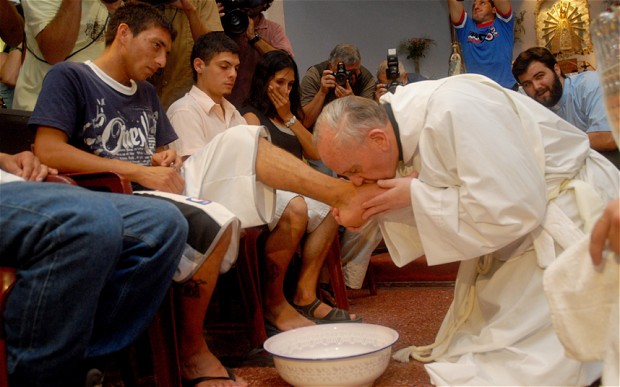
Hating on the Pope

pope francisMany people were shocked when they learned that there are people in the United States calling for the assassination of Pope Francis as a response to the pontiff’s call for European Catholics to shelter asylum seekers from Syria. Someone wrote, “White people need to be protected from the genocidal anti-white Pope and the genocidal anti-white religion he pushes.” Another wrote: “The pope deserves to be executed for crimes against the White race.”

But should Christians be shocked?

Over and over Jesus taught his disciples “that the Son of Man must undergo great suffering, and be rejected by the elders, the chief priests, and the scribes, and be killed” (Mark 8:31). I believe Jesus was essentially saying:

When you preach the word of God that cuts like a sword; when you love all people and try to teach others to love all people; when you preach a grace that is extravagant and a love that is unconditional; when you talk about the need to make room at the table for all people, even for folks called “illegal” or “aliens”; when you stand up for the rights of the poor and the marginalized; when you proclaim liberty to the oppressed and say that their lives matter; when you defend, forgive and friend sinners caught in the very act of sinning; when you tell lovers of money to sell their possessions and give the money to the poor; when you command a culture of war to be peacemakers; when you command the powerful to turn the other cheek; when you call religious leaders hypocrites and point out their hypocrisy; when you criticize their faith without works, their theology without practice, and their tithing without justice; when you refuse to tolerate intolerance; when you humble yourself and do these things that I do,” says Jesus, “then the self-righteous powers-that-be will rise up, and they will hate. They will hoist their colors, and they will grab their guns. They will come against you with all that they have, and they will come against you in name of God. They will do anything and everything that is in their power to stop you, even if it means killing you.

Therefore, the hate that is in our world for Pope Francis should not surprise us. But it should raise a few questions. Among them are: “Why am I not hated for my faith?” “Why have I never been threatened for my faith?” “Why do I feel so safe and secure in my faith?”

Are We More than Theologians?

hungryMark 7:24-30 NRSV

Our scripture lesson this morning has been called one of the most disturbing passages in the gospels. And it is disturbing on many levels.

On one level, it is disturbing, because Mark tells us that Jesus goes on a trip to a Gentile region and enters a house hoping no one would know he was there. This is so unlike our portrait of Jesus as a fisher of people, as a good shepherd who seeks and finds.

The story becomes even more disturbing, when he encounters this Gentile woman of Syrophoenician origin. Mark tells it as if Jesus is bothered by this woman. “Yet, he could not escape notice.” Have you ever had to run to the grocery store early in the morning? Unshaven. No makeup. Wearing a pair of sweats. You go hoping you would not run into anyone you know. But it never fails. You always do. Mark tells this as if Jesus has that same type of disappointment. “Yet, he could not escape notice.”

Then we begin to wonder the real reason he was disappointed. Was it because someone recognized him or was it because a “Gentile woman of Syrophoenician origin” recognized him? Why would Mark point out this woman’s ethnicity?

The story gets worse.

The woman begins to beg Jesus to cast a demon out of her daughter. This is when the seemingly disappointed Jesus gives the woman a callous, seemingly racist answer. “Let the children be fed first, for it is not fair to take the children’s food and throw it to the dogs.”

Jesus, using a common expression of his day, says: “Let the needs of the Jews be met first, for it is not fair to take the gifts of God which are intended for Jews and give it to the Gentiles” [he calls “dogs”].

Of course, many have speculated why Jesus gave such an insulting response. Some have said that it was because he was simply tired and needed little break. Jesus was trying to get away, get some rest and have some privacy. And this woman simply ruined his vacation.

Some say that since Jesus was a good Jew, he still had problems sharing the good news to the Gentiles. Jesus had problems and prejudices, like we sometimes have problems and prejudices, sharing the good news with folks who are different.

Others have tried to soften the words of Jesus. They say that when Jesus called the Gentiles “dogs,” he was merely referring to beloved household pets. He wasn’t being harsh at all. He was referring to lovable animals that people cherish and treat as part of the family.

Some have even suggested that Jesus did not really mean what he said. He was only saying it to test the woman’s faith.

Then, just when you think it cannot get any worse, the story becomes even more disturbing, as we hear from the woman. The woman schools Jesus:

Sir, even the dogs under the table eat the children’s crumbs. [In other words: At my house, the dogs eat at the same time the children eat. So why should have to wait until the needs of the Jews are met before my needs are met? There’s enough room and enough food at God’s table for all of us at the same time.]

Jesus recognizes her wonderful answer and says: “For saying that, your daughter has been healed.”

This is disturbing because this is the exact opposite of what we usually expect from Jesus. It is Jesus who is supposed to answer with a wonderful good news revealing the truth of God’s grace and love for all people, Jews and Gentiles. But here, it is the woman, the Gentile, the outsider, who gives the correct response, who gives the good news, and even appears to correct Jesus with the good news.

Well, I have told you how others have interpreted this disturbing text. Now, let me tell you what this text means to me.

I believe it is very important to interpret this text within its context. Before coming to Tyre, Jesus was back in Galilee arguing theological matters with the Scribes and Pharisees, the religious leaders of his day, regarding who was clean and who was unclean. The religious leaders said that all non-Jews, like the Syrophoenician woman, who did not strictly adhere to their traditions were “unclean” in the sight of God. In the previous passages, calling the religious leaders “hypocrites,” Jesus says “no” to this type of thinking with a very deep, insightful theological discourse.

Then he goes to Tyre, and he is confronted by a non-Jew who has a daughter with an “unclean spirit.” It is now time for Jesus to practice what he has been preaching. However, Jesus is still thinking theologically. It may be because that was the purpose of his solitary stay at that house. He was perhaps there to do some theological reflection regarding the nature of his ministry and mission. So when he is surprised by this woman, taking a little off guard, still in a theological frame of mind, he responds with the theological statement that children should be fed before dogs.

The truth is that God did choose to reveal God’s self, first, through Israel. God emptied God’s self and became human as a Jew. However, God did not come for the Jews only, and Jesus never says that. He only says that “children are fed first.” His statement does not rule out a mission to the Gentiles. He was making a truthful theological statement.

And notice that the woman does not dispute Jesus’ statement. She does not say that Jesus is wrong. She does not deny who she is apart from God. What I believe she is saying is this: “Jesus, that may be good theology. That may win you some arguments in the seminary back in Galilee, but you know something? It does absolutely nothing to help my sick daughter. My daughter still has an unclean spirit.” Jesus is then challenged to put all of the theology he has been teaching into practice.

Therefore, the question I believe this text asks us is: “Are we more than theologians?” Because, like Jesus, we are confronted by people every day who need more than our good theology.

I believe there are many who look at us theological church people and say:

You know, I am glad you go to church. I am glad you believe in the life, death, resurrection and ascension of Jesus, but you know something? That does nothing to help my daughter. I am glad you worship every Sunday. I am glad that you tithe faithfully and celebrate weekly communion, but you know something? That does nothing to help my son.

How do we respond to one who is hungry? Are we merely theologians? Do we simply say that we believe God blesses those who hunger? Or do we put our theology into action and feed that person?

How do we respond to one who is lonely? Are we merely theological? Do we tell them that God is with them, and if they pray they will sense God’s presence and not be lonely? Or do we offer ourselves, our presence, and our friendship? Do we offer the image, the presence of God in us, to that person?

How do we respond to one who does not profess Christ as Lord? Do we tell them how he came and died on the cross for their sins? Or do we show them by our own actions of sacrificial love?

How do we respond to people who are: sick or depressed; marginalized or imprisoned; poor or homeless; afraid or dying; grieving or suffering? Are we more than theologians?

And how do we respond to people who are different? How do we respond to those who have been taught by society, and even by the church “on God’s authority,” that their lifestyle is outside of God’s grace and love? How do we respond to those we sometimes refer to silently, if not out loud, as “dogs?”

If anything should disturb us about this passage, it is this! Because I think we know the answer.

Fourteen years ago this month, shortly after September 11th, a husband and wife and their beautiful daughter visited a church in North Carolina. They were new in the community and had heard about the reputation this church had for being a warm, friendly, loving community, so they decided to visit.

After the service, the pastor was at the front door shaking the hands of these visitors letting them know how glad he was that they had come to worship with them this morning. A deacon, one of the most revered, theologians in the church, passed by. He had been a Sunday School teacher for 30 years. The pastor got the deacon’s attention and introduced him to the visiting family. The father extended his hand to shake the hand of the deacon. The deacon, however, looked irately at the pastor and then walked out the front door, leaving the visitor’s hand extended in the air.

For you see, this visitor’s hand had a Middle Eastern tone. He was Arabic. And his wife’s hands were black. And the little girl’s hands were a mixture of both.

I don’t know what the family said to one another when they got back to their car. I do know that it was the last time they visited that church. But they might have said something like:

You know, I am glad that you say that you love the Lord. I am glad that you people are faithful to this church. I am glad you believe the things you say you believe. But you know something? That does nothing to help my daughter. And no, we are not like you at all. We are not the traditional Norman Rockwellian family, and you may think we are dogs. But, you know something, at my house, even the dogs eat at the same time the children eat. At my house, there is enough room at the table and enough food for all.

Does the Thought Really Count?

Brut33James 1:22-25 NRSV

I know it is way too early to mention Christmas in a sermon. However, the following is the best sermon illustration that I could come up for this morning’s scripture lesson.

Every Christmas, when my whole family gathered at the home of my grandparents for Christmas dinner, and more importantly, for presents, my brother, sister and I could always count on getting some cool presents. For just about everyone to give us some kind of special toy that we could play with for hours at a time.

However, we always could count on this particular relative to give us something that we could never play with, something like a pair of socks, a pair of gloves, or a set of handkerchiefs. When I was in the first grade, I remember getting what every six-year-old boy wanted: a bottle of Jovan Musk for Men. The next year, I got every seven-year-old’s favorite gift: a box set of Brut 33 Cologne and Deodorant. And the next year, I got every eight year-old’s dream-come-true: Some Soap on a Rope.

And every year, I remember always opening my present from this one particular relative, smiling and saying: “Thank you. This is exactly what I wanted.” Because Mama and Daddy would always pull us children aside every Christmas and tell us to always remember that it is not the present you get, but it is the thought that counts.

To this day I have never really fully understood that philosophy. What did my parents mean that “it was the thought that counted?” I could not play with my relative’s thoughts. Besides, you have to wonder: soap on a rope for eight-year-old? What were they thinking?

“It is the thought that counts.” It is a common phrase, because often times, although we may not like it and may not fully understand it, we know it to be true. It is true at Christmas time, on birthdays, Mother’s Day and Father’s Day, but it is also true in other areas of life.

Sometimes in life the thought counts, because the thought is all that we have to offer. Sometimes we encounter situations where there is nothing that anyone can actually do, and the only thing that anyone can say is: “I am thinking about you.”

One of the most difficult things to do is to try to buy a card for someone who has a terminal illness. I remember trying to find a card for my grandparents during the last days of their lives. Most all of the cards read: “Hope You Feel Better” or “Get Well Soon.” And that’s not always appropriate. The only cards I found which best met my grandparents’ needs were cards which simply read: “I’m thinking of you” or “You are in my thoughts.”

There are some situations in life when the only thing we have to offer, and the very best thing we can offer, is our thoughts. Sometimes the greatest gift in the world can be those beautiful, empathetic, and comforting words, “I’m thinking about you.” Sometimes, the thought really does count.

Empathy is certainly one thing that is needed in this world. How much better would this world be if more of us thought before we spoke, before we acted? How much better would this world be if more of us tried to put ourselves in the shoes of another? There would certainly be much less hate in this world, much less bigotry, prejudice and stupidity.

I can remember many times in my life when I would have much rather received someone’s thoughts instead of the gifts they tried to give me. When sorrow and grief came my way, good-hearted people, I am certain without thinking, offered painful and insensitive antidotes like: “Well, the Lord knows best.” “You are just not ready to be a father.” “God doesn’t make mistakes.” “It’s God’s will, and we can’t question God.” Why couldn’t they just say: “I’m thinking about you,” and nothing else. Sometimes, not only does the thought count, the thought is the only thing that counts.

However, we must also understand that sometimes in life, the thought does not count. Sometimes, thoughts mean very little, and sometimes the thoughts mean nothing at all.

The apostle James, throughout his letter, makes this very clear. “Be doers of the word and not just hearers; otherwise, it is like looking in a mirror and immediately forgetting what you look like.” In other words, the look didn’t count. And in the next chapter he writes:

What good is it, my brothers and sisters, if you say you have faith but do not have works? If a brother or sister is naked and lacks daily food, and one of you says to them, ‘Go in peace; keep warm and eat your fill,’ and yet you do not supply their bodily needs, what is the good of that?

James is saying that sometimes the thought, no matter how good that thought might be, simply does not count. Sometimes good thoughts must be coupled with good deeds. Faith must be coupled with works. James says that if a person is hungry, all of the good thoughts in the world are not going to fill him up. Only food will do that. Thoughts are nice, but thoughts cannot keep a person warm. Only clothes will do that.

In Second Timothy, we can find a great example where thoughts are of little help. Paul writes to Timothy:

Do your best to come to me soon . . . and when you come, bring the cloak that I left at Troas, and also the books, and above all, the parchments . . . Do your best to come before winter.

It is obvious that what Paul does not need here are some thoughts. Paul appears to be lonely and would like some company. Paul is cold and needs a sweater, especially before winter. Paul appears to be bored and needs a book. Imagine if Timothy would have written Paul back and said, “Dear Paul, I cannot come and bring your sweater, and I cannot come and bring your books, but please know that I am thinking about you.”

You know, one of the greatest things about First Christian Church is that we have a lot of good thinkers. We have critical thinkers, philosophers, if you will, but we also have some very empathetic thinkers. Our church is full of compassionate thoughts. When the thoughts counted for some of you in the hospital, in the nursing home or in the funeral home, you always knew that there were people who were sincerely and lovingly thinking about you. And it counted for a lot.

However, there are just as many instances in the church where our thoughts simply do not count.

When Carolyn Joyner suffered a stroke six weeks ago, the most compassionate, most empathetic thoughts in the world were not going to build her the handicap ramp she needed. Hammer, nails, lumber, and people who were willing to give up a beautiful Saturday morning were needed to do that.

Since I have been your pastor, we have been thinking, at least I have been trying to get us to think, about how wonderful it would be if every member of this church volunteered to serve on some ministry team. We have thought about the tremendous impact we could have on eastern NC, our region, and our world, if every one of us were using his or her Spirit-given gifts for ministry. Thinking about it though, will not impact a thing.

If this church is ever going to become the church that God wants her to become, we must be willing to move beyond our thoughts to work hard and sacrifice much. Each of us must be willing to give of ourselves, of our tithes, but also of our time and our talents.

There are a couple of families in our church who have not worshipped with us for some time. I have missed them. And I know you have missed them. However, missing them, thinking about them, no matter how sincere our thoughts may be, will not let them know that they are missed. They need a phone call. They need a card sent to them, not thoughts kept to ourselves.

Sometimes thoughts do count. Sometimes saying, “I’m thinking about you,” is all we can offer, and it is all we should offer. Sometimes those simple, beautiful words can make all the difference in the world. However, as James and Paul teach us, sometimes in life the thought simply does not count.

Jesus constantly said that our thoughts should be put into action. Jesus said that if we truly loved him, we would do more than just think about him with sentimental affection. Jesus said that if we loved him, we would keep his commandments.

Sometimes I do believe that it is appropriate to think about Jesus. Part of our worship should be spending time in meditation reflecting on Christ’s love for us. How he loved us so much that he suffered for us. Those are things that we should think about. But I have to believe that if that is all that we do, then those thoughts simply do not count. They are like looking in a mirror and, a minute later, forgetting what we saw.

During our worship, when we reflect on the suffering of our Lord, when we hold the broken bread and the cup, those thoughts should always stir us, move us and mobilize us to go out and suffer alongside someone who is suffering. Thinking about our Lord should compel us to visit the nursing homes, the funeral homes, the hospitals and the prisons. Thinking about Jesus’ suffering should propel us serve on a ministry team, to be more committed than ever to truly be a movement for wholeness in this fragmented world.

A movement. Not a team of thinkers.

A movement. Not philosophy class.

A movement. Not a club of theorists.

A movement. Not a group of day dreamers.

A movement. Not a church of well-wishers.

A movement, a body of doers, doing all that we can, when we can, with all that we have been given,

working for wholeness in a creation that is broken,

working for justice in systems of inequality,

working for mercy and grace in a society of bigotry and prejudice,

working for peace in a culture of war and violence,

working for truth in a nation of politics,

working for love in a world of hate,

working for hope in a world of despair.

Now, may God give us the wisdom and the courage to do more than to just think about this sermon.

Get a Life: Six Things the Church Must Get to Live

get a lifeThe Christian faith is essentially about new life. Christ is about renewing, reviving and resurrecting life.

This is why it is so troubling that many churches are dying today, and why it is even more troubling that many more churches, in spite of their buildings, budget and attendance, as far as the world is concerned, are essentially dead.

Here are six things that I believe the church must get in order to get a life:

Get Together

The Christian faith is about coming together as a community. The first thing Jesus did to give birth to the Kingdom was to call together a community of disciples to share the good news of God’s love with others. The Christian faith is personal, but Jesus never intended it to be private. Faith should never be tucked away deep within the soul of an individual. Faith should always be worn in public, out on the sleeves of a community.

Get Down

The Christian faith is about selfless, sacrificial service. It is about God who came down through Jesus, who was laid down in a manger, who crouched down to forgive sinners, who stooped down to heal the sick, who knelt down to welcome children, who bowed down to wash another’s feet, and who bent down to take up his cross. For many, church is about getting uplifted. We need to make church about getting down.

Get Real

The Christian faith is about following someone who preached against the fake piety and hypocrisy of organized religion. In Jesus’ first sermon, he warned us about being judgmental of others who have specks in their eyes, while we have logs in our own eyes. And no one who hears the story of the woman caught in the act of adultery ever forgets Jesus’ words: “Let those without sin cast the first stone.” Therefore, no one in the church should ever act as if he or she is superior to anyone.

Get Serious

The Christian faith is about serious grace. With grace, Jesus always seemed to overdo it. 180 gallons of wine is a serious amount of wine for a small wedding party. The gift of the best robe, a ring, a fatted calf, loud music and dancing is a serious gift for a prodigal son. If the church is to ever have life again, the church must share this serious, extravagant grace with others, even while others accuse us of seriously overdoing it.

Get Up

The Christian faith is about prophetic justice. Jesus announced God’s new Kingdom by quoting the prophet Isaiah, saying that he had come “to bring good news to the poor, proclaim release to the captives, recovery of sight to the blind and to let the oppressed go free.” The church must always be willing to get up and stand up for the liberty and justice for all, especially the poor, the disabled, and the marginalized.

Get Out

The Christian faith is about getting out into the world. Jesus was always out on the move, going out to the people. To be a church that is alive, the church needs to get out of the sanctuary and go to the places Jesus went, see the people Jesus saw, and do the things Jesus did.

Will there be folks in the world who will despise us for it? According to Jesus: most definitely; but at least the world will know that we are alive.

Final Lessons from My Wheelchair (or Crutches)

man-in-crutchesTottering around on my crutches has been a royal pain. It has been a pain in my arms, shoulders, back, and in my good knee. It has also been a pain in my spirit.

However, what has gotten me through these painful six weeks, besides my wife (God bless her), was the hope that I would one day be able to walk, even run, again. My pain was not forever.

This is the great hope of our faith in God. No matter how weak or disabled we are, no matter how much pain we are in, even if we are suffering on the brink of death, we possess the hope that our weakness and pain is not forever. We have the hope that we will one day have the strength to walk, and to even run, without pain.

Consequently, there is nothing in all of creation, neither in life, nor in death, that we cannot get through. The hope of our faith will see us through anything. I love the way the prophet Isaiah speaks of this great hope:

Have you not known? Have you not heard?

The Lord is the everlasting God,

the Creator of the ends of the earth.

He does not faint or grow weary;

his understanding is unsearchable.

He gives power to the faint,

and strengthens the powerless.

Even youths will faint and be weary,

and the young will fall exhausted;

but those who wait for the Lord shall renew their strength,

they shall mount up with wings like eagles,

they shall run and not be weary,

they shall walk and not faint (Isaiah 40:28-31 NRSV).

Thanks be to God.

Drunk, Dancing Disturbers of the Peace

disturber_of_the_peace_baby_hat

2 Samuel 6:-1-5, 12-19 NRSV

Ephesians 5:6-20 The Message

This passage from Ephesians is the story of my faith, or at least, I hope to make it the story of my faith. For there was a time that I was taken in by all sorts of religious smooth talk, and I hung around people who knew the religious sales lingo all too well.

They spoke words that were religious, yet unbiblical, but words that my itching ears wanted to hear: “Only people who think and believe like us are God’s children”; “God only wants us to only help those who are willing to help themselves”; “God wants us to love the sinner but hate the sin”, which was also interpreted, “We should love others, but we don’t have to like others.”

Now, this did keep me out of trouble. It kept me from hanging around or friending anyone who did not think like me and worship like me. And it also kept me from doing anything to help the poor in my community or anyone outside of my church.

The faith instilled in me was personal and private. It was something I possessed, clung to, an exclusive ticket to an eternal home. It was about personal peace and eternal security. It was something that kept me from immorality. And immorality was always limited to personal sin, especially the big five (I know you thought they were 10, but we good Baptists had 5): “Do not to drink, dance, smoke or chew or go with girls who do.”

My faith was always controlled, moderated, tempered, I later learned, watered down. It never challenged the status quo, never disturbed the peace, never questioned why women did not preach in church, or even take up the offering. It never asked why the living quarters for migrant workers in my farming community looked so bad or why all migrant workers were black.

My faith was kept trucked away, wasting away in the dark. Faith was something that we only did on Sunday morning between the hours of 10 and 12. Although going to church often seemed like a waste of time, as I spent many of those hours nodding, sometimes actually napping in my pew, I was taught that this was what made God happy.

But here in Ephesians, Paul is telling me that my faith was actually making God furious. My faith was not merely sleeping in a pew. My faith was dead in the pew.

Wake up from your sleep, Climb out of your coffins; Christ will show you the light!

So watch your step. Use your head. Make the most of every chance you get. These are desperate times!

17 Don’t live carelessly, unthinkingly. Make sure you understand what the Master wants.

18-20 Don’t drink too much wine. That cheapens your life. Drink the Spirit of God, huge draughts of him. Sing hymns instead of drinking songs! Sing songs from your heart to Christ. Sing praises over everything, any excuse for a song to God the Father in the name of our Master, Jesus Christ

Now, like every good Southern Baptist, I knew not to drink too much wine. But I never learned that I was supposed to replace the wine. I never knew I was supposed to drink from the Spirit of God and become God-intoxicated. I did learn that these are desperate times, and my faith involved singing hymns, but only singing hymns to be heard only from behind the stained glass; Not singing and dancing in the streets in the light of the day like some public drunkard!

This passage reminds me of a story from second book of Samuel.

After David led a great army to get possession of the Ark of the Covenant to return it to Jerusalem, David and his army were so overcome with what was going on that they engaged in festive rejoicing and dancing. They were seized by what James Newsome, New Testament professor of Columbia Seminary calls “a spirit of prophetic ecstasy.”

The scriptures say that David sang and danced before God “with all his might.” He sang and danced before God with all that he had and with all that we was. David was God-intoxicated.

And when you become God-intoxicated, so filled with the Spirit of God, you will most certainly disturb the peace and face opposition it.

When David and his wife Michal arrived home from the party and began preparing to turn in for the night, David, if he was anything like me, was probably hoping to hear some words of affirmation from his wife. Something like, “Honey, you were so wonderful today. As I listened to you sing and watched you dance in the streets, you just don’t know how proud I was of you! You danced your heart out! And why shouldn’t you have, you brought the Ark of the Covenant back to Jerusalem where it belongs!”

However, the words David hears are something like: “David, you looked like a drunken fool.”

Perhaps David did act like an intoxicated fool. Uninhibited and unrestrained, he lost all self-control. Seized by “a spirit of prophetic ecstasy,” David held absolutely nothing back. David surrendered to the Spirit which had filled him.

David danced, charged by the rule of God. David danced, electrified by the justice of God. David danced a dance of total self-surrender. David danced, holding nothing back. David danced giving all that he had and all that he was to God. And there was absolutely nothing personal or private about this dance. This dance caused a scene. This dance created a fuss. It got people’s attention. It challenged the status quo. It disturbed the peace. And Michal despised David for it.

This is what happens when one drinks huge draughts of the Spirit of God. This is what happens when one becomes God-intoxicated. There is no way to control it, moderate,  temper it. There is no way to conceal it. There is no way to regulate it to two hours on a Sunday morning. When one becomes drunk with the rule of God, the love of God, one’s feet will inevitably move to the dance of the gospel, and one will be despised for it.

The dance of the gospel is a dangerous dance. The dance of the gospel is a disturbing dance. The active affirmation the rule of God does not set well with the Michals of the world.

The dance of personal, private piety are easier steps to follow, aren’t they? The message of false prophets watering down the gospel of Christ as nothing more than a little dose of “chicken soup for the soul” is much easier to swallow. If we just get ourselves right with the Lord, if we pray right and live right, if we are good moral people, if we don’t drink, smoke or chew or go with girls who do, then God will bless us and one day send us to heaven.

The dance of the gospel is radically different. The dance of the gospel are steps to the beat of a different drum. If we get right with the Lord; if we pray right and live right; if we lose all inhibitions and all restraint; if we completely surrender ourselves to the rule of God; if we love others as Christ loves us, unconditionally, unreservedly; if we question the status quo, if we disturb the peace; if we dance to the beat of this drum, then we will invariably get some push-back.

That’s a good question for all of us who are attempting to follow Jesus, is it not? “In your walk with Jesus, are you getting any push back?”

The answer should always be yes, for the dance of the gospel is a dance of self-surrender to a radical beat. It is a beat of sacrifice. It is a beat of selflessness. It is a beat of self-expenditure. It is a beat of a scandalous love and of an offensive grace. And to world, as the Apostle Paul warned the Corinthians, if we let go and dance to this beat, we are certain to look like fools. And as Luke warned us in Acts chapter 2, when we are filled with the Holy Spirit of God, we may be accused of public drunkenness.

We will be called drunken fools when offer our friendship to a poor woman in a nursing home who can offer us nothing in return.

We will be called drunken fools we spend valuable time volunteering at the hospital, serving lunch in a soup kitchen, building a handicap ramp for a stranger who may never use it, spending a week repairing homes in West Virginia, spending thousands of dollars in Nicaragua, or visiting someone in prison.

We will be called drunken fools when we offer love and forgiveness to our enemies, when we give the shirt off our backs to complete strangers in need.

We will be called drunken fools anytime we love anyone with the self-expending love of Christ—whenever we love someone without inhibitions, without restraints, and without reservations.

We will be called drunken fools when we continue to challenge the status quo, question immoral systems of injustice, and disturb the peace.

For the Michals of the world despise this dance. And they will do everything in their power to stop this dance.

We have all heard their voices: loud echoes which discourage such dancing. “Don’t get too close to him. Do not give your heart to her. You will be sorry. They will only let you down.”

“Don’t love that man. He has done absolutely nothing to deserve it and will never reciprocate.”

“Don’t love that woman. She is too needy. She never does anything to help herself. She will demand too much.”

The voice of Michal say: “The system is not that broken. The poor get what they deserve. Most minorities have it pretty good in our country, and they are the real racists. Public education is not worth fighting for. Healthcare is not a right.”

The voices of Michal say: “Keep your faith private, moderate. Keep it between you and God. Don’t stir up trouble. Just sit on a pew and look forward to going to heaven. Sing behind stained glass. Don’t worry about missions. Don’t worry about your neighbor. Don’t waste your time giving yourself away to strangers. Loving like that is crazy. It is too risky. It leads to too much pain.”

However, there is another voice, a voice heard by David: “These are serious times, so let’s drink large draughts of the Spirit, until we are all God-intoxicated! Let’s sing and dance in the streets with all we have.” It is a voice which says: “Dance! Hold nothing back. Give yourself away. Surrender yourself to the beat of the heart of the gospel. Love. Love honestly and deeply. Love courageously and graciously. Lose yourself. Empty yourself. Pour yourself out. Question the systems of injustice. Challenge the status quo. Disturb the peace.”

Will this love cause pain? It will cause enormous pain. But the joy of God which will consume you will be so immense the suffering will be well worth it.

Garth Brooks once sang a song entitled “the dance.” There’s a line in that song that goes, “I could have missed the pain, but I would have had to have missed the dance.”

Dancing the dance of the gospel will inevitably bring pain. However, never truly following in the steps of Jesus to avoid that pain is never really living. There is no joy being a wallflower on the wall of life or being a Sunday morning pew napper.

So, let us wake up from our sleep and rise from our coffins. Let us drink huge draughts of the spirit of God, and let us dance! May the First Christian Church go out and dance in the streets of Farmville, Greenville, Winterville, Tarboro, Pinetops, Wilson, Fountain and Pikeville and have seizures of prophetic ecstasy! Be warned, we will look like drunken fools, and we will suffer for it. But the immense joy of God, the joy of abundant life, now and forevermore, is well worth it.

The Empty Nest

empty nestOur baby has left the nest for college and for the world, and honestly, her parents are not doing very well.

Because we have lived much longer than she, we are much more aware of the many threats that exist in the world. However, because we love her much more than she is aware, we have chosen to set her free into the threatening world and to pay the price with our suffering.

Although we have taught her well, we know that she will make mistakes and choices that will cause her pain. We also know that she will encounter people who will disappoint her, and some, who will even hurt her.

However, we also know that by setting her free, she has the potential to do so much good in this world. She has many gifts, exceptional abilities and a tremendous love to make this world a better place. But at the same time, we know that there will always be those who will oppose her love by disparaging her gifts and obstructing her good works.

As her parents, we know that as long as we are living, we will always be there for her, doing all that we can do, to forgive her mistakes, to comfort her when she hurts, to encourage her to fulfill her potential, to pick her up when she falls, and to always love her more than we love our own lives, more than she may ever understand. This will inevitably bring us more pain, but without any doubt, we know our baby is worth it.

The prophet Isaiah often referred to God as a mother who suffers for her children. Jesus often called God “father.” Suffering in the empty nest, we know, more fully than ever, why.

Consequently, although we may not be doing very well these days, we know, honestly and more fully, we will be just fine.