Downward, Upward, and Forward Behind Jesus

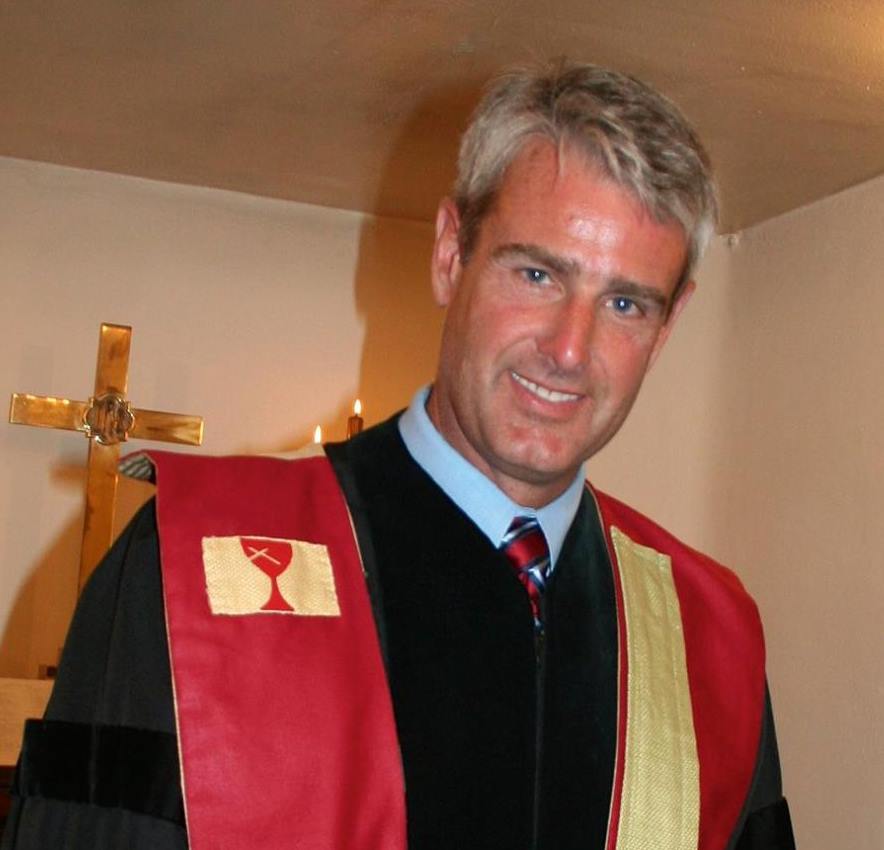
Jarrett Banks Red Stole

I have decided to change the title of my blog from “Stumbling, Bumbling, and Fumbling Behind Jesus” to “Downward, Upward, and Forward Behind Jesus.” Here’s why:

With “Stumbling, Bumbling, and Fumbling,” I wanted to make the point that I am an imperfect person on a flawed journey attempting to be a follower of Jesus. However, I have decided that “Stumbling, Bumbling, and Fumbling” may place more emphasis on my imperfections, weaknesses and shortcomings, than it does on God’s extravagant grace. With “Downward, Upward and Forward,” I hope to make it less about what I am doing or not doing, and make it more about what God is doing and will do.

It is my hope that “Downward” emphasizes humility, but also what Henri Nouwen calls “the downward mobility” of Jesus. Throughout the gospels, Jesus is portrayed as one who: moves down to sit at the lowest seat at the table; bends down to wash the disciples feet; stoops down to welcome small children; crouches down to defend, befriend and forgive the sinner; reaches down to serve the poor; lowers himself down to accept the outcast, to touch the leper, to welcome the foreigner, to heal the sick, to raise the dead and to pick up and carry his cross.

It is my hope that “Upward,” which comes after “Downward,” emphasizes a willingness to always humbly rise up, speak up, and stand up against the evils and injustices of our world. I do not wish to be a minister who is more mainstream than upstream, and in the words of Dr. Martin Luther King, Jr.: “…more cautious than courageous.” I pray that I will always resist the temptation to remain silently “behind the anesthetizing security of stained-glass windows.”

It is my hope that “Forward” emphasizes a faith that is progressively moving forward into the gracious promise of God’s future for all people and for all creation. I seek to follow behind the Christ who always leads from out ahead, drawing us into God’s future: beckoning, welcoming, loving, renewing, restoring, and resurrecting.

I will certainly continue to “stumble, bumble and fumble” along behind Jesus, as my journey as a follower of Christ will continue to be flawed; however, with the extravagant grace of God, I hope to follow in a way that is always “downward, upward, and forward.”

Welcome to the Table

Maundy ThursdayEach Sunday, I worship around a table. The table may seem small, but at the same time, it is very large. For the bread that is served from this table, and the cup that is poured from this table symbolize a boundless love, an extravagant grace and an eternal promise.

Therefore, each Sunday, I can stand boldly in front of this table and confidently say:

If you are riddled with all sorts of doubt, you are welcome.

If you have never doubted anything in your life, you are welcome.

If you have no self-control, you are welcome.

If you are all about self, you are welcome.

If you humbly believe you are the worst sinner in town, you are welcome.

If you arrogantly believe you are the best saint in town, you are welcome.

If you are empty and lost, you are welcome.

If you are teeming with pride and confidence, you are welcome.

If you are broken, poor and weak believing you have nothing to give, you are welcome.

If you are whole, rich and powerful with much to give, you are welcome.

If you have little or no faith, you are welcome.

If you think there is no one more faithful than you, you are welcome.

How can this be?

Because this table, this bread and this cup, is not about you.

It is not about what you can or cannot do for God.

But it is all about what God has done, is doing, and will do for you.

Therefore, all are welcome, and all means all.

Only Harry: Remembering Harry H. Albritton, Sr.

Let me share with you how I usually prepare a person’s eulogy. I think about the person’s life, their contributions, their personality, and then I find a biblical character or story that parallels, or in some way relates to, the person. This is how I usually prepare. However, when it comes to Harry Humphrey Albritton, Sr., usual preparation does not apply. Think with me. Is there one biblical story, or single biblical character, or anyone else you know for that matter, who compares to Harry?

During his final hours, the Hospice nurse came into the room to tell the family what to expect. She concluded by saying, “but everyone’s different.” I pointed to Harry and said, “And you have no idea just how different this one is.”

How many people do you know who played basketball well into his seventies, and played basketball very competitively, physically, tenaciously, always to win; taking on Rocky Stone and me, two against one, when Rocky and I were still young enough to play basketball?

Only Harry.

Who do you know who, when he began having trouble sleeping this past this year, went online and ordered himself a military cot, because he remembered the four years while he was serving our country in the Air Force, getting the best sleep of his life?

Only Harry.

How many people do you know who always, I mean always, told you exactly what he thought to be the truth, even when it came to religion or politics, even when he knew that what he believed to be the truth would make you angry and probably dislike him?

Only Harry.

How many people do you know who, when their pastor dropped by to see him one evening after the pastor got word that he was extremely sick, was honest enough to tell the truth when the pastor asked if there was anything the pastor could do to help, by answering: “Yeah. You can get the hell out of here!”

Only Harry.

How many people do you know who, while in the hospital the day after no one thought he would make it through the night, when his pastor came to see him on crutches following knee surgery, honestly greeted his pastor in the following manner:

“Did you come to see me on crutches?”

“Yes, I did,” I proudly responded.

“You dumb, stupid butt!” Of course, he was much more colorful than that. “You had no business running those long distances at your age! You should have had good sense and stuck to playing basketball!”

Only Harry.

How many people do you know who at a Wednesday night church supper, at the dinner table, in front of God and little old ladies, gave a birds-and-the-bees lecture to the pastor’s son who was getting ready to go off to college?

Only Harry.

How many people do you know living in Farmville who, because he believed in being a good steward of the earth, and because of just good common sense, drove an electric car?

Only Harry.

Who do you know who had the best HVAC system money could buy installed in his garage because of the empathy he possessed for his pets? Who owned dogs that live as he lived: first class all the way?

Only Harry.

How many people do you know who was wise enough and humble enough to begin using a walker before he ever broke a leg or a hip and strongly encouraged others to use one?

Only Harry.

How many people do you know in town who, because of his concern for the children of this town, was not only one of the oldest, active members of the Farmville Kiwanis Club, but paid for his pastor to also be a member?

Only Harry.

How many people do you know who, after listening to a presentation at church about a mission trip opportunity to repair homes in the rural Mountains of West Virginia, in one of the most impoverished areas in our country, became so moved, so agitated and so concerned that he stood up and spoke out, saying that he didn’t want to just put a “Band-Aid” on the poverty, but he wanted to actually do something to cure the poverty? He wanted to strategize, energize and mobilize to end the poverty, to repair the breach, to restore the streets, and make it a place where future generations could thrive.

He wanted to set up meetings with the CEO’s of corporations, with state and local government and investors and encourage them to build new factories in the area and offer employment. And if that did not work, he wanted to lobby Congress to provide tax incentives, to create ways to re-locate the residents to them to the jobs.

Someone responded, “We can’t do that!”

He said, “What do you mean ‘we can’t?’ There’s no such thing as ‘can’t.’ You mean, ‘we won’t.’”

Only Harry.

Who do you know who took his faith, and his call to share his faith, so seriously, that he recently purchased and distributed copies of a book entitled Jesus Calling at Bojangle’s and admonished all of the recipients to read it every morning when they woke?

Only Harry.

How many people in this post-9/11 world do you know who intentionally built a relationship, a genuine friendship, with one of the few Muslims in town: giving him a Bible; inviting him to church; and promising his God to be there if he ever came to church to do all that he could to make sure that felt more than welcomed at the communion table?

Only Harry.

How many people do you know who, because of his empathy for the elderly in town, especially the many widows living here, did all he knew how to do, to get a retirement home built here in Farmville?

Only Harry.

Who do you know who, after being told by his mother as a little boy that he could not go over to the home of his best friend Ting, because Ting had black skin, and he had white skin, went outside, got a hand full of some coal dust, spread it all over his arms and face, went back in and said: “Mama, now I have black skin. Now, can I please go home with my friend Ting?”

Only Harry.

How many white people do you know who went to the Paramount Theater in the late 1930’s with his black friend but sat in the balcony, because his friend was not allowed to sit downstairs with the whites? He said, “If my friend Ting is going to sit in the balcony, I am too.” He remembers being the only white boy sitting in the balcony that day.

Only Harry.

Who do you know who loved his pastor with an unparalleled frankness and straightforwardness; and loved his church faithfully and generously, yet critically and honestly, in a way like none other?

Only Harry.

Who loved ECU academics and athletics, supported them with his generous donations and with his faithful attendance, and with his ad nauseum discussions with you, especially if you were a Tar Heel?

Only Harry.

Who loved Joyce more than he loved his own life, who constantly bragged on her competence and her accomplishments, her faithfulness and her intelligence, even more than he bragged on his own basketball skills and East Carolina?

Only Harry.

Who loved his children with an honest and tough love, but also a compassionate and forgiving love, who continually preached to instill in them the virtues of hard work, of striving for excellence, of the willingness to change and to adapt, and of giving their all to make a difference in the world all the while loving neighbor as self?

And who do you know who did this and actually succeeded? How many people do you know who spent their last days surrounded by all of their children, all of them hard-working, successful contributors to society?

Only Harry.

Who loved his grandchildren with the same honest, tough, but compassionate and gracious love? Who has grandkids who will never forget this unrivaled love, who will undoubtedly grow up in this world with a little bit of their grandfather living in them, with this burning desire in their hearts to be the very best that they can be, to give their all to make this world a better place?

Only Harry.

Who has friends, a church and a family who will always be grateful to God for giving them the one and only, irreplaceable gift of God’s grace named Harry Humphrey Albritton Sr.?

Only Harry.

The good news is that because of the uniqueness of Harry, I believe our days of mourning will be quickly transformed into days of gratitude and celebration, if they haven’t already.

And here is more good news: It is very obvious to all that Harry was created in the image of our God and imaged our God through his faith in Christ, because the God that gave us the matchless gift of Harry, is, God’s self, matchless.

Of whom does Moses ask after the Israelites are delivered from slavery and death: “Who is like you, O Lord, among the gods?  Who is like you, majestic in holiness, awesome in splendor, doing wonders” (Exodus 15)?

Only God.

Of whom does the Psalmist ask: “For who is God except the Lord? And who is a rock besides our God?” “Who is like the Lord our God, who is seated on high, who looks far down on the heavens and the earth” (Psalm 18, 113)?

Only God.

To whom does King David pray: “Therefore you are great, O Lord God; for there is no one like you, and there is no God besides you” (2 Samuel 7)?

Only God.

Of whom is the prophet Jeremiah speaking: “There is none like you, O Lord; you are great, and your name is great in might… Among all the wise ones of the nations and in all their kingdoms there is no one like you” (Jeremiah 10)?

Only God.

Who commanded to the faithful, “You shall not pollute the land in which you live…You shall not defile the land in which you live, in the midst of which I dwell…” (Numbers 35)?

Only God.

Who through the prophet Isaiah admonished God’s people to strategize, energize and mobilize, “to rebuild the ancient ruins, to raise up the foundations for future generations, to be called the repairers of the breach, restorers of the streets to live in” (Isaiah 58)?

Only God.

Who through the writer to the Hebrews proclaimed the good news: “We do not belong to those who shrink back and are destroyed, but to those who have faith and are saved. And faith is the substance of things hoped for. The evidence of things to not seen” (Hebrews 10, 11)?

In other words: “There is no such thing as ‘can’t!'”

Only God

In the gospels, who gives the gift of God’s only self in the person of Jesus, showing us how to live and how to love:

By speaking the truth, even while knowing that people will be angered by that truth and reject him for that truth;

By being a living example of wisdom and humility;

By caring for children everywhere;

By having concern and taking action on the behalf of the poor, the vulnerable, and the widows;

By sharing the good news of God’s love with all people;

By accepting foreigners at his table, making disciples of all nations, all ethnicities and all religions;

By identifying with, and by friending, and by sitting beside, and by liberating those who have been regulated by society to sit in a seat on the margins;

By challenging all of his friends, his family of disciples, his sisters and his daughters, his sons and his brothers: to always strive for excellence, to do the very best that they can, to work hard while generously giving all that they have to give, even their very lives, to make this world a better place?

Only God.

And who sent his son into the world to say:

“Very truly, I tell you, anyone who hears my word and believes him who sent me has eternal life, and does not come under judgment, but has passed from death to life” (John 5).

“Very truly, I tell you, the hour is coming, and is now here, when the dead will hear the voice of the Son of God, and those who hear will live” (John 5).

“I am the resurrection and the life. All who believe in me shall never die” (John 11).

“In my father’s house, there are many dwelling places. If it were not so, would have told you that I go to prepare a place for you” (John 14).

Only God.

Who called apostles like Paul to say, “There is nothing in heaven or in all of creation, not even death itself, can separate us from the love of God in Christ Jesus” (Romans 8).

Only God.

And who called apostles like John to proclaim that the time is coming for all of us “when there is going to be no more mourning, no more crying, no more pain, and no more death” (Revelation 21)?

And who called people like Harry Humphrey Albritton, Sr. to walk in this distinctive way and to share this inimitable hope in word and deed?

Only God.

Closing Prayer and Commissioning

May we please stand. Let us pray together.

In the days ahead, O God, may we continue to thank you for the gift of the uniqueness of Harry, and for the many ways that Harry will forever remind us of the uniqueness of our loving, eternal and only God who we know fully through Jesus Christ our Lord and Savior. Amen.

Now go onward from this place as Christian soldiers remembering Harry and honoring God…

By strategizing, energizing and mobilizing,

By speaking the truth;

By being a living example of wisdom and humility;

By being a good steward of the creation;

By caring for children everywhere;

By having empathy for and taking action on the behalf of the poor and the vulnerable;

By sharing the good news of God’s love with all people;

By accepting foreigners at your table;

By identifying with and by friending and by sitting beside and by liberating those who have been regulated by society to sit in a seat on the margins;

By striving for excellence, doing all that you can do, giving all that you have to give, even your very lives, never saying the word “can’t,” to make this world a better place;

By rebuilding the ruins, repairing the breach, restoring the streets and raising the foundation for generations to come.

All in the name of Jesus Christ our matchless Lord, who reigns with the inimitable Father and Holy Spirit forever and ever. Amen.

It’s Not About Us

Its not about us

John 6:24-35 NRSV

Not long after I moved to Louisville, Kentucky to attend seminary, I was called to serve a fairly large church as their youth minister. We had over 1,500 members and about 75 teenagers. I was only 22 years old at the time and as proud as I could be on the staff of such a large church.

One of the first things that the personnel committee wanted to do after I was called was to turn in my name and driver’s license number to the church’s insurance company so I could drive the church’s vans.

About a week later, I was asked to meet with Norman Hartman, the chairperson of the personnel committee, and the pastor. We went into the pastor’s office. The pastor shut the door. Norman said, “Jarrett, we have a small problem. You’ve had right many traffic violations haven’t you?”

I hung my head down in shame; face all red. “Yes, I have.”

The pastor said, “Tell us about it.”

And as if I was in a confessional booth I started: “Well, I have had a couple of accidents that were my fault. I got a ticket each time. And I believe I’ve had four speeding tickets but none were for going over 70.”

“It says here in this report you’ve had five speeding tickets,” Norman said, sort of reluctantly.

The pastor shook his head.

“One of them was not for speeding. It was for passing someone on a double-yellow line.” Norman and the pastor grimaced.

I tried to explain: “But I was on my way home for school for Spring Break going through this small town in North Carolina called Bethel. And I had been behind this car forever that was going 20 miles an hour! And as soon as we got out of the town, I passed.”

The pastor asked, “With all of those tickets, it seems like they would have taken your license away.”

“They were going to,” I said. But I went to a driver’s improvement clinic so I could keep it.”

Then the news came. I will never forget it. “Well, it’s nothing personal Jarrett,” Norman said, “but we are not going to be able to let you drive our vans. We think it would be too risky. Besides, putting you on our list of drivers would make our insurance premiums sky-rocket.  Our agent said that if you don’t get any more tickets in the next three years, you might be able to drive when you turn 25.”

Seeing that I was completely devastated and utterly embarrassed, the pastor said some of the most uplifting and comforting words: “Jarrett I want you to know that you driving record in no way makes me think less of you and your ability to be a fine youth minister. So, hold your head up, it’s not about you. We just can’t justify paying the increased premiums.”

“It’s not about you.” As a pastor, that’s a phrase that I find myself using rather frequently with different people.

One of my church members in Winston-Salem got her feelings hurt when I did not visit her in the hospital. She told someone in her Sunday School class that she spent nearly a week in the hospital and I never once came by to see her. However, the fact was that I had no idea that she was ever in the hospital. How was I supposed to know?

When I found out she was upset, I went to see her. She started the conversation by complaining that if her last name was so-in-so (she named a prominent family in the church) I would have been there. She said: “I know that I’m really not that important in this church.”

I said, “This is not about you. It has nothing to do with who you are or what your last name is. I didn’t go see you because I simply didn’t know you were in the hospital. It’s not about you.”

I had a conversation with someone who has experienced a lot of tragedy recently. She was visibly very depressed about her situation. “I can’t believe that all of this is happening to me? Why is God doing this to me?  What in the world have I done to deserve all of this?”

I said, “This is not about you. Your loved one got cancer because he’s a human being and sometimes human beings get cancer. Your car had a flat tire, because that’s what tires do when you run over a nail. And your pet died because that’s what pets do, they die. It’s not about you.”

I believe we are somewhat trained by our culture to take everything personally, to think of ourselves as the center of the universe. We judge all people, experiences, and events, all organizations and relationships on what they do for sweet, adorable me.

This is one of the reasons I believe church can be difficult for us. Because church, what we are about here, can be quite a reach for us because the truth is that Church is about God. It’s not about us.

A friend and I went to chapel when I was in seminary to hear a well-known preacher in our denomination. In his sermon, he talked about people in his church who were committed to selfless service in their daily lives. His examples were inspiring.  He talked about people who visited the sick, people who reached out the poor, people who stood up for justice and for what was right in spite of the possible repercussions.”

On the way out, I was thinking of what a great sermon it was when my friend commented, “You know, not one time did that preacher mention Jesus.”

And he was right. If you did not know anything about the church, on the basis of that sermon, you might think that the church is basically a volunteer social service agency, some sort of well-intentioned civic organization, and nothing more.

I believe this is the danger of being such a mission-minded church. We make the church more about people than we do about God. We say: “The church is not this building on the corner of Church and Main. The Church is not bricks and mortar. The church is the people. The church is me, and the church is you, and the church is about the people who are outside these walls.

That’s a far cry from speaking of the church as: “the body of Christ.”  And it’s a long way from today’s scripture lesson.

The crowds are chasing after Jesus, thinking that he will produce bread on demand. Jesus tries to teach the crowds that they ought to hunger after bread that is eternal life. “I am the bread of life,” he tells them.  That’s what Jesus often does, especially in the gospel of John. He turns our earthly, selfish needs away from ourselves, and toward the things of God, things eternal. This Sunday, as on most Sundays, our scripture lesson is not about us, it is about God.

However, if we are not careful in our culture, and as I said, especially in a progressive, mission-minded church such as ours, it is easy to get confused into thinking that the church is mostly about us, that worship is little more than a pep rally to motivate folks to live better lives, and go out and to serve others, and that the supreme test of our Sunday is that “we get something out of it.”

And yet, it is my duty to tell you, and to keep reminding myself, that “This is not about us.”

What is this about? It is primarily about Jesus, crucified, risen and presently reigning. This is about God. William Willimon once put it this way: “worship is primarily about learning to suppress some of our self-concern and cultivate more God-concern.”  Sunday is a time we confronted with God’s feelings about us. Worship isn’t some pep rally to get us busy doing things for God, but worship is primarily an occasion when we celebrate what God has done for us in Jesus Christ.[i]

There is a word for worship that we don’t use very much. Maybe it’s because we don’t feel it that often. That word is ecstasy. The tragedy is that we probably only think of this as a name for an illicit drug or as some other type of physical arousal. The word ecstasy comes from the Greek, meaning literally to “stand outside one’s self.”

When we are in ecstasy, we stand outside ourselves. That is a very hard thing for modern people like us to do. For our culture encourages us to delve deeper into ourselves, constantly monitor our personal feelings, continually worry about questions like, “What am I feeling now?  What am I thinking?  What am I supposed to be doing?”

Sunday worship is a blessed opportunity to look beyond ourselves, to get outside ourselves.

When I was taking a pastoral care class at Gardner-Webb a few years ago, the professor asked us to share our feelings, to talk about our fears and frustrations, and to courageously look within ourselves. At first, it was a bit awkward, but eventually we all joined in the session. After all, most of us, especially pastors, despite what we say, we really enjoy talking about ourselves.

And yet one of the pastors had very little to say. He said to the group, “I tried looking inside myself on a number of occasions, and frankly, I don’t see much there. To tell the truth, I think I am a rather superficial person, rather weak. I am not sure that I have much of significance to share with the group.”

The professor assured this pastor that this was not the case and that whatever he shared would be significant to the group. I remember thinking that this was a person who obviously needed greater self-confidence. We all encouraged him.

But then the pastor said: “I really feel that some of the most interesting things about me are the things that are outside of me—my relationships, my family and friends, and my God. I think that the most interesting thing about me is that God has chosen me, me with all my inadequacies and failings, to do good work for God. I think that is what makes me special. The significance of my life has come from outside my life.  If I stripped away all those who are outside me—my family, my children, my wife, and the people in my church, and my God, I don’t believe there would be much there.”

I thought that his statement was one of the most profound Christian statements I’d ever heard.  He could have put it another way, namely, “It’s not about me.”

Thanks be to God that it is rather about God, God who loves us so much that God became one of us to save us, to be with us, to give significance to our lives that we could not have given them on our own. Thanks be to God that we are not called to leave this service to love others simply because we are supposed to be good, ethical people. No, we leave this place to love others, because God in Christ first loved us.

[i] The inspiration for this sermon came from a sermon by William Willimon that was printed in Pulpit Resource, Logos Productions, 2006.

A New Day Dawning in Farmville

McNairIn the late 1930’s Harry Albritton began dreaming of a new day for Farmville. It began one day when he and his best friend decided to go to the movies together at the Paramount Theater. When they arrived, Harry became confused, agitated and disappointed as he was told that his friend could not sit with him. For you see, his friend, nicknamed “Ting,” was black. Harry was told that he was welcomed to come in and sit downstairs, but his friend had to use another entrance and sit in the balcony. Harry, not wanting to be separated from his friend, remembers responding: “If Ting is going to sit in the balcony, I am going to sit in the balcony too.” He said, “I was the only white boy in the balcony that day, but I was not going to let skin color separate me from my friend.”

It is almost eighty years later, and a lot has changed in Farmville. However, a lot has remained the same. In many ways, we are still separated. The new day of Harry’s dream as a little boy has yet to arrive.

Yet, there appears to be a light glimmering on the horizon. It’s a distant, faint light, but it’s a light nonetheless. Last Thursday, the Apostle Dr. Aaron McNair from the Mount Moriah Church spoke from the pulpit of the First Christian Church. He boldly admonished us to come together erasing the lines that separate us to be one Church to do the work of Christ together, side-by-side, hand-in-hand: feeding the hungry, lifting up the poor, giving hope to the despairing, speaking truth to power, and exorcising all kinds of demonic evil: structural, systemic, personal and even ecclesial.

McNair said: “Think of what a better town this would be. Think of what a better nation this would be, if we would just come together.”

After he spoke to the congregation that was gathered, he and I embraced there on the chancel. As we hugged, he whispered, “I believe this is the start of something big.”

I whispered back, “I believe it is.”

The light on the horizon is faint, because there is much work to do. If the new day of Harry’s dream, and of so many others since, is to arrive, much will need to change. However, the good news is that wherever there is just a flicker of light, there is hope. And last Thursday, I saw more than a flicker.

Loving God with All of Our Heart, Soul, Mind and Strength: A Pastoral Prayer

heat soul mind strengthO God, give us hearts that are full of gratitude.

And forgive us for taking so many things in life for granted. Forgive us for not living with the awareness that all of life is a gift of your amazing grace and unconditional love. Forgive our prideful, self-righteous hearts, for oftentimes acting as if we deserve life, as if we have somehow earned the blessings of life.

O God, give us souls that are full of compassion.

And forgive us for not living, acting, and speaking ask if we know anything at all about your suffering in Christ and the immense suffering of others. Forgive our complacent, self-centered souls, for oftentimes acting as if we are the only people in the entire world that matter.

O God, give us minds that are full common sense.

And forgive us for not using the holy gift of our brains for thoughtful contemplation and critical thinking. Forgive our ignorant, shallow, closed, and pompous minds, for oftentimes behaving as if we already have all the answers, for making things too simple, too black and white. Forgive us for being unwilling to seek your truth and your justice that has the power to set all people free.

O God, give us strength in our bodies and determination to offer our bodies as living sacrifices.

And forgive us for living as if our bodies were created only for our own pleasure. Forgive our self-indulgent, comfort-seeking, carnal ways, for oftentimes living only to please ourselves, for being unwilling to step outside of our comfort zones, outside of the safe sanctuary to selflessly and sacrificially love all our neighbors as ourselves. Forgive us for using our strength, our power and privilege to exploit the weak, the powerless, and the unprivileged.

O God, thank you for your love and give us the grace to love you with all of our hearts, all of our souls, all of our minds, and all of our strength. Amen.

Without God, All Things Are Possible (and Probable)

without god2 Samuel 11:1-15 NRSV

Psalm 14 NRSV

Ephesians 3:14-21 NRSV

A wonderful facet of Holy Scripture is its sheer candor. Unlike much of other ancient literature, the Bible does not protect its greatest heroes from their shortcomings and failures as sinful human beings. Absent of any spin and bias, the writers tell their sordid stories with astonishing honesty.  Their misconduct and foolishness are laid bare, with remarkable objectivity.

All who take time to study the Bible are privy to the impatience of Moses, the skepticism of Sarah, the reluctance of Jeremiah and the cowardice of Peter. But of all the offensive exploits of God’s special men and women, perhaps none is more despicable than David’s dealings with Bathsheba and her husband Uriah.

David’s treachery is even greater when we compare it to Uriah’s fidelity. Uriah is faithfully defending his country when David learns that Bathsheba is expecting with his child.

David thinks: “I have to cover this up.”

David deceitfully pretends to inquire about the war’s progress, but his real purpose was to devise a reason for Uriah and everyone else to assume that the unborn child naturally belongs to Uriah.

He encourages Uriah to go home to be with Bathsheba so the adulterous affair might not be revealed.

However, Uriah’s integrity and loyalty to his comrades on the battlefield supersedes the hospitality of his wife. Uriah sleeps out back in the servant’s quarters, explaining to David that this was his way of keeping faith with his fellow soldiers.

Frustrated, David tries once again by getting Uriah all liquored up.  However, even while intoxicated, Uriah remains faithful to his comrades by sleeping on the sofa.

Uriah’s loyalty to his troops is especially remarkable when we remember that Uriah is not even a native Israelite, but a Hittite. Yet, his personal code of conduct, his unwavering fidelity repeatedly stands in the way of David’s deceitful plans.

And here is when the story really goes awry. Frustrated by the fidelity of Uriah and knowing that as soon as the child is born it will be clear to all that adultery had been committed, David spirals out of control, desperately, deceitfully and audaciously ordering the death of Uriah.

Perhaps we have all heard the hopeful words of Jesus recorded by Matthew, “With God, all things are possible.” Well, the story of David reveals that the opposite can also be a true.

It was the 19th century Russian philosopher Dostoevsky who penned the phrase, “Without God, everything is permissible.”  Without God, things are quick to go awry, get out of hand. Without God, we all have the propensity to spiral out of control. Without God, everything is possible.

As the Psalmist warns, without God all behavior that is foolish and destructive is not only possible, it has no limits.

Without God, God-created sexual attraction is transformed into selfish lust leading to the objectification and dehumanization of others and sometimes to betrayal, deceit, and even murder.

Without God, a little money earned fosters insatiable greed leading to the exploitation of others, especially the poor.

Without God, the understanding that all of life is a gift from God, that all is grace, is twisted into an egotistical and entitled pride leading to all kinds of bigotry and exclusivity.

Without God, power derived from birth, inheritance, dumb luck, is used to dismiss and to oppress, to abuse and to misuse, those born without power.

Without God, the holy call to forgive as we have been forgiven is replaced by a call to resentment, revenge and malicious acts of violence.

Without God, lies and propaganda breed fear, and fear breeds bitterness, and bitterness breeds anger, and anger breeds hatred, and hatred can provoke a man to take a gun into a movie theater, into a school or into a church and start shooting the innocent.

Without God, narcissism, sexism, racism, extremism, despair, murder, limitless atrocities are not only possible, they are probable.

Walter Brueggeman has correctly observed that: “It is the knowledge of the reality of God present and at work in our world and in our lives which sets limits to destructive possibilities.”

David’s problem was simply a lack of this knowledge. David had become so powerful, so confident and so proud, that he became blind to the reality of God present and at work in our world.

David imagined that he was somehow exempt from the supreme law of God to love his neighbor as himself. David lived his life, made his decisions, and acted out without knowledge of God, as if God did not exist. And it was this self-indulgent lifestyle which brought destruction to him and his family.

I want to suggest that the prayer in our epistle lesson can help us to avoid such foolishness or madness—madness of which we, including yours truly, are all capable.

One does not have to be a King to forget who we are and whose we are. For all of us, perhaps especially us Westerners living in the 21st century, there exists the danger to go too far with our freedom. We are tempted to cross the line with our liberty. In our sinfulness and brokenness we tend to forget that the world in which we live in is bounded by the mysterious but trustworthy love and law of God. We sometimes forget the reality of God present, at work in our world and at work in our lives—we forget that all of life is bounded by God’s inexplicable, but unfailing grace.

I believe the prayer for the church at Ephesus needed to be David’s prayer and needs to be our prayer today.

I bow my knees before the Father, from whom every family in heaven and on earth takes its name.

We need to know that God’s connectedness with us is so intimate and so personal that God, God’s self, has named us. God is as close to us as good parents are to their children. We need to know that God cares for us and nurtures us and loves and suffers with us like a devoted parent. We have all heard the phrase, “only a mother could love that man!” God’s love for us is always present. There is no end to its trust, no failing of its hope. It stills stand when all else has fallen. And this love is all we will ever truly need.

I  pray that, according to the riches of his glory that you will be strengthened in your inner being with power through his Spirit, and that Christ may dwell in your hearts as you are being rooted and grounded in love.

We need to know that when we are physically weak, God can and will make us spiritually strong. God can and God will strengthen us to overcome temptations and trials. God will be our conscience and help us through the knowledge of Christ to replace our lust with respect, our resentment with forgiveness, our hatred with love, our disregard and disdain for the poor with a conscience for justice.

I pray that you may have the power to comprehend, with all the saints, what is the breadth and length, and height and depth, and to know the love of Christ that surpasses all knowledge so that you may be filled with the fullness of God.

We need to know that God loves us more than we can possible imagine. This is why the Bible can be so honest and so objective. This is why this book is a canon of candor. This is why misconduct and madness can be laid utterly bare. David can be as sinful as a person can be, and, by the grace of God, be remembered by the Apostle Paul in Acts as “a man after God’s very own heart” (Acts 13:22).

Think about this:  If David understood the breadth and the length and the height and the depth of God’s love and God’s grace, would David have gone as far as he did to cover up his sins?

God’s love for us is so great and so big, that there is nothing in all of creation that can separate us from it, through Christ Jesus our Lord.  Thus, with God, when we expose our sins, when we reveal our shortcomings, when we lay bare our brokenness, when we confess our anger and hate, we are enveloped by an amazing grace that is greater than our sin.

But, if we ignore our sins without God, never confess it, pretend it doesn’t exist, conceal it by calling it by another name, try to somehow justify it, then, well, anything is possible.

The good news is that the breadth and length and height and depth of God’s love is so great and so intimate and so personal that it has the power to make all that is destructive in this world simply impossible.

Without God, things can go completely awry. Without God, all Hell will break loose. Without God, all things are possible. But with God, there are many things that are impossible.

With God, unforgiveness is impossible.

With God, absolute loneliness is impossible.

With God, being completely lost is impossible.

With God, utter despair is impossible.

With God, being unaccepted, unloved and unworthy is impossible.

With God, spiraling out of control into utter madness is impossible.

With God, saying things or doing things or voting for things that harm our neighbors, especially our neighbors whom the Bible calls the least of these, without a conscience that that names these sins and calls us to repent to obey the supreme law of God to love neighbor as self is impossible.

With God, coming to church, praying, singing hymns and listening to a sermon without a divine call and a holy conviction to leave the comfort of this sanctuary to go out into a dangerous world to be the church, to do the things that Jesus did, lifting up the lowly, seeking out the lost, healing the sick, speaking truth to power, and confronting and challenging and exorcising all kinds of evil, is impossible.

With God, total destructiveness, eternal death, and all Hell breaking loose is impossible.

Now to him who by the power at work within us is able to accomplish abundantly far more than all we can ask or imagine, to him be glory in the church and in Christ Jesus to all generations, forever and ever.  Amen.

Reflections on My First General Assembly 

soar

Two years ago, I chose to leave my denomination to become a member of the Christian Church (Disciples of Christ). The 2015 General Assembly in Columbus, Ohio reaffirmed that this was one of the best choices I have ever made.

The workshops were challenging, and  the worship services were inspiring, reminding me that we are not called to merely go to church, but we are called to be the church, the very embodiment of Christ working for wholeness in our fragmented world. 

This reaffirmation and reminder was a great comfort to me as I have struggled over the years with my sense of calling to ministry and with my denominational identity. However, it is a special kind of comfort, a holy, God-given comfort. As Rev. Terri Hord-Owens said in the opening sermon of the assembly: “God comforts all of us, but not to make us comfortable. Our comfort is only a pivot-point to go out to serve and to love those in our world who need to be comforted.”

I chose to be a Disciple because my old denomination seemed to to me to be more about maintenance than mission. It seemed to be more about keeping everyone satisfactorily comfortable, rather than using the comfort of God’s affirmation as a pivot-point to make difficult stands as followers of Christ. They sought to be moderate, mainline and mainstream. However, the reality is that Jesus sometimes calls us to be upstream and anything but moderate and mainstream, even if it is uncomfortable.

Some Disciples are concerned that the resolutions that are made during the business sessions are “divisive.” Although resolutions are not edicts that are imposed on congregations as each church is autonomous, they say that voting “yea” or “nay,” agreeing or disagreeing with resolutions, undermines the unity of the denomination. They say that this is the reason many are leaving the denomination.

However, I believe more people leave denominations and churches when those organizations simply stop looking like or speaking like Jesus. I believe people who know their Bibles and the actions and words of Jesus are leaving the church in droves, because, instead of looking like Jesus on a mission for social justice announcing and ushering in the Kingdom of God, it looks like some sort of club on a mission to keep everyone agreeable and unified by remaining silent or moderate.

I believe agreement and unity are two different things. With Rev. Dr. Michael Kinnamon, I believe a wonderful aspect of Disciples is that we do not have to always agree with one another to be unified. Our unity does not come from our ability to agree or moderate a position. Our unity comes from God who unites us in Christ and in Christ alone.

This certain and sacred unity gives us the freedom to courageously take risks which are often needed to do the uncomfortable and unpopular work of Jesus of loving our neighbor as ourselves, feeding the hungry, lifting up the poor, welcoming and teaching the children, healing the sick, forgiving the sinner, friending the prisoner, restoring the marginalized, raising he dead and exorcising all kinds of evil: personal, social, systemic, structural and even ecclesial.

As Rev. Dr. Amy Butler preached: “the time is now; the pain of our world is desperate; and the call of God is clear. It’s that serious.”

Rev. Dr William Barber correctly diagnosed our nation’s desperation as a “deep heart problem” that only God can revive by using the church as a “defibrillator to shock the nation with the electricity of God’s justice, love and mercy.”

If we remain silent or moderate to try to maintain the satisfaction of every member, we will continue to lose not only the hearts of our members, not only the heart of our nation, but the heart of the church as we will simply cease being relevant.

This was my first General Assembly, and I could not be more excited to be both a Disciple, and hopefully, a “defibrillator,” an upstream Christian who will no longer compromise by going with the flow to avoid rocking the boat in order to keep everyone on board comfortable. With God’s help, I look forward to trying to do my small part to help us look less like members of a club, or even a denomination, and more like disciples of Christ.

Ten Observations from My Wheelchair

IMG_1821
These things I have learned following my knee surgery:

1. Elevators are usually a great distance from the escalator or stairs.

2. Getting on an elevator when someone else in a wheelchair is exiting the same elevator requires speed, agility and sometimes patience.

3. Not all automatic handicap door buttons function properly.

4. Most doors are dangerously heavy and swing closed very quickly.

5. Going downhill is just as difficult as going uphill, and it is more scary.

6. Some thresholds are insurmountable without extra help from strangers.

7. Extra help is often readily available from strangers.

8. Strangers will make eye contact, smile and offer a warm greeting.

9. Strangers will hold doors open and compassionately ask if there is anything else they can do for you.

10. Strangers will approach you empathetically express concern for your well-being.

What a better world it would be if we treated everyone as if they are disabled or somehow challenged. Because, living in this broken, difficult, obstructed, sometimes scary and dangerous world, aren’t we all?

Freaking out in front of the Pastor

embarrassed young brunette covering her mouth with both handsI am working on a mission project with a group of men. We are building a handicap ramp for someone who is disabled. One of the men accidently hits his thumb with a hammer. And he says it: “S#IT!”

I look up and smile. Then it begins: “I am so, so sorry preacher! I can’t believe I said that in front of you! May the Lord forgive me!”

I am at dinner with a group of friends. Someone shares a shocking story. Someone else at the table says it: “D&MN!”

Then they turn to me, their face red with remorse and embarrassment, their hands covering their mouths, and they freak out: “Oops, I did not mean to say that word, especially in front of the pastor! Please accept my apology!”

I am standing in a long line at the grocery store with a friend. The person checking out is having trouble with their EBT card. My friend whispers: “That’s the problem with this country. Too many N*%%ERS on food stamps.”

I look at them startled. Then…well, then there’s nothing. Just silence. Like nothing at all happened out of the ordinary. No flushed cheeks. No apology.

During my entire ministry I have been told not to talk about racism. People tell me: “It just stirs things up.” “It creates division.”  And for the most part, like most white preachers in the South who like to avoid controversy, I have acquiesced.

Perhaps that is the reason that people become horrified with regret and overcome with embarrassment when they utter a harmless four-letter word in front of me, but act completely normal when they say a word that has been created for the sole purpose of harming others. Speaking out against racism is not going to suddenly change things; however, I am convinced that ignoring it, pretending that it does not exist, and keeping silent will change nothing.

Like removing a flag or a monument and changing a mascot, changing our vocabulary is not going to magically end hate in our world. Changing what is acceptable and what is unacceptable to say in front of your pastor is not going to suddenly bring about racial harmony. But isn’t it the least we can do?

My hope is that others will join me in speaking out against racism, at least until the “N-word” becomes more offensive than “the D-word,” “the S-word, and the “F-word,” and at least until all people freak out with shame and remorse if one day they ignorantly let the N-word slip out in front of their pastor.