Welcome!

jesus_children_orthodoxGenesis 18:1-8 NRSV

Last week I said that the first four stories in our Bible are stories that are considered to be pre-history, that is before the call of Abraham and the history of God’s people. The story of Adam and Eve, Cain and Abel, Noah and the Flood and the Tower of Babel teach us some very important characteristics about who God is and how God relates to our world. They teach us that our God is a gracious, loving Creator who is committed to suffering with and for all people, people of every nation, race, color and creed.

The stories that follow in Genesis teach us what should be the very important characteristics of the people who claim to worship and serve this God.

Verse one of chapter eighteen is one of the most loaded verses in the entire Bible. “The Lord appeared to Abraham* by the oaks* of Mamre, as he sat at the entrance of his tent in the heat of the day.”

When you worship the Lord, the creator of all that is, the one who graciously loves and forgives, the one who is compassionately involved in the creation, stirred by it, moved by it, then you never know when the Lord may appear. It could be the most ordinary of days while you are doing the most ordinary of things, like sitting on your front porch in the heat of the day. You may or may not be in the right frame of mind to recognize the presence, but the presence is nonetheless real and nevertheless powerful.

Abraham is minding his own business in the middle of the day when, out of nowhere, three strangers appear on the street. Next, Abraham simply does what the Bible says the people of God do for others, he very welcomes them with a generous hospitality.

When he sees them, he does not safely call out to them from a distance. He does not cautiously walk over to them. And he certainly does not practically ignore them and allow them to walk on by. When he sees them, the scriptures say that he runs to meet them.

And when he encounters these strangers, he does not stand arrogantly over them, above them, but humbly bows himself to the ground before them and speaks to them like a servant.

“Please do not pass me by. Let me get some water and wash the dust off your feet. Let me make a place for you to rest in the shade. My wife, Sarah, bakes the best bread. Come and allow us to serve you. Then, you can continue your journey, refueled and refreshed.”

When the strangers agree to stay a while, Abraham can hardly contain himself. He runs back inside, “Hurry, Sarah, prepare three cups of choice flour, knead it, and bake a delicious cake. He then runs out back to the field and takes the best looking calf of the flock and has his servant prepare a delicious dinner. He brought it to them under the shade tree and waited on them while they ate.

And as verse one suggested, we later discover that these three strangers were actually angels, messengers from God. When we welcome the stranger, the Bible tells us, we may be welcoming God. When we welcome others, the Lord appears.

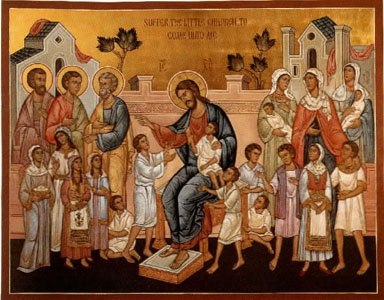
We also see this very clearly in the New Testament. In chapter 10 of Mark’s Gospel we read the following words of Jesus to the disciples, “Whoever welcomes you welcomes me, and whoever welcomes me welcomes the one who sent me” (Mark 10:40-42). In the previous chapter we read where Jesus took a little child in his arms, and said, “Whoever welcomes one such child in my name welcomes me, and whoever welcomes me welcomes not me but the one who sent me” (Mark 9:36-37).

And in Matthew we read Jesus’ words, “I was hungry and you gave me food; I was thirsty and you gave me a drink; I was a stranger and you welcomed me.”

Do you see the pattern here? Jesus said that when we welcome others, we are welcoming Jesus. And Jesus said when we welcome him, we welcome God.

When we open the doors of the church wide, when we invite others in, when we let them know that we are glad that they are here, we are welcoming the Lord himself.

There was once a monastery that had fallen on hard times. The order was dying out. There were only five monks left, the abbot and four others.

The monks feared that the monastery would have to be closed. In their desperation, they went out and sought counsel from a wise man they knew who lived in a hut in the woods that surrounded their monastery.

The wise man agreed to a meeting to talk with the abbot regarding the fate of their monastery. The meeting was very brief. The wise man said that he really did not have any great advice to give them, but he could say this: that the Messiah was among them.

The abbot returned to the monastery, where the monks were waiting eagerly to hear what the wise man had said. “Please tell us! What do we have to do to save the monastery?”  “Well,” the abbot replied, “the wise man was rather cryptic. He simply said that the Messiah is among us.”

“The Messiah is among us?” All of the monks scratched their heads. How could the Messiah be among them? As they pondered the meaning of these words, the monks soon began to think of each member of the order as a possible Messiah. They started to treat one another with tremendous respect and kindness. And when people came to visit, they treated each of them as if they could be the Messiah, too.

People from the surrounding area often came to picnic on the monastery’s beautiful grounds, to walk along the paths, and to pray in the chapel. The visitors were amazed by the welcome they received from the monks. There was an aura of respect and love that filled the place, making it strangely attractive, even compelling. Hardly knowing why, they began to come back to the monastery more frequently, to picnic, to play, to pray. They began to bring their friends to show them this special place. And their friends brought their friends. Some of the younger men who came to visit talked more and more with the old monks, and they began to join the order. So before long, the monastery had once again become a thriving order, and a vibrant center of light and love for people all over the realm.

When I first joined the conversations you were having a year ago to renovate our windows, to remove the stained plexiglass and replace it with a clear plastic so the windows could be seen from the street, I said that the need was not only aesthetic, as they looked horrendous, but it was also theological. To keep this beauty, the beauty of our Lord and Savior, inward, only unto ourselves, inside these walls was simply a theological travesty.

I have said recently that our education building needs to be renovated or at least refurbished. And like the windows, the need is not only aesthetic, it is also theological.

We have a great building and grounds committee; however, they cannot do it all by themselves. Our buildings are too old, have too many needs for just one committee to do it all by themselves. To be good stewards of our property, to make this a warm, welcoming place, we need to have many more work days like the one we had yesterday in the basement. I want to encourage you to walk through the education building, do it today if you have time, make sure you go upstairs, and ask yourself: what would you do to the building if you knew the Messiah was coming for a visit? Would you paint the walls? If so, what color? Would you paint the windows? Would you replace the ceiling tiles that are stained? Would your replace ceiling tiles that are missing?  What would the plaster in this room look like? Would it be chipped, stained, faded, discolored?

I want us to work hard in these nine months to finish the basement,  and make it a place of welcome for children; renovate our education building, and make it a warm and inviting place for all children; put up a playground right off of church street and make it a sign to the community that this church welcomes children; not so much because we want our church to look nice and pretty, not so much because we want to be proud when we invite over 100 children and their families here next June for the community Vacation Bible School, but because we take the words of Jesus very seriously when Jesus, holding a child in his arms, says, “Whoever welcomes one such child in my name welcomes me, and whoever welcomes me welcomes not me but the one who sent me” (Mark 9:36-37).

Fred Craddock, one of my favorite preachers, tells a story about going to church when he was a boy. He said that every Sunday morning, his mother took him to church with his sister. When the service was over, he said they followed their mother like little ducks out of the church. As the preacher stood at the door greeting folks, he would always say, “Mornin’ Mrs. Craddock.”  Then he would address the kids, “Good mornin’, Sonny. Good mornin’, Honey. The next Sunday, “Good mornin’ Mrs. Craddock, Good mornin’, Sonny. Good morning, Honey.” Every Sunday, “Good mornin’ Mrs. Craddock, Good mornin’, Sonny. Good morning, Honey.”

Then one day there was a new preacher. After he had been there a few weeks, as the Craddock family filed out of church, he said, “Good mornin’, Mrs. Craddock. Good mornin’, Fred.” And Fred Craddock said, “He was the best preacher we ever had, because there’s a big difference between Fred and Sonny.”

What a difference a genuine welcome makes. We all long for a place to call home. We all long for a place of welcome. Where we look around and it is obvious that someone cares about us, wants to know our names. Even the walls say they care.

As Disciples of Christ, we do not have a creed we follow. But we have a statement of identity. Part of it is on our church sign today. More than anything else, I want it to be the identity of this special place on the corner of Church and Main. I want it to be clear to all, not only through our actions and our words and our living, but also through our bricks and our mortar: “We welcome all to the Lord’s table as God has welcomed us.”

So let us commit ourselves to welcoming all, for when we welcome others with all that we are and with all that we have, we are welcoming God in the name of Christ Jesus our Lord. Amen.

Grace in Genesis: Tower of Babel

Tower_of_Babel

Genesis 11:1-9 NRSV

The pastor stands up behind the pulpit, clears his throat, and announces: “This morning we are going to talk about race and racism.”

All over the sanctuary the congregation winces, and beg under their breaths: “Preacher, please don’t do it, for you’re about to open up a giant can of worms!”

But the old preacher, who has opened up more cans of worms than anyone could possibly count, ignores the grimaces and metaphorically gets out the can opener.

I hear many people in the church say that we should not talk about race or make race an issue. However, I believe we make it an issue when we pretend that it is a non-issue. I believe we do great harm to the cause of Christ when we ignore racism or deny that it exists. Furthermore, if we are to accept and do the will of God that I believe is revealed in the story of the Tower of Babel, the church must be willing to openly talk about race and the inherent racism that is prevalent in our families, our town, our region, our world, even in our own hearts.

In the eleventh chapter of Genesis we read:

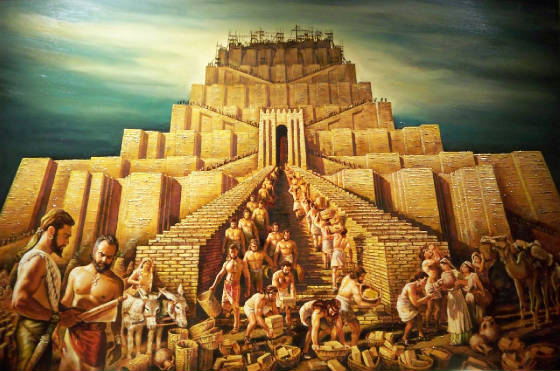
Now the whole earth had one language and the same words. And as they migrated from the east, they came upon a plain in the land of Shinar and settled there. Then they said, ‘Come, let us build ourselves a city, and a tower with its top in the heavens, and let us make a name for ourselves; otherwise we shall be scattered abroad upon the face of the whole earth.

The whole earth was one. One language. One people. One tribe. One race. And they all came together to live in one place. They all came together to build something special, something big, something wonderful that would be a symbol of their unity, pride and patriotism.

Now, what is not to like about that?

Unity, oneness, togetherness, harmony, people of the same minds living in one accord.  Isn’t that the aspiration of all? Isn’t true that great minds think alike? Isn’t this the will of our God, God’s great purpose for humanity?

So what’s not to like in this seemingly perfect picture of unity in Genesis chapter 11? As it turns out, according to God, the creator of all that is, not very much.

Let’s look at God’s reaction to this oneness in verse 7 of our story: “Come, let us go down, and confuse their language there, so that they will not understand one another’s speech.”  So the Lord scattered them abroad from there over the face of all the earth…”

What? Are you serious? What is wrong with this great portrait of human unity, of one race of people, one nation, under God indivisible, all of one mind, coming together to make a name for themselves, to build great things, to be on top of the world, to celebrate their purity and pride as one master race?

The truth is that the builders of the great tower in Shinar had accomplished not what God wants for humanity, but what many throughout history, including the likes of Adolf Hitler and the Ku Klux Klan, have wanted for humanity: One master race of people coming together to form one supreme social order, one culture, sharing the same ideals, values and moral principles. Diversity is a threat. Diversity is something to fear. Diversity is something to segregate and discriminate. Diversity is something to send to the gas chambers or lynch in a tree.

I am not sure if anyone in my lifetime has articulated the thinking of the people of Shinar better than Atlanta Braves pitcher John Rocker back in 1999. Some of you may remember his response when he was asked by Sports Illustrated if he would ever play for the New York Mets or New York Yankees.

Rocker said:

I’d retire first. It’s the most hectic, nerve-racking city. Imagine having to take the number 7 Train to the ballpark looking like you’re riding through Beirut next to some kid with purple hair, next to some queer with AIDS, right next to some dude who just got out of jail for the fourth time, right next to some 20-year-old mom with four kids. It’s depressing… The biggest thing I don’t like about New York are the foreigners. You can walk an entire block in Times Square and not hear anybody speaking English. Asians and Koreans and Vietnamese and Indians and Russians and Spanish people and everything up there.[i]

The story of the Tower of Babel teaches us that what John Rocker said racked his nerves in the world is what God wills for the world. In verse 4 we read that the purpose of building the tower was to avoid what depressed John Rocker on the No. 7 train leaving Manhattan for Queens, and to avoid what John Rocker heard in Times Square. The purpose of settling in Shinar and building that tower was to live in a world with no foreigners, no confusing babbling in the streets, no queers or kids with purple hair to encounter on the way to work, no eating in the marketplace with people on strange diets, no rubbing elbows with people wearing weird clothes, head coverings or dots on their foreheads. So they came together and said, let’s build a tower of unity “to not be scattered over the face of the whole earth.” And God’s reaction to this racial purity and pride was to “scatter them over the face of the whole earth,” to create a world of diverse languages and cultures, to create a world of foreigners.

God was only accomplishing what God had always willed for the creation: diversity. In chapter one of Genesis, we read that the original plan for creation was for humankind to “multiply and fill the earth.” And after the flood in chapter ten we read where God sanctions and wills all nations to be “spread out over the earth.” (Gen 10:32). Simply put, from the very beginning of time, in spite of our will, in spite of our fear and our racial pride, God wills diversity.

Therefore, if we ever act or speak in any manner that denigrates or dehumanizes another because of their race, language, nationality or ethnicity, we are actually disparaging the God who willed such diversity. According to Genesis, diversity is not to be feared, avoided, prevented or lynched. If we want to do the will of God our creator and redeemer, diversity is to be embraced. In other words, if we love God, we will also love our neighbor. And this is what God wants us to be united by. It is why Jesus called it the greatest commandment—love God and our neighbors as ourselves. Love is what should unite us; not racial pride or patriotism.

The story of the Tower of Babel belongs to the same genre of the stories of Adam and Eve, Cain and Abel and Noah and the Flood. They are considered to be “pre-history stories.”[ii] That is, they are describing God’s relationship to the world before the call of Abraham and the history of the Jewish people. It amazes me how God in each of these stories is so often misinterpreted by Christians who believe that the God of the Old Testament is a God of wrath; not a God of grace. They say that they believe Jesus Christ is God; however, they fail to see Christ in these stories.

Consequently, God is often seen as one who curses Adam and Eve by kicking them out of the garden instead of as one who bends to the ground and clothes them with grace. God is seen as someone who curses Cain by sending him to the land of Nod, instead of as one who protects his life with a mark of grace. God is seen as one who curses all of humanity with a great flood with the exception of one family, instead of one who makes a decision to graciously suffer alongside all of humanity. And here in this story, God is seen as one who curses the builders of the tower by scattering them over the face of the earth, instead of being seen as one who reacts to racial pride and unity by fulfilling the purpose of creation from the very beginning, filling the earth, by graciously creating diverse languages, races and cultures.

The tragic irony is that throughout history many have used the story of the Tower of Babel to support slavery, apartheid, segregation and other forms of racism. Bob Jones University once used this story to ban interracial dating on campus. However, this story teaches something very different. The story of the Tower of Babel is God’s gracious stamp of approval, of blessing, on every race, every tribe, and every language in every land. It is the fulfillment of God’s original purpose for creation. The song we learned as little children cannot be more true: “Red, yellow, black and white, they are all precious in God’s sight.” God is not color-blind, as I hear some say, for God creates, wills, blesses and loves color. And it is this love that unites us all, as we have all been created to harmoniously see humanity as God sees it: as a beautiful, diverse, colorful rainbow created by, sanctioned by, and graced by God.

As a Bible-believing Christian, it confounds me when I hear that another, supposedly, Bible-believing Christian, has decided to put their house on the market and move because a person or a family of another race has moved into their neighborhood. I often think about this story in the first book of our Bible that describes a beautiful and diverse creation willed by God. But I also think about a passage in the last book of our Bible that describes an eternity willed by God. And I wonder what in the world these people, who claim to be Christian, are going to do if they do get to that place they think they are going after they die to live forever and ever.

Because guess what? According to Revelation, heaven looks more like Times Square and that No. 7 train on the way from Manhattan to Queens than some affluent suburb outside of Atlanta, Georgia.

In Revelation 7, we read these words:

After this I looked, and there was a great multitude that no one could count, from every nation, from all tribes and peoples and languages, standing before the throne and before the Lamb, robed in white, with palm branches in their hands. They cried out in a loud voice, saying, ‘Salvation belongs to our God who is seated on the throne, and to the Lamb!’  And all the angels stood around the throne and around the elders and the four living creatures [each representing the diversity of all creation], and they fell on their faces before the throne and worshipped God, singing, ‘Amen! Blessing and glory and wisdom and thanksgiving and honor and power and might be to our God for ever and ever! Amen.’

[i] Read more: John Rocker – At Full Blast – York, Braves, City, and League – JRank Articles http://sports.jrank.org/pages/4014/Rocker-John-At-Full-Blast.html#ixzz39oVUCEtA

[ii] See Walter Brueggemann Genesis


Other Sermons in this Series:

Grace in Genesis: Adam and Eve

Grace in Genesis: Cain and Abel

Grace in Genesis: Noah


Running this Race Called “Life”

running-group

Running is such a great metaphor for life.

It began as an ordinary Saturday morning run with the Greenville Running Group.  We were running our regular Starbucks’ route from Greenville Boulevard to the Town Commons and the Greenway. I effortlessly covered the distance of the first two miles before I even realized it. Into the third mile, I was confidently running down Charles, past Dowdy-Ficklen Stadium, as I had many times in the past. I had this. Life was good. I was all smiles, on cruise control.

Then without warning, early into mile three, I really stepped into it. Without seeing it, I managed to step into a metal hoop that was in the road, about 18 inches in diameter. My right heel caught the back of the hoop and stood it up. My left foot joined my right foot inside the hoop and down I went. Before I knew exactly what happened, I was laying in the gutter of Charles Boulevard. Muddy and bloody, my knees took the brunt of the fall.

Three of my running friends rushed to my aid, empathetically asked me if I was okay, then reached down and helped pick me up out of the gutter. They did not judge me for not looking where I was planting my feet, nor did they express any disappointment that I had interrupted their run. They only expressed compassion for me.

They led me to the Duck-Thru convenience store at the corner on 14th Street where they found a spigot to wash my wounds. One of my friends came out of the store with a first aid kit. Another friend, with her own hands, took some gauze from the kit and made sure my abrasions were clean.

Willing to sacrifice their run, they offered to walk back with me to my car. However, their compassion was more than I needed to encourage me to press on and finish the run. Ten miles later, I completed one of the best runs ever.

The scriptures say: “Therefore, since we are surrounded by so great a cloud of witnesses…let us run with perseverance the race that is set before us…” (Hebrews 12:1). Jesus said, “I give you a new commandment, that you love one another. Just as I have loved you, you also should love one another” (John 13:34).

May God forgive us for arrogantly thinking that we can do this thing called “life” alone. And may God give us the grace to love one another, to link up with one another in mutual care and compassion, to feel responsibility for one another, and to run this race together.

Grace in Genesis: Noah

Rainbow-flood-ark

Genesis 6-9 NRSV

The Ebola virus is spreading throughout the world, recently killing a renowned doctor. Financial turmoil has seized Argentina. A Malaysian plane was shot down over Ukraine, and fierce fighting has broken out around the wreckage. The death toll rises in Gaza as deadly violence occurs every day. Israel has attacked a UN school killing 20 evacuees. Mobs of Islamic militants have killed dozens in China. Christians in Iraq are being murdered for their faith. An unprecedented crisis at our own border continues. Immigrant families are being torn apart. Kidnapped Nigerian girls for whom churches all over the world prayed, including ours, are still missing. Former Secretary of State Madeleine Albright summed up the state of the world last week in one simple sentence: “To put it mildly, the world is a mess.”

I am sure I am not the only preacher to point out that the state of the world today is reminiscent of a story found in the early chapters of Genesis. It begins just one chapter after of the story of Cain and Abel, the world’s first two brothers. In Genesis 6 we read:

The Lord saw that the wickedness of humankind was great in the earth, and that every inclination of the thoughts of their hearts was only evil continually. And the Lord was sorry that he made humankind on the earth, and it grieved him to his heart.

In other words, the state of the world, the state of the human heart, caused God great suffering. Other translations read that the state of the world “broke God’s heart.”

We know the rest of the story. The Lord said, “I will blot out from the earth the human beings I have created” and in Genesis 7, we read that for forty days and nights the rains fell as God intended to start the whole thing over with Noah and his family.

It is an absolutely dreadful chapter. Whoever that first person was who decided to sentimentalize the holocaust of Genesis 7 into some sweet, adorable bedtime story for children needed to have their head and quite possibly their soul examined.

And all flesh died that moved on the earth, birds, domestic animals, wild animals, all swarming creatures that swarm on the earth, and all human beings; everything on dry land in whose nostrils was the breath of life died. He blotted out every living thing that was on the face of the ground, human beings and animals and creeping things and birds of the air; they were blotted out from the earth.

We even teach our children silly songs to dull the horror:

The ark started moving, it drifted with the tide The unicorns looked up from the rocks and they cried And the waters came down and sort of floated them away That’s why you never see unicorns to this very day.

“Sort of floated them away.” That’s certainly a nice way to put it.

The scene is horrific; however, it makes perfect sense to many of us. And some of us, deep down, may even like it. For this is how we would rule if we were God; thus, this is how we like to picture our God. Our God is an awesome God. There is “thunder in his footsteps and lightening in his fists.” If you are wicked and evil, if you are mean and hateful, if you are not a Christian, you better look out, for our God will come down and blot you out! Our God controls the sea, creates and steers the hurricanes, breathes tornadoes and spits wildfires, speaks earthquakes and sends or withholds the rain. Our God is an immovable force with which to be reckoned. Our God is a volcanic eruption, an avalanche, a tsunami, a hail storm, and a great flood. After all, we don’t call those things acts of God for nothing. So you better be believing, be shaping up, be straightening out, and be getting yourself right. This is the portrait of the God made in our own image.

However, in spite of what we may have learned in Sunday School, and in spite of what we may want to believe, this is NOT the portrait of the God that is painted in the story of Noah. The God of Noah is not an immovable force that stands safely behind, lords comfortably over, or reigns painlessly above the brokenness and suffering of humankind. The God of Noah is very much moved by it, broken by it. The God of Noah grieves and suffers with, alongside it, in it, and through it.

Just one chapter after the flood scene, the futility of the intentions of the God made in our own image to rid the world of evil became painfully obvious, as the state of the world had not changed. It is the concept, the understanding of God that changes. After the flood “…the Lord said in his heart, ‘I will never again curse the ground because of humankind, for the inclination of the human heart is evil from youth; nor will I ever again destroy every living creature as I have done.’”

In the following chapter, we read where the rainbow is forever a beautiful reminder of this great promise.

Sadly, I believe we tend to forget what this promise truly means. Perhaps it is due to the selfish inclination that we have had since our youth. But for whatever reason, we tend to only remember that the rainbow means that God will never again try to “blot us out.” Selfishly, we think the rainbow is about us.

However, this promise means so much more. And it is not about us at all. It is about who our God truly is and how our God acts and relates to this world. The rainbow means that our God has freely and deliberately chosen a path of suffering. God has intentionally chosen to grieve. The rainbow is a reminder to each of us that the state of our world, the state of our hearts, continually breaks the very heart of our God.

And again, those of us who call ourselves “Christians” or “Disciples of Christ” should not be surprised.

There is a reason that when we read the words of the 53rd chapter of Isaiah about “a man of suffering acquainted with infirmity who is wounded for our transgressions, crushed for our iniquities,” there is no doubt in our minds to whom the prophet is referring.  And I do not think it is a coincidence that we find following words in the very next chapter:

“With everlasting love I will have compassion on you,” says the Lord, your Redeemer, “This is like the days of Noah to me: Just as I swore that the waters of Noah would never again go over the earth, so I have sworn that I will not be angry with you and will not rebuke you. For the mountains may depart and the hills be removed, but my steadfast love shall not depart from you, and my covenant of peace shall not be removed, says the Lord, who has compassion on you.”

Our God is an awesome God. But not because God is an immovable force to be reckoned with. Our God is an awesome God because our God is a suffering and grieving, merciful and gracious, compassionate and deeply-moved Spirit who beckons us to join with this Spirit in a loving relationship.

There is a reason Jesus said to his disciples that the “Son of Man must suffer many things.” It is the very nature of who our God is. There is a reason whenever Jesus encounters human suffering, sickness and death, the gospel writers tell us that he was moved at the very core of his being with compassion.  There is a reason at the death of Lazarus we read, “Jesus wept.” There is a reason Jesus cried out, “My God, my God, why have you forsaken me?” For unimaginable suffering and inconceivable pain was his lot. Furthermore, there is a reason the soldier standing at the foot of the cross, standing under a bruised, bloody and crucified body exclaimed: “Surely this man was the Son of God” (Matt 27).

There is a reason that each Sunday we break bread, symbolizing the broken body of Christ and drink from a cup symbolizing the shed blood of Christ. And there is a reason those symbols of suffering give us hope and lead us to follow this way. There is a reason we sing: “Love so amazing, so divine, demands my soul, my life, my all”

There is a reason we are called to be with, and minister to, the hungry, the thirsty, the imprisoned, the sick, the grieving, the least of these our brothers and sisters. And there is a reason that when we do, we encounter God.

Before I went to seminary and thoroughly studied the scriptures, I used to think that the job as a minister was to have all of the answers for the suffering of this world. Stand above the suffering, over the pain. Thus, when I would visit the hospital or a nursing home or go the home of someone who had just lost a loved one, I thought I was supposed to say something that would bring healing and hope. I thought I was supposed to say something that would bring some type of cure. I was supposed to come with power and might, come with thunder in my footsteps and lightning in my fists, come with a vengeance and a cure, wipe out, blot out the source of their ill. However, I quickly learned that all I really needed to do was just show up, be present and care. Care; not cure. Be present with compassion, which means to suffer with, grieve alongside and hurt together with another. And when I truly care, when I truly have compassion, someway, somehow, I believe God also shows up. And it is through God, through God’s presence and God’s compassion, through God’s suffering and grief, through God sharing the pain with and alongside us, through God’s heart breaking with ours, through God’s care, that a cure comes. Healing and hope and salvation come.

This is the great promise of the rainbow in this world that, to put it mildly, is a mess. And this is the good news of the gospel. This is grace, and this is hope, yesterday, today and forever.  Amen.

The Rainbow and the Cross

rainbow crossThe Ebola virus is spreading throughout the world, recently killing a top doctor. Financial turmoil has seized Argentina. A Malaysian plane was shot down over Ukraine, and fierce fighting has broken out around the wreckage. The death toll rises in Gaza as deadly violence occurs every day. Israel attacks a UN school killing 20 evacuees. Mobs of Islamic militants kill dozens in China. An unprecedented crisis at our own border continues. Immigrant families are being torn apart. Kidnapped Nigerian girls for whom churches all over the world prayed are still missing. Former Secretary of State Madeleine Albright summed up the state of the world last week in one simple sentence: “To put it mildly, the world is a mess.”

I am not the only preacher to point out that the state of the world today is reminiscent of a story found in the early chapters of Genesis. In Genesis 6 we read: “The Lord saw that the wickedness of humankind was great in the earth, and that every inclination of the thoughts of their hearts was only evil continually. And the Lord was sorry that he made humankind on the earth, and it grieved him to his heart.” In other words, the state of the world caused God great suffering. Other translations read that the state of the world “broke God’s heart.”

We know the rest of the story. The Lord said, “I will blot out from the earth the human beings I have created” and in Genesis 7, we read that for forty days and nights the rains fell as God intended to start the whole thing over with Noah and his family. However, just one chapter later, the futility of God’s intentions became obvious, as the state of the world had not changed. After the flood “…the Lord said in his heart, ‘I will never again curse the ground because of humankind, for the inclination of the human heart is evil from youth; nor will I ever again destroy every living creature as I have done.’” In the following chapter, we read where the rainbow is forever a beautiful reminder of this great promise.

Sadly, I believe we tend to forget what this promise truly means. Perhaps it is due to a selfish inclination that we have had since our youth that we only remember God will never again try to “blot us out.” However, this promise means so much more. This promise means that our God has chosen a path of suffering. The rainbow means that the state of our world continually breaks the very heart of our God.

There is a reason the prophet Isaiah moves us when we read about “a man of suffering, acquainted with infirmity, wounded for our transgressions, crushed for our iniquities” (Isa 53). There is a reason Jesus said, “The Son of Man must suffer many things…”(Mark 8)  There is a reason at the death of Lazarus we read, “Jesus wept” (John 11). There is a reason Jesus cried out, “My God, my God, why have you forsaken me?” Matt 27). There is a reason the soldier who was standing at the foot of the cross of our crucified Lord exclaimed: “Surely this man was the Son of God” (Matt 27).

Furthermore, there is a good reason that, living in a world which, “putting it mildly, is a great mess,” we sing: “Love so amazing, so divine, demands my soul, my life, my all.”

Grace in Genesis: Cain and Abel

cain and abel

Genesis 4:1-16 NRSV

I believe the story of the world’s first brothers has much to teach us about the unfairness of life. Cain and Abel were both hardworking men. At the time, they were holding down two of the most important jobs in the entire world, providing the sustenance needed for the propagation of humanity. Abel was a keeper of sheep, and Cain was a tiller of the ground. And although these important farmers did not yet have a First Christian Church in their town where they could gather each week for worship, both worshipped their creator as faithfully as they knew how.

Both Cain worshipped God, put God first in their lives, gave thanks to their creator for the gift of life by offering the best of who they were: the best of their talents, abilities, and gifts. Abel offered the firstborn from one of the sheep he tended, and Cain offered the produce of his field that he grew and harvested with his own hands.

Then Cain learns something that all of us who have lived in this fragmented world know all too well. Life is not fair. We are not told exactly what happened to cause Cain to believe that God loved Abel more than him, why Cain believed that his offerings to God were for all for naught, but we can certainly make what I believe are some very fair assumptions.

Maybe Abel enjoyed better health than Cain. Maybe he had less aches and pains, fewer allergies than Cain. Perhaps Abel was better looking, more athletic, faster, had nicer teeth and hair. Maybe he was a lot smarter than Cain. Maybe these other people who miraculously seemed to be around at the time, preferred Abel’s leg of lamb, rack of lamb, lamb stew or lamb chops over Cain’s broccoli, cauliflower, rutabaga, and carrots. Perhaps Abel had a nicer house, a bigger farm, finer clothes, or just a more comfortable life in general.

Whatever it was, Cain believed that Abel was more blessed, more favored, more accepted, and more loved by God. Thus, it became very obvious to all and especially to God that Cain was angry. And who could blame him? Life is not fair. For no reason, without any explanation, bad things happen to some very good people all the time. And likewise, without any rhyme or reason, some very good things happen to some very average or below average people all the time. And our natural inclination is to be angry at it all. Why, it is just second-nature.The Psalmist clearly understood this as we can feel the anger behind the words of the 73rd Pslam.

1 Truly God is good to the upright,*    to those who are pure in heart.  2 But as for me, my feet had almost stumbled;  my steps had nearly slipped.  3 For I was envious of the arrogant;  I saw the prosperity of the wicked.  4 For they have no pain;  their bodies are sound and sleek.  5 They are not in trouble as others are;  they are not plagued like other people.  10 Therefore the people turn and praise them,*  and find no fault in them.*  12 Such are the wicked;  always at ease, they increase in riches. 13 All in vain I have kept my heart clean  and washed my hands in innocence.  14 For all day long I have been plagued,  and am punished every morning.

Cain, like all of us living in this world filled with inequity and injustice, became angry. His countenance fell. Like second nature, Cain’s anger swelled inside of him, and everyone knew it, even God.

And God responds: “Cain, I can understand why you are angry. I really can’t blame you. For it is a natural, human response to the unfairness of this world. Therefore, it is not you being angry that I am worried about. I am worried about what you might be tempted to do with your anger, for sin is like a wild beast lurking at your door, and it craves to have you, to destroy you. So, Cain you need to master your anger, tame it, control it, transform the energy of your anger into a dynamism to do something good, something beautiful and wonderful to counter the injustice and inequity in our world, something constructive, something honorable, something amazingly gracious and loving.”

I believe that Christians have a tendency to believe that being angry is a sin; therefore, we go to great lengths to avoid anger. But in avoiding anger, I believe we can easily become disengaged, complacent, devoid of the passion and fire that I believe Jesus wants us to have. I believe the world needs more Christians to let our countenances fall and become consumed with passion to live with an amazing grace that counters the unfairness in of the world.

However, as the story of the world’s first two brothers teaches us, anytime we are angry, we need to be cautious, for as the Lord says, sin is always lurking at the door. Unfortunately, Cain allowed his anger to get the best of him, and he killed his brother Abel.

Then, this one who believed in fairness, this one who believed in justice, this one who believed that people should reap what they sow, clearly understood the dire consequences for his evil actions. There was no doubt he should be exiled, forced to live outside of his community. There was no doubt he deserved to be forever separated from God. And there, wandering alone without the God he worshipped, others would want to bring him to justice and repay him an eye for an eye and a tooth for a tooth. Cain can almost hear the drumbeats of justice and the shouts from the mob: “Cain, you took a life, and it is only fair that we take yours!”

Cain cries out: “O God, the punishment that I deserve is too much to bear!”

Now what happens next in this story should not surprise any of us who call ourselves Christian.

I hear many people say that the Bible paints two very different portraits of God. They say that the God of the Old Testament was a God of wrath, judgment and vengeance, a God of Hell, fire and brimstone; whereas, the God of the New Testament is a God of love, grace and mercy. I suspect this may be part of the reason that while some say they believe in love and grace, they make it very clear with their words and deeds, that they also believe in judgment and condemnation.

However, I believe God is the same yesterday, today, and tomorrow, and I believe God is love. I believe God will always be love, and I believe God has always been love. Many point to the story of Adam and Eve in Genesis 3 and talk about God punishing the first two humans by kicking them out of the garden; however, as I pointed out a couple of weeks ago in a sermon, the story is about the human consequences of knowing good and evil, and consequently, our shame. And it is a story about a God who deals with our shame by clothing us with grace, as God made garments of skin to cover Adam and Eve’s shame.

Furthermore, in the next chapter, when Cain, who deserves to die for killing Abel, fears that his life is over, God emphatically says, “Not so!” God then reaches down and puts a mark of grace on Cain. Moreover, God’s grace followed Cain, even in that place east of Eden called Nod, even in that place Cain believed to be outside of God’s presence.

Thus, proving in the very beginning of all that is, that there is not, has never been, and will never be, anything in all of creation that can ever separate us from the love of God.

And there, East of Eden in the land of Nod, you know I believe Cain still became angry at the unfairness of the world; however, I do not believe Cain ever again allowed that anger to get the best of him. I like to believe than having been marked by unearned grace, having received unconditional love and having been given undeserved mercy, it became almost second-nature for Cain to use the energy from his anger to counter the inequities and injustices of the world, no longer with hateful and murderous thoughts, but with the same grace, love and mercy that was given to him.

For Cain in the Old Testament had discovered the same good news the Apostle Paul, who wrote most of the New Testament had discovered, that where sin abounds, grace abounds even more. When he was once known as Saul of Tarsus and led in the persecution of Christians, Paul was also guilty of murdering the innocent. If anyone in the Bible deserved to die it was Paul. Killing Paul would be fair and just. Yet, through Christ Jesus, Paul was marked forever with an undeserved forgiveness, an amazing grace, and his mark is still being used to today to share this grace with people everywhere living East of Eden.

The story of the world’s first two brothers has much teach us about unfairness.  No, life is not fair. But the good news is, neither is grace. Thanks be to God.

Let us pray.

O God, thank you for your amazing grace that has been evident in this world since time began. Help us to share this good news with all people, in the name of Christ Jesus our Lord, Amen.

God Is Love: Yesterday, Today and Forever

same yesterday today and forever

I hear many people say that the Bible paints two very different portraits of God. They say that the God of the Old Testament was a God of wrath, judgment and vengeance, a God of Hell, fire and brimstone; whereas, the God of the New Testament was a God of love, grace and mercy. I suspect this may be part of the reason that while some say they believe in love and grace, they make it very clear with their words and deeds, that they also believe in judgment and condemnation.

However, I believe God is the same yesterday, today, and tomorrow, and I believe God is love. Therefore, God will always be love, and God has always been love. Many point to the story of Adam and Eve in Genesis 3 and talk about God punishing the first two humans by kicking them out of the garden; however, as I pointed out a couple of weeks ago in a sermon, the story is about the human consequences of knowing good and evil, and consequently, our shame. And it is a story about a God who deals with our shame by clothing us with grace, as God made garments of skin to cover Adam and Eve’s shame.

Furthermore, in the next chapter, when Cain, who deserves to die for killing his brother Abel, fears that his life is over, God emphatically says, “Not so!” God then reaches down and puts a mark of grace on Cain. Moreover, God’s grace followed Cain, even in that place east of Eden called Nod, even in that place that Cain believed was outside of God’s presence.

Thus, proving in the very beginning of all that is, that there is not, has never been, and will never be, anything in all of creation that can separate us from the love of God.

Happy 47th Birthday Bobby Hodge, Jr.

In many of my sermons and writings, I am quick to point out what is wrong with the church today. I have even defended some who are not a part of a church by saying: “They have not given up on Jesus. They love Jesus. They want to follow Jesus. They simply do not see Jesus in the church. All they see in the church are hypocritical and judgmental people who think they are more righteous than those who do not think, act and look like them.” And sadly, a part of me realizes that I can preach love and grace every Sunday, and I can write about it every day, and I will never be able to change the minds of many who have given up on the church.

This is why I wished everyone could come to First Christian Church of Farmville, NC, for at least one Sunday, and worship with Bobby Hodge, Jr. who suffers with cerebral palsy.

I wished they could come into the front door on the corner of Church and Main at 10:55 am on Sunday, walk through the narthex, make an immediate right, and be greeted by Bobby who they will find sitting faithfully in his wheelchair, ready to worship and to give thanks to his God. I wished they could see his smile, experience his joy, shake his hand, and hear him call their name, as he does mine, “Good morning Jarrett Banks. It’s good to see you today.”

I wished they could hear Bobby, who has never been able to walk, who has always had trouble which his speech, who has always been in constant pain, ask me to pray during the service for his caregiver or for a neighbor who has not been feeling well. I wished they could hear Bobby remind me before the service to make an announcement about the CROP walk to raise money for those who are hungry.

I wished they could hear little Bobby sing the great hymns of faith and pray the Lord’s Prayer in unison with the congregation. I wished they could share the Lord’s Supper alongside of Bobby, listen to Christ tell Bobby and tell them, “This is my body which is broken for you. This is my blood shed for you.”

I wished they could watch Bobby as he listens intently to the sermon. I wished they could be there on a Sunday when I say something about God’s love that strikes a special chord within Bobby and hear him shout out loud: “You got that right!”

I wished they could speak to him after a sermon I may preach about spiritual gifts, about God giving all people, regardless of who they are, gifts to serve others through the church, and hear Bobby say: “I have served as a deacon. I have served on committees. I have raised more money for CROP walk and the hungry than anyone. I can do anything for God I want to do, and I do it all from a wheelchair.”

I wished they could hear Bobby speak to someone who has just joined the church as he says: “We are so glad to have you in our church. Please call me day or night and let me know if I can ever do anything for you.”

Yes, I wished every person, who thinks Jesus is not in the church, could come to First Christian Church of Farmville at least one Sunday morning and worship with Bobby Hodge, Jr.

Thank you Bobby for the way you reveal and share Jesus with so many. Thank you for being what is right with the church today. And Happy 47th Birthday!

The Church Is in the Clothing Business

clothing businessThis article for the Farmville Enterprise is an excerpt from the sermon Clothing One Another with Grace.

In the beginning, God walks through the garden and meets Adam and Eve where they are. They are naked, exposed, and what’s worse, they know it. All has been laid bare. All of their mess is out there, and they could not be more frightened and ashamed.

Then God does for Adam and Eve something that they cannot do for themselves. They cannot deal with their shame. They cannot deal with their sin. The reality of who they were, what they had become and where they were going was too much for them to bear. As revealed in every act of Jesus of Nazareth, God responds to their shame by amazingly bending to the ground, using God’s own hands, and creating garments of skin, and lovingly and very graciously clothes Adam and Eve. The good news is that God responds to their nakedness, to all of their fear and shame, by amazingly clothing them with grace.

I believe with all of my heart that this is one of our primary purposes as a community of faith. We are to always be a community of grace. If people cannot come through the doors of the church and take off their masks, stop the charade, and honestly lay bare all of their sin and all of their grief, knowing that they will never be judged, looked down upon or condemned, then I do not believe we are a church. I am not sure what type of business we’re running, but we are not a church, we are not a community of grace. As a church we are to always be in the business of yearning to meet people where they are, so we can be with them, so we can walk alongside of them, so we can listen to them, learn from them, forgive them and love them.

As the church, I believe we are in the clothing business. We are to always be in the business of bending ourselves to the ground, using our own hands, our resources and our talents, to clothe one another, to clothe all people, with the grace of God in the name of Jesus the Christ.

Why This Christian Pastor Is Pro-Choice: It’s Personal

abortion-debate

Introduction

As a married, father-of-two, Christian pastor who was raised in the rural South as an evangelical Southern Baptist, many are quick to make many assumptions about me.

The most prevalent assumption is that I am on the Pro-Life side of the abortion debate, as many assume that one simply cannot be both a Christian and Pro-Choice. Many believe it is a black and white issue, a simple decision between good and evil, life and murder.

As a married, father-of-two, Christian pastor, I strongly support the 1973 decision of the United States Supreme Court in the case of Roe v. Wade. And, of course, I do not believe I am supporting evil. My convictions about abortion are strong, because my convictions are personal.

Our Personal Story

It was the summer 1993. My wife Lori and I had been married five years and were expecting our first child. I had graduated from seminary the previous year and was serving with my first church as a Southern Baptist pastor in rural, Northeast Georgia. At our first OB/GYN appointment in Athens, we were told that our baby was due to be born on November 25.

During the last week of July, we drove to Athens for a highly anticipated appointment with our OB/GYN. We were scheduled to have an ultrasound that would hopefully determine the sex of our child. I remember being more excited than anxious about this appointment. The baby was already moving and kicking quite a bit. Lori would often call to me from another room in the house asking me to rush over to her. She would grab my hand and place it on the exact spot the baby was kicking so I could share her excitement. Lori was clearly showing at this time as strangers were beginning to approach us in public to offer their congratulations and to inquire when our baby was due.

As the doctor moved the ultrasound wand around on Lori’s abdomen and the black, white, and gray images of our baby appeared on a computer screen, I remember feeling like a wide-eyed child at Christmas getting a glimpse of the best present I could ever receive. We immediately heard a very strong and fast heartbeat. We then saw the outline of a head and a face. We saw arms, hands, legs, feet, even toes. After a minute or so, I impatiently asked: “Can you tell if it is a boy or a girl?”

Following my question, my anticipation heightened as there was a brief period of silence in the room, with the exception of the loud echo of a rapid heartbeat. Finally, the silence was broken as the doctor said, “It is really difficult to tell sometimes with our outdated equipment.” He moved the wand around for another minute and said, “The equipment that they have in Atlanta is far more advanced than mine. We probably need to make an appointment for you.” But before I could express any disappointment, he added: “There’s also something else going on that needs a better look.” He then handed the wand to the nurse and asked for us to come to his office where he would make an appointment for us to go to Atlanta. It was at that moment that my excitement was completely replaced by anxiety. Suddenly I no longer cared if it was a boy or a girl.

In his office, our doctor tried to break the news to us as compassionately as he could break it. It was obvious that he was struggling to communicate. At first, he seemed to blame the bulk of his concern on what he called his “antiquated ultrasound equipment.” I remember being irritated as I had no sympathy for the envy he possessed towards the doctors in Atlanta. As he seemed to be avoiding telling us anything specific, frustrated, I remember asking him directly, “But you suspect that there could be something wrong with our baby. Don’t you?”

He responded, “Yes.” A wave of anxiety came over me intensifying my stress. But then he added, “Again, you need another ultrasound before we can really determine how bad it is.”

It was a long and difficult two weeks before we could see the doctor in Atlanta.  Every time our baby moved or kicked, it produced a wide-range of emotions in both of us. We did not know whether to cry, giving into grief; or smile, opening ourselves to the prospects of hope. Of course, hope is what we wanted. It is much easier to hope than it is to accept anything that brings grief. We asked one another: “How can there be something wrong with a baby whose heart is strong?” We conjectured: “Perhaps the more advanced ultrasound equipment in Atlanta will tell us that everything is ok.” The second week in August, we nervously drove to Atlanta holding on to hope, even if was just a sliver.

I will never forget the way we were greeted by the medical team we met in Atlanta. They could not have been more hospitable and caring. After they greeted us like family, we proceeded to an examination room for the ultrasound. Again, as soon as the gel on the wand touched Lori’s abdomen, we heard the heartbeat, a beat that was so strong that it could not help but to grow that little sliver of hope. As he moved the wand, we could see the same beautiful images, perhaps a little clearer, that we saw in Athens. We easily recognized a beautiful head, but this time, we saw more pronounced facial features, a nose, lips, even eyes. Again, limbs, hands, feet, fingers and toes came into focus. Nevertheless, I still did not possess enough hope to allow one thought to cross my mind about trying to determine the sex of our unborn child.

The doctor, who had been attentive yet quiet during the entire exam, spoke for the first time by pointing out a curvature in the spine. He called it a “neural tube defect.” This was the first time I had ever heard of a “neural tube.” However, upon hearing the term, one does not need to be familiar with the importance of the neural tube to be alarmed, as the word “defect” that was attached to it is more than enough to cause one’s heart to sink, especially when it is said to describe your unborn child’s spine.

Immediately following the ultrasound, we met with the team of doctors, nurses and a genetic counselor in a large consultation room. In a compassionate, yet straightforward way, we were told that our baby’s spine “twisted,” probably during the early weeks of the pregnancy, and prevented the formation of an abdominal cavity. We were told that although our baby seemed to have healthy organs, there was nothing to contain those organs. Surgery was not an option. Our baby will certainly die during the birthing process. A counselor put her hand on Lori’s shoulders and handed her a tissue to wipe tears from her face.

The team graciously addressed all of our questions. They told us that many severe neural tube defects end in miscarriage in the first trimester, but in some unfortunate cases such as ours, they do not. They assured us that we could soon try again to have a child, as they believed the defect was more of an anomaly than it was genetic. They then presented us with our options.

One option was to do nothing but wait until the pregnancy reaches full term and the baby is able to be born naturally or by C-section. However, because of the severity of the defect, we would be unable to hold our dead child, and may not want to see him or her. Our baby’s remains would be immediately prepared for a funeral service.

abortoin-is-murderThe second option was to terminate the pregnancy immediately. However, if we chose this option, it would be considered an abortion, and due to the political climate of the day, there was only one hospital in the state of Georgia which would perform an abortion this late in the pregnancy. He said that we could go to several clinics, but we may have to endure picket signs and possibly hecklers from religious groups opposed to abortion. The thought of my wife, who was still wiping tears from her eyes, being called a “murderer” or a “baby killer” by people claiming to follow Jesus, people who had no idea who we were, or what we were going through, made me furious. We were also told that although our child had a strong heartbeat, because of politics, for the record they would state that our child had “no viable heartbeat.”

Although the second option sounded dishonest, even illegal, it was obvious to us that it was the best, most compassionate option. I could not imagine Lori waiting three more months, feeling the baby move and kick, feeling another life inside of her, all the while knowing that this life will never have a chance. We scheduled an appointment for a procedure to end the pregnancy two days later.

That night, we checked into an Atlanta hotel to await our next appointment. The grief we experienced was immense. All of our dreams for the future were suddenly taken away from us. Furthermore, although the doctors and genetic counselors assured us we could one day have a child, we knew that in life there were never any guarantees.

That evening, we decided to go see a movie to try to get our mind off our grief. Although I never second guessed our decision to terminate the pregnancy, our decision was affirmed by a stranger as we stood in line to purchase our movie tickets. A woman who was also obviously expecting to have a baby approached us. She smiled and said, “Aww. When is your baby due?”

My chest tightened as I looked at Lori and saw tears begin to well up in her eyes once more. I was amazed when Lori smiled at the stranger and said, “November 25.” She then somehow found the courage to graciously reciprocate the question. Politely, she asked the woman who was glowing with anticipation, “When is your baby due?” So much for us trying to escape our grief.

During the movie, Lori put her hands on her abdomen and told me that the baby was moving. I thought to myself that these next two days were going to be a living hell. I could not imagine asking Lori to wait three more months, not only feeling the baby’s movement, but to endure more oohing and awing and questions from well-meaning strangers, for me, was as unconscionable as it was inhumane. As I watched the movie that I really never watched, I remember thanking God for the gift of medical science and compassionate physicians that could help bring healing and wholeness to our broken lives.

As planned, two days later, the pregnancy was terminated in the hospital without complications. However, as the next several weeks and even months proved, terminating the pregnancy did nothing to immediately heal our enormous grief. When we came home from the hospital, Lori went to bed and stayed there for nearly a week. She did not feel like talking to anyone. During that mournful week Lori would not even talk to her mother, who called several times a day, every day.

Now, over twenty years later, our grief has long subsided as Lori and I are the proud parents of a 19-year-old son and 17-year-old daughter. However, because of our experience, I continue to possess a very personal interest in the abortion debate which continues in our country.

Conclusion

The abortion debate centers around the Roe v. Wade Supreme Court decision of 1973. If many evangelical Christians had their way, and the Roe v. Wade decision was overturned in 1993, Lori would have been forced by the government to endure three more months of her pregnancy. Although her physical health was not in danger, as mentioned above, I cannot imagine the psychological trauma that continuing the doomed pregnancy would incur upon Lori. Today, we continue to be grateful to God for the healing gift of medical science, a compassionate team of doctors and nurses, and for the opportunity and freedom to make a safe and humane choice, a choice that we and our doctors believed would bring us the most wholeness and healing.

The issue of abortion is a complicated one. Like every person I have ever talked to about the subject, I do not believe abortion should be used as birth control. As a follower of Jesus who gave his life standing up for the rights of the poor and the marginalized (including the rights of women who were treated unjustly by a patriarchal system), I believe very strongly in the sanctity of life. This is the reason I do not support capital punishment. However, the decision to terminate a pregnancy is a personal and oftentimes complicated matter. Thus, I believe the only ones who should be a part of that decision are the parents of the unborn child, especially the mother, the doctors and God. The government should not be involved.

I fully understand the strong, moral desire of Christians to limit abortions in America. However, I do not think a government can legislate morality. This is why I believe the church should always be strong proponents of sex education and of the use of contraceptives. Unfortunately, the church has been either silent when it comes to sex education and contraceptives or has flat-out discouraged both. It is strange to me that many Christians who are against the Roe v. Wade decision are supportive of the Hobby Lobby Supreme Court decision to deny women healthcare coverage for contraceptives. It is also interesting to me that many Christians who claim to support a limited government are also the same ones who believe the government should be involved in matters as personal as pregnancies.

Life is not easy. Sometimes difficult decisions have to be made. Sometimes the solutions are not black and white. Sometimes those decisions are not between a clear good and a clear evil. Sometimes we are forced to choose the lesser of two evils. I want to live in a country where I am free to prayerfully make such difficult choices, especially choices that are so personal in nature, without any interference from the government.

2007 Disicples of Christ Resolution Regarding Abortion