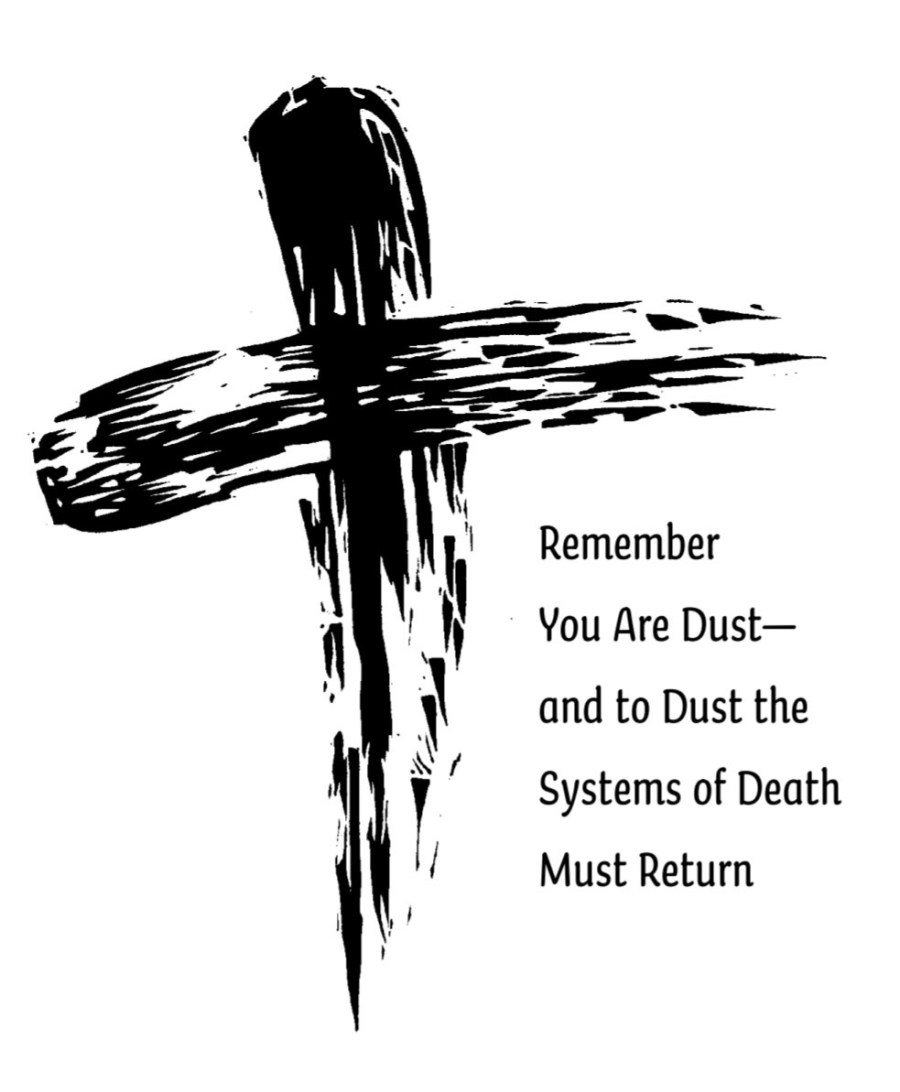
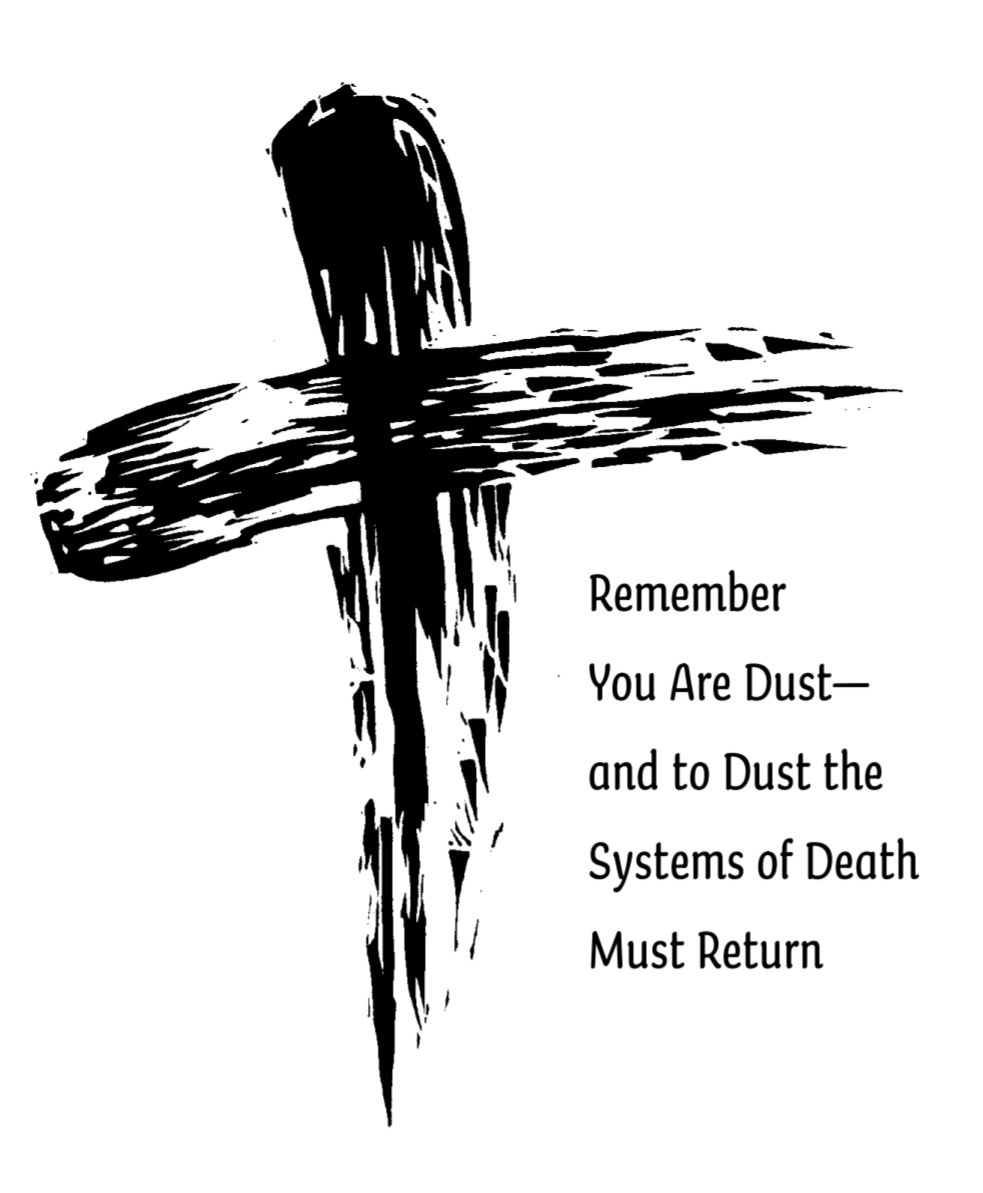
From Dust You Came. For Justice You Are Called.

Isaiah 58

I often encounter people who tell me that they would attend our church—if they were religious.

Some say to me, “If I believed in organized religion, I would go to your church.”

And I usually respond, “I wish you would come, because I think you’ll find we’re not that religious, and we’re really not that organized.”

And I wish they were here tonight. Because they would be surprised to learn that this day, often assumed to be reserved for the most devout, is actually God’s demand that we be done with religion.

Tonight, the church hears the prophet Isaiah asking a question that challenges religion. He looks at organized religion, the traditions and the the rituals, and he doesn’t hold back. In the words that are traditionally read by the church on this day, he shouts a question that should shake us to the core: “Is this the fast that I choose?”

In other words: Is being religious what you think repentance looks like? Do you think this is what faith is all about? Is it sitting quietly inside a sanctuary, while outside, injustice, hate, and cruelty are loud? Is it bowed heads while policies crush the poor? Is it words sung or spoken that soothes souls but never unsettles systems?

Isaiah says no! Because the truth is: God is not interested in religion that ignores justice. God is interested in a faith that transforms the world.

Isaiah is speaking to people who are deeply religious. They fast. They pray. They gather for worship. They present their offerings and sing their praises to God. And yet, workers are still exploited, the poor are still hungry, Eunuchs are still subjugated. Foreigners are still mistreated. And the vulnerable are still scapegoated.

And Isaiah tells it like it is: You seek God in the sanctuary, but you serve the systems of death. You humble yourselves in worship, but you harden your hearts in public life. You follow the laws of the Sabbath, but you don’t follow politics. You read the Bible, but you refuse to let it interpret the world you live in. You look after your own, but you neglect your neighbor. In divisive times, you call yourself apolitical, when you are actually being amoral.

Oh, how the church needs to hear Isaiah tonight!

Because the crisis we are living through in this nation is not merely a crisis of policy. It’s a crisis of values.

A nation that can afford abundance but tolerates poverty.

A nation that claims liberty while restricting dignity.

A nation that invokes God while rejecting the commands of justice, mercy, and love.

As we begin the season of Lent, Isaiah refuses to let us spiritualize repentance, contrition, and worship by saying the fast God chooses looks like this:

Loosening the bonds of injustice.
Undoing the yoke of oppression.
Sharing bread with the hungry.
Housing the unhoused.
Clothing the naked.
Refusing to hide from your own kin.

And who is our kin? Who is our neighbor?  In other words, Isaiah is saying, that we should be available to do the work of justice for the entire human family.

Jesus stands firmly in this prophetic tradition.

In Matthew’s gospel, Jesus exposes performative religion—faith that wants spiritual credit without social responsibility. He warns against prayer and fasting that seeks approval instead of transformation, against a righteousness that hides from justice.

Ash Wednesday names what many would rather avoid:

We are shaped by systems that privilege some and punish others.
We are beneficiaries of structures that reward greed and normalize inequality. And silence in the face of that reality is not neutrality.
It is consent.

Ashes tell the truth about who we are. We are dust.

In Genesis, God forms humanity from the dust of the ground — from the same soil that grows our food, from the same earth that holds every other body. We are not dropped into the creation from above. We rise up from within it. We belong to the earth and to each other.

Dust means we are made of what everyone else is made of. The same earth runs through all of us. The same breath sustains all of us.

Which means we are not autonomous individuals competing for survival. We are interdependent lives sharing one fragile existence. Dust cannot declare independence from other dust. What happens to one part of the soil affects the whole field.

Dust reminds us of something the powerful try to make us forget: No one is disposable. You cannot discard part of the earth without damaging the whole. You cannot throw away people without wounding yourself.

So, when you come forward tonight, and the ashes are placed on your forehead, you will hear these words: “From dust you came; for justice you are called.”

These words are not a blessing. They are a summons declaring that repentance is not complete until justice is pursued. That worship is not faithful until it confronts what dehumanizes. That Lent is not about what makes us feel holy, but about what makes the world more humane.

Lent is a season of moral clarity. It’s a season to break with greed in a culture of hoarding. It’s a season to confront racism in a society built on racial hierarchy. It’s a season to resist bigotry when fear is marketed as righteousness.

If our observance of Lent does not make us more honest, more generous, more courageous, Isaiah would say we have missed the point.

Ash Wednesday does not mark us for shame or for death. It marks us for responsibility. For truth-telling. For solidarity. For resistance grounded in love and for a life committed to justice.

Ash Wednesday tells the truth: we are dust. And God has always done revolutionary work with dust.

In the beginning, God bent down to the earth, gathered soil in divine hands, and breathed into it— and humanity stood up. The first declaration of dignity was spoken over dirt.

When empire tightened its grip and Pharaoh seemed untouchable, God did not raise up another emperor. God raised up a shepherd from the wilderness, dust from the margins, and said, “Go.” And the empire trembled.

When a giant towered over Israel in bronze and steel, God did not choose armor. God chose a boy and five stones from the ground. And dust struck down domination.

When a valley lay scattered with dry bones (history’s casualties, abandoned and forgotten), God did not turn away. God spoke. God breathed. And dust became a living, moving people again.

When a woman was dragged into the center of accusation and shame, Jesus did not stand above her. He knelt in the dirt. He wrote in the dust. He reminded the powerful that they, too, were earth.

And when violence did its worst, when love was crucified and laid in the ground, they thought the story was over. They returned him to the dust.

But the earth could not hold what God had breathed into it. And on the third day, dust rose.

So, when you hear the words tonight that you are dust, it does not mean you are powerless. For dust is where God begins. Dust is where God breathes. Dust is where God builds movements, topples idols, and raises what the world declared dead.

And tonight, ashes will mark your forehead. Not as a sign of shame. Not as a symbol of defeat. But as a reminder: You are dust. Dust shaped by God. Dust filled with breath. Dust capable of courage. And don’t ever underestimate what God can do with dust, especially dust that has decided to seek justice.

Amen.


Benediction

Beloved, as you go into this season of Lent,

Go remembering that you are dust
formed from the earth,
held together by breath,
bound to every living thing in sacred belonging.

Go not in shame, but in courage.
Go not in fear, but in hope.
Go not to perform religion, but to practice love.

May the God who breathes life into dust
breathe holy restlessness into you
a hunger for justice,
a tenderness for the vulnerable,
and a stubborn refusal to accept a world as it is
when it could be more humane.

May your fasting loosen injustice.
May your prayers soften hardened systems.
May your repentance bear the fruit of repair.
May your worship spill over into mercy.

And when you grow weary,
remember: dust is where God begins.
Dust is where God breathes.
Dust is where resurrection rises.

Go in peace
to love boldly,
to serve humbly,
and to do justice with joy.

Amen.

We’re Climbing a Mountain

Sermon inspired from the Anti-Racism/Pro-Reconciliation Facilitator Training workshop presented by the Virginia Christian Church (Disciples of Christ) ARPR Ministry, Martinsville, VA, February 28-March 1, 2025

Luke 9:28-43a NRSV

I have an embarrassing confession to make this morning. I am afraid that some very shameful pictures of me have been posted on the internet. And to make matters worse, I know this will be hard for some of you to believe, but Lori, is with me in those pictures. We thought we were alone.

The pictures were taken on the very top of Sharp Top Mountain. Has anyone here seen them? It has been brought to my attention that some of you may have.

What makes these photographs so disgraceful and humiliating, is that when people see them and say to us, “Oh, I see that you and Lori climbed all the way to top of Sharp Top Mountain!” to be truthful, I must confess that we took the bus.

I know, you are disappointed.

And I am the one who posted the pictures, because the scene from the mountaintop is nothing less than glorious!

Do you want to hear something more disappointing?  For more than thirty years, I have been preaching on Transfiguration Sunday recounting the story of Jesus taking Peter, James, and John to the mountaintop to experience something glorious, and I do not remember ever considering how difficult it is to climb a mountain. Because as far as I know, I don’t believe there were any buses in service for them to take.

And to add to my shame, the mountain that I climbed riding safely in a comfortable, climate-controlled bus, is visible almost everywhere I go in and around Lynchburg, standing as symbol of my shame!

But seeing this mountain as I am driving around, I also think about giving myself a second chance to actually climb it one day. But it’s been a year and a half, and I am still waiting for that perfect day, that day when I don’t have so many other things on my calendar, that day when the weather conditions are just right, when the wind is calm, when I know there’s going little temperature change from the bottom to the top, when the snakes, ticks, bears, coyotes and poison ivy are more scarce, and, of course, when I am in a little better physical shape.

There are so many obstacles to climb a mountain! So many excuses that can be made. Because glory doesn’t happen without some thoughtful planning, some arduous work, some risk of danger, some level of endurance, and even some pain.

On the way to glory, there can be twists and turns. And I am not just talking about ankles and knees. On the way up, sometimes you may have to take a downward turn, even curving around backwards, before heading back up. And because of that, the road is always long. A short mile and a half can take hours.

Unseen forces like gravity are constantly working against you, wearing you down, pulling you in the opposite direction, doing all it can to slow you down, or stop you in your tracks. Yes, there’s some hope on the journey. In some places there are glimpses of the summit, but there’s also self-doubt on the journey and moments of despair.

Perhaps that is why Jesus took Peter, James and John and went mountain climbing—to teach them that glory doesn’t happen without some work. That any vision of the culmination of the law and the prophets and the messiah cannot be seen, transformation and transfiguration cannot occur, liberation and reconciliation cannot be experienced without some serious climbing, without some risk along the way, without unseen forces and entities wearing you down along the way, without a few setbacks along the way.

Perhaps Jesus was trying to teach them that when it comes to real change, glorious change, there’s no such thing as a convenient and comfortable bus that is going to pick you up to take you safely and quickly to the summit. Reaching the summit takes hard work. It takes much energy, and a lot of time. It takes courage, and it takes faith.

So, maybe that is why Luke follows the story of Jesus and the disciples’ mountain climbing adventure with the story of a boy possessed by some dark and evil force.

Now we can only speculate what kind of evil tormented that boy, that put him in physical, psychosocial, or spiritual chains. Maybe he had epilepsy, a traumatic brain injury, or some other disability. But maybe the systems of his day had put him in some place of disadvantage. Perhaps he suffered discrimination and prejudice because of the color of his skin. Maybe he was suffering from the sting of rejection for being non-binary or gay.

We just know that the disciples were unable to do anything to begin to liberate to the boy, to break the chains, to challenge the systems of injustice, to confront the wicked authorities and evil forces that were oppressing the boy, that were refusing to see the image of God in the boy. And like my inability to climb Sharp Top Mountain, I am sure they had plenty of excuses. Maybe they were waiting for some quick and easy solution.

Thus, comes the scathing indictment from Jesus: “You faithless and perverse generation!”

Jesus says to those who claim to be his followers but fail to do the holy work of liberation: “You faithless and perverse generation!” Can you imagine Jesus saying such a thing today? I think you can—

As we are certainly witnessing a perversion of the gospel as a large swath of Christianity has been corrupted to favor a faithless authoritarian over a faithful patriot, favor billionaires over the poor, and favor the privileged (whether that privilege comes from race, gender, sexuality, or money), over anyone who is different.

The world dashes the poor against the rocks of hunger, war, and greed every day. In the words of theologian Cláudio Carvalhaes: “The economic beast controlled by a few demons is making people [today] convulse day and night.”

The immigrant, the refugee, the homeless, the incarcerated, the sick who cannot afford their medications, the mothers who work three jobs to make a minimum wage to feed her children, the trans boy or girl unseen by their country, the victims of mass deportation, the broken families, the traumatized children—they are all like that boy, “thrown into the shadows of our society, convulsing day and night right in front of us!”

And the Christians who have resisted worshipping the beast, those whose faith has not been perverted— those who listen the cries of the left-out and left-behind, who listen to the laments from their friends who are from Ukraine or know people in Ukraine, or are farmers, researchers, or federal workers—we can certainly feel powerless. We can become frozen in our tracks, not knowing what to do, what steps to take to break the chains. And if we can’t find an easy solution or some quick fix, find a meme on social media that will quickly change some minds, come up with some program or event to make it all right, make some real progress to give us some instant gratification, we can become stuck, paralyzed, and, then do absolutely nothing. And we become like the disciples who are rebuked by Jesus.

Yes, perhaps Luke tells us the story of the disciples’ failure to liberate the boy on the heels of the story of the Mount of Transfiguration to teach us that the path to transformation, liberation, restoration, and reconciliation, the road to justice, equity, and freedom, is like climbing a mountain.

It is a long, tedious journey. It is a risky, difficult, hopeful, and sometimes disappointing process. Along the way, there are always forces working against us. One moment we can see the summit and the next moment, a cloud of doubt rolls in, and we wonder if reaching the summit is ever a possibility. Sometimes we take three steps forward only to take four steps backward.

As I reflect back on Black History Month, I become irritated, as I have heard people talk about the Civil Rights movement like it is ancient history, that the fight for equality and justice has been won, that racism is an evil from the past which has been defeated, a sin of the country that should be forgiven, and even forgotten. That we have somehow reached the mountaintop that Martin Luther King Jr referenced in his sermon on April 3, 1968, the day before his assassination.

When the truth is that the Civil Rights movement is far from over. In 2025, the work of justice and liberation continues. The road to glory and reconciliation is a long road that faithful people are traveling today. We are still climbing to reach Dr. King’s mountaintop. While we’re making some headway, there are powerful forces pulling us back.

That is why I believe the season of Lent is so important for the follower of Jesus. For Lent has been called a journey to resurrection, a journey to glory. And there are too many Christians today who ignore or skip this journey by hopping on a bus to get straight to Easter!

That’s why the most attended Christian worship service is on Easter Sunday, while the least attended service is on Ash Wednesday or on Maundy Thursday or Good Friday.

However, Ash Wednesday and Lent remind us that the journey to glory takes some contrition, it requires some sacrifice, it involves some work. It is hard work, but it is also holy work. It is the work we were created by God to do, the road we are called by to travel, the mountain we are destined by God to climb. Thus, when we are climbing, every step we take is on holy ground.

And yes, there will be setbacks. There will be times of disappointment, even moments of despair. But Lent teaches us that those of us with a faith that has not been perverted must keep climbing.

When a citizen calls our LGBTQ neighbors abominations at a public meeting of the city council, we must keep climbing.

And when that citizen claims he has suffered religious persecution after he is surprisingly reprimanded by a council member, we must keep climbing.

When we realize our nation is no longer the leader of the free world for the very first time in our lifetime, we must keep climbing.

While perverse politics seek to turn back to clock on civil rights, school segregation, voting rights, and women’s rights, we must keep climbing.

As a faithless and perverse congress tries to take away Medicaid from our most vulnerable citizens among us, we must keep climbing.

When our friends, family or coworkers try to talk us down from the mountain, when unseen forces are pulling us down, when the wicked winds howl and knock us down, we must get up, and keep climbing.

When we are gaslighted by the perverted and faithless privileged, telling us that we no longer have to climb, that we have already reached the summit, we must keep climbing.

And knowing that we may not reach the mountaintop and witness the glory in our lifetimes, we are going to train our children, and if we live long enough, our children’s children, to keep climbing.

Knowing that when we climb, wherever we are on the journey, whatever position or situation we may find ourselves in, when we climb, even if we are pushed back and knocked off our feet, when we climb, even if we are crawling down on our hands and knees, when we climb, we are always on holy ground.

Beloved Dust to Dust

Ash_Wednesday

As a little boy, when I would misbehave (notice I said “when” and not “if”), my mother would often call me “a piece of dirt.” Well, she actually called me “a sod.”  For example: “Whenever I said an ugly word she would say, “Why you little sod!  I’ve got a good mind to wash your mouth out with a bar of soap!”

And she was not always angry or even disappointed me when she would call me “dirt.” When (again “when” and not “if”) I played practical jokes on Mom, like that time I drove home from college my freshman year for Thanksgiving and greeted Mama at the front door with a big, fat, smoking cigar in my mouth: “Why you little sod!”

But here’s the thing: Mama always graciously let me know that I was her beloved sod.

What I never thought about though was how accurate Mama really was— physiologically and theologically. In the first creation story of Genesis we read that God formed us “from the dust of the ground and breathed into [our] nostrils the breath of life” (Genesis 2:7). And in the second creation story we read that we have life “until [we] return to the ground, for out of it [we] were taken; [we] are dust, and to dust, [we] shall return” (Genesis 3:19). The Psalmist also declares that when our breath is taken away we die and return to dust (Psalm 104:29).

Lent is a time of reminding all of us that we are just a bunch of little sods. It is a time of reminding us of our mortality. It is also a time of reminding us that, because of our earthiness, none of us are above reproach. The Apostle Paul asserts that because of our lowliness, “all have sinned and fall short of the glory of God” (Romans 3:23).

I often hear people say, “Love the sinner and hate the sin.” I have always had problems with this, for it implies that the sinner is somehow separated from the sin. Sin is understood as specific action that can be avoided instead of an integral part of our earthly DNA.

The Jewish people once believed that sin could be avoided if 613 laws were obeyed. Not only is that a formidable task for any human, I believe Jesus would say that even if one obeyed all 613 laws, they would not be any less of a sinner than the one who broke every one.

I believe this is why Jesus said that those who have lust in their heart are just as sinful as those who commit adultery (Matthew 5:27-30). This is also why the Bible-believing, religious people of Jesus’ day dropped their stones before the woman “caught in the act of adultery” when Jesus said, “Let those without sin cast the first stone” (John 8:7).

The good news is, as the Apostle Paul wrote to the church at Rome, though our sin was serious, in Christ, “grace abounded.” We could not do right by God, so God, through the love revealed in Christ, did right by us.

And one day, when we our lives come to an end and our bodies return to this earth as dust, we have the hope in Christ that we are God’s beloved dust, and God’s grace will continue to abound.

This Wednesday is Ash Wednesday. It is the first day of Lent: the day Christians mark themselves with ashes, or dust, reminding ourselves of our mortality and our sinfulness. We remember that we are dust, but we are God’s beloved dust. We are sods, but we are God’s beloved sods.

Ash Wednesday is important, for it is only until we understand that we are all sods—imperfect, limited sinners saved by grace—that we can begin to live as God has created us to live, by loving others as God loves us: with abundant mercy and boundless grace; forgiving, accepting and including others as God forgives, accepts and includes us.

Lenten Contradiction

lent-wordcloud_2

“Ugh!!!  Ash Wednesday? Lent?  Really?  Do we really have to?  It all sounds too depressing and somber to me.  Acknowledgment of my mortality? Confession of my sin? Repentance, contrition, penitence?

“ I’m really not in to all that!  I really don’t like to hear about that kind of stuff. Suffering, mourning, fasting, ‘from dust you came and to dust you will return”—I can do without that in my life.  Besides it’s a contradiction of my faith! My faith is upbeat.  My faith is about life, not death.  My faith is about forgiveness, not sin.  My faith is about glory, not suffering.”

“And not only is it a contradiction of my faith, it is a contradiction of the world around me. The winter solstice is past. The days are getting longer. The sun shines a little brighter. Birds are beginning to sing again. I’m ready for some Spring! I’m ready for some new life!  I’m just not in the mood for the somber melancholy of Lent.”

“I tend to prefer some of these young preachers that  I have been watching on TV lately.  They tell me how to find power and success. They tell me how to feel good. That’s what I need. So you can have your Lenten services!”

The truth is that these forty days from Ash Wednesday to Easter are among the most counter-cultural and subversive in the church year. Confession of sin, repentance, penitence, contrition, the focus upon suffering, sacrifice and death, honesty about our own mortality—these are all matters that do not come naturally for us. We live in a success-worshiping, power seeking, feel-good culture. And Lent moves us an entirely different direction. It contradicts everything that our culture promotes.

Lent is primarily about the truth of our sin.  Sin that is so much a part of who we are that no matter how hard we try, there’s just no way to avoid it.  We can skip the Ash Wednesday service and the whole season of Lent and listen to those feel good preachers every day, but we cannot hide from the truth.

Yet, there is good news. And it is the greatest contradiction of all

As the Apostle Paul wrote to the church at Rome, though our sin was serious, in Christ, “grace abounded.” Our misdeeds are abundant, and our sin is boundless.  Yet, as Paul says:  in Christ mercy is abundant, and grace is boundless!

To the unrighteous has been given righteousness. We could not get good enough for God, so God in Christ made us good through revealing his saving love for us.  We could not do right by God, so God in Christ did right by us.

Instead of distancing God’s self from us for our failure to be good, loved us into relationship with God. This is the great, wonderful contradiction of the cross, the great contradiction of Lent upon which rests our hope in life and in death.

Lent: A Time to Tell the Truth

lenten_cross

A few years ago an Episcopal church in a coastal South Carolina town created a ruckus as when it placed three crosses on the lawn adjacent to their church. They draped them in purple for Lent. After a week or so, the church received a call from the local Chamber of Commerce.

They called complaining, “We hate to cause any trouble, but Spring Break is right the corner, and the tourist season is starting to crank up. And we think those crosses that you’ve erected are just sending the wrong message to visitors on the beach. People don’t want to come down here for a vacation and be confronted with unpleasantness.  On vacation, people want to be escape from all of the unpleasantries of life and relax, be comfortable.”

Well, after much debate, the church stood its ground, and the three crosses stayed.  “It’s Lent,” said the church. “People are supposed to be uncomfortable.”  William Willimon calls Lent “the season of unpleasant uncomfortability.”

Willimon says that one of the reasons this season we call Lent is so unpleasant is that it forces us “to confront so many of those truths about ourselves that we spend much of the rest of our lives avoiding.” Here, during this Lenten season, “we try to tell the truth about ourselves, and sometimes the truth hurts.”

Lent is a time to honestly say, “I am a rotten scoundrel. I do things that I ought not do. I know they are wrong, yet I do them anyway.  I don’t do things that I know I should do. I think way too better of myself than I ought. Even my best deeds are tainted with pride and selfishness.  Sin is so much a part of my life that I cannot escape it.”

Yes, this is the season of telling the truth, even if it pains us a bit.  But here’s the good news.  The truth will set us free! No matter how hideous, disgusting, and abominable our sins are, the God’s honest truth will always set us free, because in Jesus Christ, we have been loved, forgiven and accepted.

On Ash Wednesday, we will gather together to worship. During this special service we tell the truth, and then, we will hear the truth.  We could not do right by God, so God, in Christ, did right by us.

A Brief History of Ash Wednesday and Lent

ash-wed2

Early Christians observed Good Friday and Easter Day—separated by a fast—as a singular observance of the crucifixion and resurrection of Jesus.  However, this approach to the culminating events in the life of Jesus quickly changed.  By 100 A.D., Christian writings mentioned a period of fasting and praying called Lent.

 The season of Lent developed as people recognized the importance of Easter celebrations.  Christians developed a period of preparation to adequately ensure a proper observance of the resurrection event.  To truly prepare for Easter, Christians originally believed that a “tithe” or a tenth of the year should be given for such preparation. Forty days, which is roughly a tenth of the year, was chosen.  This is also the number of days Jesus spent fasting in the wilderness at the beginning of his ministry.

In most churches today, the Lenten season is the forty-day period between Ash Wednesday and Easter, excluding Sundays. Since the resurrection of Jesus, Christians have regarded every Sunday as “a little Easter.” Services were moved from the Sabbath to Sunday to celebrate the resurrection, thus, the Sundays between Ash Wednesday and Easter are referred to as Sundays in Lent rather than Sundays of Lent.

One of the most important ways to prepare for Easter during Lent is to recognize one’s sinfulness and need for God’s grace that is fully revealed in the crucifixion and resurrection of Christ. Throughout history, both Jews and Christians have used ashes to symbolize their sinfulness.  Wearing ashes is an Old Testament symbol of grief, penitence and mourning.

This Wednesday, First Christian Church joins Christians all over the world in this simple service. We gather to express sorrow for our sin and our mortality and to acknowledge the necessity to repent and accept Christ as our Lord and Savior.  Together, we recognize our need for the salvation made possible through the death and resurrection of Christ.  The service on Ash Wednesday has been very common among Catholics, Anglicans, Episcopalians and Lutherans.  However, since the 1990’s, the service has been adopted by mainline denominations including Methodists, Presbyterians, Disciples of Christ, and moderate Baptist churches.

Mainline churches believe there is an increased relevance for this service in light of the contemporary church movement to exclude signs of the faith that people may find offensive.  In an age where many churches have removed crosses from their sanctuaries and potentially offensive language such as “repentance,” “lost,” “sin,” “blood” and “death,” First Christian Church proudly and humbly embraces these basic tenets of our faith.