

Sermon inspired from the Anti-Racism/Pro-Reconciliation Facilitator Training workshop presented by the Virginia Christian Church (Disciples of Christ) ARPR Ministry, Martinsville, VA, February 28-March 1, 2025
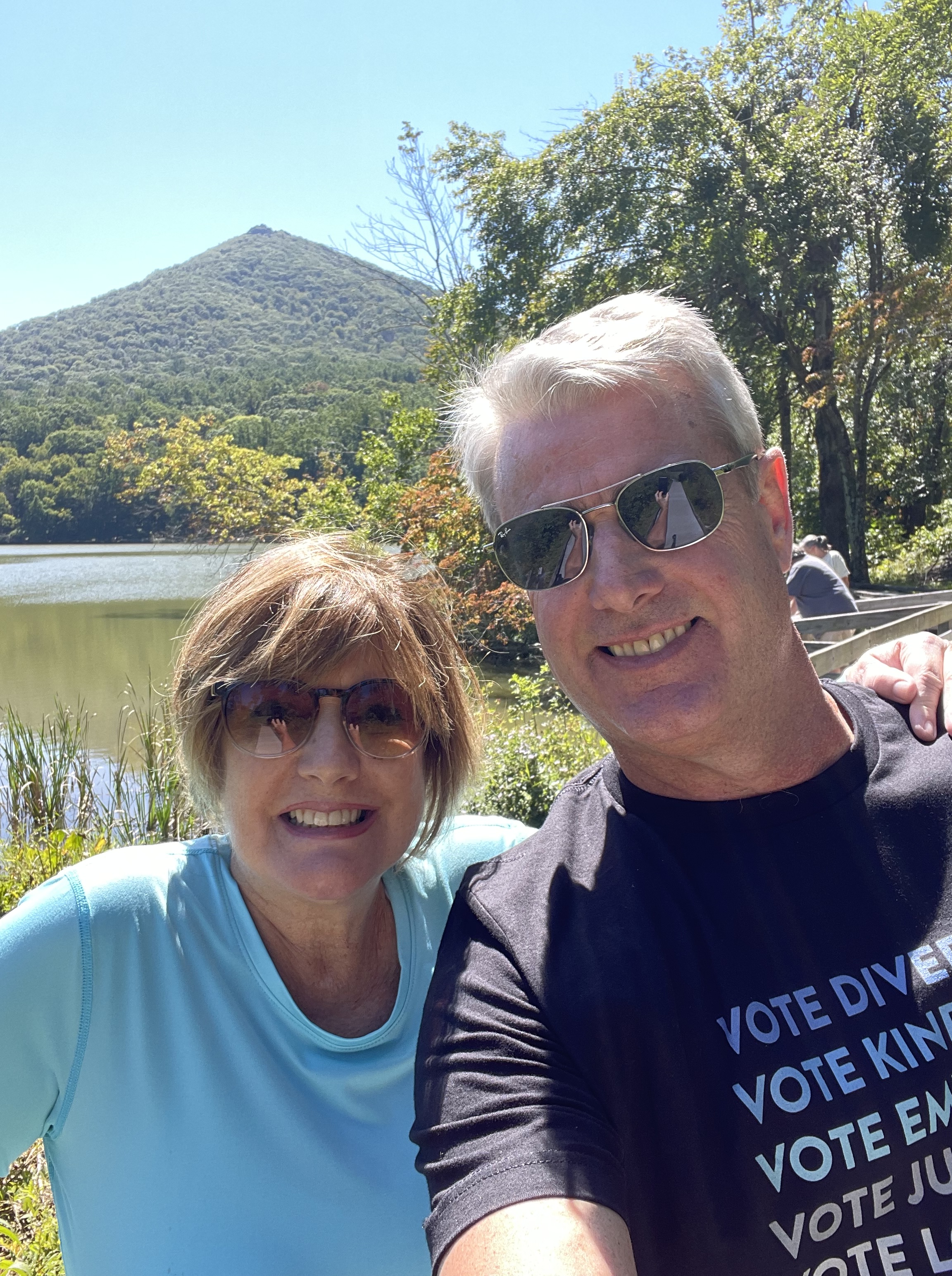
I have an embarrassing confession to make this morning. I am afraid that some very shameful pictures of me have been posted on the internet. And to make matters worse, I know this will be hard for some of you to believe, but Lori, is with me in those pictures. We thought we were alone.
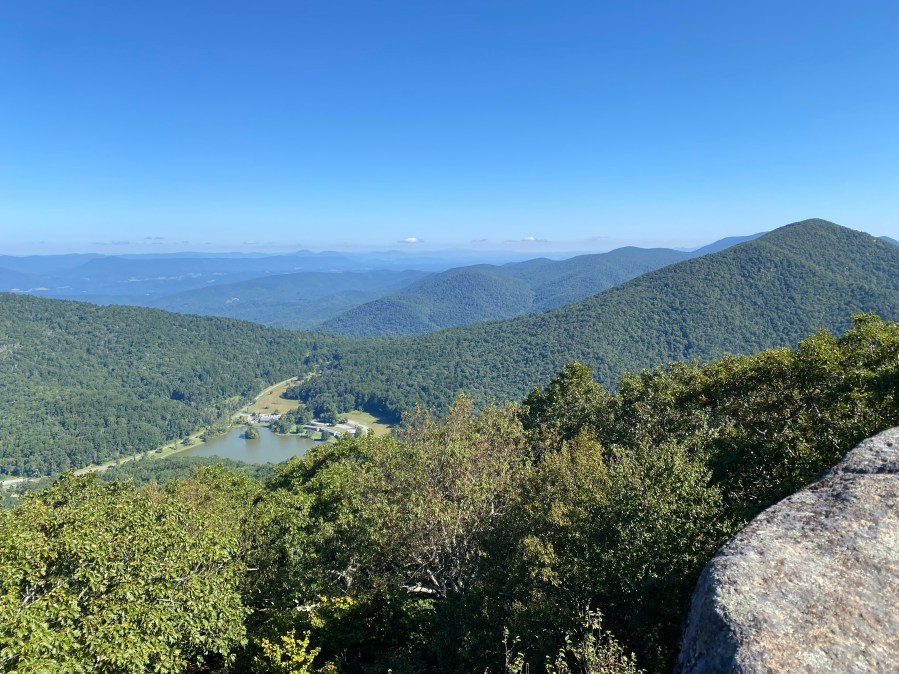
The pictures were taken on the very top of Sharp Top Mountain. Has anyone here seen them? It has been brought to my attention that some of you may have.
What makes these photographs so disgraceful and humiliating, is that when people see them and say to us, “Oh, I see that you and Lori climbed all the way to top of Sharp Top Mountain!” to be truthful, I must confess that we took the bus.
I know, you are disappointed.
And I am the one who posted the pictures, because the scene from the mountaintop is nothing less than glorious!
Do you want to hear something more disappointing? For more than thirty years, I have been preaching on Transfiguration Sunday recounting the story of Jesus taking Peter, James, and John to the mountaintop to experience something glorious, and I do not remember ever considering how difficult it is to climb a mountain. Because as far as I know, I don’t believe there were any buses in service for them to take.
And to add to my shame, the mountain that I climbed riding safely in a comfortable, climate-controlled bus, is visible almost everywhere I go in and around Lynchburg, standing as symbol of my shame!
But seeing this mountain as I am driving around, I also think about giving myself a second chance to actually climb it one day. But it’s been a year and a half, and I am still waiting for that perfect day, that day when I don’t have so many other things on my calendar, that day when the weather conditions are just right, when the wind is calm, when I know there’s going little temperature change from the bottom to the top, when the snakes, ticks, bears, coyotes and poison ivy are more scarce, and, of course, when I am in a little better physical shape.
There are so many obstacles to climb a mountain! So many excuses that can be made. Because glory doesn’t happen without some thoughtful planning, some arduous work, some risk of danger, some level of endurance, and even some pain.
On the way to glory, there can be twists and turns. And I am not just talking about ankles and knees. On the way up, sometimes you may have to take a downward turn, even curving around backwards, before heading back up. And because of that, the road is always long. A short mile and a half can take hours.
Unseen forces like gravity are constantly working against you, wearing you down, pulling you in the opposite direction, doing all it can to slow you down, or stop you in your tracks. Yes, there’s some hope on the journey. In some places there are glimpses of the summit, but there’s also self-doubt on the journey and moments of despair.
Perhaps that is why Jesus took Peter, James and John and went mountain climbing—to teach them that glory doesn’t happen without some work. That any vision of the culmination of the law and the prophets and the messiah cannot be seen, transformation and transfiguration cannot occur, liberation and reconciliation cannot be experienced without some serious climbing, without some risk along the way, without unseen forces and entities wearing you down along the way, without a few setbacks along the way.
Perhaps Jesus was trying to teach them that when it comes to real change, glorious change, there’s no such thing as a convenient and comfortable bus that is going to pick you up to take you safely and quickly to the summit. Reaching the summit takes hard work. It takes much energy, and a lot of time. It takes courage, and it takes faith.
So, maybe that is why Luke follows the story of Jesus and the disciples’ mountain climbing adventure with the story of a boy possessed by some dark and evil force.
Now we can only speculate what kind of evil tormented that boy, that put him in physical, psychosocial, or spiritual chains. Maybe he had epilepsy, a traumatic brain injury, or some other disability. But maybe the systems of his day had put him in some place of disadvantage. Perhaps he suffered discrimination and prejudice because of the color of his skin. Maybe he was suffering from the sting of rejection for being non-binary or gay.
We just know that the disciples were unable to do anything to begin to liberate to the boy, to break the chains, to challenge the systems of injustice, to confront the wicked authorities and evil forces that were oppressing the boy, that were refusing to see the image of God in the boy. And like my inability to climb Sharp Top Mountain, I am sure they had plenty of excuses. Maybe they were waiting for some quick and easy solution.
Thus, comes the scathing indictment from Jesus: “You faithless and perverse generation!”
Jesus says to those who claim to be his followers but fail to do the holy work of liberation: “You faithless and perverse generation!” Can you imagine Jesus saying such a thing today? I think you can—
As we are certainly witnessing a perversion of the gospel as a large swath of Christianity has been corrupted to favor a faithless authoritarian over a faithful patriot, favor billionaires over the poor, and favor the privileged (whether that privilege comes from race, gender, sexuality, or money), over anyone who is different.
The world dashes the poor against the rocks of hunger, war, and greed every day. In the words of theologian Cláudio Carvalhaes: “The economic beast controlled by a few demons is making people [today] convulse day and night.”
The immigrant, the refugee, the homeless, the incarcerated, the sick who cannot afford their medications, the mothers who work three jobs to make a minimum wage to feed her children, the trans boy or girl unseen by their country, the victims of mass deportation, the broken families, the traumatized children—they are all like that boy, “thrown into the shadows of our society, convulsing day and night right in front of us!”
And the Christians who have resisted worshipping the beast, those whose faith has not been perverted— those who listen the cries of the left-out and left-behind, who listen to the laments from their friends who are from Ukraine or know people in Ukraine, or are farmers, researchers, or federal workers—we can certainly feel powerless. We can become frozen in our tracks, not knowing what to do, what steps to take to break the chains. And if we can’t find an easy solution or some quick fix, find a meme on social media that will quickly change some minds, come up with some program or event to make it all right, make some real progress to give us some instant gratification, we can become stuck, paralyzed, and, then do absolutely nothing. And we become like the disciples who are rebuked by Jesus.
Yes, perhaps Luke tells us the story of the disciples’ failure to liberate the boy on the heels of the story of the Mount of Transfiguration to teach us that the path to transformation, liberation, restoration, and reconciliation, the road to justice, equity, and freedom, is like climbing a mountain.
It is a long, tedious journey. It is a risky, difficult, hopeful, and sometimes disappointing process. Along the way, there are always forces working against us. One moment we can see the summit and the next moment, a cloud of doubt rolls in, and we wonder if reaching the summit is ever a possibility. Sometimes we take three steps forward only to take four steps backward.
As I reflect back on Black History Month, I become irritated, as I have heard people talk about the Civil Rights movement like it is ancient history, that the fight for equality and justice has been won, that racism is an evil from the past which has been defeated, a sin of the country that should be forgiven, and even forgotten. That we have somehow reached the mountaintop that Martin Luther King Jr referenced in his sermon on April 3, 1968, the day before his assassination.
When the truth is that the Civil Rights movement is far from over. In 2025, the work of justice and liberation continues. The road to glory and reconciliation is a long road that faithful people are traveling today. We are still climbing to reach Dr. King’s mountaintop. While we’re making some headway, there are powerful forces pulling us back.
That is why I believe the season of Lent is so important for the follower of Jesus. For Lent has been called a journey to resurrection, a journey to glory. And there are too many Christians today who ignore or skip this journey by hopping on a bus to get straight to Easter!
That’s why the most attended Christian worship service is on Easter Sunday, while the least attended service is on Ash Wednesday or on Maundy Thursday or Good Friday.
However, Ash Wednesday and Lent remind us that the journey to glory takes some contrition, it requires some sacrifice, it involves some work. It is hard work, but it is also holy work. It is the work we were created by God to do, the road we are called by to travel, the mountain we are destined by God to climb. Thus, when we are climbing, every step we take is on holy ground.
And yes, there will be setbacks. There will be times of disappointment, even moments of despair. But Lent teaches us that those of us with a faith that has not been perverted must keep climbing.
When a citizen calls our LGBTQ neighbors abominations at a public meeting of the city council, we must keep climbing.
And when that citizen claims he has suffered religious persecution after he is surprisingly reprimanded by a council member, we must keep climbing.
When we realize our nation is no longer the leader of the free world for the very first time in our lifetime, we must keep climbing.
While perverse politics seek to turn back to clock on civil rights, school segregation, voting rights, and women’s rights, we must keep climbing.
As a faithless and perverse congress tries to take away Medicaid from our most vulnerable citizens among us, we must keep climbing.
When our friends, family or coworkers try to talk us down from the mountain, when unseen forces are pulling us down, when the wicked winds howl and knock us down, we must get up, and keep climbing.
When we are gaslighted by the perverted and faithless privileged, telling us that we no longer have to climb, that we have already reached the summit, we must keep climbing.
And knowing that we may not reach the mountaintop and witness the glory in our lifetimes, we are going to train our children, and if we live long enough, our children’s children, to keep climbing.
Knowing that when we climb, wherever we are on the journey, whatever position or situation we may find ourselves in, when we climb, even if we are pushed back and knocked off our feet, when we climb, even if we are crawling down on our hands and knees, when we climb, we are always on holy ground.


 Just Love