

It was the summer 1993. Lori and I had been married five years and were expecting our first child. I had graduated from seminary the previous year and was serving with my first church as a pastor in rural Northeast Georgia. At our first OB/GYN appointment in Athens, we were told that our baby was due to be born on November 25. On Mother’s Day 1994, we were going to have some special reasons to celebrate.
During the last week of July, we were scheduled to have an ultrasound that would hopefully determine the gender of our child. I remember being more excited than anxious about this appointment. The baby was already moving and kicking quite a bit. Lori would call to me from another room in the house asking me to rush over to her. She would grab my hand and place it on the exact spot the baby was kicking so I could share her excitement. Lori was clearly showing at this time as strangers were beginning to approach us in public to offer their congratulations and to inquire when our baby was due.
As the doctor moved the ultrasound wand around on Lori’s abdomen and the black, white, and gray images of our baby appeared on a computer screen, I remember feeling like a wide-eyed child at Christmas getting a glimpse of the best present I could ever receive. We immediately heard a very strong and fast heartbeat. We then saw the outline of a head and a face. We saw arms, hands, legs, feet, even toes. After a minute or so, I remember growing impatient and asking the doctor if he could tell if it was a boy or a girl.
Following my question, my anticipation heightened as there was a brief period of silence in the room with the exception of the loud echo of a rapid heartbeat. Finally, the silence was broken as the doctor said, “It is really difficult to tell sometimes with our outdated equipment.” He moved the wand around for another minute and said, “The equipment that they have in Atlanta is far more advanced than mine. We probably need to make an appointment for you.” But before I could express any disappointment, he added: “There’s also something else going on that needs a better look.” He then handed the wand to the nurse and asked for us to come to his office where he would make an appointment for us to go to Atlanta. It was at that moment that my excitement was completely replaced by anxiety.
Suddenly, I no longer cared if it was a boy or a girl.
During the appointment in Atlanta, the doctor, who had been attentive yet quiet during the entire exam, spoke for the first time by pointing out a curvature in the spine. He called it a “neural tube defect.” This was the first time I had ever heard the term “neural tube.” However, upon hearing it one does not need to be familiar with it when the word “defect” is attached to it, as that word is more than enough to cause any parent-to-be’s heart to sink, especially when it is spoken to describe the spine of your unborn child’s spine.
Immediately following the ultrasound, we met with a team of doctors, nurses and genetic counselors in a large consultation room. In a compassionate, yet straightforward way, we were told that our baby’s spine “twisted,” probably during the early weeks of the pregnancy, and prevented the formation of an abdominal cavity. We were told that although our baby seemed to have healthy organs, there was nothing to contain those organs. Surgery was not an option. Our baby had absolutely no chance at life. A counselor put her hand on Lori’s shoulders and handed her a tissue to wipe the tears from her face.
After counseling and prayerfully considering all of our options, two days later, the pregnancy was terminated in the hospital without complications.
When we came home from the hospital, Lori went to bed where enormous grief she experienced kept her for days. She did not feel like talking to anyone, not even talk to her mother, who called several times a day, every day.
When Lori finally decided that she was ready to talk to people, the support from Christians came. However, some of the support came in ways that were more hurtful than helpful. It came in religious, pious, and judgmental ways. Almost everyday it came in ways that left us cold, empty, even resentful.
Now, I am sure it only came in these ways because these perhaps well-intended religious people understood it was their Christian duty to bring life, resurrection, restoration where there is death, despair and brokenness. And, maybe this was just the only way they thought they could bring it. Maybe this was the way they were taught on some church pew or in some Sunday School class. This was simply the only way they knew how to share the good news, proclaim the gospel, to be “a movement for wholeness in this fragmented world,” as we Disciples like to say.
But it came in ways that, for us, made the world even more fragmented. It came in preachy, accusatory ways, demeaning us for terminating the pregnancy. It came in the way of a theology lesson suggesting that we perhaps should have possessed more faith, that with prayer, God could have created a new body for our baby before he or she was born.
It came by the way of an ethics lecture insinuating that we were somehow “playing god.”
Then, came the support in ways that are all too familiar but never too helpful, all too religious-like but never too Christ-like. It came in the way of words that would have been best left unsaid.
“God knows best. God has God’s reasons. God does not make mistakes.” “God must have known you were just not ready to be parents.” “God must have needed another flower in heaven.” “You are young and can always try again.” One even said, “Perhaps God knew that your child was going to be a bad person or have a difficult life, so God, with the ability to see a future that we cannot, intervened and took your child.”
For some reason, Christians just feel compelled to say something, anything, even if it is hurtful.
We tried not to be angry with them, not to resent their ways of being religious. We defended them by saying, “Well, that is just her way, bless her heart.” We said, “Well, everyone knows the way he is.” It was just their way of doing what they thought would bring us some hope, their way of bringing us some wholeness, their way of bringing peace to our troubled hearts; and people, well, people have their ways.
Jesus, however, said that he was the way. “I am the way, and the truth, and the life; no one comes to the Father, but by me” (John 14:6).
As Frederick Buechner has reminded us:
He didn’t say that any particular ethic, doctrine, or religion was the way, the truth, and the life. He said that he was. He didn’t say that it was by believing or doing anything [or saying anything] in particular that you could “come to the Father.”
Jesus didn’t say the Bible-Belt-culture evangelicalism manufactured for the self-interest of the privileged was the way. He didn’t say some alternative gospel created to ignore God’s will for social justice was the truth. And he didn’t say that the fake good news made up to cheapen the grace of the irrefutable good news was the life. He said that he was.
Buechner continues:
He said that it was only by him – by living, participating in, being caught up by, the way of life that he embodied. That was his way.
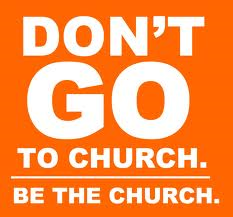
And thank God, that others came to us in his way. People from our church came to us with silent but empathetic embraces. They came bringing nothing with them but their tears and their own broken hearts. Some came bringing a home-cooked meal or a homemade dessert. One came with a vase of freshly-cut flowers from their garden. They came graciously. They came faithfully. They came intentionally with the love and in the way of the Christ. They came with the face of God.
Andrew King poetically reflects on this love, this way and this face:
We thought you wore the skin
of thunder, spoke in verbs of stormwind,
majestic and mighty as lightning
upon summits,
unreachable
as the cold and silent fire
of distant stars; hidden behind
a curtain in the temple,
an untouchable invisibility approachable
by the highest priest only,
hands freshly bloodied
from an altar.
And then somehow the veil was parted:
we gained glimpses of the glory
of the nearness of your love
as the hurting were healed,
the outcast befriended,
the lost restored,
and everywhere the powers of death
had their dominion challenged,
by the son of a Jewish carpenter
from Galilee.
If you have seen me,
said Jesus, you have seen the Father.
And we do see you there,
in the Gospels,
healing in synagogues
and in houses,
feeding the hungry on hillsides,
embracing the lepers and the sinners,
turning over the tables
in the temple,
nailed to a cross of injustice
but risen,
greeting women at
the graveside,
sharing bread with your friends,
the dominion of death
overturned.
Approachable, reachable,
the accessible God,
visible in the skin of Jesus.
But you are not done,
not content to wear
such skin only in the pages
of the Gospels.
The many-colored, multi-shaped
body of Christ – the Church
wide as the nations of the world –
bears your image where it acts
in your love:
still feeding,
still healing,
still teaching mercy,
making you visible
not in great
structures nor
in high saints alone,
but in the ordinary
persons in the pews,
as here, on a day like any other,
a woman making dinner,
and packing it,
knocking on the door of a neighbor
newly home from surgery for cancer:
the face of the one receiving it
lit with thankfulness,
the face of the one freely giving
like the face
of God.
When our hearts were troubled, because of the many faces of God that came to us in his way, in the visible skin of the body of Christ, although we were without child, on Mother’s Day in 1994, we still had special reasons to celebrate.
And on Mother’s Day in 2017, I can stand here today confidently proclaiming that Jesus—not religion, not ethics, not any doctrine—Jesus is the way, the truth and the life.
Let us pray,
God, embolden us to live, participate in, be caught up by, the way of life embodied by the Christ. Amen.
Invitation to the Table
The way to this table of communion this morning is not religion. The way to the bread of life is not ethics. The way to the cup of salvation is not any doctrine. The way to the life and to the truth that is represented here is only Jesus. And since Jesus lived and died to make a way for all, all are invited.

 Just Love