Being Great

Mark 9:30-37 NRSV

In Mark chapter 9, we read where the disciples are arguing with one another about which one of them was the greatest.

And who could blame them? For they had just tasted greatness on what we call the Mount of Transfiguration. In this same chapter, we read where Peter, James and John witness the appearance of Jesus, his face, even his clothes, shine!

So, of course the disciples are arguing about greatness. For they too wanted to shine!

And 2,000 years later, disciples are still arguing about what it means to be great, still arguing about how to make our country great, and to make our church great. And, here in the United States, the ones who seem to winning this argument, or at least are arguing the loudest, are all around us.

Do you want to be a great church?

Wed yourself to the empire. Unite with a political party. Do whatever it takes to attain power in order to legislate your own worldview and understanding of morality, and oppress all who do not fall in line.

Do you want to be a great church?

Then do whatever it takes to draw a large crowd. Because crowd size is what it is all about. To get people’s attention, make up some stories if you have to. They don’t have to be true stories. They just need to be sensational stories to get people riled up. Stoke fear if you have to, do whatever it takes to attract a big crowd. Tell them their whole world is going to end unless they join you. And if you’re loud enough, and say it often enough, you might be able to draw crowds like Elvis Presley used to draw, and you won’t even need a guitar. But speaking, of guitars…

Do you want to be a great church?

Then you have to make your services more entertaining. Do something to make the people smile, laugh, clap and tap their feet. And do you really need to have Communion every Sunday? That’s a lot of work. All that preparation and clean-up. And besides, no one wants to hear about sacrifice, self-expenditure, shed blood, and a broken body every Sunday! Just give the people what they want. Trade those tiny, dry crackers for some fresh, hot donuts, and trade that little sip of juice for a caramel macchiato or a vanilla latte.

Do you want to be a great church?

As the pastor, don’t ever be too real. Never admit your mistakes. Never apologize for anything. Don’t let people know that you need forgiveness. Never let it slip out that you have your doubts. Make them believe you never question your faith and you have all of the answers.

Do you want to be a great church?

Discourage all critical thinking. Encourage folks to check their brains at the door. Tell them exactly what you want them to believe. And them not to listen to anyone else and to even ignore what they may see with their very own eyes. Tell them that if they hear anything that is critical of you, it is fake news. Always keep it simple, black or white, good or evil, heaven or hell.

Do you want to be a great church?

Create an “us-verses-them” mentality, an “insider-verses-outsider” way-of-thinking. And remind the congregation every Sunday that we are “in,” and those who disagree with us are “out.” Make them feel righteous, holy, superior, knowing that while we are on their way to heaven, those who are unlike us are most certainly heading in the other direction.

Do you want to be a great church?

Look, it’s fine to say you welcome all people to church. But don’t say it every Sunday. Don’t over-emphasize it, and don’t advertise it. And avoid using words like “diversity,” equity, and inclusion” and never say “social justice.” And don’t talk so much about helping people who are poor, and standing up for the marginalized. Because, the truth is, people like to be with people who think like them, act like them, and look like them.

Do you want to be a great church?

Have more programs that are uplifting and edifying for the members. Give them what they want, especially those who have some money and some power in the community. Keep them filled, satisfied, happy and comfortable. Don’t ever pressure them to do things that are outside of their comfort zones. Always make the faith about winning; never losing anything, and certainly not losing themselves. Make it about being first; never about being last.

Do you want to be a great church?

Preach what is popular. Embrace the culture over the Word of God. Instead of preaching extravagant grace, preach “love the sinner and hate the sin.” Instead of preaching love your neighbor, preach “God only helps those who are willing to help themselves.”

Then Jesus comes, and he asks:

“What are you talking about?”

We are silent.

We are also embarrassed. Because deep down, we know that our arguments are antithetical to everything Jesus has been teaching us.

But Jesus heard us. Jesus always hears us.

It is then that Jesus goes into the nursery and brings out a little baby; and taking the child in his arms, he says:

Whoever welcomes one such child in my name welcomes me, and whoever welcomes me welcomes not me but the one who sent me.

In other words, Jesus said to those who were arguing about greatness:

Stop worrying about being great, and start worrying about the least. And when you do that, when you take care of those who cannot care for themselves, when you feed those who cannot feed themselves, when you clothe those who cannot clothe themselves, when you welcome those who often feel unwelcomed, those who are treated like outsiders and called “aliens,” then you welcome God. And like me standing on that mountain, you will shine!”

Holding that baby in his arms, it is as if Jesus is asking: “Do you want to be great? Do you want to shine like me standing there with the prophet Elijah and the law-giver Moses? Then listen to the voices from the law and the prophets.”

Listen to the voice of Moses who commanded:

If there are any poor…in the land…do not be hard-hearted or tightfisted toward them. Instead, be generous and lend them whatever they need. …Give generously to the poor, not grudgingly, for the Lord your God will bless you in everything you do. There will always be some in the land who are poor. That is why I am commanding you to share freely with the poor and with other Israelites in need (Deut 15:7-11).

Never take advantage of poor and destitute laborers, whether they are fellow Israelites or foreigners living in your towns. …True justice must be given to foreigners living among you… (Deut 24:14-16).

Jesus is saying to listen to the Proverbs, words that us who is great in the eyes of God:

…blessed are those who help the poor… Those who oppress the poor insult their Maker, but helping the poor honors him (Proverbs 14:21, 31).

If you help the poor, you are lending to the Lord— and he will repay you!”(Proverbs 19:17).

And listen to who are not so great in God’s eyes:

Those who shut their ears to the cries of the poor will be ignored in their own time of need (Proverbs 21:13).

A person who gets ahead by oppressing the poor or by showering gifts on the rich will end in poverty (Proverbs 22:16).

Whoever gives to the poor will lack nothing, but those who close their eyes to poverty will be cursed (Proverbs 28:27)

So,

Speak out for those who cannot speak, for the rights of all the destitute. Speak out, judge righteously, defend the rights of the poor and needy (Proverbs 31:8-9).

Jesus is saying to listen the voice of the Psalmist…

Give justice to the poor and the orphan; uphold the rights of the oppressed and the destitute. Rescue the poor and helpless; (Psalms 82:2).

Do you want to be great? Then listen to the voice of the prophet Isaiah:

Learn to do good. Seek justice. Help the oppressed. Defend the cause of orphans. Fight for the rights of widows. “Come now, let’s settle this,” says the Lord. “Though your sins are like scarlet, I will make them as white as snow. Though they are red like crimson, I will make them as white as wool (Isaiah 1:17-18).

In other words,  says the Lord,  when you help the least, when the mission and ministries of your church side with the poor and the marginalized, I will transform you. I will transfigure you!

Do you want to know how to be a great church?  Do you really want to shine? asks Jesus. Then listen some more to Isaiah:

Free those who are wrongly imprisoned; lighten the burden of those who work for you. Let the oppressed go free, and remove the chains of injustice. Share your food with the hungry, and give shelter to the homeless. Give clothes to those who need them, and do not hide from relatives who need your help.

Then your salvation will come like the dawn, and your wounds will quickly heal. The Spirit of God will lead you forward, and the glory of the Lord will protect you from behind. Then when you call, the Lord will answer. ‘Yes, I am here,’ he will quickly reply, ‘Remove the heavy yoke of oppression…Feed the hungry, and help those in trouble. Then your light will shine out from the darkness, and the darkness around you will be as bright as noon’ (Isaiah 58:6-10).

The late Ruth Bader Ginsburg taught law students how to be great lawyers with advice that I believe applies to each of us.  She said something like: if you really want to shine, if you really want to be great, (an now I quote)

…you will do something outside yourself, something to repair tears in your community, something to make life a little better for people less fortunate than you. That’s what I think a meaningful life is. One lives not just for one’s self but for one’s community.

Amen.
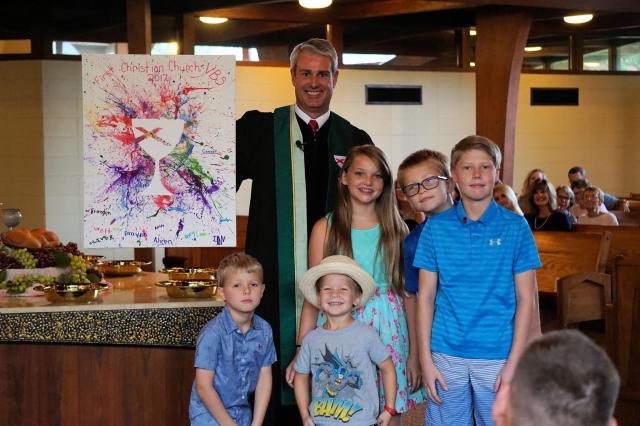
Let the Children Come

Children

Matthew 19:13-15 NRSV

There is so much that the Church can learn from this wonderful passage of scripture.

Little children were being brought to Jesus.

Before children can come to Jesus, someone, or something has to bring them. They usually to do get to this place on their own. It may be a parent, a grandparent or another relative. It might be a neighbor, a Sunday School teacher, or just someone who cares. A good question for the church to ask is: what are we doing to bring children to this place? Or are we merely waiting for children to come.

Churches make the following mistake all the time: Oh, we don’t have a youth minister any more, because we just don’t have that many children. Have you ever considered that not having many children is the best reason to have a youth minister?

I believe churches bring children to church by working hard to have all sorts of theologically-sound learning experiences and hands-on missional opportunities for children. We don’t wait until we have enough children to have a vibrant children’s ministry. We create the very best ministry to children we can to bring children here.

I believe churches bring children to church by allowing children to participate in and even lead worship, for children have much to teach us.  We also bring children here by providing separate opportunities for smaller children during worship, as our education committee is currently planning.

I believe churches bring children to church by having a safe-church policy to protect children, and dedicated, compassionate, and screened volunteers to love and nurture children.

Little children were brought to Jesus that he might lay his hands on them and pray.

Children should always be brought here with a specific purpose to be loved, accepted, embraced, and supported. Children are to be the focus of our prayers. That means that children are to be the subjects of our most personal and intimate conversations with God.

Ask yourself this: how many times are the children in our community truly the main focus of our prayers?

But the disciples spoke sternly.

We think: who in the world would speak sternly preventing children from coming to Jesus? The answer surprises us, but at the same time, doesn’t surprise us. Matthew says that it was his very own disciples.

As a part of the Church for over 50 years, I have experienced this in many more ways than one.

When I was growing up I remember hearing offended church members sternly say terrible things about my home pastor when he supported having basketball goals installed on the church grounds. They criticized us playing ball at the church for many reasons. One, all the running around the goals was going to kill the grass. Two, we might leave drink bottles or other trash on the grounds. And three, the basketball games might attract the wrong type of kids, and by type, well, you know what they meant.

My pastor was also criticized by church members for sending our church bus out to pick up children who lived a few miles away in a trailer park (again, wrong type of kids), He was also criticized for asking the church to pay for children that they picked up on that bus to attend camp in the summer. And the four times each year we has communion, I always heard people grumbling about the pastor for not prohibiting children who had not been baptized to take communion.

As a long-time pastor, I have experienced similar criticisms, never by people outside of the church, but by people on the inside claiming to be disciples. There have always been people in the church who for some reason or another think it is their God-given, moral duty to put restrictions on who can and who cannot get to Jesus.

People have and will always be offended by Jesus’ revolutionary words:

Let the children come.

Let the children come to a safe place of welcome, a place of grace, a place of love, a place of nurturing where they can learn and grow into the people God has created them to be. And let all of them come. Let all children come to a place where no one is judged, treated unfairly, or ever feels excluded, second-rate or second class.

Do not stop them.

Do not let anyone or anything stop them. Do not let that one with money, power and prestige who thinks God has made him the gatekeeper of the church stop them, and do not let condescending words, snooty looks, or self-righteous expectations stop them. Do not let appearance, dress, ethnicity, documentation, race, size, gender, sexuality, health, class, or disability stop them. Do not let their families’ past or current situation, tax bracket, beliefs or lack of beliefs stop them.

That Jesus said this about little children speaks volumes about how we as the Body of Christ are to welcome all people.

For little children are people—

Before they are old enough, before they are strong enough, or before they are smart enough to help themselves or anyone else for that matter. Little children are folks who are not yet able to contribute to society, pay taxes, earn their place in the world, or deserve any sort of commendation. This means that the arms of the Body of Christ are to be open wide with a grace most extravagant and a love most radical.

It is the same love that parents have for our own children. We love them more than anything simply because they are our children.  So extravagant and radical is this love that there will be always be those, probably those who call themselves disciples, who will be so offended that they will speak and even act, sternly.

To such as these that the Kingdom of Heaven belongs.

This, says Jesus, is what the Kingdom of God looks like. This is what eternity looks like. This is what the church should look like. And this is what the church should help the world to look like. I believe one of the great purposes of the church is to show the world, through our words and our deeds, how to be people of extravagant grace and welcome, of radical love and acceptance.

But sadly, the church has been guilty of doing the opposite, have we not?  People go to church looking for grace and acceptance, and all they find is judgment and condemnation.

Somehow, we have been preaching the gospel the wrong way. In fact, I believe we have a tendency to actually preach the gospel, not just the wrong way, but we have a tendency to preach it backwards.

To share Jesus with others, we often start with what is sometimes called the doctrine of original sin. Now, don’t get me wrong. I believe that all people are sinners. I just don’t believe that is where we should begin the conversation or the sermon.

Our sermons usually have three points, and point number one is: All people are sinners. Point number two is: God sent Jesus to die for us. And point number three is: if we believe this, then God will forgive us and love us as God’s children forever.

I believe we should preach the same sermon, but proclaim it the other way around. And I believe the way we bring children here, to a place of grace, acceptance and welcome is the way to help us turn it around, to preach the gospel the right way.

I believe we should always begin with God’s love for all people. We should make our number one point, the first and foremost point of our sermon that God loves us as God’s children and wants nothing more but to love us forever.

The second point should be that God loves us as very own Children so much that God came and loved us so radically, showered us with grace so extravagantly, that it offended the organized religion of his day. They sternly spoke out, “crucify him,” and they sternly acted out with a whip, a crown of thorns and a wooden cross.

And we should make our third and final point that God did this while we were yet sinners, before we earned or deserved anything, before we contributed anything, even believed anything.

Do you see the difference? Instead of preaching that all people are born sinners standing outside of the grace and love of God until they do something, say something, or pray something to earn forgiveness, we are to preach that all people are actually born standing inside of the grace and love of God without doing, saying or praying a thing to earn it. For this is the gospel. This is what we want people to believe and accept— that all people are welcomed into God’s gracious and loving arms—they just may or may not know it.

Jesus put it this way—Point #1: For God so loved the world. Point #2: God gave God’s only son. And Point #3: So that all whosoever believes may not perish by their sins but have everlasting life.

If we keep teaching this, continue preaching this, if we keep welcoming children, all children, making the church and a place of extravagant grace and a place of radical love; then, before you know it, we are going to change the whole world. We will start seeing people differently. Instead of seeing people first as sinners who deserve hell, fire, and eternal damnation, we will begin to see them first as God sees them, as God’s “little children,” who are to be embraced, accepted, prayed for, nurtured, and loved.

O God, thank you again for all of the children in our midst and for the wonderful ways that they remind us of your grace and love. Amen.


Invitation to Communion

Christ welcomes all to eat and drink from this table,

And the arms of Christ are open wide.

There is nothing here that can stop you sharing this meal.

There is no sin so great, no shortcoming so large, no wound so deep, and no mistake so wide that it does not fit inside the arms of his grace. In the eyes of Christ, no one here is second-class or second rate. All are God’s beloved children. All are welcome.

Keeping the Way of the Young Pure

support-process-sc370x200-t1360346453-2Psalm 119:1-9 NRSV

He was a poor, pitiful thing. His mother was in labor for nearly a week before he was finally born. His head, so severely malformed from the length of the labor, worried his parents who took him to several specialists for testing.

When he was five years old, public schools had just integrated. And because his parents thought he might have some special needs, they felt it was best for him to attend a small, private kindergarten. His young teachers didn’t seem to be too alarmed that he was the only one in class who could not speak any intelligible words, telling his parents that they just had to learn a new vocabulary to communicate with him.

“Duh-ee” meant he was “thirsty.” “Uh-ee” met he was “hungry.” And “wuh-ee,” meant he was “sleepy.”

Although his parents considered holding him back for another year of kindergarten, they reluctantly enrolled him in a public school the next year. They also worried about the “colored people” who they believed were still “stirring things up” three years after the assassination of Martin Luther King Jr.

His first grade teachers, Mrs. Banks and Mrs. Tomlin, immediately noticed his developmental delay and called a meeting with his parents, the school nurse, and a speech therapist.

The nurse said that it was obvious that the little boy was literally “tongue-tied.”  He was born with extra tissue under his tongue that had attached his tongue to the bottom of his mouth limiting movement. The little fella would need surgery.

Immediately following the procedure, his teachers called his parents to check on him. For you see, teaching was not just their job. It was their passion.

The little boy soon started speech therapy that was fully funded through the school, that he would continue until junior high.

He missed several hours of class a week for speech therapy, but each of his teachers—Mrs. Green in the second grade, Mrs. Price in the third, Mr. Riggs in the fourth, Mrs. Jones in the fifth, and Mrs. Welch in the sixth—would spend extra time with him to make sure he never lagged behind.

And because of their compassionate determination, although he could not speak one intelligible word when he entered the first grade and took speech therapy until the seventh grade, he never failed a grade. In fact, he would graduate from high school as one of the youngest students in his class.

By the time he entered high school, two teachers in particular noticed that years of struggling to speak had left him with a very low self-esteem. Mr. Godfrey, a P.E. teacher and coach, and Mr. Casey, a math teacher, coach, and Scout leader, donated even more of their time offering a basketball camp. They asked the boy to attend.

He loved it! As his skills improved, so did his confidence.

Every camper was encouraged to try out for the JV squad, which the boy did. He made the first but, but failed to make the final cut. A few days later, Mrs. Snowden, his history teacher, who also donated her time after school directing school plays and musicals, asked to speak with him after class.

It was if she noticed that he did not make the basketball team, when she asked him: “Have you ever considered joining the drama club?”

“The shy little boy shook his head and said, “No, but I will.”

While he was in tenth grade, he took Mrs. Snowden’s drama class where he was asked to read various lines of a play. Not only did he have trouble reading with any expression, he constantly struggled to pronounce certain words. Yet, Mrs. Snowden persisted.

In the eleventh-grade, she asked him to audition for a play. And to his surprise, she cast him in one of the lead roles of a western comedy entitled, Blazing Guns at Roaring Gulch. His character was Bill Filbert, a very funny, bumbling, fumbling character that stumbled and stuttered his words. I suppose she thought that if he mispronounced anything on stage, the audience will just assume he was “in character.”

Well, something happened to him when he stepped onto that stage for the first time as Bill Filbert. After he recited his first comedic line and heard the audience respond with a roar of laughter, this light suddenly came on. A strange yet euphoric confidence flooded every part of his being, and the young man stole the show; at least that’s how he felt when he returned to school the next day, when all of his teachers sought him out and praised him:

Mr. Corbett, Mrs. Corbett, Mr. Short, Mr. Lewellan, Mrs. Tice, Mr. Newbern, Mrs. Newbern, Mrs. Casey, Mr. Griffiths, Mr. Gregory, Mrs. Acker, Mr. Cowan, Mrs. Cowan, Mr. Williams and many more.

That weekend, he saw teachers from Junior High: Mr. Bohannon, Mrs. Lindsay, Mr. Templeton, and Mrs. Wellons. Each congratulated him on his fine performance.

And you know rest of the story.

The little boy who couldn’t articulate a single word in the first grade now makes his living speaking before a congregation in Enid, Oklahoma. And although he has this almost foreign, southern accent, and still mispronounces a word every now and again, even names of some of the congregants, a few folks keep showing up Sunday after Sunday to listen to speak.

All because public school teachers lived out Psalm 119:9, by guarding my life, keeping my way pure, in other words: clearing the way, offering me an equal opportunity to succeed.

With 176 verses, Psalm 119 is the longest chapter in the entire Bible. It uses repetition and the Hebrew Alphabet, two tried and true teaching methods, to teach an important lesson about the importance of “walking in the law of the Lord.”

And what is the law of the Lord?

Well, because we are Christian, we look to Jesus for that answer.

Jesus, who was often called “Teacher,” taught that the entire law of God can be summed up in two laws: “Love God and love your neighbor as yourself.” The Good Teacher, and the prophets before him, also taught that at the heart of it was caring for our most vulnerable neighbors: the least, the poor, the widow, the orphan, and of course, children.

You want to know how a shy, nearly non-verbal child, can grow up to make a living as a public speaker?

Because someone guarded his life, kept his way pure, according to what is at the heart of law of God.

And here’s another question: If at the heart of the law of God is guarding the way of the our most vulnerable neighbors, which includes our young, why are our school teachers among the least paid professionals in our state?

This week this guy told the Super Bowl would make a great sermon illustration.

I said, “What do you mean?”

He said: “Man, I’m talking about Tom Brady! He never gave up! He kept persisting, kept fighting until victory was at hand.”

I replied: “If I am going to talk about the Super Bowl, I am think I am going to ask why our society values professional athletes and the likes of Lady Ga Ga more than we value teachers?

“Something is wrong when entertainers are the highest paid professionals and educators are the lowest paid. Are those who entertain us really worth more to us than those who care for the most vulnerable among us?”

And why do so many seem to be perfectly okay with taking money away from schools who serve every child of every race, creed, color, and class to fund schools that are more segregated and religiously isolated?

Is it possible, that as a whole, we’ve decided to ignore the Word of God. Or, as I suggested last week, we’ve decided to completely replace it with a sweeter version?

The way we value our public school teachers, many who go way beyond what is expected to help give a child a chance, is sin, plain and simple. It is against the very heart of the law of God.

A re-writing of our scripture lesson that might be most appropriate for us today might go like this:

Cursed are those who are guilty for failing to walk in the law of the Lord.

God, you have commanded that your laws be kept diligently, but we have chosen to value entertainers over educators, greed over the gospel, sin over your statutes, and self-interest over equal opportunity.

We are put to shame. Our eyes are blind to your commandments.

Discounting your righteous ordinances, O Lord, we curse you with our injustice.

So what can we expect?

But to curse the way, the future, of our young,

By ignoring them against your word.

What must we do as a church to turn this around, to guard and to make the way pure for our young?

We can continue to support our Cub Scouts, Boy Scouts and Girl Scouts and organizations like Youth and Family Services. We can continue to collect school supplies in August and coats in December. But we can also do more.

Shannon, John and I are a part of a group called Pastors for Oklahoma Kids who suggest the following:

We must recognize that education improvement and reform is necessary…in order to properly fund and resource our teachers, schools, and students. But we should reject the false notion that schools are “failing” or not caring for our students. We [must] urge a halt to the demonization of public schools and to anti-public school rhetoric.

We [must understand] free public education is a moral good [it is at the heart of the law of God], that is vital to [Oklahoma’s] well being and requires adequate investment to ensure thriving communities.

We [must] believe public school children are God’s children who deserve the nurture of a good society, the prospect for a good education and the equal opportunity for a good life.

[As a congregation committed to the principle of the separation of church and state, we must work to] to keep public schools free from coercive pressure to promote any sectarian faith.

We must not allow free public education…[to become] a marketplace of financial gain for the few… [And we must] stand to end to this profiteering of Oklahoma’s most vulnerable.

We [must] resolve to be committed to a just society…to ensure that every child has an opportunity for a good education and that public schools have the resources necessary to provide such an opportunity, achieving the highest standards possible.

[We must] pray for public schools;

[We must] show our support for public schools through worship services that affirm all school-related personnel;

[At the same time we must] advocate for a high wall of separation between church and state that is critical to good public education…

[We must] challenge [all voices, but especially those] religious voices who demonize public education.

And finally, we must spread the word that standing up for our most vulnerable citizens is at the very heart of the supreme law of God, and failing to do so is sin, pure and simple.

And maybe that guy had a point regarding the Super Bowl:

“We need to be like Tom Brady and never give up. We need to keep persisting, keep fighting, until victory is at hand.”


For more information please go to: Pastors for Oklahoma Kids

The Empty Nest

empty nestOur baby has left the nest for college and for the world, and honestly, her parents are not doing very well.

Because we have lived much longer than she, we are much more aware of the many threats that exist in the world. However, because we love her much more than she is aware, we have chosen to set her free into the threatening world and to pay the price with our suffering.

Although we have taught her well, we know that she will make mistakes and choices that will cause her pain. We also know that she will encounter people who will disappoint her, and some, who will even hurt her.

However, we also know that by setting her free, she has the potential to do so much good in this world. She has many gifts, exceptional abilities and a tremendous love to make this world a better place. But at the same time, we know that there will always be those who will oppose her love by disparaging her gifts and obstructing her good works.

As her parents, we know that as long as we are living, we will always be there for her, doing all that we can do, to forgive her mistakes, to comfort her when she hurts, to encourage her to fulfill her potential, to pick her up when she falls, and to always love her more than we love our own lives, more than she may ever understand. This will inevitably bring us more pain, but without any doubt, we know our baby is worth it.

The prophet Isaiah often referred to God as a mother who suffers for her children. Jesus often called God “father.” Suffering in the empty nest, we know, more fully than ever, why.

Consequently, although we may not be doing very well these days, we know, honestly and more fully, we will be just fine.