
There are many influences in this world that guide our lives, inform our thinking, and give us direction and meaning.
One of those influences is the distinct seasons of the year. Seasons result from the yearly orbit of the Earth around the Sun, the center of our universe, and the tilt of the Earth’s rotational axis. In other words, the changing of seasons means that the entire world is changing. Seasons change us in a powerful way, because the world changes. Winter, spring, summer and fall influence the things we wear, the things we eat, our hobbies and recreation, even our general mood.
The proprietors of capitalism realize the tremendous power and influence the seasons have over our lives and culture. Notice how they have manipulated them in the name of profit. For example summer begins not on June 21st but with Memorial Day sales in the department store and the opening of the tourist season. Autumn begins not on the 23rd of September, but with Labor Day sales. And winter did not begin on December 21, but actually on the day in November we call Black Friday.
A long time ago the Christmas season began on Christmas Eve and then was celebrated for 12 days until January 6 when Jesus’ baptism was observed. However, the money makers understood that there would be a greater payback if they could convince us that the Christmas season actually begins the day after Thanksgiving and lasts through New Year’s Day.
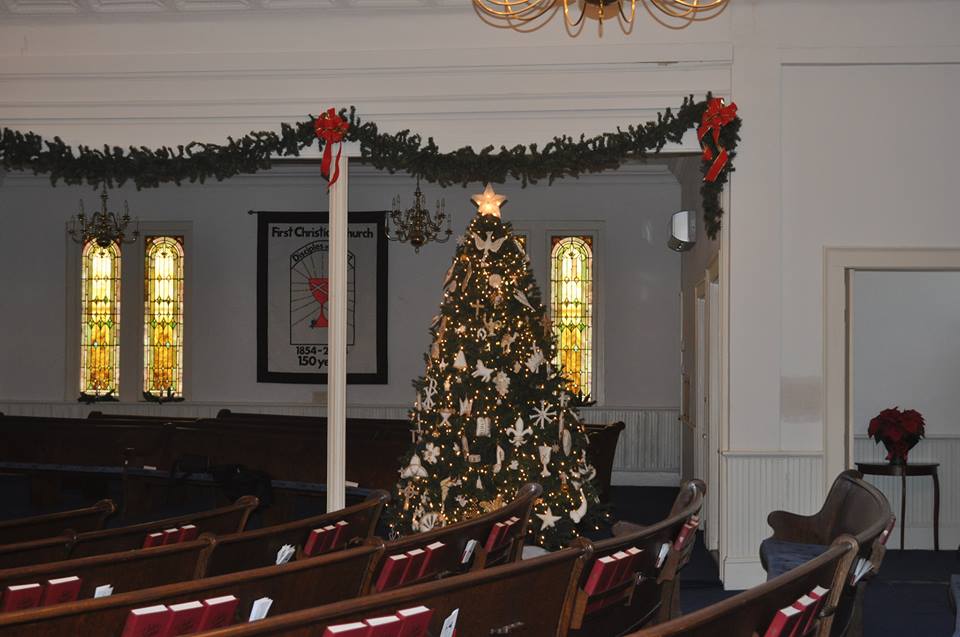
This is the reason that Christians in mainline churches that observe the Christian calendar are often a bit frustrated during Advent and this second Sunday after Christmas. Christians, who have been influenced and conditioned by the world, wonder why we have to sing those painful, solemn, anticipating, waiting hymns of Advent instead of the more cheerful Christmas carols during those Sundays after Thanksgiving. And we wonder why on earth the Christmas tree is still standing in the sanctuary and we are still singing carols days after the black-eyed peas have been consumed. After all, we have been taught by our world to believe that having any Christmas decorations up after New Year’s is, well, tacky.
However, what guides our lives, informs our thinking, and gives us direction and meaning is not anything that is of this world. The main influence on our lives is the birth, the life, the death, and the resurrection of Jesus Christ.
In Ephesians we read:
With all wisdom and insight he has made known to us the mystery of his will, according to his good pleasure that he set forth in Christ, as a plan for the fullness of time, to gather up all things in him, things in heaven and things on earth. In Christ we have also obtained an inheritance, having been destined according to the purpose of him who accomplishes all things according to his counsel and will, so that we, who were the first to set our hope on Christ, might live for the praise of his glory (Eph 1:13-14).
Like winter, spring, summer and fall, Jesus change everything. When we embrace Jesus as our Savior and Lord, it is like the whole world tilts on its axis. Our whole world revolves around Jesus the Christ who is the center of our universe. We live for the praise of his glory. We believe Christ is God’s plan for all time.
Thus, our new year does not begin on New Year’s Eve watching a ball drop in a square shining bright with the lights of commercialism and materialism joyfully singing Auld Lang Syne with a few friends. Our new year has its beginning on a dark November morning around a simple Advent wreath, lighting one meager candle solemnly singing Come Thou Long Expected Jesus.
Our new year does not begin with a celebratory toast commemorating our accomplishments of a past year. It begins with a small cup of juice confessing our sins and our shortcomings, recognizing our need for repentance, forgiveness, and a savior.
Christmas is not about the exchanging of many gifts or even the love our family and friends have for us. Christmas is about one special gift of God’s self in the birth of that Savior revealing the love of God for all people.
The first Sunday in January is not about putting Christmas and an old year behind us and looking forward to a new year. It is about reflecting on the influence the birth of the Savior has on our lives, our community and our world.
The month continues with the season of Epiphany where we witness this Savior go down the banks of the Jordan River to begin fulfilling God’s plan for all time through his public baptism.
We watch with amazement, as although he is the Savior of the World, he is still driven into the wilderness where he experiences the trials and temptations of this world, the same ones we all experience.
Then, astonishingly, we hear our names called when he calls the names of Simon, Andrew, James and John asking them to drop everything to follow him wherever he leads them. And with the other disciples, we follow. We follow courageously, anxiously, unwittingly, even somewhat reluctantly. But we follow.
We were with him when he healed the sick. We were there when he gave sight to the blind, touched and restored a leper, brought peace to a man possessed by demons, defended and forgave a sinner. We were with him when he lifted up the poor and challenged the establishment by speaking truth to power. We were there when he became angry at the religious people and turned over tables in the temple of organized religion.
The month of February features Ash Wednesday and the season of Lent. It is a season of acknowledging that we were also with the disciples when they deserted him. We, too, left him in the garden of Gethsemane when he was arrested. We acknowledge our association with Peter who denied that he ever knew him, and we confess our connection with Thomas who betrayed him on that dark night.
Lent is the season that our need for forgiveness is most fully revealed, as is our need to renew our mission to deny ourselves, to pick up our own cross and die to self.
And on Good Friday, we learn that if we give ourselves away, if we die to self, if we join Jesus in that prayer to our God, “not my will, but yours be done,” when the evil of this world throws everything that it has to throw at us, when evil comes to destroy us, when evil finally seeks to take the very life from us, evil does not and cannot win. For what it has come to destroy has already been given away. Our lives have already been placed into the hands our God who holds them for all of eternity.
During the season of Easter, we celebrate this good news. We celebrate the good news that God is always working in this world working all things together for the good. God is always wringing whatever good can by wrung out of life’s most difficult moments. God is always lavishing our sins with grace, transforming our sorrows into joy, our despair into hope, our defeats into victory and our deaths into life.
During the season of Pentecost we celebrate the good news that Christ continually comes to us through God’s Holy Spirit. God continues to guides this world. We believe that the same grace and love that Jesus taught and lived out throughout his ministry is still alive in this world today.
Then we enter into a season that the Church calls “Ordinary Time.” It is a season to reflect on what the birth, the life, the death and the resurrection of the Lord mean to us and our world. However, when one truly does that, one discovers that there is no such thing as any ordinary time. All time, when Christ is influencing it, guiding it, informing it, giving it direction and meaning, all time is extraordinary. There is no secular time. There is only holy time. When our lives are directed by Jesus, even our darkest, most dreadful, difficult days are divine days.
And our year does not end on December 31, but on a Sunday in November we call Christ the King Sunday. We celebrate the good news that when it is all said and done, in the last analysis of it all, Jesus Christ, the God who is fully revealed in his birth, life, death and resurrection, is the King of Kings and the Lord of Lords.
Thus, the good news for all of us this day is that it is January 4th, and the Christmas tree is still standing, the lights are still burning, and it is not tacky or even strange. Because like winter, spring, summer and fall, when Christ came into our lives, the whole world tilted on its axis and everything on this earth, including us, changed forever. We are no longer on the world’s clock, on the world’s schedule or calendar. Our hope and our calendar is set on Christ, God’s plan for all time, and we live for his glory. It is Christ, and only Christ, who guides our lives, informs our thinking, and gives us direction and meaning. Thanks be to God.


 Just Love