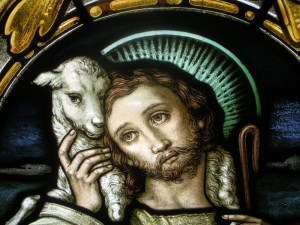
Got Jesus? O God, I Hope Not

got jesus

If Jesus is something or even someone that we get, then church becomes just another product whose members are mere consumers. Thus, like going to a store, the spa, or the local cineplex, church becomes some place we go to get something. Some go to get fed. Others go to get nurtured and pampered. Some go to get entertained.

However, if it is Jesus who gets us, if Jesus is about us giving ourselves to the God revealed in Christ, then church means a radical, self-denying, sacrificial way of living.

If Jesus is about giving one’s life away, then the church becomes something much more than a self-help center offering self-improvement workshops.

Wednesday night becomes less of a time to get fed, physically and spiritually, and more of a time to pray for others, celebrate the joys of life with others, and even suffer with others. It becomes a time to build a community of selfless love and forgiveness with others. Bible study becomes less of a time to acquire more biblical knowledge than others and more of a time to consider how the scriptures inform our service to others.

Sunday morning becomes less about what God has to offer us and more about what we have to offer God.  When we eat the bread, we do not consume it. When we drink from the cup, we do not merely swallow it. We allow it to consume and swallow us, every part of us. And we commit ourselves to presenting our own bodies as living sacrifices for others, pouring our very selves out for others in the name of the God who emptied God’s self out for us.

And every day of the week, we become more than Christians who possess exclusive tickets to heaven in hand. We become the Light of the World.

Got Jesus? O God, for the sake of this community and for sake of this world, I pray not. Amen.

Grace and Gratitude: Remembering Ronnie Avery

The Second Miraculous Catch of Fish

From Ronnie Avery’s Memorial Service February 8, 2004.

Luke 5:1-11 NRSV

“Grace” and “gratitude.”  The two words come from the same Latin root and belong together.  Grace is when God does something for us that God did not have to do.  And the only way to respond to God’s amazing grace is with humble gratitude.

The soon-to-be disciples were in a boat with Jesus just offshore.  Jesus asked Simon, who had been fishing all night without catching a thing, to drop his nets out in some deeper water.  When he did they filled up the boat with so many fish that the boat began to sink!  They signaled another boat to come over to help.  Then they filled that one up!  They barely got back to shore before the boats sank under the weight of the fish.

These fishermen had never seen anything like it before. It was a miracle. It was also grace. Jesus did something for these ordinary fishermen that Jesus did not have to do. That is the definition of grace. And the fisherman responded with humble gratitude as they “dropped everything” to follow Jesus. They left their old lives behind on that beach, to worship and to serve Jesus for the rest of their lives.

The disciples responded to grace the same way Ronnie Avery responded to the grace that he received.  Ronnie would be the first person to tell you that he was on a road in the summer of 2003 that was leading him to a place that he did not want to go.  When he was hospitalized in July of that year, gravely ill with congestive heart failure, he realized this, and was filled with fear.

That day in ICU Ronnie said that he prayed a prayer that went something like this: “Oh God, not now.! Please don’t let me die now!  Please save me God, and I promise I’ll get myself right and start living for you.”

He said when he opened his eyes from that prayer, he saw me standing there in front of him for the very first time.

I had a short prayer with him and said, “Ronnie, I sure am glad to meet you, but I am sorry that it had to be under these circumstances here in the hospital.”

I will never forget how he responded. He said, “You’re getting ready to see a lot more of me, because I am going to be sitting on a pew in your church the first chance I get, and I am going to be sitting on one every Sunday that I possibly can!”

Ronnie told many people that on that day, in that moment, his life miraculously changed forever.  Not only was he suddenly and miraculously healed of a disease which had plagued his entire adulthood, it was in that moment that he began to live his life like those fishermen—fishermen who one day dropped everything, left their old lives behind them, to live a brand new life following Jesus. And this was the real miracle.

The very first Sunday that he was able, Ronnie was sitting on a pew in church, just like he said. A little over a month later, Ronnie joined the church.  He came every Sunday and every Wednesday night he could.  He gave faithfully our church’s budget.  He contributed generously to the fund set up by the church to help pay the tuition for my doctorate.  He loved his wife more sincerely.  He loved his siblings more deeply.  He loved his children and stepchildren and family and everyone he knew more earnestly.  Although he was weak and tired, he spent the entire first day of 2004 loving his sister-in-law, Donna, in the emergency room of Wake Forest University Hospital in Winston-Salem.

He repeatedly told me that he wished he was well enough and strong enough to do more.  However, the truth was, Ronnie did more for the Lord in six months than most people do their entire lives.

Ronnie would tell people that I changed his life.  He even said that I saved his life. However, we all know this was not true.  And deep inside, Ronnie knew that was not true.  God saved Ronnie’s life. God changed Ronnie’s life. I just happened to be the one who happened to be standing at his beside after his fearful prayer to God.  God used me to give Ronnie something that God did not have to give Ronnie: grace. Amazing grace: free, unearned, undeserved and unmerited.  And Ronnie responded like fishermen with humble gratitude and sincere thankfulness.

God also used Ronnie’s family members the same way God used me. God used so many people through the steadfast love they had for Ronnie.  They loved Ronnie with a love that was unwavering.  Each of his siblings, Steve, Dianne and Shirley, loved Ronnie with the steadfast love of their mother, Mary.  With his faithful wife, Becky, they never gave up on him. They showered Ronnie with the grace of God—unearned, undeserved and unmerited.

At Ronnie’s funeral service on February 8, 2004, I shared something that I had never shared with anyone before.  I tried to share a little of it with Ronnie on the way back from Winston-Salem on January 1, 2004.

Ronnie told many that I changed and saved his life.

What many did not know was the extent of which Ronnie changed and quite possibly saved me.

There is a disturbing and alarming statistic concerning pastors.  After just ten years of ministry, 30% of pastors drop out of the ministry.  After ten years, many pastors wake up and just decide that being a pastor is simply not worth all of the heartache and heartbreak. Trying to please people is a very demanding and stressful job. Not to mention, impossible. Many pastors decide that the burden that is placed their families is simply not fair. And many come to a place where they feel they are ceasing to make a difference. So they drop out and leave the ministry all together. You will find many of them selling insurance or real estate.

Personally, since I have been a pastor, I have always experienced a strong call to pastoral ministry. There was never any doubt in my heart or mind that serving as a pastor is what God was calling me to do, until 2003.  That marked my eleventh year of ministry.  I was at the point where 30% give up and drop out.  The first six months of that year were the most difficult six months of my entire ministry. The heartache of trying to please everyone and the heartbreak of failing to please everyone was wearing me down. The church was taking in fewer new members, and we were failing to meet our budget.  Church attendance was down, and I was at the darkest point in ministry wondering if I was really making a difference in anyone’s life.  I was contemplating joining the 30% of my colleagues by seeking another profession.

Then came a hot day in July. I went to the hospital to visit with the family of Howard Evans and Venetia Kue. I got off the elevator on my way to see Venetia and ran into Donna Mosley. She told me about Ronnie and sent me directly to see him in ICU.  And I have never, and I will never be the same.

For you see, on that day God showered two people with grace. Amazing grace—unearned, undeserved, unmerited. God was not finished with Ronnie, and God was not finished with me.  After ten years, God was still using me and calling me to be a pastor.  God may have used me to save and change Ronnie, but I will thank God the rest of my life that God used Ronnie to save and change me–as God used Ronnie to change so many others.

Ronnie continually told me that he wished he could do more for the Lord through the church.  I tried to tell him in the car on the way back from Winston-Salem  just a month before he died, and I hope to God that God has told me now, that he did more for the Lord than he ever knew. Ronnie saved my ministry and quite possibly my life.  And I will thank God for Ronnie Avery the rest of my life, as will many others.

In that ICU room, Ronnie said, “You’re getting ready to see a lot more of me, for I am going to be sitting on a pew in your church the first chance I get and I am going to be sitting on one every Sunday that I possibly can.”

Now I hate to admit it, but deep within my sometimes cynical self, I thought, “Sure you will.”  I didn’t graduate from seminary yesterday.  I had been a pastor for eleven years.  I know how most people work.

When most of us are given a gift which is completely undeserved, unearned, and unmerited, a gift that changes our lives, at first we are grateful.  But then our gratitude begins to wane. I expected to see him on a pew one Sunday, maybe two Sundays, but I certainly did not expect to see as much of him as I did, and I never expected that he would have the impact on my life that he did.  That’s the way grace and gratitude works with most people.

But thank God, Ronnie Avery was not most people.

Like fishermen dropping their old lives in the sand to leave them behind for a brand new life, Ronnie Avery certainly dropped his old life in exchange for another.

How did he do it?  Why didn’t his gratitude wane like most people?

Because Ronnie lived everyday of the rest of his life acknowledging that God had done something for him that God did not have to do. God had showered Ronnie with grace. Amazing grace—free, unmerited, undeserved, unearned. And Ronnie was grateful.

Think of what the church of Jesus Christ could be and what the church could do, if all of us made this simple acknowledgement: That God has given us something that God did not have to give us.  The gift of life.  The gift of friends and family.  The gift of himself.  The gift of resurrection.  The gift of life everlasting.

Think of the difference we could all make if we woke up each morning with the prayer that I believe was Ronnie Avery’s prayer everyday:  “Today God has given me something that he did not have to give me, something that I did not have coming to me—something completely unearned, undeserved, unmerited.”

I believe our lives will truly bear witness to the love and grace of our Lord Jesus Christ. We will be the people God is calling us to be.  We will be the church God is calling us to be. And there is no telling how many people, and even pastors, may be changed along the way.

It’s Time to Get Personal

adam

Isaiah 49:1-7 NRSV

1 Corinthians 1:1-9 NRSV

John 1:29-42 NRSV

The season of Epiphany is the time the church traditionally talks about the revelation of God to all of humanity.

It is the time to ask some of the most difficult questions of our faith. Who or what is God? What is God like? What does God feel? What does God want? How does God relate to and interact with us and the world? How does God reveal God’s self to us?

These are very difficult questions, because with our mortal minds, I do not believe we can ever answer them completely. And as I said last week, I am okay with that. In the words of Fosdick: “I would rather live in a world where my life is surrounded by mystery than live in a world so small that my mind could comprehend it.” I am very comfortable living, as the Apostle Paul wrote, in a world where I “see through a glass dimly” (1 Cor 13).

I love the way we begin each service with the Lord’s Prayer praying, “Hallowed be Thy name.” For the name of God is so above our mortal comprehension it always evokes reverence, awe, and respect.

And I believe that one of the problems with religion these days is that, for many in the church, there is no mystery. Too many people have the world and have God all figured out. They are know-it-alls and listen to a sermon or attend a Bible Study not to learn anything new, not to be challenged, but to have what they already know reaffirmed. They have all of the answers and never have any doubts.

A parishioner came to see me one day almost in tears. She was so upset that she was shaking. A friend of hers was dying. She said that she was not sure about her friend’s faith so she asked her: “Without any doubt, do you know that if you died today that you would spend eternity in heaven?”

Has anyone ever asked you that before?

The dying woman responded, “I hope so.”

Well, that response tore her friend completely out of her frame!  For she wanted her to respond: “Yes! No doubt about it, I know! I know unequivocally, for absolute certainty!”

But her friend’s response did not sound that troubling to me. She may not have responded with absolute certainty, but it sounded to me as if she had faith.  She hoped. She believed. She trusted.

To be honest, I tend to get along better with people who are honest enough to admit that they sometimes have their doubts; that they do not always know absolutely. And I am often wary of those who have no doubts whatsoever, because it has been my experience that those are the ones who are the quickest to judge and are the first to belittle, even condemn, others who hold different beliefs.

A member of a pastor search committee once asked me if I believed the Biblical account of Jonah and the whale should be taken literally. She asked, “Did it actually historically happen the way the Bible says it did?”

I responded, “I believe that God can do what God wants to do. I have no trouble believing that God can use a whale to actually swallow man and spit him out on the beach of God’s choosing. However, if I die and get to heaven and find out that it was just a fictional story to reveal a great truth about the will of God, then I am not going to get angry and ask for a transfer!”

I believe the problem with the church today is that too many church people are so closed-minded they would opt for the transfer. They are so convinced, so right, so certain about the things of God that they leave no room for mystery and thus no need for faith, hope or trust.

One of the great things about our heritage as Disciples of Christ is our individual freedom to interpret the scriptures and to understand God and God’s relation to the world. We are encouraged to have open-minds when reading the Bible. No one was more of a free-thinker or had more of an open mind than our forefather, Barton Stone. That is why I believe he was so inclusive, welcoming all people to the Lord’s table. And that is why I believe we are such a non-judgmental, non-self-righteous, accepting people today. We do not presume to have all the answers. And we are not even close to having God all figured out.

Now, I wished we could just end the sermon right here. I wished we could just stand now and sing our hymn of commitment, pat ourselves on the back, and then go get some lunch. But, we can’t do it. We can’t do it, because now, now the sermon is just beginning.

We open-minded, free thinkers have to be very careful, that while embracing the mystery of God, we do not completely depersonalize God. While we accept broad views and opinions, while we practice widespread inclusivity and acceptance, we do not make the mistake and generalize God.

In emphasizing God as mysterious Spirit, a Spirit that Jesus says is comparable to the wind, blowing when and where it wills, in stressing God as Light in our world working in mysterious ways, we must be careful not make God into some sort of generic, vague enigmatic force.

In church, we say very specifically, “May the Spirit of Christ be with you.” We do not say very vaguely say, “May the force be with you.” That’s from Obie One Canobie and Yoda; not from the Old and New Testaments.

I have noticed, especially over the last decade, how Christians, in their attempts to find common ground with other faith groups, talk more about following a general God and less about following a specific Christ. When relating to Hindus, Muslims and Jews, I have heard Christians say things like: “We have our differences,” “but we all believe in God.”  But in our attempt to find common ground and unity, I believe we sacrifice God as a distinct, particular, and very personal being.

You hear a lot of talk today about spirituality.  More and more people are calling themselves “spiritual” instead of “Christian.”  There are far more books at Barnes and Nobles on Spirituality than are on Jesus. William Willimon says he can understand why this sort of reasoning is so attractive. “The more vague, indistinct, mushy, and impersonal we can make God, the better for us!” Willimon says that if God is so mysterious, “Then we can make God just about anything we want. We can render God into a projection of our sweet sentimentality and we will never have to grow, change, or be born again.”[i]

And when we depersonalize God we ignore about almost everything said about God in scripture. Take, for instance, today’s lectionary lessons—every one of them. Each of them, in their own way, speaks of a very personal God who sees, speaks, acts, moves, feels and intrudes. In the Old Testament Lesson for the day, the prophet Isaiah recounts how, even before he was born, God knew him personally and intimately and had special plans for him.

In the Epistle Lesson, Paul, when challenged by some dissidents at one of his early congregations, defends his authority as leader on the basis that God Almighty, the creator of all that is, had reached down and touched him, personally authorizing him as an apostle. The Greek word apostle, literally means “someone personally sent from God.”

And in our Gospel Lesson that I read this morning, John the Baptist looks at Jesus and sees in him the very presence of God in the flesh, the personification of God among us.  And Jesus himself said, that if we know him, we know his Father as well (John 14:7).

I believe we should think of this hour on Sunday morning as our attempt to get personal with God, to give that word “God,” which can be terribly abstract and general, some specific concreteness. Sunday morning is the time when we tell God who we are, but more importantly, it is the time when we listen to God tell us who God is.[ii]

Our God is not distant, aloof, some indistinct concept or some abstract idea. Our God is a personal being who yearns for the most intimate of relationships with each one of us. Our God is one who continually rips the heavens wide and swoops like a bird when we least expect it, calling us by name, affirming us as God’s beloved children. God reaches out and reaches in and touches the places in us that most need touching. And our hearts, our very souls burn with love.

Let me just stop my sermon for a moment and just look at you. As your pastor, part of what I love about you is not your vague generalities, but your very personal ways: the particular ways you love, the intimate ways you care, the unique ways you act, the peculiar way you share, the specific you give, the distinctive ways you serve, the certain ways you accept, the special ways your forgive.

I love you not for your generalities, but for your personal uniqueness.

“Humanity in general” does not move me.  A congregation “in general” does not energize me, evoke me, persuade me or love me—but you specifically can. You particularly can. You explicitly and certainly can.

The same is true with God. Here in this season of Epiphany, it is time to get personal, to get down to the specifics. We believe, that in the personal specifics of the life, death and resurrection of Jesus, we have seen God. We have seen not some general, vague idea, not some mysterious force, but we have seen a person, a person walking among us, calling us, urging us, challenging us, loving us, forgiving us, changing us, and one day resurrecting us revealing the true life of God—revealing who God is, what God is like, how God feels, and how God relates to us and our world.

No, we do not have all of the answers. And as I said, I am comfortable not knowing all of the answers. I fully embrace the mystery of all that is.  I believe that there is a very good reason that each Sunday, we unite our hearts and pray, “Hallowed be Thy Name.” For His name is so beyond our fragile minds, so above our finite understanding, so outside our mortal comprehension, so utterly mysterious, that it is a name that is to always be revered and respected and sanctified.

However, that name just so happens to be “Father”—a word that cannot be any more personal. And the good news is, we pray, not merely “Father” but we pray very intimately and very specifically and personally “Our Father.”

No, when it comes to God, we cannot know it all, but what we can know is certainly, absolutely, unequivocally, undoubtedly enough.


[i] William Willimon, Pulpit Resource, 2006.

October 2013 – Coming Home

DCF 1.0As I See It, FCC Newsletter, October 2013

This year, Homecoming at First Christian Church has a special meaning for me. As I shared in a recent sermon, during my three-year break from pastoral ministry, like many of us who have been a part of the church, I often felt the temptation to go solo with my faith.

On a Sunday morning run along the Tar River in Greenville, I would pray to God and enjoy being alive in God’s creation and think to myself, “This is the way to do church! There is no one to disagree with me or hurt my feelings. There is no one sharing their problems with me, making me uncomfortable, and taking up my time. And, I must confess, it was rather nice! However, I must also confess it was very selfish. It was arrogant, and it was self-righteous. The truth is: it was the very antithesis of who Jesus calls us to be as his disciples.

Someone recently told me that they quit going to church because they found church to be “depressing.”

I aked, “What do you mean?”

She responded, “Well, there I learn about people in town who are lonely, grieving, hospitalized, living in nursing homes, having financial hardships, struggling with daily life, and so on.” She then paused for a few seconds and said, “But I guess that is what being a disciple of Jesus is supposed to be about, isn’t it?”

I did not have to answer her.

So for me, this Homecoming means the rededication of my life to being a disciple of Christ. I am coming home. I am coming home to experience life with a family of faith where we are continually called upon to care for and even suffer for others. And I know of no better family to come home to than the First Christian Church of Farmville!

Like all families, there may be some disagreements, some hurt feelings, and even some resentments. Living life as a family can sometimes be burdensome and even depressing. However, we know it is where Jesus calls us to live and where we experience true life, abundant and eternal. We know, as I have discovered in recent weeks, it can be a taste of heaven.

Yes, this year, Homecoming has a special meaning for me. I hope it does for you too.

People Grumble but Angels Sing!

Stain_GoodShepherd

Luke 15:1-10 NRSV

It is Consecration Sunday. To consecrate: it means to “set apart,” “devote,” “dedicate,” “commit.” Today, with our presence, prayers, and pledges, we consecrate First Christian Church to the selfless, self-denying, sacrificial service of God in this community and in our world. We set-apart, devote, dedicate and commit ourselves to the difficult journey we call discipleship, a journey that calls us to lose ourselves, empty ourselves, and pour ourselves out for others; a journey that calls us to lose our pride, our possessions, even our lives.

And as painful, as difficult, as taxing, and as costly as this journey is, Consecration Sunday is the day we claim it, and commit ourselves to it, believing it is the only journey that leads to true life, abundant and eternal.

And after being around you folks now for a couple of weeks, I believe with all my heart that the First Christian Church of Farmville is more than ready for this day of Consecration. And believe it or not, I can just look at you this morning and tell that you are ready.

I believe you are ready simply because you are here. Like all churches on the discipleship road, this church has experienced a few bumps, several pot holes, a little bit of mud, some rocky terrain, a couple detours, and although you have even gotten close to going over the cliff, you have somehow managed to stay on road. And in many ways because of that, you are more committed and more devoted than ever to seeing this journey through. I know you are ready to commit to this journey because you are here.

And let’s face it, you could have made the choice with the majority of Americans to stay home today and experience God on your back porch or patio with a cup of coffee or during a morning run or walk in the park. But you made the difficult decision to get up, get dressed and drive to this place this morning. Some of you came here to sit beside of people with whom you could not disagree more, with people who have at times made you angry or even made your cry, but you still came because you are committed to something that is much bigger than your feelings, your emotions, even your life.

Rev. Lillian Daniel, pastor of First Congregational Church from Glen Ellyn, Illinois, has said: “Any idiot can find God alone in the sunset. It takes a certain maturity to find God in the person sitting next to you who not only voted for the wrong political party, but has a baby who is crying while you are trying to listen to the sermon. “Community,” she says, “is where the religious rubber meets the road. People challenge us, ask the hard questions, disagree, need things from us, require our forgiveness. It’s where we get to practice all the things we preach.”

She continues: “I think a lot of those who can’t tolerate organized religion are really just frustrated by other people. They think, ‘If they could just kick all of the flawed human beings out of the church, we could really do this Jesus thing. Better do my spiritual life solo, where I don’t have to be disturbed by the amateurs.”[1]

I have a confession to make. During my break from pastoral ministry, I often felt the temptation to go solo with my faith. I would go for a Sunday morning run along the Tar River in Greenville. There, I would pray and enjoy being alive in God’s creation, and think to myself, “this is the way to do church! There is no one to disagree with me. There is no one sharing their problems with me, making me uncomfortable, and taking up my time. And I must confess, it was rather nice!

However, I must confess it was also very selfish. It was arrogant, and it was self-righteous. The truth is: it was the very antithesis of who Jesus calls us to be as his disciples.

One day, perhaps one Sunday at 11 am, Jesus decides to have some church. He gets the word out that he would be leading worship, preaching a sermon, and then afterwards having a covered dish or a nice catered lunch. And people from all over town came to the service. Of course, other religious leaders and people of faith came carrying their Bibles: Pharisees and scribes, deacons and elders, Sunday School teachers, and other respectable, well-dressed and well-groomed church people, even some from other congregations in town.

But then through the front door entered the other people. You know who I am talking about: the others—those who tempt us to find Jesus alone with a cup of coffee and a sunrise—those others, who are just so, well, “other.”

It was then that it came. It came in whispers and it came in murmurs and it even came in a few gasps the sound of grumbling. “This fellow welcomes sinners and eats with them.”

The truth is that being the church that God calls us to be in this world is in itself a selfless, sacrificial, self-denying journey because it calls us not only to welcome, accept and love others; Jesus suggests that “others” is who the church is actually for.

Jesus asks, “Which one of you, having a hundred sheep and losing one of them, does not leave the ninety-nine in the wilderness and go after the lost one until he finds it?”

Well, Jesus, do you really want us to answer that question? Do you really want to know if we are willing to risk 99, forget about their wants and needs, just so we can go after one that has lost his way? And just how did he get lost in the first place? I hate to say it, but he probably deserved it. It makes more sense to make sure the more deserving sheep that have not strayed stay safe and comfortable. Do you really want us to risk losing the entire flock for one lost soul?

Then Jesus says, not only do I want you to risk the entire flock, put their needs and their wants last, but when you find the lost, I want you to put him up on your shoulders and throw one big party! Because, when one lost soul is found, that is exactly what the Father and the Holy Spirit and the Angels are doing in heaven!

Then Jesus asks, “which one of you women, having 10 coins, and loses just one of them, does not light a lamp, sweep the house and search until she finds it?”

Well, Jesus, it all depends. I might look in a few places, but I am not willing to move any furniture or tear the house apart. And I might look for an hour or so, but I am not going to waste an entire day. I think I’m better off to use my time and efforts to hold on good and tight to the on other nine. Make sure they stay safe and protected. Doesn’t that make more sense?

Jesus says, “It may make sense to you, but not to my Father and the heavenly host. I tell you again, when you exist and act on the behalf of the lost, on the behalf of the other, although it might cause some in the church to grumble, the angels are singing!

And if we are all honest this morning, we would admit that we understand the grumbling. There is something within all of us that would prefer to be a country club for the ninety nine. Deep down, we prefer to hold on to each other, comfort each other. After all, membership should have some benefits for its members. It is not easy consecrating the First Christian Church not for us here on the inside, but for all those others who are on the outside.

It is not easy consecrating ourselves to leave our areas of comfort and safety and venture forth into the world share the good news that Jesus came and died for all people. However, although we may want to grumble, there is absolutely nothing than can stop us from this consecration. We have been through too much, the road has been too long, too bumpy and too muddy, too rough, and we’ve been too close to edge of the cliff to turn back now!

I once belonged to a church that had beautiful stained glass windows that told the gospel story. The first window portrayed Jesus’ baptism; the second, the call of the disciples; the third, the feeding of the five thousand; and so on. And then they portrayed Jesus’ crucifixion the resurrection and the ascension. Each window was imprinted with an appropriate scripture verse for each scene.

We had a guest preacher one day who pointed out how the stained glass windows should be taken out, flipped around, and put back in so that the gospel story could be seen, the scripture verses read by the people outside of the church, instead of to the people who were already on the inside.

It was a great sermon illustration. For it not only illustrates why we need to fix our own windows here where they can be seen by those outside our church, and we need to do it sooner than later, it illustrates that Jesus wants the church to always, selflessly and sacrificially, exist for the other, the outsider, even if it causes some to grumble.

Fred Craddock, one of my all-time favorite preachers, who I have quoted for 25 years, who by the way just happens to be ordained as a Disciple of Christ, tells the story of a local church that had a lot of grumblers. Although their sign out front read, “A church that serves all people,” when all people would show up to be served, the grumbling became so intense that it continually drove the newcomers away.

“Would you look at how long his hair is? Do you see all of those piercings! Oh my word, how those children are dressed! He sure is odd. She’s certainly strange. Don’t tell me we are now going to be a church for those people?

About ten years went by. When, one day, Craddock was driving down the road where that church was located when he saw that the building that once housed that church had been converted into a restaurant. Curious, he stopped and went inside. In the place where they used to be pews, there were now tables and chairs. The choir loft and baptistery was now the kitchen. And the chancel area which once contained the pulpit and communion table now had an all-you-can-eat salad bar. And the restaurant was full of patrons—every age, color and creed.

Upon seeing the sad, but very intriguing transformation, Craddock thought to himself, “At last, God finally got that church to serve all people.”

It is Consecration Sunday and we have come too far to turn back now. So, today we set aside, devote, dedicate and commit our presence, our prayers, our pledges, our budget, our building our windows and our very selves to the service of God in this community and in our world NOT for the benefit of the 99, but for others.

The road has been long and the going has been rough, but because of that we are stronger and more committed than ever to see this journey through. Although this way is narrow and at times uncomfortable, we are still here. And while some may grumble, we have decided this day to exist for others and sing aloud with the Father, Son, Holy Ghost and Heavenly Host. Then, at the altar we are going to lay our pledges to continue this journey as we make our way to the fellowship hall sit down together at the table and enjoy one big party!

Going Solo

run in the park

From People Grumble but Angels Sing!

This Sunday, we have a choice to make. We could make the choice with the majority of Americans to stay home and experience God on our back porches or patios with a cup of coffee or during a morning run or during walk in the park.  Or we could make the difficult decision to get up, get dressed and drive to a place of worship.  And there, we may sit beside people with whom we could not disagree more. We may sit beside folks who press our buttons, even drive us crazy.

In a recent interview, Rev. Lillian Daniel, pastor of First Congregational Church from Glen Ellyn, Illinois, has said: “Any idiot can find God alone in the sunset. It takes a certain maturity to find God in the person sitting next to you who not only voted for the wrong political party, but has a baby who is crying while you are trying to listen to the sermon. “Community,” she says, “is where the religious rubber meets the road. People challenge us, ask the hard questions, disagree, need things from us, require our forgiveness. It’s where we get to practice all the things we preach.”

She continues: “I think a lot of those who can’t tolerate organized religion are really just frustrated by other people. They think, ‘If they could just kick all of the flawed human beings out of the church, we could really do this Jesus thing. Better do my spiritual life solo, where I don’t have to be disturbed by the amateurs.”

I have a confession to make. During my break from pastoral ministry, I often felt the temptation to go solo with my faith. I would go for a Sunday morning run along the Tar River in Greenville. There, I would pray and enjoy being alive in God’s creation, and think to myself, “This is the way to do church! There is no one to disagree with me. There is no one sharing their problems with me, making me uncomfortable, and taking up my time. And I must confess, it was rather nice!

However, I must also confess it was very selfish. It was arrogant, and it was self-righteous. The truth is: it was the very antithesis of who Jesus calls us to be as his disciples.

Free to Be Free

4th of July

(Sermon delivered to First Christian Church, Farmville, NC, on June 30, 2013)

Galatians 5:1, 12-25  and Luke 9:51-62 NRSV

For freedom Christ has set us free—and all God’s people here in America on this Sunday before the July 4th proudly and fervently say: “Amen!”

But what exactly does that mean?

I know the type of freedom that most Americans cherish, as I am one of them. We call it the freedom of opportunity.  Which is usually translated in our consumerist society:  the freedom to attain, to acquire, to amass and to accumulate as much as we possibly can.

We are free to go after the American dream. Buy a big house in the suburbs or in a small town, purchase two cars and a dog and raise our children by providing them with the latest smart phones and the trendiest clothes.

And we are free to pursue happiness. To be the people we want to be and to go to the places we want to go. We are free to fulfill our every desire and to meet our every need. We are free to get as much as we can out of this life and this world.

And we American Christians love to evoke Jesus to help us. We look to Jesus as our ticket to attaining the American dream.

In other words, Jesus, for many Americans, becomes just another commodity that we can get, so we can get some more.

I have seen Christian billboards, bumper stickers and t-shirts take the once popular slogan of the American Dairy Association “Got Milk?” and change it to “Got Jesus?”

Do you seek happiness? Want to fulfill your desires, meet your needs? Need help paying the mortgage? Need to build a stronger family? Then, just get you some Jesus!

Yes, God bless America that we are free to worship and get Jesus so Jesus can help us get some more!

The Samaritans had received word from the disciples that Jesus was on the way to visit their village. Can you imagine hearing such an announcement? Jesus is coming to town! Jesus is coming to Farmville! Jesus is coming to help us achieve the American dream, help us with the mortgage, help us strengthen our families, help us go to the places that we want to go and to be the people that we want to be!  Can you imagine the grand reception, the huge welcome that would await Jesus?  No doubt there would be parades, cook-outs and a lot of fireworks to celebrate his arrival.

Let’s read how they celebrated such a grand event early in the first century. In verse 53 we read, “but they did not receive him”…what? Why on earth not?  Because his face was set toward Jerusalem.

His face was set toward Jerusalem. Toward the cross. Toward sacrifice. Toward self-denial. Toward self-giving. Toward pain and toward suffering.  And the Samaritans, of course, were not interested.

So, Jesus goes into another village. Surprisingly someone cries out, “Jesus, I will follow you wherever you go!”

Jesus, assuming the zealot really did not know what he was saying, asks, “Are you sure you really want to do that? Do your really mean that? Do you really want to go with me? Don’t you understand that foxes have holes and birds have nests but the son of man has no where to lay his head.”

So much for Jesus helping us with the American dream of that big home in the suburbs!

To another he said, “Follow me.” But he said, “Let me first bury and mourn my father.” Jesus respond, “Let the dead bury the dead, as for you go and proclaim the Kingdom of God.”

So much for Jesus helping us to meet our needs.

Another said, “I will follow you, but let me first go back and tell my family good-bye.” To which Jesus responds: “Those who look back are not fit for the Kingdom of God.”

So much for Jesus coming to help us build a stronger family!

In other words, Jesus says:

If you want to follow me as my disciples in this world, then you must let go of the things to which the world assigns so much value. You must abandon those things with which the world seduces you into believing they can be the fulfillment of your most profound desires.

Jesus also puts it this way… to truly live, we must first die to self.  Dietrich Bonhoeffer, who was executed in a Nazi concentration camp for helping Jews escape to Switzerland insightfully wrote, “When Christ calls a man, He bids him come and die.”

And the Samaritans wanted none of that. No wonder that night in their village there were no fireworks.

That was not the message they wanted to hear. If Jesus’ face is set toward Jerusalem, then Jesus better get himself to Jerusalem, and we will stay right here.

I attended a church growth conference a few years ago where the speaker talked about the importance of making sure that church members “feel satisfied.”  In other words, if you want the church to grow, the job of your pastor is to make certain that you are happy.

You know, the speaker is absolutely right. Just ask the Samaritans. If Jesus came to the Samaritans with his face set toward the pursuit of happiness, I am sure the pews would have been packed. The problem is that this is not the purpose of the church.

Jesus does not call us to go to church to get happy. Jesus calls to be the church, to be the body of Christ in a broken and fragmented world, with its face set towards Jerusalem.

And Jesus is not just some commodity that we can get so we can get some more…more happiness, more contentment, more fulfillment.  Jesus does not want us to get him, Jesus wants to get us. As William Willimon puts it, Jesus does not want us to get him to meet our needs. Jesus wants to get us and rearrange our needs. He does not want us to get him to fulfill our every desire. He wants to get us and transform our every desire.

Jesus is not interested in helping us to be the people we want to be and to go to the places we want to go. Jesus wants us to be His people and go to the places that he wants to go. And his face is set toward Jerusalem.

As one of my favorite writers, Henri Nouwen has said, sometimes Jesus calls us to places we would rather not go.  Sometimes Christ calls us into “unknown, undesirable and painful places.”

The truth is, that when we come here on Sunday morning, instead of finding ourselves surrounded by a bunch of happy people satisfied and content, we probably should find ourselves in the midst of a people who are more than a little anxious, apprehensive, and nervous for we never know where this Christ is going to lead us next.

This weekend as we Americans celebrate our nation’s birthday, may each of us thank God for our country and the freedom our country affords us.  However, as a church that is not seeking to get Jesus, but continually be in the process of allowing Jesus to get us, to rearrange our needs, transform our desires, lead us toward Jerusalem, toward the cross, toward suffering, self-denial, self-giving, may we be mindful that with our freedom comes a radical call to truly free ourselves of some things that many Americans hold very dear.  May we mindful that we are free to be truly free.

While it is true that we are free acquire and accumulate, to accrue and to amass, to meet our every need and to fulfill our every desire, it is also true that we are free, to abandon and relinquish, to let go and to leave behind.  We are free to be free from all of the material trappings and selfish desires that prevent us from following Christ wherever he leads.  We are free, not to get Jesus to meet our needs and fulfill our desires, but we are free to allow Christ to get us to rearrange our needs and transform our desires.  We are free to not only get to give.

Bonhoeffer did not have to help Jews escape Nazi Germany and flee to Switzerland.  After all he was safe and sound in New York in the early 1940’s. He was free to stay in America and preach the gospel from the safety of a free church pulpit or to teach New Testament in the peace and freedom of a university.  Bonhoeffer could have lived the American dream. But the gospel he preached and the freedom that he was granted compelled Bonhoeffer to return to Germany and stand against Nazi aggression.

Before he was executed by the Germans, he wrote the following words.  They are words that the American Church needs to hear again and hear loudly… “Cheap grace is the preaching of….forgiveness without requiring repentance, baptism without church discipline, communion without confession…  Cheap grace is grace without discipleship, grace without the cross, grace without Jesus Christ living and incarnate.

“Costly grace is…the gospel which must be sought again and again. The gift which must be asked for, the door at which one must knock. Such grace is costly because it calls us to follow Jesus Christ.  It is costly because it costs us our lives. It is grace because it gives us the only true life.”

For freedom Christ has set us free—and all God’s people here in America on this Sunday before the July 4th proudly and fervently say: “Amen!”

Let us pray.

O God as we recommit ourselves this day to follow the Christ, give us your grace to let go, give up, and relinquish every desire, trait, and tendency that weighs us down or hinders our faithful work for you in the name of Christ Jesus our Lord. Amen.

Commissioning and Benediction

We came here this morning to get a little bit of Jesus. To get him to help us meet our needs and fulfill our desires. Instead, Jesus came here and got us. Through Jesus, God the creator of all that is has spoken, saying, “I have some very important work to do in this world, and I am here to get you to help me.

Go now and do the work in this world to which you have been called.  You may have to leave friends and family behind.  You may have to give up some things that you hold very dear.  Even life itself.  But in so doing, you will gain the only true life. And may the love of God, the grace of Jesus Christ and the communion of the Holy Spirit be with us all. Amen.

Changing the Invitation to Church

Be the church

From The Least of These or the Exalted of Us

These days, people just don’t seem to want to go to church anymore. But maybe that is a good thing. Because maybe church is not some place to go. Maybe church is something we are supposed to be. So instead of inviting others to go to church for us, perhaps we should be inviting them to come and be the church for others. The invitation should be: “Join us to be the embodiment of Jesus Christ in this fragmented world with a burning passion for the poor and the outcast. Come and join us to be the Body of Christ as we humbly and selflessly seek to care more about ‘the least of these,’ and less about ‘the exalted of us’.”