This at Last

Genesis 2:18-24 NRSV

Americans have always had a high regard for independence. We believe in a staunch individual ethic that leads people to step up, step out, and stand on their own two feet. We look up to those who are able to look after themselves, to take care of number one, to be responsible, to be independent. And we tend to look down on those who are dependent on others for their survival.

This is arguably the greatest virtue of our society, the aspiration of every child. Study hard, grow up, move out on your own, get a good job, so you can become self-sufficient, self-reliant, self-supporting. And bookstore shelves and YouTube videos labeled, “do-it-yourself” and “self-help” are filled with information to help us keep our independence. Anything else and you are considered to be a failure, worthless, no count, lazy, good-for-nothing. Yes, in our society, independence is what it is all about.

Many grocery stores now have “self-checkout” lines that are almost always available with no waiting. If you are smart enough to check your own groceries, if you have good ol’ American wherewithal and work ethic, if you are responsible and have learned to really be independent, if you have elevated yourself to a place where the assistance of a Wal-Mart cashier is truly beneath you, then you’ve earned the right not to wait in line.

Independence. It is what makes turning 16 and getting your driver’s license so wonderful, and it is what makes the day the doctor or your children take the car keys away from you so dreadful. It is what makes owning a home the American dream, and what makes the thought of moving into nursing home a nightmare.

Perhaps more than any other day, we fear the day we lose our independence. It’s the reason we save for retirement, eat right, take our vitamins and exercise; so we can remain independent to the bitter end.

This is why coming to church can sometimes be confusing, and oftentimes, challenging. We come to church and open our Bibles only to discover that God’s virtues are oftentimes very different from our own. We come to church to reaffirm our beliefs, only to have God call those beliefs into question.

On the very first pages of our Bible, we learn that the first thing that God said was “not good” was, guess what? Our independence.

God looked at the independent human and said: “This is not good.” So, “I will have to keep working. I will have to continue creating to make you a partner, a co-equal, someone on whom you can depend on help you be the person that I have created you to be.”

So, out of the ground, the Lord formed every animal of the field and every bird of the air.

And then the independent human searched high and low. They became acquainted with each creature so closely, that they were able to name each one. But out of all of the animals that they encountered, and out of all of the birds that they watched, they could not find a single suitable companion, a partner on whom they could depend, a co-equal with whom they could share a mutual relationship and an intimate communion.

But for God so love the world that did not give up. God was not finished. God was intent on helping the first human be the person he was created to be. So, God kept working. God continued creating. However, this time, not from the ground; but from the human themself.

As the human slept, God removed one of their ribs and used that rib to make another. Instead of forming another human being from the ground, God split the first human being into two beings, and then presented them to first human. It was then that they said:

“This, at last, is bone of my bones
and flesh of my flesh;”

This, at last, is the relationship for which have been searching.

This, at last, is the beloved communion for which I have been longing.

This, at last, is my partner, my companion, my confidant, my friend.

This, at last, is my equal with whom I can be mutually connected.

This, at last, is someone on whom I can depend.

This, at last, is what I have needed to be the person that God has created me to be.

This, at last, is one that I must love as myself, for…

“This, at last, is bone of my bones and flesh of my flesh.”

I believe this is why Jesus said the greatest commandment is to love others as we love ourselves. As this verse describes every human being. All of us, all genders, all races are co-equals, mutually connected and bound together.

This should describe the moment patriarchy died, the moment all misogyny and sexism, racism and bigotry, became implausible. However, we know all too well that this is not what happened.

The good news is that this is not the end of God’s creative story.

The good news is God was not finished with God’s new beloved community. God knew that an even greater communion was needed if we were ever going to be the persons that God has created us to be. So, God kept working. God continued creating. And, this time, God took it one step further.

God looked at God’s beloved community. God saw the good in it, but also the wicked in it. God saw the subjugation. God saw the sexual assault. God saw the domestic violence. God saw oppressors calling themselves liberators, and predators calling themselves “protectors.” God saw the hate, and the crowds cheering it on, supporting the hate, worshipping the hate, voting for the hate. And God knew that it could be so much better.

So, God, God’s holy self, selflessly and sacrificially, decided to join the community! God came to be with us, and God came to be one of us. God came to show us the way that leads to life, abundant and eternal. God became flesh. God became bone. And one of God’s beloved communities called him “Jesus.”

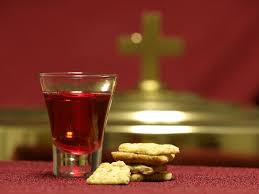
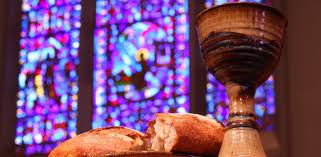
And one night, Jesus sat down at a table with his beloved community. Jesus took bread and broke it, and blessed it, saying, “This is my body.” Then he took the cup, saying, “This is my blood.”

And here we are this morning gathered at a table with Christians from all over the world, bound together, mutually connected, depending on one another and communing with one another, but also depending on, and communing with a Savior, singing together in one voice:

“This, at last is bone of my bones
and flesh of my flesh;”

This, at last, is the relationship for which we have been searching.

This, at last, is the beloved communion for which we have been longing.

This, at last, is our partner, our companion, our confidant, our sibling.

This, at last, is someone with whom we can be mutually and eternally connected.

This, at last, is someone on whom we can truly depend.

This, at last, is what we have always needed, all we will ever need, to be the persons that God has created us to be.

This, at last, is the One who reminds us that we are all interconnected by the love of our God who never gives up on us, who keeps working and keeps creating until the whole creation understands that there is neither Jew nor Gentile, slave nor free, male nor female, but we are all one in Christ Jesus our Lord.

One day, I was talking with someone who was dying with cancer. He shared that his illness had revealed to him the things that were truly important in life. He said, “And the funny thing is, that they are the opposite of what I always thought was important.”

He said: “I never knew how many friends I had, until I got sick. And I never realized just how important they are.” He said: “Jarrett, the truth is, ‘We really do need a little help from our friends.’”

He admitted that before his illness what he had valued more than anything in the world was his independence, “but no more,” he said, “no more.”

         Then he said: “Maybe that is why God created us to depend on one another. It is like some kind of training.”

“Training?” I asked.

“Yes, training,” he said, “because the most important thing in this life is to reach a point where we learn to be dependent on God, to reach to a point sometime before we die, where we have truly put our lives into the hands of God.”

It was as if he was saying: “No more! Because, now I see it. Now, I get it. In my most vulnerable, most dependent state, now, I know it. This, at last, is what life is all about!”

This, at last, is why we are here: to learn be in relationships; to learn to depend on one another; to care for one another, especially for those who depend on our care: the poor, the marginalized, the immigrant, the isolated, the abandoned, and those have lost everything in the storm. We are here to learn how to move outside our echo chambers to listen and to learn from strangers. We are here to repent of our isolationist tendencies that place our desires and comforts over the good of the world. We are here to learn to resist the temptation to demonize our differences and while dignifying our diversity. We are here to understand that at last we are all related. We are all bound together. We are all equal. We are all united, because we are all one.

And as we depend on each other, we learn to depend on the One on whom we can depend on forevermore;

the One who came to us at last;

the One who came to be with us and for us;

the One who came to show us how to be the people God created us to be;

the One who is still not finished;

the One who is still creating and recreating, working to transform this world God loves by calling disciples, ministers and prophets, male and female and non-binary, in every country on every continent; We learn to depend on this One: This, at last, Christ, our sibling, our teacher, our Lord and our Savior, bone of our bones and flesh of our flesh.[i]

[i] Inspired from: This at Last!, An Intergenerational Liturgy for World Communion Sunday, Nineteenth Sunday of Pentecost year B, was written by the Rev. Dr. Laurel Koepf Taylor, Assistant Professor of Old Testament at Eden Theological Seminary, Saint Louis, Missouri.

At the Table with Jesus

John 12:1-8 NRSV

Every service of worship should begin with a warning.  Instead of a welcome and a few announcements, I believe the congregation needs to be forewarned, put on alert, and advised to proceed with caution.

Because every time we gather around a table that we say doesn’t belong to us but belongs to Jesus and partake in something we call “the Lord’s Supper” things are likely to get a little crazy! Things are bound to happen that surprise, even shock us. Things can mysteriously break out, break open, shift, and spill out. Because, here, at this table with Jesus, things are not always as we expect them to be, nor even as they appear to be.

To illustrate what I am trying to say, allow me to share a story.

Jesus is nearing the end of his ministry. There’s always been opposition to his radical way of love and the way it turned everything upside down. The first are last, and the last are first. The poor are blessed, and the rich are sent away empty. But now there is a sense that things are coming to a head. The enemies of Jesus, the religious leaders who profited from the status quo, those for whom life holds no mystery, those who have been lurking in the shadows plotting against him, are now ready to finally entrap him.

But before Jesus takes his disciples on that fateful journey into Jerusalem, he gathers for supper with his most faithful disciples, Mary and Martha, and oh-my-word, what a supper that was!

John opens the story by saying, “Jesus came to Bethany, the home of Lazarus, whom he had raised from the dead.”

Now, can you imagine standing behind your chair at the table getting ready to pull it out and sit down when someone introduces you to the one standing at the head of the table by saying, “You know our host, Mr. Lazarus, don’t you?  Yeah, we didn’t know he was going to be able to host our gathering today, because a couple of weeks ago he became very ill.  And about a week ago, he was dead and buried.”

As you pull out your chair to sit down at the table, you’re thinking: “This is going to be one crazy supper!”

Well, not long after the wine is poured, Mary starts acting as if she has already had too much wine as she lets down her hair right there at the dinner table!  Then she shocks everyone, when takes a bottle of very expensive perfume, gets down on her knees under the table, and begins anointing the feet of Jesus! Pouring the perfume all over his feet and wiping his feet with her hair! The fragrance, almost overbearing, fills the entire house. Perfume and hair everywhere!  At the supper table!

John mentions only one other guest at the table that evening. He is the disciple whose reputation precedes him: Judas Iscariot—The very disciple who will betray Jesus. Now, let me ask you this, can this supper get any more crazy?

Shaking his head at Mary making a spectacle of herself under the table, Judas, being the good, committed liberal that he is, asks a great ethical question: “Why wasn’t this expensive perfume sold and the money given to the poor rather than wasting it by pouring it all over Jesus’ feet?”

It is rather shocking that it comes from Judas, for it’s the type of question that one can easily imagine the Jesus asking.

Well, surprise, surprise, Judas! You have been paying attention! You didn’t sleep through all of Jesus’ sermons! Way to go, Judas!”

But then, just when you thought things could not become more crazy, comes an even bigger surprise in the way Jesus responds: “The poor you will have with you always, but you will not always have me.”   Whaat? Why would Jesus say something like that?

But then we begin to get it. When Jesus first mentioned burial, we thought he was talking about Lazarus. But this is not about Lazarus. And this is not about the poor. This is about what is going to take place in Jerusalem during the next couple of weeks.

What should be a happy gathering of good friends enjoying a lovely supper is a prelude to the crucifixion. Jesus is at the table with both friends and betrayer. Sweet smelling perfume is not the only thing in the air. Disloyalty, disappointment, and death are also in the air. But so is unconditional love, extravagant grace and love poured out.

What a supper this has turned out to be! So much more going on beyond the senses.

This is how it always is with Jesus. When we choose to follow Jesus, to eat and drink with Jesus and choose to include those with whom he ate and drank, we can expect that there is always more meaning beyond the moment, more reality beyond the senses. The truth is that this very morning, here in this place, there is more going on than we can possibly imagine. There is more happening here than the saying of a few prayers, the singing of few hymns, the tasting of a little bread and the sipping of a little juice.

Because, in this place the Holy One is mysteriously, yet certainly present, communing with us, giving the Divine Self to us, revealing the Divine Self for us. And as flawed, fragmented human beings, we can count on being surprised and even shocked by the revelation.

So, this morning, I am asking you to hold on to the pews, for anytime Christ comes among us things are liable to break out, break open, change, shift and spill out.

You might have thought you were going to come to this place to see a few friends, but before you leave this place, you may be shocked to discover that you have seen Jesus here.

Soon after Jesus arrives in Jerusalem, John says that some Greeks come to Philip and said, “Sir, we wish to see Jesus.”

Philip went and told Andrew; then they both went and told Jesus. And listen to how Jesus answers them: “Unless a grain of wheat falls into the earth and dies, it remains just a single grain; but if it dies, it bears much fruit. Those who love their life lose it, and those who hate their life in this world will keep it for eternal life. Whoever serves me must follow me, and where I am, there will my servant be also.”

Jesus seems to be saying: “They want to see me? Then tell them they must be willing to die to themselves, break their bodies, pour themselves out. Turn the world upside down. Follow me by humbly being a servant to the least of these among us. And it is there, perhaps in the least likely place, and among the least likely people, in the least likely of ways, there they will see me.”

Henri Nouwen was a gifted Catholic priest and brilliant teacher who taught at prestigious universities like Harvard and Yale. He was a renowned author and sought-after speaker. However, answering a call to follow Jesus, he left the Ivy League to spend the last decade of his life serving as a chaplain within a community of people with severe emotional, mental, and physical disabilities.

In one of his many books, Nouwen tells a story about Trevor, a man in that community who was dealing with such severe mental and emotional challenges that he had to be sent to a psychiatric unit at a large hospital for an evaluation. One day Henri wanted to visit him, so he called the hospital and arranged for a visit.

When the administrators at the hospital received word that Henri Nouwen, the renowned author and teacher from Yale and Harvard would be coming, they reached out to him and asked if they might have lunch with him in the Golden Room—the most elegant meeting room in the hospital. They would also invite doctors and other clergy to the special luncheon. Nouwen agreed.

As soon as he arrived at the hospital, someone was there to meet him to take him to the Golden Room. When he got to the room, Trevor was nowhere to be seen. Troubled, he asked about Trevor’s whereabouts.

“Oh,” said an administrator, “Trevor cannot join us for lunch. Patients and staff are not allowed to have lunch together. Besides, no patient has ever had lunch in the Golden Room.”

By nature, Henri was not a confrontational person. But perhaps guided by the Spirit, this crazy thought that came to his mind: Include Trevor.” “Trevor ought to be here.”  So, Henri swallowed hard, turned to the administrator, and said, “But the whole purpose of my coming here was to visit with Trevor. So, if Trevor is not allowed to attend the lunch, I will not be able to attend.”

Well, the administrators couldn’t imagine missing an opportunity for lunch with the great Henri Nouwen, so they quickly found a way for Trevor to attend.

And this is when, like hair and perfume everywhere, things around the table. At one point during the lunch, Henri was talking to the person to his right and didn’t notice that Trevor, seated at his left, had stood up and lifted his glass of Dr. Pepper.

“A toast. I will now offer a toast,” Trevor said to the group.

Everybody in the room tensed up. What in the world was Trevor going to say?

Then Trevor, this deeply challenged man in a room full of PhDs and esteemed clergy, started to sing, “If you’re happy and you know it, raise your glass. If you’re happy and you know it, raise your glass…”

 No one knew what to do. It was awkward. Here was a man with a level of challenge and brokenness they could not begin to understand, yet he was beaming. Although most everyone one in the room was apprehensive about him being there, he was absolutely thrilled to be there. So, they started to sing. Softly at first, but then louder and louder until all the doctors and clergy and Henri Nouwen were practically shouting, “If you’re happy and you know it, raise your glass.”

Henri went on to give a brief lecture at the luncheon, but the moment everyone remembered, the moment everyone saw Jesus the most clearly and heard the word of God the most profoundly, happened through the person they all would have said was the least likely at the table to emulate Jesus.[i]

When we gather at the table with Jesus, things are not always what we expect them to be, nor are they what they appear to be. Like perfume and hair everywhere, the Holy Spirit of God is breaking out, breaking open, and spilling out.

You thought that you had things all figured out, that you knew what was going on and what was not going on in this world, only to discover that you do not have a clue.

This morning, you thought you were going to go to church, go through the motions and go back home unchanged, but to your startling surprise it has been revealed that you have been summoned, you have been called to do something that is bigger than you and to go on a journey that is far from home.

And here is the real shock, saying yes to this summons to die to yourself, to leave a place of comfort and security, you have never felt more alive, more you, and more at home.

[i] John Ortberg, in the sermon, “Guide.” Preachingtoday.com.

He Touched Me

Hisham Yasin dinner

Mark 5:21-43 NRSV

I believe one of the most troubling things about the children who have been separated from their parents at the border is when we learned that the case workers and childcare workers were not aloud to touch the children. Sadly, with the prevalence of physical abuse in our world, perhaps we can understand why. However, we also understand that not touching them can also be a form of physical abuse. So much so, when some of the childcare workers confessed in an interview to breaking the rules and hugging the children who were in their care, we said, “Well, good for them!”

It should be no surprise to us when we learn that our God is a God who uses the physical as a means of grace. Today’s scripture lesson, with its repeated theme of physical touching, is a perfect example.

Through the act of touching, a woman is made whole, and God’s healing power is released.

In these stories, through the power of the physical touch, barriers of society and tradition are crossed. Rules and laws are broken. The woman in the story is ceremonially unclean. It is against the rules to touch her and it is against the rules to touch her. And notice, that she is also unnamed. Then, notice what happens after the woman breaks the law, reaches out and touches Jesus.

Jesus asks, “Who touched me?” desiring to know the woman who touched him, he reaches out and touches her. He commends her faith and calls her “daughter.” Through the grace of physical touch, the woman who was once unclean has been made whole. And the woman who was once unnamed has become a child of God.

In the second part of the story, the corpse of the girl is ritually unclean. Like the woman with the hemorrhage, this girl’s body is also untouchable. Yet, Jesus does the unthinkable and reaches out and touches the girl’s body nevertheless. In taking the girl’s hand, in touching the girl, Jesus reaches across the boundaries of society but also boundaries of death. And her life is restored.

About fifteen years ago, I attended a conference for pastors at Princeton University in New Jersey with the two ministers I met in Memphis a month or so ago.  During our free time, we thought it would be exciting to board a train and visit the Big Apple. Before we left the conference, several frequent travelers New York City, who were also attending the conference, gave us some advice.

“When you are in the city, don’t look anyone in the eyes,” they said.  “Don’t speak to anyone.” “Don’t point, at anyone or anything.”  If you point at a building, someone may think you are pointing at them, and there may be trouble. And whatever you do, don’t touch anyone. Don’t get close to anyone!”

Being a first timer in the big city, and desiring not to be shot or cut or punched in the face, I decided that I better heed this advice.

As we were standing at one intersection in Times Square, waiting for the pedestrian light to turn green so we could cross, I noticed everyone in front of me, looking back over their shoulders. I turned around to see what they were looking at and saw a very elderly man with a long white beard, dressed as if he was homeless. With one hand on his grocery cart, he was bending down and picking up a slice of pizza he had dropped on the sidewalk with his other hand. After he picked it up we all watched as he went to take a bite as he walked down the road.

“Look, he’s going to eat it,” someone said.  But before he could get it to his mouth, he dropped it again. The crowd laughed and jeered.  We watched him yet a third time, pick up the pizza, put it to his mouth only to drop it again.  The light turned green, the and off we went.

Later, we were walking up several flights of stairs as we exited the subway.  My friend, Cary was in front of me and my friend, Steve was behind me.

Up ahead of us I noticed a frail-looking African-American man struggling to pull a large suitcase up the stairs. Cary walked passed the man. I walked passed the man, who I heard grunting with each step, watching out of the corner of my eye, dragging the suitcase behind him. “Should I help him,” I thought to myself.  “No, he might get the wrong idea.” “He might think I’m trying to steal it or something.” I kept walking.

Steve, however, who was behind me, took a risk. Not knowing if the man even spoke English, he asked, “Do you need some help?” As Steve reached out and touched the end of the suitcase, the man immediately gave Steve a fearful, mean glance.  But then, he smiled. I watched as he smiled most hopeful kind of smile, and said, “thank you.” Steve, picked up the suitcase and helped the man out of the subway. At the top of the stairs, the man reached out his arm, looking like he wanted to hug Steve. He stopped just short of a hug and patted Steve on the back, saying, “Thank you. God bless you.”

Once again, God used the physical as a means of grace.  Steve reached out and touched and the power of God, the amazing grace of Jesus Christ was released.  Fear was transformed into joy. We all felt it.

As long as I live, I’ll always wonder what might have happened if I had purchased that homeless man another slice of pizza. I’ll always dream of the possibilities, of what might have transpired, if I ate a slice of pizza with him.  I’ll always think of the grace that might of come, the salvation that might have happened, through the simple act of reaching out my hand to that poor solitary soul who was struggling to survive.

Because our God is a God who uses the physical as a means of grace.

Look at your hands.  They are sacred.  They are holy.  They are the means of God’s grace. The simple act of touching is powerful.  It is sacred, and it is holy, maybe especially so if that touch reaches across barriers of society and tradition.

This past week I received a little push back when I posted a picture of myself with Hisham Yasin with our lunch plates and wrote a caption: “breaking bread with my Muslim brother.”

“How can you call a Muslim, who does not believe Jesus Christ is the Messiah, the Son of the Living God, your brother?” They asked.

I then shared with them the story of how I became Hisham’s brother. I said, “The first that I did was to break all sorts societal and traditional barriers by visiting with him in his office.”

During that visit I quickly learned that when it came to religion or politics or philosophy, even sports, Hisham and I agreed on very little. However, I learned that there was one thing that we did agree on. And that is that inclusive love has the power to change the world.

He offered me some dried figs and a delicious glass of herbal tea. He quoted passages from the Qur’an. I quoted Jesus. During our conversation he kept struggling with what to call me. Sometimes he would call me “preacher,” but sometimes he would call me “pastor.” I really got him confused when he just stopped halfway through our conversation, and asked me, “what do you like to be called?”

“Because I am more than a preacher and more than someone who give pastoral care, I guess I prefer ‘minister.’”

During the rest of the conversation, I think he called me all three titles.

After our visit, I reached out my hand to shake his. He immediately reached out both of his hands to hug me. As he gave me this great big hug, he said, “I don’t know to call you preacher, pastor or minister, so from now on, I just call you “brother.”

Now, at that moment, I reckon I could have pushed him away from me saying, “Now wait one minute, Mister, you are not my brother, for you do not believe Jesus is the Messiah, the Son of God, and Savior of the world!”

But thank God I chose instead to break traditional and societal rules, by hugging him back saying, “I love you brother,” to hear him say, “I love you my brother.” I chose to allow God to once more use the physical as a means of grace. And the power of God, the amazing grace of Jesus Christ was released. I felt it. And I believe Hashim felt it.

This, my friends, is what our world needs. We need to reach past all of the barriers that we erect between ourselves and our neighbors— political, religious, racial, ethnic, economic. We need to reach out and touch them. We need to allow them to touch us. We need to join hands, link arms, rub elbows and see that we have more things in common than the things that separate us. We need to see in the words of James Taylor, that ;there are ties between us, all men and women living on the Earth, ties of hope and love, sister and brotherhood.”

Every Sunday morning, when we gather around this table and affirm the grace of the physical. When we consume physical elements of grain and grape, resprenting the body and blood of Christ, we affirm that we have been touched by God through Christ. We affirm that through his touch, we have been made whole. Through his touch, we have all become children of God. But more than that, in consuming the body and blood of Christ, we acknowledge that we are his body and his blood. We are the body of Christ. Our hands are of Christ in this world. Our hands are sacred, and they are holy. They are means of God’s grace. They have the power to heal this broken world. They have to power to accept, to welcome, to love, and to make this world a better place.

After we sing our hymn of communion together, all are invited to consume the physical elements of grain and grape, receive grace, and renew the commitment to be the hands of Christ in this world.

Commissioning and Benediction

Go from this place and remember that, in the words of Teresa of Avila, “Christ has no body on this earth but yours…Yours are the eyes through which the compassion of Christ looks out on a hurting world; yours are the feet with which he goes about doing good; yours are the hands with which he is to bless now.”

Too Smart for Our Own Good

The Shack

John 3:1-17 NRSV

In today’s gospel lesson a very knowledgeable and prominent leader of Israel comes to Jesus seeking to discover who Jesus is and what Jesus is all about. Poised and confident, the educated and sophisticated Nicodemus begins his conversation with Jesus: “Now, we know that you are…”

He begins his conversation from the same place that most of us mature, experienced, long-time students of Sunday School often begin our conversations about God: from the things we know, the things we have figured out… or think we think we have figured out:

“Now we know that you are…”

And it’s from there that the conversation gets all confused, confounded and convoluted. Jesus begins talking to Nicodemus about birth, but poor Nicodemus thinks Jesus is talking about literal, physical birth. Jesus starts talking about the Spirit, but poor Nicodemus thinks Jesus is talking about the wind.

I think it is very interesting that Nicodemus comes to Jesus at night. Because in just a few moments with Jesus, we learn that when it comes to God, when it comes to this mystery that we call faith, Nicodemus is in the dark in more ways than one. Nicodemus comes to Jesus confident and assured, but by the time Jesus gets finished with him, Nicodemus is astounded and dumbfounded, mumbling, “Uh, how can this be?”

Nicodemus has a problem.  And perhaps Nicodemus’ problem is in the very way he came to Jesus in the first place: “Now we know that…”

And maybe that is precisely our problem: “Now we know that…”

Our problem is that we know. And I suppose we can’t help it. After all, we are modern, some say we are even post modern folks who know a lot!

We live in what they call the information age. If there’s something we don’t know, we can just Google it or YouTube it, and in a few simple clicks of a mouse, we know. With WebMD and Wikipedia, there is hardly anything that we cannot understand or easily explain.

Perhaps this is why we try to approach God the way we do. We believe God is to be understood and easily explained.

It is no wonder those on the outside of the church often accuse those of us who are on the inside of the church of being “know-it-alls” when it comes to religion.  They believe that we think we have God all figured out. There are some that think that the reason we are here this morning is because we are God-experts.

And maybe that is why some  they are not here with us this morning.

One day, I was introduced to someone who knew that I was a pastor. I think he wanted to shock me when shook my hand and said, rather proudly, “Well, I’m an agnostic.” Which means that he did not know what he believed about God.

I think I shocked him when I responded, “Well, I have my moments when I am an agnostic too.”

I then said: “If people were honest they would admit: Some people are agnostic all of the time, and all are agnostic some of the time.”

The reality is that what we should be doing here, in this place every Sunday morning, is acknowledging together how little we really know and how much we have to learn, instead of coming here to have everything we think we know about God reaffirmed.

We gather ourselves together to acknowledge the great truth, that when it comes to the mystery that is God, we are all, as God told Mack in the movie The Shack, “idiots.”

“If the shoe fits,” She said.

The truth is that the God we worship is much larger than our imaginations. God is bigger and more alive than we can ever possibly comprehend.

I believe this is one of the reasons some preachers are telling their congregations to avoid the movie The Shack (a movie by the way I highly recommend) And there are many reasons: like maybe Jesus as a Middle Eastern man, if you can imagine that; also, God’s love for humanity compelling Her desire to redeem all people.

But perhaps they are most upset by the way the movie may cause some to question everything they thought they knew about God. Many preachers can not handle God saying to Mack: “I am not who you think I am” and “You misunderstand the mystery.”

But to me, that sounds a little like Jesus’ conversation with Nicodemus (John 3:1-17).

Like Nicodemus, we think we know who God is, how God acts and what God desires. But after we truly encounter the Divine, we might learn that we are, well, idiots.

I heard one preacher you say, “If you want to know something about Jesus, don’t watch The Shack, instead watch the more biblical movie, The Son of God.

But, a few years ago, I remember walking out of the showing of The Son of God when it ended feeling disappointed. For I do not believe there is anyway anyone can capture the essence of who Jesus is and present it in a one-hundred and forty-minute cinematic presentation. I told someone that I have been preaching about God is for over thirty years, and I have not even begun to scratch the surface of who God is!

United Methodist Bishop William Willimon, commenting on how some reduce God to something we can easily understand, said: “You can’t define this God, put this God in your pocket, or on a leash and drag God around with you. Life with this God is an adventure, a journey, a leap into the unknown, an expectation that, among even the most regular attendees among us, there will be surprises, jolts, shocks.”[1]

How often have we gathered around this table confident that we know exactly what is going on?

Catholics, and some Episcopalians are all so mysterious, always insisting on calling it Holy Communion or the Holy Eucharist.

Some of us, though, prefer to simply call it “Supper.” Some believe that something mysterious takes place as they eat this meal. They call it transubstantiation. We only believe it is a dry little cracker and tiny sip of grape juice and an act of remembrance that is confined to our limited and finite minds.

But what if there is more going on here this morning than we can see, touch or taste or even remember?

When we gather around the Lord’s Table, what if there is more going on here than meets the senses? What if there is some mysterious communion or a very holy fellowship happening here?

Sharing what we merely call a “supper,” what if we are surprised to discover that we are somehow invited to join the same fellowship that is mysteriously and inexplicably enjoyed between the Father, Son and Holy Spirit?

In and around this table, what if there is something afoot, something happening— something moving, inviting, healing; something strengthening, loving, forgiving; something saving, calling, challenging, commissioning?

We thought that we have come to remember a life, a death and a resurrection, but I believe we could leave having been caught up in that life and death and transformed by that resurrection.

As Willimon has said, “For, that is our God at our God’s best. That night as Nicodemus talked with Jesus, he began with what he knew. And he ended with questions about what he did not know. He arrived fairly confident that he had a good grasp of, [a good hold on] who Jesus was; [he left surprised,] having been encountered and held by the mysterious, majestic Holy Spirit of God in the flesh.”[2]

This morning, when we awoke, we thought we knew what we were doing. We thought we were going to get up, get dressed and simply go to church, sing a few hymns, have the Lord’s Supper, listen to a choir sing and a sermon preached. Then we would leave, get some lunch and come back home unmoved and unchanged, to watch a little more basketball.

However, when got here, we realized that we did not know it all.

We were shocked when a song spoke to us.

We were surprised when a small wafer and tiny cup filled us.

We were jolted when a word challenged us.

We were startled when someone that we did not even know looked at us and blessed us.

And we were amazed when God, the Creator-of-All-that-Is, somehow, someway that we do not understand, called us by name and told us that She is especially fond of us.

And we were absolutely astounded as Christ himself came and wrapped his arms around us as the Holy Spirit breathed new life into us.

[1]Quote and interpretation of Nicodemus’ first words to Jesus “We know” came from William H. Willimon, We Know (PR 34/2; Inver Grove Heights Minnesota: Logos Productions, Inc., 2006), 49.

[2] Ibid.

Strength for the Lenten Journey

communion

After being affirmed by God on Mt. Carmel, Elijah found himself in a wilderness that was so bad, he did not know if he wanted to live or die.

1 Kings 19:3 reads: “Then he was afraid; he got up and fled for his life.” In verse three, it appears that he wants to live. He’s running from Jezebel to save his life.

Now, let’s look at the very next verse: “But he himself went a day’s journey into the wilderness, and came and sat down under a solitary broom tree. He asked that he might die: ‘It is enough; now, O Lord, take away my life…”

One day, he wants to live. The next day, he wants to die. Can you relate?

Elijah then fell asleep under that tree, but suddenly, an angel touched him and said to him, “Get up and eat.”  He looked and there at his head was a cake baked on hot stones and a jar of water. He ate and drank, and lay down again. But the Lord came a second time, touched him, and said, “Get up and eat, for the journey will be too much for you.”

“He got up and ate and drank, and went in the strength of that food for forty days and forty nights to Horeb, the mount of God.”

At times life can be so difficult, one day we want to live. The next day we are thinking that death might not be that bad of an option.

That is why, this Sunday, as I begin my forty day Lenten journey, I am going to eat and drink from a table with my family of faith. For if I do not, the journey in the wilderness of life will be too much for me.

Now, you might ask: How can one tiny, tasteless cracker, and one sip of juice give us sustenance for forty days and forty nights?

Last week’s scripture lesson took us to “the Mount of Transfiguration.” Before the disciples come back down into the wilderness of their lives, a voice came from heaven, saying: “This is my Son, the Chosen, listen to him.”

This is my Son, the Beloved, the Chosen, the one who has been tested and tempted and tried in the wilderness of life, listen to Him. Listen to the One who knows what it is like to be on the mountain top with God one day, only to be in Hell with the devil the next. Listen to the one who knows something about the ecstasy of being affirmed by God in the presence of God one day and to be famished in the middle of the desert the next day. Listen to the One who knows what it is like to be a human being living in a fragmented world.

Listen to the Christ as he says…

“For God so loved the world that he gave his only Son, so that everyone who believes in him may not perish but may have eternal life. Indeed, God did not send the Son into the world to condemn the world, but in order that the world might be saved through him.”

Listen to the Christ as he says…

“Your sins are forgiven.”

Listen to the Christ as he says…

“Your faith has saved you, go in peace.”

Listen to the Christ as he says…

“Daughter, your faith has healed you.  Go in peace.”

Listen to the Christ as he says…

“Whoever drinks the water that I give him will never thirst.  Indeed, the water I give him will become in him a spring of water welling up to eternal life.”

Listen to the Christ as he says…

“I am the bread of life.  He who comes to me will never go hungry, and he who believes in me will never be thirsty.”

Listen to the Christ as he says…

“I am the light of the world.  Whoever follows me will never walk in darkness, but will have the light of life.”

Listen to the Christ as he says…

“I am the good shepherd.  The good shepherd lays down his life for his sheep.  I am the good shepherd.  I know my sheep and my sheep know me.”

Listen to the Christ as he says…

“Your brother will rise again.”

Listen to the Christ as he says…

“I am the resurrection and the life.  He who believes in me will live, even though he dies; and whoever lives and believes in me will never die.”

Listen to the Christ as he says…

“Do not let your hearts be troubled.  Believe in God, believe also in me.  In my Father’s house are many dwelling places. If it were not so, would I have told you that I go and prepare a place for you? And if I go and prepare a place for you, I will come again, and I will take you to myself, so that where I am, you will be also.”

Listen to the Christ as he says…

“You are my friend”

Listen to the Christ as he says:

“I am with you always, even until the end of the age.”

Listen to Christ as he says, “This is my body given to you. This is my blood shed for you.”

Some might still say: “It is just a tiny cracker and a sip of juice.”

But the good news is that we can go in the strength of that food for forty days and forty nights, or however long our journey in the wilderness might last.

Come Home

prodigal_son

Hebrews 4:12-16 NRSV

A huge issue facing the church today is authenticity, or more specifically, a lack of authenticity.

People say that churches are full of people who pretend like they have it all together. Churches are full of fake smiles and phony piety. Churches are full of folks who act like they have all of the answers, have everything on earth and even in heaven all figured out.

Almost every week, I will hear at least one person ask: “Why can’t Christians just be real?” Someone once asked: “Why can’t people act the same way in church that they act at home?”

I believe the reason many Christians are so fake is that we still have a problem with the good news of the gospel we call grace. We have a difficult time believing that God truly loves us, accepts us, and welcomes us just as we are.

Because, it seems too good to be true.

I believe we Christians have a difficult time being authentic, making ourselves at home, because we have a difficult time accepting that the extravagant, amazing grace of Christ that welcomes us to be real; and because of that, we also have difficult time sharing grace. So, not only do we hide or deny our sins, we are quick to point out the sins of others. Consequently, we have gotten this reputation in the world for not only being fake, but also judgmental.

Indeed, the word of God is living and active, sharper than any two-edged sword, piercing until it divides soul from spirit, joints from marrow; it is able to judge the thoughts and intentions of the heart. And before him no creature is hidden, but all are naked and laid bare to the eyes of the one to whom we must render an account (Hebrews 4:13-13).

Indeed, but sadly, I believe this is where most folks in the church stop reading the Bible. We cannot even think about laying all of our sins bare before the Lord. So we cover it up, hide it, deny it and try to justify it.

And it is obvious to our friends and to everyone we encounter that we phony.

So listen again to the good news:

Since, then, we have a great high priest who has passed through the heavens, Jesus, the Son of God, let us hold fast to our confession. For we do not have a high priest who is unable to sympathize with our weaknesses, but we have one who in every respect has been tested as we are, yet without sin. Let us therefore approach the throne of grace with boldness, so that we may receive mercy and find grace to help in time of need (Hebrews 4:14-16).

But it sounds too good to be true. Doesn’t it? It is almost difficult to hear.

Let us hold fast to our confession. In other words, let us get real and be real. Let us lay bare our sins and authentically approach the throne of judgement.

Wait minute, it doesn’t say that. Does it?

Let us lay bare our sins and authentically approach the throne of grace.

That’s what it says.

And let us do it fearfully.

No, that’s not what it says.

Let us do it with boldness.

That’s what it says.

So, that we may receive our punishment and find correction.

Nope.

So that we might receive mercy and find grace in the time of need. It’s like coming home. Coming home where we can be real, authentic, yet still be accepted and loved.

But it is sounds too good to be true. Doesn’t it? It is all so extravagant, so amazing. It is difficult for us to read, hear and comprehend.

I believe Jesus knew that we would have a hard time with this. That is why I believe he prepared us for it by telling so many stories.

There was a father who had two sons. The youngest had the amazing gall to demand his inheritance so he could leave home. As the youngest, this disrespectful son had no claim to anything of his father’s. Who did he think he was?

Then the truly amazing part: The father takes his “whole living;” (notice how extravagant this is) the scriptures say that he takes all that he has, and gives it to the boy who slips into the “far country” where he wastes every red cent on selfish living. It is only when he finds himself in the time of his need that the boy decides to go back home.

This is where the story gets even more amazing.

“And while he was a long way off,” the father saw him and ran and embraced him.”

Think about this for a moment.

How did the father see him “a long way off?”

Because the father had been looking for him.

Every day this father sat on his front porch gazing down the road, grieving but hoping and praying that his child would one day come home.

And when he finally came home, he ran to him and cried out: “Come and celebrate with me. My child who was dead is now alive!”

I wonder how long the father waited for his dead son’s homecoming. I wonder why the father waited. For all he knew, his son was dead. Can’t you almost hear his concerned friends and neighbors, or maybe even his preacher, telling him: “Old man, it’s time for you to move on. Old Man, you’ve got to get past this. You’ve got to face the facts. He’s not coming back. You got to get over it. Concentrate on your older boy who is still here with you.”

But the father, amazingly, still waited. Most of his friends probably thought he was crazy. Such excessive, extravagant waiting was hard for them to believe.

After all, he really did not know that his son was ever coming home. A young kid with a pocket full of cash first time away from home was an easy target to any would-be thieves and murderers. Remember the story of the Good Samaritan?

Still the father patiently, amazingly waited. Every day he kept looking down the road in front of his house. Straining to see, hoping to see his son coming home.

We call this the story of the prodigal son. But William Willimon says that if the word “prodigal” means “extravagant” or “excessive” or “amazing,” it should be called the story of the prodigal father. For when the boy left home, the father extravagantly gave him his entire savings. While he was gone, his friends and neighbors would say that the father excessively waited. And when the boy at last came home, the father extravagantly threw a huge party, holding nothing back. The father loved his son prodigally when he left home, he loved him amazingly while he was away from home and he loved him extravagantly when he returned home with a fatted calf, a new robe and sandals, a ring, and festive music and dancing.

It all seems too good to be true

It is a story of extravagant, excessive, prodigal love. It is a story of amazing grace.

And the good news is that Jesus’ story of the prodigal father is the story about his prodigal Father. And it is the story about our prodigal Father. Our God is a God who, when it comes to grace and love, holds absolutely nothing back.

I know, the truth sounds too good to believe, but it is the truth.

Our God waits, with confidence that the far country of sin and death shall not be the last word. Our God waits, ready to welcome us home with a celebration that is more than we deserve, not because of who we are, but because of who God is, namely a prodigal father.

One of the greatest things about this story told by Jesus is that it does not have an ending. Have you ever noticed that? We wonder if the younger boy ever learned from his mistakes and grew up to be more responsible. We wonder if the older brother ever let go of his resentment. We don’t know. All we know is that both boys are finally safe, at home with the father.

Willimon suggests that perhaps the reason the story does not have an ending is because this story is eternal. We know when the party began. But for all we know, the party never ended. Maybe this is a scene of what we all have to look forward to. An eternal homecoming celebration for those daughters and sons who once were dead but are now alive, who once were lost but now are found.

After our service this morning, you are invited to a homecoming celebration that has been waiting for you that Joan Smith, once called “a true vision of the Kingdom of Heaven.”

When you see the large amount of food that has been prepared for you this day, it may cause you to pause. It is so excessive, so extravagant, you may have trouble believing it. It will seem too good to be true.

But before this service is over, you are invited to another homecoming celebration that has also been waiting for you. In fact, this homecoming celebration is waiting for you each week. The meal is small. It’s just a tiny cracker and a sip of juice; however, when you understand the meaning of it, the truth of it, the love and grace of it, the extravagance and the excessiveness of it, it may also give you pause. For you may have trouble believing it. It will seem too good to be true.

But the good news is that it is true. For it is the truth. It is the good news of the gospel. It is amazing grace, and it is for you.

So, come home and hold fast to your confession.

Come home and be as real and as authentic as you can be.

Come home with all of your sins laid bare.

Come home and approach the throne of grace with boldness.

Come home because you will not be turned away from it.

Come home because nothing in heaven or on earth can separate you from it.

Come home, because this celebration has been prepared for you, even while you were still a long way off.

Come home, because this table has been set for you even while others have judged you, have condemned you, have given up on you, and even have written you off for dead.

Come home, because your God has not given up on you.

Come home, because your God has been waiting for you.

Come home, because his body has been broken for you.

Come home, because his blood has been shed for you.

Come home, because Christ has died for you.

Come home, because Christ has been raised for you.

Come home, because the baptistery has been filled for you.

Come home, because the Word of God is alive and active for you.

Come home and receive extravagant and excessive mercy.

Come home and find amazing and prodigal grace…

this day and forevermore.

Welcome to the Table

Maundy ThursdayEach Sunday, I worship around a table. The table may seem small, but at the same time, it is very large. For the bread that is served from this table, and the cup that is poured from this table symbolize a boundless love, an extravagant grace and an eternal promise.

Therefore, each Sunday, I can stand boldly in front of this table and confidently say:

If you are riddled with all sorts of doubt, you are welcome.

If you have never doubted anything in your life, you are welcome.

If you have no self-control, you are welcome.

If you are all about self, you are welcome.

If you humbly believe you are the worst sinner in town, you are welcome.

If you arrogantly believe you are the best saint in town, you are welcome.

If you are empty and lost, you are welcome.

If you are teeming with pride and confidence, you are welcome.

If you are broken, poor and weak believing you have nothing to give, you are welcome.

If you are whole, rich and powerful with much to give, you are welcome.

If you have little or no faith, you are welcome.

If you think there is no one more faithful than you, you are welcome.

How can this be?

Because this table, this bread and this cup, is not about you.

It is not about what you can or cannot do for God.

But it is all about what God has done, is doing, and will do for you.

Therefore, all are welcome, and all means all.

Strength for the Journey

lent and communion

1 Kings 19 NRSV

Last week I spoke of being affirmed by God in the presence of God on one day; but then, it always happens, Monday morning comes, and we are hurled into a wilderness with trials and all sorts of temptation. For forty days, even Jesus found himself in such a place.

You might remember that I made the comparison to Elijah.  After being affirmed by God on Mt. Carmel, Elijah found himself in a wilderness that was so bad, he did not know if he wanted to live or die.

Listen to 1 Kings 19:3: “Then he was afraid; he got up and fled for his life.”  In verse three, it appears that he wants to live. He’s running from Jezebel to save his life. Now let’s look at the very next verse.  Verse four reads: “But he himself went a day’s journey into the wilderness, and came and sat down under a solitary broom tree.  He asked that he might die: ‘It is enough; now, O Lord, take away my life…”

His Monday morning was so bad, that one minute he wants to live, and the next minute, he wants to die.  Can you relate?

Elijah then fell asleep under that tree, but suddenly, an angel touched him and said to him, “Get up and eat.”  He looked and there at his head was a cake baked on hot stones and a jar of water.  He ate and drank, and lay down again.  But the Lord came a second time, touched him, and said, “Get up and eat, for the journey will be too much for you.”  “He got up and ate and drank, and went in the strength of that food for forty days and forty nights to Horeb, the mount of God.”

Today, some of you do not need to wait for Monday morning.  You are already there. One minute you want to live; the next minute, you are thinking that death might not be that bad of an option.  Others of you may be doing better than that today.  But as I said a few weeks ago, sooner or later, Monday morning is coming for all of us.

So I say to all: “Let’s get up and eat and drink from the table of the Lord.  For if you do not, this journey in the wilderness of life will be too much for you.”

Now, you might ask, how can one little, tiny, tasteless cracker, and one sip of juice give us sustenance for forty days and forty nights?

Do you remember my sermon on the transfiguration?  On the mount of transfiguration, before the disciples come back down into the wilderness of their lives, a voice came from heaven, saying:  “This is my Son, the Chosen, listen to him.”

This is my Son, the Beloved, the Chosen, the one who has been tested and tempted and tried in the wilderness of life, listen to Him.  Listen to the One who knows what it is like to be on the mountain top with God one minute only to be in Hell with the devil the next.  Listen to the one who knows something about the ecstasy of being affirmed by God in the presence of God one minute and to be famished in the middle desert the next minute.  Listen to the One who knows what it is like to be a human being living in a fallen world.  Listen to the one who spent most of his earthly life trying to survive in a vast and dark wilderness.

Listen to the Christ as he says…

“For God so loved the world that he gave his only Son, so that everyone who believes in him may not perish but may have eternal life. Indeed, God did not send the Son into the world to condemn the world, but in order that the world might be saved through him. ”

Listen to the Christ as he says…

“Your sins are forgiven.”

Listen to the Christ as he says…

“Your faith has saved you, go in peace.”

Listen to the Christ as he says…

“Daughter, your faith has healed you.  Go in peace.”

Listen to the Christ as he says…

“Whoever drinks the water that I give him will never thirst.  Indeed, the water I give him will become in him a spring of water welling up to eternal life.”

Listen to the Christ as he says…

“I am the bread of life.  He who comes to me will never go hungry, and he who believes in me will never be thirsty.”

Listen to the Christ as he says…

“I am the light of the world.  Whoever follows me will never walk in darkness, but will have the light of life.”

Listen to the Christ as he says…

“I am the good shepherd.  The good shepherd lays down his life for his sheep.  I am the good shepherd.  I know my sheep and my sheep know me.”

Listen to the Christ as he says…

“Your brother will rise again.”

Listen to the Christ as he says…

“I am the resurrection and the life.  He who believes in me will live, even though he dies; and whoever lives and believes in me will never die.”

Listen to the Christ as he says…

“Do not let your hearts be troubled.  Believe in God, believe also in me.  In my Father’s house are many dwelling places.  If it were not so, would I have told you that I go and prepare a place for you?  And if I go and prepare a place for you, I will come again, and I will take you to myself, so that where I am, you will be also.”

Listen to the Christ as he says…

“You are my friend”

Listen to the Christ as he says:

“I am with you always, even until the end of the age.”

Listen to Christ as he says, “This is my body broken for you.  This is my blood shed for you.”

Some might still say: “It is just a tiny, little cracker and a sip of juice.”  But I think you know that we can go in the strength of the food on this table, for forty days and forty nights, or however long our journey in the wilderness might last.