
1 Peter 2:19-25
As you know, my mother has been living with excruciating pain, pain from spinal stenosis that grew so severe, that just a couple of weeks ago, it overwhelmed her body to the point that she had to be intubated.
Whenever you stand close to suffering like that, you hear things differently. For one, you start to notice how quickly people reach for explanations for the suffering.
And one of the ways good-intentioned people of faith do that, often without even realizing it, is by spiritualizing the suffering.
We say, “God must have a plan” or “everything happens for a reason” or “This is just a cross she has to bear.”
So today, I want to say this as personally and as plainly and as faithfully as I know how:
This pain my mother has been enduring is not God’s will. Her suffering is not something God has ordained. There is nothing holy about the agony that takes her breath away. There is nothing sacred about a body pushed to its limits by disease.
God is not the author of this pain. But also hear me say this: neither do I believe God is detached from it. My faith tells me that God suffers and grieves with my mother and with her family. As much as I love my mother, I believe God loves her more. That means that God longs for her healing and comfort, even more than I do.
One of the reasons people spiritualize pain is because they also spiritualize relief from pain.
When they narrowly avoid an accident, they say, “God was with me.” When the test results come back clear, they say, “God protected me.” Anytime things go their way, they are quick to assume divine favor.
And while their words may come from a deep place of gratitude, they carry a dangerous implication. Because if God gets the credit for our protection, then what do we say about those who were not protected?
If God is the reason one person survives, what does that say about God for the one who does not? Without meaning to, we begin to build a theology where God is selectively or arbitrarily present: showing up for some, absent for others; protecting some, abandoning others; healing some, afflicting others.
And that is not the God revealed in Jesus. The God of Jesus does not stand at a distance, pulling strings or pushing buttons, deciding who suffers and who doesn’t. The God we meet in Jesus enters into suffering, weeps at the bedside, stands alongside the broken, and refuses to let pain have the final word. The God of Jesus is always a healer.
Another reason we spiritualize suffering comes from misinterpreting scripture, like this morning’s epistle lesson.
The letter we call “First Peter” was written to people who knew what it meant to suffer, to people navigating systems that did not value their lives, to people learning how to hold onto hope when the world around them felt hostile, uncertain, and unjust.
And into that reality comes this word: “if you endure when you do good and suffer for it, this is a commendable thing before God.”
Here the text is talking about a completely different type of suffering than what my mother and some of us are enduring.
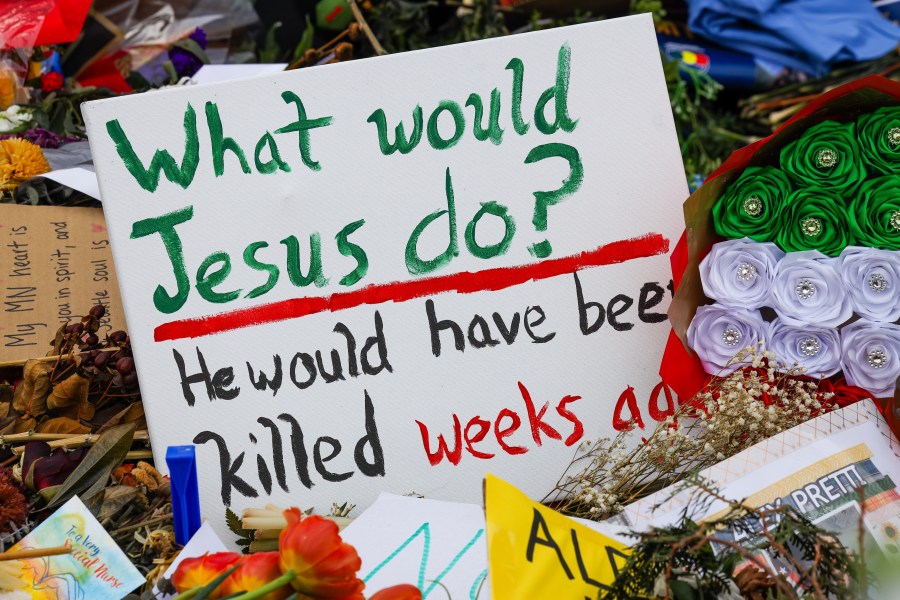
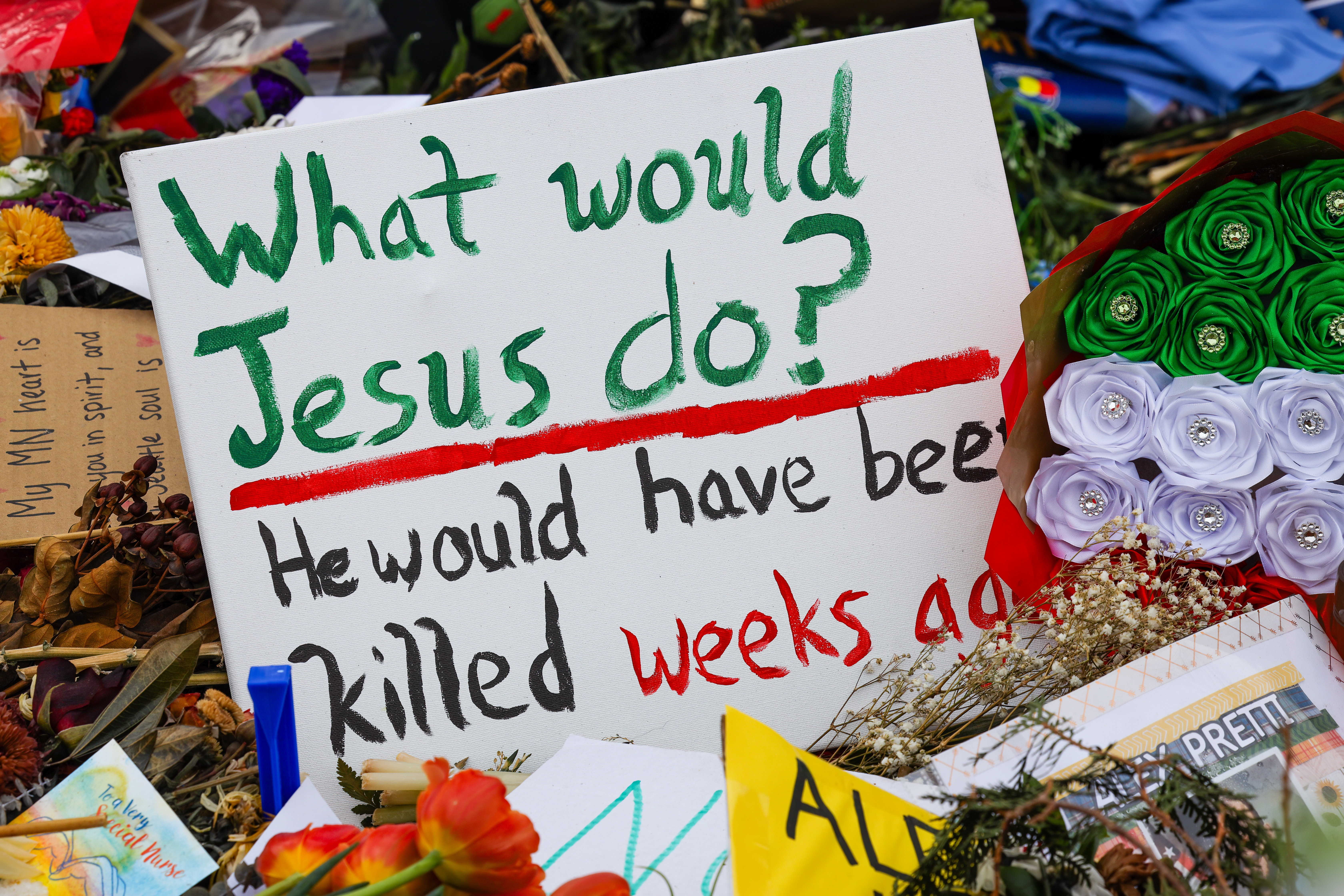
Jesus was talking about this kind of suffering when he called people “to deny themselves and take up their cross” (Matthew 16:24).
This is where a dangerous confusion has crept into the life of the church. People have started calling burdens that Jesus never asked anyone to carry, “the cross.” Diabetes: “it’s the cross I bear.” Arthritis: “it’s the cross I carry.”
But hear this: heart disease, cancer, auto-immune disease, spinal stenosis, COPD: they are not crosses. They are not divine assignments. They are part of a broken world, a world that God so loves that God is always moving toward its healing.
And when we call sickness “the cross we bear,” we do more harm than we realize. We justify pain that needs care, treatment, and compassion. And we excuse systems that deny people the resources they need to live.
So, hear me again: God does not desire disease. God does not will sickness. God is not glorified when bodies break down. And it is not commendable to God when people are denied healthcare in the richest nation on earth.
So, if sickness is not the cross Jesus asks us to carry, then what is?
The cross is the suffering that comes from a faithful life. The cross is what happens when we stand up in a world organized around injustice and violence and say: “This is not right!” The cross is what happens when we refuse to go along with systems that harm, exploit, and destroy. The cross is what happens when love refuses to stay quiet.
This is the kind of suffering 1 Peter is talking about: “Christ also suffered for you, leaving you an example, so that you should follow in his steps” (verse 21).
And what were those steps?
Jesus didn’t suffer because he was passing out free tickets for people go to heaven when they die.
Jesus suffered because: He told the truth in a world built on lies; He stood with the poor in a system that depended on their exploitation; He practiced nonviolence in a culture addicted to domination; He challenged both religious and political leaders when they used their power to harm rather than to heal.
And then the text says: “When he was abused, he did not return abuse; when he suffered, he did not threaten” (verse 23).
That sounds like weakness, but it’s far from it. It’s disciplined, courageous, unyielding love. It’s moral defiance. It’s the refusal to become what you oppose.
And church, that is the way we are called to live right now. Because we are living in a moment where we are being lied to about human suffering.
There are voices right now telling us to accept rising costs as a necessary burden, to see it as patriotic sacrifice during a time of war. But we must clear: that’s not the cost of following Christ. That’s the cost of poor, corrupt, immoral, egotistical decisions made by dishonest people in power who rarely bear the consequences themselves.
The call of Jesus is to reject the lies and to tell truth—
To say that war, no matter how it is justified, is a failure to obey the greatest commandment love one another as we love ourselves and a direct contradiction of God’s will for the world
To say that peace is not naïve, but it’s the only path that reflects the heart of God.
And to say that we will not stay silent when violence is blessed with religious language or injustice is wrapped in patriotic rhetoric.
The call of Jesus is to reject all the lies we are told about suffering.
Today, we are told that some lives are expendable in the pursuit of security or power. We are told that environmental destruction is simply the cost of doing business. We are told the lie that poverty is inevitable. And if we are not careful, we will begin to accept these things as truth, as normal, maybe even necessary.
But the gospel, the gospel will not let us do that: insisting that no child, anywhere, should be sacrificed for the ambitions of empire; insisting that healthcare is not a privilege but a human right; insisting that the earth is not a commodity, but part of our very being; insisting that the poor are not a problem to be managed but beloved members of our human family.
And when we begin to live into that truth, when we speak it, when we organize around it, when we embody it, we will face opposition, and we will inevitably suffer. We will be dismissed. We will be labeled unrealistic. We will be pushed to the margins.
That’s the cross of Jesus. That’s the cross we carry. It’s not the suffering imposed on us by a broken system. It’s the suffering that comes when we refuse to cooperate with it. It’s the pain we endure understanding that Jesus did not go to the cross because he was sick. He went to the cross because he confronted everything that makes us sick.
He exposed the lies of empire. He disrupted systems of exploitation.
He proclaimed good news to the poor and release to the captives. And the powers could not tolerate that kind of love. So, they crucified him.
And 1 Peter reminds us: “He himself bore our sins in his body on the cross, so that, free from sin, we might live for righteousness” (verse 24). Do you hear that? Not just believe in righteousness. But to live for it, to embody it.
It’s the kind of righteousness that looks like communities organizing for accessible healthcare. It looks like neighbors showing up for one another when systems fail. It looks like people of faith standing in the public square, refusing to let policies that harm the vulnerable go unchallenged. It looks like protecting the earth, not just in word, but in action. It looks like building a world where nobody is disposable.
And that kind of life will always come with a cost. But here’s the good news:
The suffering that comes from love, from justice, from truth, is never wasted. Because “by his wounds we have been healed.”
The good news of Easter is that the cross was not the end of the story. It was the exposure of everything that is wrong with the world and the beginning of God making it right. It was God taking the very worst of humanity and transforming it.
And if we are to live as Easter people, then we must answer the call to be people who refuse to waste the wounds of this world, to be people who take what is meant for harm and turn it into healing:
rejecting disease as God’s will and fighting for healing;
rejecting poverty as inevitable and working for justice;
rejecting environmental destruction as the cost of progress, and protecting the creation as sacred;
and rejecting war as necessary and laboring for peace.
And when the cost comes, and it will, we carry it not as a burden of despair, but as a witness:
a witness that another world is possible;
a witness that love is stronger than violence;
a witness that truth is stronger than lies.
Our text ends with this promise: “You were going astray like sheep, but now you have returned to the shepherd and guardian of your souls” verse 25).
Which means we do not belong to the systems that harm us. We do not belong to empire.
We belong to a Shepherd who walks with us, who guides us, who sustains us, even in the face of suffering. And more than that, we belong to a God who is already bringing resurrection out of crucifixion.
So, let’s not be afraid of the cost and boldly carry the cross that love requires.
Let’s speak the truth that justice demands.
Let’s live the life that reflects the heart of God.
And let’s trust that the wounds of this world will not be wasted.
Because in the hands of God, even suffering becomes a seed. And resurrection is already breaking through. Amen.


 Just Love