
2 Sam 6:1-5, 12b-19 and Mark 6:14-29 NRSV
After King David led a great army to return the Ark of the Covenant to Jerusalem, David and his army were so overcome with emotion that they engaged in festive dancing.
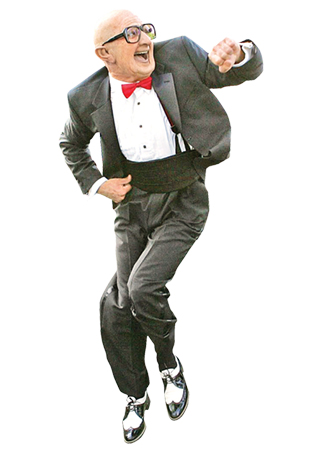
The scripture tells us that David danced before God“with all his might.” He danced before God with all that he had and with all that we was, as he was utterly and completely overcome by the joy of God.
However, in this broken world there is always something or someone ready to burst our bubble of joy wide open. So it was with David.
When David and his wife Michal arrived home from the party and began preparing to turn in for the night, David, if he was anything like most men I know, was probably expecting to hear some words of affirmation from his wife. “Honey, as I watched you dance this evening, you just don’t know how proud I was of you! You danced your heart out! And why shouldn’t you have, you brought the Ark of the Covenant back to Jerusalem where it belongs!”
However, the words David hears instead were something like: “Baby, you really made a fool out of yourself tonight!”
Perhaps David did act like a fool. Uninhibited and unrestrained, he lost all self-control. Seized by “a spirit of prophetic ecstasy,” that night David held absolutely nothing back. David gave in to the joy which had consumed him. He had completely surrendered himself to the joy of God.
David danced, affirming the rule of God. David danced, consumed by the joy of God. David danced a dance of total self-surrender. David danced, holding nothing back. David danced giving all that he had and all that he was to God. And Michal despised David for it.
This is the harsh reality of living the gospel of Jesus Christ. The dance of the gospel is a dangerous dance. The dance of the gospel is a disturbing dance. The dance of the gospel is a dance which is despised by the world. The active affirmation of the rule of God does not set well with the Michals and Herods of the world. In fact, people are likely to lose their heads if they claim too much for the gospel.
To metaphorically call the life and ministry of John the Baptist “a dance” does not call for a stretch of the imagination. Like David, John the Baptist had lost all restraint, inhibition and self-control. John the Baptist held absolutely nothing back. He had surrendered himself completely to the rule of God. And in the eyes of many probably acted like a fool. The joy of God consumed him. One could say that John the Baptist was seized by a spirit of prophetic ecstasy. Everything about him: his dress, his speech, even his diet was an uninhibited dance of joy. He had given all that he had and all that he was to God. And his head was served up on a silver platter.
The dance of prosperity preachers are easier steps to follow, aren’t they? The message of false prophets distorting the gospel of Christ as nothing more than a little dose of “chicken soup for the soul” is much easier to swallow. If we just get ourselves right with the Lord, if we would just straighten up and pray right and live right, good health and great wealth will come our way.
The dance of the gospel is radically different. The dance of the gospel contains steps to the beat of a different drum. If we get right with the Lord, if we pray right and live right, if we lose all inhibitions and all restraint, if we completely surrender ourselves to the rule of God, if we love others as Christ loves thereby allowing the joy of God to consume us, to control us, then suffering is inevitable.
If we dance to the beat of this drum, in the eyes of the world we can expect to look like a fool. For the dance of the gospel is a dance of self-surrender to a very radical drum beat. It is a beat of sacrifice. It is a beat of selflessness. It is a beat of self-expenditure. It is a beat of love and of grace. And to world, as the Apostle Paul warned the Corinthians, if we let go and dance to this beat, we are certain to look pretty foolish.
The world may call us fools when offer our friendship to a poor, lonely, childless, widow as we visit her in the nursing home on a regular basis.
The world may call us fools when we prepare and deliver a meal to someone recovering from surgery, especially when that someone has always treated us with condescending contempt.
We may look like fools to the world when we spend valuable time volunteering at the hospital, serving lunch in a soup kitchen, visiting someone in prison or working in a homeless shelter.
The world may call us fools when we offer love and forgiveness to our enemies, when we give the shirt off our backs to complete strangers in need.
The world will call us foolish when we give sacrificially and consistently to the budget of a local church.
And the world will call us foolish anytime we love anyone with the self-expending love of Christ—whenever we love someone without inhibitions, without restraints, and without reservations.
I believe this is the dance of the gospel—a dance of immense joy, but also a dance of enormous suffering.
And the Herods and Michals of the world despise this dance. And they will do everything in their power to stop this dance.
We have all heard their voices, echoes which discourage such dancing. “Don’t get too close to him. Do not give your heart to her. As human beings they will only let you down. They may one day betray you. They might move away. One day they will die.”
“Don’t love that man. He has done absolutely nothing to deserve it. And will probably never be able to reciprocate. Don’t love that woman. She is poor and destitute. She is too needy. She will demand too much.”
The voices Michal and Herod say: “Don’t give yourself away to another. Loving like that is too risky. It leads to too much pain, heartache and grief.”
However, there is another voice. A voice which was heard by David and by John the Baptist. It is a voice which says: “Dance! Hold nothing back. Give yourself away. Surrender yourself to beat of the heart of the gospel. Love. Love honestly and deeply. Love courageously and graciously. Lose yourself. Empty yourself. Pour yourself out.”
Will this love cause pain? It will cause enormous pain. But the joy of God which will consume you will be so immense the suffering will be well worth it. So, dance.
Garth Brooks once sang a song entitled “the dance.” There’s a line in that song that goes, “I could have missed the pain, but I would have had to have missed the dance.”
Loving others will inevitably bring pain. However, never loving to avoid that pain is never really living. There is no joy being a wallflower on the wall of life.
So, may we dance! May we go out and dance in the streets of our world! Let us go out and have seizures of prophetic ecstasy! Be warned, we might look like fools, and we will suffer for it. However, the immense joy of God, the joy of abundant life, now and forevermore, is well worth it.

 Just Love