A Hundred Fifty-Three

John 21:1-11

Happy Star Wars Day! May the fourth be with you!

You may laugh, but there are churches that are observing this day, May the 4th, as Star Wars Sunday, focusing on the spiritual struggle between darkness and light, drawing parallels between “the Force” and the Christian concept of God.

Numbers, like the 4th when it occurs in May, have always been significant in the life of the church, as numbers always seem to be significant in the Holy Scriptures.

The number 40 is symbolic of testing, trials, and periods of preparation, as we remember the story of Noah and the rain that fell for 40 days and 40 nights, and of Moses and the Israelites’ 40-year journey out of slavery into the Promised Land, and of Jesus’ 40-day fast in the wilderness.

The 144,000 protected from judgment we read about in the book of Revelation is based on the number 12, a symbol for wholeness based on the 12 tribes of Israel and the 12 disciples. The number 7 in Revelation symbolizes divinity, whereas the number 6, particularly 666, symbolizes evil.

So, when we read the story of the miraculous catch of fish in this post-Easter story, the number 153 leaps off the page!

Verse 11 reads: “So, Simon Peter went aboard and hauled the net ashore, full of large fish, a hundred fifty-three of them, and though there were so many, the net was not torn.”

Such an odd number. Such an exact number. Why not just say 150 fish? Or tell a good fishing story by exaggerating it, rounding it on up to 200?

But John says the net contained exactly a hundred fifty-three fish. There are so many possibilities with and no shortage of interpretations.

Some have interpreted 153 fish to mean: “It’s just a lot of fish.”[i] And that moments of such abundance say something about living in a world where the good news of Easter is a reality, as grief is transformed into action, scarcity is transformed into abundance, and despair becomes hope we discover that what seems like the end is only the beginning!

It means living in a world, that when it comes to the love that Jesus taught, modeled, and embodied, we can never give in, give out, or give up, because we know that such love always wins. Such love never ends. Not even death can stop it. It means never retreating in despair believing that things in the world cannot get better.

But something tells me that the number 153 means even more. If it’s just about “a lot of fish,” why didn’t John simply write, “they caught so many fish the nets started to break, and the boats began to sink,” as we’ve heard in another story (Luke 5)? Why does John specifically record the number 153?

Some scholars believe the number symbolizes the truth  that Jesus did not come to abolish Jewish law or the Torah. They point out that the Torah, the first five books of the Bible, was divided into portions to be read in worship. Like the Lectionary that I use each week to preach, the portions were part of a three year-cycle, and the three-year Torah cycle used in Palestine around the First Century had, you guessed it, 153 portions.

Now, if you think that is interesting, listen to this.

St. Augustine pointed out that the number 153 is the triangular of 17. That means that if you add all the numbers decreasing from 17, you get 153. That is to say: 17 + 16 + 15 + 14 +13 + 12 + 11… all the way down to +1 = 153.

So 153, according to Augustine, is all about the number 17, which Augustine believed was a sign of the union of Judaism and Christianity as we have 10 commandments in the Old Testament and 7 Gifts of the Spirit in the New Testament.

How about that? But wait, there’s more.

In the book of Acts, we read that 17 nations were present for Pentecost. So, Peter’s catch of 153 fish at the end of John’s gospel might mean something like the end of Matthew’s gospel when Jesus calls us to make disciples of all nations.

It was St. Jerome who pointed out that during the time John tells this story that there were only 153 species of fish in all the world. Hence, 153 signifies the universal hope that every person of every class and time would be saved through the Gospel.

St. Gregory the Great believed 10 and 7 are perfect numbers, added together make 17. This, times 3, factoring in the Trinity, makes 51. This, times 3 again, makes 153.

St. Augustine also notes that there were 7 disciples in the boat (Peter, Thomas, Nathanael, James and John, and two other disciples), who had all been filled with the 7 gifts of the Holy Spirit. 7 times 7 equals 49. 49 plus 1 (that’s Jesus) makes the perfection of 50. And 50 x 3 for the Trinity gives you 150 plus another 3 for the Trinity gives you 153.

St. Cyril breaks 153 into 100 (the great number of gentiles to be saved), plus 50 (the smaller number of Jews to be saved), plus 3 (the Trinity who saves all).

Others have pointed out that 100 (representing the number of married faithful in the Church), plus 50 (the faithful who commit themselves later in life to celibacy either living as widows or living with their spouse in a brother-sister relationship), plus 3 (the precious few who commit their whole lives to celibacy as virgins) equals 153.[ii]

I hope you are writing all this down.

Now, do you want to know what I believe is the significance of 153?

Allow me to first preface my opinion by reminding you that I have a Doctorate in Ministry and have been a student of scripture for half a century, if you count my Sunday School classes as a child. Plus, I grew up on the Outer Banks of North Carolina; thus, I know a thing or two about fishing.

Here it is. You will really want to write this down. For it is going to blow your mind and probably change your life.

Here it is. Drum roll please. People who go fishing like to count their fish.

That’s it. People who fish count their fish. Now, it may mean a little more than that, but not much more.

I also believe this Easter story has something to do about people, as the story is very similar to other fishing stories when Jesus tells the disciple anglers that they were going to go from catching fish to catching people (Mark 1 and Matthew 4).

Thus, a hundred fifty-three means that people, like fish, are to be counted. Now, compared to the hyper-symbolic, mathematical theories of the saints, that may sound like a hollow interpretation; however, when we consider the number of people who are discounted and marginalized in our world today, this simple interpretation is nothing less than prophetic.

So, what this Easter story says to me is that this movement we call discipleship where we can be confident love will win and justice will prevail, is a movement that prophetically proclaims that every person counts.

A hundred fifty-three is particularly prophetic for Americans as the United States has always had a problem counting certain people, as some in this nation, including those in power today, have always had a problem with equality. There have always been those who want to put a tear in the net, so all will not be counted.

Ever since the Constitution’s original framework, when enslaved people of color were counted as three-fifths of a person, there have been people in this country who have sought to undermine equality, suppress the vote, and discount entire groups of people.

And today, those people are in power, intentionally tearing the net by rolling back all the progress made for equality and civil rights in the 20th century, calling desegregation “a historic wrong,”[iii] and going after any organization, business or university that seeks to count everyone with programs focused on diversity, equity, and inclusion. And now, democracy hangs in the balance.

Perhaps we should have seen the end to democracy coming —when every ten years there’s an argument in our country about who should be counted and who should not be counted in the census, as counting every person is fundamental to democracy, based on the principle that each person counts and deserves representation.

So, I believe 153 is a profoundly prophetic number for America today. A hundred fifty-three affirms democracy and the principle that all people are created equally. A hundred fifty-three means there is no person who does not count.

A hundred fifty-three affirms our annual Holocaust Remembrance Service, as a hundred fifty-three means that six million Jewish people count. And they still count, despite those today who are seeking to re-write history or “move on from past guilt.”[iv]

And a hundred fifty-three also means that 2.3 million people in Gaza count, 2.3 million Palestinians who are starving to death today because of the Israeli and US-backed ban of food and humanitarian aid.[v]

One of the best things about living in New Orleans was when I had the opportunity to officiate a funeral where we marched in the cemetery behind a jazz band singing: “Oh when the saints go marching in, when the saints go marching in, oh Lord, I want to be in thatnumber when the saints go marching in!”

Oh Lord, how people just want to be counted.

People of color who cry for their lives to matter just want to be counted.

Trans men and women asking not to be called by their dead name just want to be counted.

Pregnant women who desire to have a choice in their healthcare, just want to be counted.

Disabled people requesting fairness and equal opportunity, just want to be counted.

Immigrants, refugees, and Asylum-seekers in the pursuit of happiness, just want to be counted.

People who are being snatched off our streets and disappeared, need to be counted.

Books banned; history erased; votes suppressed; due process denied; free speech stifled; basic rights deprived; Medicaid, SNAP, Head Start, low-income energy assistance, and other programs cut—it’s all about people who must be counted!

Think about who you know today—at work or at school, in your neighborhood or in your family—who may feel like they are of no count. And think about what actions you could take, or this week, or next, to let know that they do count—to you, to this church, and to God—and maybe, one day, to the nation.

“Simon Peter…hauled the net ashore, full of large fish, a hundred fifty-three of them, and though there were so many, the net was not torn.”

The net was not torn. All were counted. Amen.


[i] https://www.workingpreacher.org/dear-working-preacher/resurrection-is-abundance

[ii] https://parish.rcdow.org.uk/harefield/wp-content/uploads/sites/148/2022/10/The-mystery-of-the-153-fish-in-the-Gospel-of-John.pdf

[iii] https://wpde.com/news/nation-world/doj-department-of-justice-officially-ends-desegregation-order-at-louisiana-school-plaquemines-parish-after-nearly-50-years-court-system-integrated-racial-segregation-south#

[iv] https://www.npr.org/2025/01/27/nx-s1-5276084/elon-musk-german-far-right-afd-holocaust

[v] https://www.pbs.org/newshour/world/palestinians-struggle-to-feed-their-families-as-israel-blocks-gaza-aid-for-nearly-60-days

Far from the Shallow Now

Luke 5:1-11 NRSV

One morning, Jesus is preaching down at the lake. The crowd that had gathered is so large, Jesus felt like they were about to push him right into the water!

During the sermon, he sees two boats belonging to some fishermen who were on shore washing their nets. He gets into the boat belonging to Simon, and he asks Simon to anchor the boat a little way from the shore, where he continues his sermon.

Luke doesn’t record the words to Jesus’ sermon, but from his sermon in the very next chapter, we could probably take a good guess: “Blessed are you who are poor, for yours is the kingdom of God. Blessed are you who are hunger now, for you will be satisfied. Blessed are you who weep now, for you will laugh. Love everyone, even your enemies…” It’s a sermon of abundant mercy, extravagant grace, and boundless love!

After the sermon, Jesus tells Simon that he wants to do a little bit of fishing himself: “Let’s leave these shallow waters and let down the nets.”

Simon responds: “Master, with all due respect, I, along with my long-time business associates, James and John, have fished these waters all night long, and we haven’t caught a thing. Yet, if it will make you happy, I will go out a little deeper and put down the nets.”

Well, as soon as the nets hit the water, they catch so many fish that the nets begin to break. They quickly call out to James and John to get the other boat and offer them a hand.  And when they come, they fill the boats with so many fish that both boats begin to sink.

As Simon takes in the overwhelming scene— nets breaking, boats sinking, fish everywhere, a scene of failure and scarcity transformed into triumph and abundance, a scene of what can happen when you leave the shallow to dive into something deeper, what can be experienced when you obey the commands of Jesus—Simon is overwhelmed, and falling down at Jesus’ knees, he says: “Go away from me Lord, for I am a sinful man!”

It was as if Simon suddenly realized that it only seemed that Jesus was finished with his sermon that day. Jesus may be fishing, but he is still preaching. Through the abundant catch of fish, Jesus is still proclaiming God’s abundant mercy, extravagant grace, and boundless love. Believing he is underserving of such love, how unworthy he is of such abundance, Simon asks Jesus to go away.

But Jesus never goes away easily. “Simon, not only are you worthy to receive the abundant, extravagant, over-the-top love of God, you are worthy to share it with others and change this world! So, do not be afraid; for you are no longer going to be catching fish, you are going to be catching people!”

“I am asking you, Simon, along with your business partners James and John, to leave your shallow, contained, little world to venture out with me into a deeper, larger, revolutionary reality.

The truth is, Simon, I need you to go deeper. I need as many people as I can get to go deeper. The problems of the world are too great, and your lives are too short to waste any time wading in the shallow. And the grace of God is too extravagant. The mercy of God is too abundant. The love of God is too boundless for you to keep your it all to yourselves.

I need you to leave your shallow, safe world of spending all your time making a living to meet the needs of your immediate family, and I need you follow me into the deep, risky reality of sacrificing your time to meet the needs of the entire human family!

I need you to leave your shallow life that feeds you, and your children, and accept a deeper life that helps feed every child of God!

I need you to move beyond your shallow, narrow mission of caring for your own home, and accept the deeper, wider mission of caring for the entire planet!

I need you to lose the apathy towards issues that do not concern you and your limited of circle of family and friends to possess a deep empathy towards all who experience injustice!

I need you to move beyond your shallow understanding of success. Simon, no matter what you have been taught, success is not defined by the amount of fish you catch, or the size of your house or back account. It is so much deeper than that!

Your success is measured by how many people you loved extravagantly, abundantly, and graciously.

I need you to go deeper, Simon. You too, James and John, and be my disciples and fish for people. Do the hard, messy, oftentimes frustrating, and risky work to meet the needs of people, to care for and to liberate people. I need you to move far from the shallow now to do the deep work of love. And I am not talking about personal and intimate love, but a love that has public and political ramifications.

Now, here’s what I believe is the real miracle in this story. We read it in verse 11. After Jesus invited them to leave the shallow for something deeper, to leave the fish business to be in the people business we read: “When they had brought their boats to shore, they left everything and followed him.”

This is miraculous because when it came to accepting the extravagant grace and love of God revealed in the large catch of fish, Simon, seemed to have some difficulty: “Get out of here, Jesus! I am a sinful man!”

However, when it comes to following Jesus to a deeper life, to love others to selflessly and sacrificially, extravagantly and liberally, he, with James and John, leave everything and follow.

This is miraculous, because it is the exact opposite of how we humans usually work. We seem to have no problem accepting the grace of God for ourselves. We have no issues receiving the love of God for us personally. But we prefer to keep it shallow. We prefer to keep it personal. We prefer to keep it safe, keep it contained, keep it conservatively to ourselves. We are almost always reluctant to go deeper.

Because going deeper is dangerous. Going deeper is costly, and it is risky. Going deeper can be overwhelming. In the deep, fish break our nets and people break our hearts. Going deeper may mean leaving our friends and family behind.

I want to thank Katie Nunn for sharing her talent with us by creating this extravagant artwork that is adorning our baptistry today. When she first thought of this idea, which to me, speaks to the abundant and extravagant love we are called to share with others, she said she was tempted to think that the art might be “too far out” for church. But then, thinking about what this church means to her and to others, she thought, when it comes to love, for this church, there’s no such thing as being “too far out.”

In other words, Katie has joined a congregation of disciples, who, with Simon, James, and John, when it comes to love, have chosen to go deep, to go far out from the shallow.

We are disciples who have decided to go on a journey to share the abundant mercy, extravagant grace, and liberating love of God with all people, all the while knowing the journey will not be easy, comfortable, or popular.

Late author and professor John Augustus Shedd once said: “A ship in harbor is safe, but that is not what ships are built for.” And today, we are on a ship with Jesus. He is the captain who navigates our journey out of the harbor into deep, dark, and dangerous waters.

The darkness of these days, like deep water, requires more than a shallow response. The times are too serious, and our time is too short, to waste any amount of time playing around in the shallow.

When the president makes an executive order to “eradicate” any opposition to the sick religion of White Christian Nationalism or the cult of MAGA, while disparaging any religious thought that calls for mercy and compassion, empathy, and equality, we must go deeper.

When the tax status of non-profits and institutions that serve the common good are threatened, when aid to the poorest people in the world is cut off, our stewardship practices, our civic engagement and our commitments need to go deeper.

When houses of worship receive warnings by the government that sanctuary provided to the immigrant will not be honored, that we may be targeted, our commitment to the word of God “to treat the foreigner living among us as native born, to love them as ourselves” gets called into the deep (Leviticus 19:34).

When programs designed to celebrate diversity, create equity, and foster inclusion are eliminated in favor of protecting the privileged, our faith compels us to go into the depths of human solidarity and belonging.

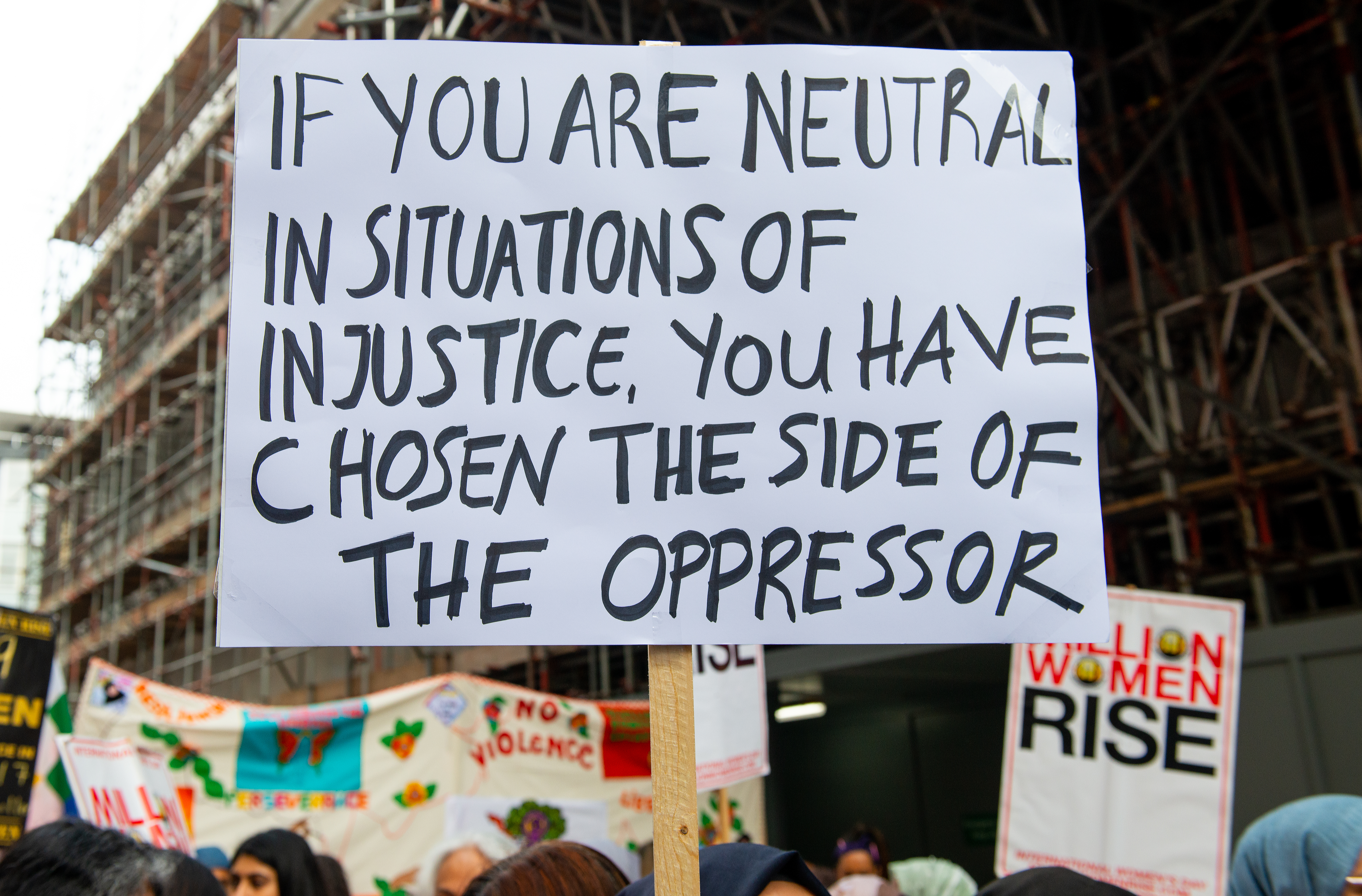
So, if you have come here this morning because you want to dip your toes in the safe shallow end of the pool, to wade, splash around, and enjoy yourselves, to nourish your private, personal relationship with the Lord, to remain neutral when it comes to public policy and politics that hurts the poor and the marginalized, then I am afraid, you have come to the wrong place! We don’t even have a kiddie pool for children in this place, as we are even training them to swim in the deep end.

Because we know that a shallow, safe, personal, and private faith, a faith that has the sole purpose to feed one personally, allows children to starve, and the entire creation to hunger.

A shallow faith allows the spread of a false gospel that is unconcerned with the living conditions of anyone else living on the earth as well as the state of the earth itself.

Shallow faith enables false prophets to reject Jesus, or worse, to act in ways that are the antithesis of Jesus, ways that are anti-Christ, and still claim they are following Jesus.

Shallow faith is afraid to enter into the depths of human suffering and oppression. It finds contentment inwardly, in one’s own family, job, possessions, and even church.

Shallow faith is afraid to rock the boat, afraid of losing a friend or upsetting a co-worker or family member.

Shallow faith is afraid of the sacrifices and the changes that need to be made.

And sadly, church is where people can be the most afraid, and thus the most shallow, the most small-minded and the most close-minded, the most self-interested and self-preserving

But the good news is that church can also be the place where people can be the most courageous, a place where we are challenged to be more open, more selfless, and more self-expending, where we are pulled by Jesus into the deep, dark, and dangerous places, far from the shallow.

To those difficult places where we have a deep conversation with that climate change-denier or anti-vaxer. Where we go out of our way to help an asylum seeker. Where we contact our legislatures to object to the wicked assault on trans people. Where we call out racism and white supremacy wherever we see it, on the school board, the city council, even in our own families.

The good news is that the First Christian ship of Lynchburg, Virginia has left the harbor. Jesus is our captain. And we are far from the shallow now! Amen.

When Jesus Falls Out of Favor (and nearly off a cliff!)

Luke 4:14-30 NRSV

Once upon a time, in a land far away, but not so different from our own, excitement was in the air as folks began gathering in the narthex, sipping their coffee. Everyone was looking forward to the sermon. Because today, they had a special guest preacher!

Many were just glad to have a break from listening to their pastor who they’ve had to now put up with for a year and a half. But some were really looking forward to hearing one of their own, someone who had moved away, made a name for himself, and made them proud. He had come back home for a visit and had been asked by the Elders to fill the pulpit.

No one paid attention as the announcements were being made. In the pews, heads moved and necks stretched, as everyone was trying to catch a glimpse of their hometown pride and joy.

After the Children’s Moment and the Pastoral Prayer, the young man stood up in the pulpit.

“Look! There he is!”

“My, hasn’t he grown!”

“He looks just like one of us, with his dark eyes and complexion.”

The worship leader handed him a scroll. He unrolled it and began reading words from the prophet Isaiah:

‘The Spirit of the Lord is upon me,

   because he has anointed me

     to bring good news to the poor.

He has sent me to proclaim release to the captives

   and recovery of sight to the blind,

     to let the oppressed go free,

to proclaim the year of the Lord’s favor.’

He rolled up the scroll, gave it back to the worship leader, and sat down. All were smiling as he had just read one of their favorite scripture passages.

It is then, that he stood back up and dropped the mic by declaring: ‘Today, this scripture has been fulfilled in your hearing!’

Countless amens could be heard throughout the sanctuary. One congregant shouted: “Hallelujah!” Another exclaimed, “Praise Jesus!” Another said, “I wished he was our full-time pastor!”

Everyone was pleased as they could be! Because the scripture he read was being fulfilled for them. Good news for the poor meant good news for them, because they didn’t consider themselves to be among the rich oligarchs that were in power.

And because they were living in an occupied territory, release to the captives, meant liberation for them!

Because they had lost hope and had a difficult time seeing anyway forward, recovery of sight to the blind meant recovery of hope for them!

And because they felt oppressed by the Romans, freedom for the oppressed meant freedom for them!

So, amen, brother! Preach it!

They could not have been more enthusiastic with their hometown hero! All throughout the sanctuary, you could hear proud comments like: “Why isn’t that Joseph’s oldest boy?”

After the choir sang the anthem, the young preacher stands back up, takes a sip of water, and begins the sermon: “There’s no doubt many of you will say: ‘Doctor, cure yourself.’ ‘Do here also here in your hometown the things that we heard you do Capernaum.’”

“That’s right!” someone shouted!

Another yells: “Charity begins at home!”

Someone else screams, “America First!” (I mean, “Israel First!”)

On the edge of their seats, their ears are itching to hear what their hometown boy had to say next!

It is then he says something like: “You know that no prophet is accepted in his hometown

Someone cupped their hands to their mouth and shouted: “We’ll always accept you Jesus!”

Another yelled: “That’s right! You are one of us!”

Still another shouted: “We’re with you all the way!”

He takes another sip of water and then begins to proclaim that Isaiah’s prophetic vision of good news, liberation, recovery of sight, and freedom is not for them only, or even for them first. It is for everyone, maybe even especially for those who need it the most, folks that may not be from around here

In the congregation, shoulders tense, and heads turn. More comments could be heard, but the enthusiastic tone becomes disconcerting: “Wait a minute! I know he’s not talking about diversity, equity, and inclusion, is he?”

Jesus, though, is undaunted by the sudden aggravation in the air, because he wasn’t there to win a popularity contest or to scratch itching ears. He’s  there to tell the truth, even if that truth is unsettling, because Jesus knows that the truth of God’s inclusive and equitable love, as offensive as it may be, is the only way to create a more peaceful and just world.

Jesus then reminded the congregation why the prophets are never popular in their hometown by referring to two stories, one about the prophet Elijah and one about the prophet Elisha.

“You remember Elijah, don’t you? And the story of those three and half years it hardly rained a drop, causing a severe famine throughout the region? Now there were countless widows living in Israel during that time who were starving to death. But God didn’t send the prophet Elijah to help any widows in Israel. No, instead, God sent the prophet to save a widow in Lebanon.”

Apart from a few gasps, the congregation fell so silent you could hear a pin drop.

“And you remember the prophet, Elisha? There were many lepers suffering in Israel, but instead sending the prophet to heal those in Israel of their disease, God sent Elisha to heal a leper in Syria.”

The sanctuary exploded! People rose to their feet. Some began shaking their fists in the air.

How dare he say that the blessings of God extend beyond our borders, to other cultures and ethnicities!

The audacity he has to say that God’s mercy, justice, and freedom are not just those of us who have the proper papers or the right genes!

And how dare he infer that God may even favor someone from Lebanon or from Syria, over us!

The unmitigated gall he has to say that this scripture is fulfilled in our hearing, but not fulfilled for us!

Overcome with rage, the congregation turns on Jesus.

Some demand an apology.

Others call his words “ungracious,” his tone “nasty.” And his service “boring.”

One accused him of being a left-wing lunatic who was bringing woke politics into the synagogue!

Someone else cried: “Deport him!” Another shouted: “Send him to Guantanamo Bay!”

They become so angry that before Jesus is able to finish the sermon, they chase him out of the sanctuary and run him clear out of town right to the edge of a cliff. But he doesn’t fall off the cliff. He somehow sneaks through the crown and escapes.

How quickly had Jesus fallen out of favor and nearly off a cliff!

But that’s the world in which we live—a world where empathy is considered a sin. Because empathy involves loving our neighbor—not the just ones who live next door, but the ones who live in Lebanon and Syria, in Mexico, Gaza, Columbia, Cuba, and Venezuela—as much as we love ourselves.

The word “freedom” has always been a threatening word when it is applied to a group people that another group of people deem “other” or “less.”

 “Diversity,” “equity,” and “inclusion” have always been offensive words to those who want good things for themselves only, or at least, for themselves first. Equality can feel like oppression to those accustomed to privilege. And in our nation, that means that the angry mobs have historically been white people.

It was only a little over 60 years ago, a time that those currenlty in power are trying to take us back to, empathetic people from all over the United States traveled to the South to take a stand for the civil rights of all people. Some were called Freedom Riders, as they rode buses throughout the South to nonviolently resist unjust Jim Crow laws.

Like the time Jesus preached freedom for the other in the synagogue, an angry mob formed. And on Mother’s Day in 1961, in Anniston, Alabama, 50 white men, many of them religious, attacked a Greyhound bus carrying black and white Freedom Riders with pipes, chains, and bats. They smashed windows, slashed tires, and beat the sides of the bus to terrorize the Freedom Riders who were inside.

Once the attack subsided, with the Freedom Riders still on board, the police pretended to escort the damaged bus to safety, but instead they abandoned it just outside the Anniston city limits.

Another armed mob surrounded the bus and began breaking more windows. The Freedom Riders refused to exit the bus and received no aid from two highway patrolmen who were watching nearby. When a member of the mob tossed a firebomb through a broken bus window, others in the mob attempted to trap the passengers inside by barricading the doors of the bus.

The mob fled when they feared the fuel tank was about to explode. Somehow, the Riders were able to escape the ensuing flames, only to be attacked and beaten as they exited the burning bus.[i]

Kindness, grace, and compassion have always made people wickedly angry when it is applied to outsiders. Some people have always called empathy a “sin,” because empathy involves caring for someone other than yourself, or other than “your” people. Thus, the powers of wickedness have always tried to trump the power of love. Darkness has always sought to overcome light.

The good news is that darkness is no match for even a little bit of light, and love always wins. The good news is that Jesus did not fall off that cliff, and through the resurrected body of Christ, he is still alive and preaching in our world today.

I know that it may feel like we are standing at the edge of a great cliff. Our feet may be slipping as the rocks move under our feet. Some of us have slipped, and our feet are dangling over the edge. We’re barely hanging on. But we are not falling.

Somehow, someway, as Jesus escaped those angry worshippers who chased him to an edge of a cliff outside the city limits of Nazareth, and as the Freedom Riders escaped that bus set on fire outside the city limits of Anniston, Alabama, we too have escaped.

 We are still here. Jesus and his followers may have fallen out of favor with the powers-that-be, but we have not fallen off the cliff!

And despite the opposition in our nation today, the intimidation in our state today, and the hostility in our city today, we are still proclaiming good news today, not just for ourselves, but for all people.

We are still committed as ever to fulfilling the promises of God for black and brown people—

Proclaiming God’s liberation for non-binary and transgendered people—

Proclaiming God’s freedom for undocumented people, asylum seekers, refugees, migrants, and victims of war.

And proclaiming a hopeful vision of God’s peace and justice—

God’s empathetic vision of mercy and compassion—God’s prophetic vision of diversity, equity, and inclusion—shining our lights so all can see it!

The dark winds of wickedness are howling, but our candles are still burning!

On the edge of a cliff, we may feel we are barely hanging on today. We may have fallen out of favor. But we are not falling off! Say it with me: We are not falling off! Amen.

[i] https://calendar.eji.org/racial-injustice/may/14

A Pentecostal Outpouring

Acts 2 NRSV

I have heard more than one person say: “the Spirit of God is in this place.”

I have also heard people make the counter observation about other churches, saying something like: “I no longer felt the Spirit in that place.” And I am sure that there are some who have made, and who still make, that observation about our church.

So, a good question for us to ask on this Pentecost Sunday is: “How do we know whether or not the Holy Spirit is here?” How do we know if any church ever experiences something like Luke described as a violent wind and tongues of fire? How do we recognize a Pentecostal outpouring of the Holy Spirit?”

As a child, I remember our congregation often opening a worship service by singing:

There’s a sweet, sweet Spirit in this place. And, I know that it’s the Spirit of the Lord; There are sweet expressions on each face, And I know that it’s the presence of the Lord (Doris Akers, 1962).

“Sweet facial expressions?” Is that how we know? I suppose I see a few of those today. But are you happy because the Spirit is here or because you know there’s some good food waiting for you at the end of the service?

I have heard some people talk about an outpouring of the Spirit as they describe a worship service where people are standing singing praise songs to Jesus with their hands raised and tears rolling down their cheeks.

I once served on a town’s recreation committee with the responsibility of organizing the summer church softball league. After leading worship on Sunday, I drove over to a neighboring church to deliver the schedule for the upcoming season. As I pulled into the parking lot, I noticed that cars were pulling out, so I assumed their service had just ended. As I opened and walked through the front door of the sanctuary, I was alarmed to see several people lying motionless in the aisle! The pastor, who was gathering his notes at the pulpit, saw me come in, and without even a hint of concern in his voice, greeted me with a smile saying: “Brother Banks, welcome! Come back with me to my office, and don’t mind those folks lying there in the aisle.”

More than a little distressed, as I walked around the bodies lying in the aisle, I asked: “Are these people ok?”

The pastor said: “Oh, don’t you worry about them. They’ll get up soon enough. We just had a tremendous outpouring of the Holy Spirit today where several people were slain in the Spirit. It happens from time to time.”

I anxiously followed the pastor into his office, where he asked me to sit down across from his desk. As I handed him the softball schedules, I must have had a not-too-sweet expression on my face, because he asked, “Brother Banks, you don’t ever have people fall out during your services, do you?”

I answered: “Oh, it’s happened a time or two, and each time, somebody called 911.”

He smiled and said, “Well, that’s how we know that the Holy Spirit is in this place.”

So, should be concerned that no body passes out in the floor during our worship here? That no one stands and raises their hands as they sing overwhelmed with emotion?

So, what do we mean when we say we feel the spirit in this place?

Some Sundays, I am amazed how the anthem that Jeremy selects or the hymns that Judy plays fit perfectly with the sermon. I sit back here and say to myself: “That’s the Spirit working!”

However, as amazing as that is at times, I am not sure that exactly what is being described by Luke on the Jewish festival called Pentecost.

Luke writes: “When the day of Pentecost had come…all of them were filled with the Holy Spirit and began to speak in other languages, as the Spirit gave them ability.”

I suppose we could ask someone who knows a few languages, like Brian Cox, to come up here and speak to us this morning. But there’s a problem with that. The miracle of Pentecost was not so much in the speaking as it was in the hearing.

Amazed and astonished, they asked, ‘How is it that we hear, each of us, in our own native language?

If Brian comes up here and speaks to us in German, I am pretty sure we are not going to hear him in English.

Perhaps Luke, in describing the outpouring of the Holy Spirit, is trying to paint a portrait to help us see something larger, more wonderful, and more astonishing.

Perhaps Luke is describing what our country needs today, what our world needs today— a divine grace to listen, to hear, to understand, to empathize with others who may be so different from us that they speak a different language. Perhaps Luke is describing an outpouring of the Holy Spirit that produces a divine compassion for more people than the people we see as “our own,” a holy call for people to possess an empathy that transcends countries, ethnicities, sexual orientation, gender, and race. In this great Pentecostal outpouring-of-the-Spirit event, Luke just well may be describing the first Diversity, Equity, and Inclusion Conference!

Luke is describing a Pentecostal outpouring that transforms the hearts and minds of people to have the heart and mind of Jesus who listened to, heard, and learned from a Syrophoenician woman, saw the Samaritan as his neighbor, and accepted Eunuchs, who Matthew records Jesus saying were “born that way” (Matthew 19).

Luke is describing a people who would never say “God bless America” without a sincere desire for God to bless the entire world. He is describing a group of people who would never condemn the genocide of one nation without condemning the genocide of another. He is describing white people who do not hesitate when they see a black man mercilessly executed by police in the street to stand up and say “Black Lives Matter” or to speak out at the school board when the history lessons taught to children in our schools are being whitewashed.

Luke is describing people who do not merely worship Jesus, but they follow Jesus, and teach the way of love that Jesus taught, a generous love that is expressed as goodwill for all people.

Luke is describing hearts that are so generous “they would sell their possessions and goods and distribute the proceeds to all, as any had need.” These are people who never complain about food stamps, free healthcare, and increasing the minimum wage, because they truly believe in supporting the welfare of all people, so no one, regardless of their citizenship is in need.

Luke is describing people who feel a deep sense of connectedness to all people.

The COVID-19 pandemic taught us many things. Like all communicable diseases, that a virus can originate on the other side of the world and quickly spread to every nation on earth taught us how connected we all are to one another.

But it also taught us something about our refusal to acknowledge such connectedness. It taught us something sinister about our selfishness and self-centeredness as some refused to wear a mask in public or get a vaccine to protect their neighbor. Even some churches refused to abide by the stay-at-home orders at the beginning of the pandemic, revealing that we have many churches in America devoid of the Holy Spirit of the One who said the greatest commandment is to love our neighbors as ourselves.

It revealed that what this world needs today is some Pentecost, a serious outpouring of the Holy Spirit!

And by “serious,” I mean the world doesn’t need more people tearfully worshipping Jesus with their hands raised in the air. It needs more people following Jesus by extending their hands to help their neighbors in need.

The world doesn’t need more anthems or postludes that pair well with the sermon. It needs more people who are offering their spiritual gifts to pair with the needs of the world.

The world doesn’t need more people slain in the spirit on Sunday morning. It needs more people to be awakened by the spirit to a live a life of generosity for the goodwill of all people every day of the week.

And the world doesn’t need any more congregations with sweet expressions on each face. It needs more of the fire that was experienced on that day the Holy Spirit showed up enabling people of all nationalities, ethnicities, and races to see, to listen, to hear, and to care for one another.

The world needs more empathy and equity, more justice and generosity, more sharing and more goodwill, and not just for people who speak our language, are born in our country, share our pigmentation, or go to our church, but for all people.

The good news is that I believe this is indeed a spirit-filled church. Now, we are still calling 911 if you fall out in the aisle this morning, but there’s plenty of other evidence that the Spirit of the Lord is in this place.

The building and the blessing of the little food pantries, our donations to the Rivermont food pantry, our volunteers each month who serve at the Park View Mission, our folks who have signed up to deliver Meals on Wheels—these are all evidence of a Pentecostal outpouring of the Holy Spirit, or as my childhood preacher liked to say, “an unction of the Holy Ghost!”

And just this past week, our Outreach Team met with the Interfaith Virginia Center for Public Policy to discuss a partnership that will enable us to not only feed our neighbors in need, but to be advocates for justice, so our neighbors will not be hungry in the first place. This may be the strongest evidence of all that there’s Pentecostal outpouring in this place.

So, as we celebrate 150 years as a church, on this day which has been called “the birthday of the Church” (that’s Church with a big ‘C’), there is indeed a sweet, sweet spirit in this place. There are sweet expressions on some faces, but there are also some holy scowls, some furrowed brows, some eyes filled with divine determination, souls ignited by a fiery Call of Love to make this a more generous, equitable, and just world, not just for some of the people, but for all people. And I know that it’s the Spirit of the Lord. Amen.

Renewing Our Hearts to Partnership: Embracing Diversity

diversity-shutterstock-998x615

Ephesians 4:1-16 NRSV

There is but one body and one Spirit—just as you were called into one hope when you were called.

Unity. It is the theme of World Communion Sunday. But when we talk about “unity” in the church, what are we really talking about? Are we talking about everyone believing the same thing, thinking the same way, being on the same page when it comes to matters of faith and practice? Are we talking about sharing the same set of values and moral principles? Are we talking about one particular style of worship? What does “unity” in the church really mean?

I believe the ancient story of the Tower of Babel can help us with this.

In the eleventh chapter of Genesis we read:

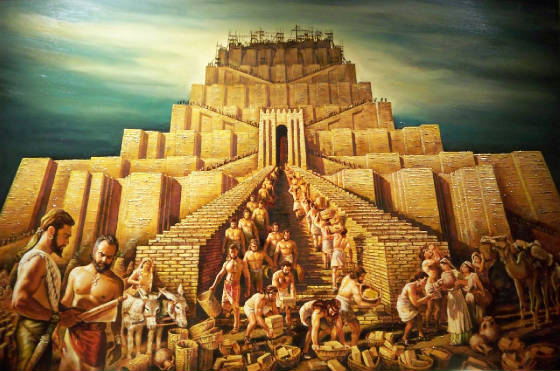
“Now the whole earth had one language and the same words. And as they migrated from the east, they came upon a plain in the land of Shinar and settled there. Then they said, ‘Come, let us build ourselves a city, and a tower with its top in the heavens, and let us make a name for ourselves; otherwise we shall be scattered abroad upon the face of the whole earth.”

The whole earth was one. One language. One people. One tribe. One race. And they all came together to live in one place. They all came together to build something special, something great, something wonderful that would be a symbol of their unity.

Unity, oneness, togetherness, harmony, people of the same minds living in one accord. Isn’t this the will of our God, God’s great purpose for humanity?

So what’s not to like in this seemingly perfect picture of unity in Genesis chapter 11? As it turns out, according to God, the creator of all that is, not very much.

Let’s look at God’s reaction to this oneness in verse 7 of our story: “Come, let us go down, and confuse their language there, so that they will not understand one another’s speech.”  So the Lord scattered them abroad from there over the face of all the earth…”

What? Are you serious? What is wrong with this great portrait of human unity, of one race of people, one nation, one language, all of one mind, coming together, to build something great, to celebrate the pride of one master race?

The truth is that the builders of the great tower in Shinar had accomplished not what God wants for humanity, but what many throughout history, including the likes of Adolf Hitler and the Ku Klux Klan, have wanted for humanity: One master race of people coming together to form one supreme social order, one culture, sharing the same ideals, values and moral principles.

For so many, diversity is a threat. Diversity is something to fear. Diversity is something to segregate and discriminate. Diversity is something to scapegoat. Diversity is something to send to the gas chambers, lynch in the trees or shoot in the streets.

I am not sure if anyone in my lifetime has articulated the thinking of the people of Shinar better than Atlanta Braves pitcher John Rocker back in 1999. Some of you may remember his response when he was asked by Sports Illustrated if he would ever play for the New York Mets or New York Yankees.

Rocker said:

“I’d retire first. It’s the most hectic, nerve-racking city. Imagine having to take the number 7 Train to the ballpark looking like you’re riding through Beirut next to some kid with purple hair, next to some queer with AIDS, right next to some dude who just got out of jail for the fourth time, right next to some 20-year-old mom with four kids. It’s depressing… The biggest thing I don’t like about New York are the foreigners. You can walk an entire block in Times Square and not hear anybody speaking English. Asians and Koreans and Vietnamese and Indians and Russians and Spanish people and everything up there.”[i]

The story of the Tower of Babel teaches us that what John Rocker said “racked his nerves” in the world is exactly what God wills for the world. In verse 4 we read that the purpose of building the tower was to avoid what depressed John Rocker on the No. 7 train leaving Manhattan for Queens, and to avoid what John Rocker heard in Times Square.

The purpose of settling in Shinar and building that tower was to live in a world with no foreigners, no confusing babbling in the streets, no queers or kids with purple hair to encounter on the way to work, no eating in the marketplace with people on strange diets, no rubbing elbows with people wearing weird clothes, head coverings or dots on their foreheads.

No sitting in the same pews at church with people dress differently than we do on Sunday morning and definitely no people who think differently, believe differently, or worship differently.

The people in Shinar said: “We will be truly unified! We will look alike, think alike and believe alike. We will sing worship alike, sing alike and pray alike.”

So they came together and said, let’s build a tower of unity “to not be scattered over the face of the whole earth.”

And God’s reaction to this kind of unity? Let’s “scatter them over the face of the whole earth,” to create a world of diverse languages and cultures, to create a world of foreigners.”

God was only accomplishing what God had always willed for the creation: diversity. In chapter one of Genesis, we read that the original plan for creation was for humankind to “multiply and fill the earth.” And after the flood in chapter ten we read where God sanctions and wills all nations to be “spread out over the earth.” (Gen 10:32). Simply put, from the very beginning of time, in spite of our will, in spite of our fear and our racial or cultural pride, God wills diversity.

Therefore, if we ever act or speak in any manner that denigrates or dehumanizes another because of their race, gender, language, beliefs, dress, nationality or ethnicity, we are actually disparaging the God who willed such diversity. According to Genesis, diversity is not to be feared, avoided, prevented, lynched or shot. If we want to do the will of God our creator and redeemer, diversity is to be welcomed and embraced. In other words, if we love God, we will also love our neighbor.

And this is what should unite us as Christians!

It is the love of God for all of us, a love that God wants us to share with others that unites us.

I believe it’s why Jesus called it the greatest commandment. Loving God and neighbor is what should unite us; not race, not correct doctrine, not a set of beliefs, not one style of worship, but love.  It was Disciples of Christ forefather Thomas Campbell who said: “Love each other as brothers [and sisters] and be united as children of one family.”

And the Apostle Paul wrote: “I therefore beg you to lead a life worthy of the calling to which you have been called, with all humility and gentleness, with patience, bearing with one another in love.”

The story of God’s displeasure with the Tower of Babel is God’s gracious stamp of approval, of blessing, on every race, every tribe, and every language in every land. It is the fulfillment of God’s original purpose for creation. The song we learned as little children cannot be more true: “Red, yellow, black and white, they are all precious in God’s sight.”

God is not color-blind, as I hear some say, for God creates, wills, blesses, and loves color. And it is this love that unites us all, as we have all been created to harmoniously see humanity as God sees it: as a beautiful, diverse, colorful rainbow created by, sanctioned by, and graced by God.

As Bible-believing Christians, our nerves should never be racked on Sunday mornings, [as my mama used to say, we should never get in a tizzy!) if we look around the congregation and see some diversity—see some folks who not only dress differently and look differently, but see folks we know believe differently, live differently, worship differently, interpret the Bible differently, and yet they still choose to partner with us through this church, united by a commitment to share the love and grace of Christ we have all received with the world.

And it should rack our nerves all to pieces on Sunday mornings, if we look around the congregation and only see a bunch of folks who look just like us.

And if we are not immensely bothered by a lack of diversity in this sanctuary, if we are not partners in ministry with those who differ from us, if we would rather remain homogenous by remaining divided, I believe we need to remember not only this story in the first book of our Bible that describes a beautiful and diverse creation willed by God, but I also believe we need to think about a about a passage in the last book of our Bible that describes a diverse eternity willed by God.

And we must as ourselves the question: If diversity bothers us now, what are we going to do when we get to that place we think we’re are going after we die to live forever and ever.

Because guess what? According to Revelation, heaven looks more like Times Square and that No. 7 train on the way from Manhattan to Queens than some affluent suburb outside of Atlanta, Georgia.

In Revelation 7, we read these words:

After this I looked, and there was a great multitude that no one could count, from every nation, from all tribes and peoples and languages, standing before the throne and before the Lamb, robed in white, with palm branches in their hands. They cried out in a loud voice, saying,
‘Salvation belongs to our God who is seated on the throne, and to the Lamb!’
And all the angels stood around the throne and around the elders and the four living creatures [each representing the diversity of all creation], and they fell on their faces before the throne and worshipped God, singing, ‘Amen! Blessing and glory and wisdom and thanksgiving and honor and power and might be to our God for ever and ever! Amen.

Let us pray:  Thank you O God for the diversity that is in this place we call Central Christian Church. Help us to accept it, embrace it, love it, as we partner together to be the church you are calling us to be in this city and in our world.

[i] Read more: John Rocker – At Full Blast – York, Braves, City, and League – JRank Articles http://sports.jrank.org/pages/4014/Rocker-John-At-Full-Blast.html#ixzz39oVUCEtA

God Wills Diversity

subwayOriginally Published in the Farmville Enterprise, August 2014.

Some of you may remember the infamous response of a Atlanta Braves pitcher when he was asked in 1999 by Sports Illustrated if he would ever play for the New York Mets or New York Yankees. He said:

I’d retire first. It’s the most hectic, nerve-racking city. Imagine having to take the No. 7 train to the ballpark looking like you’re riding through Beirut next to some kid with purple hair, next to some queer with AIDS, right next to some dude who just got out of jail for the fourth time, right next to some 20-year-old mom with four kids. It’s depressing… The biggest thing I don’t like about New York are the foreigners. You can walk an entire block in Times Square and not hear anybody speaking English. Asians and Koreans and Vietnamese and Indians and Russians and Spanish people and everything up there.

The story of the Tower of Babel in Genesis 11 teaches us that what the baseball pitcher said “racked his nerves” in the world, is what God, in fact, wills for the world.

In verse 4 we read that the purpose of building the tower was to avoid what depresses some on the No. 7 train leaving Manhattan for Queens, and to avoid what can be heard in Times Square. The purpose of settling in Shinar and building that tower was to live in a world with no foreigners, no confusing babbling in the streets, no queers or kids with purple hair to encounter on the way to work, no eating in the marketplace with people on strange diets, no rubbing elbows with people wearing weird clothes, head coverings or dots on their foreheads. So they came together and said, let’s build a tower of unity “to not be scattered over the face of the whole earth.”

And God responded to their fear by “scattering them over the face of the whole earth,” by creating a world of diverse languages and cultures, by creating a world of foreigners.

God was only accomplishing what God had always willed for the creation: diversity. In chapter one of Genesis, we read that the original plan for creation was for humankind to “multiply and fill the earth.” And after the flood in chapter ten we read where God sanctions and wills all nations to be “spread out over the earth” (Gen 10:32).

Simply put, from the very beginning of time, in spite of our will, in spite of our fear, God wills diversity.

Therefore, if we ever act or speak in any manner that denigrates or dehumanizes another because of their race, language, nationality or ethnicity, we are actually disparaging the God who willed such diversity. According to Genesis, diversity is not to be feared or avoided. If we want to do the will of God our creator, diversity is to be embraced.

In other words, if we love God, we will also love our neighbor.

Grace in Genesis: Tower of Babel

Tower_of_Babel

Genesis 11:1-9 NRSV

The pastor stands up behind the pulpit, clears his throat, and announces: “This morning we are going to talk about race and racism.”

All over the sanctuary the congregation winces, and beg under their breaths: “Preacher, please don’t do it, for you’re about to open up a giant can of worms!”

But the old preacher, who has opened up more cans of worms than anyone could possibly count, ignores the grimaces and metaphorically gets out the can opener.

I hear many people in the church say that we should not talk about race or make race an issue. However, I believe we make it an issue when we pretend that it is a non-issue. I believe we do great harm to the cause of Christ when we ignore racism or deny that it exists. Furthermore, if we are to accept and do the will of God that I believe is revealed in the story of the Tower of Babel, the church must be willing to openly talk about race and the inherent racism that is prevalent in our families, our town, our region, our world, even in our own hearts.

In the eleventh chapter of Genesis we read:

Now the whole earth had one language and the same words. And as they migrated from the east, they came upon a plain in the land of Shinar and settled there. Then they said, ‘Come, let us build ourselves a city, and a tower with its top in the heavens, and let us make a name for ourselves; otherwise we shall be scattered abroad upon the face of the whole earth.

The whole earth was one. One language. One people. One tribe. One race. And they all came together to live in one place. They all came together to build something special, something big, something wonderful that would be a symbol of their unity, pride and patriotism.

Now, what is not to like about that?

Unity, oneness, togetherness, harmony, people of the same minds living in one accord.  Isn’t that the aspiration of all? Isn’t true that great minds think alike? Isn’t this the will of our God, God’s great purpose for humanity?

So what’s not to like in this seemingly perfect picture of unity in Genesis chapter 11? As it turns out, according to God, the creator of all that is, not very much.

Let’s look at God’s reaction to this oneness in verse 7 of our story: “Come, let us go down, and confuse their language there, so that they will not understand one another’s speech.”  So the Lord scattered them abroad from there over the face of all the earth…”

What? Are you serious? What is wrong with this great portrait of human unity, of one race of people, one nation, under God indivisible, all of one mind, coming together to make a name for themselves, to build great things, to be on top of the world, to celebrate their purity and pride as one master race?

The truth is that the builders of the great tower in Shinar had accomplished not what God wants for humanity, but what many throughout history, including the likes of Adolf Hitler and the Ku Klux Klan, have wanted for humanity: One master race of people coming together to form one supreme social order, one culture, sharing the same ideals, values and moral principles. Diversity is a threat. Diversity is something to fear. Diversity is something to segregate and discriminate. Diversity is something to send to the gas chambers or lynch in a tree.

I am not sure if anyone in my lifetime has articulated the thinking of the people of Shinar better than Atlanta Braves pitcher John Rocker back in 1999. Some of you may remember his response when he was asked by Sports Illustrated if he would ever play for the New York Mets or New York Yankees.

Rocker said:

I’d retire first. It’s the most hectic, nerve-racking city. Imagine having to take the number 7 Train to the ballpark looking like you’re riding through Beirut next to some kid with purple hair, next to some queer with AIDS, right next to some dude who just got out of jail for the fourth time, right next to some 20-year-old mom with four kids. It’s depressing… The biggest thing I don’t like about New York are the foreigners. You can walk an entire block in Times Square and not hear anybody speaking English. Asians and Koreans and Vietnamese and Indians and Russians and Spanish people and everything up there.[i]

The story of the Tower of Babel teaches us that what John Rocker said racked his nerves in the world is what God wills for the world. In verse 4 we read that the purpose of building the tower was to avoid what depressed John Rocker on the No. 7 train leaving Manhattan for Queens, and to avoid what John Rocker heard in Times Square. The purpose of settling in Shinar and building that tower was to live in a world with no foreigners, no confusing babbling in the streets, no queers or kids with purple hair to encounter on the way to work, no eating in the marketplace with people on strange diets, no rubbing elbows with people wearing weird clothes, head coverings or dots on their foreheads. So they came together and said, let’s build a tower of unity “to not be scattered over the face of the whole earth.” And God’s reaction to this racial purity and pride was to “scatter them over the face of the whole earth,” to create a world of diverse languages and cultures, to create a world of foreigners.

God was only accomplishing what God had always willed for the creation: diversity. In chapter one of Genesis, we read that the original plan for creation was for humankind to “multiply and fill the earth.” And after the flood in chapter ten we read where God sanctions and wills all nations to be “spread out over the earth.” (Gen 10:32). Simply put, from the very beginning of time, in spite of our will, in spite of our fear and our racial pride, God wills diversity.

Therefore, if we ever act or speak in any manner that denigrates or dehumanizes another because of their race, language, nationality or ethnicity, we are actually disparaging the God who willed such diversity. According to Genesis, diversity is not to be feared, avoided, prevented or lynched. If we want to do the will of God our creator and redeemer, diversity is to be embraced. In other words, if we love God, we will also love our neighbor. And this is what God wants us to be united by. It is why Jesus called it the greatest commandment—love God and our neighbors as ourselves. Love is what should unite us; not racial pride or patriotism.

The story of the Tower of Babel belongs to the same genre of the stories of Adam and Eve, Cain and Abel and Noah and the Flood. They are considered to be “pre-history stories.”[ii] That is, they are describing God’s relationship to the world before the call of Abraham and the history of the Jewish people. It amazes me how God in each of these stories is so often misinterpreted by Christians who believe that the God of the Old Testament is a God of wrath; not a God of grace. They say that they believe Jesus Christ is God; however, they fail to see Christ in these stories.

Consequently, God is often seen as one who curses Adam and Eve by kicking them out of the garden instead of as one who bends to the ground and clothes them with grace. God is seen as someone who curses Cain by sending him to the land of Nod, instead of as one who protects his life with a mark of grace. God is seen as one who curses all of humanity with a great flood with the exception of one family, instead of one who makes a decision to graciously suffer alongside all of humanity. And here in this story, God is seen as one who curses the builders of the tower by scattering them over the face of the earth, instead of being seen as one who reacts to racial pride and unity by fulfilling the purpose of creation from the very beginning, filling the earth, by graciously creating diverse languages, races and cultures.

The tragic irony is that throughout history many have used the story of the Tower of Babel to support slavery, apartheid, segregation and other forms of racism. Bob Jones University once used this story to ban interracial dating on campus. However, this story teaches something very different. The story of the Tower of Babel is God’s gracious stamp of approval, of blessing, on every race, every tribe, and every language in every land. It is the fulfillment of God’s original purpose for creation. The song we learned as little children cannot be more true: “Red, yellow, black and white, they are all precious in God’s sight.” God is not color-blind, as I hear some say, for God creates, wills, blesses and loves color. And it is this love that unites us all, as we have all been created to harmoniously see humanity as God sees it: as a beautiful, diverse, colorful rainbow created by, sanctioned by, and graced by God.

As a Bible-believing Christian, it confounds me when I hear that another, supposedly, Bible-believing Christian, has decided to put their house on the market and move because a person or a family of another race has moved into their neighborhood. I often think about this story in the first book of our Bible that describes a beautiful and diverse creation willed by God. But I also think about a passage in the last book of our Bible that describes an eternity willed by God. And I wonder what in the world these people, who claim to be Christian, are going to do if they do get to that place they think they are going after they die to live forever and ever.

Because guess what? According to Revelation, heaven looks more like Times Square and that No. 7 train on the way from Manhattan to Queens than some affluent suburb outside of Atlanta, Georgia.

In Revelation 7, we read these words:

After this I looked, and there was a great multitude that no one could count, from every nation, from all tribes and peoples and languages, standing before the throne and before the Lamb, robed in white, with palm branches in their hands. They cried out in a loud voice, saying, ‘Salvation belongs to our God who is seated on the throne, and to the Lamb!’  And all the angels stood around the throne and around the elders and the four living creatures [each representing the diversity of all creation], and they fell on their faces before the throne and worshipped God, singing, ‘Amen! Blessing and glory and wisdom and thanksgiving and honor and power and might be to our God for ever and ever! Amen.’

[i] Read more: John Rocker – At Full Blast – York, Braves, City, and League – JRank Articles http://sports.jrank.org/pages/4014/Rocker-John-At-Full-Blast.html#ixzz39oVUCEtA

[ii] See Walter Brueggemann Genesis


Other Sermons in this Series:

Grace in Genesis: Adam and Eve

Grace in Genesis: Cain and Abel

Grace in Genesis: Noah