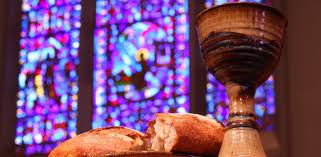
More Than Enough

Anthony Baptism

John 6:1-21 NRSV

It is believed that St. Francis of Assisi once said: “Preach the gospel at all times. When necessary use words.”

I believe the baptism of Anthony Truong preached this morning’s gospel lesson from John this morning without using a word.

People had gathered together “because of the signs that Jesus was doing for the sick”: for people who could not see, for people who could not hear, for people who could not talk, and for people who could not walk.

Then came a logistical conundrum.

Jesus said to Philip, “Where on earth are we going to buy enough bread to feed all of these people?”

“There’s just no way,” answered Philip. “Six months wages would not be enough to feed this crowd!”

Andrew spoke up and said, “But there’s this boy here!”

I like that. “But there’s this boy here. He has 5 loaves and two fish, but not enough to feed five thousand people.”

However, the good news is that although what the boy possessed did not seem like enough, with Jesus, it was actually more than enough!

After everyone ate (notice verse 11 and 12) “as much as they wanted” until they were “satisfied,” the left overs filled twelve baskets!

When Anthony expressed his desire to be baptized, we were also faced with a logistical conundrum.

Someone said: “How are you going to have enough strength to carry Anthony up and down those baptistery steps, baptize him, and then carry him back up and down so he can dry off, get dressed and be back in the service before communion. There’s just no way.”

I started thinking: “Maybe we could baptize him by pouring water on his his head; that way, he would not have to get into the baptismal pool.” So I asked Anthony. To which he responded and I quote, “No, I want to go all the way.”

So to the question of “how are you going to make this happen,” my answer is: “But there’s this boy here!”

“But there’s this boy here, and although the faith that he possesses may not seem like enough, I have a feeling that it is more than enough!”

As soon as the newsletter was emailed on Tuesday announcing the baptism, John Mundy, Steve Parke, Randy Alexander, and Dan Marshall immediately agreed to help with the baptism to make sure it was more than enough.

The good news is that this is exactly how our God loves to work in our world. When there seems to be no way, God loves to make a way. When it seems like it is not enough, God makes not just enough, but more than enough!

Our Hebrew lesson this morning from 2 Kings 4 illustrates this good news: During a famine a man brings the prophet Elisha a prophet’s tithe: Twenty loaves of bread and some fresh ears of grain in a sack.

Elisha accepts the tithe, but says, I want you to take this food and give it to the poor.

It is then the man points out the logistical conundrum: “But there’s just no way. There is not enough food here to set before a hundred people.”

But Elisha assures the man, “Because of your great faith in bringing this tithe during a famine, I have this feeling that it is more than enough.”

The man set the food before the people, and sure enough, there was not only enough, but it was more than enough, as they had leftovers.

This good news was also experienced by Elisha’s predecessor Elijah.

In 1 Kings 17, the prophet Elijah is sent by the Lord to visit a woman widow in Zarephath who will feed him when he arrives.

When he comes to the gate of the town, just as the Lord had said, he meets a widow who is gathering a couple of sticks to build a fire for dinner. He called to her and said, “Pour me a glass of water. And while you are at it, bring me a morsel of bread.”

Confronted with a logistical conundrum that has life and death consequences, she said, “As the Lord your God lives, I have nothing baked, only a handful of meal in a jar, and a little oil in a jug.” In other words, “There’s just no way. I simply do not have enough for you in this famine.”

Elijah says: “Do not be afraid.”

Old Testament Professor Katherine Schifferdecker imagines her saying:

“Easy for you to say! You’re not the one preparing to cook one last meal for yourself and your son before you die. You’re not the one who has watched your carefully-hoarded supply of flour and oil relentlessly dwindle day-by-day, week-by-week, as the sun bakes the seed in the hard, parched earth and the wadis run dry. You’re not the one who has watched your beloved son slowly grow thinner and more listless.”

“Elijah said to her, ‘Do not be afraid; go and do as you have said; but first make me a little cake of it and bring it to me, and afterwards make something for yourself and your son” (1 Kings 17:13).

“How dare this man of God ask me for bread, knowing that I have so little? Who does he think he is, asking me for bread before I feed my own child? There’s no way. I told him that I have only “a handful of meal, a little oil, and a couple of sticks. There’s not enough. And Death waits at the door.”

Then the good news:

For thus says the Lord the God of Israel: The jar of meal will not be emptied and the jug of oil will not fail until the day that the Lord sends rain on the earth.’ She went and did as Elijah said, so that she as well as he and her household ate for many days. The jar of meal was not emptied, neither did the jug of oil fail, according to the word of the Lord that he spoke by Elijah (1 Kings 17:14-16).

There was not only enough. There was more than enough.

Diagnosed with scoliosis, the doctors wanted to perform surgery when you were 12 years old. During the surgery you suffered a spinal stroke that left you paralyzed from the waist down. Some thought there was no way. They said, “there’s just not enough left.” But, you didn’t give up. You kept going. You kept fighting, and you kept living. You joined a wheelchair basketball league. You stayed in school. You went to church. And six years later you joined Ainsley’s Angels and completed a 5k and a 15k. Soon after that 15k, you ended back into the hospital for the second time with a severe infection. On a respirator for nearly three weeks, some feared there might not be enough antibiotics, love or faith to see you through. They feared you might be running out of sticks, your jar was almost empty, your jug was beginning to fail.

But the good news is that you came back, and you came back strong. You completed not one but three more 5ks. You enrolled in college. You joined a church. And this morning you were baptized symbolizing that not only did you have enough sticks, enough meal in you jar, enough oil in your jug, you had more than enough.

And the amazing news is that there are countless more stories just like Anthony’s in this room. Your marriage failed. Your son was killed. A child died. You lost your job. You lost a business. You lost your home. You became addicted to alcohol or drugs. You received a grim diagnosis. People said there was no way. They said you were all about out of sticks. However, you never lost your sense of gratitude. You kept the faith.  In the face of your suffering you continued to worship and thank God for the gift of life. Somehow, some miraculous way, your jar never emptied and your jug never failed, and you have always found that you always seem to possess a great big pile of sticks! And not just enough sticks, but more than enough.”

Not only does the baptism of Anthony this morning proclaim the text about Jesus having more than enough to feed 5,000 people, it also proclaims last part of our text about Jesus walking on water.

It was the Sunday after Hurricane Floyd flooded the first house Lori and ever purchased in eastern North Carolina. To say that we had a logistical conundrum would be making an understatement.

I had been wading in waist deep water that Thursday and all day Friday trying to salvage our possessions. And then on that Sunday morning, can you believe that one of the first things that I did was to climb down the steps of our baptistery into waist deep water to baptize a new member of the church?

I’ll never forget the first words I spoke. I looked out into the congregation from that baptistery, and I said, “You know, you would think that standing in waist deep water is the last place I would want to be this morning. However, it is actually the first place I need to be this morning!”

I then said: “Before today, baptismal water had always represented purity and refreshment to me. It was a water which cleansed one’s spirit and refreshed one’s soul. It was a renewing, invigorating water, life-giving water. However, on this particular Sunday, this water represents to me something more, something dreadful, something heinous, something sinister. This water symbolizes destruction, despair and death.”

I believe Paul understood the destructive forces of sin and evil in our world and that water was symbolic of of those chaotic forces. This is why he wrote to the church in Rome: ‘Remember that you have been buried with Christ by baptism into death.’

And this is why the picture of Jesus walking on water in the darkness amidst howling winds and crashing waves is so inspiring. Jesus was doing much more than walking on water. That would be enough in itself. Jesus was walking all over the forces of evil like they did not even exist. Which makes it more than enough.

This morning, Anthony, was buried with Jesus into death, and he rose from death into the newness of life, symbolizing that he will always have more than enough to conquer any storm, flood or chaotic force that might come his way.

And the good news is that God is still walking on water. God is still raising people up. God is still serving bread. God is still filling jars and replenishing jugs, and in God’s kingdom, the sticks that fuel the fire of the Holy Spirit never run out. So do not be afraid. Despite every logistical, physical or spiritual conundrum we face, there will always be enough. No, in God’s abundant mercy, there will always be more than enough. Thanks be to God.


Her Jug Will Never Fail: Remembering Delcea Batterman

Delcea-Batterman-1463996239

1 Kings 17:8-16 NRSV

In 1 Kings we read, “Then the word of the Lord came to him.”

Those of us who grieve the loss of Delcea are also able to celebrate this day, because we know that the word of the Lord came to her.

Because we know that the word of the Lord came to her many years ago when she decided to follow Christ as his disciple, and because of the many ways that she let us know through her faithful love and amazing smile that the word of the Lord came to her daily, today we who grieve also celebrate. We celebrate because we also know that the word of the Lord came to her this past Saturday morning, finally, fully and eternally.

I loved the way her daughter Eilene notified me Saturday morning of her passing. Revealing Delcea’s deep faith in the word of the Lord, and the faith that she passed down to her children, Eilene sent me a text that simply read: “Mom just left this world to be with God.”

Eilene will never forget the first time she truly grasped the depth of her mother’s faith. As a small child she remembers living very meagerly in a mobile home. One day, Eilene asked her mother to make her a peanut butter sandwich, but Delcea had to explain that, at the time, there was no bread in the house.

“But mama, I really want a peanut butter sandwich.”

“I am so sorry,” said Delcea. “And we don’t have any money right now to go out and buy any bread.”

Looking at the disappointment in her child’s face, Delcea said, “But you know something, we can pray for bread.”

The two of them then knelt down by the couch in the living room and prayed for bread.

As soon as they got from prayer, there was a knock on the door. Delcea opened the door, with Eilene by her side, to greet a gentleman who was giving away loaves of Colonial Bread.

Whenever I read stories of the Bible like the ones I read from 1 Kings and the gospel of Mark, someone will inevitably comment: “I sure wished the Lord spoke to people and worked miracles today like God did back in Bible days.”

But I don’t think you will ever hear any member of the Batterman family make that comment. And I know for certain you have never heard Delcea make that comment.

“The word of the Lord came to Elijah saying: Go now to Zarephath and live there; for I have commanded a widow there to feed you when you arrive.”

Notice that, like Delcea illustrated throughout her life, Elijah was faithful to the command of the Lord. He sets out and goes immediately to Zarephath. And when he comes to the gate of the town, just as the Lord had said, he meets a widow who is gathering a couple of sticks to build a fire for dinner. He called to her and said, “Pour me a glass of water. And while you are at it, bring me a morsel of bread.”

But she said, “As the Lord your God lives, [I don’t have a loaf of bread in the house] I have nothing baked, only a handful of meal in a jar, and a little oil in a jug.” She only had enough flour and oil to make one final meal for her and her son. Then, in the midst of the drought and famine in the land, they would surely die.

Elijah says: “Do not be afraid.”

Hebrew biblical scholar Katherine Schifferdecker imagines her saying:

“Easy for you to say! You’re not the one preparing to cook one last meal for yourself and your son before you die. You’re not the one who has watched your carefully-hoarded supply of flour and oil relentlessly dwindle day-by-day, week-by-week, as the sun bakes the seed in the hard, parched earth and the wadis run dry. You’re not the one who has watched your beloved son slowly grow thinner and more listless.”

But Elijah still says to her, go and make me a little cake of it and bring it to me, and afterwards make something for yourself and your son” (1 Kings 17:13).

“How dare this man of God ask me for bread, knowing that I have so little? Who does he think he is, asking me for bread before I feed my own child? There is simply not enough to go around. I told him that I have only “a handful of meal, a little oil, and a couple of sticks. There is not enough. And Death waits at the door.”

Then the good news:

“For thus says the Lord, the God of Israel: The jar of meal will not be emptied and the jug of oil will not fail until the day that the Lord sends rain on the earth.’ She went and did as Elijah said, so that she as well as he and her household ate for many days. The jar of meal was not emptied, neither did the jug of oil fail, according to the word of the Lord that he spoke by Elijah” (1 Kings 17:14-16).

Have you heard the word of the Lord?

We who grieve this day are also able to celebrate, because we know Delcea not only heard the word of the Lord, she believed it. And today we give thanks that she was a living testimony to the miracle of that word.

Born right before the Great Depression, I am certain that there were many times that her family questioned whether or not they would make it. But Delcea did make it, graduating from Elkhart High School in Kansas and marrying the love of her life, Marion Batterman. Growing up during some of the most difficult years in our country was not easy. I am certain there were many times her family just about ran out of sticks. But the good news is that their jars never emptied, and their jugs never failed.

The two newlyweds farmed together and dreamed of starting a family and making a good life together. But this was 1943, and the United States was in the middle of war with Germany and Japan. So Marian left Delcea to defend his country and freedom around the world. I am sure she worried and prayed every day and night for Marion, and although I am sure she sometimes doubted that her dreams of raising and family and growing old with her husband would be realized, the miracle was that her jar did not empty, and her jug did not fail.

Upon Marian’s return, they both put their faith into action as they both answered a call to Christian ministry. Marian preached in the gospel, while Delcea played the piano. And although they often struggled, sometimes not even having a loaf of bread in the house to make a peanut butter sandwich, the good news is: although their jars got low, they never emptied; although their jugs almost ran dry, they never failed.

I met with Delcea’s children, Marvin, Eilen and Glenda Saturday afternoon and asked them to name some things about their mother that would inspire them for the rest of their lives.

They talked mostly about her faithfulness to them as a mother. They talked about her always being there for them, supporting, them encouraging them no matter what. They talked about her always being there when they go home from school.

They also talked about how much she loved life, always curious. How she took flying lessons, enjoyed traveling and making costumes and participating in the Gaslight Theater.

They talked about a faithful woman whose jar never emptied, a woman whose jug never failed.

For the last several years, unable to walk, Delcea has suffered greatly. Her poor health forced her to move out of an assisted living facility with Marion into a nursing home.

A few weeks ago, she was hospitalized. Her doctors determined that she had suffered multiple heart attacks. They tried to correct the blockages in the arteries of her heart, but they were unsuccessful. They essentially told her that she only had only a couple of sticks left.

Hospice was called in to keep her comfortable. However, each time I would visit her, in the hospital or in the nursing home, Delcea had this amazing, remarkable smile that, considering her condition, was miraculous.

She smiled and laughed with the hope of a young girl who had just gotten married to what would be the love-of-her-life for over seventy-three years; certainly not like someone who had only a couple of weeks to live.

And during her final hours with us, when she was heavily medicated and unable to laugh and smile, if you looked down towards her legs that had been immobile for years, you would see them moving, running, almost dancing, as if if to say: “My sticks may almost gone. Death may be at the door. But my jug will never be emptied and my jar will never, ever fail.”

Night is falling. Jesus has been teaching out on a hillside. And the crowd that showed up that day, well, they were getting hungry.

The disciples with a little panic in their voices insist: “Jesus, there’s a thousand hungry people out there. We need to send them back to town so they can buy something to eat.”

Jesus asks, “But tell me what do you have?”

“Just a few loaves and two miserable little fish.”

Jesus takes what they have, blesses it, breaks it, and gives it.  And, the good news is: it is enough.

However, that is not the end of the story.  Although that would be enough, there is more. We read where “all ate and all were filled.”  They were all fulfilled, all satisfied. They just didn’t receive something to “tie them over” until they got back into town. They ate until they were full and satisfied.

But the story doesn’t even in end there. They took up what was left over and 12 baskets were filled. The truth is: there was not enough. There was more than enough. There was not only fulfillment and satisfaction, but there was a surplus. The good news is: This is simply the way it is with Jesus.

I visited a little while with Marion yesterday. He talked about how difficult life was going to be without his wife at his side. Naturally, he talked about being a little numb, how reality had yet to set in. He knows that will soon find himself in a deserted place.

The good news is, and all of us who knew and loved Delcea know it, the word of the Lord will surely come to Marian, to Marvin, Eilene and Glenda and their families, and to each one of us who grieve this day saying: “Do not be afraid. Because your jar will never be emptied and your jug will never fail, and as long as you are following Jesus, you will always have a great big pile of sticks and more than enough bread!”

Christmas Begins in the Wilderness

TheGriswoldFamilyChristmasTreeMark 1:6-8 NRSV

When does Christmas begin for you? Was it on Black Friday at the mall, or while watching A Charlie Brown Christmas or National Lampoon’s Christmas Vacation? Was it last Sunday morning as the first candle of Advent was lit in this place? When does it start? When do you begin to realize the good news that is Christmas? Where are you when it happens? On the Town Common during the annual Christmas tree lighting? Walking down Main Street during the Taste of Farmville? Going caroling with the children from church? Maybe it is not until Christmas Eve, as you light your candle and sing, Silent Night. Perhaps it is when you are alone at home, listening to Christmas music and decorating your own tree.

For Mark, the good news of Christmas begins in what most of us would call a strange and unexpected place. Unlike us, the good news of Christmas does not start with some warm sentimental scene. And unlike Matthew and Luke, for Mark, the good news of Christmas does not begin with heavenly visitations, choirs of angels, the worship of shepherds, a star rising in the East, or Magi bearing gifts. For Mark, Christmas does not even begin with a little baby wrapped in swaddling clothes lying in a manger.

For Mark, the good news of Jesus Christ, the Son of God, the good news of Emmanuel, God with us, the good news of Christmas, begins somewhere out in the wilderness. And he is not talking about some snow-covered winter wonderland where the Griswold’s find their family Christmas tree.

For Jewish people aware of their history, Christmas begins in that place that was experienced somewhere between slavery in Egypt and the Promised Land. Somewhere out in that place of testing, trial and temptation, somewhere out in that place of doubt, dread and despair, that place where you do not know if you want to live or die, that place with the Red Sea swelling before you and Pharaoh’s army advancing behind you. That place where Elijah fled to save his life from Jezebel’s army and then prayed for God to take his life away. That place where even Christmas himself would be haunted by wild beasts and tempted by Satan. For Mark, Christmas begins in the most strange and unexpected place, a raw, dangerous place called the wilderness.

The beginning of the good news that is Christmas occurs in that place where God seems to be against you, or appears to be so far away that you doubt God’s very existence—suffering in an intensive care unit at the hospital, laying in utter misery in a nursing home, holding the hand of a parent with Alzheimer’s, picking out a casket for a spouse in a funeral home, at home anxiously trying to pay your monthly bills, in the middle of a fight with a loved one, in Pearl Harbor 73 years ago this hour, in any place where people are overtaken by tension and terror, overwhelmed by despair and disappointment, or overcome by sin and shame.

Last weekend, I was at home trying to get my own Christmas started as I do every weekend after Thanksgiving. However, this year it began a little differently, you might say it began strangely and unexpectedly.

Instead of decorating my tree this year with Christmas music playing in the background, I decorated it while watching the local news. As I hung ornaments, I listened to the tragic story of a high school student killed in an automobile accident outside of Pinetops. As I turned on the lights of the tree, I glanced up to see pictures of mothers with their children escaping from war-torn Syria into refugee camps in Lebanon. I saw images of many children: some starving, others injured, some dying, others sick, all very afraid. I saw gruesome images of parents holding the lifeless body of their child. And I thought to myself, “I need to turn this depressing mess off and put on something a little more Christmasy.”

Then it occurred to me. This may be as close to Christmasy as it gets, for this is Christmas in the wilderness. The Good News according to Mark concurs that this is Christmas, raw Christmas. This is where Christmas truly begins. This is Christmas untamed and undecorated. For Christmas began when God came into a depressing mess.

And no matter how hard we try, no matter how much energy we expend or how much money we spend; we cannot escape the raw truth of it. Christmas begins, says Mark, with a “voice crying out in the wilderness.” And there is no music, no matter how Christmasy, that we can play loud enough to drown out this voice. There are no decorations glitzy enough and no lights bright enough to temper this voice.

This voice can be heard throughout every refugee camp in Lebanon and by every parent mourning the loss of their child. It can be heard in every intensive care unit, in every nursing home and funeral home. This voice can be heard in every wilderness, in every depressing mess on earth.

Through the good news of Christmas, God is crying out: I am for you; not against you. I am with you; not away from you. And I am more real, more alive, and more at work in this world than you can sometimes believe. As the prophet Isaiah said: “I am about to do a new thing; now it springs forth, do you not perceive it? I will make a way in the wilderness and rivers in the desert” (Isa 43:19).

The good news is: Christmas does not begin with us. It does not begin when we get the house all decorated or get all of our shopping done. We do not have to host a Christmas party or even go to one. We don’t even have to go to church, light a candle or sing a carol. Christmas begins with God and with a voice crying out in the wilderness, in those places where we may least expect it, but need it the most.

Some of us know that Luke tells his beloved Christmas story in chapter 2 of his gospel. However, I believe he perhaps tells it more poignantly in chapter 10.

A man was traveling down a wilderness road that was so dangerous that it was sometimes called “the way of blood” or “the bloody pass.” And there out in the wilderness, the man fell into the hands of robbers, who stripped him, beat him, leaving him half dead on the side of the road. As the man lay on the roadside, somewhere between Jerusalem and Jericho, somewhere between life and death, wanting to live, but also maybe wanting to die, he is ignored by two religious leaders who are also traveling down the same road.

God only knows why these men who you would expect to stop and help ignored the man. Perhaps they thought the robbers were still nearby, or maybe they thought the man lying on ground was only pretending, playing some sort of trick, so that when they came near him, he would beat and rob them. For whatever reason, they believed it was much too risky for them to stop.

Then came this one, Luke calls him a Samaritan, which means this was someone who was despised and rejected by the religious establishment, someone who was often misunderstood and rarely respected, someone who knew something about pain and brokenness, betrayal and abandonment, God-forsakenness; someone who had spent many days and nights in the wilderness himself, tempted and tried.

This one who was the least expected to stop and help, saw the man. He saw the man’s wounds, saw the man’s fear, saw the man’s despair and was moved with mercy and compassion. And there in the wilderness he risked his own life, as he sacrificially came to him, selflessly bent himself down to the ground, and joined the man.

The man did not have to do anything to make this one come to him. Out of pure love, unconditional and unreserved, this one just came. He then touched the man where the man most needed touching, pouring oil and wine on the man’s wounds and bandaging them. He then picked the man up and safely carried him out of the wilderness. He stayed with him, at his side through the darkness of the night. When morning came, he paid for the man’s debts, and made the promise: “I will come back. I will return.”

Of course, we call this “The Story of the Good Samaritan.” However, I believe it should be called, “The Story of Christmas.” A story that begins with a voice of mercy and compassion crying out in the wilderness, in those strange, dangerous places where we least expect it, but most need it.

Hospice caregivers will often speak of a dying person “rallying” for a brief time right before death. A person who has been non-responsive will begin to talk. One who has been confused or disoriented will become suddenly coherent. And those who have not had any food for sometimes days may request something to eat or drink. As a pastor, I have seen this “rally” more times than I can possibly count. I am not sure exactly why it happens; I just know that it happens, and it happens often.

My faith tells me that it is Christmas. It is God seeing one lying in the wilderness in their weakest, most broken state, seeing one in their most desperate, most vulnerable need, and it is God being moved with mercy and compassion for that one. It is a voice crying out from the heavens into the wilderness: “I am for you, not against you, I am with you, not away from you. I am Emmanuel. I will risk my own life for you. I will give my all to take care of your wounds and to pick you up, to forgive all of your debts. And when you are ready, I will come back, and I will take you unto myself, so that where I am, you will also be.”

The good news for us this day is that Christmas comes to us all when we confess that we are all half dead, lying on some wilderness road east of Eden, beaten up so badly by this sinful world that no one can tell whether we are Jew or Gentile, male or female, black or white, slave or free.[i] Whenever we confess our brokenness, our sinfulness, and our need for a Savior, a voice from heaven cries out in our wilderness and Christmas comes. Christmas always comes.

When does Christmas begin for you? When does it start? Where are you when you begin to realize the good news that is Christmas? The good news, according to Mark, is that Christmas begins when and where you may least expect it, but need it the most.

[i] This sentence is adapted from words spoken by Frank Tupper in one of my theology classes at Southern Seminary, Louisville, Kentucky, 1989-1992.

Strength for the Journey

lent and communion

1 Kings 19 NRSV

Last week I spoke of being affirmed by God in the presence of God on one day; but then, it always happens, Monday morning comes, and we are hurled into a wilderness with trials and all sorts of temptation. For forty days, even Jesus found himself in such a place.

You might remember that I made the comparison to Elijah.  After being affirmed by God on Mt. Carmel, Elijah found himself in a wilderness that was so bad, he did not know if he wanted to live or die.

Listen to 1 Kings 19:3: “Then he was afraid; he got up and fled for his life.”  In verse three, it appears that he wants to live. He’s running from Jezebel to save his life. Now let’s look at the very next verse.  Verse four reads: “But he himself went a day’s journey into the wilderness, and came and sat down under a solitary broom tree.  He asked that he might die: ‘It is enough; now, O Lord, take away my life…”

His Monday morning was so bad, that one minute he wants to live, and the next minute, he wants to die.  Can you relate?

Elijah then fell asleep under that tree, but suddenly, an angel touched him and said to him, “Get up and eat.”  He looked and there at his head was a cake baked on hot stones and a jar of water.  He ate and drank, and lay down again.  But the Lord came a second time, touched him, and said, “Get up and eat, for the journey will be too much for you.”  “He got up and ate and drank, and went in the strength of that food for forty days and forty nights to Horeb, the mount of God.”

Today, some of you do not need to wait for Monday morning.  You are already there. One minute you want to live; the next minute, you are thinking that death might not be that bad of an option.  Others of you may be doing better than that today.  But as I said a few weeks ago, sooner or later, Monday morning is coming for all of us.

So I say to all: “Let’s get up and eat and drink from the table of the Lord.  For if you do not, this journey in the wilderness of life will be too much for you.”

Now, you might ask, how can one little, tiny, tasteless cracker, and one sip of juice give us sustenance for forty days and forty nights?

Do you remember my sermon on the transfiguration?  On the mount of transfiguration, before the disciples come back down into the wilderness of their lives, a voice came from heaven, saying:  “This is my Son, the Chosen, listen to him.”

This is my Son, the Beloved, the Chosen, the one who has been tested and tempted and tried in the wilderness of life, listen to Him.  Listen to the One who knows what it is like to be on the mountain top with God one minute only to be in Hell with the devil the next.  Listen to the one who knows something about the ecstasy of being affirmed by God in the presence of God one minute and to be famished in the middle desert the next minute.  Listen to the One who knows what it is like to be a human being living in a fallen world.  Listen to the one who spent most of his earthly life trying to survive in a vast and dark wilderness.

Listen to the Christ as he says…

“For God so loved the world that he gave his only Son, so that everyone who believes in him may not perish but may have eternal life. Indeed, God did not send the Son into the world to condemn the world, but in order that the world might be saved through him. ”

Listen to the Christ as he says…

“Your sins are forgiven.”

Listen to the Christ as he says…

“Your faith has saved you, go in peace.”

Listen to the Christ as he says…

“Daughter, your faith has healed you.  Go in peace.”

Listen to the Christ as he says…

“Whoever drinks the water that I give him will never thirst.  Indeed, the water I give him will become in him a spring of water welling up to eternal life.”

Listen to the Christ as he says…

“I am the bread of life.  He who comes to me will never go hungry, and he who believes in me will never be thirsty.”

Listen to the Christ as he says…

“I am the light of the world.  Whoever follows me will never walk in darkness, but will have the light of life.”

Listen to the Christ as he says…

“I am the good shepherd.  The good shepherd lays down his life for his sheep.  I am the good shepherd.  I know my sheep and my sheep know me.”

Listen to the Christ as he says…

“Your brother will rise again.”

Listen to the Christ as he says…

“I am the resurrection and the life.  He who believes in me will live, even though he dies; and whoever lives and believes in me will never die.”

Listen to the Christ as he says…

“Do not let your hearts be troubled.  Believe in God, believe also in me.  In my Father’s house are many dwelling places.  If it were not so, would I have told you that I go and prepare a place for you?  And if I go and prepare a place for you, I will come again, and I will take you to myself, so that where I am, you will be also.”

Listen to the Christ as he says…

“You are my friend”

Listen to the Christ as he says:

“I am with you always, even until the end of the age.”

Listen to Christ as he says, “This is my body broken for you.  This is my blood shed for you.”

Some might still say: “It is just a tiny, little cracker and a sip of juice.”  But I think you know that we can go in the strength of the food on this table, for forty days and forty nights, or however long our journey in the wilderness might last.