Preparing the Way for Peace

Isaiah 11:1-10; Matthew 3:1-12

As if we needed it, Advent is the annual reminder that the world is not as it should be. But it is also our reminder that God is not finished with this world yet. It’s a reminder that God has plans for this world, and you and I are a part of those plans.

Advent is a holy tension. We wait and watch, but we wait and watch with hope. We light candles, because we believe the light still rises, and peace on earth is still possible, even during a time of deep violence.

Today, our nation remembers another Sunday morning when the world was plunged into deeper violence, when fear and grief reshaped lives overnight.

We remember Pearl Harbor today, not to glorify war, but to deepen our longing to be a people shaped by the peace that God promises. On a day we remember a time when peace collapsed, when meetings for diplomacy didn’t happen, when steps to find equitable solutions were not taken, we gather to proclaim a new day, a new time when swords are beaten into plowshares, and peace is not a distant dream, but a way of life.

And through our scripture lessons this morning, two prophets speak about this time: Isaiah and John the Baptist. Two voices, centuries apart, but carrying one message: God is breaking into this world with a peace that transforms everything!

Isaiah speaks with poetry. John speaks with fire.

Isaiah shows us the world God intends.

John tells us how we must prepare for it.

Isaiah invites us to imagine and dream.

John insists we repent and change.

Together, they give us the full message of Advent: the hope and the urgency; God’s promise and our responsibility.

I love that Isaiah begins Advent with a stump, and Matthew begins with a wilderness. Isaiah says: “A shoot shall come out from the stump of Jesse.” Matthew tells us: “In those days John the Baptist appeared in the wilderness.”

A stump is what remains after something has been cut down. Here, it belongs to Jesse, the father of King David, symbolizing the seemingly dead royal lineage of David.

A wilderness is a place where familiar paths have disappeared. It’s a place of withdrawal, isolation, and loneliness.

 And yet, both are places where God begins again. Both are places where grace breaks in. Both are places where hope refuses to die, and love finds a way!

Some of us have walked into Advent this year with stumps in our lives. There have been losses, endings, dreams cut down, seasons cut short.

Some are walking toward Christmas this year surrounded by wilderness. There is much uncertainty, weariness, loneliness, and feelings of lostness.

But both Isaiah and John remind us of the good news: that God does some of God’s best work in the places that seem barren. God is in the business of making a way when it seems like there’s no way.

Isaiah gives us a breathtaking vision of God’s business in this world. It’s of a world ruled not by fear, corruption, hate, and violence, but by justice, tenderness, compassion, and reconciliation.

Wolves lie down with lambs. Children play safely at the entrance of a cobra’s den. Predators and prey live at peace.

This isn’t some fantasy. It’s the reordering of the entire world. Isaiah saw what scripture calls “shalom:” a peace that heals, restores, and reshapes not only society, but the entire creation.

Isaiah says this peace will be led by a Spirit-filled one who will: “judge the poor with righteousness…and decide for the meek with equity.”

In other words, peace and justice are inseparable. We cannot have one without the other. Peace without justice is fragile. Peace without equity is deceptive. Peace that ignores any harm to others, or to the creation, is not peace at all.

On this December 7th, as we remember our parents and grandparents waking up to the violence of Pearl Harbor, we must not pretend that violence belongs only to the past. For every day we wake up to stories of good people being yanked from their cars, or off the streets, on their way to work, on their way to school or to a thanksgiving dinner with their family, detained by masked men and deported because of the color of their skin. We wake up to stories of fishermen blown up in boats without due process or any chance to speak their truth.

 We see a world where fear is weaponized, food for the hungry is politicized, meanness is rationalized, human dignity is discounted, and inequity is engineered rather than accidental.

On this Pearl Harbor Sunday, we confess the many ways violence still shapes our world, and we cry out for the peace Isaiah dares to imagine and for which Christ commands us to prepare.

And then a wild, fiery preacher named John bursts into our story. He’s wearing some strange clothes. He’s got this crazy diet, and a voice that sounds like a siren screaming in the desert.

And his first word is not, “Peace.” No, it is, “Repent.”

Now, at first his preaching sounds like one of those hell, fire, and brimstone preachers we’ve heard before. We think, “no wonder they call him a Baptist!” At first, his message sounds like the opposite of Isaiah’s message, but the more we listen to it, we discover that John is not contradicting Isaiah. No, he’s showing us the way to Isaiah’s vision of peace.

You see, John knows that peace never arrives in this world easily. Peace is not passive. It’s not something we just sit back and wait for. Peace requires transformation. If peace is gonna come, then people gotta change!

If Isaiah shows us what peace looks like, John shows us what peace requires.

John calls us to turn from every way that does harm: our habits; our politics; our systems; our silence; our consumption; even our religion, especially our religion; to embrace a life of nonviolence. And he makes it clear that peace on earth is not some naïve dream from some woke, left-wing lunatic; it is a moral imperative from God. John is the prophet who prepares us for the world Isaiah describes.

John’s challenges his hearers to “bear fruit worthy of repentance.” In other words: Don’t just want peace and sing about peace. Live peace. Practice peace. Embody peace in your decisions, your priorities, your words, your vote, your compassion, your courage, your lifestyle.

Repentance is not self-hatred. It’s not guilt. And it’s not shame. True repentance is liberation. It’s simply returning to God’s way of peace that was intended for the creation.

On a day when the nation recalls the devastation of war, repentance becomes not just a personal religious ritual, but a moral commitment. It’s a commitment to dismantle hatred. It’s a commitment to stand with the vulnerable. It’s a commitment to uproot the seeds of harm before they ever take root in our lives or in our world.

That is the fruit worthy of repentance, as John says. That is the path toward the world Isaiah imagined.

And let’s not miss this. John’s harshest words are not aimed at the people the religious leaders dismissed as outsiders, unbelievers, or unclean. John’s sharpest critique is directed at the religious establishment itself, the ones who believed they were closest to God because of their heritage, their appearance, their privilege, their assumed moral superiority. He turns to them and says, “Do not presume… the axe is already lying at the root.”

John doesn’t say this because God delights in their tjdestruction. He’s not warning them because God wants to punish or shame them. John speaks this harsh word because God seeks to prune. God seeks to cut away anything, no matter how pious, polished, or patriotic, that destroys real peace in the world. And that includes any movement that weds faith to nationalism and proclaims that God’s blessing is the property of one nation, one party, one people. It includes any faith that blesses fear, excuses cruelty, or elevates domination as destiny.

We cannot cling to anything that kills equity.
We cannot preserve the things that preserve injustice.

We cannot call violence “protection,” or prejudice “tradition” or “heritage.”

We cannot keep watering the roots of fear, greed, Christian nationalism, or complacency, and then pretend we are bearing the fruit of peace.

Advent is the holy season of pruning, not for punishment, but for preparation. Advent will not allow us to believe that for peace, repentance is optional.

Isaiah teaches us what God’s peace looks like.

John teaches us how to make room for it.

Isaiah lifts our eyes.

John steadies our feet.

Isaiah speaks hope.

John calls for courage.

And together they prepare us for the Christ who comes not with military might, not with political coercion; but with justice, mercy, grace, humility, and fierce love: the Christ who judges with righteousness; the Christ who defends the meek, heals the sick, forgives the sinner, feeds the hungry, and includes the outcast.

This Advent, perhaps peace begins with us by letting something go:
a resentment we’ve carried too long; a fear that narrows our compassion; a selfishness that feeds our apathy and fuels our greed; a prejudice we inherited; a silence we use to avoid conflict.

Perhaps peace begins with healing something inside us.
Or perhaps peace begins with speaking a truth we’ve been afraid to name.
Or standing with someone who has been pushed to the margins.
Or choosing generosity in a season obsessed with consumption.
Or refusing despair in a world that seems addicted to it.

Or perhaps, on this December 7th, peace begins with remembering that violence is not inevitable, war is not destiny, and equitable solutions are real, and love, not hate, is what truly makes a nation great.

Advent is the season when we stare at the world’s stumps and declare, “A shoot’s gonna spout, and I can see it!”

We look at the wilderness and say, “A voice is calling, and I can hear it!”

We remember the wounds of history and pray with renewed commitment: “Never again!”

And we see the darkness all around us and still light our candles, because we trust the promise that the light still rises.

It rose from the stump of Jesse.
It rose in the waters of John’s baptism.
It rose in Bethlehem.
It rises in every act of justice.
It rises in every step toward peace.
It rises, even now, in us.

Thanks be to God. Amen.
The God of the Living

Luke 20:27-38

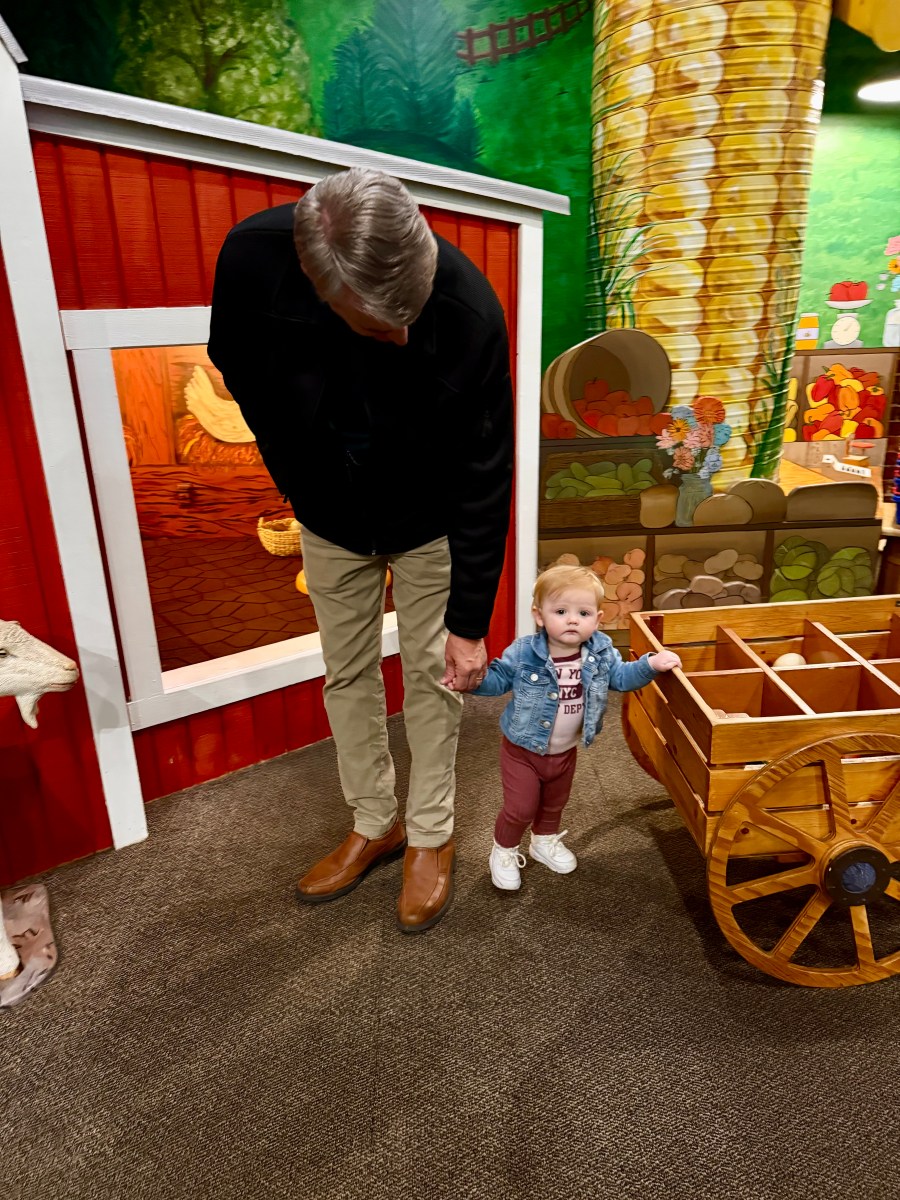
This morning, we gather in a sacred circle of love with parents and grandparents, their family and friends, and the wider church family to dedicate ourselves to God and to one another. We will make promises this morning to support a family as they raise their daughter in love, envelop her with mercy, teach her the stories of our faith, and to resist the powers and authorities that would deny her life.

We declare today what Jesus declared in the Gospel of Luke: that our God is not the God of the dead, but the God of the living.

That means we have a living, active, public faith. It’s not a private, personal faith without works that the book of James pronounced dead. It’s a living, working, breathing, forward-marching, justice-seeking, hope-singing faith. It’s a faith that lifts up little babies and baptizes big dreams. And it’s a faith that always refuses to let despair have the final word.

The story in Luke 20 begins with a question, but it’s not an honest question. The Sadducees, a group of religious elites who didn’t believe in the resurrection, have come to Jesus with a trick question with the purpose of trapping him in theological quicksand.

They spin this wild scenario about a woman who marries seven brothers, one after another, each dying without having children. Then they ask, “In the resurrection, whose wife will she be?”

Their question sounds absurd because it is absurd. For they’re not trying to understand the ways of God. They’re only trying to protect their ways, to defend their black and white, tidy little world where their control goes unchallenged, where the poor stay in their place, and where God doesn’t mess with the systems they’ve built to protect their power and privilege.

But Jesus, as he so often does, flips the table. He says, “You’re asking the wrong question. Resurrection isn’t about hierarchy or control. It’s about life, free, full, meaningful, unending, abundant life.”

It is then Jesus shakes their world with these powerful words: “God is not the God of the dead, but of the living; for to God all of them are alive.”

The God of the living is the one who refuses to be confined to any religious box or to be controlled by any political party.

The God of the living is the one who is forever calling life out of tombs and hope out of heartbreak.

The God of the living is the one who breathes over the chaos, creating a new world, and calling it good.

The God of the living is the one who takes what the empire crucifies and declares, “Love will win!”

This is the God who is still speaking, still creating, still re-creating, still resurrecting us from all the small deaths we endure today, like the death of empathy, the death of mercy, the death of social justice, the death of diversity, equity, and inclusion.

When we dedicate Maggie this morning, we are declaring our allegiance to this God, the God of the living, who says to all matter of death: “Rise up and live!”

When we dedicate Maggie, we are saying that we will raise her not in fear but in faith, not in greed but in generosity, not in apathy but in active love.

In a world that often chooses death (death by selfishness, death by bigotry, death by poverty, death by racism, death by environmental destruction, death by indifference), we are promising that we will stand with the God of resurrection who always chooses life.

Hannah and Austin, in dedicating Maggie today, hear this blessing from the church: As a parent, you are participating in resurrection. Every sleepless night, every patient conversation with your child, every prayer whispered over her fevered forehead— it’s all resurrection work.

Raising a child is resurrection work because it is an act of resistance. It is believing in the future when the world tells you to give up. It is saying, “As bad as things seem today, I still believe in tomorrow.”

You are forming in Maggie a living faith, one that will not just memorize Bible verses, but will embody them. One that will not just believe in Jesus, accept Jesus, but will follow Jesus, bearing witness to a faith that will learn to feed the hungry, to welcome the stranger, to defend the marginalized, and to speak truth in love.

When you hold Maggie and whisper prayers, when you read her stories of courage, when you teach her to say “please” and “thank you” and “I’m sorry,” and “I love you,” you are introducing them to the God of the living, the One who delights in her laughter, in her curiosity, and in her wide-eyed wonder.

You are shaping a world in which Maggie can live fully, freely, and faithfully.

And First Christian, this dedication isn’t just a family’s promise. It’s our promise too.

We are the village that surrounds all the children in our congregation with love. We are the people who will teach them how to sing, how to serve, and how to stand up for what’s right.

When we dedicate Maggie this morning, we are committing to build a world where all children can breathe clean air and drink clean water, where food is available and healthy, where their schools are safe and fully-funded, and where their neighbors are kind.

We’re committing to the slow, holy work of resurrection, to dismantling systems of death so that every child can live abundantly.

We are committing to be the church that loves all God’s children, no matter their color, gender, ability, sexuality, or identity, because to God, all of them deserve life, abundant and free.

The Sadducees were trapped in a world too small for the God Jesus proclaimed.

They couldn’t imagine life beyond the limits of their power, so they made up and absurd scenario to debate and stop Jesus because they feared that the God he was revealing was much more than they could control and much bigger than any binary box they’ve tried to put God into.

But Jesus taught them that the resurrection isn’t some theory to be debated. Resurrection is a truth to be lived.

Jesus taught that every act of love is resurrection.

Every cry for justice is resurrection.

Every march on behalf democracy and every silent vigil on behalf of peace is resurrection.

Every child lifted up in dedication is resurrection.

When we bless Maggie today, we’re making resurrection visible to the world.

We’re saying to the powers of death, “You will not win here.”

We’re saying to the forces of despair, “You will not have the last word.”

We’re saying to the powers of fear, “You can stop speaking now.”

And we’re saying to the God of the living, to the God of resurrection, that we will live like resurrection people.

To raise children who believe that love is stronger than hate.
To build communities that value life more than profit.
To be the kind of people who feed the hungry, comfort the grieving, stand with the oppressed, care for the planet, and keep singing hope, even in the dark.

Because to believe in the God of the living means more than believing in life after death. It means believing in life before death. It means believing that the kingdom of God can be glimpsed in the way we treat one another. It means that every child we nurture, every parent we support, every injustice we confront, every prayer we pray, every neighbor we love—it’s all resurrection work.

So, when Jesus says, “God is not the God of the dead, but of the living,” he’s just talking about heaven. He’s talking about this very moment— about the breath in your lungs, the heartbeat in your chest, the promise in Maggie’s eyes.

He’s talking about the way God’s Holy Spirit moves in this congregation and in this community. He’s talking about the way God keeps showing up, calling us to live, to love, to care, to feed, to lift one another higher, to believe in a better tomorrow.

As we dedicate Maggie today, we are bearing witness to the world that our God is the God of the living. And we, by grace and commitment, are a people of the living. And we will go from this place to build a world worthy of her life and the lives of all God’s children.

We will be bold enough to proclaim resurrection in a culture obsessed with violence, in a society dying with greed and hate, in a nation that withholds food from the hungry. We will love so fiercely that future generations will say of us: “Those were the people who truly chose life!” “Those were the ones who stood in the shadows of death and made resurrection visible!”

Because the God of the living is still breathing life into this world.
And that means our work and our hope is not finished yet.

Amen.


Pastoral Prayer

God of the living,
You are the breath in our lungs and the light in our eyes,
the pulse that moves through creation and the promise that will not let us go.
You are the beginning and the end,
and still You meet us right here, in the middle,
in this church, in this moment, in the ordinary holiness of our lives.

We give You thanks today for the gift of life:
for children who remind us how wonder works;
for parents who pour out love without counting the cost;
for seniors whose wisdom steadies our steps.
We thank You for laughter that catches us by surprise,
for tears that speak what words cannot,
and for the holy mystery that keeps drawing us back to You.

God, we confess that we do not always live as people of the living.
We get trapped in fear,
in cynicism,
in systems that trade life for profit and power.
Forgive us, O God.
Breathe new life into this congregation.
Teach us again to see Your image in every child,
Your presence in every neighbor,
Your Spirit in every act of justice and mercy.

We pray for those among us who are struggling:
for the sick and the sorrowing;
for those weighed down by anxiety or grief;
for those who have lost work, or hope, or direction.
Be near to them, God of the living.
Surround them with grace that will not let them go.

We pray for our world:
for peace in places of war;
for food in places of hunger;
for safety where children fear;
for compassion where cruelty has taken root.
Remind us that Your kingdom is not an idea for tomorrow,
but a movement for today
that resurrection is not just a promise after death,
but a power that transforms life right now.

And as we prepare to hear Your Word and dedicate these children,
open our hearts to Your living presence among us.
Make us brave enough to live as resurrection people
to raise our children in love,
to build communities of justice,
and to trust that Your Spirit is still breathing life into this world.

We pray all this in the name of Jesus,
the Christ of the living,
the friend of the broken,
the hope of every generation. Amen.


Child Dedication Liturgy

Today we celebrate the gift of life and the goodness of God who entrusts children to our care.

As a community of faith, we stand with these parents who bring their child, Margaret Evaline Grooms, before God, seeking grace, wisdom, and strength for the journey ahead.

We dedicate not only this child, but also ourselves, to be a people who nurture, teach, protect, and love.

For we follow the One who said, “Let the little children come to me, for it is to such as these that the kingdom of God belongs.

Charge to the Parents
Hannah and Austin, you have been given a sacred trust: to care for this child; to love them with patience and joy; to teach them the stories of faith; to model the way of Jesus in your home and in your life.

Do you promise to raise your child in the love of God, to encourage curiosity and compassion, to seek justice, to practice kindness, and to walk humbly with your child in faith?

Parents: We do, with God’s help.

Do you promise to teach your child that they are wonderfully made, beloved of God, and that nothing in life or in death can ever separate them from that love?

Parents: We do, with God’s help.

Charge to the Congregation

Church, this child does not belong to these parents alone— she belongs to all of us.

We are called to surround this family with a community of care: to teach, to listen, to celebrate, and to stand with them in every season.

Do you, as the gathered body of Christ, promise to support these parents in their sacred calling, and to help this child grow in love, faith, and justice?

Congregation: We do, with God’s help.

Do you promise to create a world where every child is safe, fed, valued, affirmed, and free to become all God intends? If so, please stand.

Join me in welcoming this child as we read together.

We welcome this child into our church family.
We promise to love them, to pray for them,
to teach them by our words and example,
and to walk with them as they grow in faith, hope, and love.
May our life together reflect the grace and joy of Christ.

Prayer of Dedication

God of the living,
we give You thanks for the gift of Maggie,
for the laughter, wonder, and light she brings into the world.
Breathe Your Spirit upon her, that she may grow strong in body and kind in heart.
Grant these parents wisdom, courage, and joy in their calling.
Surround them with love that will not let them go,
and a community that will not let them fall.

May this child come to know the depth of Your grace,
to trust Your goodness,
and to live in the fullness of Your love.

We dedicate Maggie and ourselves to Your care and keeping,
in the name of the God of the living:
Creator, Christ, and Holy Spirit. Amen.


Invitation to Communion
At this table, we meet the God of the living,
the One who welcomes children and sinners, saints and seekers.

Here, life conquers death.
Here, grace outshines guilt.
Here, love gets the last word.

So, come with your doubts and your dreams,
your gratitude and your grief.
Come, for this table is set for all of God’s children.
There is room enough for all here.

Invitation to Generosity
God is the giver of every good gift:

life and breath; laughter and love;
children to nurture and a community to sustain us.

As we dedicate our Maggie this morning, we also dedicate ourselves.
We give that others may live,
that every child may know the security of love,
that hope might have hands and faith might have feet.

Let us bring our gifts with joy,
trusting the God of the living to use them
for the healing of the world.

Commissioning and Benediction
Go now as people of the living God,
as people who believe that love is stronger than fear,
that hope is greater than despair,
and that new life is already breaking forth among us.

May the Spirit of the living Christ go with you,
to guide your steps,
to guard your hearts,
and to bless all the children in your care.

Go in peace,
to love and to live as resurrection people.

Amen.

What’s Written on Your Heart

Some appeal to guilt: “If you don’t give, how will we keep the lights on and the camera rolling?”

Some appeal to fear: “If you don’t tithe, God will not bless you.”

Some appeal to self-interest: “Give, and you’ll get an unexpected check in the mail.”

And some appeal to nostalgia: “This is the church your grandparents built. You owe it to them to give.”

So, this stewardship season, I want to make something clear: you will never ever hear anyone in this church suggest that pledging your tithes and offerings, your service and your presence, is a way to bribe God, to buy blessings, to feed our souls, or keep our consciences clear.

Furthermore, we are not being asked to make a pledge to the 2026 budget because we recently had to replace the hot water heater, the roof may leak in a heavy rain, and we’ve hired an expensive professional to relocate a large family of bats which have taking up residence in the attic.

That’s because, we believe your pledges, your service, must come from a deeper place.

It was the prophet Jeremiah who proclaimed: “The days are coming,” declares the Lord, “when I will make a new covenant…I will put my law in their minds and write it on their hearts.”

We give because God’s law has been put in our minds and written on our hearts.

Now, when we hear the word “law,” we might think about rules, regulations, and restrictions, what we can and can’t do. But Jeremiah isn’t talking about that kind of law. He’s talking about something much deeper than any rule or ritual.

Jeremiah is talking about the moral rhythm of God. He’s talking about justice, kindness, mercy, and humility. He’s talking about empathy and compassion, engraved not on tablets of stone, but on the living tablets of human hearts.

This is the reason we pledge our gifts. We give, not from guilt, not from obligation, not from a belief that we will get something in return, not even from a command. We give because the rhythm of God’s morality has been written on our hearts.

And when this is written on our hearts, we don’t have to be told to pledge, to give, or to care, to love, to be kind, to show mercy, and to do justice. We just do. We don’t even need a stewardship campaign to tell us we need to embody radical welcome and revolutionary love. It is just who we are.

So, as we think about stewardship this month, as we consider pledging our tithes and our offerings, our service, and our presence, to make this world more just, loving, and peaceful, an important question we should ask ourselves is this:

What is it that is written on our hearts? Because the reality is, everyone has something written inside of them.

Sadly, for many, it is fear—put there by wicked men who seek power by dividing us.

For some, it’s scarcity. It’s the fear that there’s not enough.

For some, it’s fear of the other, immigrants taking what we believe is ours.

For some, it is cynicism. It’s the fear that nothing in this world ever changes, anything I give simply will not matter.

The good news is that not only does God have a powerful eraser, in the words of the prophet, “forgiving wickedness and remembering sin no more,” the good news is that God is still writing. And when God writes, God never uses the ink of fear, but always writes in the ink of justice.

Onto our each of our hearts, God is writing justice, not selfishness; compassion, not comfort; and selfless love, not self-preservation.

Here’s some more good news. Your choosing to be here this morning is a good sign that that the ink of God is flowing through your veins. That’s why I believe you are sitting in a pew this morning. That’s why you give. That’s why you serve. That’s why you show up when your neighbors need you, and that’s why you rally when your country needs you.

Jesus illustrated this truth with a story of a woman, a widow with no power, no protection, and no position. She doesn’t have wealth. She doesn’t have influence. All she has is the ink of God on her heart.

She shows up before a judge who, the text says, neither feared God nor had respect for people. We know the kind. He doesn’t care about justice. He doesn’t care about her. He doesn’t care about God. He cares only for himself.

But because of that something written on her heart, nevertheless she persists. She keeps showing up. She keeps knocking. She keeps demanding justice.

Now, we don’t know what her case was.

Maybe her landlord was exploiting her.

Maybe her neighbor had taken her land.

Maybe she had been cheated out of her inheritance.

Maybe she was being denied healthcare, due process, or civil rights.

Most certainly, she was a victim, or should I say “a survivor” of misogyny.

Whatever it was, she kept showing up.

And although the judge doesn’t have a moral, empathetic bone in his body (again, we know the type, don’t we?), even he gives in. Not because he suddenly finds compassion, but because she refuses to go away.

Now, this is not a story about nagging God until God gives us what we want. This is a story of faithful persistence in the face of injustice. It’s a story about a woman who knew something about the power of showing up. The odds were against her, but she kept showing up. The judge was morally depraved, but she kept showing up. Her friends told her she needed to accept things the way they are because nothing in this world ever changes, but she kept showing up because God’s justice, the rhythm of God’s morality was written on her heart.

It was the same rhythm that propelled Marion Stump to show up in Miller Park yesterday at the No Kings Rally— demonstrating that when justice is written on your heart, when the ink of God is coursing through your veins, not even pancreatic cancer can keep you from showing up!

This is why this is a perfect text for our stewardship season in this time and place. Because giving is a form of showing up. Serving is a form of showing up. Speaking out, organizing, marching, standing with the vulnerable, fighting for democracy — all of it is showing up before the immoral powers and principalities and saying: “There will be justice here.”

As the widow kept knocking at the courthouse door, we must keep knocking at the world’s door. And every gift of generosity, every dollar given, every act of kindness, every time we show up, is one more knock, one more insistence that justice matters, and love will win.

Now, here’s a statistic that gives me hope today: Researchers say that if just 3.5% of a nation’s population mobilizes in sustained, nonviolent action, they can turn the tide against authoritarianism. Think about that. Not half the country. Not even a tenth. Just 3.5%. That’s about one in every thirty people. If one in thirty people with justice written on their heart keeps showing up, keeps marching, keeps knocking, keeps giving, keeps serving, keeps praying, you can change the direction of a nation. This nation can be turned toward justice again.

So, we must never believe our offering doesn’t matter, our presence doesn’t count, our gifts are too small, or that our persistence is not power. Because every time we show up, every time we give out of what’s written on our hearts, we’re part of that 3.5%. We’re part of the turning. We’re part of God’s kingdom breaking in.

Good stewardship is and has always been heart-based. It’s justice-based. It’s love-based. It’s what Jeremiah saw when he said:

No longer shall they teach one another, saying, ‘Know the Lord,’ for they shall all know me, from the least of them to the greatest.

When the covenant is written on our hearts, we don’t need coercion. We don’t need compulsion. We don’t need manipulation. Because the Spirit itself bears witness in our hearts, and when God’s handwriting burns in your chest, you wake up every morning asking: “How can I give myself today for justice, for peace, for love?”

And the good news is that the world doesn’t need an extraordinary event to change. It changes through ordinary persistence. Through the widow who won’t give up. Through the disciple who keeps showing up. Through the church that keeps preaching hope, even when hope seems hard to find, because every time we show up, we bear witness to the covenant of God written inside of us. We demonstrate to the world: “Greed will not have the last word. Hate will not have the last word. Fear will not have the last word. And love will one day ultimately and finally win.

Disciples, we are the people who keep showing up. We show up for one another. We show up for our neighbors. We show up for the nation. We show up wherever anyone thirsts for justice and hungers for love.

Because when the covenant of God is written on your heart, you can’t sit still in the face of suffering. You can’t stay silent in the face of injustice. You can’t keep your hands closed when the Spirit is calling you to open them.

The widow kept showing up before the unjust judge, and we keep showing up before an unjust world—not out of guilt, not out of duty, not to get something in return, but because there’s something divine inside of us that will not let us rest.

It’s what Jeremiah called a new covenant. It’s what Jesus called the kingdom of God. It’s what we call faith in action.

So, this stewardship season, we’re not asking you to give out of fear or guilt or obligation. We’re asking you to give because you’ve got something written on your heart.

Give because you believe that love is stronger than hate, and there’s a love inside of you that will not let you go. Give because you trust that justice will prevail. Give because you know that hope still has work to do in this world!

Give, because you’re part of that 3.5% who refuse to bow before kings, who refuse to be silent in the faces of those in power with no regard for people or God, who refuse to quit knocking, who refuse to stop showing up.

Because that’s what the church is.

It’s not a building that needs maintaining, but a movement that needs to keep marching.

And we will keep showing up—not until we get what we want, but until the world becomes what God dreams it to be.

Until every heart bears the handwriting of God, and every gift, every prayer, every act of courage echoes that same eternal truth:

We give, we serve, we love, we persist, because it’s written on our hearts!

Amen.


Pastoral Prayer

God of persistence and promise,
You are the One who writes truth on human hearts,
who carves compassion into our very being,
and who teaches us to keep showing up
in hope, in prayer, and in love.

You have written Your covenant not on stone tablets
but in the living flesh of our hearts.
So even when the world forgets justice,
even when the powerful ignore the cries of the poor,
Your truth keeps pulsing within us,
calling us to rise again, to knock again,
to believe again that love will have the final word.

We thank You for the saints and prophets
who never stopped knocking on the doors of indifference.
For the mothers who marched,
for the workers who organized,
for the dreamers who still believe in a more just tomorrow.
May their persistence live in us.

And forgive us, O God, when we grow weary in doing justice.
Forgive us when our compassion has an expiration date,
when our generosity depends on convenience,
when our prayers fade because the answers take too long.
Remind us again that the work of justice
is not measured in days or dollars or ease,
but in faithfulness, in showing up again and again.

In this season of stewardship, teach us to give not from fear or guilt,
but from gratitude and conviction.
Let our generosity be an act of defiance
against greed, apathy, and despair.
Write Your covenant deep within us,
until our giving, our praying, and our living
all bear witness to Your love at work in the world.

We pray for those whose hope feels faint today:
for the tired caregiver; the underpaid worker;
the neighbor who feels unseen; the soul that feels unheard.
May they find strength in the knowledge
that You are the God who listens, the God who remembers,
the God who still answers cries for justice.

And so, we will keep showing up.
We will keep praying, keep working, keep giving,
until the widow’s cry is answered,
until Your justice rolls down like waters,
and Your mercy like an ever-flowing stream.

We ask this in the name of Jesus,
the One who kept showing up,
the One who never gave up,
the One who lives and reigns through love.
Amen.

If We Loved Like Jesus

John 13:31-35

In the words of Stevie Wonder, I have “some serious news to pass on to everybody (which is really news to no one): “Love is in need of love today.”

Although some of Jesus’ last words, which are usually understood as one’s most important words, came in a commandment to love one another as he loved, many Christians have rejected those words, and today, love seems to have fallen out of favor.

One excuse I hear is: “Well, love might have worked back in Jesus’ time, but the world’s a much different place today. Love, especially loving like Jesus loved, well, that just doesn’t cut it anymore.”

Preaching love these days gets one called “a left-wing lunatic,” while stirring up hate gets one elected President. Being empathetic toward another gets one called “a sinner,” while being a bully gets one called “faithful,” or “councilman.” Deporting and separating families gets cheers, while asking for some common decency and humanity, gets one called “soft.”

If we truly love like Jesus loved—if we feed the hungry, if we care for the sick, if we give to the poor, if we stand up for the marginalized, if we speak out on behalf of the oppressed, if we welcome the stranger, and accept those who are cast away, we’re considered: “enemies of the state.”

These days, the peace and love crowd who lead with mercy, are out of date. And the mean and tough crowd, those who can make the hard decisions are trending. They can take away SNAP benefits without any apprehension, have people arrested without any due process and disappeared without any second thought. They say the country can afford to show our strength with a military parade, but not to show our compassion with healthcare for the elderly.

But love? Love is weak, they say. And these days, in these times, they say love is for losers. It may have worked back in the first century, when Jesus commanded it, but not here in the twenty-first, not anymore.

But the truth is, first century Palestine was not much different from today. Beneath the rule of the Roman Empire, ordinary people bore the weight of crushing taxes, land seizures, violent crackdowns, and the threat of crucifixion designed to silence dissent and maintain control. The elites—

local, imperial and religious— colluded to rob people of their wealth and dignity, leaving entire communities displaced and impoverished. It was a time when the underprivileged dare not imagine a world where justice was right for the oppressed and not a privilege of the powerful.

And it was into the thickness of that unrelenting, darkness, Jesus commanded his followers: “Love one another.”

Because Jesus knew that love is the light the darkness cannot overcome, and love is only power in the world strong enough to tear down empires and build God’s kin-dom.

So, when Jesus said, “Love one another as I have loved you,” he wasn’t being soft, and he sure as heaven wasn’t being weak.

He was talking about using the most powerful force in the world to change the world! He was talking about a love that was so threatening to the powers-that-be it would get you arrested and could easily get you nailed to a cross.

Jesus was talking about a love that confronts the empire, a love that calls out injustice, a love that always, insistently, and unapologetically, favors the oppressed and welcomes the people society tries to cast out. It’s a love that moves mountains, flips tables, and shakes up the status quo. It’s a love that demands justice for the poor, healthcare for the sick, and freedom for the oppressed.

Jesus said, “Love one another, as I have loved you,” because Jesus knew that love, the love he taught, the love he modeled and embodied, is the only power in the universe that can turn this world around.

Earlier this spring, Father John Dear reminded us that although the term “nonviolence” may sound passive and weak, there’s really nothing passive or weak about it. Nonviolence is “active love. It’s active resistance to evil.”

It’s important to remember that Jesus was anything but passive. He didn’t just sit back in his thoughts and prayers and wait for the world to change. He marched right into the temple and flipped over the tables of those who were hurting the poor saying: “This is not the kingdom of God! This is not how God’s people do things!”

He challenged the hypocrisy of the religious culture, those who claimed to love God but failed miserably in the things God requires, kindness, justice, and mercy, especially to those who were the most thirsty and hungry for it.

That’s how Jesus loved. And that’s how the world today needs us to love.

Dorothy Day, who devoted her entire life to loving like Jesus, once said: “Love, and ever more love, is the only solution to every problem that comes up in the world.” Love keeps coming. It keeps showing up. It keeps resisting and pushing back the darkness.

Dr. King described love’s power this way: “Power at its best is love implementing the demands of justice, and justice at its best is power correcting everything that stands against love.” Love stands up to racism, to sexism, to greed, to exploitation, to marginalization, and says: “Not on my watch!”

Gandhi once said: “Nonviolence is not a weapon of the weak. It is the weapon of the strong.” The strength of love is not how hard we hit or how loud we shout. It’s in how firmly we stand for love when hatred thunders and violence strikes. That’s true strength. And the good news is that the church that commits to loving like Jesus has that strength in abundance!

The problem is that an alternative Jesus devoid of love is now being used to fuel injustice. When I heard in seminary that when fascism comes to America, it’ll be wrapped in the flag and carrying a cross, I really didn’t think I’d ever see it.

Ten commandments hang on the walls, but there’s no compassion in the halls. They call it freedom, but it only works for some. Prayers and crosses are everywhere, but mercy? It’s nowhere to be found. They may say it is about God, but it’s all about control.

As Rev. Dr. William Barber likes to say, you can’t say God Bless America and think you’re being holy when you’re terrorizing immigrants, taking away food from the poor, and denying healthcare. That’s not holiness, says Barber, — “that’s pure hypocrisy dressed up in Sunday clothes!” It is sin. And if we stay silent while God’s name gets stamped on policies that crush the poor, deport the stranger, and hoard wealth for the few, then we are complicit in that sin. Jesus didn’t die for a faith that props up empires — he died for a love that tears them down.

And Barber reminds us that none of what we are seeing today is new. In the 1930s, fascists in Europe had a way of wrapping cruelty in religious national pride. They spread lies about minorities and built concentration camps and called it security. They locked up dissenters and called it patriotism. They cut off aid to the vulnerable and called it government efficiency. They blamed the Jews for the crucifixion of Jesus and called it eradiating anti-Christian bias.

And today’s mass deportations, voter suppression, and attacks on the press, free speech and universities — they are all echoes of those same dark chapters.

The good news is that love didn’t fail back then — because love does as love always does— Love showed up.

Love resists. It never quits. Love stays. It never retreats. Love fights. And love always wins.

Harriet Tubman went back, again and again. Because love doesn’t leave people behind. Chains broke. A system cracked. The lie of slavery collapsed. And love won.

In Selma, they beat ‘em with batons on that bridge. But they marched anyway. Love crossed into history. The Voting Rights Act was signed. And love won.

At Stonewall, they said love was illegal. They raided bars and broke lives. But the people rose. Years later, the Supreme Court saw the truth that love is love is love, and love got a seat at the altar. Love won.

In 2020 when everything shut down, love opened up. Mutual aid was demonstrated. Grocery runs happened. Meals on porches were shared. Text chains were created. Check-ins occurred. Love filled the gaps.

Not soft love. Not timid love. Resilient, rooted, revolutionary love—this is the love Jesus commanded when he said: “as I have loved you, love one another.”

It’s a love that doesn’t flinch. A love that never folds. A love that bears all things, believes all things, hopes all things, endures all things. A love that doesn’t give up. Not then. And not now.

If only the church had followed the simple commandment to love Jesus as he loved, it would’ve never been seduced by any politician shouting, “Make America Great Again!” Because the only greatness Jesus is interested in is the greatness of love—Love that welcomes the stranger, feeds the hungry, and protects the vulnerable—A love that would never chant “Send them back.”  But always says: “Come to me, all you who are weary and burdened, and I will give you rest.”

So, no — love is not weak, and it is not soft— love is power. Love is resisting. Love is marching. Love is standing up and speaking out.

Love is nonviolence in action, and as Father Dear says, love is a “force more powerful than all the weapons of war.”

The good news is—we can see love is rising today!

We can see love standing unshakably during a silent peace vigil on Monument Square in the pouring rain. It can be seen getting pastors arrested for praying in public in the Rotunda to protect Medicaid. And when the Boss sits down at concert and speaks like the prophet Isaiah.

And we can see love persisting as a new Pope chooses to be named Leo, after the Pope who laid the foundations in 1891 for Catholic social teaching advocating for: the rights of workers, especially the poor; the divine dignity of all persons, the government’s role in social justice; and role of the church in protecting the most vulnerable.

A small act of kindness extended to a stranger, a church sheltering an asylum-seeker, federal judges pushing back to defend the Constitution—This is not weakness. This is the power that can change the world!

If we loved like Jesus, our immigration policies would be built on hospitality, not hostility.

If we loved like Jesus, we would welcome the stranger, not criminalize them.

If we loved like Jesus, unchristian Nationalism would bow to the kingdom of God, and white supremacy wrapped up in Christian language would never be tolerated.

And the church wouldn’t be known for judgment, but for joy. We’d be too busy setting extra places at the table to worry about who belongs and who doesn’t.

If we loved like Jesus, our love would be bigger than our borders. Our love would be stronger than our fears. And our love would be louder than all voices put together conning us to divide, exclude, and hoard.

So, let’s love like Jesus! Let’s make the kingdom of God visible, one act of radical love at a time!

As Rev. Barber says — “it’s not about left or right, it’s about right and wrong.” And love is always right!

So, let’s be known for love. Let love do the talking. Let love do the walking. Let love be the proof. Let love be the revolution! Amen.

More Than Enough

Anthony Baptism

John 6:1-21 NRSV

It is believed that St. Francis of Assisi once said: “Preach the gospel at all times. When necessary use words.”

I believe the baptism of Anthony Truong preached this morning’s gospel lesson from John this morning without using a word.

People had gathered together “because of the signs that Jesus was doing for the sick”: for people who could not see, for people who could not hear, for people who could not talk, and for people who could not walk.

Then came a logistical conundrum.

Jesus said to Philip, “Where on earth are we going to buy enough bread to feed all of these people?”

“There’s just no way,” answered Philip. “Six months wages would not be enough to feed this crowd!”

Andrew spoke up and said, “But there’s this boy here!”

I like that. “But there’s this boy here. He has 5 loaves and two fish, but not enough to feed five thousand people.”

However, the good news is that although what the boy possessed did not seem like enough, with Jesus, it was actually more than enough!

After everyone ate (notice verse 11 and 12) “as much as they wanted” until they were “satisfied,” the left overs filled twelve baskets!

When Anthony expressed his desire to be baptized, we were also faced with a logistical conundrum.

Someone said: “How are you going to have enough strength to carry Anthony up and down those baptistery steps, baptize him, and then carry him back up and down so he can dry off, get dressed and be back in the service before communion. There’s just no way.”

I started thinking: “Maybe we could baptize him by pouring water on his his head; that way, he would not have to get into the baptismal pool.” So I asked Anthony. To which he responded and I quote, “No, I want to go all the way.”

So to the question of “how are you going to make this happen,” my answer is: “But there’s this boy here!”

“But there’s this boy here, and although the faith that he possesses may not seem like enough, I have a feeling that it is more than enough!”

As soon as the newsletter was emailed on Tuesday announcing the baptism, John Mundy, Steve Parke, Randy Alexander, and Dan Marshall immediately agreed to help with the baptism to make sure it was more than enough.

The good news is that this is exactly how our God loves to work in our world. When there seems to be no way, God loves to make a way. When it seems like it is not enough, God makes not just enough, but more than enough!

Our Hebrew lesson this morning from 2 Kings 4 illustrates this good news: During a famine a man brings the prophet Elisha a prophet’s tithe: Twenty loaves of bread and some fresh ears of grain in a sack.

Elisha accepts the tithe, but says, I want you to take this food and give it to the poor.

It is then the man points out the logistical conundrum: “But there’s just no way. There is not enough food here to set before a hundred people.”

But Elisha assures the man, “Because of your great faith in bringing this tithe during a famine, I have this feeling that it is more than enough.”

The man set the food before the people, and sure enough, there was not only enough, but it was more than enough, as they had leftovers.

This good news was also experienced by Elisha’s predecessor Elijah.

In 1 Kings 17, the prophet Elijah is sent by the Lord to visit a woman widow in Zarephath who will feed him when he arrives.

When he comes to the gate of the town, just as the Lord had said, he meets a widow who is gathering a couple of sticks to build a fire for dinner. He called to her and said, “Pour me a glass of water. And while you are at it, bring me a morsel of bread.”

Confronted with a logistical conundrum that has life and death consequences, she said, “As the Lord your God lives, I have nothing baked, only a handful of meal in a jar, and a little oil in a jug.” In other words, “There’s just no way. I simply do not have enough for you in this famine.”

Elijah says: “Do not be afraid.”

Old Testament Professor Katherine Schifferdecker imagines her saying:

“Easy for you to say! You’re not the one preparing to cook one last meal for yourself and your son before you die. You’re not the one who has watched your carefully-hoarded supply of flour and oil relentlessly dwindle day-by-day, week-by-week, as the sun bakes the seed in the hard, parched earth and the wadis run dry. You’re not the one who has watched your beloved son slowly grow thinner and more listless.”

“Elijah said to her, ‘Do not be afraid; go and do as you have said; but first make me a little cake of it and bring it to me, and afterwards make something for yourself and your son” (1 Kings 17:13).

“How dare this man of God ask me for bread, knowing that I have so little? Who does he think he is, asking me for bread before I feed my own child? There’s no way. I told him that I have only “a handful of meal, a little oil, and a couple of sticks. There’s not enough. And Death waits at the door.”

Then the good news:

For thus says the Lord the God of Israel: The jar of meal will not be emptied and the jug of oil will not fail until the day that the Lord sends rain on the earth.’ She went and did as Elijah said, so that she as well as he and her household ate for many days. The jar of meal was not emptied, neither did the jug of oil fail, according to the word of the Lord that he spoke by Elijah (1 Kings 17:14-16).

There was not only enough. There was more than enough.

Diagnosed with scoliosis, the doctors wanted to perform surgery when you were 12 years old. During the surgery you suffered a spinal stroke that left you paralyzed from the waist down. Some thought there was no way. They said, “there’s just not enough left.” But, you didn’t give up. You kept going. You kept fighting, and you kept living. You joined a wheelchair basketball league. You stayed in school. You went to church. And six years later you joined Ainsley’s Angels and completed a 5k and a 15k. Soon after that 15k, you ended back into the hospital for the second time with a severe infection. On a respirator for nearly three weeks, some feared there might not be enough antibiotics, love or faith to see you through. They feared you might be running out of sticks, your jar was almost empty, your jug was beginning to fail.

But the good news is that you came back, and you came back strong. You completed not one but three more 5ks. You enrolled in college. You joined a church. And this morning you were baptized symbolizing that not only did you have enough sticks, enough meal in you jar, enough oil in your jug, you had more than enough.

And the amazing news is that there are countless more stories just like Anthony’s in this room. Your marriage failed. Your son was killed. A child died. You lost your job. You lost a business. You lost your home. You became addicted to alcohol or drugs. You received a grim diagnosis. People said there was no way. They said you were all about out of sticks. However, you never lost your sense of gratitude. You kept the faith.  In the face of your suffering you continued to worship and thank God for the gift of life. Somehow, some miraculous way, your jar never emptied and your jug never failed, and you have always found that you always seem to possess a great big pile of sticks! And not just enough sticks, but more than enough.”

Not only does the baptism of Anthony this morning proclaim the text about Jesus having more than enough to feed 5,000 people, it also proclaims last part of our text about Jesus walking on water.

It was the Sunday after Hurricane Floyd flooded the first house Lori and ever purchased in eastern North Carolina. To say that we had a logistical conundrum would be making an understatement.

I had been wading in waist deep water that Thursday and all day Friday trying to salvage our possessions. And then on that Sunday morning, can you believe that one of the first things that I did was to climb down the steps of our baptistery into waist deep water to baptize a new member of the church?

I’ll never forget the first words I spoke. I looked out into the congregation from that baptistery, and I said, “You know, you would think that standing in waist deep water is the last place I would want to be this morning. However, it is actually the first place I need to be this morning!”

I then said: “Before today, baptismal water had always represented purity and refreshment to me. It was a water which cleansed one’s spirit and refreshed one’s soul. It was a renewing, invigorating water, life-giving water. However, on this particular Sunday, this water represents to me something more, something dreadful, something heinous, something sinister. This water symbolizes destruction, despair and death.”

I believe Paul understood the destructive forces of sin and evil in our world and that water was symbolic of of those chaotic forces. This is why he wrote to the church in Rome: ‘Remember that you have been buried with Christ by baptism into death.’

And this is why the picture of Jesus walking on water in the darkness amidst howling winds and crashing waves is so inspiring. Jesus was doing much more than walking on water. That would be enough in itself. Jesus was walking all over the forces of evil like they did not even exist. Which makes it more than enough.

This morning, Anthony, was buried with Jesus into death, and he rose from death into the newness of life, symbolizing that he will always have more than enough to conquer any storm, flood or chaotic force that might come his way.

And the good news is that God is still walking on water. God is still raising people up. God is still serving bread. God is still filling jars and replenishing jugs, and in God’s kingdom, the sticks that fuel the fire of the Holy Spirit never run out. So do not be afraid. Despite every logistical, physical or spiritual conundrum we face, there will always be enough. No, in God’s abundant mercy, there will always be more than enough. Thanks be to God.


Walter and Frances – A Love Story

Love story

Walter and Frances Blackley were married on the Tuesday before Valentine’s Day, February 13, 1945. They were married for 58 years. In February 2003, they both passed away, ten days apart, around Valentine’s Day. So each time Valentine’s Day rolls around, I remember them and their wonderful love story. The following are the words from their memorial services.

On February 8, 2003 I said…

Luke 2:25-32 NRSV

This scripture text contains one of the most beautiful prayers found in the Bible. In fact, it is more of a hymn than it is a prayer. It is a wonderful hymn of celebration consisting of verses found in the Hebrew Scriptures from the book of Isaiah. It is the last hymn of righteous and devout man named Simeon.

Master, now you are dismissing your servant in peace, according to your word, for my eyes have seen your salvation, which you have prepared in the presence of al peoples, a light for revelation to the Gentiles and for the glory to your people Israel.

This was the last prayer of a righteous and devout man, named Simeon. I want to suggest that this was also the last prayer of a righteous and devout man named Walter Blackley.

Simeon was able to sing this prayer, because Simeon was given the blessed opportunity to hold the Christ Child in his arms. Simeon was given the opportunity to hold the hope for the world in his arms. Simeon was given the blessed opportunity to hold grace in his arms.

More than perhaps anyone that I know, I believe Walter was also a holder of grace.

Allow me to define the concept of grace for you by asking you a few questions:

What do you call a seventy-something-year-old man who was able hit a baseball and ran the bases with his grandson during a little league’s parents’ day?

I believe you call that grace.

What do you call an eighty year old man riding a jet ski with his thirteen-year old granddaughter?

I believe you call that grace.

What do you call someone who valiantly served his country in the Second World War, surviving untold horrors, without loss of limb and life?

You call that grace.

What do you call someone who contracted malaria that sent him home to a military hospital until the end of the war where soon after he married his girl named Frances with whom he shared 58 long years of happiness?

What do you call the gift of a small farm which provided needed therapy which helped a war veteran overcome the dreadful experiences of war?

You call that grace.

What do you all someone who was given the gift of three beautiful daughters and the gift of four beautiful grandchildren? What do you call the miracle of Vida Mclawhorn who has and continues to confound medical science and inspire us all?

You call that grace.

Walter understood that these gifts—this gift of abundant life, this gift of vigorous health, this gift of miraculous strength, and the gifts of love—were all completely unearned and underserved gifts of God’s amazing grace.

This is what I believe made Walter such a wonderful man.  This is what I believe made him so endearing and so loving to so many people.  This is why I believe Walter lived is life and served others in the community with such incredible integrity. This is why he treated everyone the same regardless of their ethnicity and regardless of their religion.  This is what gave this endearing man such a wonderful sense of humor.

Walter understood that it was God’s grace which kept him going so strong so late in his life.  Always in a hurry.  One of Walter’s all time favorite sayings was:  “C’mon Frances, we got it go!”

It was the amazing grace of God which enabled him to mow is own lawn every summer, even this last summer. . .with a push mower.  Walter Blackley was indeed a holder of grace.

Like Simeon, Walter had been given the wonderful opportunity to hold the Christ Child in his arms.  He had been given the opportunity in his eighty-six years to hold the promise of strength and the promise of help in times of trouble which was found through his relationship with Christ.  Walter had been given the opportunity to hold hope and salvation in his arms.

I believe this is what compelled this man to attend Sunday School and worship so faithfully Sunday after Sunday.  Walter came to church, even during the past year when the pain in his neck and shoulder was the greatest, because Walter realized that all that he had, and all that he had received were unearned, undeserved gifts of God’s amazing grace.

I believe the best news for us is that we who loved Walter and were loved by Walter, are also holders of grace. We are holders of grace because we too have been given a wonderful gift.  We too have been given a gift which was completely unearned and undeserved.  For we each of been given the gift of Walter—of  knowing him and loving him and being loved by him.  And when we can consider this, I believe our mourning and grief can be and will be transformed into thanksgiving and joy.

And in what may be more difficult, I believe we should also consider that we are holders of grace because have also been given the peaceful, gracious death of Walter.  I have heard many Christians tell me that they do not fear death.  It is dying that they fear. Christians do not fear going to be with God, it is the pathway to God that we fear—it is the suffering we fear. Yes, the way that Walter died is yet one more reason that I believe the last prayer of Simeon was the last prayer of Walter.

And I believe we also need to consider that we, like Simeon and like Walter, have also been given the gift of the gift of the Christ child.  We too have been given the gift of the promise of strength and help in times of trouble. As God had delivered Walter through so many of life’s storms, we can know that God can and will do the same for us.  God will see us through our grief and our pain, and God will one day see us through our deaths, as God has seen Walter through his. We are indeed holders of hope, holders of salvation, and holders of grace.

And hopefully, we too will one day be able to sing the prayer of Simeon and the prayer of Walter Blackley:

 Master, now you are dismissing your servant in peace according to your word; for my eyes have seen your salvation, which you have prepared in the presence of all peoples, a light for revelation to the Gentiles, and for glory to your people Israel.

_____________________________________

On February 19, 2003 I said…

I need to say it, because during the last three days, we have all have been thinking it. We have said it silently to ourselves and out loud to others.

Frances was always just a few steps behind her husband, Walter.

It was like Walter had called from heaven, “Come on Frances, we got to go!”  Frances was always a few steps behind Walter because Frances loved to tell a story. Walter would say, “Frances, we’ve got to go” or “They’ve got to go. They’ve already heard that story ten times!”

And she would respond, “Well, I’m going to tell it again!”  Then she would say: “That man’s been rushing me since the day we got married!”

Yes, Frances loved to tell a story.  And this woman was the perfect story teller because she knew a little something about everything.  She was one of the most well-read ladies that I know.  She was also one of the most faithful Christians that I know.  Thus, many of her stories, her grandchildren recall, were like Aesop’s Fables. She had a story for everything, and each story taught us a valuable lesson about life. Carol, Janice and Vida, your lives and your children’s lives have been enriched forever because of those stories.  You are who you are—strong, caring, compassionate, loving, Christian—because of the many wonderful stories Frances told.  Her stories taught you to avoid gossip and pettiness.  Her stories taught you not to sweat the small stuff; to respect and to love everyone the same.  Her stories taught you to work hard, to be fair and to keep it simple.

Her stories taught you about love. That love is patient and kind. That love is not envious or boastful or arrogant or rude. That love does not insist on its own way.  It is not irritable or resentful.  It does not rejoice in wrong doing, but rejoices in the truth. It bears all things, hopes all things, and endures all things.

Many of us have said to one another and said to ourselves that Frances died the way Frances lived: Ten steps behind her husband, Walter, telling stories.

Frances spent the last ten days telling and retelling a wonderful love story that mimics a fairy tale.  Eleven days ago, Frances had the rare opportunity to share this love story with her entire family and a host of friends:

A love story of a seventeen-year-old beautiful stenographer from Salisbury named Frances who had eyes for a handsome, confident 25 year old named from Franklinton named Walter— A love story of a courtship that was only six months old when the couple was separated as Walter was called to serve his country during the Second World War— A love story of a long distance  relationship which endured two-and-one-half years as the two sent exchanged love letters between Salisbury and New Guinea— A love story of a young man who came home from the war to meet his girl in Salisbury on a Monday, and to elope the next day on Tuesday, the day before Valentine’s Day.  Frances told us of a love story which encompassed fifty-eight years of marriage— A love story about a couple who were completely devoted to their family, supportive of every  good thing their children did— A love story of a couple who always stayed together, always worked together, always worshipped together and always played together— A love story of a couple who spent many Saturday nights dancing together in their living room to ball room dance tunes emanating from their television tuned to the Lawrence Welk Show.

This past week I believe that Frances also told us another love story.  However, this story was not told with mere words. This story was told more with her life. This story was told more with her tremendous faith in God.  One of the grandchildren showed me Walter and Frances’ big family Bible.  Throughout the book, from Genesis to Revelation, there are dates written on the pages with two initials, “W.” and “F.”  Beginning in Genesis, Walter and Frances read the Bible together and then dated and initialed each passage.  They did this for years until they finished reading the Bible from cover to cover.

Yes, Frances loved to tell a story, but more importantly, Frances loved to tell the story.  With her life and with her faith, and with the word of God engraved on her heart, with tremendous fortitude, Frances shared with us the love story of God. –The love story of a God who has promised to never leave us or forsake us.  –The love story of a God who walks with us in the valley of the shadow of death no matter how many times we are forced to walk there –The love story of a God who promises to be present with us through the storms of life and to see us through them—The love story of a God who always gives us the strength that we need to face any trial and any tribulation—The love story of a God who is always in our world working all things together for the good—The love story of a God who has given us the wonderful gift of God’s self, the gift of the Spirit and the gift of the Church.

One of the first things that Frances said to me after Walter’s death was, “Jarrett, I have said it before, and I will say it again: “If you are going to have to go through trouble in this world, there is no better place to be than the church.”  Frances loved her church.  She knew that it was through her church and through her many relationships in the church that she was going to be alright.  She was so looking forward to attending her circle meeting on the Monday after Walter’s death.

Frances’ tremendous faith was unwavering.  She was so strong, so hopeful.

Over and over and over again, with her life and with her faith, Frances has shared with us the love story of God— The love story of a God who promises each of us who have lost so much recently that we too, are going to be alright— The love story of a God of resurrection and of hope— The love story of a God who is in the business of transforming our sorrow into joy, our despair into hope and death into life— The love story of a God who has brought life, abundant and eternal to Walter and Frances through resurrection and who is working even now to transform our shock and grief and pain into peace.

I believe God has already done that for many of us. When we first heard the tragic news of Frances’ sudden death, we were shaken and dismayed beyond belief. But then the God of resurrection came, and the God of resurrection began to work. And it was not long before the look of bewilderment on our faces was transformed into great big smiles.

“Come on. Frances, we got to go!” he said.

“That man has been rushing me since the day I married him!” she quipped.

“Come on Frances, they have heard that story already ten times!”

“Walter, you are going to have to wait, because I am going to tell it again!”

And that is exactly what she did.

She told us one more time the story— the story of unseen things above— the story of Jesus and his glory, the story of Jesus and his love.  She loved to tell the story, because she knew it to be true.  It satisfied her longings as nothing else can do.

My prayer for the Blackley family and for all of us who grieve is a simple one. Remember the love story of God which was shared over and over again by this beautiful woman.  May the love story of God, which was Frances’ story become our story.  May this story fill us with courage and with strength. And may we spend the rest of our days sharing this story with others, until that day comes when we will see the couple again face to face, as we will one day see God face to face.

We’re Small, but We Can Do Some Big Things!

Mustard-Seed-Faith-by-CRILuke 17:3-6 NRSV

As Luke begins his gospel by addressing Theophilus, I want to begin the sermon this morning addressing Luke.

Dear Luke:

Thank you for your careful investigation and for the very orderly account you gave us so that we may know the truth concerning the life, death and resurrection of our Lord and Savior, Jesus Christ. However, on this World Communion Sunday, on the behalf of millions of Christians spread across this globe, and especially on the behalf of a handful of Christians here in Farmville, North Carolina, I would like to voice a concern that many of us have. (Sounds pretty tactful so far, don’t you think? Because here comes the boom!)

Luke, my dear brother in Christ, you are killing us. I mean, brother come on! For five weeks now you have been asking us to do some very big things! You have told us that if we want to be disciples of Jesus it is going to mean losing ourselves, denying ourselves, being a community that is always more concerned about others, about the outsider, than we are about ourselves.  It means having a strong passion for the poor, those we regard as “the least of these.” You have even told us that following Jesus involves a cross and we are going to have to carry it! Brother, come on!

Luke, during these five weeks, we have listened as you have shared some pretty outlandish parables of Jesus. And yes, although some revealed that there is nothing in this world that can separate us from the grace of God, which was rather comforting, they also re-emphasized that Jesus wants us to extend this same grace and to all people, which, quite frankly makes us rather uncomfortable. And last Sunday, you even had the audacity to bring Hell into it. You warned us that if we continued to believe that we were more blessed and favored than others, one day, we might find ourselves in flames begging one of those “others” for a sip of water!

So, come on Luke, enough already. We simply cannot take it anymore. We just can’t handle it. You are asking far too much from us! Being a community of love and forgiveness for all people is just too messy, too hard, too risky, and takes too much of our time. There’s just so much pride we can swallow at one time. And besides, we have enough of our own problems to worry about.

We have our own kids to take care of. Luke, I am not sure if you know about these things, but we have these things called soccer, football, volleyball, cross country, cheerleading and dance. And some of our kids have special needs, and then on top of that, there are our parents who are getting on up there in age with their own special needs. And did we mention that we have full-time jobs?

Oh, yes, there are some of us who are retired, but we too have our own needs. The truth is some of us are just too tired and too old to keep doing all these things that Jesus demands. You ask us to deny ourselves and carry a cross, when just trying to survive each day is like carrying a cross.

And Luke, have you seen our church lately? Have you seen how small we have become these days? We just don’t have the resources that we once had. So many good people have passed away. We have lost too many hard workers, too many teachers, too many people with some deep pockets, if you know what I mean. And have you seen our building? It is over 100 years old! So many repairs, renovations are needed. It is about all we can just do to keep it up.

So Luke, with all due respect, if you really need us to do more than we are doing now, if you want us to be more that we already are, if you really want us to reach out to others, sacrifice, be a community of love and forgiveness for all, and on top of all of that carry a cross, then something is gonna have to give. You are going to have to find a way to give us some more faith, because there is just too little left here. Sincerely, your friend and brother in Christ, Jarrett Banks

After Jesus finished speaking about the need to forgive people who have wronged them not once, but seven times, the disciples, like a crowd of exasperated members of a small, struggling old church in a small town in Eastern North Carolina, said: “Come on Jesus. You are killing us. Enough already. We simply cannot take it anymore. We just can’t handle it. You are asking far too much from us! If you really want us to do more, you need to “increase our faith” (Luke 17:5).

It is then that Jesus responded with some very good news: “If you had the faith the size of a mustard seed, you could say to this mulberry tree, ‘Be uprooted and planted in the sea,’ and it would obey you.”

And to really understand just how good this news is we need to understand something about the Greek language and the use of the word “if”. In the Greek, it is used two different ways. One is to express a condition contrary to a fact, “If I were you.” The second way is to express a condition according to the fact, “If God is for us, who can be against us.” Here, Jesus is using the latter. In the original Greek, Jesus was saying: “If you have faith as small as a mustard seed,” (And you do have it) then you can do some very big and miraculous things!

When the exasperated disciples got to a point when something just had to give, when they just did not believe they had enough of what it takes to be the people Jesus was calling them to be, they said: “Then, Jesus, increase our faith!”

Jesus responded: “Here’s the good news! I don’t have to increase it, because it only takes a little to do some very big things. And since, by the grace of God, you have a little, (you would not be following me if you didn’t) although your numbers are small, although you have very little left in the tank, in fact, I know that some of you are currently running on fumes, I have already given you what you need to do some very big things. If fact, as small as you are, as frail as some of you are, as uneducated and misinformed some are, although you constantly misunderstand what I have been teaching you, although some of you will even betray me, others will deny me, and when the going gets tough all may desert me, I have given you all that you need to change the world!

Night is falling. Jesus has been teaching out on a hillside. And the crowd that showed up that day, well, they were getting hungry.

The disciples with a little panic in their voices insist: “Jesus, there’s a thousand hungry people out there. We need to send them back to town so they can buy something to eat.”

Jesus asks, “But tell me what do you have?”

“Jesus, something’s got to give because we have very little. Just a few loaves and two miserable little fish.”

Jesus takes what they have, blesses it, breaks it, and gives it.  And, the good news is: it is enough.

However, that is not the end of the story.  Although that would be enough, there is more.  We read where “all ate and all were filled.”  They were all fulfilled, all satisfied.  They just didn’t receive something to “tie them over” until they got back into town.  They ate until they were full and satisfied.

But the story doesn’t even in end there.  They took up what was left over and 12 baskets were filled. The truth is: there was not enough.  There was more than enough. There was not only fulfillment and satisfaction, but there was a surplus. The good news is: This is simply the way it is with Jesus.

All of ye of little faith, those of us who complain that we are just too small, too old, too tired, to transform this church, to transform this community, and to change our world, this good news that Jesus always gives us more than enough is not new news to us.

Let’s take just a few minutes now and think about it.  Let’s go back in time several years. Remember that time before the divorce or separation, before the diagnosis, before you lost your job, before the flood, before the tornado, before the miscarriage, before the accident, before your child was lost, before your spouse died.  During that time before the pain, before the grief, imagine that God came to you in a dream and revealed every hardship you would have to endure in your life.  How would you have responded?

I know how I would have responded. God, you are killing me. There is just no way. Come on God, enough already. Something will have to give. There’s just no way I can do it. I simply do not have what it takes. If you really want me to make it, Lord, you are going to have to increase my faith!

And Jesus would say, “I don’t have to. I have already given you what you need.” And guess what, the good news is, and we knew it all the while, Jesus is absolutely right.

On this World Communion Sunday, we have gathered with Christians all over the world around a very small but very holy table. From this table, we take into our hands what may be one of the smallest, tiniest pieces of bread that we have ever held, and we put what resembles a mere crumb into our mouths, and we eat it.. And then we take the smallest of cups, and sip the smallest amount of juice.  It is just a small taste really, but the good news is: it is enough. No, the good news is: it is more than enough. Amen.