


Luke 9:51-62
Jesus seems a little stressed in our gospel lesson this morning. And who could blame him?
Luke tells us his face is set toward Jerusalem, not toward comfort or safety, not toward respectability or popularity, but toward the seats of power that believe the love he proclaims is weak, the empathy he demonstrates is a sin, the mercy he shows should get him deported, and his grace—His radical inclusion and acceptance of the marginalized? His free handouts of fish and bread and healthcare? His solidarity with foreigners? —Why, all of that lunacy oughta get him crucified!
And at this point in his ministry, he seems exasperated by the lack of support around him, by the religious culture, including his disciples, so much so, the obvious title for this sermon is “Grumpy Jesus.”
Jesus’ journey toward Jerusalem doesn’t get off on the right foot, as he receives word that there no hospitality awaiting him in a village of the Samaritans. No room in the inn, or this time, even in a barn! This is not surprising considering the Samaritans and Jews mutual animosity; yet knowing Jesus’ love that has no borders, he’s obviously frustrated. But perhaps he is more frustrated by his disciples’ response.
James and John, bless their lil’ hearts, ask Jesus if he wants them to reenact a scene from 2 Kings by asking God to rain down fire from heaven and wipe out the entire Samaritan village!
Episcopal priest Rick Morley says this is like “one of those moments at Thanksgiving when your crazy uncle says something so ridiculously inappropriate that everyone just turns and stares with their mouths agape.”
After James and John’s outrageous suggestion, he imagines Jesus doing a face palm.
Of course, grumpy Jesus immediately rebukes them.
Then, Jesus has a series of three encounters with some pretty good disciple prospects. And after James and John’s hell, fire, and brimstone comment, wouldn’t it be nice to have some fresh blood?
The first would-be disciple comes, and without Jesus asking him, presents himself as the perfect candidate: “Jesus, I will follow you wherever you go!”
Now, what’s not to like about that? It’s exactly the kind of people this world needs more of!
But, Jesus, perhaps still exasperated because no one in Samaria left the light on for him, responds: “Foxes have holes, and birds of the air have nests; but the Son of Man has nowhere to lay his head.”
“Okaaaay, Jesus. I’ll check back with you when you have had your coffee.”
Jesus then encounters another prospect and invites him to join the movement. He agrees but asks permission to go and bury his father first. It’s a very reasonable, loving, and faithful request. It was his part of fulfilling God’s law to “honor father and mother.”
But then, if you thought the “foxes have holes and birds have nests” comment was a bit snarky, Jesus responds: “Let the dead bury their own dead; but as for you, go and proclaim the Kingdom of God.”
Now, he’s really sounding grumpy.
C’mon Jesus. I know you are upset that you have nowhere to lay your head, and I know your disciples are idiots, or at least can be very frustrating, but the poor man just wants to bury his father! What can be wrong with that? Isn’t honoring our parents part of discipleship? Isn’t taking some time to grieve over the loss of a loved one something God would want us to do?
Then, Jesus encounters the third would-be follower, who like the first one, also volunteers for discipleship without being asked. But first, he wants to go and say good-bye to his family, perhaps to let their children know why Daddy wouldn’t be home for a while. Again, sounds like a reasonable request. Even Elijah allowed Elisha, who was plowing a field, to first say good-bye to his parents before leaving to join Elijah’s ministry (1 Kings 19:19-21).
But grumpy Jesus isn’t having it. Echoing the calling of Elisha, he says, “No one who puts a hand to the plow and looks back is fit for the Kingdom of God.”
This is when I wanna say: “Look Jesus. I know you’re upset. I know you’re tired. I know you’ve nowhere to lay your head. I know you’re frustrated. I know the disciples that you have been training to be compassionate, loving, forgiving, merciful and peaceful want to fire bomb an entire village. I know you have your face set on Jerusalem and all the opposition that is to come. But come on, Jesus, take it easy. Let this man say good-bye to his family. And for God’s sake, let this one bury his father!”
But this is Jesus. Thus, my faith tells me that there must be something more going on here—something more than a little fatigue, frustration, and fear.
His face is set toward Jerusalem. This could infer that he knows the that his time on earth is short. And he knows that if he is going to usher in the Kingdom of God before he dies, there’s no time to waste.
The same is true for us. The reality is that our time here is also short. And if we want to make a difference for the Kingdom of God while we’re here, there’s not a moment to lose.
But maybe Jesus’ grumpiness has nothing to do with himself. Afterall, Jesus is always demonstrating the importance denying and losing one’s self. So, perhaps Jesus is not thinking about his own circumstance at all.
Perhaps he had in mind other circumstances and people who needed the good news he was proclaiming. Perhaps Jesus knew that, not for him, but for others, for many, there wasn’t a moment to lose.
So, his grumpiness is really a holy urgency, a sacred stress fueled by a divine love with a height, a depth, a width, and a breadth that we can only begin to understand. Perhaps Jesus knew that for God’s kingdom to come to those who need it the most, there’s not a moment to lose.
There’s not a moment to lose –
For those who are poor, for those who hunger, for those who weep, for those who are hated, insulted, excluded, and rejected (Luke 6:20-22).
There’s not a moment to lose –
For those Samaritans who believe they have lost favor with God (Luke 10:25-29);
For a woman who had been crippled for eighteen years (Luke 13:10-17);
For a man who had been suffering with dropsy. Remember that Jesus healed him on the Sabbath in the presence of the Pharisees (he didn’t wait until the next day when it was lawful), proving, there is not a moment to lose (Luke 14:1-4).
There’s not a moment to lose –
For the rich man who thought he was blessed because he was rich. For the poor man who thought he was cursed because he was poor (Luke 16:19-31);
For the ten lepers who approached Jesus in a region between Galilee and Samaria (Luke 17:11-19);
For the blind beggar sitting beside the roadside near Jericho (Luke 18:35-43).
There’s not a moment to lose –
For a man named Zacchaeus who defrauded the poor;
For all of the poor people he defrauded (Luke 19:1-10).
Jesus is frustrated, because there’s not a moment to lose—
For an entire world that feels rejected, cursed and lost;
For LGBTQ people whose lives are not worth the cost to fund a suicide hotline.
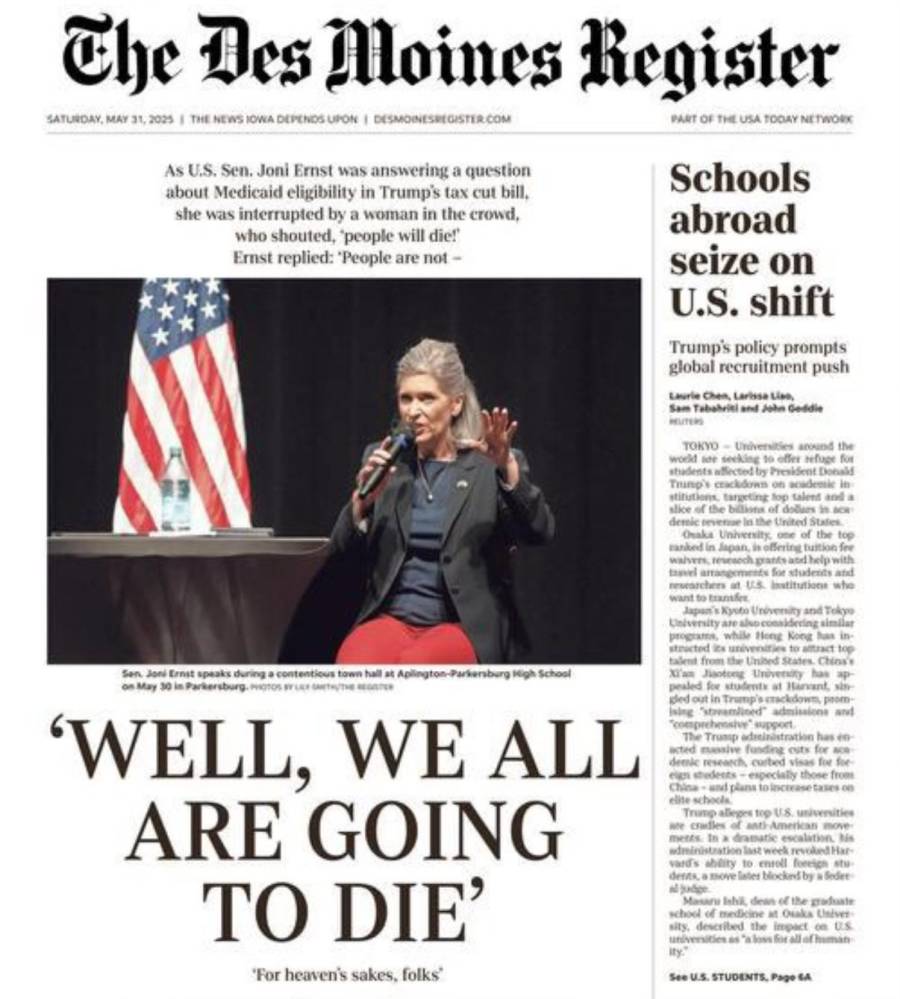
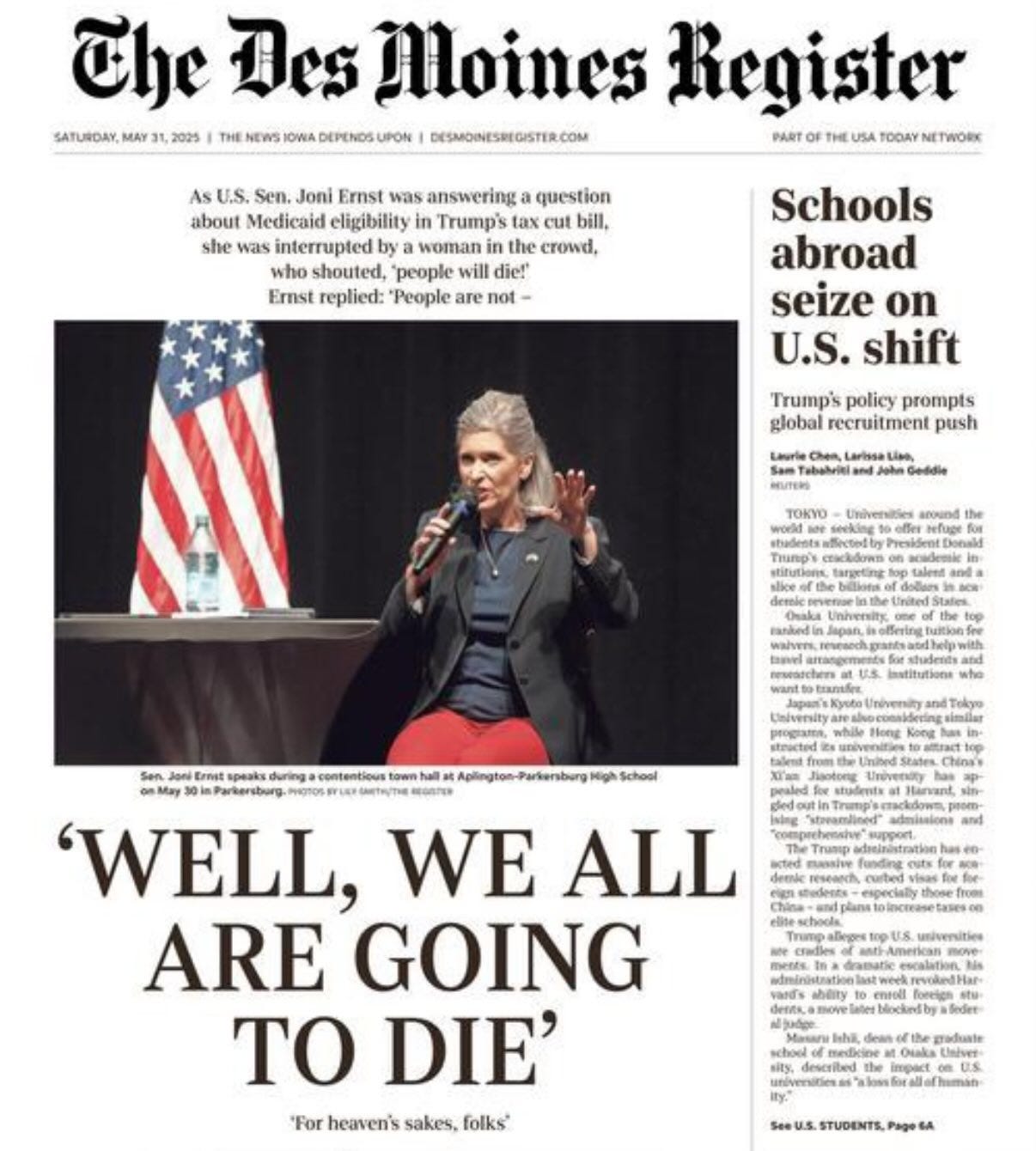
For millions of Americans who are one step closer today to losing their health insurance because of a big, brutal, not beautiful, bill in congress.
For immigrants snatched from their homes, their gardens, their schools and workplaces without cause and due process and cruelly imprisoned separated from their families.
Jesus is exasperated, because there’s not a moment to lose—
For all children who suffer from neglect and abuse;
For girls who are raped and then denied healthcare;
For boys who are taught that it is okay to objectify girls;
For the person with a disability who feels like the whole world, even God, is against them.
Jesus is stressed, because there’s not a moment to lose –
For the one dying of loneliness in a nursing home;
For those who have to make the choice every week to either buy their medication or to buy groceries;
For those unjustly locked away in our prisons because of their economic status or skin color;
Jesus is grumpy, because there’s not a moment to lose –
To respond to climate change that threatens God’s good earth;
To end the destructive pollution of the planet with plastics and carbon.
And Jesus has his palm planted on his face today, because many of his disciples still don’t have a clue. Some still want God to rain down fire and brimstone on those who believe and live differently. And many would-be-followers still have no sense of urgency to be public witnesses of love, peace, mercy and justice.
And the clock is ticking. The Kingdom is at hand. The time is now. We don’t have the luxury of comfort. We don’t have the privilege of delay. We can’t afford to wait until the children are grown, until the house is paid off, until we’ve buried all our grief or kissed everyone goodbye. For there’s not a moment to lose.
This world is on fire, not with holy fire, but with the flames of greed, racism, heteroism, white Christian nationalism, militarism, and climate catastrophe. And while some are lighting matches, too many are just watching it all burn. Too many are saying: “Let me finish what I was doing first” or “let me look after my own first,” while the Samaritan is bleeding in the ditch, while the trans teenager is hanging on by a thread, while hungry people with brown skin are afraid to go to the grocery store for fear of being deported to a country where they’ve never been and have no connection.
Jesus has set his face toward Jerusalem, and he is calling us to set ours—not toward comfort or safety, not toward respectability or popularity, but toward the place where justice is born.
We are not called to admire Jesus from a safe distance in some comfortable sanctuary. We are not called to study him or sing praise songs to him. We are called to walk with him, to move with him, to carry his gospel like it’s a matter of life and death. Because it is.
So, let the church rise up, not with stones in hand, but with bread and wine, with towels and basins, and bullhorns and ballots. Let’s sound the alarm, flood the phones, take to the streets, and send so many emails to our representatives we crash the servers.
Let the church understand that there’s not a moment to lose to tell the truth—
Not a moment to lose to dismantle hate.
Not a moment to lose to march with the poor.
Not a moment to lose to shout that Black and Brown Lives Matter.
Not a moment to lose to say queer and trans people are sacred.
Not a moment to lose to break the chains of every modern-day Pharaoh.
In our text Jesus may be tired. Jesus may be exasperated. Jesus may even be grumpy. But Jesus isn’t giving up, and neither can we.
So, let’s stop looking back.
Let’s stop making excuses.
Let’s put our hand to the plow and move forward…
with power, with grace, with courage, with compassion, with mercy and with the fierce, unrelenting urgency of love!
Because the Kingdom is not coming later.
The Kingdom is coming now.
And there’s not a moment to lose!
Amen.
 Just Love