The God of the Living

Luke 20:27-38

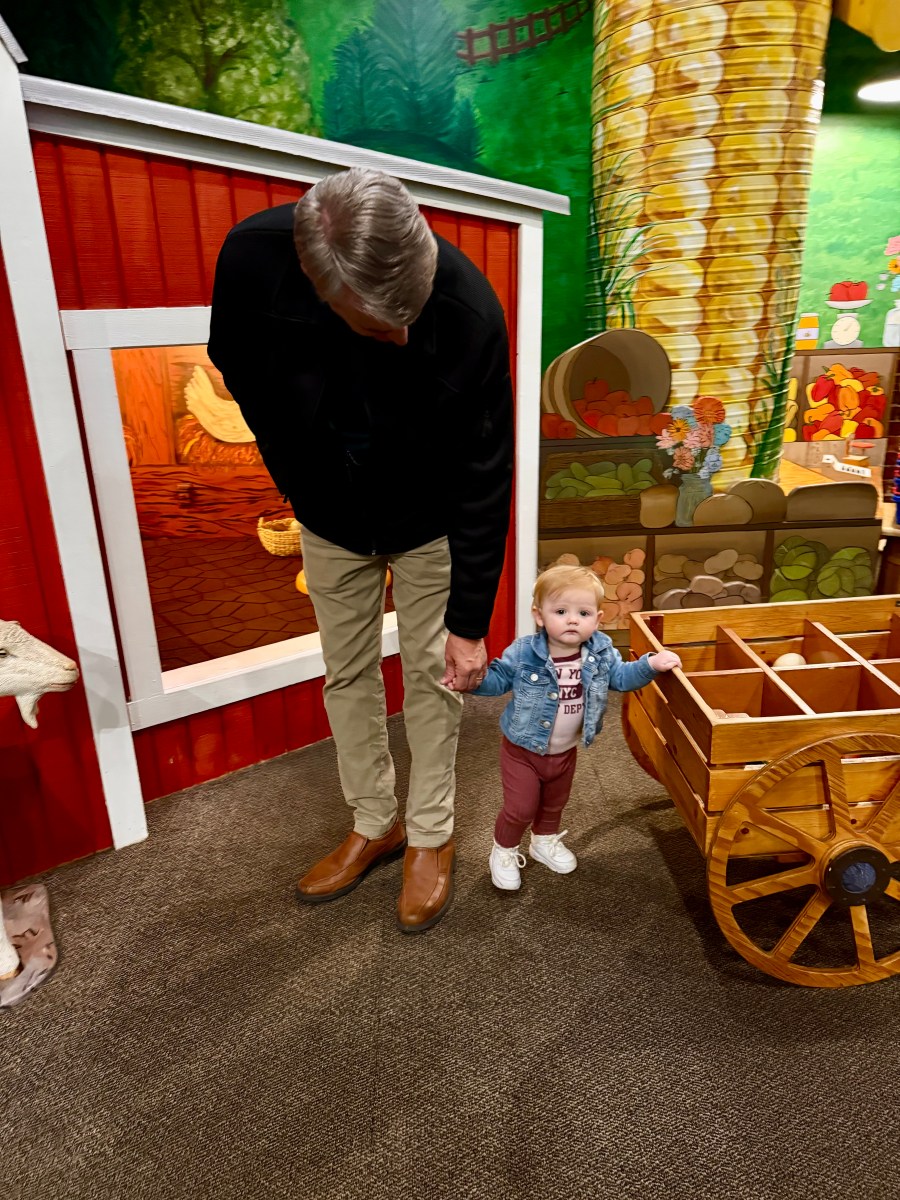
This morning, we gather in a sacred circle of love with parents and grandparents, their family and friends, and the wider church family to dedicate ourselves to God and to one another. We will make promises this morning to support a family as they raise their daughter in love, envelop her with mercy, teach her the stories of our faith, and to resist the powers and authorities that would deny her life.

We declare today what Jesus declared in the Gospel of Luke: that our God is not the God of the dead, but the God of the living.

That means we have a living, active, public faith. It’s not a private, personal faith without works that the book of James pronounced dead. It’s a living, working, breathing, forward-marching, justice-seeking, hope-singing faith. It’s a faith that lifts up little babies and baptizes big dreams. And it’s a faith that always refuses to let despair have the final word.

The story in Luke 20 begins with a question, but it’s not an honest question. The Sadducees, a group of religious elites who didn’t believe in the resurrection, have come to Jesus with a trick question with the purpose of trapping him in theological quicksand.

They spin this wild scenario about a woman who marries seven brothers, one after another, each dying without having children. Then they ask, “In the resurrection, whose wife will she be?”

Their question sounds absurd because it is absurd. For they’re not trying to understand the ways of God. They’re only trying to protect their ways, to defend their black and white, tidy little world where their control goes unchallenged, where the poor stay in their place, and where God doesn’t mess with the systems they’ve built to protect their power and privilege.

But Jesus, as he so often does, flips the table. He says, “You’re asking the wrong question. Resurrection isn’t about hierarchy or control. It’s about life, free, full, meaningful, unending, abundant life.”

It is then Jesus shakes their world with these powerful words: “God is not the God of the dead, but of the living; for to God all of them are alive.”

The God of the living is the one who refuses to be confined to any religious box or to be controlled by any political party.

The God of the living is the one who is forever calling life out of tombs and hope out of heartbreak.

The God of the living is the one who breathes over the chaos, creating a new world, and calling it good.

The God of the living is the one who takes what the empire crucifies and declares, “Love will win!”

This is the God who is still speaking, still creating, still re-creating, still resurrecting us from all the small deaths we endure today, like the death of empathy, the death of mercy, the death of social justice, the death of diversity, equity, and inclusion.

When we dedicate Maggie this morning, we are declaring our allegiance to this God, the God of the living, who says to all matter of death: “Rise up and live!”

When we dedicate Maggie, we are saying that we will raise her not in fear but in faith, not in greed but in generosity, not in apathy but in active love.

In a world that often chooses death (death by selfishness, death by bigotry, death by poverty, death by racism, death by environmental destruction, death by indifference), we are promising that we will stand with the God of resurrection who always chooses life.

Hannah and Austin, in dedicating Maggie today, hear this blessing from the church: As a parent, you are participating in resurrection. Every sleepless night, every patient conversation with your child, every prayer whispered over her fevered forehead— it’s all resurrection work.

Raising a child is resurrection work because it is an act of resistance. It is believing in the future when the world tells you to give up. It is saying, “As bad as things seem today, I still believe in tomorrow.”

You are forming in Maggie a living faith, one that will not just memorize Bible verses, but will embody them. One that will not just believe in Jesus, accept Jesus, but will follow Jesus, bearing witness to a faith that will learn to feed the hungry, to welcome the stranger, to defend the marginalized, and to speak truth in love.

When you hold Maggie and whisper prayers, when you read her stories of courage, when you teach her to say “please” and “thank you” and “I’m sorry,” and “I love you,” you are introducing them to the God of the living, the One who delights in her laughter, in her curiosity, and in her wide-eyed wonder.

You are shaping a world in which Maggie can live fully, freely, and faithfully.

And First Christian, this dedication isn’t just a family’s promise. It’s our promise too.

We are the village that surrounds all the children in our congregation with love. We are the people who will teach them how to sing, how to serve, and how to stand up for what’s right.

When we dedicate Maggie this morning, we are committing to build a world where all children can breathe clean air and drink clean water, where food is available and healthy, where their schools are safe and fully-funded, and where their neighbors are kind.

We’re committing to the slow, holy work of resurrection, to dismantling systems of death so that every child can live abundantly.

We are committing to be the church that loves all God’s children, no matter their color, gender, ability, sexuality, or identity, because to God, all of them deserve life, abundant and free.

The Sadducees were trapped in a world too small for the God Jesus proclaimed.

They couldn’t imagine life beyond the limits of their power, so they made up and absurd scenario to debate and stop Jesus because they feared that the God he was revealing was much more than they could control and much bigger than any binary box they’ve tried to put God into.

But Jesus taught them that the resurrection isn’t some theory to be debated. Resurrection is a truth to be lived.

Jesus taught that every act of love is resurrection.

Every cry for justice is resurrection.

Every march on behalf democracy and every silent vigil on behalf of peace is resurrection.

Every child lifted up in dedication is resurrection.

When we bless Maggie today, we’re making resurrection visible to the world.

We’re saying to the powers of death, “You will not win here.”

We’re saying to the forces of despair, “You will not have the last word.”

We’re saying to the powers of fear, “You can stop speaking now.”

And we’re saying to the God of the living, to the God of resurrection, that we will live like resurrection people.

To raise children who believe that love is stronger than hate.
To build communities that value life more than profit.
To be the kind of people who feed the hungry, comfort the grieving, stand with the oppressed, care for the planet, and keep singing hope, even in the dark.

Because to believe in the God of the living means more than believing in life after death. It means believing in life before death. It means believing that the kingdom of God can be glimpsed in the way we treat one another. It means that every child we nurture, every parent we support, every injustice we confront, every prayer we pray, every neighbor we love—it’s all resurrection work.

So, when Jesus says, “God is not the God of the dead, but of the living,” he’s just talking about heaven. He’s talking about this very moment— about the breath in your lungs, the heartbeat in your chest, the promise in Maggie’s eyes.

He’s talking about the way God’s Holy Spirit moves in this congregation and in this community. He’s talking about the way God keeps showing up, calling us to live, to love, to care, to feed, to lift one another higher, to believe in a better tomorrow.

As we dedicate Maggie today, we are bearing witness to the world that our God is the God of the living. And we, by grace and commitment, are a people of the living. And we will go from this place to build a world worthy of her life and the lives of all God’s children.

We will be bold enough to proclaim resurrection in a culture obsessed with violence, in a society dying with greed and hate, in a nation that withholds food from the hungry. We will love so fiercely that future generations will say of us: “Those were the people who truly chose life!” “Those were the ones who stood in the shadows of death and made resurrection visible!”

Because the God of the living is still breathing life into this world.
And that means our work and our hope is not finished yet.

Amen.


Pastoral Prayer

God of the living,
You are the breath in our lungs and the light in our eyes,
the pulse that moves through creation and the promise that will not let us go.
You are the beginning and the end,
and still You meet us right here, in the middle,
in this church, in this moment, in the ordinary holiness of our lives.

We give You thanks today for the gift of life:
for children who remind us how wonder works;
for parents who pour out love without counting the cost;
for seniors whose wisdom steadies our steps.
We thank You for laughter that catches us by surprise,
for tears that speak what words cannot,
and for the holy mystery that keeps drawing us back to You.

God, we confess that we do not always live as people of the living.
We get trapped in fear,
in cynicism,
in systems that trade life for profit and power.
Forgive us, O God.
Breathe new life into this congregation.
Teach us again to see Your image in every child,
Your presence in every neighbor,
Your Spirit in every act of justice and mercy.

We pray for those among us who are struggling:
for the sick and the sorrowing;
for those weighed down by anxiety or grief;
for those who have lost work, or hope, or direction.
Be near to them, God of the living.
Surround them with grace that will not let them go.

We pray for our world:
for peace in places of war;
for food in places of hunger;
for safety where children fear;
for compassion where cruelty has taken root.
Remind us that Your kingdom is not an idea for tomorrow,
but a movement for today
that resurrection is not just a promise after death,
but a power that transforms life right now.

And as we prepare to hear Your Word and dedicate these children,
open our hearts to Your living presence among us.
Make us brave enough to live as resurrection people
to raise our children in love,
to build communities of justice,
and to trust that Your Spirit is still breathing life into this world.

We pray all this in the name of Jesus,
the Christ of the living,
the friend of the broken,
the hope of every generation. Amen.


Child Dedication Liturgy

Today we celebrate the gift of life and the goodness of God who entrusts children to our care.

As a community of faith, we stand with these parents who bring their child, Margaret Evaline Grooms, before God, seeking grace, wisdom, and strength for the journey ahead.

We dedicate not only this child, but also ourselves, to be a people who nurture, teach, protect, and love.

For we follow the One who said, “Let the little children come to me, for it is to such as these that the kingdom of God belongs.

Charge to the Parents
Hannah and Austin, you have been given a sacred trust: to care for this child; to love them with patience and joy; to teach them the stories of faith; to model the way of Jesus in your home and in your life.

Do you promise to raise your child in the love of God, to encourage curiosity and compassion, to seek justice, to practice kindness, and to walk humbly with your child in faith?

Parents: We do, with God’s help.

Do you promise to teach your child that they are wonderfully made, beloved of God, and that nothing in life or in death can ever separate them from that love?

Parents: We do, with God’s help.

Charge to the Congregation

Church, this child does not belong to these parents alone— she belongs to all of us.

We are called to surround this family with a community of care: to teach, to listen, to celebrate, and to stand with them in every season.

Do you, as the gathered body of Christ, promise to support these parents in their sacred calling, and to help this child grow in love, faith, and justice?

Congregation: We do, with God’s help.

Do you promise to create a world where every child is safe, fed, valued, affirmed, and free to become all God intends? If so, please stand.

Join me in welcoming this child as we read together.

We welcome this child into our church family.
We promise to love them, to pray for them,
to teach them by our words and example,
and to walk with them as they grow in faith, hope, and love.
May our life together reflect the grace and joy of Christ.

Prayer of Dedication

God of the living,
we give You thanks for the gift of Maggie,
for the laughter, wonder, and light she brings into the world.
Breathe Your Spirit upon her, that she may grow strong in body and kind in heart.
Grant these parents wisdom, courage, and joy in their calling.
Surround them with love that will not let them go,
and a community that will not let them fall.

May this child come to know the depth of Your grace,
to trust Your goodness,
and to live in the fullness of Your love.

We dedicate Maggie and ourselves to Your care and keeping,
in the name of the God of the living:
Creator, Christ, and Holy Spirit. Amen.


Invitation to Communion
At this table, we meet the God of the living,
the One who welcomes children and sinners, saints and seekers.

Here, life conquers death.
Here, grace outshines guilt.
Here, love gets the last word.

So, come with your doubts and your dreams,
your gratitude and your grief.
Come, for this table is set for all of God’s children.
There is room enough for all here.

Invitation to Generosity
God is the giver of every good gift:

life and breath; laughter and love;
children to nurture and a community to sustain us.

As we dedicate our Maggie this morning, we also dedicate ourselves.
We give that others may live,
that every child may know the security of love,
that hope might have hands and faith might have feet.

Let us bring our gifts with joy,
trusting the God of the living to use them
for the healing of the world.

Commissioning and Benediction
Go now as people of the living God,
as people who believe that love is stronger than fear,
that hope is greater than despair,
and that new life is already breaking forth among us.

May the Spirit of the living Christ go with you,
to guide your steps,
to guard your hearts,
and to bless all the children in your care.

Go in peace,
to love and to live as resurrection people.

Amen.

A Vision of Heaven

Revelation 21:1-6a

Well, as someone who loves you and is concerned for your well-being, I need to ask you, “How are you doing?”

“Well, preacher, how do you think we are doing!”

“We are living in some very uncertain days. These are some very dark times. We are living in the shadow of grief and despair. Our entire future is in doubt. We are anxious, as there is so much to fear. People have rejected the gospel, the good news towards the poor, the immigrant, all who live on the margins.

And there’s this narcissistic, authoritarian tyrant in our land. And people we know and love, are bowing down to him. They are not just defending him, but they seem to worship him. He spews hate, and the people cheer! He threatens anyone who is against him, and the people love it!”

Of course, I am talking about Caesar Domitian, that ruthless ruler of the Roman Empire who persecuted Christians in the first century. And I’m imagining a conversation between the Christians who lived during that time in Ephesus, and a concerned preacher named John, the author of the beautiful letter of hope that we call Revelation.

Imprisoned on the island of Patmos for offending the powers-that-be by preaching the inclusive good news of the gospel, John writes a powerful letter of encouragement in which he describes the divine culmination of all that is, a heavenly vision to hold out for and to work towards—a beautiful vision of a new heaven and a new earth and a holy city; where, in the end, all who thirst for peace and justice and love will drink from the spring of the water of life.

Now, to be honest (in a way that may be offensive to some), the promise of going to heaven one day to live forever and ever and ever and ever has not always been appealing to me. I have never desired to live in a mansion or walk on streets of gold. Because I seek to follow Jesus who intentionally identified with the poor, such opulence turns my stomach.

Floating on a cloud playing a harp for all of eternity has never sounded like good times to me. Furthermore, I have always been leery of Christians who seem to make going to heaven one day the whole point of what it means to be a Christian. That sounds rather selfish to me. And when I consider the selflessness of Jesus, the words and works of Jesus, I believe that type of theology misses the whole point of what Christianity is all about.

Consequently, I believe the vision of heaven in Revelation (while it might be our eternal home) it’s not so much our future home, as it is our present purpose. It’s not so much our final destination, as it is our daily goal. It’s not so much where we are going when we die, as it is what we are called to create while we are alive. It’s God’s vision of what the world should be, could be, and will be. It’s the vision of the kingdom of God that we seek to prophetically proclaim. It’s the vision of life that we are praying for and working toward until it fully and finally comes on earth as it is in heaven.

It is the vision we are called to live into no matter the outcome of Tuesday’s election, as we know that the status quo is not the divine destiny. The current darkness of hate and division, even if it grows darker, is not the holy purpose that God is calling every human to and leading the entire creation toward.

What does heaven, this holy purpose look like?

We are called to live into a vision of a world where no one is thirsting for their lives to matter, where no one is treated as second-class or is ever called “garbage.” In the twenty-second chapter, in rich, symbolic language we read that the water of life which quenches all thirst is a mighty river flowing, bright as crystal, from the very throne of God, accessible to all in the middle of the holy city’s main street!

What does heaven look like?

On both sides of the river, again, accessible to all, we read there is a tree of life, bearing twelve kinds of fruit, and the leaves on the trees have the power to heal the nations, bringing an end to all war and violence, greed and oppression, sickness and disease.

What does heaven look like?

We continue reading that nothing accursed will be there. There will be no more hate; no more bigotry; no more ugliness; no more name-calling; no more racism and sexism; nothing that is vile, foul, or evil.

What does heaven look like?

Here’s my favorite part: Heaven looks like the servants of Christ, all the saints of God, gathered around the throne worshipping together. The good news is that we don’t have to only imagine heaven or just read about heaven. The good news is that we have seen heaven. We have experienced heaven.

For what does heaven look like?

Heaven looks like Coretha Loughridge. Heaven looks like a saint who faithfully and courageously lived into the vision of heaven as she answered a call to ministry during a time when most believed that God only calls men to such a vocation. Undeterred by the prevailing sexism of the culture and attacks from misogynistic bullies in the church, Coretha not only faithfully served as a pastor and as a regional minister, she taught, modeled, and exemplified the radical inclusivity that we see worshipping around the throne in Revelation, encouraging countless other women to follow in her steps.

And the good news is this saint of God, is still encouraging and still inspiring the church to stand up today for the rights of women in a patriarchal religious culture where men seek to subjugate women, objectify women, control women, tell women what they need, whether they like it or not.

What does heaven look like?

Heaven looks like Dorothy Watkins. Heaven looks like this saint who lived into the vision of heaven by teaching us that when grief casts a dark shadow in our world, when the dark clouds of despair appear our world, when it seems impossible see any path forward, we can carry on knowing that the darkness will not overcome us.

Dorothy became well-acquainted grief at a very young age when she experienced the untimely death of her father who died when he was only 34 years-old and was subsequently sent to live in an orphanage. Then as an adult, Dorothy lost her husband, like her father, before he turned 40. She later lost her stepson Daniel, and then lost her granddaughter Christy in a tragic car accident.

The miracle was that though the darkness overshawdowed her, it did not defeat her. With faith Dorothy persevered, as evidenced through her selfless service with Fairview Christian, Euclid Christian and First Christian Church, and through her dedicated work as an accountant with Herb Moore and the Lynchburg Covenant Fellowship. Dorothy’s light shined in the darkness teaching us that no matter how dark the world seems, faith will not be dimmed. Hope will not fade. And love will never die.

What does heaven look like?

Heaven looks like Linda Cox. After teaching for Lynchburg Public Schools, Linda and Bryan moved to Northern Virginia in 1974 for Bryan’s new job. At the time, public schools were not hiring, so she interviewed for a teaching position at the Catholic School where she was asked how she felt about teaching black kids. Linda’s response was beautiful, saying: “kids are kids.”

“Kids are kids” –a simple, but at the same time, a profound vision that is perhaps most needed in a world where there are powers that seek to divide us and keep us afraid of one another. A beautiful, holy vision needed today where the children of God are dehumanized, referred to as “vermin,” “an infestation,” “dogs,” “aliens,” “low-IQ,” “low-life,” “bimbo, “human scum,” or “theys” who are “poisoning the blood of our country.”

I love how Revelation describes the divine human destiny. In Revelation 7, we read where every person is present—all nations, all tribes, all races, and all languages. Puerto Ricans are there. Haitians are there. Mexicans are there. Venezuelans are there. Palestinians are there. All ethnicities, all languages, all people are there, and all means all.

What does heaven look like?

Our holy purpose looks like diversity, equity, and inclusion. Our divine destiny that we are praying for, working toward, and fighting to create, is a world where “kids are kids” and there not distinction between male and female, Jew and Gentile, slave and free, as all are one. Our present purpose is what Jesus taught, modeled, and embodied, and it is what the saints of God we remember this day lived.

And now, as someone who loves you and is concerned for your well-being, (it’s me now, not John) I need to ask you, “How are you doing?”

“Well, preacher, with a holy vision of a new heaven and new earth, how do you think we are doing!

We are living in some uncertain days. These are some very dark times, but our future is not in doubt, thus we have nothing to fear. For our hope has been revealed. We’ve seen our destiny. We have been shown our purpose. We have heard our calling; thus, echoing the words of Bishop Steven Charleston, a Native American elder and citizen of the Choctaw Nation, whose people have endured days much darker than we have:

When they hate, we will love!

When they curse, we will bless!

When they hurt, we will heal!

Because we are servants of the light!

And we are not afraid of the darkness.

We will carry on with our work as stewards of the Earth and all her children.

When they divide, we will unite!

When they rage, we will calm!

When they deny, we will affirm!

We will simply be who we are, for that is what the Spirit has created [and destined] us to be.”

Amen.


Commissioning and Benediction

Envisioning the divine destiny of this world, having received a revelation that the saints of God have shared and share this day, may our faith, hope and love be a beacon for others who feel as though darkness has engulfed them.

Let’s go and be who we are, the people the God has created, Christ has called, and the Spirit has destined and is leading us to be. Amen.

A Glimpse of Heaven: Remembering Janice Rickman

Janice Rickmans Tie Dye Moment
May 24, 1946 – Dec. 8, 2018

One of my favorite authors and preachers, Frederick Buechner, has wondered what Heaven is like. With me, he believes we can get a foretaste of heaven right here on earth.  Buechner writes: “To speak of ‘heavenly’ music or a ‘heavenly’ day isn’t always to gush but sometimes to catch a glimpse of something.”

Upon experiencing something that is soooo good, perhaps we have all said, “Ahhhh! This is heaven!”  A bite of chocolate cake. A warm cookie with cold milk.  A lover’s touch.  A faithful friend.  A child’s hug.  A walk on a beach or in the snow. Resting one’s head on your mother’s shoulders. Undeserved forgiveness.  Unconditional love.  Unwavering devotion. Unexplained strength.

I heard a another preacher describe it this way: Heaven is sort of like this perfect room on the second floor of the house. It is a room upstairs where we are not yet permitted to enter from our position in a room here on the first floor.

However, there is this small, tiny hole in the ceiling of our room. And if we position ourselves just so under that hole.  At just the right angle.  At just the right moment.  If the light is just so. The shadows fade and we can see a little of that room. We can catch a glimpse of Heaven.

Greta will tell you that one thing that she will never forget is her mother recalling the moments after Greta was born, and specifically that moment Janice held her for the first time. As soon as the doctor handed Greta to her, as she held Greta in her arms, pressed her lips to kiss Greta’s forehead, and said Greta was “as warm as toast.”

Greta, you will always remember that, because your mother was describing a moment for her that was nothing less than heavenly. As she held you in her arms, as she loved you as she loved Bradley and Sarah, with a love that was out of this world, that hole in the ceiling got a lot larger for your mother. The light got just right, the shadows faded and heaven came down.

The Bible paints many portraits of the widening of this hole in the ceiling.

The prophet Isaiah prays for such widening:

Shower, O heavens, from above,

and let the skies rain down righteousness;

let the earth open, that salvation may spring up,

and let it cause righteousness to sprout up also;

I the Lord have created it. (Isa 45).

Ezekiel writes about the glimpses of heaven he experienced:

In the thirtieth year, in the fourth month, on the fifth day of the month, as I was among the exiles by the river Chebar, the heavens were opened, and I saw visions of God. (Ezekiel 1).

Malachi talks about opening a window to heaven,

…see if I will not open the windows of heaven for you and pour down for you an overflowing blessing (Malachi 3).

John talks about opening a door to heaven:

After this I looked, and there in heaven a door stood open! And the first voice, which I had heard speaking to me like a trumpet, said, ‘Come up here, and I will show you what must take place after this’ (Revelation 4).

And then we have those beautiful recollections of Jesus’ baptism as the Gospel Writers describe the heavens opening up. Mark literally says the heavens were “ripped apart” as the Spirit of God descended like a dove.

Greta and Sarah, I do not believe either one of you will ever forget the many ways that your mother helped to open up the heavens for you, to make that tiny hole in the ceiling a little wider, to move you to just the right position, to be in just the right light, at just the right angle, for the many times she caused heaven to only open but to actually come down so close to earth that you could feel it, hear it, smell it, and touch it.

When we study the Bible, from the enslavement of the Israelites in Egypt, through the occupation of Israel by Babylon, to the oppression of Christians by the Roman Empire—from the tribulations of Job, the persecution of Daniel, through the arrest and crucifixion of Jesus, to the trials and hardships of the Apostles Paul and John, the one theme that is constant is the divine strength, the holy resoluteness, the sacred presence of God in difficult times.

Greta and Sarah, you and Bradley, all of her grandchildren have witnessed this miraculous strength in ways that you are still trying to, but may never comprehend. Whatever storm came her way, divorce, death and disease, her love for you never failed, in fact, it never even wavered. Her love for you was indeed out of this world. No matter her circumstance she was always there with you, never away from you, always for you, never against you.

She possessed this supernatural strength, this holy fire, this divine determination to always be there to give any of you what you needed. Janice became a single-parent when Bradley was 11, Sarah was 9 and Greta was 2, and although she experienced the grief and sorrow of divorce, she never let you kids see it. She remained dedicated to her job as a legal Clerk and later with ABF to make sure that your needs were always met. If she ever went into her room, closed the door and cried, you never knew it. Her love was selfless. Her love was sacrificial. It was self-expending. It was heavenly. And there is no wonder that you look back on your childhood today, at her love and care and strength, and ponder, “How in the world did she do that?” In her strength, you were catching a glimpse of heaven.

During this Advent season, we celebrate another moment when the heavens were opened, when a choir of angels filled the skies to announce the birth of a baby.

John describes the announcement this way,

See what love the Father has given to us, that we should be called children of God; and that is what we are (1 John 3:1).

Through the gift of a baby born in Bethlehem, we are all born into the family of God. Through this baby named Jesus, we have been made family.

For 20 years, Janice worked as a legal clerk here in Fort Smith. When she left that position to work for ABF, she grieved. Why? Because her co-workers there in the legal office had become family to her. The same thing happened while she was at ABF.

Janice was not a member of the church or the denomination with which I serve as pastor. She was a proud member of the Church of Christ.

When she first moved to Methodist Village, one of her big concerns was that they were going to make her a Methodist. To illustrate this, the first weekend she moved into Methodist Village this past April, they had a tornado warning. The protocol for a tornado warning is to place identification tags on a lanyard around the necks of all the residents. When they placed a name tag around Janice’s neck, she wasn’t so much concerned about the possible tornadoes as she was about her name being printed under the word “Methodist.” She took one look at her badge and said, “I knew it. They have made me Methodist!”

So when I would visit her at Methodist Village and others would ask her if I was her pastor, she would immediately respond: “Oh no. He is my daughter’s pastor.”

This makes it all the more special some of the last words she spoke to me. She looked up at me said, “I love you.” Janice loved me, not as her pastor, but as family.

With those three simple words, “I love you”, she moved me. She moved to just the right spot, to that spot where the light was just right, to that spot where the shadows faded, and just for a moment, I could see through that hole in the ceiling, and I caught a glimpse of heaven.

This is the power of love. Love has the power to make strangers family. Although we have different faiths and different beliefs, love has the power to unite us all as sisters and brothers.  And when we love one another like family, when we treat one another as sisters and brothers, the heavens are ripped apart!

Since I have been a pastor here in Fort Smith, I have been impressed with the quality of care and love I have witnessed through the good people who work and serve at Methodist Village. They truly love and care for the residents as family. So each time I go out there, every time I visit, I catch a glimpse of heaven.

As I’ve mentioned, when Janice first became a resident of Methodist Village, it took her a little while to accept it. At first, it was a strange place, a place where she did not belong. After all, as she would tell me, there were “old people” living there. She assumed that her stay there would only be temporary. She would get a little rehab and then go home.

So, who could blame her for not immediately embracing nursing home residency and all of the activities and programs they offered. When she first arrived, if you wanted to visit Janice, you knew that you could always find Janice in her room. She wouldn’t be in dining hall with the other residents tossing a bean bag or playing bingo.

One day, when Sarah came to visit, like always she went straight to her room, but Janice was not there. She walked down to the nurses’ station where they would sometimes seat her, but Janice was not there. She searched the entire facility until she finally asked someone for assistance.

They said, “Well, today is Tie Dye Day! Perhaps she is with the other residents making a Tie Dye!”

Sarah immediately responded, “Oh, I don’t think so.” But they went down to the dining room anyway where everyone was tie dyeing, and there she was.

She was sitting there wearing this tie dye wrap, or scarf, or hat that she had made on her head. And she was holding this clapper in one hand, this hand that made a clapping noise when you moved it back and forth.

She looked up at Sarah. And waving the clapper in one hand and holding up a peace sign with the other, giggled and said, “I am having a tie-dye moment! And I am ready to party.”

Sarah responded the way that most of us respond these days when we catch a glimpse of something like this, something beautiful, something fun, something that warms our heart and makes us smile, something that is soooo good that we can only describe it as heavenly.  She pulled out her phone and took a picture and sent it to Greta.

And the good news is that this picture of Janice having a tie-dye moment, is a picture of Janice today. Through the tiny hole in the ceiling, we can see her today, sitting in the banquet hall of heaven, surrounded by family including her son Bradley, enveloped by eternal love, encircled by amazing grace, giggling, clapping, partying.

And because of that, we who grieve today know we are going to be ok. Greta and Sarah are going to be fine. Her grandchildren are going to be fine. Not only because your mother and grandmother has given you some of her strength and love (after all, you said you only needed a piece of it to be ok), but because you will be able to always see her, she will always be with you, each time something moves you to just the right spot, at just the right angle, when the light is just right, and the shadows fade, and this warmth comes over you, as warm as toast.


What Heaven Looks Like

barefootThe following sermon is for an All Saints’ Day Service remembering the seven members of the First Christian Church of Farmville NC who died during the past year.

Revelation 22:1-7 NRSV

To be honest, the promise of going to heaven one day to live forever has not always appealed to me. Floating on a cloud playing a harp for all of eternity does not sound like good times. Furthermore, I have always been leery of Christians who seem to make going to heaven one day the whole point of what it means to be a Christian. It sounds rather selfish to me. And when I consider the selflessness of Jesus, the mission of Jesus, I believe that type of theology actually misses the whole point of what Christianity is all about.

I have also never desired to live in a mansion or walk on streets of gold. Again, because of what I know about Jesus’ identification with the poor, such opulence turns my stomach as a follower of Jesus.

However, there is one description of heaven in the Bible that I do find rather interesting, even attractive.

The most vivid, and perhaps the best description of heaven may be found in the last chapter of our Bible.

What does heaven look like?

Although the description is certainly symbolic, it is nonetheless beautiful. There is a holy city, and in the middle of the city’s main street, there is a river of the water of life, bright as crystal, flowing from the throne of God and of the Lamb.

What does heaven look like?

On both sides of the river, there is the tree of life, bearing twelve kinds of fruit, and the leaves on the trees have the power to heal the nations.

What does heaven look like?

Nothing accursed will be there. There will be no more hate; no more bigotry; no more ugliness; no more backbiting and powerplays; nothing that is vile, foul or evil.

There is nothing accursed in heaven, because the throne of God, the compete rule of God, and the Lamb, who is Jesus the Christ, will be there.

And here’s my favorite part. There is nothing accursed in heaven, because all of the servants of Christ will be there; together, gathered around the throne worshipping the Lamb face to face,

What does heaven look like?

Heaven looks like John Barefoot.

According to the gospel of Luke, when the angels announced that heaven was coming down to earth, they said: “I am bringing you good news of great joy.”

Almost a year ago, I believe those of us who went Christmas caroling to John Barefoot’s house were privy to a glimpse of what the joy of heaven looks like. For, as we sang around John’s bed where he was confined after suffering yet another debilitating stroke, something miraculous happened. God showed up. Heaven came down. As we watched John donning a Santa hat and wearing this smile that was so amazing that it had to be divine, as we watched him sing along with the children the best that he could, with a joy, this amazing joy, a joy that had to come from heaven, Christmas became real to us. Faith became real. God became real.

What does heaven look like?

Heaven looks alike Alawoise Flanagan.

According to Isaiah, heaven looks like children who are being comforted by their mother: “You shall nurse and be carried on her arm and dandled on her knees. As a mother comforts her child, so I will comfort you,” says the Lord.

Alawoise lived her life providing motherly comfort, not only to her own family, but also to the residents at the nursing home in Farmville where she devoted much of her life. And in the end, it was obvious that this one who comforted so many was herself comforted.”

I don’t believe there is any other way to explain the very last words Alawoise said to me. Just days before she died, after suffering more than anyone one deserves, she opened her eyes, and spoke, not words of complaint or bitterness, but words of a loving mother, or of a child who has been comforted by her heavenly mother. After I asked her how she was doing, she immediately asked me: “And, Jarrett, how is your family.”

What does heaven look like?

Heaven looks like Albert Mosley.

Nearly every time before I left Albert, even in ICU after a stroke that would take his life, he would miraculously say to me those words that Jesus often spoke to his disciples: “Peace be with you.”

And the miracle was not only that Albert could speak those words of peace, but was how it was obvious to all that in spite of every tribulation he encountered, Albert actually possessed this miraculous peace. And he truly wanted to share it with others.

The only way that I can possibly explain how Albert endured his suffering is that the God of Jesus, heaven itself, somehow, some miraculous way, came to Albert and filled him with this peace that surpasses all human understanding.

What does heaven look like?

Heaven looks like Donna Mosley.

As Jesus reminded us in the Sermon on the Mount, God looked upon Donna truly blessed her in ways that few of us here have been blessed. And I believe this is the real reason that no matter her disability, no matter how bad she felt, or how hard it was for her to walk, see, eat or breathe, when you asked her how she was doing, she would always respond: “I’m doing good!”

I believe Donna was a living testimony of Jesus words about heaven when he said: “Blessed are the poor in spirit, for theirs is the kingdom of heaven.”

Whereas we may look at those with whose spirits that are allowed to soar to achieve success as the world defines success as blessed and favored by God, the reality is that God looks with favor and blesses not those who are born with perfect bodies, 20/20 vision, and silver spoons in their mouths, but those whose spirits have many challenges and obstacles. And notice that Jesus uses the present tense. Not they will be blessed. Not might be blessed. They are, right now, right here, on this earth blessed. And their future is the kingdom of heaven.

What does heaven look like?

Heaven looks like Harry Albritton.

Having returned yesterday from Wyoming County, West Virginia, one of the most impoverished counties in our country, the words of Harry Albritton are fresh on my mind. Some of you here remember.

How many people do you know who after listening to a presentation at church about a mission trip opportunity to repair homes in the rural Mountains of West Virginia became so moved, so agitated and concerned that he stood up and spoke out, saying that he didn’t want to just put a Band-Aid on the poverty, but he wanted to actually do something to cure the poverty? He wanted to strategize, energize and mobilize to end the poverty, to repair the breach, to restore the streets, and make it a place where future generations could thrive.

He wanted to set up meetings with the CEO’s of corporations, with state and local government and investors and encourage them to build new factories in the area and offer employment. And if that did not work, he wanted to lobby Congress to provide tax incentives to create ways to re-locate the residents to the jobs.

Someone spoke up responded, “We can’t do that!”

He said, “What do you mean ‘we can’t?’ There’s no such thing as ‘can’t.’ You mean, we ‘won’t.’”

Only Harry.

It was the prophet Isaiah who painted this can-do portrait of God’s heavenly justice by admonishing God’s people: “to rebuild the ancient ruins, to raise up the foundations for future generations, to be called the repairers of the breach, restorers of the streets to live in” Isaiah 58).

What does heaven look like?

Heaven looks like Earl Umphlett.

Jesus tells us that God loves a quiet, generous giver.

‘So whenever you give alms, do not sound a trumpet before you, as the hypocrites do in the synagogues and in the streets, so that they may be praised by others. Truly I tell you, they have received their reward. But when you give alms, do it in secret; and your Father who sees in secret will reward you (Matthew 6:1-3).

Earl would quietly attend our Wednesday night suppers at church with Donna. As soon as they walked through the door, they would be greeted by Kim, our church administrative assistant who takes up money for each plate which costs $6.00.

Kim says that every time before Earl would for pay him and Donna, he would say the same thing. He said: “Look, I will make a deal with you. I don’t have any money on me today. But Donna will wash all of the dishes.” Then, when he’d catch Kim off guard, he would whip out a hundred dollar bill, put it in the basket, and say, “Keep the change.”

The only reason that I know this is that Kim told me this every Thursday morning after this happened. She says: “And he never says what all of the extra money is for! When he first did it, I thought he was pre-paying for him and Donna for an entire year of suppers. But, every week, he keeps doing it.”

This was just the type of Christian Earl was. Unlike some who brag openly about how much they give to the church, Earl gave quietly, unassumingly, inconspicuously. Earl did not have a pretentious, hypocritical bone in his body. Earl modestly served his Lord reticently, yet compassionately and generously.

What does heaven look like?

Heaven looks like Joseph Scott Thorne.

When Jesus found himself in the wilderness, Mark says that angels came down from heaven and waited on him.

Heaven is a place where no one is ever in need, because there are a multitude of angels waiting on us.

Although Scott was disabled, I could stand up here for the rest of the day and talk about the countless mission projects that Scott served on here in Farmville waiting on folks in need. He volunteered through the First Baptist Church, Monk Memorial Methodist Church, Emmanuel Episcopal Church and the Farmville Community Soup Kitchen. Scott spent incalculable hours volunteering his time to serve this community, many times working all through the night, painting, refurbishing, repairing, restoring, and landscaping.

Scott also shared his talents by working on many homes that needed repair throughout eastern North Carolina. Additionally, Scott volunteered at a homeless shelter in Tarboro doing whatever they needed him to do.

Along with local mission projects here in eastern North Carolina, Scott traveled to Gulfport, Mississippi to repair homes with this church after Hurricane Katrina. Scott also traveled to Moldova on a mission trip with the Oakmont Baptist Church of Greenville. Scott’s mission in life, despite his disabilities, was literally doing anything he could to serve someone else.

What does heaven look like?

Heaven looks like a river of life, bright as crystal. Heaven looks like a tree of life with branches of healing. Heaven looks like the rule of Christ, the Kingdom of God. And the good news is that heaven looks like the servants of God, worshiping the Christ.

John Barefoot taught us that heaven looks like amazing joy. Alawoise Flanagan taught us that heaven looks like a mother’s comfort. Albert Mosley taught us that heaven looks like a peace that is beyond our understanding. Donna Mosley taught us that heaven looks like eternal blessedness. Harry Albritton taught us that heaven looks like the prophet’s justice. Earl Umphlett taught us that heaven looks like selfless generosity. And Joseph Scott Thorne taught us that heaven looks like angels waiting on us.

They all taught us that heaven looks like Jesus. Heaven looks like who God is calling us to be as the church. Heaven looks like extravagant grace and unconditional love. Heaven looks like the selflessness of Christ, the mission of Christ.

So, maybe living forever is not so bad after all.

Why the Risen Christ Ate a Piece of Fish

fish1

Luke 24:36-53 NRSV

I often wonder what people mean when they say they are “spiritual.”  I hear people say: “I am not religious, but I am a very ‘spiritual’ person.”  “I don’t attend church, but I am quite ‘spiritual.’”

As a Christian, I sometimes find this odd as not even the risen Christ seemed to be all that spiritual. In fact, as our scripture lesson points out, the gospel writes, especially Luke, seem to go almost out of their way to point out the very physical, not spiritual, nature of the risen Lord.

Luke points out that Jesus asked the disciples to touch him and see that he had flesh and bones; not some spirit or ghost.  Jesus showed his disciples his hands and his feet which were scarred from his crucifixion. And then to still prove that he was there in the flesh and not in some spiritual form, he asked the disciples for something to eat. Then they give him a a piece of broiled fish that he eats in their presence.

The question that I want us to ask together this morning is: What is Luke trying to tell us by giving us this unusual and somewhat strange presentation of Jesus to the disciples? Why does the risen Christ eat broiled fish?

I have heard some preachers say that Luke was giving us a clue of what heaven is going to be like and what we will be like when we, like Jesus, are resurrected.

When I was growing up, my home church had a week of revival every August.  We had services Sunday Night through Friday night and we would always conclude the revival with a fish fry on Saturday.  Six long nights: 30 minutes of singing, one hour of preaching, and then thirty more minutes of altar call. I remember that these annual revival services used to scare me to death. The guest preachers would come into town and preach that heaven or hell was right around the corner and we better get ready. Although I’d never feared going to hell, as a nine, ten, eleven year old, going to heaven was not a place I wanted to visit anytime soon.

I used to hate going to revivals. On top of being frightening, it was hot, had to dress up, wear a tie, for six long nights, two hours a night. The only thing that got me through the week, and I suspect a few others, was the big, delicious fish fry that awaited us on Saturday.

Every year, without exception, preachers would come and scare me with their heaven-or-hell-is-right-around-the-corner sermons.  However, I remember that one preacher preached a particular sermon that made me feel a lot better about going to heaven. It was Friday night, and bless his heart, he was trying to connect the revival service with the fish fry that everyone was looking forward to the next day. He said that one of the most appropriate things we can do at the end of these services is to have a fish fry. He said, “After all, most all of Jesus disciples were fishermen. It also seems like Jesus himself liked to fish. And when we all get to heaven at the resurrection, we are all going to sit down with Jesus and eat fish, because after he was resurrected, Jesus ate some fish with his disciples.”

I wanted to shout, “Amen!”  Because that preacher answered one of those tough theological questions that no one could answer for me, a question that was more important than where did God come from and who was Cain’s wife: “Are we going to be able to eat in heaven?”  For all of us who live to eat instead of eat to live, this was good news. The answer is yes. We are going to be able to eat fish. For someone who loves seafood, it took the fear of dying right away.

I love this idea; however, I believe Luke is trying to tell us something more. I believe the fact that Luke tells us that Jesus offered his physical body for examination and eats fish in the disciples’ presence, tell us something very important about who the risen Christ is and who we are called to be as Christians.

First of all, Luke wants us to know that the risen Christ is in fact the same Jesus who died. The Christ the disciples saw was the same Jesus who suffered and died a horrible, degrading death on a cross. We need to get this for the risen Christ’s identification with the suffering Jesus is critical, not just for sound theology, but for defining the nature of the Christian life and who we are to be as Christians.

If the risen Christ the disciples now follow is not the same as the Jesus who suffered and died, then the Christian life takes on forms of spirituality that are without suffering for others, without a cross, without any concern for the suffering of this world. If the risen Christ is not the Jesus who died, then our eyes would be focused only on heavenly matters and not on the problems of this world.

Even Paul, who makes few references to the historical Jesus, insisted in his letters on joining crucifixion with resurrection. Paul always proclaimed “Christ crucified.”  The risen Lord that we worship has nail scars in his hands and on his feet. Thus, Luke points out that Jesus said, “See my hands and my feet.” The empty tomb is directly tied to the cross. The wonderful message of Easter is forever joined to the suffering of Good Friday.  To follow the risen Christ is to follow the one who bore the cross.

Ok, preacher, I get that, but what does that really mean to us and how should that affect the way we should live as Christians?  Here it goes:

I think it is perfectly fine and healthy to think and dream about going to Heaven one day.  It is fine to have the hope that someday, somehow, some way there’s not going to be anything more to fear or dread. It is wonderful to know a time is coming when there is going to be no more crying, no more pain, and no more death. It is great to sing those great hymns of faith, the ones we sang during our six night revival services, such as “When We All Get To Heaven,”  “In the Sweet Bye and Bye we Shall Meet On that Beautiful Shore,” “When the Roll is Called up Yonder,” and “Shall We Gather at the River,” but if Heaven is the only place our hearts are, if going to Heaven is the only reason we are Christians, then we have missed the whole point of who Jesus Christ is and who we are called to be as Christians.

As Christians, our eyes are to always be focused on the suffering of this world. Our Lord is not only the one who is exalted and glorified, but our Lord is the one who was rejected, suffered and died.

When we look at the frail bodies of the hungry, we are looking at the frail body of Jesus.

When we see the parched lips of the thirsty, we see the parched lips of Jesus.

When we walk by the homeless beggar on the street, we walk by Jesus.

When we meet people who are disabled, physically, mentally, and socially, we meet Jesus.

When we encounter minorities who have been oppressed for their religion, for what country they’re from, for their sexuality, or for the color of their skin, we encounter Jesus.

When we visit the sick in hospitals, the forgotten in prisons, the elderly in nursing homes, the widows and widowers who sit all alone day after day, we visit Jesus.

When we reach out with grace and forgive and love even those who have committed unspeakable sins against us, we reach out to Jesus.

When we make the church a place of grace for all people, especially for those who have been marginalized or demonized by society, culture and bad religion, then we make a place of grace for Jesus. When we do it for the least of these our brothers and our sisters, we do it for Jesus.

And there’s more, much more…

Since we know that the risen Christ we serve is a Christ who knows suffering, who knows what it is like to be a human being, and experience the evils of this world, when we find ourselves overwhelmed by the suffering and pain of this world, we can have faith that Christ is there suffering with us and feeling our pain. And giving us hope and understanding and grace as only a loving God who knows suffering can give.

When we are overwhelmed by grief and loneliness, Christ is there.

When we reach the ends of our ropes and feel that we can not take it anymore, Christ is there.

When we hear words from our doctor’s like:  heart disease, cancer, diabetes, pneumonia, Alzheimer’s, inoperable, and terminal, Christ is there.

When human mistakes seek destroy relationships with the ones we love, Christ is there.

When it seems there is nothing holding together our marriages, Christ is there.

And when we are faced with the knowledge of our own imminent deaths, and feel abandoned, even by God, when we want to cry out with a loud voice, “My God, My God why have you forsaken me?” Christ is there.

This is why Luke places so much emphasis on Jesus’ physical nature. This is the reason the risen Christ ate a piece of broiled fish with his disciples. Although it is a good thought, Luke does not write this to tell us that when we all get to heaven we will all get to stuff our faces with seafood. He is telling us a more important message: a message that the disciples got and gave their physical lives proclaiming.

This is why every disciple, except for John, who experienced the risen Christ were killed for preaching “Christ Crucified.”  John died for his preaching all alone on the island of Patmos in prison after writing the book of Revelation.

May each of us, like the disciples, hear Luke’s message this morning. And may each of us, like the disciples, give our physical lives, our bodies, broken, our life, outpoured, proclaiming with our words and by our deeds, “Christ Crucified.”

Snowflakes from Heaven

snow-covered-road

J.B. Priestley once wrote: “The first fall of snow is not only an event, it is a magical event. You go to bed in one kind of world and wake up in another quite different, and if this is not enchantment then where is it to be found?”

Yesterday, Stantonsburg Road was littered with empty Natural Light cans, leftover trash from Bojangles and McDonalds, and the carcass of a possum or two. This morning it is a majestic, untarnished pathway through a winter wonderland.

Yesterday, my lawn was brown, covered with ugly winter weeds and strewn with fallen tree limbs and dog droppings that I have been too lazy to pick up.  This morning it is glistening white, void of a single blemish.

Yesterday, the flaws and faults of this fragmented world were all too apparent. This morning everything seems to be forgiven, blanketed by grace. And although this world is still a very dangerous place to drive and to even walk; this morning, the hopeful wonder and potential beauty of this world is obvious.

Yesterday, my excited facebook friends posted prayers for snowflakes to fall, believing that they somehow come from heaven. This morning there is no doubt that heaven is exactly where they come from.