Preserving Truth, Exposing Lies

Matthew 5:13-20

As I said last week, many of us were raised hearing a very skewed version of Jesus’ Sermon on the Mount, as we sat in the comfort and shelter of a flag-adorned sanctuary among the beneficiaries of white supremacy. It’s fair to say that some of us heard from an alternative Jesus who blesses the rich and the powerful, instead of the Jesus who blesses the poor and confronts power.

So today, I invite you to clear your minds and open your hearts to hear from the brown-skinned Jewish Palestinian who experienced life as an immigrant on the run, who was, from day one, a target of the state. Listen to the Jesus who identified with the vulnerable, the marginalized, and the criminalized, as he delivers a word from God to people who are exhausted from life under a corrupt, tyrannical government, to people who know what it is like to hear their leaders use scripture to support exclusion, exploitation, and oppression.

And it is to them (not to the powerful; not to those called “patriots” by King Herod and his minions; not to the priests aligned with Rome or to the loudest voices claiming divine authority) that Jesus says: “you are the salt of the earth,” and “you are the light of the world.”

And what may be even more shocking is that Jesus does not say, “you will be salt”—when Herod dies, or “you will be light”—when the pendulum swings.

But to those who are exhausted by a system that favors the rich, to the poor in spirit, the mourners, the powerless, to those who hunger for justice and yearn for peace, Jesus says: “you are,” today, right now, in this very moment, “the salt of the earth” and “the light of the world.”

Salt in the ancient world was not merely something that was sprinkled on food to enhance its flavor. Its main purpose was to preserve food that would otherwise rot. And due to its antibacterial properties, salt was used as a therapeutic agent to treat wounds. Salt was essential for healing—disruptive, uncomfortable, and necessary to stop infection and decay.

That’s why we should pay attention when we hear people say we shouldn’t “open the old wounds of our past,” that talking honestly about our nation’s racist history through works like the 1619 Project is somehow divisive, unnecessary, or unfaithful. Because anyone who has ever had a wound knows this: wounds that are never cleaned don’t heal; they fester. And salt, when applied to an open wound is never comfortable. It stings. It burns. It makes us wince. But it also kills infection. It interrupts decay. It makes healing possible.

If Jesus calls us to be salt, then he is not calling us to comfort the wound, to cover it, or to pretend it never happened. He is calling us to tell the truth about where the injury is, how deep it goes, and what it has cost, because it is only then that healing can begin. Refusing to name injustice is not simply moving on. It is choosing rot over restoration.

That’s why Jesus gives the warning if salt loses its saltiness, if salt stops doing what it was made to do, it becomes useless and gets trampled underfoot. In other words, if you don’t want those in power to tread on you, you must start being who you were created to be!

Like salt, light can also sting and be uncomfortable. Light is dangerous, as it is a threat to darkness, exposing what the darkness covers up. And Jesus says, you don’t light a lamp and then hide it for the sake of safety. You don’t dim it, to keep you out of trouble. But you put it on a stand, and you share it with as many people as you can.

Jesus is talking about being a public witness. He’s talking about possessing a faith that shows up in the world where people are hungry, oppressed, and crushed by unjust systems.

When Jesus talks about light and salt, I can’t help but think about the way people are bearing public witness to the truth today with nothing more than a cell phone in their hands, recording what others hope will go unnoticed, preserving the truth that would have decayed otherwise.

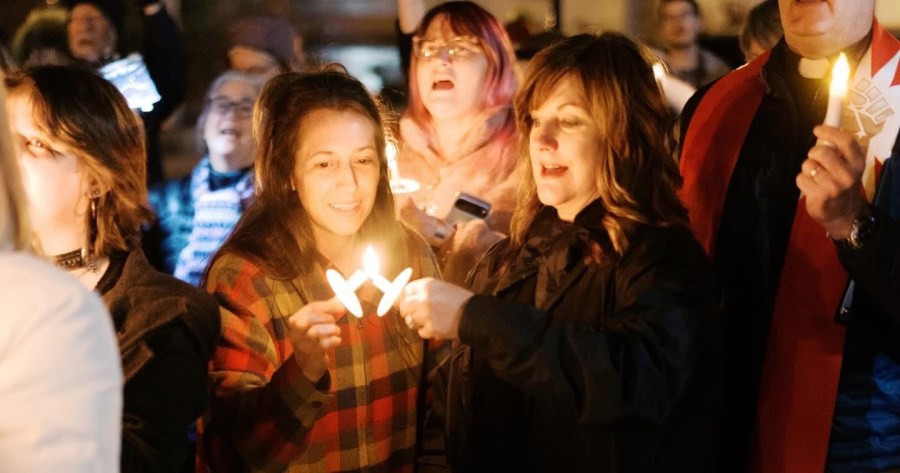
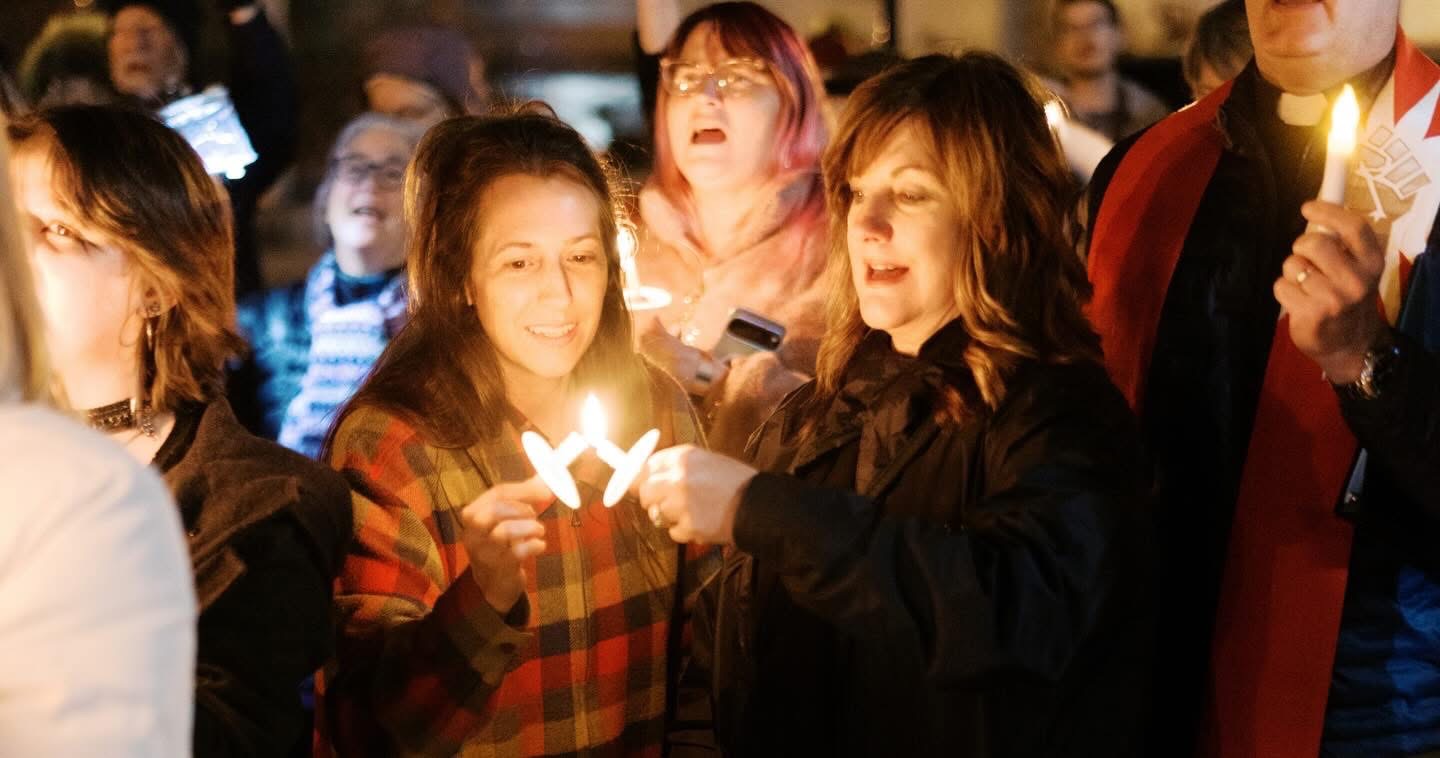
In a world where lies travel fast and violence is quickly denied, these witnesses are letting their light shine, exposing what the darkness wants hidden, preserving the truth before it can be erased. With moral courage they are refusing to let darkness control the story. Every time cell phone cameras come out in Minneapolis, you could almost hear the people singing, “This little light of mine, I’m going to let it shine!”

That simple song that most of us learned as a child might not have been written as a protest anthem, but it was never neutral. It emerged from Black communities of faith where light was already a language of survival. To sing about light in a world shaped by slavery and Jim Crow was already to make a claim: that God’s presence and love could not be extinguished by racism and violence.

During the Civil Rights Movement, that song was carried out of the sanctuary and into the streets. It was sung in marches, in jail cells, in the face of clubs and dogs and fire hoses. Freedom singers didn’t softly hum “This Little Light of Mine.” They shouted it and marched with it in the streets. In the darkness of Bloody Sunday in Selma, Alabama, they turned it into a bold declaration of justice.

And at the same time, those of us who grew up in predominantly white churches, learned how to sing the same song without ever stepping into that darkness. The words and the tune were the same. But the power of the words was diluted. The light was kept safely inside, deep in our hearts, something personal, something polite, something that asked nothing of power.

What we did to that song illustrates how the gospel of Jesus gets whitewashed, prompting the Rev. Dr. Raphael Warnock to recently say: “I have to say, as a pastor, I think Jesus is the biggest victim of identity theft in the country.”

We’ve learned how to keep the language of Jesus while emptying it of its demands. The light Jesus talks about becomes personal comfort and salvation instead of public confrontation and social transformation. And Jesus becomes someone to believe in rather than someone to follow.

Which is exactly what Jesus is addressing in verse 20 where we read: “Unless your righteousness exceeds that of the scribes and Pharisees, you will never enter the kingdom of heaven.”

It’s important to remember that the scribes and Pharisees were not secular villains. They believed in God. They were morally serious and deeply religious. They quoted scripture fluently. They claimed divine authority. They believed they were defending God’s order in the world. And yet, they had learned how to practice religion without practicing love. How to keep the law while neglecting the least of these. How to be righteous without being just.

And Jesus is saying: “That kind of righteousness is just not going to cut it!”

Not that it might prevent us from experiencing heaven when we die, but that it will certainly prevent anything close to God’s reign of love from being experienced here on earth.

Jesus is saying: You can know and even obey all the rules and still miss the reign of God. You can quote scripture and still block the kingdom at the door. You can be loud about God at a prayer breakfast and silent about injustice.

Jesus is saying the righteousness of the kingdom exceeds right religion, because it is all about right relationship, with God and with our neighbors, especially with our neighbors who are suffering: the poor; the foreigner; the crushed and the cast aside.

The righteousness of the kingdom looks like love showing up to heal suffering. It looks like justice showing up to disrupt the darkness. It looks like the refusal to stay safely inside the Pharisee’s religious walls of belief.

It’s the kind of righteousness that is never private but always practiced publicly. It shows up in real places, with real bodies and real risk. It looks like telling the truth in the face of lies. It looks like standing with our brown and black neighbors who are being targeted, even when it costs us comfort or reputation. It is showing up where silence would be complicity.

Salt preserves what would otherwise decay and exposes what the powerful want to hide. And every time we choose courage over comfort, solidarity over safety, truth over security, we are practicing the righteousness Jesus is talking about.

So, when Jesus says, “you are the salt of the earth,” he is saying:
don’t lose your edge; don’t soften the gospel until it no longer confronts injustice.

When he says, “you are the light of the world,” he is saying: don’t hide the truth to stay safe; don’t dim your witness to stay comfortable.

And when he says our righteousness must exceed that of the scribes and Pharisees, he is saying:

The kingdom of heaven is experienced through love that refuses to look away, through justice that costs something and through faith that stands with the vulnerable even when it makes us enemies of the powerful.

Jesus is saying: The world today does not need any more salt that has gone bland. And it does not need a light hidden behind patriotism or religious certainty.

It needs a church brave enough to live a righteousness that exceeds belief, rejects the false religion of nationalism, and dares to trust that God’s reign is still breaking in. The world does not need more certainty. It needs more courage.

And Jesus does not say this to shame us. He says it to name us. “You are the salt of the earth.” “You are the light of the world.” Not someday. Not when it’s safer. Not when the cost is lower. But right now. Which means courage isn’t something we wait for. It’s something God has already placed in us—

The courage to tell the truth when power is lying.

The courage to show up when silence would be easier.

The courage to follow Jesus not just in what we confess, but in how we live.

The darkness is real today. But so is the light.

And the darkness does not get to decide if the light shines.

So, at the end of the service when we sing, “This little light of mine,” we’re not singing a sweet little children’s song like you used to in Vacation Bible School.

We are making a public vow,

a declaration that in the darkest night, the light still shines.

That truth will be told.

That wounds will be healed, even when it stings.

And love will not stay silent.

Amen.
Foolish Enough to Be Faithful

1 Corinthians 1:18-31; Matthew 5:1-12

Father John Dear reminds us that the Beatitudes are not polite blessings for private spirituality. It’s not chicken soup to nourish our souls during a quiet time with God.

The Beatitudes are Jesus’ nonviolent manifesto—a public declaration that God stands with the poor, the mourning, the meek, the justice-hungry, and the peacemakers.

Jesus was declaring a way of living that turns the world upside down, directly confronting every system that depends on fear and violence to survive. The Beatitudes unmask the lie that domination brings security and expose the myth that peace can be achieved through force. It is Jesus’ refusal to bow down to Herod, his rejection of religious nationalism, and, his insistence that the way of love—not fear, not coercion, not “comply or die”—is the only power that will heal this broken world.

And yet, the reality is that most of us didn’t grow up hearing from that Jesus, the Jesus of the gospels: brown-skinned; Jewish; Palestinian; unjust law-breaker; anti-racist; one who was born poor and forced to flee racialized, state-sanctioned violence as a refugee in Egypt; one who was arrested and executed by the state for protesting and resisting systems that harm the least of these.

Instead, many of us were raised hearing about an alternative Jesus— a very white, privileged, moderate, capitalist Jesus, a “wise,” law-abiding Jesus shaped by flags, greed, and power. A Jesus who blesses order more than justice, silence more than truth, authority more than accountability, the privileged more than the vulnerable, and even violence if it preserves the status quo.

The version of the Beatitudes many of us were taught is the voice of what we might call “religious-nationalist Jesus.” It’s a voice that borrows Jesus’ name to protect systems that harm the vulnerable while protecting the privileged. I invite us to hear out loud what has already been speaking quietly to us for a long time.

It sounds something like this…

When Jesus saw the crowds, he went up on a mountain. He walked out on stage, flanked by uniforms and flags, and then spoke with the calm authority of one who never had to fear the law.

Blessed are the rich, for their hard work and great faith, God has given them the gift of prosperity.

Blessed are the strong, for they will never have to depend on anyone.

Blessed are the hard-hearted, for empathy clouds judgment.

Blessed are those who comply, for they will make it home alive.

Blessed are the merciless, for mercy interferes with enforcement, and that could get you murdered.

Blessed are those who do not mourn too loudly, for public grief makes people uncomfortable as it asks dangerous questions about deaths, cruelty, and suffering.

Blessed are the pure in heart who know how to stay in their place and keep their protests to themselves.

Blessed are those who do not hunger and thirst for justice, for justice is disruptive, and to the king, disruption looks like insurrection.

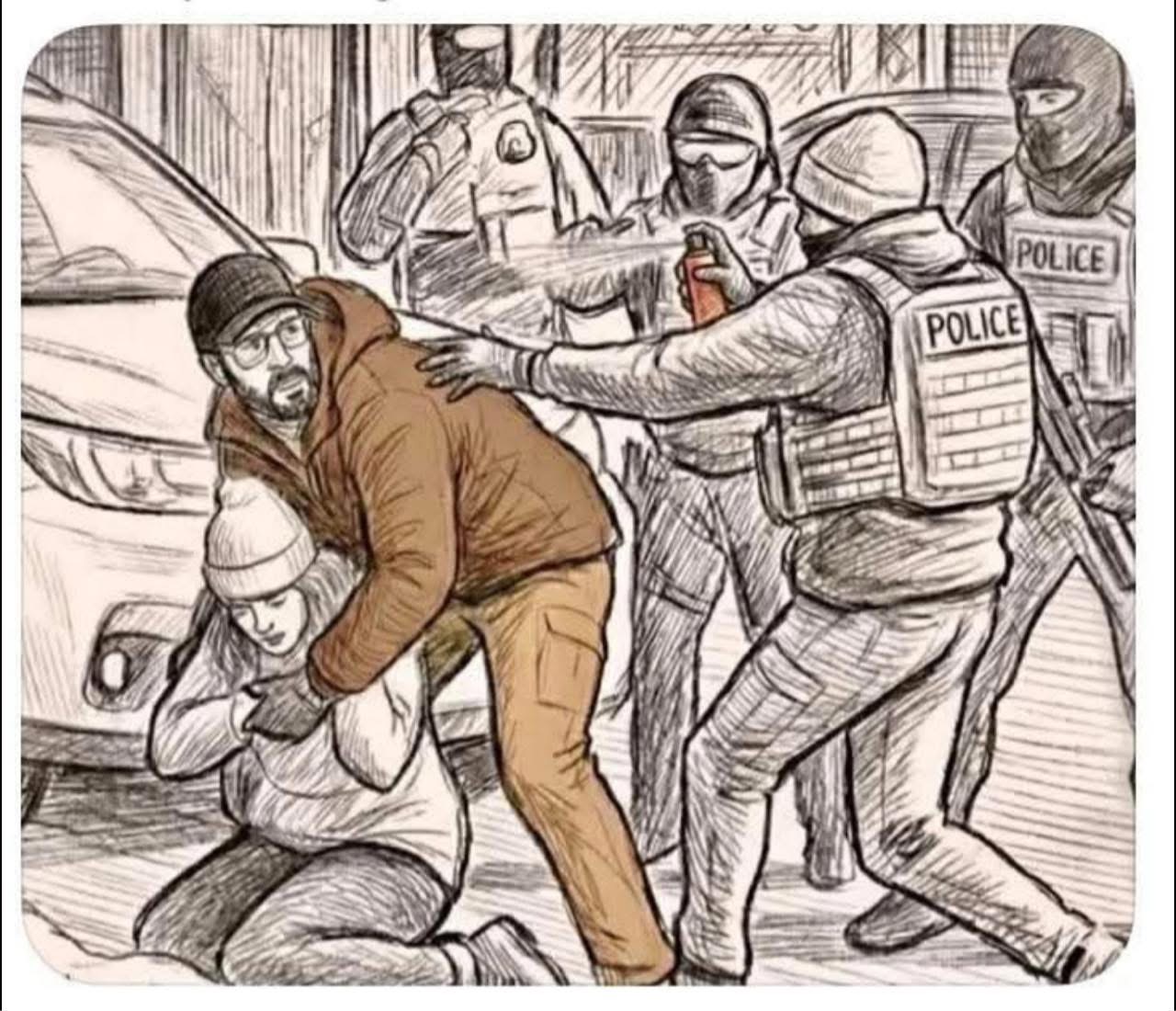
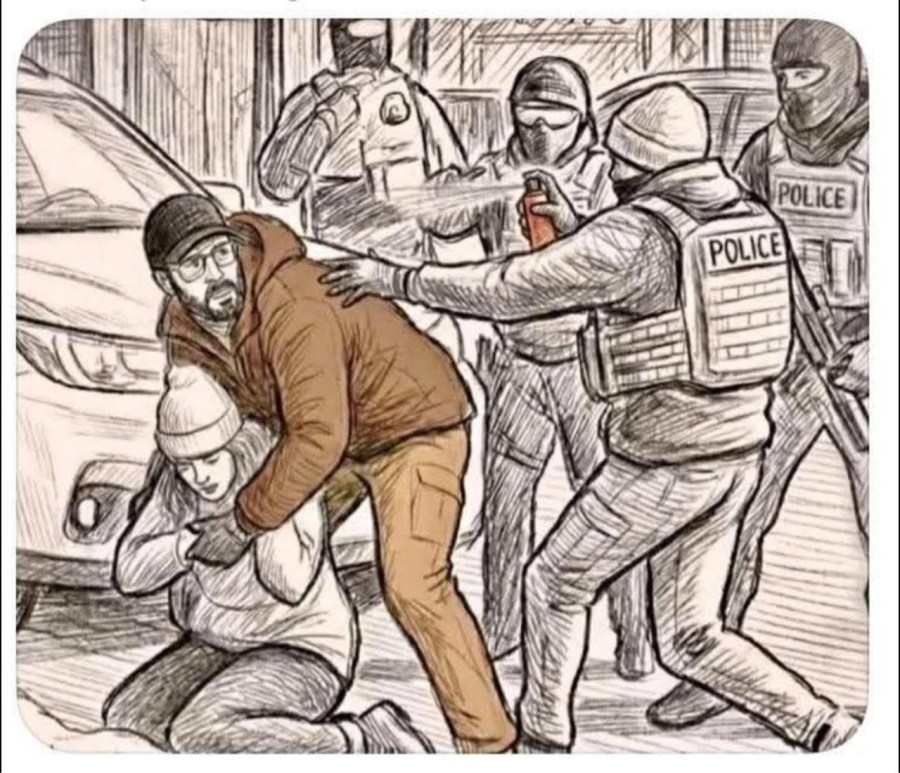
Blessed are the peacekeepers, not the peacemakers, but the ones who call pepper spray ‘domestic terrorist control’ and bullets ‘necessary force.’

Blessed are those who condemn protests in the name of civility, who call moral resisters “agitators,” “communists,” “Marxists,” and “antifa-types.”

But woe to you if you are poor, for you are obviously lazy and unfaithful.

Woe to you who are weak and need help from your neighbors.

And woe to you who march.

Woe to you who blow a whistle.

Woe to you if you block traffic.

Woe to you if you if you love your neighbor as yourself, if you dare to put your body between a masked agent and a woman shoved violently to the ground.

Woe to you if you bear witness to the truth you see with your own eyes instead of repeating the lies from those on high.

And blessed are those who echo the lies and blessed are ones who say, “well, there’s bad on both sides,” because bending the knee to power is safe, and neutrality feels like wisdom.

Rejoice and give thanks, for your reward is order without justice,
peace without righteousness, life without humanity, but a system that works exactly as it was designed.

And the crowds nodded, a few amens could be heard, because they knew their king would approve. It sounded like law and order. It sounded like good, common-sense, conservative values. It didn’t sound foolish at all. It sounded like the wisdom of the wise.

This thinking is perhaps what prompted the Apostle Paul to quote the prophet Isaiah: “For it is written: ‘I will destroy the wisdom of the wise…’ …For God’s foolishness is wiser than human wisdom, and God’s weakness is stronger than human strength.”

Paul does not try to rescue the gospel from the charge of foolishness. He embraces it. He leans into it. He says, in effect: Yes. I know this way of love that Jesus taught and embodied looks foolish. I know the cross doesn’t look like wisdom to an empire that measures strength through domination. A crucified Messiah doesn’t inspire confidence in a world that believes security comes from force and order comes from fear.

And yet, Paul dares to say that this so-called foolishness is exactly how God is dismantling the violent wisdom of the world, “abolishing the things that are,” he writes.

This foolishness, says Paul, is the power of God.

It’s not the power to crush enemies, but the power to expose their lies and cruelty. It’s not the power of coercion, but the power of love that refuses to disappear even when it’s nailed to a cross or murdered on a public street.

This is why the Beatitudes and the cross belong together. Both seem foolish. Both look weak and impractical. Both seem absolutely powerless when confronting those invested in keeping things exactly the way they are. And both announce that God is not impressed by what those in high places call “wisdom.”

Paul reminds the church: “Not many of you were wise by human standards. Not many were powerful. Not many were of noble birth.” In other words, not many of you are respected by those in power today. Not many of you would be called patriots or even people who love their country. But God is not going to ask their permission to choose you. God is not going to wait until the next election to call you. God is calling you today to change this world.

In this very moment, I believe God is choosing the foolish. God is choosing the weak. God is choosing the despised. God is choosing the poor in spirit. God is choosing the mourners. God is choosing the meek. God is choosing those who hunger and thirst for justice. God is choosing the peacemakers who refuse to confuse peace with silence.

And because this is who God chooses, Jesus speaks with a wisdom that sounds like foolishness, feels like resistance, and looks like hope.

When the world says, “Be obedient,” Jesus says, “Be merciful.”

When the world says, “Keep the peace,” Jesus says, “Make peace.”

When the world says, “Respect authority,” Jesus says, “Blessed are those who refuse to bow to evil.”

This is why protest makes power nervous. Not because it might lead to violence, but because it tells the truth. It exposes the gap between our rhetoric of equality and due process and the reality of racialized suffering. It reveals who is expected to absorb pain quietly, so that the privileged can remain comfortable.

And when people who are supposed to be invisible refuse silence, the wisdom of the world begins to unravel.

Paul says God chooses the foolish and the lowly. And Jesus says they are blessed now.

This means that God is not neutral. God is not undecided. God is not standing above history waiting to see who wins. No, it means God is already present—among the crucified, the criminalized, the grieving, the justice-hungry, the meek, and the merciful.

That’s why Jesus does not say the poor will be blessed eventually, after they stop being poor. He does not say the mourners will be blessed once they move on. He does not say the justice-hungry will be blessed when they stop resisting and wise up to the ways of the world. He says they are blessed now.

And we see that blessing even now. You can murder Renee Good for defending her neighbors, and Alex Pretti for protecting a woman shoved to the ground, but instead of killing love, you only multiply it. You only make it stronger, wider, deeper, and fiercer.

So, hear the good news today: mercy is not weak; empathy is not foolish; compassion is not soft; and love is far from powerless.

These things are dangerous—to injustice.
These things are disruptive—to systems that depend on fear.

And these things are powerful enough to dismantle a world shaped by domination and supremacy.

Love looks weak—until it refuses to die.

Mercy looks small—until it spreads.

Empathy looks foolish—until it builds movements.

Compassion looks soft—until it organizes, makes signs, marches, chants, sings, and exposes the evil of a system that dehumanizes, divides, and demonizes so it can survive.

The poor are not powerless; they are positioned.

The meek are not losers; they are inheritors.

Those who hunger and thirst for justice are not wasting away; they are bending the moral arch closer to the Kin-dom of God.

And those of us who mourn today are not abandoned; but we are being held close to the heart of God and are being reassured that God’s reign of love and justice is coming.

Not through religious nationalism or enforced conformity, but it comes through a foolish, cross-shaped love that refuses to let violence have the final word.

And blessed are all who believe this, because you are already living into God’s future.

Amen.

Behold! The Lamb Who Takes Away the World’s Sin

John 1:29-34

“Behold!” It’s a powerful word, rich with meaning. But unless your last name is Shakespeare, you probably don’t use it that often. But maybe we should.

The imperative word is derived from the Greek Ἴδε (ide). It means: Wake up! Open your eyes! Take off the blinders! You need to stop whatever you are doing right now and start paying attention!

When John cries out, “Behold!” he’s doing what the prophets have always done: calling people to see what power doesn’t want us to see. Dr. Martin Luther King, Jr. heard the same summons. He asked America to wake up. He asked us to behold the gap between our creeds and our conduct, between what we claim to believe and what our systems actually do. Like John, King named injustice and exposed it. And, like John, he paid the price for it.

And what does John believe is imperative for us to see?

Behold! “The Lamb of God.”

Looking carefully at the language matters as scripture is so easily twisted to serve someone’s agenda. (By the way, taking the original language seriously is what it means to be “conservative,” conserving the original language and intent of the author.)

John is very precise here. He does not say that Jesus is “the lamb for God.” Because this is not about a sacrificial lamb offered up to appease God.

John says Jesus is “the lamb of God.” He is one who belongs to God, one who is aligned with the purposes of God.

Behind this image of the lamb is the Exodus story, where the lamb is a sign of deliverance from oppression, a symbol of liberation from slavery.

In Hebrew imagination, the lamb is also a symbol of vulnerability, a nonviolent creature caught up in violent systems. Thus, this is John’s way of saying that through Jesus, God identifies with the vulnerable. God stands with those crushed by violent power. That’s why Jesus said God is like a shepherd who will leave the flock to rescue the lamb who is most at risk, the lamb who is excluded or displaced.

Jesus calls himself the “the Good Shepherd” who knows his sheep. He identifies with them. This is why Jesus said when you feed the hungry, clothe the naked, welcome the stranger, heal the sick, visit the imprisoned, “you do it to me.”

And after the resurrection, he tells his disciples: “if you love me, feed my lambs” (John 21).

Then, John says something else which is often misunderstood:
“Behold! The lamb of God who takes away the sin of the world.” The Greek word here is αἴρων (airōn). It’s a word that means to lift up or remove but also to carry off, to dismantle, to tear down, to abolish.

John is saying: “Behold! The lamb of God who dismantles the sin of the world.” And notice John does not say, “sins”, plural. He says “the sin” of the world.

Because John is not talking about the private moral missteps of individual people. He’s talking about a power, a logic, a way of the world which is organized against life. He’s talking about a world-shaping force that generates many evils.

I believe the Apostle Paul helps us to understand this force in his first letter to Timothy where we read: “the love of money is the root of all kinds of evil” (1 Timothy 6:10). “Root” is another important word. A root is a generative source. Roots are hidden. Roots feed systems. Roots shape what grows above the surface.

Across scripture, greed distorts justice. It fuels violence, and it legitimizes domination. Pharaoh’s economy depends on forced labor. The Prophets condemn those who “sell the poor for silver.” Jesus said no one can serve two masters. We “cannot serve God and weath.” The early church shared their possessions because they knew hoarded wealth destroys community.

Greed appears as the sin of the world in systems: policies that treat people as expendable; wars fought for resources and control; slavery justified as “economic necessity”; violence framed as “security”; borders hardened to protect wealth; and bodies criminalized when they threaten profit.

Greed requires coercion to protect itself. It requires violence when it’s challenged. And it requires religious justification to appear moral.

Fascism is not a separate sin from greed. Fascism is greed fully armored. It is greed baptized in nationalism, enforced by violence, and justified by religion.

This is the sin of the world that John wants us to see today. Behold, the Lamb of God, who is aligned with the purposes of God, who stands with the poor, the displaced, and the oppressed, is here to dismantle a world ordered by greed, power, and violence.

That is why Jesus is crucified. Not for forgiving private vices. But because he threatened a world built on profit, domination, and control.

This is always how it goes. The world does not kill people for being kind and forgiving. It kills them for standing in the way of unjust systems.

Jesus is crucified when he confronts empire.

King is assassinated when he challenges economic exploitation, racialized violence, and militarism.

The prophets are silenced when they refuse to make peace with injustice.

The early church understood this. When John said, “Behold!” they got it. They understood sin, not as personal vices, but as the power tied to death, empire, and idolatry. The Apostle Paul and John spoke of sin as a force that enslaves, rules, and kills (Romans 5–7; John 8; 1 John).

John 1:29 was heard as a bold political statement: Jesus is one who confronts the powers that order the world against God’s justice. The cross was seen as the exposure of these powers and Jesus’ solidarity with the crucified. And salvation meant liberation into a new way of life, into what Dr. King called the beloved community.

But over time, that vision narrowed.

In the 4th century, when Christianity was wed to the Roman Empire, naming the sin of the world became costly, because now the church had something to lose. Thus, sin was relocated from systems to individual souls (By the way, this is what some would call “liberal”—changing the original meaning of scripture to support your own politics).

But doing so kept Jesus safe for those in power, because the understanding of sin then moved away from empire, away from economics and violence, and to individual hearts and personal vices. Jesus becomes a solution for personal guilt, rather than a threat to unjust order.

And then this theologian and philosopher named Augustine came on the scene. He did not intend to protect injustice, but his emphasis on inherited sin and inward transformation, unintentionally narrowed sin to the individual soul. And over time, the church began to speak more about what was going wrong inside of people, than what was going wrong in the world.

John 1:29 is still quoted, but now the Lamb of God soothes consciences rather than dismantles systems.

As the church’s power grew, sin became something the institution could diagnose, quantify, forgive, and monetize.

The Reformers responded by recovering grace, but they kept sin personal. John 1:29 is read as: “Jesus was crucified to pay the price for my sin” rather “than Jesus dismantles the sin that crucifies people.”

During the Enlightenment, Western culture learned to see everything through the lens of the individual—individual rights, individual reason, individual responsibility. The Bible was read the same way. Sin became private. Religion became personal comfort instead of public truth. And that kind of faith proved remarkably useful to empire—blessing colonization, baptizing conquest, and remaining silent in the face of genocide and slavery.

Today, American Christianity still preaches John 1:29, but it’s almost never connected to economic exploitation, racialized state violence, and imperial power. The misinterpretation of John 1:29 did not simply produce bad theology. It produced an impotent church: a church good at managing guilt, saving souls, and blessing the empire, and bad at confronting injustice, naming structural sin, and standing with those crushed by power; good at accepting the Jesus of empire and bad about following the Jesus of scripture.

That is why John’s message is more important today than ever. “Behold!” Wake up! Open your eyes! Look at the world today. And look at who Jesus is and who Jesus is calling you to be in this moment.

“Behold!” It’s not a word meant only to be powerfully spoken. It’s a word meant to be powerfully lived.

If Jesus is the Lamb of God who dismantles the sin of the world, then following Jesus cannot mean retreating into some private spirituality while the world keeps crucifying the vulnerable.

If Jesus is the Lamb of God who dismantles the sin of the world, it means we must become a people baptized not just with water, but with the Holy Spirit and with fire, a people caught up in God’s movement to interrupt greed, expose violence, and refuse religious cover for injustice.

If Jesus is the Lamb of God who dismantles the sin of the world, it means we stand where Jesus stands—with the poor, the criminalized, the displaced, and the ones the world calls expendable.

If Jesus is the Lamb of God who dismantles the sin of the world, it means we must resist the systems that profit from fear, domination, and death.

Dr. King warned us that remembering the dream without continuing the struggle is a form of betrayal. To honor King is not to quote him once a year, but to confront the same forces he confronted: economic exploitation; racialized violence, militarism, imperialism, and religious complicity.

Behold! Let’s wake up! Let’s open our eyes. Remove the blinders. And see that the Lamb of God is still at work, dismantling the sin of the world.

Dr. King stands in a long line of those who followed the Lamb—people like Francis of Assisi, Harriet Tubman, Óscar Romero, Dorothy Day, César Chávez, Renee Nicole Good, and countless others who refused to make peace with a world organized against life.

And now it’s our turn.

And if this sounds overwhelming, remember that systems are dismantled not by heroes alone, but by ordinary people who refuse to live as though injustice is normal.

So, what does it mean, in practice, to follow the Lamb who dismantles the sin of the world? It means at least three things.

1. We tell the truth.

We refuse silence. We name what harms God’s children—even when it costs us comfort or safety. We call greed what it is. We call violence what it is. We call empire what it is.

2. We offer our bodies.

We show up to stand with the vulnerable—in phone calls and letters to our representatives, in vigils, in protests, and in places of grief because the Lamb is never neutral and always takes a side.

3. We reorganize our lives.

We loosen our grip on wealth. We practice generosity that disrupts hoarding. We align our spending, giving, time, and votes with life instead of death, because you cannot dismantle the sin of the world while funding it.

This is what it means to follow the Lamb. And when we live this way, we inevitably find ourselves standing in particular places, with particular people— in Minnesota, in Portland, in Chicago, in Palestine, in Iran, in Ukraine, in Venezuela, in Greenland, in Virginia, wherever empire kills, threatens and terrorizes God’s children, until the sin of the world is dismantled, until the system is abolished, until justice rolls down like waters, until all God’s children can breathe free.

Amen.


Pastoral Prayer

Holy and Living God,
God of justice and mercy,
God who hears the cry of the oppressed and does not turn away:

We come before you this morning because the world you love is hurting,
and because we refuse to pretend otherwise.

We come carrying the weight of what we have seen:
violence dressed up as policy,
greed disguised patriotism,
fear baptized as faith,
and power protected at the expense of human life.

Teach us again how to behold,
to see clearly what we those in power want us to ignore,
to name honestly what the world tries to normalize,
to look without flinching at suffering that is not accidental,
but produced by systems we are told to obey and not to question.

God of the Lamb,
we pray for all who are crushed beneath the sin of the world.

For immigrants and asylum-seekers living under constant threat,
families separated, children detained, lives treated as disposable,
be their shelter and their strength.
And disturb us, O God, when our comfort depends on their fear.

For Black and Brown communities targeted by violence,
over-policed and under-protected,
grieving lives stolen and justice delayed.
Hold the grieving close,
and unsettle every system that profits from racialized harm.

For workers exploited, wages stolen, bodies worn down,
while wealth is hoarded and inequality justified.
Strengthen those organizing for dignity,
and expose the lie that profit matters more than people.

For nations scarred by war, occupation, and imperial ambition,
for Gaza, for Ukraine, for Sudan, for Haiti,
for all places where civilians pay the price for the ambitions of the powerful.
Break the cycle of domination,
and give us the courage to resist the machinery of death.

God, we confess that too often the church has been silent
when it should have spoken,
neutral when it should have resisted,
and complicit when it should have stood with the crucified.

Forgive us when we have settled for private faith
while public injustice went unchallenged.
Forgive us when we sought peace without justice,
order without equity,
and unity without truth.

And yet, O God,
we thank you that despair does not have the final word.

We thank you for prophets who still cry out,
for organizers who refuse to give up,
for communities practicing mutual care,
for young people daring to imagine another way,
for elders who remember that change is possible.

Strengthen us to follow the Lamb:
not just in belief, but in practice;
not just in worship, but in witness.

Make us a people who tell the truth even when it costs us,
who stand with the vulnerable even when it is risky,
who resist systems of death even when it would be easier to look away.

Baptize us again with your Spirit and with fire
so that our faith is not passive,
our hope not shallow,
and our love not afraid.

Until the sin of the world is dismantled.

Until the systems of greed, fear and violence are abolished.

Keep us faithful, keep us awake, keep us moving.

We pray all this in the name of Jesus, the Lamb of God,
who stands with the crucified and leads us toward life.

Amen.

Dignity Is Not Conditional: Why Exempting Hotels and Farms from Immigration Raids Reveals a Deeper Moral Crisis

ICE will now raid homes but not hotels. They’ll round up families from neighborhoods but not from farms. Why? Because when it comes to immigration, it’s never been about “law and order.” It’s always been about profit and power. Let’s not be fooled: when farms and hotels are exempted from immigration raids, it’s not mercy. It’s exploitation. It’s greed wearing the mask of compassion. It says, you can stay, but only if you pick our fruit, clean our toilets, and stay silent.

However, a human being’s worth is not measured by how fast they can move in the field or how neatly they can make a bed. People are not machines. They are not tools. They are not “the help.” They are children of God, fearfully and wonderfully made, not for our convenience, but for beloved community.

Changing the immigration policy to raid homes but not hotels exposes the hypocrisy at the heart of immigration enforcement in America. It protects the industries that benefit from cheap, undocumented labor while punishing the workers themselves. That’s not justice. That’s not democracy. That’s Pharaoh.

The same Bible many evangelicals use to justify this cruelty also says: “Do not mistreat or oppress a foreigner, for you were foreigners in Egypt” (Exodus 22:21, Exodus 23:9, Leviticus 19:33-34). And let’s not forget Jesus himself was born into a family that fled persecution, crossed borders without papers, and found no room at the inn.

We don’t need immigration policies that ask: “How much can you produce?” We need policies that ask: “How much can we protect?” “How much can we love?” “How much justice can we make real together?

When we only protect immigrants when they’re useful to us, we are saying that dignity is conditional, that love is earned, and that God’s image in someone can be erased by a lack of paperwork. That is not moral. That is not just. And it is the anithesis of the gospel.

We must fight for policies rooted in human rights, not human labor. We must love people not because of what they can do, but because of who they are. And we must remember that no one is illegal. No one is disposable. No one is worth more because they work harder. In God’s economy, every person matters. Every life counts. Every stranger is a neighbor. Every neighbor is kin.