A Hundred Fifty-Three

John 21:1-11

Happy Star Wars Day! May the fourth be with you!

You may laugh, but there are churches that are observing this day, May the 4th, as Star Wars Sunday, focusing on the spiritual struggle between darkness and light, drawing parallels between “the Force” and the Christian concept of God.

Numbers, like the 4th when it occurs in May, have always been significant in the life of the church, as numbers always seem to be significant in the Holy Scriptures.

The number 40 is symbolic of testing, trials, and periods of preparation, as we remember the story of Noah and the rain that fell for 40 days and 40 nights, and of Moses and the Israelites’ 40-year journey out of slavery into the Promised Land, and of Jesus’ 40-day fast in the wilderness.

The 144,000 protected from judgment we read about in the book of Revelation is based on the number 12, a symbol for wholeness based on the 12 tribes of Israel and the 12 disciples. The number 7 in Revelation symbolizes divinity, whereas the number 6, particularly 666, symbolizes evil.

So, when we read the story of the miraculous catch of fish in this post-Easter story, the number 153 leaps off the page!

Verse 11 reads: “So, Simon Peter went aboard and hauled the net ashore, full of large fish, a hundred fifty-three of them, and though there were so many, the net was not torn.”

Such an odd number. Such an exact number. Why not just say 150 fish? Or tell a good fishing story by exaggerating it, rounding it on up to 200?

But John says the net contained exactly a hundred fifty-three fish. There are so many possibilities with and no shortage of interpretations.

Some have interpreted 153 fish to mean: “It’s just a lot of fish.”[i] And that moments of such abundance say something about living in a world where the good news of Easter is a reality, as grief is transformed into action, scarcity is transformed into abundance, and despair becomes hope we discover that what seems like the end is only the beginning!

It means living in a world, that when it comes to the love that Jesus taught, modeled, and embodied, we can never give in, give out, or give up, because we know that such love always wins. Such love never ends. Not even death can stop it. It means never retreating in despair believing that things in the world cannot get better.

But something tells me that the number 153 means even more. If it’s just about “a lot of fish,” why didn’t John simply write, “they caught so many fish the nets started to break, and the boats began to sink,” as we’ve heard in another story (Luke 5)? Why does John specifically record the number 153?

Some scholars believe the number symbolizes the truth  that Jesus did not come to abolish Jewish law or the Torah. They point out that the Torah, the first five books of the Bible, was divided into portions to be read in worship. Like the Lectionary that I use each week to preach, the portions were part of a three year-cycle, and the three-year Torah cycle used in Palestine around the First Century had, you guessed it, 153 portions.

Now, if you think that is interesting, listen to this.

St. Augustine pointed out that the number 153 is the triangular of 17. That means that if you add all the numbers decreasing from 17, you get 153. That is to say: 17 + 16 + 15 + 14 +13 + 12 + 11… all the way down to +1 = 153.

So 153, according to Augustine, is all about the number 17, which Augustine believed was a sign of the union of Judaism and Christianity as we have 10 commandments in the Old Testament and 7 Gifts of the Spirit in the New Testament.

How about that? But wait, there’s more.

In the book of Acts, we read that 17 nations were present for Pentecost. So, Peter’s catch of 153 fish at the end of John’s gospel might mean something like the end of Matthew’s gospel when Jesus calls us to make disciples of all nations.

It was St. Jerome who pointed out that during the time John tells this story that there were only 153 species of fish in all the world. Hence, 153 signifies the universal hope that every person of every class and time would be saved through the Gospel.

St. Gregory the Great believed 10 and 7 are perfect numbers, added together make 17. This, times 3, factoring in the Trinity, makes 51. This, times 3 again, makes 153.

St. Augustine also notes that there were 7 disciples in the boat (Peter, Thomas, Nathanael, James and John, and two other disciples), who had all been filled with the 7 gifts of the Holy Spirit. 7 times 7 equals 49. 49 plus 1 (that’s Jesus) makes the perfection of 50. And 50 x 3 for the Trinity gives you 150 plus another 3 for the Trinity gives you 153.

St. Cyril breaks 153 into 100 (the great number of gentiles to be saved), plus 50 (the smaller number of Jews to be saved), plus 3 (the Trinity who saves all).

Others have pointed out that 100 (representing the number of married faithful in the Church), plus 50 (the faithful who commit themselves later in life to celibacy either living as widows or living with their spouse in a brother-sister relationship), plus 3 (the precious few who commit their whole lives to celibacy as virgins) equals 153.[ii]

I hope you are writing all this down.

Now, do you want to know what I believe is the significance of 153?

Allow me to first preface my opinion by reminding you that I have a Doctorate in Ministry and have been a student of scripture for half a century, if you count my Sunday School classes as a child. Plus, I grew up on the Outer Banks of North Carolina; thus, I know a thing or two about fishing.

Here it is. You will really want to write this down. For it is going to blow your mind and probably change your life.

Here it is. Drum roll please. People who go fishing like to count their fish.

That’s it. People who fish count their fish. Now, it may mean a little more than that, but not much more.

I also believe this Easter story has something to do about people, as the story is very similar to other fishing stories when Jesus tells the disciple anglers that they were going to go from catching fish to catching people (Mark 1 and Matthew 4).

Thus, a hundred fifty-three means that people, like fish, are to be counted. Now, compared to the hyper-symbolic, mathematical theories of the saints, that may sound like a hollow interpretation; however, when we consider the number of people who are discounted and marginalized in our world today, this simple interpretation is nothing less than prophetic.

So, what this Easter story says to me is that this movement we call discipleship where we can be confident love will win and justice will prevail, is a movement that prophetically proclaims that every person counts.

A hundred fifty-three is particularly prophetic for Americans as the United States has always had a problem counting certain people, as some in this nation, including those in power today, have always had a problem with equality. There have always been those who want to put a tear in the net, so all will not be counted.

Ever since the Constitution’s original framework, when enslaved people of color were counted as three-fifths of a person, there have been people in this country who have sought to undermine equality, suppress the vote, and discount entire groups of people.

And today, those people are in power, intentionally tearing the net by rolling back all the progress made for equality and civil rights in the 20th century, calling desegregation “a historic wrong,”[iii] and going after any organization, business or university that seeks to count everyone with programs focused on diversity, equity, and inclusion. And now, democracy hangs in the balance.

Perhaps we should have seen the end to democracy coming —when every ten years there’s an argument in our country about who should be counted and who should not be counted in the census, as counting every person is fundamental to democracy, based on the principle that each person counts and deserves representation.

So, I believe 153 is a profoundly prophetic number for America today. A hundred fifty-three affirms democracy and the principle that all people are created equally. A hundred fifty-three means there is no person who does not count.

A hundred fifty-three affirms our annual Holocaust Remembrance Service, as a hundred fifty-three means that six million Jewish people count. And they still count, despite those today who are seeking to re-write history or “move on from past guilt.”[iv]

And a hundred fifty-three also means that 2.3 million people in Gaza count, 2.3 million Palestinians who are starving to death today because of the Israeli and US-backed ban of food and humanitarian aid.[v]

One of the best things about living in New Orleans was when I had the opportunity to officiate a funeral where we marched in the cemetery behind a jazz band singing: “Oh when the saints go marching in, when the saints go marching in, oh Lord, I want to be in thatnumber when the saints go marching in!”

Oh Lord, how people just want to be counted.

People of color who cry for their lives to matter just want to be counted.

Trans men and women asking not to be called by their dead name just want to be counted.

Pregnant women who desire to have a choice in their healthcare, just want to be counted.

Disabled people requesting fairness and equal opportunity, just want to be counted.

Immigrants, refugees, and Asylum-seekers in the pursuit of happiness, just want to be counted.

People who are being snatched off our streets and disappeared, need to be counted.

Books banned; history erased; votes suppressed; due process denied; free speech stifled; basic rights deprived; Medicaid, SNAP, Head Start, low-income energy assistance, and other programs cut—it’s all about people who must be counted!

Think about who you know today—at work or at school, in your neighborhood or in your family—who may feel like they are of no count. And think about what actions you could take, or this week, or next, to let know that they do count—to you, to this church, and to God—and maybe, one day, to the nation.

“Simon Peter…hauled the net ashore, full of large fish, a hundred fifty-three of them, and though there were so many, the net was not torn.”

The net was not torn. All were counted. Amen.


[i] https://www.workingpreacher.org/dear-working-preacher/resurrection-is-abundance

[ii] https://parish.rcdow.org.uk/harefield/wp-content/uploads/sites/148/2022/10/The-mystery-of-the-153-fish-in-the-Gospel-of-John.pdf

[iii] https://wpde.com/news/nation-world/doj-department-of-justice-officially-ends-desegregation-order-at-louisiana-school-plaquemines-parish-after-nearly-50-years-court-system-integrated-racial-segregation-south#

[iv] https://www.npr.org/2025/01/27/nx-s1-5276084/elon-musk-german-far-right-afd-holocaust

[v] https://www.pbs.org/newshour/world/palestinians-struggle-to-feed-their-families-as-israel-blocks-gaza-aid-for-nearly-60-days

Far from the Shallow Now

Luke 5:1-11 NRSV

One morning, Jesus is preaching down at the lake. The crowd that had gathered is so large, Jesus felt like they were about to push him right into the water!

During the sermon, he sees two boats belonging to some fishermen who were on shore washing their nets. He gets into the boat belonging to Simon, and he asks Simon to anchor the boat a little way from the shore, where he continues his sermon.

Luke doesn’t record the words to Jesus’ sermon, but from his sermon in the very next chapter, we could probably take a good guess: “Blessed are you who are poor, for yours is the kingdom of God. Blessed are you who are hunger now, for you will be satisfied. Blessed are you who weep now, for you will laugh. Love everyone, even your enemies…” It’s a sermon of abundant mercy, extravagant grace, and boundless love!

After the sermon, Jesus tells Simon that he wants to do a little bit of fishing himself: “Let’s leave these shallow waters and let down the nets.”

Simon responds: “Master, with all due respect, I, along with my long-time business associates, James and John, have fished these waters all night long, and we haven’t caught a thing. Yet, if it will make you happy, I will go out a little deeper and put down the nets.”

Well, as soon as the nets hit the water, they catch so many fish that the nets begin to break. They quickly call out to James and John to get the other boat and offer them a hand.  And when they come, they fill the boats with so many fish that both boats begin to sink.

As Simon takes in the overwhelming scene— nets breaking, boats sinking, fish everywhere, a scene of failure and scarcity transformed into triumph and abundance, a scene of what can happen when you leave the shallow to dive into something deeper, what can be experienced when you obey the commands of Jesus—Simon is overwhelmed, and falling down at Jesus’ knees, he says: “Go away from me Lord, for I am a sinful man!”

It was as if Simon suddenly realized that it only seemed that Jesus was finished with his sermon that day. Jesus may be fishing, but he is still preaching. Through the abundant catch of fish, Jesus is still proclaiming God’s abundant mercy, extravagant grace, and boundless love. Believing he is underserving of such love, how unworthy he is of such abundance, Simon asks Jesus to go away.

But Jesus never goes away easily. “Simon, not only are you worthy to receive the abundant, extravagant, over-the-top love of God, you are worthy to share it with others and change this world! So, do not be afraid; for you are no longer going to be catching fish, you are going to be catching people!”

“I am asking you, Simon, along with your business partners James and John, to leave your shallow, contained, little world to venture out with me into a deeper, larger, revolutionary reality.

The truth is, Simon, I need you to go deeper. I need as many people as I can get to go deeper. The problems of the world are too great, and your lives are too short to waste any time wading in the shallow. And the grace of God is too extravagant. The mercy of God is too abundant. The love of God is too boundless for you to keep your it all to yourselves.

I need you to leave your shallow, safe world of spending all your time making a living to meet the needs of your immediate family, and I need you follow me into the deep, risky reality of sacrificing your time to meet the needs of the entire human family!

I need you to leave your shallow life that feeds you, and your children, and accept a deeper life that helps feed every child of God!

I need you to move beyond your shallow, narrow mission of caring for your own home, and accept the deeper, wider mission of caring for the entire planet!

I need you to lose the apathy towards issues that do not concern you and your limited of circle of family and friends to possess a deep empathy towards all who experience injustice!

I need you to move beyond your shallow understanding of success. Simon, no matter what you have been taught, success is not defined by the amount of fish you catch, or the size of your house or back account. It is so much deeper than that!

Your success is measured by how many people you loved extravagantly, abundantly, and graciously.

I need you to go deeper, Simon. You too, James and John, and be my disciples and fish for people. Do the hard, messy, oftentimes frustrating, and risky work to meet the needs of people, to care for and to liberate people. I need you to move far from the shallow now to do the deep work of love. And I am not talking about personal and intimate love, but a love that has public and political ramifications.

Now, here’s what I believe is the real miracle in this story. We read it in verse 11. After Jesus invited them to leave the shallow for something deeper, to leave the fish business to be in the people business we read: “When they had brought their boats to shore, they left everything and followed him.”

This is miraculous because when it came to accepting the extravagant grace and love of God revealed in the large catch of fish, Simon, seemed to have some difficulty: “Get out of here, Jesus! I am a sinful man!”

However, when it comes to following Jesus to a deeper life, to love others to selflessly and sacrificially, extravagantly and liberally, he, with James and John, leave everything and follow.

This is miraculous, because it is the exact opposite of how we humans usually work. We seem to have no problem accepting the grace of God for ourselves. We have no issues receiving the love of God for us personally. But we prefer to keep it shallow. We prefer to keep it personal. We prefer to keep it safe, keep it contained, keep it conservatively to ourselves. We are almost always reluctant to go deeper.

Because going deeper is dangerous. Going deeper is costly, and it is risky. Going deeper can be overwhelming. In the deep, fish break our nets and people break our hearts. Going deeper may mean leaving our friends and family behind.

I want to thank Katie Nunn for sharing her talent with us by creating this extravagant artwork that is adorning our baptistry today. When she first thought of this idea, which to me, speaks to the abundant and extravagant love we are called to share with others, she said she was tempted to think that the art might be “too far out” for church. But then, thinking about what this church means to her and to others, she thought, when it comes to love, for this church, there’s no such thing as being “too far out.”

In other words, Katie has joined a congregation of disciples, who, with Simon, James, and John, when it comes to love, have chosen to go deep, to go far out from the shallow.

We are disciples who have decided to go on a journey to share the abundant mercy, extravagant grace, and liberating love of God with all people, all the while knowing the journey will not be easy, comfortable, or popular.

Late author and professor John Augustus Shedd once said: “A ship in harbor is safe, but that is not what ships are built for.” And today, we are on a ship with Jesus. He is the captain who navigates our journey out of the harbor into deep, dark, and dangerous waters.

The darkness of these days, like deep water, requires more than a shallow response. The times are too serious, and our time is too short, to waste any amount of time playing around in the shallow.

When the president makes an executive order to “eradicate” any opposition to the sick religion of White Christian Nationalism or the cult of MAGA, while disparaging any religious thought that calls for mercy and compassion, empathy, and equality, we must go deeper.

When the tax status of non-profits and institutions that serve the common good are threatened, when aid to the poorest people in the world is cut off, our stewardship practices, our civic engagement and our commitments need to go deeper.

When houses of worship receive warnings by the government that sanctuary provided to the immigrant will not be honored, that we may be targeted, our commitment to the word of God “to treat the foreigner living among us as native born, to love them as ourselves” gets called into the deep (Leviticus 19:34).

When programs designed to celebrate diversity, create equity, and foster inclusion are eliminated in favor of protecting the privileged, our faith compels us to go into the depths of human solidarity and belonging.

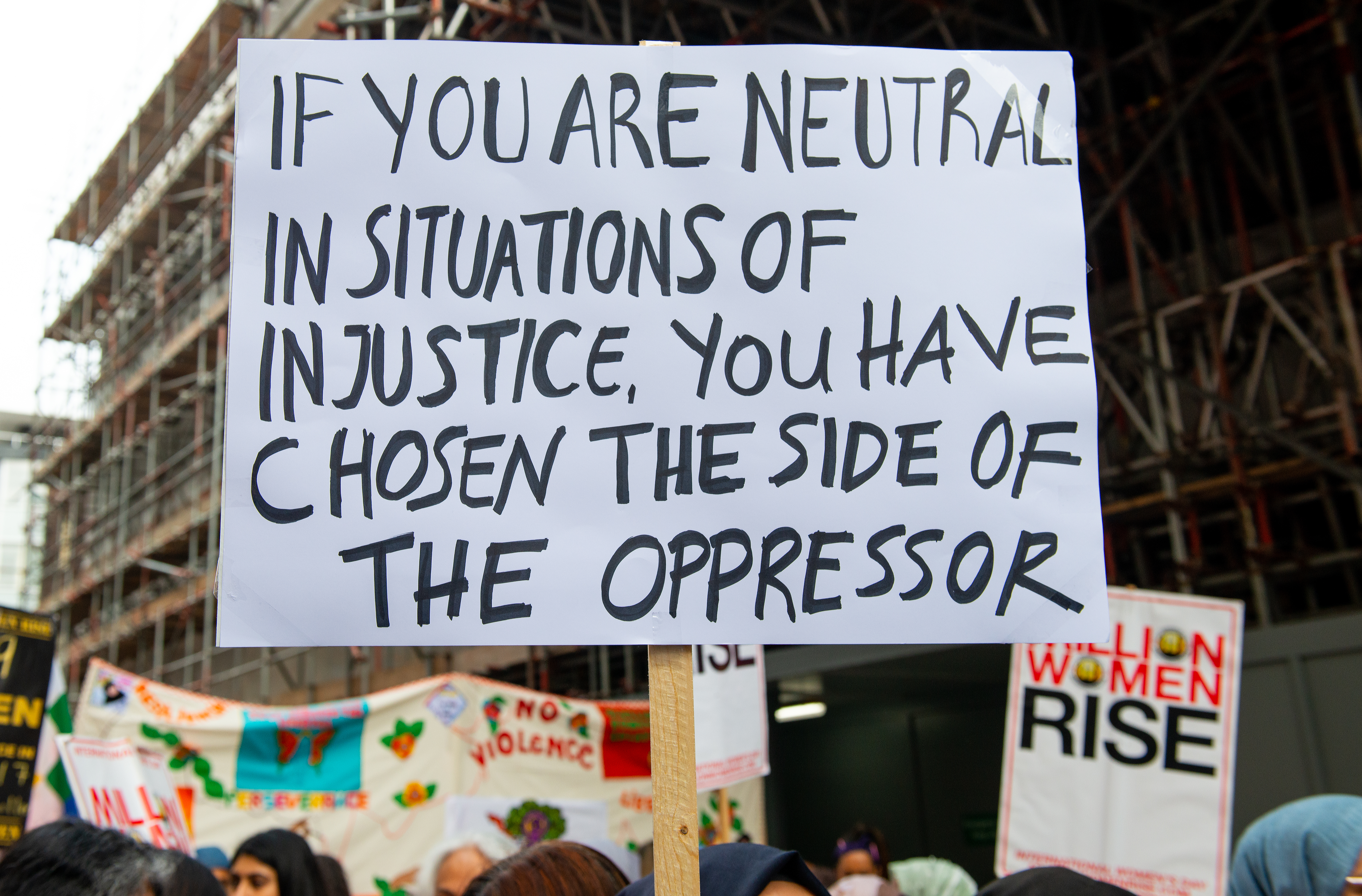
So, if you have come here this morning because you want to dip your toes in the safe shallow end of the pool, to wade, splash around, and enjoy yourselves, to nourish your private, personal relationship with the Lord, to remain neutral when it comes to public policy and politics that hurts the poor and the marginalized, then I am afraid, you have come to the wrong place! We don’t even have a kiddie pool for children in this place, as we are even training them to swim in the deep end.

Because we know that a shallow, safe, personal, and private faith, a faith that has the sole purpose to feed one personally, allows children to starve, and the entire creation to hunger.

A shallow faith allows the spread of a false gospel that is unconcerned with the living conditions of anyone else living on the earth as well as the state of the earth itself.

Shallow faith enables false prophets to reject Jesus, or worse, to act in ways that are the antithesis of Jesus, ways that are anti-Christ, and still claim they are following Jesus.

Shallow faith is afraid to enter into the depths of human suffering and oppression. It finds contentment inwardly, in one’s own family, job, possessions, and even church.

Shallow faith is afraid to rock the boat, afraid of losing a friend or upsetting a co-worker or family member.

Shallow faith is afraid of the sacrifices and the changes that need to be made.

And sadly, church is where people can be the most afraid, and thus the most shallow, the most small-minded and the most close-minded, the most self-interested and self-preserving

But the good news is that church can also be the place where people can be the most courageous, a place where we are challenged to be more open, more selfless, and more self-expending, where we are pulled by Jesus into the deep, dark, and dangerous places, far from the shallow.

To those difficult places where we have a deep conversation with that climate change-denier or anti-vaxer. Where we go out of our way to help an asylum seeker. Where we contact our legislatures to object to the wicked assault on trans people. Where we call out racism and white supremacy wherever we see it, on the school board, the city council, even in our own families.

The good news is that the First Christian ship of Lynchburg, Virginia has left the harbor. Jesus is our captain. And we are far from the shallow now! Amen.

When Jesus Falls Out of Favor (and nearly off a cliff!)

Luke 4:14-30 NRSV

Once upon a time, in a land far away, but not so different from our own, excitement was in the air as folks began gathering in the narthex, sipping their coffee. Everyone was looking forward to the sermon. Because today, they had a special guest preacher!

Many were just glad to have a break from listening to their pastor who they’ve had to now put up with for a year and a half. But some were really looking forward to hearing one of their own, someone who had moved away, made a name for himself, and made them proud. He had come back home for a visit and had been asked by the Elders to fill the pulpit.

No one paid attention as the announcements were being made. In the pews, heads moved and necks stretched, as everyone was trying to catch a glimpse of their hometown pride and joy.

After the Children’s Moment and the Pastoral Prayer, the young man stood up in the pulpit.

“Look! There he is!”

“My, hasn’t he grown!”

“He looks just like one of us, with his dark eyes and complexion.”

The worship leader handed him a scroll. He unrolled it and began reading words from the prophet Isaiah:

‘The Spirit of the Lord is upon me,

   because he has anointed me

     to bring good news to the poor.

He has sent me to proclaim release to the captives

   and recovery of sight to the blind,

     to let the oppressed go free,

to proclaim the year of the Lord’s favor.’

He rolled up the scroll, gave it back to the worship leader, and sat down. All were smiling as he had just read one of their favorite scripture passages.

It is then, that he stood back up and dropped the mic by declaring: ‘Today, this scripture has been fulfilled in your hearing!’

Countless amens could be heard throughout the sanctuary. One congregant shouted: “Hallelujah!” Another exclaimed, “Praise Jesus!” Another said, “I wished he was our full-time pastor!”

Everyone was pleased as they could be! Because the scripture he read was being fulfilled for them. Good news for the poor meant good news for them, because they didn’t consider themselves to be among the rich oligarchs that were in power.

And because they were living in an occupied territory, release to the captives, meant liberation for them!

Because they had lost hope and had a difficult time seeing anyway forward, recovery of sight to the blind meant recovery of hope for them!

And because they felt oppressed by the Romans, freedom for the oppressed meant freedom for them!

So, amen, brother! Preach it!

They could not have been more enthusiastic with their hometown hero! All throughout the sanctuary, you could hear proud comments like: “Why isn’t that Joseph’s oldest boy?”

After the choir sang the anthem, the young preacher stands back up, takes a sip of water, and begins the sermon: “There’s no doubt many of you will say: ‘Doctor, cure yourself.’ ‘Do here also here in your hometown the things that we heard you do Capernaum.’”

“That’s right!” someone shouted!

Another yells: “Charity begins at home!”

Someone else screams, “America First!” (I mean, “Israel First!”)

On the edge of their seats, their ears are itching to hear what their hometown boy had to say next!

It is then he says something like: “You know that no prophet is accepted in his hometown

Someone cupped their hands to their mouth and shouted: “We’ll always accept you Jesus!”

Another yelled: “That’s right! You are one of us!”

Still another shouted: “We’re with you all the way!”

He takes another sip of water and then begins to proclaim that Isaiah’s prophetic vision of good news, liberation, recovery of sight, and freedom is not for them only, or even for them first. It is for everyone, maybe even especially for those who need it the most, folks that may not be from around here

In the congregation, shoulders tense, and heads turn. More comments could be heard, but the enthusiastic tone becomes disconcerting: “Wait a minute! I know he’s not talking about diversity, equity, and inclusion, is he?”

Jesus, though, is undaunted by the sudden aggravation in the air, because he wasn’t there to win a popularity contest or to scratch itching ears. He’s  there to tell the truth, even if that truth is unsettling, because Jesus knows that the truth of God’s inclusive and equitable love, as offensive as it may be, is the only way to create a more peaceful and just world.

Jesus then reminded the congregation why the prophets are never popular in their hometown by referring to two stories, one about the prophet Elijah and one about the prophet Elisha.

“You remember Elijah, don’t you? And the story of those three and half years it hardly rained a drop, causing a severe famine throughout the region? Now there were countless widows living in Israel during that time who were starving to death. But God didn’t send the prophet Elijah to help any widows in Israel. No, instead, God sent the prophet to save a widow in Lebanon.”

Apart from a few gasps, the congregation fell so silent you could hear a pin drop.

“And you remember the prophet, Elisha? There were many lepers suffering in Israel, but instead sending the prophet to heal those in Israel of their disease, God sent Elisha to heal a leper in Syria.”

The sanctuary exploded! People rose to their feet. Some began shaking their fists in the air.

How dare he say that the blessings of God extend beyond our borders, to other cultures and ethnicities!

The audacity he has to say that God’s mercy, justice, and freedom are not just those of us who have the proper papers or the right genes!

And how dare he infer that God may even favor someone from Lebanon or from Syria, over us!

The unmitigated gall he has to say that this scripture is fulfilled in our hearing, but not fulfilled for us!

Overcome with rage, the congregation turns on Jesus.

Some demand an apology.

Others call his words “ungracious,” his tone “nasty.” And his service “boring.”

One accused him of being a left-wing lunatic who was bringing woke politics into the synagogue!

Someone else cried: “Deport him!” Another shouted: “Send him to Guantanamo Bay!”

They become so angry that before Jesus is able to finish the sermon, they chase him out of the sanctuary and run him clear out of town right to the edge of a cliff. But he doesn’t fall off the cliff. He somehow sneaks through the crown and escapes.

How quickly had Jesus fallen out of favor and nearly off a cliff!

But that’s the world in which we live—a world where empathy is considered a sin. Because empathy involves loving our neighbor—not the just ones who live next door, but the ones who live in Lebanon and Syria, in Mexico, Gaza, Columbia, Cuba, and Venezuela—as much as we love ourselves.

The word “freedom” has always been a threatening word when it is applied to a group people that another group of people deem “other” or “less.”

 “Diversity,” “equity,” and “inclusion” have always been offensive words to those who want good things for themselves only, or at least, for themselves first. Equality can feel like oppression to those accustomed to privilege. And in our nation, that means that the angry mobs have historically been white people.

It was only a little over 60 years ago, a time that those currenlty in power are trying to take us back to, empathetic people from all over the United States traveled to the South to take a stand for the civil rights of all people. Some were called Freedom Riders, as they rode buses throughout the South to nonviolently resist unjust Jim Crow laws.

Like the time Jesus preached freedom for the other in the synagogue, an angry mob formed. And on Mother’s Day in 1961, in Anniston, Alabama, 50 white men, many of them religious, attacked a Greyhound bus carrying black and white Freedom Riders with pipes, chains, and bats. They smashed windows, slashed tires, and beat the sides of the bus to terrorize the Freedom Riders who were inside.

Once the attack subsided, with the Freedom Riders still on board, the police pretended to escort the damaged bus to safety, but instead they abandoned it just outside the Anniston city limits.

Another armed mob surrounded the bus and began breaking more windows. The Freedom Riders refused to exit the bus and received no aid from two highway patrolmen who were watching nearby. When a member of the mob tossed a firebomb through a broken bus window, others in the mob attempted to trap the passengers inside by barricading the doors of the bus.

The mob fled when they feared the fuel tank was about to explode. Somehow, the Riders were able to escape the ensuing flames, only to be attacked and beaten as they exited the burning bus.[i]

Kindness, grace, and compassion have always made people wickedly angry when it is applied to outsiders. Some people have always called empathy a “sin,” because empathy involves caring for someone other than yourself, or other than “your” people. Thus, the powers of wickedness have always tried to trump the power of love. Darkness has always sought to overcome light.

The good news is that darkness is no match for even a little bit of light, and love always wins. The good news is that Jesus did not fall off that cliff, and through the resurrected body of Christ, he is still alive and preaching in our world today.

I know that it may feel like we are standing at the edge of a great cliff. Our feet may be slipping as the rocks move under our feet. Some of us have slipped, and our feet are dangling over the edge. We’re barely hanging on. But we are not falling.

Somehow, someway, as Jesus escaped those angry worshippers who chased him to an edge of a cliff outside the city limits of Nazareth, and as the Freedom Riders escaped that bus set on fire outside the city limits of Anniston, Alabama, we too have escaped.

 We are still here. Jesus and his followers may have fallen out of favor with the powers-that-be, but we have not fallen off the cliff!

And despite the opposition in our nation today, the intimidation in our state today, and the hostility in our city today, we are still proclaiming good news today, not just for ourselves, but for all people.

We are still committed as ever to fulfilling the promises of God for black and brown people—

Proclaiming God’s liberation for non-binary and transgendered people—

Proclaiming God’s freedom for undocumented people, asylum seekers, refugees, migrants, and victims of war.

And proclaiming a hopeful vision of God’s peace and justice—

God’s empathetic vision of mercy and compassion—God’s prophetic vision of diversity, equity, and inclusion—shining our lights so all can see it!

The dark winds of wickedness are howling, but our candles are still burning!

On the edge of a cliff, we may feel we are barely hanging on today. We may have fallen out of favor. But we are not falling off! Say it with me: We are not falling off! Amen.

[i] https://calendar.eji.org/racial-injustice/may/14

A Crowded Table

Sermon delivered during the Interfaith Service of Unity at Peakland Baptist Church in Lynchburg, VA, Thanksgiving Day 2024

Isaiah 25:1-9 NRSV

I begin the sermon with the two questions that are on everyone’s mind today: #1 “Will this divided nation ever come together?” And #2 “When will there finally be peace on earth?”

Nah. That’s not it. The questions on everyone’s mind today are: #1 “What’s for dinner?” and #2 “Who’s all invited?”

The prophet Isaiah answers the first question “What’s for dinner?” with a song about God’s promise of a generous and extravagant table where (as we read in the New Revised Standard Version):

The Lord of hosts will make a feast of rich food, a feast of well-matured wines, of rich food filled with marrow, of well-matured wines strained clear.

I imagine Isaiah adding: “Did I mention we’ll be havin’ well-mature wines and rich food?”

Isaiah understands that life is best celebrated with plenty of delicious food and the best wines, particularly when times have been dark, when the table’s been empty, when the cupboards ae bare—when tyrants have the upper hand, when the shadows of chaos and catastrophe cover a nation, like it is being punished for their poor choices causing the entire creation to suffer.

In the previous chapter of Isaiah, we hear the desperate lament of the prophet:

The earth is utterly broken, the earth is torn asunder, the earth is violently shaken…the moon… abashed, and the sun ashamed (24:19, 23).

A dark shroud of universal dismay and despair covers the land. And there, under the dismal cover of darkness, everything good seems to be wasting away.

Of course, the first thing Isaiah grieves is the wine cellar. Isaiah cries out:

The wine dries up, the vine languishes, all the merry-hearted sigh, the mirth of the timbrels is stilled, the noise of the jubilant has ceased (24:7-8).

It is in this dry, dark, and desolate setting that a shocking announcement is made by the prophet. It comes in the form of a gracious invitation to attend a most extravagant dinner table with rich food and plenty of delicous wine!

Which brings us to the second question on our minds this day. Now that we know what’s for dinner, we want to know who’s all invited?

And here comes the real shock. Who’s invited? All are invited to enjoy the feast.

And notice that it’s like Isaiah understands that such radical inclusion will be difficult for some folks to believe. So, the prophet uses the word “all” five times in three verses to make sure he gets his point across!

In verse 6 we read that the table is “for all peoples.” And just in case some interpret all peoples to mean just the legal, documented citizenry, the prophet adds, “all nations, and all faces.”

Talk about a crowded table! A table where everyone whose got a face is welcome!

“All are welcome.” That’s the words that we are accustomed to seeing outside some of our houses of worship or our meeting places, right? All are welcome. But it was my son who once pointed out the fallacy of that simple welcome. Referring to the sign outside a church building where I once served, he commented: “Dad, all can’t be welcome unless someone is doing the welcoming. A better sign would read, ‘We welcome all.’”

I had never thought about that. But he’s right. For all to be welcome, someone must do the welcoming. Someone must put in some effort. Someone must take some initiative. Someone must have some radical intentionality to create the revolutionary hospitality. Especially if all faces are invited. Especially if strange faces might show up. And most especially if the table is going to be crowded with strange faces.

I will never forget the first time that my wife Lori came home with me to meet my parents back in 1987, a few months before we were engaged to be married. I am very tempted right now to tell you that it was Thanksgiving, but it was actually Easter.

After attending worship that Sunday, my family gathered around a very crowded table for dinner, nine of us scrunched up together to sit at a table made for six. My aunt and uncle and cousin joined my brother, sister, Mom, Dad, Lori, and me. I was sitting at one end of the able. Dad was seated to my left. And Lori was seated to my right.

As my father asked the blessing using the vernacular of King James in 1611, to make Lori feel welcome at the strange, crowded table, I took my foot under the table and gave Lori a little love-tap on her ankle. (Most inappropriate during the high Old English Eastertide blessing my father was offering, but I suppose that’s what made it so much fun). Feeling my affection under the table in the middle of the prayer, Lori made eye contact with me gave me the sweetest little grin. I know, we were so bad.

A few minutes went by, when Lori got the notion to reciprocate, reaching out her toe to tap my foot. But when she looked over at me, she was rather disappointed to see that I didn’t react. So, she did it once more, this time, a little more playfully. But again, I was as cool as a cucumber, sitting there eating my dinner like it never happened.

That’s because it never happened. Lori, in a state of confusion sat back and peered under the table, only to discover that she had been flirting with my father!

But here’s the thing. My dad also never reacted. He too sat there like it never happened.

Now, I can only come up with two explanations for Daddy’s stoic lack of response. The first one, which I refuse to believe, is that is he enjoyed it and didn’t want her to stop. So, the conclusion I have chosen to draw is that he realized that Lori, bless her heart, didn’t really know what she was doing, and thus he made the decision to extend grace. Instead of embarrassing her, he chose to forgive her, accept her, and love her.

To set a crowded table where every face is welcomed, all those at the table must be intentional when it comes to grace, more so if strange faces are present. All the grace Daddy offered that day would have been for naught, if my cousin, or one of my siblings, was gawking under the table judging all the inappropriate footsie carryings-on.

To set a gracious table, one where every face fed feels safe, appreciated, respected, affirmed, liberated, and loved, takes some work, especially for those faces who have not been feeling those things. To set such a table might mean that we have to go so far as to turn over a table or two. It might mean we need to get into some trouble, in the words of John Lewis, “some necessary trouble, some good trouble.”

Because as history as proved, there are always privileged tyrants in the world who believe it’s their role to play the judge: deciding who deserves a seat at the table and who should be excluded or deported.

I believe it is notable that the Hebrew word for “tyrant” is repeated three times in three verses (verses 3, 4 and 5). In Isaiah 13 and 49, we read that Babylon was the tyrant. But here in chapter 25 the lack of a specific reference conveys the frequent cyclical threat of tyrants throughout history—tyrants in every age whose refusal to demonstrate love and grace, to treat every face with equality and justice, benefits them and their friends at the top, while everyone else suffers, while “the wine drys up, the vine languishes, and all the merry-hearted sigh.”

In every generation, there are those seek to enrich themselves at the expense of others. And fearing a revolt of the masses who will certainly suffer, they lie and make up stories, conning the masses to believe that it’s not them and their oligarch cronies who are preventing them from having a seat at the table, sharing in the rich bounty of the table, but it’s some poor marginalized group who’s preventing them.

It’s the poor and the immigrants, the Eunuchs and the sexually different, the widows and the unmarried, we should fear. They are the ones who are poisoning our blood, making us weak, destroying our culture. The tyranny of the greedy and the powerful who are now at head of the table have nothing to do with our low position or no position at the table, or why there is so little on the plate in front of us.

So, not seated at the prophet’s extravagant table set with rich food and fine wines for all faces, are the tyrants. Because the problem with just one tyrant at the table is that all faces will no longer feel welcomed at the table, especially those who hunger and thirst for a seat at the table, those who have been the victims or the scapegoats of tyranny. These were Isaiah’s people, the faces for whom the prophet was most concerned: the faces of all who have been pushed to the margins: the faces of widows and orphans, the faces of Eunuchs and foreigners, the faces of the poor and needy.

This is the sacred table I believe people of faiths are being called to set in our world today: a large, crowded table where there is no injustice, no bullying, no cruelty, no hate, and no oppression whatsoever.

Setting such a gracious table will most certainly require possessing the courage to flip a table or two, as we will have to work diligently to prevent anything, or anyone, opposed to love from taking over the table.

Public dissent is essential around the table, because the one thing that tyrants count on is the silence of others. As the old German saying goes: “If one Nazi sits down at a table with nine people, and there is no protest, then there are ten Nazis sitting at that table.”

However, when the nine stand up, speak up, and speak out, taking steps to ensure that just love remains at the table, either the fascist will leave the table, taking their prejudice, fear, hate and toxicity with them, or they will find grace for themselves, experience liberation and redemption, and be given a welcomed place at table.

And in the safe space of the table, as the people eat and drink together, as they share their grief and cry together, as they are filled with grace and love together, the dark shroud that had been covering their world will begin to dissipate, and suddenly they will once again be able to celebrate and to laugh together.

Gathered around the crowded and diverse table, Palestinian and Jew, Ukrainian and Russian, Indigenous people and colonists, queer and straight, documented and undocumented, able-bodied, and differently-abled, brown, black and white, all God’s children begin to understand that they share more in common than that which divides them, most importantly, one God, one Lord, and Creator of all faces. And there around the prophetic table, they are able to see their great diversity as the very image of God.

So, what’s for dinner?

As prejudice leaves and fears are relieved and tears are wiped away, mercy and compassion are for dinner.

As disgrace is forgiven and barriers begin to fall, grace and love are for dinner.

As despair dissipates and sorrow fades, hope and joy are for dinner.

As plates are passed and the wine is consumed, as people are seen, their voices are heard, and their beliefs are respected, as enemies become friends, and strangers become siblings, peace and salvation are for dinner.

And who’s all going to be there?

Here, now, this afternoon, tomorrow, next year, and well into the future, around our family tables, around the tables of our faith, around the table of our city, around the table of our nation, around the table of the earth, all who believe in love and need love, all who hunger and thirst for justice, are going to be there! Your faces are going to be there, and my face is going to be there. We are all going to be there, regardless of our religion or lack thereof, ensuring that no one and no thing opposed to love, no matter how powerful, will be there.

And the good news, proclaims Isaiah, is that our hungry and thirsting God will be also there, seated in our midst at the very crowded table, swallowing everything in heaven and on earth that divides us from one another, and consequently, from the love of God.

God will be there with a ravenously righteous appetite, swallowing even death, forever. And the most divided of nations will be united as all become one, and on earth there will be peace, as the entire creation is born again. Amen.

A Pentecostal Outpouring

Acts 2 NRSV

I have heard more than one person say: “the Spirit of God is in this place.”

I have also heard people make the counter observation about other churches, saying something like: “I no longer felt the Spirit in that place.” And I am sure that there are some who have made, and who still make, that observation about our church.

So, a good question for us to ask on this Pentecost Sunday is: “How do we know whether or not the Holy Spirit is here?” How do we know if any church ever experiences something like Luke described as a violent wind and tongues of fire? How do we recognize a Pentecostal outpouring of the Holy Spirit?”

As a child, I remember our congregation often opening a worship service by singing:

There’s a sweet, sweet Spirit in this place. And, I know that it’s the Spirit of the Lord; There are sweet expressions on each face, And I know that it’s the presence of the Lord (Doris Akers, 1962).

“Sweet facial expressions?” Is that how we know? I suppose I see a few of those today. But are you happy because the Spirit is here or because you know there’s some good food waiting for you at the end of the service?

I have heard some people talk about an outpouring of the Spirit as they describe a worship service where people are standing singing praise songs to Jesus with their hands raised and tears rolling down their cheeks.

I once served on a town’s recreation committee with the responsibility of organizing the summer church softball league. After leading worship on Sunday, I drove over to a neighboring church to deliver the schedule for the upcoming season. As I pulled into the parking lot, I noticed that cars were pulling out, so I assumed their service had just ended. As I opened and walked through the front door of the sanctuary, I was alarmed to see several people lying motionless in the aisle! The pastor, who was gathering his notes at the pulpit, saw me come in, and without even a hint of concern in his voice, greeted me with a smile saying: “Brother Banks, welcome! Come back with me to my office, and don’t mind those folks lying there in the aisle.”

More than a little distressed, as I walked around the bodies lying in the aisle, I asked: “Are these people ok?”

The pastor said: “Oh, don’t you worry about them. They’ll get up soon enough. We just had a tremendous outpouring of the Holy Spirit today where several people were slain in the Spirit. It happens from time to time.”

I anxiously followed the pastor into his office, where he asked me to sit down across from his desk. As I handed him the softball schedules, I must have had a not-too-sweet expression on my face, because he asked, “Brother Banks, you don’t ever have people fall out during your services, do you?”

I answered: “Oh, it’s happened a time or two, and each time, somebody called 911.”

He smiled and said, “Well, that’s how we know that the Holy Spirit is in this place.”

So, should be concerned that no body passes out in the floor during our worship here? That no one stands and raises their hands as they sing overwhelmed with emotion?

So, what do we mean when we say we feel the spirit in this place?

Some Sundays, I am amazed how the anthem that Jeremy selects or the hymns that Judy plays fit perfectly with the sermon. I sit back here and say to myself: “That’s the Spirit working!”

However, as amazing as that is at times, I am not sure that exactly what is being described by Luke on the Jewish festival called Pentecost.

Luke writes: “When the day of Pentecost had come…all of them were filled with the Holy Spirit and began to speak in other languages, as the Spirit gave them ability.”

I suppose we could ask someone who knows a few languages, like Brian Cox, to come up here and speak to us this morning. But there’s a problem with that. The miracle of Pentecost was not so much in the speaking as it was in the hearing.

Amazed and astonished, they asked, ‘How is it that we hear, each of us, in our own native language?

If Brian comes up here and speaks to us in German, I am pretty sure we are not going to hear him in English.

Perhaps Luke, in describing the outpouring of the Holy Spirit, is trying to paint a portrait to help us see something larger, more wonderful, and more astonishing.

Perhaps Luke is describing what our country needs today, what our world needs today— a divine grace to listen, to hear, to understand, to empathize with others who may be so different from us that they speak a different language. Perhaps Luke is describing an outpouring of the Holy Spirit that produces a divine compassion for more people than the people we see as “our own,” a holy call for people to possess an empathy that transcends countries, ethnicities, sexual orientation, gender, and race. In this great Pentecostal outpouring-of-the-Spirit event, Luke just well may be describing the first Diversity, Equity, and Inclusion Conference!

Luke is describing a Pentecostal outpouring that transforms the hearts and minds of people to have the heart and mind of Jesus who listened to, heard, and learned from a Syrophoenician woman, saw the Samaritan as his neighbor, and accepted Eunuchs, who Matthew records Jesus saying were “born that way” (Matthew 19).

Luke is describing a people who would never say “God bless America” without a sincere desire for God to bless the entire world. He is describing a group of people who would never condemn the genocide of one nation without condemning the genocide of another. He is describing white people who do not hesitate when they see a black man mercilessly executed by police in the street to stand up and say “Black Lives Matter” or to speak out at the school board when the history lessons taught to children in our schools are being whitewashed.

Luke is describing people who do not merely worship Jesus, but they follow Jesus, and teach the way of love that Jesus taught, a generous love that is expressed as goodwill for all people.

Luke is describing hearts that are so generous “they would sell their possessions and goods and distribute the proceeds to all, as any had need.” These are people who never complain about food stamps, free healthcare, and increasing the minimum wage, because they truly believe in supporting the welfare of all people, so no one, regardless of their citizenship is in need.

Luke is describing people who feel a deep sense of connectedness to all people.

The COVID-19 pandemic taught us many things. Like all communicable diseases, that a virus can originate on the other side of the world and quickly spread to every nation on earth taught us how connected we all are to one another.

But it also taught us something about our refusal to acknowledge such connectedness. It taught us something sinister about our selfishness and self-centeredness as some refused to wear a mask in public or get a vaccine to protect their neighbor. Even some churches refused to abide by the stay-at-home orders at the beginning of the pandemic, revealing that we have many churches in America devoid of the Holy Spirit of the One who said the greatest commandment is to love our neighbors as ourselves.

It revealed that what this world needs today is some Pentecost, a serious outpouring of the Holy Spirit!

And by “serious,” I mean the world doesn’t need more people tearfully worshipping Jesus with their hands raised in the air. It needs more people following Jesus by extending their hands to help their neighbors in need.

The world doesn’t need more anthems or postludes that pair well with the sermon. It needs more people who are offering their spiritual gifts to pair with the needs of the world.

The world doesn’t need more people slain in the spirit on Sunday morning. It needs more people to be awakened by the spirit to a live a life of generosity for the goodwill of all people every day of the week.

And the world doesn’t need any more congregations with sweet expressions on each face. It needs more of the fire that was experienced on that day the Holy Spirit showed up enabling people of all nationalities, ethnicities, and races to see, to listen, to hear, and to care for one another.

The world needs more empathy and equity, more justice and generosity, more sharing and more goodwill, and not just for people who speak our language, are born in our country, share our pigmentation, or go to our church, but for all people.

The good news is that I believe this is indeed a spirit-filled church. Now, we are still calling 911 if you fall out in the aisle this morning, but there’s plenty of other evidence that the Spirit of the Lord is in this place.

The building and the blessing of the little food pantries, our donations to the Rivermont food pantry, our volunteers each month who serve at the Park View Mission, our folks who have signed up to deliver Meals on Wheels—these are all evidence of a Pentecostal outpouring of the Holy Spirit, or as my childhood preacher liked to say, “an unction of the Holy Ghost!”

And just this past week, our Outreach Team met with the Interfaith Virginia Center for Public Policy to discuss a partnership that will enable us to not only feed our neighbors in need, but to be advocates for justice, so our neighbors will not be hungry in the first place. This may be the strongest evidence of all that there’s Pentecostal outpouring in this place.

So, as we celebrate 150 years as a church, on this day which has been called “the birthday of the Church” (that’s Church with a big ‘C’), there is indeed a sweet, sweet spirit in this place. There are sweet expressions on some faces, but there are also some holy scowls, some furrowed brows, some eyes filled with divine determination, souls ignited by a fiery Call of Love to make this a more generous, equitable, and just world, not just for some of the people, but for all people. And I know that it’s the Spirit of the Lord. Amen.

Going Fishing

Fishing net parament adorning the communion table of the First Christian Church in Lynchburg, Virginia

As we celebrate 150 years of being church, I think it is good to highlight something that is central to who we are as the First Christian Church in Lynchburg, VA. And that is fishing. You knew that right? Why else would we adorn our communion table with a giant, very colorful, diverse mosaic of a giant fishing net. There’s a great description of our fishing net parament hanging on the wall in the back of the sanctuary that I encourage you to read when you have a chance.

Our fishing net is appropriate as the gospels are full of great fishing stories. Like the story of Jesus is having church on the beach. Luke tells us that the congregation gathered that day is so large, they keep “pressing in on him to hear the word of God,” almost pushing Jesus into the water!

It is then that Jesus sees two boats belonging to some fishermen who are out washing their nets. He climbs into one of the boats belonging to a fella named Simon and asks him to put it out a little way from the shore so he could teach the crowds on the beach from the boat, setting up a little pulpit on the water.

After the Benediction is pronounced and church is over, Jesus says to Simon, “Let’s move the boat to some deeper waters and go fishing.” And this is the moment, for Simon and all of us, that church really begins.

Simon says, “Jesus, we’ve been fishing all night long and haven’t caught a thing. But, if you say so, I’ll cast my net one more time.”

It is then that Luke tells us that they catch so many fish that they had to call in re-enforcements and a second boat. Filled with so many fish, the nets almost break.

Do you remember Simon’s reaction to this glorious catch? “Praise God from whom all blessings flow for this miraculous catch of fish!”

Nope, not even close.

Scared to death, Simon says the almost unthinkable: “Go away from me Lord!”

Then, as it usually is with the stories of Jesus, we learn there is much more going on here than a few folks going fishing. As our scripture lesson in Mark reminds us, this story in Luke is not a story about catching fish at all. It is a story about catching people. It is a story about inclusion. It is a story about bringing new people aboard.

And like Simon, this can scare us sto death.

Growing up in Northeastern North Carolina surrounded by water, I quickly learned that there are basically two types of fishermen.[i] First, there’s the fisherman who really doesn’t care if they catch anything at all. They are perfectly content sitting in their boat with a line in the water. It doesn’t bother them in the least if they do not get a nibble all day long. Enjoying the sunshine and the fresh air, the brim of their hat pulled down over their eyes, they are so comfortable, so at peace, so at home, they might even doze off and take a little nap. They are just happy to be in the boat. They’ve got a bag lunch, some snacks and a few cold beverages, and a bumper sticker on their truck that reads: “A bad day fishing is better than a good day at work.”

And besides, if they did catch anything, which by the way would be by sheer accident or dumb luck since they’re not paying any attention whatsoever to their pole, that would just mean for some work for them to do when they get back to the shore. And the one thing that fishing is not supposed to be is work!

I am afraid I have just painted a portrait of many in the church today. We’re perfectly content just to have one line in the water, not really caring if we ever bring anyone else aboard. Because bringing aboard others always involves work. It involves sacrifice. Because you know about others? They are just so “other.”

So, the purpose of church is reduced to making sure that everyone who is already in the boat is happy, peaceful, and comfortable. If we catch something, that’s well and good. But if we don’t catch anything, well, that is probably for the best.

Then, we have the second kind of fisherman. These are the ones who are really intentional about catching fish. This was my Nana and Granddaddy.

On the water with Nana and Granddaddy, I didn’t know whether to call what we were doing out there in the boat “fishing” or “moving.” Because oftentimes, as soon as I could get some bait on my hooks and drop it in the water, I’d hear Granddaddy say, “Alright, let’s reel ‘em in. We’re going to find another place where the fish are more hungry.” I remember spending as much time watching the bait and tackle on the end of my line fly in the wind as we moved from place to place as I did watching it in the water. But guess what? With Nana and Granddaddy, we moved a lot, but we always caught a lot of fish!

To be the church that God is calling us to be, we must be a people on the move, willing to change, go to other places, and we must be intentional.

We must constantly reel in our lines to go outside of these walls to meet people exactly where they are, not where we might want them to be, but where they are, especially in those deep, dark places where people are hungry for love and starving for grace; where they are famished for liberty, and thirsty justice and equality.

And we must be willing to express our intentionality, publicly, out loud.

Many churches today are happy to say: “All are welcome.” But what does that truly mean? Welcome by whom?  For all can’t be welcome unless someone is doing the welcoming. Right? That’s why we need to be explicit saying, “The First Christian Church of Lynchburg, Virginia welcomes all.”

And who is “all”? Sadly, today saying “all” not saying enough. “All” who want to look like us, believe like us and behave like us?

That’s why we have to say it, and say it explicitly, intentionally, out loud. Especially today, we need to keep saying that this church welcomes people who identify as LGBTQIA+. We need to say out loud that we do not believe being queer is any more sinful than being cisgendered and heterosexual can be. We need to keep saying publicly that we affirm all people are created in the image of God. We are not afraid to say out loud that this church believes black lives matter and black and brown people are always welcome here. To sit in our pews, be on our boards, lead our worship and preach from our pulpits.

We need to keep saying that our church welcomes women and believes women can teach a Bible study class that is of full men. We believe women, as well as people who identify as LGBTQIA+, can be teachers, preachers, pastors and even President of the Denomination. We believe women have power in the church’s boardroom, and that they always have power over their own bodies.

And when you are welcomed here, we need to keep reminding you that you become a part of our body; thus, when you suffer, we all suffer. So, you can count on us to be there for you, to care for you, to pray with you, and to fight for you when the world treats you unjustly.

The problem is that too many churches today are sitting back, half asleep, with one pole in the water. They are not moving, not changing, and not going out. And they are not intentionally saying anything, at least anything out loud. They could care less if anyone new comes to them, but if by sheer accident or dumb luck someone new does happen to come aboard, churches expect them to come aboard in a manner that measures up to their own expectations.

I will never forget that Nana used to go fishing with this special red pocketbook. It was leather or maybe vinyl and must have been lined with plastic. Nana always went fishing with this pocketbook, because when Nana was about the business of catching flounder, Nana did not discriminate.

When it came to flounders, you could say, Nana was Open and Affirming. Nana very graciously welcomed all flounders aboard the boat, even if they did not measure up to the expectations of the North Carolina Wildlife Commission.

I remember measuring a flounder: “Oh no! This flounder is an inch too short, I guess I need to throw him back.”

“Oh, you will do no such thing!” Nana would say, “He’s ‘pocket-book size!’”


Here’s what you don’t know, Nana’s son, my uncle, at the time, was a North Carolina Game Warden. Nana risked getting into trouble not only with the state, but with her own family.

I have heard it said, “If following Jesus does not get you into some trouble, then you’re probably not doing right.”

Pastors are constantly getting into trouble, for it is impossible to please everyone. But what’s crazy to me is that I have gotten into the most trouble when I have preached sermons on loving our neighbors, when I preach against hate and discrimination and for unconditionally loving and fully including people who may not measure up to our cultural, societal, or religious expectations.

I have had family members actually tell me that they are ashamed of me and that I embarrass them by preaching such inclusivity.

Some believe the sole purpose of the church is about making sure that everyone who is already in the boat is contented, comfortable and happy. They are unaware that Jesus calls us all to fish for people, to cast a large net bringing others aboard without discrimination, leading them to make the life-giving, world-changing decision to join a movement following the way of love that Jesus taught his disciples.

And God help us when the church is embarrassed to stand up to our friends and family and shout with the Apostle Paul: “For I am not ashamed of the gospel; it is the power of God for salvation!”  What’s the rest of that verse? “For everyone…Jew and Gentile. (Romans 1:16). Everyone.

I am afraid that many churches today are like fearful ol’ Simon, who upon looking at all those different fish in the boat, responded to Jesus with those unthinkable words, “Lord, go away from me.” They say it today through their exclusive membership policies, through their by-laws, creeds and confessions and in their sermons. And it is the main reason why so many churches today look nothing like Jesus.

Late Disciples of Christ pastor Fred Craddock loved to tell the story of one local church. Although their sign out front read, “A church that serves all people,” when all people would show up to be served, the exclusive spirit of the congregation continually drove the newcomers away.

About ten years went by. When, one day, Craddock was driving down the road where that church was located when he saw that the building that once housed that church had been converted into a restaurant.

Curious, he stopped and went inside. In the place where they used to be pews, there were now tables and chairs. The choir loft and baptistery was now the kitchen. And the area which once contained the pulpit and communion table now had an all-you-can-eat salad bar. And the restaurant was full of patrons—every age, color and creed.

Upon seeing the sad, but very intriguing transformation, Craddock thought to himself, “At last, God finally got that church to serve all people.”

[i] I heard Rev. Jesse Jackson allude to these “2 types of fishermen” at the Oklahoma Regional Men’s Retreat at Camp Christian, Guthrie, Oklahoma in 2016.

Responding to the Cries

Matthew 15:21-28 NRSV

“Inclusion” has always been one of my favorite words. I have proudly worn the word like a badge of honor and have been criticized by the religious culture for being “too inclusive.” Which, by the way, I consider affirmation that I am following the way of Jesus.

However, over time, I have been challenged to re-think the virtue of the word “inclusion.”

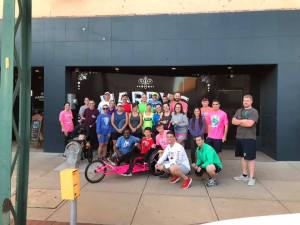
For five years or so, I was an Ambassador for an organization called Ainsley’s Angels. I recruited runners to include children and adults with disabilities (another word I have re-thought, preferring now to use “different abilities”) in 5Ks, 10Ks, or marathons, as they rode in what we called “chariots.”

The word “inclusion” was our mantra. Runners included those who could not run in the sport that they love. However, I quickly learned that the runners were not the only ones doing the including. The children and adults with Cerebral Palsy, Traumatic Brain Injury, Angelman Syndrome, Downs Syndrome and other diagnoses which impaired their ability to run, were actually including us in their lives. We even would say: “As runners, we don’t push our riders. They pull us. We are pulled by their positivity and joy across the finish line.”

They included us. They taught us, They challenged us, and they changed us. Perhaps more than anything, by including us in their lives, they taught us the virtue of empathy. How to really put ourselves in the shoes of another.

I believe that if we prayerfully think about the state of our divided nation today, it becomes obvious that what we have here is an empathy crisis. Some people just seem unable, or unwilling, to walk in the steps of another, to really hear, to listen, to truly understand and empathize with the groaning or the cries of others who are tormented by evil. Many are unwilling to leave their safe, protected bubble, where people who don’t look like them or live like them are excluded, to empathize with the cries of others yearning to be free, cries of others in their pursuit of some happiness, some acceptance, some affirmation and love, cries of others begging for a chance to just survive.

I believe this is why Jesus said: “On this, hangs all of the laws and message of the prophets, ‘you should love your neighbor as yourself’” (Matt 22:40). It is as if he was saying, “The entire Biblical witness comes down to this: “Love your neighbor and love your neighbor empathetically—as yourself. Which is to say: “put yourself in the shoes of another.”

I believe this morning’s gospel lesson has much to teach our nation today.

Just then, a Canaanite woman from that region came out and started shouting, ‘Have mercy on me, Lord, Son of David; my daughter is tormented by a demon.’ 

We hear this cry every day. Yet, many really don’t hear this cry. Many don’t understand this cry, nor want to understand this cry. Many don’t like this cry. Thus, never truly listen to the cry. To privileged ears, it’s just shouting. Strange, foreign shrieks that, frankly, we find offensive.

They are cries of mercy for a child tormented by demonic evil.

They are hopeful cries for a safer, more loving and just world for their child.

They are moral cries for equality.

They are cries for equal access to a quality education, for equal protection of the law, for fair living wages, for access to equitable healthcare.

They are prophetic cries against injustice.

They are cries against racism, against discrimination, against predatory loans, against voter suppression, against Gerrymandering, against oppressive government legislation. They cry out that their black and brown lives matter. For their queer lives to be seen and acknowledged.

Jesus’ first response to the cries is the most common response: it’s one of silence.

We know that response all too well. Silence, just silence.

If we ignore their cries, maybe they’ll go way. Responding to their cries will only stir things up, make things worse, uncover old wounds. And responding might cost us something. It might make us feel guilty. We may have to give up something. We might have to change something.

The second response comes from the disciples. It’s shocking, but not surprising. For it’s as familiar as silence: “Send her away.”

It’s the response of fear: fear of the other; fear that causes defense mechanism to go up; fear that breeds selfishness, anger, and hate.

Then, they blame the victim.

“What about her shouting?” “She keeps shouting.”

“What about the way she is behaving?” “She needs to be more respectable.” “She’s only making things worse.” “She needs to go away, get a life, get a job, go volunteer somewhere.” “She needs to learn some personal responsibility, stop begging for handouts and learn that God only helps those who help themselves.”

“They are what is wrong with this country.” “These snowflakes need to grow up, toughen up and shut up.” “And they need to learn that all lives matter.”

Jesus breaks his silence, but like the disciples, with words that are all too familiar. With words that are culturally popular; not biblically informed:

I was sent only to the lost sheep of the house of Israel.

“We should put our people first. We must look after our own interests. We need to do what is fair for us. We can’t give you a seat at our table, especially if you have needs. If you don’t possess the skills to help yourself, how can you help us?”

Nevertheless, she persisted. The outsider continues to protest. In an act of defiance, she takes a knee.

He answered (again with language culturally accepted; not divinely inspired):

It is not fair to take the children’s food and throw it to the dogs.

But the good news is that is not how the story ends.

The foreign mother from Canaan keeps shouting. She keeps fighting. She does not lose heart or hope. She believes that justice will come, truth will prevail, and love will win. She speaks truth to power saying:

Lord, at my house, the dogs eat at the same time we eat. Lord, at my table, there’s room and enough for all, especially for those tormented by evil.

And here is the really good news: Jesus listens to this outsider, and although he was neither Canaanite, nor female nor a parent, Jesus empathizes with this mother from Canaan. Jesus just doesn’t merely include this mother. He is not inviting her to accept what is culturally accepted in his religious bubble of doctrines or traditions. Jesus doesn’t expect her to assimilate to his culture and speak only his language.

Jesus is able and willing to do something that many are unable, or unwilling, to do these days; that is, to put ourselves in the shoes of the other. Jesus is able and willing to see the world as she sees it, bear the pain of it, experience the brokenness of it, sense the heartache and grief of it, feel the hate in it.

And because he is really listening, because he is truly paying attention, because he has what so many are lacking these days, because he has empathy, because Jesus truly hears her cries, I believe Jesus is outraged. I believe Jesus begins to suffer with her, offering her the very best gift that he has to offer, the gift of himself, which is breaking before her and for her.

Jesus loves her. He loves her empathetically, authentically, sacrificially. He loves her unconditionally, deeply, eternally.

And loving like that always demands action.

After hearing her cries, listening to her pleas, empathizing with her pain, becoming outraged by the demons that were tormenting her child, Jesus announces that her daughter will be set free from the evil that was oppressing her.

However, her daughter is not liberated by his love alone. She is liberated from her oppression, both by the love of Jesus, and by the persistent faith of her mother, this mother who would not give up, back down, shut up, or go away.

When we hear the cries of people our culture considers to be outsiders— instead of responding with typical silence; instead of criticizing their shouting, their protesting, their marching and their kneeling; instead of blaming them for their situation— if we will follow the holy command to love them as we love ourselves; if we will listen to them and allow their cries to penetrate our hearts; if we will empathize with them; if we will put ourselves in their shoes; walk in their steps; experience their plight; feel the sting of the hate directed toward them— then a place will suddenly become open at our table for them.

Outsiders become family. The underprivileged become equals from whom we can learn, be led, be challenged, and be changed.

And then, together— because the miracle we need today cannot happen unless more of us come together— together, with the one who is no longer a foreigner, no longer feared, no longer ignored, no longer ridiculed— together, in community, side by side, hand in hand, with faith in God, and with faithful, holy persistence— we will stand up, we will speak out and cry out, and we will fight the demonic evil today that is tormenting any of God’s beloved children.

Of course, there will be great cost involved, for the Bible teaches us that love is always costly. But the cost of refusing to love is greater.

I love reading what happened next (“the rest of the story,” as Paul Harvey used to say). It’s the story of justice coming, truth prevailing, and love winning.

Beginning with verse 29…

After Jesus had left that place, he passed along the Sea of Galilee, and he went up the mountain, where he sat down. Great crowds came to him, bringing with them the lame, the maimed, the blind, the mute, and many others. They put them at his feet and [without asking any questions about where they were from, what they believed, or what they had to offer] he cured them, so that the crowd was amazed when they saw the mute speaking, the maimed whole, the lame walking, and the blind seeing. And they praised the God of Israel (Matthew 15:29-31).

The words of the prophet Isaiah were fulfilled:

Foreigners were brought to God’s holy mountain, and there, experienced great joy in God’s house of prayer. They received the good news that God’s house of prayer is for all peoples. The good news is that their offerings are accepted, and God gathers the outcast and sits them beside those already gathered (from Isaiah 56).

Amen.

COMMISSIONING AND BENEDICTION

Go now and respond to the cries for justice.

Don’t ignore the cries. Don’t try to send them away.

Listen to them, empathize with them, love them.

Make them your sister, your brother.

And then, together— in the name of the God who is Love, the Christ who exemplified love and commanded love and the Holy Spirit who leads us to put our love into action—together, may we stand up, speak out and defeat the demonic evil that is tormenting God’s children, until justice comes, truth prevails, and love wins.

Mercy, Not Sacrifice

It is indeed an honor for me to stand before a congregation that has the audacity to believe that we should only exclude those people Jesus excluded, and that is no one—a church that not only believes that God’s love is for all people, but believes God’s call to ministry is for all people, with no exceptions. 

This is one of the great truths revealed in our gospel lesson this morning where we read Jesus calling a tax collector for a puppet king of the Romans to be a disciple. The oppressive taxes alone were enough to alienate Matthew, but the fact that the taxes went to a foreign government made Matthew hated among the Jews. 

Jesus is calling someone the religious establishment despised to be a disciple. Matthew, and his friends, are deemed morally reprehensible by the religious culture, yet, Jesus chooses to sit down at the table and share supper with them.

I believe it is very important for us to notice where Matthew was sitting when this initial invitation from Jesus to be a disciples takes place. In the third pew on the piano side of the synagogue? At a table in a Sabbath School class? No, Jesus has an encounter with Matthew while Matthew is at work, sitting in a tax booth out in the marketplace. I believe this underscores another great truth: If the church truly wants to fulfill the great commission and make disciples, then we must learn to find ways to go out and meet people where they are, instead of expecting people to come to us, especially those who may not understand that we truly welcome them here.  

After the Pharisees disparaged Jesus for demonstrating that there are no exceptions when it comes to the love of God, Jesus, rather ironically, reminds these teachers of the law that they still have a lot to learn. Notice that it is to the teachers he says: “Go and learn what this means: I desire mercy, not sacrifice.” “Go and learn what this means.”

The church today still has much to learn about how to truly be the church; however, perhaps the greatest thing we need to learn is this: that Jesus desires “mercy, not sacrifice.”

Jesús is quoting words from Hosea chapter 6 where we read the prophet speaking out against meaningless acts of worship, stating that what God truly desires is mercy, not burnt offerings, not sacrifices. The Hebrew word translated “mercy” is hesed, which denotes the love of God for us— a constant and consistent, compassionate and extravagant love that never gives up, gives in or gives out. 

And Hosea is not the only prophet who proclaims what God truly desires. In the first chapter of Isaiah we read: 

What to me is the multitude of your sacrifices? says the Lord;
I have had enough of burnt-offerings…
… who [even] asked this from your hand? Trample my courts no more; 

Bringing offerings is futile; incense is an abomination…
   I cannot endure solemn assemblies… 
Your appointed festivals my soul hates;
they have become a burden to me, I am weary of bearing them. 
When you stretch out your hands, I will hide my eyes from you;
even though you make many prayers, I will not listen;
   your hands are full of blood. 
Wash yourselves; make yourselves clean;
remove the evil of your doings from before my eyes;
cease to do evil, learn to do good; seek justice, rescue the oppressed,
defend the orphan, plead for the widow.

 Isaiah 1:11-17 NRSV

It is in the fifth chapter of Amos we read:

I hate, I despise your festivals,
   and I take no delight in your solemn assemblies. 
Even though you offer me your burnt-offerings and grain-offerings,
   I will not accept them… 
Take away from me the noise of your songs;
   I will not listen to the melody of your harps. 
But let justice roll down like waters,
   and righteousness like an ever-flowing stream.

Amos 5:21-24 NRSV

And the prophet Micah asks: 

‘With what shall I come before the Lord…
Shall I come before him with burnt-offerings…
…He has told you, O mortal, what is good;
   and what does the Lord require of you
but to do justice, and to love kindness,
   and to walk humbly with your God? 

Micah 6:6-8 NRSV

“Go and learn what this means,” says Jesus, “I desire mercy, not sacrifice.” And it is then that we read about Jesus’ encounter with two people who need mercy. We read about Jesus healing a woman who was ostracized and otherized, deemed “unclean” by the powers-that-be as she had been suffering from hemorrhages for twelve years. And then we read about Jesus restoring life to a girl who was dead, while the religious folks laugh and ridicule him.

I love corporate worship. I believe gathering together for worship is one of the great essentials of our faith. The word “church” is translated from the Greek word ecclesia, which literally means a “gathering” or “assembly.” And it is certainly good for us to gather.

However, what we need to learn is that our assemblies on Sunday mornings are meaningless to God without the unwavering and undeterred acts of mercy we are called to carry out outside these sacred walls during the week— acts of healing and of restoration, acts of liberation and justice.

When I was growing up in rural northeastern North Carolina, on Sunday mornings we had what we called, “Sunday School” at 9:45, and then we had what we simply called “church” at 11, which, of course, was the worship service. I should probably confess that I have not always loved corporate worship, for I will never forget how happy I was those times mama would announce on Sunday morning that we were eating dinner with grandmama, therefore we were going to Sunday School but then would miss “church.”

You know what I disliked the most about church? The preaching, of course!

And sometimes we even referred to worship or “church” as “preaching.” I remember asking: “Can’t we just go to Sunday School and skip preaching?”

Still today, when somebody today says: “I missed church last week,” what they mean is that they missed sitting in a pew listening to a sermon. Or maybe they missed singing some hymns. A Disciple might be saying they missed receiving Communion. The point is, that when we say that we missed church, more often than not, we are saying that we missed assembling here, in this building worshipping God.

I believe the prophets and Jesus want us to understand that “church” means much more, much more than our assemblies and certainly much more than this building. It means being the embodiment of Christ, the merciful hands and feet of Jesus in this world.

I believe God wants the church to create such a culture that if we say “we missed church last week”, we’re not talking about missing a sermon. We’re talking about missing an opportunity to love a neighbor as we love ourselves.

When we say “we missed church last week,” we’re not talking about missing Communion. We’re talking about missing an opportunity to feed someone who is hungry, or clothe someone who is poor, or give shelter to someone who does not have a home.

When we say “we missed church,” we’re not talking about not coming to this building, we’re talking about missing an opportunity to go city hall, travel to Richmond or to Washington to stand up and speak out for those who face discrimination, isolation and alienation. 

When we say “we missed church,” we are talking about missing an opportunity to bring healing and restoration to someone who has suffered spiritual abuse, or has been made to feel that they are outside the boundaries of God’s grace and God’s love. 

When we say “we missed church,” we are talking about missing an opportunity to bring abundant life to those who are treated as if they do not exist, forced to be called by their dead name. We are actually talking about raising the dead, despite the laughs and the ridicule we might receive from some religious folks.

“Go and learn what this means,” says Jesus, “I desire mercy, not sacrifice!”

Because when the voices of hate are loud, the world doesn’t need us to just go to church, the world needs us to be the church, to go out and show up as the church. The world doesn’t need us to only light a candle inside the sanctuary. The world needs us to be a light of mercy out in the darkness, a light that is so bright that it is bound to upset some religious folks!

When our children are being slaughtered by assault weapons, the world doesn’t need our prayers, the world needs our mercy.

When people are led by fear instead of by love, when queerphobic rhetoric in politics, and in many churches, is causing immeasurable suffering, when holy scripture is weaponized to support hate …the world needs our mercy. 

When a travel advisory against visiting another state is issued for our black and brown siblings, and when our trans siblings are denied healthcare and are unable to use a public restroom… the world needs our mercy. 

When reproductive rights are stripped from women, when greed is destroying the planet, when books are being banned, science is denied, truth is rejected, compassion is maligned, empathy is scarce and love is restricted …the world needs our mercy. 

When diversity, equity and inclusion, mercy itself, is outlawed, along with teaching our children the truth about racism, if there is one thing that we need to hear on this upcoming Juneteenth Weekend, is that our world needs us to go out, stand up, speak out, march, work, serve, fight and vote for mercy. Through our gospel lesson this morning, Jesus is imploring the church today on the behalf of the world to “go and learn what this means!” 

I believe this is the holy purpose of our Sunday morning gatherings here in this place, and this is why this time together here is so important, essential and sacred. In Sunday School and in worship, at and around the table, in church, we are to learn what it means to go out to be the church, to be the unwavering merciful, visible, demonstrative embodiment of Christ in this world. 

We are to learn what it means to go out into the marketplace to make disciples. We are to learn what it means to welcome those whom others fear and despise to the table. 

We are to learn what it means to heal the sick and raise the dead. 

We are to learn what it means to defend the orphan, plead for the widow, and rescue the oppressed.

We are to learn what it means to love kindness, to do justice and to walk humbly with our God.  

Through our gatherings in this place, together, we are to learn how to love this world as Christ loves this world. We come here to be refreshed and renewed, empowered and emboldened to go out and do all we can, with all that we have, to let justice roll down like waters and righteousness like an ever flowing stream.

Amen.

The Miracle of Pure Positivity: Reflections from the 2019 Marine Corps Marathon


MCM2019 JOSH FINISH

Josh France has Angelman Syndrome. He is non-verbal. He has excessive hyper-activity and has trouble resting. He has a difficult time walking and with all motor skills. But his smile and his laughter are infectious. He is a gift of God to the world. As of Sunday, he is also a marathoner.

Josh’s journey to the 2019 Marine Corps Marathon in Washington DC began early this year with our fundraising campaign. Thanks to some amazing people with generous hearts, we were among the first Duo Teams to meet our fundraising goal to be an Ainsley’s Angels Charity Partner by raising $1,750 in just a few weeks. Having experienced the incredible joy Josh receives participating in local races, and understanding the powerful symbol of inclusion that Josh’s participation in what is called “The People’s Marathon” conveys, members of the Western Arkansas running community and members of Josh’s family did not hesitate to give generously.

Pub run

Inspired by Josh’s love for racing with Ainsley’s Angels, Josh’s father, Mike, recently became a runner himself. To prepare Josh to cover the 26.2-mile distance, Mike trained with Josh all summer by pushing him several times each week. Mike also pushed Josh in the weekly Fort Smith Pub Run and in every local race in which Ainsley’s Angels participated.

MCM 2019 GO TEAM JOSH

During last week’s Pub Run, the local running community came together again for a $5 5k to raise money to help the France’s travel expenses to Washington. The previous week, at a group run sponsored by True Grit Running Company (our local running store), runners and storeowner Melissa Vitale surprised me with a generous gift of a new Garmin running watch, a pair of Mizuno running shorts and Balega running socks. The love that Josh and I have received from Western Arkansas has been humbling and something that I will forever cherish.

One week before I planned to depart for Washington DC, as I was on one of my final training runs, I badly injured my left knee. The next day, it hurt to walk. I was unable to run one step. The day before I boarded the plane, I was still unable to run a step; however, several of my running friends assured me that they were praying for me and had faith I was going to be able to run on Sunday. I responded: “That will take a miracle! If I can run the first mile, I will be surprised.” I boarded the plane on Thursday with my running shoes packed, hoping for such a miracle.

MCM 2019 Ambassadors

Athlete Riders, Angel Runners, Guardian Angels, Caregivers and Local Ambassadors from all over the country began gathering at our host hotel in Crystal City shortly after I arrived. The place was exploding with pure positivity, as I was surrounded some of the most selfless, most giving and most dedicated people in the world. Ambassadors Michelle Smith and Bethann Wilkie, who first introduced me to Ainsley’s Angels, were there. Rob Cass, who swam across the Chesapeake Bay earlier this year, was there. Maggie Seymore, who ran from San Diego to Virginia and donated two of Arkansas’ first three chairs and helped light a fire of inclusion in Arkansas, was there. Shaun Evans, who pushed his son Shamus, who has Cerebral Palsy 3,200 miles from Seattle to New York City was there. And Ainsley’s Angels Vice President Joe Orth, who pours all he has into this event every year, and Ainsley’s Angels President and founder Kim “Rooster “Rossiter were there. And many others, too many to name. It soon became very obvious that nothing in heaven or on earth was going to be able to tell any of us, “No you can’t.” Not the forecast of torrential rain, not the warmer than average temperatures, not the increased World Series traffic, and not the bursitis that had inflamed my left knee. On Thursday night, Joe Orth asked me how I thought I was going to be able to run on Sunday. Although it hurt to pick up my left leg, I responded: “Like a gazelle!”

After picking up our race bibs on Friday, Ainsley’s Angels Ambassador Caitlin Espy from Raleigh, who is a physical therapist, massaged the ligaments around my knee. Ainsley’s Angels Vice President Chris Wood bought me a beer or three. On Saturday, Peggy Wolfe, who was Ainsley’s therapist, taped my knee up. Ambassador Kristy High and Angel Runner Sharon Wood supplied me with plenty of ibuprofen. I received texts from friends in Fort Smith telling me that I was going to be fine and assuring me they were praying for me. Josh continually blew me kisses all weekend as if to say: “Jarrett, I am going to love you no matter what.” And although the pain in my knee was so intense that it prevented me from falling asleep on Saturday night, I got up on Sunday morning at 3:30 am and laced my running shoes up to attempt to run a marathon. As I experienced pain in my knee while putting my shoes on, I thought: “If my knee hurts this bad before the marathon, I wonder what is it going to feel like afterwards, even if I only run part of it? And I wonder how am I going to sleep tonight!”

MCM 2019 josh and jarrett ready to go

There are so many miraculous images in my mind from Sunday; however, the image I know I will never forget is the parade of 100 positive souls, including caregivers, Ambassadors, Angel Runners, Guardian Angels and Athlete Riders, making the half mile journey from the Ainsley’s Angels equipment trailers to the marathon starting line. It was 6 am. We had already been up for hours. It was pouring rain. It was dark. And it was very wet. But together, we marched and rolled to the starting line with joy, excitement and confidence. No one was complaining. No one contemplated turning back, and no one even thought about sitting it out. Not one ounce of negativity anywhere. It was miraculous.

I should not have been surprised. The dedication I witnessed overcoming the chilly rain before dawn on Sunday morning in that parade of positivity was really nothing compared to the dedication that our Athlete Riders and caregivers possess to overcome greater obstacles every day of their lives. Of course no one was complaining. Of course there was no giving up or giving in. Of course no negativity was present. This was nothing. This was just a little inconvenience. This was just a little annoyance. This was just a little water, a little early.

MCM 2019 Frances

And I was only experiencing a little pain. How inconsequential is the pain in my knee compared to what caregivers like Mike and Hong France and Athlete Riders like Josh endure 24/7? Pain, by the way, that was caused by running, by doing something that Josh will never be able to do on his own.

I then thought about where we were standing. We were standing just a few feet from Arlington Cemetery, where the bodies men and women were laid to rest after sacrificing life itself, so we could be free.  A little rain; a little pain— Inconsequential.

It was not an easy race. No marathon is. But we ran every mile of it. At times, the rain was blinding. But Josh kept smiling. Josh kept laughing. Josh kept giving spectators high fives and blowing them kisses. The sun came out at mile 20 transforming the nation’s capital into an 80-degree sauna, but it didn’t phase Josh. He kept waving to the crowds that were lining the streets. So, I kept running.

MCM 2019 JOSH Capitol

I would have never finished the race without my new friend for life and Angel Runner Steve Ruggles, who helped push Josh, alternating with me after every mile. This was not only Steve’s first time pushing an Athlete Rider, this was Steve’s first marathon! He also hurt his knee during one of his final training runs, and like me, he was unsure if he could finish the race. But as we like to say: Together, we shall.” And together, we did.

This was also Josh’s first marathon, but this was certainly not his first race. During the last two years, Josh has completed over 50 races with Ainsley’s Angels. Each time a medal is placed around his neck at the finish line, he immediately takes it off and throws it to the ground. And then he laughs out loud. Every single time. It has gotten to the point where we have almost stopped putting the medal around his neck. However, when the Marine placed the beautiful Marine Corps Eagle, Globe and Anchor medal around Josh’s neck, as I was prepared to pick it up off the ground and to apologize to anyone that might get hit with it, Josh grabbed the medal, held it to his face and kissed it repeatedly. MCM photographers took several pictures that should be available soon.

MCM 2019 JOSH FINISH JARRETT

I spent Sunday night at Rooster and Lori’s house in Virginia Beach. It was good to see Lori and Cameron. I knew this was always a very emotional weekend for this special family. I had the privilege to sleep in Ainsley’s room. I closed my eyes thinking about Ainsley, how the Marine Corps Marathon was her last race. I thought about Rooster and Lori’s dedication to her, and now, to her amazing legacy. Unlike the night before, the pain in my left knee did not prevent me from falling sound asleep. As I slept, I dreamed of Josh and the other Athlete Riders I am blessed to know. I dreamed about the privilege of being pulled by them in races. I can’t recall every detail of my dreams, but I know I dreamed pure joy, goodness and positivity.

I awoke refreshed. I was a little sore, like I had run a marathon. However, my left knee felt like it had never been injured.

It was a miracle. But I am not surprised.

Thank You Angels

Roll with the Wind Logo

I am grateful for the opportunity to be a local Ambassador of an amazing organization called “Ainsley’s Angels of America.” I am also an ordained minister. I have been a student of the Bible and a minister for over 30 years. I have a Masters of Divinity and a Doctor of Ministry Degree. So, when I speak about Angels, I like to believe I have a certain level of credibility and authority to do so.

Faith was born when Abraham met some strangers by the Oaks of Mamre. Although Abraham was unaware that these strangers were actually Angels sent by God, Abraham and Sarah welcomed them into their home with an extravagant hospitality. They graciously included the strangers, treating them as if they were family. And in doing so, they became part of the Divine plan. Abraham and Sarah became educated to what God was up to in the world, and they joined God in that mission. They themselves became messengers of God. Abraham and Sarah became Angels who changed the world.

So, here are three things I know about Angels:

  • Angels are messengers sent by God. They are holy gifts to the world.
  • Angels first appear in our lives as strangers, and when we include them and love them as family, something miraculous happens.
  • Angels educate us on the importance on inclusion. When we include others in our lives, we become a part of what God is up to in this world. When we include others, we discover that we are the ones being included in something divine. We ourselves become Angels on a mission to change the world.

Therefore, I do not use the word Angels casually or haphazardly, but I use it with careful theological justification and authority when I say:

“Athlete Riders, thank you for being Angels.”

“Angel Runners, thank you for being Angels.”

“Guardian Angels, thank you for being Angels.”

“Sponsors who give to support our mission, thank you for being Angels.”

“All volunteers who made the Arkangel 5k possible this past weekend, thank you for being Angels.

If you think you have it takes to be an Angel, please register today at www.AinlseysAngels.org.

Join us on a mission of selfless inclusive love, and together, we shall change the world.