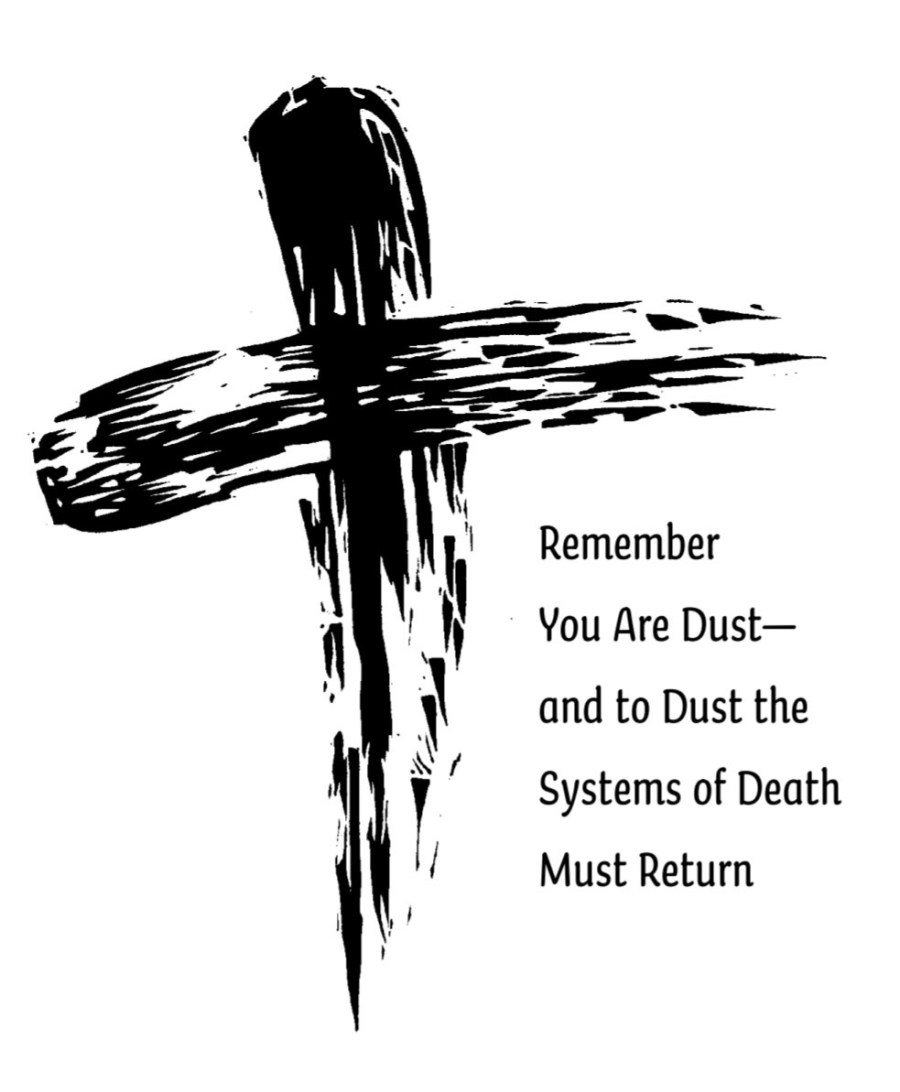
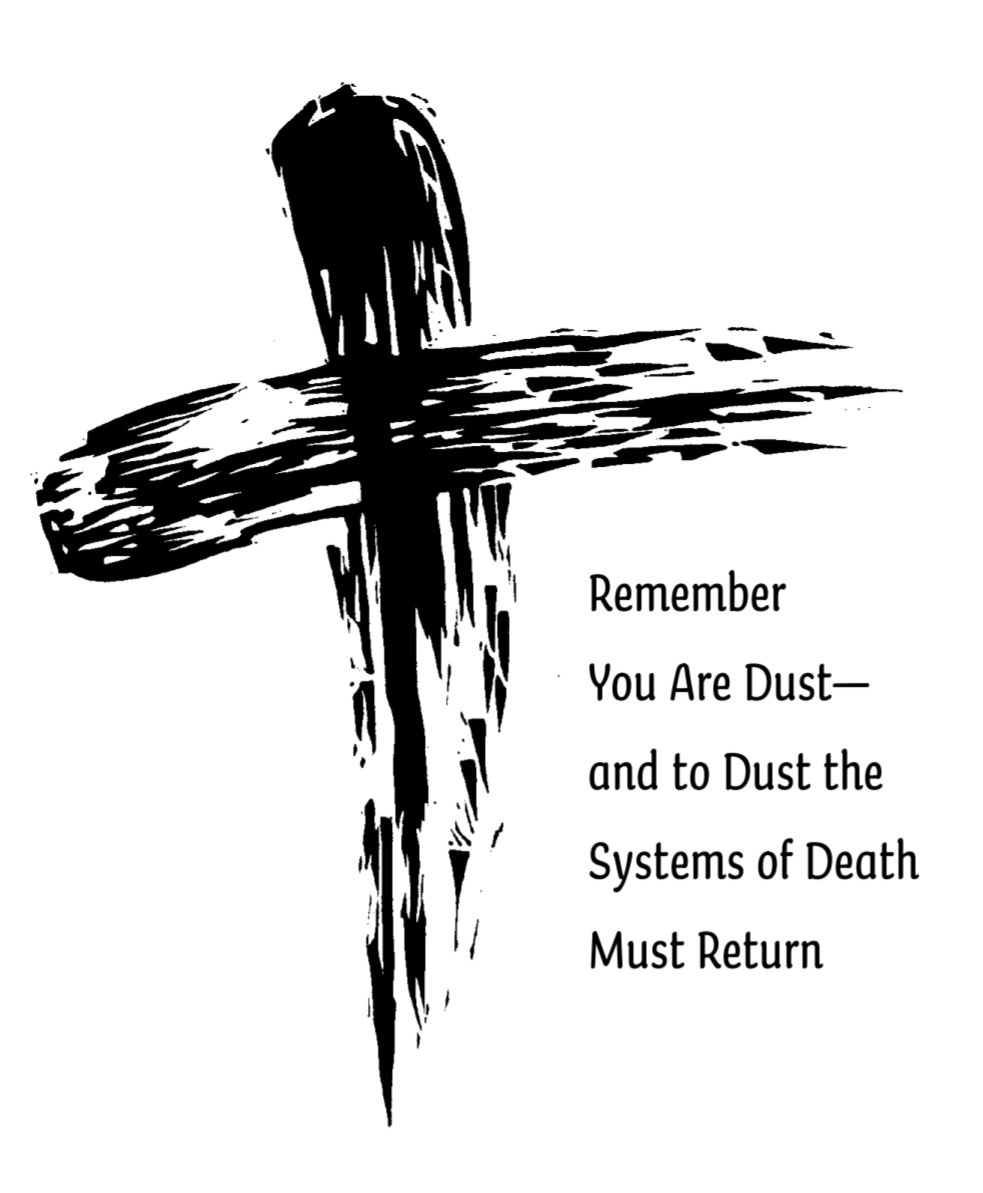
From Dust You Came. For Justice You Are Called.

Isaiah 58

I often encounter people who tell me that they would attend our church—if they were religious.

Some say to me, “If I believed in organized religion, I would go to your church.”

And I usually respond, “I wish you would come, because I think you’ll find we’re not that religious, and we’re really not that organized.”

And I wish they were here tonight. Because they would be surprised to learn that this day, often assumed to be reserved for the most devout, is actually God’s demand that we be done with religion.

Tonight, the church hears the prophet Isaiah asking a question that challenges religion. He looks at organized religion, the traditions and the the rituals, and he doesn’t hold back. In the words that are traditionally read by the church on this day, he shouts a question that should shake us to the core: “Is this the fast that I choose?”

In other words: Is being religious what you think repentance looks like? Do you think this is what faith is all about? Is it sitting quietly inside a sanctuary, while outside, injustice, hate, and cruelty are loud? Is it bowed heads while policies crush the poor? Is it words sung or spoken that soothes souls but never unsettles systems?

Isaiah says no! Because the truth is: God is not interested in religion that ignores justice. God is interested in a faith that transforms the world.

Isaiah is speaking to people who are deeply religious. They fast. They pray. They gather for worship. They present their offerings and sing their praises to God. And yet, workers are still exploited, the poor are still hungry, Eunuchs are still subjugated. Foreigners are still mistreated. And the vulnerable are still scapegoated.

And Isaiah tells it like it is: You seek God in the sanctuary, but you serve the systems of death. You humble yourselves in worship, but you harden your hearts in public life. You follow the laws of the Sabbath, but you don’t follow politics. You read the Bible, but you refuse to let it interpret the world you live in. You look after your own, but you neglect your neighbor. In divisive times, you call yourself apolitical, when you are actually being amoral.

Oh, how the church needs to hear Isaiah tonight!

Because the crisis we are living through in this nation is not merely a crisis of policy. It’s a crisis of values.

A nation that can afford abundance but tolerates poverty.

A nation that claims liberty while restricting dignity.

A nation that invokes God while rejecting the commands of justice, mercy, and love.

As we begin the season of Lent, Isaiah refuses to let us spiritualize repentance, contrition, and worship by saying the fast God chooses looks like this:

Loosening the bonds of injustice.
Undoing the yoke of oppression.
Sharing bread with the hungry.
Housing the unhoused.
Clothing the naked.
Refusing to hide from your own kin.

And who is our kin? Who is our neighbor?  In other words, Isaiah is saying, that we should be available to do the work of justice for the entire human family.

Jesus stands firmly in this prophetic tradition.

In Matthew’s gospel, Jesus exposes performative religion—faith that wants spiritual credit without social responsibility. He warns against prayer and fasting that seeks approval instead of transformation, against a righteousness that hides from justice.

Ash Wednesday names what many would rather avoid:

We are shaped by systems that privilege some and punish others.
We are beneficiaries of structures that reward greed and normalize inequality. And silence in the face of that reality is not neutrality.
It is consent.

Ashes tell the truth about who we are. We are dust.

In Genesis, God forms humanity from the dust of the ground — from the same soil that grows our food, from the same earth that holds every other body. We are not dropped into the creation from above. We rise up from within it. We belong to the earth and to each other.

Dust means we are made of what everyone else is made of. The same earth runs through all of us. The same breath sustains all of us.

Which means we are not autonomous individuals competing for survival. We are interdependent lives sharing one fragile existence. Dust cannot declare independence from other dust. What happens to one part of the soil affects the whole field.

Dust reminds us of something the powerful try to make us forget: No one is disposable. You cannot discard part of the earth without damaging the whole. You cannot throw away people without wounding yourself.

So, when you come forward tonight, and the ashes are placed on your forehead, you will hear these words: “From dust you came; for justice you are called.”

These words are not a blessing. They are a summons declaring that repentance is not complete until justice is pursued. That worship is not faithful until it confronts what dehumanizes. That Lent is not about what makes us feel holy, but about what makes the world more humane.

Lent is a season of moral clarity. It’s a season to break with greed in a culture of hoarding. It’s a season to confront racism in a society built on racial hierarchy. It’s a season to resist bigotry when fear is marketed as righteousness.

If our observance of Lent does not make us more honest, more generous, more courageous, Isaiah would say we have missed the point.

Ash Wednesday does not mark us for shame or for death. It marks us for responsibility. For truth-telling. For solidarity. For resistance grounded in love and for a life committed to justice.

Ash Wednesday tells the truth: we are dust. And God has always done revolutionary work with dust.

In the beginning, God bent down to the earth, gathered soil in divine hands, and breathed into it— and humanity stood up. The first declaration of dignity was spoken over dirt.

When empire tightened its grip and Pharaoh seemed untouchable, God did not raise up another emperor. God raised up a shepherd from the wilderness, dust from the margins, and said, “Go.” And the empire trembled.

When a giant towered over Israel in bronze and steel, God did not choose armor. God chose a boy and five stones from the ground. And dust struck down domination.

When a valley lay scattered with dry bones (history’s casualties, abandoned and forgotten), God did not turn away. God spoke. God breathed. And dust became a living, moving people again.

When a woman was dragged into the center of accusation and shame, Jesus did not stand above her. He knelt in the dirt. He wrote in the dust. He reminded the powerful that they, too, were earth.

And when violence did its worst, when love was crucified and laid in the ground, they thought the story was over. They returned him to the dust.

But the earth could not hold what God had breathed into it. And on the third day, dust rose.

So, when you hear the words tonight that you are dust, it does not mean you are powerless. For dust is where God begins. Dust is where God breathes. Dust is where God builds movements, topples idols, and raises what the world declared dead.

And tonight, ashes will mark your forehead. Not as a sign of shame. Not as a symbol of defeat. But as a reminder: You are dust. Dust shaped by God. Dust filled with breath. Dust capable of courage. And don’t ever underestimate what God can do with dust, especially dust that has decided to seek justice.

Amen.


Benediction

Beloved, as you go into this season of Lent,

Go remembering that you are dust
formed from the earth,
held together by breath,
bound to every living thing in sacred belonging.

Go not in shame, but in courage.
Go not in fear, but in hope.
Go not to perform religion, but to practice love.

May the God who breathes life into dust
breathe holy restlessness into you
a hunger for justice,
a tenderness for the vulnerable,
and a stubborn refusal to accept a world as it is
when it could be more humane.

May your fasting loosen injustice.
May your prayers soften hardened systems.
May your repentance bear the fruit of repair.
May your worship spill over into mercy.

And when you grow weary,
remember: dust is where God begins.
Dust is where God breathes.
Dust is where resurrection rises.

Go in peace
to love boldly,
to serve humbly,
and to do justice with joy.

Amen.

Alternative Gospel

new-coke

Isaiah 58 NRSV

It’s good times in Atlanta, Georgia today. But times have not always been good. I want to begin this morning with a story from some of the darkest days of what is perhaps Atlanta’s most famous corporation.

Some of you remember when the Coca-Cola Company made the unfortunate decision to change the formula of its flagship soft drink introducing “New Coke” back in 1985.

What prompted the change in formula were these “blind taste tests” that revealed consumers preferred the sweeter taste of Pepsi over Coke.

Coke sales were down, so these geniuses went to work and “New Coke” was born to completely replace the original Coke.

It wasn’t long, though, before the public rose up and demanded to bring back the original formula, or what became known as Classic Coke.

And even Bill Cosby (who still had his clout in 1985) and a cartoon named Max Headroom could not prevent one of the largest marketing failures in world history.

I am not sure when this exact thing happened to the original Word of God that was fully revealed by our Lord and announced by the prophets before him, but it happened. It’s like someone, or some group did some sort of blind taste test that revealed that people preferred a faith that had a much sweeter taste. Perhaps it happened in the very beginning, when Adam and Eve chose the sweetness of that forbidden fruit, choosing to live in the creation of their terms, instead of on God’s terms.

So these geniuses went to work, and this brand new faith was born to completely replace the original faith—to make it sweeter, more palatable, more drinkable.

However, unlike New Coke, the general public did not rise up and demand to bring back the original formula, or what we might call “classic faith.” In fact, most seem to prefer the re-imagined, re-engineered, and re-manufactured faith.

So, one might argue that the reformulation of this “new” gospel has been the largest marketing success in world history. It has been so successful in North America that the majority of folks believe that this new sweeter gospel is actually the “classic gospel.”

For example, a recent survey by Bill McKibben reveals that three-quarters of Americans believe the Bible teaches that “God helps those who help themselves.” However, that statement is from Benjamin Franklin, a Deist, which means he did not even believe God was working in the world. It is not from the Bible. “God helps those who help themselves” is in fact one of the most unbiblical ideas. It is Jesus who made the dramatic counter-assertion: “Love your neighbor as yourself.”

But, we prefer Ben Franklin don’t we? Easier to swallow. Taste sweeter. And it doesn’t sound so foolish.

But the Apostle Paul warned us that the wisdom of God is understood as “foolishness” to the world.

But we in the world don’t like to be foolish, do we? So we’ve embraced this new, sweeter, less foolish formula.

We’ve replaced “Do unto others as you would have them do unto you” with: “Do unto others as they do unto you.”

We’ve replaced “Turn the other cheek” with: “When somebody hits you, you hit back harder.”

“Love your enemies” has become: “Love the deserving.”

The simple commands to “feed the hungry” and “clothe the naked” have become the more qualified, conditional, yet sweeter commands to: “feed and clothe those who will pray with you, or at least attend a Bible Study or a worship service with you. Feed and clothe others, but give preferential treatment to those who share your faith.”

We’ve replaced “The last shall be first and the first shall be last” with “We must look out for number one.”

“Love keeps no account of wrongdoing” has been replaced with “love the sinner but hate the sin” (and of course everyone knows to hate the sin we just have to keep account of that sin).

“For whosoever welcomes little children welcomes me” has been replaced by “children should be seen and not heard, especially in a worship service.”

“Welcome the stranger” has been replaced with “It’s always best to err on the side of safety.”

We’ve replaced “In Christ there is no longer Jew nor Greek” with “Oh, there is most definitely ‘us’ and ‘them’” (and there’s way too many of them).

There is “neither slave nor free” has be replaced with “the free should have the religious liberty to treat others as second-class.”

There is “no longer Male nor Female” and other verses that elevate women like “Wives and husbands should submit to one another out of reverence for Christ” has been replaced with “Somebody needs to man up and wear the pants in the family.”

Ashamed of the gospel, we’ve replaced it with something sweeter to the taste, something more popular to the culture, more drinkable to the majority, and less foolish to our friends and family.

And we wonder why the world grows ever darker.

What we need today is for someone to rise up and demand to bring back the original formula, the original faith of Abraham, Isaac, and Jacob, of Moses and Prophets, the classic, old-time religion of Jesus and the Apostles. This country needs someone to stand up for the the true, indisputable, irrefutable Word of God.

We need someone like Isaiah, the prophet Jesus quoted the most, to stand up and shout out and hold nothing back! We need someone to lift up their voice like a trumpet and announce to the people their rebellion. We need for someone to call it out for the sin that it is. We need someone to tell the God’s honest truth: “The church has been conned. The people have been played. The clergy duped. They have been seduced into accepting an alternative faith, a fake-news that is nothing like the original good news.”

Hear again these words from Isaiah (I am reading from the contemporary Message translation):

They’re busy, busy, busy at worship, and love studying all about me.

Sound familiar? Of course it does. It’s the the sweeter gospel, it’s more-pleasing church. But when did Jesus ever say, “Worship me, study me?”

He never said that. That’s Alternative Jesus. That’s fake-news Jesus. True Jesus, Original Jesus, Classic Jesus never said, “study me or worship me.” No, he said something much more radical. He said, “follow me.” And not only “follow me,” but “deny yourself and take up your cross and follow me.”

Isaiah continues:

To all appearances they’re a nation of right-living people—law-abiding, God-honoring. They ask me, ‘What’s the right thing to do?’ and love having me on their side.

We certainly do, don’t we? We love saying: “one nation under God.” We love singing: “God bless America.” And we love having: “In God We Trust” on our money and the Ten Commandments in our courts.

Isaiah keeps preaching:

But they also complain…

Oh boy, do we complain! We whine in the darkness. We blame, and we scapegoat. It’s us verses them.

So rise up and preach it Isaiah. Stand up! Shout out! Hold nothing back!

Why do we fast and you don’t look our way? Why do we humble ourselves and you don’t even notice?

Why is the nation so divided? Why is the church struggling to survive? Why is the world so dark?

Well, here’s why [says the Lord]: The bottom line on your ‘fast days’ is profit.

In other words, your worship is more concerned with bringing in money than bringing in the lost. Or as Jesus said, “the house of prayer has become a den of thieves.”

You drive your employees much too hard. [You are against fair wages.]

You fast, but at the same time you bicker and fight. You fast, but you swing a mean fist.

You worship, you attend Sunday School, you might even teach Sunday School, but you gossip, and you tear others down. You go to church, but you say things and do things that do not build up the church.

So the kind of fasting you do won’t get your prayers off the ground.

Do you think this is the kind of fast day I’m after: a day to show off humility?

To put on a pious long face and parade around solemnly in black?

Do you call that fasting, a fast day that I, God, would like?

This is the kind of fast day I’m after: to break the chains of injustice, get rid of exploitation in the workplace, free the oppressed, cancel debts.

What I’m interested in seeing you do is: sharing your food with the hungry, inviting the homeless poor into your homes, putting clothes on the shivering ill-clad…

With absolutely no strings attached, especially religious strings!

But God, this doesn’t have a sweet taste at all. This is just foolish. We prefer something easier to drink, another formula, a new faith. Might we just remember, study the classic faith? Read about the original covenant? Must we actually do it?

Yet, when we look around at our world, all is so very dark. Everything seems to be headed in the wrong direction. The road before us is so uncertain. Something must change.

Then, don’t just remember this or study this, says the Lord.

Do this, [do this and the good news is:] the lights will turn on, and your lives will turn around at once. Your righteousness will pave your way. The God of glory will secure your passage. Then when you pray, God will answer. You’ll call out for help and I’ll say, ‘Here I am.’

Do you really want to bring light to the darkness? Then do this:

Get rid of unfair practices… [Get rid of this new gospel created by selfish, sinful minds that send the poor away empty.]

Quit blaming victims, quit gossiping about other people’s sins. Be generous with the hungry and start giving yourselves to the down-and-out.

And then your lives will begin to glow in the darkness, your shadowed lives will be bathed in sunlight. I will always show you where to go. I’ll give you a full life in the emptiest of places—firm muscles, strong bones.

You’ll be like a well-watered garden, a gurgling spring that never runs dry. You’ll use the old rubble of past lives to build anew, rebuild the foundations from out of your past.

You’ll be known as those who can fix anything, restore old ruins, rebuild and renovate, make the community livable again.

The answer to the cries of this world is right here. It is the original covenant. It is the classic faith. It is the true gospel. It is the irrefutable, indisputable Word of God. And we need to rise up and demand to bring it back.