It’s Time to Get Personal

adam

Isaiah 49:1-7 NRSV

1 Corinthians 1:1-9 NRSV

John 1:29-42 NRSV

The season of Epiphany is the time the church traditionally talks about the revelation of God to all of humanity.

It is the time to ask some of the most difficult questions of our faith. Who or what is God? What is God like? What does God feel? What does God want? How does God relate to and interact with us and the world? How does God reveal God’s self to us?

These are very difficult questions, because with our mortal minds, I do not believe we can ever answer them completely. And as I said last week, I am okay with that. In the words of Fosdick: “I would rather live in a world where my life is surrounded by mystery than live in a world so small that my mind could comprehend it.” I am very comfortable living, as the Apostle Paul wrote, in a world where I “see through a glass dimly” (1 Cor 13).

I love the way we begin each service with the Lord’s Prayer praying, “Hallowed be Thy name.” For the name of God is so above our mortal comprehension it always evokes reverence, awe, and respect.

And I believe that one of the problems with religion these days is that, for many in the church, there is no mystery. Too many people have the world and have God all figured out. They are know-it-alls and listen to a sermon or attend a Bible Study not to learn anything new, not to be challenged, but to have what they already know reaffirmed. They have all of the answers and never have any doubts.

A parishioner came to see me one day almost in tears. She was so upset that she was shaking. A friend of hers was dying. She said that she was not sure about her friend’s faith so she asked her: “Without any doubt, do you know that if you died today that you would spend eternity in heaven?”

Has anyone ever asked you that before?

The dying woman responded, “I hope so.”

Well, that response tore her friend completely out of her frame!  For she wanted her to respond: “Yes! No doubt about it, I know! I know unequivocally, for absolute certainty!”

But her friend’s response did not sound that troubling to me. She may not have responded with absolute certainty, but it sounded to me as if she had faith.  She hoped. She believed. She trusted.

To be honest, I tend to get along better with people who are honest enough to admit that they sometimes have their doubts; that they do not always know absolutely. And I am often wary of those who have no doubts whatsoever, because it has been my experience that those are the ones who are the quickest to judge and are the first to belittle, even condemn, others who hold different beliefs.

A member of a pastor search committee once asked me if I believed the Biblical account of Jonah and the whale should be taken literally. She asked, “Did it actually historically happen the way the Bible says it did?”

I responded, “I believe that God can do what God wants to do. I have no trouble believing that God can use a whale to actually swallow man and spit him out on the beach of God’s choosing. However, if I die and get to heaven and find out that it was just a fictional story to reveal a great truth about the will of God, then I am not going to get angry and ask for a transfer!”

I believe the problem with the church today is that too many church people are so closed-minded they would opt for the transfer. They are so convinced, so right, so certain about the things of God that they leave no room for mystery and thus no need for faith, hope or trust.

One of the great things about our heritage as Disciples of Christ is our individual freedom to interpret the scriptures and to understand God and God’s relation to the world. We are encouraged to have open-minds when reading the Bible. No one was more of a free-thinker or had more of an open mind than our forefather, Barton Stone. That is why I believe he was so inclusive, welcoming all people to the Lord’s table. And that is why I believe we are such a non-judgmental, non-self-righteous, accepting people today. We do not presume to have all the answers. And we are not even close to having God all figured out.

Now, I wished we could just end the sermon right here. I wished we could just stand now and sing our hymn of commitment, pat ourselves on the back, and then go get some lunch. But, we can’t do it. We can’t do it, because now, now the sermon is just beginning.

We open-minded, free thinkers have to be very careful, that while embracing the mystery of God, we do not completely depersonalize God. While we accept broad views and opinions, while we practice widespread inclusivity and acceptance, we do not make the mistake and generalize God.

In emphasizing God as mysterious Spirit, a Spirit that Jesus says is comparable to the wind, blowing when and where it wills, in stressing God as Light in our world working in mysterious ways, we must be careful not make God into some sort of generic, vague enigmatic force.

In church, we say very specifically, “May the Spirit of Christ be with you.” We do not say very vaguely say, “May the force be with you.” That’s from Obie One Canobie and Yoda; not from the Old and New Testaments.

I have noticed, especially over the last decade, how Christians, in their attempts to find common ground with other faith groups, talk more about following a general God and less about following a specific Christ. When relating to Hindus, Muslims and Jews, I have heard Christians say things like: “We have our differences,” “but we all believe in God.”  But in our attempt to find common ground and unity, I believe we sacrifice God as a distinct, particular, and very personal being.

You hear a lot of talk today about spirituality.  More and more people are calling themselves “spiritual” instead of “Christian.”  There are far more books at Barnes and Nobles on Spirituality than are on Jesus. William Willimon says he can understand why this sort of reasoning is so attractive. “The more vague, indistinct, mushy, and impersonal we can make God, the better for us!” Willimon says that if God is so mysterious, “Then we can make God just about anything we want. We can render God into a projection of our sweet sentimentality and we will never have to grow, change, or be born again.”[i]

And when we depersonalize God we ignore about almost everything said about God in scripture. Take, for instance, today’s lectionary lessons—every one of them. Each of them, in their own way, speaks of a very personal God who sees, speaks, acts, moves, feels and intrudes. In the Old Testament Lesson for the day, the prophet Isaiah recounts how, even before he was born, God knew him personally and intimately and had special plans for him.

In the Epistle Lesson, Paul, when challenged by some dissidents at one of his early congregations, defends his authority as leader on the basis that God Almighty, the creator of all that is, had reached down and touched him, personally authorizing him as an apostle. The Greek word apostle, literally means “someone personally sent from God.”

And in our Gospel Lesson that I read this morning, John the Baptist looks at Jesus and sees in him the very presence of God in the flesh, the personification of God among us.  And Jesus himself said, that if we know him, we know his Father as well (John 14:7).

I believe we should think of this hour on Sunday morning as our attempt to get personal with God, to give that word “God,” which can be terribly abstract and general, some specific concreteness. Sunday morning is the time when we tell God who we are, but more importantly, it is the time when we listen to God tell us who God is.[ii]

Our God is not distant, aloof, some indistinct concept or some abstract idea. Our God is a personal being who yearns for the most intimate of relationships with each one of us. Our God is one who continually rips the heavens wide and swoops like a bird when we least expect it, calling us by name, affirming us as God’s beloved children. God reaches out and reaches in and touches the places in us that most need touching. And our hearts, our very souls burn with love.

Let me just stop my sermon for a moment and just look at you. As your pastor, part of what I love about you is not your vague generalities, but your very personal ways: the particular ways you love, the intimate ways you care, the unique ways you act, the peculiar way you share, the specific you give, the distinctive ways you serve, the certain ways you accept, the special ways your forgive.

I love you not for your generalities, but for your personal uniqueness.

“Humanity in general” does not move me.  A congregation “in general” does not energize me, evoke me, persuade me or love me—but you specifically can. You particularly can. You explicitly and certainly can.

The same is true with God. Here in this season of Epiphany, it is time to get personal, to get down to the specifics. We believe, that in the personal specifics of the life, death and resurrection of Jesus, we have seen God. We have seen not some general, vague idea, not some mysterious force, but we have seen a person, a person walking among us, calling us, urging us, challenging us, loving us, forgiving us, changing us, and one day resurrecting us revealing the true life of God—revealing who God is, what God is like, how God feels, and how God relates to us and our world.

No, we do not have all of the answers. And as I said, I am comfortable not knowing all of the answers. I fully embrace the mystery of all that is.  I believe that there is a very good reason that each Sunday, we unite our hearts and pray, “Hallowed be Thy Name.” For His name is so beyond our fragile minds, so above our finite understanding, so outside our mortal comprehension, so utterly mysterious, that it is a name that is to always be revered and respected and sanctified.

However, that name just so happens to be “Father”—a word that cannot be any more personal. And the good news is, we pray, not merely “Father” but we pray very intimately and very specifically and personally “Our Father.”

No, when it comes to God, we cannot know it all, but what we can know is certainly, absolutely, unequivocally, undoubtedly enough.


[i] William Willimon, Pulpit Resource, 2006.

We Cannot Afford to Stop the Celebration!

peanuts christmas

Ephesians 1:3-14 NRSV

I know what some of you are thinking. You are thinking it because you were raised with the same good old-fashioned conservative values that I was raised with!

“Preacher, now tell me, just how long are we going to be celebrating Christmas? It is January 5th!  Christmas is long over. The time has now come to tighten up and cut back!”

“Yes, in December we are allowed to splurge a little, even overdo it. Be a little excessive, extravagant, indulgent, even a little wasteful. Because, after all, it was Christmas. It was the season for spending and bingeing. The time for gold, frankincense and myrrh!”

“We kept the heat running in the sanctuary 24-7 for an entire month to keep the tropical poinsettias alive. The lanterns burning outside beside each door have not been turned off since Thanksgiving.  

“But preacher, we just cannot afford to keep this extravagance going! Do you know how much light bulbs now cost?”

“And our utilities is not the only place where we have been indulgent. Do you know how much weight we have gained since Thanksgiving? Do you know how many extra calories we have consumed? We have gorged ourselves with cookies and pies and cakes and all sorts of candy! And we don’t even want to think about how much ham we have eaten!”

“And then we spent all of that money on gifts. We bought way too many presents for way too many people. Every year we always overdo it. Even for total strangers! Because, after all, it was December. And no one wants to be a scroogy, stingy Grinch at Christmas!”

“But now it is January. It is time to tighten those purse strings. Turn off those Christmas lights. Throw away those left-over cookies. And start pinching those pennies!”

“January is the time to restrict, conserve and limit. It is the time to scrimp and to save. It is time to tighten the belts and pull in the horns and get back to our miserly ways!”

“As much as we would like to, we simply cannot afford to keep this Christmas celebration going. We will run out of money before Easter or all be dead from diabetes or heart disease!”

So, ok, I got it. I totally get it. As soon as this service is over, I promise, we are turning off the Christmas tree lights, and we will not light them again until November 30th! The poinsettias are gone so we will make sure the thermostat is set to turn the heat off in this place until choir practice on Wednesday night. And I have resolved with many of you to go on a stricter diet and adopt a stricter budget.

However, while we are all in this conservative mood to cut down, cut back, and cut out, we need to be careful that we do not forget, put aside or ignore the good news that was Christmas.

This week the Apostle Paul reminds us that we must keep part of the celebration going with these eloquent words:

 He destined us for adoption as his children through Jesus Christ, according to the good pleasure of his will, to the praise of his glorious grace that he freely bestowed on us in the Beloved. In him we have redemption through his blood, the forgiveness of our trespasses, according to the riches of his grace that he lavished on us.

Now there’s a word in that does not fit in our tight-fisted January vocabulary.  Lavish:  That’s a December word if there ever was one!

Riches that are lavished: It denotes unrestrained, excessive, even wasteful extravagance. The Apostle Paul seems to be saying, that when it comes to grace, when it comes to forgiveness, when it comes love, when it comes to giving people fresh starts and clean slates, no matter what month of the year it is, there is nothing miserly or conservative about our God.

The entire Biblical witness testifies to this truth. Cain killed his brother Able in the very first chapters of our Bible. And what does God do? Cain is exiled from the community because of his actions, but God promises to go with him to protect him.

Moses killed an Egyptian, breaking one of the big Ten Commandments. But here’s the thing: God chose that murderer to reveal those commandments to the world and to lead the Israelites out of bondage into the Promised Land.

David not only committed adultery, but killed the husband of his mistress. Yet, God chose him to be the King of Israel.

When it comes to forgiveness, when it comes to grace, when it comes to love, when it comes to giving people fresh starts and clean slates, God lavishes. God overdoes it. The riches of God’s grace are excessive, extravagant and abundant.

And those of us who have listened to Jesus should not at all be surprised.

The story of his very first miracle says it all. When the wine gave out at a wedding party, what does Jesus do?  He turns water into more wine!  Not just some water into a little bit of wine. He makes, according to John’s estimate, about 180 gallons of the best-tasting wine they ever had.  As a preacher, I know I am probably not supposed to know about such things, but that seems like an extravagant amount of wine to me! Sounds like he just might have overdone it a bit!

Then, we’re reminded of all those stories that Jesus told. A farmer sows way too much seed. Most of it was “wasted,” falling on the wrong type of soil. But I suppose when sowing good seed in bad soil, you have to overdo it. You have to lavish the dirt with seed. And the seed that did manage to take root produced a harvest that is described as abundant!

The father of the prodigal son didn’t just welcome his returning son.  That in itself is extravagant.  But the father lavished the son. The father said to his servants, “Quickly bring out a robe—the best one—and put it on my son; put a ring on his finger and sandals on his feet.  And get the fatted calf and kill it, and let us eat and celebrate!

It wasn’t that the Good Samaritan stopped and helped the wounded man in the ditch. It was the way he stopped and helped. It was the way he lavished the man pouring expensive oil on his wounds. Then he put the wounded man in his car. He took the man to the hospital and told the doctors, “Forget about filing insurance! Here’s all my credit cards, my checkbook, everything. I’ll be back in a week, and if that’s not enough money to treat the man’s wounds, I’ll give you even more!”

Come on now! Isn’t that overdoing it?

There’s something built right into the nature of God, it would seem, that tends toward extravagance and abundance and excessiveness.

As people who have been called to inherit this nature, as the Body of Christ in this world, how do we live?  I know how we live in December. But how do we live January through November? Are we protective with our love?  Are we miserly with our forgiveness?  Do we scrimp on grace? Are we tight-fisted with the good news? Do our good, old-fashioned conservative values sometimes cause us to put Christmas back in the attic and turn off the lights too quickly?

I have to ask that questions because, unfortunately, this is a real problem with many churches these days. If somebody wants to be judged or belittled; feel unforgiven, unaccepted, unloved and unworthy; if someone wants someone to look down on their noses at them, one of the best places they can go is to church.  And that, I believe, is one of the main reasons, some churches will be forced to close their doors for good in the next few years.

People come to church seeking the Jesus that they have heard about, the God that they have experienced while gazing at the vastness of the stars in the night sky, but they enter the doors to find something that is quite the opposite.

Each Sunday morning of the year, maybe especially this Sunday morning, this first Sunday of a new year, we open the doors to our sanctuary and welcome people who are in desperate need. They are wanting, hungry. They are people who are yearning to start over, begin anew, get a fresh start, a clean slate.

How do I know? Because I am one of them.

Death, divorce, disease, and grief—in a thousand different ways, this world has beaten them up. They have grown weary and some even hopeless from battling cancer and other illnesses, having nightmares about terrorism, bank robberies and home invasions. They have made countless mistakes in life. Some have betrayed the people they love the most. They have disappointed co-workers, friends and family. They are riddled with guilt. They are sometimes tempted to believe God, like others, has it in for them. At times they feel judged and feel condemned by the universe.

And as the body of Christ in this world, we are called to give them the one thing that they need, the one thing that every human being living in this broken world needs: a need to be lavished. We are called to lavish them with the love and grace and forgiveness that we inherited at Christmas.

Jesus was teaching on a hillside and looks out at the large crowd that showed up looking for some hope. Thousands of them came from all over. They were hungry and weary, broken and sinful. Darkness and desperation was setting in.

The miserly disciples said: “Send them back to town, for there’s really nothing we can do for them here. We barely have enough to take care of our own needs.

But Jesus takes all they have, blesses it, breaks it, and feeds 5,000 people, the population of Farmville!

But the story doesn’t end there. They took up what was left over, and 12 baskets were filled. Once again, in typical fashion, Jesus overdid it. Jesus splurged. He went on a bender. He binged. Jesus indulged and overindulged. Jesus lavished.

When Jesus is present, people in need are always lavished. There is always abundant love, extravagant forgiveness, and overflowing grace.

As a church we might say cannot afford to keep the December celebration going. But the reality is: we cannot afford to stop the celebration. Because if we ever stop lavishing one another with the riches of God’s love and grace and forgiveness, if we ever get scroogy and stingy with the good news of Christmas, then we stop being the church.

Let us pray.

O God, may we continue to be the church you are calling us to be, one that lavishes all people with your grace, just as we ourselves have been lavished. In the name of Christ Jesus our Lord. Amen.

COMMISSIONING AND BENEDICTION

Go now and keep the celebration going. Because the truth, we cannot afford to stop it. Continue your December bender. Go on, continue to overdo it. Splurge. Indulge and overindulge. Lavish all people with overflowing grace of Jesus Christ, the abundant love of God and extravagant communion of the Holy Spirit, as it has been and continues to be lavished upon each of us!

We Do Not Light Our Candles on Christmas Eve with Optimism

candlelight-services

I was listening to MPR a while back and heard an interview with a psychologist who said that, according to her research, the single, biggest key to living a healthy life is staying optimistic.   In one of those voices that was so pleasant and friendly and sugary sweet that it got on your nerves, she said:

“Optimists have less stress, better marriages, and healthier diets. They tend to have a sunnier outlook on the world, which translates to positive self-esteem and self-confidence. Optimists generally believe that things are getting better, that humanity is improving, the world’s problems are being solved.”

And then, to clinch her point, she said: “We also discovered that optimists live longer than other people.”

As a Christian minister I thought: “If that statement about optimists is really true, then there is no way that Jesus could have been an optimist.  For he was dead at 33.”

While some Christians are always  a delight to be around, always cheerful and positive, Christmas hope is fundamentally different from optimism.

Christian hope has very wide and focused eyes on the devastation of the world, and Christmas hope readily acknowledges that things may not get better.  Christmas hope does not bury its head in yuletide cheer and artificial lights, but like an Advent wreath glowing stronger and brighter each week, Christmas hope pushes its way into the brokenness of this world, clearing a path in the darkness so that the true light might shine.

Christian hope has the courage to work for the Biblical vision of justice, healing and liberation, trusting that such working is a testimony, a witness to the Light: The light that came through Jesus to teach us that God loves us and God is with us and God will never leave us and never forsake us;  The Light that reveals God will stay by our side and resurrect all of our sorrow into joy, our despair into hope and our deaths into life.

Tom Long tells a story about rabbi Hugo Grynn who was sent to Aushwitz as a little boy.  In the concentration camp, in the midst of death and immense suffering, many Jews held on to whatever shreds of religious observance they could without drawing the attention of the guards.  One cold winter’s evening, Hugo’s father gathered the family in the barracks.  It was the first night of Chanukah, the Feast of Lights.  The young child watched in horror as his father took the family’s last stick of butter and made a makeshift candle using a string from his ragged clothes.  He then took a match and lit the candle.

“Father, no!” Hugo cried.  “That butter is our last bit of food!  How will we survive?”

“We can live for many days without food,” his father said. “But we cannot live a single minute without hope.  This is the fire of hope.  Never let it go out.   Not here.  Not anywhere.”

It is Christmas Eve.  These days are darker, both literally and figuratively.  We are surrounded by never-ending questions of pain and sadness—a world groaning for salvation. Tonight we light our candles, hear the Christmas story and say our prayers, and wait for the coming Christ.  We wait for the Light that will never go out.

We are not being merely optimistic.  But in Christ, we possess an abundance of faith, trust and confidence that God is Emmanuel, God with us and God for us, and the day is coming when God’s Light will come and rid this world of darkness forever bringing forth a new and glorious creation!

What Is Christmas All About?

meaning_of_christmas

If Christmas is all about the exchanging of gifts…Then it will mean a lot of shopping which will lead to a lot of stress, debt and depression.

If Christmas is all about children…Then it will be especially painful for those who have lost children, for those who have never been able to have children, and for those whose children are estranged. Christmas will mean lost dreams which will lead to anguish, regret and depression.

If Christmas is all about family… Then it will be especially painful for those of us, including me, who have lost loved ones this past year.  Christmas will mean empty chairs at the table which will lead to grief, sorrow and depression.

No wonder Christmas is the most depressing time of the year for so many people.  No wonder suicide rates are at their highest this time of the year.

However, if Christmas is all about the Holy gift of God’s self to us through a little baby named Jesus, then Christmas will mean hope.  If Christmas is all about Emmanuel, God with us, then Christmas will mean peace.  If Christmas is all about God who came to earth to heal and forgive, then Christmas will mean love.  If Christmas is all about God, who through Jesus the Christ came to earth and died and who was resurrected, then Christmas will mean joy which will lead to abundant and eternal life.

I want to encourage all of you to avoid depression by making the worship of the God of our Lord Jesus Christ a priority this Christmas season so we can receive true life, and together, share it with others.

Christmas for the Average Joe

st-joseph-infant-jesus-344x400Matthew 1:18-25 NRSV

This past week, I went to the post office to purchase some Christmas stamps for our Christmas cards.  And this year, like every year, I am asked the same question from the postal clerk that goes something like this:  “Do you want the gingerbread house, or do you want the religious stamps?”  Last year, it was either “the snowman or the religious stamps?”

Of course I want the religious stamps! It’s Christmas, and I’m a preacher, and I’m supposed to be religious!

“What kind of religious stamps to you have?” I asked.

And every year it’s always the same. In the Christmas religious category, you always have the same number of choices—one.  Said the clerk: “It’s the Madonna and child, you know, the portrait of the Virgin Mary holding the baby Jesus.”

Have you ever wondered why there are no stamps of Joseph holding the baby Jesus?  In all of your born days, have you ever seen such a stamp?  Have you ever even heard of such a stamp?

Now, I understand that way back then, in a male dominated society, men probably didn’t do a lot of baby holding.  That was the woman’s job.  But why hasn’t there ever been a postage stamp of Jesus and Joseph hard at work in Joseph’s workshop building something together?  Why can’t we find a postage stamp of Jesus and his carpenter father building a new pew or a pulpit for the local synagogue?

And along the same lines, how many Christmas carols or a Christmas hymns have you ever heard that are about Joseph?  If you look through any traditional hymn book, you’ll find, “Gentle Mary Laid Her Child Lowly in a Manger;” “That Boy-Child of Mary.” “What Child is this, Who, Laid to Rest on Mary’s Lap;” “Child in the Manger, Infant of Mary.”  Then of course there’s “Silent night, Holy Night, All Is Calm All is Bright Round Yon Virgin Mother and Child!”  Why isn’t it “round yon father, mother and child?” Why is it never “Child in the Manger, Infant of Mary and Joseph?”  The truth is: you’ve got to look high and low, do a lot of googling, to even find one mention of Joseph’s name in any Christmas carol or Christian hymn!

Now, I realize that Joseph is not the biological father of Jesus.  Yet, without him there would be no nativity.  Have you ever seen a nativity scene without Joseph?  Even the very small ones, the ones without all of the animals and the shepherds and wise men, have Mary, the baby Jesus and Joseph!

His role in the Christmas story is so important that he, like Mary is also visited by an angel. He is told that his wife, Mary, is going to have a baby, but he is not the father. However, he must accept the baby as his own.  And then, although he is asked to claim the child, raise the child, and provide for the child, Joseph will not even have the privilege of naming him, as he is told by the angel call him “Jesus.”

He must shoulder the demands of fatherhood. He must support Mary in her awkward situation before the child is delivered. And then, when the child is delivered, he must be born in a barn! Then, soon after, he must be protected from the horrors of King Herod. He must save the child’s life by fleeing to Egypt until it is safe to come back home. But still, Joseph has no postage stamp, no hymn, no carol.

They belong to Mary. Maybe it is because the church has traditionally called Mary “the first disciple.”  And well we should, for she was the first one to be visited by an angel, the first one to hear the call of God on her life, and she is the first one to faithfully say: “yes!”  When the angel told her that she was going to have a baby, she replied with obedient, grateful confidence with the beautiful words: “Let it be to me according to your will.”

Amen, Sister Mary! That will preach!

But what is there about our brother Joseph that will preach? Yes, he does go through extraordinary lengths to care for and protect the baby Jesus. But, really, who wouldn’t? When it comes to innocent babies, no matter who they are, most of us have a soft spot.

So what is it about Joseph that preaches, that speaks to us, that reveals something about who God is, how God acts, and who God is calling us to be?

Mary was the first to receive the good news, the first to be called by God to participate in the movement of God, and Mary was the first to say “yes,” but Joseph is the second to the get the news:  The good news, the gospel, the word that God was pouring God’s self out, emptying God’s self and becoming flesh to save all people through a child to be named Jesus. Joseph is the second to be called by God, which kind of makes Joseph the second disciple. And, Joseph was the second to say “yes!” Maybe that is what preaches about Joseph!

Well, actually, typical of Joseph, he did not say anything, at least nothing that we know of.  In all of our encounters with Joseph in the gospel of Matthew, we do not hear him utter one word.  Did you know that?  Maybe that is the reason the postmaster told me that yet again this year, that if I did not want the Gingerbread House, and wanted something in the religious department, I only had one choice.

But you know something?  Most of us are a lot like Joseph, aren’t we?  No one is going to find a postage stamp with any of our faces on it either. Most of us are a lot like Joseph in that all the news we have about Jesus is really second-hand news. We were not the first to get it.  Mary’s first-hand news was dramatic, causing her to become involved in the movements of God in the world in the most profound of ways, literally with her body and soul.

It’s just not quite the same with Joseph, and it is not quite the same with us.

And, like Joseph, most of us are not big talkers. We are ordinary, quiet folks. When Mary was visited by the angel, she burst into song, singing one of the most beloved songs in all of scripture and the church: her lovely and powerful Magnificat. But Joseph, he never sang. And as far as we know, he never even said anything.  He was a simple man, a quiet man, a rather ordinary man, an average Joe.

Now, I’m a big talker, but you have to pay me to do it! Most of you would be very uncomfortable up here doing what I do in this pulpit this morning. You have faith, but you don’t like to make a big show of it. You believe in Christ wholeheartedly, and you have committed yourselves to follow Christ faithfully, but you don’t have a lot to say about it. You are a faithful disciple, but you are a quiet disciple.

You go about serving your Lord every day, faithfully answering his call, courageously following Christ wherever he leads, albeit quietly.

And like Joseph, sometimes the call of God leads you to do things that you do not want to do. Sometimes it calls you to go to places that you do not want to go. Sometimes it calls you to accept and love people that you would rather not accept and love.

And every ordinary Joe who strives to live as a disciple for the sake of others sacrifices and suffers.  And you do it because something or someone who is greater than yourself is constantly persuading you, encouraging you, leading you. And you follow. You persevere faithfully and courageously, albeit quietly and ordinarily.

You are just an average Joe, minding your own mundane, everyday business, when suddenly your life is caught up in the extraordinary purposes of God. You wake up one day realizing that you need to serve God more by serving others more selflessly—forgive those who have wronged you, care more earnestly, love more deeply, follow Christ more closely.

You wake up with a desire to bake cookies and deliver them to the oncology floor at the hospital on Christmas Day. You awake and feel led to make a donation to the food pantry, serve a meal in the soup kitchen, drive someone to a doctor’s appointment, and purchase a coat or a toy for a child.

And you don’t talk about it. You just very faithfully and quietly act.

The Bible is full of stories of average Joes minding his or her own business, and then, out of nowhere, comes a call. And usually the person being called is speechless.

Do you remember the call of Abraham?  When God called Abraham in the middle of the night, he was too dumbfounded to speak!  Do you remember the call of his wife Sarah?  When she was called, she could not talk either. All she could do was laugh!

When Moses was called, he spoke, but all he said was that he was not a very good speaker. We learn throughout the Bible, that this is simply the way God works. God specializes in calling ordinary people, average Joes, to become caught up in the unexpected and extraordinary movements of God in our world.

Therefore, we remember Joseph on this Sunday before Christmas.  And although we will not sing one carol this day about him, we thank God for him nonetheless. Because in Joseph we can see ourselves:  ordinary, average Joes.

Like him, we mind our own business. But then, into our ordinary lives, God intrudes. God comes to us, and God comes upon us. God calls us.  And even if we are not good with words, even we couldn’t burst into a hymn if we had to, even though we will never be on a postage stamp, if we will at least whisper, “yes,” then like Joseph, we will be faithful disciples, a people willing to follow the movements of God in Jesus Christ wherever it takes us.

And the good news is: that will preach!

PS: I found this poem after I wrote and delivered the sermon:

The hardest task
The most difficult role of all
That of just being there
And Joseph, dearest Joseph, stands for that.
Don’t you see? 

It is important,
crucially important,
that he stand there by that manger,
as he does,
In all his silent misery
Of doubt concern and fear.
If Joseph were not there
There might be no place for us,


Let us be there,
Simply be there just as Joseph was,
With nothing we can do now,
Nothing we can bring-
It’s far too late for that-
Nothing even to be said
Except, ‘Behold- be blessed,
Be silent, be at peace.


The hardest task
The most difficult role of all
That of just being there
And Joseph, dearest Joseph, stands for that.
Don’t you see?[1]

[1] Shepherd, J. Barrie. Faces at the Manger. Nashville: Upper Room Books, 1992.

Because of Christmas Day!


John 1:1-14

In the beginning was the Word, and the Word was with God, and the Word was God. He was in the beginning with God. All things came into being through him, and without him not one thing came into being. What has come into being in him was life, and the life was the light of all people. The light shines in the darkness, and the darkness did not overcome it.

There was a man sent from God, whose name was John. He came as a witness to testify to the light, so that all might believe through him. He himself was not the light, but he came to testify to the light. The true light, which enlightens everyone, was coming into the world.

He was in the world, and the world came into being through him; yet the world did not know him. He came to what was his own, and his own people did not accept him. But to all who received him, who believed in his name, he gave power to become children of God, who were born, not of blood or of the will of the flesh or of the will of man, but of God.

And the Word became flesh and lived among us, and we have seen his glory, the glory as of a father’s only son, full of grace and truth.

This past week, a lot of people have asked me: “Are you having church on Christmas day?”

My response was that Christmas Day should be so important to the life of the Christian, we should be in church every year on this holy day, and not just when it happens to fall on Sunday once every seven years!

The reason we lead worship which begins with Advent and ends with Christ the King Sunday, is because we believe the life of the Christian should be governed, directed and guided by the birth, life, death and resurrection of Jesus. Our lives as Christians begin and end on this earth with this birth that we celebrate on Christmas Day.

The words of one of my favorite Christmas carols go like this: “Long time ago in Bethlehem, so the Holy Bible say, Mary ‘s boy child Jesus Christ was born on Christmas Day. Hark, now hear the angels sing, a king was born today. And we will live forevermore, because of Christmas Day.”  Because of Christmas Day.

The good, glorious news of this holy morning is that we know who our God is, how our God acts and what our God desires; we know who we are, how we should act and what we should desire, because of Christmas day.

Left to our own devises, we could not get close to God, so on Christmas Day God came close to us. Our God who was thought to be distant became as close as God could possibly be to us—becoming one of us—becoming flesh to dwell among us, giving us the best gift that God had to give, the gift of God’s self. Thus, as Christians we know how to live.  And we know how to die. Because of Christmas Day.

Just think about it! When we lose a loved one to death or encounter evil in this world, we grieve, but how can we grieve with hope and assurance? How do we grieve with a peace that is truly beyond understanding? How do we know that God is always a giver and never a taker?  Because of Christmas Day!

Because on this day, God proved to the world how far God is willing to go to give us life! God loves us so much that God emptied God’s self, poured God’s self out to us and for us through a vulnerable little baby born in a stable who grew into a man show us the way to life, abundant and eternal. And although we rejected not only this way, but also him; although spat upon him, tortured him and killed him by nailing him to a tree, God brought him back to life for the very ones who crucified him—revealing in a real and powerful way that God will never give up on us. God will never forsake us. God will always be there for us, forgiving us, loving us, transforming our despair into hope and our deaths into life.

One day, someone asked me why I don’t preach more about the judgment of God, the wrath of God, and preach less about the love and the grace of God. How can I preach with confidence that God is never using the pain of this world to punish us for our sins, but God is always here with us loving us and forgiving us and doing whatever God can do to work all things together for the good? Because of Christmas Day!

Because God came into the world in Jesus to heal the sick, give sight to the blind, eat and drink with sinners, forgive the adulterer, and promise a thief paradise.

Why is our invitation to communion wide-open to all people every Sunday morning? Why are we compelled to love others and share with others so freely and so unconditionally?

To others—to those others who do not deserve our love and have not and will not earn our love—to those others who may reject our love and even abuse our love. Why do we keep on sharing with and keep on loving those who may never share with us and love us?  Because of Christmas Day.

Because God was born to an underserving woman named Mary, was worshipped first by undeserving shepherds, called undeserving fishermen to be his disciples and died for undeserving people like me and you.  Because we have received grace, we are compelled to extend grace.  Because we have been forgiven, we are compelled to forgive. Because of Christmas Day.

“Long time ago in Bethlehem, so the Holy Bible say, Mary ‘s boy child Jesus Christ was born on Christmas Day. Hark, now hear the angels sing, a king was born today. And we will live forevermore, because of Christmas Day.”

Because of Christmas Day.

Whom God Favors

dirtyshepherds

The very first ones on earth to hear the pronouncement of Christmas were shepherds.  Who were these shepherds?   It is accurate to say that they were folks that the popular religious people knew would never “inherit the kingdom of God.”

This is not easy for most of us to hear.  For most of us have a tendency to romanticize the shepherds.  After all, we have been raised in the church with our innocent children depicting shepherds wearing bathrobes in adorable Christmas plays.  And for most of us church folk, shepherding evokes a very positive and pastoral image.  We think about the Old Testament images of the shepherd king David.  We think about the beautiful green pastures and still waters and the protection of the rod and staff of the twenty-third Psalm.  And, of course, we think about Jesus Himself as being the “good shepherd.”

However,  the reality is that shepherding was a most despised occupation.  Mercer New Testament Professor Alan Culpepper writes:  “In the first century, shepherds were scorned as shiftless, dishonest people who grazed their flocks on others’ lands.”  Therefore, it would not be too great of a stretch to give shepherds the current degrading designation: “illegal aliens.”

And why were these people involved in such a despised occupation?  The theology of the day would say, “because of sin, of course.”  They were who they were because of either their own sin or the sins of their parents.  In the eyes of popular religion, the shepherds were poor, immoral sinners.

Fred Craddock writes that the shepherds belong to the Christmas story “not only because they serve to tie Jesus to the shepherd king, David (2 Sam 14:23, 21) but because they belong on Luke’s guest list for the kingdom of God: the poor, the maimed, the blind, the lame (Luke 14:13, 21).

The very first people in history to receive the birth announcement of the messiah, the very first ones on earth to celebrate Christmas are sinners; they are the despised, the lowly, the immoral and the outcast.

This is why the angels pronounce the good news of Christmas is great joy for ALL the people.  Culpepper writes:  “The familiarity of these words should not prevent us from hearing that, first and foremost, the birth of Jesus was a sign of God’s abundant grace.”  The birth is a sign that God is on the side of ALL people—even the most despised, the most lowly, the most immoral, the most outcast, the most alien, and the most illegal .  Jesus came even for those who find themselves standing on the outside of the community or church.

And in what form does this sign appear?   The savior was coming into the world through a poor peasant woman to lay in a manger, a feeding trough made for animals.  And it is this humble scene that sets the stage for his entire life on earth.  Jesus, the savior of the world was born and lived and even died on the fringes, on the margins of society—underscoring the truth that the good news has come into the world for ALL—maybe especially to the marginalized.

Page Kelly, my Old Testament professor at Southern Seminary, used to love to say that the biblical symbol for God’s justice on this earth was not a blind woman holding a set of scales.  “It was one of the Old Testament prophets holding a set of scales with his eyes bugged out and his long bony finger mashing down on the side of the poor.”  –Favoring those who have always been despised and marginalized by society.

Sounds a little like the Angels’ song:  “Glory to God in the highest heaven, and on earth peace among those whom he favors.”

“But God does not have favorites!” we say.  Arguing that God’s grace is all-inclusive, some ancient manuscripts even omit, “among those whom he favors.”   Fred Craddock says that interpreting this passage all depends on where you put the comma.  The original Greek was without punctuation.  Thus, one could read:  And on earth peace among those (comma), all those who inhabit the earth, whom God favors—making it the song all-inclusive.

But then we have the Song of Mary.  In the Magnificat, Mary sings, “My soul magnifies the Lord, and my spirit rejoices in God my Savior, for he has looked with favor on the lowliness of his servant.”  And this favoritism does not appear to be all-inclusive for “he has brought down the powerful from their thrones, and lifted up the lowly.  He has filled the hungry with good things, and set the rich away empty” (Luke 1:46-48, 52-53).

So, maybe just maybe, those folks, who for whatever reason, cause people to judge as unworthy of “inheriting the Kingdom of God,” are not the ones who have the problem.

Now, here’s the good news.   And it just so happens that I heard it while visiting an Alzheimer’s patient in the nursing home who does not remember who I am.  There are some days when she does not know who her husband is, but amazingly, she has never forgotten who her Lord and Savior is.  As soon as I entered her room, she read me the front of Christmas card that she was holding in her hand.  “Jesus—in the incarnation, God showed us mercy.”

The good news is that when we realize that we stand in desperate need of God’s mercy, when we realize that apart from the grace of Christ, we are all outsiders, we are all poor, alien, sinful, immoral, when we realize that the shepherds are our brothers, then the joy and peace that is Christmas, that is salvation, is ours.

Wake Forest theologian Frank Tupper commented on Luke’s story of the Good Samaritan stating, “We are all half-dead men or women lying in a ditch somewhere east of Eden—beaten so badly by the sin and evil of this world that no one can tell if we are rich or poor, slave or free, male or female.”

And the news even gets better.  When we realize that we are sisters and brothers to the shepherds, the outsiders, the lowly and despised, the poor and the weak, when we reach out and offer them our bread, our drink, our clothing, our presence, our touch, our love, when we reach out and take in, then the Song of the Angels still fill the skies singing with the comma in just the right place—“Glory to God in the highest, and peace on earth, among all who inhabit it, whom God favors.”

World-Affirming Christmas

star-of-bethlehemExcerpt from  Heaven Can Wait

British scholar Lesslie Newbigin once looked at our dark world and the state of the Church and made the following assessment: “In an age of impending ecological crises,” with the “threat of nuclear war and a biological holocaust” many Christians have retreated into a “privatized eschatology.”  That means, that the only hope many Christians possess is “their vision of personal blessedness for the soul after death.”

Christians everywhere, in the words of Newbigin, have “sounded the trumpet of retreat.” They have thrown their hands in the air and have given up on the world. Their faith in Jesus has become solely and merely a private matter. Faith is only something they possess, something they hold on to, that they can someday use as their ticket out this God-forsaken place. In the meantime, they withdraw into safe sanctuaries and look forward to that day “the roll is called up yonder.”  And they listen to angry sermons by angry preachers condemning the world to Hell in a hand basket.

Giving up on the world is really nothing new.  At the turn of the first century, Jews called Gnostics had a similar view of the world.  Everything worldly, even the human body itself, was regarded as evil.  And maybe, they too, had some pretty good reasons to believe that way, because regardless of what some may believe, the world did not start growing dark when Kennedy was assassinated or when the Trade Center Towers fell. The truth is: This world has been dark ever since that serpent showed up in the garden.

At the turn of the first century, Jews were a conquered, depressed people, occupied the Romans.  They were terrorized daily by a ruthless, pro-Roman King named Herod—a king who would murder innocent children to have his way.  The Gnostics looked at the world and their situation and came to the conclusion that they were divine souls trapped in evil bodies living in a very dark, God-forsaken, God-despised world.

In this season of Advent, we remember that it was into a very dark world that something mysterious happened that we call Christmas. A light shone in that darkness proving in the most incredible and inexplicable way that this world is anything but God-forsaken or God-despised!

God loves this world so much that God emptied God’s self and poured God’s self into the world. God came and affirmed, even our fleshly existence as God, God’s self, became flesh. And God came into the world not to condemn the world, but to save the world. For so God loved the world that God came into the world and died for the world.

Thus, the message that we all need to hear today and hear often is NOT that God believes the world is worth forsaking, but God believes this world is worth saving! God believes the world is still worth fighting for! God still believes that this world is worth dying for!

As the body of Christ in this world, we as the church are not called to retreat or withdraw from the world and its troubles, but are called to love this world, to do battle for this world, to even die for this world.  We are called to be a selfless community of faith in this broken world. And, no matter the cost, we are called to share this good news of Christmas all year long!

The Christmas Disparity

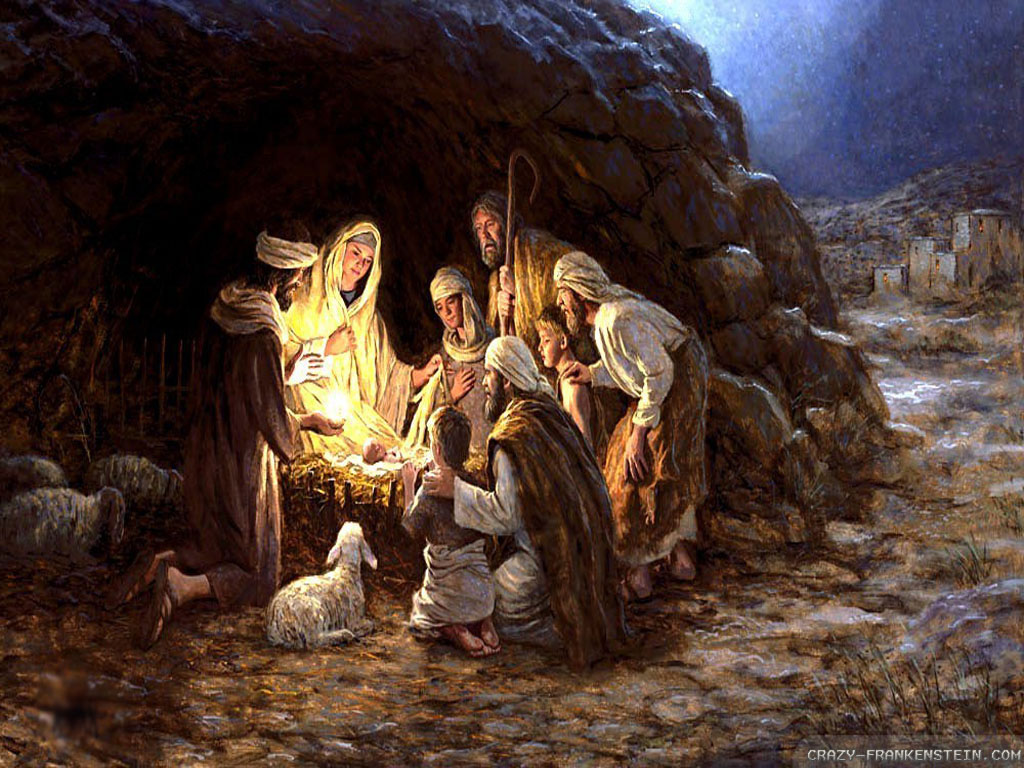
baby-jesus-christmas-nativity-wallpapers-1024x768Have you ever thought about the stark disparity of the first Christmas and the way our culture celebrates Christmas?

Stockings hung on the fireplace; a wreath on the door, presents wrapped under a tree—A baby born in a stable and placed in a feeding troth; homeless refugees fleeing to a foreign land; the slaughter of the innocent.

The scent of fresh-cut cedar and fir; the aroma of warm gingerbread; the smell of candy canes and tangerines—the stench of animal waste; the smell of wet straw; the repugnant odor of poor, unbathed shepherds.

Jingle Bells, Rudolph, and Frosty the Snowman; the tolling of church bells; the laughter of children playing—The disappointment in an innkeeper’s voice; the painful cries of a night of labor; the wails of grief from parents holding their dead babies.

Why the disparity?

Could it possibly be because we are frightened by who true Christmas calls us to be and where true Christmas calls us to go?

Perhaps this is why we go to great lengths every year to cover it up. This is why we decorate it. This is why we tie a bow around it and string it with lights.

True Christmas looks more like the rejected homeless sleeping on the street, the grief-stricken eyes of mourners, and the wearied and anxious faces of refugees.

True Christmas smells more like the stench of a dank prison cell, the foul odor of a nursing home, and the uncleanliness of the very poor.

True Christmas sounds more like the cries of a distraught Alzheimer’s patient, the moaning of an AIDS patient, and the sobbing heard at a funeral.

This year, may we see through the wrappings, glitter and lights and BE the people that Christmas calls us to be and GO to the places Christmas calls us to go.

Holiday Party Pooper

christmas_invitationMatthew 3:1-12 NRSV

One of the greatest things about this time of year is all of the Christmas parties.

Now, generally speaking, there two kinds of guests we invite to these parties.  First, there are the people that we gladly invite.  Guests we want to invite.  Guests we look forward to inviting.   These are the people we enjoy being around.  You know, people that are fun, the folks who know how to have a good time.

Then, there are those people that we have to invite: those extended members of the family, maybe a coworker, or maybe the pastor.  We don’t really enjoy being around them, we would prefer not being around them, but we know their feelings will be hurt if we do not invite them, so because we are Christian, and because it is Christmas, we reluctantly invite them to our party.

And besides, these folks, well, they are like family.  Sometimes they are family.  Christmas parties have guests we want to invite and they have guests that we just have to invite.

My good friend and pastor Nathan Parrish has said that he is quite certain that John the Baptist would be on our “have to invite’ list.  John the Baptist is that strange character that no one really enjoys having around, especially at Christmas.  Just look at him!

He just doesn’t seem to fit into the mood of the season.  He doesn’t know how to have a good time.  Everyone remembers the way he behaved last Christmas.  While everyone else wore festive clothing, had on their red and their green, had on their Christmas sweaters with Santas and reindeer and snowmen and Christmas trees and wreaths, John the Baptist had the nerve to show up in an old camel hair robe with a worn leather belt.  John the Baptist simply doesn’t know how to dress for such gatherings.

Do you remember what happened at last year’s Christmas Dinner when someone offered him some a slice of roast pork and a warm glass of apple cider?  He said he was on this ridiculous diet. He said he only ate locusts and wild honey!  John the Baptist just doesn’t know how to enjoy himself at these functions.

And while everyone at the a party was simply trying to enjoy Christmas and each other by exchanging warm, friendly conversation, John stalked around the room shouting, “Repent, for the Kingdom of God is at hand!”  He doesn’t seem to realize that a Christmas party is no place for a sermon…especially a sermon on repentance.

So year after year, after every Christmas party, we say to ourselves that this is the last time we invite this character to our party.  For every year, no matter how hard we try, he always seems to ruin the perfect holiday season.

Oh this year, wouldn’t it be nice we could just leave John the Baptist out?  Forget him this year.  Ignore him.  Avoid him.  Wouldn’t it be wonderful if we did not have to put up with his bizarre outfit, his strange diet and his somber message?

We don’t want to invite him this year, but we have to, don’t we?

Because after all it’s Christmas and we are Christians and he, well, he is family—he’s Jesus’ family anyway.  And besides that, he belongs to the Christmas story.

His appearance in the Christmas drama was no accident.  He did not choose to be a part of salvation history.  God chose him.  His appearing was prophesied through the prophet Isaiah.  Whose words we find in the fortieth chapter: “A voice cries out: “In the wilderness prepare the way of the Lord, make straight in the desert a highway for our God.  Every valley shall be lifted up, and every mountain and hill be made low; the uneven ground should become level, and the rough places a plain.  Then the glory of the Lord shall be revealed, and all the people shall see it together, for the mouth of the Lord has spoken.”

So, even if we do not want to have John the Baptist around this Advent season, we do not have much of a choice.  After all he’s family, and he is part of the story.

But if he is part of the Christmas story, why do we find him so offensive?  Why does his weird dress, bazaar diet and somber message turn us off this time of year?  Why do we find him so embarrassing and regard him as our annual holiday party pooper?

Because, when we think about it, we realize that John the Baptist is the exact opposite of how our culture defines Christmas.  Just look at him!  Nothing about him, the way he looks the way he eats the way he talks says:  “Merry Christmas and Happy New Year!”   And when we really think about it, we realize that John the Baptist is the antithesis of our beloved Santa Claus.  Just look at Santa.  Santa Claus always dresses in a very festive manner.  Santa has never been on a strict diet in his life. There is no telling how many cookies and glasses of milk he consumes on Christmas Eve.  Yes, Santa knows something about having a good time!  And Santa’s message is anything but harsh or somber.

And think of how Santa operates.  He operates and acts like all human beings operate and act.  He rewards the good, and punishes the bad.  “He’s making a list, he’s checking it twice. He’s going to find out who’s naughty or nice.  He sees you when you’re sleeping.  He knows when you’re awake.  He knows if you have been bad or good, so be good for goodness sake!”

Now, think about what John the Baptist says.  Repent.  You need to change the way you do things.  You need to change the way you see things.  You need to see the world in a brand new way. And there is one coming, John says, who is going to show us the way. And his name is Jesus.

Now, think of how Jesus operates. How does Jesus relate to the ones his culture defined as the bad?  To half-breed Samaritans?  The woman caught in the act of adultery that the religious people wanted to stone to death?  To the sinful, abusive, greedy, to the Tax collectors who he not only ate and drank with, but made them his disciples? To the woman at the well who was having an affair?  To one of the bandits who was being crucified alongside of Jesus?  Instead of punishing the bad, cursing the wicked, Jesus oftentimes blesses them.

And how does Jesus relate to the good, the religious, to the Pharisees and Sadducees?  Well, much in the same what that John the Baptist related to them.  “But when he saw many Pharisees and Sadducees coming for baptism, he said to them, ‘you brood of vipers!’”  You bunch of poisonous snakes!

Instead of blessing the good, Jesus often cursed them.  The antithesis of Santa Claus.  Valleys lifted up.  Mountains made low.  Uneven ground, level.  Rough places a plain.

Maybe this is why we have so much trouble inviting this John the Baptist to our parties.  Because he reminds of something that we do not like to be reminded of— That we don’t see the world the way God sees it.  That we, every one of us, need to repent.  We need a change of mind.  A change of heart.  We need to see the world in a completely different way.

The truth is, and all who are honest will admit it, we need John the Baptist around.  Because he, no matter how harsh and how somber and how disturbing, is the key to experiencing the hope that is Christmas, hope that we too often miss every year.

Christmas, the gift of Jesus Christ.  The gift of salvation is just that—a gift.  Christmas is all about grace.  And, when we are completely honest with our sinful selves, we realize that that is our only hope.  Because no matter what Santa teaches us, true Christmas is not deserved.

We have a lot to learn, don’t we?  For even when we try to be charitable at Christmas, we want to make sure that the people who are receiving our charity deserve it, have somehow earned it.

When charitable organizations make their plea to the public for help, have you noticed how they are in choosing their words?  “Please give so we can assist several deserving families this Christmas.”

These organizations realize that people in this country have been influenced more by culture than by Christianity—more by Santa Claus than by Jesus.  They realize that many people are afraid to give charity fearing that their donation might go to someone who has failed to earn it.  They realize that for most people the concept of grace is completely foreign.

To experience the true hope of Christmas, John the Baptist says we must change our hearts and minds and attitudes and live a life of grace.  It’s not a pleasant thing to hear, and it’s not a pleasant thing to do.  Giving love to someone who in no way deserves it never brings a good time.  But by the grace of God, it does bring hope.

Visiting the prisons, spending time with folks who deserve absolutely nothing, giving to a family at Christmas that has in no way earned our gift, buying a gift for someone we don’t even know, offering forgiveness to someone who has wronged us, truly loving our neighbors as ourselves, these things are not having a good time, but these things do miraculously bring hope, for both the giver and receiver.

How are your Christmas preparations coming this year?  Are you having a party?  Have you made your guest list?  This year, I hope you will gladly include John the Baptist.  He may not wish you a Merry Christmas, but he will be sure that you will a very hopeful Christmas.