

John 4:5-42
Jesus is tired.
Now, think about that for a minute.
It’s only chapter four.
He’s just getting started.
He’s got a long way to go.
This one whom John affirms was in the beginning with God and was God, the one through whom all things came into being, is not just tired. Verse 6 reads he is “tired out.”
And it’s not because he lost an hour of sleep setting his clock forward the night before.
This is what happens when you are on a mission to make the world more inclusive, more equitable, more just for all people.
This is what happens to a body and soul when you are working to dismantle the violent systems in place that divide, oppress, and marginalize and when you challenge religious structures that bless those systems.
You get tired out.
So, if you are exhausted today, and you don’t think it’s because you lost an hour of sleep last night: congratulations. It probably means that you are following Jesus.
Jesus does what we may feel like doing today. He sits down. He takes a load off. He catches his breath at a well near Synchar, an historic watering hole the old-timers called “Jacob’s well.” It’s noon. The disciples have gone off to find some lunch. And Jesus, the Word made flesh, needs a drink.
So, if you feel like you need a drink today, again: congratulations! It probably means you are following Jesus.
Then, here she comes. A Samaritan woman, all alone. Because she comes at noon—when most came early in the morning or will come later in the evening when it is cooler—we might imagine she wanted to be alone. She was trying to avoid running into someone she knew.
She’s carrying a jar. But she is also carrying something else. She may be carrying communal hostility. She’s certainly carrying some emotional baggage, some personal heartbreak, some shame, and maybe some spiritual trauma.
Jesus sees this woman and says, “Give me a drink.”
Wait a minute.
Everyone knows Jews and Samaritans do not eat or drink together. And every good Rabbi knows they should never ask “those people” for favors.
So, what is really going on here?
Notice, that before Jesus addresses her shame, her complicated relationship history, Jesus asks her for water.
This is interesting as Lent has a way of making us think that the first thing God asks from us is repentance. We need to try harder, give something up, change something, fix ourselves.
But look carefully at this story. Jesus knows the order of John 3:16 and leads with love. He doesn’t begin with condemnation. He begins with conversation. He doesn’t say, “Explain yourself!” He says, “I’m thirsty.”
Jesus makes himself vulnerable in her presence. He asks something of her but it is not judgment. He asks her for a water. And in doing so, he dignifies her. He is essentially saying: “I am willing to receive life—from you.”
This is how divine love works. God does not stand above us at a distance, evaluating us. God sits down at the well, identifies with our thirst, and speaks our language.
And when Jesus eventually names her five husbands and the man she is currently in a relationship with, it is not to shame her. It is to show her: “I see you. I see all of you. And I am still here.”
This is what I believe God wants us hear clearly today: We are fully known. And we are still deeply loved. Not our cleaned-up versions. Not our Sunday-morning version. The real me and the real you. All that we are— is loved.
Lent is not a forty-day wilderness journey to earn that love. Lent is the journey of waking up to that love.
It is then that Jesus initiates a conversation that will shock his disciples as it crosses three lines at once: gender, religion, and ethnicity: “If you knew the gift of God… you would have asked him, and he would have given you living water.”
Notice the word “gift.” It’s a big word. Jesus is not talking about something to earn, to work for, or to purify oneself for. He’s talking about a gift, the gift of living water.
Living water in the ancient world meant fresh, flowing, moving water. Not stagnant water. Not trapped water. Jesus is talking about water that renews itself and says that this is what it is like to have the gift of God’s love inside us. It’s not a trickle. It’s not rationed. And it’s not withheld until we get our lives together. God’s love for us is spring welling up to eternal life.
The truth is: although we may be exhausted today because we are following the way of Jesus in a world that is broken, some of our exhaustion may be a result of trying to earn water that is already flowing. We are trying to prove ourselves worthy of love that has already been given.
And here’s the turning point of the story: the woman leaves her water jar. Think about that. The jar is the whole reason she came!
The very thing she carried to survive… she leaves behind.
Because when you finally know you are loved, you don’t have to hold your jar so tightly anymore.
Once we know we are loved, truly loved, something shifts inside of us. We stop grasping. We stop defending. We stop pretending. And we become free to love others.
She runs back to the city, to the very people who may have whispered about her, to the people she was trying to avoid by going to the well in the heat of the day and says: “Come and see a man who told me everything I have ever done.”
Notice what she does not say. She what she does not say. “Come see someone who shamed me.” “Come see someone who condemned me.” She essentially says: I was seen, all of me… and I was loved still.
And because she has tasted living water, she suddenly becomes a conduit of it. The woman once isolated becomes an evangelist. The outsider becomes the bridge. The thirsty one becomes the well.
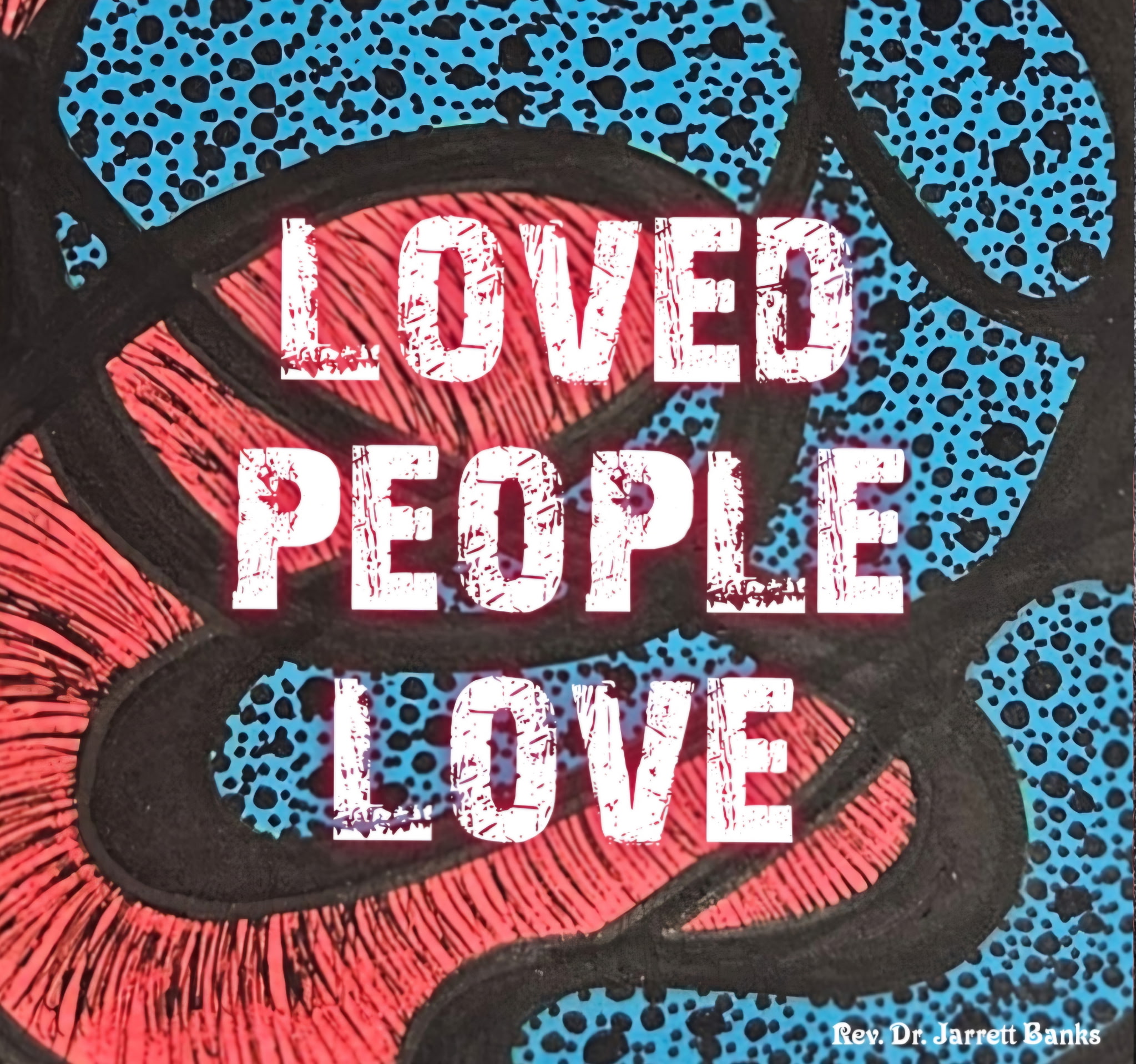
This is what happens when we know we are loved. We become free to love like Jesus. Loved people love people.
Not because we are trying to impress God.
Not because we are afraid of perishing.
But because love has filled our cups until they are running over.
Psychologists sometimes call this “secure attachment.” It’s the idea that when people feel deeply accepted, it creates the emotional safety needed to love others freely.
And long before psychologists ever studied this, the early Christians understood it intuitively.
The writer of 1 John put it simply: “We love because God first loved us.” (1 John 4:19).
Because when people finally know—deep in their bones—that they are loved, something changes. Fear loosens its grip. Defenses soften. The jars we cling to so tightly no longer feel necessary.
And suddenly, we become free to do what Jesus calls us to do:
to love one another, as he loves us.
Lent is a season of returning to the well. Lent invites us to sit down, to rest, to admit that we are tired-out. Lent invites us to bring our thirst—for forgiveness, for purpose, for meaning. Lent invites us to stop hiding, to let ourselves be known, and to be loved, fully, unconditionally, unreservedly. To receive water gushing up to eternal life.
The good news is that we do not need to dig deep for this water. The good news is that Christ is already sitting here.
And here’s the deeper layer: Jesus is also thirsty. Later in John’s Gospel, hanging on the cross, Jesus will say, “I thirst.” The God who offers living water is not detached from human suffering. God shares it.
Which means our thirst does not disqualify us. But it is the very place where grace meets us.
And in a week when bombs are falling in Iran and across the Middle East, when more lives are being lost to the hell of war, when human beings are left to drown in the sea after their ship was torpedoed, as leaders gloat, we are reminded just how thirsty this world really is— thirsty for peace, for mercy, thirsty for some humanity, for the courage to choose love over violence.
You have heard me surmise that much of the church is broken today, and as a result, our nation is broken, because many in the church have rejected the call to follow the way of love, mercy, and grace Jesus modeled and embodied.
But maybe it is not so much a refusal to follow as it is a refusal to sit down at the well and receive that love, mercy, and grace.
When we are unsure of our own belovedness, we cling to things like status, tribe, fear, and certainty. We avoid Samaritans. We protect our jars.
But when we know, when we deeply know that we are loved—We cross lines. We listen longer. We empathize. We risk vulnerability. We speak truth without judgment. We tell our stories without shame.
Because the simple truth is: loved people love. And a congregation that knows it is loved becomes a well in a thirsty world. A church that knows it is loved does not hoard grace, it shares it freely will all, and all means all.
And notice what happens.
The townspeople in our story eventually say: “We know that this is truly the Savior of the world.”
Now think about that for a moment. The first group in John’s Gospel to make such a universal confession is not Jewish disciples. It is Samaritans.
The outsiders are the first recognize the wideness of God’s love. Because when you have been thirsty, you recognize living water when you see it.
This Lent, the invitation is simple:
Come and see.
Come thirsty.
Come tired out.
Come complicated.
Because the good news is this: Christ is already sitting at the well, waiting. And when you sit down beside him, you will discover something life-changing:
You are understood. Because he is tired too. He shares your thirst.
You are known. Because he sees all of you.
And you are loved still.
And that love is living water within you.
So, drink deeply.
And then leave your jar behind,
and go love like Jesus.
Because the world is thirsty.
Amen.
 Just Love