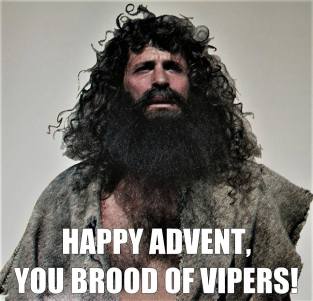

Preparing the Way for Peace

Isaiah 11:1-10; Matthew 3:1-12

As if we needed it, Advent is the annual reminder that the world is not as it should be. But it is also our reminder that God is not finished with this world yet. It’s a reminder that God has plans for this world, and you and I are a part of those plans.

Advent is a holy tension. We wait and watch, but we wait and watch with hope. We light candles, because we believe the light still rises, and peace on earth is still possible, even during a time of deep violence.

Today, our nation remembers another Sunday morning when the world was plunged into deeper violence, when fear and grief reshaped lives overnight.

We remember Pearl Harbor today, not to glorify war, but to deepen our longing to be a people shaped by the peace that God promises. On a day we remember a time when peace collapsed, when meetings for diplomacy didn’t happen, when steps to find equitable solutions were not taken, we gather to proclaim a new day, a new time when swords are beaten into plowshares, and peace is not a distant dream, but a way of life.

And through our scripture lessons this morning, two prophets speak about this time: Isaiah and John the Baptist. Two voices, centuries apart, but carrying one message: God is breaking into this world with a peace that transforms everything!

Isaiah speaks with poetry. John speaks with fire.

Isaiah shows us the world God intends.

John tells us how we must prepare for it.

Isaiah invites us to imagine and dream.

John insists we repent and change.

Together, they give us the full message of Advent: the hope and the urgency; God’s promise and our responsibility.

I love that Isaiah begins Advent with a stump, and Matthew begins with a wilderness. Isaiah says: “A shoot shall come out from the stump of Jesse.” Matthew tells us: “In those days John the Baptist appeared in the wilderness.”

A stump is what remains after something has been cut down. Here, it belongs to Jesse, the father of King David, symbolizing the seemingly dead royal lineage of David.

A wilderness is a place where familiar paths have disappeared. It’s a place of withdrawal, isolation, and loneliness.

 And yet, both are places where God begins again. Both are places where grace breaks in. Both are places where hope refuses to die, and love finds a way!

Some of us have walked into Advent this year with stumps in our lives. There have been losses, endings, dreams cut down, seasons cut short.

Some are walking toward Christmas this year surrounded by wilderness. There is much uncertainty, weariness, loneliness, and feelings of lostness.

But both Isaiah and John remind us of the good news: that God does some of God’s best work in the places that seem barren. God is in the business of making a way when it seems like there’s no way.

Isaiah gives us a breathtaking vision of God’s business in this world. It’s of a world ruled not by fear, corruption, hate, and violence, but by justice, tenderness, compassion, and reconciliation.

Wolves lie down with lambs. Children play safely at the entrance of a cobra’s den. Predators and prey live at peace.

This isn’t some fantasy. It’s the reordering of the entire world. Isaiah saw what scripture calls “shalom:” a peace that heals, restores, and reshapes not only society, but the entire creation.

Isaiah says this peace will be led by a Spirit-filled one who will: “judge the poor with righteousness…and decide for the meek with equity.”

In other words, peace and justice are inseparable. We cannot have one without the other. Peace without justice is fragile. Peace without equity is deceptive. Peace that ignores any harm to others, or to the creation, is not peace at all.

On this December 7th, as we remember our parents and grandparents waking up to the violence of Pearl Harbor, we must not pretend that violence belongs only to the past. For every day we wake up to stories of good people being yanked from their cars, or off the streets, on their way to work, on their way to school or to a thanksgiving dinner with their family, detained by masked men and deported because of the color of their skin. We wake up to stories of fishermen blown up in boats without due process or any chance to speak their truth.

 We see a world where fear is weaponized, food for the hungry is politicized, meanness is rationalized, human dignity is discounted, and inequity is engineered rather than accidental.

On this Pearl Harbor Sunday, we confess the many ways violence still shapes our world, and we cry out for the peace Isaiah dares to imagine and for which Christ commands us to prepare.

And then a wild, fiery preacher named John bursts into our story. He’s wearing some strange clothes. He’s got this crazy diet, and a voice that sounds like a siren screaming in the desert.

And his first word is not, “Peace.” No, it is, “Repent.”

Now, at first his preaching sounds like one of those hell, fire, and brimstone preachers we’ve heard before. We think, “no wonder they call him a Baptist!” At first, his message sounds like the opposite of Isaiah’s message, but the more we listen to it, we discover that John is not contradicting Isaiah. No, he’s showing us the way to Isaiah’s vision of peace.

You see, John knows that peace never arrives in this world easily. Peace is not passive. It’s not something we just sit back and wait for. Peace requires transformation. If peace is gonna come, then people gotta change!

If Isaiah shows us what peace looks like, John shows us what peace requires.

John calls us to turn from every way that does harm: our habits; our politics; our systems; our silence; our consumption; even our religion, especially our religion; to embrace a life of nonviolence. And he makes it clear that peace on earth is not some naïve dream from some woke, left-wing lunatic; it is a moral imperative from God. John is the prophet who prepares us for the world Isaiah describes.

John’s challenges his hearers to “bear fruit worthy of repentance.” In other words: Don’t just want peace and sing about peace. Live peace. Practice peace. Embody peace in your decisions, your priorities, your words, your vote, your compassion, your courage, your lifestyle.

Repentance is not self-hatred. It’s not guilt. And it’s not shame. True repentance is liberation. It’s simply returning to God’s way of peace that was intended for the creation.

On a day when the nation recalls the devastation of war, repentance becomes not just a personal religious ritual, but a moral commitment. It’s a commitment to dismantle hatred. It’s a commitment to stand with the vulnerable. It’s a commitment to uproot the seeds of harm before they ever take root in our lives or in our world.

That is the fruit worthy of repentance, as John says. That is the path toward the world Isaiah imagined.

And let’s not miss this. John’s harshest words are not aimed at the people the religious leaders dismissed as outsiders, unbelievers, or unclean. John’s sharpest critique is directed at the religious establishment itself, the ones who believed they were closest to God because of their heritage, their appearance, their privilege, their assumed moral superiority. He turns to them and says, “Do not presume… the axe is already lying at the root.”

John doesn’t say this because God delights in their tjdestruction. He’s not warning them because God wants to punish or shame them. John speaks this harsh word because God seeks to prune. God seeks to cut away anything, no matter how pious, polished, or patriotic, that destroys real peace in the world. And that includes any movement that weds faith to nationalism and proclaims that God’s blessing is the property of one nation, one party, one people. It includes any faith that blesses fear, excuses cruelty, or elevates domination as destiny.

We cannot cling to anything that kills equity.
We cannot preserve the things that preserve injustice.

We cannot call violence “protection,” or prejudice “tradition” or “heritage.”

We cannot keep watering the roots of fear, greed, Christian nationalism, or complacency, and then pretend we are bearing the fruit of peace.

Advent is the holy season of pruning, not for punishment, but for preparation. Advent will not allow us to believe that for peace, repentance is optional.

Isaiah teaches us what God’s peace looks like.

John teaches us how to make room for it.

Isaiah lifts our eyes.

John steadies our feet.

Isaiah speaks hope.

John calls for courage.

And together they prepare us for the Christ who comes not with military might, not with political coercion; but with justice, mercy, grace, humility, and fierce love: the Christ who judges with righteousness; the Christ who defends the meek, heals the sick, forgives the sinner, feeds the hungry, and includes the outcast.

This Advent, perhaps peace begins with us by letting something go:
a resentment we’ve carried too long; a fear that narrows our compassion; a selfishness that feeds our apathy and fuels our greed; a prejudice we inherited; a silence we use to avoid conflict.

Perhaps peace begins with healing something inside us.
Or perhaps peace begins with speaking a truth we’ve been afraid to name.
Or standing with someone who has been pushed to the margins.
Or choosing generosity in a season obsessed with consumption.
Or refusing despair in a world that seems addicted to it.

Or perhaps, on this December 7th, peace begins with remembering that violence is not inevitable, war is not destiny, and equitable solutions are real, and love, not hate, is what truly makes a nation great.

Advent is the season when we stare at the world’s stumps and declare, “A shoot’s gonna spout, and I can see it!”

We look at the wilderness and say, “A voice is calling, and I can hear it!”

We remember the wounds of history and pray with renewed commitment: “Never again!”

And we see the darkness all around us and still light our candles, because we trust the promise that the light still rises.

It rose from the stump of Jesse.
It rose in the waters of John’s baptism.
It rose in Bethlehem.
It rises in every act of justice.
It rises in every step toward peace.
It rises, even now, in us.

Thanks be to God. Amen.

Christmas in the Boondocks

Luke 3:7-18 NRSV

As a preacher, I often wonder about this thing we call a sermon. Like, why do we do it? Why do preachers prepare and deliver them, and why do you sit and listen to it?

I tend to believe that you are here for the sermon because need a little encouragement. In a world that can be dark and despairing, you need to hear a word of light and hope. In a world that can be sad and chaotic, you need to hear a word of joy and peace.

On top of all the problems in the world, war in Ukraine and in the Middle East, the acceptance of fascism throughout the world, including in our own country, you have all kinds of stress in your life. Some of your children are not doing as well as you would like. Some of you are having a difficult time taking care of aging parents. And some of you have your own health worries. Some of you are still dealing with grief over the loss of a loved one. And you are still struggling with forgiving that friend who let you down or loving a neighbor who betrayed you. So, you come to this place every to sit in a pew to get a little inspiration, to find a little peace.

So, I, along with hundreds of other moderate, educated, mainline preachers in our pretty, city pulpits, seek to give you a dose of what we think you want on Sunday mornings. Instead of saying anything that might add to the stress in your life, we try to say something to fill you with such peace, that when the time in the service comes when we pass the peace, you actually have something to pass. During the sermon, we seek to metaphorically pat you on the back on Sunday mornings assuring you that everything is going to be alright.

I am very tempted this morning to talk about my new granddaughter and how the birth of a little baby can change our world; then somehow compare that to the birth of Jesus peaching a soft, sweet, sentimental sermon of comfort and peace.

But then I encounter a text like this morning’s gospel lesson and read the account of a preacher who doesn’t remind us of any grandfather we know whose heart has been softened by the birth of a baby. His name is John, and he’s also a far cry any educated, moderate, mainline preacher in a pretty, city pulpit. He’s a harsh man with a harsh voice crying out in the boondocks far from the lights of the city.

No one ever called John “moderate.” And no one ever called him “mainline.” And there was seemingly nothing peaceful, about his message of hell, fire, brimstone, and impending judgment.

When John stood in the mud of the Jordan River and looked out in the congregation, he didn’t seem to see what I see when I look out on Sunday mornings. I see mostly good people who truly want to be better. John saw a snake pit. He preached: “You bunch of poisonous snakes! There’s a bunch of dead stones in this muddy river, but God is able to raise up a family out of these stones. There’s a heap of dry chaff, mixed all up in with the wheat, and you know what God’s going to do? God’s coming with fire to burn off the chaff. I wash you with water; and if this water is too cold for you… there is one who’s coming right behind me who is going to scorch you with fire!”

“You better get washed. You better get clean!  If you haven’t treated someone right, go make it right. If you have something you can give to those who have nothing to give, give it. If you have any prejudice in your heart, you better get rid of it. This may be your last warning. Today is the day. Now is the hour, for the ax and the fire are surely coming!”

Now I think, who wants to listen to a sermon like that? As it turns out, lots of people. Luke says: “multitudes” came out to hear him. And genteel, educated preachers in our nice city pulpits everywhere, scratch our heads and ask: “why?”

Perhaps you don’t come to church to listen to a sermon solely to be encouraged. Perhaps you also come to hear the truth.

Multitudes travelled way out into the boonies because that redneck preacher who looked like he could handle a snake or two named John was telling people the truth.

And perhaps that is why we are all here this morning. In a world where we are bombarded with lies…in a world in which we are overwhelmed with deceit, disinformation, propaganda, gaslighting and indoctrination… in a world where people make up stories to control us, using us for their selfish and greedy purposes…in a world where the rich and powerful control the media and malign the media they don’t control…and in a world where money is always the objective, we need to hear someone who will unashamedly speak to us, honestly and truthfully. We come here out of a deep yearning to hear a word of truth from God, because we know deep in our hearts that it is only that truth that will set us free and give us the peace we all desire.

That is why more people went out to hear John preach in the boondocks than have ever come here to hear me preach in the comfortable city sanctuaries where I have preached. Multitudes trudged through the briars and dust and went to hear a fire-breathing preacher who stood, not in a beautifully crafted and decorated pulpit, but in the muddy Jordan River, and spoke of axes, judgment, and fire. They went to hear the truth, even though they knew that truth was going to hurt. Because they somehow instinctively knew that it was the truth and only the truth that was going to set them free and give them a lasting peace.

If John was here today, I believe he would tell you that preachers like me often sell you short. And maybe he would be right.

For I have noticed, when every now and again, I unintentionally slip up and step on a few toes, a lot harder than I would ever intend to, inferring that some of you are not right…That some of you could do a little better…That some of you need a bath…That some part of you needs to be cut off, removed; something in you needs to be burned away…When I challenge you by saying something like: peace is only going to come on earth if you do something, that justice is only going to be done, if you use your privilege and power and act…When I explain how, even now, we are participants in the systems of oppression we deplore… you know what happens? Why, people line up after the service to say, “Thank you preacher. I really needed to hear that!” “You really got on top of my feet today! Thanks for being honest.”

I wonder what would happen if preachers all over the world had the gall to discuss all the lies and disinformation in our world today that is behind the growing popularity of fascism. What if we inferred that all of us could do more to stop it, that we could be more vocal in our condemnation of it, that our silence today only helps to normalize it, and such normalization is actually part of the historical playbook of fascism?

 What do we think our congregants would do if we challenged them— telling them the truth that when they hear their neighbors, co-workers and family members say things like: “People are just over-reacting;” “Things will not get that bad!” “The people in power? Why, they’re only talking. They don’t really mean what they say.” Our system of democracy is not fragile”—when they hear that, and then they say nothing, they only help to normalize fascism.

What would happen if preachers made a historical comparison between our silence today and the silence of those in 1860 when their friends defended slavery, saying things like: “We are actually doing them a favor!” What would happen if preachers compared our silence to those in 1930’s Germany when their friends defended concentration camps, saying something like: “Oh, they are just work camps. They are only helping people learn the value of labor and hard work!” What would happen if we compared our silence with those who said nothing when everyone around them was calling Martin Luther King Jr. “a troublemaker?”

Yeah, saying those things will certainly make some people mad. Some may not turn in their pledge cards. It may cause them to leave and never come back. But I have a feeling they’ll be many people lined up in narthexes everywhere to thank us, because people know the truth that before something can be born anew, something old must die. Before love can win, someone must be willing to pick up and carry a cross. Before justice can be done, work must be done. Before peace can happen, sacrifices must be made. Before Christmas can be celebrated, gifts must be given.

That is why people came to hear John preach. They came for the candor, for the honesty, and for the truth. From his prolific sermon illustrations (the fire, the ax, and chaff), we know that what John was preaching was the death of something old and the birth of something new.

This is why the multitudes traveled out into the boonies to hear John preach. Because when John told the people what they needed to change, what they needed to prune, cut off and burn up, the wilderness began to look something like the Garden of Eden. The muddy Jordan became the River of Life. Out of the dry dust, a flower began to bloom. Peace on earth became a little bit more of a reality.

This was the message of John the Baptist. People flocked to hear John, and I believe come to worship every Sunday so they can hear the truth: that none of us are who we ought to be. All of us could do better. We could be better.

We come here to ask God to hold up a mirror in front of us so we can see our complacency and our complicity. We ask God to search us and know our hearts; to test us and know our thoughts, to see if there is any wicked way in us and lead us the way that is everlasting. And having accepted the truth, we come to drop to our knees and ask God to take an ax and cut us down, or kindle a fire and purge us, so we can be reborn, so we can be cleansed and changed, so we can then do all that we can do to change the world. John preached the possibility of such a transformation.

And he’s still preaching it today. We can’t get to Christmas without first meeting him out in the boondocks. Multitudes have. By God’s grace, so will we.[i]

[i] Inspired from a sermon entitled Here Comes the Judge by William Willimon.

We Need a Little Christmas Right this Very Minute

john the baptist

Living in a nation where greed, racism and bigotry make Christians blind to all kinds evil, even overlooking accusations of child molestation, I cannot help but to think that what we need more than anything else is a little Christmas, right this very minute!

The gospels tell us that in order to get a little Christmas, we first need to get a little John the Baptist, a voice crying out in the wilderness telling people the God’s honest truth.

They tell us that “multitudes” went to hear the truth, even though they knew that sometimes the truth hurts. However, they instinctively knew that it was the truth that was going to set them free.

John preached something like: “You are not right. Some part of you needs to be cut off; something inside of you needs to be burned away.”

From his prolific sermon illustrations, “the fire, the ax, and chaff,” John was preaching that before something can be born anew, something rotten has to die. Before healing can take place, something sick has to be removed. As the “Me Too” movement has taught us in recent weeks, before something can be restored, someone needs to resign.

And as John preached with brutal honesty, the eyes of the blind were opened, and the first thing they saw was a little Christmas.

As we prepare this place of worship for Christmas, making a way for Christ, may we search our souls, asking what we must we do to prepare our hearts for the coming of Christ.

As we decorate this place with poinsettias, remembering the star that signaled love being born in a town called Bethlehem, may all indifference perish, may silence in the face of evil pass away, may all complacency be banished, as we stand up and speak out for the inclusive love of Christ to be born in right here in our town.

As we decorate this place with wreaths signifying the never-ending reign of Christ, may all despair and resignation die, as we resist to fight hate and persist to do justice in our world knowing that the love of God never ends.

As we decorate this place with mistletoe known throughout the world as the plant of peace, may the fear that divides us be removed, as we do what we can, where we can, however we can, to work for peace on earth.

As we decorate this place with holly and ivy, may all self-righteousness and spiritual pride and any feelings of superiority be cut off, as we cling to divine strength.

As we decorate this place with the fire of candles, may all prejudice be burnt away, as we light up our world with grace.

May our lights shine honestly, pointing out all of our failures and flaws, yet giving us the mercy to be better and do better.

May our lights shine so brightly that the eyes of all people are able to see a little Christmas.

Lost Without Christmas

nl-Griswold-HouseLuke 3:1-6 NRSV

The pet peeve of nearly every pastor this time of year is driving around town seeing the number of houses which are decked out very ostentatiously with Christmas lights and decorations while knowing that the people living in those houses will not step foot in a worship service during the entire Advent and Christmas season. They have the biggest Christmas tree in their living room, the most lights on the trees in their yard, the prettiest wreaths on their doors, the brightest candles burning in each window, appearing from every indication to be anticipating the coming of Christmas, the coming of the Messiah, Savior and King; yet, for some strange reason, they do not feel the need to gather together on the Lord’s Day to worship and acknowledge their need for Christ. They have no desire to be here this morning to a light another candle in anticipation of advent of Christ.

I wonder what they are celebrating? What has brought their lives so much fulfillment and happiness and peace that they have the energy and desire to go all out decking their homes with lights and evergreens and candles but have no desire to gather for worship? What is so wonderful about their lives which makes them feel as if they simply do not need Christ in their Christmas?

What are they celebrating?  Getting off a few days of work to spend with their lovely families?  Presents? Santa Claus?  Christmas parties and dinners?  Their home?  Are their decorations merely saying, “Look at me!” “Look at my beautiful yard and my beautiful house? Look what I have built!  Look what I have bought!”

During a conversation with a friend of mine from seminary who was serving as a missionary on the outskirts of the Republic of Congo, I said:

Brad, I don’t know how you do it. How you can leave all that our wonderful country affords us to share the gospel of Jesus Christ in a depressed third-world country!

To my surprise, he responded:

To tell you the truth Jarrett, I don’t know how you do it!  How on earth do you share the gospel of Jesus Christ in the affluent United States?  How do you convince people who have everything that they need a savior!  People are so spoiled in the U. S.  They have so much which they believe brings them happiness and fulfillment and peace. They don’t believe they need Christ. People where I minister have nothing. They are starving for the gospel!  They need the gospel!

We do have much, don’t we? The very best technology: computers, smart phones, smart watches, and smart TVs with digital signals carrying more information than our brains can possibly  comprehend beamed from satellites that were employed by space shuttles!

Yes, perhaps all of us living in the affluent West are tempted to look for our peace and fulfillment in the vast accomplishments of humanity. We marvel at science and technology and say, “Look at us, look at what we can do, look how smart we are!”

Because our capitalistic economic system is based on the what humans can accomplish if they are given the freedom to work for themselves, all of us have more clothes than we could ever wear, more food than we could consume, and bigger houses than we really need.

And with our freedom, we have so many choices. We can do so many different things. We can go to so many wonderful places. With our freedom there are no limits to what we can be and we what we can do and where we can go!

We are free to make as much money as we possible can, to marry who we choose, to have as many children as we want, and to live in the neighborhood and home of our choice.

Perhaps that is what so many are celebrating with their lights and evergreens and candles. They are celebrating freedom. They are celebrating the American way of life. They are celebrating their material possessions. They are celebrating technology and the accomplishments of humankind. They are celebrating Santa Claus and his great big bag of goodies made by the hands of mortals. They are celebrating family, the gift of human love and children.

So, maybe my missionary friend is right. In America, we are free to have so much which brings so much happiness and fulfillment and peace that there is really no need for a Savior.

Yet, deep inside, we know, that even within our wealthy country, within our most affluent communities, there is indeed much unhappiness and unfulfillment.

If wealth and freedom and smart human accomplishments are all they’re cracked up to be, why does the United States have highest rate of suicide per capita than any other nation on the planet? If our children have so much more, more opportunity, more toys than the other children of the world why is the suicide rate for children 14 and younger double that of other nations?

I believe that one problem we have with our country is that it takes a great degree of honesty to admit our unhappiness and unfulfillment. After all, with our great freedom of choice, we are free to fashion our lives as we choose. If the lives that we fashion are unfulfilling, guess whose fault it is? We have nobody to blame but ourselves; therefore, we are reluctant to admit to any sense of unfilfillment and unhappiness. Our pride and our ego prevent us from admitting that we ever reflect on our lives and ask ourselves the question: “Is there anything more than this?” We can’t admit that we are in need, that we yearn for something more.

So we cover it up with lights and evergreens and candles. We say to the world: “Look at me, I am happy, I am fulfilled. I don’t need church. I don’t need worship. I don’t need community. My choices and my consumerism are enough. My house, my clothes, my toys, my freedom, my family, my intellectual prowess is all I really need. It is enough.”

And yet, deep inside, we know that it is not enough. Deep inside we all know that there has to be more, but because of our freedom, our pride and arrogance, we are afraid to admit it.

Advent is a season of looking for something. It is a season of hoping and believing that “there has to be more.” It is a season of yearning.  Have you noticed the hymns we sing during Advent? Not the Christmas carols, but the advent hymns like the one we are going to sing in a few moments. The hymns we sing this time of the year are somewhat restrained. They speak of desire, of waiting, of expectation. The Advent prophets speak to a people suffering from homelessness and despair. It is no coincidence that John the Baptist’s voice is that of one “crying out in the wilderness.”

John the Baptist is crying out in the wilderness, because that is where the good news of the gospel is needed. In order to hear the message of Christmas, we must first realize that we are living in a wilderness. We must be able to be honest and say: “The choices I have made on my own have not brought me fulfillment. My freedom, my material wealth, my high tech gadgets, my diplomas, a nice home, a nice car, a vacation in Hawaii, New York, Paris or Southern California, even a wife, two kids and a dog are not enough. I need something more!”

With our freedom, it takes courage and it takes conviction to admit to yearning, to admit to our need to look for something else.

In order to see the fragile light of Christmas, we must first realize that we are in the dark. Even in an information age, we must confess that humankind does not have all of the answers. Advances in technologies, and the freedom to make choices and to make money cannot protect us from our dark world of evil.

As much as we try to decorate it with lights and evergreens and candles: gadgets break; space shuttles crash; family members get sick; relationships fail; loved ones die. Human beings, with all of their potential to accomplish good, are at their core, depraved.

A beautiful December 7th Sunday morning in Hawaii and a crisp September 11th Tuesday morning in New York City can be suddenly transformed into a burning hell without notice. An evening on the town in Paris, even a joyous Christmas party with friends and co-workers can become scenes of unimaginable tragedy.

One of the greatest things about coming to this place during this time of the year is that here, before God, in the midst of a dark world of falsehood and deceit we can be honest. We can come here, if just once a week, and tell the truth.

We can be honest and admit that nothing Santa could ever bring us, nothing made by mortal hands, will bring us fulfillment and peace. Nothing we can accomplish with our freedom and our intelligence can bring us joy.

So, maybe that is the real reason people will not step foot in a church this Advent and Christmas season. Because, what they see here is often really no different than what they see out there. They see, in the church, people who believe they have it all figured out; they have all the answers; they have everything they need for peace and fulfillment; they no longer have to keep yearning for Christmas; they no longer live in the desert. They see people who are unwilling to be honest.

So, here, in this place, let’s get back to what our faith is all about: honesty, authenticity. Let us be honest and admit that we do not have what it takes to experience true peace.

So, hear the good news on this second Sunday of Advent. To those of us who are honest enough to admit that we live in exile, in the wilderness, lost, wandering, hear the good news that God is making a way.

Listen to John the Baptist: “Every valley shall be filled, and every mountain and hill shall be made low, and the crooked shall be made straight, and the rough ways made smooth.”

God is making a way through our desert, a highway straight to us.

Let’s be honest. Let’s realize that we need more, and let’s keep looking, keep yearning, keep working, keep serving, keep loving, and keep inviting others who do not have a church this season to join us, until we shall see the “salvation of God.”

Until we shall see Christmas and truly know peace, now and forevermore.

How the Grinch Stole Christmas

Mark 1:1-8 NRSV

There is a Grinch lurking and working in our world seeking to steal Christmas. This Grinch is alive and real and every bit as mean and vile as that outcast of Whoville whose soul was an appalling dump heap overflowing with the most disgraceful assortment of rubbish imaginable mangled up in tangled up knots. This Grinch can be found in every city, in every town, and in every rural community throughout our land. However, this Grinch is not among the usual suspects of the annually accused.

This Grinch is not Political Correctness. This Grinch is not the liberal sales clerk at Target greeting people on Christmas Eve with “Happy Holidays” instead of “Merry Christmas.” After all, wouldn’t the God who humbly came down to be born in the unpretentiousness of a stable want us to show a little humility to a devout Jew on that holy night, which, this year, also happens to be the last night of Chanukah?

Nor do I believe this Grinch is Secularism. Santa Claus, tiny little elves, flying reindeer, Rudolph and Frosty the Snowman are a magical, wonderful part of this season that makes the eyes of children aglow. Again, I cannot imagine the Christ, Christmas Himself, calling things that bring such joy to children anything but holy and sacred.

But what about the Grinches of Consumerism, Greed and Materialism? What about the Grinch of Black Friday which is now taking over Thursday? What about the monsters of big business forcing people like my nineteen year-old son to work on Thanksgiving, preventing him from sharing a meal with his grandparents? Surely their hearts’ are nothing more than empty holes. Their brains are full of spiders, and they’ve got garlic in their souls.

They are certainly Grinchy, but as Grinchy as capitalism can be, I believe there is even a greater Grinch in our midst today, a Grinch even more nauseating and foul. There is a more crooked Grinch lurking and working in our world threatening to keep Christmas from coming.

To prepare the world for Christmas, for the coming of Christ into the world, John the baptizer appeared in the wilderness, proclaiming a baptism of repentance for the forgiveness of sins. We are told that people from the whole Judean countryside and all the people of Jerusalem were going out to him to be baptized, confessing their sins.

John the Baptizer was proclaiming a baptism of repentance. The Greek word translated repent, literally means to think differently, to see things differently. It means to see the world, ourselves, and God differently. John was proclaiming the good news of Christmas. He was trying to get the people to understand and to see that God is not far away from us but is very much with us. God is not against us, but is very much for us, and God is more alive and more at work in this world than we can sometimes believe. The message of Christmas can be summed up in two beloved verses of scripture:

For God so loved the world that he gave his only Son, so that everyone who believes in him may not perish but may have eternal life. Indeed, God did not send the Son into the world to condemn the world, but in order that the world might be saved through him (John 3:16-17 NRSV).

And when people heard this message, they came from all over and did something that is a very difficult thing to do if you think God is against you, or you see that all of your sin and mess have separated you from God. They came from all over confessing their sins.

They came just as they were. They came openly, honestly, and transparently. They came freely, fearlessly and audaciously laying bare their imperfect souls before John, others and God. They came knowing that they would not be judged. They came seeing that they would not be condemned. They came with a new understanding that they would be accepted, a new vision that they would be forgiven. They came to be immersed in the unconditional love of God, to be enveloped by the unreserved grace of God. They came in the same spirit that lowly, sinful, shepherds came to kneel and worship before the manger. They came to the muddy banks of the Jordan River to join hands with fellow sinners and celebrate the good news of Christmas.

And ever since that Christmas was celebrated on that day through the honest confession of sin, there have been Grinches in every time in every land determined to stop it.

How does the Grinch steal Christmas? By simply deterring the confession of sins. By inhibiting such open honesty by proclaiming a message that is the exact opposite of the Christmas message.

The Christmas message is: “For God so loved the world…”

“God doesn’t love this world,” says the Grinch with a sour Grinchy frown. “God despises this world. Thus God wants people to separate themselves from this world, retreat into safe sanctuaries with the pure who don’t sin to smugly wait to one day escape to glory with kith and kin.”

“…that he gave his only Son…” says Christmas.

“God didn’t really give his Son,” the old Grinchy Claus hisses. “If God gave his Son, that would infer that salvation is free, no strings attached, no restrictions at all. “Surely,” says the Grinch “God wants people to earn this gift with right lifestyles, right beliefs, and right deeds after all.”

Christmas says: “…so that everyone who believes may not perish but have eternal life…”

The Grinch thinks up a lie and thinks it up quick: “Well, not everyone. Not the entitled. Not the undeserving. Not those who drink, party and cuss. God only helps and gives eternity to those who are willing to help themselves, those who think, look, believe and worship like us.”

The Christmas message is: “…God did not send the Son into the world to condemn the world…”

“Of course God did,” the Grinch counters with a smile most unpleasant, “And God wants us to look down our noses and judge others as if they smell, point our fingers at their sins and preach about Hell.”

“….but in order that the world might be saved through him,” says Christmas.

“Not saved but destroyed,” the Grinch laughs in his throat. “Haven’t you heard of Armageddon, the Apocalypse and the Judgment Day? Why else would there be hurricanes, earthquakes, and so much AIDS and Ebola today?”

John, the one preparing the world for Christmas reveals that Christmas begins with the confessing of sin, and infers that if any Grinch wants to steal Christmas, if any Grinch wants to keep Christmas from coming, they need to merely discourage such confession.

So who is this Grinch that wants to steal Christmas?

Why, just ask yourself: Where is the one place in the world where the confession of sin is most difficult? In a bar with a total stranger? At a coffee shop with a close friend?  In the work place with a co-worker? No, sadly, it can be right here, right now, in this place that claims to proclaim the true reason for the season, in this place that claims to prepare the hearts of all to receive Christmas. The place that claims to be the most Grinchless place in the world, if we are not careful, can sometimes the most Grinchy.

Dietrich Bonhoeffer once wrote about this Grinch:

Pious fellowship permits no one to be a sinner. So everyone must conceal their sin from themselves and from the fellowship. We dare not be sinners. Many Christians are unthinkably horrified when a real sinner is suddenly discovered among the righteous. So we remain alone with our sin, living in lies and hypocrisy.[i]

And Quaker Theologian Richard Foster made the following observation about this Grinch:

Confession is so difficult a discipline for us partly because we view the believing community as a fellowship of saints before we see it as a fellowship of sinners. We come to feel that everyone else has advanced so far into holiness that we are isolated and alone in our sin. We could not bear to reveal our failures and shortcomings to others. We imagine that we are the only ones who have not stepped onto the high road to heaven. . . . But if we know that the people of God are first a fellowship of sinners we are freed to hear the unconditional call of God’s love and to confess our need openly before our brothers and sisters. We know that we are not alone in our sin. The fear and pride which cling to us like barnacles cling to others also. In acts of mutual confession we release the power that heals. Our humanity is no longer denied but transformed.[ii]

I have often said that of any place on this fragmented planet, the church should be a place where all people are welcomed to join a community of grace, love and forgiveness. Without fear of being judged, condemned and ridiculed, all people should feel welcomed to come as they are and honestly and openly confess their sinfulness and brokenness. And receive grace. Receive love. Receive salvation.[iii] Receive Christmas.

So, whenever the church creates an environment that prohibits honesty, openness, and transparency; encourages people to be fake, conceal their pain, pretend to be good, upright and holy, their lives devoid of any real sin, mess or gunk; well, the three words that best describe it are as follows, and I quote, “Stink, stank, stunk.”

[i] Dietrich Bonhoeffer, Life Together: The Classic Exploration of Faith in Community, 1939.

[ii] Richard Foster, Celebration of Discipline, 1978

[iii] Jarrett Banks, Issues of Homosexuality and the Church 

Christmas Begins in the Wilderness

TheGriswoldFamilyChristmasTreeMark 1:6-8 NRSV

When does Christmas begin for you? Was it on Black Friday at the mall, or while watching A Charlie Brown Christmas or National Lampoon’s Christmas Vacation? Was it last Sunday morning as the first candle of Advent was lit in this place? When does it start? When do you begin to realize the good news that is Christmas? Where are you when it happens? On the Town Common during the annual Christmas tree lighting? Walking down Main Street during the Taste of Farmville? Going caroling with the children from church? Maybe it is not until Christmas Eve, as you light your candle and sing, Silent Night. Perhaps it is when you are alone at home, listening to Christmas music and decorating your own tree.

For Mark, the good news of Christmas begins in what most of us would call a strange and unexpected place. Unlike us, the good news of Christmas does not start with some warm sentimental scene. And unlike Matthew and Luke, for Mark, the good news of Christmas does not begin with heavenly visitations, choirs of angels, the worship of shepherds, a star rising in the East, or Magi bearing gifts. For Mark, Christmas does not even begin with a little baby wrapped in swaddling clothes lying in a manger.

For Mark, the good news of Jesus Christ, the Son of God, the good news of Emmanuel, God with us, the good news of Christmas, begins somewhere out in the wilderness. And he is not talking about some snow-covered winter wonderland where the Griswold’s find their family Christmas tree.

For Jewish people aware of their history, Christmas begins in that place that was experienced somewhere between slavery in Egypt and the Promised Land. Somewhere out in that place of testing, trial and temptation, somewhere out in that place of doubt, dread and despair, that place where you do not know if you want to live or die, that place with the Red Sea swelling before you and Pharaoh’s army advancing behind you. That place where Elijah fled to save his life from Jezebel’s army and then prayed for God to take his life away. That place where even Christmas himself would be haunted by wild beasts and tempted by Satan. For Mark, Christmas begins in the most strange and unexpected place, a raw, dangerous place called the wilderness.

The beginning of the good news that is Christmas occurs in that place where God seems to be against you, or appears to be so far away that you doubt God’s very existence—suffering in an intensive care unit at the hospital, laying in utter misery in a nursing home, holding the hand of a parent with Alzheimer’s, picking out a casket for a spouse in a funeral home, at home anxiously trying to pay your monthly bills, in the middle of a fight with a loved one, in Pearl Harbor 73 years ago this hour, in any place where people are overtaken by tension and terror, overwhelmed by despair and disappointment, or overcome by sin and shame.

Last weekend, I was at home trying to get my own Christmas started as I do every weekend after Thanksgiving. However, this year it began a little differently, you might say it began strangely and unexpectedly.

Instead of decorating my tree this year with Christmas music playing in the background, I decorated it while watching the local news. As I hung ornaments, I listened to the tragic story of a high school student killed in an automobile accident outside of Pinetops. As I turned on the lights of the tree, I glanced up to see pictures of mothers with their children escaping from war-torn Syria into refugee camps in Lebanon. I saw images of many children: some starving, others injured, some dying, others sick, all very afraid. I saw gruesome images of parents holding the lifeless body of their child. And I thought to myself, “I need to turn this depressing mess off and put on something a little more Christmasy.”

Then it occurred to me. This may be as close to Christmasy as it gets, for this is Christmas in the wilderness. The Good News according to Mark concurs that this is Christmas, raw Christmas. This is where Christmas truly begins. This is Christmas untamed and undecorated. For Christmas began when God came into a depressing mess.

And no matter how hard we try, no matter how much energy we expend or how much money we spend; we cannot escape the raw truth of it. Christmas begins, says Mark, with a “voice crying out in the wilderness.” And there is no music, no matter how Christmasy, that we can play loud enough to drown out this voice. There are no decorations glitzy enough and no lights bright enough to temper this voice.

This voice can be heard throughout every refugee camp in Lebanon and by every parent mourning the loss of their child. It can be heard in every intensive care unit, in every nursing home and funeral home. This voice can be heard in every wilderness, in every depressing mess on earth.

Through the good news of Christmas, God is crying out: I am for you; not against you. I am with you; not away from you. And I am more real, more alive, and more at work in this world than you can sometimes believe. As the prophet Isaiah said: “I am about to do a new thing; now it springs forth, do you not perceive it? I will make a way in the wilderness and rivers in the desert” (Isa 43:19).

The good news is: Christmas does not begin with us. It does not begin when we get the house all decorated or get all of our shopping done. We do not have to host a Christmas party or even go to one. We don’t even have to go to church, light a candle or sing a carol. Christmas begins with God and with a voice crying out in the wilderness, in those places where we may least expect it, but need it the most.

Some of us know that Luke tells his beloved Christmas story in chapter 2 of his gospel. However, I believe he perhaps tells it more poignantly in chapter 10.

A man was traveling down a wilderness road that was so dangerous that it was sometimes called “the way of blood” or “the bloody pass.” And there out in the wilderness, the man fell into the hands of robbers, who stripped him, beat him, leaving him half dead on the side of the road. As the man lay on the roadside, somewhere between Jerusalem and Jericho, somewhere between life and death, wanting to live, but also maybe wanting to die, he is ignored by two religious leaders who are also traveling down the same road.

God only knows why these men who you would expect to stop and help ignored the man. Perhaps they thought the robbers were still nearby, or maybe they thought the man lying on ground was only pretending, playing some sort of trick, so that when they came near him, he would beat and rob them. For whatever reason, they believed it was much too risky for them to stop.

Then came this one, Luke calls him a Samaritan, which means this was someone who was despised and rejected by the religious establishment, someone who was often misunderstood and rarely respected, someone who knew something about pain and brokenness, betrayal and abandonment, God-forsakenness; someone who had spent many days and nights in the wilderness himself, tempted and tried.

This one who was the least expected to stop and help, saw the man. He saw the man’s wounds, saw the man’s fear, saw the man’s despair and was moved with mercy and compassion. And there in the wilderness he risked his own life, as he sacrificially came to him, selflessly bent himself down to the ground, and joined the man.

The man did not have to do anything to make this one come to him. Out of pure love, unconditional and unreserved, this one just came. He then touched the man where the man most needed touching, pouring oil and wine on the man’s wounds and bandaging them. He then picked the man up and safely carried him out of the wilderness. He stayed with him, at his side through the darkness of the night. When morning came, he paid for the man’s debts, and made the promise: “I will come back. I will return.”

Of course, we call this “The Story of the Good Samaritan.” However, I believe it should be called, “The Story of Christmas.” A story that begins with a voice of mercy and compassion crying out in the wilderness, in those strange, dangerous places where we least expect it, but most need it.

Hospice caregivers will often speak of a dying person “rallying” for a brief time right before death. A person who has been non-responsive will begin to talk. One who has been confused or disoriented will become suddenly coherent. And those who have not had any food for sometimes days may request something to eat or drink. As a pastor, I have seen this “rally” more times than I can possibly count. I am not sure exactly why it happens; I just know that it happens, and it happens often.

My faith tells me that it is Christmas. It is God seeing one lying in the wilderness in their weakest, most broken state, seeing one in their most desperate, most vulnerable need, and it is God being moved with mercy and compassion for that one. It is a voice crying out from the heavens into the wilderness: “I am for you, not against you, I am with you, not away from you. I am Emmanuel. I will risk my own life for you. I will give my all to take care of your wounds and to pick you up, to forgive all of your debts. And when you are ready, I will come back, and I will take you unto myself, so that where I am, you will also be.”

The good news for us this day is that Christmas comes to us all when we confess that we are all half dead, lying on some wilderness road east of Eden, beaten up so badly by this sinful world that no one can tell whether we are Jew or Gentile, male or female, black or white, slave or free.[i] Whenever we confess our brokenness, our sinfulness, and our need for a Savior, a voice from heaven cries out in our wilderness and Christmas comes. Christmas always comes.

When does Christmas begin for you? When does it start? Where are you when you begin to realize the good news that is Christmas? The good news, according to Mark, is that Christmas begins when and where you may least expect it, but need it the most.

[i] This sentence is adapted from words spoken by Frank Tupper in one of my theology classes at Southern Seminary, Louisville, Kentucky, 1989-1992.

Dance Like Fools (Reflections on King David and John the Baptist on April Fools’ Day)

old-guy-dancing

2 Sam 6:1-5, 12b-19 and Mark 6:14-29 NRSV

After King David led a great army to return the Ark of the Covenant to Jerusalem, David and his army were so overcome with emotion that they engaged in festive dancing.

The scripture tells us that David danced before God“with all his might.”  He danced before God with all that he had and with all that we was, as he was utterly and completely overcome by the joy of God.

However, in this broken world there is always something or someone ready to burst our bubble of joy wide open.  So it was with David.

When David and his wife Michal arrived home from the party and began preparing to turn in for the night, David, if he was anything like most men I know, was probably expecting to hear some words of affirmation from his wife. “Honey, as I watched you dance this evening, you just don’t know how proud I was of you!  You danced your heart out!  And why shouldn’t you have, you brought the Ark of the Covenant back to Jerusalem where it belongs!”

However, the words David hears instead were something like: “Baby, you really made a fool out of yourself tonight!”

Perhaps David did act like a fool. Uninhibited and unrestrained, he lost all self-control.  Seized by “a spirit of prophetic ecstasy,” that night David held absolutely nothing back. David gave in to the joy which had consumed him. He had completely surrendered himself to the joy of God.

David danced, affirming the rule of God.  David danced, consumed by the joy of God. David danced a dance of total self-surrender. David danced, holding nothing back. David danced giving all that he had and all that he was to God.  And Michal despised David for it.

This is the harsh reality of living the gospel of Jesus Christ. The dance of the gospel is a dangerous dance. The dance of the gospel is a disturbing dance. The dance of the gospel is a dance which is despised by the world. The active affirmation of the rule of God does not set well with the Michals and Herods of the world.  In fact, people are likely to lose their heads if they claim too much for the gospel.

To metaphorically call the life and ministry of John the Baptist “a dance” does not call for a stretch of the imagination.  Like David, John the Baptist had lost all restraint, inhibition and self-control.  John the Baptist held absolutely nothing back.  He had surrendered himself completely to the rule of God.  And in the eyes of many probably acted like a fool. The joy of God consumed him. One could say that John the Baptist was seized by a spirit of prophetic ecstasy.  Everything about him: his dress, his speech, even his diet was an uninhibited dance of joy.  He had given all that he had and all that he was to God. And his head was served up on a silver platter.

The dance of prosperity preachers are easier steps to follow, aren’t they? The message of false prophets distorting the gospel of Christ as nothing more than a little dose of “chicken soup for the soul” is much easier to swallow. If we just get ourselves right with the Lord, if we would just straighten up and pray right and live right, good health and great wealth will come our way.

The dance of the gospel is radically different. The dance of the gospel contains steps to the beat of a different drum. If we get right with the Lord, if we pray right and live right, if we lose all inhibitions and all restraint, if we completely surrender ourselves to the rule of God, if we love others as Christ loves thereby allowing the joy of God to consume us, to control us, then suffering is inevitable.

If we dance to the beat of this drum, in the eyes of the world we can expect to look like a fool. For the dance of the gospel is a dance of self-surrender to a very radical drum beat. It is a beat of sacrifice. It is a beat of selflessness. It is a beat of self-expenditure. It is a beat of love and of grace.  And to world, as the Apostle Paul warned the Corinthians, if we let go and dance to this beat, we are certain to look pretty foolish.

The world may call us fools when offer our friendship to a poor, lonely, childless, widow as we visit her in the nursing home on a regular basis.

The world may call us fools when we prepare and deliver a meal to someone recovering from surgery, especially when that someone has always treated us with condescending contempt.

We may look like fools to the world when we spend valuable time volunteering at the hospital, serving lunch in a soup kitchen, visiting someone in prison or working in a homeless shelter.

The world may call us fools when we offer love and forgiveness to our enemies, when we give the shirt off our backs to complete strangers in need.

The world will call us foolish when we give sacrificially and consistently to the budget of a local church.

And the world will call us foolish anytime we love anyone with the self-expending love of Christ—whenever we love someone without inhibitions, without restraints, and without reservations.

I believe this is the dance of the gospel—a dance of immense joy, but also a dance of enormous suffering.

And the Herods and Michals of the world despise this dance.  And they will do everything in their power to stop this dance.

We have all heard their voices, echoes which discourage such dancing.  “Don’t get too close to him.  Do not give your heart to her.  As human beings they will only let you down.  They may one day betray you.  They might move away.  One day they will die.”

“Don’t love that man.  He has done absolutely nothing to deserve it.  And will probably never be able to reciprocate.  Don’t love that woman.  She is poor and destitute.  She is too needy.  She will demand too much.”

The voices Michal and Herod say: “Don’t give yourself away to another.  Loving like that is too risky.  It leads to too much pain, heartache and grief.”

However, there is another voice.  A voice which was heard by David and by John the Baptist.  It is a voice which says: “Dance!  Hold nothing back.  Give yourself away. Surrender yourself to beat of the heart of the gospel.  Love.  Love honestly and deeply.  Love courageously and graciously.  Lose yourself.  Empty yourself.  Pour yourself out.”

Will this love cause pain?  It will cause enormous pain.  But the joy of God which will consume you will be so immense the suffering will be well worth it.  So, dance.

Garth Brooks once sang a song entitled “the dance.”  There’s a line in that song that goes, “I could have missed the pain, but I would have had to have missed the dance.”

Loving others will inevitably bring pain.  However, never loving to avoid that pain is never really living.  There is no joy being a wallflower on the wall of life.

So, may we dance!  May we go out and dance in the streets of our world!  Let us go out and have seizures of prophetic ecstasy!  Be warned, we might look like fools, and we will suffer for it. However, the immense joy of God, the joy of abundant life, now and forevermore, is well worth it.

Heaven on Earth

DoveMatthew 3:13-17 NRSV

I have a confession to make to you this morning.                                                  

The truth is: I really don’t know what I’m doing half the time I’m standing up here behind this pulpit.  And if I don’t know what I’m doing, I feel certain that some, if not most of you, do not know what I am doing. This preaching thing is probably the hardest things about church. It’s hard on me, and I know it’s hard on you. I don’t know what is more difficult, preaching a sermon or listening to one.

After preaching for over nearly thirty years, I’m really not that certain if I really know how to preach. I’ve tried every technique.  Every once in a while I’ll try to be creative. Try to tell some good stories. Embellish a few if I have to. Robert Fulgum called it “making up necessary facts.” 

But it’s just so hard to talk about, and I know it’s hard to hear about the things of God.  And how do you really talk to people about God’s relationship to this mystery that we call life. How do you talk about Christmas, Epiphany, and the way God reveals God’s self in this world? I am in full agreement with Harry Emerson Fosdick when he said:

“I would rather live in a world where my life is surrounded by mystery than live in a world so small that my mind could comprehend it.”

So if I cannot comprehend any of it, nor even want to comprehend any of it, how can I begin to talk about it?  

And here’s the real difficult part: How do you speak in such a way that people don’t just hear about God, but are brought to God or experience God?  How do you get people to get a sermon?  

After all, you have so many distractions.  There are so many obstacles to successful communication in this place.  First of all there are the people around you. I remember how hard it was when I was growing up trying to get something, anything out of a sermon! There was always somebody was always playing with a candy wrapper, getting up to go the restroom, some coughing, some sneezing, some biting their nails, some whispering, some dozing off, some even snoring. And today you have all of these electronic gadget distractions. There are ipods and ipads and iphones.

And then there are all kinds of entertaining observations. “His hair sure is thinning.  Her hair sure is graying.  What is he wearing?  And my, hasn’t she packed on the pounds!  She must have really enjoyed herself some Christmas!”

Then there’s the temperature.  It is either twenty degrees too cold or twenty degrees too hot. 

Then there are all of those other obstacles that you bring with you—attention deficit disorder, up too late the night before, too many things on your plate, a whole slew of problems and shortcomings, and then there’s that thing called, “sin” that is so much a part of all of us.

Let’s be honest:  It is an absolute miracle that anyone ever gets anything out of any sermon.

But sometimes, people do.  Sometimes, people undeniably hear.  Sometimes people do get it.

William WilIimon, who has written more books about preaching than anyone I know, once said that he suspected that the reason that most of you keep coming back here is “because having had the lightening to strike once, it could well strike again, and you want to be here for it.  Having once shuffled in here—distracted, unfocused, unsure—you have despite everything, irrefutably heard.”  You once came in here and caught a glimpse of something, and that something was undoubtedly from God.

You know what really annoys me about preaching?  It is when I preach a sermon that I had intended to be good sermon, a sermon that could have been a good sermon if I had a little more time, perhaps a been little less distracted and  a little more prayerful. It’s when I preach one of those sermons and you, you have the audacity to look at me on the way out of the church, grip my hand and say, “Thank you for that sermon. God really spoke to me today.”

You walk away to your car leaving me shaking my head thinking, “How did that happen?  How did anyone get anything out of that sermon?  Who pulled back the veil between us and God?  I know it wasn’t me.  It sure wasn’t anything that I said.”

It was just another ordinary day down at the river. John was down there baptizing people. At that time, baptism was a ritual that Jews sometimes went through, a kind of purification rite to prepare for the Advent of the Messiah.

“The Messiah’s coming!” John preached.  And as the people were going through the motions, wading into the water, some of them would ask John, “Are you the Messiah?”

“No,” answered John.  “I could not even tie the shoelaces of the one who is coming after me.  I baptize with water; the one who is more powerful than I, will baptize with fire!”

John keeps baptizing.  Then this one from Nazareth comes—and then, all of a sudden—a miracle happens—a dove swoops, the Spirit descends, a voice echoes, the heavens are ripped open, the veil is torn asunder!

This dove, this Spirit, and this voice is the biblical way of saying that heaven had come down to earth, and God’s Spirit was inexplicably but undeniably present. 

And this voice is of “heaven.”  It is not of the earth.  It is not from John.  John, unworthy to tie the laces of the Messiah, would be the first to admit that.  It has come from some other place. It has come from God.

I don’t know how many heard the voice that day.  I’m just glad that somebody heard it, experienced something like a dove, felt the Spirit and had the foresight to tell us about it.  Because maybe then we, with all of our distractions and obstacles, all of our doubts, all of our shortcomings, and yes, all of our sin, just maybe then, we may be open to such a voice and such a vision.

Professor Steven Vryhof writes about visiting a Lutheran church in a small village on the coast of Sweden where only fourteen congregants had gathered.  The blonde-haired minister was very young and somewhat nervous, right out of seminary.  Vryhoff struggled throughout the service with the Swedish hymns and the Lutheran tendency to stand to pray and sit to sing, the opposite of what he was used to.  He joined the others at the front for communion, taking the bread and the wine and then returning to his seat.

While the minister had his back to congregation, putting away the elements, a parishioner, a middle-aged woman, returned to the front, but this time pushing a very elderly woman, presumably her mother, in a wheelchair. 

He described the mother has having the “classic nursing home look: slumped to the right, thin, scraggly, colorless hair, vacant eyes, and a slack-jaw with her tongue showing just a bit.”  She was there for communion.

There was an awkward minute as they all waited for the minister to turn around and notice the two waiting at the front.  He finally did turn, perceived the situation, and then proceeded to retrieve the elements.  He carefully administered the bite of bread and the sip of wine to the old woman. And then he paused.  

It was then that Vryhof held his breath, because he knew what was going to happen next. The minister looked at the old woman, physically a wreck of a human being, and he said to her the most important words that one human being can say to another human being. The minister looked her straight in the eyes and said to her in Swedish:  “Our Lord Jesus Christ, whose body and blood you have received, preserve your soul unto everlasting life.”

Vryhoff writes:  “I suppose it was a coincidence, but it was a God-given coincidence nonetheless. At that precise moment, the bells of the church started pealing, ringing and resonating and resounding and reverberating through the church and through me, making the hair on the back of my head stand up.  Heaven touched earth and it seemed that Jesus Christ, himself was saying, ‘Yes, I will do that!’

And then the Father and the Spirit joined the Son, and using the same words given to Julian of Norwich [in fourteenth century England], the Triune God proclaimed loudly over the ringing of the bells, “I may make all things well, and I can make all things well, and I shall make all things well; and I will make all things well, and you will see yourself that every kind of thing will be well!”[i]

No, the reality is that I can’t preach God’s Word to you.  Forgive me when I try to explain Jesus or attempt to talk you about faith, God, epiphanies and this mystery life.  I can’t do it. And it’s not because I’m a bad preacher. It’s not because I lack the experience or the training.  It’s because true revelation, authentic recognition—when it’s about God—is always a gift from God.  It’s always a miracle.  It is always “from heaven.” The truth is, I can’t preach.  And the truth is, you can’t hear, except as a miracle, except a gift of God’s amazing grace.

I’m not saying that the baptism of Jesus happened with a literal dove descending and with an audible voice. I’m not saying that visions like this happen every day.  Because I really don’t know. I am saying that if we keep the faith, I believe it can and it will happen to you and to me!

You might be being baptized or receiving communion or listening to a sermon or a choir.  You might be kissing a child on the forehead, holding a puppy or sitting on a front porch with a friend. You might be taking a shower, driving to work or just staring off into space doing absolutely nothing, and then, when you thought you’ve got your world all figured out, the once hushed heavens open up, and something like a bird swoops down.  Heaven comes so close you can feel the breath of God.  A voice speaks. It’s inexplicable but undeniable.  Warmth fills your soul.  And you know beyond any doubt whatsoever that you are God’s beloved child.[ii]  Thanks be to God.  Let us pray together.

Lord Jesus, rip open the heavens and come to us, reach down, reach in, disrupt, touch, embrace, speak to us.  Do not leave us, O Lord, to our own devices.  Abandon us not to our own voices.  Speak to us, miraculously appear to us, and give us the grace to see and listen and the courage to follow.  Amen.


[i]Crash Helmets and Church Bells, Perspectives, August/September 2000, p. 3

[ii] Inspired and adapted from a sermon by William Willimon in Pulpit Resource, Logos Productions, 2009.

Holiday Party Pooper

christmas_invitationMatthew 3:1-12 NRSV

One of the greatest things about this time of year is all of the Christmas parties.

Now, generally speaking, there two kinds of guests we invite to these parties.  First, there are the people that we gladly invite.  Guests we want to invite.  Guests we look forward to inviting.   These are the people we enjoy being around.  You know, people that are fun, the folks who know how to have a good time.

Then, there are those people that we have to invite: those extended members of the family, maybe a coworker, or maybe the pastor.  We don’t really enjoy being around them, we would prefer not being around them, but we know their feelings will be hurt if we do not invite them, so because we are Christian, and because it is Christmas, we reluctantly invite them to our party.

And besides, these folks, well, they are like family.  Sometimes they are family.  Christmas parties have guests we want to invite and they have guests that we just have to invite.

My good friend and pastor Nathan Parrish has said that he is quite certain that John the Baptist would be on our “have to invite’ list.  John the Baptist is that strange character that no one really enjoys having around, especially at Christmas.  Just look at him!

He just doesn’t seem to fit into the mood of the season.  He doesn’t know how to have a good time.  Everyone remembers the way he behaved last Christmas.  While everyone else wore festive clothing, had on their red and their green, had on their Christmas sweaters with Santas and reindeer and snowmen and Christmas trees and wreaths, John the Baptist had the nerve to show up in an old camel hair robe with a worn leather belt.  John the Baptist simply doesn’t know how to dress for such gatherings.

Do you remember what happened at last year’s Christmas Dinner when someone offered him some a slice of roast pork and a warm glass of apple cider?  He said he was on this ridiculous diet. He said he only ate locusts and wild honey!  John the Baptist just doesn’t know how to enjoy himself at these functions.

And while everyone at the a party was simply trying to enjoy Christmas and each other by exchanging warm, friendly conversation, John stalked around the room shouting, “Repent, for the Kingdom of God is at hand!”  He doesn’t seem to realize that a Christmas party is no place for a sermon…especially a sermon on repentance.

So year after year, after every Christmas party, we say to ourselves that this is the last time we invite this character to our party.  For every year, no matter how hard we try, he always seems to ruin the perfect holiday season.

Oh this year, wouldn’t it be nice we could just leave John the Baptist out?  Forget him this year.  Ignore him.  Avoid him.  Wouldn’t it be wonderful if we did not have to put up with his bizarre outfit, his strange diet and his somber message?

We don’t want to invite him this year, but we have to, don’t we?

Because after all it’s Christmas and we are Christians and he, well, he is family—he’s Jesus’ family anyway.  And besides that, he belongs to the Christmas story.

His appearance in the Christmas drama was no accident.  He did not choose to be a part of salvation history.  God chose him.  His appearing was prophesied through the prophet Isaiah.  Whose words we find in the fortieth chapter: “A voice cries out: “In the wilderness prepare the way of the Lord, make straight in the desert a highway for our God.  Every valley shall be lifted up, and every mountain and hill be made low; the uneven ground should become level, and the rough places a plain.  Then the glory of the Lord shall be revealed, and all the people shall see it together, for the mouth of the Lord has spoken.”

So, even if we do not want to have John the Baptist around this Advent season, we do not have much of a choice.  After all he’s family, and he is part of the story.

But if he is part of the Christmas story, why do we find him so offensive?  Why does his weird dress, bazaar diet and somber message turn us off this time of year?  Why do we find him so embarrassing and regard him as our annual holiday party pooper?

Because, when we think about it, we realize that John the Baptist is the exact opposite of how our culture defines Christmas.  Just look at him!  Nothing about him, the way he looks the way he eats the way he talks says:  “Merry Christmas and Happy New Year!”   And when we really think about it, we realize that John the Baptist is the antithesis of our beloved Santa Claus.  Just look at Santa.  Santa Claus always dresses in a very festive manner.  Santa has never been on a strict diet in his life. There is no telling how many cookies and glasses of milk he consumes on Christmas Eve.  Yes, Santa knows something about having a good time!  And Santa’s message is anything but harsh or somber.

And think of how Santa operates.  He operates and acts like all human beings operate and act.  He rewards the good, and punishes the bad.  “He’s making a list, he’s checking it twice. He’s going to find out who’s naughty or nice.  He sees you when you’re sleeping.  He knows when you’re awake.  He knows if you have been bad or good, so be good for goodness sake!”

Now, think about what John the Baptist says.  Repent.  You need to change the way you do things.  You need to change the way you see things.  You need to see the world in a brand new way. And there is one coming, John says, who is going to show us the way. And his name is Jesus.

Now, think of how Jesus operates. How does Jesus relate to the ones his culture defined as the bad?  To half-breed Samaritans?  The woman caught in the act of adultery that the religious people wanted to stone to death?  To the sinful, abusive, greedy, to the Tax collectors who he not only ate and drank with, but made them his disciples? To the woman at the well who was having an affair?  To one of the bandits who was being crucified alongside of Jesus?  Instead of punishing the bad, cursing the wicked, Jesus oftentimes blesses them.

And how does Jesus relate to the good, the religious, to the Pharisees and Sadducees?  Well, much in the same what that John the Baptist related to them.  “But when he saw many Pharisees and Sadducees coming for baptism, he said to them, ‘you brood of vipers!’”  You bunch of poisonous snakes!

Instead of blessing the good, Jesus often cursed them.  The antithesis of Santa Claus.  Valleys lifted up.  Mountains made low.  Uneven ground, level.  Rough places a plain.

Maybe this is why we have so much trouble inviting this John the Baptist to our parties.  Because he reminds of something that we do not like to be reminded of— That we don’t see the world the way God sees it.  That we, every one of us, need to repent.  We need a change of mind.  A change of heart.  We need to see the world in a completely different way.

The truth is, and all who are honest will admit it, we need John the Baptist around.  Because he, no matter how harsh and how somber and how disturbing, is the key to experiencing the hope that is Christmas, hope that we too often miss every year.

Christmas, the gift of Jesus Christ.  The gift of salvation is just that—a gift.  Christmas is all about grace.  And, when we are completely honest with our sinful selves, we realize that that is our only hope.  Because no matter what Santa teaches us, true Christmas is not deserved.

We have a lot to learn, don’t we?  For even when we try to be charitable at Christmas, we want to make sure that the people who are receiving our charity deserve it, have somehow earned it.

When charitable organizations make their plea to the public for help, have you noticed how they are in choosing their words?  “Please give so we can assist several deserving families this Christmas.”

These organizations realize that people in this country have been influenced more by culture than by Christianity—more by Santa Claus than by Jesus.  They realize that many people are afraid to give charity fearing that their donation might go to someone who has failed to earn it.  They realize that for most people the concept of grace is completely foreign.

To experience the true hope of Christmas, John the Baptist says we must change our hearts and minds and attitudes and live a life of grace.  It’s not a pleasant thing to hear, and it’s not a pleasant thing to do.  Giving love to someone who in no way deserves it never brings a good time.  But by the grace of God, it does bring hope.

Visiting the prisons, spending time with folks who deserve absolutely nothing, giving to a family at Christmas that has in no way earned our gift, buying a gift for someone we don’t even know, offering forgiveness to someone who has wronged us, truly loving our neighbors as ourselves, these things are not having a good time, but these things do miraculously bring hope, for both the giver and receiver.

How are your Christmas preparations coming this year?  Are you having a party?  Have you made your guest list?  This year, I hope you will gladly include John the Baptist.  He may not wish you a Merry Christmas, but he will be sure that you will a very hopeful Christmas.