Divine Expectations

Isaiah 5:1-7 NRSV

This morning, I want to invite you to grab a jacket and go with me to a beautiful winery, high atop a mountain with a breath-taking 360-degree view stretching in all directions. As we arrive, our host leads us to a table overlooking the vineyard which has been planted on the hillside. A waiter brings us a mouthwatering charcuterie board filled with all kinds of goodness and a flight of their best-tasting wines. As we begin sipping our first glass, we notice a musician standing in front of a mic tuning his guitar.

The artist clears his throat and introduces himself:

“My name is Isaiah. Please allow me to share a love-song that I have been inspired to write and sing for you today.”

“Oh, how we love a love-song!” we say to one another as we sit back and eat a bite of cheese.

Isaiah begins singing with this soft, mellow, folksy voice…

My beloved had a vineyard
on a very fertile hill. 

“Ooooh, he’s good!” we say, as we take another sip of wine.

He dug it and cleared it of stones,
and planted it with choice vines;
he built a watchtower in the midst of it,
and hewed out a wine vat in it;

The pleasant voice of the musician is soothing to our ears. We are touched by the song’s lyrics describing the love and nurturing care of the beloved: “What a wonderful love-song this musician is serenading us with!”

But then, like a typical love song, there’s some heartbreak…

he expected it to yield grapes,
but it yielded wild grapes.

“Well, that’s unfortunate. I wonder how that happened?”

And now, inhabitants of Jerusalem
and people of Judah,
judge between me
and my vineyard.
What more was there to do for my vineyard
that I have not done in it?
When I expected it to yield grapes,
why did it yield wild grapes? 

Taking another sip of wine: “How disappointing! You work so hard. You give so much, all that you have and all that you are! You faithfully and lovingly do all that you can do! And for what? Heart ache. This is a sad love song.”

At that very moment, the singer’s face contorts, and in what seems like a fit of rage, he angerly hits the strings of his guitar causing his instrument to scream! The soft, gentle love ballad has become an ear-splitting, deafening heavy-metal hard rock anthem![i]

With a loud, shrieking, most unpleasant voice, the musician yells:

AND NOW I WILL TELL YOU
WHAT I WILL DO TO MY VINEYARD.

We are now nervously drinking our flights like they are shots of liquor, one after the other!

I WILL REMOVE ITS HEDGE,
AND IT SHALL BE DEVOURED;
I WILL BREAK DOWN ITS WALL,
AND IT SHALL BE TRAMPLED DOWN.
I WILL MAKE IT A WASTE;
IT SHALL NOT BE PRUNED OR HOED,
AND IT SHALL BE OVERGROWN WITH BRIERS AND THORNS;
I WILL ALSO COMMAND THE CLOUDS
THAT THEY RAIN NO RAIN UPON IT. 

We start bobbing our heads to the beat, trying our best to get into it, make the best of it, go with it: “Yeah, cut down the Vineyard! Down with the vineyard! To hades with the vineyard! Destroy the vineyard!”

But just when we get riled up, Isaiah begins strumming the guitar gently again. And back with his soft, folksy, pleasant voice he sings…

For the vineyard of the Lord of hosts
is the house of Israel,
and the people of Judah
are his pleasant planting;
he expected justice,
but saw bloodshed;
righteousness,
but heard a cry!

And suddenly, realizing that the musician was never singing about a vineyard; but lamenting the disappointment the people of God have become to God, lamenting the pain and suffering the people of God have caused in the world, we spit out our wine and choke on a piece of cheese!

What begins as an enjoyable “love-song” is quickly transformed into a harsh, allegorical anthem of judgment.

God, the creator of the vineyard, graciously and generously gave all that God had to give to ensure a fruitful harvest. No expense is spared in picking a good site, in preparing the land, in choosing the best plants, in protecting it from thieves, and in the processing of the grapes. But, in response to the boundless love of the creator, what the vineyard produces is “wild grapes,” or literally from Hebrew, “stinky things.”  God “expected” or “hoped for” sweetness, but all God received was bitterness. And consequently, there is catastrophic judgment.

It’s very important to note that in the theology of the Hebrew prophets, including Isaiah, judgment is always something that we bring on ourselves. I often hear people say: “I prefer the New Testament God over the Old Testament God. Less judgement!” However, God is never portrayed by the prophets throwing lightning bolts down from heaven in the way some ancient Greek god might do. Thus, judgment should never be understood as God’s need or desire to punish or get even with sinful humanity. God lovingly grants us freedom allowing us to make our choices. If we choose the way of darkness, then we will have to face the consequences of those choices. God, even in the Hebrew Bible, is always love, always generous, always gracious. That’s why the prophet’s song begins as a love song.

And in response to the love of God, what does humanity freely choose? Instead of the justice that God expected, God sees bloodshed. Instead of righteousness, God hears a cry. To emphasize this harsh truth, Isaiah uses a play on words. Instead of the “justice” (mishpat) that God expected, God sees “bloodshed” (mispach). And instead of “righteousness” (tsedaqah), God hears “a cry” (tse’aqah). Instead of the goodness, kindness, fairness, hospitality and equality that God expects the people to enact and embody, there is only cruelty, oppression and injustice that leads people to cry out for help.

The Hebrew word translated “cry” is notably revealing. When God’s people were being victimized by Pharaoh in Egypt, their response was to “cry” to God for liberation (Exodus 3:7). This word also occurs in 1 Samuel 8 when Samuel warns the people about the “justice” of the soon-to-be-established monarchy. As Samuel puts it, the “justice” of the kings will be nothing but oppression; thus, the people “will cry out” because of the king they have chosen for themselves. The warning from Samuel is that the monarchy itself will re-create the oppressive conditions of Pharaoh’s Egypt. And through his vineyard love song, Isaiah suggests that the worst has happened. God’s own people have chosen a political system that creates victims who are crying out for liberation.

The details of the oppressive conditions are evident as chapter 5 unfolds. The displacement of poor farmers from their land result in both homelessness and hunger (13). Greed and excess are supported by a corrupt legal system (23). And although it is the poor who are directly victimized, everyone eventually stands to lose when justice and righteousness are not enacted and embodied (15,16).

Violence, victimization, hunger, homelessness, greed, excess, corruption —Sadly, not much has changed, has it?

A prophet called Pope Francis recently challenged French President Emmanuel Macron and other European leaders to open their ports to people fleeing hardship and poverty. With words that sound much like Isaiah’s, he called for the Mediterranean Sea that so many cross to reach Europe “to be a beacon of hope, not a graveyard of desperation.”[ii]

He said that today the Mediterranean Sea “cries out for justice, with its shores that on the one hand exude affluence, consumerism and waste, while on the other, there is poverty and instability.”

Today, we know that our entire planet is crying out due to the selfishness and greed of a minority of the world’s population.

And somewhere in our world today, a parent is crying as a child dies every 4 seconds from causes related to hunger and malnutrition.[iii]

In the United States, the so-called richest country in the world, 58.5 percent of people experience poverty by the time they reach the age of 75.[iv]

Nearly 30 million people in the United States still live with no health insurance.[v] All the while, corporate executives make 399 times more money than the average worker.[vi]

Every year, proposed state and federal budgets seek to drastically reduce or eliminate funding for programs and services that tend to the essential needs of our most vulnerable, most on the margins, most threatened citizens: the working poor, the hungry, the homeless, the physically sick, the mentally ill, the disabled, the elderly, those in public housing and public schools, and those buried in debt.

Psychologist and prophet Mary Pipher pointed out the obvious when she wrote:

We have cared more about selling things to our neighbors than we’ve cared for our neighbors. The deck is stacked all wrong, and ultimately, we will all lose.[vii]

Yet, we know we can do better. We should do better. God expects us to do better. But tragically, instead of justice, God sees violence. Instead of righteousness, God hears the cries of victims (Isaiah 5:7).

Instead of protecting equal access to the ballot box, we chose to find ways to suppress the vote.

Instead of banning weapons of war, we chose to ban books.

Instead of finding ways to support schools serving low-income and marginalized students, we chose to close the schools.

Instead of building a bigger table, we chose to build a bigger wall.

Instead of making the gospel about good news for the poor, the marginalized and the oppressed, we made it solely about an individual’s ticket to heaven.

Speaking on the behalf of God, the prophet asks us to judge between God and the people of God (Isaiah 5:3). The verdict is clear. The question is not: “Why does God allow bad things to happen in this world?” The question is: “Why do we?”

To quote another prophet, in his acceptance speech for the 1986 Nobel Peace Prize, Holocaust survivor Elie Wiesel reminded us:

We must always take sides.

Neutrality helps the oppressor, never the victim.

Human rights are being violated on every continent.

More people are oppressed than free.

How can we not be sensitive to their plight?

Human suffering anywhere concerns men and women everywhere. There is so much to be done, there is so much that can be done.

One person—a Raoul Wallenberg, an Albert Schweitzer, a Martin Luther King, Jr.

—one person of integrity can make a difference, a difference of life and death.

As long as one dissident is in prison, our freedom will not be true.

As long as one child is hungry, our lives will be filled with anguish and shame.

What all these victims need above all is to know that they are not alone; that we are not forgetting them,

that when their voices are stifled, we shall lend them ours,

that while their freedom depends on ours, the quality of our freedom depends on theirs.”[viii]

Jesus talked about vineyards. And one day, he referred to himself a vine and called his disciples the branches (John 15). May his gifts of grace mobilize us to bear fruit by caring for the lost, the least and the last among us. Amen.


[i] This thought was inspired from a sermon by Rev. Garth Wehrfritz-Hanson http://dimlamp.wordpress.com/2010/08/12/sermon-12-pentecost-yr-c/

[ii] https://www.huffpost.com/entry/bc-eu-rel-france-pope_n_650efd6ae4b060f32d3aa5cf

[iii] https://www.who.int/news/item/10-01-2023-a-child-or-youth-died-once-every-4.4-seconds-in-2021—un-report

[iv] https://confrontingpoverty.org/poverty-facts-and-myths/most-americans-will-experience-poverty

[v] https://www.moneygeek.com/insurance/health/analysis/americans-without-coverage

[vi] https://www.npr.org/2023/09/13/1198938942/high-ceo-pay-inequality-labor-union-uaw-workers

[vii] https://www.workingpreacher.org/commentaries/revised-common-lectionary/ordinary-20-3/commentary-on-isaiah-51-7-3

[viii] https://www.nobelprize.org/prizes/peace/1986/wiesel/acceptance-speech/

Responding to the Cries

Matthew 15:21-28 NRSV

“Inclusion” has always been one of my favorite words. I have proudly worn the word like a badge of honor and have been criticized by the religious culture for being “too inclusive.” Which, by the way, I consider affirmation that I am following the way of Jesus.

However, over time, I have been challenged to re-think the virtue of the word “inclusion.”

For five years or so, I was an Ambassador for an organization called Ainsley’s Angels. I recruited runners to include children and adults with disabilities (another word I have re-thought, preferring now to use “different abilities”) in 5Ks, 10Ks, or marathons, as they rode in what we called “chariots.”

The word “inclusion” was our mantra. Runners included those who could not run in the sport that they love. However, I quickly learned that the runners were not the only ones doing the including. The children and adults with Cerebral Palsy, Traumatic Brain Injury, Angelman Syndrome, Downs Syndrome and other diagnoses which impaired their ability to run, were actually including us in their lives. We even would say: “As runners, we don’t push our riders. They pull us. We are pulled by their positivity and joy across the finish line.”

They included us. They taught us, They challenged us, and they changed us. Perhaps more than anything, by including us in their lives, they taught us the virtue of empathy. How to really put ourselves in the shoes of another.

I believe that if we prayerfully think about the state of our divided nation today, it becomes obvious that what we have here is an empathy crisis. Some people just seem unable, or unwilling, to walk in the steps of another, to really hear, to listen, to truly understand and empathize with the groaning or the cries of others who are tormented by evil. Many are unwilling to leave their safe, protected bubble, where people who don’t look like them or live like them are excluded, to empathize with the cries of others yearning to be free, cries of others in their pursuit of some happiness, some acceptance, some affirmation and love, cries of others begging for a chance to just survive.

I believe this is why Jesus said: “On this, hangs all of the laws and message of the prophets, ‘you should love your neighbor as yourself’” (Matt 22:40). It is as if he was saying, “The entire Biblical witness comes down to this: “Love your neighbor and love your neighbor empathetically—as yourself. Which is to say: “put yourself in the shoes of another.”

I believe this morning’s gospel lesson has much to teach our nation today.

Just then, a Canaanite woman from that region came out and started shouting, ‘Have mercy on me, Lord, Son of David; my daughter is tormented by a demon.’ 

We hear this cry every day. Yet, many really don’t hear this cry. Many don’t understand this cry, nor want to understand this cry. Many don’t like this cry. Thus, never truly listen to the cry. To privileged ears, it’s just shouting. Strange, foreign shrieks that, frankly, we find offensive.

They are cries of mercy for a child tormented by demonic evil.

They are hopeful cries for a safer, more loving and just world for their child.

They are moral cries for equality.

They are cries for equal access to a quality education, for equal protection of the law, for fair living wages, for access to equitable healthcare.

They are prophetic cries against injustice.

They are cries against racism, against discrimination, against predatory loans, against voter suppression, against Gerrymandering, against oppressive government legislation. They cry out that their black and brown lives matter. For their queer lives to be seen and acknowledged.

Jesus’ first response to the cries is the most common response: it’s one of silence.

We know that response all too well. Silence, just silence.

If we ignore their cries, maybe they’ll go way. Responding to their cries will only stir things up, make things worse, uncover old wounds. And responding might cost us something. It might make us feel guilty. We may have to give up something. We might have to change something.

The second response comes from the disciples. It’s shocking, but not surprising. For it’s as familiar as silence: “Send her away.”

It’s the response of fear: fear of the other; fear that causes defense mechanism to go up; fear that breeds selfishness, anger, and hate.

Then, they blame the victim.

“What about her shouting?” “She keeps shouting.”

“What about the way she is behaving?” “She needs to be more respectable.” “She’s only making things worse.” “She needs to go away, get a life, get a job, go volunteer somewhere.” “She needs to learn some personal responsibility, stop begging for handouts and learn that God only helps those who help themselves.”

“They are what is wrong with this country.” “These snowflakes need to grow up, toughen up and shut up.” “And they need to learn that all lives matter.”

Jesus breaks his silence, but like the disciples, with words that are all too familiar. With words that are culturally popular; not biblically informed:

I was sent only to the lost sheep of the house of Israel.

“We should put our people first. We must look after our own interests. We need to do what is fair for us. We can’t give you a seat at our table, especially if you have needs. If you don’t possess the skills to help yourself, how can you help us?”

Nevertheless, she persisted. The outsider continues to protest. In an act of defiance, she takes a knee.

He answered (again with language culturally accepted; not divinely inspired):

It is not fair to take the children’s food and throw it to the dogs.

But the good news is that is not how the story ends.

The foreign mother from Canaan keeps shouting. She keeps fighting. She does not lose heart or hope. She believes that justice will come, truth will prevail, and love will win. She speaks truth to power saying:

Lord, at my house, the dogs eat at the same time we eat. Lord, at my table, there’s room and enough for all, especially for those tormented by evil.

And here is the really good news: Jesus listens to this outsider, and although he was neither Canaanite, nor female nor a parent, Jesus empathizes with this mother from Canaan. Jesus just doesn’t merely include this mother. He is not inviting her to accept what is culturally accepted in his religious bubble of doctrines or traditions. Jesus doesn’t expect her to assimilate to his culture and speak only his language.

Jesus is able and willing to do something that many are unable, or unwilling, to do these days; that is, to put ourselves in the shoes of the other. Jesus is able and willing to see the world as she sees it, bear the pain of it, experience the brokenness of it, sense the heartache and grief of it, feel the hate in it.

And because he is really listening, because he is truly paying attention, because he has what so many are lacking these days, because he has empathy, because Jesus truly hears her cries, I believe Jesus is outraged. I believe Jesus begins to suffer with her, offering her the very best gift that he has to offer, the gift of himself, which is breaking before her and for her.

Jesus loves her. He loves her empathetically, authentically, sacrificially. He loves her unconditionally, deeply, eternally.

And loving like that always demands action.

After hearing her cries, listening to her pleas, empathizing with her pain, becoming outraged by the demons that were tormenting her child, Jesus announces that her daughter will be set free from the evil that was oppressing her.

However, her daughter is not liberated by his love alone. She is liberated from her oppression, both by the love of Jesus, and by the persistent faith of her mother, this mother who would not give up, back down, shut up, or go away.

When we hear the cries of people our culture considers to be outsiders— instead of responding with typical silence; instead of criticizing their shouting, their protesting, their marching and their kneeling; instead of blaming them for their situation— if we will follow the holy command to love them as we love ourselves; if we will listen to them and allow their cries to penetrate our hearts; if we will empathize with them; if we will put ourselves in their shoes; walk in their steps; experience their plight; feel the sting of the hate directed toward them— then a place will suddenly become open at our table for them.

Outsiders become family. The underprivileged become equals from whom we can learn, be led, be challenged, and be changed.

And then, together— because the miracle we need today cannot happen unless more of us come together— together, with the one who is no longer a foreigner, no longer feared, no longer ignored, no longer ridiculed— together, in community, side by side, hand in hand, with faith in God, and with faithful, holy persistence— we will stand up, we will speak out and cry out, and we will fight the demonic evil today that is tormenting any of God’s beloved children.

Of course, there will be great cost involved, for the Bible teaches us that love is always costly. But the cost of refusing to love is greater.

I love reading what happened next (“the rest of the story,” as Paul Harvey used to say). It’s the story of justice coming, truth prevailing, and love winning.

Beginning with verse 29…

After Jesus had left that place, he passed along the Sea of Galilee, and he went up the mountain, where he sat down. Great crowds came to him, bringing with them the lame, the maimed, the blind, the mute, and many others. They put them at his feet and [without asking any questions about where they were from, what they believed, or what they had to offer] he cured them, so that the crowd was amazed when they saw the mute speaking, the maimed whole, the lame walking, and the blind seeing. And they praised the God of Israel (Matthew 15:29-31).

The words of the prophet Isaiah were fulfilled:

Foreigners were brought to God’s holy mountain, and there, experienced great joy in God’s house of prayer. They received the good news that God’s house of prayer is for all peoples. The good news is that their offerings are accepted, and God gathers the outcast and sits them beside those already gathered (from Isaiah 56).

Amen.

COMMISSIONING AND BENEDICTION

Go now and respond to the cries for justice.

Don’t ignore the cries. Don’t try to send them away.

Listen to them, empathize with them, love them.

Make them your sister, your brother.

And then, together— in the name of the God who is Love, the Christ who exemplified love and commanded love and the Holy Spirit who leads us to put our love into action—together, may we stand up, speak out and defeat the demonic evil that is tormenting God’s children, until justice comes, truth prevails, and love wins.

Mercy, Not Sacrifice

It is indeed an honor for me to stand before a congregation that has the audacity to believe that we should only exclude those people Jesus excluded, and that is no one—a church that not only believes that God’s love is for all people, but believes God’s call to ministry is for all people, with no exceptions. 

This is one of the great truths revealed in our gospel lesson this morning where we read Jesus calling a tax collector for a puppet king of the Romans to be a disciple. The oppressive taxes alone were enough to alienate Matthew, but the fact that the taxes went to a foreign government made Matthew hated among the Jews. 

Jesus is calling someone the religious establishment despised to be a disciple. Matthew, and his friends, are deemed morally reprehensible by the religious culture, yet, Jesus chooses to sit down at the table and share supper with them.

I believe it is very important for us to notice where Matthew was sitting when this initial invitation from Jesus to be a disciples takes place. In the third pew on the piano side of the synagogue? At a table in a Sabbath School class? No, Jesus has an encounter with Matthew while Matthew is at work, sitting in a tax booth out in the marketplace. I believe this underscores another great truth: If the church truly wants to fulfill the great commission and make disciples, then we must learn to find ways to go out and meet people where they are, instead of expecting people to come to us, especially those who may not understand that we truly welcome them here.  

After the Pharisees disparaged Jesus for demonstrating that there are no exceptions when it comes to the love of God, Jesus, rather ironically, reminds these teachers of the law that they still have a lot to learn. Notice that it is to the teachers he says: “Go and learn what this means: I desire mercy, not sacrifice.” “Go and learn what this means.”

The church today still has much to learn about how to truly be the church; however, perhaps the greatest thing we need to learn is this: that Jesus desires “mercy, not sacrifice.”

Jesús is quoting words from Hosea chapter 6 where we read the prophet speaking out against meaningless acts of worship, stating that what God truly desires is mercy, not burnt offerings, not sacrifices. The Hebrew word translated “mercy” is hesed, which denotes the love of God for us— a constant and consistent, compassionate and extravagant love that never gives up, gives in or gives out. 

And Hosea is not the only prophet who proclaims what God truly desires. In the first chapter of Isaiah we read: 

What to me is the multitude of your sacrifices? says the Lord;
I have had enough of burnt-offerings…
… who [even] asked this from your hand? Trample my courts no more; 

Bringing offerings is futile; incense is an abomination…
   I cannot endure solemn assemblies… 
Your appointed festivals my soul hates;
they have become a burden to me, I am weary of bearing them. 
When you stretch out your hands, I will hide my eyes from you;
even though you make many prayers, I will not listen;
   your hands are full of blood. 
Wash yourselves; make yourselves clean;
remove the evil of your doings from before my eyes;
cease to do evil, learn to do good; seek justice, rescue the oppressed,
defend the orphan, plead for the widow.

 Isaiah 1:11-17 NRSV

It is in the fifth chapter of Amos we read:

I hate, I despise your festivals,
   and I take no delight in your solemn assemblies. 
Even though you offer me your burnt-offerings and grain-offerings,
   I will not accept them… 
Take away from me the noise of your songs;
   I will not listen to the melody of your harps. 
But let justice roll down like waters,
   and righteousness like an ever-flowing stream.

Amos 5:21-24 NRSV

And the prophet Micah asks: 

‘With what shall I come before the Lord…
Shall I come before him with burnt-offerings…
…He has told you, O mortal, what is good;
   and what does the Lord require of you
but to do justice, and to love kindness,
   and to walk humbly with your God? 

Micah 6:6-8 NRSV

“Go and learn what this means,” says Jesus, “I desire mercy, not sacrifice.” And it is then that we read about Jesus’ encounter with two people who need mercy. We read about Jesus healing a woman who was ostracized and otherized, deemed “unclean” by the powers-that-be as she had been suffering from hemorrhages for twelve years. And then we read about Jesus restoring life to a girl who was dead, while the religious folks laugh and ridicule him.

I love corporate worship. I believe gathering together for worship is one of the great essentials of our faith. The word “church” is translated from the Greek word ecclesia, which literally means a “gathering” or “assembly.” And it is certainly good for us to gather.

However, what we need to learn is that our assemblies on Sunday mornings are meaningless to God without the unwavering and undeterred acts of mercy we are called to carry out outside these sacred walls during the week— acts of healing and of restoration, acts of liberation and justice.

When I was growing up in rural northeastern North Carolina, on Sunday mornings we had what we called, “Sunday School” at 9:45, and then we had what we simply called “church” at 11, which, of course, was the worship service. I should probably confess that I have not always loved corporate worship, for I will never forget how happy I was those times mama would announce on Sunday morning that we were eating dinner with grandmama, therefore we were going to Sunday School but then would miss “church.”

You know what I disliked the most about church? The preaching, of course!

And sometimes we even referred to worship or “church” as “preaching.” I remember asking: “Can’t we just go to Sunday School and skip preaching?”

Still today, when somebody today says: “I missed church last week,” what they mean is that they missed sitting in a pew listening to a sermon. Or maybe they missed singing some hymns. A Disciple might be saying they missed receiving Communion. The point is, that when we say that we missed church, more often than not, we are saying that we missed assembling here, in this building worshipping God.

I believe the prophets and Jesus want us to understand that “church” means much more, much more than our assemblies and certainly much more than this building. It means being the embodiment of Christ, the merciful hands and feet of Jesus in this world.

I believe God wants the church to create such a culture that if we say “we missed church last week”, we’re not talking about missing a sermon. We’re talking about missing an opportunity to love a neighbor as we love ourselves.

When we say “we missed church last week,” we’re not talking about missing Communion. We’re talking about missing an opportunity to feed someone who is hungry, or clothe someone who is poor, or give shelter to someone who does not have a home.

When we say “we missed church,” we’re not talking about not coming to this building, we’re talking about missing an opportunity to go city hall, travel to Richmond or to Washington to stand up and speak out for those who face discrimination, isolation and alienation. 

When we say “we missed church,” we are talking about missing an opportunity to bring healing and restoration to someone who has suffered spiritual abuse, or has been made to feel that they are outside the boundaries of God’s grace and God’s love. 

When we say “we missed church,” we are talking about missing an opportunity to bring abundant life to those who are treated as if they do not exist, forced to be called by their dead name. We are actually talking about raising the dead, despite the laughs and the ridicule we might receive from some religious folks.

“Go and learn what this means,” says Jesus, “I desire mercy, not sacrifice!”

Because when the voices of hate are loud, the world doesn’t need us to just go to church, the world needs us to be the church, to go out and show up as the church. The world doesn’t need us to only light a candle inside the sanctuary. The world needs us to be a light of mercy out in the darkness, a light that is so bright that it is bound to upset some religious folks!

When our children are being slaughtered by assault weapons, the world doesn’t need our prayers, the world needs our mercy.

When people are led by fear instead of by love, when queerphobic rhetoric in politics, and in many churches, is causing immeasurable suffering, when holy scripture is weaponized to support hate …the world needs our mercy. 

When a travel advisory against visiting another state is issued for our black and brown siblings, and when our trans siblings are denied healthcare and are unable to use a public restroom… the world needs our mercy. 

When reproductive rights are stripped from women, when greed is destroying the planet, when books are being banned, science is denied, truth is rejected, compassion is maligned, empathy is scarce and love is restricted …the world needs our mercy. 

When diversity, equity and inclusion, mercy itself, is outlawed, along with teaching our children the truth about racism, if there is one thing that we need to hear on this upcoming Juneteenth Weekend, is that our world needs us to go out, stand up, speak out, march, work, serve, fight and vote for mercy. Through our gospel lesson this morning, Jesus is imploring the church today on the behalf of the world to “go and learn what this means!” 

I believe this is the holy purpose of our Sunday morning gatherings here in this place, and this is why this time together here is so important, essential and sacred. In Sunday School and in worship, at and around the table, in church, we are to learn what it means to go out to be the church, to be the unwavering merciful, visible, demonstrative embodiment of Christ in this world. 

We are to learn what it means to go out into the marketplace to make disciples. We are to learn what it means to welcome those whom others fear and despise to the table. 

We are to learn what it means to heal the sick and raise the dead. 

We are to learn what it means to defend the orphan, plead for the widow, and rescue the oppressed.

We are to learn what it means to love kindness, to do justice and to walk humbly with our God.  

Through our gatherings in this place, together, we are to learn how to love this world as Christ loves this world. We come here to be refreshed and renewed, empowered and emboldened to go out and do all we can, with all that we have, to let justice roll down like waters and righteousness like an ever flowing stream.

Amen.

The “gods” Are on Trial

Men in cages

Psalm 82 NRSV

In March 2005, a woman contacted Florida’s Palm Beach Police Department and alleged that her 14-year-old stepdaughter had been taken to Jeffery Epstein’s mansion.

In June 2008, after Epstein pleaded guilty to a single state charge of soliciting prostitution from girls as young as 14,he was sentenced to 18 months in prison. However, instead of being sent to state prison as are the majority of sex offenders convicted in Florida, Epstein was housed in a private wing of the Palm Beach County Jail. He was able to hire his own security detail and was allowed “work release” to his downtown office for up to 12 hours a day, six days a week. He served 13 months before being released for a year of probation. While on probation he was allowed numerous trips on his corporate jet to his residences in Manhattan and the U.S. Virgin Islands.

Palm Beach police chief accused the state of giving him preferential treatment, and the Miami Herald said U.S. Attorney Acosta gave Epstein “the deal of a lifetime”

Last week, Epstein was arrested in New Jersey on sex trafficking charges. According to witnesses and sources, about a dozen FBI agents broke down the door to Epstein’s Manhattan townhouse with search warrants. Two days later, prosecutors charged him with sex trafficking and conspiracy to traffic minors. Court documents allege that at least 40 underage girls were brought into Epstein’s mansion.

Jeffrey Epstein has finally been brought to court for his crimes.

And at least 40 women with their families say: “It’s about time!”

Today, we’ve heard the Psalmist account of the gods who have finally been brought to court for their crimes. And the world says: “It’s about time!”

Perhaps it was Job who said it the best when he looked at the state of the world around him and observed:

The earth is given into the hands of the wicked; God covers the eyes of its judges (Job 9:24).

The truth is that Job speaks for many of us when he asks:

Why do the wicked live on, reach an old age, and grow mighty in power…Their houses are safe from fear, and no rod of God is upon them (Job 21:7-9).

We look at the conditions at the border that Vice President Mike Pence calls “unacceptable” and with Job we lament:

             The poor of the earth all hide themselves. The throat of the wounded cries for help; yet God pays no attention to their prayer (Job 24:4-12).

Job painfully observes that things on earth are not good. Injustice is thriving. Evil seems to be winning. Kindness is waning. Love seems to be failing. Whoever is in charge of things down here needs to give an accounting. The gods must be taken to court! The gods must be brought to trial.

Pollution has created an ecological crisis in the Gulf of Mexico. We have dishonest and greedy politicians Washington; Child abuse and inhumane conditions at the border; Drug addiction in Fort Smith; and ICE Raids in ten cities throughout our country on this the Lord’s Day, the Christian Sabbath. We have racism, poverty, homelessness, violence spreading around the world. We have perpetual war; inequality, White Christian Nationalism; Climate Change, bigotry, sexism, and sick religion.

Whoever is responsible for the pain and brokenness of this world needs to be brought to justice now!

And the Psalmist declares: “God has taken his place in the divine council; in the midst of the gods he holds judgment.”

The gods are on trial. They finally have their day in court.

And, with Job and the rest of the world we cry: “Well, it is about time!”

But who are these gods?

Other “gods” are mentioned throughout the Bible, and Psalm 82 is not the only Psalm to mention other gods: “There is none like you among the gods, O Lord” (86:8); “For great is the Lord, and greatly to be praised; he is to be revered above all gods” (96:4); “Our Lord is above all gods” (135:5); “Ascribe to Yahweh, gods, ascribe to Yahweh glory and strength” (29:1); “He is exalted above all gods” (97:7); “For Yahweh is a great god, and a great king above all gods” (95:3).

Idolatry is considered to be the greatest of all sins. The first of the Ten Commandments is: “Thou shall have no other gods before me.”

But again, who are these gods? Who is guilty of injustice toward the weak and the orphan and who shows partiality to the wicked? What god refuses to maintain the right of the lowly and the destitute? What gods fail to rescue the weak and the needy and deliver them from the hand of the wicked?

A couple of weeks ago, we read where Jesus criticized would-be followers for placing people above his call to discipleship.

One man wanted to bury his father. Another wanted to say goodbye to his family. Jesus’ response, albeit harsh sounding, reminds us that we are oftentimes guilty of putting people ahead of our call to be followers of Jesus.

So you could say that any person that we put above God can be considered to be a god.

A week ago, we read where Jesus sent seventy disciples out on a mission trip with the instructions to travel light, to leave some things behind, reminding us that we are also guilty of placing thingsahead of our call to be followers of Jesus.

The truth is that anyone or anything that competes for our allegiance to the God that is revealed in the Scriptures and in the words and works of Jesus is false god.

Prophetic preacher and one of my favorite writers John Pavlovitz is right when he says:

Idolatry is a horrible, dangerous thing. [And] sadly, far too many Christians are so very guilty of it.[i]

There are many things and many people we put above God: Our family; Our race; our nationality; our way of life; our religion. But there may be one god that we put above all other gods. There may be one god thatshows the most partiality to the wicked and refuses justice to the weak and the orphan, that tramples on the rights of the lowly and destitute.

Pavlovitz names Fear as the god of many people today, including some in the church. He writes:

Fear has become their false god, one they worship with complete and undying devotion.You can see it in the way they complain on social media, in the way they comment on the news of the day; in the defeatist, alarmist language that they use as to describe the world.

When Fear is your God, “everything becomes an imminent threat:” asylum-seekers, Muslims, atheists and agnostics, the media, Hollywood, and anyone that doesn’t pray like you, vote like you, speak like you and love like you.”

When Fear is your God, you cling to every little bit of worldly power that you can, whether or not you agree with the morality or ethics of that power.

When Fear is your god, you worship anything that prevents you from worshipping the God who loves all people of all nations, all races and all languages.

Last Sunday, I believe you could see it in the extravagant patriotic worship services in many large evangelical churches throughout our country, but especially in the South. In some worship services last Sunday, it was not certain to whom the worshiper’s allegiance was pledged: To a nation? Or to the God to whom all the nations belong?

When Fear is your god, patriotism turns into nationalism which quickly becomes idolatry.

When Fear is your god, you turn all of your attention to the things in  

When Fear is your god, you develop a “me-and-people-like-me-first” position, and your heart becomes callous to the suffering of anyone who is different.

When Fear is your god, you can’t afford to feed the hungry, give drink to the thirsty and care for the sick.

When Fear is your god, it is too risky to welcome the stranger and visit the imprisoned.

When Fear is your god, life is about self-preservation, self-protection, and it becomes unashamedly self-serving.

When Fear is your god, dying to self is unimaginable, loving others as yourself sounds ridiculous, and carrying a cross, well, that is just foolishness.

The truth is that if Fear is the god of enough people, the entire creation suffers. We all walk in darkness, and the very foundations of the earth are shaken (Psalm 82:5).

The good news is that the gods are on trial, declares the Psalmist, and here comes the judge! The God of all nations, the Holy One who spoke the world into being and walked on the seas and healed the sick and raised the dead is having a reckoning!

The false gods are being put in their place! And it is way past time!

For when we put the true God, the God of the Holy Scriptures who we know most fully in the words and works of Jesus, above all other gods, much of the problems that our world faces today, some of the very same problems that Job observed in his world, will not only be addressed, but many of them can be solved.

Paraphrasing

I love the closing prayer of the vigil that we had Friday night for those suffering at the border. It was a pledge to the true God:

I will not fear people who don’t look like me, vote like me, worship like me, speak like me, or love like me. We are all God’s children.

I will not fear immigrants, dissenters, or troublemakers.

My country was built by immigrants, dissenters, and troublemakers.

I will not fear the false prophets who spread fear to make me hate. They are weak. They do not speak for me.

Let us stand, let us speak, and let us be heard.

Because our God has put the gods of the world on trial. Judgment has been rendered. Fear has been convicted and cast down and out by Love. And the verdict is in: Love always wins, and it will never be silenced or ever fade away.

May we share it boldly and loudly in such a way that the entire world will cheer: “It’s about time!”


[i]https://johnpavlovitz.com/2015/01/15/the-greatest-false-idol-of-modern-christianity/

Deviled Ham

torches2

Luke 8:26-39 NRSV

Today’s gospel lesson is one of my favorite stories of Jesus. There is just so much from which to glean from all of the rich symbolism in this story.

Then they arrived at the country of the Gerasenes, which is opposite Galilee.

The opposite of Galilee. The opposite of home. The opposite of familiarity. The opposite of comfort. The opposite of sanctuary.

I believe it is important for the church today to note that the man in this story would have never had an encounter with Jesus, an encounter that brought him liberation, healing and restoration, if Jesus and his disciples stayed in Galilee.

This is one of the reasons I am so grateful for our Disciples Women Fellowship that has chosen to serve at Hope Campus twice a month. If we want to follow Jesus as his disciples, the church must be willing to leave the sanctuary to encounter people who need the liberation, healing and restoration that we know the love of God can bring.

As he stepped out on land,

Jesus and his disciples had just encountered a storm out on the lake, and now, as soon as Jesus steps out of the boat, they encounter a different kind of storm.

 a man of the city who had demons met him.

A man of the city—reminds me of another story of Luke, when “a woman of the city who was a sinner,” anoints Jesus’ feet. Right away, we get the suspicion that this man had a sinful reputation.

For a long time, he had worn no clothes, and he did not live in a house but in the tombs.

And here is where we begin to get the picture that this man of the city is not the only sinner in this story. He is unnamed, naked, and homeless, and he lives among the dead. He is treated as if he was no longer alive, as if he did not exist. He is fully debased, degraded and dehumanized with no rights, no privileges, no power, and no place whatsoever in society.

 Jesus then asked him, “What is your name?” He said, “Legion”; for many demons had entered him.

He has been driven to the margins of life by the Legion. Legion is a technical term for a division of the Roman Army. Thus, it is revealed that this man is a victim of the Roman Empire and its oppressive systems that do great harm to people like him.

We don’t know exactly what that means, “people like him,” but, sadly, we could make some good guesses:

Could it be that he spoke a foreign language? Was he an undocumented immigrant or refugee? Perhaps he had a different skin color? Maybe he practiced some kind of minority religion? Did he have cerebral palsy, autism, a Traumatic Brain Injury, down’s syndrome, or post-traumatic stress disorder? Did he suffer with seizures? Could it be that he suffered with some sort of mental illness? Might it be that he was gay or transgendered?

Not only is he a victim of unjust political systems, he is also a victim of his community. Unfortunately, that is the power of government: if the state leaders are against you, then it gives permission for society to be against you.

He’s labeled “demon possessed” which means he has been fully “other-ized.”

There is no evidence that he has ever harmed anyone, yet, he is “bound with chains and shackles” and “kept under guard.”

He is not to be counted in the census. There is no path to citizenship, no process to appeal. There is no grace.In an act of gross dehumanization, he is forced to live among the dead until he dies.

This is the evil of our world. It is not a spirit that might make us take off all of our clothes and take up residence in a cemetery. No, the evil of this world is the the chaining of this man, the oppression of this man, the dehumanizing treatment of this man, treating him as if he did not exist among the living, shackling him naked in a graveyard, is the true demonic evil in this story.

And for Jesus and his followers, this type of evil should always be brought out and driven out. Jesus is never happy when any person is demeaned, degraded, dehumanized and excluded from community. Whenever Jesus encounters chains, Jesus breaks the chains. The good news is that every time we draw a line that keeps people out, Jesus is with the people on the other side of that line.

This demonic evil, this anti-Christ spirit that possessed the state and the culture to oppress this man is further revealed in the fascinating account of the demons leaving the man and entering a herd of pigs that were minding their own business, innocently feeding on a hillside. As soon as the pigs get infected by the demons, they immediately rush down a steep bank, and they drown in the lake.

I once heard a preacher joke that it is right here in this story that we have the first recorded instance of “deviled ham.”

I know, it’s a terrible joke. Sounds like the kind of thing we might hear Jim Creekmore might say. The poor pigs. What did they do to deserve to become agents of evil? And how could Jesus do such an inhumane thing to any of God’s beloved creatures?

However, we soon discover that these poor pigs were infected with evil long before Jesus showed up.

Notice what happens when Jesus liberates this man (verse 37). When they find the man is liberated, do all the people thank Jesus? No, all the people, “all the people in the surrounding country beg Jesus to leave their presence.”

The demonic evil here is not only the oppression of this man by unjust political systems and a fearful culture, but that the people valued their pigs more than the man’s liberation. The people would rather keep their pigs, their income, their stock values, their privilege and power, rather than see this man set free. This is what made this herd of ham so deviled.

If it means losing some pigs, keep the man shackled.

If it means losing some pigs, crucify the liberator.

If it means losing some pigs, succeed from the union.

If it means losing some pigs, assassinate the preacher.

If it means losing some pigs, suppress the vote.

If it means losing some pigs, oppose the minimum wage.

If it means losing some pigs, then ban foreign nationals of another religion. Separate families. Close the border.

If it means losing some pigs, then resist equality, forget fairness and defend discrimination.

If it means losing some pigs, then keep quiet. Stay silent and stay put. Learn to live with injustice.

If it means losing some pigs, then stomach the murder of children. Be okay with torture. Endure endless war.

If it means losing some pigs, then water down the gospel. Ignore evil. Neglect the poor. Send the stranger away. Don’t feed the hungry. Don’t heal the sick, and whatever you do, don’t do anything to follow the sacrificial way of Jesus. Don’t love others as you love yourselves.

If it means losing some pigs, keep the man naked, chained and guarded.

The truth is, that whenever a person or a group is liberated from oppression, there is another person or group that has some deviled ham to lose, some things that they value more than another’s freedom.

So, a good question for us is, what is our deviled ham? What do we value more than another’s freedom?

Patriarchy? White supremacy? Heterosexism? Religious superiority? Homogenous cities and neighborhoods? Homogenous churches? Cheap fast food? Inexpensive coffee? Inexpensive clothing? Easy and quick access to guns?

Another question is: are we ready to leave Galilee? Leave the familiar and the comfortable in order to bring liberation, healing and restoration to another. Are we willing to leave home so others can have a home?

The man from whom the demons had gone begged that he might be with him; but Jesus sent him away, saying,

“Return to your home, and declare how much God has done for you.” [Restored to his community,] he proclaimed throughout the city how much Jesus had done for him.

Desiree Adaway, a consultant, trainer, and coach who helps to build equitable and inclusive working environments in companies and organizations including: IBM, United Airlines, The Girl Scouts, and Rotary International, writes:

We are all socialized into systems that oppress.

We learn to accept oppression as normal.

We are born into a social system which teaches us to accept things as they are.

We are rewarded for accepting things as they are.

We are congratulated for accepting things as they are.

We become “model members of society” when we accept things as they are.

We gain comfort, money, connections and power when we accept things as they are. People who go against the grain, pay the price.

I know [there’s] a tiny voice deep in your heart is saying “I do not oppress people.”

That might be true, you may not actively oppress others- but here is the reality- oppression is still happening, because this cycle and the systems they support continue to run uninterrupted.

Oppression is the norm, not the exception.

Justice is the exception, not the norm.

Institutions influence individuals and individuals influence institutions.

This process is pervasive, consistent, circular, self-perpetuating, and invisible.

The simplest thing to do is nothing.

But we have failed to realize that we have become participants in our own oppression by doing nothing.

Will you take responsibility for the oppression that continues? Will you stand up and confront the systems, rules, and norms?

How, where, and when you confront injustice is irrelevant, as long as you do it.

You and I are responsible for interrupting oppression. We are responsible for dismantling it. We are responsible for creating new systems and ways to share social power.

Society will not transform itself. We have to break the chains.

We all have to pay the price, so that can happen.

Let’s get to work y’all, because freedom ain’t free.[i]

[i]https://desireeadaway.com

Forward Together

If our can't fly run

Isaiah 43:16-21 NRSV

They say that hindsight is 20/20. Sometimes, it is easier to see more clearly what is really going on in the world when we are looking back. They say history is the best judge. I believe this is particularly true when it comes to faith.

The presence of God seems to be more recognizable when we look back.

Looking back, we say: “If it were not for God’s abiding presence, there’s no way I would not have gotten through that!” “During the storms of life, at the time it was difficult to see God, but looking back it was obvious that God was undeniably present.”

Looking back, we clearly see God’s hand during the divorce, through the sickness, in the miscarriage, at the death.

Looking back, we plainly see God helping us to learn from mistakes, grow from painful experiences.

Looking back, we see God working all things together for the good, wringing whatever good can be wrung out of life’s most difficult moments.

Looking back, we can see God, reconciling, creating, recreating, resurrecting.

Looking back, we say, “Yes, I am a better person today because what happened yesterday. Although, I could not see it at the time, that period of struggle was the best thing that happened to me.”

Which raises the question about today? Where is God in the present? What is God doing in our lives at this very moment? What is God up to in the world today? And the more important question, are we able to see it? Or do we have to wait 5-10-20 years to see it?

This may have been what was going on with the Israelites when Isaiah preached the sermon in our scripture lesson this morning.

Some scholars believe the Israelites were on their way back from exile in Babylon. They were on a long and treacherous journey through a desolate and dangerous wilderness. Food, water and shelter were scarce. Protection, minimal. So it was not uncommon for people die in the wilderness.

Then Isaiah proclaimed: “The same God of the great Exodus who liberated your ancestors from Egyptian slavery by making “a way in the sea, a path in the mighty waters” (Isa 43:16) promises to do something brand new: God will make a “way in the wilderness” (Isa 43:19).

“So, stop looking back on those good old days, where God’s presence was so clear, so evident and so real, because God is working even now to create good new days! Bring your faith in the God of the past into the present!” preached Isaiah.

Other scholars believe the prophet was addressing Israelites who had already made it back to Jerusalem, and instead of finding the home they remembered and loved, they found an abandoned city in ruins. Having made their dangerous journey through the wilderness, they found themselves in even more danger. Rather than the safety and comfort of home, they found themselves constantly threatened by enemies who had taken control of the land in their absence. The stories of Ezra and Nehemiah tell us how dangerous it was for the people who worked to rebuild the ruined city. At one point, Nehemiah encouraged everyone working on the rebuilding of the city to carry swords for protection (Neh. 4:17-18)!

So, the prophet was preaching: “You can’t go back, but the same God you clearly see in the past is about to do something brand new to help you move forward with God into a new day!”

But moving forward is almost always one of the most difficult things to do. Moving forward is scary. Perhaps that’s because, without the advantage of hindsight, it is more difficult to see God at work today and tomorrow than it does to see God at work in the past.

But moving forward is what our faith is all about, and it is what it has been about since the very beginning. Once Adam and Eve obtained the knowledge of good and evil, there was no going back, no undoing it. It’s like they say, once you see something there is no unseeing it.

But, in the shame of who they were and what they had become, hiding naked and exposed in the trees, God finds them, then with God’s own hands, makes garments of skin and graciously clothes them. Adam and Eve cannot go back to the good old days of blissful paradise, but now clothed with grace, by the very hands of God, they can go forward with God into good new days.

Cain kills his brother Abel and is excommunicated to the land of Nod. Cain can not undo what he has done. He cannot go back. But God promises to go with him into a new reality and marks him with grace.

The truth is: most of us right now desperately need to hear these words of God, “Behold I am doing a new thing.”

Isaiah understands this need. He is saying: “I know, life may not good for you right now. Some of you are doubting today that will see tomorrow. Although you have experienced the hand of God in your life before, it’s very difficult for you to see that holy hand now. It is hard for you to keep the faith and move forward.”

I believe it is this dilemma that is the death of many churches today. Churches can see God in the past, but they have difficulty seeing God in the present. Ask yourself: “What are the new things that God is working on with us here at First Christian Christian in Fort Smith? What new things is God leading us to do? What new places is God leading us to go.”

“What’s that did the preacher just say? Did he say “new things” and “church” in the same sentence?  New? Doesn’t he know if we’ve never done it that way before, it just can’t be done.

“Behold I am doing a new thing! Can you not see it?”

I believe this may be the most important question we can ask ourselves. “Can we not see it?” Are we capable of seeing the new thing that God is doing in our world? Are we able to open our eyes and see the new world unfolding before us? Are we ready for the new thing that God wants to do in us and through us?

This past week, I read an article that reminded me why this was so important.

On the week of the 51stanniversary of the assassination of Rev. Dr. Martin Luther King, Jr, the article pointed out that the majority of the nation today looks back with reverence and great fondness on Dr. King. We look back, and we can clearly see God at work in him and through him.

However, at the time of his death, Dr. King was one of the most reviled men in the United States. His message of liberation for people of color, Native people and poor people was widely rejected. According to a 1968 poll,75 percent of Americans disapproved of him.

Now, the majority of Americans who were not alive or adults in the 1960’s look back and would like to believe that we would have be in that 25 percent. But would we? Or, back in the mid-60’s would Isaiah’s words convict our hearts, “God is doing a new thing through this young black preacher from Georgia, can you not see it?”

After all, many of the conditions that he marched, boycotted and spoke out against still exist today. Some say that although we’ve made some progress, we have taking a giant step backwards in the last few years when it comes to racism, sexism, materialism and militarism.

And yet, even as we look back today on Martin Luther King Jr with great admiration, much of America condemns the activists today, in the same way he was condemned 51 years ago.

Many detest those today who are speaking out, sitting in, kneeling and marching against the same conditions. If you took a poll today, I believe you would find that the majority of the country disapprove of movements that are demanding justice for Black men, women, and children killed by police, proclaiming that Black Lives Matter. Most people are leery of people crying for justice for women in the #metoo movement. Most are indifferent to justice movements for immigrants and justice movements for Indigenous peoples like Standing Rock, as well as justice movements for trans, binary, and gender-nonconforming people.

Dr. William Barber, who is currently continuing the work of Dr. King’s Poor People’s Campaign, has his life threatened constantly.

Which makes us wonder. What would we have done if we were living in South Africa during Apartheid or Germany in the 1930’s? What would we have thought of Harriet Tubman, Frederick Douglass and Sojourner Truth, or even abolitionists like Barton Stone and Alexander Campbell?

And what would we have thought of that radical Rabbi named Jesus? What would would our conversations be around the dinner table after we heard the reports—of him breaking the laws of the Sabbath? Touching lepers? Including women as his disciples? Demanding that people sell all of their possessions and give them to the poor? What would be our response to his sermon that encouraged people to turn the other cheek, give the shirt off their back, forgive their enemies, love everyone and take up a cross? What would we have said in response to the news from the women who said that he was not dead, but had risen just as he said?

Would we have been able to see God at work in and through Jesus?

Sometimes we are ready to see something and sometimes we are not. Last week, we were reminded that the so-called “Prodigal” son had to hit rock bottom before he could hear God speaking to him. In today’s Hebrew scripture, Isaiah points out that, as wonderful as God’s new thing was, people may have a difficult time seeing it. Which begs the question: What makes us able to see God at work in the world?

Perhaps you heard the story about the guy who bought a pack mule? The seller of the Mule said: “This mule will understand every order you give him. All you need to do is tell him where he should go and what he should do, and he will do it every time.”

However, when the buyer got home and tried to get the mule to go forward, the mule refused. He couldn’t get the mule to take one tiny step forward. So he took the animal back to the original owner and said, “You lied to me. When I give him the simple command to go forward, this mule won’t move an inch.”

The seller looked at the mule, looked at the buyer, then picked up a two-by-four and whopped the mule on the backside and then said “go forward.” The mule went forward.

The buyer said, “what on earth did you do?”

The seller smiled. Then he said, “Well, sometimes you just have to do some dramatic to get the mule’s attention.”

I wonder if that’s applies to us too?

Whatever it takes, I pray that something gets the church’s attention today, right now, so that we are able to see God at work in our world, so we can join God in that work.

For behold God is doing a new thing. Can you not see it? And God wants us to move forward.

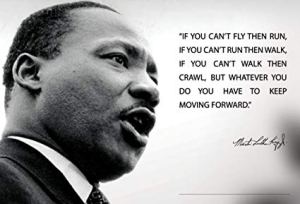
And in the words of Dr. King, if we can’t fly, let’s run. If we can’t run, let’s walk. If we can’t walk, let’s crawl. But whatever we do, let’s keep moving forward. Forward together, not one step back.


Mirroring the Self-Giving Love of the Triune God

reclaiming jesus

2 Corinthians 13:11-13 NRSV

We Americans are often guilty of trivializing things that are important. Consequently, survivors of loved ones who gave their lives for their country often struggle during the Memorial Day Weekend, and rightly so. For it can sometimes be difficult to tell if Americans truly know what Memorial Day is about.

Is it about the end of the school year and the beginning of summer? Is it about going to the beach, the river, or the lake? Is it about playing golf, having a cookout, or opening the backyard swimming pool? Is it about red-tag sales at the mall or some other self-fulfilling activity?

No, it is about sacrifice. It is about self-denying, self-expending love. It is about people giving all that they had to give, for they so loved their country more than self.

This weekend is about honoring those who died for us, and it is about praying for those they left behind. It is also a time to recommit ourselves to those who continue to selflessly fight evil in our world, evil that demeans, devalues and destroys human life and sometimes does it in the name of God.

May God forgive us for forgetting what this weekend is all about or watering it down for our own selfish gain.

I am afraid that we have done the same thing to the Christian faith. Consequently, followers of Jesus everywhere struggle, and rightly so. For it can sometimes be difficult to tell if Christians really know what the gospel is about.

Is it about judging and condemning others who believe and live differently? Is it about pure beliefs and possessing an attitude of superiority? Is it about having the right to discriminate and treat others who differ from us as second class citizens? Is it about banning people of other faiths from our communities? Is it about depleting our natural resources because we believe the Lord is returning and the world is ending in our lifetime? Is it all about going to heaven one day or on some other self-absorbed venture?

No, our faith is about sacrifice. It is about self-denying, self-expending love. It is about a God giving all that God has to give, for God so loved this world more than God’s self.

Thus, faith is about honoring a God who died for all. It is about recommitting daily to continue to selflessly fight the evil in our world, evil that seeks to demean, dehumanize and destroy human life and sometimes does it in the name of God.

Monday is Memorial Day. May we remember what it is truly about. And everyday is the day the Lord has made. May we remember how God is made known to us, relates to us, and loves us, and how God calls us to make ourselves known to, relate to and love the world.

This is where I believe the doctrine of the Holy Trinity can really help us—Three persons in one. Throughout the centuries, people have been trying to explain this complexity in simplistic language.

You have probably heard that God is like a pie. You can cut a pie into three pieces, but it’s still one pie. Or God is like many of us. I’m a brother, a father, and a son, but I am still one person. Or God is like water, and water has many forms: steam, ice, and liquid, but it is still water.

However, I believe each of these descriptions only scratch the surface of who our God truly is. It is only a watered-down, version of who our God is. Furthermore, it is defining God based on our understanding of the world, instead of allowing our understanding of God to define the world.

God, the creator of all that is, the power behind our universe, gave God’s self, emptied God’s self, poured God’s self out and became flesh and dwelt among us through Jesus Christ.  And Jesus Christ, while he was on this earth, gave himself back to God by becoming obedient to God even to death, even death on the cross. But before he left us on this earth, he promised not to leave us orphaned, he promised to be with us always by giving himself back to us through the Holy Spirit.

Do you see the one characteristic of the Holy Trinity which stands out?  God gave God’s self through the Son. The Son gave himself back to the Father. And God once more gives God’s self back through the Holy Spirit. God is a self-giving God. God is a God who loves to give to others the very best gift that God has to give, the gift of God’s self.

God is a giver. That means that God is not a taker. For givers are never takers.

Isn’t interesting that many Christians, often characterize God as a taker? Again, I think it is because we like to create a God in what we want our image to be, instead of allowing the image of God to define and guide us.

For example: How many funerals have we attended and heard the phrase: “God took her home or God was ready to take him?”

We have all lost loved ones to death. But the Trinity teaches us that Lord did not take them. For givers are not takers. A more accurate way of describing what happened to our loved ones when they breathed their last on this earth is that God wholly, completely and eternally, gave all of God’ self to them.

When we experience the heartache and heartbreak of this fragmented world, there is one thing of which we can be certain, God is here with us, not taking, but giving us all that God has to give, the best gift of all, the gift of God’s self.  If we don’t know anything else about God, we can know this. For it is God’s very nature.

As we renew our discipleship mission as a church, let us renew our commitment to mirror our God by living not as takers, but as givers.

For I believe with all of my heart that mirroring the self-giving love of God that is revealed to us in the Holy Trinity can help us reclaim the gospel that has been high-jacked by people who prefer to live in this world on their terms instead of on God’s terms.

Mirroring the self-giving love of God can help us recover our faith that has been co-opted by takers, by people who have used and misused the name of God for their own selfish gain

For if we mirrored the Triune God as self-giver, think of how everything would change.

Think of how our Christian faith would change. Our faith would not be about what we can take from God—healthier marriages, stronger families, deeper friendships, peace, security, comfort, a mechanism to overcome trials or to achieve a more prosperous life, or even gain an eternal life.

Our faith would be what we can give back to the Holy Giver—namely all that we have and all that we are, even if it is costly, even if it involves risk, danger and suffering, even if it involves the loss of relationships, stress on our marriages, sleepless nights, a tighter budget, even if it involves laying down our very lives.

Church. Church would not be about what we can take from it. It would not be about getting fed, experiencing some peace, attaining a blessing or receiving some inspiration to help us through the week.

Church would be about opportunities for self-giving. Church would be about feeding the hungry, working to bring peace, being blessing to our communities and inspiring the world. Church would no longer be a place that we go to on Sunday, but who we are every day of the week, the body of Christ, the very embodiment of holy self-giving love in the world. Church would not be a way to for us to get some Jesus. Church would be way we allow Jesus to get us to love our neighbors as we were created to love.

And our neighbors. We would look to our neighbors, not for what they can give us, not for what we can take from them, or how we can use them, but for what we may be able to offer them, especially those things that others are constantly robbing them of in order to support their dominance and superiority over them—their dignity, their equality, their value as human beings created in the image of God, their hope, their freedom, their justice.

We would look to our city, our state and our nation, not for what we can selfishly take from it, but for how we can selflessly give to it to make it a more just place for all.

The environment would not be something for us to take from, plunder and exploit for our own selfish wants, but something for which we sacrificially care for, respect, nurture and protect.

I believe if we would truly mirror the triune image of our God as givers instead of as takers, God’s kingdom would fully and finally come on earth as it is in heaven.

Mirroring the triune image of God as self-givers can rebuild a broken world.

Mirroring the triune image of God as self-givers can correct a distorted moral narrative.

Mirroring the triune image of God as self-givers can heal sick religion.

Mirroring the triune image of God as self-givers can bring down walls and break the chains of injustice.

Mirroring the triune image of God as self-givers will erase racism and sexism. It will end sexual harassment and assault.

When we mirror the triune image God as givers, all hate, bigotry, and violence will pass away, and all of creation will be born again.

When we mirror the triune image of God as givers, liberty and justice and peace will come, and it will come for all.

When we mirror the triune image of God as givers, the words of the prophet Isaiah will be fulfilled:

Many peoples shall come and say,
‘Come, let us go up to the mountain of the Lord,
to the house of the God of Jacob;
that he may teach us his ways
and that we may walk in his paths.’
…[Then] they shall beat their swords into ploughshares,
and their spears into pruning-hooks;
nation shall not lift up sword against nation,
neither shall they learn war any more (Isaiah 2:3-4).

I Pledge Allegiance

Poor People's CampaignDelivered at the Introduction Meeting of the Poor People’s Campaign at First Christian Church in Fort Smith AR, May 6, 2018


I

In America, I as an individual,have certain inalienable rights. As an individual citizen of this country, I have freedom. And with that freedom, I have a great responsibility. I have a voice. I have a vote, and I have the responsibility to make this country the very best that it can be. And that includes keeping our water safe, our air clean and our land pure.

Pledge allegiance

Our allegiance does not mean blindly accepting our faults, never questioning our past, and never second-guessing how current policies will affect our future. Allegiance means faithfully doing our part to “mend thine every flaw.”

It means being loyal, law-abiding citizens committed to our civic duty of voting in elections. However, it also means voicing opposition to laws that need to be changed and to elected officials who need be corrected. Civil allegiance sometimes means civil disobedience.

Like a faithful marriage, pledging allegiance means being loyal to our country in good times and in bad, in sickness and in health, for richer, for poorer, never giving up, never becoming complacent, never running away. It means perpetually praying for it, continually correcting it, forever fighting for it.

To the flag of the United States of America and to the Republic for which it stands

The flag is not a mere sign for our country. It is the profound symbol of our country. Signs are limited as signs only give information. Signs do not have the power to stand for something. Only symbols can do that. Whereas signs invoke intellectual responses from the brain, symbols elicit visceral emotions from the heart and gut. This is the reason seeing the Confederate Battle Flag flying on the back of motorcycles this weekend turned my stomach. The flag is not a mere historical marker, label, design or brand but a powerful symbol that stands for something. Flags have the power to move us, stir us, and guide us.

One nation

Our flag stands for one nation. Although heritage and culture are important aspects of life in different parts of our country, they are never more important than the unity of our country. Abraham Lincoln and Jesus spoke truth when they said: “a house divided against its self cannot stand.”

We need to come together not as liberal or conservative, republican or democrat but simply as Americans who believe we can do better and be better.

Under God

Not under God because we are down here and God is up there. Not under God because we want some sort of theocracy like the belief of ISIS and other Islamic extremists. And not under God because we believe we were established to be a Christian nation like the beliefs of Christian extremists.

Rather, we pledge our allegiance to country under, after, second to, our allegiance to the law of God.

As people of faith, this is why our allegiance is not blind. The Commander-in-Chief is not our chief commander. The Supreme Court is not our supreme being. Our allegiance is first pledged to something that is bigger than our nation, even larger than our world.

It is an allegiance that informs our vote, rallies our civic duties, admonishes our obedience to civil law, and yet, sometimes calls us to civil disobedience. For the Christian, it is the God revealed through the words and works of Jesus who becomes our civil conscience. We believe the law of God revealed through Christ supersedes every human law.

Immediately following words from the Apostle Paul regarding good citizenship and obeying the law, we read that every one of God’s laws is summed up in just one law: “You shall love your neighbor as yourself.” Jesus said it this way: “On this hang all of the laws of the prophets “…that you love your neighbor as yourself.”

And just in case some are still confused to what “love” is, Paul defines love by saying: “Love does no harm to a neighbor.”

Jesus said, “There is no law greater.” It is as if Christ is saying, “If you don’t get anything else from Holy Scripture, you need to get this: ‘love your neighbor as yourself.’” Yet, as evidenced by the amount of hatred, racism and violence that is in our nation today, much of it propagated in the name of God, this supreme law is widely ignored, disobeyed or rejected all together.

I believe it is when we first pledge our allegiance to this supreme law, that we have the opportunity to be a great nation. For when we love our neighbors as ourselves, when in everything we do to others as we would have them do to us, it quickly becomes “self-evident that all people are created equal with certain inalienable rights, that among these are life, liberty, and the pursuit of happiness.”

Indivisible

When we pledge allegiance to the supreme law of God, when we pledge to love our neighbors as ourselves, we promise to work together under God to build bridges to overcome the gaps and barriers that we have created that divide us: racial, sexual, ethnic, political, economic, educational and religious. We pledge to come together, side by side, hand in hand, for the equality of all people and the inalienable rights of all people.

This does not mean that we are to never disagree with the beliefs or lifestyles of others. We can certainly love our neighbor while disagreeing with our neighbor. It is not hating our neighbor when we disagree with the flag that our neighbor flies; however, when we infringe on their life, their liberty, and their pursuit of happiness by supporting public policies or actions that treat them as second-class citizens, that do harm to our neighbor, that keep the poor poor while keeping the rich richer, it is certainly not loving our neighbor as we love ourselves. As our 44thPresident said in the eulogy of Rev. Clementa Pinckney: “…justice grows out of recognition of ourselves in each other. [Our] liberty depends on [our neighbors] being free, too.”

With liberty and justice for all.

We pledge to work for freedom and fairness not just for our educated, rich neighbor who can afford the best attorneys, and not just for our advantaged, abled-bodied and able-minded straight, white, Christian, English-speaking neighbors. We pledge ourselves to stand for liberty and justice for all. And according to the Abrahamic faiths, “all” especially includes foreigners, minorities, the poor, the differently-abled, all those who have been pushed to the margins.

All even includes people of every nation. For our love and our mission to stand for liberty and justice have no borders.

In response to a call to include the rights of the LGBTQ community as civil rights, one of my friends raised the following question on Facebook, and to avoid being obscene, I am going to paraphrase: “They only represent 2% of the population. Why do they matter?”

This was not just one lone, ugly, hateful voice, but one that was representative of the sentiment of many.

“They only make up 2% of the population. Why do they matter?”

For the Christian who pledges his or her allegiance to the flag of the United States of America, and to the Republic for which it stands, one nation, under God, indivisible, with liberty and justice for all: LGBTQ+ lives matter; Black lives matter; Poor People’s lives matter, because according to everything for which this flag stands under the supreme law of the God of love, all lives will never matter, until all finally means all.

Alternative Gospel

new-coke

Isaiah 58 NRSV

It’s good times in Atlanta, Georgia today. But times have not always been good. I want to begin this morning with a story from some of the darkest days of what is perhaps Atlanta’s most famous corporation.

Some of you remember when the Coca-Cola Company made the unfortunate decision to change the formula of its flagship soft drink introducing “New Coke” back in 1985.

What prompted the change in formula were these “blind taste tests” that revealed consumers preferred the sweeter taste of Pepsi over Coke.

Coke sales were down, so these geniuses went to work and “New Coke” was born to completely replace the original Coke.

It wasn’t long, though, before the public rose up and demanded to bring back the original formula, or what became known as Classic Coke.

And even Bill Cosby (who still had his clout in 1985) and a cartoon named Max Headroom could not prevent one of the largest marketing failures in world history.

I am not sure when this exact thing happened to the original Word of God that was fully revealed by our Lord and announced by the prophets before him, but it happened. It’s like someone, or some group did some sort of blind taste test that revealed that people preferred a faith that had a much sweeter taste. Perhaps it happened in the very beginning, when Adam and Eve chose the sweetness of that forbidden fruit, choosing to live in the creation of their terms, instead of on God’s terms.

So these geniuses went to work, and this brand new faith was born to completely replace the original faith—to make it sweeter, more palatable, more drinkable.

However, unlike New Coke, the general public did not rise up and demand to bring back the original formula, or what we might call “classic faith.” In fact, most seem to prefer the re-imagined, re-engineered, and re-manufactured faith.

So, one might argue that the reformulation of this “new” gospel has been the largest marketing success in world history. It has been so successful in North America that the majority of folks believe that this new sweeter gospel is actually the “classic gospel.”

For example, a recent survey by Bill McKibben reveals that three-quarters of Americans believe the Bible teaches that “God helps those who help themselves.” However, that statement is from Benjamin Franklin, a Deist, which means he did not even believe God was working in the world. It is not from the Bible. “God helps those who help themselves” is in fact one of the most unbiblical ideas. It is Jesus who made the dramatic counter-assertion: “Love your neighbor as yourself.”

But, we prefer Ben Franklin don’t we? Easier to swallow. Taste sweeter. And it doesn’t sound so foolish.

But the Apostle Paul warned us that the wisdom of God is understood as “foolishness” to the world.

But we in the world don’t like to be foolish, do we? So we’ve embraced this new, sweeter, less foolish formula.

We’ve replaced “Do unto others as you would have them do unto you” with: “Do unto others as they do unto you.”

We’ve replaced “Turn the other cheek” with: “When somebody hits you, you hit back harder.”

“Love your enemies” has become: “Love the deserving.”

The simple commands to “feed the hungry” and “clothe the naked” have become the more qualified, conditional, yet sweeter commands to: “feed and clothe those who will pray with you, or at least attend a Bible Study or a worship service with you. Feed and clothe others, but give preferential treatment to those who share your faith.”

We’ve replaced “The last shall be first and the first shall be last” with “We must look out for number one.”

“Love keeps no account of wrongdoing” has been replaced with “love the sinner but hate the sin” (and of course everyone knows to hate the sin we just have to keep account of that sin).

“For whosoever welcomes little children welcomes me” has been replaced by “children should be seen and not heard, especially in a worship service.”

“Welcome the stranger” has been replaced with “It’s always best to err on the side of safety.”

We’ve replaced “In Christ there is no longer Jew nor Greek” with “Oh, there is most definitely ‘us’ and ‘them’” (and there’s way too many of them).

There is “neither slave nor free” has be replaced with “the free should have the religious liberty to treat others as second-class.”

There is “no longer Male nor Female” and other verses that elevate women like “Wives and husbands should submit to one another out of reverence for Christ” has been replaced with “Somebody needs to man up and wear the pants in the family.”

Ashamed of the gospel, we’ve replaced it with something sweeter to the taste, something more popular to the culture, more drinkable to the majority, and less foolish to our friends and family.

And we wonder why the world grows ever darker.

What we need today is for someone to rise up and demand to bring back the original formula, the original faith of Abraham, Isaac, and Jacob, of Moses and Prophets, the classic, old-time religion of Jesus and the Apostles. This country needs someone to stand up for the the true, indisputable, irrefutable Word of God.

We need someone like Isaiah, the prophet Jesus quoted the most, to stand up and shout out and hold nothing back! We need someone to lift up their voice like a trumpet and announce to the people their rebellion. We need for someone to call it out for the sin that it is. We need someone to tell the God’s honest truth: “The church has been conned. The people have been played. The clergy duped. They have been seduced into accepting an alternative faith, a fake-news that is nothing like the original good news.”

Hear again these words from Isaiah (I am reading from the contemporary Message translation):

They’re busy, busy, busy at worship, and love studying all about me.

Sound familiar? Of course it does. It’s the the sweeter gospel, it’s more-pleasing church. But when did Jesus ever say, “Worship me, study me?”

He never said that. That’s Alternative Jesus. That’s fake-news Jesus. True Jesus, Original Jesus, Classic Jesus never said, “study me or worship me.” No, he said something much more radical. He said, “follow me.” And not only “follow me,” but “deny yourself and take up your cross and follow me.”

Isaiah continues:

To all appearances they’re a nation of right-living people—law-abiding, God-honoring. They ask me, ‘What’s the right thing to do?’ and love having me on their side.

We certainly do, don’t we? We love saying: “one nation under God.” We love singing: “God bless America.” And we love having: “In God We Trust” on our money and the Ten Commandments in our courts.

Isaiah keeps preaching:

But they also complain…

Oh boy, do we complain! We whine in the darkness. We blame, and we scapegoat. It’s us verses them.

So rise up and preach it Isaiah. Stand up! Shout out! Hold nothing back!

Why do we fast and you don’t look our way? Why do we humble ourselves and you don’t even notice?

Why is the nation so divided? Why is the church struggling to survive? Why is the world so dark?

Well, here’s why [says the Lord]: The bottom line on your ‘fast days’ is profit.

In other words, your worship is more concerned with bringing in money than bringing in the lost. Or as Jesus said, “the house of prayer has become a den of thieves.”

You drive your employees much too hard. [You are against fair wages.]

You fast, but at the same time you bicker and fight. You fast, but you swing a mean fist.

You worship, you attend Sunday School, you might even teach Sunday School, but you gossip, and you tear others down. You go to church, but you say things and do things that do not build up the church.

So the kind of fasting you do won’t get your prayers off the ground.

Do you think this is the kind of fast day I’m after: a day to show off humility?

To put on a pious long face and parade around solemnly in black?

Do you call that fasting, a fast day that I, God, would like?

This is the kind of fast day I’m after: to break the chains of injustice, get rid of exploitation in the workplace, free the oppressed, cancel debts.

What I’m interested in seeing you do is: sharing your food with the hungry, inviting the homeless poor into your homes, putting clothes on the shivering ill-clad…

With absolutely no strings attached, especially religious strings!

But God, this doesn’t have a sweet taste at all. This is just foolish. We prefer something easier to drink, another formula, a new faith. Might we just remember, study the classic faith? Read about the original covenant? Must we actually do it?

Yet, when we look around at our world, all is so very dark. Everything seems to be headed in the wrong direction. The road before us is so uncertain. Something must change.

Then, don’t just remember this or study this, says the Lord.

Do this, [do this and the good news is:] the lights will turn on, and your lives will turn around at once. Your righteousness will pave your way. The God of glory will secure your passage. Then when you pray, God will answer. You’ll call out for help and I’ll say, ‘Here I am.’

Do you really want to bring light to the darkness? Then do this:

Get rid of unfair practices… [Get rid of this new gospel created by selfish, sinful minds that send the poor away empty.]

Quit blaming victims, quit gossiping about other people’s sins. Be generous with the hungry and start giving yourselves to the down-and-out.

And then your lives will begin to glow in the darkness, your shadowed lives will be bathed in sunlight. I will always show you where to go. I’ll give you a full life in the emptiest of places—firm muscles, strong bones.

You’ll be like a well-watered garden, a gurgling spring that never runs dry. You’ll use the old rubble of past lives to build anew, rebuild the foundations from out of your past.

You’ll be known as those who can fix anything, restore old ruins, rebuild and renovate, make the community livable again.

The answer to the cries of this world is right here. It is the original covenant. It is the classic faith. It is the true gospel. It is the irrefutable, indisputable Word of God. And we need to rise up and demand to bring it back.

Election Day Prayer

vote

God of Love and Grace,

We thank you for the freedom and right to vote, to elect people who will work on our behalf and on the behalf of our communities, to lead our districts, states and nation. May we always be reminded of the holy responsibility that comes with this privilege.

We thank you for your love for the people of all nations, languages and faiths and for the way this boundless love was revealed through the words and works of Jesus. May this love always inform our principles, our actions, and our vote. In this and in every election, may we vote for people and state questions that will better our communities and our world reflecting the values and the way of love Jesus taught his disciples.

Help us create communities that seek to build your kingdom on this earth: communities that will protect the poor, stand up for rights of the vulnerable, support fair wages, care for the sick, provide quality and equitable education for all children, advocate for those with exceptional needs, and listen to everyone’s voice.

As Christians, may we never be ashamed of the gospel. May we never shy away from the good news that continues to inspire our nation’s pledge of liberty and justice for all.

We pray for a nation that is deeply divided. Give us the grace to love all of our neighbors as ourselves. Help us to respectfully listen in love and to learn from even those with whom we most disagree. Help us to come together with mutual respect for the common good of all and be the people you have created us to be: acting justly, loving mercy, and walking humbly. May every decision that affects our neighbors come from love, mercy, and justice rather than from pride, arrogance or fear.

O God, continue to guide us to love this world as you love it. Unite us to pray together for places suffering from violence, that they may know peace. Help us to pray for communities struggling with inequality, unrest, and fear, that the may know hope.

Give us the strength to do all that we can do, to give all that we can give, even our very lives, to make this nation and world a better place. Help us to commit all that we are to rebuilding the ruins, repairing the breach, restoring the streets, and raising the foundation for generations to come.

Amen.