
Matthew 4:12-23
Growing up in the evangelical church, I heard a phrase that got my attention long before I knew how to question it, or even if I was allowed to question it: “Repent or be sent.” Have you ever heard that? I heard it about the same time I heard, “Turn or burn” and “Get saved or get microwaved!”
It meant: You better get your beliefs right… or else. You better say the prayer… or else. You better accept Jesus… or be sent to hell. Repent or be sent.
And for a long time, I thought the voice of God sounded like that— menacing, threatening, terrifying. I thought the main point of Christianity was getting people to accept Jesus as their personal Lord and Savior so God would not send them to hell for all of eternity.
The good news is that I kept reading the gospels. I went to seminary where I studied the gospels and the Greek language. And I noticed something.
Jesus never said anything remotely close to: “Repent or else.”
Today, our gospel lesson reveals what Jesus actually said. And it is far more hopeful. But it is also more challenging.
Matthew tells us that Jesus announces his public ministry with these words: “Repent, for the kingdom of heaven has come near.”
Not repent or else. Not repent to avoid eternal punishment. Not repent so we can escape a troubled world. But repent because something divine is coming to this world.
The Greek word we translate “repent” means “a change of mind” or “a change of vision.” “It’s a re-ordering of how we see the world.” It doesn’t mean “feeling sorry,” or “getting religious,” or “fixing some private flaw.” It means learning to see the entire world differently.
The Apostle Paul put it this way: “So, if anyone is in Christ, there is a new creation: everything old has passed away; look, new things have come into being” (2 Cor 5:17).
The call to repent is an invitation to transform how we think, act, and belong in the world.
Why? Because, “the Kingdom of Heaven” has come near.
The Greek language here means much more than “a place” or “a destination after death.” It means, “a reign,” “a rule,” or “a governing force.” Jesus is announcing an alternative political and social order, one that stands in direct contrast to Rome, to Herod, to economic exploitation, to state violence, to exclusion, to domination, and to the religious systems that bless it all.
Jesus is talking about a reign of inclusive, universal, unconditional love.
And Jesus says that we can change the way we see the world because this reign of love has come near. Not someday. Not after death. The verb Matthew uses means: “it is so close you can feel it breathing on your neck.”
Now, I can already hear the response of some of my evangelical friends: “Preacher, Jesus didn’t say, ‘the Kingdom of Love is near.’ He said ‘the Kingdom of Heaven is near.’ Aren’t you reading a bit more into this?”
Throughout the gospels, through every parable Jesus told and every action Jesus took, I believe Jesus was showing us what the Kingdom of Heaven looks like. And what did he show us? That it looks like healing for the sick, welcome for the excluded, food for the hungry, liberation for the oppressed, and justice for the persecuted. It looks like mercy, and it looks like grace. It looks like love, always love, even for our enemies. It looks like a love that is free, fierce, and unstoppable.
So, to speak of the kingdom of Heaven as “a reign of love” is not adding to Jesus’ words. It’s letting Jesus’ life, death, and resurrection interpret them. If the Kingdom of Heaven does not look like love in practice, then we are not actually talking about the kingdom Jesus proclaimed.
I believe it is notable that Jesus announces this reign of love, not in the halls of power, but in Galilee, among people terrorized by empire, taxed into poverty, and made to believe that injustice was normal.
Repentance is necessary because people have learned to accept a world organized, not around the governing power of love, but around the governing power greed that crushes the poor.
So, Jesus’ call to repent was not a stern warning. It was hopeful, good news. He was saying to the people: “Hold your heads up! Don’t despair! The words of Isaiah are being fulfilled: ‘you who sit in darkness, in the shadow of death, a light is dawning!’So, you need to change the way you see things, because love is becoming the governing force in this world!”
Later in Matthew, we are shown exactly what this governing force looks like: “When Jesus sees the crowds, he has compassion for them, because they were harassed and helpless, like sheep without a shepherd.” (Matthew 9:36) Others see the crowd and feel threatened. Jesus sees the crowd and feels compassion. And the word “compassion” here is visceral. Jesus sees the suffering of others and feels it in the pit of his stomach.
This is repentance embodied. To repent is to learn to see others as Jesus sees. To feel for others as Jesus feels. To refuse to be indifferent and to love as Jesus loved.
Repentance is believing that loving like Jesus has the power to change the world. Repentance means: seeing immigrants as neighbors; seeing the poor as beloved; seeing those harmed by violence as worthy of justice. It means even seeing enemies as beloved children of God. Repentance is believing no human is “illegal” or “an alien” or “garbage.”
Repentance is: welcoming the stranger; liberating the oppressed; caring for the sick; feeding the hungry; and educating children, not using them as bait to arrest their parents without due process. Repentance is honoring and protecting those who defend the defenseless, not shooting them dead.
The purpose of repentance is not to be saved from hell when we die. The purpose of repentance is to save our humanity from hellish cruelty while we are living.
Next, we read where this terrible phrase I learned as a child, “Repent or be sent” gets transformed and where it gets challenging. We learn the gospel of Jesus is not: Repent or be sent to hell. The gospel is: Repent and be sent to hell— into the hellish parts of this world as transforming agents of love. And that’s exactly what happens in Matthew 4.
Jesus says “Repent!” and then he immediately calls his disciples. Not to escape hell. But to go bravely into it. When the disciples repent, they are sent into systems of exploitation that reward greed and punish the poor. They are sent into communities disciplined by fear: fear of immigrants; fear of other religions; fear of truth. They are sent into a world that normalizes violence, sanctifies inequality, mocks compassion, terrorizes the most vulnerable, and calls it being faithful. They are sent into a world that looks an awful lot like ours.
We live in a time when choosing a career of cruelty gets you a $50,000 sign on bonus. A fascist government blatantly lies to cover up their murders of Nicole Good and Alex Pretti. Pure meanness is mistaken for strength. And empathy and mercy and compassion, the very essence of who Jesus of Nazareth was, is mocked. Diversity, equity, and inclusion are treated as threats. And love is considered weak.
But the gospel insists that love is far from weak, in fact, love is the only power that has ever changed the world for good.
Love dismantled slavery, not all at once and not without resistance, but through people who refused to accept human bondage as God’s will.
Love marched across a bridge in Selma and faced dogs, batons, and tear gas, not with weapons, but with the stubborn insistence that Black lives mattered.
Love sat in a Birmingham jail and wrote that injustice anywhere is a threat to justice everywhere.
And love is showing up today: in asylum seekers, refugees and immigrants risking everything for their children, in protesters like Alex Pretti and Nicole Good, who risk everything to protect them, in organizers who refuse to stop telling the truth, in people who keep walking the walk even when the road is long.
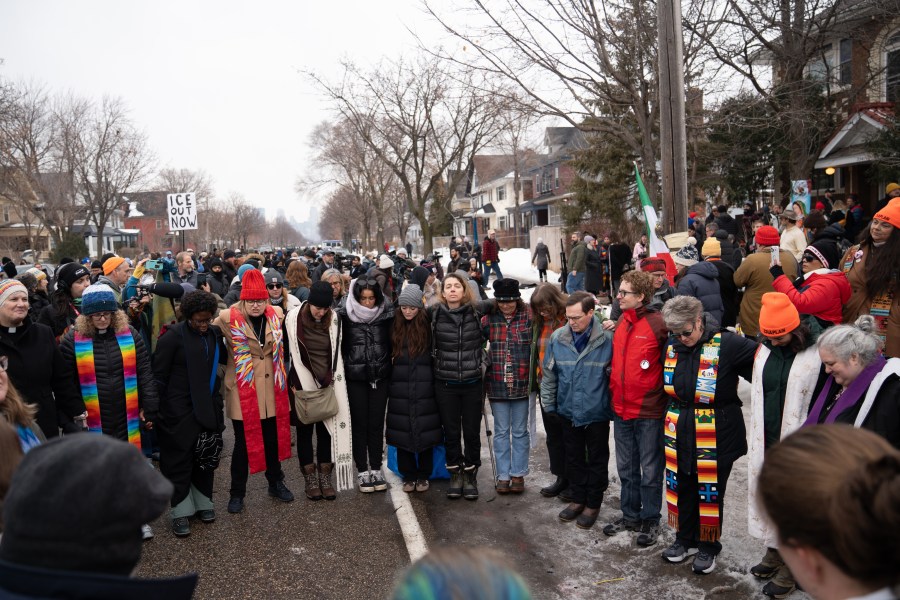
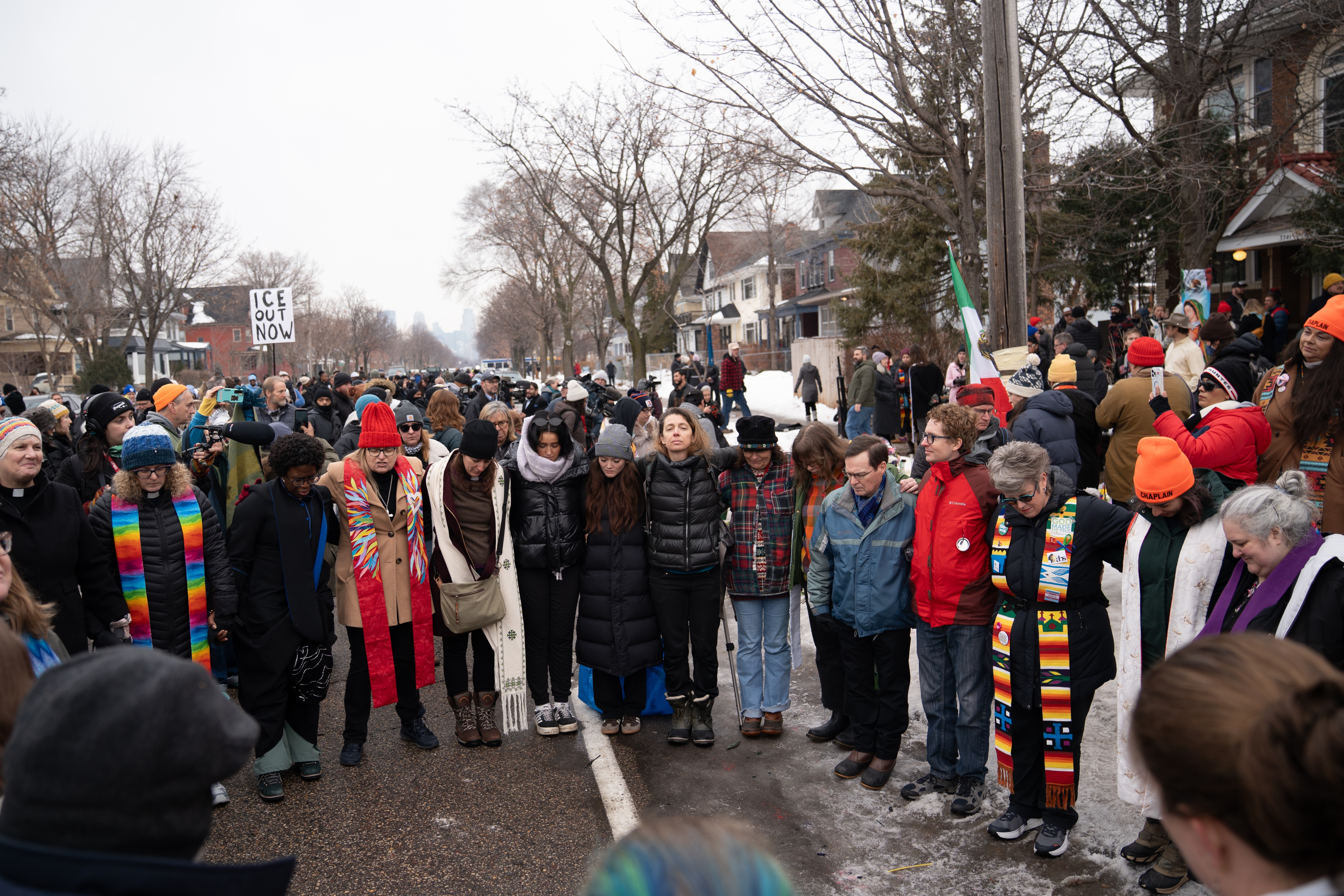
Love is on the move this weekend in Minnesota, as ordinary people march chant in sub-zero temperatures to peacefully protest racialized state violence, as clergy from all over the United States traveled to Minneapolis to stand in solidarity with those being dehumanized, demonized, and criminalized— one-hundred ministers arrested in the airport on Friday while singing hymns and reciting the Lord’s Prayer.
Next month, reminiscent of the march in Selma, love will be sent to walk the roads of North Carolina, from Wilson to Raleigh, in the Repairers of the Breach’s march called the “Love Forward Together.”
Not marching out of anger, at least not anger alone, but marching out of moral conviction, a deep compassion we feel in the pit of our stomachs.
Not walking to escape the world, but to declare that love, justice, and dignity belong at the center of public life.
And we will walk courageously and confidently, chanting, praying, and singing with hope in our hearts, as history keeps reminding us:
The Herods of the world die.
Empires fall.
Violence fails.
Cruelty exhausts itself.
Fear burns itself out.
ICE will melt.
And lies cannot stand forever.
But love? Love keeps moving forward.
The scripture promises: “Love never ends.” When everything else fails, love remains.
And that is why Jesus does not say, “Repent or else.” But says, “Repent and be sent.”
Sent to join the long, unfinished story of love changing the world.
Sent into a broken world not with doubt, but with assurance.
Sent into cruelty with compassion.
Sent into despair with hope.
Because the reign of God is near!
In the shadow of death, a light is dawning.
Love is breathing on our necks.
And love will have the last word.
The good news is:
Repent—and be sent.
Because love will win.
Amen.
Benediction
Beloved, as you return to the rest of your day
to quiet rooms or busy homes,
to news alerts or peaceful reflection,
to a world still aching for healing, and crying for justice
know this;
Empires will fall.
Violence will fail.
Cruelty will exhaust itself.
Fear will burn out.
Lies will not last.
But love will remain.
Love will keep walking.
Love will keep organizing.
Love will keep telling the truth.
Love will keep showing up.
So repent and be sent.
Sent from this moment with clearer eyes.
Sent into a hurting world with softer hearts.
Sent to love forward together,
even when the road is long
and the work feels heavy.
The reign of God is near.
It’s closer than you think,
closer than you feel.
It’s breathing right on our necks.
So, go in peace and hope.
Go in courage and power.
Go in love. Always in love.
Amen.
 Just Love