
Hope Is in Our Gut

Mark 6:30-34, 53-56

The disciples were sharing with Jesus all they have been doing while they were out on the road publicly being the church, proclaiming the way of love that Jesus taught and embodied. They were telling Jesus all they have been doing to make the world more peaceful, equitable, and just for all people, especially for the poor and those marginalized by sick religion and greedy politics, and for foreigners, including Samaritans. They were telling Jesus all they have been doing to make sure the hungry were fed, strangers were welcomed, and the sick received healthcare.

And, while they were sharing with Jesus, they must have looked like some of us are looking these days: exhausted, frustrated, and even afraid.

Because like in Jesus’ day, the times we live in are serious. The threats are critical. The dangers are real. The call for mass deportations of immigrants grows louder. Fascism grows more popular, while democracy loses favor. Sixty years of civil rights progress is being threatened. The rights women have enjoyed for fifty years have been taken away. The very identity of our nation is at risk. People today who claim to follow Jesus seem to be opposed to everything for which Jesus stood.  And we the people, we who are trying to follow Jesus, are tired and afraid.

Jesus looks at the weary disciples and says: “Come away to a deserted place and rest a while.” Then, they boarded a boat and went on a cruise.

Sounds wonderful, doesn’t it? That we could all just go to some place to get away from it all. How nice would it take a cruise for the next six months!

I remember that’s exactly what I did after one presidential election. For three months, I disengaged and withdrew from everything happening in Washington. From November to February, I avoided all news. If Lori was watching MSNBC in the living room, I would ask her to turn the channel before I walked into the room.

Unlike the disciples, I didn’t own a boat, but I did have something they didn’t. I had cable TV and something magical called ESPN!  So, I put my head in the sand by focusing all of my attention on basketball and football. I did whatever I could do to pretend that nothing bad had happened world, that none of my friends felt threatened or lost. For three months, my best friend was denial.

But notice what happened to Jesus and the disciples when they tried to get away from it all. As soon as the people saw them board the boat, they spread the word and hurried to Jesus’ port of arrival ahead of them.

Jesus sees the great crowd, and (here’s the good news) he has “compassion for them.”

To truly understand this good news, we need to know something about this rich Greek word in this verse translated “compassion” It is σπλαγχνίζομαι (splanch-nizo-mai).

It is a visceral word which literally means to feel something deep in the gut. When Jesus sees the crowd that had gathered and that the people seemed lost and felt threatened, like sheep without a shepherd, his concern for them is gut-wrenching. The fear and needs of the people turns his stomach.

So, he and the disciples immediately go back to work, proclaiming good news to the poor, recovery of the sight to the blind, and freedom to the oppressed, while opening up a free clinic for everyone onsite!

As I said last month, we all need a Sabbath. We all need a little time away. But for the follower of Jesus, our time away will always be short-lived, because when we are following Jesus, when we are out on the road with Jesus in the public square, when heads are out of the sand, when our eyes are wide-open in the world, we will always see a great crowd in need: people who are hungry for food and for dignity, hungry for their lives to matter; people who are thirsting for water and for equality, thirsting to be seen as the image of God.

And when we really get to know them, when walk in their shoes, when we understand where they are coming from, their pain will be like punch in our own gut. Our stomachs will turn. And experiencing gut-wrenching pain, we will be stirred to love-inspired action.

I have heard and I have said that our nation has “an empathy crisis.” But I am beginning to believe that might not be the case. Because, I believe most all human beings were born with the capacity for empathy. Of course, there are few exceptions— those with dark, narcissistic tendencies, those whose hearts have been hardened by fear, greed and selfishness. But I do not believe they are not the majority.

And this, I believe, is the good news. This is our hope. The hope is in our guts. The hope is that most people have really do have the capacity for empathy which leads them to love.

For example, when most people read Lori and my story of losing our first child, when half-way into the pregnancy we discovered the baby did not have an abdominal cavity to protect their organs, leading us to make the difficult and painful decision to abort the pregnancy, most people demonstrate great empathy. Our personal story moves them. Reading our story, people have said they felt our pain. They shared our grief. Some told me that our story changed their position on abortion, or it confirmed their belief that the decision to terminate a pregnancy should be left up to the woman and not to a government that is unfamiliar with the situation.

However, there are a few people who continue to shock me with their cold-heartedness. Just last week on Facebook, someone I have not seen since high school, and to be honest, I don’t remember seeing her then, commenting on our story, called Lori “a murderer.” Can you believe that?

Which in my mind immediately raised the question about my high school classmate: “Is her heart really that cold? How can anyone’s heart, or gut, be so callous? To call Lori “a murderer?”

 But it occurred to me. The odds are that this woman is not a sociopath. Her problem is that she just doesn’t know Lori. And she certainly doesn’t know me very well. For everyone who truly knows us knows that if Lori was a murderer, I would have been dead a long time ago!

So, maybe our nation does not have so much of an empathy crisis as we have a proximity crisis. We have a too-many-people-living-in-a-bubble crisis. A too-many-people-tempted-to-keep-their-heads-in-the-sand crisis.

For too many have gone away to some deserted place with people who look like them and think like them in order to escape from anyone who is different or has lived a different experience.

Because if we truly knew one another, if we put ourselves in the proximity to understand one another, to know others as we know ourselves, personally, intimately, then our gut would prevent us from ever hurting another. We would feel it in our gut to truly love our neighbors as we love ourselves, which means to want for others the same protections, the same freedom, and the same justice that we want for ourselves.

Since I have been living in Lynchburg, I have been in awe of my colleague Rev. Dan Harrison’s great compassion for the Palestinian people. Dan seems to possess a passionate outspokenness for the Palestinians which is greater than mine. He seems to possess more of an urgency to loudly speak out for their humanity in Israel’s war with Hamas than I possess.

Could his heart be a bit softer than mine? Is he a more devout follower of Jesus than me? Perhaps. But I believe it is more likely because Dan has lived in that region of the world. It is because Dan has very close friends who are Palestinian. He knows their experience, because he has lived their experience. Dan has literally walked in their shoes. He knows them and understands them, personally and intimately. And when they are afraid, when they feel dehumanized, and otherized, Dan feels it in his gut. And he is stirred to action.

Dan would say that he is not more devout. He is just in more pain. And he is in that pain because of proximity.

I believe most of us have what we need in our guts to save us and to save democracy. We don’t need more capacity for empathy. What we need is to rediscover the power of proximity.

That is why, that no matter how dark things get, we must resist the temptation to withdraw completely from our world, to go off to some deserted place with people like us, to get away from all others, to completely disengage from the world and all of its problems, to turn off the news and immerse ourselves with ESPN, Hulu or Netflix, to stick our heads in the sand and ignore our neighbors who feel lost, keeping them out of sight, out of mind. For withdrawing only adds to our nation’s crisis of proximity.

Jesus didn’t feel like he was punched in the gut on that boat. Mark says he felt the gut-wrenching pain as soon as he “saw the crowds.”

After decades of supporting the Christian Right, ghostwriting autobiographies for Jerry Falwell and Pat Robertson, Rev. Dr. Mel White came out of the closet writing his own autobiography Stranger at the Gate in 1994 and then became a full-time minster to the LGBTQIA+ community. In his latest book, Religion Gone Bad, Mel White issues a warning of the dangers of Christian Nationalism and its critical threat it is to democracy.

I love the stories of Mel White attending worship services at Thomas Road Baptist Church. I am told whenever Rev. Falwell would disparage queer people in a sermon, Rev. White would stand up so the entire congregation, including Falwell, would see him. Avoiding seeing Rev. White, standing tall and proud confronting the hate, was not an option for anyone.

The world today is a scary place, but for the follower of Jesus, sitting down is not an option. Getting on a boat to go on a cruise for the next six months may sound tempting, but for the follower of Jesus, it’s not an option.

Retreating, withdrawing and disengaging— it’s not an option.

Denial is not an option.

Being quiet on social media is not an option.

Avoiding talking about religion and politics with our family and friends because making them uncomfortable will stir up some trouble is not an option.

The times are too serious. The threat is too critical. The dangers are too real. And if you are a follower of Jesus, now is the time to get into some trouble, some good trouble.

Avoidance, politeness, moderation, even tolerance— it’s not an option. Now is the time for all who believe that the best thing we can do as humans to love our neighbors as ourselves to rise up with Mel White and stand tall allowing others to see and experience our suffering in their guts, which will then hopefully stir them to love-inspired action.

         This is our hope. It’s in our gut. Amen.
Healing Religious Trauma

Acts 8:26-38 NRSV

This year’s Turner-Warren lecture still inspires me, and I hope you too, to think about the opportunities we have as a church to heal religious trauma caused by the oppressive beliefs of many who call themselves “Christian.” How do we support people who have been taught by preachers and by teachers and professors at their private conservative schools that who they are, that their very being, is outside of the boundaries of God’s love and grace?

How do we help people deconstruct the exclusion and fear of the other they have been taught in Sunday School and through sermons?  How do we help them to reach a point where they truly believe in the words of the Apostle Paul— the one who believed if anyone is outside the boundaries of God’s love, as a former persecutor of Christians, it was him— but became “convinced that neither death, nor life, nor angels, nor rulers, nor things present, nor things to come, nor powers, nor height, nor depth, nor anything else in all creation, will be able to separate us from the love of God in Christ Jesus our Lord” (Romans 8:28-29)?

How do we heal religious trauma here in city that is known for creating it?

Well, this may come as a surprise to people who have been injured by those who have weaponized the Bible, but I believe the Bible, particularly this morning’s epistle lesson, can help a church like ours serving in a city like ours. I often think of what a better world this would be if the people who claim to love the Bible or sell the Bible would actually read the Bible.

Verse 26 of chapter 8 of the book of Acts reads:

Then an angel of the Lord said to Philip, ‘Get up and go…:

The first thing we must learn is that we will never be able to fulfill our call to be healers of religious trauma unless we first fulfill our call to “get up and go” to meet people where they are. We must go to them, because, sadly, those who have been wounded by the church have some very good reasons for not coming to us.

People who have been hurt by the church understand that most churches not only expect people to come to them, but they expect them to come in a manner that meets their own religious and cultural expectations. That is, they know that many churches expect people to come to them who want to believe like them, look like them, love like them, and even hate like them.

And as our political environment teaches us, it’s not just the church that has trouble accepting those who are different. Excluding others seems to be something that seems to come very naturally for us. I think if we are honest, we would all admit that we would much rather be around people who are a lot like us.

Some have said that it may be part of our evolutionary DNA. It’s some inborn, natural instinct of survival. Fear the different. Beware of the other. Trust no foreigner. Avoid the outsider.

This, of course, is what fuels racism and homophobia. It supports white Christian nationalism and isolationism. It builds walls, discriminates, excludes, and demeans the other.

I believe this is what the Apostle Paul is talking about when he talks about the dangers of being led by the flesh and not by the Spirit. Because we human beings can easily be led by the flesh. A false prophet or Anti-Christ-like leader can easily stoke the fear of the outsider that is inside all of us. Unfortunately, it doesn’t take a stable genius to lead us to hate the other.

However, the Spirit leads us to take a higher road.

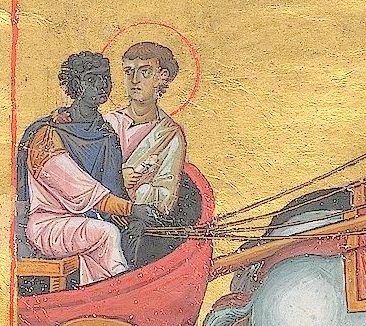
Notice that Luke tells us that the Spirit had to urge Philip, the Spirit had to push Philip, pull Philip, to get up and go to this chariot to meet this queer black man from Ethiopia.

Philip, I know this may be hard for you. I know this may be against your natural inclination. But go to this chariot and meet this stranger, this gender-variant foreigner, this victim of bad faith and sick religion who had been ostracized from their community of faith, this one demeaned and exploited for their sexuality, this one who has been clobbered by the Bible by those who arbitrarily pick and choose scripture passages like Deuteronomy 23:1 that says Eunuchs are forbidden to enter the temple, this one who has been taught their entire life that they are despised by God. Go to their chariot and meet them where they are. Don’t expect them to come to you. And when you encounter them, do not stand above them or over them. Do not judge them or condemn them. Join them. Get into the chariot and sit beside them. Ride alongside them. Engage them. Listen to them. Seek to understand them, empathize with them. Learn from this other, this stranger, this foreigner, this beloved child of God, this beautiful sibling of yours.

Philip meets the Eunuch who is reading from the book of Isaiah. This should not surprise us. For this is one of the most hopeful books in the Hebrew Bible for those who have been marginalized by sick religion, for those who have been taught that they are despised by God. Imagine the hope that burned in this Eunuch’s heart when he read the following words we find in Isaiah 56:

Thus says the Lord:

Maintain justice, and do what is right,

for soon my salvation will come,

and my deliverance be revealed.

Do not let the foreigner joined to the Lord say,

‘The Lord will surely separate me from his people’;

and do not let the eunuch say,

‘I am just a dry tree.’

For thus says the Lord:

To the eunuchs…

…I will give, in my house and within my walls,

a monument and a name

better than sons and daughters;

I will give them an everlasting name

that shall not be cut off.

And the foreigners who join themselves to the Lord,

…these I will bring to my holy mountain,

and make them joyful in my house of prayer;

their burnt-offerings and their sacrifices

will be accepted on my altar;

for my house shall be called a house of prayer

for all peoples.

Thus says the Lord God,

who gathers the outcasts of Israel,

I will gather others to them

beside those already gathered.

Philip hears him reading from Isaiah and asked: “Do you understand what you are reading?”

The Eunuch responds: “How can I understand it unless someone interprets it for me?

What a great question! What a better world this would be if more people understood that the Bible needs to be interpreted.

God never intended for people, on their own, to pick up the Bible, and arbitrarily lift scripture passages out of their contexts, and try to understand it or follow it. For this is one of the main causes of religious trauma today. Too many Christians are using the Bible out of context to support all kinds of hate, bigotry, and injustice.

And because of that, there are countless people in this world, countless people in this community, who are the victims of sick religion. They feel marginalized and disenfranchised by the church. They have been taught their entire lives that God despises them. They have no idea that God loves them and has a future for them— All because no one has interpreted the Bible pointing to the Jesus who came into the world, not to condemn the world by to save the world, to love the world.

The eunuch then begins to read from chapter 53:

Like a sheep he was led to the slaughter,

and like a lamb silent before its shearer,

so he does not open his mouth.

In his humiliation justice was denied him.

Who can describe his generation?

For his life is taken away from the earth.

Then the Eunuch asks Philip, ‘About whom, may I ask you, does the prophet say this, about himself or about someone else?’

The Eunuch is asking: Who is this one was also ostracized and marginalized by others, as I have been? Who is this who was led like a sheep to be slaughtered? Who is this one who has been humiliated and denied justice? Who is this who had his life taken from him? Who is this one who is just like me? Who is this one who relates to me so well, who understands my pain, who knows my heartache, who empathizes with my sufferings? Is it Isaiah? Or is it someone else?

Then, Philip tells the eunuch the good news about Jesus, perhaps saying something like: the one who understands your pain, knows your heartache, and empathizes with your sufferings is none other than Jesus, the enfleshed presence of God, and the powers-that-be crucified him for it. The one who relates to you, identifies with you, and because of that, loves you, welcomes you, accepts you, affirms you and forgives you like none other, is the very One who others said despised you.

When the Eunuch hears this good news about Jesus, the words of the prophet become not only hopeful news for the future, but good, glad, certain news for the present:

For thus says the Lord:

To the eunuchs…

…I will give, in my house and within my walls,

a monument and a name

better than sons and daughters;

I will give them an everlasting name

that shall not be cut off.

Suddenly, barriers fall. Walls crumble. Obstacles disappear. And the very doors of the Kingdom of Heaven swing wide open.

It is then the Eunuch, this one who had no name and no future, but now has an everlasting name exclaims:s “Look here is water! What is to prevent me then from being baptized?” In other words, “What is separating me from the love of God?”

Knowing that nothing in heaven nor on earth, nor angels, nor preachers, nor church boards, nor church bylaws, nor books of discipline, nor elders, nor deacons, nor Sunday School teachers, nor college presidents nor or professors, nor anything else in all creation, will be able to separate us from the love of God, Philip commanded the chariot to stop, and both of them, Philip and the eunuch, went down into the water, and Philip baptizes him, washing away the trauma.

Deviled Ham

torches2

Luke 8:26-39 NRSV

Today’s gospel lesson is one of my favorite stories of Jesus. There is just so much from which to glean from all of the rich symbolism in this story.

Then they arrived at the country of the Gerasenes, which is opposite Galilee.

The opposite of Galilee. The opposite of home. The opposite of familiarity. The opposite of comfort. The opposite of sanctuary.

I believe it is important for the church today to note that the man in this story would have never had an encounter with Jesus, an encounter that brought him liberation, healing and restoration, if Jesus and his disciples stayed in Galilee.

This is one of the reasons I am so grateful for our Disciples Women Fellowship that has chosen to serve at Hope Campus twice a month. If we want to follow Jesus as his disciples, the church must be willing to leave the sanctuary to encounter people who need the liberation, healing and restoration that we know the love of God can bring.

As he stepped out on land,

Jesus and his disciples had just encountered a storm out on the lake, and now, as soon as Jesus steps out of the boat, they encounter a different kind of storm.

 a man of the city who had demons met him.

A man of the city—reminds me of another story of Luke, when “a woman of the city who was a sinner,” anoints Jesus’ feet. Right away, we get the suspicion that this man had a sinful reputation.

For a long time, he had worn no clothes, and he did not live in a house but in the tombs.

And here is where we begin to get the picture that this man of the city is not the only sinner in this story. He is unnamed, naked, and homeless, and he lives among the dead. He is treated as if he was no longer alive, as if he did not exist. He is fully debased, degraded and dehumanized with no rights, no privileges, no power, and no place whatsoever in society.

 Jesus then asked him, “What is your name?” He said, “Legion”; for many demons had entered him.

He has been driven to the margins of life by the Legion. Legion is a technical term for a division of the Roman Army. Thus, it is revealed that this man is a victim of the Roman Empire and its oppressive systems that do great harm to people like him.

We don’t know exactly what that means, “people like him,” but, sadly, we could make some good guesses:

Could it be that he spoke a foreign language? Was he an undocumented immigrant or refugee? Perhaps he had a different skin color? Maybe he practiced some kind of minority religion? Did he have cerebral palsy, autism, a Traumatic Brain Injury, down’s syndrome, or post-traumatic stress disorder? Did he suffer with seizures? Could it be that he suffered with some sort of mental illness? Might it be that he was gay or transgendered?

Not only is he a victim of unjust political systems, he is also a victim of his community. Unfortunately, that is the power of government: if the state leaders are against you, then it gives permission for society to be against you.

He’s labeled “demon possessed” which means he has been fully “other-ized.”

There is no evidence that he has ever harmed anyone, yet, he is “bound with chains and shackles” and “kept under guard.”

He is not to be counted in the census. There is no path to citizenship, no process to appeal. There is no grace.In an act of gross dehumanization, he is forced to live among the dead until he dies.

This is the evil of our world. It is not a spirit that might make us take off all of our clothes and take up residence in a cemetery. No, the evil of this world is the the chaining of this man, the oppression of this man, the dehumanizing treatment of this man, treating him as if he did not exist among the living, shackling him naked in a graveyard, is the true demonic evil in this story.

And for Jesus and his followers, this type of evil should always be brought out and driven out. Jesus is never happy when any person is demeaned, degraded, dehumanized and excluded from community. Whenever Jesus encounters chains, Jesus breaks the chains. The good news is that every time we draw a line that keeps people out, Jesus is with the people on the other side of that line.

This demonic evil, this anti-Christ spirit that possessed the state and the culture to oppress this man is further revealed in the fascinating account of the demons leaving the man and entering a herd of pigs that were minding their own business, innocently feeding on a hillside. As soon as the pigs get infected by the demons, they immediately rush down a steep bank, and they drown in the lake.

I once heard a preacher joke that it is right here in this story that we have the first recorded instance of “deviled ham.”

I know, it’s a terrible joke. Sounds like the kind of thing we might hear Jim Creekmore might say. The poor pigs. What did they do to deserve to become agents of evil? And how could Jesus do such an inhumane thing to any of God’s beloved creatures?

However, we soon discover that these poor pigs were infected with evil long before Jesus showed up.

Notice what happens when Jesus liberates this man (verse 37). When they find the man is liberated, do all the people thank Jesus? No, all the people, “all the people in the surrounding country beg Jesus to leave their presence.”

The demonic evil here is not only the oppression of this man by unjust political systems and a fearful culture, but that the people valued their pigs more than the man’s liberation. The people would rather keep their pigs, their income, their stock values, their privilege and power, rather than see this man set free. This is what made this herd of ham so deviled.

If it means losing some pigs, keep the man shackled.

If it means losing some pigs, crucify the liberator.

If it means losing some pigs, succeed from the union.

If it means losing some pigs, assassinate the preacher.

If it means losing some pigs, suppress the vote.

If it means losing some pigs, oppose the minimum wage.

If it means losing some pigs, then ban foreign nationals of another religion. Separate families. Close the border.

If it means losing some pigs, then resist equality, forget fairness and defend discrimination.

If it means losing some pigs, then keep quiet. Stay silent and stay put. Learn to live with injustice.

If it means losing some pigs, then stomach the murder of children. Be okay with torture. Endure endless war.

If it means losing some pigs, then water down the gospel. Ignore evil. Neglect the poor. Send the stranger away. Don’t feed the hungry. Don’t heal the sick, and whatever you do, don’t do anything to follow the sacrificial way of Jesus. Don’t love others as you love yourselves.

If it means losing some pigs, keep the man naked, chained and guarded.

The truth is, that whenever a person or a group is liberated from oppression, there is another person or group that has some deviled ham to lose, some things that they value more than another’s freedom.

So, a good question for us is, what is our deviled ham? What do we value more than another’s freedom?

Patriarchy? White supremacy? Heterosexism? Religious superiority? Homogenous cities and neighborhoods? Homogenous churches? Cheap fast food? Inexpensive coffee? Inexpensive clothing? Easy and quick access to guns?

Another question is: are we ready to leave Galilee? Leave the familiar and the comfortable in order to bring liberation, healing and restoration to another. Are we willing to leave home so others can have a home?

The man from whom the demons had gone begged that he might be with him; but Jesus sent him away, saying,

“Return to your home, and declare how much God has done for you.” [Restored to his community,] he proclaimed throughout the city how much Jesus had done for him.

Desiree Adaway, a consultant, trainer, and coach who helps to build equitable and inclusive working environments in companies and organizations including: IBM, United Airlines, The Girl Scouts, and Rotary International, writes:

We are all socialized into systems that oppress.

We learn to accept oppression as normal.

We are born into a social system which teaches us to accept things as they are.

We are rewarded for accepting things as they are.

We are congratulated for accepting things as they are.

We become “model members of society” when we accept things as they are.

We gain comfort, money, connections and power when we accept things as they are. People who go against the grain, pay the price.

I know [there’s] a tiny voice deep in your heart is saying “I do not oppress people.”

That might be true, you may not actively oppress others- but here is the reality- oppression is still happening, because this cycle and the systems they support continue to run uninterrupted.

Oppression is the norm, not the exception.

Justice is the exception, not the norm.

Institutions influence individuals and individuals influence institutions.

This process is pervasive, consistent, circular, self-perpetuating, and invisible.

The simplest thing to do is nothing.

But we have failed to realize that we have become participants in our own oppression by doing nothing.

Will you take responsibility for the oppression that continues? Will you stand up and confront the systems, rules, and norms?

How, where, and when you confront injustice is irrelevant, as long as you do it.

You and I are responsible for interrupting oppression. We are responsible for dismantling it. We are responsible for creating new systems and ways to share social power.

Society will not transform itself. We have to break the chains.

We all have to pay the price, so that can happen.

Let’s get to work y’all, because freedom ain’t free.[i]

[i]https://desireeadaway.com

Pride and Pastors


sorry

Pride is especially painful for me as a pastor, as I realize that pastors are one of the main reasons that people who identify as LGBTQ need Pride. Throughout my ministry, I have witnessed more hate from pastors directed towards people who identify as LGBTQ than from any other group of people.

I cannot begin to count how many pastors I have heard say: “It was Adam and Eve; not Adam and Steve,” and use the word “abomination” to describe persons who are LGBTQ.

I once attended a convention of pastors that voted to excommunicate an entire church from their denomination for baptizing persons who were LGBTQ.

I have attended meetings with pastors who said they believed the biggest threat to Christianity and to America were LGBTQ people.

I have attended other meetings with pastors who said that they must “fight like hell” for their rights to discriminate against LGBTQ people.

I have welcomed new LGBTQ persons into the church who were told by their pastor that they were not longer welcome in their church.

I have officiated funerals for LGBTQ persons after their pastor refused to be a part of their funeral.

I have officiated weddings for LGBTQ people whose pastors would not even consider attending the ceremony.

And here’s what may be the most painful part: From the year I graduated from seminary and became a pastor in 1992, until 2013, for fear of upsetting or losing church members, I was egregiously silent. Today, I realize my silence has made me complicit in the harm that has been directed towards the LGBTQ community. Holocaust survivor Eli Wiesel has warned us: “We must take sides. Neutrality helps the oppressor, never the victim. Silence encourages the tormentor, never the tormented.”

Now, there were a few times during my first 20 years of ministry when I spoke up in defense of the LGBTQ community in informal conversations, briefly in a sermon or a Bible study, and in some posts on social media; however, during that time I never “spelled it out” in “black and white” in a manner that was fully visible to the public.

So, to all of my LGBTQ friends, I sincerely apologize.

Please know that I remain committed to be a vocal ally of the LGBTQ community for the rest of my life, because I believe (here it is in black and white) that GOD LOVES ALL OF GOD’S CHILDREN, AND TO CELEBRATE DIVERSITY IS TO CELEBRATE DIVINITY!


For more on this subject see: Issues of Homosexuality and the Church

I Pledge Allegiance

Poor People's CampaignDelivered at the Introduction Meeting of the Poor People’s Campaign at First Christian Church in Fort Smith AR, May 6, 2018
I

In America, I as an individual,have certain inalienable rights. As an individual citizen of this country, I have freedom. And with that freedom, I have a great responsibility. I have a voice. I have a vote, and I have the responsibility to make this country the very best that it can be. And that includes keeping our water safe, our air clean and our land pure.

Pledge allegiance

Our allegiance does not mean blindly accepting our faults, never questioning our past, and never second-guessing how current policies will affect our future. Allegiance means faithfully doing our part to “mend thine every flaw.”

It means being loyal, law-abiding citizens committed to our civic duty of voting in elections. However, it also means voicing opposition to laws that need to be changed and to elected officials who need be corrected. Civil allegiance sometimes means civil disobedience.

Like a faithful marriage, pledging allegiance means being loyal to our country in good times and in bad, in sickness and in health, for richer, for poorer, never giving up, never becoming complacent, never running away. It means perpetually praying for it, continually correcting it, forever fighting for it.

To the flag of the United States of America and to the Republic for which it stands

The flag is not a mere sign for our country. It is the profound symbol of our country. Signs are limited as signs only give information. Signs do not have the power to stand for something. Only symbols can do that. Whereas signs invoke intellectual responses from the brain, symbols elicit visceral emotions from the heart and gut. This is the reason seeing the Confederate Battle Flag flying on the back of motorcycles this weekend turned my stomach. The flag is not a mere historical marker, label, design or brand but a powerful symbol that stands for something. Flags have the power to move us, stir us, and guide us.

One nation

Our flag stands for one nation. Although heritage and culture are important aspects of life in different parts of our country, they are never more important than the unity of our country. Abraham Lincoln and Jesus spoke truth when they said: “a house divided against its self cannot stand.”

We need to come together not as liberal or conservative, republican or democrat but simply as Americans who believe we can do better and be better.

Under God

Not under God because we are down here and God is up there. Not under God because we want some sort of theocracy like the belief of ISIS and other Islamic extremists. And not under God because we believe we were established to be a Christian nation like the beliefs of Christian extremists.

Rather, we pledge our allegiance to country under, after, second to, our allegiance to the law of God.

As people of faith, this is why our allegiance is not blind. The Commander-in-Chief is not our chief commander. The Supreme Court is not our supreme being. Our allegiance is first pledged to something that is bigger than our nation, even larger than our world.

It is an allegiance that informs our vote, rallies our civic duties, admonishes our obedience to civil law, and yet, sometimes calls us to civil disobedience. For the Christian, it is the God revealed through the words and works of Jesus who becomes our civil conscience. We believe the law of God revealed through Christ supersedes every human law.

Immediately following words from the Apostle Paul regarding good citizenship and obeying the law, we read that every one of God’s laws is summed up in just one law: “You shall love your neighbor as yourself.” Jesus said it this way: “On this hang all of the laws of the prophets “…that you love your neighbor as yourself.”

And just in case some are still confused to what “love” is, Paul defines love by saying: “Love does no harm to a neighbor.”

Jesus said, “There is no law greater.” It is as if Christ is saying, “If you don’t get anything else from Holy Scripture, you need to get this: ‘love your neighbor as yourself.’” Yet, as evidenced by the amount of hatred, racism and violence that is in our nation today, much of it propagated in the name of God, this supreme law is widely ignored, disobeyed or rejected all together.

I believe it is when we first pledge our allegiance to this supreme law, that we have the opportunity to be a great nation. For when we love our neighbors as ourselves, when in everything we do to others as we would have them do to us, it quickly becomes “self-evident that all people are created equal with certain inalienable rights, that among these are life, liberty, and the pursuit of happiness.”

Indivisible

When we pledge allegiance to the supreme law of God, when we pledge to love our neighbors as ourselves, we promise to work together under God to build bridges to overcome the gaps and barriers that we have created that divide us: racial, sexual, ethnic, political, economic, educational and religious. We pledge to come together, side by side, hand in hand, for the equality of all people and the inalienable rights of all people.

This does not mean that we are to never disagree with the beliefs or lifestyles of others. We can certainly love our neighbor while disagreeing with our neighbor. It is not hating our neighbor when we disagree with the flag that our neighbor flies; however, when we infringe on their life, their liberty, and their pursuit of happiness by supporting public policies or actions that treat them as second-class citizens, that do harm to our neighbor, that keep the poor poor while keeping the rich richer, it is certainly not loving our neighbor as we love ourselves. As our 44thPresident said in the eulogy of Rev. Clementa Pinckney: “…justice grows out of recognition of ourselves in each other. [Our] liberty depends on [our neighbors] being free, too.”

With liberty and justice for all.

We pledge to work for freedom and fairness not just for our educated, rich neighbor who can afford the best attorneys, and not just for our advantaged, abled-bodied and able-minded straight, white, Christian, English-speaking neighbors. We pledge ourselves to stand for liberty and justice for all. And according to the Abrahamic faiths, “all” especially includes foreigners, minorities, the poor, the differently-abled, all those who have been pushed to the margins.

All even includes people of every nation. For our love and our mission to stand for liberty and justice have no borders.

In response to a call to include the rights of the LGBTQ community as civil rights, one of my friends raised the following question on Facebook, and to avoid being obscene, I am going to paraphrase: “They only represent 2% of the population. Why do they matter?”

This was not just one lone, ugly, hateful voice, but one that was representative of the sentiment of many.

“They only make up 2% of the population. Why do they matter?”

For the Christian who pledges his or her allegiance to the flag of the United States of America, and to the Republic for which it stands, one nation, under God, indivisible, with liberty and justice for all: LGBTQ+ lives matter; Black lives matter; Poor People’s lives matter, because according to everything for which this flag stands under the supreme law of the God of love, all lives will never matter, until all finally means all.

The Baptisms of Lydia and Jamie

img_6863Acts 16:9-15 NRSV

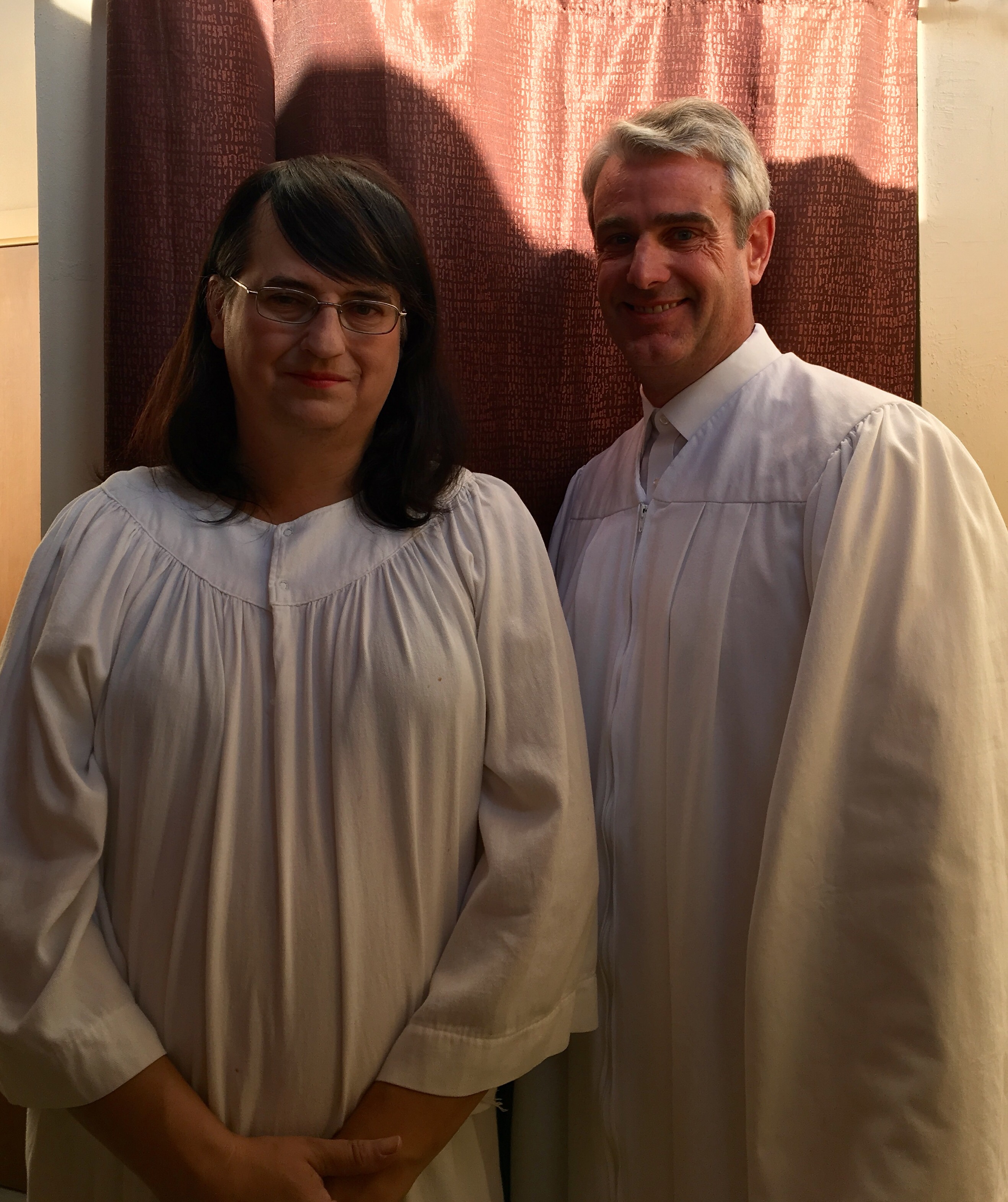
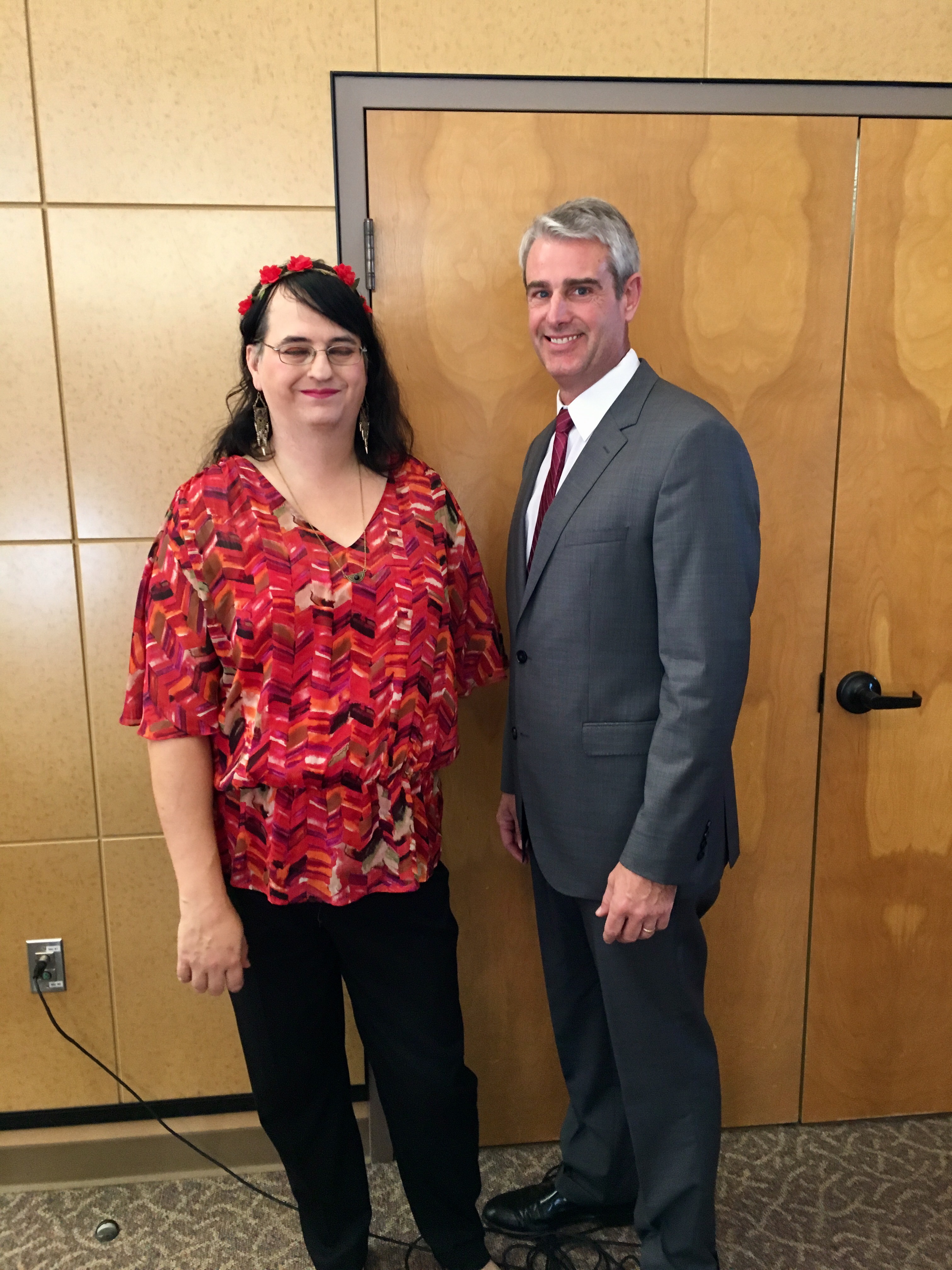
I believe the baptism of a certain woman named Lydia and the baptism of a certain woman named Jamie have much to teach us this day.

The story of Lydia begins with Paul and Silas sharing the good news of Jesus in Troas, a town located in across the Aegean Sea from the European district of Macedonia. Paul has a vision of a man in Macedonia pleading: “Come on over and help us!” Convinced that God was calling them to go and proclaim the good news in Europe, they sailed to Macedonia, went through Samothrace and Neapolis, eventually settling in Philippi.

While in Philippi, Paul and Silas heard about a group of women that had been gathering for worship down by the river outside the gate. So when the Sabbath came, they went and found the women, sat down and engaged them in conversation.

Luke says it was obvious that one woman in the group, a woman named Lydia was closely paying attention to what Paul had to say.

It is then that Luke points out some very remarkable things about this woman. First of all, she is a foreign business owner from Thyatira, a town located in Asia minor in what is now Turkey. Secondly, because he says that “she and her household” were baptized, it’s evident that she was the head of her household.

Now, remember, this is the first century. It’s not a period known for women working outside of the home. Females were treated as second-class citizens, even as “property.” Males were the leaders, the heads of business and the heads of households. And yet, here is a woman who is the head of both.

And since she is the only one who is pointed out to be really paying attention to what Paul was saying, she also appears to be the head of that community of faith which gathered there each week by the river.

And this, says Luke, this baptism of a foreign woman who shatters all cultural expectations, this baptism of a woman who lived life two-thousand years ahead of her time, the baptism of this woman as the first European Christian, is the result of a vision from God that came to Paul.

So, what in the world was God trying to say to Paul and Silas through that vision of a man saying, “Come to Macedonia, because I need some help!”

Could it be that God was saying: “Paul and Silas, I know you are clear across the sea on another continent, but I need you to get in a boat right now and set sail to Macedonia. I need you to come over here to Europe, make your way through Samothrace and Neapolis, all the way to Philippi, and help me!

I need you to help me, to show the world once and for all that through my love revealed in Christ Jesus, through the one who continually lifted up the status of women, elevated the foreigner, accepted the Eunuchs, and did something almost daily to shatter all cultural expectations, destroying the stigma of status, race, ethnicity, class, and sexuality, that in my kingdom, there no longer Jew nor Gentile, slave nor free, male nor female. Help me clearly make the statement that in Christ all are one.”

It is as if God is saying: “I know people have heard the stories of Jesus calling women to be counted among his disciples. I know the word is out that Mary and Joanna were the first ones to proclaim the good news of Easter. I know many have heard about my disciple Tabitha and her works of kindness and gifts of charity. And I know that folks are hearing about the good work of sister Phoebe leading the church at Cenchreae; however, I am still afraid I am going to need some help over here in Europe.

Because I have this bad feeling that even if I do something as radical as making the first baptized Christian on this continent a strong woman like Lydia, some of these Europeans, and the descendants of these Europeans, are still going to argue, even two-thousand years from now, that a woman has no business being the head of a state, being at the head of a communion table, or being the head of a household, or even being the head of her own body. And I have this terrible notion that even in the year, let’s say, 2017, there will be still be reports of men with money, fame or political power molesting, even raping women and young girls.

And then people will have the audacity to defend such actions by blaming a 14-year-old girl for ‘not making good decisions’ or by trying to explain the illegal and immoral behavior with the relationship of Jesus’ earthly parents!

And I know people have heard the story of the Good Samaritan, that despised foreigner who proved to be a holy neighbor to the Jewish man who who was beaten and left dead on the side of the road, but I have this terrible inkling that even if I make a foreigner the first European convert, some Europeans, and the descendants of these Europeans, even two-thousand years from now, may still harbor all kinds of prejudices against those who are not of European descent.

So, get yourself over here to Macedonia as fast as you can and help me baptize this certain woman named Lydia! Because although not all churches will get it the message I am sending through this baptism, maybe, just maybe, there will be some churches who will get it.”

I believe Paul may have Lydia in mind when he penned the following words to the church at Ephesus: “But now in Christ Jesus you who once were far off have been brought near by the blood of Christ. For he is our peace; …and has broken down the dividing wall… So he came and proclaimed peace to you who were far off and peace to those who were near; for through him both of us have access in one Spirit to the Father. So then you are no longer strangers and aliens, but you are citizens with the saints and also members of the household of God” (Ephesians 2).

Then, there is the baptism of Jamie.

Like Lydia, Jamie is also a certain woman; however, fortunate for her, she has joined a church that has learned a thing or two from Lydia. For, here at First Christian Church in Fort Smith, the gifts of women are valued just as much as the gifts of men. Jamie will be encouraged here to use her gifts to freely follow Christ wherever the Spirit leads.

Jamie is not a foreigner. However, since she was not raised in our church, she was a stranger, an outsider to most of us. And sadly, Jamie has been and continues to be treated like an outsider by many in this town. Therefore, I believe the baptism of Jamie reminds us that we have been called by God to reach out beyond our walls and embrace others like Jamie who did not grow up in this church, or who have been marginalized by society, so that they will no longer be strangers, no longer outcast.

It is as if God is saying: “I know people have heard the Great Commission of the Risen Christ to “be witnesses in Jerusalem, in all Judea and Samaria, and to the ends of the earth” making “…disciples of all nations, baptizing them in the name of the Father, Son, and Holy Spirit…”

But I have this bad feeling, that if I do not stir the hearts of people like Jamie, and draw them into the renewing waters of the church, enlarging and changing the congregation, then the church might be tempted to become so comfortable with the status quo that they grow apathetic, uninterested in reaching out to welcome the stranger.

A few years ago, my wife Lori visited a Bojangle’s Chicken and Biscuit restaurant in North Carolina. The sign out front reads: “Famous Chicken and Biscuits.” She went through the drive-thru to get her some chicken. However, after she placed her order in the drive-thru, she was told that they were out of chicken.

Lori came home and said: “I am so mad! Bojangle’s Chicken and Biscuits told me that they were out of chicken. She said, “I can understand if they run out of the mashed potatoes. I can maybe even sympathize a little with them if they run out of biscuits. But a Chicken and Biscuit Restaurant, has got no business runnin’ out of chicken!”

The baptism of Jamie reminds us what the church is all about. If a church is not continually working to break down dividing walls, working to build bridges and relationships with those outside the church, with the goal of having several baptismal services a year, if the church is not a safe place of grace, love and mercy, then the church is like a Sweet Bay Coffee Shop that has run out of coffee! They might as well close down and put a chain on the doors!

After Lydia is baptized, notice the first thing that she does. She extends a gracious welcome to Paul and Silas inviting them stay at her home. Her words following her baptism remind me of our identity statement as Disciples of Christ, “We welcome all to the Lord’s table as God has welcomed us.”

I was on facebook Monday night, and I read these words from Jamie’s timeline that are so so reminiscent of Lydia’s words: “I want to invite all my friends to come to First Christian Church Sunday the 12th. We will be having a thanksgiving meal.”

Lydia and Jamie remind us that each person in this room who has been baptized, who has been welcomed by God through the gracious hospitality of Christ, should feel compelled by the Holy Spirit of Jesus to go out from this place and welcome all people.

Through the baptisms of a certain woman named Lydia and a certain woman named Jamie, I believe God is saying to each of us: “Go out, reach out, tear down a wall, build a bridge, connect, engage, get on facebook, get in a boat if you have to, travel through the streets of places like Samothrace and Neapolis and Philippi and Fort Smith and Van Buren and Greenwood, because I need some help! I need some help sharing the good news that at my table, all are welcome, and all means all!” Amen.

Invitation to Communion

As we sing our hymn of communion, please know that whoever you are, wherever you came from, whatever you bring with you, you are welcome to be served from this, God’s wide and inclusive table.

Jamie’s Story: Love Wins

Jamie reading
Jamie Pape gave the following testimony today after her baptism at First Christian Church in Fort Smith, AR.  Her words were for her church and members of the LGBTQ+ community who have been victims of hate and bigotry. 

Hello Everyone,

I want to thank everyone for being here today, not just for being here for my baptism, but really my rebirth as a human. I stand here in front of you, a simple humbled servant of God. I stand here only a short time removed from some very evil acts of violence, acts that send ripples of fear in their wake. I morn for those touched by this, but I also send out encouragement. This is not the end. I want them to know that they are loved by us and most importantly by God. God mourns the loss alongside you and will be there to comfort you. My plea is to never give up.

I know fully that pit of darkness that you can get close to. I have looked at it for most of my life. I know what fear can do. As a young child, I knew something was not right, and because of that I have endured countless acts of evil. I have been beaten and burned, but yet something kept giving me the strength to carry on.

I used to pray, every-night: “God please end my pain, God please, take me from this world.” Then, I would wake up, still living, but not alive, still here, but not. Confused as to why, afraid of what could happen should anyone discover my truth, confused as to why me, and alone, despite being with people who loved me. I felt like there was no one like me. Sure, there were characters on daytime talk shows, but I did not see people. I felt alone and afraid.

Now, I will not stand here and say that it was all gloom and doom. I had good days, and I had awesome days. The day I looked into someone’s eyes as she responded the words: “I do.” The day I held a tiny baby in my hands and realized this is why, this is why I was placed here. Then another came, and yes, another. I have three beautiful children who now are entering adulthood. I thank God for these, for they gave me a purpose, yet I still sat alone many nights, afraid, oftentimes depressed and silent. I still said the same prayers, had the same fears.

Fear ruled my life, until a little over two years ago. I decided to not let fear rule me any longer, to not live in pain any longer, to be fully truthful and honestly share that truth. SO I came out. It was not an easy road, and one I still travel to this day. But I do not walk it alone.

And yet, despite having taken this big step, that pit of darkness followed. Many times I feared it would consume me. I got to a point of wondering why God hated me, and I said one final prayer, I said God If you love me please, please speak to me, please show me that you love me… that Friday my boss at the job I had, for, no reason looked at me and said God loves you Jamie, just the way you are.

That night, I prayed. I said “God, thank you for speaking to me, but I need more. I need a church, because I used to go, but hate and fear drove me away from church. The next day, I met Dr. Jarrett Banks. He had said something I will never forget. He said: “I want to be your friend. Whether or not you come to church, I want to be your friend. He invited me to come here, no strings attached, just a promise that I would be safe. So I came. I faced my fears walking though the door. At first, I went in the wrong way and had to come around to the right door.

But I did. And with a deep breath I opened the door. I walked in. I stood right over there. I was going to sit alone. But someone noticed me, and she waved to me to come over. At first I thought maybe she was waving at someone else. Nope, she was indeed waving to me. So I went over. During that service I cried. I cried, because I felt a presence in my soul that I had not felt in ages. I cried at the words spoken about being inclusive.

Which brings us to today—a day where we celebrate a rebirth, as well as an early thanksgiving. I give thanks that God has placed all of you into my life. I thank God that people are starting to see the truth. I thank God for everyone who has been given the courage to stare down fear, and hate. And I thank God for giving strength to people to stand and defend those who cannot quite yet defend themselves. I give thanks to God… for life.

So in closing, I say this to those who hurt, those who mourn, those who fear: God loves you. We love you. I love you. Together, we will defend you, support you, and comfort you, until you can once again stand and do the same for others.

Thank You Enid, Oklahoma

img_5529-1
Boomers or Sooners, it doesn’t matter. The people of Enid, Oklahoma possess the same boundless spirit today that settled the Cherokee Strip in the 1893 Land Rush. It is a spirit of possibility, opportunity and welcome.

Soon after I staked my claim here, I inquired about the possibility of bringing an Ainsley’s Angels’ Ambassadorship to Enid. Ainsley’s Angels is a non-profit running group that shares joy and acceptance by including children and adults with special needs (Athlete Riders) in endurance events. However, I was told that the small population of Enid would not be able to support it, and I would need to incorporate a larger city, like Tulsa. They said that I would not be able to raise enough money or recruit enough runners.

Well, they just didn’t know the people of Enid, Oklahoma!

I introduced Ainsley’s Angels to Enid with a 5k in August. Three Angel Runners pushed two Athlete Riders. In September, twenty-one Angel Runners pushed nine Athlete Riders in the Great Land Run 10k.

When our church learned that Sunday was the only day of the week that the food-insecure were not served a free meal in Enid, we suggested recruiting 52 businesses or organizations to prepare and serve one meal a year on Sunday in a nice sit-down restaurant atmosphere from our church’s kitchen. However, some responded by saying that doing this weekly would be unachievable, and we should perhaps aim for once-a-month.

Well, they just didn’t know the people of Enid, Oklahoma!

Today, groups from our high schools, businesses, civic organizations, Vance Air Force Base, and even a group from an assisted-living facility, have volunteered to prepare and serve a Sunday meal to hungry men, women, and children with grace, dignity and love.

When some of my colleagues heard that I was going to publicly stand up and speak out on behalf of the LGBTQ community after the Orlando Pulse nightclub shooting, I was told that the people of Enid, who live in the conservative Bible Belt, were going to run me out of town.

Well, they just didn’t know the people of Enid, Oklahoma!

After I helped lead a prayer vigil on Enid’s town’s square, the leaders of our church had a meeting and reaffirmed our church’s commitment to be a people of grace and welcome to all God’s children though differing in race, gender, age, sexual orientation, gender identity, nationality, ethnicity, marital status, physical or mental ability, political stance or theological perspective. They said they wanted their pastor to love all of our neighbors, and all means all.

When I told people that I wanted to serve and worship with the African American churches in Enid, someone told me that this would be very difficult, because Enid was still somewhat segregated.

Well, they just didn’t know the people of Enid, Oklahoma!

I have been honored to preach at St. Stephens AME Church on two occasions and to be the Master of Ceremonies at Enid’s Annual Martin Luther King Jr. Celebration. On World Communion Sunday in October, our church was led in worship by the African-American voices of the Southern Heights Community Choir and of the First Missionary Baptist Church. On that day, we renewed our commitment to partner with the larger Church to overcome barriers of race and ethnicity, and we renewed our commitment to social justice by being an anti-racism, pro-reconciling church in our community.

Thank you Enid, Oklahoma for still being a place of boundless possibilities, opportunities and welcome!

I thank God that I got a chance to know you!

Response to the Orlando Massacre

more love less hate

How do we begin to respond to this act of hate and terrorism against those attending the Pulse Night Club in Orlando Florida?

First, perhaps we might respond in the same way our God responds. I believe we respond by being prayerfully present, not only suffering with those who are injured and weeping with those who have lost loved ones, but also grieving with the larger LGBTQ and Muslim communities who are hurting today in ways few of us can imagine. We respond by standing in mournful solidarity with all people who are hated for their faith, race, gender, economic status, or sexual orientation.

Secondly, I believe we respond by speaking out against the demonic evil that is intensifying in our world today in the form of racism, sexism, xenophobia, homophobia and all kinds of hateful bigotry.

May we remember the words of Rev. Dr. Martin Luther King Jr. who once said: “In the end, we will remember not the words of our enemies, but the silence of our friends.” These words were spoken during another time in our history when the same demonic evil was rising, and a time, according to Dr. King, when many Christians, including pastors, chose to be “cautious” instead of “courageous” by remaining silently “behind the anesthetizing security of stained glass windows.”

It is way past time for Christians who believe in love, believe that God is love, believe that Christ exemplified and commanded love, especially towards victims of hate and prejudice— it is past time for Christians who believe that we were created for such love to stand up and speak out for this love.

Name injustice and evil when you see it. Speak truth to power when it’s needed. Show great love even when it’s risky.

It is time to boldly and sacrificially bear witness to a grace that is so radical and a love that is so socially unacceptable that, according to Jesus, it will cause people, especially religious people, perhaps people in our own churches and families, perhaps our customers and clients, our friends and neighbors, to revile us, and persecute us and utter all kinds of evil against us falsely on his account.

It is time for Christians to no longer be ashamed of the gospel of the Christ who loves all and died for all and conquered evil for all.

Lastly, I believe we can respond to this tragedy, by doing what we can, where we can, when we can, in this present climate of hate to oppose any legislation or any political candidate that will not promise to defend and fight for the protection, the liberty and the justice for all people.

And all means all.

And may we fight this good fight fervently, yet kindly; fiercely, yet peaceably- with the certain hope knowing that our Bible, our faith, and even history itself, teaches us that evil will not prevail, hate will not have the final word, and the darkness will not overcome; because in the end, it is love that wins.

Love always wins.